
This study was conducted to examine the effect of liquorice (Glycyrrhiza glabra) extract on growth performance, gut morphometry, and economics in broilers. One hundred and twenty days old broiler chicks were used for the experiment and were divided into four groups each with three replicates of ten birds. Group 1 was control with normal water while 1, 1.5, and 2ml/liter of liquorice extract (LE) in drinking water were provided to the remaining three groups. The results showed significantly reduced feed consumption, increased weight gain, and better FCR in 2ml/l of LE group. Similarly, 2ml/l of LE group showed increased (P<0.05) villus height, crypt depth, villus width, and villus height to crypt depth ratio. The digestibility of dry matter, ash, crude fiber, crude protein, ether extract, and calcium was also calculated significantly higher in the 2ml/l of LE group. Total cost in the control group while the gross and net return was recorded significantly higher in the group containing 2ml/l of LE. The dressing percentage had a significantly higher value in 1.5, and 2ml/l of LE groups than in the remaining treatment groups. Mortality was recorded significantly higher in 1 ml/l of LE group as compared to all other groups. It was concluded that liquorice extract at 2ml/l water has a useful effect on growth performance, gut morphology, and economics in broilers.
Research Article · Volume 56, Issue 5, 1 July 2024 · Open Access
Effect of Liquorice (Glycyrrhiza glabra) on Growth Performance, Gut Morphometry and Economics of Broilers Production
· · · · · · · · · ·
Affiliations & Notes ⌄
- 1Department of Poultry Science, Faculty of Animal Husbandry and Veterinary Sciences, The University of Agriculture, Peshawar, Pakistan 2College of Veterinary Sciences, Faculty of Animal Husbandry and Veterinary Sciences, The University of Agriculture, Peshawar, Pakistan 3Department of Livestock and Poultry Production, Bahauddin Zakariya University, Multan, Pakistan. 4Directorate General (Research), Livestock and Dairy Development Department, Khyber Pakhtunkhwa, Peshawar. 5Department of Livestock
Article Info ⌄
- Journal:
- Pakistan Journal of Zoology
- Published:
- 1 July 2024

From the article
- Results regarding the effect of the addition of liquorice in water on FI, BWG, and FCR are shown in Table I. FI had a significantly higher value in the control group while the BWG and FCR (better) were calculated significantly higher in the 2ml/l of LE group.
- The current study indicated significantly improved feed intake, body weight gain, and FCR in the liquorice-supplemented groups.
- Al-Daraji study illustrated that Fawbro broiler chicks receiving drinking water with 450mg/l liquorice extract significantly increased the dressing percentage when measured with or without giblets.
- It is concluded from the current study that liquorice extract at 2ml/l drinking water reduced feed consumption, increased weight gain, improve FCR, and enhanced ileum morphology and was also feasible economically.
Selected from the article's own text.
Abstract
INTRODUCTION
Medicinal herbs, spices, and aromatic plants play essential roles in making food taste, smell, and look better and also have health benefits for people and animals ; , 2020a, b). Individuals in the livestock industry are becoming more interested in these plants because they have qualities that can improve the quality of the final products from poultry, such as the carcass and meat quality ; , b; ; . This article is about Glycyrrhiza glabra, a member of the Fabaceae (legume) family. It has been used for over 4,000 years in traditional medicine . Liquorice has been reported to have immunomodulatory, antihelicobacter, antimicrobial, antioxidative, anti-atherosclerotic, antifungal, anti-inflammatory, estrogen-like, antiviral, antinephritic, anti-infective, and radical scavenging properties ; ; . The main components of liquorice extract (LE), according to phytochemical analysis, are flavonoids (like liquiritin, formononetin, and isoflavonoids), triterpene saponins (like glycyrrhetinic acid, glycyrrhizin, and licorice acid), starch, sugars, amino acids, tannins, ascorbic acid, choline, phytosterols, and coumarins . Researchers ; ; ; have found that liquorice and its active ingredients have several pharmacological effects on livestock like immunomodulatory, antioxidant, antiviral and anti-inflammatory activity. Adding liquorice to the diets of chickens has been shown to make them more productive, however, adding liquorice to drinking water is still in its early stages and needs to be investigated more. Therefore, this study was conducted to determine the effect of liquorice (Glycyrrhiza glabra) extract on growth performance, gut morphometry, and economics in broilers.
MATERIALS AND METHODS
Collection and processing of Glycyrrhiza glabra
The experiment was carried out at the Department of Poultry Science and samples analysis was performed at the pathology laboratory of the College of Veterinary Science, Faculty of Animal Husbandry and Veterinary Science, the University of Agriculture Peshawar. Liquorice roots were purchased from the local market and identified by the medicinal plant experts in the Department of Botany at the University of Peshawar. The method described by Myandoab and Hosseini (2012) and Hanafy (2022) was followed with a few modifications for the processing. The liquorice roots were dried and ground into powder before being used for extraction. After that, four grams of the final product were suspended in 100ml of sterile distilled water, maintained at 37°C for 24 h, and then incubated for eight h at room temperature while being mixed by a magnetic mixture. In the next step, the suspension was kept at room temperature for 18 h. The finished mixture was filtered through a 0.45µL filter and stored at 4°C until needed .
Experimental design and diets
A total of 120 days old broiler chicks were obtained from the local market for the research trial. The birds were split into four groups each with three replicates and ten birds per replicate. Group 1 was control only with normal water without the addition of LE while the other three groups were offered with 1ml/l, 1.5 ml/l, and 2ml/l, respectively, of LE in drinking water. Based on the NRC (1994), the experimental basal diet was made to meet the requirements of broilers. The feed and water were given ad-libitum to the experimental birds from days 1 to 35. The light was provided for twenty-four h. The duration of the experiment was five weeks. Biosecurity was maintained for all the animals to prevent the spread of illnesses e.g., visitors were not allowed, wild animal protection, etc.
Data collection
Feed intake (FI), body weight gain (BWG) and feed conversion ratio (FCR) were calculated according to the formula used by Shuaib et al. (2022a). Mortality was recorded on daily basis. Post-mortem examinations of dead birds were performed to rule out any disease or lesions. The dressing percentage was calculated with the help of the formula e.g.,
Dressing percentage= dressed weight/live weight x 100
The nutrient digestibility was calculated according to the procedure explained by Shuaib et al. (2022a, b) and Hafeez et al. (2020). Two chicks from each treatment were collected at five weeks and maintained in a separate cage for feces collection and digestibility testing. Fresh morning faces were collected, weighed, and dried for three days. The dried excreta were analyzed, and then the digestibility was calculated. The following formula was used to determine nutrient digestibility:
Apparent nutrient digestibility (%) = nutrient intake – nutrient output/ nutrient intake × 100.
Gut morphometry was determined according to the method explained by Shuaib et al. (2022). A bird from every replicated group was randomly selected on the last day of the experiment and slaughtered. After that, its gastrointestinal tract was removed. A small piece was cut from the ileum portion of the small intestine and was used for the morphological measurement. Input and out costs were worked out to determine the economic parameters.
Statistical analysis
A completely randomized design (CRD) was used to assess the experimental data. Analysis of variance (ANOVA) was performed using software statistics 8.1. The Graph Pad Prism 8 software (San Diego, CA, USA) was used to make histograms.
RESULTS
Results regarding the effect of the addition of liquorice in water on FI, BWG, and FCR are shown in Table I. FI had a significantly higher value in the control group while the BWG and FCR (better) were calculated significantly higher in the 2ml/l of LE group. The effect of LE on-dressing percentage is presented in Figure 1. 1 ml/l of LE group produced a significantly higher dressing percentage, though not significantly different from group containing 2ml/l of LE.
Table I. Effect of liquorice (Glycyrrhiza glabra) in water on feed intake, weight gain and feed conversion ratio in broilers. The values are in Mean±SD.
| Parameters | Week | Control | Liquorice treatments | P value | ||
| 1.0 ml/l | 1.5 ml/l | 2 ml/l | ||||
| Feed intake (g) | 2nd | 395.7±4.04 | 391.6±4.43 | 388.4±4.47 | 384.8±4.97 | 0.103 |
| 3rd | 645±2.57a | 640.4±2.33ab | 635.8±2.92bc | 631.5±2.37c | 0.001 | |
| 4th | 861.4±3.40a | 858.4±2.75ab | 853.4±2.43bc | 849.2±2.91c | 0.003 | |
| 5th | 1030±2.87a | 1025.1±2.99a | 1017±2.83b | 1009.7±2.37c | 0.000 | |
| Overall | 2932±2.32a | 2915.6±2.25b | 2894.3±2.69c | 2875±2.74d | 0.000 | |
| Weight gain (g) | 2nd | 283.1±3.00b | 284.7 ± 3.42ab | 287±2.93ab | 289.7±3.50a | 0.149 |
| 3rd | 385.0±2.88b | 387.2± 2.83b | 389.5±3.33ab | 393.5±2.23a | 0.031 | |
| 4th | 473.1±2.93c | 475.0±2.88bc | 479.1±2.96ab | 482.1±2.89a | 0.021 | |
| 5th | 561.1±2.94c | 564.1±2.95bc | 568.5±3.40ab | 573.2±2.89a | 0.006 | |
| Overall | 1701.5±2.99d | 1711±2.87c | 1723.7±3.39b | 1738±3.49a | 0.000 | |
| FCR | 2nd | 1.39±0.06 | 1.37±0.02 | 1.35±0.03 | 1.32±0.03 | 0.217 |
| 3rd | 1.67±0.03a | 1.65±0.02a | 1.63±0.02ab | 1.60±0.02b | 0.029 | |
| 4th | 1.82±0.02a | 1.80±0.03ab | 1.78±0.01bc | 1.76±0.01c | 0.026 | |
| 5th | 1.83±0.03a | 1.81±0.03ab | 1.78±0.01bc | 1.76 ±1.14c | 0.034 | |
| Overall | 1.72±0.01a | 1.70±1.13a | 1.67± 0.01b | 1.65±0.01b | 0.002 | |
The values in the same row that don’t have the same superscript differ (P<0.05).
Similarly, there was no significant difference between the yield of control and 1.5ml/l of LE group, even though control group yield was lower than all the other groups. The impact of adding liquorice in water on nutrient digestibility is presented in Table II. The digestibility of dry matter, ash, crude fiber, crude protein, ether extract, and calcium was calculated significantly higher in 2ml/l of LE group. The results related to the intestinal histomorphology and economics are indicated in Table III. The results show that birds’ intestinal ileum morphology is affected significantly by the administration of liquorice water. 2ml/l of LE group showed increased (P<0.05) villus height, crypt depth, villus width, and villus height to crypt depth ratio than the remaining groups. Gross return and net return per chick were calculated significantly higher for group containing 2ml/l of LE. Results regarding the bird’s mortality are shown in Figure 2. The highest significant mortality of the birds was calculated in 1ml/liter of LE group as compared to all other groups.
Table II. Effect of liquorice (Glycyrrhiza glabra) in water on nutrient digestibility in broilers. The values are in Mean±SD.
| Parameters | Control | Liquorice treatments | P value | ||
| 1.0 ml/l | 1.5 ml/l | 2 ml/l | |||
| DM | 62.34±3.39c | 66.36±3.49bc | 71.40±3.42ab | 75.39±3.48a | 0.012 |
| Ash | 43.40±3.44b | 45.37±4.48b | 49.33±3.44ab | 53.49±3.29a | 0.042 |
| CP | 56.33±3.39b | 59.65±4.08ab | 61.45±3.34ab | 65.44±3.48a | 0.145 |
| CF | 62.51±2.49b | 65.40± 3.29b | 67.35±2.45ab | 72.47a±3.38 | 0.018 |
| EE | 53.37±3.49b | 57.48±3.43ab | 59.34±2.43a | 61.97±2.94a | 0.049 |
| Ca | 28.71±3.99b | 32.75±3.69ab | 33.37±2.39ab | 37.35±4.12a | 0.073 |
The values in the same row that don’t have the same superscript differ (P<0.05). DM, dry matter; CP, crude protein; CF, crude fibre; EE, ether extract; Ca, calcium.
Table III. Effect of liquorice (Glycyrrhiza glabra) in water on intestinal morphology (ileum) and economic in broilers. The values are in Mean±SD.
| Parameters | Control | Liquorice treatments | P value | ||
| 1.0 ml/l | 1.5 ml/l | 2 ml/l | |||
| Villus height (µm) | 1275.4 ±1.4d | 1297.3±1.40c | 1311.3 ±1.40b | 1325.4 ±1.40 a | 0.001 |
| Crypt depth (µm) | 212.3±6.41c | 204.3±5.03b | 195.67±5.42ab | 183.34±5.03a | 0.001 |
| Villus width (µm) | 168.0±5.54b | 177 ±6.48b | 189.40±6.48a | 199.7±5.93a | 0.001 |
| Villus height: Crypt depth | 6.31±1.41b | 7.52 ±1.30b | 8.34 ±1.36ab | 10.41±1.41a | 0.035 |
| Cost (Pak Rs) | 345.49±2.43a | 339.40±2.43b | 333.54±2.37c | 327.4±329d | 0.001 |
| Gross return (Pak Rs) | 370.18±2.09c | 374.85±1.38b | 379.20±1.94a | 381.5±1.55a | 0.001 |
| Net return (Pak Rs) | 24.60±2.43d | 35.46±2.41c | 45.58±2.39b | 54.42±2.26a | 0.002 |
The values in the same row that don’t have the same superscript differ (P<0.05).
DISCUSSIONS
The current study indicated significantly improved feed intake, body weight gain, and FCR in the liquorice-supplemented groups. On the other hand, the feed intake and corresponding weight gain were significantly decreased in the control group. Indeed, due to its chemical components, liquorice acts as an immunomodulator (due to its low molecular weight exhibit anticancer and immunomodulatory activities by suppressing tumor growth) and maintains the correct gastrointestinal status, increasing the animal’s immune system , b), thus improving growth performance of birds. Therefore, the beneficial effects of phytogenic extracts on poultry growth in this study may be due to the ability of liquorice to improve digestibility, gut microflora, and digestive enzyme secretion. Similarly, Grieve (2013) reported that liquorice stimulates appetite and digestion and improves blood flow through gut mucous membranes, boosting nutrient absorption. Hosny et al. (2020) in quail, and Hassan and Lashin (2017) in chicken found that the body weight of the study animal improved as the quantity of licorice in its diet went up, compared to the control group. Also, Al-Daraji (2012) found that adding LE to drinking water at a level of 450 mg/l increased body weight gain and total body weight by a lot. Furthermore, Al-Daraji (2012) found that adding different amounts of licorice powder to the diets of broilers led to much more weight gain than in the control group. On the other hand, some research showed that the body weight of birds that used licorice or drank water with licorice did not change much compared to the body weight of untreated birds ; . In the current study, the highest feed conversion ratio value and the dressing percentage, was observed in the group with 2ml/l liquorice in water and this may be because the liquorice root powder supplement in the water made the water taste better the animals, which probably increased the activity of microorganisms in the chicken’s digestive tract. This, in turn, made it easier for the animals to eat dry matter in the experiment, which made the beneficial bacteria work more effectively . The food conversion efficiency indicated that it is the active substance in this plant, which led to increased animal feed and body weight utilization and, therefore, feed conversion . This is in agreement with Towaje et al. (2020) who showed that using 7.5% raw liquorice powder improved chicken’s feed ratio and dressing percentage and the same author also found that the licorice powder improved the chemical analysis of meat by more moisture and less fat. Al-Daraji study illustrated that Fawbro broiler chicks receiving drinking water with 450mg/l liquorice extract significantly increased the dressing percentage when measured with or without giblets.
Similarly, Alagawany et al. (2019) found that due to the presence of active molecules, particularly those of the isoflavonoid class of chemicals, liquorice may be able to enhance the function of the immune system. In the current study, ash content, dry matter, and crude fiber were found significantly higher as compared to the control group. The only justification for this improvement may be that liquorice supplemented in animal rations may stimulate cellulose-degrading bacteria, thus, increasing crude fiber digestibility. This result is consistent with the previous findings ; ; ; , who reported improved crude fiber digestibility in their studies. Additionally, Akanmu and Hassen (2017) determined that plant extracts improved the digestibility of fat and overall dry matter. The glycyrrhizin found in Glycyrrhiza glabra is considered to stimulate mechanisms of peripheral sensory innervation in the cavities of the nose and mouth. It stimulates the gastrointestinal tract (GIT) to receive the feed and motility of the GIT and secretions of the stomach for better digestion of diet ingredients . From these data, it could be observed that the beneficial impact of liquorice in improving feed efficiency and digestion could be through providing a better environment for the absorption of nutrients, thus, the improvement of dry matter, ash content. Regarding the economic part, the supplementation of Glycyrrhiza glabra in drinking water was found to be beneficial for the group who received it in the current study. This positive effect may be attributed to the significant positive effects on daily weight gain and feed conversion ratio throughout the growing period. Indeed, the chicken industry’s biggest concern is epidemiological diseases, which mostly affect the respiratory, digestive, and immunological systems cause diseases in them and increase the cost per chick by controlling the disorders . Flavonoids and glycyrrhizin are two bioactive components that are effective in treating disorders such as the liver, immune system, and lungs . Hence controlling the diseases using liquorice (Glycyrrhiza glabra) in the water reduces the cost and increases the net return .
CONCLUSION AND RECOMMENDATION
It is concluded from the current study that liquorice extract at 2ml/l drinking water reduced feed consumption, increased weight gain, improve FCR, and enhanced ileum morphology and was also feasible economically. Therefore, liquorice extract at 2ml/l in drinking water is recommended for broiler production.
ACKNOWLEDGMENT
I would like to express my gratitude to my primary supervisor, Professor Dr. Sarzamin Khan, who guided me throughout this project. I would also like to show my deep appreciation to my supervisory committee who helped me to finalize my project. The research work is part of the MSc (HONS) degree program and is self-supported.
Funding
No funding was provided/ received for this experimental work.
IRB approval
The experimental work was approved by the board of studies (September 2022) conducted at the Department of Poultry Science, Faculty of Animal Husbandry and Veterinary Sciences (FAHVS), The University of Agriculture Peshawar, KP, Pakistan.
Ethical statement
The experiment was approved by the ethical committee of the Faculty of Animal Husbandry and Veterinary Sciences (FAHVS), The University of Agriculture Peshawar before practical execution of this experiment.
Statement of conflict of interest
The authors have declared no conflict of interest.
Figures
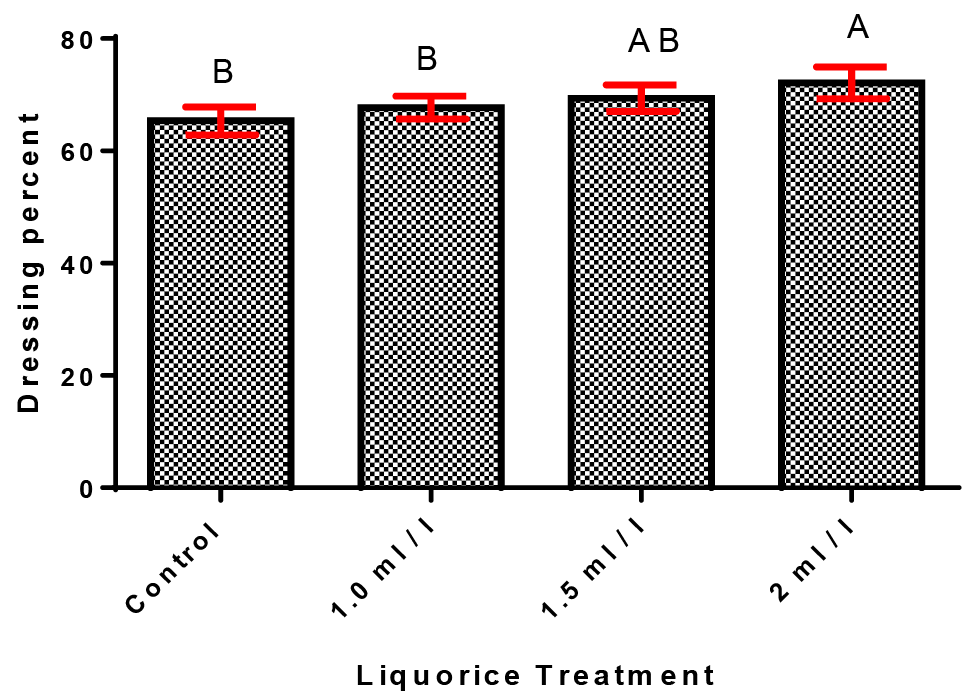
Effect of liquorice (Glycyrrhiza glabra) in water on percentage of dressing in broilers.
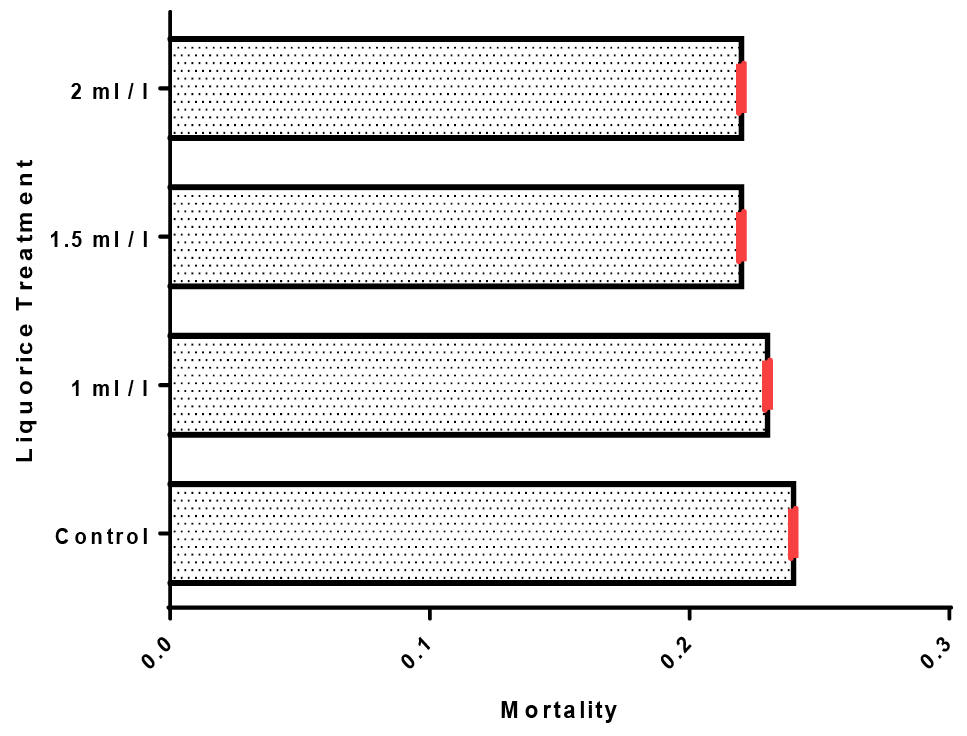
Effect of liquorice (Glycyrrhiza glabra) in water on broilers mortality.
References
- Abd-El-Hack, M., Ashour, E., Elaraby, G.M., Osman, A. and Arif, M., 2018. Influences of dietary supplementation of peanut skin powder (Arachis hypogaea) on growth performance, carcass traits, blood chemistry, antioxidant activity and meat quality of broilers. Anim. Prod. Sci., 58: 965-972. https://doi.org/10.1071/AN16346[CrossRef]
- Abd-El-Hack, M.E., Abdelnour, S.A., Taha, A.E., Khafaga, A.F., Arif, M., Ayasan, T., Swelum, A.A., Abukhalil, M.H., Alkahtani, S. and Aleya, L., 2020. Herbs as thermoregulatory agents in poultry: An overview. Sci. Total Environ., 703: 134399. https://doi.org/10.1016/j.scitotenv.2019.134399[CrossRef]
- Abd-El-Hack, M.E., Alagawany, M., Shaheen, H., Samak, D., Othman, S.I., Allam, A.A., Taha, A.E, Khafaga, A.F, Arif, M. and Osman, A., 2020. Ginger and its derivatives as promising alternatives to antibiotics in poultry feed. Animals, 10: 452. https://doi.org/10.3390/ani10030452[CrossRef]
- Abd-El-Hack, M.E. and Alagawany, M., 2015. Performance, egg quality, blood profile, immune function, and antioxidant enzyme activities in laying hens fed diets with thyme powder. J. Anim. Feed Sci., 24: 127-133. https://doi.org/10.22358/jafs/65638/2015[CrossRef]
- Abdelnour, S., Alagawany, M., Abd El-Hack, M.E., Sheiha, A.M., Saadeldin, I.M. and Swelum, A.A., 2018. Growth, carcass traits, blood hematology, serum metabolites, immunity, and oxidative indices of growing rabbits fed diets supplemented with red or black pepper oils. Animals, 8: 168. https://doi.org/10.3390/ani8100168[CrossRef]
- Akanmu, A.M. and Hassen, A., 2017. The use of certain medicinal plant extracts reduced in vitro methane production while improving in vitro organic matter digestibility. Anim. Prod. Sci., 58: 900-908. https://doi.org/10.1071/AN16291[CrossRef]
- Alagawany, M., Abd-El-Hack, M., Farag, M., Elnesr, S., El-Kholy, M., Saadeldin, I. and Swelum, A., 2018. Dietary supplementation of Yucca schidigera extract enhances productive and reproductive performances, blood profile, immune function, and antioxidant status in laying Japanese quails exposed to lead in the diet. Poult. Sci., 97: 3126-3137. https://doi.org/10.3382/ps/pey186[CrossRef]
- Alagawany, M., Abd-El-Hack, M., Farag, M., Shaheen, H., Abdel-Latif, M., Noreldin, A. and Patra, A., 2018. The usefulness of oregano and its derivatives in poultry nutrition. Worlds Poult. Sci. J., 74: 463-474. https://doi.org/10.1017/S0043933918000454[CrossRef]
- Alagawany, M., Elnesr, S. and Farag, M., 2019. Use of liquorice (Glycyrrhiza glabra) in poultry nutrition: Global impacts on performance, carcass and meat quality. Worlds Poult. Sci. J., 75: 293-304. https://doi.org/10.1017/S0043933919000059[CrossRef]
- Alagawany, M., Elnesr, S.S., Farag, M.R., Abd-El-Hack, M.E., Khafaga, A.F., Taha, A.E., Tiwari, R., Yatoo, M.I., Bhatt, P. and Marappan, G., 2019. Use of licorice (Glycyrrhiza glabra) herb as a feed additive in poultry: Current knowledge and prospects. Animals, 9: 536. https://doi.org/10.3390/ani9080536[CrossRef]
- Al-Daraji, H.J., 2012. Influence of drinking water supplementation with licorice extract on certain blood traits of broiler chickens during heat stress. Pharmacogn. Commun., 2: 29-33. http://www.phcogcommn.org/2012/214
- Benchaar, C., Petit, H., Berthiaume, R., Ouellet, D., Chiquette, J. and Chouinard, P., 2007. Effects of essential oils on digestion, ruminal fermentation, rumen microbial populations, milk production, and milk composition in dairy cows fed alfalfa silage or corn silage. J. Dairy Sci., 90: 886-897. https://doi.org/10.3168/jds.S0022-0302(07)71572-2[CrossRef]
- Castillejos, L., Calsamiglia, S. and Ferret, A., 2006. Effect of essential oil active compounds on rumen microbial fermentation and nutrient flow in in vitro systems. J. Dairy Sci., 89: 2649-2658. https://doi.org/10.3168/jds.S0022-0302(06)72341-4[CrossRef]
- Ghannad, M.S., Mohammadi, A., Safiallahy, S., Faradmal, J., Azizi, M. and Ahmadvand, Z., 2014. The effect of aqueous extract of Glycyrrhiza glabra on herpes simplex virus 1. Jundishapur J. Microbiol., 7: https://doi.org/10.5812/jjm.11616[CrossRef]
- Grieve, M., 2013. A modern herbal. Vol. 2: Courier Corporation. https://books.google.com/books/about/A_Modern
- Hafeez, A., Sohail, M., Ahmad, A., Shah, M., Din, S., Khan, I. and Khan, R.U., 2020. Selected herbal plants showing enhanced growth performance, ileal digestibility, bone strength and blood metabolites in broilers. J. appl. Anim. Res., 48: 448-453. https://doi.org/10.1080/09712119.2020.1818569[CrossRef]
- Hafez, H.M. and Attia, Y.A., 2020. Challenges to the poultry industry: Current perspectives and strategic future after the COVID-19 outbreak. Front. Vet. Sci., 7: 516. https://doi.org/10.3389/fvets.2020.00516[CrossRef]
- Hanafy, M.M., 2022. The impact of stocking density and licorice powder spplementation on the productive state and some physiological traits of laying hens. Egypt. Poult. Sci. J., 42: 17-38. https://doi.org/10.21608/epsj.2022.225211[CrossRef]
- Hassan, E. and Abdel-Raheem, S.M., 2013. Response of growing buffalo calves to dietary supplementation of caraway and garlic as natural additives. World appl. Sci. J., 22: 408-414.
- Hassan, F.A. and Lashin, A., 2017. Influence of handling processes for broilers on mortality and carcass quality at slaughterhouse. Misr J. agric. Eng., 34: 1923-1948. https://doi.org/10.21608/mjae.2017.96214[CrossRef]
- Hassanat, F., Gervais, R. and Benchaar, C., 2017. Methane production, ruminal fermentation characteristics, nutrient digestibility, nitrogen excretion, and milk production of dairy cows fed conventional or brown midrib corn silage. J. Dairy Sci., 100: 2625-2636. https://doi.org/10.3168/jds.2016-11862[CrossRef]
- Hosny, M., Abdelnabi, M., Essa., N. and Ali, A., 2020. Effect of licorice extract on growth performance, meat yield and plasma analysis of Japanese quail (Coturnix coturnix japonica). Arch. agric. Sci. J., 3: 55-66. https://doi.org/10.21608/aasj.2020.109055[CrossRef]
- Hosoda, K., Kuramoto, K., Eruden, B., Nishida, T. and Shioya, S., 2006. The effects of three herbs as feed supplements on blood metabolites, hormones, antioxidant activity, IgG concentration, and ruminal fermentation in Holstein steers. Asian Australas. J. Anim. Sci., 19: 35-41. https://doi.org/10.5713/ajas.2006.35[CrossRef]
- Iqbal, H.F., Bashir, M.K., Iqbal, M.Z., Ashraf, M., Bilal, M.Q. and Usman, M., 2020. Effect of licorice (Glycyrrhiza glabra) extract on growth performance, carcass parameters and hematology of broilers. Pak. J. agric. Sci., 57:505-508. https://doi.org/10.21162/PAKJAS/19.9312[CrossRef]
- Kalantar, M., Rezaei, M., Salari, J. and Matin, H.H., 2014. Thymus vulgaris L., Glycyrrhiza glabra or Combo® enzyme in corn vs. barley-based broiler diets. J. Coastal Life Med., 2: 993-997. https://doi.org/10.12980/JCLM.2.201414J54[CrossRef]
- Kheravii, S.K., Swick, R.A., Choct, M. and Wu, S.B., 2018. Upregulation of genes encoding digestive enzymes and nutrient transporters in the digestive system of broiler chickens by dietary supplementation of fiber and inclusion of coarse particle size corn. BMC Genomics, 19: 1-14. https://doi.org/10.1186/s12864-018-4592-2[CrossRef]
- Meng, F., Zhang, H., Yang, F., Li, Y., Xiao, J. and Zhang, X., 2006. Effect of filamentous bacteria on membrane fouling in submerged membrane bioreactor. J. Membr. Sci., 272: 161-168. https://doi.org/10.1016/j.memsci.2005.07.041[CrossRef]
- Moradi, N., Ghazi, S., Amjadian, T., Khamisabadi, H. and Habibian, M., 2014. Performance and some immunological parameter responses of broiler chickens to licorice (Glycyrrhiza glabra) extract administration in the drinking water. Ann. Res. Rev. Biol., pp. 675-683. https://doi.org/10.9734/ARRB/2014/5277[CrossRef]
- Muhammad, N. and Oloyede, O., 2010. Growth performance of broiler chicks fed Aspergillus niger-fermented Terminalia catappa seed meal-based diet. Int. J. Biol. Chem. Sci., 4. https://doi.org/10.4314/ijbcs.v4i1.54236[CrossRef]
- Myandoab, M.P. and Hosseini, M.N., 2012. Comparative effect of liquorice root extract medicinal plants and probiotic in diets on performance, carcass traits and serum composition of Japanese quails. Glob. Vet., 8: 39-42. http://www.idosi.org/gv/GV8(1)12/7.pdf
- Naser, M., Shahab, G. and Mahmood, H., 2017. Drinking water supplementation of licorice (Glycyrrhiza glabra L. root) extract as an alternative to in-feed antibiotic growth promoter in broiler chickens. GSC Biol. Pharm. Sci., 1: 20-28. https://doi.org/10.30574/gscbps.2017.1.3.0039[CrossRef]
- NRC (National Research Council), 1994. Nutrient requirements of poultry. Ninth edition. Washington, DC: The National Academies Press. Press. https://doi.org/10.17226/2114[CrossRef]
- Parvaiz, M., Hussain, K., Khalid, S., Hussnain, N., Iram, N., Hussain, Z. and Ali, M.A., 2014. A review: Medicinal importance of Glycyrrhiza glabra L. (Fabaceae family). Glob. J. Pharmacol., 8: 8-13.
- Račková, L., Jančinová, V., Petríková, M., Drábiková, K., Nosáľ, R., Štefek, M., Košťálová, D., Prónayová, N. and Kováčová, M., 2007. Mechanism of anti-inflammatory action of liquorice extract and glycyrrhizin. Natl. Prod. Res., 21: 1234-1241. https://doi.org/10.1080/14786410701371280[CrossRef]
- Saeed, M., Ayaşan, T., Alagawany, M., El-Hack, M., Abdel-Latif, M. and Patra, A., 2019. The role of ß-mannanase (Hemicell) in improving poultry productivity, health and environment. Braz. J. Poult. Sci., 21. https://doi.org/10.1590/1806-9061-2019-1001[CrossRef]
- Saeed, M., Arain, M.A., Naveed, M., Alagawany, M., El-Hack, A., Ezzat, M., Bhutto, Z.A., Bednarczyk, M., Kakar, M.U. and Abdel-Latif, M., 2018. Yucca schidigera can mitigate ammonia emissions from manure and promote poultry health and production. Environ. Sci. Pollut. Res., 25: 35027-35033. https://doi.org/10.1007/s11356-018-3546-1[CrossRef]
- Safari, A. and Zahedi, A., 2016. The effect of different levels supplementation of Glycyrrhiza glabra extract on growth performance in male quail. Int. J. Adv. Biol. Biomed. Res., 4: 214-219.
- Sedghi, M., Golian, A., Kermanshahi, H. and Ahmadi, H., 2010. Effect of dietary supplementation of licorice extract and a prebiotic on performance and blood metabolites of broilers. S. Afr. J. Anim. Sci., 40. https://doi.org/10.4314/sajas.v40i4.65259[CrossRef]
- Seidavi, A., Tavakoli, M., Slozhenkina, M., Gorlov, I., Hashem, N.M., Asroosh, F., Taha, A.E., El-Hack, A., Mohamed, E. and Swelum, A.A., 2021. The use of some plant-derived products as effective alternatives to antibiotic growth promoters in organic poultry production: A review. Environ. Sci. Pollut. Res., 28: 47856-47868. https://doi.org/10.1007/s11356-021-15460-7[CrossRef]
- Shalaby, M.A., Ibrahim, H.S., Mahmoud, E.M. and Mahmoud, A.F., 2004. Some effects of Glycyrrhiza glabra (liquorice) roots extract on male rats. Egypt. J. Nat. Toxins, 1: 83-94. http://www.foxitsoftware.com
- Shebl, R.I., Amin, M.A., Emad-Eldin, A., Bin Dajem, S., Mostafa, A.S., Ibrahim, E.H. and Mohamed, A.F., 2012. Antiviral activity of liquorice powder extract against varicella zoster virus isolated from Egyptian patients. Chang. Gung. med. J., 35: 231-239. https://doi.org/10.4103/2319-4170.106149[CrossRef]
- Shuaib, M., Hafeez, A., Chand, N. and Tahir, M., 2022. Effect of dietary inclusion of soybean hull on production performance and nutrient digestibility during peak egg production period with different phases in laying hens. Pakistan J. Zool., 55: 397-405. https://doi.org/10.17582/journal.pjz/20211105091115[Full text][CrossRef]
- Shuaib, M., Hafeez, A., khan, S., Uzair, M.S., Sufyan, A. and Ayaz, M., 2022. Effect of β-Mannanase and soybean hulls on the nutrient digestibility, digesta viscosity, feces consistency and intestinal histomorphology during early peak production period in laying hens. Pakistan J. Zool., 1-7. https://doi.org/10.17582/journal.pjz/20221117091159[Full text][CrossRef]
- Shuaib, M., Hafeez, A., Kim, W.K., Khan, A. and Sufyan, A., 2022. Effect of dietary inclusion of soybean hulls in basal diet on digesta viscosity, fecal consistency, hematology, serum biochemistry, and intestinal morphometric parameters in the laying hens during peak egg production stages. Pakistan J. Zool., 1-9. https://doi.org/10.17582/journal.pjz/20220424140433[Full text][CrossRef]
- Shuaib, M., Ullah, N., Hafeez, A., Alhidary, I.A., Abdelrahman, M.M. and Khan, R.U., 2022. Effect of dietary supplementation of wild Cumin (Bunium persicum) seeds on performance, nutrient digestibility and circulating metabolites in broiler chicks during the finisher phase. Anim. Biotechnol., 33: 871-875. https://doi.org/10.1080/10495398.2020.1844222[CrossRef]
- Shuaib, M., Ullah, N., Hafeez, A., Khan, N.U., Alhidary, I.A., Abelrahman, M.M. and Khan, R.U., 2021. Dietary fortification of crushed seeds of Bonium persicum on growth performance, apparent ileal digestibility and blood metabolites in broiler chicks during the starter phase. Ital. J. Anim. Sci., 20: 1-5. https://doi.org/10.1080/1828051X.2020.1861555[CrossRef]
- Suchitra, G. and Shakunthala, V., 2014. Effect of Glycyrrhiza glabra root extract on behaviour and fitness of Drosophila melanogaster and vestigial wing mutant. Int. J. Curr. Microbiol. appl. Sci., 3: 1047-1054.
- Towaje, M., Kuttar, A., Abdulrahman, A., Salman, M.D. and RD, B., 2020. DIfferent rates of licorice root (Glycyrrhiza glabra) in diets and effect it in some quality of carcass of local goat males. Pl. Arch., 20: 110-114.
- Velmurugan, N., Kalpana, D., Cho, J.Y. and Lee, Y.S., 2018. Chemical composition and antioxidant capacity of the aqueous extract of Phellodendron amurense. J. For. Res., 29: 1041-1048. https://link.springer.com/article/10.1007/s11676-017-0532-2 https://doi.org/10.1007/s11676-017-0532-2[CrossRef]
- Wanapat, M., Kang, S., Khejornsart, P. and Wanapat, S., 2013. Effects of plant herb combination supplementation on rumen fermentation and nutrient digestibility in beef cattle. Asian Australas. J. Anim. Sci., 26: 1127-1136. https://doi.org/10.5713/ajas.2013.13013[CrossRef]
- Wanapat, M., Khejornsart, P., Pakdee, P. and Wanapat, S., 2008. Effect of supplementation of garlic powder on rumen ecology and digestibility of nutrients in ruminants. J. Sci. Fd. Agric., 88: 2231-2237. https://doi.org/10.1002/jsfa.3333[CrossRef]
- Wei, Y.Q., Long, R.J., Yang, H., Yang, H.J., Shen, X.H., Shi, R.F., Wang, Z.Y., Du, J.G., Qi, X.J. and Ye, Q.H., 2016. Fiber degradation potential of natural co-cultures of Neocallimastix frontalis and Methanobrevibacter ruminantium isolated from yaks (Bos grunniens) grazing on the Qinghai Tibetan Plateau. Anaerobe, 39: 158-164. https://doi.org/10.1002/jsfa.3333[CrossRef]
Cited by 1 article
In journals published by ResearchersLinks.
Services
Article usage statistics
Loading…