
Ocimum basilicum L., commonly sweet basil, belongs to the Lamiaceae family and is characterized by an essential oil primarily composed of monoterpenes, sesquiterpenes, and phenylpropanoids. Viral infections can influence the levels of these compounds. The cucumber mosaic virus (CMV), which causes viral diseases in numerous significant crops globally, has been identified in the basil plant (Ocimum basilicum). Samples from infected basil plants, particularly the green shoot leaves, exhibited necrotic local lesions, smaller leaf size than usual, and yellow mottling accompanied by crinkling. The primary objective of this study was to examine the impact of CMV infection on the essential oil profile of common basil. Plants with two pairs of leaves above the cotyledons were inoculated with an unidentified virus obtained from a field plant displaying chlorotic yellow spots and foliar deformation. Essential oils from both healthy and infected plants were extracted through hydro distillation and subsequently analyzed using GC-MS. Notable alterations in the essential oil composition due to viral infection were recorded. The principal constituents identified were methyleugenol and p-cresol, 2,6-di-tert-butyl; however, the levels of methyleugenol were significantly reduced in the infected specimens.
Research Article · Volume 12, Issue 2, 11 March 2025 · Open Access
Effect of CMV Infection on Basil Active Ingredients Used to Treat HCV Ayapatients
· · · · ·
Affiliations & Notes ⌄
- 1Virology Laboratory, Agriculture, Microbiology Department, Faculty of Agriculture, Ain Shams University, 11241 Cairo, Egypt
- 2Virus Research Department, Plant Pathology Research Institute, ARC, Giza 12619, Egypt
- 3Botany and Microbiology Department, Faculty of Science, Al-Azhar University, 11884 Nasr City, Cairo, Egypt. , *Correspondence | Aya Hussin Alturki, Virology Laboratory, Agriculture, Microbiology Department, Faculty of Agriculture, Ain Shams University, 11241 Cairo, Egypt
- 4Email: aya.alturki22@yahoo.com
Article Info ⌄
- Journal:
- Journal of Virological Sciences
- Published:
- 11 March 2025
Abstract
Introduction
Basil is classified under the genus Ocimum basilicum L., which encompasses approximately 150 distinct species . The essential oil derived from basil is extensively employed as an aromatic agent across various sectors, including food, pharmaceuticals, cosmetics, and aromatherapy. Studies have indicated that basil essential oil exhibits antimicrobial and insecticidal properties, suggesting its potential application as an ingredient in organic pesticides and natural preservatives. Typically, the essential oil is extracted through steam distillation of fresh stems, leaves, and flowers. However, if immediate extraction is not feasible, drying the plant material before distillation may be necessary. The primary constituents of Ocimum basilicum essential oil include linalool, methyl chavicol, camphor, and methyl eugenol , with their relative concentrations varying based on the chemotype of the plant. Eugenol constitutes the major component (30% to 70%) of O. sanctum has shown that the timing of transplanting basil affects the composition of its essential oil, with linalool levels increasing as transplanting is delayed, while methyl chavicol and eugenol levels decrease correspondingly. The drying methods employed for basil herbage before extraction can significantly influence both the quantity and quality of the essential oil . Hepatitis C is a viral infection that targets the liver, a vital organ responsible for eliminating harmful substances from the body, aiding in digestion, and processing vitamins and nutrients from food. The liver also produces substances that facilitate blood clotting in the event of an injury. Life is not sustainable without a functioning liver. In some cases, individuals with hepatitis C may experience a transient infection, allowing their bodies to eliminate the virus. However, the majority of those infected develop chronic hepatitis C, a prolonged condition characterized by the persistence of the virus in the body. Without appropriate treatment, this infection can lead to significant liver damage over a span of 20 to 30 years, ultimately impairing liver function.
Hepatitis C can lead to significant liver damage, including scarring, liver cancer, liver failure, and potentially death. There are six distinct genotypes of hepatitis C, namely genotypes 1, 2, 3, 4, 5, and 6. The specific genotype present in an individual can influence the treatment options recommended by a physician and the efficacy of those treatments. Genotype 1 is the most prevalent, accounting for 75 percent of hepatitis C cases; however, individuals with this genotype tend to have a less favorable response to treatment compared to those with other genotypes. A blood test conducted by your physician can determine your specific genotype . This study aims to identify the Cucumber mosaic virus, characterize it, and assess its impact on the active ingredients of basil, as well as the effects of extracts from both healthy and infected plants on patients with hepatitis C.
Materials and Methods
Cucumber mosaic virus
Plants that were infected early in the growing season displayed significant symptoms such as stunting, mosaic patterns, mottling, blistering, and curling of leaves, accompanied by a reduction in leaf size. In contrast, those infected at later stages showed only mild mosaic symptoms . The affected plants were distributed throughout the field, with an estimated disease incidence of 40%. The double-antibody sandwich-ELISA technique identified the causal agent as Cucumber mosaic virus (CMV), a finding that was subsequently corroborated by reverse transcription-polymerase chain reaction assays.
Plant material
Healthy and virus-infected basil plants were collected during their flowering stage, a period noted for the peak content and quality of essential oil . At the Virology Laboratory, Faculty of Agriculture, Ain Shams University, the plants were trimmed to a height of 5-10 cm above the soil. Fresh yields of 300 grams were obtained for immediate extraction, while a subsample from each plot was promptly freeze-dried. The remaining basil was subjected to air-drying.
Preparation of water extract
To prepare water extract, 150 ml of boiled water was poured over a single filter bag containing 5 g of air-dried basil, then allowed to steep for 3 minutes and sweeten as preference.
Treatment
Patients with HCV consume water extract orally three times a day for a duration of one month and do not take any medications.
Indication of improvement of HCV
HCV-RNA-PCR (Qualitative via real-time), Anemia, SGOT (ASAT), SGPT (ALAT), Total Bilirubin, Direct Bilirubin, Indirect Bilirubin, S-Creatinine, T.S.H., AFP (Alpha Fetoprotein), Albumin, Prothrombin time, Prothrombin concentration, Alkaline phosphatase, and Pathology analysis should be conducted both prior to and following treatment to assess the impact of water extract on HCV patients , (Al-Rowad Lab. and Minia Oncology Center) (Table 3).
Table 3: Indication of improvement of HCV patient.
| Analysis types | Group (1) | Group (2) | Group (3) | Reference ranges | |||
| Infected plant | Healthy plant | Infected plant | Healthy plant | Infected plant | Healthy plant | ||
| Age (yr) | 25±5 | 25±5 | 40±5 | 40±5 | 50±10 | 50±10 | |
| Gender (M/F) | M | M/F | M | ||||
| Body weight (Kg) | 70±5 | 60±5 | 90±10 | 80±10 | 60±10 | 50±10 | |
| HCV Ab. | Positive | Positive | Positive | Negative | |||
| HCV-RNA-PCR (Quantitative by real time) | 270530± 1000 IU/ml | 28100± 1000 IU/ml | 9743± 1000 IU/ml | 512± 1000 IU/ml | 279207± 1000 IU/ml | 9875± 1000 IU/ml | Negative |
| HBsAg. | Negative | Negative | Negative | Negative | Negative | Negative | Negative |
| Anemia | 14±2 | 13±2 | 12±2 | 13±1 | 11±2 | 13±2 | (N12-18) mg/dl |
| SGPT (ASAT) | 72±15 | 25±15 | 52±5 | 35±5 | 45±5 | 35±5 | (N. upto 40) U/ml |
| SGPT (ALAT) | 84±15 | 30±15 | 55±5 | 37±5 | 47±5 | 37±5 | N. upto 40) U/ml |
| Total Bilirubin | 0.8±0.1 | 0.8±1 | 1±0.2 | 0.9±0.2 | 1.1±0.1 | 0.8±0.1 | N. upto 1) mg/dl |
| Direct Bilirubin | 0.6±0.1 | 0.8±0.1 | 0.7±0.2 | 0.7±0.2 | 0.8±0.1 | 0.6±0.1 | N. upto 0.75) mg/dl |
| indirect Bilirubin | 0.2±0.1 | 0.2±0.1 | 0.3±0.12 | 0.2±0.1 | 0.3±0.1 | 0.2±0.1 | N. upto 0.25) mg/dl |
| S-Creatinine | 01.7±0.2 | 1.3±0.2 | 1±0.2 | 1±0.2 | 1.3±0.3 | 1.3±0.1 | (N 0.5-1.5) mg/dl |
| TSH | 0.6±0.1 | 0.5±0.1 | 0.9±0.1 | 0.9±0.1 | 0.6±0.1 | 0.4±0.1 | (N 0.27-4.2) mg/dl |
| AFP (Alpha Fetoprotein) | 8±2 | 8±2 | 7±1 | 7±1 | 6±2 | 6±1 | (N 10.9) |
| Albumin | 4±1 | 4.5±1 | 3±1 | 4±1 | 5±1 | 4±1 | (N 3.5-5) mg/dl |
| Prothrombin time | 13±1.2 | 12.5±1 | 14±1 | 13.2±1 | 13.2±1 | 12.3±1 | 12.3 sec. |
| Prothrombin conc. | 94±2% | 96±2% | 92±2% | 95±2% | 95±3% | 97±3% | 100% |
| Alkaline phosphatase | 137±5 mg/dl | 125±5 mg/dl | 125±5 mg/dl | 135±5 mg/dl | 101±2 mg/dl | 105±2 mg/dl | (N. up to 180) |
Essential oil extraction, and gas chromatography analyses
Oil extraction from all fresh leaf samples were conducted within 12 hours post-harvest. Common methods for extracting essential oils include hydro distillation.
Both healthy and virus-infected basil plants were air-dried in the laboratory and subsequently placed in a forced-air dryer at 27 °C for a duration of five days. The plant material was then placed in a 2-liters round-bottom flask containing distilled, deionized water 1,000 ml for 75 g of dry material or 400 ml for 200 g of fresh material. Essential oil extraction was performed through water distillation utilizing a modified Clevenger trap.
For solvent extraction, the method described by (Ashokkumar et al., 20021) was employed. The plant material was ground in a mortar with hexane and anhydrous Na2SO4, and extraction was carried out four times with hexane, yielding a total volume of 10 ml of yellow extract.
A small quantity of Norit A charcoal, sufficient to eliminate the yellow pigment, was added to each extract and subsequently removed via low-speed centrifugation. The resulting clear solutions were concentrated under a stream of air at room temperature.
Essential oil samples from each extraction were analyzed using gas chromatography (GC) with a Varian 3700 gas chromatograph, which was equipped with a flame ionization detector (FID) and a Varian electronic 4270 integrator (Varian, Walnut Creek, Calif).
Results and Discussion
The effect of CMV on the chemical concentration of the essential oils of basil plants
The quantity of volatile oil compounds was categorized into four levels (Figure 1 and 2). The first level indicated the absence of volatile oil compounds (1, 2, 6, 7, and 10) due to CMV effects. The second level showed the introduction of new volatile oil compounds (3 and 4) as a result of CMV infection. The third level demonstrated an increase in volatile oil compounds (8), while the fourth level indicated a decrease in volatile oil compounds (5), as detailed in (Table 1 and 2) and (Figures 3 and 4).
Treatment of HCV patients by healthy and infected basil plants as (5gm of fresh basil leaves (infected, healthy) in 150 ml of heated water (70 C°) as filtrate daily for 1 month before breakfast shows improvement in the clinical laboratory as alkaline phosphatase. ALT, AST, HCV Ab, HCV-RNA-PCR (Quantitative by real-time), HBsAg, Bilirubin. Creatinine, T.S.H., AFP, ANA, Albumin, Prothrombine, F. B. S, 2Hrs P. P., and Pathology analysis, and the results show the treated by water extract of healthy basil leaves better than treated by water extract of infected basil leaves.
Acknowledgements
This work was supported in part by grants from The Regional Center For Mycology And Biotechnology and Virology Laboratory, Agriculture, Microbiology Department, Faculty of Agriculture, Ain Shams University.
Novelty Statement
This study aims to use basil plants as treatment for human viruses (herbal treatment).
Author’s Contribution
The phytochemical treatments were done in The Regional Center for Mycology and Biotechnology. CMV isolation and Identification in Virology Laboratory, Agriculture, Microbiology Department, Faculty of Agriculture, Ain Shams University.
Conflict of interest
The authors have declared no conflict of interest.
Figures
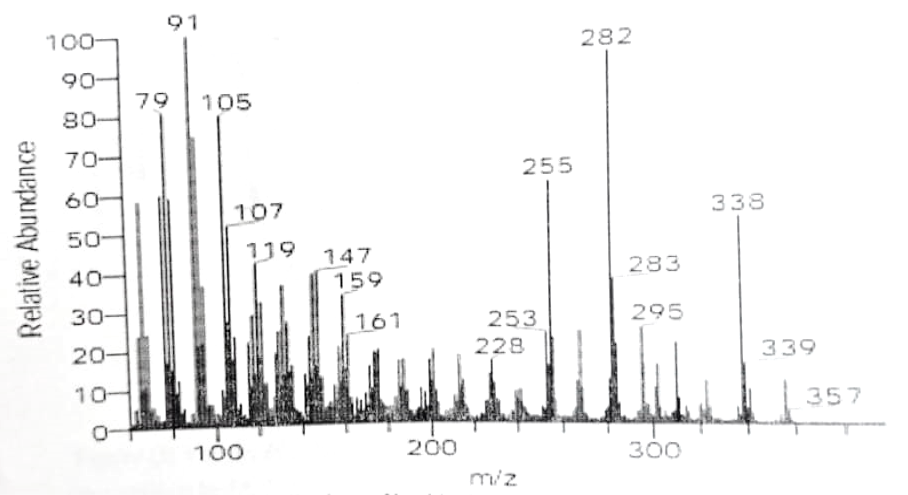
Essential oils charts of healthy plant extraction by hydro distillation and analysis by GC/MS.
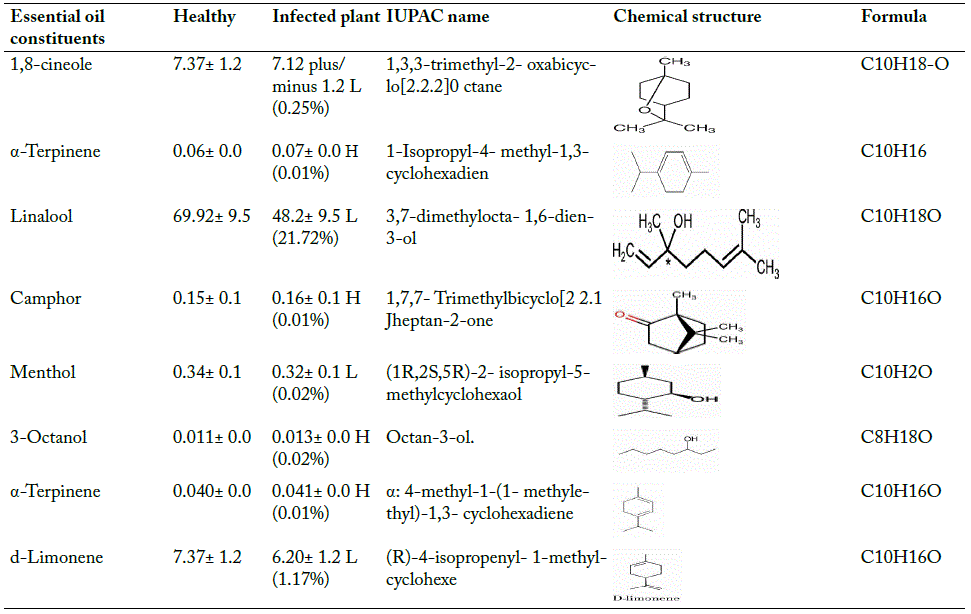
The effect of CMV on Chemical concentration of the essential oils of basil plants.
Virus lead to change concentration of active substance (essential oil) of basil.
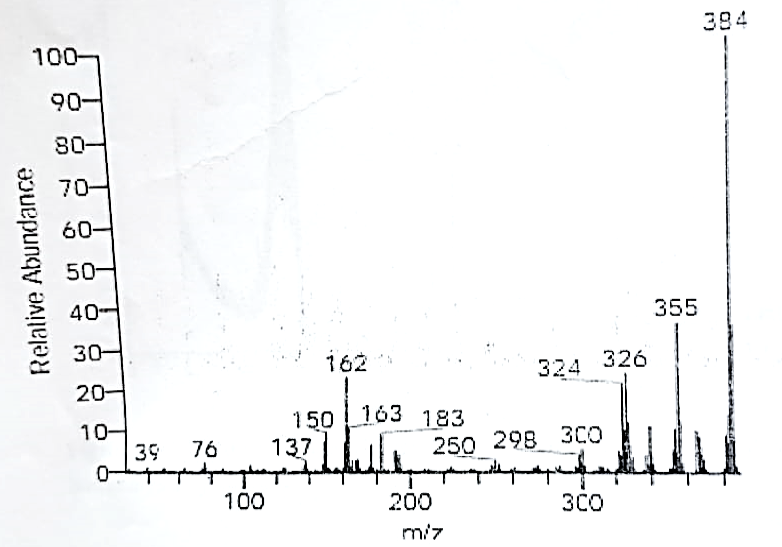
Essential oils charts of infected basil plant extraction by hydro distillation and analysis by GC/MS.
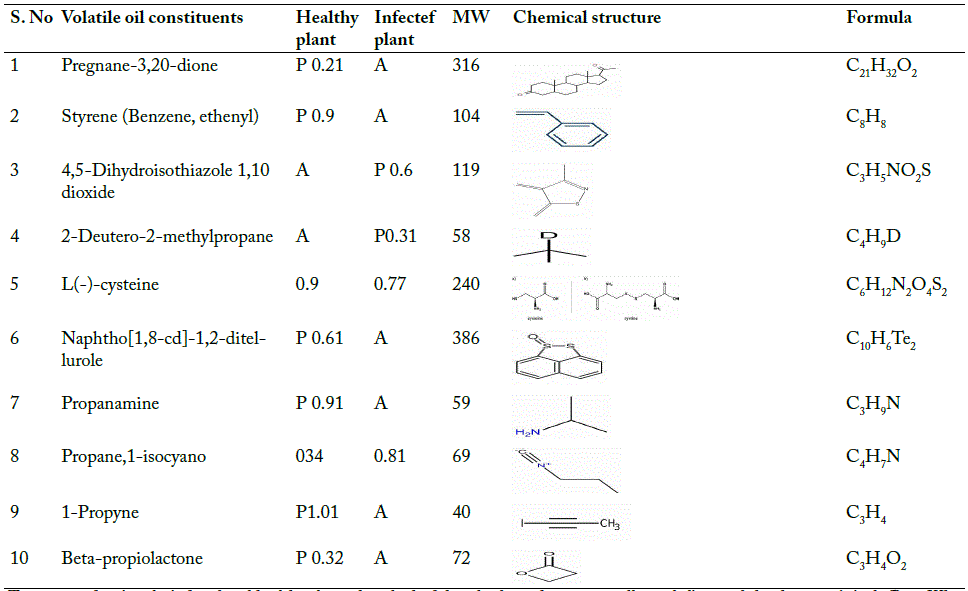
The effect of CMV on chemical concentration of the volatile oils of basil plants.
Treatment of patient by infected and healthy plants show both of them lead to enhancement cell metabolism and they have antiviral effects. When we do comparison between infected and healthy plants we see that healthy plants enhancement cell metabolism more than infected plants Table 3.
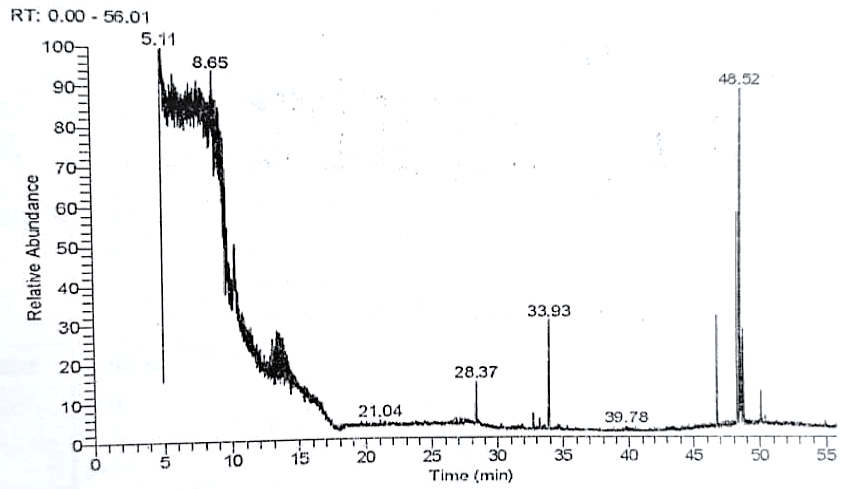
Volatile oils charts of healthy basil plants extraction by hydro distillation and analysis by GC/MS.
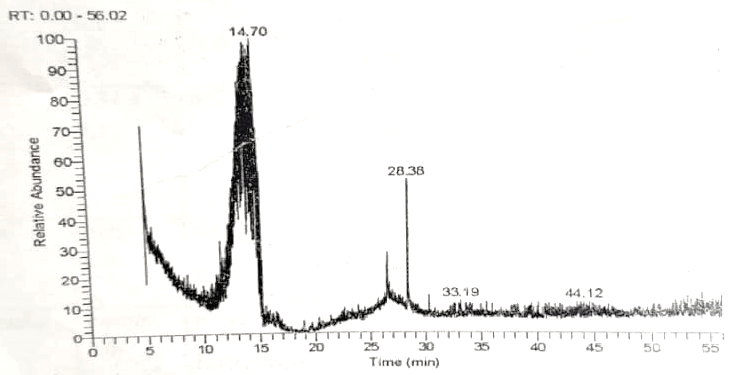
Volatile oils charts of infected basil plants extraction by hydro distillation and analysis by GC/MS.
References
- Ashokkumar, K., Vellaikumar, S., Murugan, M., Dhanya, M.K., Karthikeyan, A., Ariharasutharsan, G., Arjun, P., Sivakumar, P. and Aiswarya, S., 2021. GC/MS analysis of essential oil composition from selected seed spices. Natil. Acad. Sci. Lett., 44: 503-506. https://doi.org/10.1007/s40009-021-01066-7[CrossRef]
- Bowers, W.S. and R. Nishida. 1980. Juvocimenes: Potent juvenile hormones mimics from sweet basil. Science, 209: 1030-1332. https://doi.org/10.1126/science.209.4460.1030[CrossRef]
- Chan, E., Lye, P. and Wong, S., 2016. Phytochemistry, pharmacology, and clinical trials of Morus alba. Chinese J. Natl. Med., 14: 17–30.
- Elgayyar, M., Draughon, F.A., Golden, D.A. and Mount, J.R., 2001. Antimicrobial activity of essential oils from plants against selected pathogenic and saprophytic microorganisms. J. Food Prot., 64: 1019-1024. https://doi.org/10.4315/0362-028X-64.7.1019[CrossRef]
- El-Serag, H.B., Richardson, P.A. and Everhart, J.E., 2001. The role of diabetes in hepatocellular carcinoma: A case- control study among United States Veterans. Am. J. Gastroenterol., pp. 2462-2467. https://doi.org/10.1111/j.1572-0241.2001.04054.x[CrossRef]
- Gill, B.S. and Randhawa G.S., 1996. Effect of different transplanting dates and harvesting stages on the quality of French basil oil. J. Herbs Spices Med. Plants, 3: 35-42.
- Javanmardi, J., Khalighi, A., Kashi, A., Bais, H.P. and Vivanco, J.M., 2002. Chemical characterization of basil (Ocimum basilicum L.) found in local accessions and used in traditional medicines in Iran. J. Agric. Food Chem., 50: 5878-5883. https://doi.org/10.1021/jf020487q[CrossRef]
- Kelm, M.A. and Nair, M.G., 1998. Mosquitocidal compounds and a triglyceride, 1,3- dilinoleneoyl-2-palmitin, from Ocimum basilicum. J. Agric. Food Chem., 46: 3092-3094. https://doi.org/10.1021/jf980304t[CrossRef]
- La Rosa, C. and Diamond, D.J., 2012. The immune response to human CMV. Future Virol., 7(3): 279-293. https://doi.org/10.2217/fvl.12.8[CrossRef]
- Yousif, A.N., Scaman, C.H., Durance, T.D. and Girard, B., 1999. Flavor volatiles and physical properties of vacuum-microwaves-and air-dried sweet basil (Ocimum basilicum L.). J. Agric. Food Chem., 47: 4777-4781. https://doi.org/10.1021/jf990484m[CrossRef]
Services
Article usage statistics
Loading…