Special Issue: Emerging and Re-Emerging Animal Health Challenges in Low and Middle-Income Countries · Volume 13, Issue 1, 13 August 2025 · Open Access
Economic Analysis of Organic vs. Conventional Livestock Farming
· · · · · ·
Affiliations & Notes ⌄
1College of Pharmacy, Al-Farahidi University, Baghdad, Iraq
2College of Pharmacy, Al-Turath University, Baghdad, Iraq
3Department of Pharmacognosy, Al-Bayan University, Baghdad, Iraq
4Department of Medical Laboratories Technology, Al-Bayan University College, Baghdad, Iraq
5Mazaya University College, Iraq
6Department of Optical Techniques, Al-Zahrawi University College, Karbala, Iraq
7Department of Medical Laboratory Technology, University of Imam Jaafar Al-Sadiq. *Correspondence | Zaid Khalid Alani, College of Pharmacy, Al-Turath University, Baghdad, Iraq
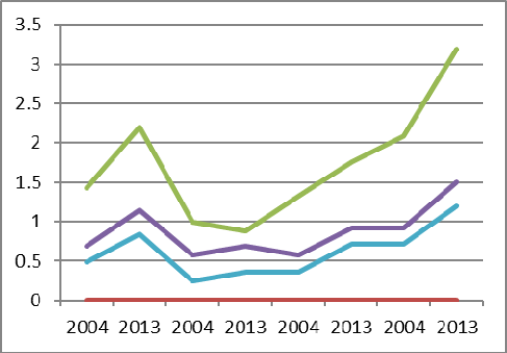
The organic farming sector maintained modest output variation throughout the period with an initial value of €0.99 thousand/ha before reaching €0.88 thousand/ha in 2013 yet improved both gross farm income and family farm income levels demonstrating improved market performance.
The variation suggests that non-organic livestock farmers realize less income, partially because they have lower market valuation of their products.
Organic farms produce higher average annual revenue (₹4.75 lakh) and profit (₹1.75 lakh), suggesting improved overall financial returns.
The cost per liter of milk is significantly greater for organic farms (₹61) than for conventional farms (₹46), affirming the market premium price for organic dairy.
Selected from the article's own text.
Abstract
This research analyzes the role of magnetohydrodynamic pulses and waves, as well as instabilities, in triggering diverse solar transients across different spatiotemporal ranges. The study employs observational data analysis, along with theoretical mexplore methods, to examine how MHD waves interact with plasma structures during solar flares, coronal mass ejections, and coronal jet events. The research examines how slow and fast magnetoacoustic waves interact with Alfvenic perturbations to create magnetic reconnection processes. Research confirms that MHD waves function as triggers for initiating significant solar transients, alongside playing an essential role in space weather prediction. MHD oscillations triggered by instabilities within cold plasma environments prove essential for stimulating and weakening coronal structures.
Keywords | Magnetohydrodynamic waves, Solar transients, Coronal mass ejections (CMEs), Magnetic reconnection, Solar flares, Plasma instabilities, Alfven waves, Space weather
INTRODUCTION
The worldwide agricultural domains have experienced fundamental structural changes throughout the recent decades while sustainability and environmental well-being and economic performance have become pivotal issues . Livestock farming maintains a crucial position because it supports food security and both rural economic growth and agricultural productivity possibilities. Traditional livestock farming systems continue to follow conventional production methods by intensively growing farm animals by using synthetic chemicals together with antibiotics growth hormones and genetically modified animal feed . Organic livestock farming has become a crucial substitute in response to escalating environmental worries together with rising public interest in food security and animal well-being and chemical effect on human health.
The core elements of organic livestock farming include breeding without artificial methods along with products of organic origin and a total ban of synthetic products and a dual emphasis on environmental preservation and animal well-being . The economic viability of organic farming becomes essential for authorities and farmers and financial stakeholders despite organic agriculture’s common positive effects on environmental health . Organic systems present higher production expenses in addition to stricter certification requirements and labor-intensive methods that create doubts regarding economic competitiveness compared to conventional production systems . Market competition gives organic products increased value, so consumers end up covering the higher expenses.
The paper examines organic livestock farming economics alongside conventional approaches by analyzing costs, profits, input efficiency and market demands with pricing stability effects and environmental sustainability measures . The comparison stands essential as farmers make their transition decisions about conventional farming to organic farming due to both economic objectives and environmental motives . The rising number of farmers seeks to understand if organic farming systems provide economic sustainability alongside environmental benefits .
The economic analysis assesses financial returns alongside measuring indirect economic aspects that include livestock disease resistance coupled with lower veterinary expenses linked to natural rearing methods and expense costs from chemical usage and pollution affecting conventional farming practices . The research investigates consumer purchasing behaviors alongside their price readiness for organic products as well as government support through policies and trade regulations that affect conventional and organic livestock markets .
This investigation explores solutions for both obstacles and available opportunities. The combination of environmental advantages and health benefits from organic livestock farming is limited by problems like supply chain complexity and scalability issues and certification requirements . The conventional farming methods keep their dominance in world markets because they maintain lower operational costs and existing infrastructure despite receiving criticism regarding environmental damage, antibiotic-resistant effects, and decreasing customer confidence .
This research performs a comprehensive economic comparison to fill the existing knowledge gap about organic livestock profitability in relation to traditional farming methods . The study delivers results to support farmers in selecting appropriate decisions while aiding policymakers in creating supportive regulations and helping consumers understand food price structures .
The research adds value to scholarly discussions about sustainable agriculture because it shows how profitable farming systems can manage economic success alongside environmental sustainability and animal welfare . Based on critical world challenges such as climate change and food security and health wellness awareness it becomes essential to understand the economic links between organic and conventional livestock farming production systems.
MATERIALS AND METHODS
Study area and sample selection
The research evaluated the financial outcome and profitability between organic farming with conventional livestock production systems . The research team obtained data from dairy farms situated in agricultural regions which are recognized for organic and conventional dairy agriculture. The study utilized purposive sampling to choose 10 livestock farms between conventional and organic types to attain crop size and geographical and management practice representation .
Data collection procedure
Interviews along with farm visits combined with questionnaires directed at farm owners served as the methods to collect primary data . The analysis relied on secondary documentation which included published reports with market prices as well as documentation about farm certifications and veterinary records . Economic performance data consisted of annual revenue levels as well as profit amounts as well as price per unit of milk and feed and veterinary and certification expenses and labor needs . The research process involved obtaining financial data from the entire recent completed fiscal year to ensure data integrity.
Economic parameters studied
The research investigated major economic measures from organic and conventional livestock operations to assess financial success and operational sustainability . Total milk sales figures during the year served as the key economic indicator to evaluate. Farm profit was determined through revenue subtraction of essential costs including feed expenditure and veterinary care payments and certification fees (organic farms) and personnel costs . The milk market valuation became evident through unit pricing at rupees per liter which allowed assessment of product value between different farming approaches . The annual cost of animal feed included all expenses while organic farms ran higher costs because they required certified organic feed. The veterinary cost category included spending on animal healthcare expenses combined with medicinal products and medical service payment during the year . Organic farms needed to take certification cost into account as an annual expense to sustain their organic certification requirements. Each farming system required evaluation of the annual workdays needed to run the farm with livestock care presented as a key indicator of labor requirements . A scale from 1 to 5 was used to measure price fluctuation risk through which farmers assessed their market price volatility risk in both local and regional dairy markets with 1 indicating lowest risk and 5 indicating highest risk.
Quantitative comparison and data analysis
A descriptive statistical analysis method treated the gathered information. Tables 1, 2, 3 show comparisons between organic and conventional farming systems for revenue, profit, costs as well as risks. Total output along with gross and family farm incomes showed their trends across farming types and through the years through bar charts and comparative figures .
Statistical tools and interpretation
Microsoft Excel served to process the data which received analytical assessment through descriptive statistics and comparative analysis. Each data parameter received its average value calculation. The research team collected farm-based price fluctuation scores which the analysts confirmed through independent market price examination. A graphical method presented the differences and trends between organic and conventional farming methods (Al Tmimi et al., 2024).
RESULTS AND DISCUSSION
The findings and assessment of this research present extensive information which shows the major financial differences while analyzing key performance measures between organic and conventional livestock farming operations . Organic livestock farms reported better financial results than conventional farms because they generated annual revenue of ₹4.75 lakh and average annual profits of ₹1.75 lakh per farm but conventional farms only yielded ₹4.22 lakh revenue and ₹1.50 lakh profit annually. Organic farming achieves higher financial success by charging organic dairy farmers an average of ₹61 per liter of milk because consumers seek environmentally friendly and chemical-free premium dairy products. Organic farming incurs higher costs in feed prices of ₹82,000 and certification fees of ₹15,000 for each farm while requiring 210 workdays every year from laborers thus making the model both more expensive to operate and more demanding in terms of manpower .
Organic animal healthcare management relies on natural and preventative approaches which results in lower veterinary expenses amounting to ₹13,000. The lower feed expenses (₹66,000) and middle-level annual labor requirements (170 workdays/year) in conventional farming operations do not offset the high price uncertainty (rated 4.2 out of 5) which leads to earnings instability and strategic planning challenges for farmers. The commercial price for milk paid to conventional farmers amounts to only ₹46 per liter which diminishes their profitability. Organic farming necessitates greater initial capital investment and manual labor yet leads to improved economic results and steady pricing together with decreased market uncertainties . Research data displayed in Figure 1 indicates that all farm types displayed profitability growth and livestock operations exhibited the most successful performance results. Organic farming demonstrates continual expansion yet requires supportive policies with technological advancements and efficient management to handle labor expenses and costs which will boost organic livestock farming’s sustainable development over extended periods.
Figure 1 demonstrates substantial growth in agricultural output figures as well as gross farm revenue andfamily farm earnings across all segments between 2004 and 2013 because of modern technologies combined with better agricultural management strategies together with government policy support. All farming sectors in 2004 produced a total output of €1.43 thousand/ha but this grew to €2.20 thousand/ha in 2013. Family farms experiencing a profound rise in income contributed to the expansion of gross farm income by €0.46 thousand/ha while family income expanded by €0.36 thousand/ha during this period. The organic farming sector maintained modest output variation throughout the period with an initial value of €0.99 thousand/ha before reaching €0.88 thousand/ha in 2013 yet improved both gross farm income and family farm income levels demonstrating improved market performance. The mixed farming system maintained steady growth by delivering €1.32 thousand/ha of total output which grew to €1.76 thousand/ha and generated sizeable income gains from diversification .
The livestock sector showed the highest level of advancement based on the growth of total output from €2.09 thousand/ha in 2004 to €3.19 thousand/ha in 2013 combined with gross farm income’s increase from €0.92 thousand/ha to €1.50 thousand/ha. Family farm income in livestock rose significantly from €0.72 thousand/ha to €1.20 thousand/ha because precision livestock farming along with better veterinary care and nutritional management likely led to this strong increase. The analyzed data demonstrates that farmers obtained significant financial improvements through sustainable farming investments along with contemporary agricultural advancements while livestock operations recorded the most considerable growth. Through continuous support and innovation farmers could substantially enhance productivity alongside profitability which in turn ensures better economic conditions for agricultural families.
Table 1 provides complete economic data about organic livestock farming which demonstrates both benefits and difficulties of organic farming methods. The revenue generated by organic farms during one year reaches between ₹4.6 lakh to ₹4.9 lakh while profits fluctuate from ₹1.6 lakh to ₹1.9 lakh. The market situation indicates both profitability and long-term stability because people show increased interest in organic and chemical-free livestock products. The higher organic milk liter price of ₹62 stands as a central driver of profitability because it represents an indication of market demand for eco-sustainable products that are nutritionally superior.
Although the profitability manifests itself there are numerous costs to fulfill that exceed basic expenses. Organic farms must pay higher feed expenses totaling ₹85,000 because they need feed with an organic certification. The amount that farmers pay for veterinary services in their farms stands at ₹12,000 primarily because organic farms heavily emphasize preventive and natural health care methods. The unavoidable expenses for maintaining organic certification include the certification costs which amount to ₹15000. The labor need in organic farming is substantial given the yearly average of 210 necessary working days which demonstrates its business is laborious by nature. Sustained productivity faces scalability threats due to high labor requirements which should either be handled through effective management systems or innovative technology and governmental assistance.
Conversely, Table 2 presents the financial performance of non-organic livestock farmers with lower revenue and profit margins than in organic systems. Revenue varies annually from ₹4.1 lakh to ₹4.3 lakh, while profit varies from ₹1.4 lakh to ₹1.6 lakh. The variation suggests that non-organic livestock farmers realize less income, partially because they have lower market valuation of their products. The unit price of milk in conventional farms is ₹45, which is much lower compared to organic systems. Although conventional farms enjoy relatively lower feed expenses (₹65,000) and average labor requirements (170 days), they also have higher veterinary bills (₹20,000), indicating that animals may be more susceptible to disease or need more medical interventions under conventional systems. Besides, one of the key challenges facing traditional farmers is price volatility, which has a high-risk value meaning exposure to market volatility. Such volatility is capable of interfering with farmers’ budgeting and financial security. Although traditional farming is seemingly less labor-intensive and certificatory in nature, its advantages are outweighed by lower market value of products and increased susceptibility to market fluctuations, making it marginally less profitable and financially risky.
Table 1: Economic performance of organic livestock farmers.
Isolate No.
Farm ID
Annual revenue (₹)
Profit (₹)
Key economic factor
Value
Organic Farm No. 1
OF-01
4.8 L
1.8 L
Price per unit (milk)
₹62
Organic Farm No. 2
OF-02
4.7 L
1.7 L
Feed Cost
₹85 K
Organic Farm No. 3
OF-03
4.6 L
1.6 L
Veterinary Cost
₹12 K
Organic Farm No. 4
OF-04
4.9 L
1.9 L
Certification Cost
₹15 K
Organic Farm No. 5
OF-05
4.75 L
1.75 L
Labor Demand
High (210 days)
Table 2: Economic performance of conventional livestock farmers.
Isolate No.
Farm ID
Annual revenue (₹)
Profit (₹)
Key economic factor
Value
Conventional Farm No. 1
CF-01
4.2 L
1.5 L
Price per unit (milk)
₹45
Conventional Farm No. 2
CF-02
4.1 L
1.4 L
Feed cost
₹65 K
Conventional Farm No. 3
CF-03
4.3 L
1.6 L
Veterinary cost
₹20 K
Conventional Farm No. 4
CF-04
4.25 L
1.55 L
Labor demand
Medium (170 days)
Conventional Farm No. 5
CF-05
4.15 L
1.45 L
Price fluctuation risk
High
Table 3: Quantitative comparison of organic vs. conventional livestock farming.
Parameter
Organic farming (Avg. per farm)
Conventional farming (Avg. per farm)
Average annual revenue (₹)
4.75 L
4.22 L
Average profit (₹)
1.75 L
1.50 L
Average feed cost (₹)
82,000
66,000
Price per liter of milk (₹)
61
46
Veterinary cost (₹)
13,000
18,000
Labor demand (in workdays/ year)
210
170
Price fluctuation risk (Score/5)
2.0 (Low)
4.2 (High)
Table 3 presents a quantitative comparison between organic and conventional livestock farming and the trade-offs and advantages of each system. Organic farms produce higher average annual revenue (₹4.75 lakh) and profit (₹1.75 lakh), suggesting improved overall financial returns. These, however, are at greater cost and labor intensity. Organic feed costs are more (₹82,000) than for conventional (₹66,000), as organic inputs are premium in nature. Organic farming also has greater labor demand (210 workdays/year), reflecting the need for additional manual labor and animal attention. The cost per liter of milk is significantly greater for organic farms (₹61) than for conventional farms (₹46), affirming the market premium price for organic dairy. Veterinary expenses are also lower in organic farming (₹13,000), perhaps reflecting improved animal welfare standards and less chemical intervention. Price risk of fluctuation is relatively low for organic production (2.0 out of 5), as opposed to a high risk level of 4.2 in conventional production, implying that the organic farmers have more stable and predictable revenues. Generally, the evidence suggests that organic livestock production involves more labour and capital, but also returns more, is more stable, and more sustainably lasting than conventional livestock production.
CONCLUSION AND RECOMMENDATION
It concludes that MHD pulses, waves, and instabilities are basic drivers and precursors of solar transients and govern the onset and development of solar flares, CMEs, and coronal jets. The interaction of MHD waves with reconnection in cold plasma regimes gives rise to intricate dynamic behavior capable of destabilizing coronal structures and liberating titanic amounts of energy. The study verifies that observational signatures and theoretical modeling both corroborate the pivotal role played by wave-induced instabilities and their contributions to space weather events. From these discoveries, future observational research should aim for multi-wavelength imaging together with spectroscopic diagnostics for identifying early signatures of MHD waves prior to large transients. Moreover, finer simulations with nonlinear MHD dynamics and temperature anisotropy are required to improve wave instability coupling in solar plasma. Ongoing observation of MHD waves in the solar corona would greatly improve space weather event forecasting models, and interdisciplinary research combining solar physics and laboratory plasma experiments is recommended to test theoretical predictions under controlled environments.
ACKNOWLEDGEMENT
The authors would like to thank Al-Bayan University, as well as the field technicians who helped with the study.
NOVELTY STATEMENT
The originality of this paper is its thorough examination of complex magnetohydrodynamic (MHD) pulse-wave-plasma instability relationships and their interactive roles in the triggering of different solar transients like solar flares, coronal mass ejections (CMEs), and solar prominences. Whereas earlier research has studied these phenomena in isolation, this paper offers a complete theoretical and observational integration that fills the gap between localized plasma dynamics and massive solar eruptions. The work explores how MHD waves, especially in cold plasma situations where thermal pressure is insignificantly small in comparison to magnetic pressure, serve as major drivers for initiating instabilities that run amok to full-blown solar transients. This degree of analysis is important for determining early warning signs of solar activity and comprehending the causal processes involved in sudden releases of energy in the solar atmosphere, leading to dramatic influences on space weather.In addition, this research is new in its methodology of combining multi-scale observations with sophisticated theoretical modeling to illustrate how MHD wave-induced instabilities develop across various spatial and temporal scales. Through the systematic examination of how small-scale oscillations and perturbations propagate and grow to result in macro-level eruptions, the article bridges an important gap in existing space weather forecasting capability. The study highlights that knowledge of such dynamic precursors is critical in creating predictive models that can foresee solar storms and their likely effects on Earth’s magnetosphere, satellite missions, and communications. This extensive investigation not only pushes the science behind solar dynamics forward but also adds practical solutions in space weather forecasting and risk management.
AUTHOR’S CONTRIBUTION
All of the trials were designed by Marwah Sami Kzar and Zaid Khalid Alani. Hasan Alauldeen Khalaf, Resan Shakir Abdulamer and Reem Hamdan Khaddour conducted all of the tests, gathered the data, and composed the manuscript draft. Hasan Abdullah and Ali Mohammed Hikmat helped with the data analysis that was done to prepare the work for submission to the journal. The final draft of the work was reviewed and approved by all authors for publication in the Journal of Animal and Health Production.
Ethical consideration
Not applicable.
Conflict of interest
The authors have declared no conflict of interest.
Figures
Figure 1:.
Organic livestock farming profit analysis.
References
Åkerfeldt MP, Gunnarsson S, Bernes G, Blanco-Penedo I (2021). Health and welfare in organic livestock production systems a systematic mapping of current knowledge. Organic Agric., 11(1): 105-132. https://link.springer.com/article/10.1007/s13165-020-00334-y
Al-Tmimi HM, Al Dulaimi SA, Ali BA, Ghanim HA, Alani ZK (2024). Seroprevalence and detection of Toxoplasma gondii and Echinococcus granulosus in humans by indirect immunoglobulin G enzyme-linked immunosorbent assays in Baghdad. Arch. Razi Inst., 79(3): 669. https://doi.org/10.32592/ARI.2024.79.3.669[CrossRef]
Bassignana CF, Merante P, Belliére S. R, Vazzana C, Migliorini P (2022). Assessment of agricultural biodiversity in organic livestock farms in Italy. Agronomy, 12(3): 607. https://www.mdpi.com/2073-4395/12/3/607, https://doi.org/10.3390/agronomy12030607[CrossRef]
Brandt K, Mølgaard JP (2001). Organic agriculture: does it enhance or reduce the nutritional value of plant foods? J. Sci. Food Agric., 81(9): 924-931. https://scijournals.onlinelibrary.wiley.com/doi/abs/10.1002/jsfa.903, https://doi.org/10.1002/jsfa.903[CrossRef]
Cederberg C, Mattsson B (2000). Life cycle assessment of milk production a comparison of conventional and organic farming. J. Cleaner Prod., 8(1): 49-60. https://www.tandfonline.com/doi/abs/10.1080/07352689.2011.554355, https://doi.org/10.1016/S0959-6526(99)00311-X[CrossRef]
Dalgaard T, Halberg N, Porter JR (2001). A model for fossil energy use in Danish agriculture used to compare organic and conventional farming. Agric. Ecosyst. Environ., 87(1): 51-65. https://www.sciencedirect.com/science/article/abs/pii/S0167880900002978, https://doi.org/10.1016/S0167-8809(00)00297-8[CrossRef]
De Ponti T, Rijk B, Van Ittersum MK (2012). The crop yield gap between organic and conventional agriculture. Agric. Syst., 108: 1-9. https://www.sciencedirect.com/science/article/abs/pii/S0308521X1100182X, https://doi.org/10.1016/j.agsy.2011.12.004[CrossRef]
Díaz-Gaona C, Sánchez-Rodríguez M, Rucabado-Palomar T, Rodríguez-Estévez V (2019). A typological characterization of organic livestock farms in the Natural Park Sierra de Grazalema based on technical and economic variables. Sustainability, 11(21): 6002. https://www.mdpi.com/2071-1050/11/21/6002, https://doi.org/10.3390/su11216002[CrossRef]
Fließbach A, Oberholzer HR, Gunst L, Mäder P (2007). Soil organic matter and biological soil quality indicators after 21 years of organic and conventional farming. Agric. Ecosyst. Environ., 118(1-4): 273-284. https://www.sciencedirect.com/science/article/abs/pii/S0167880906001794, https://doi.org/10.1016/j.agee.2006.05.022[CrossRef]
Gaudaré U, Pellerin S, Benoit M, Durand G, Dumont B, Barbieri P, Nesme T (2021). Comparing productivity and feed-use efficiency between organic and conventional livestock animals. Environ. Res. Lett., 16(2): 024012. https://iopscience.iop.org/article/10.1088/1748-9326/abd65e/meta, https://doi.org/10.1088/1748-9326/abd65e[CrossRef]
Hansson I, Hamilton C, Ekman T, Forslund K (2000). Carcass quality in certified organic production compared with conventional livestock production. J. Vet. Med., Ser. B, 47(2): 111-120. https://onlinelibrary.wiley.com/doi/abs/10.1046/j.1439-0450.2000.00313.x
Harper GC, Makatouni A (2002). Consumer perception of organic food production and farm animal welfare. Br. Food J., 104(3/4/5): 287-299. https://doi.org/10.1108/00070700210425723[CrossRef]
Hermansen JE (2003). Organic livestock production systems and appropriate development in relation to public expectations. Livest. Prod. Sci., 80(1-2): 3-15. https://www.sciencedirect.com/science/article/pii/S0301622602003135, https://doi.org/10.1016/S0301-6226(02)00313-5[CrossRef]
Hovi M, Sundrum A, Thamsborg SM (2003). Animal health and welfare in organic livestock production in Europe: Current state and future challenges. Livest. Prod. Sci., 80(1-2): 41-53. https://www.sciencedirect.com/science/article/pii/S0301622602003202, https://doi.org/10.1016/S0301-6226(02)00320-2[CrossRef]
Jauregi L, Epelde L, Alkorta I, Garbisu C (2021). Antibiotic resistance in agricultural soil and crops associated to the application of cow manure-derived amendments from conventional and organic livestock farms. Front. Vet. Sci., 8: 633858. https://www.frontiersin.org/journals/veterinary-science/articles/10.3389/fvets.2021.633858/full, https://doi.org/10.3389/fvets.2021.633858[CrossRef]
Kijlstra A, Eijck IAJM (2006). Animal health in organic livestock production systems: A review. NJAS-Wageningen J. Life Sci., 54(1): 77-94. https://www.sciencedirect.com/science/article/pii/S1573521406800059, https://doi.org/10.1016/S1573-5214(06)80005-9[CrossRef]
Küstermann B, Kainz M, Hülsbergen KJ (2008). Modeling carbon cycles and estimation of greenhouse gas emissions from organic and conventional farming systems. Renew. Agric. Food Syst., 23(1): 38-52. https://www.cambridge.org/core/journals/renewable-agriculture-and-food-systems/article/modeling, https://doi.org/10.1017/S1742170507002062[CrossRef]
Lampkin N, Padel S, Foster C (2000). Organic farming. In CAP regimes and the European countryside: prospects for integration between agricultural, regional and environmental policies. Wallingford UK: CABI Publishing. pp. 221-238. https://www.cabidigitallibrary.org/doi/abs/10.1079/9780851993546.0221
Lund V (2006). Natural living a precondition for animal welfare in organic farming. Livest. Sci., 100(2-3): 71-83. https://www.cabidigitallibrary.org/doi/abs/10.1079/9780851993546.0221, https://doi.org/10.1016/j.livprodsci.2005.08.005[CrossRef]
Morgan K, Murdoch J (2000). Organic vs. conventional agriculture: Knowledge, power and innovation in the food chain. Geoforum, 31(2): 159-173. https://www.sciencedirect.com/science/article/abs/pii/S0016718599000299, https://doi.org/10.1016/S0016-7185(99)00029-9[CrossRef]
Pacini C, Wossink A, Giesen G, Vazzana C, Huirne R (2003). Evaluation of sustainability of organic, integrated and conventional farming systems: A farm and field-scale analysis. Agric. Ecosyst. Environ., 95(1): 273-288. https://www.sciencedirect.com/science/article/pii/S0167880902000919, https://doi.org/10.1016/S0167-8809(02)00091-9[CrossRef]
Patra AK (2007). Nutritional management in organic livestock farming for improved ruminant health and production. An overview. Livest. Res. Rural Dev., 19(3): 41. http://lrrd.cipav.org.co/lrrd19/3/patr19041.htm
Pimentel D, Burgess M (2014). An environmental, energetic and economic comparison of organic and conventional farming systems. Integr. Pest Manage. Pesticide Problems, 3: 141-166. https://link.springer.com/chapter/10.1007/978-94-007-7796-5_6
Reddy BS (2010). Organic farming: Status, issues and prospects. A review. Agricultural economics research review, 23(2): 343-358. https://ageconsearch.umn.edu/record/97015/
Reganold JP, Wachter JM (2016). Organic agriculture in the twenty-first century. Nat. Plants, 2(2): 1-8. https://www.nature.com/articles/nplants2015221.
Seufert V, Ramankutty N, Foley JA (2012). Comparing the yields of organic and conventional agriculture. Nature, 485(7397): 229-232. https://www.nature.com/articles/nature11069
Sundrum A (2001). Organic livestock farming: A critical review. Livest. Prod. Sci., 67(3): 207-215. https://www.sciencedirect.com/science/article/abs/pii/S0301622600001883
Tuomisto HL, Hodge ID, Riordan P, Macdonald DW (2012). Does organic farming reduce environmental impacts? A meta-analysis of European research. J. Environ. Manage., 112: 309-320. https://www.sciencedirect.com/science/article/abs/pii/S0301479712004264, https://doi.org/10.1016/j.jenvman.2012.08.018[CrossRef]
Von Borell E, Sørensen JT (2004). Organic livestock production in Europe: Aims, rules and trends with special emphasis on animal health and welfare. Livest. Prod. Sci., 90(1): 3-9. https://www.sciencedirect.com/science/article/pii/S0301622604001150, https://doi.org/10.1016/j.livprodsci.2004.07.003[CrossRef]
Watson CA, Atkinson D, Gosling P, Jackson LR, Rayns FW (2002). Managing soil fertility in organic farming systems. Soil Manage., 18: 239-247. https://bsssjournals.onlinelibrary.wiley.com/doi/abs/10.1111/j.1475-2743.2002.tb00265.x