Special Issue: Emerging and Re-Emerging Animal Health Challenges in Low and Middle-Income Countries · Volume 13, Issue 1, 13 August 2025 · Open Access
Assessment of Anthelmintic Resistance in Cattle Parasite Populations
· · ·
Affiliations & Notes ⌄
- 1Department of Physics, Tuzkhurmatu Education College, Tikrit University, Bghdad, Iraq
- 2Department of Pharmacology and Toxicology, College of Pharmacy, Al-Bayan University, Baghdad, Iraq. *Correspondence | Turkan Ahmed Hama Hasan, Department of physics, Tuzkhurmatu Education college, Tikrit University, Bghdad, Iraq
- 3Email: dr.nibrasjamal@gmail.com
Article Info ⌄
- Journal:
- Journal of Animal Health and Production
- Published:
- 13 August 2025

From the article
- In field conditions, the results provide valuable new insights into the prevalence of parasite infections and the emerging issue of anthelmintic resistance.
- EPG post-treatment levels were compared with those pre-treatments to derive the faecal egg count reduction percentage (FECR%), which is used as a reference for determining anthelmintic resistance.
- These results collectively indicate a broad and increasing resistance in GINs to several anthelmintic classes in the study area, underscoring the imperative need for strategic drug rotation, integrated parasite management, and ongoing resistance monitoring.
- To reduce the escalating issue of anthelmintic resistance, there is a proposal that cattle farms adopt integrated parasite management (IPM) techniques.
Selected from the article's own text.
Abstract
INTRODUCTION
Gastrointestinal nematodes (GINs) are a significant limitation to the health and productivity of cattle in both tropical and temperate livestock systems. Internal parasites cause impaired nutrient absorption, decreased feed efficiency , and compromised immune function, resulting in poor weight gain, reduced milk production, reproductive inefficiency , and, under chronic infestation, mortality. Control of GIN infections has long been based on the regular use of anthelmintic drugs . Nevertheless, their intensive and frequently uncontrolled use has led to the widespread development of anthelmintic resistance (AR), which is now acknowledged as an expanding risk to sustainable livestock production .
Anthelmintic resistance involves the survival of drug-treated nematode parasites, which once responded to medications, and subsequently causes recurrent infections and impaired control measures . All these are the main drivers behind anthelmintic resistance, including repeated re-use of one drug class in succession without rotation , under-dosing resulting from improper estimation of weights, a failure to perform fecal egg count monitoring, and mass administration of all herd animals without identification based on their infection status . The outcome of these practices is a decreased efficacy of drugs, higher parasite control costs, and increased reliance on limited treatment options, particularly in areas where new anthelmintic molecules are not easily accessible .
With this background, the present study aimed to evaluate the current situation of anthelmintic resistance in gastrointestinal nematodes of cattle on the selected farms . The investigation includes an extensive parasitological survey using faecal egg count methods for prevalence determination and the Faecal Egg Count Reduction Test (FECRT) for efficacy determination of the standard anthelmintics benzimidazoles (albendazole) , macrocyclic lactones (ivermectin), and imidazothiazoles (Levamisole). Additionally, post-treatment larval cultures were conducted to identify surviving nematode genera, providing insight into the species composition involved in resistance. A farm-level structured assessment was also implemented to detect management and drug-use practices responsible for the establishment of resistance.
By combining epidemiological information with laboratory results, this research aims to provide valuable insights into the incidence, severity, and drug resistance profiles of GIN infections . The findings are hoped to guide evidence-based deworming strategies and promote the adoption of integrated parasite management practices towards reducing the development of anthelmintic resistance among cattle populations.
MATERIALS AND METHODS
The research was conducted at several cattle farms. 120 cattle were sampled randomly from parasitically infested herds with clinical evidence of parasitism, as indicated by diarrhoea, poor body weight gain, and rough coats. Both local and crossbred individuals of all age groups and physiological conditions were used in the research to provide diverse representation in the sampled population.
Sample collection
Fresh rectal faecal samples from selected cattle were obtained directly using sterile gloves and placed in hermetically sealed containers . The samples were labelled correctly and shipped refrigerated (4°C) to the laboratory. Processing was completed within 24 hours of sampling to maintain the integrity of the samples and prevent hatching or damage to helminth eggs.
Parasitological examination
The eggs per gram (EPG) of faeces was calculated using the Modified McMaster technique, which enables the quantitative estimation of nematode egg load. For the efficacy testing phase, only samples with a parasitic load of≥150 EPG were used, thereby limiting the analysis to animals with a high parasitic burd ; .
Anthelmintic treatment
The following anthelmintics available in the market were given orally to the 120 positive cattle, which were divided into four groups of 30 animals each randomly :
Group I: Benzimidazoles (7.5 mg/kg body weight of albendazole, for instance).
Group II: Macrocyclic Lactones, like 0.2 mg/kg body weight of ivermectin
Group III: Imidazothiazoles (7.5 mg/kg body weight of Levamisole, for instance).
Group IV: Placebo control group receiving no treatment
All body weights of the cattle were measured accurately or estimated with a weight tape, and dosage was carefully calculated not to administer either too much or too little dosage.
Fecal egg count reduction test (FECRT)
Faecal samples from all the animals were also taken 14 days after treatment to evaluate the effectiveness of the treatment. The Faecal Egg Count Reduction (FECR) percentage was determined by the formula :

Based on the WAAVP guidelines, efficacy below 95% with a lower 95% confidence limit below 90% was considered indicative of resistance to anthelmintics.
Larval identification and culture
For qualitative verification of the infecting genera of nematodes, faecal pools were cultured from each group . The cultures were incubated under optimal conditions for 7–10 days, allowing the third-stage larvae (L3) to develop. The L3 larvae were collected and identified using a compound microscope, based on their morphology (e.g., tail length of the sheath, head shape), utilizing standard taxonomic keys .
RESULTS AND DISCUSSION
This section presents the results of a field study conducted to establish the prevalence of gastrointestinal nematodes (GINs) in cattle and the efficacy of traditional anthelmintic drugs. Faecal Egg Count Reduction Tests (FECRT), parasitological examinations , larval cultures, and data analysis specific to a particular farm are the foundation of the conclusions. In field conditions, the results provide valuable new insights into the prevalence of parasite infections and the emerging issue of anthelmintic resistance.
Prevalence of gastrointestinal nematodes (GINS)
One hundred twenty cattle from different farms were examined. A total of 104 animals (86.7%) were positive for gastrointestinal nematodes using the faecal examination.
Table 1: Prevalence and intensity of GIN infection across study sites.
| Farm code | No. of cattle examined | No. positive for GIN | Prevalence (%) | Mean EPG (±SD) |
| Farm A | 30 | 26 | 86.7 | 620 ± 145 |
| Farm B | 30 | 27 | 90.0 | 700 ± 180 |
| Farm C | 30 | 25 | 83.3 | 660 ± 170 |
| Farm D | 30 | 26 | 86.7 | 720 ± 200 |
| Total | 120 | 104 | 86.7 | 675 ± 174 |
As Table 1 illustrates, a total of 120 cattle from four farms were examined, with 104 animals (86.7%) testing positive for gastrointestinal nematodes. The rates of prevalence were relatively narrow, from 83.3% to 90.0%, between farms, which reflects the overall high infection rate . Farm B had the highest prevalence at 90.0%, whereas Farm C recorded the lowest at 83.3%. The mean EPG ranged between 620 ± 145 and 720 ± 200, with Farm D having the highest mean EPG, indicating a greater intensity of infection . Regardless of minimal variations in infection and egg rates, all the farms had moderate to heavy parasitic loads, highlighting the pressing need for regular deworming practices, parasite control programs, and resistance surveillance to mitigate the effects of GINs in cattle.
Efficacy of anthelmintics (FECRT results)
To assess the effectiveness of routinely applied anthelmintics and determine the presence of resistance , the Faecal Egg Count Reduction Test (FECRT) was performed on 104 infested cattle. The cattle were divided into four groups at random, with each group receiving a different type of treatment, except for the control group. EPG post-treatment levels were compared with those pre-treatments to derive the faecal egg count reduction percentage (FECR%), which is used as a reference for determining anthelmintic resistance.
As shown in Table 2, all three treatment groups of anthelmintics exhibited different levels of efficacy against EPG counts. Group I, which received benzimidazoles, recorded an FECR of 82.9%, indicating confirmed resistance, as the reduction was less than the 95% level. Group II, which received macrocyclic lactones, also exhibited confirmed resistance with an FECR of 89.0% . Group III, which was treated with imidazothiazoles, had an FECR of 94.8%, indicating suspected resistance as the result was on the borderline close to 95%. The control group (Group IV) exhibited a rise in EPG, validating the natural course of infection when left untreated. These results collectively indicate a broad and increasing resistance in GINs to several anthelmintic classes in the study area, underscoring the imperative need for strategic drug rotation, integrated parasite management, and ongoing resistance monitoring.
Larval culture findings post-treatment
Larval cultures were conducted using pooled faecal samples from each treatment group to identify the nematode taxa responsible for persistence after treatment . To allow for resistance patterns and to provide information on the dominant parasites capable of surviving anthelmintic treatment, this enabled the genus-level identification of infectious third-stage larvae (L3).
Table 2: FECRT results for different anthelmintic groups.
| Treatment group | Drug class | Mean pre-treatment EPG | Mean post-treatment EPG | FECR (%) | 95% confidence limit | Interpretation |
| Group I | Benzimidazoles | 675 | 115 | 82.9 | 76 | Confirmed resistance |
| Group II | Macrocyclic Lactones | 690 | 76 | 89.0 | 84 | Confirmed resistance |
| Group III | Imidazothiazoles | 660 | 34 | 94.8 | 91 | Suspected resistance |
| Group IV | Control | 690 | 705 | -2.2 | - | No treatment |
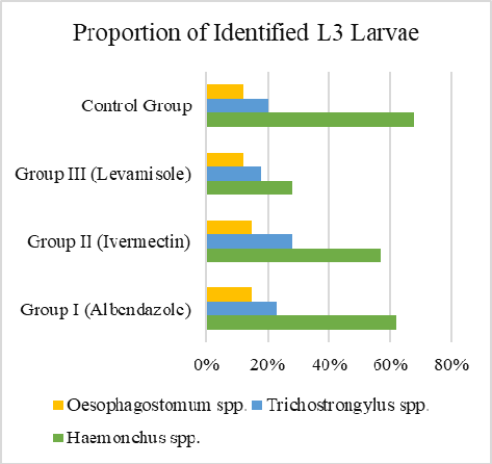
Table 3: Proportion of identified L3 larvae by genus post-treatment.
| Nematode Genus | Group I (Albendazole) | Group II (Ivermectin) | Group III (Levamisole) | Control group |
| Haemonchus spp. | 62% | 57% | 28% | 68% |
| Trichostrongylus spp. | 23% | 28% | 18% | 20% |
| Oesophagostomum spp. | 15% | 15% | 12% | 12% |
As shown in Table 3, Haemonchus spp. were the most dominant genus in all groups, particularly in Group I (Albendazole) and Group II (Ivermectin), where they comprised 62% and 57%, respectively, of the L3 larvae population. This finding aligns with the FECRT results, which demonstrate confirmed resistance in these groups . In Group III (Levamisole), where suspected resistance was observed, the presence of Haemonchus spp. had fallen to 28%, indicating a comparatively higher efficacy of this drug against the genus. The highest percentage of Haemonchus spp., namely 68%, was recorded in the control group, as expected due to its prevalence in untreated infections. The fact that Trichostrongylus spp. and Oesophagostomum spp. were still present in all groups at lower percentages further establishes the presence of mixed infections. These results validate that Haemonchus spp. plays an important part in anthelmintic resistance within the study location and emphasize the need for targeted control measures.
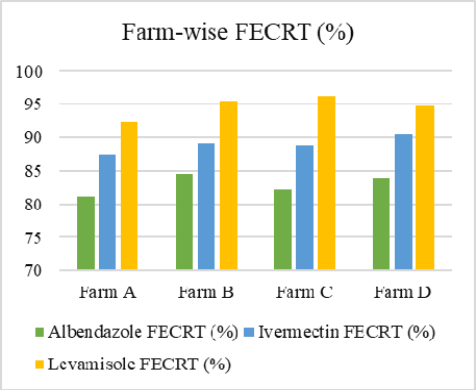
Farm-wise comparison of drug efficacy
To identify variability in resistance to anthelmintics under different management systems, farm-level faecal egg count reduction test (FECRT) values were compared. The comparison aims to establish the influence of deworming protocols, drug use frequency, and exposure to parasites on the efficacy of widely used anthelmintics.
Table 4: Farm-wise FECRT (%) for albendazole, ivermectin, and levamisole.
| Farm code | Albendazole FECRT (%) | Ivermectin FECRT (%) | Levamisole FECRT (%) |
| Farm A | 81.2 | 87.5 | 92.3 |
| Farm B | 84.6 | 89.1 | 95.5 |
| Farm C | 82.1 | 88.8 | 96.2 |
| Farm D | 83.9 | 90.5 | 94.8 |
As indicated in Table 4, there was some variability in drug efficacy among the farms. Albendazole had the lowest FECRT values in all farms, ranging from 81.2% for Farm A to 84.6% for Farm B, further supporting evidence of established resistance . Ivermectin was slightly more effective, varying from 87.5% (Farm A) to 90.5% (Farm D), though still below the threshold of established resistance. Levamisole, however, showed the most excellent efficacy in all farms, with FECRT values of over 92%, reaching a maximum of 96.2% in Farm C, indicating only suspected resistance or reasonable control in such places . The differences in these values between farms indicate the influence of localized management practices and drug use history on resistance patterns, as well as the importance of customized parasite control measures at the farm level.
Identified risk factors accounting for resistance
To determine the underlying causes of anthelmintic resistance , a systematic survey and observational checklist were used on all participating farms.
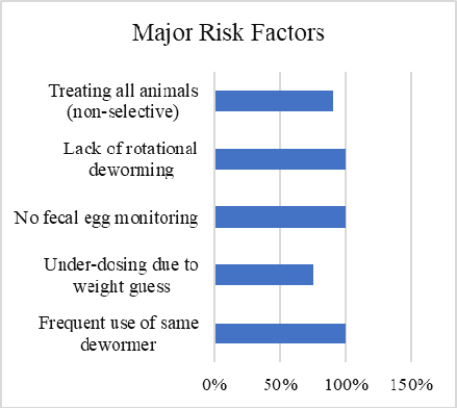
Table 5: Major risk factors identified in study farms.
| Risk factor | Percentage of farms reporting issue |
| Frequent use of the same dewormer | 100% |
| Under-dosing due to weight guess | 75% |
| No faecal egg monitoring | 100% |
| Lack of rotational deworming | 100% |
| Treating all animals (non-selective) | 90% |
As indicated in Table 5, several key risk factors were consistently noted across the four study farms. Notably, 100% of the farms used the same dewormer repeatedly, did not perform faecal egg monitoring , and did not perform rotational deworming, reflecting poor control measures for parasites and intense selection pressure for resistance. In addition, 75% of farms engaged in underdosing as a result of inaccurate animal weight estimation, a significant cause of subtherapeutic drug concentrations and the subsequent development of resistance. Moreover, 90% of farms administered drugs to all animals indiscriminately, not classifying heavily or lightly infected ones. These observations convincingly indicate that the extensive and frequent application of the same anthelmintics, unsound dosing habits , and improper monitoring practices of parasites are among the main reasons for the development and persistence of drug-resistant gastrointestinal nematodes.
CONCLUSIONS AND RECOMMENDATIONS
The research documents widespread gastrointestinal nematode infestations among cattle, supported by documented resistance to confirmed levels of benzimidazoles and macrocyclic lactones, as well as suspected resistance to imidazothiazoles. Dominance by Haemonchus spp. and endemic presence of fundamental risk factors, including everyday use and lack of rotation between drugs, under-dosing, and lack of monitoring, signify the imperative to transition away from the present deworming policy. To reduce the escalating issue of anthelmintic resistance, there is a proposal that cattle farms adopt integrated parasite management (IPM) techniques. These measures must include periodic faecal egg count monitoring, selective treatment of positives only rather than mass treatment of entire herds, dosing based on body weight, and strategic class rotation of anthelmintics. These also need education and training of the veterinarians and farmers on sustainable parasite management to help maintain the efficacy of the drugs and protect livestock health and productivity.
ACKNOWLEDGEMENT
The authors would like to thank Al-Bayan University, as well as the field technicians who helped with the study.
NOVELTY STATEMENT
The present study offers an extensive and region-specific evaluation of anthelmintic resistance in gastrointestinal nematodes infesting cattle, integrating parasitological, clinical, and molecular methods. In contrast to earlier generalized descriptions, the study presents a detailed farm-wise comparison of drug efficacy, with an emphasis on the dominance of Haemonchus spp. following treatment, focusing on multi-drug resistance patterns. The combination of larval culture analysis with Faecal Egg Count Reduction Tests (FECRT) and on-ground risk factor identification e.g., dosing errors and failure to rotate deworming gives the research a practical, actionable aspect. The study’s findings provide new insights into the dynamic resistance scenario and offer a valuable template for developing targeted, sustainable parasite control measures in cattle management systems.
AUTHOR’S CONTRIBUTION
All of the trials were designed by Turkan Ahmed Hama Hasan. Ibtisam Jassim Mohammed conducted all of the tests, gathered the data, and composed the manuscript draft. Batool Khalaf mohammed and Nibras Jamal helped with the data analysis that was done to prepare the work for submission to the journal. The final draft of the work was reviewed and approved by all authors for publication in the Journal of Animal and Health Production.
Ethical consideration
Not applicable.
Conflict of interest
The authors state that there is not conflict of notice.
Figures

Proportion of identified L3 larvae by genus post-treatment.

Farm-wise FECRT (%) for albendazole, ivermectin, and levamisole.

Major risk factors identified in study farms.
References
- Alani ZK, Kawan MH (2024). Prevalence and molecular analysis of Toxocara cati in Baghdad Province. J. Adv. Vet. Anim. Res., 11(2): 392. https://doi.org/10.5455/javar.2024.k788[CrossRef]
- Avramenko RW, Redman EM, Windeyer C, Gilleard JS (2020). Assessing anthelmintic resistance risk in the post-genomic era: a proof-of-concept study assessing the potential for widespread benzimidazole-resistant gastrointestinal nematodes in North American cattle and bison. Parasitology, 147(8): 897-906. https://www.cambridge.org/core/journals/parasitology/article/assessing-anthelmintic-resistance-risk-in-the-postgenomic-era-a-proofofconcept-study-assessing-the-potential, https://doi.org/10.1017/S0031182020000426[CrossRef]
- Baiak BHB, Lehnen CR, da Rocha RA (2018). Anthelmintic resistance in cattle: A systematic review and meta-analysis. Livest. Sci., 217: 127-135. https://www.sciencedirect.com/science/article/pii/S1871141318304311, https://doi.org/10.1016/j.livsci.2018.09.022[CrossRef]
- Beech RN, Skuce P, Bartley DJ, Martin RJ, Prichard RK, Gilleard JS (2011). Anthelmintic resistance: markers for resistance, or susceptibility? Parasitology, 138(2): 160-174. https://www.cambridge.org/core/journals/parasitology/article/anthelmintic-resistance-markers-for-resistance-or-susceptibility, https://doi.org/10.1017/S0031182010001198[CrossRef]
- Brown TL, Airs PM, Porter S, Caplat P, Morgan ER (2022). Understanding the role of wild ruminants in anthelmintic resistance in livestock. Biol. Lett., 18(5): 20220057. https://doi.org/10.1098/rsbl.2022.0057[CrossRef]
- Canton C, Ceballos L, Fiel C, Moreno L, Yagüez PD, Bernat G, Alvarez L (2017). Resistant nematodes in cattle: Pharmaco-therapeutic assessment of the ivermectin-ricobendazole combination. Vet. Parasitol., 234: 40-48. https://www.sciencedirect.com/science/article/pii/S0304401716305337, https://doi.org/10.1016/j.vetpar.2016.12.021[CrossRef]
- Charlier J, Bartley DJ, Sotiraki S, Martinez-Valladares M, Claerebout E, von Samson-Himmelstjerna G, Rinaldi L (2022). Anthelmintic resistance in ruminants: Challenges and solutions. Adv. Parasitol., 115: 171-227. https://www.sciencedirect.com/science/article/pii/S0065308X21000580
- das Neves JH, Carvalho N, Rinaldi L, Cringoli G Amarante AF (2014). Diagnosis of anthelmintic resistance in cattle in Brazil: A comparison of different methodologies. Vet. Parasitol., 206(3-4): 216-226. https://www.sciencedirect.com/science/article/pii/S0304401714005421, https://doi.org/10.1016/j.vetpar.2014.10.015[CrossRef]
- De Graef J, Claerebout E, Geldhof P (2013). Anthelmintic resistance of gastrointestinal cattle nematodes. Vlaams Diergeneeskundig Tijdschrift, 82(3). https://openjournals.ugent.be/vdt/article/ojs_id/16703/, https://doi.org/10.21825/vdt.v82i3.16703[CrossRef]
- Demeler J, Kleinschmidt N, Küttler U, Koopmann R, von Samson-Himmelstjerna G (2012). Evaluation of the egg hatch assay and the larval migration inhibition assay to detect anthelmintic resistance in cattle parasitic nematodes on farms. Parasitol. Int., 61(4): 614-618. https://www.sciencedirect.com/science/article/pii/S1383576912000888, https://doi.org/10.1016/j.parint.2012.06.003[CrossRef]
- Demeler J, Küttler U, von Samson-Himmelstjerna G (2010). Adaptation and evaluation of three different in vitro tests for the detection of resistance to anthelmintics in gastro intestinal nematodes of cattle. Vet. Parasitol., 170(1-2): 61-70. https://www.sciencedirect.com/science/article/pii/S030440171000052X, https://doi.org/10.1016/j.vetpar.2010.01.032[CrossRef]
- Fazzio LE, Sánchez RO, Streitenberger N, Galvan WR, Giudici CJ, Gimeno EJ (2014). The effect of anthelmintic resistance on the productivity in feedlot cattle. Vet. Parasitol., 206(3-4): 240-245. https://www.sciencedirect.com/science/article/pii/S0304401714005378, https://doi.org/10.1016/j.vetpar.2014.10.010[CrossRef]
- Fissiha W, Kinde MZ (2021). Anthelmintic resistance and its mechanism: A review. Infect. Drug Resist., 5403-5410. https://doi.org/10.2147/IDR.S332378[CrossRef]
- Gasbarre LC (2014). Anthelmintic resistance in cattle nematodes in the US. Vet. Parasitol., 204(1-2): 3-11. https://www.sciencedirect.com/science/article/pii/S0304401714001782, https://doi.org/10.1016/j.vetpar.2014.03.017[CrossRef]
- George MM, Paras KL, Howell SB, Kaplan RM (2017). Utilization of composite fecal samples for detection of anthelmintic resistance in gastrointestinal nematodes of cattle. Vet. Parasitol., 240: 24-29. https://www.sciencedirect.com/science/article/pii/S0304401717301863, https://doi.org/10.1016/j.vetpar.2017.04.024[CrossRef]
- Geurden T, Chartier C, Fanke J, Di Regalbono AF, Traversa D, von Samson-Himmelstjerna G, Denwood MJ (2015). Anthelmintic resistance to ivermectin and moxidectin in gastrointestinal nematodes of cattle in Europe. Int. J. Parasitol. Drugs Drug Resist., 5(3): 163-171. https://www.sciencedirect.com/science/article/pii/S2211320715300087, https://doi.org/10.1016/j.ijpddr.2015.08.001[CrossRef]
- Hodgkinson JE, Kaplan RM, Kenyon F, Morgan ER, Park AW, Paterson S, Devaney E (2019). Refugia and anthelmintic resistance: concepts and challenges. Int. J. Parasitol. Drugs Drug Resist., 10: 51-57. https://www.sciencedirect.com/science/article/pii/S2211320719300508, https://doi.org/10.1016/j.ijpddr.2019.05.001[CrossRef]
- Hou B, Yong R, Wuen J, Zhang Y, Buyin B, Subu D, Hasi S (2022). Positivity rate investigation and anthelmintic resistance analysis of gastrointestinal nematodes in sheep and cattle in Ordos, China. Animals, 12(7): 891. https://www.mdpi.com/2076-2615/12/7/891
- Jaeger LH, Carvalho-Costa FA (2017). Status of benzimidazole resistance in intestinal nematode populations of livestock in Brazil: A systematic review. BMC Vet. Res., 13: 1-10. https://link.springer.com/article/10.1186/s12917-017-1282-2
- Leathwick DM, Besier RB (2014). The management of anthelmintic resistance in grazing ruminants in Australasia strategies and experiences. Vet. Parasitol., 204(1-2): 44-54. https://www.sciencedirect.com/science/article/pii/S0304401713006882, https://doi.org/10.1016/j.vetpar.2013.12.022[CrossRef]
- Nabukenya I, Rubaire-Akiiki C, Olila D, Muhangi D, Höglund J (2014). Anthelmintic resistance in gastrointestinal nematodes in goats and evaluation of FAMACHA diagnostic marker in Uganda. Vet. Parasitol., 205(3-4): 666-675. https://www.sciencedirect.com/science/article/pii/S0304401714004063, https://doi.org/10.1016/j.vetpar.2014.07.019[CrossRef]
- Nielsen MK, Reinemeyer CR, Donecker JM, Leathwick DM, Marchiondo AA, Kaplan RM (2014). Anthelmintic resistance in equine parasites. Current evidence and knowledge gaps. Vet. Parasitol., 204(1-2): 55-63. https://www.sciencedirect.com/science/article/pii/S0304401713006894, https://doi.org/10.1016/j.vetpar.2013.11.030[CrossRef]
- Ramos F, Marques CB, Reginato CZ, Bräunig P, Osmari V, Fernandes F, Vogel FSF (2020). Field and molecular evaluation of anthelmintic resistance of nematode populations from cattle and sheep naturally infected pastured on mixed grazing areas at Rio Grande do Sul, Brazil. Acta Parasitol., 65: 118-127. https://link.springer.com/article/10.2478/s11686-019-00137-6, https://doi.org/10.2478/s11686-019-00137-6[CrossRef]
- Ramos F, Portella LP, de Souza Rodrigues F, Reginato CZ, Pötter L, Cezar AS, Vogel FSF (2016). Anthelmintic resistance in gastrointestinal nematodes of beef cattle in the state of Rio Grande do Sul, Brazil. Int. J. Parasitol. Drugs Drug Resist., 6(1): 93-101. https://www.sciencedirect.com/science/article/pii/S2211320716300094, https://doi.org/10.1016/j.ijpddr.2016.02.002[CrossRef]
- Rose H, Rinaldi L, Bosco A, Mavrot F, De Waal T, Skuce P, Morgan ER (2015). Widespread anthelmintic resistance in European farmed ruminants: A systematic review. Vet. Rec., 176(21): 546-546. https://www.zora.uzh.ch/id/eprint/110037/1/AR_Vet_Rec_accepted-1.pdf, https://doi.org/10.1136/vr.102982[CrossRef]
- Sazmand A, Alipoor G, Zafari S, Zolhavarieh SM, Alanazi AD, Sargison ND (2020). Assessment of knowledge, attitudes and practices relating to parasitic diseases and anthelmintic resistance among livestock farmers in Hamedan, Iran. Front. Vet. Sci., 7: 584323. https://www.frontiersin.org/articles/10.3389/fvets.2020.584323/full, https://doi.org/10.3389/fvets.2020.584323[CrossRef]
- Smout MJ, Kotze AC, McCarthy JS, Loukas A (2010). A novel high throughput assay for anthelmintic drug screening and resistance diagnosis by real-time monitoring of parasite motility. PLoS Negl. Trop. Dis., 4(11), e885. https://journals.plos.org/plosntds/article?id=10.1371/journal.pntd.0000885, https://doi.org/10.1371/journal.pntd.0000885[CrossRef]
- Sutherland IA, Leathwick DM (2011). Anthelmintic resistance in nematode parasites of cattle: A global issue? Trends Parasitol., 27(4): 176-181. https://www.cell.com/trends/parasitology/abstract/S1471-4922(10)00237-0, https://doi.org/10.1016/j.pt.2010.11.008[CrossRef]
- Vilas R, Vázquez-Prieto S, Paniagua E (2012). Contrasting patterns of population genetic structure of Fasciola hepatica from cattle and sheep: Implications for the evolution of anthelmintic resistance. Infect. Genet. Evol., 12(1): 45-52. https://www.sciencedirect.com/science/article/pii/S1567134811003662, https://doi.org/10.1016/j.meegid.2011.10.010[CrossRef]
- Vineer HR, Morgan ER, Hertzberg H, Bartley DJ, Bosco A, Charlier J, Rinaldi L (2020). Increasing importance of anthelmintic resistance in European livestock: Creation and meta-analysis of an open database. Parasite, 27: 69. https://pmc.ncbi.nlm.nih.gov/articles/PMC7718593/, https://doi.org/10.1051/parasite/2020062[CrossRef]
- von Samson-Himmelstjerna G (2012). Anthelmintic resistance in equine parasites–detection, potential clinical relevance and implications for control. Vet. Parasitol., 185(1): 2-8. https://www.sciencedirect.com/science/article/pii/S0304401711006698, https://doi.org/10.1016/j.vetpar.2011.10.010[CrossRef]
Services
Article usage statistics
Loading…