
In this study, we report 17 novel cross-species microsatellite markers for Dabry’s sturgeon via next-generation sequencing from Chinese sturgeon (Acipenser sinensis). The 17 microsatellites were polymorphic with 3 to 6 alleles per locus and the total number of alleles is 80. The mean expected heterozygosity (HE, 0.506 to 0.781), observed heterozygosity (HO, 0.542 to 1), Hardy-Weinberg departure value (d, -0.042 to 0.427), polymorphic information content (PIC, 0.482 to 0.753) and the Shannon-Wiener Diversity Indices (H’, 0.827 to 1.565) of all the 17 polymorphic loci indicated a high level of informativeness. Those markers will be useful tool to study the genetic diversity of Dabry’s sturgeon.
Short Communication · Volume 51, Issue 6, 22 September 2019 · Open Access
Development of 17 Novel Cross-Species Microsatellite Markers for Dabry’s Sturgeon (Acipenser dabryanus) from Chinese Sturgeon (Acipenser sinensis) via Next-Generation Sequencing
· · · · ·
Affiliations & Notes ⌄
- 1Chinese Sturgeon Research Institute, China Three Gorges Corporation, Yichang Hubei 443100, China 2Hubei Key Laboratory of Three Gorges Project for Conservation of Fishes, Yichang Hubei 443100, China , Yacheng Hu and Xueqing Liu contributed equally to this investigation and should be considered co-first authors. , * Corresponding author: duhejun21@126.com
Article Info ⌄
- Journal:
- Pakistan Journal of Zoology
- Published:
- 22 September 2019

From the article
- The 96 sequences that tested in Dabry’s sturgeon were consistent with Chinese sturgeon.
- Using the 17 microsatellite markers, we can identify each individuals of all the 24 Dabry’s sturgeon.
- The 17 microsatellites sequences were polymorphic with 3 to 6 alleles per locus and the total number of alleles is 80.
- The Hardy-Weinberg departure value (d, -0.042 to 0.427), polymorphic information content (PIC, 0.482 to 0.753) and the Shannon-Wiener Diversity Indices (H’, 0.827 to1.565) of all the 17 polymorphic loci indicated a high level of informativeness (Table II).
Selected from the article's own text.
Abstract
Table I.- Characterization of 17 microsatellite loci in Dabry’s sturgeon.
| Loci | GenBank accession No. | Repeat motif(s) | Primer sequence (5'-3') | Tm (°C) |
| ZHX70 | MH667327 | (TATC)11 | F:GGCATTATAGACCCCTGTCGG | 60 |
| R:ACAGCTGGGGAGGAACAGTA | ||||
| ZHX80 | MH667328 | (ATAA)10 | F:AGTGTTGTGAATAGGACCCAAAGT | 60 |
| R:GCATTTTGCTGTACAGACCTTGA | ||||
| ZHX91 | MH667329 | (TTTA)10 | F:TTGGCGATCCGATCACCAAA | 60 |
| R:TGCCATTTGACTCAACTGTGC | ||||
| ZHX76 | MH667330 | (TATC)14 | F:GCGTTCACTGAGTCAATGCA | 59 |
| R:CTGGACAGAGAACAGATAGCGT | ||||
| Z15 | MH667331 | (ATAG)14 | F:AGCTAGCAACTGAAGCCCTG | 60 |
| R:ACAGCTGCAGCACACTTTTG | ||||
| Z120 | MH667332 | (TCTT)13 | F:CTGTGTCTTCTGCTCCTGGT | 59 |
| R:GCATGTCAGGGCCGGTATTA | ||||
| Z125 | MH667333 | (AGAT)12 | F:CTGGCTAAGGTCATGGCCAA | 58 |
| R:CAAACTTTATTTGGAAAATTGCACAAT | ||||
| Z153 | MH667334 | (TCTT)13 | F:TGGACTGACAACACTGCTCC | 60 |
| R:ACAGAGCACGTACAGCCAAA | ||||
| Z166 | MH667335 | (ATCT)15 | F:GTGTTTAGAATGTTTAAACACTGAGGA | 60 |
| R:TGGCCTCAAGTTCAAGCACA | ||||
| Z167 | MH667336 | (GAAA)13 | F:GCACGAGAGAGACAGGACAA | 59 |
| R:CAGGTTGAAAGTGCTGGTGC | ||||
| Z175 | MH667337 | (AGAA)12 | F:GACGCGCTCTCTGCAATTTC | 59 |
| R:TCTCACCTCAATTCTCGTGAGT | ||||
| Z181 | MH667338 | (ACTA)10 | F:TTCGGTAACAAGACGCTGCT | 58 |
| R:AGGGAAATACCTGTACATTTAAGAGA | ||||
| Z182 | MH667339 | (AGAT)10 | F:TGCAACTGGGTTCACTATGCA | 60 |
| R:GATCATGCCCTGGCTTCTGA | ||||
| Z189 | MH667340 | (TGTC)10 | F:TGGTTCCTCCCAGTCCTCAA | 60 |
| R:GTGAGGAGCAGACTGGACTG | ||||
| Z193 | MH667341 | (TCTT)8 | F:GGGCCGTTCTGCTTTTTGAG | 60 |
| R:CCCCGTGTAGGACACTAACG | ||||
| Z199 | MH667342 | (TCTT)13 | F:GACGTTTGGAGCGTGGAAAC | 60 |
| R:TGGCATTTACAGCATAAACTAAACCT | ||||
| Z219 | MH667343 | (AAAG)9 | F:GTCCAGGGCAGCATCTACTG | 60 |
| R:CTCAAACGCACAACCAGCAA |
Tm, annealing temperature.
Materials and methods
The RNA was extracted from the fin of Chinese sturgeon using Trizol (Invitrogen, USA), according to the manufacturer protocol. RNase-free DNase I was used to remove DNA from the RNA and the total RNA was evaluated by 1% agarose gel electrophoresis. The cDNA library was created by using approximately 5 μg RNA and was sequenced on an Illumina Hiseq2000. The sequences were selected by constrained to perfect repeat motifs of 4 bp from the cDNA library by the Microsatellite Identification tool (MISA: http://pgrc.ipkgatersleben.de/misa/). All the selected sequences were then used to design microsatellite primers using Primer Premier 5.0 software (http://www.premierbiosoft.com/primer design/).
We collected 24 individuals of Dabry’s sturgeon from the Chinese Sturgeon Research Institute in Yichang City, China. The total DNA was extracted from the fin of Dabry’s sturgeon by the method of rapid salt-extraction . Polymerase chain reaction (PCR) was carried out using the DNA as template. The recommended cycling conditions of PCR is 3 min at 94°C; 35 (30s at 94°C, 30s at annealing temperature; 30s at 72°C); 10 min at 72C. The PCR was carried out in a 25-ul reaction volume, containing 0.25μM for each primer, 1×PCR buffer (TaKaRa), 1.5 mM MgCl2, 50-100 ng genomic DNA and 0.25 U Taq DNA polymerase (TaKaRa). The PCR products were visualized on 10% polyacrylamide gel stained (PAGE gel) with silver staining. The pBR332 DNA/MspI molecular marker (TaKaRa) was used as a standard to identify size of alleles.
The statistics of the observed heterozygosity (HO), the mean expected heterozygosity (HE) and Shannon-Weiner Diversity Indices (H’) for every loci were performed using software ATetra1.2 . The Hardy-Weinberg departure value (d) and the polymorphic information content (PIC) were performed according to formula:
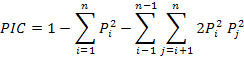
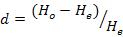
Where, Pi and Pj is the frequency of I and J allele in the group.
All fish handling and experimental procedures in this study were approved by the Chinese Sturgeon Research Institute, the China Three Gorges Corporation, and the Hubei Key Laboratory of Three Gorges Project for Conservation of Fishes.
Results
In this study, a total of 96 sequences were found and were selected to designing microsatellite primer. The 96 sequences that tested in Dabry’s sturgeon were consistent with Chinese sturgeon. Among the 96 pairs of microsatellites primers, 27 pairs failed to produce any PCR product, 52 pairs were produced low quality results, and 17 pairs showed polymorphism (Table I). The percentage of amplification success was 17.7%. The percentage of errors by replicating 5 samples was 0. Using the 17 microsatellite markers, we can identify each individuals of all the 24 Dabry’s sturgeon. The 17 microsatellites sequences were polymorphic with 3 to 6 alleles per locus and the total number of alleles is 80. The mean expected heterozygosity (HE) and observed heterozygosity (HO) ranged from 0.506 to 0.781, from 0.542 to 1, respectively. The Hardy-Weinberg departure value (d, -0.042 to 0.427), polymorphic information content (PIC, 0.482 to 0.753) and the Shannon-Wiener Diversity Indices (H’, 0.827 to1.565) of all the 17 polymorphic loci indicated a high level of informativeness (Table II).
Table II.- Genetic diversity for 17 microsatellite markers in Dabry’s sturgeon.
| Loci | HE | HO | d | PIC | H' | Na | Allele range |
| ZHX70 | 0.701 | 1 | 0.427 | 0.653 | 1.266 | 4 | 220-252 |
| ZHX80 | 0.781 | 1 | 0.28 | 0.753 | 1.565 | 5 | 173-217 |
| ZHX91 | 0.772 | 0.958 | 0.241 | 0.75 | 1.542 | 5 | 202-242 |
| ZHX76 | 0.746 | 1 | 0.34 | 0.724 | 1.494 | 6 | 224-300 |
| Z15 | 0.743 | 1 | 0.346 | 0.725 | 1.505 | 6 | 206-238 |
| Z120 | 0.781 | 1 | 0.28 | 0.749 | 1.562 | 5 | 160-188 |
| Z125 | 0.705 | 0.792 | 0.123 | 0.672 | 1.274 | 4 | 240-272 |
| Z153 | 0.724 | 1 | 0.381 | 0.676 | 1.331 | 4 | 222-250 |
| Z166 | 0.774 | 1 | 0.292 | 0.745 | 1.545 | 5 | 232-260 |
| Z167 | 0.609 | 0.583 | -0.042 | 0.532 | 1 | 4 | 218-262 |
| Z175 | 0.726 | 1 | 0.377 | 0.683 | 1.333 | 4 | 186-226 |
| Z181 | 0.722 | 1 | 0.385 | 0.683 | 1.328 | 4 | 190-246 |
| Z182 | 0.768 | 1 | 0.302 | 0.739 | 1.529 | 5 | 172-200 |
| Z189 | 0.709 | 0.917 | 0.293 | 0.666 | 1.347 | 5 | 250-310 |
| Z193 | 0.722 | 0.958 | 0.327 | 0.698 | 1.392 | 5 | 170-210 |
| Z199 | 0.681 | 0.917 | 0.346 | 0.664 | 1.34 | 6 | 225-253 |
| Z219 | 0.506 | 0.542 | 0.07 | 0.482 | 0.827 | 3 | 200-280 |
HE, mean expected heterozygosity; HO, observed heterozygosity; d, Hardy-Weinberg departure value; PIC, polymorphic information content; H’, Shannon–Wiener Diversity Indices; Na, number of alleles in per locus.
Discussion
In this study, 17 novel cross-species microsatellite markers were developed for Dabry’s sturgeon from Chinese sturgeon via next-generation sequencing for the first time. All the 17 microsatellite markers showed a high polymorphism (PIC>0.5), except Z219. No microsatellite marker showed significant deviation from the Hardy-Weinberg departure value (d < 0.05) except Z167, indicating that they were polymorphism. Little genetic analysis was performed in previous microsatellites studies of Dabry’s sturgeon ; ; . For example, the calculation of HO, d and PIC were totally or partially missing in these studies. Considering that HO, d and PIC are indicative of population genetic variation, microsatellite markers without those information are hard to determine whether they are suitable for population analysis. The high estimates of PIC of the microsatellites in this study substantiated the suitability of the markers to applications such as genetic diversity study, linkage-mapping programs in Dabry’s sturgeon. Compared to traditional method, we developed a cheaper and faster way to identify microsatellite loci. This method can be used as a reference for relative studies in other species.
The number of alleles per microsatellite locus developed in Que et al. (2014) study, Zeng et al. (2013) study, Zhang et al. (2013) study is 1 to 11, 4 to 14 and 3 to 13, respectively. The number of alleles per microsatellite locus in this study was less than the previous studies, with the value of 3 to 6. Maybe the samples used in this study were consisted sib individuals, or the microsatellites were cross-amplified. The mean expected heterozygosity of microsatellites in this study (0.506 to 0.781) is similar to the microsatellites developed by Zeng et al. (2013) (0.487 to 0.874) and is better than the microsatellites developed by Que et al. (2014) (0.127 to 0.828) and Zhang et al. (2013) (0.303 to 0.806). The mean expected heterozygosity in this study may be higher than the fact due to the fact that the number of alleles per microsatellite locus in this study is less than others. Only 17 out of 96 microsatellites showed polymorphism, and the rest microsatellites produced low quality results or even nothing. We sequenced all the microsatellites in this study by Dabry’s sturgeon DNA. Although those microsatellites were developed based on cDNA sequences of Chinese sturgeon, they can also be used to analysis the genetic of Dabry’s sturgeon, proving that the relationship between Chinese sturgeon and Dabry’s sturgeon is very close. In this study, all loci in each sample have no more than four alleles, which is consistent with two previous studies ; . Those microsatellite markers in this paper will be useful tool to study the population structure and genetic diversity of Dabry’s sturgeon.
Acknowledgments
Ethical consideration
Statement of conflict of interest
The authors declare that there is no conflict of interests regarding the publication of this article.
References
- Aljanabi, S.M. and Martinez, I., 1997. Nucl. Acids Res., 25: 4692-4693. https://doi.org/10.1093/nar/25.22.4692[CrossRef]
- Chistiakov, D.A., Hellemans, B. and Volckaert, F.A.M., 2006. Aquaculture, 255: 1-29. https://doi.org/10.1016/j.aquaculture.2005.11.031[CrossRef]
- Dawson, D.A., Horsburgh, G.J., Küpper, C., Stewart, I.R.K., Ball, A.D., Durrant, K.L., Hansson, B., Bacon, I., Bird, S., Klein, Á. Krupa, A., Lee, J.W., Simeni, M., Smith, G., Spurgin, L. and Burke, T., 2010. Mol. Ecol. Resour., 10: 475-494. https://doi.org/10.1111/j.1755-0998.2009.02775.x[CrossRef]
- Huang, D., Zhang, Y., Jin, M., Li, H., Song, Z., Wang, Y. and Chen, J., 2013. Mol. Ecol. Resour., 14: 569-577. https://doi.org/10.1111/1755-0998.12197[CrossRef]
- Puyvelde, K.V., Geert, A.V. and Triest, L., 2010. Mol. Ecol. Resour., 10: 331-334. https://doi.org/10.1111/j.1755-0998.2009.02748.x[CrossRef]
- Que, Y., Xu, D., Shao, K., Xu, N., Li, W. and Zhu, B., 2014. J. Genet., 93: e62-65. https://doi.org/10.1007/s12041-014-0363-2[CrossRef]
- Wang, L., Gong, Y., Chen, K., Wang, H. and Lyu, X., 2018. Pakistan J. Zool., 50: 791-793. http://dx.doi.org/10.17582/journal.pjz/2018.50.2.sc8[Full text][CrossRef]
- Zane, L., Bargelloni, L. and Patarnello, T., 2002. Mol. Ecol., 11: 1-16. https://doi.org/10.1046/j.0962-1083.2001.01418.x[CrossRef]
- Zeng, Q., Ye, H., Ludwig, A., Wang, Z., Zhang, Y. and Peng, Z., 2013. J. appl. Ichthyol., 29: 1219-1221. https://doi.org/10.1111/jai.12278[CrossRef]
- Zhang, H., Wei, Q.W., Du, H. and Li, L.X., 2011. J. appl. Ichthyol., 27: 181-185. https://doi.org/10.1111/j.1439-0426.2011.01674.x[CrossRef]
- Zhang, S.H., Luo, H., Du, H., Wang, D.Q. and Wei, Q.W., 2013. Conserv. Genet. Resour., 5: 409-412. https://doi.org/10.1007/s12686-012-9815-2[CrossRef]
- Zhu, B., Liao, X., Shao, Z., Rosenthal, H. and Chang, J.B., 2005. Mol. Ecol. Resour., 5: 888-892. https://doi.org/10.1111/j.1471-8286.2005.01100.x[CrossRef]
- Zhuang, P., Ke, F.E., Wei, Q., He, X. and Cen, Y., 1997. Environ. Biol. Fishes, 48: 257-264. https://doi.org/10.1023/A:1007399729080[CrossRef]
Services
Article usage statistics
Loading…