
Food composition and authenticity assessment is an important concern to protect the consumers from illegal or unwanted substitution; for economic, religious and health concerning reasons. Cow, pork and donkey meats are being used as a substitute ingredient for red meat. Muslim and Jewish populations avoid consumption of pork and donkey meats, even in min quantities, due to their religious faiths. In this background, there is a need of a rapid, economic and highly sensitive multiplex PCR instead of uniplex PCR for identification of DNA origins of pork, donkey and cow species in real food samples. For this purpose, a total of 150 samples including blood samples, tissue samples, laboratory prepared food samples and commercial foodstuffs including chicken karahi, beef biryani, chicken samosa, chicken pakora, haleem, nihari etc. were collected from Bahawalpur, Multan, and Rahim Yar Khan. DNA was extracted from all the targeted samples. We developed the first multiplex PCR assay to identify pork, donkey, and cow species origins in food products within a single tube. The assay utilizes specific primers [pork (Sus scrofa), donkey (Equus asinus), and cow (Bos taurus)] that amplify fragments of the mitochondrial COX1 (donkey; 184 bp), 12S rRNA (cow; 271 bp), and ATPase subunit 6and8 genes (pork; 459 bp), respectively, as well as universal 18S rRNA primers that amplify a 99 bp fragment. The detection limit of the assay was 0.005% for each species. In conclusion, this PCR assay is a simple, rapid, sensitive, precise, and economical method to identify donkey, pork, and cow species in commercial food samples.
Research Article · Volume 42, 26 November 2024 · Open Access
Development and Validation of Rapid Multiplex PCR Assay for Identification of DNA Origins of Pork, Donkey and Cow Species in Real Food Samples
· · ·
Affiliations & Notes ⌄
- 1Department of Breeding and Genetics, Cholistan University of Veterinary and Animal Sciences, Bahawalpur, Pakistan 2Department of Zoology, Cholistan University of Veterinary and Animal Sciences, Bahawalpur, Pakistan 3Department of Physiology and Biochemistry, Cholistan University of Veterinary and Animal Sciences, Bahawalpur, Pakistan * Corresponding author: msafdar@cuvas.edu.pk
Article Info ⌄
- Journal:
- South Asian Journal of Zoology
- Published:
- 26 November 2024
From the article
- The findings of this study demonstrate that the multiplex PCR assay developed can effectively detect the presence of meat species, specifically cow, donkey, and pork, in foodstuffs.
- The assay is capable of simultaneous, rapid, and routine detection of both animal and plant species in food products, with a detection limit as low as 0.005%.
- Validation across various matrices confirmed the assay’s applicability in practical identification of these species in both food and feed products.
- We anticipate that this assay will be adopted by food regulatory bodies for screening and monitoring the presence of cow, donkey, and pork species in foodstuffs.
Selected from the article's own text.
Abstract
Introduction
Food was a prerequisite for the first living organism to breathe billions of years ago, as biology has unequivocally demonstrated. Evolution, development and growth could not have occurred in the absence of nourishment. For survival, growth, and reproduction, all living things on Earth plants and animals alike need food . As the world gets busier, more and more individuals are having to work longer hours at their jobs to keep up with the growing amount of work . Lack of time to cook their own meals is forcing an increasing number of people to settle for whatever they can obtain from a nearby restaurant or grocery store . Thus, the demands on the restaurant business and its prospects, along with those for prepared foods like hot dogs, pizza, and sandwiches, are growing quickly . Due to dietary changes and growing knowledge of the health advantages of meat, there is a growing global desire for premium animal protein, which includes meat and products produced from it. Since the sale of food has been a commercial activity, there have always been issues surrounding food authenticity, particularly those pertaining to fraudulent adulteration and misrepresentation . Due to the critical importance of consumer health, there is a greater focus on closely monitoring food intake and verifying its authenticity in order to prevent unwanted and illegal substitutes that are motivated by economic, religious, or health-related factors .
Pakistan currently lacks suitable circumstances for meat exports because there is no enforcement legislation and no readily available tests for precisely identifying the species of meat . Prohibited meat species or their hybridization with halal meat, as well as low-nutritional halal food species for financial benefit, have long been a sensitive topic in the press and public . All things considered; the nation’s anti-adulteration laws present a dismal image. It is imperative that we resist this difficult situation. This means that in order to differentiate between haram species like some pig and donkey species and halal meat species like cattle scientific procedures are required . Similarly, mutton and beef are not interchangeable . Scientists have developed a number of techniques in recent decades to detect and identify the species origin, especially in industrial meat products, which are important for hygienic, religious, and financial reasons . To establish beyond a doubt that food fraud has occurred, food ingredients must be located and confirmed. It can be quite difficult to discern between replacement materials and primary components because, from a biochemical standpoint, they are often comparable. It is essential to determine the species of meat products in order to protect consumers from unknown influences and to detect adulteration or fraudulent replacement . Multiplex PCR has steadily gained popularity over simplex PCR due to numerous benefits, which include faster reaction times, reduced costs, and improved detection efficiency in just one reaction hole. Regular meat fraud has spread throughout the world, perhaps endangering food safety, violating market regulations and potentially endangering public health . In recent years, methods for determining the species of meat have undergone continual evolution . Polymerase chain reaction, or PCR, and DNA-based techniques together give more accurate ways for differentiating meat species since DNA molecules are found in every cell and have a high degree of stability . Real-time PCR and conventional multiplex techniques are both regarded as trustworthy procedures with excellent sensitivity and specificity for identifying meat species .
In Pakistan, there is an urgent need for PCR assays that offer simple, sensitive, specific, and cost-effective methods for DNA-based commercial analysis and the surveillance of foodstuffs. Therefore, we aimed to address this need by developing a multiplex PCR assay as a potential tool for the rapid, specific, sensitive, and cost-effective detection of small fragments of mitochondrial DNA from pork, donkey, and cow species in foodstuffs. This assay utilizes both species-specific and universal primers, marking the first time such a method has been employed for this purpose.
MATERIALS and METHODS
Samples preparation and collection
To optimize the simplex and multiplex PCR assays of the targeted species, the raw meats and grains of each targeted species such as cow, pork and donkey etc. were collected from Bahawalpur and 150 market food samples were collected from a different area of Bahawalpur, Multan and Rahim Yar Khan. Raw and processed meat samples were cut into small pieces and immediately stored at −20°C until use. We directly transported them to the Molecular Genetics Research Laboratory (CUVAS) and stored at -20°C until the extraction of the DNA in order to prevent the enzymatic degradation of DNA.
Validation of laboratory prepared samples
To validate the market food samples such as cow, pork and donkey etc. meats of each species were mixed in different %age and cooked in the laboratory (Table I). In order to evaluate the sensitivity test, a compound DNAs of all species (cow, sheep, horse, pork and donkey etc.) was mixed and cooked in different %age up to 0.005% (Table I). Finally, DNA was extracted from these samples and stored at −20°C until use.
Table I. Preparation of samples for validation and sensitivity.
| Horse (NC) (%) | Donkey (%) | Pig (%) | Cow (%) | Sheep (NC) (%) |
| Samples for validation | ||||
| 20 | 70 | 60 | 30 | 80 |
| 50 | 0.05 | 10 | 0 | 50 |
| 70 | 20 | 0 | 50 | 30 |
| 100 | 0 | 40 | 55 | 0 |
| Samples for sensitivity | ||||
| 24 | 24 | 24 | 24 | 4 |
| 12 | 12 | 12 | 12 | 52 |
| 6 | 6 | 6 | 6 | 76 |
| 3 | 3 | 3 | 3 | 88 |
| 1 | 1 | 1 | 1 | 96 |
| 1.5 | 1.5 | 1.5 | 1.5 | 94 |
| 0.75 | 0.75 | 0.75 | 0.75 | 97 |
| 0.05 | 0.05 | 0.05 | 0.05 | 99.8 |
| 0.005 | 0.005 | 0.005 | 0.005 | 99.98 |
| 0 | 0 | 0 | 0 | 100 |
Table II. List of targeted species primers that were used in this study.
| Primers | Species | Genes | Positions | Oligonucleotides primers 5’ → 3’ | Amplicons (bp) |
| Pork | Sus scrofa | COX1 | chrM:7096+7554 | F: CTACTATCCCTGCCAGTT | 459 |
| R: GAATAGGAAGATGAAGCC | |||||
| Donkey | Equus assinus | 12S rRNA | PP049798.1 | F: GAACAAGAACTCAACCCAAACGG | 184 |
| R: CTTTCATATGTTTGGATCATGGTTTTG | |||||
| Cow | Bos taurus | ATPase subunit 6and8 | chrM:8107+8377 | F: GCCATATACTCTCCTTGGTGACA | 271 |
| R: GTAGGCTTGGGAATAGTACGA | |||||
| Eukaryotes | - | 18S rRNA | CP143370.1 | F: AGGATCCATTGGAGGGCAAGT | 99 |
| R: TCCAACTACGAGCTTTTTAACTGCA |
DNA extraction
DNA was extracted from 50-100 mg of laboratory prepared and market collected food samples using instructions and protocol of Genomic DNA Purification Tissue and Blood Kit (Thermo-Scientific) and DNeasy® Kit (Germany) as per instructions of protocol given in the kit. DNA concentration (quantification) in a solution was measured using a Gel Doc XR+ with imaging Lab instrument. It produced high-quality photographs with exceptional sensitivity and resolution.
Oligonucleotide’s primers
Specific gene loci, such as the COX1 gene for pork, the 16S rRNA for donkeys, and the ATPase subunits 6 and 8 for cows, were amplified using oligonucleotide primers. Next, we used the BLAST and NCBI (National Center for Biotechnology Information) tools to verify the specificity of the DNAs in the DNA databank (Table II). All the primers were synthesized by Synbio Technologies, Russia.
Simplex qualitative PCR
A final amount of 20 μl, comprising 1 μl of each primer, 3 μl of DNA template, and WizPureTM PCR 2X Master mix, was used for PCR amplification. Amplification was carried out in a Thermocycler Techne under the following cycling conditions: 35 cycles were programmed following an initial heat denaturation step of 5 min at 95 °C: 30 sec intervals at 95°C, 59–61°C, 72°C for one min, and a 5-min extension at 72°C were all used.
Multiplex qualitative PCR
Using every primer set previously chosen for the simplex PCR, an a single-step multiplex PCR was employed for simultaneous identification of every species. The WizPureTM PCR 2X Master mix, 0.4μl of each primer, and 1μl of DNA template were added to a total volume of 20 μl for PCR amplification. The following cycling parameters were used for the amplification process in a Thermocycler Techne: 35 cycles were scheduled for 95 °C for 30 s, 59–61 °C for 30 s, 72 °C for 1 min, and a final extension at 72 °C for 5 min, after an initial heat denaturation stage at 95 °C for 5 min.
Results
Optimization of simplex and multiplex PCR
Figure 1 shows the multiplex PCR using the same primers using DNA extracted from cooked meats of cow, pork, donkey, etc., after several repetitions.
Figure 2 shows the sensitivity of the multiplex PCR, targeting the same species of the DNAs, was evaluated down to a minimum concentration of 0.005%.
To validate the PCR assay for market food samples, including meats such as cow, pork, and donkey, the mixtures of these species’ meats were prepared in different percentages and cooked in the laboratory. DNA was then extracted from these samples and validated the multiplex PCR as shown in Figure 3.
Multiplex PCR assay
We have applied our developed assay on 150 commercial food samples. We had not found any contamination with pork and donkey in 150 collected samples, while we had found 15% adulteration that may be intentionally or un-intentionally by producers (Fig. 4).
Discussion
This study highlights the critical need for quick, accurate, sensitive, and affordable identification methods to evaluate cocktail food items and confirm the legitimacy of labels, especially when it comes to identifying donkey, pork and beef species. To identify these animal species in food products with species-specific PCR assays have been published in previous studies . This PCR assays, however, have a number of advantages over previous methods. In a single step, the multiplex PCR assay that identify donkey, pig and beef in mixed food products without the need for specialized knowledge, unusual tools, or extra chemicals. Simple agarose gel analysis is being used to detect species-specific DNA, which makes it affordable first screening method for large-scale applications. The detection limit of our assay is 0.005%, demonstrating its high sensitivity and reliability as compared to others. Some researchers have reported higher detection limits for meat species identification in food products, with a minimum detection limit of 0.5%-0.1% ; . With a limit of detection of 0.01% DNA, Safdar and Junejo (2015) presented a multiplex PCR to concurrently identify the bovine, ovine, caprine, and fish species in feedstuffs. Therefore, our method is notably more attractive due to its superior sensitivity. This method’s unique characteristics also pave the way for detecting and distinguishing other closely related species, such as turkey, quail, pigeon, goat, buffalo, deer and donkey etc. in food as well as feed products.
The development of real-time PCR has significantly advanced the identification and quantification of meat species in foodstuffs . However, real-time PCR assays are notably more expensive compared to conventional PCR methods that utilize species-specific primers and probes . Additionally, the requirement for specialized equipment and trained personnel restricts the implementation of real-time PCR in many feed control laboratories, particularly those with limited resources. In contrast, multiplex PCR assays using species-specific primers offer a cost-effective alternative that can be performed with minimal resources while still providing accurate verification of commercial foodstuffs. The high sensitivity, specificity, and reproducibility of multiplex PCR make it a feasible and ideal method for the rapid analysis of food samples, ensuring the detection of potential fraud or risks associated with zoonotic diseases .
The limitations of multiplex PCR include potential issues with primer compatibility, which can lead to non-specific amplification or reduced sensitivity. Additionally, optimizing reaction conditions for multiple targets simultaneously can be challenging, and there is a risk of preferential amplification of certain targets over others, affecting overall assay accuracy.
Conclusion
The findings of this study demonstrate that the multiplex PCR assay developed can effectively detect the presence of meat species, specifically cow, donkey, and pork, in foodstuffs. The assay is capable of simultaneous, rapid, and routine detection of both animal and plant species in food products, with a detection limit as low as 0.005%. Validation across various matrices confirmed the assay’s applicability in practical identification of these species in both food and feed products. We anticipate that this assay will be adopted by food regulatory bodies for screening and monitoring the presence of cow, donkey, and pork species in foodstuffs.
Declarations
Acknowledgment
The authors express their gratitude to the Pakistan Science Foundation, Islamabad, for their financial support of this project under Project No. PSF/NSLP/P-CUVAS (933). Additionally, we would like to thanks the Department of Breeding and Genetics, CUVAS, Bahawalpur for providing logistical support.
Funding
This work was supported by Pakistan Science Foundation, Islamabad, Grant No. PSF/NSLP/P-CUVAS (933).
Ethical statement
No animal was harmed or disturbed during this research.
Statement of conflict of interest
The authors have declared no conflict of interest.
Figures
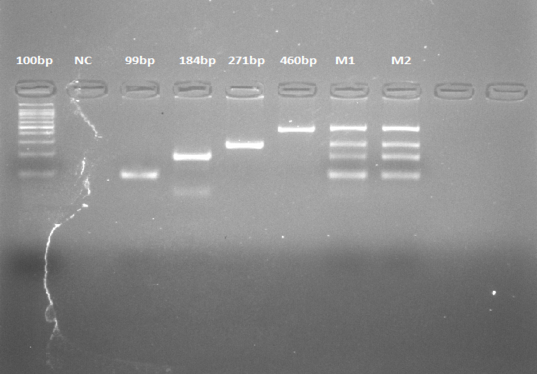
100bp: Ladder, NC: Negative Control (Everything without primer of cow), Cow (Positive Control), Universal primer (99bp), Donkey (184bp), Cow (271bp), Pork (459bp). M1; Multiplex PCR 1, M2; Multiplex PCR 2 (Repeat).
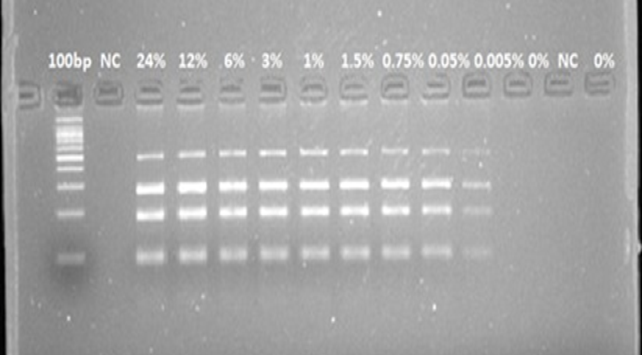
Evaluation of multiplex PCR assay sensitivity for universal, cow, donkey and pork in cooked labortaty prepared samples; M: Marker 100-bp. NC: Negative control (reagents with primers without DNAs); Eu: Eukaryotic DNA positive control. (1) 24%, (2) 12%, (3) 6%, (4) 3%, (5) 1.5%, (6) 0.75%, (7) 0.05% (8) 0.005% (9) 0%.
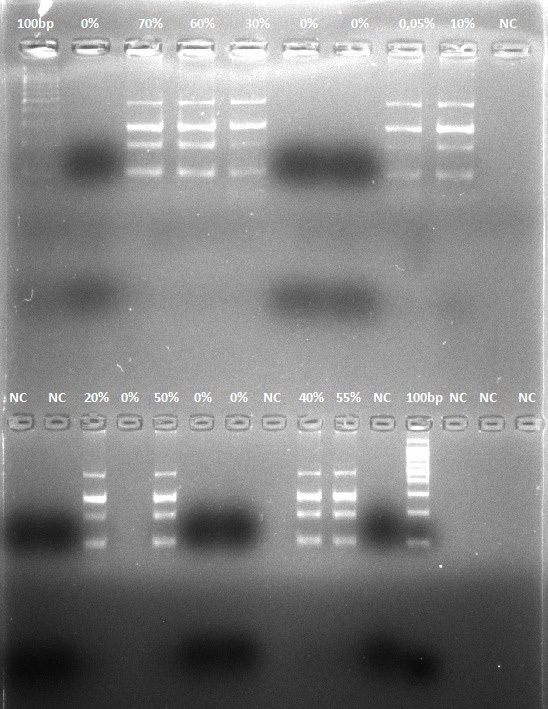
Evaluation of multiplex PCR assay validity was performed on cow, donkey and pork in cooked labortaty prepared samples. M, Marker 100-bp; NC, Negative control (reagents with primers without DNAs).
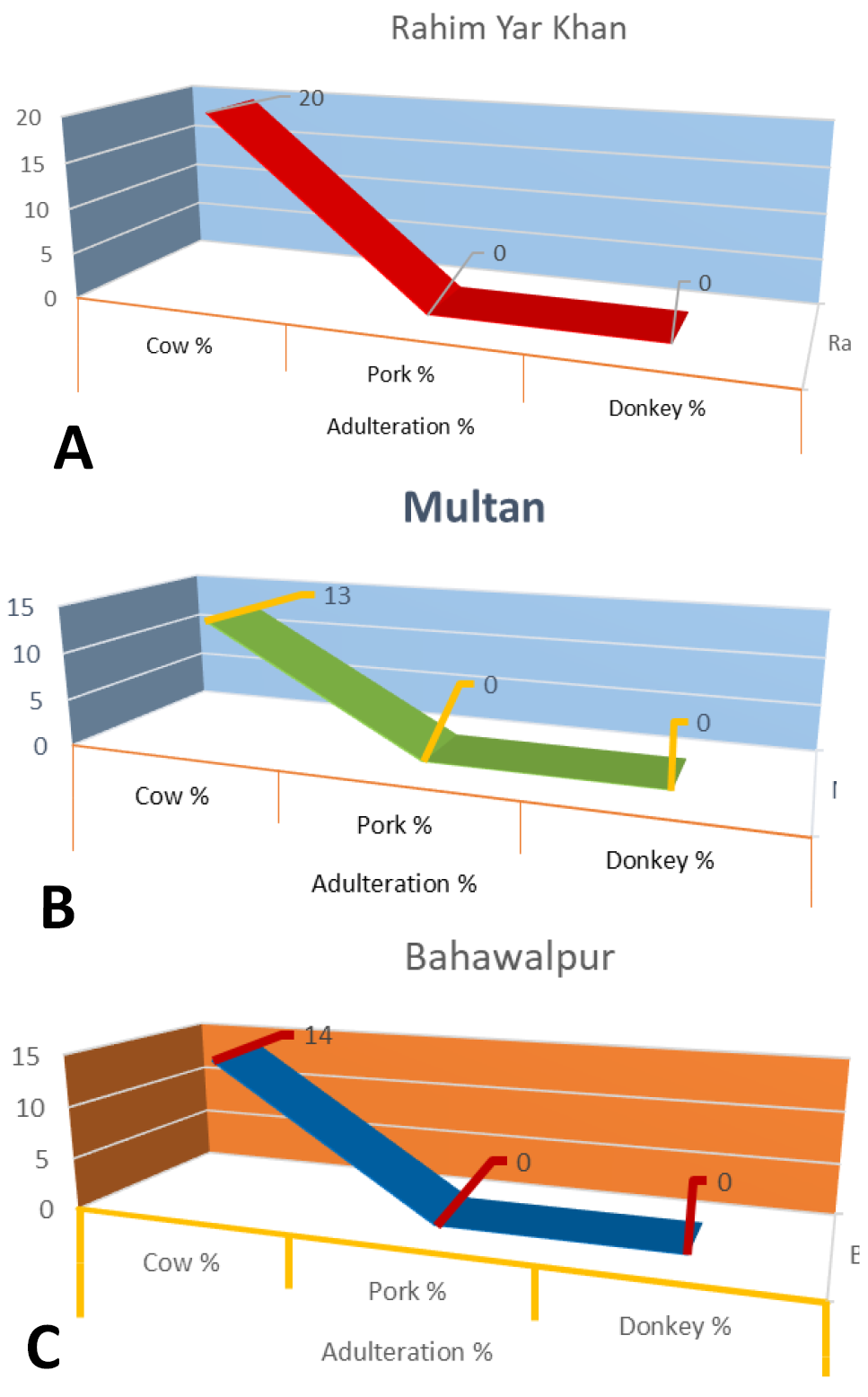
Adulteration in commercial food samples at RYK district (A), Multan district (B) and Bahawalpur district (C).
References
- Ali, M.E., Kashif, M., Uddin, K., Hashim, U., Mustafa, S. and Che Man, Y.B., 2012. Species authentication methods in foods and feeds: the present, past, and future of halal forensics. Fd. Anal. Methods, 5: 935-955. https://doi.org/10.1007/s12161-011-9357-3[CrossRef]
- Brüssow, H. and Brüssow, H., 2007. The evolution of eating systems. The quest for food: A natural history of eating. pp. 121-417. https://doi.org/10.1007/0-387-45461-6_4[CrossRef]
- Butt, R.M. and Ahmed, M., 2020. Halal meat identification and traceability methods: Pakistan context. Pakistan Business Review, pp. 352.
- Chung, S.M. and Hellberg, R.S., 2020. Effects of poor sanitation procedures on cross-contamination of animal species in ground meat products. Fd. Contr., 109: 106927. https://doi.org/10.1016/j.foodcont.2019.106927[CrossRef]
- Ha JeongChul, H.J., Jung WanTae, J.W., Nam YongSuk, N.Y. and Moon TaeWha, M.T., 2006. PCR identification of ruminant tissue in raw and heat-treated meat meals. https://doi.org/10.4315/0362-028X-69.9.2241[CrossRef]
- Hossain, M.M., Uddin, S.M.K., Sultana, S., Wahab, Y.A., Sagadevan, S., Johan, M.R. and Ali, M.E., 2021. Authentication of Halal and Kosher meat and meat products: Analytical approaches, current progresses and future prospects. Crit. Rev. Fd. Sci. Nutr., 62: 285-310. https://doi.org/10.1080/10408398.2020.1814691[CrossRef]
- Jurado-Gonzalez, P., Medina, F.X. and Bach-Faig, A., 2024. Barriers to home food preparation and healthy eating among University Students in Catalonia. Appetite, 194: 107159. https://doi.org/10.1016/j.appet.2023.107159[CrossRef]
- Li, Y.C., Liu, S.Y., Meng, F.B., Liu, D.Y., Zhang, Y., Wang, W. and Zhang, J.M., 2020. Comparative review and the recent progress in detection technologies of meat product adulteration. Comprehen. Rev. Fd. Sci. Fd. Saf., 19: 2256-2296. https://doi.org/10.1111/1541-4337.12579[CrossRef]
- Liu, G.Q., Luo, J.X., Xu, W.L., Li, C.D., Guo, Y.S. and Guo, L., 2021. Improved triplex real-time PCR with endogenous control for synchronous identification of DNA from chicken, duck, and goose meat. Fd. Sci. Nutr., 9: 3130-3141. https://doi.org/10.1002/fsn3.2272[CrossRef]
- Mansouri, M., Khalilzadeh, B., Barzegari, A., Shoeibi, S., Isildak, S., Bargahi, N., Omidi, Y., Dastmalchi, S. and Rashidi, M.R., 2020. Design a highly specific sequence for electrochemical evaluation of meat adulteration in cooked sausages. Biosens. Bioelectron., 150: 111916. https://doi.org/10.1016/j.bios.2019.111916[CrossRef]
- Meyer, R., Höfelein, C., Lüthy, J. and Candrian, U., 1995. Polymerase chain reaction–restriction fragment length polymorphism analysis: A simple method for species identification in food. J. AOAC Int., 78: 1542-1551. https://doi.org/10.1093/jaoac/78.6.1542[CrossRef]
- Palle-Reisch, M., Cichna-Markl, M. and Hochegger, R., 2014. Development and validation of a duplex real-time PCR assay for the simultaneous detection of three mustard species (Sinapis alba, Brassica nigra and Brassica juncea) in food. Fd. Chem., 153: 66-73. https://doi.org/10.1016/j.foodchem.2013.12.035[CrossRef]
- Pegels, N., González, I., García, T. and Martín, R., 2014. Avian-specific real-time PCR assay for authenticity control in farm animal feeds and pet foods. Fd. Chem., 142: 39-47. https://doi.org/10.1016/j.foodchem.2013.07.031[CrossRef]
- Plowman, J.E. and Close, E.A., 1988. An evaluation of a method to differentiate the species of origin of meats on the basis of the contents of anserine, balenine and carnosine in skeletal muscle. J. Sci. Fd. Agric., 45: 69-78. https://doi.org/10.1002/jsfa.2740450109[CrossRef]
- Rahmati, S., Julkapli, N.M., Yehye, W.A. and Basirun, W.J., 2016. Identification of meat origin in food products–A review. Fd. Contr., 68: 379-390. https://doi.org/10.1016/j.foodcont.2016.04.013[CrossRef]
- Safdar, M. and Abasıyanık, M., 2013. Development of fast multiplex real-time PCR assays based on EvaGreen fluorescence dye for identification of beef and soybean origins in processed sausages. Fd. Res. Int., 54: 1652-1656. https://doi.org/10.1016/j.foodres.2013.09.013[CrossRef]
- Safdar, M. and Junejo, Y., 2015. A multiplex-conventional PCR assay for bovine, ovine, caprine and fish species identification in feedstuffs: Highly sensitive and specific. Fd. Contr., 50: 190-194. https://doi.org/10.1016/j.foodcont.2014.08.048[CrossRef]
- Safdar, M. and Junejo, Y., 2016. The development of a hexaplex-conventional PCR for identification of six animal and plant species in foodstuffs. Fd. Chem., 192: 745-749. https://doi.org/10.1016/j.foodchem.2015.07.082[CrossRef]
- Safdar, M. and Ozaslan, M., 2022. Multiplex analysis of animal species origins in feedstuffs and foodstuffs for the prevention, control and eradication of transmissible spongiform encephalopathies (TSEs) by PCR. The Eurasia Proceedings of Health, Environment and Life Sciences, pp. 7-11. https://doi.org/10.55549/ephels.29[CrossRef]
- Safdar, M., Kaleem, M., Duarte, P.M., Tazerji, S.S., Ozaslan, M., Hassanpour, S., Rath, J., Priyadarsini, S. and Rizwan, M.A., 2024. Review on optimizing dairy sector efficiency: Integrating of genetic markers with managemental techniques. Ecol. Genet. Genom., 32: 100259. https://doi.org/10.1016/j.egg.2024.100259[CrossRef]
- Safdar, M., Ozaslan, M. and Junejo, Y., 2023. Rapid multiplex PCR for species authentication: Current prospects and challenges. The Eurasia Proceedings of Health, Environment and Life Sciences, 59-66. https://doi.org/10.55549/ephels.76[CrossRef]
- Williams, C.L., 2023. Still a man’s world: Men who do women’s work (Vol. 1). University of California Press. https://doi.org/10.2307/jj.2711583[CrossRef]
- Zia, Q., Alawami, M., Mokhtar, N.F.K., Nhari, R.M.H.R. and Hanish, I., 2020. Current analytical methods for porcine identification in meat and meat products. Fd. Chem., 324: 126664. https://doi.org/10.1016/j.foodchem.2020.126664[CrossRef]
Services
Article usage statistics
Loading…