Sirigireddy Sivajothi1*, V Chengalva Rayulu1, Bhavanam Sudhakara Reddy2
1Department of Veterinary Parasitology, College of Veterinary Science, Sri Venkateswara Veterinary University, Proddatur – 516360, Andhra Pradesh, India, 2T.V.C.C. (Veterinary Medicine), College of Veterinary Science, Sri Venkateswara Veterinary University, Proddatur – 516360, Andhra Pradesh. India
*Corresponding author: sivajothi579@gmail.com
ABSTRACT
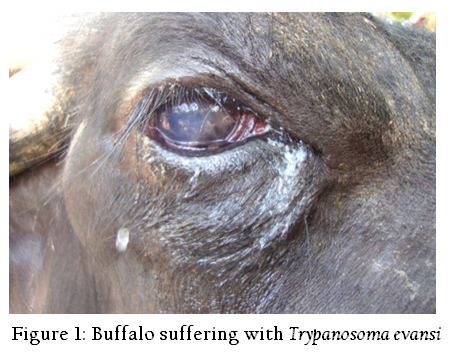
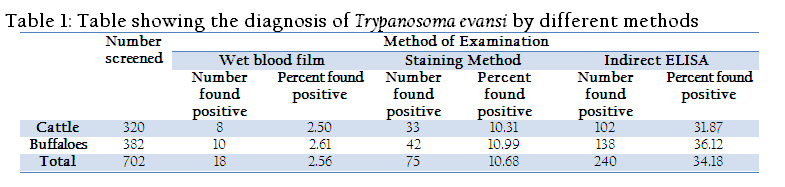
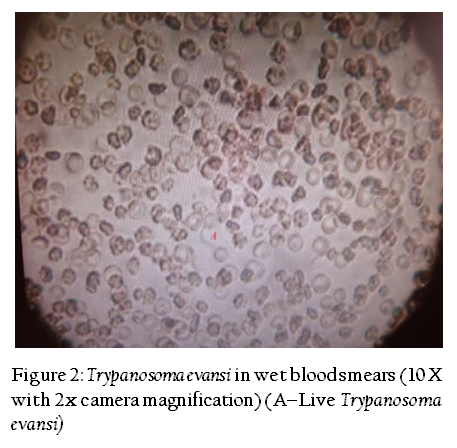
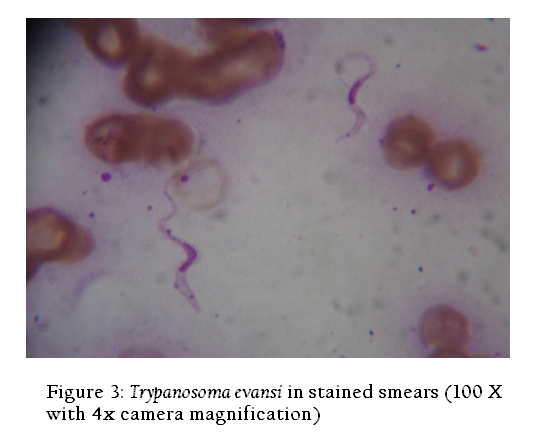
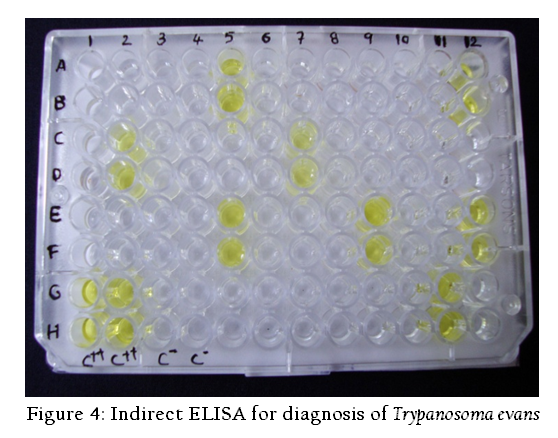
Trypanosoma evansi infection is the most important disease of bovines in India. The present work was carried out to evaluate the different diagnostic methods for field diagnosis of T. evansi infection in bovines in Rayalaseema region of Andhra Pradesh. Animals showing the clinical signs of intermittent fever, occular discharges, chronic emaciation and corneal opacity were selected in this study. A total of 702 samples from four different districts of Rayalaseema regions were collected from 2009 to 2011 for Trypanosoma evansi infection. The tests used were wet blood film (WBF), Giemsa stained smear method and Indirect Enzyme–linked immunosorbent assay (Indirect ELISA). The prevalence of T. evansi infection in cattle was detected in 8, 33, 102 out of 320 cattle by wet blood film examination, Giemsa stained smears examination and by Indirect ELISA, respectively. In buffaloes infection was recorded in 10, 42 and 138 out of 382 buffaloes by wet blood film examination, Giemsa stained smears examination and by Indirect ELISA, respectively. Among the 702 bovines 2.56 %, 10.68 % and 34.18 % were found positive by wet blood film examination, Giemsa stained smears examination and by Indirect ELISA, respectively. In this study Indirect ELISA had the higher prevalence rate as compared with other tests. Observed clinical findings in the affected bovines were correlated with Indirect ELISA results in this study.
Key Words: Bovines, Diagnostic methods, Trypanosoma evansi, Andhra Pradesh