Research Article · Volume 11, Issue 12, 22 November 2023 · Open Access
Comparison Enzymatic and Non-Enzymatic Antioxidant in Sperm Quality of Garut Ram Chilled Semen to Enhance Rural Livestock Commodity
· · · · · · · · · · · ·
Affiliations & Notes ⌄
1Research Center for Animal Husbandry, National Research and Innovation Agency, Cibinong Science Center, Jalan Raya Jakarta-Bogor, Bogor, Indonesia 16915
2Department of Animal Science, Faculty of Agriculture, Lambung Mangkurat University, Jl. Jenderal Ahmad Yani Km. 36, Banjarbaru Kalimantan Selatan 70714. *Correspondence | A Nurlatifah, Research Center for Animal Husbandry, National Research and Innovation Agency, Cibinong Science Center, Jalan Raya Jakarta-Bogor, Bogor, Indonesia 16915
In this experiment, Tris egg yolk with or without enzymatic and non-enzymatic antioxidants was used for ram semen preservation.
This study determined sperm motility gradually decreased when the diluted semen was stored at 5 ºC, the use of both enzymatic and non-enzymatic antioxidants-maintained motility above 40% on the fourth day of storage and could still be used for artificial insemination (AI).
The research concluded that the administration of non-enzymatic treatment at a dose of 20 mg/100 ml extender and Enzymatic treatment at 50 mg/100 ml extender represents the optimal dose at each administration.
Non-enzymatic antioxidant shows better improvement to enhance the quality of spermatozoa in liquid semen of Garut rams compared to enzymatic antioxidant but lead more quickly on decreased plasma membrane intact due to acidity environment.
Selected from the article's own text.
Abstract
The objective of this study was to compare the effects of enzymatic (EZ) and non-enzymatic (NEZ) antioxidants on the quality of spermatozoa in chilled, stored liquid semen from Garut rams. The rams were randomly divided into seven treatments in a 2 × 3 factorial design. The two factors were the antioxidant levels of EZ (25, 50, and 75 mg) and NEZ (5, 10, and 20 mg). Motility, viability, and plasma membrane integrity were the metrics used in this analysis. The experiment conducted with the additional NEZ on the 4th day of observation showed that the addition of ascorbic acid as NEZ at a dose of 20 mg/100 ml into the egg yolk tris extender resulted in the greatest preservation of ram sperm quality (P<0.05), such as motility and viability. Hence, the addition of catalase as EZ at a dose of 50 mg/100 ml to the egg yolk tris extender resulted in the highest (P<0.05) percentage of motility, percentage of live spermatozoa, and intact plasma membrane. The NEZ group showed better results (P<0.05) than the NEZ group in maintaining motility, viability, and membrane integrity. The research concluded that the administration of NEZ at a dose of 20 mg/100 ml extender and EZ treatment at 50 mg/100 ml extender represents the optimal dose to preserve sperm quality until day four of dilution. In addition, the NEZ antioxidant showed better-improved quality of spermatozoa in the liquid semen of Garut rams compared to the EZ antioxidant.
Garut sheep have become a prominent livestock commodity, especially for rural communities in West Java. Garut sheep are known for their meat production and cultural functions. Garut sheep is recognized as an Indonesian sheep germplasm that needs to be preserved and has immense potential for development. Decree of the Ministry of Agriculture, No. 914/Kpts/OT.140/6/2011 pointed out that Garut sheep is an Indonesian endemic livestock genetic resource that needs to be conserved, has a genuine geographical distribution in west Java province, and has been domesticated for generations . Garut rams are characterized by stout body posture, excellent sexual ability, and large, sturdy, round horns. The weight of an adult ram ranges from 60-80 kg and up to 100 kg.
However, the population of Garut sheep is relatively decreasing. The population of Garut sheep in West Java province was 3 million heads in 2002 and declined by 451 thousand heads within two years (West Java Livestock Service Office, 2002), which may have occurred because of the lack of superior rams, slaughtering of productive ewes, and under-production lambs. The shortage of superior males in Garut sheep can be solved by implementing artificial insemination (AI) methods that preserve spermatozoa in liquid or frozen semen. Garut rams have excellent potential to provide high-quality sperm to increase the population and genetic improvement of local sheep through artificial insemination (AI) . The utilization of the active ingredients in high-quality diluents is crucial for the success of AI technology in liquid semen preparation . The benefits of AI using liquid semen are lower than those of frozen semen, frozen semen has 52% potential damage to spermatozoa due to the freezing and thawing process, so chilled semen is preferred, particularly in sheep breeding . Especially when performed in neighboring locations . Despite liquid semen production using diluents to provide nutrients and protect spermatozoa, the chilling process performed is done to reduce sperm metabolic activity but still produces various physicochemical changes in spermatozoa that lead to a decrease in sheep sperm quality .
In addition, deterioration in semen quality is also caused by exposure of semen to oxygenated air during semen processing. This results in high oxidative metabolic activity which has the potential to generate free radicals. This is because free radicals are hazardous to the survival of spermatozoa. This is because free radicals are highly reactive and can obtain electrons from other compounds. Free radicals invade and take electrons from the unsaturated fatty acids of cell plasma membrane phospholipids; if not prevented, autocatalytic reactions will occur and eventually damage the entire plasma membrane of the spermatozoa . Antioxidant compounds are usually added to semen diluents to minimize the damage caused by free radicals. These antioxidant compounds interact with free radicals, thereby minimizing damage to the spermatozoa plasma membrane . Spermatozoa damage caused by oxidation is mitigated or eliminated when antioxidants are provided . The enzyme- and non-enzyme-based antioxidants that can be used and found in semen are superoxide dismutase, catalase, glutathione reductase, and glutathione peroxidase also vitamins C, E, and A, glutathione, co-enzyme Q10, manganese, alpha-lipoic acid, and amino acids .
Vitamin C (ascorbic acid) is a non-enzymatic potent natural antioxidant. Natural antioxidants protect spermatozoa from damage caused by Reactive Oxygen Species (ROS) in semen extenders . Ascorbic acid enhances semen preservation and artificial insemination rates . Ascorbic acid also reduces the cohesiveness of thawed sperm, thereby facilitating liquefaction . However, the addition of ascorbic acid to the semen diluent needs to consider the pH changes that occur because ascorbic acid is acidic. Spermatozoa are very sensitive to changes in the pH of the medium from a neutral state, especially at low acidic pH . This study aimed to determine the quantity of ascorbic acid that should be added to a semen diluent to maximize spermatozoa quality in liquid semen from Garut sheep.
Catalase is one of the antioxidant enzymes present in both sperm cytoplasm and plasma and plays an important role in protecting sperm against ROS. Catalase removes or reduces intracellular and extracellular hydrogen peroxide (H2O2) by catalyzing its conversion to water and oxygen . The addition of catalase to sperm extenders improves sperm viability and reduces malondialdehyde (MDA) levels ; . However, the optimum level and the comparison of its two types of antioxidant effects to maintain semen quality are still not known clearly. The objective of this study was to compare the effect of enzymatic and non-enzymatic antioxidants on the quality of spermatozoa in the chilled stored liquid semen of Garut rams.
MATERIALS AND METHODS
Location and time
The experiment was conducted at the experimental farm in Garut Regency, West Java Province, Indonesia. Garut has a tropical climate with an average annual temperature ranging from 22°C to 29°C. The semen analysis was performed at the National Research and Innovation Agency (BRIN), Tangerang, Indonesia. The animal management protocol for this experiment was approved by the bioethics and animal welfare committee BRIN Decree Number. 082/KE.02/SK/10/2022.
Semen collection
Semen was collected from four male garut ram approximately 4 years old, weighing approximately 80 kg, using an artificial vagina. Each individual produced 14 straw liquid semen divided into 7 treatments. Semen was collected weekly for five weeks. Fresh semen was evaluated immediately after semen collection, including macroscopic (volume, color, consistency, pH) and microscopic (mass movement, concentration, percentage of progressive motility (%M), percentage viable (%V), percentage abnormalities, and percentage of intact plasma membrane (%MPI) assessments.
Experimental treatments
Qualified fresh semen (motility > 70%, concentration > 2000 million cells per ml, abnormality < 15%) was then diluted with several types of diluents. The present study consisted of two types of antioxidants which are ascorbic acid as a nonenzymatic antioxidant (NEZ) and catalase as an enzymatic antioxidant (EZ). Each antioxidant consisted of three levels of concentration. Treatment was:
Control = Tris egg yolk diluent 20%
NEZ 5 = control + ascorbic acid 5 mg/100 ml
NEZ 10 = control + ascorbic acid 10 mg/100 ml
NEZ 20 = control + ascorbic acid 20 mg/100 ml
EZ 25 = control + catalase 25 mg/100 ml
EZ 50 = control + catalase 50 mg/100 ml
EZ 75 = control + catalase mg/100 ml
Semen preservation and observation
The level of dilution depends on the percentage motility and sperm concentration in the ejaculate and the desired final concentration, which is approximately 100 million cells/ml. The volume of diluent used was determined using the following formula: The composition of the Tris base diluent used consisted of: 3.32 g Tris (hydroxymethyl) aminomethane, 1.86 g citric acid, 1.37 g fructose, 1,000 µg/ml penicillin and 1,000 µg/ml streptomycin dissolved in sterile aquabidestilate to reach a volume of 100 ml. Semen dilution was performed at room temperature. After dilution according to the treatment, liquid semen in tubes immersed in a goblet of water was stored in a refrigerator at ± 5°C and evaluated microscopically every day until the percentage of motility was still above 40%.
The parameters observed during liquid semen preservation were the percentage of progressive motility, percentage of viability, and percentage of Intact Plasma Membrane. The percentage of progressive motility was defined as the percentage of spermatozoa that actively moved forward. Sperm motility was determined subjectively in several different fields of view of spermatozoa preparations that had been dripped on an object glass using a 10X and 40X objective magnification microscope. The assessment was performed in the range of 0–100% on a 5% scale.
The viability percentage represents the percentage of spermatozoa that were alive using the 2% eosin staining method. Live spermatozoa are colorless heads because they do not or minimally absorb the stain, while dead spermatozoa are red heads because of high cell wall permeability. The number of spermatozoa counted was at least 200 in different fields of view. The MPU percentage is the percentage of spermatozoa with an intact plasma membrane. The test was performed by mixing 0.25 ml of the hypoosmotic solution with 1 drop of semen in a test tube. After mixing, the solution was incubated in a water bath at 37°C for 30 min. After incubation, 0.2 ml of the solution was distributed on a warm microscope slide using a coverslip. A magnification of 1000 × was used to examine 200 spermatozoa using bright-field microscopy. Data were analyzed using analysis of variance in a completely randomized design with four diluent treatments and five replications. Differences between the treatments were tested using the least significant difference test.
Data analysis
Data were analyzed using a general linear model in a 2 x 3 factorial design, with 2 types of antioxidants with three levels of concentration. The two factors were enzymatic (25, 50, 75 mg) and of non-enzymatic (5, 10, 20 mg). The model considered the main effects and their interaction. Duncan’s test was used to compare means when the interaction was significant. The statistical models were evaluated using the GLM procedure of SPSS ver. 22. A significant effect was considered at P≤0.05
RESULT AND DISCUSSION
Preservation of ram-chilled semen is a common procedure in the sheep industry since this protocol can preserve semen quality for up to 5 days. Moreover, this protocol is considerably less expensive than frozen semen production . In this experiment, Tris egg yolk with or without enzymatic and non-enzymatic antioxidants was used for ram semen preservation. In natural condition, semen ram had natural antioxidant against ROS production in small concentration, but conditions like chilled semen procedures increase the potential to encounter aerobic environmental conditions thus increasing the potential for ROS production which invade the sperm membrane polyunsaturated . The characteristic of mammalian sperm including rams is having a high content of polyunsaturated fatty acids which are prone to oxidation to LPO under the influence of ROS . Therefore, adding antioxidants to the diluents of liquid semen, either enzymatic or non-enzymatic antioxidants, becomes important . The antioxidants constitute precursors that inhibit or quench ROS and delay or prevent sperm damage . Based on their activity, antioxidants are categorized in a different way, antioxidants as enzymatic and non-enzymatic antioxidants. Enzymatic antioxidants perform their action by fragmenting and scavenging ROS such as catalase . Non-enzymatic antioxidants interrupt the chain reaction between free radicals like vitamin C (ascorbic acids) . This study determined sperm motility gradually decreased when the diluted semen was stored at 5 ºC, the use of both enzymatic and non-enzymatic antioxidants-maintained motility above 40% on the fourth day of storage and could still be used for artificial insemination (AI).
Table 1: The characteristics of fresh semen of Garut sheep.
Parameters
Values
Normal range
Volume
3.78 ± 0.85
0.8-1.2
Colours
Cream
Cream
Consistency
Thick
Thick
pH
6.80 ± 0.00
6.5-6.8
Mass motility
+++
++/+++
Concentration (106 /ml)
3.735 ± 370
2.000-3000
Motility
76.5 ± 2.35
70-87%
Viability
87.30 ± 2.25
75-85%
Abnormality
3.50 ± 0.60
3-4%
Membrane plasma integerity
87.17 ± 3.37
84-95%
Fresh semen quality
The possibility that freshly collected semen is suitable for dilution or freezing depends on the specifications of the semen. The volume of semen produced affects the number of doses that can be inseminated. The results (Table 1) showed The volume of Garut ram semen was 3.78 ± 0.85 ml, with viscous, cream color and the concentration was 3.735 ± 370 million/ml. All parameter was in the normal range, just the volume semen was higher than that of a previous study . Numerous variables, including maturity, dimensions, fertility, and collection rate, contribute to variations in the quantity of semen produced. The number of spermatozoa per milliliter determines the number of semen doses required for artificial insemination (IB) . Table 1 illustrates the parameters of fresh semen collected from garut rams in the present study.
The effect of non-enzymatic antioxidant diluent in Garut ram semen
The result (Table 2) showed at the end of observation on day 4, the highest percentage of motility and percentage of viability were obtained in the addition of ascorbic acids 20mg/100 ml as NEZ antioxidant treatment (53.00 ± 5.70% and 71.25 ± 3.77%). NEZ 20 distinct from the control group p<0.05 (45.00 ± 5.00% and 65.00 ± 4.69%, respectively). These findings suggest that the presence of vitamin C as non-enzymatic antioxidant at dose 20mg/mL (P<0.05) alters the final quality of liquid semen. Ascorbic acid in semen diluents can boost sperm performance by protecting sperm cells from reactive oxidation . Several studies have shown that the addition of ascorbic acid to diluents improves the quality of frozen semen in bovine buffalo, ram , and rabbit semen. This is because ascorbic acid reduces the occurrence oflipid peroxidation reactions in the plasma membrane of spermatozoa cells. Ascorbic acid protects against endogenous oxidative damage by dissipating hydroxyl, superoxide, and peroxide radicals .
Table 2: Average percentage motility, viability, and intact plasma membrane of Garut ram spermatozoa at various doses of ascorbic acid as non-enzymatic antioxidant dilluent.
Parameter
Day of observation
Treatment
d-1
d-2
d-3
d-4
Motility (%)
Control
76.00 ± 2.23
68.00 ± 2.74
59.00 ± 2.23
45.00 ± 5.00a
NEZ 5
75.00 ± 0.00
68.30 ± 2.88
56.70 ± 2.88
45.00 ± 5.00a
NEZ 10
76.00 ± 2.23
68.00 ± 2.73
57.00 ± 4.47
51.25 ± 4.78ab
NEZ 20
76.00 ± 2.23
70.00 ± 0.00
62.00 ± 4.47
53.00 ± 5.70b
Viability(%)
Control
84.40 ± 0.89
75.00 ± 3.00
72.50 ± 5.32
65.00 ± 4.69a
NEZ 5
83.75 ± 1.89
76.00 ± 0.00
72.67 ± 1.15
70.50 ± 2.12ab
NEZ 10
82.75 ± 3.40
79.60 ± 2.19
72.80 ± 1.31
68.25 ± 3.59ab
NEZ 20
82.00 ± 5.17
76.80 ±3.03
73.00 ± 3.08
71.25 ± 3.77b
Plasma membrane integrity (%)
Control
82.60 ± 3.71
72.20 ± 4.14
64.60 ±4.62
57.00 ± 5.50
NEZ 5
79.75 ± 4.27
72.67 ± 2.08
69.00 ± 2.64
55.00 ± 3.61
NEZ 10
81.80 ± 3.70
74.60 ± 3.85
68.40 ±2.88
58.00 ± 5.83
NEZ 20
79.00 ± 5.34
74.00 ± 2.74
67.40 ± 5.03
59.50 ± 3.11
NEZ = non-enzymatic treatment; NEZ 5= control + ascorbic acid 5 mg/100 ml; NEZ 10 = control + ascorbic acid 10 mg/100 ml; NEZ 20 = control + ascorbic acid 20 mg/100 ml; abcDifferent characters in the same column indicate significant differences at the 5% test level (DMRT multiple range test).
Table 3: Average percentage motility, viability, and intact plasma membrane of Garut ram spermatozoa at various doses of catalase as enzymatic antioxydant dilluent.
Parameter
Day of observation
Treatment
d-1
d-2
d-3
d-4
Motility (%)
Control
75.00 ± 0
58.33 ± 2.58ab
48.33 ± 2.58a
39.17 ± 2.04a
EZ 25
75.00 ± 0
58.75 ± 2.50ab
47.50 ± 2.89a
38.75 ± 2.50a
EZ 50
75.00 ± 0
60.00 ± 0.00b
52.50 ± 2.74b
43.33 ± 2.58b
EZ 75
75.00 ± 0
57.00 ± 2.74a
47.50 ± 2.74a
38.33 ± 4.08a
Viability (%)
Control
83.83 ± 1.17
71.83 ± 1.33ab
66.50 ± 1.05ab
58.50 ± 3.15
EZ 25
84.00 ± 1.67
71.25 ± 0.96a
64.75 ± 1.71a
58.25 ± 2.87
EZ 50
83.67 ± 1.03
73.50 ± 1.38b
68.00 ± 1.55b
60.67 ± 3.20
EZ 75
84.17 ± 1.72
70.83 ±1.72a
65.17 ± 2.14a
59.33 ± 2.42
Plasma membrane integrity (%)
Control
84.33 ± 0.82
74.83 ± 1.72
68.33 ±2.25
62.00 ± 2.10a
EZ 25
84.33 ± 1.51
74.50 ± 1.29
68.50 ± 1.73
61.25 ± 2.06a
EZ 50
84.67 ± 1.03
75.50 ± 1.38
68.67 ±1.63
64.00 ± 1.67b
EZ 75
84.50 ± 0.55
73.17 ± 2.14
67.50 ± 2.81
62.33 ± 2.25ab
EZ= enzymatic treatment; EZ 25= control + catalase 25 mg/100 ml; EZ 50= control + catalase 50 mg/100 ml; EZ 75= control + catalase mg/100 ml; abcDifferent characters in the same column indicate significant differences at the 5% test level (DMRT multiple range test).
Ascorbic acid as a non-enzymatic antioxidant enhances the integrity of liquid semen by lowering the frequency of peroxidation of lipid reactions that occur in the cell membranes of spermatozoa. Ascorbic acid protects against endogenous oxidative damage by dissipating hydroxyl, superoxide, and peroxide radicals . Vitamin C converts to ascorbate radicals by lending electrons to lipid radicals to terminate the lipid peroxidation chain reaction. The ascorbate radical pair reacts rapidly to produce one ascorbate molecule and one dehydroascorbate molecule. Dehydroascorbate has no antioxidant capacity. Therefore, dehydroascorbate is converted back to ascorbate by the addition of two electrons. The last stage of the two-electron addition to dehydroascorbate has been proposed to be performed by oxidoreductase .
The findings of this study lend credence to the theory that oxidative stress incurred by sperm cell plasma membranes during semen preservation is the primary cause of poor semen yield . This situation occurs because of the contact between semen and oxygen which causes high oxidative metabolic activity that has the potential to produce free radicals. Low-dosage ascorbic acid addition to sperm enhancers protects the cell membrane from free radicals, thereby decreasing the likelihood of sperm cell abnormalities and death .
Ascorbic acid, a strong antioxidant, can be diluted with water. Limiting ascorbic acid recycling and boosting ascorbic acid may reduce hydroxyl, superoxide, and hydrogen peroxide radicals, all of which contribute to sperm haemolysis . The administration of ascorbic acid at higher doses > 10 mg/ml diluent results in a decrease in the quality of spermatozoa parameters, which is by previous literature . Other reports state that a smaller concentration of ascorbic acid, which is 2.5-8.5 mg/ml, can improve the quality of goat semen . This research still adds vitamin C to the criteria by adding a maximum equivalent of up to 0.02 mg/ml (NEZ 5-20) of diluent. The same finding was also reported in equine semen that showed improvement when the dosage of ascorbic acid was 1.8 g/L compared to 0.45 g/L . Ascorbic acid, which is highly radicalized at high dosages, is converted back into a stable form by antioxidant enzymes in the body through different mechanisms. Therefore, combining ascorbic acid is expected to have the greatest effect on free radical activity ; .
The effect of enzymatic antioxidant diluent in Garut ram semen
Ram semen contains some natural antioxidants like superoxide dismutase and a small amount of glutathione peroxidase and catalase, so this experiment aimed to determine the effect of catalase in ram semen quality and also to set the efficient dosage of catalase in chilled semen medium of Garut ram . The result showed from day 2 until day 4 of observation, the highest percentage of motility was obtained in the addition of catalase 50 mg/100 ml (EZ 50) as a non-enzymatic antioxidant treatment (Table 3). The motility on day 4 at EZ 50 was distinct (P<0.05) from the control group (43.33 ± 2.58 vs 39.17 ± 2.04, respectively). Align with the result in motility, viability, and plasm membrane integrity also showed better results (P<0.05) in the EZ 50mg treatment. The plasma membrane integrity on day 4 at EZ50 mg was distinct (P<0.05) from the control group (64.00 ± 1.67 vs 62.00 ± 2.10, respectively). These findings suggest that the addition of catalase as an enzymatic antioxidant at a dose of 50 mg/100mL is better (P<0.05) in maintaining the final quality of liquid semen.
Our finding on total motility showed catalase with a dose of 50 mg performed better in preventing the harmful effect of cooling compared to 70 mg (Table 3). Other findings giving 100 and 200U/mL of catalase in diluent show improvement in liquid semen motility . Viability in EZ 50 also showed better results. Our finding aligns with the result on ram semen dilution with catalase improved survival of spermatozoa stored at 5 degrees C . Plasm membrane integrity that maintains better in EZ50 also aligns with the finding of da Silva et al (2010) who observed a greater percentage of plasma membrane integrity and acrosome membrane integrity when ram semen was cryopreserved with (Tris) egg yolk diluent containing 50 microgram/mL of catalase. Catalase supplementation reduces ROS production, protects the mitochondria membranes, and leads the sperm quality parameters by converting hydrogen peroxide (H2O2) into water and oxygen . Which is generated by NADPH (nicotinamide adenine dinucleotide phosphate) oxidase . Better results in EZ 50 compared to EZ 70 are in agreement with the findings report that there was a linear trend between doses of another enzyme-based antioxidant with improvement in survival of spermatozoa except for sperm dilute with catalase. Although catalase is a potent antioxidant, usage at high doses causes a decrease in sperm quality. High EZ (catalase) addition will cause high fluidity in the plasma membrane above its normal limit, illustrated in this study where NEZ 75 began to have lower sperm quality parameters than NEZ 50 but still better than the control, which is similar to previous research . Moreover, a catalase dose higher than 200U/mL can cause toxicity. This toxicity is due to the action of antioxidants and is related to the type and concentration of ROS produced .
The use of catalase as an enzyme-based antioxidant in semen diluent was advantageous due to its role in lipid peroxidation and the detoxification of hydrogen peroxide, a chemical that serves as a precursor to the hydroxyl radical . Catalase contributes towards preserving normal acrosome integrity and stabilizes the spermatozoa plasmalemma thereby preserving motility. catalase, in sperm cells, may interact with many ROS to directly protect mammalian cells from oxidative stress and therefore preserve sperm motility . Thus, as seen in the present study, efforts to enhance the motility and viability of sperm
Comparison Garut rams semen after being diluted with different types of antioxidants
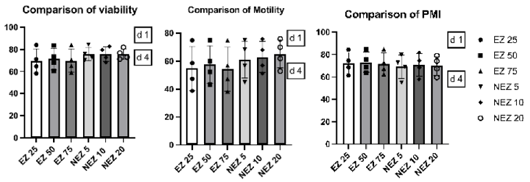
Compared to the differences in quality reduction during the storage period, there is a tendency for a higher reduction of chilled semen in the enzymatic antioxidant treatment. The antioxidant capacity of enzyme-based antioxidants could change with semen quality (Figure 1) also during preserved in cold conditions . Change in enzyme activity due to oxidative stress, enzymes are utilized in excess to protect semen quality, also can be caused by the lack of capacity that the enzyme has to maintain sperm quality ; . Excessive ROS generation not only causes lipid peroxidation and DNA fragmentation but also has an impact on the production of ATP and NADPH. This, in turn, reduces catalase activity (catalase activation and efficiency are NADPH-dependent) ; . Higher effectivity in non-enzymatic and enzymatic antioxidants was also reported by Sicherle et al. (2011) that used torolox (Vitamin E) as non-enzymatic and catalase as an enzymatic antioxidant. The inclusion of Trolox was advantageous in the induced reaction, where lipid peroxidation was driven to assess the potential of the semen sample to create peroxide radicals, and resulted in reduced Thiobarbituric acid reactive substances (TBARS) values when compared to the enzyme treatment.
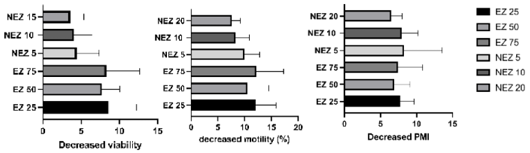
Similarly, another study found that the antioxidant capacity of vitamin C is significantly greater than catalase at the same concentration , which corroborates the fact that vitamin C is a potent water-soluble antioxidant compound that is also a major part of sperm diluent although vitamin C is unstable when compared to catalase . This vitamin C digestibility is reflected in the rapid increase in sperm plasma membrane integrity damage rates compared with catalase (Figure 2), despite being a strong antioxidant vitamin C, the administration of high levels of vitamin C has a high enough acid content that it will damage the sperm plasma membrane more quickly . A continuously reduced pH decreases Na+/K+-ATPase activity which is the main control of protons in sperm. Extreme acidic conditions stimulate H+ to be released and will also decrease Ca2+ influx then leads to impaired plasma membrane intact . The other reason for NEZ being more potent than enzymatic antioxidants is the mechanism of action of NEZ focuses more on preventing the formation of ROS or cells do not have time to deal with ROS products while catalase/EZ focuses on breaking down ROS products so that sperm will remain damaged during the elimination process .
CONCLUSIONS and Recommendations
Antioxidants can be used in artificial insemination with liquid semen for Garut sheep germplasm preservation. The research concluded that the administration of non-enzymatic treatment at a dose of 20 mg/100 ml extender and Enzymatic treatment at 50 mg/100 ml extender represents the optimal dose at each administration. Non-enzymatic antioxidant shows better improvement to enhance the quality of spermatozoa in liquid semen of Garut rams compared to enzymatic antioxidant but lead more quickly on decreased plasma membrane intact due to acidity environment.
ACKNOWLEDGMENTS
This research was partially supported by the Ministry of Research and Technology.
Novelty Statement
the novelty of this study was to find the optimum level of using ascorbic acid as non-enzymatic treatment and catalase as enzymatic treatment in chilled stored semen of Garut ram. This study also doing a comparison the effect of enzymatic and non-enzymatic antioxidants on the quality of spermatozoa in the chilled stored liquid semen of Garut rams.
AUTHOR’S CONTRIBUTION
All the authors contributed to designing research, data collection, data acquisition, data analysis and reporting, and manuscript preparation.
Conflict of interest
The authors have declared no conflict of interest.
Figures
Figure 1:.
comparation of viability, motility and plasm integrity of enzymatic and non-enzymatic treatment.
NEZ= non-enzymatic treatment; EZ= enzymatic treatment; NEZ 5= control + ascorbic acid 5 mg/100 ml; NEZ 10 = control + ascorbic acid 10 mg/100 ml; NEZ 20 = control + ascorbic acid 20 mg/100 ml; EZ 25= control + catalase 25 mg/100 ml ; EZ 50= control + catalase 50 mg/100 ml; EZ 75= control + catalase mg/100 ml.
Figure 2:.
comparation of decrease in viability, motility and plasm integrity of enzymatic and non-enzymatic treatment. NEZ= non-enzymatic treatment; EZ= enzymatic treatment; NEZ 5= control + ascorbic acid 5 mg/100 ml; NEZ 10 = control + ascorbic acid 10 mg/100 ml; NEZ 20 = control + ascorbic acid 20 mg/100 ml; EZ 25= control + catalase 25 mg/100 ml; EZ.
References
Afiati F, Lestari DA, Malini DM (2016). Effect of vitamin C administration in diluent media to quality of dairy cattle thawed spermatozoa. J. Ilmu Ternak Vet., 21: 124–134. https://doi.org/10.14334/jitv.v21i2.1360[CrossRef]
Agar NS, Baker ML (1996). Role of Catalase in H2O2-induced oxidant stress in marsupial erythrocytes. Comp. Haematol. Int., 6: 32–34. https://doi.org/10.1007/BF00368099[CrossRef]
Ariyanto KB, Khotijah L, Astuti DA, Arifiantini RI, Menassol JB (2020). Semen quality of garut rams feed by different protein sources and their implementation potential in small farms of West Java. J. Agri., 20: 47–55. https://doi.org/10.17969/agripet.v20i1.15391[CrossRef]
Asadpour R, Jafari R, Tayefi NH (2011). Effect of various levels of catalase antioxidant in semen extenders on lipid peroxidation and semen quality after the freeze-thawing bull semen. Vet. Res. Forum, 2: 218-221.
Bilodeau JF, Blanchette S, Gagnon C, Sirard MA (2001). Thiols prevent H2O2-mediated loss of sperm motility in cryopreserved bull semen. Theriogenology, 56: 275–286. https://doi.org/10.1016/S0093-691X(01)00562-3[CrossRef]
Bintara S, Maharani D, Tavares L, Sitaresmi P (2023). Comparison various level ascorbic acid and lycopene additions in semen diluent enhanced sperm quality of Sapudi ram. J. Anim. Sci. Technol., https://doi.org/10.5187/jast.2023.e54[CrossRef]
Câmara DR, Mello-Pinto MMC, Pinto LC, Brasil OO, Nunes JF, Guerra MMP (2011). Effects of reduced glutathione and catalase on the kinematics and membrane functionality of sperm during liquid storage of ram semen. Small Rumin. Res., 100: 44–49. https://doi.org/10.1016/j.smallrumres.2011.05.010[CrossRef]
da Silva Maia M, Bicudo SD, Sicherle CC, Rodello L, Gallego ICS (2010). Lipid peroxidation and generation of hydrogen peroxide in frozen-thawed ram semen cryopreserved in extenders with antioxidants. Anim. Reprod. Sci., 122(1-2): 118-123. https://doi.org/10.1016/j.anireprosci.2010.08.004[CrossRef]
Eidan SM (2016). Effect on post-cryopreserved semen characteristics of Holstein bulls of adding combinations of vitamin C and either catalase or reduced glutathione to Tris extender. Anim. Reprod. Sci., 167: 1–7. https://doi.org/10.1016/j.anireprosci.2016.01.014[CrossRef]
Ejaz B, Sajid ZA, Aftab F (2012). Effect of exogenous application of ascorbic acid on antioxidant enzyme activities, proline contents, and growth parameters of Saccharum spp. hybrid cv. HSF-240 under salt stress. Turkish J. Biol., 36: 630-640. https://doi.org/10.3906/biy-1201-37[CrossRef]
Engel S, Schreiner T, Petzoldt R (1999). Lipid peroxidation in human spermatozoa and maintenance of progressive sperm motility. Andrologia, 31: 17–22. https://doi.org/10.1046/j.1439-0272.1999.00230.x[CrossRef]
Franco JSV, Chaveiro A, Góis A, da Silva FM (2013). Effects of α-tocopherol and ascorbic acid on equine semen quality after cryopreservation. J. Equine Vet. Sci., 33: 787–793. https://doi.org/10.1016/j.jevs.2012.12.012[CrossRef]
Garcia EJ, Oldoni TLC, Alencar SM, Reis A, Loguercio AD, Grande RHM (2012). Antioxidant activity by DPPH assay of potential solutions to be applied on bleached teeth. Braz. Dental J., 23; 22–27. https://doi.org/10.1590/S0103-64402012000100004[CrossRef]
Herdis H, Surachman M, Darmawan IWA, Afifah A (2019). The role of sucrose as extracellular cryoprotectant in maintaining the Garut rams’ frozen semen quality, in: AIP Conference Proceedings. AIP Publishing. https://doi.org/10.1063/1.5115757[CrossRef]
Kankofer M, Kolm G, Aurich J, Aurich C (2005). Activity of glutathione peroxidase, superoxide dismutase and catalase and lipid peroxidation intensity in stallion semen during storage at 5 C. Theriogenology, 63: 1354–1365. https://doi.org/10.1016/j.theriogenology.2004.07.005[CrossRef]
Kasimanickam R, Pelzer KD, Kasimanickam V, Swecker WS, Thatcher CD (2006). Association of classical semen parameters, sperm DNA fragmentation index, lipid peroxidation and antioxidant enzymatic activity of semen in ram-lambs. Theriogenology, 65: 1407–1421. https://doi.org/10.1016/j.theriogenology.2005.05.056[CrossRef]
Kaźmierczak-Barańska J, Boguszewska K, Adamus-Grabicka A, Karwowski BT (2020). Two faces of vitamin C antioxidative and pro-oxidative agent. Nutrients, 12: 1501. https://doi.org/10.3390/nu12051501[CrossRef]
Kowalczyk A (2022). The role of the natural antioxidant mechanism in sperm cells. Reprod. Sci., 29: 1387–1394. https://doi.org/10.1007/s43032-021-00795-w[CrossRef]
Leboeuf B, Restall B, Salamon S (2000). Production and storage of goat semen for artificial insemination. Anim. Reprod. Sci., 62: 113–141. https://doi.org/10.1016/S0378-4320(00)00156-1[CrossRef]
Lecewicz M, Strzeżek R, Kordan W, Majewska A (2018). Effect of extender supplementation with low-molecular-weight antioxidants on selected quality parameters of cryopreserved canine spermatozoa. J. Vet. Res., 62: 221–227. https://doi.org/10.2478/jvetres-2018-0032[CrossRef]
Liebler DC (1993). The role of metabolism in the antioxidant function of vitamin E. Crit. Rev. Toxicol., 23: 147–169. https://doi.org/10.3109/10408449309117115[CrossRef]
Marti E, Marti JI, Muiño-Blanco T, Cebrián-Pérez JA (2008). Effect of the cryopreservation process on the activity and immunolocalization of antioxidant enzymes in ram spermatozoa. J. Androl., 29: 459–467. https://doi.org/10.2164/jandrol.107.003459[CrossRef]
Maxwell WM, Stojanov T (1996). Liquid storage of ram semen in the absence or presence of some antioxidants. Reprod. Fertil. Dev., 8: 1013–1020.
Memon AA, Wahid H, Rosnina Y, G https://doi.org/10.1071/RD9961013 oh YM, Ebrahimi M, Nadia FM (2013). Effect of ascorbic acid concentrations, methods of cooling and freezing on Boer goat semen cryopreservation. Reprod. Domest. Anim., 48: 325–330. https://doi.org/10.1111/j.1439-0531.2012.02155.x[CrossRef]
Mohammadzadeh M, Ramazani V, Khalili MA, Hamishekar H, Dehghan ML, Talebi AR, Zare-Zardini H, Ghasemi S (2019). Medium containing different concentrations of catalase as a strategy for optimising sperm parameters and chromatin in normospermic persons. Andrologia, 51: e13231. https://doi.org/10.1111/and.13231[CrossRef]
Najjar A, Saïd SB, Kalamoun S, Benaoun B, Ezzaouia M (2016). Comparison of two freezing extenders and their influence on sperm quality of Tunisian Arab stallions. J. Vet. Sci. Anim. Husb., 4: 302.
Nimse SB, Pal D (2015). Free radicals, natural antioxidants, and their reaction mechanisms. RSC Adv., 5: 27986–28006. https://doi.org/10.1039/C4RA13315C[CrossRef]
Oh C, Li M, Kim EH, Park JS, Lee JC, Ham SW (2010). Antioxidant and radical scavenging activities of ascorbic acid derivatives conjugated with organogermanium. Bull. Korean Chem. Soc., 31: 3513–3514. https://doi.org/10.5012/bkcs.2010.31.12.3513[CrossRef]
Ollero M, Blanco TM, López-Pérez MJ, Pérez JC (1996). Surface changes associated with ram sperm cryopreservation revealed by counter-current distribution in an aqueous two-phase system effect of different cryoprotectants. J. Chromatogr. B Biomed. Sci. Appl., 680: 157–164. https://doi.org/10.1016/0378-4347(95)00461-0[CrossRef]
Pena FJ, Johannisson A, Wallgren M, Martinez HR (2003). Antioxidant supplementation in vitro improves boar sperm motility and mitochondrial membrane potential after cryopreservation of different fractions of the ejaculate. Anim. Reprod. Sci., 78: 85–98. https://doi.org/10.1016/S0378-4320(03)00049-6[CrossRef]
Peruma P, Chamuah JK, Rajkhowa C (2013). Effect of catalase on the liquid storage of mithun (Bos frontalis) semen. Asian Pac. J. Reprod., 2: 209–214. https://doi.org/10.1016/S2305-0500(13)60148-7[CrossRef]
Prabowo TA, Bintara S, Yusiati LM, Sitaresmi PI, Widayati DT (2023). Evaluation deoxyribonucleic acid (DNA). fragmentation of local Indonesian cattle frozen sperm using halomax method. Biodiv. J. Biol. Divers., 24.
Priyanto L, Herdis S, Sitaresmi PI, Priyatno TP, Anwar RI, Mahari DA, Lupitasari FBI, Surachman M, Darmawan IWA, Abrar A (2023). The effects of various high dosage of α-tocopherol and ascorbic acid in tris egg yolk extender on post-thawed sperm quality in tropical brahman bulls. https://doi.org/10.17582/journal.pjz/20230131020144[Full text][CrossRef]
Rizal M, Herdis N, Riyadhi M (2015). Kriopreservasi semen domba garut dengan pengencer tris yang disuplementasi ethylene diamine tetraacetic acid. J. Vet. Juni, 16: 249–255.
Samoylenko A, Hossain JA, Mennerich D, Kellokumpu S, Hiltunen JK, Kietzmann T (2013). Nutritional countermeasures targeting reactive oxygen species in cancer from mechanisms to biomarkers and clinical evidence. Antioxid. Redox Signal., 19: 2157–2196. https://doi.org/10.1089/ars.2012.4662[CrossRef]
Shahidi F, Zhong Y (2010). Novel antioxidants in food quality preservation and health promotion. Eur. J. Lipid Sci. Technol., 112: 930–940. https://doi.org/10.1002/ejlt.201000044[CrossRef]
Shi L, Jin T, Hu Y, Ma Z, Niu H, Ren Y (2020). Effects of reduced glutathione on ram sperm parameters, antioxidant status, mitochondrial activity and the abundance of hexose transporters during liquid storage at 5℃. Small Rumin. Res., 189: 106139. https://doi.org/10.1016/j.smallrumres.2020.106139[CrossRef]
Sicherle CC, Maia MS, Bicudo SD, Rodello L, Azevedo HC (2011). Lipid peroxidation and generation of hydrogen peroxide in frozen-thawed ram semen supplemented with catalase or Trolox. Small Rumin. Res., 95: 144–149. https://doi.org/10.1016/j.smallrumres.2010.10.011[CrossRef]
Singh P, Agarwal S, Singh H, Sharma AK, Verma PK, Kumar S (2020). Role of catalase as semen additive in cryopreservation of cattle bull semen. Int. J. Curr. Microbiol. Appl. Sci., 9: 2856–2869. http://www.ijcmas.com, https://doi.org/10.20546/ijcmas.2020.908.321[CrossRef]
Syafitri M, Prabowo TA, Sitaresmi PI, Yusiati LM, Bintara S, Widayati DT (2022). The effect of glutathione addition in diluent semen on ram spermatozoa quality. In: 9th International Seminar on Tropical Animal Production (ISTAP 2021). Atlantis Press, pp. 251–255. https://doi.org/10.2991/absr.k.220207.052[CrossRef]
Thiangtum K, Hori T, Kawakami E (2012). Effect of catalase and superoxide dismutase on motility, viability and acrosomal integrity of canine spermatozoa during storage at 5oC. Thai J. Vet. Med., 42: 447–453. https://doi.org/10.56808/2985-1130.2423[CrossRef]
Wang Y, Zhang L, Sohail T, Kang Y, Sun X, Li Y (2022). Chlorogenic acid improves quality of chilled ram sperm by mitigating oxidative stress. Animals, 12: 163. https://doi.org/10.3390/ani12020163[CrossRef]
West Java Livestock Service Office, 2002: Partners Available at: https://www.bps.go.id/ (accessed 20 Sept 2023).
Young IS, Woodside JV (2001). Antioxidants in health and disease. J. Clin. Pathol., 54: 176–186. https://doi.org/10.1136/jcp.54.3.176[CrossRef]
Yu X, He S, Wang L, Kang M, Zhu Y, Wang S, Sun X (2019). Effects of vitamin C and vitamin E on cryopreservation of Guanzhong donkey semen. Pak. J. Zool., 51: 1777. https://doi.org/10.17582/journal.pjz/2019.51.5.1777.1781[Full text][CrossRef]
Yusuf A, Huang X, Chen N, Apraku A, Wang W, Cornel A, Rahman MM (2020). Impact of dietary vitamin c on plasma metabolites, antioxidant capacity and innate immunocompetence in juvenile largemouth bass, Micropterus salmoides. Aquacult. Rep., 17: 100383. https://doi.org/10.1016/j.aqrep.2020.100383[CrossRef]
Zhou J, Chen LI, Li J, Li H, Hong Z, Xie M, Chen S, Yao B (2015). The semen pH affects sperm motility and capacitation. PLoS One, 10: e0132974. https://doi.org/10.1371/journal.pone.0132974[CrossRef]