History: A three-year-old white coloured, female bull terrier dog weighing 11.5 kg, presented to a dermatological consult for chronic skin problems, with a history of symptoms from 6 months of age. The patient lives in a house, with no other pets. The owner says that the pet has had no vaccinations or deworming treatment. Previously, she was given a series of injections without the knowledge of the owners.
Clinical examination findings: On macroscopic examination, the patient presents hyperkeratosis on the pads of the four limbs, macronychia of all nails of thoracic and pelvic limbs (Figure 1). Clinical examination evaluates a diminished vision, slight delay to stimuli and aggressiveness.
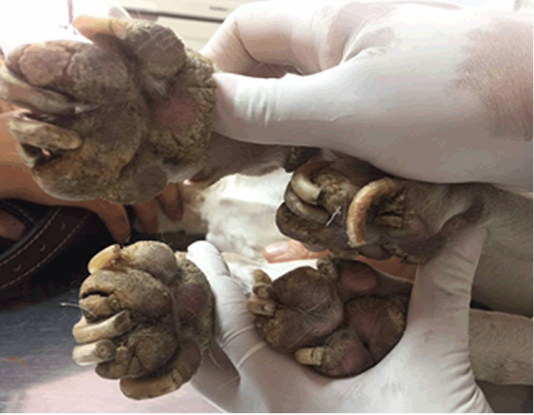
Figure 1: Hyperkeratosis and macronychia of the nails are observed in the four limbs
Diagnostic aids: Skin scrapings and trichograms were performed, which were negative, nailfold cytologies were performed in which were positive was obtained for Malassezia, Twenty-eight days later, the patient was sedated and a 6mm punch biopsy was performed on pads, hyperkeratosis and healthy skin; a sample with 2 fragments of tissue (skin with hair and skin), 0.5 cm each (Figure 2), which were analysed by histopathology (Figure 3). Completely removed the hyperkeratosis and the nails were cut, followed by vaccination and deworming.
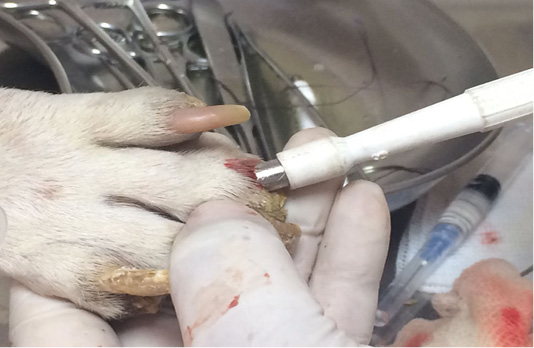
Figure 2: Sampling of the digital area for histopathology
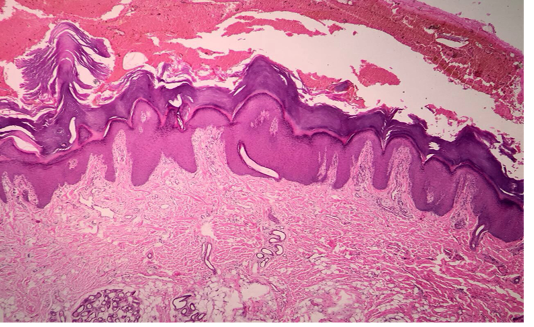
Figure 3: Photomicrography of dermatohistopathological demonstration of marked parakeratotic hyperkeratosis.
Microscopic examination revealed areas of irregular, moderate hyperplasia with compact laminar orthokeratosis and hypergranulosis in the epidermis. At the interface: mild fibrovascular proliferation with poor lymphocytic inflammation.
The result of histopathology of skin fragments and pads: orthokeratotic, moderate, diffuse chronic hyperkeratosis; Mild lymphocytic dermatitis with mild granulation tissue. They suggest familial foot hyperkeratosis.
Treatment approach: The treatment was initiated with vitamin complex with omegas, zinc and copper (Mirrapel®, Comandina, Cali, Colombia), up to 4 ml once a day. Three months later, there was an improvement in 80% of the lesions, exaggerated growth of the nails and decreased weight (10.8kg); the nails were cut and the treatment continue (Mirrapel®). After 4 months, the patient presents a 2/5 body condition, a weight of 9.7 kg and a decrease in muscle mass; the patient’s appetite has not diminished and exaggerated growth of the nails persists. Nails were cut and continuously treated (Mirrapel®).