
Microorganisms are metal cleanup technique to restore polluted soil. Hence, this study investigated the bioremediation role of fungi isolated from sewage treatment plant on the growth of Abelmoschus esculentus cultivated with sewage rhizosphere soil (As per using the total shoot length of Abelmoschus esculentus). Aspergillus niger, Aspergillus flavus, Talaromyces purpureogenus and Curvularia coatesiae were isolated and screened for heavy metals biosorption by inoculating 5 ml of fungi culture in 45 ml of potato dextrose broth having metal stock solutions. Fungi DNA were extracted and PCR amplification of all the isolates were performed. Reconstructed phylogenetic tree based on rRNA-ITS sequence showed that T. purpureogenus and C. coatesiae were of the same ancestral line. A. niger and A. flavus showed higher metals biosorption rate and T. purpureogenus was the least. C. coatesiae had the highest germination rate, fungal isolates significantly influenced the Abelmoschus esculentus vegetation growth rate in cadmium (Cd) and lead (Pb) contaminated soils and Pb had more effect on okra growth. T. purpureogenus, followed by A. flavus exhibited highest metal uptake, indicating their role in heavy metal accumulation. Interestingly, vegetated soil had metal uptake compared to non-vegetated soil which shows the significance of phytoremediation in synergy with fungal bioremediation.
Research Article · Volume 58, Issue 6, 24 September 2026 · Open Access
Biosorption and Mitigation of Cd and Pb Polluted Soil Using Abelmoschus esculentus Grown with Rhizosphere Fungi Isolated from Sewage Treatment Plant
· · · · ·
Affiliations & Notes ⌄
- 1Department of Plant Science and Biotechnology, University of Nigeria, Nsukka, Enugu State, Nigeria. 2Department of Zoology and Environmental Biology, University of Nigeria, Nsukka, Enugu State, Nigeria 3A.P. Leventis Ornithological Research Institute, University of Nigeria, Nsukka, Enugu State, Nigeria * Corresponding author: angela.amujiri@unn.edu.ng, andongfelix@gmail.com
Article Info ⌄
- Journal:
- Pakistan Journal of Zoology
- Published:
- 24 September 2026

From the article
- The studied fungi isolates showed potential for heavy metal uptake and bioremediation in contaminated soils.
- Talaromyces purpureogenus and Aspergillus flavus exhibited higher levels of heavy metal uptake from the soil, with Talaromyces purpureogenus showing greater uptake for both Cd and Pb.
- Therefore, by incorporating metal-resistant fungal strains into bioremediation approaches, the detoxification and biosorption of pollutants in contaminated areas can be enhanced.
- This highlights the relevance of Talaromyces species in the context of the present study, where their biosorption potential and tolerance to heavy metals are essential considerations for the remediation of heavy metal polluted soil.
Selected from the article's own text.
Abstract
Introduction
Most of agricultural practices are chiefly based on the need to increase food production or achieve food security in the field. Moreover, most farmers are often unconcerned with food safety, environmental advantages or risks, preferring to maximize yields and profits. On the other hand, some of the agricultural practices incorporate sewage irrigation in soil amendment to boost Abelmoschus esculentus vegetative growth rate and increase yield. However, long-term irrigation is a major source of farmland contamination and can significantly lead in substantial elevation of environmental metal contaminants absorbed by crops in the farms ; .
Then, pollution of agricultural soil with heavy metals has become a major environmental problem worldwide due to the current uncontrolled man-made sources of pollution in the farming sectors observed in the intensive applications of organic fertilizers, agrochemicals and sewage irrigations ; ; . Other noted sources of the metal contaminants come from increased eruptions, emissions and discharges resulting from development processes, industrialization and urbanization ; . Most of the heavy metals freely exists in nature and are required at safe levels for plant developmental activities . However, when the safe levels are exceeded, the toxins accumulate in the food chain, therein impairing proper development or normal functioning of living systems and at long run endanger nature with adverse health consequences like diseases and disabilities ; ; . Therefore, heavy metals are non-biodegradable, toxic, persistent in nature and based on these, removal of these heavy metals from contaminated soil is of paramount importance. Moreover, exposure of crops and vegetables to continuous irrigation especially where there is poor sound sewage system may be a threat to food safety. In such a context, it is essential to understand the remediation role of sewage rhizosphere soil.
Microorganisms operate as biofertilizers which play crucial role in improving and maintaining soil fertility and plant growth . Also, microorganisms (fungi and bacteria) even in combination, are eco-beneficial methods to remediate heavy metal polluted soils. They use their properties to dissolve contaminants in two mechanisms: active as in bioaccumulation, and passive as in adsorption . Then, they can transform hazardous pollutants into less toxic inorganic salts, microbial biomass, carbon dioxide and water as well as other products by speeding up natural metabolic processes that result in these effects . Bioremediation of heavy metals can be achieved through biosorption, bioaccumulation, biotransformation, biomineralization and mycoremediation (fungi-mediated bioremediation). In this view, the investigation was to analyze heavy metals biosorption potentials of fungi isolates from sewage treatment plant. The focused of our investigation is on okra (Abelmoschus esculentus) because it is indispensable in the local soup diet and a popular annual garden crop, cultivated mostly within and outside season with different sources of irrigation water in Nsukka.
Okra is a multipurpose crop, used as vegetable and commonly consumed for its green delicate fruits, which contain appreciable amounts of oil, protein, calcium, potassium and other minerals . It has been shown to have an outstanding nutritional quality. Okra seed oil is rich in unsaturated fatty acids like linoleic acid, which is necessary for human nutrition. The developed fruit and stems of this plant yield crude fiber, which is utilized in the paper industry . Interestingly, A. esculentus species is known widely cultivated crop for its palatability.
The aims of this study are (i) to assess the biosorption potentials of fungi isolates from sewage treatment plant; (ii) to determine the influence of fungal inoculation on the germination rate of A. esculentus (i.e. okra seeds); to see whether fungal isolates significantly influenced A. esculentus vegetative growth in Cd and Pb contaminated soils; (iii) to evaluate heavy metal remediation efficacies of the fungi isolates and, and (iv) to investigate the synergy of vegetated and non-vegetated soil metal uptake in metal contaminated sewage soil.
Materials and Methods
Study area
The fungal isolation, purification, and biosorption screening test were performed at the National Biotechnology Development Agency (NABDA), South East Zonal Biotechnology Centre, Central Laboratory, University of Nigeria, Nsukka. Molecular identification of the fungal isolates was performed at the Bioinformatics Services Laboratory, International Institute of Tropical Agriculture (IITA), Ibadan, Nigeria, while field studies were carried out at the New Botanic Garden of the Department of Plant Science and Biotechnology, University of Nigeria, Nsukka (UNN), Enugu State, located between longitude 7.39 o E and latitude 6.86 o N with an elevation of 456 m above sea level. The climate of Enugu is tropical with two major seasons, rainy/ wet (April–October) and dry (November- March) seasons . The annual rainfall of Nsukka ranges from 1845 mm to 2000 mm, whereas during the dry season period (December-March), the surrounding temperature is largely influenced by harmattan (the cool dry wind that blows through the Sahara region) .
Procurement of materials
Seeds of early maturing Clemenson Spineless A. esculentus (Okra) var. ‘Maha F1’ used for this study were sourced from Adani-Ojo Ogurugu Agro Centre, Uzouwani, Enugu State. Ten kilograms of sewage soil, weighed into perforated experimental bags and displayed in a complete randomised design served as the medium for sowing seeds. Each of the soil was added-up with 10 ppm concentration of Cd and Pb respectively and were mixed thoroughly except in the control. It was allowed for 48 h before sowing of okra seeds for stabilization of the heavy metals. Test for seed viability was done via the flotation method prior to sowing. Meanwhile, rhizosphere soil samples were collected around different parts of the sewage treatment plant site (imhoff tank, oxidation tank and barricade chamber) located at the northeast corner of the UNN into a sterile airtight polyethylene bags following Oyeyiola (2009) method. Soil physicochemical properties analyses were performed before planting and after planting, at okra maturity at the Department of Soil Science, UNN through visible, near-infrared diffuse reflectance spectroscopy and PLSR modeling procedures described by Vibhute et al. (2018). Soil texture, water holding capacity, amount of organic matter content, moisture content and pH of soil samples were the components of the soil attributes determined in this study.
Estimation of rhizosphere fungal populations
Isolation of fungi used dilution plate method from the rhizosphere soil . Ten grams of the rhizosphere soil was weighed into a sterile test tube containing 1000 ml of distilled water and shaken vigorously. Five serial dilutions (1:100, 1:1000, 1:10000, 1:100000 and 1:1000000) were produced from the stock solution according to Onaebi et al. (2023). Then, 0.1 ml aliquots of 1:10000 dilution of the inoculum were spread and plated on potato dextrose agar (PDA) medium (Difco, Sparks, MD, USA). The inoculated media was incubated at 30 o C for 5-7 days. Colonies obtained after incubation were sub-cultured repeatedly to obtain pure cultures. The isolated pure cultures were stored in agar slants at 4 o C for further characterization and identification .
DNA extraction and PCR procedure
DNA extraction, sequencing and basic local alignment search tool (BLAST) were performed at IITA, Ibadan using the method described by Srideepthi et al. (2017). Genomic DNA extraction was performed using fungal/bacterial DNA miniprep (Manufactured by Zymo Research). Then, for polymerase chain reaction (PCR) amplification, internal transcribed spacer (ITS) region of the universal 18S rRNA gene was used for characterization of fungi. Also, the ITS universal primer set which is made up of ITS 1 (forward primer) and ITS 4 (reverse primer) regions were used. The nucleotide sequence for the ITS 1 primer is 5’ TCC GTA GGT GAA CCT GCG G 3’ and that of the ITS 4 is 5’ TCC TCC GCT TAT TGA CAT GS 3’. PCR for the amplified fragments was performed using an Applied Biosystems Genetic Analyzer 3130xl sequencer and the BigDye terminator v3.1 cycle sequencing kit, according to the manufacturer’s instructions. All genomic analysis was performed using Bio-Edit and MEGA X software.
Screening for phylogeny
Trimming was performed on the sequences obtained from the isolates to remove any unnecessary parts, and the trimmed sequences were then compared with existing sequences in the GenBank database through a BLAST search on the NCBI website. The best matches obtained from the BLAST search were aligned, and a neighbour-joining phylogenetic tree was constructed using the maximum composite likelihood method. The evolutionary analysis was carried out using the MEGA X software .
Preparation of metal stock solutions
The stock solution of cadmium chloride (CdCl2) and lead chloride (PbCl2) were prepared by dissolving 1.34 g and 1.79 g, respectively in 1000 ml of distilled water. The stock solutions were agitated for 15 min and then allowed to stand for a period of 24 h in other to obtain a complete dissolution of salt .
Screening of fungi isolates for biosorption of heavy metals
Four fungi isolates represented with F1, F2, F3 and F4 were randomly screened for heavy metals biosorption by inoculating 5 ml of fungi culture in 45 ml of potato dextrose broth (PDB) having 10 ppm of Cd and Pb separately. The pH solution was adjusted to the pH value of 5.5 before the different isolates were added to the solution. The conical flasks containing PDB were incubated at 28 oC for 7 days and were centrifuged at 1000 rpm for 25 min. The supernatant was digested using nitric acid of 4 ml for every metal solution sample. The concentration of metal was determined by absorption spectrophotometry . The percentage of biosorption was determined by Beer Lambart’s law:

Fungal inoculation on the germination rate was measured at six different time points on days 3, 4, 5, 6, 7, and 8.
For field experiment, seeds of Abelmoschus esculentus were inoculated by soaking them in a 20 ml suspension of each of the fungal isolates for 24 h. The inoculated seeds were sown six seeds per planting bag and thinned down to two seedlings per bag after germination. The un-inoculated seeds served as control. Bags were initially irrigated with 200 ml of fungi suspension for two weeks then sterile distilled water for the rest of the weeks. The study lasted for ten (10) weeks after planting (WAP). Plant morphological characteristics were determined following the methods of Nwadinigwe and Olawole (2010). Fresh and dry weight of pods, shoot and root were obtained with the aid of Golden-Mettler U.S.A electronic compact scale and recorded in gram, dried in an oven for 24 h at 60 degrees and weighed again.
Statistical analysis
Analysis of variance (ANOVA) was carried out using Statistical Product and Service Solution (SPSS) version 23.0 (SPSS Inc., Chicago, IL, USA) and tests of least significant difference (LSD) at mean values P < 0.05 were used to separate means.
Results and Discussion
Physicochemical properties of the experimental soil
The water holding capacity, organic matter content, moisture content and pH of soil samples before planting okra seeds were 33.24 ml/g, 1.00%, 12.79% and 5.96 while at okra maturity the values were 24.00 ml/g, 1.73%, 10.18% and 6.70, respectively. Soil components before planting showed variation compared to the values after planting, at okra maturity except the soil texture class which was loamy soil (Table I). Chemical properties of soils before and after planting were optimal for growth which encouraged growth of okra. Moreover, this study found out that soil pH was slightly acidic which confirmed the earlier reports that most plants thrive best on soil that is mildly to slightly acidic . Previous report on variation in the soil properties showed that it can affect vegetation growth, plant form and development . However, this finding implies that okra can grow well in high acidic soil as was earlier reported on T. africana plants .
Molecular identification and characterization of the fungal isolates
Molecular characterization of the rhizosphere soil from UNN sewage treatment plant yielded four viable fungi colonies. The isolated fungi were identified as Aspergillus niger (F1), Aspergillus flavus (F2), Talaromyces purpureogenus (F3) and Curvularia coatesiae (F1). The pure cultures of the fungi isolates are presented in the Figure 1A. Sewage treatment plant reflects fungi potential adaptation in environments to aid in decaying fecal matter or waste, as highlighted by Iyanyi et al. (2021). This aligns with previous studies that emphasized on the association between fungi and the decomposition of organic matter in sewage systems and contaminated soils ; ; .
PCR amplification (~600 bp) from the four isolates were subjected to automated sequencing followed by BLAST analysis to confirm the genomic sequence level (Fig. 2B). Results of the DNA Sequencing of the fungi isolates are presented in Table II.
Table I. The soil sample properties before planting and after planting.
|
Sample description |
Texture class |
OM (%) |
WHC (ml/g) |
MC (%) |
pH value |
|
Before planting |
Loamy |
1.00 |
33.24 |
12.79 |
5.96 |
|
After planting |
Loamy |
1.73 |
24.00 |
10.18 |
6.70 |
OM, Organic matter; WHC, Water holding capacity; MC, Moisture content.
The reconstructed phylogenetic tree of the fungi isolates showed that the isolates were closely related as they descended from the same evolutionary lineage axis, though the generation root from which they tend to have evolved was not shown (Fig. 2B). Based on the rRNA-ITS sequence, T. purpureogenus and C. coatesiae were of the same ancestral line and were found to be more closely related than others. This phylogenetic tree implies that similar fungi unfold some development to enable species co-exist and survive. Earlier comparable terrestrial isolates species passed insignificant evolution to exist and ensure their survival . The strain identification of the isolates in the GeneBank showing the percentage sequence relatedness and accession number of the species are also presented in Table II.
Table II. Strain identification of the isolates using sequence homology, e value and accession number.
|
Isolates |
% sequence homology |
Strain no |
E value |
NCBI accession number |
|
Aspergillus niger |
90.01 |
ND89 |
6.00E-27 |
MG659683 |
|
Aspergillus flavus |
99.03 |
RCBBR_AEAPL2 |
0 |
MZ798382 |
|
Talaromyces purpureogenus |
96.07 |
113N3 |
7.00E-169 |
OP237340 |
|
Curvularia coatesiae |
95.77 |
CPO 10.824 |
0 |
MG664783 |
Fungi isolates screened for biosorption potential
The biosorption potential of the isolated fungal strains reveals their capability in absorbing heavy metals. A. niger and A. flavus showed higher sorption rate followed by C. coatesiae while T. purpureogenus demonstrated the least biosorption rate, indicating its lower efficiency in removing heavy metals from the contaminated soil Figure 3. Majolagbe et al. (2023) reported similar trends in biosorption capacities of fungal isolates with A. niger and A. flavus exhibiting strong affinity and efficient biosorption of heavy metals, particularly cadmium and lead, as obtained in this study. Moreover, diverse studies confirmed that Aspergillus genus are capable of heavy metal biosorption ; ; ; ; . Talaromyces species are recognized for their resilience in challenging environments, indicating their potential usefulness in extreme conditions such as acidic and metal-contaminated soils like arsenic, copper, e.g. Talaromyces helices detoxified heavy metals and biacrylic compounds in biphenyl contaminated with copper (Cu) ; ; . Again, Curvularia genus exhibited significant tolerance to Pb, particularly under liquid culture conditions while Curvularia coatesiae was capable to adsorb heavy metals, specifically Cd and Pb . The previous findings aligned with this present study on the adsorption potential of C. coatesiae for heavy metals. In terms of the heavy metals tested, the fungal isolates demonstrated a higher capacity for Pb sorption compared to Cd (Fig. 4). The higher sorption of lead by the fungal isolates could be attributed to their unique surface properties and functional groups that favour the binding and sequestration of Pb ions. This observation is consistent with the research of Majolagbe et al. (2023) and Iram et al. (2013), who also found that fungi, including Aspergillus species, exhibit greater affinity and uptake for lead ions.
Table III. Effect of fungal inoculation on the germination rate using the total shoot of A. esculentus plant.
|
Fungal isolates |
Day 3 |
Day 4 |
Day 5 |
Day 6 |
Day 7 |
Day 8 |
|
A. niger |
1.33 ± 0.33 |
1.50 ± 0.22 |
2.17 ± 0.48 |
2.17 ± 0.48 |
2.17 ± 0.48 |
2.17 ± 0.48 |
|
A.flavus |
2.17 ± 0.70 |
2.33 ± 0.61 |
2.50 ± 0.62 |
2.50 ± 0.62 |
2.33 ± 0.61 |
2.33 ± 0.61 |
|
T. purpureogenus |
1.83 ± 0.48 |
2.00 ± 0.45 |
2.00 ± 0.45 |
2.00 ± 0.45 |
2.17 ± 0.40 |
2.17 ± 0.40 |
|
C. coatesiae |
2.00 ± 0.68 |
2.67 ± 0.49 |
2.83 ± 0.48 |
2.83 ± 0.48 |
2.83 ± 0.48 |
2.83 ± 0.48 |
|
Control |
2.84 ± 0.64 |
2.94 ± 0.60 |
2.80 ± 0.52 |
2.91 ± 0.55 |
2.80 ± 0.62 |
2.85 ± 0.48 |
|
LSD |
NS |
NS |
NS |
NS |
NS |
NS |
Data are presented with mean ± standard error
Fungal inoculation on the germination rate of okra seeds
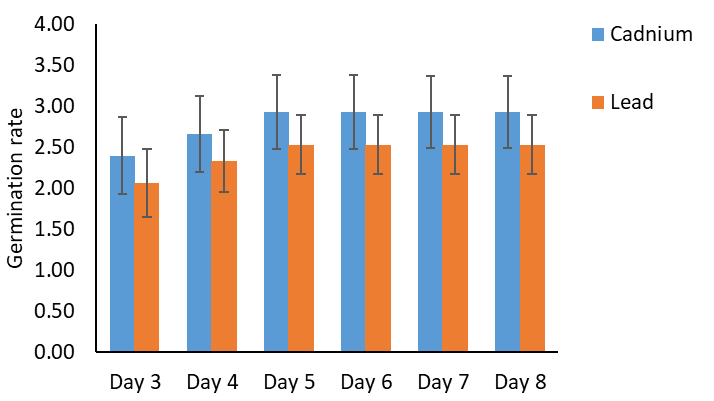
Germination rate of A. esculentus increased with time on all the fungi isolates, but the rate of increase varied and was not statistically significant Table III. C. coatesiae had the highest germination rate except in day 3 with mean values ranging from 2.67 ± 0.49 on day 4 to 2.83 ± 0.48 on day 5-8. A. niger and T. purpureogenus had lower germination rates respectively. The presence of fungal inoculation could have had an impact on the pace at which the seeds germinated, although in prior research, Pb has been demonstrated to have negative effects on seedling growth . Therefore, it is important to take into account the possibility that the presence of heavy metals in the soil may have contributed to these findings. The effect of heavy metal exposure on the germination rate of A. esculentus seeds showed that lead had more effect on the growth generally when compared to cadmium (Fig. 5). This study aligns properly with the work of Li et al. (2005) which stated that the negative effects of heavy metals on plants are typically more pronounced during the early stages of seedling development rather than during the initial germination process.
Effect of fungal inoculation on the germination rate of A. esculentus seeds contaminated with two heavy metals (Cd and Pb) is presented on Table IV. For cadmium contamination, A. flavus had highest germination rate of 3.33 ± 0.88 on days 3 to 6, which decreased to 3.00 ± 1.00 on days 7 to 8. On the other hand, for lead contamination, germination rate of C. coatesiae was highest ranging from 3.00 ± 1.00 on day 3 to 3.67 ± 0.67 on day 8.
Table IV. Effect of fungal inoculation on the germination rate of A. esculentus contaminated with heavy metal.
|
Fungal isolates |
Heavy metals |
Day 3 |
Day 4 |
Day 5 |
Day 6 |
Day 7 |
Day 8 |
|
A. niger |
Cd |
1.33 ± 0.33 |
1.33 ± 0.33 |
2.67 ± 0.88 |
2.67 ± 0.88 |
2.67 ± 0.88 |
2.67 ± 0.88 |
|
Pb |
1.33 ± 0.67 |
1.67 ± 0.33 |
1.67 ± 0.33 |
1.67 ± 0.33 |
1.67 ± 0.33 |
1.67 ± 0.33 |
|
|
A. flavus |
Cd |
3.33 ± 0.88 |
3.33 ± 0.88 |
3.33 ± 0.88 |
3.33 ± 0.88 |
3.00 ± 1.00 |
3.00 ± 1.00 |
|
Pb |
1.00 ± 0.58 |
1.33 ± 0.33 |
1.67 ± 0.67 |
1.67 ± 0.67 |
1.67 ± 0.67 |
1.67 ± 0.67 |
|
|
T. purpureogenus |
Cd |
2.00 ± 1.00 |
2.00 ± 1.00 |
2.00 ± 1.00 |
2.00 ± 1.00 |
2.33 ± 0.88 |
2.33 ± 0.88 |
|
Pb |
1.67 ± 0.33 |
2.00 ± 0.00 |
2.00 ± 0.00 |
2.00 ± 0.00 |
2.00 ± 0.00 |
2.00 ± 0.00 |
|
|
C. coatesiae |
Cd |
1.00 ± 0.58 |
2.00 ± 0.00 |
2.00 ± 0.00 |
2.00 ± 0.00 |
2.00 ± 0.00 |
2.00 ± 0.00 |
|
Pb |
3.00 ± 1.00 |
3.33 ± 0.88 |
3.67 ± 0.67 |
3.67 ± 0.67 |
3.67 ± 0.67 |
3.67 ± 0.67 |
|
|
Control |
Cd |
4.33 ± 1.20 |
4.67 ± 1.45 |
4.67 ± 1.45 |
4.67 ± 1.45 |
4.67 ± 1.45 |
4.67 ± 1.45 |
|
Pb |
3.33 ± 1.45 |
3.33 ± 1.45 |
3.67 ± 1.20 |
3.67 ± 1.20 |
3.67 ± 1.20 |
3.67 ± 1.20 |
|
|
LSD |
NS |
NS |
NS |
NS |
NS |
NS |
Data are presented with mean ± standard error. Least significant differences of germination rate of A. esculentus measured in centimeters was significantly compared at P < 0.05.
Table V. Effect of fungal inoculation on the morphological features of A. esculentus.
|
Parameter |
Treatment |
Weeks |
||||
|
2 |
4 |
6 |
8 |
10 |
||
|
SL (m) |
Control |
12.78 ± 0.13 |
19.98 ± 0.26 |
24.33 ± 0.32 |
27.11 ± 0.44 |
27.22 ± 0.47 |
|
|
F1 |
12.00 ± 0.15 |
18.26 ± 0.55 |
24.67 ± 0.43 |
27.50 ± 0.51 |
27.33 ± 0.52 |
|
|
F2 |
11.61 ± 0.17 |
18.92 ± 0.33 |
22.78 ± 0.69 |
30.50 ± 0.76 |
30.11 ± 0.89 |
|
|
F3 |
11.44 ± 0.16 |
19.59 ± 0.25 |
25.33 ± 0.31 |
28.72 ± 0.45 |
28.56 ± 0.44 |
|
F4 |
11.50 ± 0.12 |
20.23 ± 0.35 |
24.83 ± 0.31 |
28.50 ± 0.46 |
28.33 ± 0.52 |
|
|
NL |
Control |
4.67 ± 0.06 |
5.78 ± 0.11 |
5.44 ± 0.11 |
4.11 ± 0.09 |
3.33 ± 0.11 |
|
F1 |
4.89 ± 0.04 |
5.89 ± 0.10 |
4.78 ± 0.23 |
5.00 ± 0.17 |
4.44 ± 0.17 |
|
|
F2 |
4.78 ± 0.05 |
6.11 ± 0.13 |
5.44 ± 0.14 |
4.67 ± 0.11 |
3.78 ± 0.09 |
|
|
F3 |
5.00 ± 0.00 |
6.22 ± 0.09 |
5.44 ± 0.06 |
4.67 ± 0.14 |
3.44 ± 0.14 |
|
|
F4 |
4.89 ± 0.04 |
5.89 ± 0.07 |
5.44 ± 0.08 |
4.44 ± 0.11 |
4.00 ± 0.12 |
|
|
LL (m) |
Control |
5.59 ± 0.04 |
9.33 ± 0.21 |
10.22 ± 0.14 |
10.33 ± 0.19 |
10.89 ± 0.23 |
|
F1 |
5.63 ± 0.07 |
9.86 ± 0.27 |
10.64 ± 0.29 |
10.33 ± 0.31 |
9.72 ± 0.39 |
|
|
F2 |
4.88 ± 0.09 |
8.89 ± 0.22 |
10.70 ± 0.24 |
12.61 ± 0.42 |
11.61 ± 0.32 |
|
|
F3 |
5.69 ± 0.09 |
9.17 ± 0.13 |
10.37 ± 0.17 |
11.06 ± 0.28 |
10.50 ± 0.27 |
|
|
F4 |
5.70 ± 0.08 |
10.00 ± 0.20 |
11.01 ± 0.17 |
11.00 ± 0.25 |
10.56 ± 0.22 |
|
|
LW (m) |
Control |
4.99 ± 0.06 |
10.17 ± 0.20 |
12.56 ± 0.21 |
14.06 ± 0.27 |
12.72 ± 0.36 |
|
F1 |
4.88 ± 0.12 |
11.00 ± 0.36 |
13.39 ± 0.39 |
14.28 ± 0.44 |
12.94 ± 0.56 |
|
|
F2 |
4.66 ± 0.07 |
10.06 ± 0.30 |
13.50 ± 0.32 |
17.11 ± 0.58 |
14.33 ± 0.46 |
|
|
F3 |
5.22 ± 0.08 |
10.76 ± 0.17 |
13.69 ± 0.26 |
15.06 ± 0.38 |
13.61 ± 0.39 |
|
|
F4 |
5.47 ± 0.06 |
11.44 ± 0.22 |
15.00 ± 0.37 |
15.56 ± 0.40 |
13.50 ± 0.36 |
|
Data are presented with mean ± standard error. Using least significant differences at P ˂ 0.05; SL, Shoot length; NL, Number of leaves; LL, Leaf length; LW, Leaf width.
F1-F4, fungal isolates F1, F2, F3, F4.
Table VI. Effect of heavy metal contamination on the morphological features of A. esculentus.
|
Parameter |
Heavy metal |
Weeks |
||||
|
2 |
4 |
6 |
8 |
10 |
||
|
SL (m) |
Ctrl |
11.90 ± 0.10 |
20.27 ± 0.10 |
24.67 ± 0.03 |
29.50 ± 0.14 |
29.67 ± 0.14a |
|
|
Cd |
11.90 ± 0.10 |
18.20 ± 0.25 |
23.87 ± 0.32 |
26.53 ± 0.42 |
25.33 ± 0.43b |
|
|
Pb |
11.80 ± 0.08 |
19.72 ± 0.25 |
24.63 ± 0.32 |
29.37 ± 0.31 |
29.93 ± 0.33a |
|
|
LSD |
NS |
NS |
NS |
NS |
0.98 |
|
NL |
Ctrl |
4.87 ± 0.02 |
5.67 ± 0.03 |
5.33 ± 0.03 |
4.33 ± 0.03 |
3.67 ± 0.03 |
|
Cd |
4.80 ± 0.03 |
6.20 ± 0.07 |
5.40 ± 0.07 |
4.33 ± 0.09 |
3.53 ± 0.10 |
|
|
Pb |
4.87 ± 0.02 |
6.07 ± 0.06 |
5.20 ± 0.12 |
5.07 ± 0.08 |
4.20 ± 0.08 |
|
|
LSD |
NS |
NS |
NS |
NS |
NS |
|
|
LL (m) |
Ctrl |
5.51 ± 0.05 |
9.50 ± 0.11 |
10.43 ± 0.06 |
10.83 ± 0.10b |
10.67 ± 0.10 |
|
Cd |
5.51 ± 0.05 |
9.05 ± 0.13 |
10.17 ± 0.15 |
9.97 ± 0.18c |
9.73 ± 0.20 |
|
|
Pb |
5.47 ± 0.05 |
9.80 ± 0.13 |
11.17 ± 0.13 |
12.40 ± 0.21a |
11.57 ± 0.19 |
|
|
LSD |
NS |
NS |
NS |
0.49 |
NS |
|
|
LW (m) |
Ctrl |
5.00 ± 0.05 |
10.50 ± 0.08 |
14.17 ± 0.02 |
15.83 ± 0.07a |
12.83 ± 0.24 |
|
Cd |
5.00 ± 0.05 |
10.45 ± 0.19 |
12.77 ± 0.26 |
13.33 ± 0.28b |
12.20 ± 0.27 |
|
|
Pb |
5.13 ± 0.05 |
11.10 ± 0.17 |
13.95 ± 0.20 |
16.47 ± 0.31a |
15.23 ± 0.22 |
|
|
LSD |
NS |
NS |
NS |
0.68 |
NS |
|
Data are presented with mean ± standard error. Using least significant differences at P ˂ 0.05. Ctrl, control; Cd, cadmium; Pb, lead; SL, Shoot length; NL, Number of leaves; LL, Leaf length; LW, Leaf width.
Table VII. Effect of fungal inoculation on the fresh and dry weight of A. esculentus.
|
Isolates |
Fresh weight (g) |
Dry weight (g) |
|||||
|
Pod |
Root |
Shoot |
Pod |
Root |
Shoot |
||
|
F1 |
10.14 ± 0.44c |
1.60 ± 0.20b |
8.83 ± 0.43c |
1.65 ± 0.13c |
0.65 ± 0.06c |
1.57 ± 0.06d |
|
|
F2 |
11.65 ± 0.75b |
1.87 ± 0.13a |
13.07 ± 1.31a |
1.80 ± 0.09a |
0.59 ± 0.02d |
1.94 ± 0.13b |
|
|
F3 |
10.39 ± 0.97c |
1.62 ± 0.10b |
9.14 ± 0.68c |
1.71 ± 0.17b |
0.74 ± 0.03a |
1.68 ± 0.07c |
|
|
F4 |
12.28 ± 0.34a |
1.93 ± 0.12a |
11.41 ± 0.83b |
1.85 ± 0.15a |
0.67 ± 0.02c |
2.00 ± 0.07a |
|
|
Ctrl |
8.65 ± 0.78d |
1.37 ± 0.17c |
8.12 ± 0.57d |
1.55 ± 0.13d |
0.70 ± 0.04b |
1.72 ± 0.06c |
|
|
LSD |
0.38 |
0.12 |
0.55 |
0.07 |
0.02 |
0.05 |
|
Data are presented with mean ± standard error. Means with different alphabet superscripts along each column represents significant differences using least significant differences at P ˂ 0.05
Effect of fungal inoculation on morphological characteristics of A. esculentus in the field
Throughout the study, shoot length consistently exhibited variation among the different fungal isolates and were generally low compared to the control. Fungal treatments F2, and F3 generally had higher leaf numbers compared to F1, F4 and the control, though not significant. Over the course of the experiment, a noticeable trend of consistent, gradual increase in leaf length was observed from week 2 to week 8 for all fungal isolates. Also, leaf width increased over time for all treatments, including the control group with F4 exhibiting non-significant lower mean. The varying increase in most of these parameters in the presence of fungal inoculation, with majority displaying no significant differences suggest that the fungal inoculation did not have a significant effect on the morphological characteristics of A. esculentus (Table V). Therefore, these findings suggest that the fungi isolates used may have a role in modulating the germination and growth of A. esculentus. A similar trend was reported that the inoculation of Aspergillus species used in their experiment increased number of leaves, plant height and stem girth as well as contributed to alleviating heavy metal stress encountered by A. esculentus.
Results observed that both Cd and Pb showed variable increase on the morphological features of A. esculentus across the weeks except in weeks 8 and 10 when leaf length (9.97 ± 0.18) and shoot length (25.33 ± 0.43) in Cd treatment were significantly lower compared to the lead treatment and the control. At all weeks, the mean for Cd, Pb and control treatments indicated no significant differences which implied that the observed variations are within the range of expected random variation. Also, the variable increase in the morphological features across the weeks without a notable disparity in significant of heavy metals suggest overall growth and development of the plants (Table VI). Therefore, fungal inoculations alleviated heavy metal stress in the studied plant.
Fresh and dry weight of A. esculentus
The results observed increase in the fresh and dry weight of pods, shoots, and roots resulting from fungal inoculation compared to the control. The fresh weight of A. esculentus from fungi isolate F4 and F2 respectively produced the highest fresh and dry weights in almost all the plant parts. Also, fungi isolate F1 and F3 have intermediate weights while control consistently produced the lowest fresh and dry weights for all plant parts (Table VII). The increase in the fresh and dry weight resulting from fungal inoculation when compared to the control aligned with the findings of Twum-Ampofo (2008) that reported a significant increase in plant dry weight for Gliricidia sepium when subjected to Arbuscular mycorrhizal fungi treatment, in contrast to the non-mycorrhizal counterpart. Similarly, Shuab et al. (2014) reported that fresh weight of bulb and shoot of the onion plant increased in Arbuscular-mycorrhizal fungi inoculated plants compared to their respective controls.
Again, results indicate that fungal isolates had varying effects on the level of soil metal contamination. The fresh weight of pod and root, and dry weight of pod and shoot contaminated with cadmium significantly (P ˂0.05) weighed higher than those contaminated with lead. Root contaminated with lead recorded highest dry weight than roots from and cadmium contamination and control (Table VIII). Specifically, Talaromyces purpureogenus demonstrated the highest uptake of heavy metals from the soil followed by Aspergillus flavus. This suggests that Talaromyces species might have potentials for efficient metal remediation in contaminated soils (Table IX). This finding showed that certain fungal species have natural affinity for heavy metal binding and can play significant role in soil remediation efforts. This agreed with studies of El-Shahir et al. (2021) which reported role of endophytic fungi in metal uptake and accumulation absorption, adsorption, complexation and ion exchange. The metal uptake capacity was attributed to the unique characteristics
Table VIII. Effect of heavy metal contamination on the fresh and dry weight of A. esculentus.
|
Fungi isolates |
Heavy metals |
Fresh weight (g) |
Dry weight (g) |
||||
|
Pod |
Root |
Shoot |
Pod |
Root |
Shoot |
||
|
F1 |
Cd |
10.13 ± 0.46cd |
1.60 ± 0.63 |
8.52 ± 0.78d |
1.49 ± 0.28bc |
0.45 ± 0.08f |
1.38 ± 0.08f |
|
Pb |
8.97 ± 0.85de |
1.36 ± 0.15 |
9.47 ± 0.48cd |
1.43 ± 0.11bc |
0.85 ± 0.02a |
1.60 ± 0.05de |
|
|
F2 |
Cd |
9.45 ± 0.28d |
2.26 ± 0.22 |
15.19 ± 0.65a |
1.69 ± 0.24b |
0.62 ± 0.02d |
2.40 ± 0.22a |
|
Pb |
14.18 ± 0.99a |
1.49 ± 0.04 |
15.52 ± 1.83a |
1.67 ± 0.04b |
0.51 ± 0.01e |
1.66 ± 0.02de |
|
|
F3 |
Cd |
12.72 ± 1.63ab |
1.71 ± 0.19 |
10.94 ± 1.03bc |
2.06 ± 0.04a |
0.83 ± 0.05a |
1.85 ± 0.07c |
|
Pb |
7.14 ± 0.54ef |
1.31 ± 0.02 |
7.96 ± 0.98de |
1.03 ± 0.03d |
0.77 ± 0.03ab |
1.45 ± 0.05ef |
|
|
F4 |
Cd |
12.24 ± 0.37b |
2.28 ± 0.17 |
12.96 ± 0.54b |
2.24 ± 0.16a |
0.66 ± 0.04cd |
2.07 ± 0.04b |
|
Pb |
13.29 ± 0.52a |
1.68 ± 0.21 |
12.77 ± 0.72b |
1.28 ± 0.03cd |
0.72 ± 0.04bc |
2.18 ± 0.11b |
|
|
Ctrl |
11.31 ± 0.17bc |
1.85 ± 0.05 |
8.51 ± 1.02de |
2.03 ± 0.07a |
0.64 ± 0.04d |
1.75 ± 0.04cd |
|
|
LSD |
1.45 |
NS |
2.10 |
0.25 |
0.08 |
0.18 |
|
Data are presented with mean ± standard error. Means with different alphabet superscripts along each column. represents significant differences using least significant differences at P ˂ 0.05.
Table IX. Effect of fungal inoculation on the fresh and dry weight of A. esculentus contaminated with heavy metals.
|
Metals |
Fresh weight (g) |
Dry weight (g) |
||||
|
Pod |
Root |
Shoot |
Pod |
Root |
Shoot |
|
|
Cd |
10.49 ± 0.58b |
1.76 ± 0.19b |
10.97 ± 0.85a |
1.79 ± 0.11b |
0.63 ± 0.04b |
1.91 ± 0.10a |
|
Pb |
10.06 ± 0.88c |
1.43 ± 0.07c |
10.87 ± 0.86a |
1.31 ± 0.06c |
0.74 ± 0.03a |
1.69 ± 0.07c |
|
Control |
11.31 ± 0.06a |
1.85 ± 0.02a |
8.51 ± 0.39b |
2.03 ± 0.03a |
0.64 ± 0.01b |
1.75 ± 0.01b |
|
LSD |
0.23 |
0.07 |
0.33 |
0.04 |
0.01 |
0.03 |
Data are presented with mean ± standard error. Means with different alphabet superscripts along each column represents significant differences using least significant differences at P ˂ 0.05
of fungi, including their extensive mycelial networks and secretion of metal-binding compounds ; .
Soil metal content
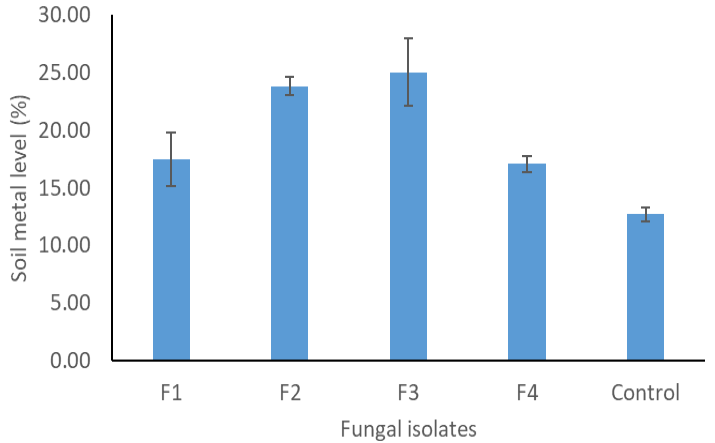
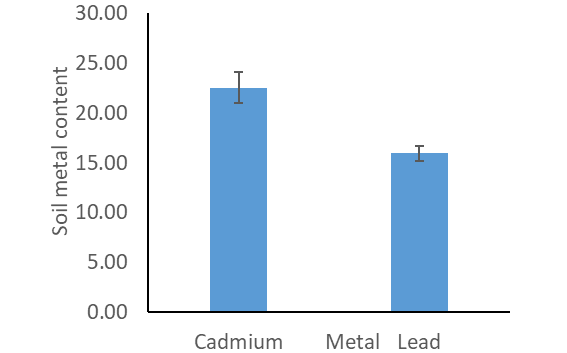
Effect of fungal isolates on the soil metal level showed that isolate F3 had higher heavy metal uptake from the soil followed by isolate F2 (Fig. 6) and Cd was found to be higher than Pb in the soil (Fig. 7). The discrepancy in metal accumulation between Cd and Pb can be attributed to their varying physicochemical properties and availability in the soil. Cd is known to have higher mobility and bioavailability compared to lead, leading to its higher accumulation in the soil .
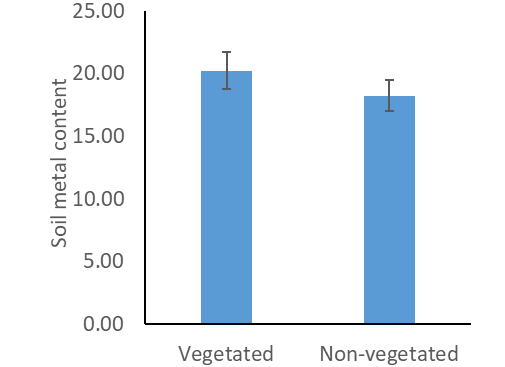
In general, the vegetated soil had significant metal uptake than the non-vegetated soil (Fig. 8). The significant differences in their metal uptake can be attributed to the presence of plant roots and associated mycorrhizal fungi. The roots provide a physical pathway for metal uptake, and mycorrhizal fungi facilitate the uptake process by extending the root system and increasing nutrient absorption . This finding aligns with the concept of bioremediation, where plants and their symbiotic fungi work together to enhance metal uptake and accumulation in the soil . Comparing the effects of fungal isolates between the vegetated and non-vegetated soil conditions, generally, the vegetated soil showed a high impact of bioremediation compared to the non-vegetated soil for both Cd and Pb contamination (Table X).
Table X. Effect of fungal inoculation on the soil type contaminated with heavy metals.
|
Fungal isolates |
Heavy metals |
Vegetated |
Non-vegetated |
|
F1 |
Cadmium |
30.34 ± 1.11b,1 |
13.84 ± 0.59de,2 |
|
Lead |
14.58 ± 1.16ef,1 |
11.23 ± 0.44e,2 |
|
|
F2 |
Cadmium |
25.15 ± 2.96c,1 |
24.77 ± 1.14b,1 |
|
Lead |
23.03 ± 0.68c,1 |
22.43 ± 0.33b,1 |
|
|
F3 |
Cadmium |
34.37 ± 5.03a,1 |
33.50 ± 2.25a,1 |
|
Lead |
16.42 ± 0.49de,1 |
15.83 ± 0.19cd,1 |
|
|
F4 |
Cadmium |
18.16 ± 1.46d,1 |
17.97 ± 1.12c,1 |
|
Lead |
17.67 ± 0.36de,1 |
14.62 ± 1.63d,1 |
|
|
Control |
Cadmium |
11.64 ± 0.88fg,2 |
15.55 ± 0.88cd,1 |
|
Lead |
10.90 ± 0.36g,1 |
12.82 ± 0.42de,1 |
LSD = 3.10; Data are presented with mean ± standard error. Means with different alphabet superscripts along each column represents significant differences using least significant differences at P ˂ 0.05.
Conclusion
The studied fungi isolates showed potential for heavy metal uptake and bioremediation in contaminated soils. Talaromyces purpureogenus and Aspergillus flavus exhibited higher levels of heavy metal uptake from the soil, with Talaromyces purpureogenus showing greater uptake for both Cd and Pb. Therefore, by incorporating metal-resistant fungal strains into bioremediation approaches, the detoxification and biosorption of pollutants in contaminated areas can be enhanced. This highlights the relevance of Talaromyces species in the context of the present study, where their biosorption potential and tolerance to heavy metals are essential considerations for the remediation of heavy metal polluted soil.
Declarations
Acknowledgements
We thank the staff of the Department of Plant Science, Department of Zoology and Environmental Biology for their various contributions to ensure that this study was successful.
Funding
The study received no external funding.
IRB approval
This study was approved and conducted in accordance to the guidelines of the Faculty of Biological Science Institutional Review Board for research in the University of Nigeria (Ref: 2020/2024).
Ethical statement
All experimental proce-dures were performed following standard laboratory and envi-ronmental safety pro-tocols to minimize ecological risk and prevent contamination. No ethical approval was required for this study.
Credit author statement
This manuscript has not been published or presented elsewhere and is not under consideration by any other journal. All study participants provided informed consent, and the study design was approved by the appropriate ethics review boards. All authors approved the manuscript and agreed about its submission to your esteemed journal. We have no conflict of interest to declare.
Data availability
Data will be made available on request.
Generative AI and AI-assisted technology statement
The authors declare that no generative AI and AI assisted technology was used in the creation of this manuscript.
Statement of conflict of interest
The authors declare that they have no known competing financial interests or personal relationships that could have appeared to influence the work reported in this paper.
Figures
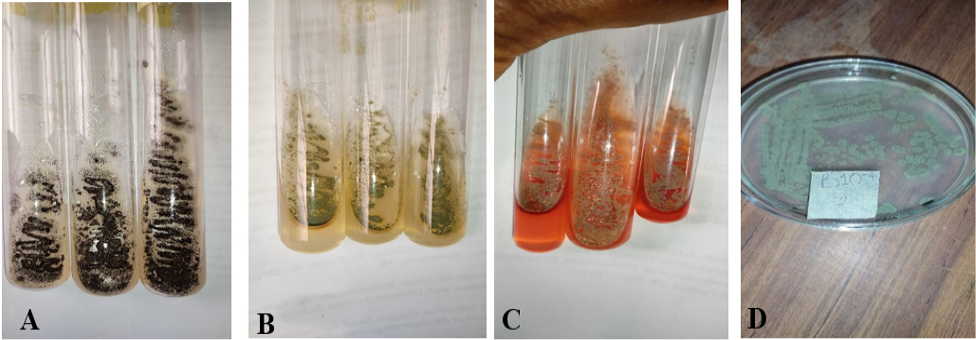
Pure cultures of the fungi isolates. A, Aspergillus niger; Aspergillus flavus; C, purpureogenus; D, Curvularia coatesiae.
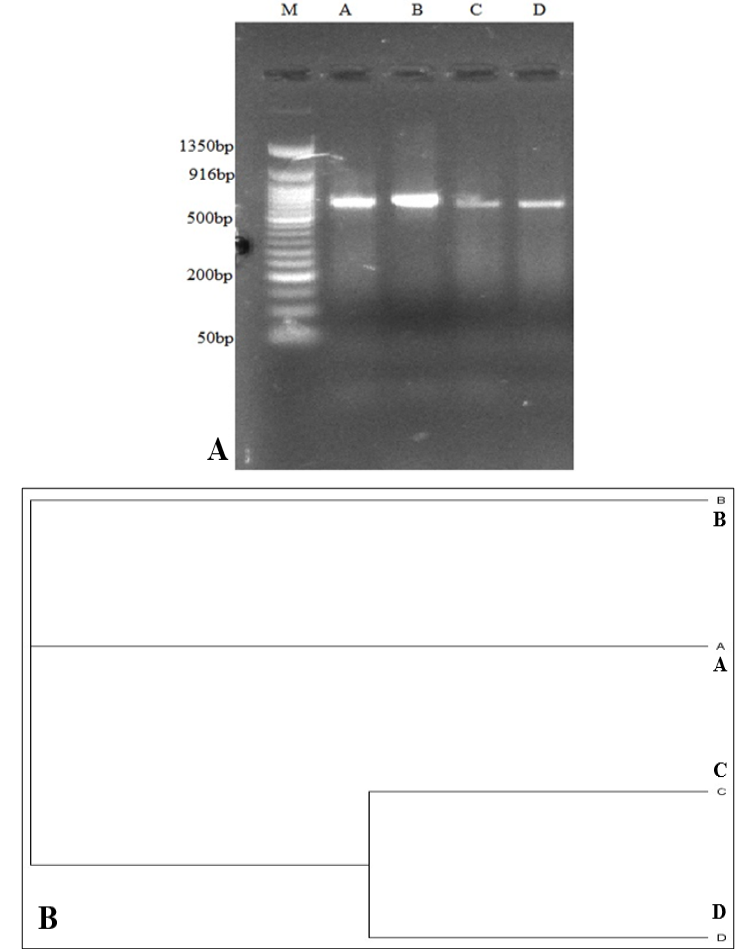
A, gel image showing amplification of internal transcribed spacer gene (ITS) in the isolates. Lane M is a 50bp DNA ladder. B, Phylogenetic tree of the fungi isolates. A, A. niger; B, A. flavus; C, T. purpureogenus; D, C. coatesiae.
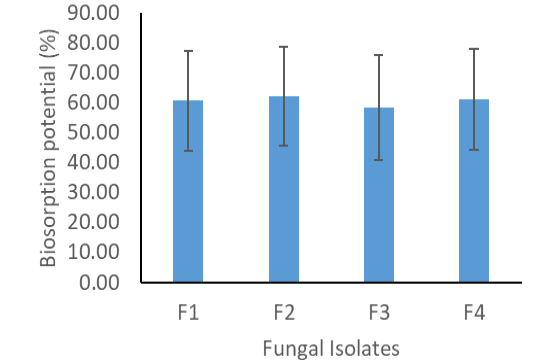
Biosorption potential of the four fungi isolates.
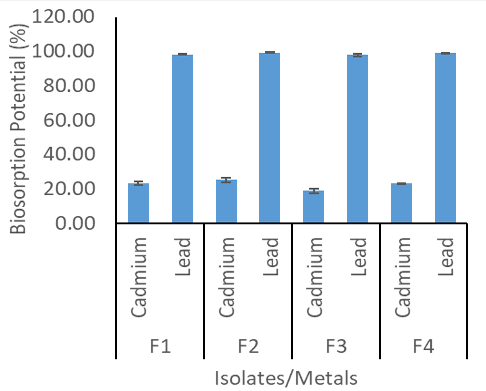
Heavy metal uptake by different.
Effect of heavy metal exposure on the germination rate of A. esculentus seeds.
The effect fungal isolates on soil metal level.
The effect of heavy metals on soil metal.
The effect of soil types on content soil metal content.
References
- Abioye, V.F., Ogunlakin, G.O. and Taiwo, G., 2018. Effect of germination on anti-oxidant activity. Total phenols, Flavonoids and anti-nutritional content of finger millet flour. J. Fd. Proc. Technol., 9: 1-4.
- Akar, S.T., Özcan, S.A., Akar, T., Özcan, A. and Kaynak, Z., 2009. Biosorption of a reactive textile dye from aqueous solutions utilizing an agro-waste. Desalination, 249: 757–761. https://doi.org/10.1016/j.desal.2008.09.012[CrossRef]
- Amujiri, A.N., Nwosu, M.O., Nzekwe, U., Osayi, E.E. and Sani, M.B., 2018. Studies on the phenology of African breadfruit (Treculia africana Decne) in South Eastern Nigeria. Environ. Ecol. Res., 6: 248-258. http://www.hrpub.org, https://doi.org/10.13189/eer.2018.060405[CrossRef]
- Asadu, A.N., Ozioko, R.I. and Dimelu, M.U., 2018. Climate change information source and indigenous adaptation strategies of cucumber farmers in Enugu State. Niger. J. Agric. Ext., 22: 136–146. https://doi.org/10.4314/jae.v22i2.12[CrossRef]
- Bedoya-Perales, N.S., Maus, D., Neimaier, A., Escobedo-Pacheco, E. and Pumi, G., 2023. Assessment of the variation of heavy metals and pesticide residues in native and modern potato (Solanum tuberosum L.) cultivars grown at different altitudes in a typical mining region in Peru. Toxicol. Rep., 11: 23–34. https://doi.org/10.1016/j.toxrep.2023.06.005[CrossRef]
- Beyersmann, D. and Hartwig, A., 2018. Carcinogenic metal compounds: Recent insight into molecular and cellular mechanisms. Arch. Toxicol., 82: 493-512. https://doi.org/10.1007/s00204-008-0313-y[CrossRef]
- Di, N.C., McGushin, A., Romanello, M., Sonja Ayeb-Karlsson, S., Cai, W., Chambers, J., Dasgupta, S., Escobar, L.E., Kelman, I., Kjellstrom, T., Kniveton, D., Liu, Y., Liu, Z., Lowe, R., Martinez-Urtaza, J., McMichael, C., Moradi-Lakeh, M., Murray, K.A., Rabbaniha, M., Semenza, J.C., Shi, L., Tabatabaei, M., Trinanes, J.A., Vu, B.N., and Robinson, E.J., 2022. Tracking the impacts of climate change on human health via indicators: Lessons from the Lancet Countdown. BMC Publ. Hlth., 22: 1-8. https://doi.org/10.1186/s12889-022-13055-6[CrossRef]
- Dilli, D.D., Victoria, Y.M. and Benjamin, B., 2018. Molecular characterization of dermatophyte isolated from horses of Nigerian defence academy stable. Proceedings of 42nd Genetic Society of Nigeria Annual Conference, pp. 48.
- Dusengemungu, L., Gwanama, C., Simuchimba, G. and Mubemba, B., 2022. Potential of bioaugmentation of heavy metal contaminated soils in the Zambian Copperbelt using autochthonous filamentous fungi. Front. Microbiol., 13: 1-18. https://doi.org/10.3389/fmicb.2022.1045671[CrossRef]
- El-Shahir, A.A., El-Tayeh, N.A., Ali, O.M., Abdel Latef, A.A.H. and Loutfy, N., 2021. The effect of endophytic Talaromyces pinophilus on growth, absorption and accumulation of heavy metals of Triticum aestivum grown on sandy soil amended by sewage sludge. Plants, 10: 1-23. https://doi.org/10.3390/plants10122659[CrossRef]
- Eze, C.S. and Amadi, J.E., 2014. Studies on rhizosphere and rhizoplane microflora of Tomato (Lycopersicon esculentum Mill) seedlings. Int. J. Eng. Sci. Res., 3: 666-672.
- Hassan, A., Isa, M.R.M. and Ishak, Z.A.M., 2019. Improving thermal and mechanical properties of injection moulded Kenaf fibre-reinforced polyhydroxy-butyrate composites through fibre surface treatment. BoiResources, 14: 3101-3116. https://doi.org/10.15376/biores.14.2.3101-3116[CrossRef]
- Iram, S., Zaman, A., Iqbal, Z. and Shabbir, R., 2013. Heavy metal tolerance of fungus isolated from soil contaminated with sewage and industrial wastewater. Pol. J. Environ. Stud., 22: 691-697.
- Iyanyi, N.G., Ataga, A.E., Ogbuji, N., Obichi, E.A. and Agbasoga, S.C., 2021. Molecular characterization of fungi associated with sewage-impacted soil. Glob. J. Pure appl. Sci., 27: 107-113. https://doi.org/10.4314/gjpas.v27i2.3[CrossRef]
- Jena, P., Mohanty, S., Mallick, R., Jacob, B. and Sonawane, A., 2012. Toxicity and antibacterial assessment of chitosancoated silver nanoparticles on human pathogens and macrophage cells. Int. J. Nanomed., 2012: 1805-1818. https://doi.org/10.2147/IJN.S28077[CrossRef]
- Kalyabina, V.P., Esimbekova, E.N., Kopylova, K.V. and Kratasyuk, V.A., 2021. Pesticides: Formulants, distribution pathways and effects on human health: A review. Toxicol. Rep., 8: 1179–1192. https://doi.org/10.1016/j.toxrep.2021.06.004[CrossRef]
- Khan, S.A., Hamayun, M., Khan, A.L., Lee, I.J., Shinwari, Z.K. and Kim, J., 2012. Isolation of plant growth promotic fungi from dicots inhabiting coastal sand dunes of Korea. J. Bot., 44: 1453–1460.
- Kumar, V., Shahi, S.K. and Singh, S., 2018. Bioremediation: An eco-sustainable approach for restoration of contaminated sites. In: Microbial Bioprospecting for Sustainable Development, Springer, Singapore, pp. 115-136. https://doi.org/10.1007/978-981-13-0053-0_6[CrossRef]
- Li, L., Yu, H. and Li, J., 2005. Key points of techniques for controlling locusts by raising chickens in grasslands. Pratacult. Sci., 22: 84-86.
- Liaquat, F., Munis, M.F.H., Haroon, U., Arif, S., Saqib, S., Zaman, W., Khan, A.R., Shi, J., Che, S. and Liu, Q., 2020. Evaluation of metal tolerance of fungal strains isolated from contaminated mining soil of Nanjing, China. Biology, 9: https://doi.org/10.3390/biology9120469[CrossRef]
- Lin, Y., Xiao, W., Ye, Y., Wu, C., Hu, Y. and Shi, H., 2020. Adaptation of soil fungi to heavy metal contamination in paddy fields a case study in eastern China. Environ. Sci. Pollut. Res., 27: 27819-27830. https://doi.org/10.1007/s11356-020-09049-9[CrossRef]
- Liu, W.R., Zeng, D., She, L., Su, W.X., He, D.C., Wu, G.Y., Ma, X.R., Jiang, S., Jiang, C.H. and Ying, G.G., 2020. Comparisons of pollution characteristics, emission situations, and mass loads for heavy metals in the manures of different livestock and poultry in China. Sci. Total Environ., 734: 139023. https://doi.org/10.1016/j.scitotenv.2020.139023[CrossRef]
- Majolagbe, O.N., Ishola, B.M. and Adeyeni, E.G., 2023. Phytochemical, antioxidant and antimicrobial potentials of azadirachta indica leaf extract using bacteria isolated from polluted water as test organisms. J. Adv. Biol. Biotechnol., 26: 24-34. https://doi.org/10.9734/jabb/2023/v26i5634[CrossRef]
- Masindi, V. and Muedi, K.L., 2018. Environmental contamination by heavy metals. https://doi.org/10.5772/intechopen.76082[CrossRef]
- Mohammadi-Sichani, M, Assadi, M.M., Farazmand, A., Kianirad, M., Ahadi, A.M. and Hadian-Ghahderijani, H., 2019. Ability of Agaricus bisporus, Pleurotus ostreatus and Ganoderma lucidum compost in biodegradation of petroleum hydrocarbon–contaminated soil. Int. J. environ. Sci. Technol., 16: 2313–2320. https://doi.org/10.1007/s13762-017-1636-0[CrossRef]
- Nam, A.S., Kim, K., Chaligne, R., Izzo, F., Ang, C., Taylor, J., Myers, R.M., Abu-Zeinah, G., Brand, R., Omans., N.D., Alonso, A., Sheridan, C., Mariani, M., Dai, X., Harrington, E., Pastore, A., Cubillos-Ruiz, J., Tam, W., Hoffman, R., Rabadan, R., Scandura, J.M., Abdel-Wahab, Smibert, P. and Landau, D.A., 2019. Somatic mutations and cell identity linked by genotyping of transcriptomes. Nature, 571: 355–360. https://doi.org/10.1038/s41586-019-1367-0[CrossRef]
- Nwadinigwe, A.O. and Olawole, A.O., 2010. Effect of crude oil on the growth of Sorghum vulgare Pers. A possible use of the plant for phytoremediation. Int. J. Bot., 2: 35-39.
- Ogbuji, E.N., Edem, U.J., Ogbowu, N.C. and Eze, P.N., 2021. Industrial impact of multimedia as monitoring vehicle on oil and gas field operation in Niger delta region in covid-19 pandemic. Int. J. Innov. Sci. Eng. Technol. Res., 9: 1-12.
- Onaebi, C.N., Chiejina, N.V. Osibe, D.A., Ugwuja, F.N., Okoro, A.C., Onyeke, C.C., Amujiri, A.N., Omeje, K.O., Obayi, H.C. and Njoku, E.G., 2023. Molecular characterization of fungal rhizosphere community of soya beans (Glycine max L. Merril) and their in vitro antagonistic activity. Trop. J. Natl. Prod. Res., 7: 3509-3516. https://doi.org/10.26538/tjnpr/v7i7.33[CrossRef]
- Oparaku, N.F., Andong, F.A., Nnachi, I.A., Okwuonu, E.S., Ezeukwu, J.C. and Ndefo, J.C., 2021. The effect of physicochemical parameters on theabundance of zooplankton of River Adada, Enugu. Niger. J. Freshw. Ecol., 37: 33–56. https://doi.org/10.1080/02705060.2021.2011793[CrossRef]
- Oyewole, O.A., Leh-Togi Zobeashia, S.S., Oladoja, E.O., Raji, R.O., Odiniya, E.E. and Musa, A.M., 2019. Biosorption of heavy metal polluted soil using bacteria and fungi isolated from soil. SN Appl. Sci., https://doi.org/10.1007/s42452-019-0879-4[CrossRef]
- Oyeyiola, G.P., 2009. Rhizosphere mycoflora of okra (Hibiscus esculentus). Res. J. Soil Biol., 1: 31-36. https://doi.org/10.3923/rjsb.2009.31.36[CrossRef]
- Parameswari, E., Lakshmanan, A. and Thilagavathi, T., 2010. Biosorption and metal tolerance potential of filamentous fungi isolated from metal polluted ecosystem. Electron. J. Environ., Agric. Fd. Chem., 9: 664-671.
- Prajapati, S.K. and Meravi, N., 2014. Heavy metal speciation of soil and Calotropis procera from thermal power plant area. Proc. Int. Acad. Ecol. Environ. Sci., 4: 68-71.
- Putra, N.R., Aziz, A.H.A., Faizal, A.N.M., Che Yunus, M.A., 2022. Methods and potential in valorization of banana peels waste by various extraction processes: In review. Sustainability, 14: 10571. https://doi.org/10.3390/su141710571[CrossRef]
- Rahman, Z., and Singh, V.P., 2019. The relative impact of toxic heavy metals (THMs) (arsenic (As), cadmium (Cd), chromium (Cr) (VI), mercury (Hg), and lead (Pb)) on the total environment: An overview. Environ. Monit. Assess., 191: 419. https://doi.org/10.1007/s10661-019-7528-7[CrossRef]
- Raju, K.V., Somashekar, R.K. and Prakash, K.L., 2013. Spatio-temporal variation of heavy metals in Cauvery River basin. Proc. Int. Acad. Ecol. Environ. Sci., 3: 59–75.
- Sankhla, M.S., Kumari, M., Nandan, M., Kumar, R. and Agrawal, P., 2016. Heavy metalcontamination in soil and their toxic effect on human health: A review study. Int. J. All Res. Educ. Sci. Methods, 4: 13-19.
- Schuab, J.R., Malato, Y., Gormond, C. and Willenbring, H., 2014. Evidence against a stem cell origin of new hepatocytes in a common mouse model of chronic liver injury. Cell Rep., 8: 933-939. https://doi.org/10.1016/j.celrep.2014.07.003[CrossRef]
- Srideepthi, R., Lakshmisahitya, U., Peddakasim, D., Suneetha, P. and Krishna, M., 2017. Morphological, Pathological and molecular diversity of Colletotrichum capsici inciting fruit rot in chilli (Capsicum annuum L.). Res. J. Biotech., 12: 14-21.
- Twum-Ampofo, T., 2008. Growth response of Gliricidia sepium (Jacq.) Walq to inoculation with different arbuscular mycorrhizal (AM) fungi. J. Sci. Technol. Kumasi, 28: 54-68. https://doi.org/10.4314/just.v28i2.33094[CrossRef]
- Vaishaly, A.G., Mathew, B.B., Krishnamurthy, N.B. and Krishnamurthy, T.P., 2015. Bioaccumulation of heavy metals by fungi. Review article. Int. J. Environ. Chem. Chromatogr., 1: 15-21.
- Versieren, L., Evers, S., Abdelgawad, H., Asard, H. and Smolders, E., 2016. Mixture toxicity of copper, cadmium, and zinc to barely seedlings is not explained by antioxidant and oxidative stress biomarkers. Environ. Toxicol. Chem., 36. https://doi.org/10.1002/etc.3529[CrossRef]
- Vibhute, A.D., Kale, K.V., Mehrotra, S.C., Dhumal, R.K. and Nagne, A.D., 2018. Determination of soil physicochemical attributes in farming sites through visible, near-infrared diffuse reflectance spectroscopy and PLSR modeling. Ecol. Proc., 7: 26. https://doi.org/10.1186/s13717-018-0138-4[CrossRef]
- Visagie, C.M., Hirooka, Y., Tanney, J.B., Whitfield, E., Mwange, K., Meijer, M., Amend, A.S., Seifert, K.A. and Samson, R.A., 2014. Aspergillus, Penicillium and Talaromyces isolated from house dust samples collected around the world. Stud. Mycol., 78: 63–139. https://doi.org/10.1016/j.simyco.2014.07.002[CrossRef]
- Wuana, R.A. and Okieimen, F.E., 2014. Heavy metals in contaminated soils: A review of sources, chemistry, risks and best available strategies for remediation. In: Heavy metal contamination of water and soil, 1st edition Apple Academic Press, pp. 50. https://doi.org/10.1201/b16566-3[CrossRef]
- Yan, R., Zhang, Y., Li, Y., Xia, L., Guo, Y. and Zhou, Q., 2020. Structural basis for the recognition of SARS-CoV-2 by full-length human ACE2. Science, 367: 1444-1448. https://doi.org/10.1126/science.abb2762[CrossRef]
- Yang, Y., Tilman, D., Furey, G. and Lehman, C., 2019. Soil carbon sequestration accelerated by restoration of grassland biodiversity. Nat. Commun., 10: 1-7. https://doi.org/10.1038/s41467-019-08636-w[CrossRef]
- Zhang, S., Abdel-Wahab, M.A., Jones, E.B.G., Hyde, K.D. and Liu, J., 2019. Additions to the genus Savoryella (Savoryellaceae), with the asexual morphs Savoryella nypae comb. nov. and S. sarushimana sp. nov. Phytotaxa, 408: 195–207. https://doi.org/10.11646/phytotaxa.408.3.4[CrossRef]
Services
Article usage statistics
Loading…