
Three rice producing districts viz. Gujranwala, Hafizabad and Mandi Bhauddinin, Pakistan were surveyed to explore bat fauna of genus Pipistrellus in central Punjab from January 2015 to December 2016. A total of 172 specimens of genus Pipistrellus belonging to six species i.e. P. pipistrellus (n = 43), P. paterculus (n = 12), P. javanicus (n = 39), P. tenuis (n = 18), P. cylonicus (n = 40) and P. dormeri (n = 20) were captured. Out of these six species, four are reported for the first time from the study area, whereas, P. pipistrellus and P. paterculus has already been reported from other districts of Punjab province. The shape and length of baculum were the characters that help in clear cut identification of various Pipistrellus species. The external body, cranial and bacular features of the species were compared with available literature.
Research Article · Volume 50, Issue 4, 7 July 2018 · Open Access
Bat Fauna of Genus Pipistrellus from Wheat-Rice based Agro-Ecosystem of Punjab, Pakistan
· · · · ·
Affiliations & Notes ⌄
- 1Department of Zoology, Women University of Azad Jammu and Kashmir, Bagh 2Department of Wildlife and Ecology, University of Veterinary and Animal Sciences, Lahore 3Department of Zoology, Government College University, Lahore 4Department of Forestry, Range and Wildlife, Ghazi University, Dera Ghazi Khan
Article Info ⌄
- Journal:
- Pakistan Journal of Zoology
- Published:
- 7 July 2018

From the article
- During present survey, a total of 172 specimens belonging to six species of genus Pipistrellus were captured.
- Pipistrellus pipistrellus is a small sized narrow winged bat with forearm length 27-31 mm. The ears are broad but short in length, tragus is 4.2 mm long about half of the ear’s length.
- Average condyle-canine length is 12.4 mm. Baculum has long narrow shaft with distal bifid tips with well- developed proximal lobes.
- Average body mass of 12 P. dormeir specimens captured during present study was 5 g, average forearm length was 34.5 mm, condyle-canine length (n = 2) 13.5 mm and total bacular length (n = 2) was 3.2 mm.
Selected from the article's own text.
Abstract
Introduction
Genus Pipistrellus is represented by 51 species with distribution ranges extending from central southern Africa, throughout Eurasia to Japan, Indonesia, New Guinea, Solomon Islands and northern Australia with occurrence in Canada, USA and Mexico. In Indian Subcontinent the genus is represented by 12 species while eight species have been reported from territorial limits of Pakistan . Members of genus Pipistrellus are small and their external features resemble Eptesicus. The nostrils in these bats are directed antero-laterally with a distinct internarial groove. The ears are small and roundly pointed with short and bluntly shaped tragus . It is difficult thtml#_o identify the species from one another on the basis of external morphology however the cranial and bacular features aid significantly to discriminate various species .
Pipistrellus pipistrellus ranges from Britain and southern Scandinavia through Europe, China and India to Japan and Taiwan it also present in Morocco, Tunisia and Algeria . In Pakistan, P. pipistrellus has also been recorded from Gilgit (Blanford, 1888-91) in Northern areas; Kulali and Dir, Chitral in KPK .
Pipistrellus javanicus ranges from Afghanistan, Pakistan and India to Myanmar, Indonesia, Philippines, Korea, Japan, New Guinea and perhaps Australia. In Asia, P. javanicus has wide spread distribution ranging from Afghanistan, Pakistan, and India to Mayanmar, Indonesia, Philippines, Korea, Japan, New Guinea and perhaps in Australia. In Pakistan the species has been reported from Karakar pass (KPK) and pine forest of Gharial, Muree Hills (Punjab) .
Pipistrellus tenuis ranges from Afghanistan, Pakistan, India and Sri Lanka to Vietnam and Thailand. In Pakistan, the species has been reported from Malakand and Chitral in KPK; Multan, Bhatu Hisar, Chaklala , Chakri , Khanewal, Sheikhpura (Districts) in Punjab (BMNH) and Gambat; Sukur , Karachi and Malir in Sindh and Islamabad .
Pipistrellus paterculus is geographically distributed in northern India, Burma, Thailand, Vietnam and south-west China. In Pakistan the species has been reported from Kululai (KPK) and very little is known about this bat in the country . The species in Pakistan has been reported from Landhi , Malir , Karachi and Thatta in Sindh and Lyallpur and Khanewal in Punjab.
Pipistrellus dormerii is confined to India and Pakistan only ; . In Pakistan, the species has also been reported from Sialkot in Punjab and Shikarpur in Sindh .
Literature regarding bat fauna of Pakistan is scarce and there is dire need to explore these environment friendly creatures in various parts of country (Javid et al., 2014a, b). During present survey, the agro-ecosystems of Punjab province were searched to find out the chiropteran diversity belonging to the genus Pipistrellus.
Materials and Methods
Three districts of the Punjab province Gujranwala, Hafizabad and Mandi-Bhaudin (Fig. 1) were explored to find out species of bats belonging to the genus Pipistrellus. Punjab is the most populated province of the country and the districts comprising study area constitute the core rice producing belt, hence the natural ecosystems have been replaced by the agro-ecosystems to fulfill the food and shelter requirements of increasing human population. These districts lie about 200 m above sea, average annual rainfall is about 950 mm but the rains are more frequent during monsoon. The temperature varies from 4°C during winter to above 40°C during summer ; .
This two year study extending from January 2015 to December 2016 was conducted in areas of wheat-rice based agro-ecosystem of Punjab province. These areas are comprised of three districts namely Gujranwala, Hafizabad and Mandi Bhaudin. All these three districts were explored for collection of bats and location of their roosts. Three nights in each month, one night in each district was spent throughout the study period at different sampling station (Table I) and bats were captured with the help of mist and hand nets. For locating potential bat roosts in the study area, old and undisturbed buildings, ruins, abandoned wells, farm houses, tree groves and forest plantations were searched. People of the study area were also interviewed for getting maximum information about exact location of bat roosts.
Table I.- Netting stations in three districts of wheat-rice based agro-ecosystem of Punjab.
| District/ sampling sites | Latitude / Longitude | Date of capture | |
| Gujranwala | |||
| Civil hospital | 32°10.203 N 74°11.583 E | 08/02/2011 | |
| Qadirabad colony | 32°17.490 N 73°41.563 E | 07/03/2011 | |
| Kelaske village | 32 º10.803 N 73 º58.668 E | 08/06/2011 | |
| Gakharmandi town | 32°18.340 N 74°08.791 E | 11/09/2011 | |
| Rasulnagar village | 32º19.680 N 73º46.720 E | 01/04/2012 | |
| Ali Pur Chattha town | 32º11.272 N 74º09.361 E | 18/05/2012 | |
| Verpalchattha village | 32º 10.803 N 73º58.803 E | 11/06/2012 | |
| Hafizabad | |||
| District katchery | 31 º58.018 N 73°34.918 E | 13/05/2011 | |
| Kotsarwar village | 31 º55.148 N 73 º30.189 E | 02/06/2011 | |
| Nothain village | 31 º56.241 N 73 º32.770 E | 04/07/2011 | |
| Kalekimandi village | 32°04.150 N 73°42.697 E | 03/08/2011 | |
| Sukhekimandi village | 31º61.116 N 73º34.108 E | 02/06/2012 | |
| Pindibhattian town | 31 º55.148 N 73 º16.895 E | 08/07/2012 | |
| Jalal purbhatian village | 32º02.390 N 73º22.510 E | 03/09/2012 | |
| Mandi Bhaudin | |||
| Farid town | 32º35.123 N 73º30.460 E | 08/05/2011 | |
| Phalia town | 32º43.601 N 73º58.130 E | 05/06/2011 | |
| Malikwal town | 32º35.102 N 73º45.080 E | 08/02/2012 | |
| Head Rasul rest house | 32º40.096 N 73º31.150 E | 05/06/2012 | |
| Mano Chak | 32º25.308 N 73º45.290 E | 22/07/2012 | |
Once the bat specimens were captured, they were euthanized, placed in cotton bat bags and each specimen was weighed up to 0.1 g (Pesola balance 10050, Swiss made). Each bat was preserved in a plastic jar in absolute alcohol, its number, sex, age, exact locality and district of capture was noted on the jar. These specimens were brought to the laboratory for further observations and analysis. The external body measurements were taken using a digital vernier caliper (0-150 mm) following Bates and Harrison (1997). For cranial and bacular measurements, the skulls and bacula were prepared and measured following Bates et al. (2005) and Javid (2011).
Results and Discussion
During present survey, a total of 172 specimens belonging to six species of genus Pipistrellus were captured. These include Pipistrellus pipistrellus (n = 43), P. paterculus (n = 12), P. javanicus (n = 39), P. tenuis (n = 18), P. cylonicus (n = 40) and P. dormeri (n = 20). All these six species are the first reports from the study area as the bat fauna of the study area was never documented prior to present investigation. However, P. pipistrellus and P. paterculus are the new provincial records and never recorded from Punjab province before present survey. The external body, cranial and bacular measurements of captured specimens of belonging to genus Pipistrellus were compared with available literature (Tables II, III).
Bacula of different species have unique shape and length (Fig. 2). Pipistrellus pipistrellus is a small sized narrow winged bat with forearm length 27-31 mm. The ears are broad but short in length, tragus is 4.2 mm long about half of the ear’s length. The hairs are reddish brown on dorsal and slightly paler on ventral side. Average condyle-canine length is 10.9 mm. Baculum is very small, with narrow extended shaft and distal end is bifid but proximal basal lobes are well developed . A total of 43 P. pipistrellus specimens were captured from study area during present survey. Average body mass of all these captured specimens was 3.3 g and the average forearm length was 28.9 cm. Average condyle-canine length (n = 3) was 10.3 mm while the average bacular length (n = 2) was 1.6 mm.
Pipistrellus javanicus is a medium size bat with forearm length 33-35 mm. Ears are short and rounded with long tragus, pelage color of dorsal side is brown, wing membranes and ears are blackish-brown . Average condyle-canine length is 12.4 mm. Baculum has long narrow shaft with distal bifid tips with well- developed proximal lobes. The average body mass of all the twelve P. javanicus captured during present study was 7.6 g and the average forearm length was 34.2 mm. Average condyle-canine length (n = 3) was 11.3 mm while the average bacular length was 6.0 mm.
Pipistrellus tenuis is a very small sized bat having average body weight of 3-4 g ; and forearm length 27-29 mm. This is the smallest bat of the Indian subcontinent and is known as least pipistrelle or Indian pygmy bat. Morphologically P. tenuis and P. coromandra are very similar but can be differentiated on the basis of cranial characters ; . The baculum of P. tenuis has thin long shaft with distinct distal bifid tip and well developed proximal lobes ; . Average body mass of all the 18 P. tenuis specimens captured during present survey was 3.6 g. Average forearm length 29.2 mm, the condyle-canine length (n = 3) was 8.7 mm and average bacuar length (n = 2) was 3.8 mm.
Pipistrellus paterculus is a small sized bat with average forearm length 30 mm. The hairs are long and pelage color is dark brown on the head and back while ventral surface, belly hair tips are pale ginger brown. Average condyle-canine length is 11.2 mm. P. paterculus has large baculum with long narrow shaft and distal end has bifid tip . Total of twelve specimens of P. paterculus was captured during present study have an average body mass 3 g, average forearm length was 30.5 mm, the condyle-canine length was 11.0 mm and average baculum length (n = 2) was 9.4 mm.
Pipistrellus ceylonicus are relatively large sized pipistrellus species with an average forearm length of 37.2 mm and weight 8 g . Ears, face and inter-femoral membranes are dark brown in color. Some part of inter-femoral membrane near main body, tail and femora is hairy . Dorsal pelage color of the species is greyish, red or golden brown while the ventral hairs are pale grey. The baculum has short upwardly curved shaft, bifid tip and well developed proximal lobes . Average body mass of 40 P. ceylonicus specimens captured during present survey was 3.7 g. Average forearm length was 35.3 mm, the condyle-canine length (n = 3) was 12.7 mm while average length of baculum (n = 2) was 9.4 mm long.
Pipistrellus dormeri is a medium sized pipistrelle with an average forearm length of 34.4 mm and body mass 6.0-7.0 g , tail is short than head and body length. Hairs are dark brown on dorsal surface with grey brown tips, and paler with whitish tips on ventral surface. Average condyle-canine length 13.3 mm. Baculum has long narrow, slightly sinuous shaft and broadened, weakly bifid tip, the base is slightly broadened and bifid . Average body mass of 12 P. dormeir specimens captured during present study was 5 g, average forearm length was 34.5 mm, condyle-canine length (n = 2) 13.5 mm and total bacular length (n = 2) was 3.2 mm.
Conclusion
With various identified species of bat fauna in different districts of Punjab and all other provinces of Pakistan, bat represents the important group of mammals that may have a vital role in ecology. Only a limited number of studies have been conducted on bat fauna of Pakistan, especially in Punjab province, that is considered to be a rich agricultural area and makes it difficult to mention on population trends and conservation status of the bats. Keeping in view the results of present study regarding the distribution of the bat species in a rich agricultural area, it is clear that efforts of the bat survey may also be focused in the nearby districts of the study area, as these are still not well explored. Therefore, further studies may be compulsory for mapping favorite bat habitats for the establishment of conservation priorities.
Statement of conflict of interest
Authors have declared no conflict of interest.
Figures
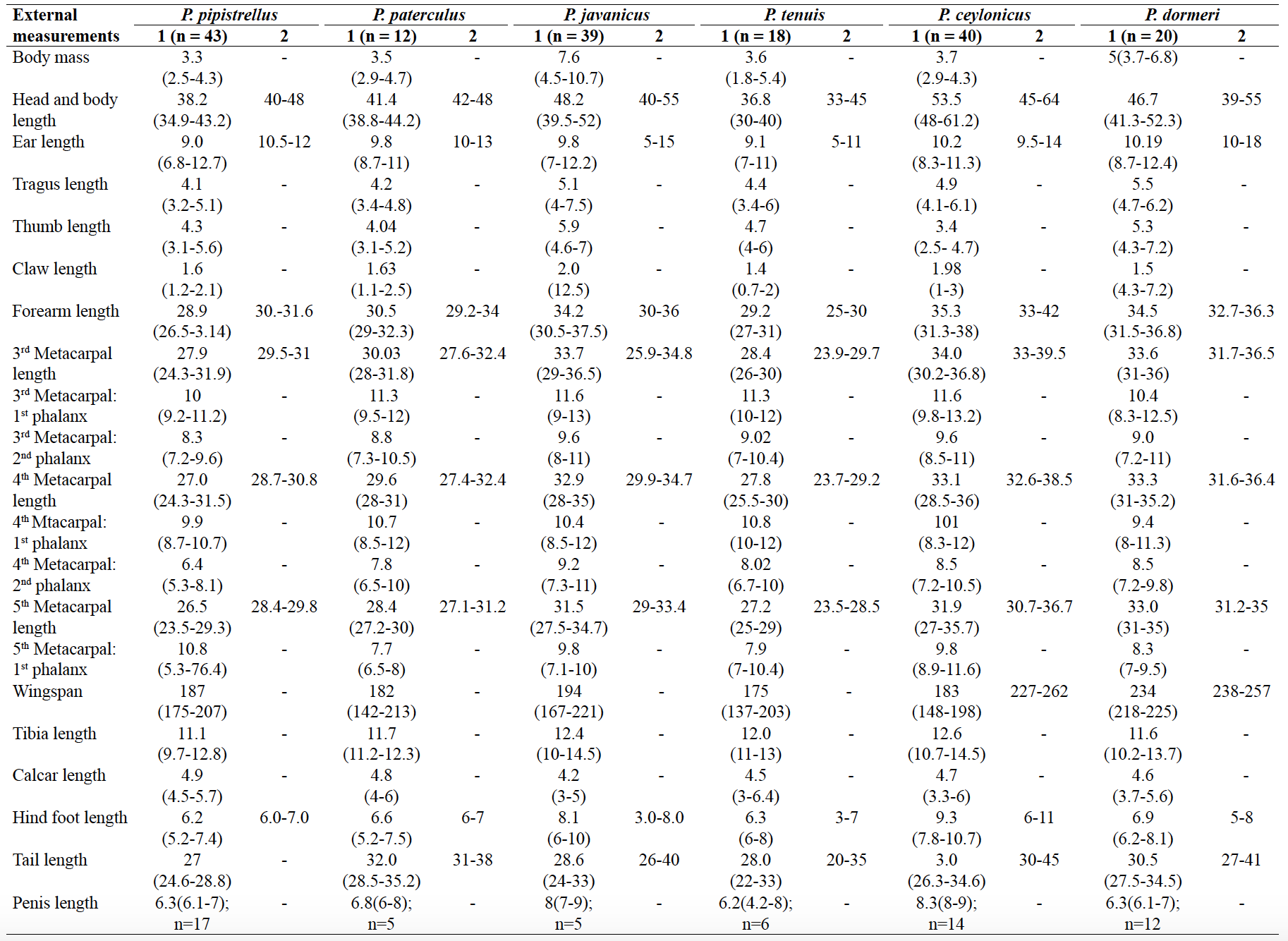
Mean body mass (g) and external body measurements (mm) of six species of genus Pipistrellus captured from wheat rice based agro-ecosystems of Punjab, Pakistan (1, = Present study; 2 = Bates and Harrison 1997).
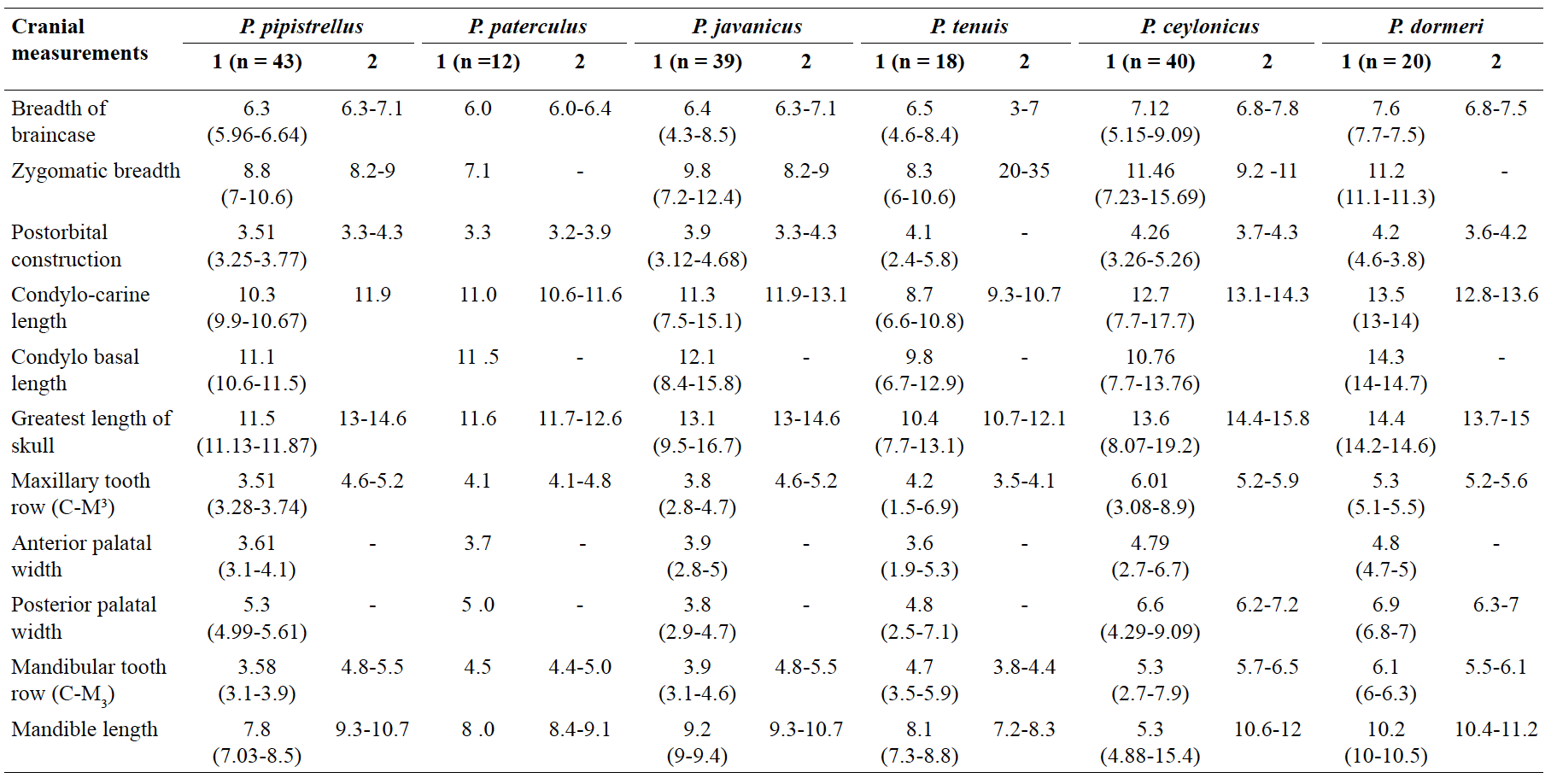
Mean cranial measurements (mm) of six species of genus Pipistrellus captured from wheat rice based agro-ecosystems of Punjab,
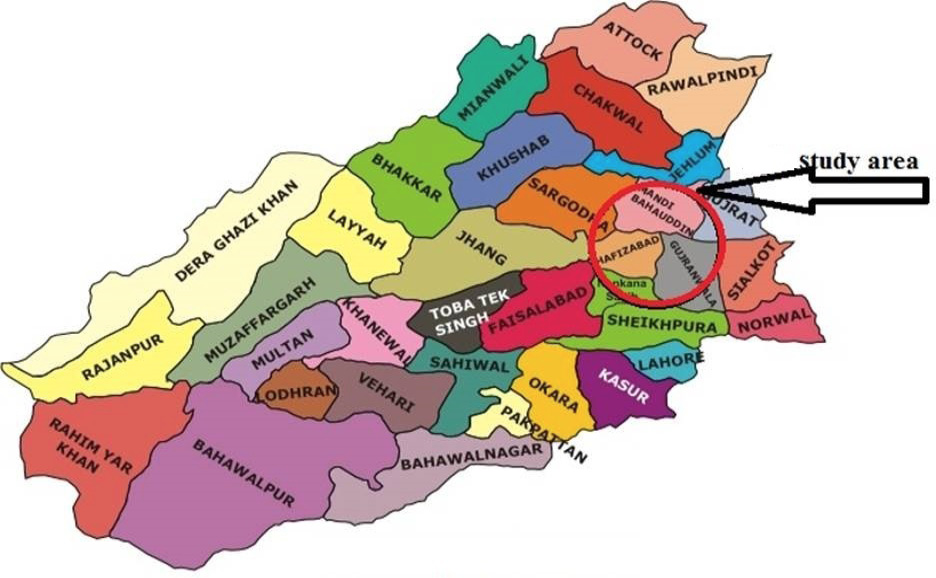
Map of the study area.
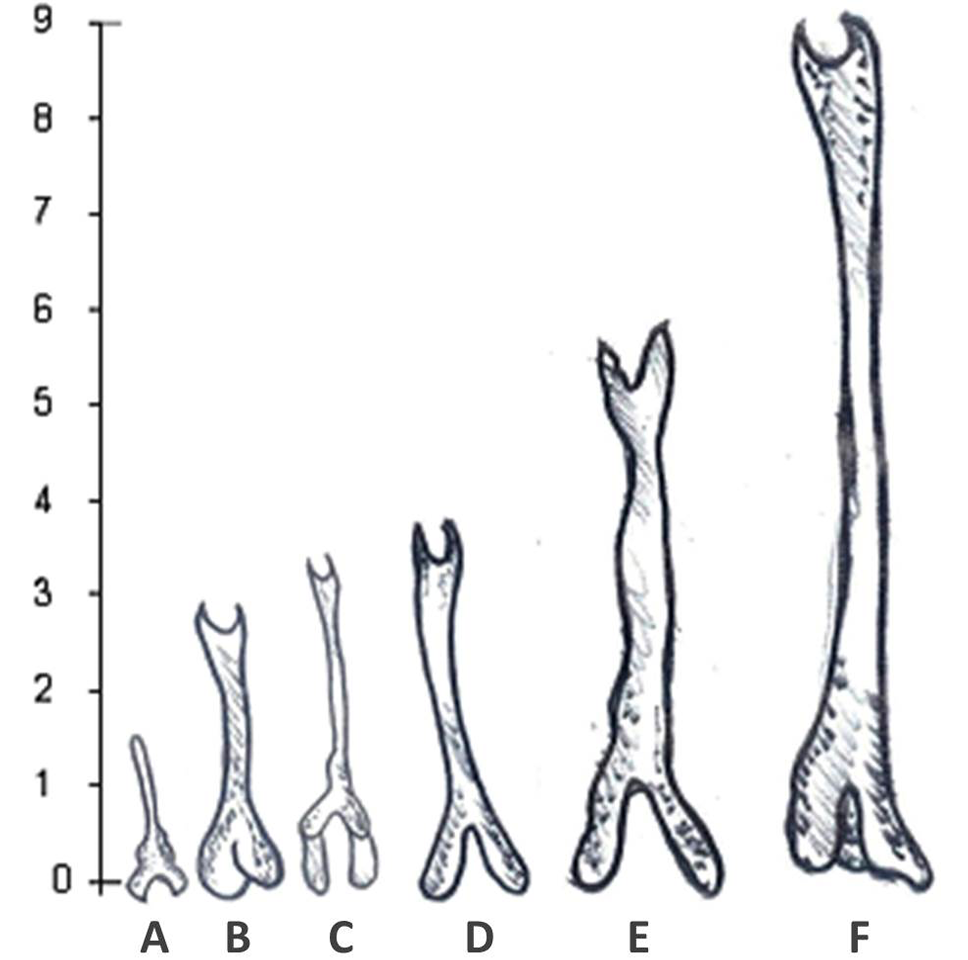
Bacula of P. pipistrellus (A), P. dormer (B), P. tenuis (C), P. ceylonicus (D), P. javanicus (E) and P. paterculus (F).
References
- Ahmim, M., 2017. Current status, distribution and conservation status of Algerian bats (Mammalia: Chiroptera). J. Threat. Taxa., 9: 9723-9733. https://doi.org/10.11609/jott.2576.9.1.9723-9733[CrossRef]
- Bates, P.J.J., Thong, D. and Bumrungsri, S., 2005. Voucher specimen preparation: Bats. Taxonomic initiative for Southeast Asian bat studies (Vietnam, Thailand, Cambodia and Lao PDR). Harrison Institute, Sevenoaks, pp. 1-12.
- Bates, P.J.J. and Harrison, D.L., 1997. Bats of the Indian subcontinent. Harrison Zoological Museum, Sevenoaks, UK, pp. 258.
- Blanford, W.T., 1888-91. The fauna of British India: Mammalia. Taylor and Francis, London, pp. 617.
- Chan, K.W., Lim, K.K.P. and Leong, T.M., 2009. The java pipistrelle, Pipistrellusjavanicus (Mammalia: Chiroptera: Vespertilionidae) in Singapore. Nature in Singapore, 2: 323-327.
- Hill, J.E. and Harrison, D.L., 1987. The baculum in the Vespertilioninae (Chiroptera: Vespertilionidae) with a systematic review, a synopsis of Pipistrellus and Eptesicus, and the description of a new genus and subgenus. Bull. Br. Mus. Nat. Hist. (Zool.), 52: 225-305.
- Hinton, M.A.C. and Thomas, O., 1926. Report No. 42. Kashmir and Punjab. Bombay Natural History Society’s mammal survey of India, Burma and Ceylon. J. Bombay Nat. Hist. Soc., 31: 606-614.
- Ingle, N.R. and Heaney, L.R., 1992. A key to the bats of the Philippine Islands. Field Mus. Nat. Hist. Fieldiana: Zool., 69: 1-44.
- Javid, A., 2011. Bat biodiversity (Vespertilioniformes: Order Chiroptera) in some tropical and arid-subtropical regions of Pakistan. PhD thesis, Department of Wildlife and Ecology, University of Veterinary and Animal Sciences, Lahore, Pakistan, pp. 196.
- Javid A., Mahmood-ul-Hassan, M., Nadeem, M.S., Rana, N. and Khan, N., 2012. First record of the lesser mouse-tailed bat Rhinopoma hardwickii (Rhinopomatidae: Chiroptera) from southern Punjab, Pakistan. J. Anim. Pl. Sci., 22: 278-282.
- Javid, A., Mahmood-ul-Hassan, M., Hussain, S.M. and Iqbal, K.J., 2014a. Recent record of the lesser yellow house bat (Scotophilus kuhlii) from Punjab, Pakistan. Mammalia, 78: 133-137. https://doi.org/10.1515/mammalia-2013-0012[CrossRef]
- Javid, A., Shahbaz, M., Mahmood-ul-Hassan, M. and Hussain, S.M., 2014b. The Blasius’ horseshoe bat Rhinolophus blasii (Chiroptera, Rhinolophidae) still extends to Pakistan. Mammalia, https://doi.org/10.1515/mammalia-2013-0161[CrossRef]
- Koopman, K.F., 1993. Order Chiroptera. In: Mammal species of the world: A taxonomic and geographic reference (eds. D.E. Wilson and D.M. Reeder), 2nd ed. Smithsonian Institution Press, Washington, DC, pp. 137-241.
- Madhavan, A., 1978. Breeding habits and associated phenomena in some Indian bats. Part 5- Pipistrellusdormeri (Dobson)–Vespertilionidae. J. Bombay nat. Hist. Soc., 75: 426-433.
- Qadir, A., Malik, R.N. and Hussain, S.Z., 2008. Spatio-temporal variations in water quality of Nullah Aik-tributary of the river Chenab, Pakistan. Environ. Monitor. Asses., 140: 43-59
- Roberts, T.J., 1977. The mammals of Pakistan. Oxford University Press, Karachi, Pakistan, pp. 361.
- Roberts, T.J., 1997. The mammals of Pakistan. Oxford University Press, Karachi, Pakistan, pp. 525.
- Siddiqi, M.S., 1961. Checklist of mammals of Pakistan with particular reference to the mammalian collection in the British Museum (Natural History), London. Biologia, 7: 93-225.
- Sinha, Y.P., 1980. The bats of Rajasthan: Taxonomy and zoogeography. Rec. zool. Surv. India, 76: 7-63.
- Ullah, R., Malik, R.N. and Qadir, A., 2009. Assessment of groundwater contamination in an industrial city, Sialkot, Pakistan. African J. Environ. Sci.Technol., 3: 429-446.
- Walton, D.W., 1974. New records of bats (Chiroptera) from Pakistan. J. Mammal. Soc. Japan, 6: 43 – 50.
- Wroughton, R.C., 1916. Report No. 24: Sind, Report No. 25: China Hills and Report No. 26: Darjiling District. Bombay Natural History Society’s Mammal Survey of India, Burma and Ceylon. J. Bombay nat. Hist. Soc., 24: 749-781.
Services
Article usage statistics
Loading…