
A double circuit 765 kV Dasu Transmission Line (TL) of 250 kilometers length has been planned as Pakistan’s first extra high voltage TL in the highlands. Collision risks for birds may be greatest around the Indus River and its tributaries. The study area is 7,951 km2, stretching from the Dasu Hydropower Project in the north to the Islamabad West Grid Station in the south. Field surveys at 678 observation points were conducted from November 2017 to October 2018. A total of 38,939 birds were sighted, representing 215 different species. Tarbela Reservoir and the future Dasu dam site had the greatest abundance and diversity of avifauna. The number of individuals observed per survey peaked in November, at the height of fall migration; the secondary peak of back migration in March was much smaller. Most abundant species in the study area included Great Cormorant (Phalacrocorax carbo), Common Myna (Acridotheres tristis) and Carrion Crow (Corvis corone) with relative abundance 9.36, 6.58 and 5.73 respectively. Out of 215 species, 27 are collision-prone based on published reports or morphology. Natural birds and migratory sub-routes in the study area highlight the study’s significance. Researchers might benefit from this research for similar studies in future developmental projects.
Research Article · Volume 55, Issue 5, 4 September 2023 · Open Access
Avian Diversity around Indus River with Collision Prone Species Abundance at Proposed 765 KV Transmission Line
· · · · · ·
Affiliations & Notes ⌄
- 1College of Earth and Environmental Sciences, University of the Punjab, Quaid-i-Azam Campus, Lahore 54590, Pakistan 2Environmental Health and Wildlife Laboratory, Institute of Zoology, University of the Punjab, Pakistan 3Department of Zoology, Lahore College for Women University, Jail Road, Lahore 5400, Pakistan * Corresponding author: zali.zool@pu.edu.pk
Article Info ⌄
- Journal:
- Pakistan Journal of Zoology
- Published:
- 4 September 2023

From the article
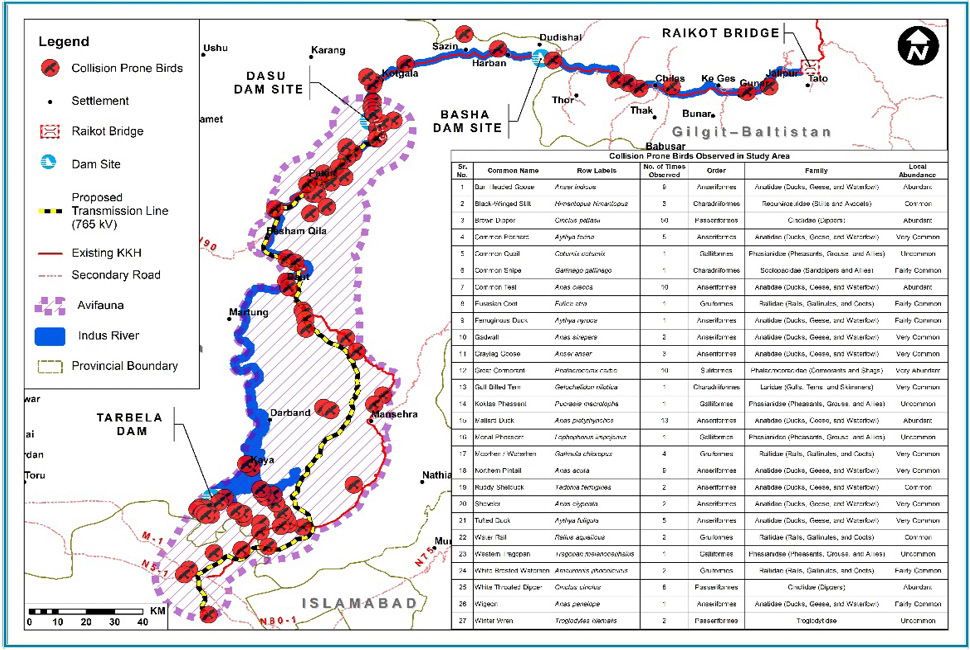
- Out of 215 avian species observed, 27 species (Table I) were determined to be collision prone (Fig. 6).
- Among collision prone species, 24 were least concern, one was near threatened (Ferruginous duck, Aythya nyroca) and two were vulnerable (common pochard (Aythya ferina) and Western tragopan (Tragopan melanocephalus).
- Moreover, studies suggested that birds with large wing span and body length for example, graylag goose (Anser anser), bar-headed goose (Anser indicus) and great cormorant are more prone to collision as compared to small birds.
- After studying the avian diversity in the area, it is suggested that only a few species (Table I) can collide with the proposed transmission line and will cause outages.
Selected from the article's own text.
Abstract
INTRODUCTION
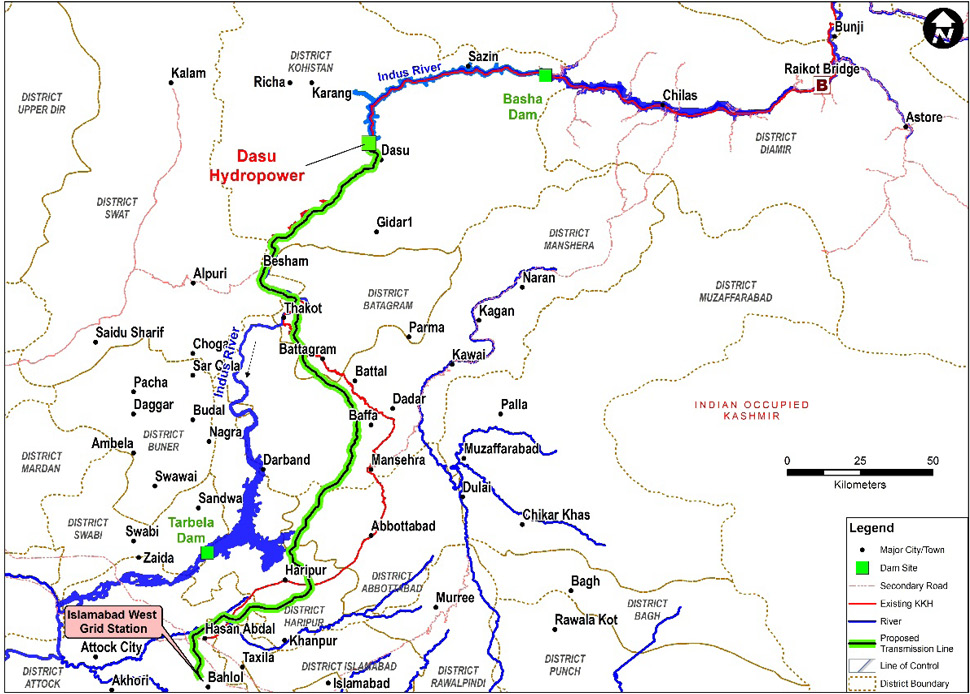
Dasu Hydropower Project (DHP) is a major investment project proposed by the Government of Pakistan (GoP) to modernize and expand the energy sector of the country and to alleviate the shortage of electricity in Pakistan by generating clean and sustainable hydropower. DHP is a run of river project on the Indus River located seven km upstream of Dasu Town, District Kohistan, Khyber Pakhtunkhwa (KP). The site is 74 km downstream of proposed Diamer Basha Dam site and 350 km from Islamabad. DHP will have a total installed capacity of 5400 MW with 12 generating units and is among the priority projects under the National Power Policy 2013 and Vision 2025 of GoP. A 765 kV transmission line is proposed as part of DHP, which will generate 5400 MW of electricity which will be transmitted to National Grid in Islamabad through a 250 km long, 765 kV High Voltage Alternating Current, double circuit transmission line along Indus River which is known for the occurrence of endemic bird species and falls within important flyway routes for migratory birds. The proposed 765 kV transmission line corridor travels along the Indus and crosses the river seven times.
Transmission lines are high voltage power lines that range from 69 kilovolt (kV) to 765 kV. In these lines, electricity can travel through lines in both directions to balance the grid. Transmission lines are thicker than distribution lines, whose main purpose is to connect power plants and sub stations. The voltage range of distribution line is from 4kV to 69 kV . Transmission lines can have a significant bearing on the environment which has caused a prerequisite to study impacts, including bird interactions.
The risk of bird mortality from power line collision is a function of three interacting factors i.e., local avian population, environment of the area and the configuration/design of the power line ; . In general, large, heavily bodied bird species are more susceptible and at greater risk to collision than smaller species ; . In addition to the body size, the sensory perception, morphological feature, flight behavior, phenology and health of the birds are also contributing factors to collision. . Likewise, the species which tend to form large flocks and fly in groups are also at higher degree of collision risk ; APLIC, 2012).
The environmental conditions of the site can have a profound impact at the resultant degree of collision risk. Power lines that pass through wetlands, coastal areas, extensive steppes and other major bird congregation habitats are considered to be the most hazardous ; . With respect to weather, low light, fog, rain, heavy wind and inclement weather exacerbate collision risk because power lines can become very difficult for an approaching bird to detect . Most of the Avian collisions have been reported on high voltage power lines in the foraging and nesting areas of the bird population which are in the close proximity to the transmission lines especially near places used for taking off and landing . In most documented collisions, it happens because the overhead transmission shield wire (OHSW) is smaller in diameter and is less visible to the bird (APLIC, 2012; .
Avian collision with overhead power lines is an ongoing concern in many countries across the globe (APLIC, 2012; that may be an important source of mortality for certain species . Power lines are continuously expanding due to the increasing energy demands of growing and expanding communities, ultimately resulting in increased bird-transmission line interactions . Power lines can cause significant impacts on the environment both during construction and operation phases (Bagli et al., 2010). The most documented and confirmed impact is direct mortality of birds worldwide through collision and electrocution due to transmission lines and it may also impact threatened and endangered local populations negatively ; ; ; . The current study was planned to observe avian species in transmission line corridor and to enlist the collision prone species.
MATERIALS AND METHODS
Study site
The overall study area encompassed over 7,951 km2, from Raikot Bridge in the North to West Islamabad Grid Station in the South (Fig. 1). The study area is rugged, with elevation ranging from 500 to 2,000 meters above sea level (masl), and diverse, comprising of six ecoregions and twelve unique land cover classifications. The National Transmission and Despatch Company’s (NTDC) proposed 765kV, double circuit transmission line running from DHP located in district Kohistan of Khyber Pakhtunkhwa in the North to the Tarbela Reservoir in the South and adjoining mountainous areas at elevations up to 2,000 masl was considered to be main area of concern (Fig. 1).
Equipment
The equipment used for this study included a Garmin GPS map 76CSx, binoculars (Bushnell power view, 60 X 90 m, Harrier 65mm ED Spotting Scope and camera (Nikon p-900).
Avian surveys
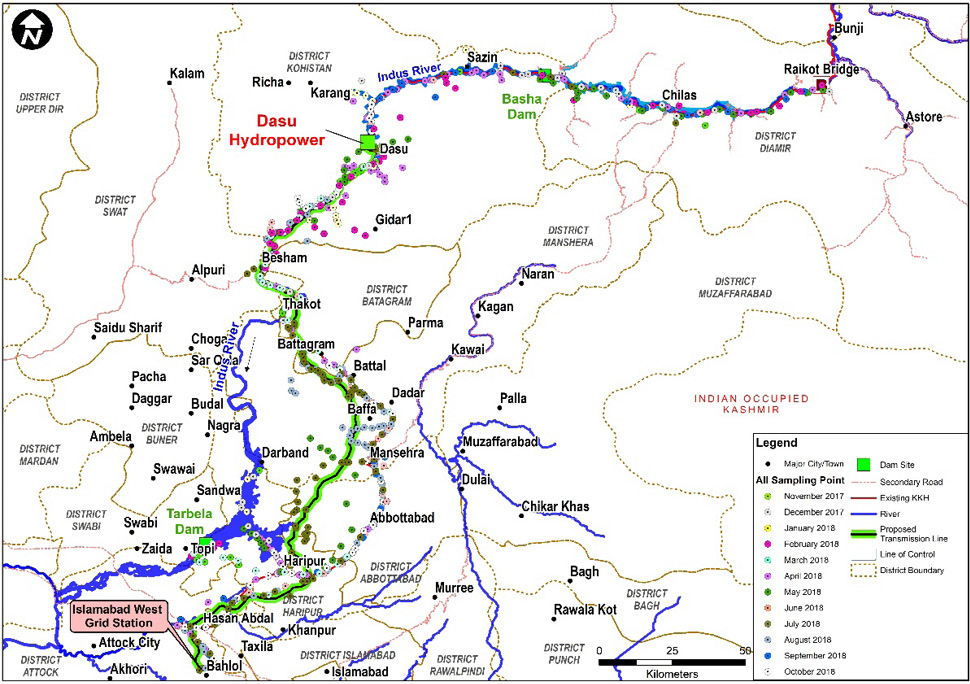
Monthly avian surveys were conducted to obtain an account of the avian species in the study area (Fig. 2). Three primary sampling strategies were adopted including point counts, skyview surveys, and nocturnal surveys. A total of 678 points were surveyed in the 12 months from November 2017 to October 2018.
For the point count method , different vantage points were selected randomly during each survey, and observations were taken for fifteen minutes at each point. Nocturnal surveys were conducted to determine the presence of birds such as owls, nightjars and other nocturnal species. The skyview method was adopted to document raptor species and for that matter, the team members used binoculars, spotting scope and cameras at a specified location for one hour. The data were also collected throughout the day in order to completely survey the designated area within 8 to 10 days each month.
Shannon Weiner index
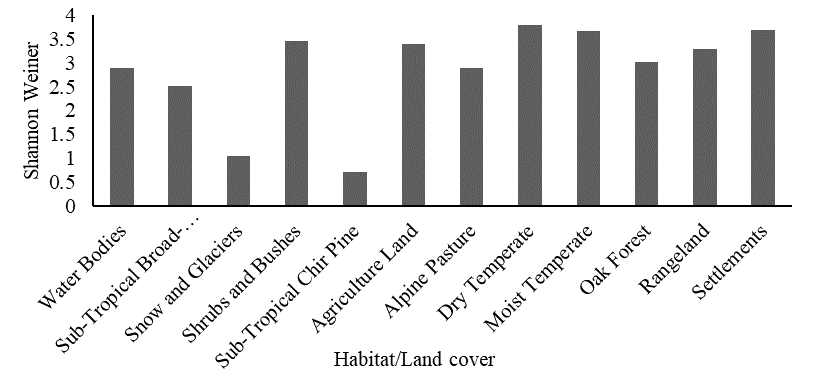
Shannon wiener index is famous for equalizing diversity among different ecological habitats. It is used to measure the diversity of species. It varies from 0 to 4. If the value of index is higher, it means that area/habitat will have the greater diversity. Species richness and evenness are required to calculate Shannon Wiener index. The land use classes extracted from Pakistan Forest Institute Land use in study area included agriculture land, alpine pasture, dry temperate, moist temperate, oak forest, rangeland, settlements, shrubs and bushes, snow and glaciers, sub-tropical broad leaved, sub-tropical chir pine and water bodies. Shannon wiener index was calculated for each habitat through following formula:
H’ = - [∑ Pi ln Pi]
Pi is the proportion of species relative to the total number of species, and lnPi is natural logarithm of this proportion.
RESULTS
In total, 215 avian species (Supplementary Table S1) were documented from a total of 678 observations during 12 months of field data collection. Birds observed during the survey belonged to 18 orders and 61 families. The maximum number of species belonged to the order Passeriformes, followed by Charadriiformes. A total of 38,939 individuals were observed across the study area. Most abundant species in the study area included great cormorant, common myna (Acridotheres tristis) and Carrion crow (Corvis corone) with relative abundance 9.36, 6.58 and 5.73, respectively
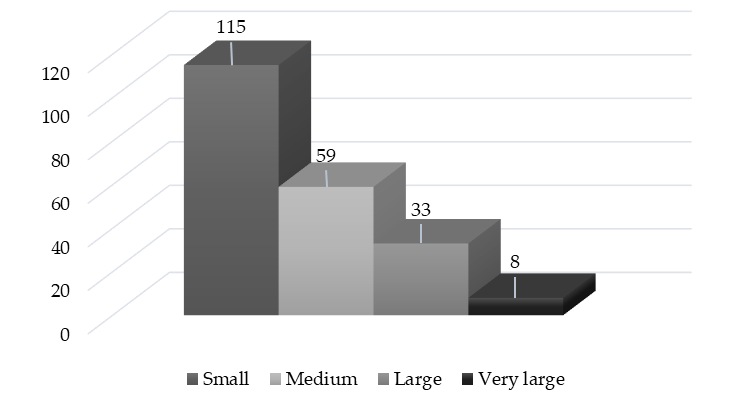
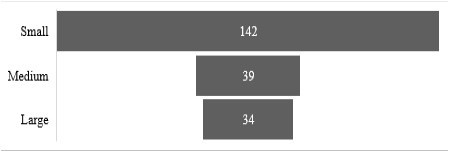
Tarbela Reservoir and the future Basha dam site were areas of greatest Avifauna abundance and diversity. The study revealed that important fall migration routes converge at Tarbela Reservoir, an important stopover for southern migration. The number of individuals observed per survey peaked in November, at the height of fall migration; the secondary peak in March was much smaller, reflecting a more diffused spring migration pattern. The diversity of bird species varied across the area with high numbers and diversity reflected in high Shannon-Weiner values near water such as the Tarbela Reservoir (Fig. 3). The body length was categorized as small (2-24cm), medium (24.1-42cm), large (42.1-82cm) and very large (82.1-182 cm). Out of 215, 115 species fell under the category of small while 59 were medium, 33 were large while 8 were very large (Fig. 4). The wing span was categorized into small (<15) medium (15-65 cm) and large (>65 cm). Out of total, 142 have small wing span while 39 species have medium and 34 species have large wing span (Fig. 5). Out of 215 avian species observed, 27 species (Table I) were determined to be collision prone (Fig. 6). Among collision prone species, 24 were least concern, one was near threatened (Ferruginous duck, Aythya nyroca) and two were vulnerable (common pochard (Aythya ferina) and Western tragopan (Tragopan melanocephalus). Collision- prone species accounted for 10% of the total observations. Most of the collision-prone species have strong associations with water habitats, and most of the point-count observations of collision-prone species were of ducks, geese, cormorants, and rails.
Table I. Collision prone species.
| S. No. | Scientific name | English name |
| 1 | Amaurornis phoenicurus | White-breasted waterhen |
| 2 | Anas acuta | Northern pintail |
| 3 | Anas clypeata | Shoveler |
| 4 | Anas crecca | Common teal |
| 5 | Anas penelope | Wigeon |
| 6 | Anas platyrhynchos | Mallard duck |
| 7 | Anas strepera | Gadwall |
| 8 | Anser anser | Graylag goose |
| 9 | Anser indicus | Bar- headed goose |
| 10 | Aythya ferina | Common pochard |
| 11 | Aythya fuligula | Tufted duck |
| 12 | Aythya nyroca | Ferruginous duck |
| 13 | Buteo rufinus | Long-legged buzzard |
| 14 | Aquila nipalensis | Steppe eagle |
| 15 | Coturnix coturnix | Common quail |
| 16 | Fulica atra | Eurasian coot |
| 17 | Gallinago gallinago | Common snipe |
| 18 | Gallinula chloropus | Moorhen/ waterhen |
| 19 | Gelochelidon nilotica | Gull-billed tern |
| 20 | Himantopus himantopus | Black-winged stilt |
| 21 | Hieraaetus pennatus | Booted eagle |
| 22 | Phalacrocorax carbo | Great cormorant |
| 23 | Pucrasia macrolopha | Koklass pheasant |
| 24 | Circus aeruginosus | Marsh harrier |
| 25 | Tadorna ferruginea | Ruddy shelduck |
| 26 | Tragopan melanocephalus | Western tragopan |
| 27 | Troglodytes hiemalis | Winter wren |
DISCUSSION
Pakistan is a data deficient country for most of the avian species specially in the remote areas and where the developmental projects are expected in future. It is also difficult to estimate the mortalities due to collision with the high voltage transmission lines because of the known population of the collision prone avian species in project areas. This research was conducted to study the avian diversity along the proposed 765 kV extra high voltage transmission line at Indus Cascade. A total of 215 birds species were observed from the study area of 400km belt and from 678 observation points during 12 months (November 2017 to October 2018). A total of 38,939 individuals were observed and maximum number of species belonged to the order Passeriformes, followed by Charadriiformes. Mortalities due to collision are expected to be more during migration (southwards November and northwards March).
In the study area, 27 species were found to be collision prone. Among such species one was near threatened Ferruginous duck (Aythya nyroca) and two were vulnerable common pochard (Aythya ferina) and Western Tragopan. Ferruginous Duck has also been reported as collision prone by D’Amico et al. (2019). Some of the species in the collected data are rare or unidentified power-line collision sufferers, and exhibit morpho-behavioral traits that make these species not much susceptible to collisions. But, they commonly contain a threatened conservation status having high power-line density in their migratory routes. In such conditions, even infrequent collision events may cause significant consequences at the population level , 2019).
Among the sensitive species, Koklass pheasant Pucrasia macrolopha, Himalayan monal Lophophorus impejanis, and Western tragopan are range restricted . South of the Tibetan Plateau are known to be the wintering grounds of ruddy shelduck Tadorna ferruginea while the breeding grounds are the north of Himalayas mountain range. Considering this, it is possible that these species during migration can collide with the structures like high voltage transmission lines in their migratory routes. According to Rioux et al. (2013) waterfowl, grebes, shorebirds and raptors are also more prone to the collision.
Among other species, common quail (Coturnix coturnix) is one of the collision prone species and it was found to be the most impacted species due to collision in a study conducted in Saudi Arabia . According to Mathiasson (1993), the susceptibility to bird collision can be due to poor lift capacity of the species and common quail can be considered one of the examples. Furthermore, among other factors the species vulnerability can be associated with exposure and susceptibility to collision. Moreover, studies suggested that birds with large wing span and body length for example, graylag goose (Anser anser), bar-headed goose (Anser indicus) and great cormorant are more prone to collision as compared to small birds. Vegetation density, cover, predation and terrain also contribute to bird collision susceptibility ; such as in areas near Pattan, Besham and Dasu. Another research has revealed that the most collision prone species include large (Graylag goose, bar-headed goose) and habitat specialist (Western Tragopan) species .
After studying the avian diversity in the area, it is suggested that only a few species (Table I) can collide with the proposed transmission line and will cause outages. Not only the birds’ life but the reliability of power supply can also be effected by usage of transmission lines for nesting and roosting by birds causing shutdowns and huge financial losses . Moreover, birds also defecate in a series of activities for example, nesting, laying eggs, brooding, resting, eating and fighting. High conductivity of bird droppings is an important factor causing streamer flashovers of high-voltage transmission line .
The natural presence of the birds and migratory sub-route of the Indus flyway in the proposed transmission line at upper Indus River highlights the importance of this study and the identified collision prone species along with other bird assemblages is an important beginning to invite conservationists and researchers to replicate such studies in other proposed developmental projects.
Acknowledgements
We are thankful to staff of KP Wildlife Department for assisting us and protecting us in the field and guidance during the field work. We are thankful to WAPDA and NTDC staff for accompanying and collecting data/information about birds and wildlife species in the area and their concerns for the developmental projects.
Supplementary material
There is supplementary material associated with this article. Access the material online at: https://dx.doi.org/10.17582/journal.pjz/20220507120544
Statement of conflict of interest
The authors have declared no conflict of interest.
Figures
Study area map (from Raikot to Tarbela reservoir).
Avifauna sampling points.
Shannon-Wiener index by land cover.
Body length of avian species.
Wing span of avian species.
Locations of collision prone species.
References
- Andriushchenko, Y.A. and Popenko, V., 2012. Birds and power lines in steppe Crimea: Positive and negative impacts, Ukraine. Raptor Res., 2012.
- Bagli, S., Geneletti, D. and Orsi, F., 2010. Routeing of power lines through least-cost path analysis and multicriteria evaluation to minimise environmental impacts. Environ. Impact Assess. Rev., 31: 234-239. https://doi.org/10.1016/j.eiar.2010.10.003[CrossRef]
- Bernardino, J., Bevanger, K., Barrientos, R., Dwyer, J., Marques, A., Martins, R., Shaw, J., Silva, J. and Moreira, F., 2018. Bird collisions with power lines: State of the art and priority areas for research. Biol. Conserv., 222: 1-13. https://doi.org/10.1016/j.biocon.2018.02.029[CrossRef]
- Avian Power Line Interaction Committee (APLIC). 2012. Reducing avian collisions with power lines: The state of the art in 2012. Edison electric Institute.
- Crowder, M.R., 2000. Assessment of devices designed to lower the incidence of avian power line strikes. PhD thesis, Purdue University, Gibson County, Indiana. https://doi.org/10.1016/j.eiar.2010.10.003[CrossRef]
- D’Amico, M., Catry, I., Martins, R.C., Ascensão, F., Barrientos, R. and Moreira, F., 2018. Bird on the wire: Landscape planning considering costs and benefits for bird populations coexisting with power lines. Ambio, 47: 650-656. https://doi.org/10.1007/s13280-018-1025-z[CrossRef]
- D’Amico, M., Martins, R.C., Álvarez‐Martínez, J.M., Porto, M., Barrientos, R. and Moreira, F., 2019. Bird collisions with power lines: Prioritizing species and areas by estimating potential population-level impacts. Divers. Distrib., 25: 975-982. https://doi.org/10.1111/ddi.12903[CrossRef]
- Ding, Y., Zhou, J., Li, C., Liu, G., Wang, H., Yao, X., Wang, X. and Wang, S., 2021. Bird-related fault analysis and prevention measures of±400 kV Qinghai-Tibet DC transmission line. Energy Rep., 7: 426-433. https://doi.org/10.1016/j.egyr.2021.08.022[CrossRef]
- Drewitt, A.L., and Langston, R.H.W., 2008. Collision effects of wind-power generators and other obstacles on birds. Annls N. Y. Acad. Sci., 1134: 233-266. https://doi.org/10.1196/annals.1439.015[CrossRef]
- Faanes, C.A., 1987. Bird behavior and mortality in relation to power lines in prairie habitats. Fish and Wildlife Service Washington DC.
- Grimmett, R., Roberts, T.J., Inskipp, T. and Byers, C., 2008. Birds of Pakistan; A & C Black.
- Jeffery, J., 2020. What is the difference between transmission and distribution lines? https://www.customtruck.com/blog/what-is-the-difference-between-transmission-and-distribution-lines/ (Assessed on April 07, 2021).
- Jenkins, A.R., Smallie, J.J. and Diamond, M., 2010. Avian collisions with power lines: A global review of causes and mitigation with a South African perspective. Bird Conserv. Int., 20: 263-278. https://doi.org/10.1017/S0959270910000122[CrossRef]
- Kerlinger, P. and Curry, R., 2002. Desktop avian risk assessment for the Long Island power authority offshore wind energy project. Prepared for AWS Scientific. Inc. and Long Island Power Authority.
- Loss, S.R., Will, T. and Marra, P.P., 2014. Refining estimates of bird collision and electrocution mortality at power lines in the United States. PLoS One, 9: e101565. https://doi.org/10.1371/journal.pone.0101565[CrossRef]
- Mathiasson, S., 1993. Mute swans, cygnus olor, killed from collision with electrical wires, a study of two situations in Sweden. Environ. Pollut., 80: 239-246. https://doi.org/10.1016/0269-7491(93)90044-O[CrossRef]
- Murphy, R.K., Dwyer, J.F., Mojica, E.K., McPherron, M.M. and Harness, R.E., 2016. Reactions of sandhill cranes approaching a marked transmission power line. J. Fish Wildl. Manage., 7: 480-489. https://doi.org/10.3996/052016-JFWM-037[CrossRef]
- Osborn, R.G., Higgins, K.F., Usgaard, R.E., Dieter, C.D. and Neiger, R.D., 2000. Bird mortality associated with wind turbines at the buffalo ridge wind resource area, Minnesota. Am. Midl. Nat., 143: 41-52. https://doi.org/10.1674/0003-0031(2000)143[0041:BMAWWT]2.0.CO;2[CrossRef]
- Parr, N., Wilkes, M. and Hawkes, L.A., 2019. Natural climbers: Insights from avian physiology at high altitude. High Alt. Med. Biol., 20: 427-437. https://doi.org/10.1089/ham.2019.0032[CrossRef]
- Quinn, M., Alexander, S., Heck, N., and Chernoff, G., 2011. Identification of bird collision hotspots along transmission power lines in Alberta: An expert-based geographic information system (GIS) approach. Environ. Inform. Arch., 18. https://doi.org/10.3808/jei.201100194[CrossRef]
- Raab, R., Schuetz, C., Spakovszky, P., Julius, E. and Schulze, C.H., 2012. Underground cabling and marking of power lines: conservation measures rapidly reduced mortality of West-Pannonian great bustards Otis tarda. Bird Conserv. Int., 22: 299-306. https://doi.org/10.1017/S0959270911000463[CrossRef]
- Rioux, S., Savard, J.-P. and Gerick, A., 2013. Avian mortalities due to transmission line collisions: a review of current estimates and field methods with an emphasis on applications to the Canadian electric network. Avian Conserv. Ecol., 8. https://doi.org/10.5751/ACE-00614-080207[CrossRef]
- Rollan, A., Real, J., Bosch, R., Tinto, A., and Hernandez-Matias, A. 2010. Modelling the risk of collision with power lines in Bonelli’s Eagle Hieraaetus fasciatus and its conservation implications. Bird Conserv. Int., 20: 279-294. https://doi.org/10.1017/S0959270910000250[CrossRef]
- Rubolini, D., Gustin, M., Bogliani, G., and Garavaglia, R. 2005. Birds and powerlines in Italy: An assessment. Bird Conserv. Int., 15: 131-145. https://doi.org/10.1017/S0959270905000109[CrossRef]
- Savereno, A.J. and Savereno, L.A., Boettcher, R., and Haig, S.M., 1996. Avian behavior and mortality at power lines in coastal South Carolina. Wildl. Soc. Bull., 636-648.
- Shaw, J.M., Jenkins, A.R., Smallie, J.J. and Ryan, P.G. 2010. Modelling power-line collision risk for the blue crane Anthropoides paradiseus in South Africa. Ibis, 152: 590-599. https://doi.org/10.1111/j.1474-919X.2010.01039.x[CrossRef]
- Shobrak, M., 2012. Electrocution and collision of birds with power lines in Saudi Arabia: (Aves). Zool. Middle East., 57: 45-52. https://doi.org/10.1080/09397140.2012.10648962[CrossRef]
- Sporer, M.K., Dwyer, J.F., Gerber, B.D., Harness, R.E. and Pandey, A.K., 2013. Marking power lines to reduce avian collisions near the Audubon National Wildlife Refuge, North Dakota. Wildl. Soc. Bull., 37: 796-804. https://doi.org/10.1002/wsb.329[CrossRef]
- Verner, J., 1985. Current ornithology: Assessment of counting techniques. Plenum Press, 2: 247-302.
- Wang, H., Wang, S., Deng, C., Yang, G., Lv, F., 2018. Study on the flashover characteristics of bird droppings along 110KV composite insulator. In: Proceedings of the 2018 International Conference on Power System Technology (POWERCON); pp. 2929-2933. https://doi.org/10.1016/j.biocon.2018.02.029[CrossRef]
Supplementary material
Cited by 1 article
In journals published by ResearchersLinks.
Services
Article usage statistics
Loading…