Research Article · Volume 14, Issue 4, 13 September 2026 · Open Access
Association of Body Weight and Body Condition Score with Puberty in Bali Heifers
· · · · ·
Affiliations & Notes ⌄
1Doctoral Program, Faculty of Animal Science, Hasanuddin University, Jl. Perintis Kemerdekaan Km. 10, Tamalanrea, Makassar, South Sulawesi, Indonesia 90245
2Department of Animal Production, Faculty of Animal Science, Hasanuddin University, Jl. Perintis Kemerdekaan Km. 10, Tamalanrea, Makassar, South Sulawesi, Indonesia 90245
3Research Center for Applied Zoology, National Research and Innovation Agency, Cibinong Science Center, Jl. Raya Jakarta, Bogor, West Java, Indonesia 16915. *Correspondence | Muhammad Yusuf, Department of Animal Production, Faculty of Animal Science, Hasanuddin University, Jl. Perintis Kemerdekaan Km. 10, Tamalanrea, Makassar, South Sulawesi, Indonesia 90245
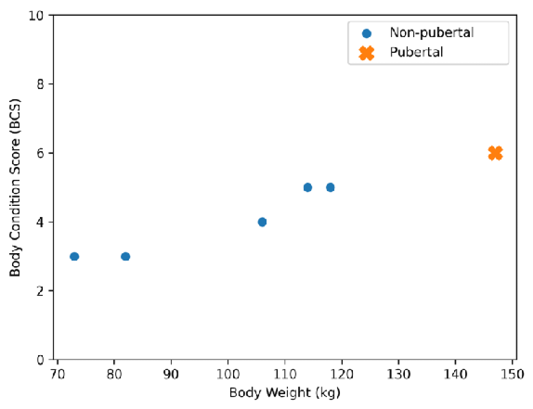
The heifer that reached puberty had the highest body weight within the observed group, whereas another heifer with a similar BCS but lower body weight did not exhibit luteal activity (Figure 2).
This observation suggests that body weight was more closely associated with pubertal onset than BCS alone.
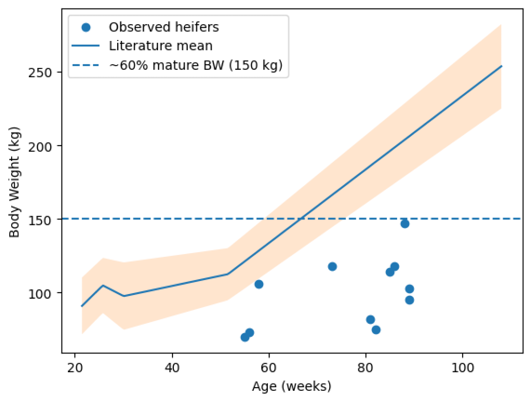
The growth pattern observed across the study period indicates that most heifers remained below the estimated critical body weight even at advanced ages within the observation range (Figure 3).
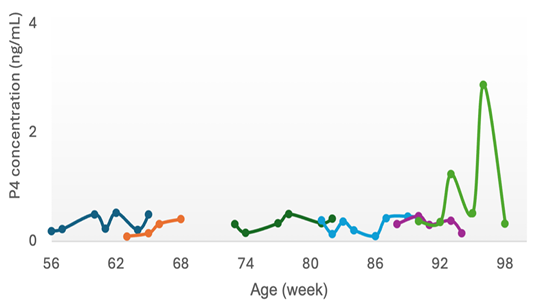
The present study demonstrates that pubertal onset in Bali heifers was confirmed by plasma progesterone concentrations exceeding 1 ng per mL, observed at 93 weeks of age in the heifer that exhibited first ovulation.
Selected from the article's own text.
Abstract
Timing of puberty in beef heifers is a critical determinant of reproductive efficiency and long-term herd productivity. However, information regarding the relationship between growth parameters and physiological confirmation of puberty in Bali heifers remains limited. This study investigated the association between body weight, body condition score (BCS), and pubertal onset in Bali heifers, using plasma progesterone concentration as a physiological indicator of ovarian cyclicity. Eleven heifers aged 55 to 89 weeks were monitored for body weight and BCS, and progesterone profiles were evaluated in six representative animals using an ELISA method. Progesterone concentrations remained below 1 ng per mL throughout most of the observation period and exceeded 1 ng per mL at 93 weeks of age in one heifer, confirming first ovulation. The heifer that attained puberty had a body weight of 147 kg, corresponding to approximately 60% of the estimated mature body weight, whereas animals with moderate BCS but lower body weight did not exhibit luteal activity. These findings indicate that body weight is a more reliable predictor of pubertal onset than BCS alone and highlight the importance of achieving adequate structural growth to trigger reproductive maturation.
Keywords | Bali heifer, Body condition score, Body weight, Growth performance, Puberty, Progesterone
INTRODUCTION
Fertility is a crucial component of livestock management because it directly influences productivity and the overall efficiency of cow–calf operations ; . In female cattle, fertility refers to the ability to conceive and maintain pregnancy, which is essential for enhancing production performance and ensuring herd sustainability. Optimal fertility begins with the attainment of puberty, the stage at which a heifer becomes capable of reproduction. For improved production efficiency, it is important that puberty occurs at an early age, as this enables earlier breeding and increases the number of productive reproductive cycles throughout the animals lifetime ; .
Puberty in cattle is regulated by genetic, nutritional, and environmental influences, with body weight and body condition score (BCS) serving as indicators of growth and metabolic status. In heifers, growth rate from weaning to breeding plays a central role in determining the timing of pubertal onset and subsequent reproductive capacity. Biological age, body weight, and BCS reflect energy balance and nutritional adequacy, which are closely associated with ovarian development and the initiation of cyclic activity . Physiologically, puberty involves activation of the hypothalamic–pituitary–ovarian (HPO) axis, characterized by increased luteinizing hormone (LH) secretion that induces the first ovulation. The subsequent formation of a functional corpus luteum results in elevated progesterone concentrations, which are widely used as a physiological indicator of pubertal attainment in cattle . Therefore, adequate nutrition during the prepubertal period is essential to support proper endocrine function, timely ovarian maturation, and optimal age at puberty (Hafez and Hafez, 2002; .
Bali cattle (Bos javanicus) represent one of Indonesia’s most important indigenous beef genetic resources . However, under traditional management systems, growth performance is often suboptimal, potentially delaying the attainment of the critical body weight necessary for pubertal onset. Although general reproductive performance of Bali cattle has been reported, limited information is available regarding the direct relationship between body weight, body condition score (BCS), and physiological confirmation of puberty under field conditions. Therefore, this study aimed to evaluate the association between body weight, BCS, and the onset of puberty in Bali heifers using plasma progesterone concentration as a physiological indicator, in order to provide scientific evidence for improving reproductive management and enhancing long-term productivity.
MATERIAL AND METHODS
Experimental design and ethical approval
This study utilized a longitudinal observational design with repeated measurements to evaluate growth performance and pubertal development in Bali heifers. The longitudinal approach allowed continuous monitoring of body weight, body condition score (BCS), and hormonal changes during the prepubertal period. A total of 11 Bali heifers aged 55–89 weeks were included in the study. During the study, all heifers were fed forage and concentrate twice daily, in the morning and afternoon, following routine farm management practices. Heifers had ad libitum access to drinking water throughout the observation period. Body weight and BCS were recorded periodically for all animals throughout the observation period. For hormonal assessment, six heifers were selected to represent the observed age range and developmental variation within the group. These animals were subjected to serial blood sampling for progesterone analysis to determine pubertal status. This study was approved by the Animal Use Ethics Committee for Research and Education, Faculty of Animal Science, Hasanuddin University (Approval No. 11/UN4.12/EC/V2025).
Blood sample collection
Blood samples were collected at 10-day intervals via jugular venipuncture. Following collection, samples were centrifuged at 2,500 × g for 30 minutes to separate plasma. The plasma was then stored at −20°C until further hormonal analysis .
Progesterone concentration analysis
Plasma progesterone (P4) concentrations were determined using a commercial ELISA kit (Elabscience®) according to the manufacturer’s instructions. Briefly, 50 µL of standards and plasma samples were added to the microplate wells, followed by 50 µL of biotinylated detection antibody, and the plate was incubated at 37°C for 45 minutes. After washing to remove unbound components, 100 µL of HRP-conjugate solution was added and incubated for 30 minutes at 37°C. The wells were washed five times before adding 90 µL of substrate solution and incubating for 15 minutes at 37°C. The reaction was stopped by adding 50 µL of stop solution, and optical density (OD) was measured at 450 nm using a BioTek ELx800 microplate reader. Progesterone concentrations were calculated based on the standard curve generated from the assay standards.
Data analysis
Optical density (OD) values obtained from the ELISA assays were converted into progesterone concentrations using GraphPad Prism software (version 10) based on the standard curve generated for each assay. Pubertal status was considered to be attained when plasma progesterone concentration exceeded 1 ng/mL, indicating functional luteal activity following first ovulation, according to criteria commonly used in beef heifers, including Brahman-crossbred heifers raised under tropical conditions . Body weight and body condition score (BCS) data were analyzed descriptively to characterize growth patterns and evaluate their association with pubertal status. Growth performance was interpreted in reference to previously published data to provide contextual comparison.
RESULTS
Progesterone dynamics during the pubertal period
Figure 1 presents the progesterone concentration profiles of six Bali heifers monitored during the observation period. Progesterone concentrations remained low and relatively stable in animals aged 56–85 weeks. A marked increase in progesterone concentration was observed in one heifer at 93 weeks of age, indicating the occurrence of ovulation and luteal activity. The remaining animals did not show a sustained elevation in progesterone during the study period.
The effect of body weight and BCS on puberty age
Body weight of the observed heifers ranged from 70 to 147 kg, with BCS values between 3 and 6 (Figure 2). Most heifers had not reached pubertal status during the observation period. The heifer that exhibited elevated progesterone concentration had a body weight of 147 kg and a BCS of 6. In contrast, another heifer with a BCS of 5 but lower body weight (~120 kg) did not show evidence of puberty.
Growth pattern of Bali heifers
Body weight increased progressively with age across the observation period (Figure 3). At approximately 55 weeks of age, body weight ranged between 80 and 100 kg. Between 70 and 89 weeks, most heifers exhibited body weights between 110 and 140 kg, with one individual reaching 147 kg. Considerable variation in body weight was observed among heifers of similar ages. Throughout the study period, the majority of animals remained below 150 kg.
DISCUSSION
The marked increase in progesterone concentration observed at 93 weeks of age confirms the establishment of luteal activity and indicates the occurrence of first ovulation in the respective heifer (Figure 1). In cattle, puberty is physiologically defined by the initiation of ovarian cyclicity, which is driven by activation of the hypothalamic–pituitary–ovarian (HPO) axis. The Gonadostat Theory, proposed by Ramirez and McCann (1963), posits that puberty begins with a decrease in hypothalamic sensitivity to the negative feedback effects of estrogen produced by the ovaries during the prepubertal period. This reduced sensitivity activates the Hypothalamic–Pituitary–Ovarian (HPO) axis, leading to increased secretion of reproductive hormones, including GnRH, FSH, and LH, at levels sufficient to induce ovulation . The subsequent formation of a functional corpus luteum results in sustained progesterone secretion, serving as an objective indicator of pubertal attainment.
A plasma progesterone concentration exceeding approximately 1 ng/mL is generally accepted as evidence of functional luteal activity and confirmation of ovulation . Although a specific progesterone threshold has not been established for Bali cattle, this cutoff has been applied in Brahman-crossbred heifers under tropical conditions and was therefore considered appropriate for use in the present study. This threshold reflects progesterone production sufficient to indicate the presence of a corpus luteum rather than transient or basal steroid fluctuations. In the present study, progesterone concentrations in most heifers remained below this level during the observation period, supporting the conclusion that stable ovarian cyclicity had not yet been established in those animals.
Minor fluctuations in progesterone concentrations observed during the prepubertal period do not necessarily indicate luteal activity (Figure 1). When circulating concentrations remain below the established luteal threshold, these low values are unlikely to reflect functional corpus luteum formation. It is possible that such concentrations originate from the adrenal gland, which is capable of producing small amounts of progesterone and act as a precursor to other hormones in the adrenal gland ; . Therefore, low progesterone concentrations detected prior to confirmed puberty should not be interpreted as evidence of ovarian cyclicity.
The relationship between body weight, BCS, and pubertal status further highlights the importance of growth in reproductive maturation. The heifer that reached puberty had the highest body weight within the observed group, whereas another heifer with a similar BCS but lower body weight did not exhibit luteal activity (Figure 2). This observation suggests that body weight was more closely associated with pubertal onset than BCS alone.
This finding supports the widely accepted concept that attainment of a critical body weight is a primary determinant of puberty in cattle . Heifers generally achieve puberty when they reach approximately 60% of their mature body weight . Given that mature Bali cattle weigh around 250 kg , the pubertal body weight observed in this study closely approaches this physiological benchmark. In contrast, BCS reflects subcutaneous fat deposition and energy reserves but does not necessarily represent overall skeletal growth and developmental maturity . Therefore, although adequate body condition is important, structural growth and total body mass appear to play a more decisive role in triggering the endocrine events leading to puberty .
The growth pattern observed across the study period indicates that most heifers remained below the estimated critical body weight even at advanced ages within the observation range (Figure 3). Compared with previously reported growth data under more proper management conditions, the body weights recorded in this population were relatively lower at comparable ages. Such differences likely reflect variations in nutritional management and weaning strategies . Insufficient energy and protein intake can impair metabolic signaling pathways involved in HPO axis activation, thereby delaying ovarian maturation and first ovulation .
In addition to nutritional adequacy, delayed puberty in the present study may also have been influenced by feeding management and environmental conditions. Inconsistent feeding schedules may reduce nutrient intake continuity and limit growth performance , thereby delaying attainment of the critical body weight required for puberty ; . Environmental challenges, particularly heat stress and reduced forage availability during the dry season, may also have imposed additional constraints on growth and reproductive development. These factors may partly explain why pubertal onset remained delayed in most heifers observed in the present study.
Delayed attainment of the critical body weight extends the prepubertal period and may result in increased age at first calving. This delay can reduce the total number of productive reproductive cycles throughout the animal’s lifetime, ultimately lowering reproductive efficiency and herd productivity ; . From a management perspective, these findings underscore the importance of optimizing early growth through improved feeding strategies and timely weaning practices . Ensuring that heifers achieve adequate body weight at an appropriate age is essential to support normal endocrine development and to enhance the long-term productivity of Bali cattle raised under traditional conditions.
This study has several limitations that should be acknowledged. Progesterone dynamics were evaluated in a subset of heifers representing different developmental stages, and hormonal profiles were obtained from individual animals rather than from a larger cohort followed until confirmed puberty in all subjects. Although subsequent progesterone fluctuations in the same heifer suggested continued ovarian activity, the present study was not specifically designed to confirm the regularity or long-term stability of estrous cycles. Consequently, variability in individual endocrine responses may influence the interpretation of pubertal timing. Future research involving larger longitudinal cohorts under controlled growth management is warranted to provide more comprehensive insight into pubertal progression in Bali heifers. Moreover, intervention studies evaluating the integration of appropriate hormonal protocols with optimized feeding and growth management strategies are needed to develop practical approaches for mitigating delayed puberty and improving reproductive efficiency.
CONCLUSION
The present study demonstrates that pubertal onset in Bali heifers was confirmed by plasma progesterone concentrations exceeding 1 ng per mL, observed at 93 weeks of age in the heifer that exhibited first ovulation. Puberty was more closely associated with body weight than body condition score alone, as the heifer reaching approximately 147 kg, corresponding to nearly 60% of mature body weight, showed evidence of ovarian cyclicity, whereas animals with moderate BCS but lower body weight did not attain puberty during the observation period. These findings indicate that attainment of adequate structural growth is a critical determinant of reproductive maturation. Optimization of early growth through improved nutritional management, combined with appropriate reproductive strategies, is essential to enhance pubertal timing and improve long-term reproductive efficiency in Bali cattle.
ACKNOWLEDGEMENT
This research was supported by the Program Magister Menuju Doktor Sarjana Unggul (PMDSU) Research funding by the Research and Community Service Program, Directorate of Research and Community Service, Ministry of Higher Education, Science, and Technology of the Republic of Indonesia (Grant Number: 069/C3/DT.05.00/PL/2025).
Novelty Statement
This study provides novel field-based evidence linking body weight and body condition score with physiologically confirmed pubertal onset in Bali heifers using plasma progesterone as an indicator of ovarian cyclicity. The findings demonstrate that attainment of an adequate proportion of mature body weight may be more closely associated with pubertal onset than body condition score alone, providing new insight into the growth-related reproductive development of Bali heifers under tropical production conditions.
Author’s Contribution
AASA, MY, S, and SS conceived and designed the experiment. MY, S, SS, AMD, and M supervised and coordinated the research and provided clinical data. Statistical analysis was conducted by AASA and AMD. The initial draft of the manuscript was prepared by AASA and M. All authors critically reviewed and approved the final version of the manuscript.
Generative AI and AI assisted technology statement
The authors declare that no generative AI and AI assisted technology was used in the creation of this manuscript.
Conflict of interest
The authors have declared no conflicts of interest, financial or personal, that could have influenced the work reported in this manuscript.
Figures
Figure 1:.
Plasma progesterone (P4) concentration profiles of six Bali heifers monitored during the prepubertal period.
Figure 2:.
Relationship between body weight and body condition score (BCS) in Bali heifers. The X marker represents the pubertal heifer confirmed by plasma progesterone concentration > 1 ng/mL, while circular markers represent non-pubertal heifers.
Figure 3:.
Comparison of observed body weight of Bali heifers with literature-based growth benchmarks. Individual points represent observed body weights, the solid line indicates the mean body weight derived from literature, and the shaded area represents ± SD. The dashed horizontal line denotes approximately 60% of mature body weight (150 kg). Literature data were compiled from Hafid (2021), Azis et al. (2023), Baliarti et al. (2024), and Sikone et al. (2024).
References
Adam AAS, Yusuf M, Sahiruddin S, Diansyah AM, Masturi M (2025a). Puberty in beef heifers: Endocrine mechanisms, reproductive development, and nutritional influences on the onset of puberty. J. Glob. Innov. Agric. Sci., 13: 1419–1427. https://doi.org/10.22194/JGIAS/25.1713[CrossRef]
Adam AAS, Yusuf M, Sahiruddin S, Diansyah AM, Alfian AM, Masturi M, Said S (2025b). Development potential of Bali cattle in South Sulawesi: A study on population structure and management system. BIO Web Conf., 189: 01013. https://doi.org/10.1051/bioconf/202518901013[CrossRef]
Atashi H, Asaadi A, Hostens M (2021). Association between age at first calving and lactation performance, lactation curve, calving interval, calf birth weight, and dystocia in Holstein dairy cows. PLoS One, 16: e0244825. https://doi.org/10.1371/journal.pone.0244825[CrossRef]
Azis R, Ciptadi G, Wahjuningsih S, Hariyono DNHH, Tribudi YA, Margareta V, Nurgiatiningsih A (2023). Prediction of body weight from body measurements in Bali cattle of Indonesia using regression analysis. Adv. Anim. Vet. Sci., 11: 1486-1491. https://doi.org/10.17582/journal.aavs/2023/11.9.1486.1491[Full text][CrossRef]
Baliarti E, Setiawan I, Widi TSM, Suhartanto B, Maulana H, Atmoko BA, Astrini AL (2021). Performances of Bali cow kept by the palm oil farmers in Rokan Hulu, Riau. IOP Conf. Ser.: Earth Environ. Sci., 902: 012053. https://doi.org/10.1088/1755-1315/902/1/012053[CrossRef]
Brunes LC, Baldi FS, Costa MFOE, Quintans G, Banchero G, Lôbo RB, Magnabosco CU (2022). Early growth, backfat thickness and body condition has major effect on early heifer pregnancy in Nellore cattle. An. Acad. Bras. Cienc., 94: e20191559. https://doi.org/10.1590/0001-3765202120191559[CrossRef]
Chai J, Weiss CP, Beck PA, Zhao W, Li Y, Zhao J (2024). Diet and monensin influence the temporal dynamics of the rumen microbiome in stocker and finishing cattle. J. Anim. Sci. Biotechnol., 15: 12. https://doi.org/10.1186/s40104-023-00967-5[CrossRef]
Cooke RF, JD Arthington (2009). Plasma progesterone consentrations as puberty criteria for Brahman-crossbred heifers. Livest. Sci., 123: 101-105. https://doi.org/10.1016/j.livsci.2008.10.009[CrossRef]
de Lima RS, Martins T, Lemes KM, Binelli M, Madureira EH. (2020).Theriogenologya puberty induction protocol based on injectable long acting progesterone on pregnancy success of beef heifers serviced by TAI. Theriogenology, 154: 128-134. https://doi.org/10.1016/j.theriogenology.2020.05.036[CrossRef]
Duittoz AH, Kenny DA (2023). Early and late determinants of puberty in ruminants and the role of nutrition. Animal, 17: 100812. https://doi.org/10.1016/j.animal.2023.100812[CrossRef]
Estill CT (2021). Bovine Reproduction. 2nd edn. John Wiley and Sons, Inc.
Fantuz F, Fatica A, Salimei E, Marcantoni F, Todini L (2024). Nutrition, growth, and age at puberty in heifers. Animals, 14: 2801. https://doi.org/10.3390/ani14192801[CrossRef]
Hafez B, Hafez ESE (2000). Reproduction in farm animals. 7th edn. Lippincott Williams and Wilkins. https://doi.org/10.1002/9781119265306[CrossRef]
Hafid H (2021). Effect on growing of Bali cattle with difference ages raised in cages. J. Integr. Anim. Sci., 9: 46-53. https://doi.org/10.32734/jpi.v9i2.6710[CrossRef]
Haridas SS, Singh P, Ratta NS, Singh C, Honparkhe M (2025). Cytokine profiling and puberty enhancement post altrenogest feeding in prepubertal murrah buffalo (Bubalus bubalis) heifers. Ruminants, 5: 24. https://doi.org/10.3390/ruminants5020024[CrossRef]
Kasimanickam RK, Kasimanickam VR, McCann ML (2021). Difference in body weight at breeding affects reproductive performance in replacement beef heifers and carries consequences to next generation heifers. Animals, 11: 2800. https://doi.org/10.3390/ani11102800[CrossRef]
Kater CE, Giorgi RB, Costa-Barbosa FA (2022). Classic and current concepts in adrenal steroidogenesis: A reappraisal. Arch. Endocrinol. Metab., 66: 77-87. https://doi.org/10.20945/2359-3997000000438[CrossRef]
Kertz NC, Banerjee P, Dyce PW, Diniz WJ (2023). Harnessing genomics and transcriptomics approaches to improve female fertility in beef cattle: A review. Animals, 13: 3284. https://doi.org/10.3390/ani13203284[CrossRef]
Mansur M, Diansyah AM, Rahmat R, Amrullah MF, Alfian AM, Adam AAS, Nurlatifah A (2025). Reproductive disorders in Simmental cattle: Enhancing fertility through a hormonal protocol. Open Vet. J., 15: 2112. https://doi.org/10.5455/OVJ.2025.v15.i5.29[CrossRef]
Ojo AO, Mulim HA, Campos GS, Junqueira, VS, Lemenager RP, Schoonmaker JP, Oliveira HR (2024). Exploring feed efficiency in beef cattle: from data collection to genetic and nutritional modeling. Animals, 14: 3633. https://doi.org/10.3390/ani14243633[CrossRef]
Pereira GR, Barcellos JOJ, Sessim AG, Tarouco JU, Feijo FD, Neto JB, Prates ER, Canozzi MEA (2017). Relationship of post-weaning growth and age at puberty in crossbred beed heifers. Rev. Bras. Zootec., 46: 413-420. https://doi.org/10.1590/s1806-92902017000500007[CrossRef]
Perry GA (2016). Factors affecting puberty in replacement beef heifers. Theriogenology, 86: 373-378. https://doi.org/10.1016/j.theriogenology.2016.04.051[CrossRef]
Ramirez DV, Mccann SM (1963). Comparison of the regulation of luteinizing hormone (LH) secretion in immature and adult rats. Endocrinology, 72: 452-464. https://doi.org/10.1210/endo-72-3-452[CrossRef]
Sartori R, Alves RLOR, Lopes ALM (2024). InduReprodof puberty vs. induction of ovulation using steroid hormones in beef heifers: a comprehensive review. Anim. Reprod., 21: e20240072. https://doi.org/10.1590/1984-3143-AR2024-0072[CrossRef]
Sikone HY, Bouk G, Bere EK, Kamlasi Y, Nugraha EY (2024). Comparative study of production performance and income of bali cattle farmers at different altitudes and maintenance typologies. Adv. Anim. Vet. Sci., 12: 1117-1125. https://doi.org/10.17582/journal.aavs/2024/12.6.1117.1125[Full text][CrossRef]
Truman CM, Campler MR, Costa JH (2022). Body condition score change throughout lactation utilizing an automated BCS system: A descriptive study. Animals, 12: 601. https://doi.org/10.3390/ani12050601[CrossRef]
West S, Garza V, Cardoso R (2024). Puberty in beef heifers: Effects of prenatal and postnatal nutrition on the development of the neuroendocrine axis. Anim. Reprod., 21: e20240048. https://doi.org/10.1590/1984-3143-ar2024-0048[CrossRef]
Xiao J, Chen T, Peng R, Alugongo GM, Yang H, Khan MZ, Liu S, Ma Y, Wang J, Wang W, Wang Y, Li S, Cao Z (2023). The age at first consumption of forage in calves and its effect on growth and rumination in the short-and long-term. J. Anim. Sci. Biotechnol., 14: 107. https://doi.org/10.1186/s40104-023-00885-6[CrossRef]