Research Article · Volume 14, Issue 4, 17 September 2026 · Open Access
Application of Beef Heart as a Protein-Rich Meat Extender in Chicken Nuggets
· · ·
Affiliations & Notes ⌄
1Department of Animal Product Technology, Faculty of Animal Science and Technology, Universitas Brawijaya, Jl. Veteran, Ketawanggede, Lowokwaru, Malang, East Java 65145, Indonesia
2Department of Food Sciences, Faculty of Science and Technology, Universiti Kebangsaan Malaysia 43600 UKM, Bangi, Selangor De Malaysia
3Department of Animal Product Technology Animal Science Study Program, PSDKU Universitas Brawijaya Kediri, Pringgodani Street, 64111 Mojoroto, Kediri City East Java, Indonesia. *Correspondence | Anif Mukaromah Wati, Department of Animal Product Technology Animal Science Study Program, PSDKU Universitas Brawijaya Kediri, Pringgodani Street, 64111 Mojoroto, Kediri City East Java, Indonesia
Beef heart incorporation in chicken nugget formulation did not significantly affect cooking yield, water-holding capacity, proximate composition, and most consumer acceptability attributes.
However, beef heart incorporation significantly influenced pH, instrumental color characteristics, and instrumental texture characteristics.
Increasing beef heart levels reduced lightness and yellowness and increased firmness at the highest incorporation level.
Therefore, beef heart can be incorporated at an appropriate level as a value-added meat extender in chicken nugget formulation.
Selected from the article's own text.
Abstract
This study evaluated the effect of beef heart incorporation on the physicochemical characteristics, proximate composition, instrumental color and texture characteristics, and consumer acceptability of chicken nuggets. This study used a Completely Randomized Design (CRD), consisting of four treatments and five independent replications for each treatment. JS0 (100% broiler meat), JS1 (95% broiler meat + 5% beef heart), JS2 (90% broiler meat + 10% beef heart), and JS3 (85% broiler meat + 15% beef heart). Each replication represented a separate batch of nugget production and analysis. Beef heart incorporation did not significantly (P > 0.05) affect cooking yield, water-holding capacity, or proximate composition, but significantly (P < 0.05) affected pH, instrumental color characteristics, and instrumental texture characteristics. Increasing beef heart incorporation levels reduced lightness and yellowness, as indicated by lower L* and b* values, and increased firmness at the highest incorporation level. JS1 was identified as the optimal formulation, producing nuggets with 58.45% moisture, 96.79% cooking yield, 41.39% water holding capacity, and a pH of 6.20. This formulation also showed the highest consumer acceptability, with taste, color, aroma, and texture scores of 4.70, 4.40, 4.55, and 4.20, respectively. The 5% beef heart incorporation level provided the most balanced formulation by maintaining physicochemical stability, acceptable instrumental texture characteristics, and favorable consumer acceptability. These findings indicate that beef heart can be used as a value-added meat extender in chicken nugget formulation at an appropriate inclusion level.
Broiler chicken meat is a major source of animal protein in Indonesia due to its availability, affordability, and nutritional value . Each 100 g serving contains approximately 15.88% protein and 8.77% fat. However, its high nutrient content also makes it highly perishable and susceptible to microbial contamination, such as Escherichia coli . Chicken nuggets are widely consumed because of their convenience and consumer acceptability ; . In Indonesia, weekly per capita nugget consumption is about 318.36 g, indicating promising market potential for further product innovation (BPS, 2026).
The utilization of livestock by-products has gained attention as a strategy to improve resource efficiency and reduce waste. Beef heart is one such by-product with considerable nutritional potential. It contains about 17.48% protein, 3.21% total fat, and various essential vitamins and minerals, including iron, zinc, and B-complex vitamins ; . Despite its nutritional value, the use of beef hearts in processed meat remains limited. Previous studies have primarily focused on plant-based extenders and alternative muscle meats in nugget formulations, while the use of organ meats, particularly beef heart, remains limited. This is notable given its high protein content and rich micronutrient composition. The lack of studies on its application in poultry products reflects insufficient understanding of its functional effects on physicochemical properties and consumer acceptability. Consequently, its potential as a sustainable, value-added ingredient has not been fully utilized in meat product development.
Therefore, this study addresses the gap by evaluating beef heart as a functional meat extender in chicken nuggets. This study provides new insight into its effects on physicochemical and sensory properties, with the aim of identifying an optimal formulation that maintains product quality while supporting the utilization of animal by-products.
Materials and Methods
Materials
Broiler breast meat and beef heart were obtained from Ngaglik Traditional Market, Kediri. Other ingredients included tapioca flour, eggs, garlic, salt, pepper, ice water, wheat flour, bread crumbs, and cooking oil. Chemicals used for proximate analysis included sulfuric acid, sodium hydroxide, boric acid, hydrochloric acid, Kjeldahl catalyst tablets, petroleum ether, phenol, and a glucose standard (Merck KGaA, Germany). Water-holding capacity (WHC) analysis was performed using Whatman No. 41 filter paper (Cytiva, UK), a 35 kg load, and supporting equipment including glass plates and millimeter grid paper. Sensory evaluation was conducted using standardized evaluation forms with 20 semi-trained student panelists for each treatment.
Experimental design
This study was conducted using a Completely Randomized Design (CRD) consisting of four treatments and five independent replications. Nugget formulations were prepared by substituting broiler meat with beef heart at levels of 0% (JS0), 5% (JS1), 10% (JS2), and 15% (JS3), while other ingredients, including tapioca flour, egg, garlic, salt, pepper, and ice water, were kept constant. Each replication represented an independent batch of nugget production and analysis. The observed variables included physicochemical and sensory parameters. The detailed formulation of each treatment is presented in Table 1.
Table 1: Composition of chicken nugget formulation with beef heart incorporation (Modified from Utomo et al. (2024)).
No
Ingredient
%
JS0 (g)*
JS1 (g)*
JS2 (g)*
JS3 (g)*
1
Chicken meat
63.26
200
195
190
185
2
Beef heart
5.70
–
5
10
15
3
Tapioca flour
6.80
20
20
20
20
4
Egg
8.50
25
25
25
25
5
Garlic
2.70
8
8
8
8
6
Salt
2.40
6
6
6
6
7
Pepper
0.34
1
1
1
1
8
Ice water
10.30
30
30
30
30
Total
100
291
291
291
291
*The ratio of broiler meat to beef heart: JS0= 100%:0%; JS1= 95%:5%; JS2= 90%:10%; JS3= 85%:15%.
Sample preparation
Preparation of minced beef heart for chicken nugget incorporation
The minced beef heart was added as an ingredient to chicken nuggets, following the method of with slight modifications. Fresh beef heart was washed under clean water, then soaked in lime juice for 2 minutes to reduce bacteria, mainly Campylobacter, and minimize odor. After soaking, it was drained and steamed for 5 minutes. The beef heart was cooled, cut into small pieces, and ground using a meat chopper for 30 seconds. The minced beef heart was then ready for incorporation into each nugget treatment.
Preparation of chicken nuggets with beef heart incorporation
Broiler meat was washed under running water and cut into small pieces (2 × 2 × 2 cm) to facilitate grinding. The meat was ground using a meat chopper for approximately 30 seconds. The minced meat was mixed with steamed beef heart and other ingredients: tapioca flour, eggs, salt, pepper, garlic, and ice water according to each treatment. The mixture was stirred until homogeneously combined. The nugget batter was spread on a greased tray, flattened to approximately 2 cm thickness, covered with aluminum foil, and steamed at 100°C for 15–30 minutes until fully cooked. The product was cooled for approximately 10 minutes and cut into uniform sizes (3 × 2 × 1 cm). The samples were dipped in wet batter and coated with bread crumbs. The coated nuggets were frozen at −14°C for 15 minutes to improve coating adhesion, then fried in hot oil for approximately 3 minutes until golden brown and evenly cooked. The nuggets were subsequently drained, cooled at room temperature for approximately 10 minutes, and subjected to further analysis .
Physicochemical properties
Cooking yield
The nugget batter was weighed to obtain the initial weight. Nuggets were steamed until cooked, cooled, and weighed again for the final weight. Cooking yield (%) was calculated as (final weight / initial weight) × 100% .
Water holding capacity (WHC)
Approximately 0.3 g of the sample was weighed and placed on Whatman No. 41 filter paper, then pressed between two glass plates under a 35 kg load for 5 minutes. After pressing, the sample was transferred onto millimeter grid paper and covered with a transparent mica sheet. The wet area formed was traced and measured (cm²) using a millimeter ruler. Free water content was estimated from the wet area using a conversion factor, and water-holding capacity (WHC) was calculated using the following equation:
WHC (%) = Total moisture content (%) − Free water content (%)
Where free water content is derived from the wet area measurement .
pH measurement
The pH value was measured using a calibrated digital pH meter. Approximately 5 g of nugget sample was homogenized with 20 mL of distilled water for 1 min. The pH meter was calibrated using standard buffer solutions before measurement. The electrode was rinsed with distilled water and gently dried before being immersed in the sample homogenate .
Chemical composition
Moisture content
Moisture content was determined by the oven-drying method. Approximately 3–5 g of the sample was weighed in a porcelain crucible and dried in an oven at 105°C until a constant weight was obtained. The moisture content was calculated based on the weight loss during the drying process .
Crude protein
Crude protein content was determined using the Kjeldahl method. The sample was digested with concentrated sulfuric acid and a catalyst, then distilled and titrated to determine nitrogen content. The protein content was then calculated by multiplying the nitrogen value by a conversion factor of 6.25 .
Crude fat
Crude fat content was analyzed by Soxhlet extraction. The dried sample was extracted with petroleum ether as the solvent for several cycles until the fat was completely dissolved. The extracted fat was then determined gravimetrically .
Ash content
Ash content was determined using the muffle furnace method at 550°C. The remaining inorganic residue represented the sample’s ash content .
Carbohydrate content
Carbohydrate content was calculated by difference based on the proximate analysis results using the following formula: Carbohydrate (%) = 100 − (moisture + protein + fat + ash) .
CIELab colorimetry
Approximately 10 g of chicken nugget sample was transferred into a Petri dish and the surface was evenly leveled before measurement. The colorimeter was turned on and configured to the CIELab color system to record L*, a*, and b* values. During measurement, the sensor was placed perpendicular to the sample surface to ensure accurate color reading .
Texture analysis
The instrumental texture characteristics of the chicken nuggets were measured using a texture analyzer (AND, MCT-2150) operated with MSAT-lite software. Nugget samples were analyzed based on compression force, and the resulting load–displacement curves were used to determine the Max. Point and Break Point values. The Max. Point represents the maximum force required to compress the sample and was expressed in Newton (N), gram-force (gf), and pound-force (lbf), whereas the Break Point represents the force at which the sample structure began to fracture during compression .
Organoleptic properties
Organoleptic evaluation in this study included color, taste, aroma, and texture. The panelists consisted of 20 semi-trained student panelists for each treatment who had previously received an explanation regarding the procedure for evaluating the organoleptic characteristics of nuggets. The sensory assessment was conducted using a scoring system to allow statistical analysis. The evaluation used a 5-point hedonic scale, where 1 = strongly dislike, 2 = dislike, 3 = slightly like, 4 = like, and 5 = strongly like .
Selection of the optimal formulation
The optimal formulation was selected using the De Garmo effectiveness index method . The evaluated parameters included physicochemical properties, proximate composition, instrumental color characteristics, instrumental texture characteristics, and consumer acceptability. Each parameter was first classified according to its expected contribution to overall product quality. Parameters with higher desirable values were treated as benefit criteria, whereas parameters with lower desirable values were treated as cost criteria. The normalized effectiveness value for benefit criteria was calculated using the following formula:
NE = (X − Xmin) / (Xmax − Xmin)
For cost criteria, the normalized effectiveness value was calculated using the following formula:
NE = (Xmax − X) / (Xmax − Xmin)
Where; NE is the normalized effectiveness value, X is the observed value of each treatment, Xmin is the lowest value, and Xmax is the highest value for each parameter. The normalized value of each parameter was then multiplied by its weighting value. The weighting values were assigned based on the relative importance of each parameter group in determining the overall quality of chicken nuggets. Consumer acceptability was given a higher weighting because the final product quality was closely related to panelist preference, while physicochemical properties, proximate composition, instrumental color characteristics, and instrumental texture characteristics were used as supporting quality indicators. The total effectiveness value was obtained by summing all weighted normalized values. The formulation with the highest total effectiveness value was selected as the optimal formulation with the most favorable overall characteristics.
Statistical analysis
Data were analyzed by analysis of variance (ANOVA) at a significance level of α= 0.05, followed by Duncan’s multiple range test when significant differences were detected. Statistical analysis was performed using SPSS version 25 (IBM Corp., Armonk, NY, USA).
Results and Discussion
Characteristics of chicken nugget products with beef heart incorporation
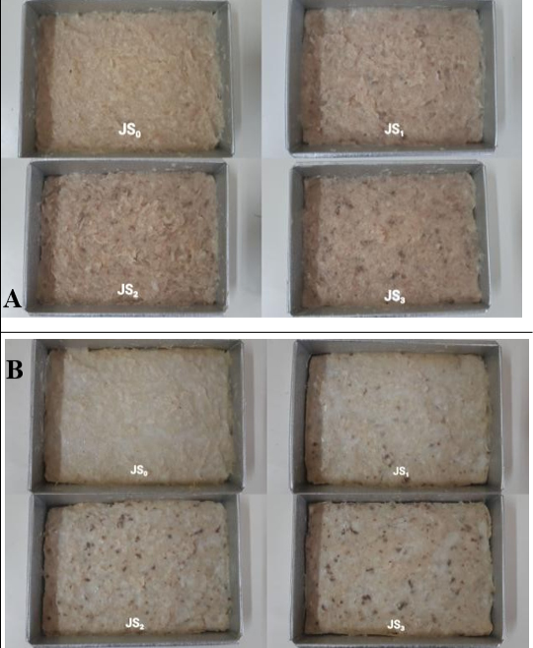
The study on chicken nuggets with beef heart incorporation showed differences in physical characteristics, as observed visually among the treatments. The visual appearance of the chicken nugget batter with beef heart incorporation is presented in Figure 1.
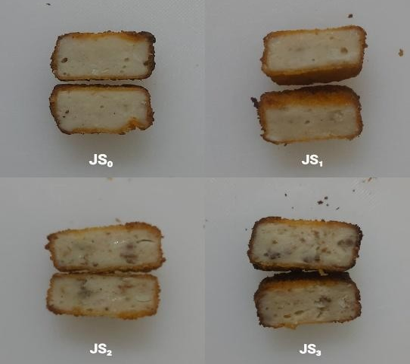
As shown in Figure 1A, JS0 had a brighter batter color than the treatments containing beef heart. The color became darker as the level of beef heart increased from JS1 to JS3. This change was associated with the natural pigment of beef heart, particularly myoglobin, which contributes to meat color and is affected by oxidation and heat treatment . Beef heart particles were also more visible in JS2 and JS3, indicating reduced batter uniformity at higher substitution levels. After steaming, all treatments formed a denser and more compact structure, as shown in Figure 1B. This change was related to heat-induced protein denaturation and aggregation. Myofibrillar proteins are known to form a gel matrix during heating, which supports water and fat retention and improves product structure ; . The darker color in JS1, JS2, and JS3 remained visible after steaming, suggesting that beef heart pigments continued to influence the appearance of the cooked nugget matrix. The visual appearance of fried chicken nuggets is presented in Figure 2. Figure 2 shows the visual appearance of fried chicken nuggets. All formulations developed a golden-brown surface after frying, but higher beef heart incorporation resulted in a darker internal color. This observation supports the instrumental color results, where increasing beef heart incorporation levels reduced L* values.
After frying, all treatments showed a golden-brown surface due to coating and frying. However, nuggets with higher beef heart levels remained darker, especially in the internal structure. This condition may be related to myoglobin oxidation, heat-induced pigment changes, and Maillard browning during frying. The Maillard reaction can occur between amino groups from proteins and reducing sugars or carbohydrate-derived compounds in the coating system. Beef heart granules were more evident in JS2 and JS3, but the general shape and compactness of the nuggets were maintained in all treatments. This indicates that beef heart incorporation up to 15% did not impair the physical integrity of the product.
Physicochemical properties of chicken nuggets with beef heart incorporation
The cooking yield, WHC, and pH values of chicken nuggets with beef heart incorporation are presented in Table 2. Cooking yield ranged from 96.79% to 97.36% and was not significantly affected by beef heart substitution (P > 0.05). The similar values among treatments indicate that replacing chicken meat with beef heart up to 15% did not cause substantial loss of product mass during steaming. Cooking yield in processed meat products is closely related to the ability of muscle proteins to retain water and fat during heating . Both chicken meat and beef heart contain myofibrillar proteins, which can contribute to the formation of a heat-induced protein matrix capable of entrapping water and fat within the product structure ; .
Table 2: Effect of beef heart incorporation on cooking yield, WHC, and pH of chicken nuggets.
Treatment
Cooking yield (%)
WHC (%)
pH
JS0
97.36 ± 0.85
38.86 ± 15.11
6.20 ± 0.00ᵇ
JS1
96.79 ± 0.17
41.39 ± 13.19
6.20 ± 0.00ᵇ
JS2
96.84 ± 0.26
42.60 ± 15.40
6.20 ± 0.00ᵇ
JS3
97.23 ± 0.64
39.48 ± 15.09
6.40 ± 0.00ᵃ
Notes: Values are expressed as mean ± standard deviation (n = 5 independent replications). Different superscript letters within the same column indicate significant differences at P < 0.05 according to Duncan’s multiple range test.
The WHC values ranged from 38.86% to 42.60% and were also not significantly different among treatments (P > 0.05). The highest WHC was observed in JS2, whereas the lowest value was recorded in JS0. This result suggests that beef heart incorporation did not impair the ability of the nugget matrix to retain water. WHC is influenced by protein denaturation, gel network formation, and water distribution within the meat matrix. During heating, myofibrillar proteins such as actin and myosin undergo denaturation and aggregation, forming a gel network that supports water retention and contributes to juiciness and texture ; . The relatively stable WHC values were also consistent with the moisture content of the nuggets, which did not differ significantly among treatments. Therefore, the incorporation of beef heart did not markedly disrupt water distribution in the product matrix.
The pH values ranged from 6.20 to 6.40, with JS3 showing a slightly higher (P < 0.05) value than the other treatments. The relationship between pH and WHC is closely associated with protein functionality. Higher pH values increase the net charge of proteins, resulting in greater electrostatic repulsion between protein filaments and improved water-binding ability. Conversely, lower pH conditions reduce protein solubility and water retention capacity . However, in this study, the slight increase in pH in JS3 was not followed by a marked increase in WHC. This indicates that water retention was not determined solely by pH, but also by the integrity of the heat-induced protein matrix and water redistribution during processing.
The slightly higher pH in JS3 may reflect the intrinsic characteristics of beef heart as cardiac muscle tissue, which differs from chicken breast muscle in fiber composition and postmortem biochemical properties. Nevertheless, the pH values obtained in this study remained within the acceptable range for processed meat products. Together with the stable cooking yield, WHC, and moisture content, these results indicate that beef heart incorporation did not adversely affect the physicochemical stability of chicken nuggets. However, higher beef heart substitution may still influence structural compactness, as reflected in the instrumental texture characteristics discussed in the following section.
Chemical composition of chicken nuggets with beef heart incorporation
The proximate composition of chicken nuggets with beef heart incorporation is presented in Table 3. Moisture content ranged from 54.03% to 58.45%, while protein, fat, ash, and carbohydrate contents ranged from 14.64% to 15.26%, 19.32% to 21.74%, 2.78% to 2.97%, and 2.75% to 8.31%, respectively. Statistical analysis showed that beef heart incorporation did not significantly affect the proximate composition of the nuggets (P > 0.05).
The similar moisture content among treatments indicates that beef heart substitution did not markedly alter water distribution in the nugget matrix. This result is consistent with the WHC and cooking yield values, which also showed no significant differences among treatments. During steaming and frying, protein denaturation and gel formation may help retain water within the product structure, thereby maintaining moisture stability in processed meat products ; ; . Thus, the incorporation of beef heart did not disrupt the water-binding properties of the chicken nugget matrix.
Protein content showed a slight decreasing trend with increasing beef heart incorporation, although the differences were not significant. This may be related to the relatively comparable protein contribution of chicken meat and beef heart in the formulation. Fat content also tended to decrease at higher beef heart levels, which may reflect the lower fat contribution of beef heart compared with chicken meat. However, the non-significant differences suggest that substitution up to 15% did not substantially change the nutritional composition of the nuggets.
Table 3: Proximate composition of chicken nuggets with beef heart incorporation.
Treatment
Moisture (%)
Protein (%)
Fat (%)
Ash (%)
Carbohydrate (%)
JS0
56.97 ± 4.85
15.26 ± 1.12
21.74 ± 6.87
2.97 ± 0.21
3.06 ± 8.49
JS1
58.45 ± 2.62
14.82 ± 1.67
21.14 ± 1.74
2.84 ± 0.14
2.75 ± 3.56
JS2
54.03 ± 5.98
14.78 ± 1.94
20.23 ± 2.37
2.81 ± 0.19
8.15 ± 6.72
JS3
54.95 ± 5.69
14.64 ± 1.08
19.32 ± 2.32
2.78 ± 0.15
8.31 ± 6.24
Notes: Values are presented as mean ± standard deviation (n = 5 independent replications).
Ash content remained relatively stable across treatments, indicating that beef heart incorporation did not markedly affect the mineral fraction of the product. The carbohydrate content varied among treatments because it was calculated by difference from the other proximate components. In meat products, carbohydrates are mainly contributed by non-meat ingredients such as tapioca flour and coating materials rather than meat itself. Therefore, the variation in carbohydrate values was more likely associated with changes in moisture, protein, fat, and ash proportions than with the direct contribution of beef heart.
Instrumental color characteristics of chicken nuggets with beef heart incorporation
The Instrumental instrumental Color Characteristics of Chicken Nuggets with beef heart incorporation are shown in Table 4. The L* value decreased from 70.97 in JS0 to 65.10 in JS3, indicating a reduction in lightness with increasing beef heart levels. JS0 had a significantly higher L* value than JS1, JS2, and JS3 (P < 0.05), while no significant difference was observed among the beef heart treatments. This result confirms the visual observation that the incorporation of beef heart produced a darker nugget appearance.
The lower L* values in treatments containing beef heart were likely associated with the higher heme pigment content of beef heart, particularly myoglobin. Myoglobin is a major pigment responsible for meat color, and its stability can be affected by oxidation and heat treatment during processing . Therefore, the darker color observed in JS1, JS2, and JS3 may reflect the contribution of beef heart pigments to the nugget matrix.
Table 4: Instrumental color characteristics (L, a, and b*) of chicken nuggets with beef heart incorporation**
Treatment
L*
a*
b*
JS0
70.97 ± 0.96ᵃ
6.83 ± 0.38ᵇᶜ
25.47 ± 1.14ᵃ
JS1
67.50 ± 1.77ᵇ
8.37 ± 0.59ᵃᵇ
25.90 ± 0.35ᵃ
JS2
65.57 ± 1.59ᵇ
8.53 ± 0.91ᵃ
24.60 ± 0.61ᵃ
JS3
65.10 ± 2.60ᵇ
6.33 ± 1.22ᶜ
21.43 ± 1.96ᵇ
Notes: Values are presented as mean ± standard deviation (n = 5 independent replications). Different superscript letters in the same column indicate significant differences at p < 0.05 based on Duncan’s multiple range test
The a* value ranged from 6.33 to 8.53. JS2 showed the highest redness value, whereas JS3 had the lowest value. The increase in a* from JS0 to JS2 suggests that moderate beef heart incorporation enhanced the reddish color of the product. However, the decrease in JS3 indicates that a higher substitution level did not further improve redness. This condition may be related to pigment oxidation and thermal denaturation, which can reduce red color intensity and shift the product toward a darker cooked color.
The b* value ranged from 21.43 to 25.90. JS3 had a significantly lower b* value than the other treatments (P < 0.05), indicating reduced yellowness at the highest beef heart level. The decrease in b* may be due to the stronger dark pigment contribution from beef heart, which reduced the yellow-brown color normally associated with coating and frying.
Instrumental texture characteristics of chicken nuggets with beef heart incorporation
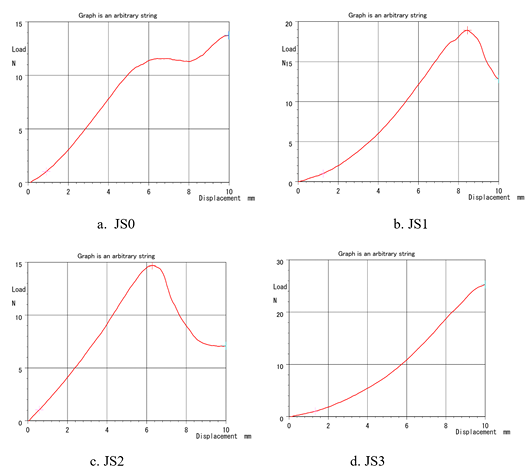
The instrumental texture profile of chicken nuggets with beef heart incorporation is presented in Figure 3 and Table 5. The load–displacement curves show the force required to deform the nugget samples during compression. JS3 had the highest Max. Point and Break Point values, both 25.293 N, indicating that 15% beef heart incorporation produced the firmest structure. This result is consistent with the visual observation, where higher beef heart levels produced a denser and more compact internal matrix.
The increase in firmness in JS3 may be related to protein denaturation and aggregation during steaming and frying. Myofibrillar proteins from chicken meat and beef heart can form a heat-induced gel matrix that supports structural compactness and water retention ; ; a, b). However, the WHC values did not differ significantly among treatments, ranging from 38.86% to 42.60%. This indicates that the firmer texture in JS3 was not mainly caused by higher water-binding capacity, but was more likely associated with matrix compaction and the distribution of beef heart particles within the nugget structure.
Table 5: Instrumental texture profile of chicken nuggets with beef heart incorporation.
Treatment
Max. point (N)
Max. point (gf)
Max. point (lbf)
Break point (N)
JS0
13.730
1400.5
3.089
13.717
JS1
18.902
1928.0
4.253
12.817
JS2
14.694
1498.8
3.306
7.088
JS3
25.293
2579.8
5.691
25.293
Notes: Max. Point represents the maximum force required to compress the nugget sample and indicates product firmness. The values are expressed in Newton (N), gram-force (gf), and pound-force (lbf), which represent the same force measurement in different unit systems. Break Point (N) refers to the force at which the sample structure begins to fracture during compression. Higher Max. Point and Break Point values indicate greater firmness and structural resistance of the nugget matrix.
The texture results were also related to moisture content. Moisture values ranged from 54.03% to 58.45% and were not significantly different among treatments. Therefore, the higher firmness in JS3 cannot be explained by excessive moisture loss. Instead, it may reflect differences in the arrangement of protein networks after heating. The stable cooking yield, which ranged from 96.79% to 97.36%, further supports this interpretation because all treatments were able to retain product mass during processing.
The pH values ranged from 6.20 to 6.40, with JS3 showing the highest value. A higher pH can increase the net charge of proteins and improve water-binding ability; however, JS3 did not show the highest WHC. This suggests that pH alone did not determine the final texture. The mechanical resistance of the nuggets was likely influenced by several factors, including protein gel formation, water redistribution, particle size, and interaction between meat proteins and non-meat ingredients ; .
JS1 had a higher Max. Point than JS0 and JS2, but its Break Point was lower than JS0. This indicates that JS1 required greater compression force but fractured at a lower load. This condition may reflect moderate modification of the internal matrix without excessive compactness. In contrast, JS2 had the lowest Break Point value, suggesting a less resistant structure. This may be related to less continuous protein network formation or uneven particle distribution within the nugget matrix.
The instrumental texture results also help explain the sensory response. Although JS3 had the firmest structure, higher firmness may reduce texture acceptability if the product becomes too dense. This is in line with the sensory results, where higher beef heart incorporation tended to reduce panelist preference. Meanwhile, JS1 showed a more balanced texture profile, with moderate firmness and better consumer acceptability. The color data also support this pattern, as JS3 had the lowest L* and b* values, indicating a darker appearance that may contribute to lower visual acceptance.
These results show that the texture of chicken nuggets with beef heart incorporation was closely related to the interaction among protein matrix formation, water retention, moisture stability, pH, color, and sensory perception. Beef heart incorporation up to 15% maintained product structure, but higher substitution increased firmness and darker appearance, which may affect consumer acceptability.
Figure 3 shows the instrumental texture profile of chicken nuggets based on load–displacement curves. The curves illustrate the mechanical resistance of each nugget formulation during compression. A higher peak force indicates greater firmness, while the break point represents the force at which the nugget matrix begins to fracture. Among all formulations, JS3 showed the highest curve peak, which was consistent with the highest Max. Point and Break Point values in Table 5. This indicates that 15% beef heart incorporation produced the firmest and most structurally resistant nugget matrix.
The higher firmness observed in JS3 was not directly associated with higher WHC or lower moisture content, because WHC and moisture values did not differ significantly among treatments. Therefore, the increased firmness was more likely related to changes in the internal protein matrix, particle distribution, and structural compaction caused by the higher proportion of beef heart. In contrast, JS1 showed moderate compression resistance, indicating that 5% beef heart incorporation modified the texture without producing excessive firmness. This moderate texture profile was consistent with the consumer acceptability results, where JS1 obtained the most favorable texture score. Thus, Figure 3 supports the interpretation that moderate beef heart incorporation can maintain acceptable texture, whereas excessive incorporation may produce a denser structure that can reduce consumer preference.
Sensory profile of chicken nuggets with beef heart incorporation
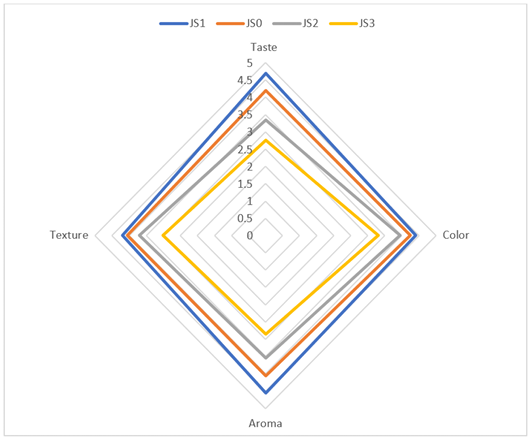
The sensory profile of chicken nuggets with different levels of beef heart incorporation is presented in Figure 4. The sensory attributes evaluated included color, aroma, taste, and texture. Overall, the results indicate that nuggets with lower levels of beef heart incorporation tended to receive higher sensory scores than those with higher levels. Figure 4 shows the consumer acceptability profile of chicken nuggets. JS1 obtained the most favorable scores for taste, color, aroma, and texture, indicating that 5% beef heart incorporation maintained acceptable product quality. Higher incorporation levels, especially JS3, reduced consumer preference, likely due to darker color, stronger organ-related flavor, and increased firmness.
In terms of color, treatments JS0 and JS1 showed higher preference scores than JS2 and JS3. This may be associated with the natural color characteristics of beef heart, which contain higher myoglobin levels that can result in a darker appearance when incorporated into meat products . As the proportion of beef heart increased, the nugget color tended to become slightly darker, which may influence consumer preference.
For aroma and taste attributes, treatment JS1 generally showed the highest consumer acceptability. The moderate incorporation of beef heart may enhance the flavor complexity of the nuggets without producing a strong off-flavor ; . However, higher levels of beef heart incorporation, as observed in JS3, tended to reduce panelists’ preference, possibly due to the stronger characteristic aroma associated with beef organs.
The texture attribute also showed a similar pattern, with treatments containing lower beef heart incorporations rated more favorably. This condition may be related to differences in muscle fiber structure between chicken meat and beef heart, which can influence the final texture of the nugget matrix after processing. Overall, the results suggest that moderate levels of beef heart incorporation can maintain favorable consumer acceptability, while higher substitution levels may slightly reduce consumer acceptability.
Selection of the optimal formulation using the de garmo effectiveness index
The optimal formulation was selected using the De Garmo effectiveness index method by considering physicochemical characteristics, proximate composition, instrumental color characteristics, instrumental texture characteristics, and consumer acceptability. Each parameter was normalized according to its expected contribution to overall chicken nugget quality. Parameters with higher desirable values were classified as benefit criteria, whereas parameters with lower desirable values were classified as cost criteria. The normalized value of each parameter was multiplied by its assigned weighting value, and the total effectiveness value was obtained by summing all weighted normalized values. The formulation with the highest total effectiveness value was considered to have the most favorable overall characteristics.
The results of the De Garmo effectiveness index analysis are presented in Table 6. Based on the total effectiveness value, JS1 showed the highest score, followed by JS0, JS2, and JS3. This result indicates that 5% beef heart incorporation provided the most balanced quality profile among all formulations. JS1 maintained stable cooking yield, water-holding capacity, pH, and proximate composition, indicating that moderate beef heart incorporation did not disrupt the physicochemical stability or nutritional quality of the chicken nuggets.
Table 6: Selection of the optimal formulation using the de Garmo effectiveness index.
Treatment
Effectiveness value
JS0
0.76
JS1
0.84*
JS2
0.41
JS3
0.13
Note: (*) indicates the formulation with the highest total effectiveness value based on the De Garmo effectiveness index.
The selection of JS1 was also supported by instrumental color and texture characteristics. Although beef heart incorporation reduced the lightness of the nuggets, JS1 maintained a more acceptable color profile than higher incorporation levels. Higher levels of beef heart incorporation, particularly in JS3, reduced L* and b* values, resulting in a darker product appearance. In terms of texture, JS1 showed moderate firmness, whereas JS3 produced the highest Max. Point and Break Point values, indicating a firmer and more compact structure. Therefore, JS1 provided a more balanced relationship between structural stability and product tenderness.
Consumer acceptability further supported JS1 as the optimal formulation. This formulation showed the highest acceptability scores for taste, color, aroma, and texture. In contrast, higher beef heart incorporation levels tended to reduce consumer preference, which may be associated with darker color, stronger organ-related flavor, and increased firmness. Therefore, the De Garmo effectiveness index confirmed that 5% beef heart incorporation was the most suitable formulation because it provided the most favorable overall characteristics, including stable physicochemical properties, acceptable instrumental color and texture characteristics, and high consumer acceptability.
Conclusion
Beef heart incorporation in chicken nugget formulation did not significantly affect cooking yield, water-holding capacity, proximate composition, and most consumer acceptability attributes. However, beef heart incorporation significantly influenced pH, instrumental color characteristics, and instrumental texture characteristics. Increasing beef heart levels reduced lightness and yellowness and increased firmness at the highest incorporation level. The 5% beef heart incorporation level (JS1) was identified as the optimal formulation because it showed stable physicochemical properties, acceptable instrumental color and texture characteristics, and the highest consumer acceptability. Therefore, beef heart can be incorporated at an appropriate level as a value-added meat extender in chicken nugget formulation.
Acknowledgement
The authors gratefully acknowledge the Faculty of Animal Science and Technology, Universitas Brawijaya, for supporting this research through the Visiting Lecturer Batch 1 Universitas Brawijaya Programme 2026 under the contract number. 01236.16/DST/UN10.A0101/B/PJ.00.05.1/2026.
Novelty Statement
This study demonstrates the potential of beef heart as a protein-rich meat extender in chicken nuggets and identifies 5% incorporation as the optimal level for maintaining product quality and consumer acceptability.
Author’s Contribution
DA contributed to the conceptualization, data collection, laboratory experiments, data analysis, and manuscript preparation. LDA contributed to data collection and laboratory experiments. WAWM contributed to the research design, supervision, monitoring of the research process, and manuscript revision. AMW contributed to supervision of the research and final manuscript preparation.
Generative AI and AI assisted technology statement
The authors declare that no generative AI and AI assisted technology was used in the creation of this manuscript.
Conflict of interest
The authors have declared no conflict of interest.
Figures
Figure 1:.
Visual appearance of chicken nugget batter with the incorporation of beef heart before steaming (A) and after steaming (B).
Figure 2:.
Visual appearance of chicken nuggets with beef heart incorporation after frying.
Figure 3:.
Instrumental texture characteristics based on load–displacement curves of chicken nuggets with beef heart incorporation.
Figure 4:.
Sensory profile (color, aroma, taste, and texture) of chicken nuggets with different levels of beef heart incorporation.
References
Ahn JY, Kil DY, Kong C, Kim BG (2014). Comparison of oven-drying methods for determination of moisture content in feed ingredients. Asian-Australas. J. Anim. Sci., 27: 1615–1622. https://doi.org/10.5713/ajas.2014.14305[CrossRef]
Anas M, Ahmad S, Malik A (2019). Microbial escalation in meat and meat products and its consequences. In: Health and safety aspects of food processing technologies. Springer, pp. 29–49. https://doi.org/10.1007/978-3-030-24903-8_3[CrossRef]
Azizah S, Latifah SI, Djunaidi IH, Wati AM, Apryliasari D (2023a). Peasant women’s time allocation in the beef cattle Gaduhan partnership, Baluran National Park. Univ. J. Agric. Res., 11: 136–145. https://doi.org/10.13189/ujar.2023.110113[CrossRef]
Azizah S, Latifah SI, Djunaidi IH, Wati AM, Rachmawati A, Hamidah S (2023b). Peasant women contribution in adegen beef cattle farming partnership. Adv. Anim. Vet. Sci., 11: 725–731. https://doi.org/10.17582/journal.aavs/2023/11.5.725.731[Full text][CrossRef]
Barbut S, Leishman EM (2022). Quality and processability of modern poultry meat. Animals, 12: 2766. https://doi.org/10.3390/ani12202766[CrossRef]
Biel W, Czerniawska-Piątkowska E, Kowalczyk A (2019). Offal chemical composition from veal, beef, and lamb maintained in organic production systems. Animals, 9: 489. https://doi.org/10.3390/ani9080489[CrossRef]
BPS (2026). Weekly average consumption of several food items commodity per capita, 2007–2025. BPS-Statistics Indonesia. https://www.bps.go.id/en/statistics-table/1/OTUwIzE%3D/rata-rata-konsumsi-per-kapita-seminggu-beberapa-macam-bahan-makanan-penting--2007-2025.html
Buckley RR, Giorgianni EJ (2023). CIELAB for color image encoding (CIELAB, 8-bit; domain and range, uses). In: Encyclopedia of color science and technology. Springer, pp. 257–265. https://doi.org/10.1007/978-3-030-89862-5_14[CrossRef]
Dara PK, Geetha A, Mohanty U, Raghavankutty M, Mathew S, Nagarajarao RC, Rangasamy A (2021). Extraction and characterization of myofibrillar proteins from different meat sources: A comparative study. J. Bioresour. Bioprod., 6: 367–378. https://doi.org/10.1016/j.jobab.2021.04.004[CrossRef]
Douglas SL, Bernardez-Morales GM, Nichols BW, Johnson GF, Barahona-Dominguez LS, Jessup AP, Belk AD, Ball JJ, Cho S, Sawyer JT (2024). Inclusion of beef heart in ground beef patties alters quality characteristics and consumer acceptability as assessed by the application of electronic nose and tongue technology. Foods, 13: 811. https://doi.org/10.3390/foods13050811[CrossRef]
Fauziah A, Fajri R, Hermanto RA (2019). Daya terima dan kadar zat besi nugget hati ayam dengan kombinasi tempe sebagai pangan olahan sumber zat besi. J. Holist. Heal. Sci., 3: 65–74. https://doi.org/10.51873/jhhs.v3i2.48[CrossRef]
Fuerniss HF, Gifford CL, Mortensen EG, Belk KE, Engle TE, Woerner DR (2024). Nutrient analysis of raw United States beef offal items. Nutrients, 16: 3104. https://doi.org/10.3390/nu16183104[CrossRef]
Goyal K, Singh N, Jindal S, Kaur R, Goyal A, Awasthi R (2022). Kjeldahl method. Adv. Tech. Anal. Chem., 1: 105–112. https://doi.org/10.2174/9789815050233122010011[CrossRef]
Hayati R, Efendi, Rahmadana F (2020). Determination of the best treatment of the harvesting, physicochemical properties, organoleptic test using the effectiveness index method on the Aceh local rice genotype M7. IOP Conf. Ser.: Earth Environ. Sci., 425: 012012. https://doi.org/10.1088/1755-1315/425/1/012012[CrossRef]
Hoa VB, Cho SH, Seong PN, Kang SM, Kim YS, Moon SS, Choi YM, Kim JH, Seol KH (2021). The significant influences of pH, temperature and fatty acids on meat myoglobin oxidation: A model study. J. Food Sci. Technol., 58: 3972–3980. https://doi.org/10.1007/s13197-020-04860-1[CrossRef]
Ismanto A, Ramadani FI, Wibowo A (2024). Pengaruh penambahan karagenan (Euchema cottoni) pada taraf yang berbeda terhadap kualitas fisik dan kualitas kimia nugget ayam. J. Petern. Lingkungan Tropis, 7: 1–6. 10.30872/jpltrop.v7i2.18583
Kang Z, Hou Q, Xu J (2024). Research progress and teaching exploration of physical processing technology for reduced-salt gel meat products. Foods, 13: 3606. https://doi.org/10.3390/foods13223606[CrossRef]
Kim HY, Kim KJ, Lee JW, Kim GW, Choe JH, Kim HW, Yoon Y, Kim CJ (2015). Quality evaluation of chicken nugget formulated with various contents of chicken skin and wheat fiber mixture. Korean J. Food Sci. Anim. Resour., 35: 19–26. https://doi.org/10.5851/kosfa.2015.35.1.19.[CrossRef]
Lee S, Jo K, Park MK, Choi YS, Jung S (2025). Role of lipids in beef flavor development: A review of research from the past 20 years. Food Chem., 475: 143310. https://doi.org/10.1016/j.foodchem.2025.143310[CrossRef]
Liu H, Xu Y, Zu S, Wu X, Shi A, Zhang J, Wang Q, He N (2021). Effects of high hydrostatic pressure on the conformational structure and gel properties of myofibrillar protein and meat quality: A review. Foods, 10: 1872. https://doi.org/10.3390/foods10081872[CrossRef]
Liu K (2019). Effects of sample size, dry ashing temperature and duration on determination of ash content in algae and other biomass. Algal Res., 40: 101486. https://doi.org/10.1016/j.algal.2019.101486[CrossRef]
Md Noh MF, Gunasegavan RDN, Mustafa Khalid N, Balasubramaniam V, Mustar S, Abd Rashed A (2020). Recent techniques in nutrient analysis for food composition database. Molecules, 25: 4567. https://doi.org/10.3390/molecules25194567[CrossRef]
Orthoefer FT, List GR (2007). Dynamics of frying. In: Deep Frying. Elsevier, pp. 253–275. https://doi.org/10.1016/B978-1-893997-92-9.50018-9[CrossRef]
Pujol A, Ospina-E JC, Alvarez H, Muñoz DA (2023). Myoglobin content and oxidative status to understand meat products’ color: Phenomenological based model. J. Food Eng., 348: 111439. https://doi.org/10.1016/j.jfoodeng.2023.111439[CrossRef]
Qiao J, Wang N, Ngadi MO, Kazemi S (2007). Predicting mechanical properties of fried chicken nuggets using image processing and neural network techniques. J. Food Eng., 79: 1065–1070. https://doi.org/10.1016/j.jfoodeng.2006.03.026[CrossRef]
Rachmawati A, Setyarini PH, Mahendra VI, Wati AM, Fajriani S, Ambayoen MA, Azizah S (2022). Aluminum oyster mushroom frying surface quality improvement through anodizing. Key Eng. Mater., 935: 49–54. https://doi.org/10.4028/p-65ldby[CrossRef]
Rani L, Kumar M, Kaushik D, Kaur J, Kumar A, Oz F, Proestos C, Oz E (2023). A review on the frying process: Methods, models and their mechanism and application in the food industry. Food Res. Int., 172: 113176. https://doi.org/10.1016/j.foodres.2023.113176[CrossRef]
Ridwan A, Luni NZP, Azizah S, Wati AM, Rachmawati A, Djunaidi IH, Putri AR (2026). Strategic development of the Pelung chicken agribusiness system in a non-origin region: Evidence from Malang Raya, Indonesia. Adv. Anim. Vet. Sci., 14: 364–377. https://doi.org/10.17582/journal.aavs/2026/14.2.364.377[Full text][CrossRef]
Shin JM, Park SK (2015). Comparison of fat determination methods depending on fat definition in bakery products. LWT–Food Sci. Technol., 63: 972–977. https://doi.org/10.1016/j.lwt.2015.04.011[CrossRef]
Sipos L, Nyitrai Á, Hitka G, Friedrich LF, Kókai Z (2021). Sensory panel performance evaluation Comprehensive review of practical approaches. Appl. Sci., 11: 11977. https://doi.org/10.3390/app112411977[CrossRef]
Sumiati, Fadilah R, Darmawan A, Nadia R (2025). Challenges and constraints to the sustainability of poultry farming in Indonesia. Anim. Biosci., 38: 802–817. https://doi.org/10.5713/ab.24.0678[CrossRef]
Tsaqifah H, Muda TSS, Oktaviani DA, Adi AC (2024). Literature review: Effect of chicken liver addition on iron content in food formulation products to prevent anemia. Media Gizi Kesmas, 13: 898–906. https://doi.org/10.20473/mgk.v13i2.2024.898-906[CrossRef]
Utomo NUA, Putra INK, Puspawati NN (2024). Pengaruh substitusi terigu dengan tepung talas beneng (Xanthosoma undipes K. Koch) sebagai bahan pengisi terhadap karakteristik nugget ayam. Jurnal Ilmu dan Teknologi Pangan (ITEPA), 13: 358–369. https://doi.org/10.24843/itepa.2024.v13.i02.p10[CrossRef]
Wang YH, Zhang YR, Xu F, Zhang YL (2020). Effect of boiling and steaming on the surface tackiness of frozen cooked noodles. LWT, 130: 109747. https://doi.org/10.1016/j.lwt.2020.109747[CrossRef]
Warner RD (2023). The eating quality of meat: IV-Water holding capacity and juiciness. In: Lawrie’s Meat Science. Elsevier, pp. 457–508. https://doi.org/10.1016/B978-0-323-85408-5.00008-X[CrossRef]
Yang H, Zhang W, Li T, Zheng H, Khan MA, Xu X, Sun J, Zhou G (2016). Effect of protein structure on water and fat distribution during meat gelling. Food Chem., 204: 239–245. https://doi.org/10.1016/j.foodchem.2016.01.053[CrossRef]