Research Article · Volume 11, Issue 3, 19 February 2023 · Open Access
Antibiotic Resistance Coding Genes in Klebsiella pneumoniae from Clinical Cats in Bogor Indonesia
· ·
Affiliations & Notes ⌄
1Division of Medical Microbiology, School of Veterinary Medicine and Biomedical Sciences, IPB University, Bogor, 16680, Indonesia
2Postgraduate Student of Medical Microbiology, School of Veterinary Medicine and Biomedical Sciences, IPB University, Bogor, Indonesia, IPB University. Bogor, 16680, Indonesia. *Correspondence | Safika, Division of Medical Microbiology, School of Veterinary Medicine and Biomedical Sciences, IPB University, Bogor, 16680, Indonesia
Infectious agents like as viruses, bacteria, fungi, and parasites can cause feline respiratory conditions. Antibiotics can be used to treat diseases caused on by bacterial organisms. This research aims to determine antibiotic resistance and the gene coding for antibiotic resistance in Klebsiella pneumoniae isolated from clinical cats in Bogor, Indonesia. This study’s total sample comprised of 58 clinical cat laryngeal swabs. Samples were isolated and biochemically and molecularly identified. The Kirby-Bauer disk diffusion method was used to test positive isolates, followed by PCR method to discover the resistance coding genes. The results showed that ampicillin showed 76.0% resistance to Klebsiella pneumoniae, followed by oxytetracycline (72.0%) and tetracycline (68.0%), enrofloxacin (52.0%), and gentamicin (44.0%). All Klebsiella pneumoniae isolates carried the blaTEM gene, 57.20 % contained the tetA gene, 30.40 % contained the blaSHV gene, 33.3 % contained the aac3-IV gene, and 28.50 % contained the qnrS gene. In this investigation, all Klebsiella pneumoniae were isolates were resistant to antibiotics and were categorized as multi drug resistant (MDR), demonstrating variable proportions of antibiotic resistance coding genes. Antibiotic resistance in Klebsiella pneumoniae has been detected in the majority of veterinary clinics in Bogor, although at varying degrees in each group. Resistance gene activity against each antibiotic can measure both the phenotype and genotype of Klebsiella pneumoniae resistance development.
Keywords | Antibiotic resistance, Cats, Feline respiratory, Klebsiella pneumoniae, Multi drug resistant
INTRODUCTION
Respiratory tract infections are a common disease in cats. Infectious agents like as viruses, bacteria, fungi, and parasites can cause feline respiratory conditions. Infection with the bacterium Klebsiella pneumoniae can lead to respiratory system diseases. Klebsiella is a gram-negative bacterium that measures 2.0–3.0, 0.6 m in diameter, is a member of the intestinal and respiratory tracts natural flora, contains capsules, and lives facultatively as an anaerobe, resulting in a highly mucoid colony culture. Numerous lung infections, including pneumonia, sepsis, and urinary tract infections, are caused by K. pneumoniae . Klebsiella pneumoniae continues to be a leading cause of pneumonia with a high mortality rate in many countries , pyometra , urinary tract infections , upper respiratory tract infections , and septicemia .
The effectiveness of antibiotics against bacterial infections. Antibacterial chemicals produced by microorganisms are antibiotics. The use of antibiotics in the treatment of bacterial infections should be based on standards of clinical effectiveness, low toxicity, and the least possible impact on the use of multi-resistant bacteria, balancing the need for effective therapy with the minimization of the development and spread of antimicrobial resistance in animals and humans . Inappropriate antibiotic choice, indications, doses, administration techniques, frequency, and duration all contribute to inefficient infection treatment . Additionally, irresponsible antibiotic use can result in antibiotic resistance, multidrug-resistant (MDR) infections, superinfections, and other negative side effects. The incorrect use of antibiotics, according to Huddleston (2014), causes mutations and genetic anomalies in the DNA of bacterial cells.
Klebsiella spp. are a severe global concern. Antibiotic resistance to K. pneumoniae isolates isolated from pets has been documented in recent years in a number of European countries, including Germany ; , Italy , France ; , Spain , and Switzerland . K. pneumoniae isolates from dogs and cats were resistant to ampicillin, cephalexin, ceftazidime, enrofloxacin, gentamicin, and tetracycline, according to Brisse and Duijkeren (2005).
K. pneumoniae isolates from Indonesian broiler chickens in West Jawa were resistant to erythromycin (100 percent), oxytetracycline (97.5%), ampicillin (97.5%), tetracyclines (95%), nalidixic acid (87.5%), enrofloxacin (82.5%), ciprofloxacin (75%) gentamicin (45%) and chloramphenicol (25%) . Cat-isolated Escherichia coli is resistant to 66% ampicillin, 60% amoxicillin, 54% oxytetracycline, 24% doxycycline, 38% enrofloxacin, and 28% ciprofloxacin .
Antibiotics are typically used to treat bacterial infections in a veterinary clinic, but they are also frequently used to prevent secondary infections in cases of viral illnesses and after surgery. Thus, the improper use of antibiotics can result in bacterial resistance to antibiotics. Understanding bacterial resistance to antibiotics is crucial, as resistant bacteria can cause serious sickness in animals and complicate their treatment. A veterinary facility in Bogor has isolated K. pneumoniae bacteria from cats, necessitating an inquiry into the pathogen’s resistance to numerous medications.
MATERIALS AND PROCEDURES
Samples isolation
Before the sample was taken, a questionnaire was administered at the animal clinic. The questionnaire consists of three sections: the first section contains the identity of the clinic, the second section contains clinical activities, including data on inpatient cats used in the study, and the third section contains information on the antibiotics used in the clinic. The selection of the antibiotics utilized in the study will be based on the antibiotic data collected from the five medications used most frequently in each clinic.
This investigation employed cat laryngeal swabs collected at a veterinary clinic in Bogor, Indonesia. A total of 58 samples were obtained from 10 clinics. When the cat was hospitalized, specimens were collected. Before administering antibiotics, swabs were taken. The samples were preserved in 0.1% peptone water buffer at 4 degrees Celsius. When samples arrive at the laboratory, they are placed in the refrigerator until isolation .
The samples were grown on Mac Conkey (MC) Agar (Oxoid, UK) for 18-24 hours at 37° C. One loop of bacteria swab was fixed on microscope slides with sterile physiological NaCl for Gram staining, after which crystal violet solution was applied for 3 minutes, lugol for 1 minute, 95% acetone alcohol for 30 seconds, and safranin for 2 minutes. The morphology of bacteria was observed under a microscope at 10 x 100 magnification. Gram positive bacteria will produce a violet color, whereas Gram negative bacteria will produce a red color . Klebsiella bacteria ferment lactose on MCA media and have the mucoid morphology and red bacilli characteristic of Gram-negative bacteria.
Identification by molecular and biochemical methods
Based on a macroscopic examination and ferment lactose, bacteria suspected of being colonies of the genus Klebsiella were next identified using biochemical assays. The biochemical tests performed were the Triple Sugar Iron Agar (TSIA) test (Oxoid, UK), the Urease test (Oxoid, UK), the IMVIC test (Oxoid, UK) consisting of the Sulfide Indole Motility (SIM) test, the Methyl Red-Voges Proskauer (MR-VP) test, and the Simmon’s Citrate test, and the carbohydrate fermentation test consisting of the (Oxoid, UK). Klebsiella pneumoniae is positive for the Methyl Red test, Simmon’s Citrate test, Urease test, gas and sugar fermentation tests in the Triple Sugar Iron Agar (TSIA), and the fermentation tests for glucose, lactose, sucrose, maltose, dulcitol, and mannitol, but negative for the Indole, Voges Proskauer, and H2S tests (TSIA) .
Klebsiella pneumoniae is identified by determining the rpoB gene. Primers forward 5’- AAC CAG TTC CGC GTT GGC CTG G-3 ‘and reverse 5’- CCT GAA CAA CAC GCT CGG A-3 ‘with an amplicon length of 1090 bp used to identify the rpoB gene using a version of the method reported by Alves et al. (2006). Klebsiella pneumoniae ATCC 700603 served as a control positive. DNA amplification of Klebsiella pneumoniae with a final volume of 25 µl containing 4 µl of DNA template, 2 µl of forward primer (20 M), 2 µl of reverse primer (20 M), 12 µl of MytaqTM HS Red Mix (Bioline, UK), and ddH2O to a final volume of 25 µl. The PCR procedure was conducted using the Thermal Cycler GeneAmp® PCR System 9700 (Applied BiosystemsTM, United States). Predenaturation at 94°C for 4 minutes then 30 cycles (denaturation at 94°C for 30 seconds, annealing at 54°C for 1 minute, and extension at 78°C for 4 minutes) and a final extension at 72°C for 1 minute. PCR results were seen using electrophoresis on a 1% agarose gel in Tris-Acetate-EDTA (TAE) buffer 1X (Thermo Fisher Scientific USA).
Test for antibiotic susceptibility using the kirby-bauer disk diffusion technique
The antibiotic sensitivity test utilizes the Kirby-Bauer Disk Diffusion technique with Mueller-Hinton agar in accordance with Guidelines the Clinical and Laboratory Standards Institute’s (2021). The bacterial colonies were diluted with physiological NaCl until according to the Mcfarland standard, 0.5 or 1.5, 108 CFU/ml, and then cultured at 35°C for 18 to 24 hours. The inhibition zone is assessed using Clinical Laboratory Standards Institute Guidelines (2021). 10g of ampicillin (AMP), 30g of tetracycline (TET), 30g of oxytetracycline (OT), 10 g of gentamicin (CN), and 5g of enrofloxacin (EN) were employed as antibiotics (Oxoid, UK) This antibiotic sensitivity test was conducted three times simultaneously.
Detection of genes for antibiotic resistance
The resistance genes qnrS (enrofloxacin), tetA (tetracycline, and oxytetracycline), aac3-IV (Gentamicin), and blaSHV, blaTEM, blaCTXM were utilized to identify Klebsiella pneumoniae isolates exhibiting phenotypic intermediates and resistance (Ampicillin). Antibiotic resistance genes were identified using PCR using primers listed in Table 1.
Results and Discussion
Isolation and identification
According to questionnaire responses, the most commonly used antibiotics at ten clinics include the tetracycline group the tetracycline group (29%), quinolones (26%), β-lactam (19%), aminoglycosides (16%), and sulfonamides (16%) (data not shown). Tetracycline is the most used tetracycline group in clinics (50%), followed by oxytetracycline (33%) and doxycycline (17%). The most commonly administered β-lactam antibiotics prescribed are ampicillin (34%), amoxicillin (30%), cephalosporins (11%) and other antibiotics (25%). Enrofloxacin was the most commonly prescribed quinolone antibiotic (56%), followed by ciprofloxacin (30%) and other antibiotics (14%). In contrast, the most commonly prescribed aminoglycoside antibiotic was gentamicin (60%), followed by neomycin (10%) and other antibiotics (30%). Based on the findings of the questionnaire, this test utilized tetracycline, oxytetracycline, ampicillin, enrofloxacin, and gentamicin.
A total of 58 cats’ laryngeal swabs were obtained from ten veterinary clinics in Bogor. The amount of obtained samples differs due to the changing number of cat patients visited by each clinic. In addition to cats hospitalized for gastrointestinal disorders (18 samples= 31.04%) and pyometra (6 samples= 10.34%), respiratory problems accounted for 58.62% (n= 34/58) of the samples collected.
Cat laryngeal swabs were isolated and identified as Klebsiella in 49 (84.48%) of 58 samples grown on MC Agar. 63% (31/49) of the samples displayed the biochemical features of Klebsiella pneumoniae, as indicated
Table 1: Lists primers used detection of antibiotic resistance genes.
Antibiotic (Gene resistant)
Primer sequences
Amplicon
(bp)
Annealing
(°C)
References
Ampicillin (blaSHV)
(F) 5'-TCG CCT GTG TAT TAT CTC CC-3'
768
54
Colom et al. (2003)
(R) 5'-CGC AGA TAA ATC ACC ACA ATG-3'
Ampicillin (blaTEM)
(F) 5'-ATC AGC AAT AAA CCA GC-3'
516
54
(R) 5'-CCC CGA AGA ACG TTT TC-3'
Ampicillin (blaCTXM)
(F) 5'-ATG ATG ACT CAG AGC ATT CG-3'
866
54
(R) 5'-TGG GTT ACG ATT TTC GCC GC-3'
Enrofloxacin (qnrS)
(F) 5'- ACG ACA TTC GTC AAC TGC AA-3'
417
55
Robicsek et al. (2006)
(R) 5'- TAA ATT GGC ACC CTG TAG GC-3'
Gentamicin (aac3-IV)
(F) 5'-CTT CAG GAT GGC AAG TTG GT-3'
286
55
(R) 5'-TCA TCT CGT TCT CCG CTC AT-3'
Tetracyclines and oxytetracyclines (tetA)
(F) 5'-GTA ATT CTG AGC ACT GTC GC-3'
965
62
Chuah et al. (2018)
(R) 5'-CTG CCT GGA CAA CAT TGC TT-3'
by biochemical tests performed to confirm the presence of the bacteria. Klebsiella pneumoniae is positive for the Methyl Red test, Simmon’s Citrate test, Urease test, gas and sugar fermentation tests in the Triple Sugar Iron Agar (TSIA), and the fermentation tests for glucose, lactose, sucrose, maltose, dulse, and mannitol, but negative for the Indole, Voges Proskauer, and H2S tests (TSIA).
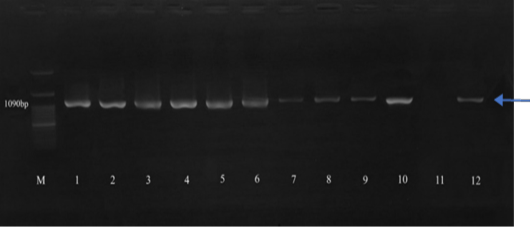
Further analysis was conducted to confirm the presumptive K. pneumoniae isolates by using the presence of specific rpoB gene in 25 of 31 isolates based on biochemical test findings with an amplicon length of 1090 base pairs. The rpoB gene, which codes for the β-subunit of RNA polymerase, has emerged as a candidate gene for phylogenetic studies and identification ; ; . The consequences of the rpoB gene amplification are depicted in Figure 1.
Antibiotic susceptibility test of Klebsiella pneumoniae
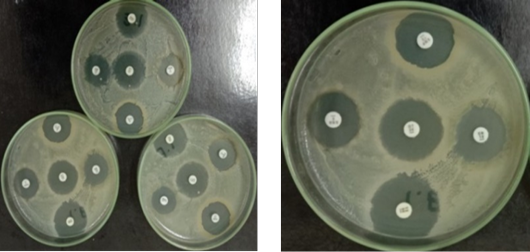
The inhibitory zones formed by antibiotic sensitivity testing on Mueller-Hinton agar (MHA) (Figure 2). The test results for antibiotic resistance were correlated with the CLSI 2021 standards (Table 2). The results suggested that K. pneumoniae had a high level of resistance to five antibiotics. Isolates from this investigation were resistant to at least three classes of antibiotics.
Table 2: Antibiotic resistance pattern of K. pneumoniae (n= 25).
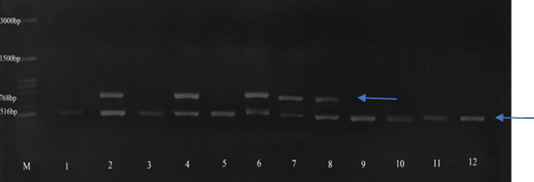
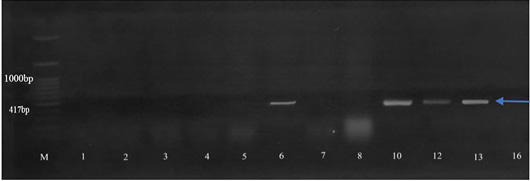
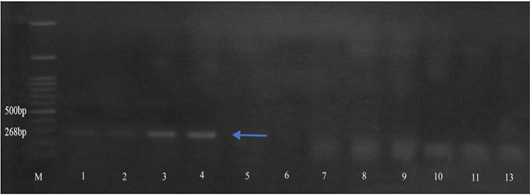
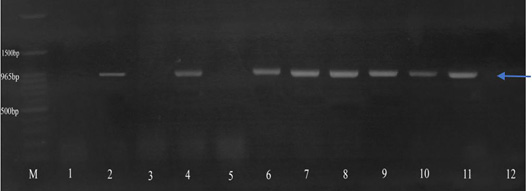
Detection of antibiotic resistance genes based on the target genes blaSHV, blaTEM, and blaCTXM (ampicillin), qnrS (enrofloxacin), aac3-IV (gentamicin), and tetA (gentamicin) (tetracyclines and oxytetracyclines). The results of resistance genes of Klebsiella pneumoniae isolates were blaTEM (100.00%), blaSHV (30.40%), blaCTXM gene (0.00%), qnrS (28.50%), aac3-IV (33.30%), and tetA (57.20%) (Figures 3, 6, Table 3).
Table 3: Results of amplification of genes encoding resistance in Klebsiella pneumoniae isolates.
Antibiotic-coding genes
β-lactam (n=23)
Quinolone (n=14)
Aminoglycoside (n=12)
Tetracycline (n=21)
blaTEM
blaSHV
blaCTXM
qnrS
aac3-IV
tetA
Percentage (%)
100.00
30.40
0.00
28.50
33.30
57.20
Klebsiella were discovered in 49 (84%) of 58 samples from ten veterinary clinics in Bogor with pink and mucoid colony formations on MC Agar media, according to the findings of this investigation. 63% (31/49) of bacterial confirmation biochemical studies yielded a positive result. 25 of the 31 positive isolates had the target gene rpoB, indicating that they were Klebsiella pneumoniae. The rpoB gene encodes the essential transcription component of the RNA polymerase enzyme. The rpoB gene has alternating conserved and variable sections. The rpoB has emerged as one of the few promising options for bacterial phylogenetic analysis and identification. Contributions of rpoB gene sequencing to bacterial identification and taxonomy to serve as a guide for clinical microbiologists to implement rpoB gene sequencing in routine practice. Due to the reported rpoB gene-sequence divergence. Sequence analysis enabled not only the identification of species within a phylogenetic framework, but also the differentiation of bacterial strains at the intraspecies level. Even at the subspecies level, the rpoB gene analysis revealed valid information ; . Since the rpoB gene may be used to identify the species and subspecies of Klebsiella isolates, it is commonly employed in phylogenetic analyses of the Klebsiella genus .
Klebsiella spp. are opportunistic bacteria that are isolable from a variety of clinical animal samples. Klebsiella pneumoniae can cause upper respiratory tract infections and can be diagnosed using laryngeal swabs. Laryngeal swabs are an easy way to confirm a bacterial upper respiratory infection . K pneumoniae can be isolated from nasal swabs, as reported by Cheng et al. (2018). Typically, Klebsiella pneumoniae affects the upper respiratory tract, although it can also infect the lower lobes. Typical indications of unilateral consolidation include crepitus, bronchial breathing, and enhanced vocal resonance . These microbes can cause acute, subacute, and chronic pneumonia, which increases the animal mortality rate. When an infected animal’s immune system is impaired, the sickness becomes more dangerous. When Klebsiella pneumoniae enters an animal’s circulatory system, it results in septicemia, which is exceedingly detrimental to its health . Klebsiella pneumoniae has been linked to otitis , urogenital infections , pneumonia and acute upper respiratory tract infections .
The efficacy of the treatment is dependent upon the precision of the administered dose, the duration of administration, and the selection of the most appropriate medication. Due to continued use, antibiotic resistance may develop. Human and animal antibiotic resistance may increase the chance of antibiotic failure. Antibiotic resistance in animals is a global concern. It is vital to be aware of the prevalence of bacterial resistance to antibiotics, as resistant germs have been demonstrated to cause serious illness in dogs and complicate treatment. Klebsiella spp. were resistant to ampicillin, cephalexin, and ceftazidime in Germany ; , Italy , France , Spain , and Switzerland , Hong et al. (2019) reported that Klebsiella pneumoniae isolated from dogs and cats included genes for cephalosporin resistance.
Many have reported antibiotic resistance in Indonesia, primarily in poultry ; ; , cattle , and pigs . There are relatively little data on antibiotic resistance in veterinary hospitals. Cat-isolated Escherichia coli is resistant to 66% ampicillin, 60% amoxicillin, 54% oxytetracycline, 24% doxycycline, 38% enrofloxacin, and 28% ciprofloxacin , whereas resistance to Klebsiella pneumoniae in cats occurred in the β-lactam group, followed by the tetracycline group, then the quinolone group and aminoglycoside group .
The results of the Kirby-Bauer Disk Diffusion antibiotic resistance test were correlated with the CLSI 2021 guidelines. The findings of an examination of Klebsiella pneumoniae resistance to five drugs indicated a significant level of resistance. The highest level of resistance was to Ampicillin (76%) and the lowest level was to Gentamicin (44%). This finding is consistent with the findings of Brisse and Duijkeren (2005), who found that Klebsiella pneumoniae isolates from dogs and cats were resistant to Ampicillin, enrofloxacin, and tetracyclines. Klebsiella pneumoniae isolates from cats, dogs, and people were resistant to Ampicillin, tetracycline, and enrofloxacin, according to Marques et al. (2019).
The resistance coding genes found in resistant and intermediate Klebsiella pneumoniae isolates were blaTEM (100%), tetA (57.2%), aac3-IV (33.3%), blaSHV (30.4%), and qnrS (28.5%); no isolates had the blaCTXM gene (0%) The β-lactamase enzyme is responsible for β-lactam group resistance . Gram-negative bacteria’s resistance to the β-lactam class of antibiotics is mostly attributable to extended-spectrum β-lactamase (ESBL) . The gene encoding β-lactamase enzyme was initially located on the bacterial chromosome; however, it was later discovered on plasmids in specimens recovered following antibiotic exposure. This gene’s mobility is determined by the interaction it has with transposons and integrons. In the periplasmic area, the gene encoding the β-lactamase enzyme will hydrolyze the Ampicillin β-lactam ring. The broken connection renders the antibiotic ineffective and so prevents an antibiotic response .
Through interfering with the target enzyme or by antibiotic entrance into bacterial cells, resistance to quinolones can arise in one of two ways. It is possible to suppress one or both enzymes that bind quinolone antibiotics (DNA gyrase and topoisomerase IV). Antibiotics are unable to enter bacterial cells due to mutations in the genes encoding the efflux pump in the bacterial membrane. The qnrS gene is a plasmid-derived gene that encodes the protective qnr protein against quinolone family medications .
The aminoglycoside enzyme changes the antibiotic, resulting in aminoglycoside-resistant bacteria. Frequently found in the periplasmic region are aminoglycoside N-acetyltransferases, O-nucleotidyltransferases, and O-phosphotransferases. In particular, aac, ant, and aph genes represent each enzyme ; . This enzyme neutralizes the antibiotic by phosphorylating or adenylylating hydroxyl groups and acetylating free amino acids. Changes in the permeability of the outer membrane of bacteria can also contribute to the development of resistance, as they disrupt the process through which aminoglycoside antibiotics enter the cell. In addition, resistance may develop because of alterations to the aminoglycoside receptors on the 30s subunit ribosomes ; .
The efflux pump is responsible for bacterial resistance to tetracycline-class drugs. The theta gene codes for the efflux pump, which is responsible for removing tetracyclines from bacterial cells . According to Hoek et al. (2011), there are additional genes capable of producing bacterial resistance to the tetracycline group, in addition to the tetA gene. Over 20 tet genes have been found to date . Additional tet genes that may encode the tetracycline efflux pump include tetB, tetC, tetD, and tetE . The efflux pump can cause resistant bacterial isolates that lack the theta gene to acquire another tetracycline-coding gene.
In addition, Klebsiella pneumoniae contains metallo β-lactamase (MBL) enzymes with a broad substrate spectrum that may hydrolyze penicillins, cephalosporins, and carbapenems . Contains the newly discovered blaIMP, blaVIM, and blaNDM groups. First found in K. pneumoniae in 2008, blaNDM-1 (New Delhi metallo β-lactamase) is a significant problem for infection therapy as this bacterium is frequently resistant to a broad spectrum of antimicrobial medicines . blaNDM-1 can deactivate most β-lactams, barring aztreonam (Shoja et al., 2017).
Using the genotypic method, Indonesian farms typically identify the antibiotic resistance genes blaTEM, gyrA, tetA, tetB, aac (3)-IV ermB, and mecA ; ; ; . This research was limited by the fact that the resistance gene amplification results were not sequenced, making it unable to compare base sequences with GenBank data to establish whether there is variance.
Conclusions and Recommendation
In the majority of veterinary clinics in Bogor, Klebsiella pneumoniae was found to be resistant to antibiotics, but to varying degrees in each group. Resistance gene activity against each antibiotic can be used to assess both the phenotype and genotype of Klebsiella pneumoniae resistance.
Acknowledgements
This research was fund by Penelitian Dasar Unggulan Perguruan Tinggi (PDUPT) Tahun Anggaran 2021, The Ministry of Education, Culture, Research, and Technology of the Republic of Indonesia. Contract number: 12/INS-1/PPK/ES/2018.
Novelty Statement
This research has novelties:
The first time a resistance test was carried out on sick cats at a clinic in the city of Bogor.
For the first time, resistance gene detection was carried out in sick cats at a clinic in the city of Bogor.
Author’s Contribution
Conceptualization, S and NLPI. M; methodology, S and NLPI. M; validation, S and NLPI. M; formal analysis, J.R.; investigation, J.R; data curation, S, NLPI. M and J.R; writing-original draft preparation, S, NLPI. M and J.R; writing-review and editing, S; visualization, S, NLPI. M and J.R; funding acquisition, S. All authors have read and agreed to the published version of the manuscript.
Conflict of interests
The authors have declared no conflict of interest.
Figures
Figure 1:.
Amplification of the rpoB gene (1090 bp) in Klebsiella pneumoniae isolates. M: 100 bp DNA marker; 1 control positive ATCC 700603; 2-10 and 12 are positive for Klebsiella pneumoniae, and 11 are negative for Klebsiella pneumoniae.
Figure 2:.
Inhibition zone of an antibiotic disc on Muller Hinton Agar.
Figure 3:.
Amplification of the blaTEM (516 bp), blaSHV (768 bp) and blaCTXM (866 bp) genes. M: 100 bp DNA marker, 1 - 12: Klebsiella pneumoniae isolate that is resistant and intermediate to ampicillin antibiotics.
Figure 4:.
Amplification of the QnrS gene (417 bp). Isolates 6, 10, 12, and 13 were positive for QnrS gene. M: 100 bp DNA marker.
Figure 5:.
Amplification of the aac3-IV (286 bp) gene. Isolates 1-4 13 were positive for aac3-IV gene. M: 100 bp DNA marker.
Figure 6:.
Amplification of the tetA gene (965 bp). Isolates 2, 4, 6-11 were positive for the tetA gene. M: 100 bp DNA marker.
References
Abu-Saleh AAA, Sharma S, Yadav A, Poirier RA (2020). Role of Asp190 in the phosphorylation of the antibiotic kanamycin catalyzed by the aminoglycoside phosphotransferase enzyme: A combined QM: QM and MD Study. J. Phys. Chem. B., 30;124(17): 3494-3504. https://doi.org/10.1021/acs.jpcb.0c01604[CrossRef]
Adékambi, T, Drancourt M, Raoult D (2009). The rpoB gene as a tool for clinical microbiologists. Trends Microbiol., 17(1): 37–45. https://doi.org/10.1016/j.tim.2008.09.008[CrossRef]
Adler K, Radeloff I, Stephan B, Greife H, Hellmann K (2007). Bacteriological and virological status in upper respiratory tract infections of cats (cat common cold complex). Berl. Munch. Tierarztl. Wochenschr., 120: 120-125.
Alves MS, Dias RCDS, Castro ACDD, Riley LW, Moreira BM (2006). Identification of clinical isolates of indole-positive and indole-negative Klebsiella spp. J. Clin. Microbiol., 44: 3640-3646. https://doi.org/10.1128/JCM.00940-06[CrossRef]
Ashurst JV, Dawson A (2022). Klebsiella Pneumonia. In: StatPearls [Internet]. Treasure Island (FL): Stat Pearls Publishing.
Borukhov S, Nudler E (2003). RNA polymerase holoenzyme: structure, function and biological implications. Curr. Opin. Microbiol., 6: 93-100. https://doi.org/10.1016/S1369-5274(03)00036-5[CrossRef]
Brisse S, Duijkeren EV (2005). Identification and antimicrobial susceptibility of 100 Klebsiella animal clinical isolates. J. Vet. Microbiol., 105: 307-312. https://doi.org/10.1016/j.vetmic.2004.11.010[CrossRef]
Brisse S, Fevre C, Passet V, Sylvie I, Tournebize R, Diancourt L (2009). Virulent clones of Klebsiella pneumoniae: Identification and evolutionary scenario based on genomic and phenotypic characterization. PLoS One. 4: 1–13. https://doi.org/10.1371/journal.pone.0004982[CrossRef]
Brooks GF, Butel JS, Morse SA (2004). Jawetz, Melnick and Adelberg’s Medical Microbiology. 22 edn., Lange Medical Books/McGraw-hill, medical publishing division. pp. 250-252.
Calderaro A, Buttrini M, Farina B, Montecchini S, De Conto F, Chezzi C (2022). Respiratory tract infections and laboratory diagnostic methods: A review with a focus on syndromic panel-based assays. Microorganisms, 10(9): 1856. https://doi.org/10.3390/microorganisms10091856[CrossRef]
Cheng F, Li Z, Lan S, Liu W, Li X, Zhou Z, Shan W (2018). Characterization of Klebsiella pneumoniae associated with cattle infections in southwest China using multi-locus sequence typing (MLST), antibiotic resistance and virulence-associated gene profile analysis. Braz. J. Microbiol. 1: 93-100. https://doi.org/10.1016/j.bjm.2018.06.004[CrossRef]
Chuah LO, Shamila SAK, Mohamad SI, Farah HT, Rusul G (2018). Genetic relatedness, antimicrobial resistance and biofilm formation of Salmonella isolated from naturally contaminated poultry and their processing environment in northern Malaysia. Food Res. Int., 105: 743-751. https://doi.org/10.1016/j.foodres.2017.11.066[CrossRef]
Colom K, Perez J, Alonso R, Aranguiz AF, Larino E, Cisterna R (2003). Simple and reliable multiplex PCR assay for detection of blaTEM, blaSHV and blaOXA-1 genes in Enterobacteriaceae. FEMS Microbiol. Lett., 223: 147-151. https://doi.org/10.1016/S0378-1097(03)00306-9[CrossRef]
Clinical and Laboratory Standards Institute (2021). M100 performance standards for antimicrobial, Wayne (PA): Clinical and Laboratory Standards Institute.
Donati V, FeltrinF, Hendriksen RS, Svendsen CA, Cordaro G, García-Fernández A (2014). Extended- spectrum- beta- lactamases, AmpC beta- lactamases and plasmid mediated quinolone resistance in Klebsiella spp. from companion animals in Italy. PLoS One, 9: e90564. https://doi.org/10.1371/journal.pone.0090564[CrossRef]
Ewers C, Stamm I, Pfeifer Y, Wieler LH, Kopp PA, Schønning K (2014). Clonal spread of highly successful ST15-CTX-M-15 Klebsiella pneumoniae in companion animals and horses. J. Antimicrob. Chemother., 69: 2676–2680. https://doi.org/10.1093/jac/dku217[CrossRef]
Foster G, AbuOun M, Pizzi R, Tennant B, McCall M, Anjum MF (2020). Isolation of the human-associated blaCTX-M-15-harbouring Klebsiella pneumoniae ST307 from a tortoise in the UK. Access Microbiol., https://doi.org/10.1099/acmi.0.000172[CrossRef]
Haenni M, Ponsin C, Métayer V, Médaille C, Madec J (2012). Veterinary hospital-acquired infections in pets with a ciprofloxacin-resistant CTX-M-15- producing Klebsiella pneumoniae ST15 clone. J. Antimicrob. Chemother., 67: 770–771. https://doi.org/10.1093/jac/dkr527[CrossRef]
Hardiati A, Safika S, Wibawan IWT, Indrawati A, Pasaribu FH (2021). Isolation and detection of antibiotics resistance genes of Escherichia coli from broiler farms in Sukabumi, Indonesia. J. Adv. Vet. Anim. Res., 8(1): 84–90. https://doi.org/10.5455/javar.2021.h489[CrossRef]
He Y, Guo X, Xiang S, Li J, Li X, Xiang H, He J, Chen D, Chen J (2016). Comparative analyses of phenotypic methods and 16S rRNA, khe, RpoB genes sequencing for identification of clinical isolates of Klebsiella pneumoniae. J. Microbiol., 109: 1029-1040. https://doi.org/10.1007/s10482-016-0702-9[CrossRef]
Hidalgo L, Gutierrez B, Ovejero CM, Carrilero L, Matrat S, Saba CK (2013). Klebsiella pneumoniae sequence type 11 from companion animals bearing ArmA methyltransferase, DHA-1 β-lactamase, and Qnr4. Antimicrob. Agents Chemother., 57: 4532–4534. https://doi.org/10.1128/AAC.00491-13[CrossRef]
Hoek AHAMV, Mevius D, Guerra B, Mullany P, Roberts AP, Aarts HJM (2011). Acquired antibiotic resistance genes: An overview. Front. Microbiol., 2: 1-27. https://doi.org/10.3389/fmicb.2011.00203[CrossRef]
Hong JS, Wonkeun S, Hee MP, Jae YO, Jong CC, Saeam S, Seok HJ (2019). Clonal spread of extended-spectrum cephalosporin-resistance enterobactericeae between companion animals and humans in South Korea. Front Microbiol., 1 (10): 1371. https://doi.org/10.3389/fmicb.2019.01371[CrossRef]
Hooper DC, George AJ (2015). Mechanism of drug resistance: Quinolone resistance. Ann. N. Y. Acad. Sci., 1354: 12–31. https://doi.org/10.1111/nyas.12830[CrossRef]
Huddleston JR (2014). Horizontal gene transfer in the human gastrointestinal tract: Potential spread of antibiotic resistance genes. J. Infect. Drug Resist., 7: 167–176. https://doi.org/10.2147/IDR.S48820[CrossRef]
Indrawati A, Khoirani K, Setiyaningsih S, Affif U, Safika S Ningrum SG (2021). Detection of tetracycline resistance genes among Escherichia coli isolated from layer and broiler breeders in West Java, Indonesia. Trop. J. Anim. Sci., 44(3): 267-272. https://doi.org/10.5398/tasj.2021.44.3.267[CrossRef]
Jeong SH, Song W, Bae IK, Kim HS, Kim JS, Park MJ, Shin DH (2014). Broth microdilution methods using B-lactamase inhibitors for the identification of Klebsiella pneumoniae carbapenemases and metallo-β-lactamases in gram-negative bacilli. Ann. Clin. Lab. Sci., 44(1): 49-55.
Juwita S, Indrawati A, Damajanti R, Safika S, Mayasari NLI (2022). Multiple antibiotic resistance and virulence factors of Staphylococcus aureus strains isolated from dairy farms in South Sulawesi, Indonesia. Biodivers. J. Biol. Divers., 23(2): 1015-1022. https://doi.org/10.13057/biodiv/d230244[CrossRef]
Kallau NHG, Wibawan IWT, Lukman DW, Sudarwanto MB (2018). Detection of multi-drug resistant (MDR) Escherichia coli and tet gene prevalence at a pig farm in Kupang, Indonesia. J. Adv. Vet. Anim. Res., 5(4): 388–396. https://doi.org/10.5455/javar.2018.e289[CrossRef]
Lenchenko E, Blumenkrants D, Sachivkina N, Shadrova N, Ibragimova A (2020). Morphological and adhesive properties of Klebsiella pneumoniae biofilms. Vet. World, 13(1): 197-200. https://doi.org/10.14202/vetworld.2020.197-200[CrossRef]
Ling GV, Norris CR, Franti CE, Eisele PH, Johnson DL, Ruby AL (2001). Interrelations of organism prevalence, specimen collection method, and hostage, sex, and breed among 8,354 canine urinary tract infections (1969-1995). J. Vet. Intern. Med., 15: 341–347. https://doi.org/10.1111/j.1939-1676.2001.tb02327.x[CrossRef]
Loncaric I, Misic D, Szostak MP, Künzel F, Schäfer-Somi S, Spergser J (2020). Broad-spectrum cephalosporin-resistant and/or fluoroquinolone-resistant enterobacterales associated with canine and feline urogenital infections. Antibiotics, 9: 387-396. https://doi.org/10.3390/antibiotics9070387[CrossRef]
Marques C, Juliana M, Adriana B, Catarina A, Patricia CS, Graca T, Luis TG, Constanca P (2019). Klebsiella pneumoniae causing urinary tract infections in companion animals and humans: Population structure, antimicrobial resistance and virulence genes. J. Antimicrob. Chemother., 74: 594-602. https://doi.org/10.1093/jac/dky499[CrossRef]
Mollet C, Drancourt M, Raoult D (1997). rpoB sequence analysis as a novel basis for bacterial identification. Mol. Microbiol., 26(5): 1005–1011. https://doi.org/10.1046/j.1365-2958.1997.6382009.x[CrossRef]
Munita JM, Caesar A (2016). Mechanism of antibiotic resistance. Microbiol. Spectr., 4: 1–37. https://doi.org/10.1128/microbiolspec.VMBF-0016-2015[CrossRef]
Nguyen F, Starosta AL, Arenz S, Sohmen D, Donhofer A, Wilson DN (2014). Tetracycline antibiotics and resistance mechanism. Biol. Chem., 395: 559-575. https://doi.org/10.1515/hsz-2013-0292[CrossRef]
Poirel L, Nordmann P, Ducroz S, Boulouis HJ, Arné P, Millemann Y (2013). Extended-spectrum β-lactamase CTX-M-15-producing Klebsiella pneumoniae of sequence type ST274 in companion animals. Antimicrob. Agents Chemother., 57: 2372-2375. https://doi.org/10.1128/AAC.02622-12[CrossRef]
Poole K (2005). Efflux-mediated antimicrobial resistance. J. Antimicrob. Chemoter., 56: 20-51. https://doi.org/10.1093/jac/dki171[CrossRef]
Ramadhan J, Safika, Mayasari NLI (2021). Multidrug resistance of klebsiella pneumoniae in cats in bogor, Indonesia. Jurnal Kedokteran Hewan., 15(2): 47-52. https://doi.org/10.21157/j.ked.hewan.v15i2.17882[CrossRef]
Ramirez MS, Tolmasky ME (2010). Aminoglycoside modifying enzyme. Drug Resist. Update, 13: 151-171. https://doi.org/10.1016/j.drup.2010.08.003[CrossRef]
Rawat D, Nair D (2010). Extended-spectrum beta-lactamases in gram-negative bacteria. J. Glob. Infect. Dis., 2: 263-274. https://doi.org/10.4103/0974-777X.68531[CrossRef]
Roberts DE, McClain HM, Hansen DS, Currin P, Howerth EW (2000). An outbreak of Klebsiella pneumoniae infection in dogs with severe enteritis and septicemia. J. Vet. Diagn. Invest., 12: 168–173. https://doi.org/10.1177/104063870001200215[CrossRef]
Robicsek A, Strahilevitz J, Sahm DF, Jacoby GA, Hooper DC (2006). Prevalence in ceftazidime-resistant Enterobacteriaceae isolates from the United States. Antimicrob. Agents Chemother., 50: 2872-2874. https://doi.org/10.1128/AAC.01647-05[CrossRef]
Safika S, Nilasari Z, Pasaribu FH (2022). Detection of antibiotic resistance coding gene in Klebsiella pneumoniae bacteria isolated from broiler chickens in West Java, Indonesia. J. Appl. Pharm. Sci. 12(07): 190-198. https://doi.org/10.7324/JAPS.2022.120719[CrossRef]
Saleem Z, Saeed H, Hassali MA, Godman B, Asif U, Yousaf M, Ahmed Z, Riaz H, Raza SA (2019). Pattern of inappropriate antibiotic use among hospitalized patients in Pakistan: A longitudinal surveillance and implications. Antimicrob. Resist. Infect. Contr., 188: 1-7. https://doi.org/10.1186/s13756-019-0649-5[CrossRef]
Shoja S, Ansari M, Faridi F, Azad M, Davoodian P, Javadpour S, Farahani A, Mobarrez BD, Karmostaji A (2018). Identification of carbapenem-resistant Klebsiella pneumoniae with emphasis on New Delhi Metallo-Beta-Lactamase-1 (blaNDM-1) in Bandar Abbas, South of Iran. Microb. Drug Resist., 24(4): 447-454. https://doi.org/10.1089/mdr.2017.0058[CrossRef]
Stolle I, Prenger-Berninghoff E, Stamm I, Scheufen S, Hassdenteufel E, Guenther S (2013). Emergence of OXA-48 carbapenemase-producing Escherichia coli and Klebsiella pneumoniae in dogs. J. Antimicrob. Chemother., 68: 2802–2808. https://doi.org/10.1093/jac/dkt259[CrossRef]
Stone EA, Littman MP, Robertson JL, Bovée KC (1988). Renal dysfunction in dogs with pyometra. J. Am. Vet. Med. Assoc., 193: 457–464.
Tuckman M, Petersen PJ, Projan SJ (2000). Mutations in the interdomain loop region of the tetA tetracycline resistance gene increase efflux of minocycline and glycylcyclines. Microb. Drug Resist., 4: 277–282. https://doi.org/10.1089/mdr.2000.6.277[CrossRef]
Urmi UL, Nahar S, Rana M, Sultana F, Jahan N, Hossain B, Alam MS, Mosaddek ASM, McKimm J, Rahman NAA, Islam S, Haque M (2020). Genotypic to phenotypic resistance discrepancies identified involving β-lactamase genes, blaKPC, blaIMP, blaNDM-1, and blaVIM in Uropathogenic Klebsiella pneumoniae. Infect. Drug Resist., 13: 2863-2875. https://doi.org/10.2147/IDR.S262493[CrossRef]
Weese JS, Giguère S, Guardabassi L, Morley PS, Papich M, Ricciuto DR, Sykes JE (2015). ACVIM consensus statement on therapeutic antimicrobial use in animals and antimicrobial resistance. J. Vet. Intern. Med., 29(2): 487-498. https://doi.org/10.1111/jvim.12562[CrossRef]
Wohlwend N, Endimiani A, Francey T, Perreten V (2015). Third-generation- cephalosporin-resistant Klebsiella pneumoniae isolates from humans and companion animals in Switzerland: the spread of a DHA- producing sequence type 11 clone in a veterinary setting. Antimicrob. Agents Chemother., 59: 2949–2955. https://doi.org/10.1128/AAC.04408-14[CrossRef]
Yamin Y, Safika, Pasaribu FH (2020). Resistance test against several antibiotics on Escherichia coli Isolated from cats at the veterinary clinic, Bogor city. J. Ilmu dan Teknol. Peternakan Trop., 7(3): 203-210. https://doi.org/10.33772/jitro.v7i3.13442[CrossRef]