
The current study was designed to validate the potential and ability of a flavonoid compound (Dosiflavone), obtained from Dodonaea viscosa, as an anti-inflammatory, antipyretic, and analgesic along with in vivo acute toxicity in the animal model. Different techniques such as xylene induced ear edema model, Carrageenan induced paw edema model, Hot plate pain model, Ethanoic acid-induced pain model, Yeast instigated pyrexia model acute toxicity model was used to investigate Dosiflavone. Dosiflavone showed significant (p<0.05) reduction of the ear edema at a high dose. However, at 20 mg/kg for 60 minutes, the impact was less important. In vivo anti-inflammatory testing revealed that Dosiflavone significantly (p<0.05) reduced the biphasic inflammatory events caused by carrageenan in a dose-dependent way, with the highest levels at 40 and 80 mg/kg. Dosiflavone showed excellent (p<0.05) analgesic activity with anti-nociceptive effect in hot plate test in a dose-dependent manner. Dosiflavone showed significant anti-nociceptive activity and decreased the number of writhes instigated by one % ethanoic acid. Dosiflavone dosages (20, 40, and 80 mg/kg) were relative to the placebo, there was a substantial (p<0.05-0.01) reduction in pyrexia. The Dosiflavone-treated and control groups showed no significant differences in terms of mortality. As a result, it was determined that Dosiflavone is healthy in terms of mortality rate (up to 300 mg/kg). It is concluded that Dosiflavone has promising anti-inflammatory, anti-pyretic, and analgesic activity along with no toxicity at the higher dose. It is considered safe, however, needs further lead optimization through computational predictions, and using suitable animal models to address its pharmacokinetic behaviour and to improve its therapeutic efficacy and potency by enhancing its binding affinity against multiple target proteins. It must also be screened for long-term toxicological and side effects to further investigate its safety profile.
Research Article · Volume 37, Issue 4, 29 August 2021 · Open Access
Anti-Inflammatory, Antipyretic, Analgesic and Acute Toxicity Studies of Dosiflavone Using Animal Models of Inflammation and Pain
· · · ·
Affiliations & Notes ⌄
- 1College of Veterinary Sciences, The University of Agriculture Peshawar, Pakistan
- 2Institute of Biotechnology and Genetic Engineering, The University of Agriculture, Peshawar, Pakistan
- 3Department of Pharmacy, University of Peshawar, Peshawar , Pakistan
- 4Department of Livestock Management and Animal Breeding Genetics, The University of Agriculture, Peshawar, Pakistan. *Correspondence | Ibadullah Jan, College of Veterinary Sciences, The University of Agriculture, Peshawar, Khyber Pakhtunkhwa, Pakistan
- 5Email: ibad@aup.edu.pk
Article Info ⌄
- Journal:
- Sarhad Journal of Agriculture
- Published:
- 29 August 2021

From the article
- It is concluded from the current study that Dosiflavone has a significant role in inflammation as it reduced ear edema and paw edema to a level and has good anti-inflammatory and antioxidant potential.
- The significant pre-clinical LOX inhibitory activity revealed Dosiflavone to be an active anti-inflammatory agent in pathological conditions associated with inflammation.
- The effectiveness of Dosiflavone was far better to have anti-pyretic and analgesic activity in a dose-dependent manner.
- Dosiflavone has no acute toxicity up to 300 mg/kg which is supported as safest and anti-inflammatory potential.
Selected from the article's own text.
Abstract
Introduction
Animals and human beings are affected by inflammation and painful conditions all over the world. The living cell’s response to trauma linked with any stimuli (chemical or microbial toxin or physical) is natural. Inflammation is therefore defined as a protective response to wash out or inactivate the attacking microorganisms, get rid of irritants, finally, the process of tissue repair starts. Inflammation is mainly characterized by localized edema . Inflammation eventually results in various physiological and pathological conditions, for example, swelling, redness of the skin, fever, and pain ; ; ; Medzhitov, 2008; . Similarly, depending upon the nature of the trigger, the response of tissues and/or cells to inflammation has a different physiological function and pathological consequences. On the other hand, Immune response is induced only by infection-induced inflammation (Medzhitov, 2008). These conditions are primarily taking place because of increased vascular penetrability and release of inflammatory mediators like Nitric oxide (NO), prostaglandins, smaller peptides such as bradykinin, larger peptides like interleukins, platelet-activating factor (PAF), and amines i.e. serotonin and histamine from the nearby damaged tissues and migrating white blood cells i.e. macrophages ; ; ; .
Interleukins are involved in the chronic inflammatory response that is typical of atherosclerosis ; . The initiation and further development of many types of malignancy are also due to chronic inflammation. Persistent inflammation is sometimes linked to carcinogenesis during cancer development that turns as an initiation force in the malignant and premalignant alteration (transformation) of cells . When the activity of COX-2 and iNOS increases, it is a landmark for the process of persistent inflammation, which creates a microenvironment for the development of preneoplastic lesions .
Similarly, oxidative stress, on the other hand, is an imbalanced condition when reactive oxygen species (ROS) formation exceeds the cellular anti-oxidant capacity . Over-production of free radicals and other reactive oxygen metabolites results in oxidative stress in aerobic organisms due to their fast growth and rapid oxidative metabolism. Moreover, exogenous stressors like heat stress and physical defects in animals may also increase the ROS level more intensely resulting in oxidative stress ; . Oxidative stress decreases animal performance, production and badly affects animal health, subsequently, economic feasibility is affected .
Flavonoids (plants secondary metabolites), are polyphenolic compounds and are extensively found in many plants. It is an essential component of beverages, vegetables (tea), and fruits, and many structurally different flavonoids known so far today, are an integral portion of human food. The structure of flavonoids consists of 2 aromatic rings which are connected by 3 carbon atoms forming an oxygenated heterocyclic compound ; . Different classes of flavonoids are obtained by attaching different groups to the basic structure of flavonoids. Flavonoids have many pharmacological activities such as antitumor, anti-inflammatory, antioxidant, antiangiogenic, antidiabetic, antimicrobial, and antiallergic properties. They are important anti-inflammatory drugs that inhibit phospholipase A2 (PLA2-I and II) . Flavonoid also inhibits COX-2 and COX -1 enzymes and cytokines productions in human whole blood. Some flavonoids may also inhibit the production of inflammatory PGE2 . It is also suggested that chlorinated flavonoids also can modulate the ROS and chemokine’s/cytokines production . In published research works, remarkable experiments and work have been carried out on the anti-inflammatory capability of flavonoids ; ; .
Considering the significance of flavonoids as a prospective chemical compound to treat inflammatory conditions and oxidative stress, the current study was executed to evaluate the anti-inflammatory, antipyretic, and analgesic and in vivo acute toxicity of Dosiflavone.
Materials and Methods
Animals and experimental design
Experiments were carried out on Swiss albino mice (18–20 g) obtained from Veterinary Research Institute, Peshawar, Pakistan. All of the animals were housed and fed in a normal laboratory environment, with ad libitum access to water and a nutritious pellet diet. For the maintenance period, animals were adapted for one week before the experiment. During the trial, a daily temperature of 25 ±1 °C, 50% humidity, and 12 hours of light per day was given, following ethical animal housekeeping guidelines. The University of Agriculture, Peshawar, Pakistan’s ethical committee policies and protocols were followed. In polypropylene cages, animals were divided into four (04) groups, each comprising six (06) animals, as well as control positive and negative groups. The following groups were assigned at random: Group 1: Control positive and Control negative, Group 2: Received Dosiflavone at 20 mg/kg, Group 3: Received Dosiflavone at 40 mg/kg, and Group 4: Received Dosiflavone at 80 mg/kg.
Anti-inflammatory studies
Animal trials of acute inflammation were performed for the exploration of the general anti-inflammatory mechanism and efficacy of Dosiflavone in conditions of pathological inflammation. These include xylene-induced ear edema and carrageenan instigated paw edema models.
Xylene induced ear edema model
This procedure was carried out to check the reduction effect of Dosiflavone on the ear edema of mice by the method of Parveen et al. (2007). Test mice were placed into various groups having six in each. Tween-80, aspirin, and Dosiflavone were administered to these groups 30 minutes before the induction of edema by applying xylene drop into the internal side of the right-side ear. After 15 min, all the test rodents were killed by cervical dislocation and a 7mm diameter section of the left and right ear was cut-off and weighed. The level of inhibition (%) of Dosiflavone was measured according to the given equation;

Edt = average edema in the treated group and Edc = average edema in the control group.
Carrageenan induced paw edema model
This model was used by the method of Araruna and Carlos (2010). Acute-inflammation was induced in back paw on right side of rodents by sub plantar injection of carrageenan (1% suspension) with 2% of gum acacia in normal saline, but before the induction of inflammation, the test compound Dosiflavone, positive and negative control samples were given orally to these experimental mice. The paw size was assessed plethysmometrically at 3 and 5 hrs following the administration of carrageenan. Aspirin suspension with 2% gum acacia was utilized as the positive control. Percent (%) inhibition was found statistically after by the measurement of percent inhibition for each group after comparing it with the control group of experimental animals by the formula below;
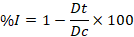
“I” (means inhibition) inhibition of inflammation; “Dt” is the difference and dissimilarity in paw size in the Dosiflavone given group and “Dc” is the dissimilarity in Paw size of the control group.
Analgesic and antipyretic studies
To probe the analgesic and antipyretic impact of Dosiflavone, rodent models of pyrexia (fever) and pain were used, which comprise hot plate and acetic acid instigated models of pain. For the antipyretic impact of the test molecule, yeast instigated fever model was used. The present studies explored the general mechanisms behind the antipyretic and analgesic impacts.
Hot plate pain model
In this test a hot plate (maintained at 50 ± 0.05 °C); thermal nociception was used to screen the mice for thermal nociception by the method of Khan et al. (2010). Before the administration of the test compound to these mice, mice were screened on 2 separate occasions, with 30 minutes between the two occasions, to select the responsive mice for the study (who responded within 15 seconds). “The selected animals were treated, either with vehicle (normal saline), Dosiflavone, or tramadol (as standard chemical). Thermal nociception was measured by estimating withdrawal response latency in the form of licking of paws, jumping/or withdrawal of the paw and the response was documented at 120, 90, 60, 30, and 0 minutes with a cut-off period of 30 seconds to keep away from harm to the paws in the non-existence of response”.
Similarly, “to inquire the involvement of the opioid system in the anti-nociceptive impact of Dosiflavone, naloxone HCL (a non-selective opioid receptor antagonist) was administered/injected 15 minutes before the injection of the test compound and the hot plate latencies were subsequently assessed at 120, 90, 60, 30, and 0 minutes”.
Ethanoic acid-induced pain model
The peripheral nociception effectiveness of Dosiflavone was assessed by this method utilizing the model of Khan et al. (2010). “The experimental rodents were grouped into 5 groups each containing six animals. Group 1 animals were considered as control group, which were administered only with normal saline solution. Group II, III, and IV were treated with various concentrations of Dosiflavone while group V was injected with aspirin as a standard drug 30 minutes before the administration of acetic acid. Then, 1% acetic acid was injected to induce writhes. The number of muscular contractions were counted for 20 minutes after ethanoic acid injection in each treated class and compared with control class (normal saline-treated class) and the percent inhibition was calculated for Dosiflavone”.
Yeast instigated pyrexia model
The yeast-induced fever model was used to know the possible ability of the isolated compound Dosiflavone on lowering the body temperature of experimental animals (mice) using the method of Chomchuen et al. (2010). The rodents were kept refrain from food overnight and randomly divided into several classes (n=6) before the experiment allowing free access to water. To induce fever, the animals were trained to remain quiet in a restrainer for 30 minutes. Fever was then induced according to the standard procedure. “An oily (lubricated) thermometer was used 4 to 3 cm extending far down into the rectum of the mice and tied up with the tail by tape. After recording the normal temperature of rectal, mice were injected Brewer’s yeast (prepared in normal saline solution) subcutaneously in the dorsum of the body and then returned to their cages”. 18 hours (hrs) after the injection, the mice were again restrained to take the temperature rectally. Only those mice were selected for the study that showed an elevation in body temperature of at least 10C. The test compound was administered orally at different concentrations to 4 classes. The control class was administered an identical volume of vehicle (2% tween 80 solutions) and the positive control class was given aspirin, orally. Basal rectal temperature was recorded for 7 hrs at 1 hr interval when the test molecule was injected. The body temperature of normothermic rodents was also recorded rectally at the same time interval for 7 hrs. “The results recorded were shown as the percentage of the pre-drug temperature recorded for the same mice.
In vivo acute toxicity studies
These studies were carried out to assess the preliminary safety of the test molecule in experimental rodents as stated by standard procedures documented in the literature by Khan et al. (2010). “Mice of Swiss albino (n = 6) of both genders were tested by injecting various doses of Dosiflavone by decreasing or increasing the dose, according to the response of the test animals. The control class was given only the normal saline solution. All the classes were examined for any gross mortality for 24 hrs”.
Statistical analysis
In this study, data were presented as mean ±SEM. Stats Direct version 3.0.194 was used with one-way analysis of variance (ANOVA) followed by Donnett’s tests to calculate the statistical difference (p<0.01) between treated and control groups.
Results and Discussion
Anti-inflammatory studies
Dimethyl benzene (Xylene) instigated ear edema model
Dosiflavone showed significant (P<0.05) reduction of the ear edema at a high dose of 40 and 80 mg/kg on 60 min. However, there was a less significant effect at 20 mg/kg on 60 min. (Table 1).
Table 1: Inhibition of the inflammatory activity of Dosiflavone using xylene-induced ear edema model.
| Treatment | Dose (mg/kg) | Weight of ear (mg) | |
| 15 min | 60 min | ||
| Control | - | 31.78± 2.91 | 32.21 ± 3.41 |
| Dosiflavone | 20 | 19.21 ± 3.11* | 15.09 ± .140* |
| Dosiflavone | 40 | 14.67 ± 2.94* | 12.51 ± 3.316** |
| Dosiflavone | 80 | 11.91 ± 2.47* | 10.12± 3.316** |
| Dexamethasone | 0.5 | 9.61±2.77** | 8.12 ± 4.061** |
| Aspirin | 100 | 10.92±2.51** | 9.47±2.96** |
The data were explored by analysis of variance pursued by test known Donnett’s test *P<0.05, **<0.01 in matching to control
Carrageenan induced paw edema model
Plethysmometer was used to properly measure the paw volume after the carrageenan administration. In vivo anti-inflammatory investigation of Dosiflavone indicated that the compound has significantly (p<0.05) controlled the biphasic inflammatory events produced by carrageenan in a dose-dependent manner which has high at 40 and 80 mg/kg (Figure 1).
Table 2: Analgesic activity of Dosiflavone using Hot plate pain model.
| Treatment | Dose (mg/kg) | Latency of nociceptive response in min (mean ± SEM) | ||||
| 0 | 30 | 60 | 90 | 120 | ||
| Vehicle | - | 8.22±0.23 | 8.48±0.18 | 8.61± 0.43 | 8.68± 0.29 | 8.74± 0.51 |
| Dosiflavone | 20 | 8.36±0.36 | 9.52±0.27 | 10.43± 0.22 | 10.63± 0.54 | 9.94± 0.37 |
| Dosiflavone | 40 | 8.32±0.53 | 11.14±0.39* | 11.63± 0.43* | 12.05± 0.62** | 11.87±0.68** |
| Dosiflavone | 80 | 8.34±0.51 | 11.62±0.47* | 12.12± 0.66* | 12.58± 0.71** | 12.31±0.51** |
| Tramadol | 20 | 8.51±0.37 | 12.59±0.74** | 15.89± 0.52** | 16.24± 0.23** | 15.62±0.23** |
Values are recorded as mean ±S.E.M. for five rodent groups. The data were explored by analysis of variance pursued by test known as Donnett’s test *P<0.05, **<0.01 in matching to control.
Analgesic and antipyretic studies
Hot plate pain model
The anti-nociceptive potential of Dosiflavone was measured by the hot plate pain model. The experimental mice were screened by placing them on a hot plate maintained at 50 ± 0.05oC This test was repeated with the subsequent application of Tramadol (an opioid receptor antagonist) to confirm the opioid receptor involvement in analgesic effect. Dosiflavone exhibited good analgesic activity with excellent (p<0.05) anti-nociceptive effect in hot plate test at a dose rate of 40 and 80 mg/ kg b.wt. (Table 2). The analgesic effect of the test compound remained significant up to 240 min.
Ethanoic acid (Acetic Acid) instigated pain model
Dosiflavone showed significant anti-nociceptive activity and decreased the number of writhes instigated by one % ethanoic acid, in comparison to the group injected with aspirin as a standard drug (Table 3).
Yeast Induced Pyrexia Model
A continuous dose-dependent decrease in the pyrexia of rodents injected with Dosiflavone was noted. There was a significant (P < 0.05-0.01) decrease in pyrexia caused by Dosiflavone different dosages (20, 40, and 80 mg/kg) compared to the controlled one (Table 4).
Table 3: The anti-nociceptive activity of Dosiflavone in acetic acid-induced pain model.
| Treatment | Dose applied (mg/kg, i/p) | Number of writhes (10 Minutes) |
| Normal Saline | 10 ml/kg | 63.38 ± 2.79 |
| Dosiflavone | 20 | 44.71 ± 2.19* |
| 40 | 38.54 ± 1.64* | |
| 80 | 27.43 ± 2.23** | |
| Aspirin | 20 | 14.17 ± 1.52** |
Values are recorded as mean ± S.E.M. for a group of five rodents. The data was explored by Analysis of variance pursed by Dunnett’s test. *P < 0.05, **P < 0.01 in matching to control
In vivo acute toxicity studies
All the treated rodents injected with test compound (Dosiflavone) doses (up to 300 mg/kg, p/o) were observed and noted for death rate up to 24 hrs. There was no noteworthy difference between the Dosiflavone treated and controlled groups. (Table 5).
Dosiflavone is a form of isoflavone that can be found in soybeans, soy foods, and legumes. Dosiflavone, and other flavonoids, function as phytoestrogens, causing pseudo hormonal activity by binding to estrogen receptors (ER) in mammals. Dosiflavone has antioxidant, anticancer, antimicrobial,
Table 4: The antipyretic activity of Dosiflavone using yeast induced pyrexia model.
| Treatment | Dose (mg/kg) | Rectal Temp. (°C) | ||||||
| Normal | After 24 hrs | After the administration of the drug | ||||||
| 1 h | 2 h | 3 h | 4 h | 5 h | ||||
| Saline | 10 mL | 36.69±0.52 | 39.71±0.26 | 38.67± 0.31 | 38.62± 0.44 | 38.61± 0.21 | 38.71± 0.33 | 38.77±0.33 |
| Dosiflavone | 20 | 37.07±0.38 | 39.53±0.38 | 38.61± 0.24 | 38.44± 0.41* | 38.07± 0.71* | 38.11± 0.49* | 38.09±0.37* |
| 40 | 37.21±0.21 | 39.44±0.33 | 38.47± 0.64* | 38.09± 0.43* | 37.81± 0.49** | 37.84± 0.36** | 37.84±0.47** | |
| 80 | 37.04±0.03 | 39.59±0.27 | 38.23± 0.56* | 37.92± 0.47** | 37.56± 0.54** | 37.69± 0.51** | 37.58±0.38** | |
| Paracetamol | 20 | 37.05±0.32 | 39.43±0.32 | 37.18± 0.26** | 37.78± 0.36** | 37.33± 0.39** | 37.41± 0.44** | 37.47±0.47** |
Values are recorded as mean ± S.E.M. for a group of five rodents. The data was explored by Analysis of variance pursed by Dunnett’s test. *P < 0.05, **P < 0.01 in matching to control
Table 5: Acute toxicity of different doses of Dosiflavone up to 300 mg/kg during 24 hrs.
| Dosiflavone (mg/kg b.wt) | Number of treated animals | Number of live and healthy animals | Number of mortalities | Observations |
| 20 | 6 | 6 | 0 | No mortality during 24 hrs |
| 40 | 6 | 6 | 0 | No mortality during 24 hrs |
| 80 | 6 | 5 | 1 | Insignificant mortality |
| 100 | 6 | 6 | 0 | No mortality during 24 hrs |
| 150 | 6 | 6 | 0 | No mortality during 24 hrs |
| 200 | 6 | 6 | 0 | No mortality during 24 hrs |
| 250 | 6 | 6 | 0 | No mortality during 24 hrs |
| 300 | 6 | 6 | 0 | No mortality during 24 hrs |
| Saline | 6 | 6 | 0 | No mortality during 24 hrs |
and anti-inflammatory properties. As a result, depending on the levels of endogenous estrogens and ER, Dosiflavone has either a mild estrogenic (agonistic) or anti-estrogenic (antagonistic) impact. Dosiflavone can help to prevent hormone-related cancers such as breast cancer, cervical cancer, and male prostate or testicular cancer by blocking the binding of more potent estrogens ; ; .
The isolated compound exerted a noteworthy (P<0.05) inhibition at all doses, which might be due to phospholipase A2 blocking. An enzyme called phospholipase A2 has a key role in xylene-induced inflammation ; . Dosiflavone was found effective at all the subjected doses (20, 40, and 80 mg/kg) but a better effect was observed after one hour (late phase). Reference drug, dexamethasone which is a steroid anti-inflammatory compound indicated a noteworthy decrease in the mean weight of the right ear in the tested animals due to blocking of phospholipase A2 (PL-A2) . The results showed that the mechanism of action of the selected isolated compound Dosiflavone resembles those of nonsteroidal anti-inflammatory drugs. These drugs possess central as well as peripheral anti-inflammatory actions. The noteworthy anti-inflammatory action of the isolated compound is considered to be because this belongs to the flavonoids class .
For the assessment of the anti-inflammatory capability of the extracted molecule, the paw edema model is used which is based on its capability to reduce the edema instigated by injecting carrageenan in mice’s hind paw . The in vivo anti-inflammatory action of Dosiflavone revealed that the carrageenan produced biphasic inflammatory events had been controlled significantly (p<0.05) by Dosiflavone and hence might be used as active anti-inflammatory agents. Chemical substances i.e. serotonin, histamines, and some other related compounds are released in the first phase (90–180 minutes) of inflammation. An increase in the volume of the hind paw characterizes the second phase of inflammation (270-360 minutes). This increase in volume is because of the presence of certain mediators of inflammation . No noteworthy difference in terms of morbidity mortality was observed between the animals of treatment and those of negative control.
The anti-inflammatory potential of the isolated compound revealed a dose-response relationship at various doses. It is noticeable from the outcomes that the chosen compound expressed anti-inflammatory efficacy. No significant outcome was recorded at 20 mg/kg dose of the selected isolated compound especially at 3 and 5 hrs as compared to the positive control drug. The doses of 40 and 80mg kg- also showed promising results except for 40 mg/kg at 3 hrs.
The data concluded that the inflammatory inhibition mechanism of the isolated compound and aspirin might be the same. The Anti-nociceptive (analgesic) action of plant-based isolated compounds has been explored by various scientists. The pseudoakuammigine has an opioid-like impact (centrally) that is synergized by its peripheral impact and also an Acrine (purine alkaloid), confirmed noteworthy anti-nociceptive impact assayed on eddy’s hot-plate method .
This study explored the Dosiflavone to be an active Anti-nociceptive agent at all tested doses (20, 40, and 80 mg/kg) assayed by the hot plate method. The production of endogenous compounds and, similarly, other pain mediators for example arachidonic acid by cyclooxygenase and chemical biosynthesis of prostaglandin instigated anti-nociceptive action in the biological system . Supraspinal anti-nociception was assessed by analgesiometery technique. This technique is explicitly applied to clear the anti-nociceptive impact of the drugs and also other compounds whose action is centrally for example morphine as well as its derivatives. Analgesic standard drugs that function peripherally are found out to be non-functioning on hot-plate instigated hyperalgesia. Different physiological mechanisms are responsible for decreasing the muscular constrictions for example sympathetic system via the production of compounds known as COX and blocking of their biogenic amines, metabolites, and via mechanisms of narcotic receptors . This assay is the most generally utilized model. It is a precise, rapid and simple method applied to determine the peripheral anti-nociceptive impact ; .
The increased sensitization of these receptors results in the production of prostaglandins. This is normally considered that when analgesic activity assayed with ethanoic acid-induced pain model, the release of prostanoids for example PGE2, LOX derivatives, and PGF2α is enhanced in the fluids of peritonea functioning as pain mediators. Prostanoids for example PGE2, LOX derivatives, and PGF2α are the metabolic products of arachidonic acid. These prostanoids are generated from phospholipid of excited abdominal smooth muscle ; Funk, 2001). These compounds which are released in the peritoneal fluids turn out to be the causal active agent for the distress that is expressed as abdominal contractions. The blocking in the number of writhes by various compounds is because of inhibition or reduced prostanoids synthesis. It is taken into consideration for blocking distress via the system of the peripheral nervous system (PNS). The outputs of our study revealed that Dosiflavone possesses analgesic impact through the peripheral route by blocking the nociceptive receptors of the abdomen. This is because of reduced inhibition or yield of prostanoid synthesis. Our findings recommend that the mode of action of isolated compound Dosiflavone is linked with a pain-relieving agent.
Different types of fever-reducing drugs are easily available in the markets which are often taken due to their effectiveness, but these drugs have some restrictions. These drugs are reported with the problem of side effects and their interaction with other compounds. That is the reason plants are persistently studied for pharmaceutically dynamic natural chemical compounds with minor adverse effects. To test the fever-reducing impact of different compounds extracted from different plants and or those made by the synthetic way. The yeast pyrexia model is highly recommended throughout the globe . Brewer’s yeast injected (subcutaneously) instigates the intensified prostaglandin’s production, which resulted in hyperthermia (Sharma, 2006a; Sharma, 2006b). Available drug for reducing pyrexia in the international market (acetaminophen) resulted in internal hypothermia by blocking the production of PGs via blocking of COX route. Different compounds have been discovered which function as a catalyst for the rise in human body temperature. These catalysts when inhibited by various chemical compounds, the fever-reducing impact is generated ; . The isolated compound Dosiflavone exhibited a statistically noteworthy antipyretic impact. The decrease in fever was in a dose-dependent method. The anti-fever effectiveness was much more increased at second hrs for every tested dosage of the isolated compound. Analgesic action showed a dose-response relationship with the fever of rodents (mice), injected with the tested samples of selected compound. These outcomes indicate that tested sample extracts of chosen medicinal plants work through peripheral and central pathways like acetylsalicylic acid . Acetylsalicylic acid decreases the pyrexia by reducing PGE2 level in brain, particularly by means of its activity on cyclooxygenase-3 inside hypothalamic region . The isolated compound Dosiflavone reduced the temperature determine in the rectal region of subject rodents (mice) noteworthy. This shows that Dosiflavone is involved in the inhibition of prostaglandins.
Conclusions and Recommendations
It is concluded from the current study that Dosiflavone has a significant role in inflammation as it reduced ear edema and paw edema to a level and has good anti-inflammatory and antioxidant potential. The significant pre-clinical LOX inhibitory activity revealed Dosiflavone to be an active anti-inflammatory agent in pathological conditions associated with inflammation. The effectiveness of Dosiflavone was far better to have anti-pyretic and analgesic activity in a dose-dependent manner. Dosiflavone has no acute toxicity up to 300 mg/kg which is supported as safest and anti-inflammatory potential.
Acknowledgements
I am thankful to my Supervisory committee for their continuous guidance and support throughout my PhD duration. I am also very much thankful to the Higher Education Commission, Pakistan for supporting me under HEC Indigenous Scholarship program. I am also thankful to Maaz Iqbal and Sahar Nigar for their assistance in research work and thesis write up during the entire study period. The manuscript has not been published or submitted to other journals previously.
Novelity Statment
The current study provides the first ever work on the potential of Dosiflavone as an anti-inflamatory and anti-pyretic agent using animal model.
Author’s Contributions
Ibadullah Jan: Principal author/PhD Scholar, who did research, experiments, data analysis and wrote draft of the manuscript.
Iqbal Munir: Major Supervisor, provided technical guidelines in the whole study.
Inamullah Khan: Co-Supervisor, helped in experimental work.
Syed Muhammad Suhail: Helped in data analysis.
Aqib Iqbal: Provided guidance in manuscript write up.
Conflict of interest
The authors declare no conflict of interest.
Figures
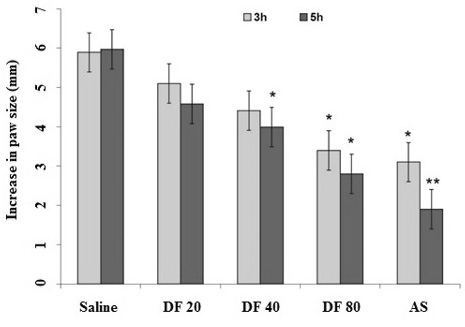
Effect of Dosiflavone on carrageenan-induced edema model at test dose of 20, 40 and 80 mg/kg b.wt. (*p<0.05, **=p<0.01.DF= Dosiflavone (mg/kg), 3h and 5h=time interval).
References
- Ajakaiye, J., M. Cuesta-Mazorra and J. Garcia-Diaz. 2011. Vitamins C and E can alleviate adverse effects of heat stress on live weight and some egg quality profiles of layer hens. Pak. Vet. J. 31(1): 45-49.
- Araruna, K. and B. Carlos. 2010. Anti-inflammatory activities of triterpene lactones from Lactuca sativa. Phytopharmacol. 1(1): 1-6.
- Atta, A. and A. Alkofahi. 1998. Anti-nociceptive and anti-inflammatory effects of some Jordanian medicinal plant extracts. J. ethnopharmacol. 60(2): 117-124. https://doi.org/10.1016/S0378-8741(97)00137-2[CrossRef]
- Beydoun, A. and M.-M. Backonja. 2003. Mechanistic stratification of antineuralgic agents. J. pain. sym. manag. 25(5): S18-S30. https://doi.org/10.1016/S0885-3924(03)00066-6[CrossRef]
- Chen, D., K.G. Daniel, M.S. Chen, D.J. Kuhn, K.R. Landis-Piwowar and Q.P. Dou. 2005. Dietary flavonoids as proteasome inhibitors and apoptosis inducers in human leukemia cells. Biochem. pharmacol. 69(10): 1421-1432. https://doi.org/10.1016/j.bcp.2005.02.022[CrossRef]
- Chomchuen, S., C. Singharachai, N. Ruangrungsi and P. Towiwat. 2010. Antipyretic effect of the ethanolic extract of Ficus racemosa root in rats. J. Heal. Res. 24(1): 23-28.
- Chowdhury, S.A., K. Kishino, R. Satoh, K. Hashimoto, H. Kikuchi, H. Nishikawa, Y. Shirataki and H. Sakagami. 2005. Tumor-specificity and apoptosis-inducing activity of stilbenes and flavonoids. Antican. Res. 25(3B): 2055-2063.
- Cipollone, F., E. Toniato, S. Martinotti, M. Fazia, A. Iezzi, C. Cuccurullo, B. Pini, S. Ursi, G. Vitullo and M. Averna. 2004. A polymorphism in the cyclooxygenase 2 gene as an inherited protective factor against myocardial infarction and stroke. Jama. 291(18): 2221-2228. https://doi.org/10.1001/jama.291.18.2221[CrossRef]
- Cleuvers, M. 2004. Mixture toxicity of the anti-inflammatory drugs diclofenac, ibuprofen, naproxen, and acetylsalicylic acid. Ecotoxicol. Environ. Saf. 59(3): 309-315. https://doi.org/10.1016/S0147-6513(03)00141-6[CrossRef]
- Cooper, G.M. 2000. The central role of enzymes as biological catalysts, Sinauer Associates.
- Ferreira, S. 1980. Peripheral analgesia: mechanism of the analgesic action of aspirin-like drugs and opiate-antagonists. Brit. J. clinic. Pharmacol. 10(S2): 237S-245S. https://doi.org/10.1111/j.1365-2125.1980.tb01806.x[CrossRef]
- Funk, C.D. 2001. Prostaglandins and leukotrienes: advances in eicosanoid biology. Sci. 294(5548): 1871-1875. https://doi.org/10.1126/science.294.5548.1871[CrossRef]
- Goya, L., M.Á. Martín, B. Sarriá, S. Ramos, R. Mateos and L. Bravo. 2016. Effect of cocoa and its flavonoids on biomarkers of inflammation: studies of cell culture, animals and humans. Nutri. 8(4): 212. https://doi.org/10.3390/nu8040212[CrossRef]
- Guo, L.Y., X.F. Cai, J.J. Lee, S.S. Kang, E.M. Shin, H.Y. Zhou, J.W. Jung and Y.S. Kim. 2008. Comparison of suppressive effects of demethoxycurcumin and bisdemethoxycurcumin on expressions of inflammatory mediators in vitro and in vivo. Arch. Pharma. Res. 31(4): 490-496. https://doi.org/10.1007/s12272-001-1183-8[CrossRef]
- Kashfi, K. 2009. Anti-inflammatory agents as cancer therapeutics. Adv. Pharmacol. 57: 31-89. https://doi.org/10.1016/S1054-3589(08)57002-5[CrossRef]
- Kempuraj, D., B. Madhappan, S. Christodoulou, W. Boucher, J. Cao, N. Papadopoulou, C.L. Cetrulo and T.C. Theoharides. 2005. Flavonols inhibit proinflammatory mediator release, intracellular calcium ion levels and protein kinase C theta phosphorylation in human mast cells. Brit. J. Pharmacol. 145(7): 934-944. https://doi.org/10.1038/sj.bjp.0706246[CrossRef]
- Khan, A.A., X. Sun and K.M. Hargreaves. 2008. Effect of calcium hydroxide on proinflammatory cytokines and neuropeptides. J. Endodon. 34(11): 1360-1363. https://doi.org/10.1016/j.joen.2008.08.020[CrossRef]
- Khan, H., M. Saeed, M.A. Khan, A. Dar and I. Khan. 2010. The antinociceptive activity of Polygonatum verticillatum rhizomes in pain models. J. Ethnopharmacol. 127(2): 521-527. https://doi.org/10.1016/j.jep.2009.10.003[CrossRef]
- Khan, N., O. Khymenets, M. Urpí-Sardà, S. Tulipani, M. Garcia-Aloy, M. Monagas, X. Mora-Cubillos, R. Llorach and C. Andres-Lacueva. 2014. Cocoa polyphenols and inflammatory markers of cardiovascular disease. Nutri. 6(2): 844-880. https://doi.org/10.3390/nu6020844[CrossRef]
- Khan, R. and S. Sultana. 2011. Farnesol attenuates 1, 2-dimethylhydrazine induced oxidative stress, inflammation and apoptotic responses in the colon of Wistar rats. Chemico-bio. Interac. 192(3): 193-200. https://doi.org/10.1016/j.cbi.2011.03.009[CrossRef]
- Khan, W. and J. Ghia. 2010. Gut hormones: emerging role in immune activation and inflammation. Clinic. Experimen. Immunol. 161(1): 19-27. https://doi.org/10.1111/j.1365-2249.2010.04150.x[CrossRef]
- Křížová, L., K. Dadáková, J. Kašparovská and T. Kašparovský. 2019. Isoflavones. Molec. 24(6): 1076. https://doi.org/10.3390/molecules24061076[CrossRef]
- Lee, H.T., T.H. Wu, C.S. Lin, C.S. Lee, Y.H. Wei, C.Y. Tsai and D.M. Chang. 2016. The pathogenesis of systemic lupus erythematosus-From the viewpoint of oxidative stress and mitochondrial dysfunction. Mitochon. 30: 1-7. https://doi.org/10.1016/j.mito.2016.05.007[CrossRef]
- Lin, T.N., Q. Wang, A. Simonyi, J.J. Chen, W.M. Cheung, Y.Y. He, J. Xu, A.Y. Sun, C.Y. Hsu and G.Y. Sun. 2004. Induction of secretory phospholipase A2 in reactive astrocytes in response to transient focal cerebral ischemia in the rat brain. J. Neurochem. 90(3): 637-645. https://doi.org/10.1111/j.1471-4159.2004.02540.x[CrossRef]
- Lindahl, M. and C. Tagesson. 1997. Flavonoids as phospholipase A 2 inhibitors: importance of their structure for selective inhibition of group II phospholipase A 2. Inflam. 21(3): 347-356. https://doi.org/10.1023/A:1027306118026[CrossRef]
- Maeda, S. and M. Omata. 2008. Inflammation and cancer: role of nuclear factor-kappa B activation. Canc. Sci. 99(5): 836-842. https://doi.org/10.1111/j.1349-7006.2008.00763.x[CrossRef]
- Malairajan, P., G. Gopalakrishnan, S. Narasimhan and K.J.K. Veni. 2006. Analgesic activity of some Indian medicinal plants. J. Ethnopharmacol. 106(3): 425-428. https://doi.org/10.1016/j.jep.2006.03.015[CrossRef]
- Mazumder, A., B. Saha, S. Basu and R. Mazumder. 2005. Evaluation of antipyretic potential of Lagerstroemia parviflora. extract in rats. Pharmac. Biol. 43(1): 64-66. https://doi.org/10.1080/13880200590903381[CrossRef]
- Medzhitov, R. 2008. Origin and physiological roles of inflammation. Nat. 454(7203): 428-435. https://doi.org/10.1038/nature07201[CrossRef]
- Morioka, Y., A. Saiga, Y. Yokota, N. Suzuki, M. Ikeda, T. Ono, K. Nakano, N. Fujii, J. Ishizaki and H. Arita. 2000. Mouse group X secretory phospholipase A2 induces a potent release of arachidonic acid from spleen cells and acts as a ligand for the phospholipase A2 receptor. Arch. Biochem. Biophy. 381(1): 31-42. https://doi.org/10.1006/abbi.2000.1977[CrossRef]
- Nisar, A., N. Akhter, G. Singh, A. Masood, A. Malik, B. Banday and M.A. Zargar. 2015. Modulation of T-helper cytokines and inflammatory mediators by Atropa accuminata. Royle in adjuvant induced arthritic tissues. J. Ethnopharmacol. 162: 215-224. https://doi.org/10.1016/j.jep.2014.08.008[CrossRef]
- Osiecki, H. 2004. The role of chronic inflammation in cardiovascular disease and its regulation by nutrients. Alter. Med. Rev. 9(1).
- Panche, A., A. Diwan and S. Chandra. 2016. Flavonoids: an overview. J. Nutr. Sci. 5(47): 1-15. https://doi.org/10.1017/jns.2016.41[CrossRef]
- Park, H.H., S. Lee, H.Y. Son, S.B. Park, M.S. Kim, E.J. Choi, T.S. Singh, J.H. Ha, M.G. Lee and J.E. Kim. 2008. Flavonoids inhibit histamine release and expression of proinflammatory cytokines in mast cells. Arch. Pharmacal. Res. 31(10): 1303-1311. https://doi.org/10.1007/s12272-001-2110-5[CrossRef]
- Parveen, Z., Y. Deng, M.K. Saeed, R. Dai, W. Ahamad and Y.H. Yu. 2007. Anti-inflammatory and analgesic activities of Thesium chinense Turcz extracts and its major flavonoids, kaempferol and kaempferol-3-O-glucoside. Yak. Zas. 127(8): 1275-1279. https://doi.org/10.1248/yakushi.127.1275[CrossRef]
- Pontiki, E., D. Hadjipavlou-Litina, K. Litinas, O. Nicolotti and A. Carotti. 2011. Design, synthesis and pharmacobiological evaluation of novel acrylic acid derivatives acting as lipoxygenase and cyclooxygenase-1 inhibitors with antioxidant and anti-inflammatory activities. Eur. J. Med. Chem. 46(1): 191-200. https://doi.org/10.1016/j.ejmech.2010.10.035[CrossRef]
- Proença, C., D. Ribeiro, T. Soares, S.M. Tomé, A.M. Silva, J.L. Lima, E. Fernandes and M. Freitas. 2017. Chlorinated flavonoids modulate the inflammatory process in human blood. Inflam. 40(4): 1155-1165. https://doi.org/10.1007/s10753-017-0559-8[CrossRef]
- Ribeiro, D., M. Freitas, J.L. Lima and E. Fernandes. 2015. Proinflammatory pathways: the modulation by flavonoids.” Med. Res. Rev. 35(5): 877-936. https://doi.org/10.1002/med.21347[CrossRef]
- Shahin, S., V.P. Singh, R.K. Shukla, A. Dhawan, R.K. Gangwar, S.P. Singh and C.M. Chaturvedi. 2013. 2.45 GHz microwave irradiation-induced oxidative stress affects implantation or pregnancy in mice, Mus musculus. Appl. Biochem. Biotech. 169(5): 1727-1751. https://doi.org/10.1007/s12010-012-0079-9[CrossRef]
- Sharma, H. 2006a. Hyperthermia influences excitatory and inhibitory amino acid neurotransmitters in the central nervous system. An experimental study in the rat using behavioural, biochemical, pharmacological, and morphological approaches. J. Neur. Transmis. 113(4): 497-519. https://doi.org/10.1007/s00702-005-0406-1[CrossRef]
- Sharma, H.S. 2006b. Hyperthermia induced brain oedema: Current status & future perspectives. Ind. J. Med. Res. 123(5): 629.
- Stankov, S.V. 2012. Definition of inflammation, causes of inflammation and possible anti-inflammatory strategies. T. Op. Inflam. J. 5(1): 1-9. https://doi.org/10.2174/1875041901205010001[CrossRef]
- Tamaddonfard, E., A.A. Farshid and L. Hosseini. 2012. Crocin alleviates the local paw edema induced by histamine in rats. Avi. J. Phytomed. 2(2): 97.
- Utar, Z., M.I.A. Majid, M.I. Adenan, M.F.A. Jamil and T.M. Lan. 2011. Mitragynine inhibits the COX-2 mRNA expression and prostaglandin E2 production induced by lipopolysaccharide in RAW264. 7 macrophage cells. J. Ethnopharmacol. 136(1): 75-82. https://doi.org/10.1016/j.jep.2011.04.011[CrossRef]
- Vane, J. and R. Botting. 2003. The mechanism of action of aspirin. Thromb. Res. 110(5-6): 255-258. https://doi.org/10.1016/S0049-3848(03)00379-7[CrossRef]
- Vishwanath, B.S., F.J. Frey, M.J. Bradbury, M.F. Dallman and B.M. Frey. 1993. Glucocorticoid deficiency increases phospholipase A2 activity in rats. T. J. Clinic. Investi. 92(4): 1974-1980. https://doi.org/10.1172/JCI116791[CrossRef]
- Wang, Q., X. Ge, X. Tian, Y. Zhang, J. Zhang and P. Zhang. 2013. Soy isoflavone: The multipurpose phytochemical. Biomed. Rep. 1(5): 697-701. https://doi.org/10.3892/br.2013.129[CrossRef]
- Yu, J., X. Bi, B. Yu and D. Chen. 2016. Isoflavones: anti-inflammatory benefit and possible caveats. Nutri. 8(6): 361. https://doi.org/10.3390/nu8060361[CrossRef]
- Zakaria, Z.A., Z.D.F.A. Ghani, R.N.S.R.M. Nor, H.K. Gopalan, M.R. Sulaiman, A.M.M. Jais, M.N. Somchit, A.A. Kader and J. Ripin. 2008. Antinociceptive, anti-inflammatory, and antipyretic properties of an aqueous extract of Dicranopteris linearis leaves in experimental animal models. J. Natu. Med. 62(2): 179-187. https://doi.org/10.1007/s11418-007-0224-x[CrossRef]
Services
Article usage statistics
Loading…