
Industrial leachate is a brownish color liquid containing various toxic heavy metals and other chemicals of organic and inorganic nature which can house a variety of pathogens. As it drains it pollutes the groundwater table and if used for irrigation purpose represents a major health risk not only to humans but also to local flora and fauna. The purpose of current research work was to analyze the toxicity of leachate in Wistar rats. Wistar rats of about 250g were selected and divided into three groups namely Control, Group 1 and Group 2. Group 1 was given 4ml/kg leachate while Group 2 received 4ml/kg of 1:10 diluted leachate intra-peritoneally. After 24 hours of the injection, animals were euthanized and blood was drawn for further studies. Data were analyzed using one way ANOVA. Serological analysis of both Group 1 and Group 2 showed a significant decrease of various components including Cl- (P=0.0023), K+ (P=0.0002), Na+ (P=0.0001), total proteins (P<0.0001) and albumin (P<0.0001) when compared against control. Similarly, hematological analysis revealed a significant decrease in WBCs (P<0.0001), RBCs (P=0.0001), Hemoglobin (P<0.0001), Platelets (P<0.0001) and MCHC (P<0.0001) while MCV (P<0.0001) showed a remarkable positive change when compared with control. Hematocrit (P<0.0001) was found to be enhanced significantly in Group 1 but decreased in Group 2 while MCH showed exactly opposite trend to Hematocrit. Findings of current research confirmed that leachate is a highly toxic industrial effluent which leads to hematological and serological changes in biological systems so there is a need of proper waste treatment prior to its disposal.
Research Article · Volume 33, Issue 2, 8 December 2018 · Open Access
Alterations in Blood Cell Indices and Serological Parameters due to Toxicity of Industrial Leachate in Wistar Rats
· · ·
Affiliations & Notes ⌄
- 1Cell & Molecular Biology Lab, Department of Zoology, University of the Punjab, Lahore, Pakistan 2Centre for Applied Molecular Biology (CAMB), University of the Punjab, Lahore, Pakistan. , *Corresponding author: Nadeem Sheikh (s_nadeem77@yahoo.com)
- 2Muddasir Hassan Abbasi (muddygcs@gmail.com)
Article Info ⌄
- Journal:
- Punjab University Journal of Zoology
- Published:
- 8 December 2018
From the article
- Serum level of sodium (Na+) showed a statistically significant hyponatremia (P=0.0001) of 13.586 and 10.913% in Group 1 and Group 2 respectively after 24h.
- Serum total proteins and albumin showed a similar trend of decrement after 24h of the treatment of leachate.
- Taken together these results it could be concluded that leachate is a highly toxic industrial effluent which induce severe hematological and serological alterations in biological systems which is a clear reflective of damage to plants and animals.
- So, there is a need of proper waste treatment to leachate prior to disposal.
Selected from the article's own text.
Abstract
Introduction
Pulp and paper industry is believed to be one of the most prominent resource-intensive industries that consumes great amount of water, energy and trees and in turn emits pollution globally ; . Previously, very little consideration was given to the possible injurious/ dreadful effects of industrial pollution on human health and the environment. Various careful estimates put the pulp and paper mills as nation’s third largest polluter in the United States (US) . In Canada, it has been estimated that this industry is responsible for 50% of all the waste dumped into the nation’s waters and also accounts for approximately 5.6% of the common air contaminants from known industrial sources (Canada. Environment canada. Environmental Protection Service., 1986).
The process of paper production comprised mainly of two major steps namely pulping and bleaching. In the first step (pulping), raw wood chips are treated in such a way that lignin is removed and fibers are improved for making paper. In the last and final step which is designated as bleaching the pulp is made brighten and more white. This whole process requires energy and the utilization of fresh water ; . Despite the development of a number of modern approaches, water expenditure in paper production is quite high (sometimes as high as 60 m3/ ton paper produced) and depends upon the exact method of paper production .
The wastewater produced as a result of this processing often contain sizable amount of some highly toxic and reactive compounds including sodium hydroxide (NaOH), sodium sulfide (Na2S), calcium oxide (CaO), sodium carbonate (Na2CO3), bisulfites (containing HSO3-), hydrochloric acid (HCl), chlorine dioxide (ClO2) and elemental chlorine (Cl) etc. . The high organic contents (20-110 kg COD/ air dried ton paper), toxic pollutants, dark brown coloration and adsorbable organic halide (AOX) etc. are some of the most important problems with this wastewater. The brown coloration of wastewater appears due to formation of various conjugated structures including chalcones, quinones, stilbenes, benzoquinones and complexed catechols which have the ability to absorb visible light ; .
The most popular method for pulping process in pulp and paper manufacturing industry is Kraft technology because it results in improved quality of paper with respect to strength, thickness and brightness . However, this method has some concerns because of utilization of massive quantities of chemicals to cook the pulp which results in the generation of perilous pollutants both in sludge as well as in wastewater. Bleaching process results in the generation of some bioaccumulative, mutagenic, toxic and resistant to biodegradation chloro-organics which pose a stern threat to the environment ; ; . Toxic effects of the this waste water produced by pulp industry are well documented ;; , however according to the best of our knowledge no studies have been carried out so far by injecting the paper industry leachate intraperitoneally in rats.
So, the present study was aimed to analyze acute toxic effects of paper industry leachate on hematological and serological parameters of Wistar rats after 24h of intraperitoneal treatment.
Materials and Methods
Animals
Fifteen (15) healthy male Wistar rats weighing about 250g were obtained from the Department of Zoology, University of the Punjab (Lahore-Pakistan), housed in stainless steel cages in an animal room under standard conditions with 12-h light/ dark cycles and at an ambient temperature of 22 ± 1°C, with fresh water and food (Rat chow) available ad libitum. All the animals were acclimatized under standard laboratory condition for a period of 2 weeks before the commencement of the experiment. Procedures involving animals and their care were conducted in conformity with international laws and policies.
Experimental design & animal groups
Wistar rats of about 250g were selected and randomly divided into three groups (n=5) viz, Control Group (Non-treated), Group 1 and Group 2 treated with leachate. Group 1 was given 4ml/kg paper industry leachate while Group 2 received 4ml/ kg of 1:10 diluted leachate intra-peritoneally. After 24 hours of the injection, animals were euthanized and blood was drawn for further studies.
Analytical methods
Determination of hematological parameters
Complete blood counts (CBC) were performed of the samples of control and both the treated groups, using an automated blood cell analyzer Sysmex XT-1800i (Japan), which utilizes the technology of fluorescent flow cytometry and hydrodynamic focusing for the count. Fluorescent technology is able to differentiate the normal population of Red blood cells (RBCs), white blood cells (WBCs) and platelets (plts) from abnormal populations, thereby decreasing the number of manual interventions.
Processing for serum quantitative assessment
Blood samples were collected and allowed to clot overnight at 4°C and centrifuged up to 20 min at 2000×g. Hemolysis-free samples were obtained under aseptic conditions for quantitative in vitro assessment of certain serum electrolytes including Sodium (Na+), potassium (K+), Chloride (Cl-) as well as various parameters of lipid profile, total protein and albumin using ready to use kits. Samples were processed according to the manufacturer’s instructions.
Ethical statement
The experimental protocol was approved by ethical committee of Department of Zoology, University of the Punjab, Lahore, Pakistan.
Statistical analysis
Values reported are means ± SEM. Data were statistically analyzed using Prism Graph pad 5 software (San Diego, CA). Statistical significance was calculated by using one way ANOVA with P value of less than 0.05 considered significant.
Results
Serum electrolytes (Na+, K+, Cl -)
Serum level of sodium (Na+) showed a statistically significant hyponatremia (P=0.0001) of 13.586 and 10.913% in Group 1 and Group 2 respectively after 24h. Similar trend was shown by Potassium (K+) (P=0.0002) and Chloride (Cl-) (P=0.0023) with a significant negative change of 29.570 and 34.409% for K+ while 12.195 and 6.707% for Cl-, respectively (Figure 1).
Total proteins and albumin
Serum total proteins and albumin showed a similar trend of decrement after 24h of the treatment of leachate. Total proteins level (P<0.0001) was found to be decreased significantly up to 49.511 and 42.345% while that of albumin (P<0.0001) was found as 50.794 and 37.566% in Group 1 and Group 2 respectively (Figure 2).
Total Leukocyte Count (TLC), Red Blood Cells Count (RBCs), and Platelets
Total leukocyte count, Red blood cell count and platelets count expressed a similar trend of significant negative change in both the experimental groups up to the studied time point. TLC (P<0.0001) were found to have a decrease of 42.908, 50.234% while RBCs (P=0.0001) as 13.974, 42.580% and Platelets (P<0.0001) showed decrease of 73.950 and 50.866% respectively in Group1 and Group 2 (Figure 3).
Hemoglobin (Hb) and Hematocrit (HCT)
Hemoglobin (P<0.0001) showed a significant decrease of 10.538 and 32.287% in serum respectively in Group 1 and Group 2 while Hematocrit (P<0.0001) showed a significant increase of 9.389% and a decrease of 20.035% respectively in Group 1 and Group 2 (Figure 4).
Mean corpuscular volume (MCV), mean corpuscular hemoglobin (MCH) and mean corpuscular hemoglobin concentration (MCHC)
MCV (P<0.0001) showed a significant positive change of 20.184 and 50.983% while MCH (P<0.0001) showed a significant decrease of 6.010 and an increase of 19.672% and MCHC (P<0.0001) showed opposite trend to MCV and showed a marked decrease of 21.853 and 17.784% respectively in Group 1 and Group 2 (Figure 5).
Discussion
Human activities have always resulted in the generation of waste. The time when human population was nomadic and relatively smaller, this was not a major problem. But gradually it became an extremely serious issue as a result of the growth of large metropolis and urbanization. Poor waste management and waste disposal led to contamination of soil, water and atmosphere resulting in major impact on human health. Some of the well known direct health concerns of the mismanagement of waste can be observed in developing countries.
There is a huge concern about possible undesirable health effects caused due to disposal of wastes in landfill sites for populations living nearby, particularly to those sites where dangerous waste is dumped. In the current study, the effect of toxic substances found in leachate of paper and pulp industry were studied on Wistar rats after 24h of intra-peritoneal treatment on complete blood count and various serological parameters including some important serum electrolytes, total proteins and albumin.
A variety of mechanisms work in living organisms to regulate different electrolytes under tight control . A significant hyponatremia and hypochloremia observed in the present study is in accordance with a previous case-report in which a 12-year-old girl showed severe hyponatremia and hypochloremia upon receiving the treatment of oxcarbazepine (OCBZ) . This may be due to abnormal renal sodium excreting effect in rats or due to interference of certain chemicals found in leachate with normal anti-diuretic response to vasopressin by reduction of cAMP formation ultimately leading to loss of water and electrolytes as previously reported by Musabayane et al. (2000) against chloroquine . This might be due to altered reabsorption mechanisms by renal tubules because of chlorinated compounds. Previously Hydrochlorothiazide (HCTZ) had been reported to alter the mechanisms of renal tubules electrolyte reabsorption. HCTZ results in an increase in the excretion of chloride and sodium. The indirect action includes reduction in the volume of plasma consequently enhanced plasma renin activity, urinary potassium loss, aldosterone secretion, and decrease in serum potassium loss . A marked hypokalaemia might be due to malnutrition, gastrointestinal fluid losses, negative nitrogen balance and hyperactivity of adrenal cortex .
A significant Hypoproteinemia observed in the current study in both the experimental groups is perhaps due to ubiquitin-associated protein degradation as it is induced by certain chemicals like thioacetamide ; . Decrease in the level of albumin and total proteins level is suggestive of an inflammatory response and an altered metabolism of carbohydrates, proteins and lipid or disturbed protein biosynthesis in the cirrhotic liver as observed in thioacetamide intoxification. During inflammation, various pro-inflammatory cytokines viz, IL-1, IL-6 and tumor necrosis factor (TNF-α) act to retard the albumin gene transcription and translation and ultimately lead to decreased levels of albumin ; .
Some infections or nutritional deficiency of folic acid and iron not only affect but even can lower the production of RBCs in bone marrow. A significant erythrocytopenia and HCT in current findings is in accordance with the results of Abbasi et al. (2013) against Thioacetamide in acute conditions . Similar findings, using gold nanoparticles via intraperitoneal and oral routes showed highest toxicity with decrease of RBCs count are in accordance with the current results .
A marked erythrocytopenia, leukocytopenia and decrease in Hb and HCT in present work is concurrent with the previous findings of Selvakumar, K. et al. (2013) due to Polychlorinated biphenyls exposure in wistar rats . These alterations are perhaps due to effect of leachate on the activity of specific enzymes like aminolevulinic acid dehydratase (ALAD) which is a major enzyme involved in biosynthesis of heme.
Marked increased in the values of MCV in both experimental groups and MCH in group 2 were observed in current study. An increase in the size of RBCs indicates the change in the morphology and deformability. These results are similar to the results deduced after the induction of gold nano particles .
Guru SK et al. (2014) reported a decrease in MCH and MCHC in fluoride treated Air-breathing fish, Channa punctatus (Bloch), which is in agreement with the present findings against leachate treated Group 1 for MCH and both groups for MCHC (Guru et al., 2014).
Conclusion
Taken together these results it could be concluded that leachate is a highly toxic industrial effluent which induce severe hematological and serological alterations in biological systems which is a clear reflective of damage to plants and animals. So, there is a need of proper waste treatment to leachate prior to disposal.
Acknowledgments
The authors are thankful to the Vice Chancellor, University of the Punjab, Lahore, Pakistan for providing financial support to publish the article.
Conflict of Interest
The authors declare no competing interests.
Figures
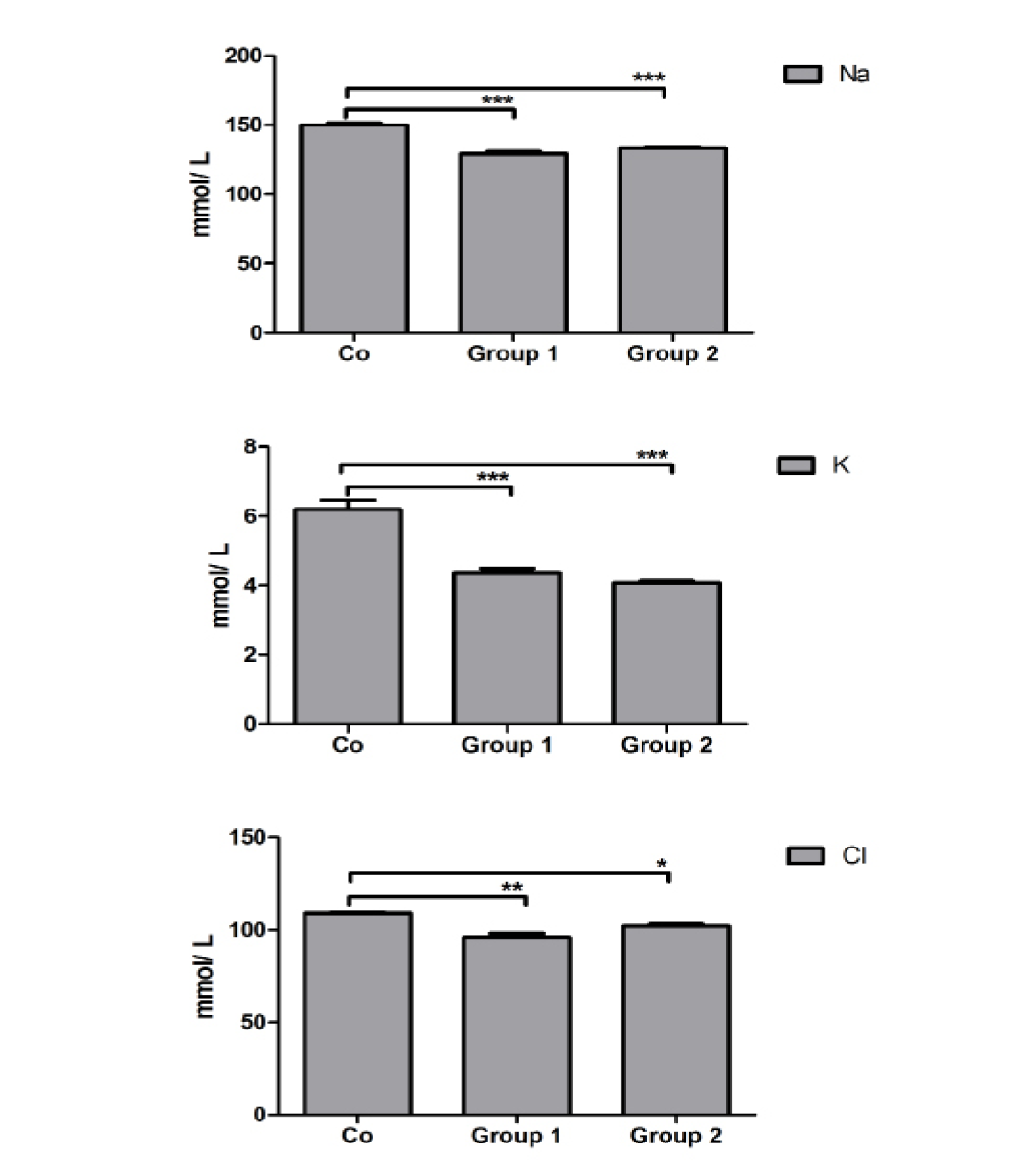
Level of various electrolytes in sera. Sodium level was found to be decreased significantly (P=0.0001) in both studied experimental groups as compared to the control group. Level of potassium and chloride were also decreased significantly against control. The results are representative of three animal series (mean ± S.E.M.).
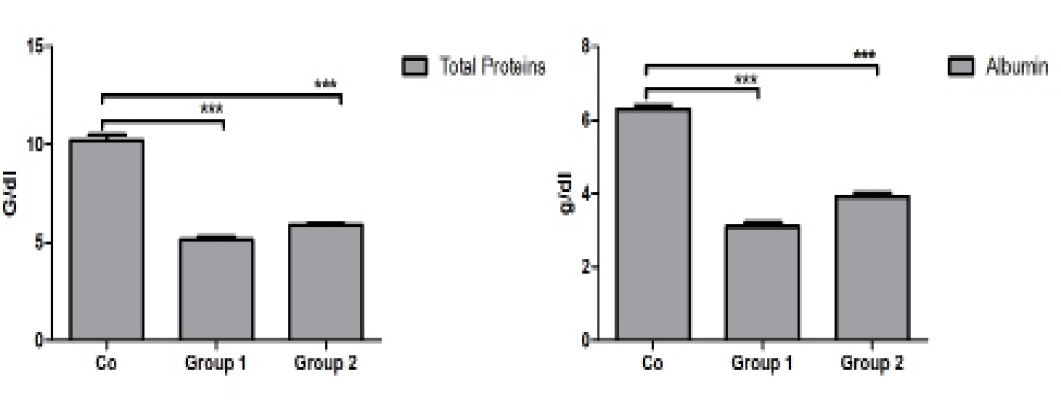
Level of total proteins and albumin in sera. The level of total proteins (P<0.0001) and albumin (P<0.0001) showed a similar trend and was found to be decreased significantly in both studied experimental groups as compared to the control group. The results are representative of three animal series (mean ± S.E.M.).
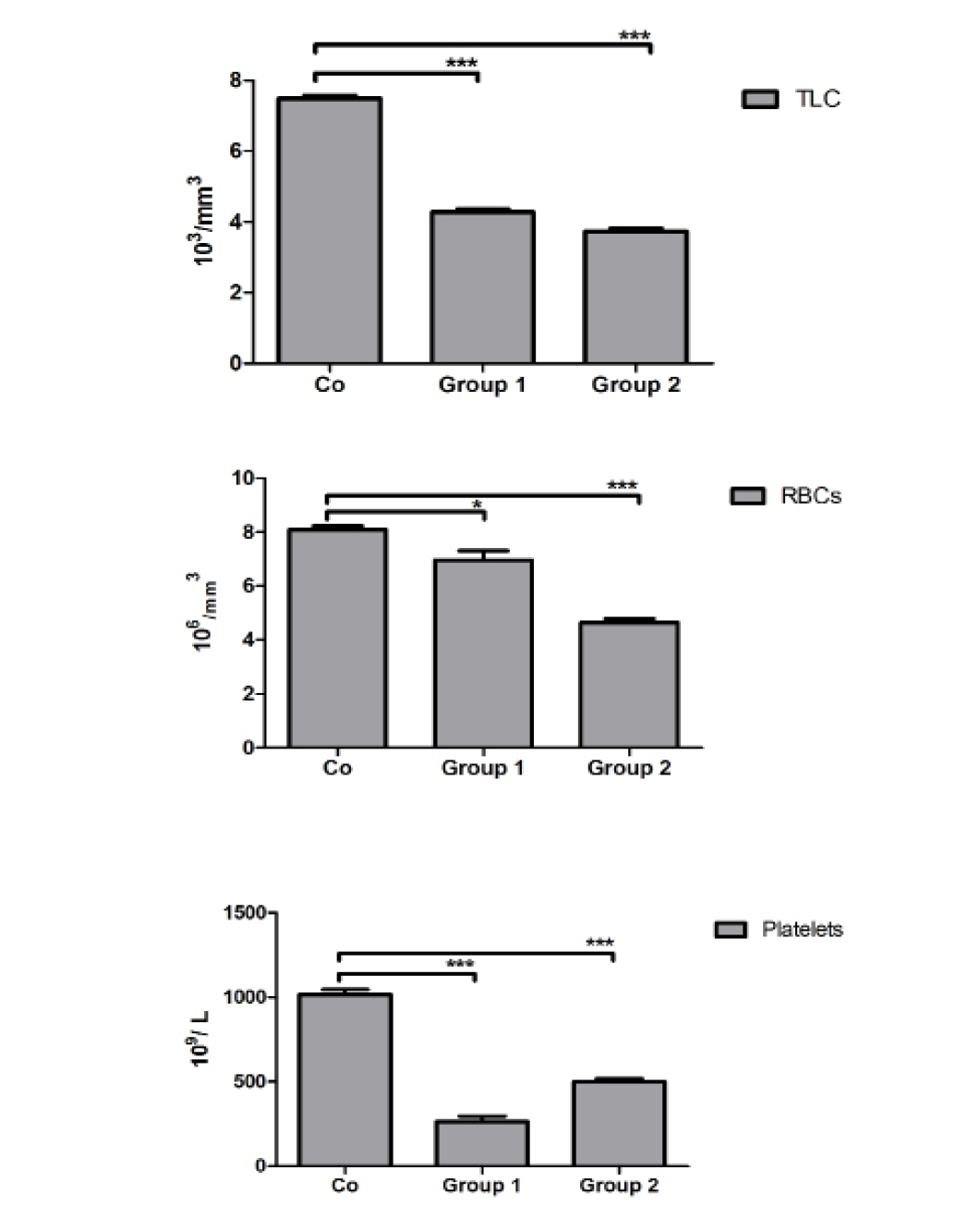
Level of WBCs, RBCs and Platelets in blood. WBCs, RBCs and Platelets all showed a significant negative change in the blood of both studied experimental groups as compared to the control group. The results are representative of three animal series (mean ± S.E.M.).
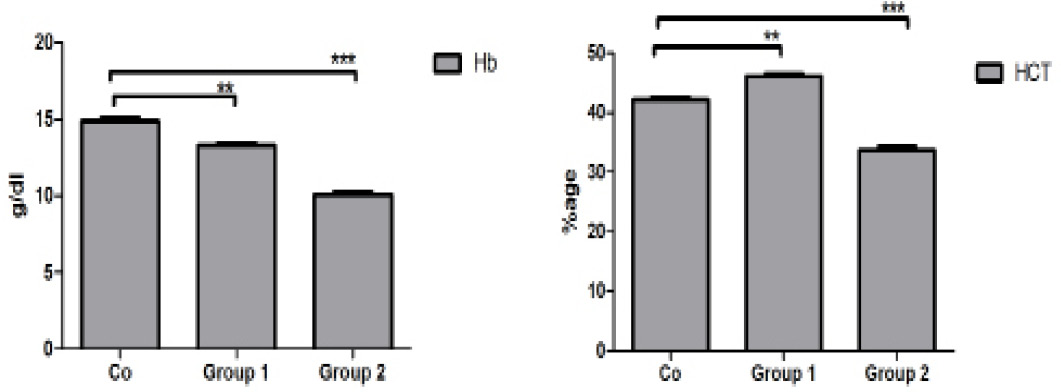
Level of Hb and HCT in blood. Hb level was found to be decreased significantly (P<0.0001) in both experimental groups as compared to the control group. Level of HCT (P<0.0001) was increased significantly in Group 1 against control while Group 2 showed opposite trend to Group 1. The results are representative of three animal series (mean ± S.E.M.).
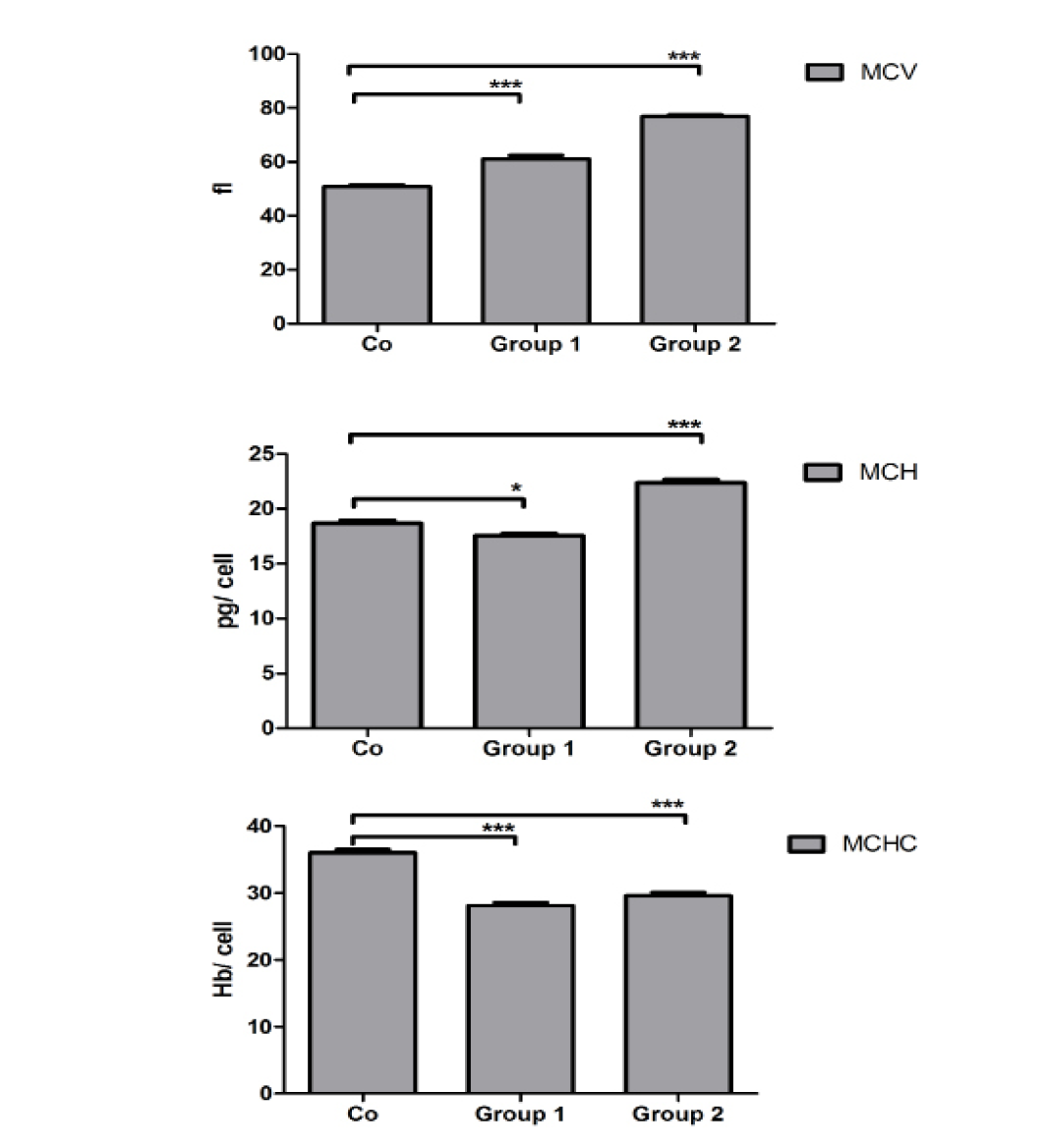
Level of MCV, MCH and MCHC in blood. MCV level was found to be increased significantly (P<0.0001) in both studied groups as compared to the control. Level of MCH (P<0.0001) was decreased significantly in Group 1 against control while Group 2 showed opposite trend to Group 1. Regarding MCHC (P<0.0001) both experimental groups showed a significant negative trend against control. The results are representative of three animal series (mean ± S.E.M.).
References
- Abbasi, M.H., Akhtar, T., Malik, I.A., Fatima, S., Khawar, B., Mujeeb, K.A., Mustafa, G., Hussain, S., Iqbal, J. and Sheikh, N., 2013. Acute and Chronic Toxicity of Thioacteamide and Alterations in Blood Cell Indices in Rats. J. Cancer Therap., 4: 251. https://doi.org/10.4236/jct.2013.41032[CrossRef]
- Al-Attar, A.M., 2012. Attenuating effect of Ginkgo biloba leaves extract on liver fibrosis induced by thioacetamide in mice. BioMed. Res. Int., 2012.
- Ali, M. and Sreekrishnan, T.R., 2001. Aquatic toxicity from pulp and paper mill effluents: a review. Adv. Environ. Res., 5(2): 175-196. https://doi.org/10.1016/S1093-0191(00)00055-1[CrossRef]
- Bajpai, P. and Bajpai, P.K. 1997. Reduction of organochlorine compounds in bleach plant effluents. Biotechnol. Pulp Paper Indus. Springer, 213-259. https://doi.org/10.1007/BFb0102076[CrossRef]
- Belem, A., Panteleitchouk, A.V., Duarte, A.C., Rocha-Santos, T.A.P. and Freitas, A.C., 2008. Treatment of the effluent from a kraft bleach plant with white rot fungi pleurotus sajor caju and pleurotus ostreatus. Glob. NEST J., 10(3): 426-431.
- Borusiak, P., Korn-Merker, E., Holert, N. and Boenigk, H.E., 1998. Hyponatremia induced by oxcarbazepine in children. Epilep. Res., 30(3): 241-246. https://doi.org/10.1016/S0920-1211(98)00012-6[CrossRef]
- Brenner, D.A., Buck, M., Feitelberg, S.P. and Chojkier, M., 1990. Tumor necrosis factor-alpha inhibits albumin gene expression in a murine model of cachexia. J. Clin. Invest., 85(1): 248. https://doi.org/10.1172/JCI114419[CrossRef]
- Burtis, C.A., Ashwood, E.R. and Bruns, D.E. 2012. Tietz textbook of clinical chemistry and molecular diagnostics. Elsevier Hlth. Sci.,
- Canada. Environment Canada. ENVIRONMENTAL PROTECTION SERVICE. (1986) Emissions and Trends of Common Air Contaminants in Canada. 1970-1980.
- Castell, J.V., Gomez-Lechon, M.J., David, M., Fabra, R., Trullenque, R. And Heinrich, P.C., 1990. Acute-phase response of human hepatocytes: regulation of acute-phase protein synthesis by interleukin-6. Hepatology., 12(5): 1179-1186. https://doi.org/10.1002/hep.1840120517[CrossRef]
- Chakraborty, M. and Kamath, J.V., 2014. Pharmacodynamic interaction of green tea extract with hydrochlorothiazide against ischemia-reperfusion injury-induced myocardial infarction. J. Adv. Pharm. Technol. Res., 5(3): 134-139. https://doi.org/10.4103/2231-4040.137428[CrossRef]
- Coso, J.D., Estevez, E., Baquero, R.L.A. and Mora-Rodriguez, R., 2008. Anaerobic performance when rehydrating with water or commercially available sports drinks during prolonged exercise in the heat. Appl. Physiol. Nutr. Metabol., 33(2): 290-298. https://doi.org/10.1139/H07-188[CrossRef]
- Costigan, S.L., Werner, J., Oulelet, J.D., Hill, L.G., and Law, R.D., 2012. Expression profiling and gene ontology analysis in fathead minnow (Pimephales promelas) liver following exposure to pulp and paper mill effluents. Aquat. Toxicol., 122–123 (2012): 44–55. https://doi.org/10.1016/j.aquatox.2012.05.011[CrossRef]
- Feria, M.J., Garcia, J.C., Perez, A., Gomide, J.L., Colodette, J.L. and Lopez, F., 2011. Process optimization in kraft pulping, bleaching, and beating of Leucaena diversifolia. BioRes., 7(1): 0283-0297.
- Galisteo, M., Suarez, A., Montilla, M.P., Fernandez, M.I., Gil, A. and Navarro, M.C., 2006. Protective effects of Rosmarinus tomentosus ethanol extract on thioacetamide-induced liver cirrhosis in rats. Phytomed., 13(1GÇô2): 101-108.
- Ghoreishi, S.M. and Haghighi, M.R., 2007. Chromophores removal in pulp and paper mill effluent via hydrogenation-biological batch reactors. Chem. Eng. J., 127(1): 59-70. https://doi.org/10.1016/j.cej.2006.09.022[CrossRef]
- Guru, S.K., Behera, R. and Behera, M.K., Fluoride induced alterations in erythrocyte and related parameters of an Air-breathing fish, Channa punctatus (Bloch). Bio life., 2(4):1371-1375.
- Khan, R.A., 2010. Influence of sediment contaminated with untreated pulp and paper mill effluent on winter flounder, Pleuronectes americaus. Arch. Environ. Contamin. Toxicol., 58 (1): 158–164. https://doi.org/10.1007/s00244-009-9343-6[CrossRef]
- Mohamed, A.K., 2012. The dimensional hematological alterations induced in blood of rats in vivo by intraperitoneal administration of gold nanoparticles. J. Nanomed. Nanotechnol.
- Musabayane, C.T., Cooper, R.G., Osim, E. and Balment, R.J., 2000. Renal electrolyte and fluid handling in the rat following chloroquine and/or ethanol administration. General Pharmacology:Vasc. System., 34(1): 43-51.
- Orrego, R., Pandelides, Z., Guchardi, J., and Holdway, D., 2011. Effects of pulp and paper mill effluent extracts on liver anaerobic and aerobic metabolizing enzymes in rainbow trout. Ecotoxicol. Environ. Safety., 74 (4): 761–768. https://doi.org/10.1016/j.ecoenv.2010.10.042[CrossRef]
- Perez, M., Torrades, F., Domenech, X. and Peral, J., 2002. Removal of organic contaminants in paper pulp effluents by AOPs: an economic study. J. Chem. Technol. Biotechnol., 77(5): 525-532. https://doi.org/10.1002/jctb.610[CrossRef]
- Pokhrel, D. and Viraraghavan, T., 2004. Treatment of pulp and paper mill wastewater-a review. Sci. Total Environ., 333(1): 37-58. https://doi.org/10.1016/j.scitotenv.2004.05.017[CrossRef]
- Roy, M., Chakrabarti, S.K., Bharadwaj, N.K., Chandra, S., Kumar, S., Singh, S., Bajpai, P.K. and Jauhari, M.B., 2004. Characterization of chlorinated organic material in Eucalyptus pulp bleaching effluents. J. Scient. Indus. Res., 63(6): 527-535.
- Selvakumar, K., Bavithra, S., Suganya, S., Ahmad Bhat, F., Krishnamoorthy, G. and Arunakaran, J., 2012. Effect of Quercetin on Haematobiochemical and Histological Changes in the Liver of Polychlorined Biphenyls-Induced Adult Male Wistar Rats. J. Biomark., 2013.
- Sinclair, W.F. (1990) Controlling Pollution from Canadian Pulp and Paper Manufacturers: A Federal Perspective.
- Springer, A.M. (2000) Industrial Environmental Control: Pulp and Paper Industry. Tappi Press.
- Thompson, G., Swain, J., Kay, M. and Forster, C.F., 2001. The treatment of pulp and paper mill effluent: a review. Biores. Technol., 77(3): 275-286. https://doi.org/10.1016/S0960-8524(00)00060-2[CrossRef]
- Wang, L.K., Hung, Y.T., Lo, H.H. and Yapijakis, C. 2005. Waste Treatment in the Process Industries. Taylor & Francis Group. https://doi.org/10.1201/9781420037159[CrossRef]
- Zhang, X.D., Wu, H.Y., Wu, D., Wang, Y.Y., Chang, J.H., Zhai, Z.B., Meng, A.M., Liu, P.X., Zhang, L.A. and Fan, F.Y., 2010. Toxicologic effects of gold nanoparticles in vivo by different administration routes. Int. J. Nanomed., 5: 771. https://doi.org/10.2147/IJN.S8428[CrossRef]
Services
Article usage statistics
Loading…