A Review of Negative Energy Balance in Dairy Cattle Among Smallholder Farmers.
The prevalence of NEB among smallholder farms in Indonesia is notably high, largely influenced by environmental heat stress and limited access to quality forage.
A comprehensive understanding of NEB in smallholder dairy systems is essential for improving the productivity and reproductive performance of FH dairy cattle in Indonesia.
The incidence of NEB in dairy cattle in Indonesia, as reflected by the prevalence of subclinical ketosis, ranges from 7.5% to 14% during the early lactation period.
Selected from the article's own text.
Abstract
Dairy farming’s in Indonesia predominantly managed by smallholder farmers operating on a limited scale. Although their a critical role in the national milk supply, the productivity remains relativity low, primarily due to restricted feed resources and suboptimal management practices. One of the major challenges encountered is Negative Energy Balance (NEB), which is an energy deficit occuring in early lactation dairy cattle when energy demand for milk synthesis exceeds dietary energy intake. NEB triggers excessive mobilization of body fat, elevates blood β-hydroxybutyrate (BHB) concentrations, and triggers oxidative stress and hepatic dysfunction. These physiological disturbances result in decrease levels of Insulin-like Growth Factor-1 (IGF-1), estrogen, and prolactin hormones, which ultimately lead to reduced milk production, reproductive disorders, and an increased susceptibility to metabolic disorders. The prevalence of NEB among smallholder farms in Indonesia is notably high, largely influenced by environmental heat stress and limited access to quality forage. Effective prevention requires a comprehensive management strategy encompassing improved feeding practices, optimized calving management, and targeted nutritional supplementation. Supplementation with compounds such as lecithin, leucine, vitamin E, and selenium has been shown to enhance energy status, support metabolic function, and mitigate oxidative stress. Furthermore, farmer training in modern management techniques including precise feeding schedules aligned with lactation physiology is essential. Regular health monitoring, particularly BHB level assessment, facilitates early detection of NEB. The adoption of precision technologies, such as feeding activity sensors, can further enable real-time monitoring of intake patterns. In addition, policy interventions through subsidies or incentives are critical to strengthening energy resilience and overall health in smallholder dairy systems.
The dairy farming sector in Indonesia is predominantly characterized by smallholder operations, which constitute approximately 80% of the total farming population, with the remainder represented by industrial-scale farms . Smallholder farms contribute the majority of national milk yield, typically maintaining only 2–5 dairy cattle per household . Despite their significant role in domestic milk supply, productivity remains relatively low, averaging 10 liters per cow per day or approximately 3,050 kg per lactation period . These figures highlight a substantial disparity when compared with the productive potential of Friesian Holstein (FH) cattle in their country of origin, where average yields reach 19.7–23 liters/head/day or up to 7,000 kg per lactation . This disparity becomes even more pronounced when benchmarked against the average milk yields reported in other major dairy-producing countries, such as Ireland (5,620 kg/lactation), Australia (6,500–8,400 kg/lactation), as well as Finland, Sweden, and Japan, where production levels have surpassed 9,000 to 10,000 kg per lactation .
Low milk production in Indonesian smallholder dairy farms is primarily attributed to limited capital, restricted access to high-quality forage, and insufficient land for forage cultivation . Consequently, the nutritional requirements of dairy cattle are often unmet, reducing production efficiency and weakening the competitiveness of smallholder systems. During early lactation, energy demands increase substantially, and inadequate dietary energy intake can precipitate Negative Energy Balance (NEB) . NEB is a metabolic state characterized by energy expenditure exceeding dietary intake . NEB occurs when energy intake fails to meet metabolic requirements, prompting mobilization of adipose tissue reserves into non-esterified fatty acids (NEFA) for Adenosine Triphosphate (ATP) synthesis and milk production ; .
Persistent NEB can lead to clinical and subclinical ketosis, metabolic disorders, and reproductive dysfunction. These conditions manifest as reduced Body Condition Score (BCS), lower conception rates, prolonged days open, and increased incidence of repeat breeding ; . Additionally, oxidative stress associated with elevated metabolic activity may induce systemic inflammation, ovarian dysfunction, and alterations in gene expression ; .
A comprehensive understanding of NEB in smallholder dairy systems is essential for improving the productivity and reproductive performance of FH dairy cattle in Indonesia. Although NEB has been extensively discussed in the global literature, research focusing on smallholder dairy farms particularly those characterized by limited land resources and financial constraints in Indonesia remains extremely scarce. Therefore, this paper aims to systematically review NEB occurrence in smallholder farms and its implications for animal health and reproductive efficiency.
Negative energy balance incidence rate in several countries and their impact on dairy cattle
Negative Energy Balance is a common physiological condition in early lactation dairy cattle, characterized by elevated metabolic demands for milk synthesis that exceed energy intake from feed ; . A primary indicator of NEB is a reduction in body condition score (BCS), which reflects the status of body energy reserves . A decline in BCS of more than 0.5 points indicates intensive mobilization of adipose tissue to meet energy requirements . This reduction not only compromises production performance but also impairs immune function, elevates the risk of reproductive disorders, and induces alterations in metabolite and hormonal profiles that negatively affect fertility . BCS assessment, based on visual appraisal and palpation, is widely employed to evaluate the health and energy status of dairy cattle . A decrease in BCS exceeding 1.0 points within the first month of lactation is associated with prolonged ovulation intervals, reduced conception rates, and increased incidence of health complications ; . Furthermore, cattle experiencing excessive BCS loss exhibit impaired embryonic development during the first week following artificial insemination.
The incidence of NEB in dairy cattle in Indonesia, as reflected by the prevalence of subclinical ketosis, ranges from 7.5% to 14% during the early lactation period. This prevalence indicates that a proportion of dairy cattle experience metabolic disorders strongly associated with energy deficiency . A decline in BCS serves as a critical indicator for detecting NEB, with the optimal BCS for Friesian Holstein (FH) dairy cattle ranging between 2.5 and 3.0 (Montiel-Olguin et al., 2019). Dairy cattle exhibiting high BCS (<3,5) are more susceptible to subclinical ketosis due to reduced feed intake, which promotes body fat mobilization and elevates blood ketone concentrations . A field study conducted on smallholder farms in the Lembang region of West Java revealed that 60% of FH dairy cattle experienced a BCS decline of more than 1.0 point within the first 30 days of lactation, indicating the presence of subclinical NEB. Consequently, 45% of these cattle exhibited reproductive disorders, including repeat breeding and prolonged days open. In addition, daily milk yield decreased markedly from 14 liters to 9 liters per cow per day, underscoring the significant impact of NEB on both reproductive performance and productivity.
Furthermore, approximately 40–55% of dairy cattle in Indonesia experience reproductive disorders associated with decreased BCS , indirectly reflecting the high prevalence of NEB in the field. Globally, blood β-hydroxybutyrate (BHB) concentrations in early lactation dairy cattle range from 0.7 to 1.5 mmol/L. Countries such as Argentina (0.9 mmol/L), Australia (0.7 mmol/L), Brazil (0.7 mmol/L), Chile (0.8 mmol/L), China (1.2 mmol/L), Colombia (0.7 mmol/L), Mexico (0.8 mmol/L), Russia (0.7 mmol/L), South Africa (0.9 mmol/L), and Ukraine (1.5 mmol/L) . In Asia, including Indonesia, BHB levels tend to be higher (≥1.0 mmol/L), indicating that dairy cows in tropical regions are more susceptible to NEB .
Metabolically, the most widely used biomarker for determining NEB status in dairy cattle is blood BHB concentration . BHB is considered reliable because of its stability in circulation. Elevated BHB levels indicate the severity of NEB, with concentrations between 0.59 and 0.97 mmol/L classified as mild NEB , while levels ≥1.1 mmol/L are indicative of severe NEB. High BHB concentrations are strongly correlated with oxidative stress and hepatocellular apoptosis, which impair liver function and lead to ketosis . Ketosis in dairy cattle results in substantial economic losses due to reduced milk yield, impaired reproductive performance, hormonal imbalances, increased culling rates, and, in severe cases, mortality (Soest et al., 2024). A field study on smallholder farms in the United States, based on blood analysis of FH cattle, reported an average BHB level of 1.3 mmol/L, indicating severe NEB and ketosis. The estimated annual cost per ketosis case ranges from USD 129 to 289, equivalent to approximately IDR 2,153,667–4,824,883. These costs primarily arise from veterinary and treatment expenses per animal, future reproductive performance losses (34%), mortality losses (26%), and reductions in expected milk productivity (26%) .
In addition to a reduction in BCS, cattle experiencing NEB also exhibit a decline in milk productivity. Milk yield is a critical determinant of dairy farm profitability and overall production efficiency. NEB is associated with decreased dry matter intake (DMI) and reduced feed efficiency, which negatively affect milk output and alter milk composition, including fat, protein, lactose, and total solids ; . Furthermore, insufficient energy intake limits the availability of amino acids required for the synthesis of milk components, thereby compromising milk quality .
Indonesia’s hot and humid tropical climate, with temperatures ranging from 26–34°C and relative humidity between 52–81%, deviates substantially from the optimal conditions for FH dairy cattle, which are approximately 18.3°C and 55% humidity . Heat stress under these conditions can reduce feed conversion efficiency by up to 50%, markedly decrease dry matter intake (DMI), and increase the risk of clinical NEB . During the summer, environmental temperatures may exceed 38.4°C, coinciding with calving rates of up to 70%, which indicates a high proportion of cattle in early lactation during this period. Limited forage availability combined with severe heat stress exacerbates NEB incidence, negatively affecting productivity and health, and further signaling the occurrence of ketosis in smallholder dairy farms .
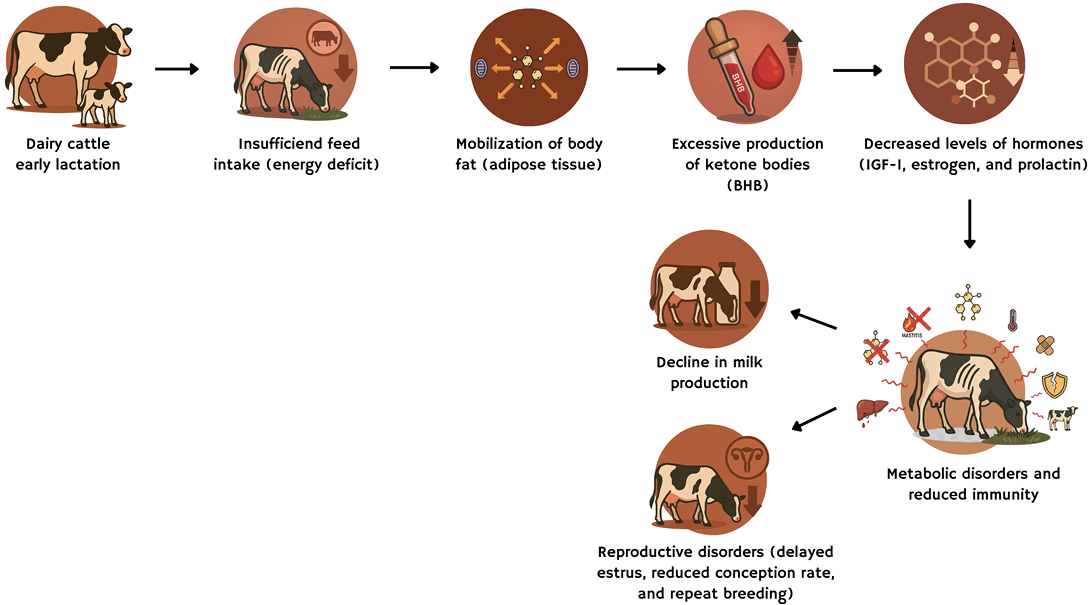
Increased growth hormone (GH) and decreased insulin concentrations lead to a reduction in insulin-like growth factor-1 (IGF-1) levels, which promotes lipolysis and non-esterified fatty acid (NEFA) release, thereby reducing glucose uptake. A decline in IGF-1 is considered a key indicator of NEB. Cattle experiencing NEB exhibit IGF-1 concentrations ranging from 27.18 ng/mL in mild NEB cases to approximately 11 ng/mL in severe NEB cases ; . Reduced IGF-1 levels are associated with decreased estrogen and prolactin concentrations, which prolong postpartum recovery, particularly ovarian activity ; . These hormonal changes contribute to reproductive disorders, inhibit estrous cycles, lower conception rates, and increase the incidence of repeat breeding ; ; . Furthermore, hormonal suppression compromises immune function, increasing susceptibility to infectious diseases such as mastitis, metritis, and retained placenta . Collectively, NEB represents a complex physiological condition that impairs both production and reproductive performance through interconnected metabolic and endocrine mechanisms.
Table 1 shows a comparison of NEB with Positive Energy Balance (PEB) dairy cattle based on references, while Figure 1. Shows the illustrations of the effects of NEB on dairy cattle.
Integrated strategis for effective management of negative energy balance in dairy cattle
Integrated strategies for effective management of NEB in dairy cattle rely on a synergistic approach that integrates feeding, calving management, maintenance practices, and targeted nutrition. This comprehensive strategy aims not only to enhance energy intake and prevent excessive mobilization of body fat but also to maintain metabolic homeostasis, support reproductive health, and ensure sustainable milk production and quality.
Feed management
Feed management during early lactation is a critical component in mitigating NEB, as energy requirements increase substantially while feed intake capacity remains suboptimal . During the transition period approximately three weeks before and after calving the primary objective is to maximize DMI through the provision of high-quality feed with balanced nutrient composition . A strategic combination of high-quality forage and nutrient-dense concentrates can help meet the physiological demands of dairy cattle, thereby reducing the risk of metabolic disorders such as ketosis ; .
Feeding energy-restricted diets during the dry period has demonstrated positive effects on metabolic adaptation and reduced the incidence of mild NEB postpartum without compromising milk yield . Optimizing feed quality, texture, and aroma is essential for maintaining palatability and consistent intake, particularly under conditions of physiological and hormonal stress caused by decreased progesterone, elevated corticosteroids, and environmental heat stress .
Feeding frequency and ration size also influence metabolic homeostasis . Dairy cattle fed twice or more daily exhibit less feed sorting compared to those fed once per day. Therefore, feed management should be complemented by regular monitoring of BCS and blood metabolites as indicators of energy status . Dynamic feed adjustments based on lactation stage and body condition are strongly recommended to prevent excessive deterioration of body reserves.
Nutritional supplementation represents a vital component of NEB management, particularly during the transition and early lactation phases when energy demands peak . The primary objectives of supplementation are to improve energy balance, support metabolic function, and prevent physiological disorders that compromise productivity and health .
Energy supplementation
Providing additional energy sources such as propylene glycol, glucose, and rumen-protected fat can enhance energy availability without disrupting rumen fermentation . Propylene glycol is particularly effective in reducing blood BHB concentrations and preventing subclinical ketosis . This supplement is typically administered orally or incorporated into feed for 7–14 days postpartum .
Protein supplementation
High-quality protein supplementation, especially rumen undegradable protein (RUP), plays a critical role in reducing body protein catabolism, supplying essential amino acids for milk synthesis and tissue recovery, and improving energy utilization efficiency . Adequate levels of methionine and lysine enhance energy conversion into milk components , indirectly improving energy balance. Protein supplementation also supports immune and reproductive functions . Conversely, protein deficiency can impair immune response and exacerbate postpartum reproductive disorders, which often coincide with NEB . Energy supplementation without adequate protein may lead to metabolic imbalances, such as elevated blood nitrogen or reduced rumen microbial efficiency .
Essential amino acid supplementation
Leucine is an essential amino acid that plays a pivotal role in protein synthesis and the regulation of energy metabolism . Supplementation with leucine has been shown to enhance energy utilization efficiency, accelerate tissue recovery, and support milk yield . Alongside leucine, methionine, and lysine are critical for milk component synthesis and reproductive function . Notably, leucine supplementation has successfully reduced blood BHB concentrations to 0.68–0.72 mmol/L within three weeks postpartum, while progressively improving body condition score (BCS) and milk yield .
Vitamin and mineral supplementation
Vitamin E and selenium act as potent antioxidants that protect cellular structures from oxidative stress associated with increased metabolic activity during NEB . Deficiencies in these micronutrients can compromise immune function and elevate the risk of metabolic disorders such as mastitis and metritis . Additionally, calcium and magnesium are essential for supporting muscle contraction and nerve function during and after parturition .
Choline and lecithin supplementation
Choline and lecithin play essential roles in lipid metabolism and hepatic function . Supplementation with rumen-protected choline has been shown to reduce hepatic fat accumulation and enhance lipid metabolic efficiency . Similarly, lecithin supports lipid transport and improves the overall metabolic profile of dairy cattle during periods of NEB .
Table 1: Comparison of NEB with PEB in dairy cattle.
Indicator
NEB
PEB
Reference
BCS
2.6
3.5
Triwutanon and Rukkwamsuk, 2021
BHB (mg/dL)
7.8
6.0
Hod et al., 2023
IGF-1 (ng/mL)
27.18
78.04
Kupiainen, 2021
NEFA (mmol/L)
0.85
0.55
Wang et al., 2022
Glucose (mg/dL)
57.5
62.9
Hod et al., 2023
Negative Energy Balance (NEB); and Positive Energy Balance (PEB). BCS= Body Condition Score; BHB= Beta-Hydroxybutyrate; IGF-1= Insulin-like Growth Factor 1; NEFA= Non-Esterified Fatty Acids.
Probiotic and prebiotic supplementation
Probiotics such as Saccharomyces cerevisiae and Lactobacillus spp. Enhance rumen microbial activity (Lambo et al., 2024); improve fiber fermentation ; and increase DMI . Prebiotics, including Mannan-oligosaccharides (MOS), contribute to gastrointestinal health and strengthen immune function .
Grouping based on needs
Supplementation strategies should be tailored to the lactation phase, body condition, and metabolic history of the cow (Taufarelli et al., 2024). Grouping cattle based on BCS and reproductive status enables more targeted nutritional interventions, thereby effectively minimizing the impact of NEB .
Table 2 provides a summary of the various types of nutritional supplementation commonly applied in NEB management for dairy cattle, including their primary objectives and examples of frequently used supplements.
Calving management
Birth management is a critical phase that significantly influences the health status and lactation performance of dairy cattle. Proper calving planning aims to minimize physiological stress during parturition, accelerate postpartum recovery, and enhance feed intake after calving . Comfortable housing conditions, strict sanitation, and appropriate calving assistance reduce the risk of complications such as dystocia, which can exacerbate energy deficits .
Adequate nutritional intake and hydration before and during calving are essential, including sufficient mineral and energy supply to support optimal parturition . Nutritional interventions during the periparturient period have been shown to improve milk yield and reduce the prevalence of NEB-related metabolic disorders such as ketosis ; .
Intensive monitoring during and after calving, including clinical assessment of NEB indicators and BCS measurement, is crucial for early intervention. Managing cattle to calve at an optimal BCS of 3.0–3.5 minimizes NEB risk . Additionally, technologies
Table 2: Types of nutritional supplementation used in NEB management in dairy cattle, along with their main purposes and examples of supplements.
Types of supplements
Main objective
Example of supplements
Energy
Increasing energy availability, preventing ketosis, and supporting milk yield(a)
Propylene glycol, glucose, protected fats(b)
Protein
Provides nitrogen and amino acids for protein synthesis, tissue growth and repair(c)
Rumen undegradable protein (RUP), fish meal, protected soybean meal(d)
Essential Amino Acids
Provides key limiting amino acids, particularly methionine and lysine, which escape rumen degradation for optimization of energy metabolism and milk yield and components (milk proteins)(e)
Leucine, Methionine, Lysine
Vitamin and Mineral
Meets increased needs for fat-soluble vitamins, minerals as antioxidants, supports immune function and muscle function(g)
Vitamin E, Selenium, Calcium, and Magnesium(h)
Colin and Lecithin
Supports fat metabolism and liver function(i)
Rumen-protected choline chloride and Lecithin(j)
Probiotic and Prebiotic
Improves rumen fermentation and digestive health(k)
Live yeast (Saccharomyces cerevisiae), (Lactobacillus spp) and Mannan-oligosaccharides (MOS)(l)
Grouping
Improving palatability strategies based on lactation phase, body condition, and metabolic history (m)
Based on BCS, Reproductive Status(n)
(a) Sycheva et al., 2021; (b) Zhang et al., 2025; (c) Benn, 2023; (d) Mohammadkhani et al., 2025; (e) Benoit and Whitehouse, 2025; (f) Kim and lee, 2021; (g) Andres et al., 2024; (h) Mitra et al., 2022; (i) Obeid et al., 2024; (j) Wang et al., 2021; (k) Chowdhury et al., 2025; (l) Zeeshan et al., 2023; (m) Souza et al., 2025; (n) Antanaitis et al., 2022.
such as blood BHB testing enable rapid detection of ketosis, allowing timely administration of energy supplements or corrective measures. Effective calving management accelerates the onset of active lactation and supports overall productivity and health in dairy cattle .
Maintenance management
Optimal maintenance management is essential for sustaining stable production performance in dairy cattle, particularly during the transition period and early lactation when the risk of NEB is highest. Effective maintenance strategies include maximizing feed intake, implementing routine health monitoring, and managing the housing environment to ensure thermal comfort .
Dairy cattle experiencing NEB typically exhibit reduced immune responsiveness, making them more susceptible to infections and metabolic disorders such as mastitis and metritis (Mezzeti et al., 2014; . Therefore, strict barn sanitation and robust biosecurity measures are critical, especially for early lactation cattle, to prevent disease complications that exacerbate NEB.
Environmental comfort plays a pivotal role in mitigating heat stress, a major contributor to NEB. The optimal temperature range for dairy cattle is 15–25°C with relative humidity between 50–78% . Implementing water-based cooling systems and efficient cross-ventilation can reduce barn microclimate temperatures and improve air circulation, thereby supporting thermal comfort and maintaining feed intake at optimal levels .
Adequate water availability is equally important for hydration, thermoregulation, and metabolic function. Stress management strategies should include temperature regulation, proper ventilation, and provision of high-quality feed to stimulate appetite even under hormonal imbalances caused by stress . Additionally, supplementation with antioxidants such as vitamin E and selenium, as well as bioactive compounds, can help mitigate the adverse effects of stress on metabolism and immune function.
The role of leucine feed supplements in reducing negative energy balance
Leucine is an essential amino acid that plays a central role in regulating energy metabolism and protein synthesis, particularly in dairy cattle experiencing NEB. Leucine supplementation activates the mammalian target of rapamycin complex 1 (mTORC1) signaling pathway, which enhances muscle protein synthesis and reduces proteolysis, thereby helping to preserve muscle mass during early lactation ; .
Incorporating leucine into the diet not only improves the efficiency of other amino acid utilization but also optimizes overall energy metabolism. Leucine contributes to hepatic function by promoting gluconeogenesis and lipid metabolism, while reducing the accumulation of ketone bodies such as BHB, which typically increases in cattle with NEB .
Moreover, leucine plays a role in strengthening immune responses, enabling cattle to better cope with physiological stress and maintain productivity. Recent studies indicate that leucine supplementation during early lactation enhances milk yield and improves the milk metabolomic profile, including increased milk protein content ; .
Thus, leucine supplementation represents a precision nutrition strategy that not only supports energy recovery and metabolic stability but also improves production performance and overall health during the critical NEB period.
CONCULUSION
Negative energy balance is a major contributor to reduced productivity in dairy cattle, particularly during early lactation when energy demands rise sharply but are not met by adequate feed intake. This imbalance results in elevated blood BHB concentrations, decreased BCS, metabolic disturbances, and reductions in key hormones such as IGF-1, estrogen, and prolactin, all of which negatively affect milk yield and reproductive performance. The high prevalence of NEB underscores the need for rigorous nutritional and management intergration. Indicators such as declining BCS, increased BHB levels, and reduced milk yield should serve as benchmarks for assessing metabolic status in dairy cattle. The extensive impact of NEB from health disorders to impaired reproductive efficiency necessitates comprehensive management strategies. Effective NEB mitigation can be achieved through high-quality feed management, optimal calving practices, and maintenance of housing environments that promote thermal comfort. Nutritional supplementation, including essential amino acids such as leucine, has demonstrated benefits in improving energy balance, enhancing nutrient utilization efficiency, and supporting hepatic and immune functions. Furthermore, optimal environmental management including control of temperature, humidity, ventilation, and water availability plays a critical role in reducing heat stress, a key factor exacerbating NEB. Integrating nutritional strategies with environmental stress control offers a sustainable approach to improving productivity and health in dairy cattle during the critical early lactation period.
Acknowledgement
The authors express their highest gratitude to the Faculty of Animal Science, Hasanuddin University, Makassar, Indonesia, for providing the institutional support and academic environment necessary to complete this review article. Deep appreciation is also extended to the supervisors for their invaluable guidance, constructive insights, and continuous encouragement throughout the manuscript preparation. Finally, the authors would like to dedicate a special acknowledgment to the smallholder dairy farmers, whose dedication, resilience, and field challenges inspired the core insights and synthesis of this study.
Novelty Statement
While Negative Energy Balance (NEB) in high-producing dairy cattle has been extensively documented globally, its specific occurrence, risk factors, and practical mitigation strategies within smallholder farming systems in tropical regions-particularly Indonesia-remain critical research gaps. This review fills this vacuum by systematically evaluating the metabolic, physiological, and hormonal impacts of NEB under smallholder constraints, such as limited capital, land scarcity for high-quality forage, and heat stress. Furthermore, it highlights localized, cost-effective prevention strategies, including precision feeding schedules and the incorporation of fortified local forages, offering a tailored framework to enhance smallholder dairy resilience and productivity.
Author’s Contribution
Azisah Nurfadilah: Conceptualization, methodology, formal analysis, data curation, writing original draft preparation. Renny Fatmyah Utamy: Supervision, conceptualization, writing review and editing, validation, corresponding author. Muhammad Ihsan A. Dagong: Supervision, validation, visualization. Ambo Ako: Supervision, investigation, resources. Irmayanti, Zyahrul Ramadan, Ikran, Nur Fajri Muhlis: Data collection, literature screening, software support, and critical revision of the manuscript. All authors have read and agreed to the published version of the manuscript.
Generative AI and AI assisted technology statement
The authors declare that no generative AI and AI assisted technology was used in the creation of this manuscript.
Conflict of interest
The authors have declared no conflict of interest.
Figures
Figure 1:.
Effect of NEB on dairy cattle.
References
Amin YA, Mahmoud AEZ, Ali RA, Fouad SS, Shanab O, Ibrahim RM, Mohamed RH (2023). Treatment of inactive ovaries of Holstein dairy cows by epidural injection of gnrh analogue (receptal) and its impact on the reproductive hormones, oxidant/antioxidant profile and micro and macro-elements profile. Animals, 13(4): 653. https://doi.org/10.3390/ani13040653[CrossRef]
Andrès E, Lorenzo VN, Terrade JE, Méndez BM (2024). Fat-soluble vitamins A, D, E, and K: Review of the literature and points of interest for the clinician. J. Clin. Med., 13(13): 36-41. https://doi.org/10.3390/jcm13133641[CrossRef]
Antanaitis R, Malašauskienė D, Televičius M, Urbutis M, Rutkauskas A, Šertvytytė G, Baumgartner W (2022). Associations of automatically recorded body condition scores with measures of production, health, and reproduction. Agriculture, 12(11): 18-34. https://doi.org/10.3390/agriculture12111834[CrossRef]
Araee AK, Ghoorchi T (2023). The role of choline in ruminant nutrition. Prof. J. Domest., 22(3): 13-22.
Asmarasari SA, Azizah N, Sutikno S, Puastuti W, Amir A, Praharani L, Hayanti SY (2023). A review of dairy cattle heat stress mitigation in Indonesia. Vet. World, 16(5): 1098. https://doi.org/10.14202/vetworld.2023.1098-1108.[CrossRef]
Bercea SCM, Constantin NT, Popescu D, Bîrțoiu D, Vlagioiu C (2020). Peripartum metabolites and hormonal imbalance that can influence cow fertility: A review. Scientific works. Vet. Med., 66(2): 25-29.
Brunner N, Groeger S, Canelas RJ, Bruckmaier RM, Gross JJ (2019). Prevalence of subclinical ketosis and production diseases in dairy cows in Central and South America, Africa, Asia, Australia, New Zealand, and Eastern Europe. Trans. Anim. Sci., 3(1): 84-92. https://doi.org/10.1093/tas/txy102[CrossRef]
Caixeta LS, Omontese BO (2021). Correlation of blood calcium and milk calcium in early lactating dairy cows: Literature review. J. Anim. Sci Nusantara., 11(2): 19-31.
Cargile B, Tracy D (2021). Interaction of nutrition and reproduction in the dairy cow. Reproduction, pp. 389-398. https://doi.org/10.1002/9781119602484.ch32[CrossRef]
Chaput C, and Sirard MA. 2020. Embryonic response to high beta-hydroxybutyrate (BHB) levels in postpartum dairy cows. Domest. Anim. Endocrinol., 72 :106-131. https://doi.org/10.1016/j.domaniend.2019.106431.[CrossRef]
Chen YH, Chen YM, Tu PA, Lee KH, Chen JY, Hsu JT (2023). Effect of supplementing vitamin E, selenium, copper, zinc, and manganese during the transition period on dairy cow reproductive performance and immune function. Vet. Sci., 10(225): 1-15. https://doi.org/10.3390/vetsci10030225[CrossRef]
Chowdhury MR, Hassan M, Shimosato T (2025). Gut health management in livestock: Roles of probiotics, prebiotics, and synbiotics in growth, immunity, and microbiota modulation. Vet. Res. Commun. 49(361): 1-15. https://doi.org/10.1007/s11259-025-10927-1[CrossRef]
Christi RF, Salman LB, Alfikri I (2023). Evaluation of milk production and reproduction performance of Friesian Holstein dairy cows at BPT HMT Cikole Lembang. J. Anim. Res., 4(1): 1-7. https://doi.org/10.24198/jsdh.v4i1.48548[CrossRef]
Dai L, Liu Z, Guo L, Chai Y, Yang Y, Wang Y, Zhang W (2023). Multi-tissue transcriptome study of innate immune gene expression profiling reveals negative energy balance altered the defense and promoted system inflammation of dairy cows. Vet. Sci., 10(2): 1-17. https://doi.org/10.3390/vetsci10020107[CrossRef]
Dar MR, Singh M, Thakur S, Verma A (2021). Exploring the relationship between polymorphisms of leptin and IGF-1 genes with milk yield in indicine and taurine crossbred cows. Trop. Anim. Health Prod., 53(413): 1-8. https://doi.org/10.1007/s11250-021-02866-1[CrossRef]
Delelesse GD (2021). Role of feeding dietary energy and other nutrients to dairy cows on performance and immune status of dairy cows during the periparturient period., Acad. Res. J. Agric. Sci. Res., 9(4): 143-154.
Desta AG (2024). The effect of crude protein and energy on conception of dairy cow: A review. Discover Anim., 1(1): 1-9. https://doi.org/10.1007/s44338-024-00030-1[CrossRef]
Du XE, Cui Z, Zhang R, Zhao K, Wang L, Yao J, Cao Y (2023). The effects of rumen-protected choline and rumen-protected nicotinamide on liver transcriptomics in periparturient dairy cows. Metabolites, 13(5): 1-16. https://doi.org/10.3390/metabo13050594[CrossRef]
Elghandour MM, Abu HSH, Cone JW, Salem AZ, Anele UY, Alcala CY (2024). Prospect of yeast probiotic inclusion enhances livestock feeds utilization and performance: An overview. Biomass Convers. Biorefin., 14(3): 2923-2935. https://doi.org/10.1007/s13399-022-02562-6[CrossRef]
Elsaadawy SA, Wu Z, Wang H, Hanigan MD, Bu D (2022). Supplementing ruminally protected lysine, methionine, or combination improved milk production in transition dairy cows. Front. Vet. Sci., 9: 1-17. https://doi.org/10.3389/fvets.2022.780637[CrossRef]
Fadillah A, Van DBBH, Poetri ON, Hogeveen H, Umberger W, Hetherington J, Schukken YH (2023). Smallholder milk-quality awareness in Indonesian dairy farms. J. Dairy. Sci., 106(11): 7965-7973. https://doi.org/10.3168/jds.2023-23267[CrossRef]
Fenwick MA, Llewellyn S, Fitzpatrick R, Kenny DA, Murphy JJ, Patton J, Wathes DC (2008). Negative energy balance in dairy cows is associated with specific changes in IGF-binding protein expression in the oviduct. Reproduction, 135(1): 63-75. https://doi.org/10.1530/REP-07-0243[CrossRef]
Freitas DCJ, Barbosa MJB, Guterres VML (2025). Negative energy balance and reproductive hormones in postpartum beef cows under intensive systems. Formosa J. Sci. Technol., 4(8): 2547-2560. https://doi.org/10.55927/fjst.v4i8.199[CrossRef]
Galadima AM (2024). The behavior of cattle during and after parturition. J. Dairy Sci., 4(1): 29-38. https://doi.org/10.1002/9781394204007.ch4[CrossRef]
Gallagher K, Bernstein I, Collings C, Main D, Ahmad G, Naughton S, Zhou Z (2024). Abomasal infusion of branched-chain amino acids or branched-chain keto-acids alter lactation performance and liver triglycerides in fresh cows. J. Anim. Sci. Biotechnol., 15(13): 1-13. https://doi.org/10.1186/s40104-023-00973-7[CrossRef]
Gilbreath KR, Bazer FW, Satterfield MC, Wu G (2021). Amino acid nutrition and reproductive performance in ruminants. In: Amino acids in nutrition and health: amino acids in the nutrition of companion, zoo and farm. Animals, pp. 43-61. https://doi.org/10.1007/978-3-030-54462-1_4[CrossRef]
Grossi S, Dell AM, Rossi L, Compiani R, Sgoifo RCA (2021). Supplementation of live yeast, mannan oligosaccharide, and organic selenium during the adaptation phase of newly arrived beef cattle: Effects on health status, immune functionality, and growth performance. Antibiotics, 10(9): 1-12. https://doi.org/10.3390/antibiotics10091114[CrossRef]
Grzybowska D, Żarczyńska K, Sobiech P, Brym P, Tobolski D (2025). Persistently high concentrations of β-hydroxybutyrate affect hepatic SOD2 expression and blood SOD activity in high-yielding dairy cows. BMC Vet. Res., 21(1): 12. https://doi.org/10.1186/s12917-024-04464-3[CrossRef]
Hod A, Daddam JR, Kra G, Kamer H, Portnick Y, Moallem U, Zachut M (2023). Glucose-6-phosphate dehydrogenase activity in milk may serve as a non-invasive metabolic biomarker of energy balance in postpartum dairy cows. Metabolites, 13(2): 1-12. https://doi.org/10.3390/metabo13020312[CrossRef]
Hu H, Wang L, Zhang R, Tian M, Zhang S, Li H, Cao Y (2025). An overview of the development of perinatal stress-induced fatty liver and therapeutic options in dairy cows. Stress Biol., 5(14): 1-12. https://doi.org/10.1007/s44154-024-00206-5[CrossRef]
Huang B, Khan MZ, Kou X, Chen Y, Liang H, Ullah Q, Wang C (2023). Enhancing metabolism and milk production performance in periparturient dairy cattle through rumen-protected methionine and choline supplementation. Metabolites, 13(10): 1-24. https://doi.org/10.3390/metabo13101080[CrossRef]
Ibrahim N, Kirmani MA (2021). Milk fever in dairy cows: A systematic review. J. Biol., 9(3): 1-12. https://www.researchgate.net/publication/350942379_Milk_Fevews_A_Systematic_Review
Jafri SH, Adnan KM, Baimbill JS, Talukder AA, Yu M, Osei E (2024). Challenges and solutions for small dairy farms in the US: A review. Agriculture, 14(12): 1-25. https://doi.org/10.3390/agriculture14122369[CrossRef]
Jeong JK, Kim IH (2022). Risk factors for repeat breeder dairy cows and their impacts on reproductive performance. Korean J. Vet. Res., 62(2): 1-8. https://doi.org/10.14405/kjvr.20220003[CrossRef]
Kamali S, Ahmadi MR (2022). Exploring the relationship between changes in postpartum BCS (body condition score) and reproductive performance in dairy herds. J. Hell. Vet. Med. Soc., 73(1): 3641-3650. https://doi.org/10.12681/jhvms.25378[CrossRef]
Kaniamuthan S, Manimaran A, Kumaresan A, Wankhade PR, Karuthadurai T, Sivaram M, Rajendran D (2025). Biochemical indicators of energy balance in blood and other secretions of dairy cattle: A review. Agricultural, 46(2): 247-255.
Khan MZ, Huang B, Kou X, Chen Y, Liang H, Ullah Q, Wang C (2024). Enhancing bovine immune, antioxidant and anti-inflammatory responses with vitamins, rumen-protected amino acids, and trace minerals to prevent periparturient mastitis. Frontiers, 14: 1-25. https://doi.org/10.3389/fimmu.2023.1290044[CrossRef]
Kim JE, Lee HG (2021). Amino acids supplementation for the milk and milk protein production of dairy cows. Animals, 11(7): 1-11. https://doi.org/10.3390/ani11072118[CrossRef]
Kim SH, Ramos SC, Valencia RA, Cho YI, Lee SS (2022). Heat stress: Effects on rumen microbes and host physiology, and strategies to alleviate the negative impacts on lactating dairy cows. Frontiers, 13: 1-23. https://doi.org/10.1080/10253890.2021.2024164[CrossRef]
Kolani K, Wang Y, Zhou D, Nouyep TJU, Okolo CV (2023). Passive building design for improving indoor thermal comfort in tropical climates: A bibliometric analysis using CiteSpace. J. Sage, 32(6): 1095-1114. https://doi.org/10.1177/1420326X231158512[CrossRef]
Kotsampasi B, Karatzia MA, Tsiokos D, Chadio S (2024). Nutritional strategies to alleviate stress and improve welfare in dairy ruminants. Animals, 14(17): 1-30. https://doi.org/10.3390/ani14172573[CrossRef]
Kour D, Sharma D, Sharma VK, Mahesh MS (2024). Additives and nutritional supplements for transition cows. In: Feed additives and supplements for ruminants. Singapore: Springer Nat. Singap. pp. 337-365. https://doi.org/10.1007/978-981-97-0794-2_15[CrossRef]
Lambo MT, Chang X, Liu D (2021). The recent trend in the use of multistrain probiotics in livestock production: An overview. Animals, 11(10): 1-15. https://doi.org/10.3390/ani11102805[CrossRef]
Lei MAC, Simões J (2021). Invited review: Ketosis diagnosis and monitoring in high-producing dairy cows. J. Dairy. Sci., 2(2): 303-325. https://doi.org/10.3390/dairy2020025[CrossRef]
Lovarelli D, Minozzi G, Arazi A, Guarino M, Tiezzi F (2024). Effect of extended heat stress in dairy cows on productive and behavioral traits. Animal, 18(3): 1-11. https://doi.org/10.1016/j.animal.2024.101089[CrossRef]
Manríquez, D, Thatcher WW, Santos JEP, Chebel RC, Galvão KN, Schuenemann GM, Pinedo P (2021). Effect of body condition change and health status during early lactation on performance and survival of Holstein cows. J. Dairy. Sci., 104(12): 12785-12799. https://doi.org/10.3168/jds.2020-20091[CrossRef]
Martens H (2023). Invited review: Increasing milk yield and negative energy balance: A gordian knot for dairy cows? Animals, 13(19): 1-18. https://doi.org/10.3390/ani13193097[CrossRef]
Mekuriaw Y (2023). Negative energy balance and its implication on productive and reproductive performance of early lactating dairy cows. J. Appl. Anim. Res., 51(1): 220-228. https://doi.org/10.1080/09712119.2023.2176859[CrossRef]
Melendez P, Bartolome J, Gonzalez G, Lastra DG, Pinedo P (2025). Body condition score at calving, subclinical ketosis, postpartum body condition score losses, diseases, and fertility in Holstein cows: modelling confounding associations. Vet. Anim. Sci., 29: 1-7. https://doi.org/10.1016/j.vas.2025.100493[CrossRef]
Meliana DA, Rohmawati ON (2023). Literature review: Analisis usaha peternakan sapi perah di eks keresidenan kediri jawa timur. J. Ilm. Peternak. Halu Oleo., 5(3): 246-251. https://doi.org/10.56625/jipho.v5i3.40747[CrossRef]
Melnik BC (2012). Excessive leucine-mTORC1-signalling of cow milk-based infant formula: The missing link to understand early childhood obesity. J. Obes., 2012(1). https://doi.org/10.1155/2012/197653[CrossRef]
Méndez MN, Swanepoel N, Robinson PH, Pons V, Jasinsky A, Adrien MDL, Chilibroste P (2024). Behavior, intake, digestion and milk yield of early lactation Holstein dairy cows with two levels of environmental exposure and feeding strategy. Animals, 14(13): 1-17. https://doi.org/10.3390/ani14131905[CrossRef]
Mezzetti M, Carpenter G, Bradford B, Trevisi E (2024). Metabolism and inflammation in dairy cows. In: Production diseases in farm animals: Pathophysiology, prophylaxis and health management. pp. 49-97. https://doi.org/10.1007/978-3-031-51788-4_4[CrossRef]
Mitra S, Paul S, Roy S, Sutradhar H, Bin ET, Nainu F, Mubarak MS (2022). Exploring the immune-boosting functions of vitamins and minerals as nutritional food bioactive compounds: A comprehensive review. Molecules, 27(2): 2-42. https://doi.org/10.3390/molecules27020555[CrossRef]
Mohammadkhani H, Amirabadi FT, Eslamian FN (2025). Structural and metabolic responses of Holstein heifers to rumen undegradable protein supply. Iran Agric. Res., 44(2): 81-89.
Montiel OLJ, Ruiz LFJ, Mellado M, Estrada CE, Gómez RS, Elton PJE, Vera AHR (2019). Body condition score and milk production on conception rate of cows under a small-scale dairy system. Animals, 9(10): 2-10. https://doi.org/10.3390/ani9100800[CrossRef]
Mota LF, Santos SW, Júnior GAF, Bresolin T, Mercadante ME, Silva JA, and Albuquerque LG. (2022). Meta-analysis across Nellore cattle populations identifies common metabolic mechanisms that regulate feed efficiency-related traits. BMC genomics., 23(1): 1-12. https://doi.org/10.1186/s12864-022-08671-w[CrossRef]
Niknia AD, Vakili R, Mokhtarpour A, and Palangi V. (2025). Using yeast-based probiotic as dietary supplement during transition period to improve performance of dairy cows. J. Hell. Vet. Med. Soc. 76(1): 8721-8728. https://doi.org/10.12681/jhvms.37189[CrossRef]
Nurhaliza N, dan Humaidah N. (2023). Evaluasi Body Condition Score (BCS) Terhadap Kejadian Gangguan Reproduksi Sapi Peranakan Friesian Holstein (PFH)(artikel review). J. Din Rekasatwa., 6(01): 95-103. https://jim.unisma.ac.id/index.php/fapet/article/view/19652
Obeid R, Schön C, Derbyshire E, Jiang X, Mellott TJ, Blusztajn JK, Zeisel SH (2024). A narrative review on maternal choline intake and liver function of the fetus and the infant; implications for research, policy, and practice. Nutrients, 16(2): 1-12. https://doi.org/10.3390/nu16020260[CrossRef]
Okoth E, Ochieng L, Njehu A, Gebreyohanes G, Rao EJO (2024). Dairy cattle herd health management manual for animal health service providers, pp. 7-57.
Oliveira CP, Sousa FCD, Silva ALD, Schultz ÉB, Valderrama LRI, and Souza PARD (2025). Heat stress in dairy cows: impacts, identification, and mitigation strategies: A review. Animals, 15(2): 1-15. https://doi.org/10.3390/ani15020249[CrossRef]
Petrov AF, Bogdanova OV, Narozhnykh KN, Kamaldinov EV, Shatokhin KS, Gart VV, Kulikova SG, Zhigulin TA (2024). Clustering of countries based on dairy productivity characteristics of Holstein cattle for breeding material selection. Vet. World., 17(5): 1108-1118. https://doi.org/10.14202/vetworld.2024.1108-1118[CrossRef]
Praveen KS, Manjula RG, Swetha T, Deepthipriya B, Revathi N, Rao MM (2024). An update on body condition scoring (BCS) system in cattle production and reproduction management. Int. J. Vet. Sci. Anim. Husb., 9(5): 219-220. https://doi.org/10.22271/veterinary.2024.v9.i5d.1689[CrossRef]
Qiao K, Jiang R, Contreras GA, Xie L, Pascottini OB, Opsomer G, Dong Q (2024). Interaksi kompleks resistensi insulin dan peradangan metabolik pada sapi perah transisi. Hewan, 14(6): 49-97. https://doi.org/10.3390/ani14060832[CrossRef]
Raj A, Mahar K, Kumar P, Goli RC (2025). Metabolic Alterations during Peripartum Period and its Effect on Fertility in Bovines. Int. J. Bio-Resour. Stress Manage., 16(10). https://doi.org/10.23910/1.2025.6397[CrossRef]
Rehman SU, Ali R, Zhang H, Zafar MH, Wang M (2023). Research progress in the role and mechanism of Leucine in regulating animal growth and development. Frontiers, 14: 1-22. https://doi.org/10.3389/fphys.2023.1252089[CrossRef]
Sammad A, Khan MZ, Abbas Z, Hu L, Ullah Q, Wang Y, Wang Y (2022). Major nutritional metabolic alterations influencing the reproductive system of postpartum dairy cows. Metabolites, 12(1): 1-21. https://doi.org/10.3390/metabo12010060[CrossRef]
Saradhi KP, Sandilya A, Sravya RNS, Vijayalakshmi P (2024). Ketosis in dairy cattle: A comprehensive review, 8(12): 1008-1015. https://doi.org/10.33545/26174693.2024.v8.i12Sm.3264[CrossRef]
Singh AK, Bhakat C (2022). The relationship between body condition score and milk production, udder health and reduced negative energy balance during initial lactation period: A review. Iran. J. Appl. Anim. Sci., 12(1): 1-9. https://www.researchgate.net/publication/358931062
Singh AK (2021). Advancements in management practices from far-off dry period to initial lactation period for improved production, reproduction, and health performances in dairy animals: A review. Int. J. Livest. Res., 11(3): 25-41. https://doi.org/10.5455/ijlr.20200827114032[CrossRef]
Siska I, Anggrayni YL (2020). Body condition score (BCS), Tingkat Laktasi dan Hubungannya dengan Produksi Susu Sapi Perah Peranakan Friesian Holstein (PFH). J. Ilmu Ternak., 20(2): 115-125. https://jurnal.unpad.ac.id/jurnalilmuternak/article/view/30922 https://doi.org/10.24198/jit.v20i2.30922[CrossRef]
Sitaresmi PI, Hudaya MF, Kumala S, Herdis H, Sofyan A, Bintara S, Widayati DT (2023). Effect of short time precise dietary energy–protein in reproductive parameters of local crossbred. J. Adv. Vet. Anim. Res., 10(2): 257-268. https://doi.org/10.5455/javar.2023.j677[CrossRef]
Sklyarov PM, Naumenko SV, Koshevoy VI, Fedorenko SY Bilyi DD, Vakulyk VV, Kolensyk JV, Homych JM, Fedorenko VS (2023). Alimentary infertility in female cattle: Part ІІ–the effect of macronutrients on reproductive function., 11(1): 30-42. https://doi.org/10.32819/2023.11005[CrossRef]
SoestVBJ, Matson RD, Santschi DE, Duffield TF, Steele MA, Orsel K, DeVries TJ (2024). Farm-level risk factors associated with increased milk β-hydroxybutyrate and hyperketolactia prevalence on farms with automated milking systems. J. Dairy Sci., 107(10): 8286-8298. https://doi.org/10.3168/jds.2024-24725[CrossRef]
Song Y, Jiang X, Hao Y, Sun R, Bai Y, Shao G, Xia C (2025). Effectiveness of a novel propylene glycol protocol in reducing ketosis in transition dairy cows. Front Vet. Sci., 12: 1-10. https://doi.org/10.3389/fvets.2025.1609300[CrossRef]
Souza CVB, Gleason CP, Price TR, Dos RB, Sujani SC, Davis T, White R (2025). Production responses of dairy cows to precision feeding based on historical performance during short-term changes in supplementation. J. Anim. Sci., 103: 1-15. https://doi.org/10.1093/jas/skaf317[CrossRef]
Susanti R, Manurung PCM, Simaremare FEA, Pranoto RI, Siahaan BF, Apriliani F (2025). Optimalisasi Kualitas Susu Sapi Perah Melalui Pendekatan Metode Statistical Process Control (Spc). J. Manaj. Inov., 6(2): 1-6. https://ejurnals.com/ojs/index.php/jmi/article/view/2420/2873
Swartz TH, Moallem U, Kamer H, Kra G, Levin Y, Mamedova LK, Zachut M (2021). Characterization of the liver proteome in dairy cows experiencing negative energy balance at early lactation. J. Proteomics., 246: 1-9. https://doi.org/10.1016/j.jprot.2021.104308[CrossRef]
Sycheva LV, Yunusova OY, Pastukhov SV, Popov AN (2021). Nutrients digestibility and productivity of lactating cows consuming energy supplements. In: IOP Conference Series: Earth and Environmental Science., 659(1). https://doi.org/10.1088/1755-1315/659/1/012056[CrossRef]
Thakur S, Dey A, Kumar S (2024). Rumen bypass protein: An effective technology for enhancing performance of ruminants. Indian J. Anim. Health, 63: 43-52. https://doi.org/10.36062/ijah.2024.spl.01124[CrossRef]
Triwutanon S, Rukkwamsuk T (2021). Changes of body condition scores, serum biochemistry and liver triacylglycerol in periparturient Holstein Friesian dairy cows raised in a small-holder farm. Vet. World, 11(1): 23-28. https://doi.org/10.54203/scil.2021.wvj3[CrossRef]
Tufarelli V, Puvača N, Glamočić D, Pugliese G, and Colonna MA. (2024). The most important metabolic diseases in dairy cattle during the transition period. Animals, 14(5): 816. https://doi.org/10.3390/ani14050816[CrossRef]
Utamy RF, Ako A, Hasbi H, Ramadan Z, Hakim AAR, Sukri SA (2024). Performance, physiological status, and heat tolerance of Holstein Friesian dairy cows at different lactation phases. Adv. Anim. Vet. Sci., 12(10): 2034-2042. https://doi.org/10.17582/journal.aavs/2024/12.10.2024.2042[Full text][CrossRef]
Utamy RF, Ako A, Ramadan Z, Ishii Y, Rahman MM, Umpuch K, Maharani JM (2025). Legume-based green concentrate alleviates negative energy balance and enhances performance, metabolic health, and profitability in postpartum Holstein Friesian cows., 18 (8): 2414-2426. https://doi.org/10.14202/vetworld.2025.2414-2426[CrossRef]
Vidu L, Enea DN, Mărginean GE, Mihai AG, Vlăsceanu LF (2025). Health challenges for high-producing dairy cows and buffaloes., 1-23. https://doi.org/10.5772/intechopen.1012536[CrossRef]
Vithalrao US, Chandrakar P, Mahanthesh MT, Singh G, Sudhakar S, Tanpure MU, Singh AK (2025). Advances in Nutritional Strategies for Enhancing Livestock Productivity: A Review. Arch. Curr. Res. Int., 25(12): 138-156. https://doi.org/10.9734/acri/2025/v25i121658[CrossRef]
Vossebeld F, Van KATM, Saccenti E (2022). Phenotyping metabolic status of dairy cows using clustering of time profiles of energy balance peripartum. J. Dairy Sci., 105(5): 4565-4580. https://doi.org/10.3168/jds.2021-21518[CrossRef]
Wadal A, Kant S, Singh VK, Tewari D, Singh KD, Jaiswal S (2023). An extensive selection of nutritional approaches to prevent metabolic disorders in cattle: A beneficial technique., 10(9): 422-426.
Wang F, Rico JE, Fontoura ABP, Gervais R, McFadden JW (2021). Effects of dietary deoiled soy lecithin supplementation on circulating choline and choline metabolites, and the plasma phospholipid profile in Holstein cows fed palm fat. J. Dairy Sci., 104(2): 1838-1845. https://doi.org/10.3168/jds.2020-18798[CrossRef]
Wang ZJ, Song Y, Zhao C, Bai YL, Zhang F, Xia C, Wu L (2022). The relationship of negative energy balance (NEB) and energy metabolism, milk production and reproductive performance during early lactation in dairy cows in Heilongjiang, China., 92(3): 223-232. https://doi.org/10.24099/vet.arhiv.1377[CrossRef]
Wróbel B, Zielewicz W, Paszkiewicz JA (2025). Improving forage quality from permanent grasslands to enhance ruminant productivity. Agriculture, 15(13): 1438. https://doi.org/10.3390/agriculture15131438[CrossRef]
Wrzecińska M, Czerniawska PE, Kowalczyk A (2021). The impact of stress and selected environmental factors on cows’ reproduction. J. Appl. Anim. Res., 49(1): 318-323. https://doi.org/10.1080/09712119.2021.1960842[CrossRef]
Xiao J, Khan MZ, Ma Y, Alugongo GM, Ma J, Chen T, Cao Z (2021). The antioxidant properties of selenium and vitamin E; their role in periparturient dairy cattle health regulation. Antioxidants, 10(10): 1555. https://doi.org/10.3390/antiox10101555[CrossRef]
Xiao S, Liu W, Zhang S, Schroyen M (2025). The role of maternal dietary protein on livestock development, production and health. Anim. Reprod. Sci., 276: 1-13. https://doi.org/10.1016/j.anireprosci.2025.107835[CrossRef]
Zeeshan M, Masood S, Ashraf S, Bokhar SG, Zainab H, Ijaz S, Usman MM (2023). Efficacy of mannan-oligosaccharide and live yeast feed additives on performance, rumen morphology, serum biochemical parameters and muscle morphometric characteristics in buffalo calves arXiv., 4: 1-13. https://doi.org/10.53555/jptcp.v31i6.6684[CrossRef]
Zhang, F, Zhao Y, Wang H, Nan X, Wang Y, Guo Y, and Xiong B. (2022). Alterations in the milk metabolome of dairy cows supplemented with different levels of calcium propionate in early lactation. Metabolites, 12(8), 699.https://doi.org/10.3390/metabo12080699.[CrossRef]
Zhang F, Wang Y, Tang X, Xiong B (2025). Changes in milk fatty acids and metabolites in dairy cows supplemented with varying levels of rumen-protected glucose during early lactation. J. Dairy. Sci., 108(9): 9549-9569. https://doi.org/10.3168/jds.2024-26157[CrossRef]
Zhang F, Yiguan Z, Yue W, Hui W, Yuming G, Benhai X (2025). Effects of calcium propionate on milk performance and serum metabolome of dairy cows in early lactation. Anim. Feed Sci. Technol., 282: 1-15.
Zhao C, Bai Y, Fu S, Wu L, Xu C, Xia C (2021). Follicular fluid proteomic profiling of dairy cows with anestrus caused by negative energy balance. Ital. J. Anim. Sci., 20(1): 650-663. https://doi.org/10.1080/1828051X.2021.1899855[CrossRef]