ND is considering a major threat for poultry production in Africa.
Several genotypes are isolated and their distribution in most of African countries was recorded.
Genetic diversity between NDV strains continue to grow mainly in central and West Africa where the recent discovered genotypes XIV, XVII, XVIII are geographically restricted.
Wild, exotic birds, live bird market and illegal trading play important role in entrance and spreading of NDV strains and their control is necessary.
Selected from the article's own text.
Abstract
Mohamed Megahed1, Wala Mohamed2, Ola Hassanin1*
1Department of Avian and Rabbit Medicine, Zagazig University, Zagazig, 44511, Egypt; 2The Educational Veterinary Hospital Zagazig University.
Abstract | Newcastle disease (ND) is a highly contagious viral disease of domestic and wild birds with worldwide distributions that listed A by OIE as it causes severe economic losses in the poultry industry. In developing country, it considers a major limiting factor for poultry production which represent an important source for income and food security. In Africa, Newcastle disease virus (NDV) outbreaks is rampant for decades, however the information about the genetic characteristics of the virulent strains circulating Africa is still scarce. Based on the full genome length and F gene sequence, NDV strains are classified into class I (9 genotypes) and II (18 genotypes) within a single serotype. Outbreak in North African countries (like Egypt) caused by genotypes II, VI and VII. In the Eastern African countries such as Tanzania, genotypes V, VII and XIII are the circulating strains. In the central (Nigeria, Niger, Cameroon and Uganda) and western African countries (Mali, Mauritania, Côte d’Ivoire and Burkina Faso), newly circulating genotypes (XIV,XVII and XVIII) are isolated and restricted to this area in addition to other genotypes such as II, VII and V. In Southern African countries, (namely South Africa, Madagascar and Mozambique) genotypes II, VII, VIII, XI and XIII are prevalent. The variable NDV genotypes are been introduced to the different African countries via variable ways, wild and exotic birds, illegal poultry trading through neighboring borders or live bird market. The complex genetic diversity among circulating genotypes, sub optimal prevention afforded by the genotype II vaccine may be major factors that complicate the control of NDV in Africa.
Poultry industry is a crucial component of animal production industry, with a huge number of backyard flocks, particularly in the developing countries. They depend on poultry production in the backyard system, to meet household food requirements and as extra-added amount of money source . Unfortunately, the backyard production system involves a low standard of biosecurity measures and high risk of contagious disease transmission, such as Newcastle disease (ND) (Canan et al., 2012). ND is a highly contagious disease with great negative impact to the poultry industry. Therefore, it is classified as one of the ‘‘notifiable diseases’’ on the World Organization for Animal Health (OIE). Recurrent outbreaks of ND occur across the globe, particularly in the low-income countries.
Newcastle disease virus (NDV), avian paramyxovirus serotype 1 (APMV-1), belongs to the family Paramyxoviridae; genus Avulavirus (Lamb and park, 2007; Samal. 2011; . It is an enveloped virus with a non-segmented, single-stranded, negative sense RNA. The virus genome encodes eight proteins, fusion (F) protein, hemagglutinin-neuraminidase protein (HN), nucleocapsid protein (N), phosphoprotein (P), matrix protein (M), large polymerase protein (L), and two additional non-structural proteins, V and W, that is expressed by RNA editing of P mRNA (Lamb and park, 2007). Relying on their pathogenicity in chickens, there are three main pathotypes for NDV isolates, lentogenic (low virulence), mesogenic (intermediate virulence) and velogenic (high virulence) ; . The disease in chickens is associated with respiratory distress with often nervous system disorder as well as gastrointestinal and reproductive troubles ; ; .
Despite the intense vaccination program is being exercised by the poultry breeders across the world, ND has challenged all the rationality and continues to evolve to create new genotypes and sub genotypes that continue to spread across the globe. The current commercially available ND vaccines do not completely induce sterilized immunity as there is still virus shedding and disease can spread in to non-immunized bird . Furthermore, most of the commercially available ND vaccines belong to genotype II and are not entirely compatible and deliver complete protection against the newly emerged ND virus species, particularly VII ; ; ; .
NDV has a high impact in large and smallholder African poultry breeders, where it results in negative socioeconomic impact . They regularly regarded ND as the most significant disease of chickens in Africa. As a disease reportable to OIE, it also affects international trade and national movement of poultry . In a 12 year study (January 2000–December 2011) conducted to examine the frequency of recurrent ND outbreaks in 54 African countries, only 40.7 % was discovered to have always reported to OIE .
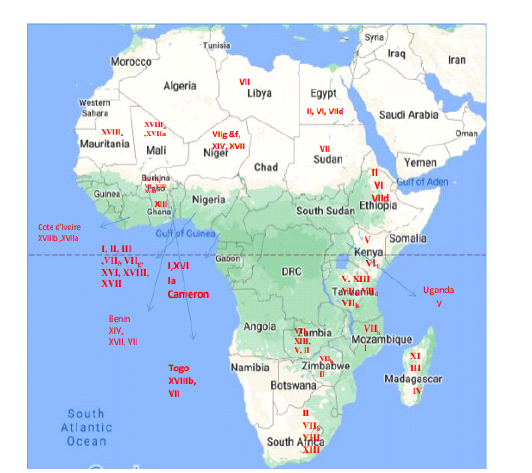
In this review, we decided to state the history and the complex situation of NDV genotyping in Africa. Hence, we focused of the endemic genotypes in each region and their transmissibility across the continent. We presented different reference NDV strains of different genotypes from the Africans continent in Table 1 and Figure 1.
History
The first outbreaks of ND occurred in Indonesia (Java) during 1926 and the same outbreak occurred at a different geographical location on the map of the world, Newcastle-upon Tyne, the UK . However, closely related disease outbreaks in Central Europe have been reported earlier than these dates . One example, Macpherson explains the reason of chicken death in the Western Isles of Scotland during 1896 because of NDV infection. Therefore, ND may exist earlier than 1926, but its identification as a specific disease with viral etiology dates back to the outbreaks during this year in Newcastle-upon-Tyne .
In the African continents, they were initially diagnosed NDV for the first time during 1944 in South Africa, after chicken’s affections with severe respiratory, nervous and intestinal troubles with high mortalities in the province of Natal . They used in diagnosis serum neutralization test where it was performed at Weybridge laboratory, England. In fact, Kashscula and colleagues believed that the symptoms and post-mortem findings in Natal were so closely to those described by Hudson in Mombasa, Kenya in 1935. Therefore, they suggested that the disease may introduced via ship arrived to Mombasa harbor on the East Coast of Africa. Hudson considered that the infection had spread south to Lindi and the entire African East Coast may be affected . In Madagascar, ND was detected in 1946 , and is now responsible for the mortality rate in the backyard farms, which represent a large sector of Madagascar avian production. In Egypt, ND was identified for the first time in 1948 and since then, Egypt has been regarded as an endemic country by ND. Two years later, they detected the virus in the middle of Congo and the Gambia on the West Coast of Africa ; . One year later, it appeared on the Gold Coast (Sudan) and the southern Cameroons . In Zambia, they firstly reported the disease in 1952 as the infection spreads along the line of rail with the largest concentration of birds occurred. There was a definite correlation between the number of outbreaks and the amount of vaccine used in any one year . Interestingly, due to the presence of the disease
Table 1: NDV reference strains genotypes on Genbank that isolated from different parts in Africa.
References
Genotype
Accession number
Strain
Snoeck et al; 2013
I
HF969159
chicken/Cameroon/CAE11-855/2011
Snoeck et al; 2009
I
HF969159
chicken/Cameroon/CAE11-855/2011
Snoeck et al; 2009
I
FM200800
chicken/Nigeria/SH11/2005
Snoeck et al; 2009
I
M24693
fowl/Australia/Queensland-V4/1966
Snoeck et al ;2009
I
HQ702462
chicken/Mozambique/ndv42_564/2005
Snoeck et al; 2009
I
AY175774
pigeon/South Africa/PZAPI99091/1999
Aldous et al., 2003
I
AY 175774
AV 888/99 MZ-5-99South Africa
Mohamed et al., 2011
II
FJ969395
NDV/chicken/Egypt/4/2006
Mohamed et al., 2011
II
FJ969393
NDV/chicken/Egypt/2/2006
Radwan et al ,2013
II
JX193769
NDV/chicken/Egypt/MR2-1998
Aldous et al .2003
II
AY 175708
AV 72/95 B/K) Zambia
Aldous et al .2003
II
AY 175661
AV 1141/98 10603 South Africa
Aldous et al .2003
II
AY 135740
AV 1433/95 D1702-95 South Africa
Aldous et al .2003
II
AY 175710
AV 862/955249Zimbabwe
Aldous et al .2003
II
AY 135755
AV 992/94 0915/94South Africa
Fenti et al 2013
II
KC851842
12RS1402-13/APMV1/CK/ Ethiopia
Fenti et al 2013
II
KC851853
12RS1402-83/APMV1/CK/ Ethiopia
Aldous et al .2003
V
AY 175654
AV 1300/95MG-10-05-CTanzania
Aldous et al .2003
V
AY 175656
AV 1300/95TB-02-24-DTanzania
Aldous et al .2003
V
AY 175728
AV 1300/95MG-04-08CTanzania
Da Silva et al 2020
V
Mt33577389261
Chicken/Tanzania /2016
Da Silva et al 2020
V
Mt335727
Chicken/ Tanzania /2011
Snoeck et al ;2009
VI
AJ880277
Pigeon paramyxovirus-1/IT-227/82
Aldous et al .2003
VI
AY 175720
Panvac (2/P2 UQ vet path AuEthiopia
Snoeck et al ;2013
VIg
JQ039395
pigeon/Nigeria/VRD07-173/2007
Snoeck et al ;2013
VIg
JQ039385
dove/Nigeria/VRD07-163/2007
Snoeck et al ;2013
VII
KC205475
chicken/Ethiopia/Dhera/2011
Snoeck et al ;2013
VIb
AY288997
chicken/Kenya/139/90
Snoeck et al ;2013
VIh
JQ039391
pigeon/Nigeria/VRD07-231/2007
Snoeck et al ;2013
VIh
JQ039387
pigeon/Nigeria/VRD08-37BRpe(7-9)/2008
Snoeck et al ;2013
VIa
EF030963
chicken/Cameroon/CAE11-855/2011
Snoeck et al ;2013
VIa
EF030951
pigeon/South Africa/PIZA05N277/2005
Snoeck et al ;2013
VIa
EF030953
chicken/South Africa/CKZA06N606/2006
Snoeck et al ;2013
VIa
AY445669
dove/South Africa/DOZA05N240/2005
Snoeck et al ;2013
VIa
EF030958
chicken/South Africa/469/2002
Snoeck et al ;2013
VIa
EF030962
dove/South Africa/DOZA06N589/2006
Snoeck et al ;2013
VIa
EF030950
pigeon/South Africa/PIZA04N230/2004
Snoeck et al ;2009
VIa
EF030957
pigeon/South Africa/PIZA06N642/2006
Snoeck et al ;2009
VIb
AY288997
dove/South Africa/DOZA06N549/2006
Chake et al 2013
VIf
Kc205476
NDV/ Ethiopia/ 2011
Chake et al 2013
VIf
Kc205475
NDV/ Ethiopia/ 2011
Megahed et al 2018
VII
KX231853
NDV/Chicken/Egypt/2/2015
Megahed et al 2018
VII
KX231854
NDV/Chicken/Egypt/4/2015
Megahed et al 2018
VII
KX231852
NDV/Chicken/Egypt/1/2015
Megahed et al 2018
VII
KX231851
NDV/Chicken/Egypt/3/2015
Fenti et al 2013
VII
KC851841
12RS1402-39/APMV1/CK/ Ethiopia
Fenti et al 2013
VII
KC851848
12RS1402-67/APMV1/CK/ Ethiopia
Radwan et al ,2013
VIId
JX173098
NDV/Chicken/Giza/Egypt/MR0/2012
Abolink et al.,2017
VIIh
HQ697256
Chicken/Makassar/003/09
Abolink et al.,2017
VIIh
HQ697255
Chicken/Sukorejo/019/10
Abolink et al.,2017
VIIh
KR074405
IBS005/11
Abolink et al.,2017
VIIh
KX231366
NDV/chicken/ Mozambique/1205/2011
Abolink et al.,2017
VIIh
KT760568
Chicken/Guizhou/1032/ 2012
Abolink et al.,2017
VIIh
KU523524
NDV/chicken/ Mozambique/466/2012
Abolink et al.,2017
VIIh
JX870619
KH-cmb08-2/12
Abolink et al.,2017
VIIh
KU523528
NDV/chicken/ Mozambique/658/2012
Abolink et al.,2017
VIIh
KU523529
NDV/chicken/ Mozambique/584/2013a
Abolink et al.,2017
VIIh
KR815908
Turkey/South Africa/ N2057/2013a
Abolink et al.,2017
VIIh
MF622045
Chicken/South Africa/ RBNW-1/2013a
Abolink et al.,2017
VIIh
MF622047
Chicken/South Africa/ RBNW-3/2013a
Abolink et al.,2017
VIIh
MF622037
Chicken/South Africa/ 239391/2013a
Abolink et al.,2017
VIIh
KU523533
NDV/chicken/ Mozambique/622/2014
Abolink et al.,2017
VIIh
MF622034
Chicken/South Africa/ 32995/2015a
Abolink et al.,2017
VIIh
MF622044
Chicken/South Africa/ N2683/2015a
Abolink et al.,2017
VIIh
MF622042
Chicken/Zambia/ Mbeweka/2015
Abolink et al.,2017
VIIh
KX231368
NDV/chicken/ Mozambique/192A/2016
Hertzeg et al. (1998
VIIb
AF136767
ZA 20/93/ South Africa
Hertzeg et al. (1998
VIIb
AF136768
ZA 25/93/ South Africa
Hertzeg et al. (1998
VIIb
AF136769
ZA 26/93/ South Africa
Hertzeg et al. (1998
VIIb
AF136772
ZA 33/94/ South Africa
Hertzeg et al. (1998
VIIb
AF136774
ZA 35/95/ South Africa
Hertzeg et al. (1998
VIIb
AF109876
ZA 360/95/ South Africa
Hertzeg et al. (1998
VIIb
AF136775
MZ 13/94Mozambique
Hertzeg et al. (1998
VIIb
AF136776
MZ 35/94Mozambique
Aldous et al .2003
VIIb
AY 175640
AV 990/99 -1145 South Africa
Aldous et al .2003
VIIb
AY 175650
AV 1111/92 X 988Sweden
Aldous et al .2003
VIId
Y 175641
AV 990/99 96-0842South Africa
Ahmed et al 2011
VIId
(MF418017
(NDV/Chicken/EG-MN/NRC/2015
Ahmed et al 2011
VIId
MF418018
NDV/Chicken/EGQU/NRC/2015
Ahmed et al 2011
VIId
MF418019
NDV/Chicken/EG-SH/NRC/2015
Ahmed et al 2011
VIId
(MF418020
NDV/Chicken/EG -SH2/ NR/2015
Orabi et al 2016
VIId
KY075880
NDV/chicken/Egypt/Sharkia7/2016
Orabi et al 2016
VIId
KY075882
NDV/chicken/Egypt/Damietta9/2016
Hertzeg et al. (1998
VIII
AF136764
ZA 16/90/ South Africa
Hertzeg et al. (1998
VIII
AF136765
ZA 17/90/ South Africa
Hertzeg et al. (1998
VIII
AF136766
ZA 18/90/ South Africa
Hertzeg et al. (1998
VIII
AF136773
ZA34/94/ South Africa
Hertzeg et al. (1998
VIII
AF136762
ZA 5/68/ South Africa
Da Silva et al 2020
XIII
Mt335739
Chicken/ Tanzania /2016
Da Silva et al 2020
XIII
Mt335748
Chicken/ Tanzania /2017
Snoeck et al ;2013
XIVa
JQ039386
chicken/Nigeria/VRD08-36/2008
Snoeck et al ;2013
XIVa
JN872165
Chicken/Niger/VIR 1377-7/2006
Snoeck et al ;2013
XIVa
FJ772452
chicken/Niger/1377-8/2006
Snoeck et al ;2013
XIVb
JQ039390
chicken/Nigeria/VRD07-233/2007
Snoeck et al ;2013
XIVb
JX546245
chicken/Benin/463MT/2009
Snoeck et al ;2013
XIVb
JF966386
chicken/Mali/ML029_07/2007
Snoeck et al ;2013
XVIIb
FJ772446
avian/Nigeria/913-1/2006
Snoeck et al ;2013
XVIIa
JX546243
chicken/Benin/373GC/2009
Snoeck et al ;2013
XVIIa
JX546244
chicken/Benin/376GT/2009
Snoeck et al ;2013
XVIIa
FJ772486
avian/Nigeria/3724-6/2008
Snoeck et al ;2013
XVIIa
FJ772469
chicken/Niger/2602-348/2008
Snoeck et al ;2013
XVIIa
FJ772472
chicken/Niger/2602-468/2008
Snoeck et al ;2013
XVIIa
JF966385
chicken/Mali/ML007_08/2008
Snoeck et al ;2013
XVIIa
FJ772463
chicken/Burkina Faso/2415-580/2008
Snoeck et al ;2013
XVIIa
FJ772458
chicken/Burkina Faso/2415-361/2008
Snoeck et al ;2013
XVIIa
JX546247
chicken/Benin/488MT/2009
Snoeck et al ;2013
XVIIa
FJ772449
avian/Nigeria/913-33/2006
Snoeck et al ;2013
XVIIa
JQ039392
avian/Nigeria/VRD07-733/2007
Snoeck et al ;2013
XVIIa
JQ039394
chicken/Nigeria/VRD07-410/2007
Snoeck et al ;2013
XVIIa
FJ772478
chicken/Cameroon/3490-149/2008
Snoeck et al ;2013
XVIIa
FJ772484
chicken/Cameroon/3490-147/2008
Snoeck et al ;2013
XVIIa
JQ039393
chicken/Nigeria/VRD07-141/2007
Snoeck et al ;2013
XVIIa
FJ772475
chicken/Niger/2602-605/2008
Snoeck et al ;2013
XVIIa
FJ772481
chicken/Niger/2602-625/2008
Da Silva et al 2020
XVIII
Mt335753
2018Chicken/Ghana/
Snoeck et al ;2013
XVIIIa
JF966388
chicken/Mali/ML225_08/2008
Snoeck et al ;2013
XVIIIa
JF966389
guinea fowl/Mali/ML038_07/2007
Snoeck et al ;2013
XVIIIb
JN942101
Finch/Eastern Hemisphere/1409-12/2008
Snoeck et al ;2013
XVIIIb
FJ772466
chicken/Ivory Coast/2601/2008
Snoeck et al ;2013
XVIIIb
JX390609
chicken/Togo/AKO18/2009
Snoeck et al ;2013
XVIIIa
JN872157
chicken/Mali/ML008_09/2009
Snoeck et al ;2013
XVIIIa
JN872157
GWH/Eastern Hemisphere/5801-22/10
Snoeck et al ;2013
XVIIIa
FJ772455
avian/Mauritania/1532-14/2006
Snoeck et al ;2013
XVIIIb
HF969127
chicken/Ivory Coast/CIV08-069/2007
Snoeck et al ;2013
XVIIIb
HF969126
duck/Ivory Coast/CIV08-062/2006
Snoeck et al ;2013
XVIIIb
JX390609
chicken/Togo/AKO18/2009
Snoeck et al ;2013
XVIIIb
HF969216
chicken/Nigeria/NIE11-1286/2011
Snoeck et al ;2013
XVIIIa
HF969179
chicken Ivory Coast/CIV08-026/2007
Snoeck et al ;2013
XVIIIa
FJ772455
avian/Mauritania/1532-14/2006
in neighboring territories, Nigeria applied the prophylactic vaccination against NDV, using the Komarov strain of Newcastle disease vaccine obtained from the Onderstepoort Laboratories, Pretoria, South Africa. However, they confirmed the first outbreak of NDV in Nigeria at Ibadan province during December 1952, which they confirmed by laboratory diagnosis in February 1953 .
The first documented evidence of ND in Chad occurred in 1954 since then, it occurs so epizootic and endemic . The first documented evidence of ND in Uganda occurred in 1955 (Mukabii, 1992). In July 1960, for the first time they diagnosed mild lento genic type of NDV in South Africa, known as the ‘American type’, was. The strain of the virus induced mild clinical signs that the careful observer can see only . Up to our knowledge, the first documented evidence of NDV in Ethiopia dates back to 1978 when an outbreak occurred in Eritrea then spread to the Northern part of the country. Epidemiological and virological studies on intensively reared commercial chicken revealed that the velogenic strains are widely distributed through Ethiopia . In the Sahara desert region, they characterized virulent isolates NDV of in Morocco during 1982 .
Nowadays, all African countries reported ND as being the most serious problem in live backyard rural poultry , 1992). Hence, it has been reported in the traditionally managed village poultry from Morocco , Mauritania , Ethiopia , Nigeria , Sudan , the Ivory Coast , Mozambique and Uganda .
Genotypes of NDV in Africa
The NDV phylogenetic analysis is an effective technique for evaluating the epidemiological relationships among the NDV isolates present in different parts of the world .
Currently two nomenclatures systems are in use for the classification of NDV, based on the phylogenetic analysis, a system that divides NDV into six lineages with several sub-lineages. As example, lineages 3 and 4 were further classified into four sub-lineages (a- d) whereas lineage 5 was divided into five sub-lineages (a -e). This system had several limitations as they focused on the restriction enzyme analysis and partial sequence of the F-gene (Ballagi-Pordany et al., 1996; .
The used second system based on full F or full genome sequences . It therefore categorized NDV into two main classes; I- II into one serotype, in which class II further split up to 18 genotypes they ; ; . The comparison between the two systems revealed that sub-lineages 3a, 3b, 3c and 3d correlated to genotypes III, IV,V and VIII and sub-lineages 5a to 5d correlated to genotypes VII a to d . However, novel subgenotypes VIIk are recently characterized .
Recurrent outbreaks of NDV attack the different regions of the Africa continent for years, despite of the previous the information about the genetic characteristics of the virulent strains circulating in that region is still limited. Until now, twelve NDV genotypes, I, II, IV, V, VI, VII, VIII, XI, XIII, XIV, XVII and XVIII, isolated from various African countries in different periods .
Genotype II
It belongs to class II NDVs and is a mixture of lentogenic and velogenic strains , which were firstly identified in North America. Genotype II virulent, Beaudette C/1945 and Texas/GB/1948, and lentogenic, Hitchner/B1/47 and LaSota/1946, strains were isolated during 1940 in the United States. The lentogenic strains commercialized and they used as vaccines in poultry ; Millar et al., 2010).
They isolated NDV strains from South Africa in a period from 1999 identified as genotype II lentogenic strains and suggested that its source the commercial vaccine. Thus, no true lentogenic wild type NDV strains they identified in this study (Abolink et al., 2004). A few years later, molecular characterization of 11 NDV strains isolated from Egypt during the period 1996 -2005 revealed that they belong to genotype II and VI, suggesting that these genotypes are the most abundant NDV genotypes circulating in the Egyptian poultry flocks . In Egypt, sequences analysis of the F genes from virulent NDV 2006 Egyptian isolates revealed that they belong to genotype II. Further, they are closely related to other strains isolated in Egypt in 2005 and the North American strain, which strength the suggestion that those strains are probably the most abundant genotype in the bird population in Egypt . Furthermore, NDV strains of genotype II which were similar or variant from LaSota strain were identified in Nigeria and Burkina Faso in 2006 /2007 an in northwest Ethiopia (Fentie et al., 2013). In northwest Ethiopia, recent study concluded that live chicken market plays important role in spreading and dissemination of NDV in chicken. They isolated NDV from apparently healthy appearing birds in all seasons of the year with high percent in pre-rainy dry season, showing evidence for climatic and socioeconomic aspects as risk factor in the occurrence of ND in chicken .
Genotype V
Genotype V had started to emerge in the Americas for the first time around the 1970s and disseminate to the European continent in 1980s, scientists have recently reported its introduction to Africa in Eastern region ; . The previous suggesting the increase of the genotype geographic distribution . It possesses mainly pathogenic strains which sub classified in to several genotypes (a- d). In Tanzania, the analysis of NDV strains isolated between 1994 and 1995 revealed that they belong to genotype V and it may spread through migration of wild birds or live birds markets . Consistently, healthy live birds in live poultry markets act as reservoir for virulent NDV . A recent study suggested possible cross border spread of velogenic NDV between Kenya and neighboring Uganda through live bird trade . The Ugandan NDV strains has low genetic diversity suggesting low evolution rate with amino acid mutations in the HN protein that differ from the Kenyan strains, suggesting independent evolution. The first complete genome sequence analysis of subgenotype Vd was performed on single NDV strain isolated also from live poultry market in the Mbeya region, Tanzania . Later on, similar study reports the first complete genome sequence of NDV from backyard chicken in Kenya. The three isolates characterized to be velogenic by MDT and ICPI. Those were phylogenetically related to genotype V strains, and form a distinct cluster together with NDV strains from the East African countries of Uganda and Tanzania to form the newly characterized subgenotype Vd . Another recent study utilized the third-generation portable sequencing device in identification of nine Tanzanian NDV strains belonging to genotype V. The NDV strains of this study were collected from Morogoo, Tanzania in a period between 2011and 2017 and were closely related to other isolates from Mbeya, Kenya and Uganda . Circulation of closely related NDV strains of genotype V appeared within these three East African countries and the unrestricted movement of cross-border trade of live birds might be the main reason for endemic situation of this genotype in this region ; .
Genotype VI
Genotype VI viruses, pigeon paramyxoviruses 1, is usually isolated from Columbidae and sub classified in to subgenotypes VIa to k. Isolates of NDV belonging to the genotype VIb were mainly restricted to the western African region. In 2007, two sequences of genotype VI with two nucleotides mismatching obtained from a parrot and pigeon in Nigeria . Further investigation confirmed the circulation of genotype VIb in pigeons and rural poultry samples from six Nigerian states during 2007-2008 . Introduction of putative subgenotypes derived from genotype VI, VIh and VIi, was reported in 2013 from pigeon samples . The existence of genotype VIh from Pigeon samples and their clustering with foreign strains such as Pigeon/Argentina/Capital_3/97 indicated strong evidence for the responsibility of the wild birds in the introduction of genotype VI to the Western region of the African continents. The Nigerian subgenotype VIg isolates were highly correlated to other NDV strains from Egypt, Russia and Ukraine while the subgenotype VIh isolates have high homology with wild bird isolates from Kenya. Further, the Nigerian subgenotypes VIi were closely related with Italian strains from outbreak in doves. These close genetic relationships among the isolates could be of epidemiological significance and strongly recommend a previous common origin during their natural selection .
Not only restricted to the western part of the African continent, as the free birds-specificity of genotype VI, led to dissemination of the genotype to other countries such as Egypt (VIg) and central Ethiopia (VIf) ; .
Genotype VII
It represents NDV strains isolated during the epizootics of Mozambique and South Africa (1990-1995), hence they classified as subgenotype VIIb . The authors suggested that the genotype might be emerged to the country from the Far East and western European countries.
Subgenotype VIId was initially isolated during 1999 from shanghai goose flocks which were suffered from moderate mortality rates in goslings. The causative virus strain, SF02, was initially termed as Goose paramyxovirus thereafter it was identified as genotype VIId. NDV strains belong to subgenotype VIId are highly pathogenic to different domesticated birds with intra-cerebral pathogenicity indexes (ICPIs) ranged from 1.80 to 1.94 ; ; ; . The phylogenetic analysis of NDV strains isolated from Egypt between 2011 and 2012 revealed that they belong to genotypeVII subgenotype d and closely related to the Middle East isolates . Since 2011, NDV outbreaks caused by genotype VII occur in several vaccinated and non-vaccinated poultry in different governorates of Egypt, there is a strong probability that the Egyptian VIId strains are introduced from China or Middle Eastern countries such as Israel and enter Egypt through infected poultry products or wild birds ; .
Two virulent NDV isolates was clustered with genotype VIId (lineage 5) and were similar to those NDV isolates from northeastern African countries (Sudan and Egypt), which were reported to GenBank between 2004 and 2012. The close genetic similarity of the northern Ethiopian virulent isolates with that of the Sudanese and Egyptian isolates provides evidence for potential epidemiologic links between outbreaks of NDV in these countries, likely due to the geographical proximity and movement of poultry among borders (Fentie et al., 2013). Recent study includes molecular and phylogenetic characterization of 116 tissue / organ collected from NDV outbreak in Egypt and reveals that they are velogenic strains with high identity to velogenic strains from Jordan, Israel and Turkey. Phylogenetic analysis showed that they belong to genotypes (VIId,VIIa and II) and VIId is predominant genotype circulating in Egypt .
In the period between 2002 and 2007, different virulent NDV strains isolated from backyard farms and live bird markets in four Sub-Saharan countries in the West Africa, Nigeria, Niger, Burkina Faso and Cameroon. The strains were clustered within subgenotype VIIf and g which represent NDV variants indigenous to West Africa .
Subgenotype VIIh has introduced to South-East Asia and caused serious outbreaks for the poultry flocks in Malaysia, Indonesia, southern China, Vietnam and Cambodia. It was recorded in the African continent in 2011 during outbreaks in poultry flocks. Thereafter, the virus spread north through Mozambique into the north-eastern provinces of Zimbabwe and then south towards Botswana and South Africa causing serious outbreak in 2013 . Further, the virus transmitted from Mozambique toward neighboring countries such as Malawi and Zambia. Recent study determines the NDV genotype circulating in Botswana. Phylogenetic analysis of fourteen samples that collected from NDV outbreak in 2014, 2018 and 2019 reveals that they clustered in genotype VII. They closely related to viruses from South Africa and Mozambique than other southern African countries (Nambia, Zambia and Zimbabwe) . In Fact, Abolnik and his colleagues suggested that the absence of genotype VIIh outside of South-East Asia and Southern Africa is strong evidence that wild migratory birds are not responsible for disease dissemination. Hence, there are strong evidences that illegal live bird trade or infected wastes from ships are the source of the virus emergence to Mozambique in 2011.
Genotype VIII
Genotype VIII NDV strains are geographically restricted viruses which were originated from Southeast Asia between 1979 and 1985 ; , this genotype has emerged in South Africa since decades . Hence, it was characterized in South African strains that were detected in the 1960 and in the period from 1990 to 1995. However, no record for the isolation of this genotype has been available since June 2000 .
Genotype XI
NDV strains belong to genotype XI are mainly virulent. It is geographically restricted in Africa. Hence, reporting only in Madagascar, where it circulated between the wild birds and domestic chicken .
Genotype XIII
Virulent genotype, which subclassified in to three subgenotypes, namely, XIIIa, XIIIb, and XIIIc. Subgenotype XIIIa strains have been isolated during poultry outbreaks in Europe, Africa, and the Middle East, but subgenotypes XIIIb and XIIIc remain localized to India and Pakistan . In Africa, genotype XIII strains have been recovered from an ostrich in South Africa (1995), chickens in Burundi (2008), and passerines in Tanzania (2010) ; . Recently, this genotype has been isolated from Zambia, Burundi, South Africa and Tanzania ; .
Genotypes XIV, XVII and XVIII
These moderately recent discovered regional genotypes found endogenous in West and Central Africa.
Genotypes XIV: It is NDV variant that endogenous in West African countries such as Nigeria, Niger, Cameroon and Burkina Faso. It was initially isolated from live poultry market and backyard flocks in the period from 2002 to 2008 and was initially termed as lineage 5f ; or 7d . Thereafter it was renamed as genotype XIV according to the new classification with two subgenotypes, a and b or 1 and 2 . Fourteen and 33 strains of subgenotype XIVa and XIVb, respectively, were detected in different Nigerian cities in the period from 2007 to 2011 . Interestingly, all the sequenced strains possess the cleavage site specific for NDV virulent pathotype. Accordingly, pathogenicity study trial revealed that genotype XIV isolated from West Africa is velogenic viscerotropic pathotype that caused severe clinical signs or mortality by the day 4-post infection . Further, it led to systemic infection and necrosis in the lymphoid tissue and gastrointestinal tract. The first complete genomic sequence of genotype XIVb NDV strain (duck/Nigeria/NG-695/KG.LOM.11-16/2009) that isolated from healthy duck in live poultry market in Nigeria was reported in .
Genotype XVII: Snoeck and his colleagues defined it together with genotype XVIII according to criteria described by . They isolated it from domestic birds from different countries in West Africa plus Central African Republic that may suggest the genotype ability to spread across the continent. The virus classified into two subgenotypes with virulent characteristics.
Genotype XVIII: Viruses of class II genotype XVIII, previously identified as lineage 7a with a high correlation with genotypes XIV and XVII. In fact, both genotypes XVII and XVIII have been suggested to be the same genotype . However, this conclusion was not accepted by Snoeck and Muller (2016) as they stated that Desingu and colleagues used incorrect bioinformatics parameters to analyze NDV genotyping. However, until now it has still been classified as distinctive genotype divided in to two subgenotypes XVIIIa and XVIIIb by or the more updated XVIII.1 and XVIII.2 by . West African countries seem to have the most complex situation in terms of genetic diversity of NDV genotypes and subgenotypes. The two subgenotypes, XVIII.1, and XVIII.2 have been found independently circulated or either co-circulated together or with other genotypes, such as subgenotype XVIIa, in Côte d’Ivoire, Mauritania, Mali, Togo and Nigeria since 2006 or may be earlier ; . In 2018, four sequences obtained from two distant cities in Ghana, Wa and Pokoasi, found to be belong to subgenotype XVIII.2 and were highly correlated to an isolate from Mali (JX518886) . With the fact that it is geographically restricted or regional genotype in the Western Africa, the international trade of exotic birds can play a role in its worldwide dissemination.
NDV Challenges in Africa
Based on the available information, it is obvious that there is broaden ecological distribution of various NDV genotype across the continent. The continuous genetic modification in NDV with mutation in the cleavage site and the neutralizing epitopes could lead to what is called vaccination failure phenomena. Accordingly, all the previous together with the existence of wild birds and the unrestricted movement between neighbor countries border will obscure the problem of recurrent NDV outbreak in Africa.
Conclusion
ND is considering a major threat for poultry production in Africa. Several genotypes are isolated and their distribution in most of African countries was recorded. Genotype VII which is responsible for the fourth panzootic ND outbreak is also found in the region. Genetic diversity between NDV strains continue to grow mainly in central and West Africa where the recent discovered genotypes XIV, XVII, XVIII are geographically restricted. Africa is considering a reservoir for new virulent strains, the efficacy of the classical vaccinal strains against these recent strains need to be further studied. Wild, exotic birds, live bird market and illegal trading play important role in entrance and spreading of NDV strains and their control is necessary.
acknowledgements
We are thankful to the scientific committee of The 15th Scientific Conference of Veterinary Medicine entitled human and animal Health and safety: Reality and Ambition.
Conflict of Interest
There is no conflict of interest.
authors contribution
Wala Mohamed and Ola Hassanin collected and analyzed the previously published scientific articles as well as designed and wrote the first draft of the review. Mohamed Megahed reviewed and approved the final version of the review.
References
• Abolnik C (2007). Molecular epidemiology of Newcastle disease and avian influenza in South Africa’, PhD thesis, Dept. of Zoology, University of Pretoria, viewed 01 July 2016.
• Abolnik C, Horner RF, Bisschop SP, Parker ME, Romito M, Viljoen GJ (2004). A phylogenetic study of South African Newcastle disease virus strains isolated between 1990 and 2002 suggests epidemiological origins in the Far East. Arch. Virol. 149: 603 - 619. https://doi.org/10.1007/s00705-003-0218-2[CrossRef]
• Abolnik C, Mubamba C, Wandrag DR, Horner RB, Dautu G, Bisschop SPR (2017). Tracing the origins of genotype VIIh Newcastle disease in southern Africa. 15 August 2017. https://doi.org/10.1111/tbed.12771[CrossRef]
• Ahmed HM, Amer MM, Elbayoumi KM, Kutkat MA (2017). Isolation and identification of Genotype VII of Newcastle disease virus from chicken flocks in six Egyptian Governorates. J Med. Res. Health Sci. 2(1). https://doi.org/10.21608/ejvs.2017.1236.1015[CrossRef]
• Alders RG (2001). SADC planning workshop on Newcastle disease control in village chickens. Proceedings of an International Workshop, Maputo, Mozambique, 6-9 March, 2000. (ACIAR Proceedings No.103), 158pp.
• Alders RG, Pym RAE (2009). Village poultry: still important to millions, eight thousand years after domestication. World’s Poul. Sci. J. 65: 181 - 190. https://doi.org/10.1017/S0043933909000117[CrossRef]
• Aldous EW, Mynn JK, Banks J, Alexander DJ (2003). A molecular epidemiological study of avian paramyxovirus type 1 (Newcastle disease virus) isolates by phylogenetic analysis of a partial nucleotide sequence of the fusion protein gene. Avian Pathol. 32: 239 - 256. https://doi.org/10.1080/030794503100009783[CrossRef]
• Aldous EW, Seekings JM, McNally A, Nili H, Fuller CM, Irvine RM, Alexander DJ, Brown IH (2010). Infection dynamics of highly pathogenic avian influenza and virulent avian paramyxovirus type 1 virus in chickens, turkeys and ducks. Avian Pathol. 39: 265 – 273. https://doi.org/10.1080/03079457.2010.492825[CrossRef]
• Alexander DJ (1991). Newcastle disease. In: Rweyemamu MM, Palya V, Win T, Sylla D. Newcastle Disease Vaccines for Rural Africa. Proceedings of a Workshop held at Pan African Veterinary Vaccine Centre (PANVAC), DebreZeit, Addis Ababa, Ethiopia. 1 - 45.
• Alexander DJ (1997). Newcastle disease, other Avian Paramyxoviruses and Pneumoviridae. In: Calnek BW, Barnes HJ, Beard CW, McDougals LR, Saif YM (1997). Disease of Poultry. Chapter 20. Iowa State University Press, Ames, Iowa, USA. 541 - 569. https://doi.org/10.2307/1592156[CrossRef]
• Alexander DJ, Bell JG, Alders RG (2004). A Technology Review: Newcastle Disease. With Special Emphasis on its Effect on Village Chickens. FAO Anim. Prod. Health. 161.
• Alexander DJ, Manvell RJ, Lowings JP, Frost KM, Collins MS, Russell PH, Smith JE (1997). Antigenic diversity and similarities detected in avian paramyxovirus type 1 (Newcastle disease virus) isolates using monoclonal antibodies. Avian Pathol. 26: 399 – 418. https://doi.org/10.1080/03079459708419222[CrossRef]
• Anon I (1951). Annual report of of the Sudan Veterinary services.
• Ballagi-Pordany A, Wehmann E, Herczeg J, Belák S, Lomniczi B (1996). Identification and grouping of Newcastle disease virus strains by restriction site analysis of a region from the F gene. Arch. Virol. 141(2): 243 - 261. https://doi.org/10.1007/BF01718397[CrossRef]
• Bawke L, Naser M, Berhanu A, Mengistu A (1991). Newcastle disease in Ethiopia. In: Rweyemamu MM, Palya V, Win T, Sylla D (Eds) Newcastle Disease Vaccines for Rural Africa. Proceedings, of a Workshop held at Pan African Veterinary Vaccine Centre (PANVAC), DebreZeit, Addis Ababa, Ethiopia. 49 – 51.
• Beard CW, Hanson RP (1984). Newcastle disease. In: Hofstad MS, Barnes HJ, Calnek BW, Reid WM, Yoder JR (Eds). Diseases of Poultry, 8th edn. 452 - 470. (Ames, Iowa State University Press).
• Bebay CE (2006). Première évaluation de la structure et de l’importance du secteuravicole commercial et familial en Afrique de l’Ouest. Synthèse des rapports nationaux. FAO, Rome, Italy.
• Bell JG (1985). Velogenic Viscerotropic Newcastle Disease Virus Strains in Morocco: Avian Dis. 30(1): 231 - 233
• Bell JG (1991). Vaccination of African village poultry against Newcastle disease. In: Demey F, Pandey VS (Eds). Newcastle Disease Vaccination of Village poultry in Africa and Asia. Proceedings of the Seminar held on 13 and 14 February 1991, Antwerp. 3 - 8.
• Bell JG (1992). Newcastle disease in village chickens in North, West and Central Africa. In: Spradbrow PB (Ed.) Newcastle Disease in Village Chickens, Control with Thermostable Oral Vaccines. Proceedings, International Workshop held in Kuala Lumpur, Malaysia, 6-10 October 1991. Centre for International Agricultural Research (ACIAR), Canberra. 142 -143.
• Bell JG, AitBelarbi D, Amara A. (1990). A controlled vaccination trial for Newcastle disease under village conditions. Preventive Vet. Med. 9: 295 - 300. https://doi.org/10.1016/0167-5877(90)90075-S[CrossRef]
• Bell JG, Moulodi S (1988). A reservoir of virulent Newcastle disease virus in village chicken flocks. Preventive Vet. Med. 6: 37 - 42. https://doi.org/10.1016/0167-5877(88)90024-4[CrossRef]
• Benson DA, Clark K, Karsch-Mizrachi I, Lipman DJ, Ostell J, Sayers EW (2015). GenBank. Nucleic Acids Res 43:D30 –D35. https://doi.org/10.1093/ nar/gku1216.[CrossRef]
• Byarugaba DK, Mugimba KK, Omony JB, Okitwi M, Wanyana A, Otim MO, Kirunda H, Nakavuma JL, Teillaud A, Paul, MC (2014). High pathogenicity and low genetic evolution of avian paramyxovirus type I (Newcastle disease virus) isolated from live bird markets in Uganda. Virol. J. 11: 173. https://doi.org/10.1186/1743-422X-11-173[CrossRef]
• Cattoli G, Fusaro A, Monne I, Molia S, Le Menach A, Maregeya B, Nchare A, Bangana I, Maina AG, Koffi JN, Thiam H, Bezeid OE, Salviato A, Nisi R, Terregino C, Capua I (2010). Emergence of a new genetic lineage of Newcastle disease virus in West and Central Africa—implications for diagnosis and control. Vet. Microbiol. 142: 168–176. https://doi.org/10.1016/j.vetmic.2009.09.063[CrossRef]
• Chaka H, Goutard F, Gil P, Abolnik C, Servan de Almeida R, Bisschop S, Thompson PN (2013). Serological and molecular Trop Anim Health Prod investigation of Newcastle disease in household chicken flocks and associated markets in Eastern Shewa zone, Ethiopia.Trop. Anim. Health and Produc. 45(3): 705 - 714.
• Chantal J, Snoeck Claude P, Muller A. (2016). Reply to “May Newly Defined Genotypes XVII and XVIII of Newcastle Disease Virus in Poultry from West and Central Africa Be Considered a Single Genotype XVII. J. Clin. Microbiol. 54: 9.
• Conan A, Goutard FL, Sorn S, Vong S (2012). Biosecurity measures for backyard poultry in developing countries: a systematic review. BMC. Vet. Res. 8: 240. https://doi.org/10.1186/1746-6148-8-240[CrossRef]
• Couacy-Hymann E, Sanogo B, Domanech J (1991). Epidemiologie de la Maladie de Newcastle en Cote D’Ivoire. In: Rweyemamu MM, Palya V, Win T, Sylla D (Eds). Newcastle Disease Vaccines for Rural Africa. Proceedings of a Workshop held at Pan African Veterinary Vaccine Centre (PANVAC), DebreZeit, Addis Ababa, Ethiopia. 65 - 68.
• Courtney SC, Susta L, Gomez D, Hines NL, Pedersen JC, Brown CC, Miller PJ, Afonso CL (2013). Highly divergent virulent isolates of Newcastle disease virus from the Dominican Republic are members of a new genotype that may have evolved unnoticed for over 2 decades. J. Clin. Microbiol. 51: 508 –517.
• Czegledi A, Ujvari D, Somogyi E, Wehmann E, Werner O, Lomniczi B (2006). Third genome size category of avian paramyxovirus serotype 1 (Newcastle dis-ease virus) and evolutionary implications. Virus Res., 120(1-2): 36 - 48.
• Da Almeida S, Hammoumi P. Gil L (2013). New avian paramyxoviruses type I strains identified in Africa provide new outcomes for phylogeny reconstruction and genotype classification. PLoS One. 8(10): 76413. https://doi.org/10.1371/journal.pone.0076413[CrossRef]
• Da Silva AP, Emily JA, Gaspar HC, Ashley B, Amandus PM, Boniface BK, Terra K, Huaijun Z, Rodrigo AG (2020). Molecular characterization of Newcastle disease viruses isolated from chickens in Tanzania and Ghana. Viruses J. 12: 916. https://doi.org/10.3390/v12090916[CrossRef]
• Daubney R, Mansy W (1948). The occurrence of Newcastle disease in Egypt. J. Compar. Pathol. 58: 189 - 196. https://doi.org/10.1016/S0368-1742(48)80019-6[CrossRef]
• De Almeida RS, Hammoumi S, Gil P, Briand F-X, Molia S, Gaidet N (2013). New Avian paramyxoviruses type I strains identified in Africa provide new outcomes for phylogeny reconstruction and genotype classification. PLoS One. 8: 76413. https://doi.org/10.1371/journal.pone.0076413[CrossRef]
• Desingu PA, Dhama K, Malik YS, Singh RK (2016). May newly defined genotypes XVII and XVIII of newcastle disease virus in poultry from west and central Africa be considered a single genotype (XVII)?. J. Clin. Microbiol. 54 (9): 2399, 2016. https://doi.org/10.1128/JCM.00667-16[CrossRef]
• Diel DG, da Silva LH, Liu H, Wang Z, Miller PJ, Afonso CL (2012). Genetic diversity of avian paramyxovirus type 1: proposal for a unified nomenclature and classification system of Newcastle disease virus genotypes. Infec. Genetics Evol., 12(8): 1770 - 1779. https://doi.org/10.1016/j.meegid.2012.07.012[CrossRef]
• Diel DG, Susta L, Cardenas GS, Killian ML, Brown CC, Miller PJ, Afonso CL (2012b). Complete genome and clinicopathological characterization of a virulent Newcastle disease virus isolate from South America. J. Clin. Microbiol. 50: 378 - 387. https://doi.org/10.1128/JCM.06018-11[CrossRef]
• Dimitrov KM, Ramey AM, Qiu X, Bahl J, Afonso CL (2016). Temporal, geographic, and host distribution of avian paramyxovirus 1 (Newcastle disease virus). Infect. Genet. Evol. 39: 22 - 34. https://doi.org/10.1016/j.meegid.2016.01.008[CrossRef]
• Dimitrov KM, Abolnik C, Afonso CL, Albina E, Bahl J, Berg M, Briand F, Brown IH, Choi K, Chvala I, Diel DG, Durr PA, Ferreira HL, Fusaro A, Gil P, Goujgoulova GV, Grund C, Hicks JT, Joannis TM, Torchetti MK, Kolosov S, Lambrecht B, Lewis NS, Liu H, McCullough S, Miller PJ, Monne I, Muller CP, Munir M, Reischak D, Sabra M, Samal SK, de Almeida RS, Shittu I, Snoeck CJ, Suarez DL, Van Borm S, Wang Z, Wong FYK (2019). Updated unified phylogenetic classification system and revised nomenclature for Newcastle disease virus. Infec. Genet. Evol. 74:103917. https://doi.org/10.1016/j.meegid.2019.103917[CrossRef]
• Doyle T (1927). A hitherto unrecorded disease of fowls due to a filter passing virus. J. Comp. Pathol.Ther. 40: 144 - 69.
• Fadol MA (1991). Newcastle disease in Sudan, Type of the Virus and its Control. In: Rweyemamu MM, Palya V, Win T, Sylla D (Eds) Newcastle Disease Vaccines for Rural Africa. Proceedings of a Workshop held at Pan African Veterinary Vaccine Centre (PANVAC), DebreZeit, Addis Ababa, Ethiopia. 61 - 64.
• Fentie T, Heidari A, Aiello R, Kassa T, Capua I, Cattoli G (2014). Molecular characterization of Newcastle disease viruses isolated from rural chicken in northwest Ethiopia reveals the circulation of three distinct genotypes in the country. Trop. Anim. Health Prod. 46: 299 – 304. https://doi.org/10.1007/s11250-013-0487-z[CrossRef]
• Fringe R, Dias PT (1991). Newcastle disease in Mozambique. In: Rweyemamu MM, Palya V, Win T, Sylla D (Eds). Newcastle Disease Vaccines for Rural Africa. Proceedings of a Workshop held at Pan African Veterinary Vaccine Centre (PANVAC), DebreZeit, Addis Ababa, Ethiopia. 73 – 74.
• Gardner E, Alders R (2014). Livestock risks and opportunities: Newcastle disease and Avian influenza in Africa. Davos: Global Risk Forum GRF Davos. 208 - 211.
• George MM (1991). Epidemiology of Newcastle disease in rural Uganda. In: Rweyemamu MM, Palya V, Win T, Sylla D (Eds). Newcastle Disease Vaccines for Rural Africa. Proceedings of a Workshop held at Pan African Veterinary Vaccine Centre (PANVAC), DebreZeit, Addis Ababa, Ethiopia. 75 - 76
• Goraichuk IV, Msoffe PLM, Chiwanga GH, Dimitrov KM, Afonso CL, Suarez DL (2019). First complete genome Sequence of a subgenotypeVd Newcastle disease virus isolate. Microbiol. Resour. Announc. 8: e00436-19. https://doi.org/10.1128/MRA.00436-19[CrossRef]
• Haile B, Fentie T (2020). The role of live chicken markets as a source of replication and dissemination of Newcastle disease virus in chickens, northwest Ethiopia. Poul Sci. 99(11): 5415-5421. https://doi.org/10.1016/j.psj.2020.08.025[CrossRef]
• Halasz F (1912). Contributions to the knowledge of fowl pest. Veterinary Doctoral Dissertation, Communications of the Hungarian Royal Veterinary School. Patria Budapest. 1 - 36.
• Hamilton DF (1950). Vet. Rec. 63: 525. https://doi.org/10.1088/0370-1298/63/9/311[CrossRef]
• Herczeg J, Wehmann E, Bragg RR, Travassos Dias PM, Hadjiev G, Werner O, Lomniczi B (1999). Two novel genetic groups (VIIb and VIII) responsible for recent Newcastle disease outbreaks in Southern Africa, one (VIIb) of which reached Southern Europe. Arch. Virol. 144: 2087 – 2099. https://doi.org/10.1007/s007050050624[CrossRef]
• Hill HD, Davis OS, Wilde JE (1953). Newcastle disease in Nigeria. British Vet. J. 109: 381–385. https://doi.org/10.1016/S0007-1935(17)50788-5[CrossRef]
• Hussein HA, Emara MM, Rohaim MA (2014). Molecular characterization of Newcastle disease virus genotype VIId in Avian influenza H5N1 infected broiler flock in Egypt. Int. J. Virol. 10(1): 46 - 54. https://doi.org/10.3923/ijv.2014.46.54[CrossRef]
• Jinding C, Ming L, Tao R, Chaoan X (2005). A goose-sourced paramyxovirus isolated from southern China. Avian Dis. 49: 170–173.
• Kapczynski DR, King DJ (2005). Protection of chickens against overt clinical disease and determination of viral shedding following vaccination with commercially available Newcastle disease virus vaccines upon challenge with highly virulent virus from the California 2002 exotic Newcastle disease outbreak. Vaccine. 23: 3424 - 3433. https://doi.org/10.1016/j.vaccine.2005.01.140[CrossRef]
• Kaschula VR, Canham AS, Diesel AM, Coles JDWA (1945). Newcastle disease in Natal. J. South African Vet. Med. Assoc. 17: 1 - 14.
• Kgotlele T, Modise B, Nyange JF (2020). First molecular characterization of avian paramyxovirus-1 (Newcastle disease virus) in Botswana. Virus Genes. 56(1–2). https://doi.org/10.1007/s11262-020-01770-4[CrossRef]
• Kilany WH, Ali A, Bazid AI, Zain El-Abideen MA, El Sayed M (2015). Evaluation of two inactivated Newcastle disease virus vaccines (genotype II and VII) against challenge of Newcastle disease genotype vii infection in chicken. J. Anim. Vet. Adv. 14(7): 211 - 218.
• Kim LM, King DJ, Guzman H. (2008). Biological and phylogenetic characterization of pigeon paramyxovirus serotype 1 circulating in wild North American pigeons and doves. J. Clin. Microbiol. 46(10): 3303 - 3310. https://doi.org/10.1128/JCM.00644-08[CrossRef]
• Kim LM, Suarez DL, Afonso CL (2008). Detection of a broad range of class I and II Newcastle disease viruses using multiplex real-time reverse transcription polymerase chain reaction assay. J. Vet. Diag. Invest. 20(4): 414 – 425. https://doi.org/10.1177/104063870802000402[CrossRef]
• Kluge EB (1964). Newcastle disease and its control in South Africa. Bull. Office Int. des Epizs. 62: 897 - 902.
• Kraneveld FC (1926). A poultry disease in the Dutch East Indies. Ned. Indisch. Blvoor. Diergeneeskd. 38: 448 - 450.
• Kuhn JH, Wolf YI, Krupovic M, Zhang YZ, Maes P, Dolja VV, Koonin EV (2019). Classify viruses — the gain is worth the pain. Nature. 566(7744): 318 - 320.
• Lamb RA, Parks GD (2007). Paramyxoviridae: the viruses and their replication, p 1449–1496 In Knipe DM, Howley PM (eds), Fields virology. Lippincott Williams and Wilkins, Philadelphia, PA.
• Liang R, Cao DJ, Li JQ, Chen J, Guo X, Zhuang FF, Duan MX (2002). Newcastle disease outbreaks in western China were caused by the genotypes VIIa and VIII. Vet. Microbiol. 87: 193 – 203. https://doi.org/10.1016/S0378-1135(02)00050-0[CrossRef]
• Lindley EP (1951). Paper submitted at the Fifth Veterinary Conference, Vom, Nigeria.
• Liu XF, Wan HQ, Ni XX, Wu YT, Liu WB (2003). Pathotypical and genotypical characterization of strains of Newcastle disease virus isolated from outbreaks in chicken and goose flocks in some regions of China during 1985–2001. Arch. Virol. 148: 1387–1403.
• Macpherson LW (1956). Some observations on the epizootiology of Newcastle disease. Can. J. Comp. Med. Vet. Sci. 20: 155 - 68.
• Maminiaina OF, Koko M, Ravaomanana J, Rakotonindrina SJ (2007). Epidemiology of Newcastle disease in village poultry farming in Madagascar. Rev. Sci.Technol. 26(3): 691 - 700. https://doi.org/10.20506/rst.26.3.1776[CrossRef]
• Mapaco LP, Monjane IV, Nhamusso AE, Viljoen GJ, Dundon WG, Achá SJ (2016). Phylogenetic analysis of Newcastle disease viruses isolated from commercial poultry in Mozambique (2011-2016). Virus Genes. 52(5): 748 - 753. https://doi.org/10.1007/s11262-016-1362-6[CrossRef]
• Maqbool A (2002). Marketing of commercial poultry, poultry meat and eggs in Faisalabad City. MSc Thesis University of Agriculture, Pakistan.
• Mase M, Imai K, Sanada Y, Sanada N, Yuasa N, Imada T (2002). Phylogenetic analysis of Newcastle disease virus genotypes isolated in Japan. J. Clin. Microbiol. 40(10): 3826 - 3830. https://doi.org/10.1128/JCM.40.10.3826-3830.2002[CrossRef]
• Megahed MM, Eid AM, Mohamed W, Hassanin O (2018). Characterization of Egyptian Newcastle disease virus strains isolated from flocks vaccinated against Newcastle disease virus. Slov. Vet. Res. 55 (20): 17 – 29.
• Miller PJ, King DJ, Afonso CL, Suarez DL (2007). Antigenic differences among Newcastle disease virus strains of different genotypes used in vaccine formulation affect viral shedding after a virulent challenge. Vaccine, 25: 7238 - 7246. https://doi.org/10.1016/j.vaccine.2007.07.017[CrossRef]
• Molini U, Aikukutu G, Khaiseb S, Cattoli G, Dundon WG (2017). First genetic characterization of Newcastle disease viruses from Namibia: Identification of novel VIIk subgenotype. Arch Virol. 162(8): 2427–2431. https://doi.org/10.1007/s00705-017-3389-y[CrossRef]
• Miller PJ, Decanini EL, Afonso CL (2010). Newcastle disease: Evolution of genotypes and the related diagnostic challenges. Infect. Genet. Evol. 10: 26 - 35.
• Mohamed MH, Kumar S, Paldurai A, Megahed MM, Ghanem IA, Lebdah MA, Samal SK (2009). Complete genome sequence of a virulent Newcastle disease virus isolated from an outbreak in chickens in Egypt. Virus Genes. 39: 234 – 237.
• Mohamed MH, Kumar S, Paldurai A, Samal SK (2011). Sequence analysis of fusion protein gene of Newcastle disease virus isolated from outbreaks in Egypt during 2006. Virol. J. 8: 237.
• Mouhamed AA, Mohamed MA, Bakheet BM, Aziz El-Din KA, Song CS (2020). Molecular studies on Newcastle Disease virus isolates in relation to field vaccine strains in Egypt (2012-2015). Int. J. Poul. Sci. 19: 193-209. https://doi.org/10.3923/ijps.2020.193.209[CrossRef]
• Msoffe PLM, Chiwanga GH, Cardona CJ, Miller PJ, Suarez DL (2019). Isolation and characterization of Newcastle disease virus from live bird markets in Tanzania. Avian Dis. 63: 634 - 640. https://doi.org/10.1637/aviandiseases-D-19-00089[CrossRef]
• Mukiibi MG (1992). Epidemiology of Newcastle disease and the need to vaccinated local chickens in Uganda in:sparadbrow P.B(Ed.),Newcastle disease in village chickens control with thermostable oral vaccines proceeding NO 93of international workshop held in Kuala Lumpur, malasyia, Australia center for international agricultural research. 155 - 158.
• Nanthakumar T, Kataria RS, Tiwari AK, Butchaiah G, Kataria JM (2000). Pathotyping of Newcastle disease viruses by RT-PCR and restriction enzyme analysis. J. Vet. Res. Commun. 24: 275 - 286. https://doi.org/10.1023/A:1006403017578[CrossRef]
• Nasser M, Lohr JB, Mebratu Y, Zesin KH, Ademe Z (1998). Oral feed-based Newcastle disease vaccination trials in Ethiopia with the Australia V4 vaccine strain .Scientific proceedings of the 4th Asia Pacific poultry health conference, November 22-26, Melbourne, Australia.129.
• Ogali IN, Okumu PO, Mungube EO, Lichoti JK, Ogada S, Moraa GK, Agwanda PR, Ommeh SC (2020). Genomic and pathogenic characteristics of virulent Newcastle Disease virus isolated from chicken in live bird markets and backyard flocks in Kenya. Int. J. Microbiol. ID 4705768, 11 pages. https://doi.org/10.1155/2020/4705768[CrossRef]
• Ogali IN, Wamuyu LW, Lichoti JK, Mungube EO, Agwanda B, Ommeh SC (2018). Molecular characterization of Newcastle Disease virus from backyard poultry farms and live bird markets in Kenya. Int. J. Microbiol. ID 2368597, 11 pages. https://doi.org/10.1155/2018/2368597[CrossRef]
• OIE (2009). Manual of diagnostic tests and vaccines for terrestrial animals: mammals, birds and bees. Biol. Standards Comm. 1(2): 576 - 589.
• OIE (2011). Newcastle Disease, In: Manual of diagnostic tests and vaccines for Lippincott Williams and Wilkins Inc, Philadelphia. 41: 1449 - 1496.
• OIE (2012). Newcastle disease. Chapter 2.3.14. OIE Manual of Standards for Diagnostic Tests and Vaccines, NB: Version adopted by the World Assembly of Delegates of the OIE in May 2012 http://www.oie.int/fileadmin/Home/eng/Health standards/tahm/2.03.14.
• Olabode AO, Shidali NN, Lamorde AG (1991). Epidemiology of Newcastle disease in Nigeria. In: Rweyemamu MM, Palya V, Win T, Sylla D (Eds) Newcastle Disease Vaccines for Rural Africa. Proceedings of a Workshop held at Pan African Veterinary Vaccine Centre (PANVAC), DebreZeit, Addis Ababa, Ethiopia. 53 – 59.
• Orabi A, Hussein A, Saleh AA, Abu ElMagd M, Munir M (2017). Evolutionary insights into the fusion protein of Newcastle disease virus isolated from vaccinated chickens 2016in Egypt. Arch. Virol. https://doi.org/10.1007/s00705-017-3483-1[CrossRef]
• Perozo F, Villega P, Dol R, Afonso CL, Purvis LB (2008). The VG/GA strain of Newcastle disease virus: mucosal immunity, protection against lethal challenge and molecular analysis. Avian Patho. 37(3): 237 - 245. https://doi.org/10.1080/03079450802043734[CrossRef]
• Provost C, Boredon C (1968). Revue Elev. Med. Vét. Pays Trop. 21: 165-179. https://doi.org/10.19182/remvt.7581[CrossRef]
• Qin Z, Sun L, Ma B, Cui Z, Zhu Y, Kitamura Y, Liu W (2008). F gene recombination between genotype II and VII Newcastle disease virus. Virus Res. 131: 299 -303. https://doi.org/10.1016/j.virusres.2007.10.001[CrossRef]
• Radwan MM, Darwish SF, El-Sabagh IM, El-Sanousi AA, Shalaby MA (2013). Isolation and molecular characterization of Newcastle disease virus genotypes II and VIId in Egypt between 2011 and 2012. Virus Genes. 47(2): 311 - 316. https://doi.org/10.1007/s11262-013-0950-y[CrossRef]
• Rajaonarison JJ (1991). Production de vaccincontre la maladie de Newcastle à Madagascar.Workshop on Newcastle disease vaccines for rural Africa. DebreZeit, Addis Ababa: Pan-African Veterinary Vaccine Centre.
• Saad AM, Hussein HA, Arafa A, Sultan H, Hassan MK, Aly MM (2010): Phylogenetic analysis and pathogenicity study of field Newcastle disease virus (NDV) strains isolated from chicken in Egypt. Proceeding of the third International Conference of Virology, Cairo University Conference Center. 53
• Sabra MKM, Dimitrov IV, Goraichuk L (2017). Phylogenetic assessment reveals continuous evolution and circulation of pigeon-derived virulent avian avulaviruses 1 in Eastern Europe, Asia, and Africa. BMC Vet. Res. 13: 1. https://doi.org/10.1186/s12917-017-1211-4[CrossRef]
• Samal SK (2011). Newcastle disease and related avian paramyxoviruses, p 69 –114. In Samal SK (ed), The biology of paramyxoviruses. Caister Academic Press, Norfolk, United Kingdom.
• Samuel A, Nayak B, Paldurai A, Xiao S, Aplogan GL, Awoume KA, Webby RJ, Ducatez MF, Collins PL, Samal SK (2013). Phylogenetic and pathotypic characterization of Newcastle disease viruses circulating in West Africa and the efficacy of a current vaccine. J. Clin. Microbiol. 51: 771 – 781. https://doi.org/10.1128/JCM.02750-12[CrossRef]
• Seal BS, King DJ, Locke DP, Senne DA, Jackwood MW (1998). Phylogenetic relationships among highly virulent Newcastle disease virus isolates obtained from exotic birds and poultry from 1989 to 1996. J. Clin. Microbiol. 36: 1141 - 1145. https://doi.org/10.1128/JCM.36.4.1141-1145.1998[CrossRef]
• Seal BS, Wise MG, Pedersen JC (2005). Genomic sequences of low-virulence avian paramyxovirus-1 (Newcastle disease virus) isolates obtained from live-bird markets in North America not related to commonly utilized commercial vaccine strains. Vet. Microbiol. 106(1-2): 7 - 16. https://doi.org/10.1016/j.vetmic.2004.11.013[CrossRef]
• Sharma RN, Hussein NA, Padney GS, Shandomo MN (1986). A study of Newcastle disease outbreaks in Zambia, 1975-1984. Rev. Sci. Tech. OIE. 5: 5 - 14. https://doi.org/10.20506/rst.5.1.233[CrossRef]
• Shittu I, Sharma P, Volkening JD, Solomon P, Sulaiman LK, Joannis TM, Williams-Coplin D, Miller PJ, Dimitrov KM, Afonso CL (2016). Identification and Complete Genome Sequence Analysis of a Genotype XIV Newcastle Disease Virus from Nigeria. Gen. Announ. 4(1). https://doi.org/10.1128/genomeA.01581-15[CrossRef]
• Snoeck CJ, Ducatez MF, Owoade AA, Faleke OO, Alkali BR, Tahita MC, Tarnagda Z, Ouedraogo JB, Maikano I, Mbah PO, Kremer JR, Muller CP (2008). Newcastle disease virus in West Africa: new virulent strains identified in non-commercial farms. Arch Virol. 154(1):47-54. https://doi.org/10.1007/s00705-008-0269-5[CrossRef]
• Snoeck CJ, Ducatez MF, Owoade AA, Faleke OO, Alkali BR, Tahita MC, Tarnagda Z, Ouedraogo JB, Maikano I, Mbah PO, Kremer JR, Muller CP (2009). Newcastle disease virus in West Africa: new virulent strains identified in non-commercial farms. Arch. Virol. 154: 47–54.
• Snoeck CJ, Owoade AA, Couacy-Hymann E (2013). High genetic diversity of newcastle disease virus in poultry in west and central Africa: Cocirculation of genotype XIV and newly defned genotypes XVII and XVIII. J. Clin. Microbiol. 51(7): 2250 - 2260. https://doi.org/10.1128/JCM.00684-13[CrossRef]
• Solomon P, Abolnik C, Joannis TM, Bisschop S. Virulent Newcastle disease virus in Nigeria (2012). identification of a new clade of sub-lineage 5f from livebird markets. Virus Genes. 44(1):98-103. https://doi.org/10.1007/s11262-011-0678-5[CrossRef]
• Susta L, Jones ME, Cattoli G, CardenasGarcia S, Miller PJ, Brown CC, Afonso CL (2014). Pathologic Characterization of Genotypes XIV and XVII Newcastle Disease Viruses and Efficacy of Classical Vaccination on Specific PathogenFree Birds. Vet. Pathol.
• Tiwari AK, Katari RS, Nanthakumar T, Dash BB, Desai G (2004). Differential detection of Newcastle disease virus strains by degenerate primers based RT-PCR. J. Comp. Immunol. Microbiol. Infectious Dis. 27:163 - 169. https://doi.org/10.1016/j.cimid.2003.09.002[CrossRef]
• Van Borm S, Obishakin E, Joannis T, Lambrecht B, van den Berg T (2012). Further evidence for the widespread co-circulation of lineages 4b and 7 velogenic Newcastle disease viruses in rural Nigeria. Avian Pathol. 41: 377 - 382. https://doi.org/10.1080/03079457.2012.696311[CrossRef]
• Xiao S, Nayak B, Samuel A, Paldurai A, Kanabagattebasavarajappa M, Prajitno TY, Bharoto E.E, Collins PL, Samal SK (2012). Generation by reverse genetics of an effective, stable, live-attenuated Newcastle Disease virus vaccine based on a currently circulating, highly virulent Indonesian strain. PLoS One. 7(12): 52751. https://doi.org/10.1371/journal.pone.0052751[CrossRef]
• Yongolo MG, Christensen H, Handberg K, Minga U, Olsen JE (2011). On the origin and diversity of Newcastle disease virus in Tanzania. Onderstepoort J. Vet. Res. 78: 312. https://doi.org/10.4102/ojvr.v78i1.312[CrossRef]
• Zhang S, Wang X, Zhao C, Liu D, Hu Y, Zhao J, Zhang G (2011). Phylogenetic and pathotypical analysis of two virulent Newcastle disease viruses isolated from domestic ducks in China. PLoS One 6:e25000. https://doi.org/10.1371/journal.pone.0025000[CrossRef]
• Zou J, Shan SH, Yao NT, Gong ZX (2002). Acta Bioch Bioph Sin. 34: 439 – 444.[CrossRef]
• Zou J, Gong ZX (2003). Inhibition of replication of goose paramyxovirus SF02 by hammerhead ribozyme targeting to the SF02 F mRNA in chicken embryo fibroblasts’, Sheng Wu Hua Xue Yu Sheng Wu Wu Li Xue Bao (Shanghai). 35(9): 801 – 805.[CrossRef]