
Articles
117 open-access articles · page 2 of 6
 Research Article
Life as Autarchy: Deconstructing Bio-Theological Western Paradigm
Martín Grassi
How can life be defined? In this paper, I will stress the importance of self-sufficiency (or, more rigorously, “autarchy”) in defining what life is in Western thought. I will address philosophy, biology, and theology, by studying Aristotle’s…
11 Apr 2018DOI 10.17582/journal.src/2018/5.1.1.12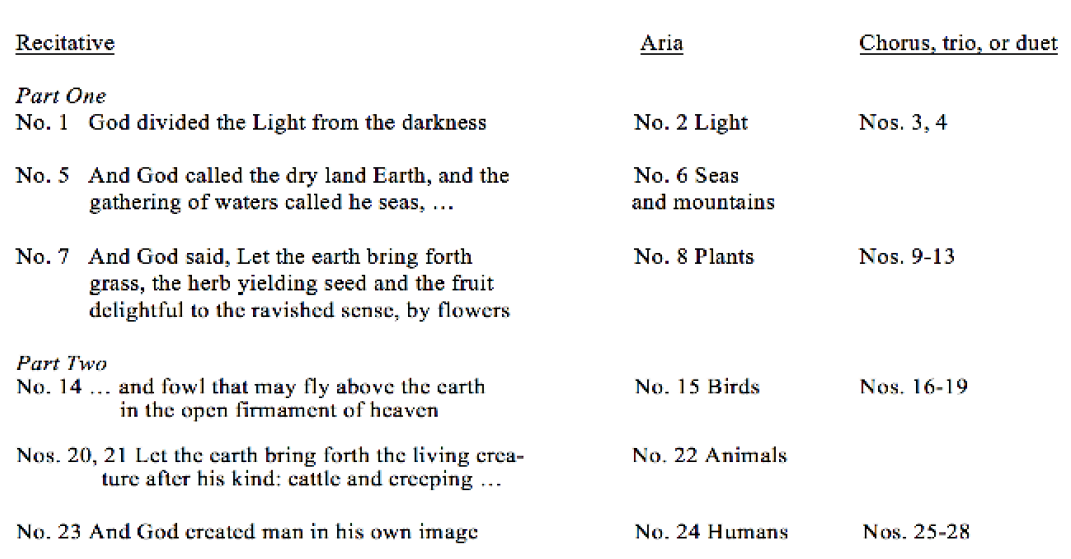 Research Article
Josef Haydn and Thomas Nagel on Continuity in Nature and the Nature of Continuity
David Beckwith Greene
According to Thomas Nagel, neo-Darwinians do not recognize the radical discontinuity between subjective experience and materially conceived reality. He calls for a new understanding of preconscious matter such that genuine continuity between it and subjectivit…
11 Apr 2018DOI 10.17582/journal.src/2018/5.1.13.25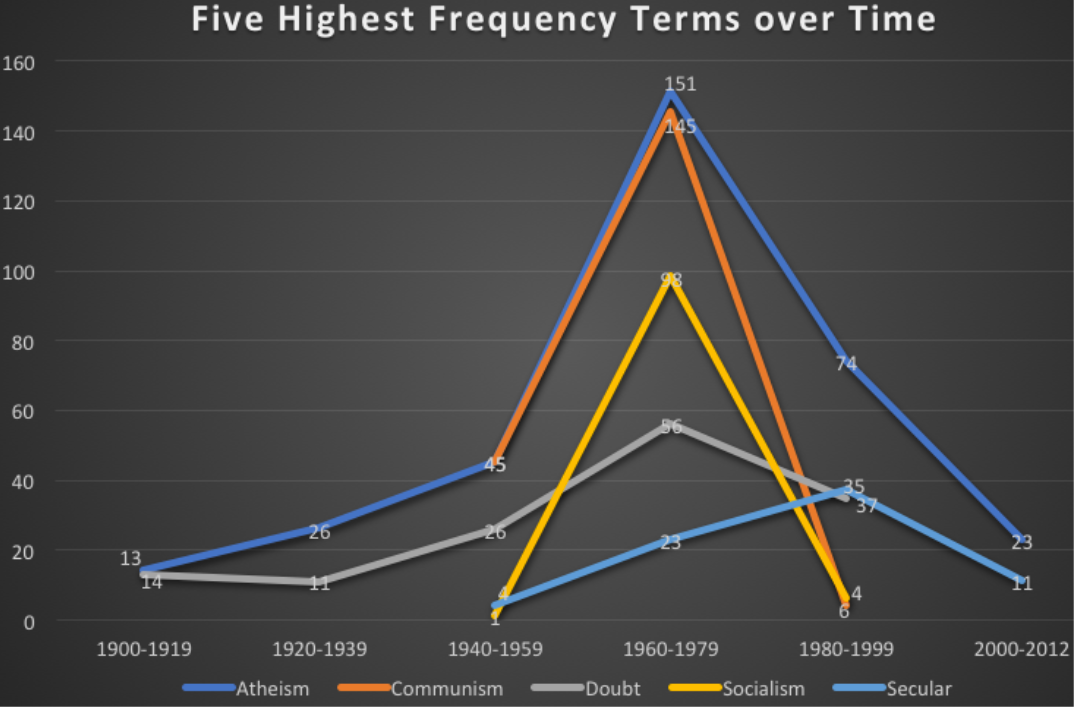 Research Article
The Rhetoric of Revelation: Examining Religious Rhetoric on Secularism through an Ethnographic Content Analysis of Mormon Leadership Discourse
Jesse M. Smith
This study examines the rhetorical practices of conservative Christian leadership in the United States over time through a case study of Mormonism. Using data drawn from their semi-annual General Conference and other church-produced documents from 1903 to the…
11 Apr 2018DOI 10.17582/journal.src/2018.5.1.26.44- Special Issue: Author Meets Critics: John Martin Fischer's "Our Fate: Essays on God and Free Will"
Replies by John Martin Fischer
John Martin Fischer
I am very grateful for the extremely thoughtful and generous essay by Meghan Griffith. She raises various important issues, which are worth thinking seriously about, but I want to focus on what I take to be her main point. Griffith agrees with me that it is pl…
6 Mar 2018DOI 10.17582/journal.src/2017/4.2.79.101 - Special Issue: Author Meets Critics: John Martin Fischer's "Our Fate: Essays on God and Free Will"
Endurantism, Fixity, and Fatalism
Michael Almeida
Nelson Pike is often credited with offering the most compelling formulation of an ancient argument against human freedom.1 According to Pike, God’s foreknowledge that we will perform some action is inconsistent with our freedom to do otherwise. If freedo…
6 Mar 2018DOI 10.17582/journal.src/2017/4.2.47.55 - Special Issue: Author Meets Critics: John Martin Fischer's "Our Fate: Essays on God and Free Will"
Bootstrapping Divine Foreknowledge? Comments on Fischer
Alan R. Rhoda
John Martin Fischer’s work has long been at the forefront of discussions on divine foreknowledge and human freedom. I have a great deal of respect for his work in this area and have learned much from him, so it’s an honor to have been invited to co…
6 Mar 2018DOI 10.17582/journal.src/2017/4.2.72.78 - Special Issue: Author Meets Critics: John Martin Fischer's "Our Fate: Essays on God and Free Will"
In Defence of Open Theism
Richard Swinburne
In 1965 Nelson Pike presented his very clear version of an ancient argument purporting to show that a temporal God (that is, one who exists at all moments of time), could not have infallible knowledge of any future causally undetermined contingent event, and s…
6 Mar 2018DOI 10.17582/journal.src/2017/4.2.56.62 - Special Issue: Author Meets Critics: John Martin Fischer's "Our Fate: Essays on God and Free Will"
Defending Compatibilism
Bruce R. Reichenbach
It is a truism that where one starts from and the direction one goes determines where one ends up. This is no less true in philosophy than elsewhere, and certainly no less true in matters dealing with the relationship between God’s foreknowledge and…
6 Mar 2018DOI 10.17582/journal.src/2017/4.2.63.71 - Special Issue: Author Meets Critics: John Martin Fischer's "Our Fate: Essays on God and Free Will"
Anselm versus Fischer on Solving the Dilemma of Human Freedom and Divine Foreknowledge
Katherin Rogers
If God knows what you will choose tomorrow, you cannot possibly choose otherwise than as God knows you will choose. How, then, can you choose freely? John Martin Fischer, in his chapter, “Engaging with Pike: God, Freedom,and Time” (with Patrick Tod…
27 Feb 2018DOI 10.17582/journal.src/2017/4.2.38.46 - Special Issue: Author Meets Critics: John Martin Fischer's "Our Fate: Essays on God and Free Will"
Fischer and Fate
Mark Bernstein
“In philosophy it is can in particular that we seem so often to recover , just as we had thought some problem settled, grinning residually up at us like a frog at the bottom of the beer mug.” Ifs and Cans, J.L. Austin
27 Feb 2018DOI 10.17582/journal.src/2017/4.2.27.37 - Special Issue: Author Meets Critics: John Martin Fischer's "Our Fate: Essays on God and Free Will"
John Martin Fischer on the Puzzle of Theological Fatalism
David P. Hunt
The last fifty years have seen a remarkable resurgence of interest among philosophers in the ancient problem of theological fatalism: how divine foreknowledge can be compatible with human freedom. No one has contributed more to the contemporary debate ove…
26 Feb 2018DOI 10.17582/journal.src/2017/4.2.15.26 - Special Issue: Author Meets Critics: John Martin Fischer's "Our Fate: Essays on God and Free Will"
Some Speculations about Semicompatibilism
Meghan Griffith
At the very outset of his excellent Our Fate, John Martin Fischer suggests that arguments for the incompatibility of freedom to do otherwise and divine foreknowledge “are in important ways parallel to a more recent (“Modern”) argument for the…
26 Feb 2018DOI 10.17582/journal.src/2017/4.2.4.14 - Special Issue: Author Meets Critics: John Martin Fischer's "Our Fate: Essays on God and Free Will"
Precis Our Fate: Essays on God and Free Will (New York: Oxford University Press, 2016)
John Martin Fischer
In Our FateI present a family of arguments for the incompatibility of God’s foreknowledge and human freedom to do otherwise. The arguments are fueled by the intuitive idea of the fixity of the past. I distinguish different versions of the argument, and I…
26 Feb 2018DOI 10.17582/journal.src/2017/4.2.1.3 - Special Issue: Author Meets Critic (AMC)
The Gracious God In, With, and Under Cosmic History: A Critical Response to Ted Peters
Ann Milliken Pederson
Reading God in Cosmic History was like quenching a dry, parched throat with a long cool drink of water. Indeed, Peters claims that humans have an “ontological thirst” for the ultimate and this book attempts to satisfy the thirst or at least provide…
14 Feb 2018DOI 10.17582/journal.src/2017/4.1.6.11 - Special Issue: Author Meets Critic (AMC)
God in Cosmic History: A Critical Response to Ted Peters
Nancy R. Howell
In his new book, God in Cosmic History, Ted Peters carries Big History beyond the scientific horizon to reflect on the God of creation and redemption. In critique, I ask two questions: (1) What does Peters’ Cosmic History contribute to addressing the iss…
14 Feb 2018DOI 10.17582/journal.src/2017/4.1.12.17 - Special Issue: Author Meets Critic (AMC)
God in Cosmic History: Responding to my Critics
Ted Peters
Here is the key question around which this Author-Meets-Critic revolves: can we raise the question of God’s existence or God’s grace in a meaningful way while studying a combination of natural history and human history? No, say big historians; we c…
14 Feb 2018DOI 10.17582/journal.src/2017/4.1.27.36 - Special Issue: Author Meets Critic (AMC)
The Cosmos in Light of the Cross: A Critical Response to Ted Peters
George L. Murphy
Ted Peters’ idea of Cosmic History includes the scientific account of Natural History right along with the story of humanity according to World History. Cosmic History adds meaning to the scientific account of natural history. But, in my critique, I cont…
14 Feb 2018DOI 10.17582/journal.src/2017/4.1.18.22  Special Issue: Author Meets Critic (AMC)
Evolution and Teleology: A Critical Response to Ted Peters
Francisco J. Ayala
In chapter 19 of Ted Peters’ new book, God in Cosmic History, he addresses the knotty question of teleology in evolutionary biology. This requires further discussion. Scientifically speaking, we can perceive design in nature without a designer. On the on…
14 Feb 2018DOI 10.17582/journal.src/2017/4.1.23.26- Special Issue: Author Meets Critic (AMC)
From Big History to Cosmic History: A Critical Response to Ted Peters
Lowell Gustafson
In God in Cosmic History: Where Science & History Meet Religion, Ted Peters makes an important contribution to our thinking about a crucial set of dialogues among science, history, and religion. His goal is to expand a secular view of Big History to one of…
13 Feb 2018DOI 10.17582/journal.src/2017/4.1.1.5 - Articles
Xenophilosophy and the Knowledge of Ourselves
Mariano Gastón Asla
Extraterrestrials have been a common topic in some oral traditions but also in literature and philosophy. Epicurus, William of Ockham, Immanuel Kant or Michael Ruse, to name just a few examples, have used this kind of fictions to analyze and defend very differ…
6 Mar 2017