
Issue · 2023
Pakistan Journal of Nematology, Vol. 41, Iss. 1, Pages 1-100
10 articles · pp. 1-100 · All issues →
 Research Article
Suppressive Effect of Certain Bacterial Isolates of Pseudomonas fluorescens Suspensions on Root-Knot Nematode, Meloidogyne incognita
Ahmed E.A. Mahgoob, Wafaa M.A. El-Nagdi, Mahmoud M.A. Youssef, Entesar H. Taha, Mona M.S. Zayed, Hassan Abd- El-Khair et al.
This investigation was planned with the aim to evaluate different suspensions of certain isolates of bacterium, Pseudomonas fluorescens for their nematicidal potentials against root-knot nematode, Meloidogyne incognita under in vitro conditions. The present re…
31 Mar 2023DOI 10.17582/journal.pjn/2023/41.1.1.7- Review
Host Biotic Factors Affecting Virulence of Corn Cyst Nematode, Heterodera zeae on Corn in Egypt
Ahmed El-Sayed Ismail
Four biotic factors respecting the corn plant affect the virulence of the corn cyst nematode, Heterodera zeae such as corn genotype, corn age, corn nutritional status, and cropping sequence regime. For the first factor, when two local corn cultivars, namely, G…
3 Jul 2023DOI 10.17582/journal.pjn/2023/41.1.65.69 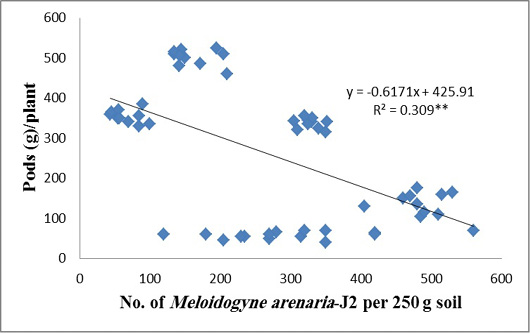 Research Article
The Damage and Gain Threshold of Meloidogyne arenaria on Faba Bean Favors the Use of a Safe Biological Control Over Chemical Nematicides
Mostafa Mohamed Attia Hammam, Moawad Mohamed Mohamed Mohamed, Mahfouz Mohamed Mostafa Abd-Elgawad
Root-knot nematodes (RKNs, Meloidogyne spp.) cause major agricultural losses worldwide. Some chemical nematicides are effective, but health and ecological issues are confronting their use. Biological nematicides are safe and promising alternatives. The present…
31 Mar 2023DOI 10.17582/journal.pjn/2023/41.1.8.17- Research Article
Species of Root-Knot Nematodes (Meloidogyne spp.) Infecting Soybean in Different Localities of Egypt and Rating of its Local Genotypes for their Resistance to Meloidogyne incognita
Ahamed Mohamed Korayem, Moawad Mohamed Mohamed, Mohamed, Mostafa Mohamed Attia Hamman
Survey and identification of root-knot nematode species infecting soybean grown in six Egyptian governorates; Beni-Suef and Menia representing middle Egypt and Alexandria, El-Beheira, Kafr-Elsheikh and Dakahlia representing northern Egypt, was conducted during…
4 May 2023DOI 10.17582/journal.pjn/2023/41.1.18.23 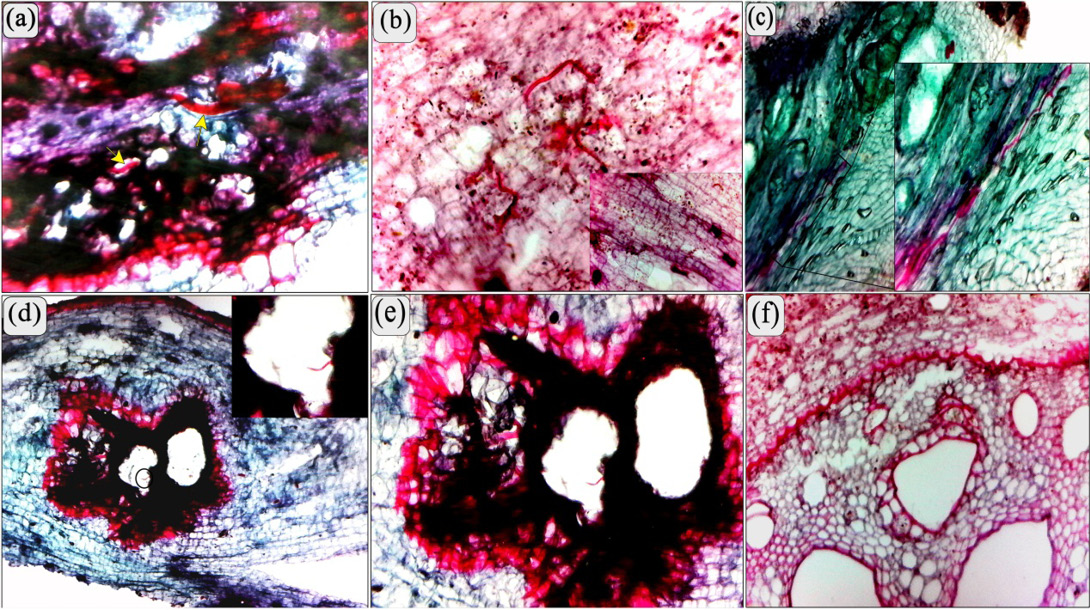 Research Article
Histopathological Modifications in Musa cavendishii Roots Induced by Radopholus similis and Meloidogyne incognita
Atef M. El-Sagheer, Aline F. Barros, El-Sayed M. Abd El-Aal, Mohamed M. Gad, Doaa S. Mahmoud, Amr M. El-Marzoky
Several plant-parasitic nematodes have been associated with banana (Musa cavendishii) and some of the most economically important ones are Radopholus similis and Meloidogyne spp. the purpose of this study is mainly to clarify the pathogenic effects of both nem…
3 Jul 2023DOI 10.17582/journal.pjn/2023/41.1.56.64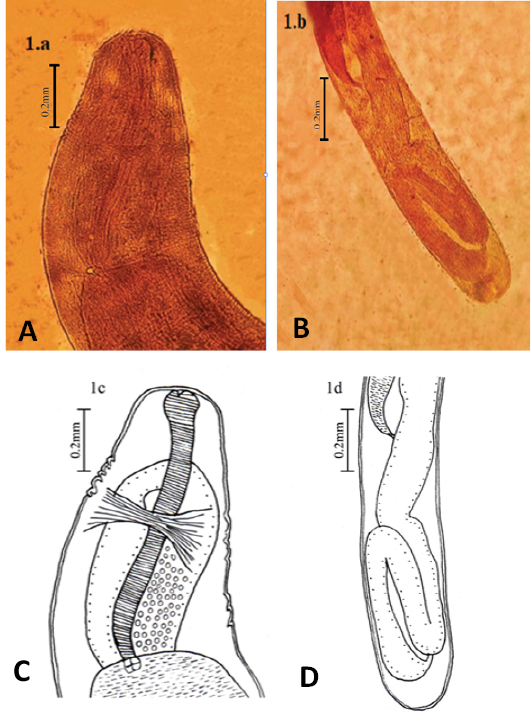 Research Article
Two New Species of Philometra (Nematoda: Philometridae) from Edible Fish Pomadasys maculatus of Karachi Coast
Sumbul Zulfiqar, A.G. Rizwana
Globally, fishes are considered as the healthiest food. They consist of all the significant nutriments that are very necessary for human health. Diseases in fishes caused by invasion of parasite especially due to Philometra species is considered very much prob…
3 Jul 2023DOI 10.17582/journal.pjn/2023/41.1.95.100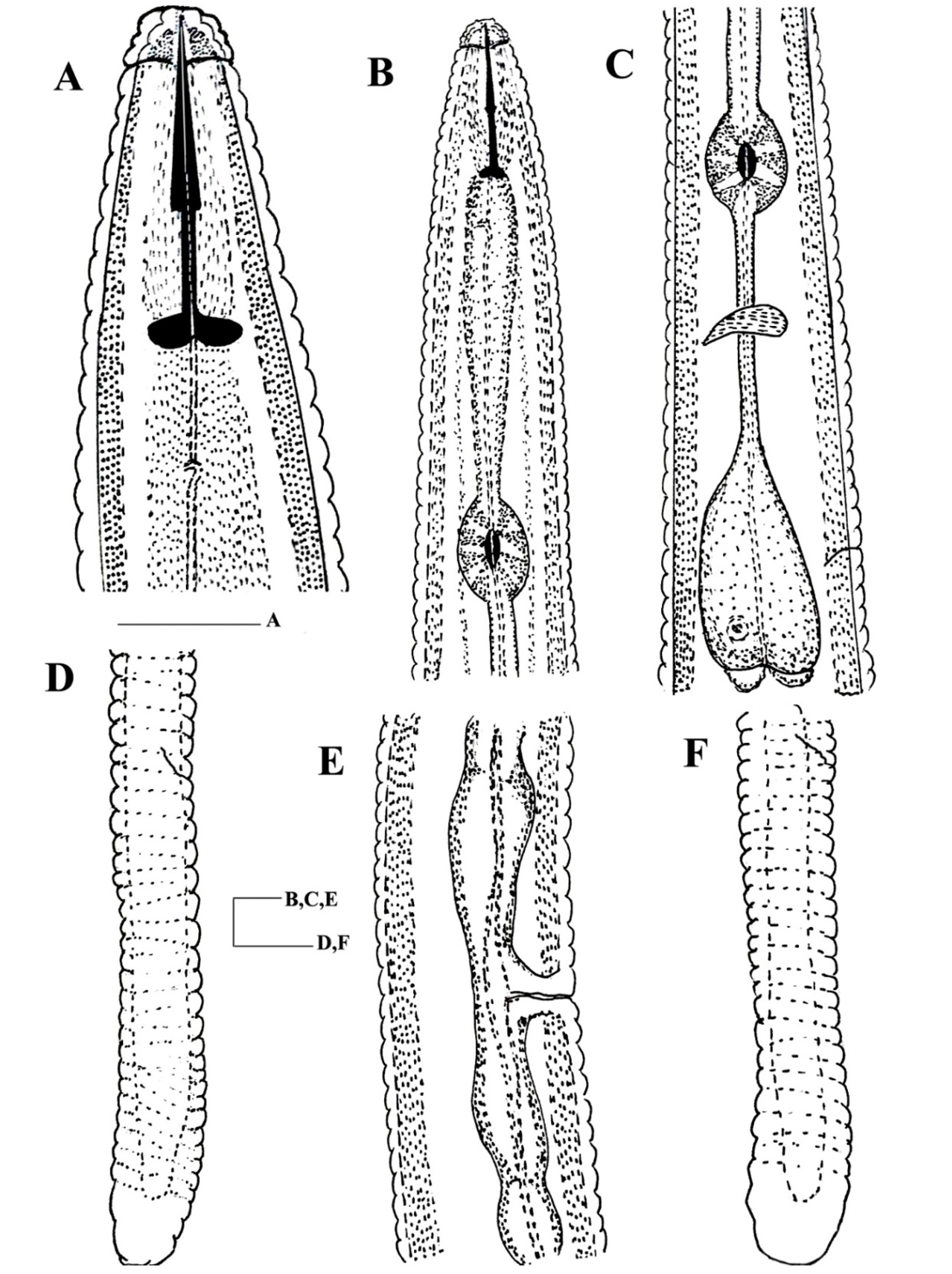 Research Article
Taxonomic Data of New Recorded Plant Parasitic and Soil Nematodes from Different Vegetation of Thar Desert, Sindh Pakistan
Ramzan Ali, Erum Iqbal, Muhammad Ismail Bhatti, Saboohi Raza
Plant parasitic and soil nematodes were found associated with different vegetation of the Thar Desert, Sindh, Pakistan. Taxonomic studies of Tylenchorhynchus neoclavicaudatus Mathur, Sanwal and Lal, 1978, Tylenchorhynchus mashhoodi Siddiqi and Basir, 1958, Pra…
3 Jul 2023DOI 10.17582/journal.pjn/2023/41.1.70.94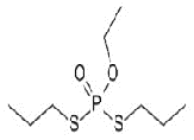 Research Article
Evalution of Bionematicides and Chemical Nematicides in Controlling Meloidogyne incognita on Grape, with Estimating Ethoprophos and Fenamiphos Residues and Chlorophyll Degree
Mohamed Adam, Hassan Sobhy, Mohamed Abouzid, Dalia Elhafny, El-Desouki Ibrahim
The potential of bionematicides: Taglis 90% w/w (Tagetes sp. 80% andAlgaesea 10%) and bioniconemal (Pacilomyceslilacinus 2× 10⁶cfu/ gm) was assessed to control the root- knot nematode Meloidogyne incognita on grape, in comparison with chemical nematicide…
30 May 2023DOI 10.17582/journal.pjn/2023/41.1.45.55- Research Article
Evaluation of Irrigation Methods, Potato Cultivars and Vermicompost for Integrated Management of the Meloidogyne incognita and Ralstonia solanacearum Disease Complex
Tasew Getu, Wassu Mohammed, Awol Seid, Tesfamariam Mekete, Bekele Kassa
The Meloidogyne incognita (MI) and Ralstonia solanacearum (RS) disease complex is considered among the most important potato yield-limiting factors. This research was conducted to evaluate the effect of irrigation methods, cultivars, vermicompost (VC) and thei…
22 May 2023DOI 10.17582/journal.pjn/2023/41.1.31.44 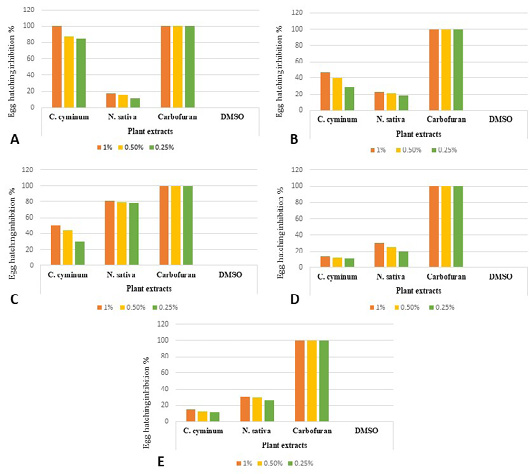 Research Article
Nematoxic Effect of (Polar and Non-Polar) Chemical Constituents of Cumin (Cyminum Spp.) Against Meloidogyne javanica
Saima Mehar, Amtul Sami, Erum Iqbal
The nematoxic effect was determined for the extracts of Cyminum spp. (Cuminum cyminum and Nigella sativa) in methanol, chloroform, ether, butanol, and hexane on egg hatching and mortality of the juveniles of root-knot nematode Meloidogyne javanica. After 72 ho…
5 May 2023DOI 10.17582/journal.pjn/2023/41.1.24.40