
Issue · 2019
Vol.6, Iss. 1
17 articles · All issues →
 Special Issue: Cross-Cultural Studies in Well-Being
Psychological Universals in the Study of Happiness: From Social Psychology to Epicurean Philosophy
Sasha S. Euler
Within the framework of Positive Psychology and Needing Theories, this article reviews cultural practices or perceptions regarding what happiness is and how it can be achieved. Mainly research on Subjective Well-Being (SWB) has identified many cultural di…
6 Apr 2019DOI 10.17582/journal.src/2019.6.1.130.137- Special Issue: Cross-Cultural Studies in Well-Being
Invisible Neighbors: Metaphysical Members of Society in Varaṇasi, India
Seth Ligo
The city of Varaṇasi, north India, buzzes with networks. Arguably the oldest inhabited city in the world and Hinduism’s most sacred pilgrimage destination, contemporary social networks are interwoven with historical and religious narrative. In fact, in…
5 Apr 2019DOI 10.17582/journal.src/2019.6.1.50.58  Special Issue: Cross-Cultural Studies in Well-Being
Sacrifice: A Maya Conception of a Misunderstood and Underappreciated Component of Well-Being
Alexus McLeod
In this paper, I develop an account of the premodern Maya conception of sacrifice as a virtue and a key aspect of well-being. To do this, I look to premodern Maya sources—particularly, Classic Period texts and images (in Part One) and the Postcontact tex…
5 Apr 2019DOI 10.17582/journal.src/2019.6.1.34.41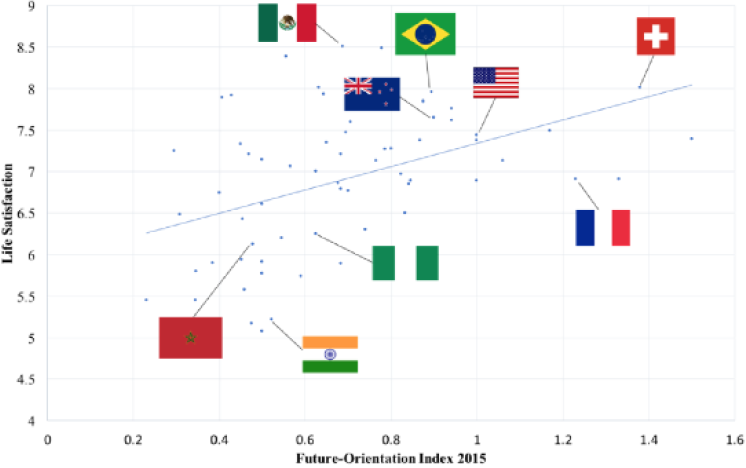 Special Issue: Cross-Cultural Studies in Well-Being
Future Orientation as a Universal Feature of Wellbeing: Leveraging Big Data for Cross-cultural Research
Jason Shepard, Tyra Turner
Future-oriented thought has been found to be positively related to health and well-being. However, this research has primarily been conducted in WEIRD populations, leaving open the question whether this relation holds for non-WEIRD populations. We conducted th…
6 Apr 2019DOI 10.17582/journal.src/2019.6.1.138.145- Special Issue: Cross-Cultural Studies in Well-Being
Annihilation of Desire in Jain Ethics as a Challenge to Western, Subjectivist Notions of Well-Being
Kathryn Phillips, Katherine L. Schaefer
Many accounts of well-being aim to be maximally accommodating with respect to the good life by focusing on what people take to be good for themselves. Some popular Western philosophical views attempt to do so by focusing on the subjective phenomena of de…
5 Apr 2019DOI 10.17582/journal.src/2019.6.1.67.76 - Special Issue: Cross-Cultural Studies in Well-Being
Contesting Moral Well-being: Two Narratives among Zulu South Africans
Christine Jeske
This article focuses on a frequently overlooked factor in people’s estimation of their own well-being: whether they and their surrounding social networks deem their life circumstances to follow a moral trajectory. Because multiple standards of mora…
5 Apr 2019DOI 10.17582/journal.src/2019.6.1.59.66 - Special Issue: Cross-Cultural Studies in Well-Being
Particulars of Well-Being
Owen Flanagan, Mona Letourneau, Wenqing Zhao
These are good times for the study of happiness and well-being. Philosophers and social scientists are attempting to provide precise definitions of ‘happiness’ and ‘well-being’, distinguish between happiness and well-being, taxono…
26 Mar 2019DOI 10.17582/journal.src/2019.6.1.1.5 - Special Issue: Cross-Cultural Studies in Well-Being
Ecological Self-Understanding: A Cross-Cultural Epistemic Virtue in Contemporary Native American and Confucian Philosophy
Jesse Butler
Cross-cultural analyses often emphasize differences between worldviews. While there are significant differences across the diverse ways that humanity has understood itself, the tendency to emphasize differences can obscure important and revealing commonalities…
5 Apr 2019DOI 10.17582/journal.src/2019.6.1.42.49 - Special Issue: Cross-Cultural Studies in Well-Being
Weaving the Good Life in a Living World: Reciprocity, Balance and Nepantla in Aztec Ethics
James Maffie
The Aztecs saw themselves living in a world that was not only inherently unstable but also inexorably destined to succumb to imbalance-induced total destruction. They perceived human beings’ hold on life in these circumstances as inescapably “slipp…
27 Mar 2019DOI 10.17582/journal.src/2019.6.1.15.25 - Special Issue: Cross-Cultural Studies in Well-Being
Korean Nunchi and Well-Being
Seth Robertson
“Nunchi” is a Korean term that indicates an expert facility in social interactions and especially the ability to interpret and utilize indirect communication with ease and alacrity. In this paper, I introduce and discuss the concept of nunchi…
6 Apr 2019DOI 10.17582/journal.src/2019.6.1.103.109 - Special Issue: Cross-Cultural Studies in Well-Being
RIGHTING IMBALANCE: Striving for Well-Being in the Andes
Catherine J. Allen
Since the early 2000s, indigenous notions of well-being (Quechua sumak kawsay, Aymara suma qamaña, Spanish buen vivir, vivir bien) have entered the political discourse of the Andean nations (Bolivia, Ecuador, Peru), serving as rallying points for networ…
27 Mar 2019DOI 10.17582/journal.src/2019.6.1.6.14 - Special Issue: Cross-Cultural Studies in Well-Being
Filial Piety and Ritual: A Confucian Approach to Well-Being
Eric Yang
This paper examines a Confucian approach to well-being. Two Confucian ideas will be developed—in particular, filial piety (xiao) and ritual (li)—which arose in the Spring and Autumn period of ancient China. After a close examination…
5 Apr 2019DOI 10.17582/journal.src/2019.6.1.96.102 - Special Issue: Cross-Cultural Studies in Well-Being
The Good Life in Contemporary China
Tung-Yi Kho
Drawing upon some 30-months of ethnographic field research in China’s feted Special Economic Zone of Shenzhen, I examine here two competing visions and practices of the “good life” in contemporary China. I have labeled these the Moderni…
6 Apr 2019DOI 10.17582/journal.src/2019.6.1.110.121 - Special Issue: Cross-Cultural Studies in Well-Being
Be as Strong as the Land that Made You: An Indigenous Philosophy of Well-Being through the Land
Brian Yazzie Burkhart
This essay attempts to articulate an Indigenous concept of well-being as grounded in the concepts of being-from-the-land and being-in-the-land, which are attempts, in this essay, at describing a conceptualization of being in general and human being in particul…
27 Mar 2019DOI 10.17582/journal.src/2019.6.1.26.33 - Special Issue: Cross-Cultural Studies in Well-Being
Forgetfulness and Flow: “Happiness†in Zhuangzi’s Daoism
Ellen Y. Zhang
In this paper, I will approach Zhuangzi’s notion of happiness or a well-lived life by ascribing to his concepts of forgetfulness and flow. The paper aims to show that Zhuangzi’s idea of flow, from an experience-process perspective, resembles…
5 Apr 2019DOI 10.17582/journal.src/2019.6.1.77.84 - Special Issue: Cross-Cultural Studies in Well-Being
Can Existentialists be Happy? Authentic Life, Authentic Happiness
Jennifer Mei Sze Ang
This paper aims to fill a gap in today’s literature on well-being studies from the existentialist tradition, through a selection of the early works of the father of French existentialism Jean-Paul Sartre. It questions whether existentialists can be…
6 Apr 2019DOI 10.17582/journal.src/2019.6.1.122.129 - Special Issue: Cross-Cultural Studies in Well-Being
Courage and Well-Being in Early Chinese Daoist Philosophy
Ai Yuan
This paper presents early Chinese Daoist thought on well-being in the Zhuangzi. The Zhuangzi focuses on how to live a good life instead of what constitutes a good life. To the Zhuangzi, well-being (le 樂) comes from maintaining an attitude of acceptance…
5 Apr 2019DOI 10.17582/journal.src/2019.6.1.85.95