
Issue · 2025
Vol. 43, Iss. 2
10 articles · All issues →
 Research Article
Field Evaluation of Native Ghanaian Medicinal Botanicals for Management of Plant Root-Feeding Nematodes on Tomato (Solanum lycopersicum L.)
William K. Heve, Abigail M. Norvor, John Opata
This study examined brimstone tree (Morinda lucida Benth), neem plant (Azadirachta indica A-H de Jussieu) and bitter leaf (Vernonia amygdalina Delile) from Ghana against native vertisol-dwelling plant root-feeding nematodes (PRFNs) on tomato plants in the fiel…
14 Aug 2025DOI 10.17582/journal.pjn/2025/43.2.97.109 Research Article
Effect of Aqueous Extracts of Some Aromatic Plants on the Main Parasitic Nematodes of Banana (Musa spp.) In Vitro
Gnénakan Yéo, Seydou Tuo, Lassina Fondio
Banana cultivation is subject to several constraints, including nematodes. A study was conducted in the laboratory to identify plants that have nematicidal effects. Aqueous extracts of four aromatic plants (Cymbopogon citratus, Ocimum gratissimum, Azadir…
19 Dec 2025DOI 10.17582/journal.pjn/2025/43.2.187.193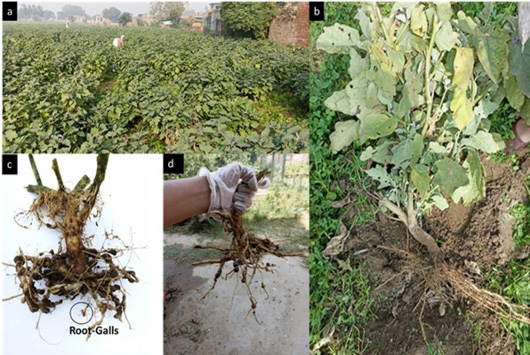 Research Article
Morpho-Molecular Characterization of Meloidogyne javanica (Treub, 1885) Chitwood, 1949 (Tylenchida: Meloidogynidae) from Solanum melongena L. (Solanales: Solanaceae)
Rishil Gupta, Faheem Ahmad, Khalid Z Masoodi, Adnan Shakeel
Vegetable crops in India are facing a major threat from underground root pathogens known as root-knot nematodes. Reports suggest that India suffers 12% losses in crop yields annually due to these obligate parasites. Out of the 100 globally known Meloidogyne sp…
11 Sept 2025DOI 10.17582/journal.pjn/2025/43.2.146.153 Research Article
Possible Application of Hyoscyamus albus, Mercurialis annua and Volutaria tubuliflora Extracts as Green Nematicides in Managing Meloidogyne incognita Infecting Newly Planted Guava Seedlings
Amr A. El-Sherbiny, Sandy E. Hammad
Methanolic shoot extracts of Hyoscyamus albus, Mercurialis annua and Volutaria tubuliflora at the concentrations 100, 250, 500, 1000 and 2000 mg L-1 significantly exhibited real mortality (12.4 - 100%) of second stage juveniles of the root-knot nematode Meloid…
19 Nov 2025DOI 10.17582/journal.pjn/2025/43.2.158.173 Research Article
Enzymatic Changes in Pomegranate Cultivars Infected with Phyto-Nematode Species with Emphasis on Role of Humic Acid Products in Controlling Root-Knot Nematode
Hosny H. Kesba, Sherif M. El-Ganainy, Shaimaa F. Diab, Abdullah A. Abdel-Rahman
Two pot experiments were conducted under greenhouse conditions. The first, three pomegranate cultivars (Assuity, Manfalouty, and Wonderful) were screened for Meloidogyne incognita, Rotylenchulus reniformis, and Helicotylenchus indicus reproductivity according…
19 Dec 2025DOI 10.17582/journal.pjn/2025/43.2.194.207 Research Article
Assessing the Efficacy of Potassium Silicate Individually and in Sequencing with Nematicides for Managing Meloidogyne sp. on Solanum lycopersicum: A Suggested Approach for Sustainable Agricultural Practices
Mohamed Salah Khalil, Manal M. Zen El-Dein
Integrated pest management (IPM) programs are depending on several tactics to manage the pests. Synthetic nematicides are one of the available options to farmers in IPM programs against plant parasitic nematodes. But in the same time the environmental protocol…
11 Sept 2025DOI 10.17582/journal.pjn/2025/43.2.134.145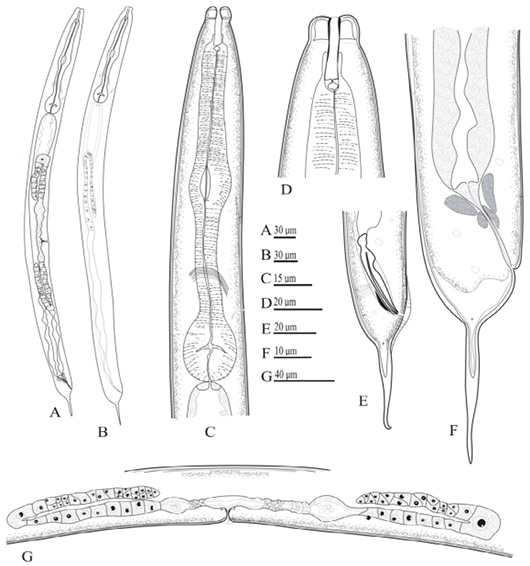 Research Article
Survey on Nematodes Biodiversity in Agaricus bisporus Producing Composts in East Azarbaijan Province, Iran
Habibeh Jabbari
Mushrooms are one of the newest resources in the human food basket. Agaricus bisporus (J.E. Lange) Imbach, 1946 is the most cultivated fungus for the purpose worldwide, which was grown in small and huge amounts and used cooked or uncooked. Growing beds of the…
2 Sept 2025DOI 10.17582/journal.pjn/2025/43.2.110.121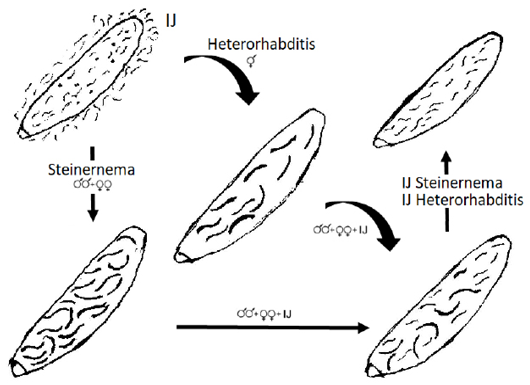 Review
Integrating Entomopathogenic Nematodes in Managing Pests of Honeybees
Mahfouz M.M. Abd-Elgawad
Honeybees (Apis mellifera L.) are key pollinators of many economic crops. The significance of the beehive products is also reflected at several levels including economics of local/export markets, and effects of related activities on the society and environment…
2 Sept 2025DOI 10.17582/journal.pjn/2025/43.2.122.143- Short Communication
Environmental Abiotic and Nematode Biotic Factors Affecting Virulence of Corn Cyst Nematode, Heterodera zeae on Corn in Egypt
Ahmed El-Ismail
Soil texture as abiotic factor alongside three biotic factors respecting with nematode such as inoculation levels, inocula storage conditions and inocula source types affects the virulence of Heterodera zeae. Lighter soil textures such as sandy clay loam and s…
11 Sept 2025DOI 10.17582/journal.pjn/2025/43.2.154.157 - Review
Nematodes in Agroecosystems: A Review of Their Role and Influence of Farm Management Practices on the Community Structure
Musongora Kambale Muyisa, Keziah Magiroi, Njiranjira Pili, Abigael Otinga Nakesa, Ruth Njoroge
The dynamics of nematode community structure in response to farmland management practices are seldom consistent. In agroecosystems, the economic importance of plant feeding nematodes originates from their direct effect on crop development and yield, reducing p…
19 Nov 2025DOI 10.17582/journal.pjn/2025/43.2.174.186