The obtained experimental results are presented as figures 1-9 and summarized in Table 2. The blood β-hydroxybutyrate concentration was 2.6 times higher in subclinical ketotic cows (1.65 ± 0.09 vs. 0.64 ± 0.10 mmol /L, p <0.001) than healthy ones (Figure 1). Blood glucose level of experimental group was 15% lower (2.05 ± 0.08 vs. 2.42 ± 0.13 mmol/L, p <0.01) than healthy ones (Figure 2), and also beyond the physiological range (2.2 mmol/L). This was accompanied with lower insulin concentration in plasma 29% (80.0 ± 3.25 vs. 111.9 ± 4.59 pmol/L, p <0.01) than healthy cows (Figure 3) and higher cortisol concentration 30% (115.1 ± 4.59 vs. 88.4 ± 2.97 nmol/L, p <0.05; Figure 4).
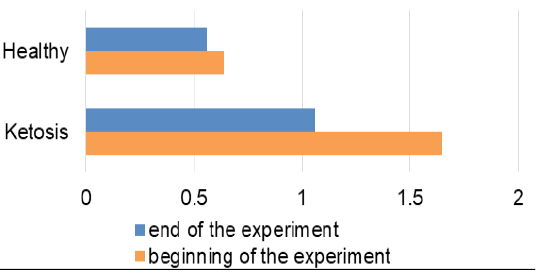
Figure 1: Concentration of β-hydroxybutyrate in the blood (mmol/L)
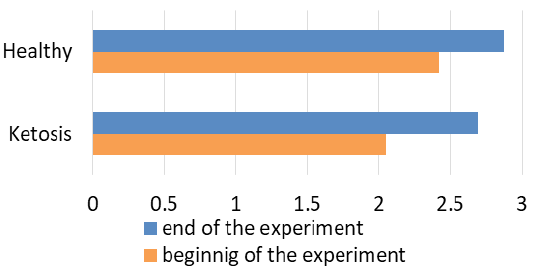
Figure 2: Concentration of glucose in the blood (mmol/L)
Feeding ketotic cows with the feed additive for 20 days led to a decrease of ketone bodies level which was clear by the absence of ketonuria in the qualitative urine analysis. Similarly, the β-hydroxybutyrate level in blood was lowered 36% (Figure 1) than before feeding the feed supplement (1.06 ± 0.12 vs. 1.65 ± 0.09 mmol /L, p <0.001). Although it did not reach the level of the healthy cows (0.56 ± 0.07 mmol /L), that was nevertheless lower than the maximum allowable value for healthy cows (1.2 mmol/L).
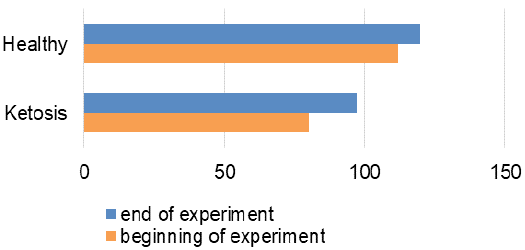
Figure 3: Concentration of insulin in plasma (pmol/L)
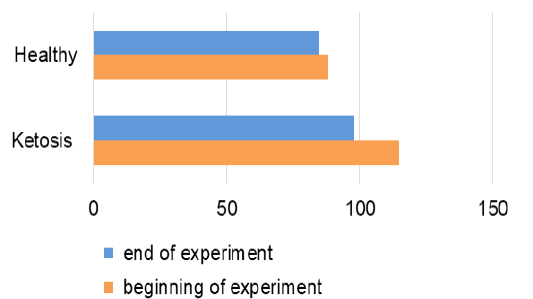
Figure 4: Concentration of cortisol in plasma (nmol/L)
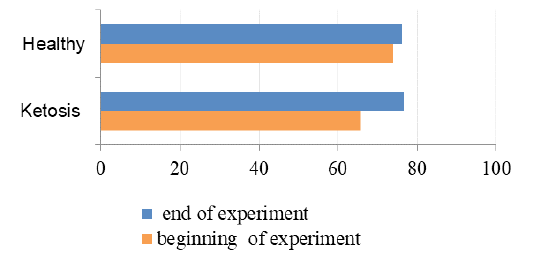
Figure 5: The contents of total protein in serum (g/L).
A favorable prognostic indicator that showed an improvement in energy supply of the ketotic cows was the glucose level in blood after treatment (Figure 2) with the feed additive increased to 2.69 ± 0.12 mmol/L, which is higher 31% (p <0.001) than before the feed supplement and did not differ from the healthy ones (2.87 ± 0.08 mmol/L). Such changes in β-hydroxybutyrate and glucose levels indicate normalization of the metabolic state and recovery of the subclinical ketotic cows.
The recovery of ketotic cows is confirmed by the hormonal status. Plasma insulin content was increased by 22% (97.2 ± 2.94 pmol/L, p <0.001), in comparison to before the feed supplement (Figure 3). Cortisol concentration (Figure 4) also decreased from 115.1 ± 4.59 nmol /L to 97.7 ± 2.82 nmol /L after feed additive (p <0.01). Such hormonal changes indicate inhibition of lipolysis and proteolysis.
Total protein level in serum of ketotic cows before supplementation was 16% (Figure 5) lower than the healthy ones (65.7 ± 1.88 vs. 73.8 ± 2.0 g / L, p <0.05). These hypoproteinemia could be due to the hypoalbuminemia (Figure 6), in which the serum albumin level was (28.1 ± 0.24 vs. 34.1 ± 0.78 g / L, p <0.01) lower 23% than healthy cows. Protein metabolism factors could also confirm the positive effect of the feed additive on liver function, in which after feeding the supplement the total protein level was increased to 76.6 ± 1.23 g /L (p <0.05), that was equal to its rate in the healthy cows (76.1 ± 1.01 g /L). These increase in total protein could be attributed to the increase in the albumin level after feeding with the feed additive which was higher 18% (33.2 ± 1.03 g /L, p <0.01) than before feeding supplement. Such changes indicate an improvement in the protein-synthesizing function of the liver. Therefore, the feed additive used in the experiment has hepatoprotective properties.
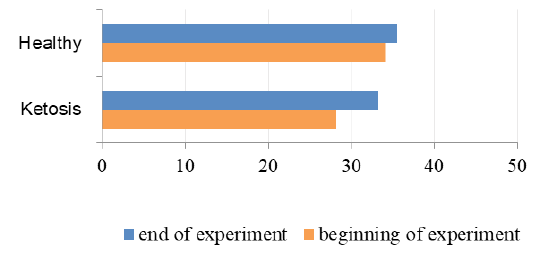
Figure 6: The contents of albumin in serum (g/L).
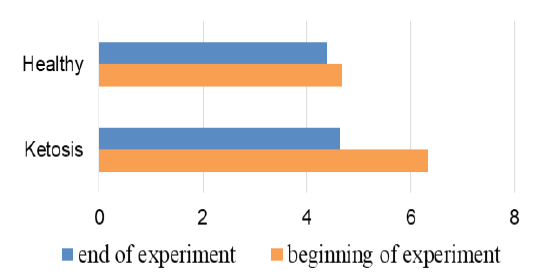
Figure 7: The contents of urea nitrogen in serum (mmol/L).
The important criterion of nitrogen metabolism is the blood urea concentration. Before treatment with feed supplement the serum urea level was higher in subclinical ketotic cows than healthy ones (6.33 ± 0.37 vs. 4.67 ± 0.20 mmol /L, p <0.001, Figure 7). After supplementation the urea nitrogen level was decreased to 4.64 ± 0.22 mmol /L (p <0.05) and did not differ from the control group (4.39 ± 0.25 mmol /L).
The normalization of the structure of liver cells were evidenced by levels of liver enzyme markers in serum (Figure 8 and 9). The AST level before treatment in the serum of ketotic cows was higher 25% (1247,28 ± 83.32 vs. 935.17 ± 50.81 nkat /L, p <0.01) than in the serum of control healthy group. After supplementation the AST level decreased 30% (p <0.01) to 877,21 ± 56.92 nkat /L, and did not differed from control ones (935.17 ± 50.81 nkat /L). Such changes of AST activity indicate a positive effect of the feed additive on the restoration of liver function. Changes of ALT activity are similar, but less expressed.
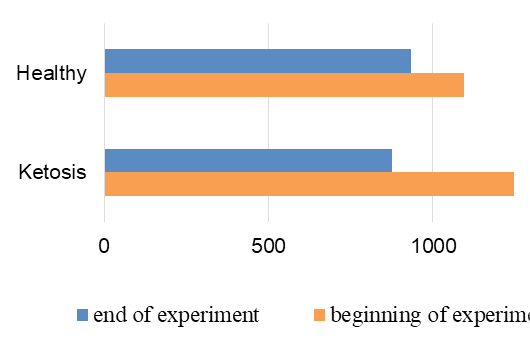
Figure 8: AST activity in serum; nkat/L
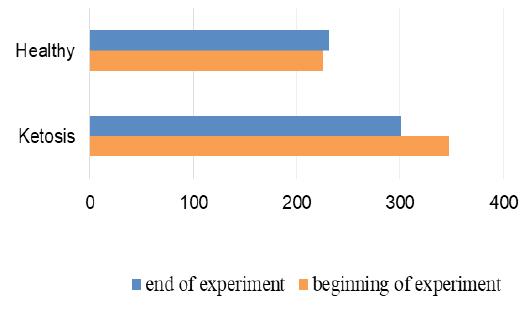
Figure 9: ALT activity in serum; nkat/L
DISCUSSION
In the high yielding transition dairy cows, liver is in a state of extreme metabolic load, which is very often evident by fatty degeneration in the hepatocytes. At the postpartum period, cow’s liver has three main metabolic problems: glucose synthesis, oxidation and excretion of fatty acids as a part of VLDL and transformation of ammonia into urea. Violation of one of these problems potentiates the deviation of others. As ammonia intoxication inhibits glucose synthesis and fatty acid metabolism, steatosis inhibits glucose and urea synthesis, and intensive gluconeogenesis reduces liver’s ability to metabolize ammonia and fatty acids (West, 1997; Bobe et al., 2004). Thus, liver functions are suppressed and subclinical ketosis occurs that can progress to clinical form under adverse conditions. The prevention and treatment of ketosis require comprehensive simultaneous regulation of all these metabolic processes in cows’ liver.
Therefore, the aim of the current study was to determine the effect of a complex feed supplement that could affect different aspects of metabolism in rumen and liver. The hypothesis of this study assumed that the obtained effects are not only a consequence of the direct actions of the supplement components, but also the result of improving the physiological and metabolic conditions of the cows.
Previous studies indicated the effect of hop cones and its extract on the enzymatic processes in rumen and its similarity in action to ionophores antibiotics (Karabin et al., 2016; Flythe et al., 2017). Ionophores antibiotics and hops β-acids (lupulone) inhibit the activity of Gram-positive bacteria in the rumen. The gram-negative bacteria are not sensitive to ionophores (Karabin et al., 2016).
The hyper-ammonia-producing bacteria (HAB) the main source of ammonia in the rumen. HAB belong to the gram-positive species, which are inhibited by ionophores and hops beta acids (Eschenlauer et al., 2002; Flythe et al., 2009; Flythe et al., 2017). Inhibition of ammonia production has a positive effect on metabolism in cows, as it protects protein from degradation in the rumen, preventing animal intoxication with ammonia and reduces the metabolic loading of liver (Bobe et al., 2004).
The inhibition by β-acids occurs as result of the decrease in lactic acid production so lower lactic rumen acidosis danger. The gram-negative propionate-producing bacteria are not sensitive to ionophores. Thus, proportion of propionate in volatile fatty acids composition increased when hop cones are fed (Wang et al., 2010), which is important for glucose synthesis in liver. However, from the negative effect of β-acids and ionophore the reduction in the formation of acetic acid in the rumen due to inhibition of the cellulolytic bacteria activity.
Lavrenčič et al. (2018) fed growing beef cattle 6 g and 11 g of hop DM/kg diet and reported an increase in the blood glucose level and a decrease in the non-esterified fatty acid
Table 2: Blood metabolites of the cows
Notes: Parameter measurements: β-Hydroxybutyrate and glucose - whole blood; insulin and cortisol - in blood plasma; protein, urea AST and ALT - in blood serum. The differences are statistically significant compared to beginning of the experiment: * – p<0.05; ** – p<0.01; *** – p<0.001.
-s concentration, whereas, β-hydroxybutyrate and urea concentration remained unchanged. In this current study there was an increase in blood glucose, and a decrease in hydroxybutyrate and urea after supplementation with hop cones. This can be explained by the peculiarities of metabolism in transition dairy cows, which are manifested in significant disorders of carbohydrate, lipid and protein metabolism. In addition, the supplement used contained hepatoprotective components that affect liver function, including ketogenesis and urea formation. In a previous study, a feed supplement containing hop cones and large doses of vitamin E was used and a similar changes only after calving was obtained, whereas after a month the effect of the supplement has not been noticed (Vudmaska et al., 2019a, 2019b). However, Focant et al. (2019) reported that hops had no effect on urinary N excretion, CH4 emission, milk production, and milk composition of dairy cows.
Methionine, choline and carnitine are well known hepato-protectors that are widely used for the prevention and treatment of liver dysfunction, including hepatic steatosis. Carnitine transports fatty acids to mitochondria for further beta-oxidation (Ringseis et al., 2018; Meyer et al., 2020). Choline and methionine are involved in the synthesis of phosphatidylcholine, promote the formation of very low-density lipoproteins and the excretion of triacylglycerols from the liver (Jayaprakash et al., 2016; Shahsavari et al., 2016; Zhou et al., 2016). However, none of these compounds has a pronounced effect on ketosis-related biochemical parameters in the blood of clinically healthy cattle (Shahsavari et al., 2016; Zhou et al., 2016; Ringseis et al., 2018; Humer et al., 2019; Meyer et al., 2020). Ketosis is predominantly accompanied by steatosis (West, 1997; Bobe et al., 2004), so improving liver function promotes better metabolism of glucose, urea, and other metabolic pathways. This may partly explain the changes in blood parameters obtained in this study.
Vitamin E fed in large doses regulates rumen fermentation by affecting the digestibility of dry and organic matter, fiber digestion, the formation of volatile fatty acids and lactate, and biohydrogenation of unsaturated fatty acids (Naziroğlu et al., 2002; Pottier et al., 2006; Wei et al., 2015; Hernández-Mendo et al., 2017).
Transition period and ketosis are often accompanied by oxidative stress. The supplement used in this study contained three components with antioxidant properties: vitamin E, hop cones (Karabin et al., 2016) and methionine (Zhou et al., 2016). Thus, prevention of oxidative stress through these antioxidant compounds could be one of the positive factors in the treatment of metabolic disorders.
CONCLUSION
Supplementing cows suffering from subclinical ketosis with diet with feed additive that includes hop cones, vitamin E, methionine, choline and carnitine, could help to normalize carbohydrate and protein metabolism through normalization of insulin and cortisol secretion, reducing β-hydroxybutyrate concentration and increasing blood glucose concentration. Also, these feed additive can led to an increase in the total protein and albumin levels and decrease transaminases (AST, ALT) activities, which are signs of improved liver structure and function. Thus, the proposed feed additive can be used for the treatment and prevention of ketosis and steatosis in dairy cows.
acknowledgements
The research was funded by scientific program of National Academy of Agrarian Sciences of Ukraine.
CONFLICT OF INTEREST
The authors have declared no conflict of interest.
authors contribution
Ihor Vudmaska: the author of the idea, designed the research, prepared the introduction and discussion sections, and revised the manuscript. Iryna Petrukh: examined the contents of hormones, participated in writing the results section. Sergii Sachko: conducted the experiment, examined the total protein, albumin, urea, glucose, and β-hydroxybutyrate concentrations, prepared materials and methods section, and participated in writing the results section. Vasyl Vlizlo: participated in writing the introduction and results sections. Yurii Kosenko: performed data analysis. Mariia Kozak: examined enzymatic activities, participated in writing the results section. Anna Petruk: prepared abstract, analyzed data statistically, took a part in preparation of discussion. All authors approved the manuscript.
REFERENCES
• Bobe G, Young JW, Beitz DC (2004). Invited review: Pathology, etiology, prevention, and treatment of fatty liver in dairy cows. J. Dairy Sci. 87(10):3105–3124. https://doi.org/10.3168/jds.S0022-0302(04)73446-3 • Compton CW, Young L, McDougall S (2015). Efficacy of controlled-release capsules containing monensin for the prevention of subclinical ketosis in pasture-fed dairy cows. NZ Vet. J. 63(5): 249 – 253. https://doi.org/10.1080/00480169.2014.999842 • Eschenlauer SC, McKain N, Walker ND, McEwan NR, Newbold CJ, Wallace RJ (2002). Ammonia production by ruminal microorganisms and enumeration, isolation, and characterization of bacteria capable of growth on peptides and amino acids from the sheep rumen. Appl. Environ. Microbiol. 68(10):4925-4931. https://doi.org/10.1128/aem.68.10.4925-4931.2002 • Flythe MD (2009). The antimicrobial effects of hops (Humulus lupulus L.) on ruminal hyper ammonia-producing bacteria. Lett. Appl. Microbiol. 118: 242–248. https://doi.org/10.1111/j.1472-765X.2009.02600.x • Flythe MD, Kagan IA, Wang Y, Narvaez N (2017). Hops (Humulus lupulus L.) Bitter acids: Modulation of rumen fermentation and potential as an alternative growth promoter. Front. Vet. Sci. 4: 131. https://doi.org/10.3389/fvets.2017.00131 • Focant M, Froidmont E, Archambeau Q, Dang Van QC, Larondelle Y (2019). The effect of oak tannin (Quercus robur) and hops (Humulus lupulus) on dietary nitrogen efficiency, methane emission, and milk fatty acid composition of dairy cows fed a low-protein diet including linseed. J. Dairy Sci. 102(2): 1144-1159. https://doi.org/10.3168/jds.2018-15479 • Hernández-Mendo O, Ramírez-Mella M, Ramírez-Bribiesca JE, Crosby-Galván MM, Burgueño-Ferreira JA (2017). Effect of vitamin E on ruminal fermentation and nutrient digestion in steers supplemented with microencapsulated conjugated linoleic acid. Anim. Nutr. Feed Techn. 17(2): 293 – 301. https://doi.org/10.5958/0974-181X.2017.00028.2 • Humer E, Bruggeman G, Zebeli Q (2019). A Meta-Analysis on the impact of the supplementation of rumen-protected choline on the metabolic health and performance of dairy cattle. Animals (Basel). 9(8): E566. https://doi.org/10.3390/ani9080566 • Jayaprakash G, Sathiyabarathi M, Robert MA, Tamilmani T (2016). Rumen-protected choline: A significance effect on dairy cattle nutrition. Vet. World. 9(8): 837-841. https://doi.org/10.14202/vetworld.2016.837-841 • Karabín M, Hudcová T, Jelínek L, Dostálek P (2016). Biologically active compounds from hops and prospects for their use. Comprehensive Reviews in Food Science and Food Safety. 15(3): 542 – 567. https://doi.org/10.1111/1541-4337.12201 • Lavrenčič A, Pirman T, Žgur S. (2018). Use of hop cones in growing beef cattle nutrition. Annals of Warsaw University of Life Sciences – SGGW Animal Science. 57(2): 121–131. https://doi.org/10.22630/AAS.2018.57.2.12 • Meyer J, Daniels SU, Grindler S, Tröscher-Mußotter J, Alaedin M, Frahm J, Hüther L, Kluess J, Kersten S, von Soosten D, Meyer U, Most E, Eder K, Sauerwein H, Seifert J, Huber K, Rehage J, Dänicke S (2020). Effects of a dietary L-carnitine supplementation on performance, energy metabolism and recovery from calving in dairy cows. Animals. (Basel). 10(2): E342. https://doi.org/10.3390/ani10020342 • Mullins CR, Mamedova LK, Brouk MJ, Moore CE, Green HB, Perfield KL, Smith JF, Harner JP, Bradford BJ (2012). Effects of monensin on metabolic parameters, feeding behavior, and productivity of transition dairy cows. J. Dairy Sci. 95(3):1323 – 1336. https://doi.org/10.3168/jds.2011-4744 • Naziroğlu M, Güler T, Yüce A (2002). Effect of vitamin E on ruminal fermentation in vitro. J. Vet. Med. A, Physiol. Pathol. Clin. Med. 49(5):251-255. https://doi.org/10.1046/j.1439-0442.2002.00418.x • Pirestani A, Aghakhani M (2018). The effects of rumen-protected cholineand l-carnitine supplementation in the transition period on reproduction, production, and somemetabolic diseases of dairy cattle. J. Appl. Anim. Res. 46(1): 435-440. https://doi.org/10.1080/09712119.2017.1332632 • Pottier J, Focant M, Debier C, De Buysser G, Goffe C, Mignolet E, Froidmont E, Larondelle Y (2006). Effect of dietary vitamin E on rumen biohydrogenation pathways and milk fat. Depression in Dairy Cows Fed High-Fat Diets. J. Dairy Sci. 2006. 89(2):685-692. https://doi.org/10.3168/jds.S0022-0302(06)72131-2 • Ringseis R, Keller J, Eder K (2018). Regulation of carnitine status in ruminants and efficacy of carnitine supplementation on performance and health aspects of ruminant livestock: a review. Arch. Anim. Nutr. 72(1): 1 – 30. https://doi.org/10.1080/1745039X.2017.1421340 • Sachko S, Vudmaska I (2019). Use of hop cones and vitamin E to prevent metabolic disorders in transition dairy cows. Proceeding of the XIX Middle-European Buiatrics Congress, May 22 - 25, 2019, Lviv, Ukraine. Anim. Biol. 21(2): 132. • Shahsavari A, D’Occhio MJ, Al Jassim R (2016). The role of rumen-protected choline in hepatic function and performance of transition dairy cows. Br. J. Nutr. 116(1): 35 – 44. https://doi.org/10.1017/S0007114516001641 • Simonov M, Vlizlo V (2015). Some blood markers of the functional state of liver in dairy cows with clinical ketosis. Bulg. J. Vet. Med. 18(1): 74 – 82. https://doi.org/10.15547/bjvm.814 • Simonov MR, Vlizlo VV (2013a). Some indicators of protein metabolism in blood of cows under ketosis. Anim. Biol. 15(3): 120 – 124. • Simonov MR, Vlizlo VV (2013b). Content of free amino acids and some parameters of the functional state of the liver in blood plasma of healthy and ketotic dairy cows. Folia Vet. 57(3–4): 166 – 171. • Vlizlo V, Petruh I, Simonov M, Slivinska L (2018). Hormonal regulation of energy metabolism in ketotic cows. Proceeding of the XVIII Middle-European Buiatrics Congress, May 30 - June 2, 2018, Eger, Hungary. Hungarian Vet. J. 140(1): 294 – 298. • Vudmaska I, Sachko S, Petruk A, Pakholkiv N, Hudyma V, Skorokhid A (2019a). Correction the blood biochemical parameters in transition dairy cows by hop cones and vitamin E supplement. Scientific Messenger LNUVMB. Series: Vet. Sci. 21(95): 117 – 121. https://doi.org/10.32718/nvlvet9522 • Vudmaska IV, Sachko SR, Hudyma VYu, Golova NV, Pakholkiv NI (2019b). Influence of hop cones and vitamin E supplementation on rumen fermentation in transition dairy cows. Scientific and Technical Bulletin оf State Scientific Research Control Institute of Veterinary Medical Products and Fodder Additives аnd Institute of Anim. Biol. 20(2): 42 – 47. https://doi.org/10.36359/scivp.2019-20-2.05 • Wang Y, Chaves AV, Rigby FL, He ML, McAllister TA (2010). Effects of hops on ruminal fermentation, growth, carcass traits and shedding of Escherichia coli of feedlot cattle. Livest. Sci. 129: 135–140. https://doi.org/10.1016/j.livsci.2010.01.015 • Wei C, Lin SX, Wu JL, Zhao GY, Zhang TT, Zheng WS (2015). Effects of supplementing vitamin E on in vitro rumen gas production, volatile fatty acid production, dry matter disappearance rate, and utilizable crude protein. Czech J. Anim. Sci. 60(8): 335–341. https://doi.org/10.17221/8402-CJAS • Weiskirchen R, Mahli A, Weiskirchen S, Hellerbrand C (2015). The hop constituent xanthohumol exhibits hepatoprotective effects and inhibits the activation of hepatic stellate cells at different levels. Front. Physiol. 6: 140. https://doi.org/10.3389/fphys.2015.00140 • West HJ (1997). Clinical and pathological studies in cattle with hepatic disease. Vet. Res. Commun. 21(3):169-185. https://doi.org/10.1023/a:1005828211506 • Zhou Z, Vailati-Riboni M, Trevisi E, Drackley JK, Luchini DN, Loor JJ (2016). Better postpartal performance in dairy cows supplemented with rumen-protected methionine compared with choline during the peripartal period. J. Dairy Sci. 99(11): 8716 – 8732. https://doi.org/10.3168/jds.2015-10525 
