
Sound waves above audible frequency have revolutionized food industries being inexpensive and green technology. The technology has wide range of application in food industry. Ultra-sonication, thermo sonication, man osonication and man othermosonication are used in food industries for various objectives. Sound waves produce acoustic effect and when bubble produced bursts it results in mechanical energy responsible for inactivation of the pathogenic organisms present in food by poration and DNA fragmentation. Ultrasounds have diversified application in meat industry, extraction of bio actives, dairy industry, Enzyme technology, fruit and vegetable juice industry, water, waste water treatment, starch modification and removal of food allergens from food.
Research Article · Volume 32, Issue 2, 28 April 2019 · Open Access
Ultrasounds: A Recent Perspective in Food Industry
· · · · · · ·
Affiliations & Notes ⌄
- 1Food Sciences Research Institute NARC Islamabad, Pakistan
- 2Institute of Food and Nutritional Sciences PMAS- Arid Agriculture University Rawalpindi, Pakistan
- 3District Headquarter Teaching Hospital, Sargodha, Pakistan. amermumtaz72@yahoo.com
Article Info ⌄
- Journal:
- Pakistan Journal of Agricultural Research
- Published:
- 28 April 2019
From the article
- Ultrasounds have the most prominent place among the environment friendly technologies.
- Therefore, used widely in different food processing and preservation operations.
Selected from the article's own text.
Abstract
Introduction
Environment friendly technologies are replacing traditional expensive technologies. Sonication is among these technologies with wide range of applications in different food industries and food processes. Sound waves above the audible range are used for this purpose with other factors such as amplitude, time, temperature, intensity and energy etc. ; ; . Ultrasound is widely recognized as green and non-chemical technology which improves quality and safety of final product . The ultrasound is being carried out in various areas of food technology namely crystallization, freezing, bleaching, degassing, extraction, drying, filtration, emulsification, sterilization, cutting etc. Ultrasounds have diversified application right from diagnostic purposes to the different food process operations including meat and meat products, milk and dairy products, extraction of bio actives, crystallization, emulsification, homogenization, cereal products, honey, gels, proteins, enzymes, microbial inactivation, cereal technology and water treatment etc.
Applications of ultrasound
Application of sound waves more than 20 KHz frequency in food has three prime perspective preservation, extraction and modification (Color, antioxidants, bioactive and polysaccharide). It is a non-thermal recent food technology has wide range of application. Three types of sonication are used only soudwaves, sonication with heat (Thermo sonication) and manosonication (Sonication with pressure) and sonication with pressure and heat (Manothermosonication).
Mode of action of ultrasounds
Ultrasound causes mechanical tissue destruction by acoustic cavitation and sonoporation. Sound wave
frequency changes the expansion and compression behavior and results in rupturing of cell. Sonication of the medium produces two types of the bubble; non-linear and non-stable . Ultrasounds are the recent preservation technique with non-destructive impact and less time consuming. In dairy industry it served dual purpose microbial inactivation and homogenization. Some time it is used with heat and pressure called manothermosonication. Mechanism of action of sound waves is formation of gas cavities with in bacterial body. Other effect includes mono oxygen, hydrogen peroxide formation and DNA fragmentation which lead towards inactivation of spoilage and pathogenic bacteria .
Microbial decontamination by sonication
Sound waves above the 20 KHz frequency can kill the bacteria by poration of bacterial cell wall and cell membrane. Sound waves produced by sonication also create heat which can effectively kill bacteria ; .
Meat and poultry pasteurization
Microbial inhibition can be carried out by the use of sonication. Sonication also facilitates other quality attributes such as color, texture, water retention, curing, marinating, cooking yield, thawing and freezing. Meat bacterial load can also be reduced by use of sonication in production line to make it safe for human consumption. It can reduce the bacterial count 1-2 logarithmic unit . Gram-negative bacteria including Pseudomonas fluorescens, Eschersia coli, Salmonella enterica ssp. and Proteus sp. and Pseudomonas fluorescens) are sensitive to the sonication .Among these Pseudomonas and E.coli species are more sensitive to sonication . Sonication of poultry carcass in lactic acid medium reduced the bacterial load up to 1.0 log CFU/cm2. Sonication of water for 20 minutes killed 49 % bacteria in alone; in combination with chlorine killed 100 % bacteria . Bacterial load of chicken meat decreased by sonication with two factor including frequency and power. Lactic acid, Psychrophilic and mesophilic bacterial load of chicken meat
Table 1: Ultrasound and its uses in dairy industry.
| Food Product | Mechanism | Reference |
| Butter separation | Size reduction | |
| Milk fat | Size reduction of fat globule and increase surface area | |
| Whey protein powder | Size reduction of insoluble aggregates | |
| Milk Protein | surface hydrophobicity Manipulation of structure | |
| Cheese | Aroma preservation by Encapsulation and improved mass transfer | ; |
| Characterization | Acoustic spectroscopy | |
| Ultrafiltration membrane cleaning in dairy industry | Synergistic effect | |
| Spray drying of milk solution | Microstructure/changes in surface composition |
Table 2: Effect of sonication on enzyme activation and inactivation.
| Ultrasound | Enzyme activation/ inactivation | Reference |
| Continuous flow high-intensity ultrasound | alkaline phosphataseγ-glutamyltranspeptidase, , lactoperoxidase | (Villamiel and de Jong, 2000) |
| Sonication at amplitude 80% | alkaline phosphatase and lactoperoxidase | (Ertugay et al.,, 2003) |
| Ultrasonic bath | alpha-amylase and amyloglucosidase toward starch and glycogen hydrolysis, and of invertase toward sucrose hydrolysis | (Barton et al.,, 1996; |
| Sonication | Alcalase activity enhanced | |
| Sonication affects β-sheet of enzyme | Activity of papain and α-amylase inhibited Activity of pepsin enhanced | (Yu et al.,, 2014) |
| Low-frequency ultrasound | Cellulase activity decreased | |
| Combined treatment of ultrasound and ascorbic acid | polyphenol oxidase and peroxidase activity inhibited | |
| Manothermosonication (MTS) | Inhibit pectin esterase | |
| Low frequency and mild intensity ultrasound | Enhanced allinase activity | |
| Increased power sonication | Inactivate tomato peroxidase | |
| Manothermosonication (MTS) | inactivation of phospholipase , α-chymotrypsin, trypsin and porcine pancreatic lipase | |
| Thermo sonication | Inactivate α-amylase during barley germination | |
| Sonication | Tyrosinase Activated |
decreased by high intensity ultrasound. Thermogenesis by sonication is controlled by using jacketed beaker with referigrant to mask the heat effect. Sonication kills the E.coli by cavitation and its sensitivity has increased to ultrasounds ; . Ultrasound significantly decreased load of coliforms, mesophilic and psychrophilic bacteria. Among these the most affected were Coliforms and psychrophilic bacteria.
Ultrasound effect on milk
Sonication as non-thermal way of pasteurization has gained importance because of its benefits over traditional pasteurization techniques used in dairy industry. Sonication of milk removed the pathogenic and spoilage organisms up to the level acceptable for consumption. The most encouraging effect of sonication was reported as E.coli, Pseudomonas fluorescens and Listeria monocytogenes reduced by 0%, 99% and 100% respectively after 10.0 min . Sonication has no detrimental effect on total protein, lactose and casein contents. Milkoscan indicated it increased the fat concentration due to increase in surface area of the fat particles . Ultrasound is being used as non-thermal milk processing technologies. This green processing technology has no adverse quality effects .
Ultrasound and its effect on enzymes
Some enzymes produce undesirable effect when present in food so they are in need to be inactivated to retard or prevent their undesirable effect. Ultrasounds are being used for the inactivation of the enzymes. Ultrasound brings about the structural changes in enzymes by denaturing its protein structure by acoustic effect .
Ultrasound effect on the water
Sonication is an innovative technology being used for its wide range potential and efficacy. Traditional techniques are time consuming and demands much more resources rather that green technologies. Water can be decontaminated by using the sonication.
Table 3: Sonication conditions for different Water contaminants.
| Contaminants | Sonication condition |
| Phenol | 96 % removal by irradiating for 60 minutes |
| Algae | Brasonic bath at 42 KHz 100 percent destruction |
| Nematode | Sonication for 12 minutes kills 100 % nematodes |
| Coliform | 99.95 % reduction in coliform count for sonication at 90 minutes |
| Fungi | 90% inactivated by 60 minutes sonication |
Sources: (Mahvi, 2009).
Ultrasound and starch modification
Modification of starch is done to enhance the functional properties that make its wide range of industrial application. Modification is done by physical, chemical, enzymatic and by genetic manipulation. Studies revealed that application of 360KHz ultrasound on the aqueous solution of chitosan and starch reduced the molecular weight of both polysaccharides. Sonication resulted in rupture of starch grains. Cavitation is produced by sonication which results in size reduction of starch grains. Polarized light and SEM study concluded that the corn starch sonicated have no change in its crystalline structure but its amorphous are destroyed by the sonication . Sweet potato starch was sonicated by using two frequencies 20 and 80 KHz. SEM study showed that sonication destroyed amylopectin and starch chains. FT-IR analysis of the sonicated starch indicated functional groups of starch were not destroyed, but it damaged its crystal structure . Differential scanning calorimetry indicated that ultrasound treatment of corn starch distorts the crystalline region in starch granules . A study revealed that sonication of three starched corn starch, waxy corn starch and amylocorn V starched were exposed to sonication at moisture contents of 70 %. X- Ray pattern of all these three has not changed. The swelling power, solubility and the syneresis of amylocorn V starch increased. The gelatinization transition temperatures of the three starches increased by sonication . Starch has wide range of application in food industries. Ultrasounds are being used effectively for depolymerization of starch and decreasing its viscosity after gelatinization. Depolymerization does not affect the functional group of starch ; . High intensity ultra-sonication is also being used for Nano sized starch particles preparation. Sonication of the aqueous solution of t low temperature for 75 min results in the formation of starch nanoparticles between 30 and 100 nm in size . Sonication of potato starch granules in excess water with different power (60, 105, 155 W) at a frequency of 20 kHz for 30 min results in notch and groove on starch granule surface . Amylopectin has wide range of application because of its low cost and biocompatibility, Ultrasounds are used to reduce its chain length and enhance its diffusion ability. Functional Nano material of amylopectin are produced by lowering its molecular weight .
Ultrasound and removal of food allergens
Ultrasound effect is well recognized due to its wide range of application in food industry. Studies revealed that high power ultrasound significantly decreased the food allergens in shrimps. Integrated optical density of the serum of the allergic patient was carried out and found sonication has significant impact on allergens. IgE binding of the shrimp extract and protein isolates decreased by 68.9 % and 81.3-88.5% respectively by sonication at 30KHz 130 to 180 minutes (Z.X. Li et al.,, 2006).Study revealed that power ultrasound has decreased allergincity of the boiled shrimps significantly.
Source: (Li et al., 2006).
Ultrasound and fruit juices
Sonication is simple and inexpensive technique and is being used for extraction of juice. Study revealed that ultrasounds has increased extraction yield and nutritional quality of juice from pineapple mash . Thermo sonication is energy efficient processing technology in juice industry which not only ensures the quality of the juice but also ensures its safety by killing the harmful pathogenic microorganisms . Ultrasound treatment improves juice viscosity,cloudiness stability, color and its sensory attributes. ; . Ultrasonic power of 799.57 W and sonication time for 6 minutes improves the extracted cherry juice quality . Ultrasound application at 45 for 6 minutes enhanced the juice extraction from mulberry and better retention of antioxidants in juice rather than control . Sonication improves the quality and safety of carrot juice . Sonication treatment (frequency 25 kHz and amplitude 70%) for 30 and 60 minutes also improved the polyphenolic compounds (chlorogenic acid, caffeic acid, catechin, epicatechin and phloridzin), minerals, carotenoids and sugars present naturally in fresh apple juice. Polyphenolic compounds and sugars increased significantly (P<0.05) in juice samples sonicated for 30 min. Total carotenoids, mineral elements (Na, K and Ca) and viscosity were also enhanced significantly (P<0.05) in samples treated for 60 min sonication . Polyphenols has been extracted from citrus and mango peels using ultrasound-assisted extraction (UAE) and maceration techniques. Highest extraction yield was obtained at 80% methanol concentration level using ultrasound-assisted extraction technique compared to maceration. Highest polyphenols were extracted with 80% ethanol (67.58 mg GAE/g of extract) by employing UAE whereas least polyphenols (18.66 mg GAE/g of extract) were obtained with 100% ethyl acetate through maceration technique. In case of citrus peel, Maximum polyphenols were extracted with 80% methanol [32.48 mg gallic acid equivalent (GAE)/g extract] using UAE, whereas minimum phenolics (8.64 mg GAE/g extract) were obtained with 80% ethyl acetate through the maceration technique.
Ultrasound processing amplitude 70% (500 W) and frequency (25 kHz) at 25 °C for 60 min exhibited optimum results in terms of physicochemical and microbial quality of pear juice , 2015). Total soluble solids, pH, titratable acidity and Ca and Mn remained stable, while the cloud value, ascorbic acid, total phenols, total flavonoids, total antioxidant capacity, sugar contents and Na, K, Fe and Mg showed a significant increase. Decreases in microbial population and P and Cu were also observed. Effect of thermosonification in carrot juice processing have also been studied , 2015 b). The phenolic compounds from carrot pomace were extracted using ultrasound-assisted extraction (UAE). Effects of the operation parameters, including extraction time (3–37 min), extraction temperature (10–60ºC) and ethanol concentration (13–97%) were studied on the extraction yields of total phenols, antioxidant capacity, chlorogenic acid, caffeic acid, catechin and epicatechin. Conditions of UAE were optimized for total phenols extraction, total antioxidant capacity and phenolic compounds using response surface methodology. Independent variables affected the extraction yields of all the responses significantly. Experimental and predicted values (P > 0.05) showed a good correlation under optimal extraction conditions. On the basis of results, UAE was found a more efficient process for the extraction of bioactive compounds from the carrot pomace.
Conclusions and Recommendations
Exploited use of chemicals for processing and preservation is creating health problems. Scenario demands innovative technologies which have potential benefit over the traditional ones. Ultrasounds have the most prominent place among the environment friendly technologies. Therefore, used widely in different food processing and preservation operations. More research is needed to explore its potential for its wider use.
Author’s Contribution
Amer Mumtaz corresponding author has given technical advice during the draft preparation. Muhammad Suhail Ibrahim has conceived the idea of Initial draft of review paper. Nouman Rashid Siddiqui has arranged the abstract and organized references. Muhammad Naeem Safdar made his input in introduction write up, Masooma Munir has review on ultrasound application in juice industry. Aqsa Qayyum has collected review collection on application of ultrasounds, Sahar Shibli has made arrangement of data in tables and Muhammad Khalid Ibrahim has drafted the conclusion.
Figures
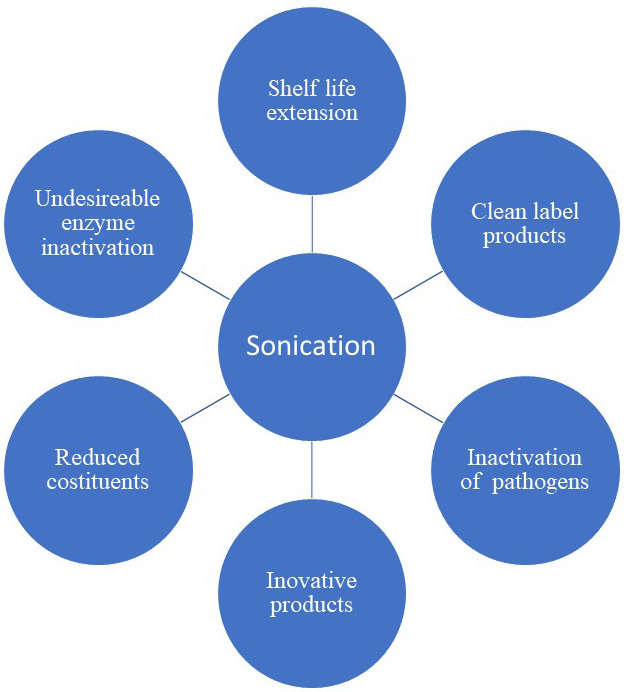
Ultrasound applications.
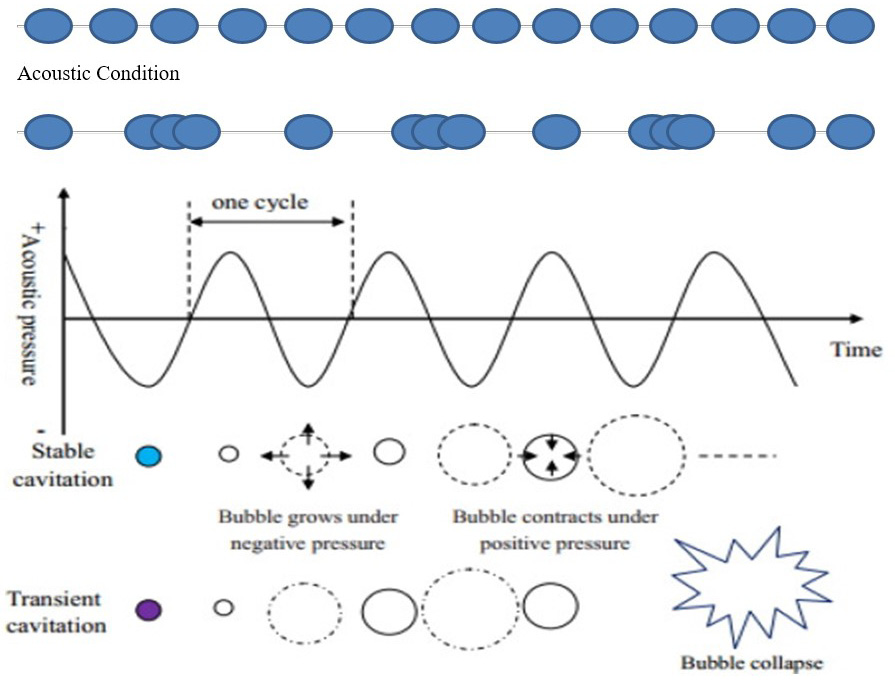
Mode of action of ultrasonic waves Before Sonication Equilibrium; Source: (Soria and Villamiel, 2010).
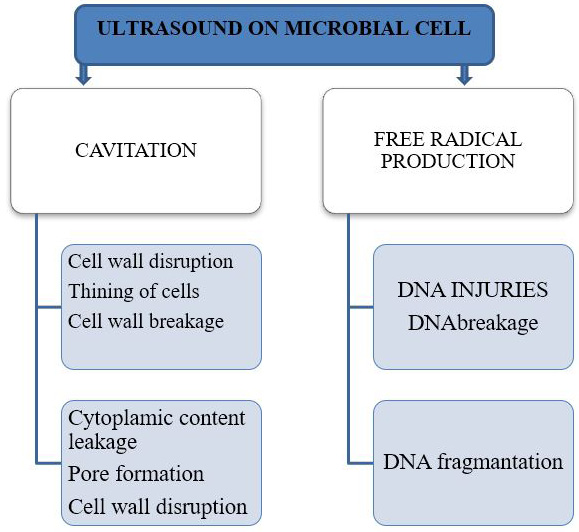
Mode of microbial inactivation by ultrasounds.
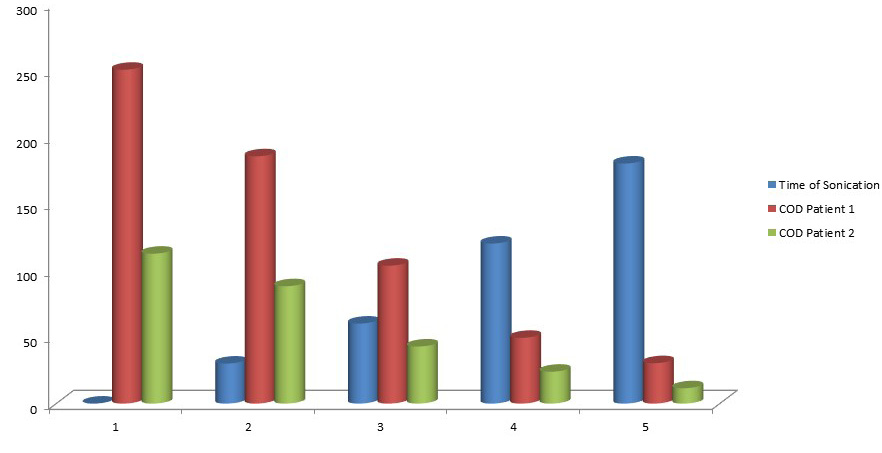
ELISA for food allergens after the sonication.
Source: (Li et al., 2006).
References
- Abdullah, N. and N.L. Chin. 2014. Application of thermosonication treatment in processing and production of high quality and safe-to-drink fruit juices. Agric. Agric. Sci. Procedia. 2, 320-327. https://doi.org/10.1016/j.aaspro.2014.11.045[CrossRef]
- Abid, M., S. Jabbar, T. Wu, N.M. Hashim, B. Hu, S. Lei and X. Zeng. 2014. Sonication enhances polyphenolic compounds, sugars, carotenoids and mineral elements of apple juice. Ultrason. Sonochem. 21(1): 93-97. https://doi.org/10.1016/j.ultsonch.2013.06.002[CrossRef]
- Alarcon-Rojo, A., H. Janacua, J. Rodriguez, L. Paniwnyk and T. Mason. 2015. Power ultrasound in meat processing. Meat Sci. 107: 86-93. https://doi.org/10.1016/j.meatsci.2015.04.015[CrossRef]
- Barton, S., C. Bullock and D. Weir. 1996. The effects of ultrasound on the activities of some glycosidase enzymes of industrial importance. Enzyme Microbial Technol. 18(3): 190-194. https://doi.org/10.1016/0141-0229(95)00092-5[CrossRef]
- Cameron, M., L.D. McMaster and T.J. Britz. 2009. Impact of ultrasound on dairy spoilage microbes and milk components. Dairy Sci. Technol. 89(1): 83-98. https://doi.org/10.1051/dst/2008037[CrossRef]
- Caraveo, O., A.D. Alarcon-Rojo, A. Renteria, E. Santellano and L. Paniwnyk. 2015. Physicochemical and microbiological characteristics of beef treated with high‐intensity ultrasound and stored at 4° C. J. Sci. Food Agric. 95(12): 2487-2493. https://doi.org/10.1002/jsfa.6979[CrossRef]
- Chandrapala, J., C. Oliver, S. Kentish and M. Ashokkumar. 2012. Ultrasonics in food processing. Ultrason. Sonochem. 19(5): 975-983. https://doi.org/10.1016/j.ultsonch.2012.01.010[CrossRef]
- Chandrapala, J., B. Zisu, M. Palmer, S.E. Kentish and M. Ashokkumar. 2014. Sonication of milk protein solutions prior to spray drying and the subsequent effects on powders during storage. J. Food Eng. 141: 122-127. https://doi.org/10.1016/j.jfoodeng.2014.05.017[CrossRef]
- Czechowska-Biskup, R., B. Rokita, S. Lotfy, P. Ulanski and J.M. Rosiak. 2005. Degradation of chitosan and starch by 360-kHz ultrasound. Carbohydr. Polym. 60(2): 175-184. https://doi.org/10.1016/j.carbpol.2004.12.001[CrossRef]
- de São José, J.F.B., N.J. de Andrade, A.M. Ramos, M.C.D. Vanetti, P.C. Stringheta and J.B.P. Chaves. 2014. Decontamination by ultrasound application in fresh fruits and vegetables. Food Control. 45: 36-50. https://doi.org/10.1016/j.foodcont.2014.04.015[CrossRef]
- Dinçer, A.H. and T. Baysal. 2004. Decontamination techniques of pathogen bacteria in meat and poultry. Crit. Rev. Microbiol. 30(3): 197-204. https://doi.org/10.1080/10408410490468803[CrossRef]
- Dolatowski, Z.J., J. Stadnik and D. Stasiak. 2007. Applications of ultrasound in food technology. Acta Sci. Polonorum Technol. Aliment. 6(3): 88-99.
- Dukhin, A., P. Goetz and B. Travers. 2005. Use of ultrasound for characterizing dairy products. J. Dairy Sci. 88(4): 1320-1334. https://doi.org/10.3168/jds.S0022-0302(05)72798-3[CrossRef]
- Ercan, S.Ş. and Ç. Soysal. 2011. Effect of ultrasound and temperature on tomato peroxidase. Ultrason. Sonochem. 18(2): 689-695. https://doi.org/10.1016/j.ultsonch.2010.09.014[CrossRef]
- Ertugay, M., Y. Yuksel and M. Sengul. 2003. The effect of ultrasound on lactoperoxidase and alkaline phosphatase enzymes from milk. Milchwissenschaft. 58(11/12): 593-595.
- Esmaili, D. Y. (2014). Ultrasound Effect on the Preservation of Dairy Products. J. Appl. Environ. Biol. Sci. 4(1s): 82-86.
- Feng, H. and W. Yang. 2011. Ultrasonic processing Nonthermal processing technologies for food (pp. 135-154): Wiley-blackwell and ift press, UK.
- Haaj, S.B., A. Magnin, C. Pétrier and S. Boufi. 2013. Starch nanoparticles formation via high power ultrasonication. Carbohydr. Polym. 92(2): 1625-1632. https://doi.org/10.1016/j.carbpol.2012.11.022[CrossRef]
- Huang, Q., L. Li and X. Fu. 2007. Ultrasound effects on the structure and chemical reactivity of cornstarch granules. Starch‐Stärke, 59(8): 371-378. https://doi.org/10.1002/star.200700614[CrossRef]
- Iida, Y., T. Tuziuti, k. Yasui, A. Towata and T. KozukaT. 2008. Control of viscosity in starch and polysaccharide solutions with ultrasound after gelatinization. Innovative Food Sci. Emerging. Technol. 9(2): 140-146. https://doi.org/10.1016/j.ifset.2007.03.029[CrossRef]
- Jabbar, S., M. Abid, B. Hu, M. Hashim, M. Lei, T. Wu and X. Zeng. 2015a. Exploring the potential of thermosonication in carrot juice processing. J. Food Sci. Technol. 52(11): 7002-7013. https://doi.org/10.1007/s13197-015-1847-7[CrossRef]
- Jabbar, S., M. Abid, T. Wu, M.M. Hashim, M. Saeeduddin, B. Hu and X. Zeng. 2015 b. Ultrasound‐assisted extraction of bioactive compounds and antioxidants from carrot pomace: a response surface approach. J. Food Process. Preserv. 39(6): 1878-1888. https://doi.org/10.1111/jfpp.12425[CrossRef]
- Jambrak, A.R., Z. Herceg, D. Šubarić, J. Babić, M. Brnčić, S.R. Brnčić and J. Gelo. 2010. Ultrasound effect on physical properties of corn starch. Carbohydr. Polym. 79(1): 91-100. https://doi.org/10.1016/j.carbpol.2009.07.051[CrossRef]
- Jang, J.H. and K.D. Moon. 2011. Inhibition of polyphenol oxidase and peroxidase activities on fresh-cut apple by simultaneous treatment of ultrasound and ascorbic acid. Food Chem. 124(2): 444-449. https://doi.org/10.1016/j.foodchem.2010.06.052[CrossRef]
- Kaur, B., F. Ariffin, R. Bhat and A.A. Karim. 2012. Progress in starch modification in the last decade. Food Hydrocolloids. 26(2): 398-404. https://doi.org/10.1016/j.foodhyd.2011.02.016[CrossRef]
- Kordowska-Wiater, M. and D.M. Stasiak. 2011. Effect of ultrasound on survival of gram-negative bacteria on chicken skin surface. Bull. Vet. Inst. Pulawy. 55: 207-210.
- Kuldiloke, J. 2002. Effect of ultrasound, temperature and pressure treatments on enzyme activity and quality indicators of fruit and vegetable juices.
- Leaes, E.X., D. Lima, L. Miklasevicius, A.P. Ramon, V. Dal Prá, M.M. Bassaco and M.A. Mazutti. 2013. Effect of ultrasound-assisted irradiation on the activities of α-amylase and amyloglucosidase. Biocatal. Agric. Biotechnol. 2(1): 21-25. https://doi.org/10.1016/j.bcab.2012.08.003[CrossRef]
- Li, X., Z. Li, H. LiN and H. Samee. 2011. Effect of power ultrasound on the immunoactivity and texture changes of shrimp (Penaeus vannamei). Czech J. Food Sci. 29(5): 508-514. https://doi.org/10.17221/242/2009-CJFS[CrossRef]
- Li, Z.X., H. Lin, L.M. Cao and K. Jameel. 2006. Effect of high intensity ultrasound on the allergenicity of shrimp. J. Zhejiang Univ. Sci. B. 7(4): 251-256. https://doi.org/10.1631/jzus.2006.B0251[CrossRef]
- Luo, Z., X. Fu, X. He, F. Luo, Q. Gao and S. Yu. 2008. Effect of ultrasonic treatment on the physicochemical properties of maize starches differing in amylose content. Starch‐Stärke. 60(11): 646-653. https://doi.org/10.1002/star.200800014[CrossRef]
- Ma, H., L. Huang, J. Jia, R. He, L. Luo and W. Zhu. 2011. Effect of energy-gathered ultrasound on Alcalase. Ultrason. Sonochem. 18(1): 419-424. https://doi.org/10.1016/j.ultsonch.2010.07.014[CrossRef]
- Maheshwari, B., R. Saravanathamizhan and N. Balasubramanian. 2018. Butter Separation from Cream Using Ultrasonication: Optimization of Parameters Using RSM. J. Food Biosci. Technol. 8(2): 1-10.
- Mahvi, A. 2009. Application of ultrasonic technology for water and wastewater treatment. Iran. J. Public Health. 38(2): 1-17.
- Majid, I., G.A. Nayik and V. Nanda. 2015. Ultrasonication and food technology: Rev. Cogent Food Agric. 1(1): 1071022. https://doi.org/10.1080/23311932.2015.1071022[CrossRef]
- Mason, T., E. Joyce, S. Phull and J. Lorimer. 2003. Potential uses of ultrasound in the biological decontamination of water. Ultrason. Sonochem. 10(6): 319-323. https://doi.org/10.1016/S1350-4177(03)00102-0[CrossRef]
- Mongenot, N., S. Charrier and P. Chalier. 2000. Effect of ultrasound emulsification on cheese aroma encapsulation by carbohydrates. J. Agric. Food Chem. 48(3): 861-867. https://doi.org/10.1021/jf990494n[CrossRef]
- Muthukumaran, S., K. Yang, A. Seuren, S. Kentish, M. Ashokkumar, G.W. Stevens and F. Grieser. 2004. The use of ultrasonic cleaning for ultrafiltration membranes in the dairy industry. Sep. Purif. Technol. 39(1-2): 99-107. https://doi.org/10.1016/j.seppur.2003.12.013[CrossRef]
- Nguyen, C. and H. Nguyen. 2018. Ultrasonic effects on the quality of mulberry Juice. Beverages. 4(3): 56. https://doi.org/10.3390/beverages4030056[CrossRef]
- Nguyen, T. and V. Le. 2012. Application of ultrasound to pineapple mash treatment in juice processing.
- Nowak, K.W., E. Ropelewska, A.E.D.A. Bekhit and M. Markowski. 2017. 1 Ultrasound Applications in the Meat Industry. Adv. Meat Proces. Technol. 1.
- Paniagua-Martínez, I., A. Mulet, M. García-Alvarado and J. Benedito. 2018. Orange juice processing using a continuous flow ultrasound-assisted supercritical CO2 system: Microbiota inactivation and product quality. Innovative Food Sci. Emerg. Technol. 47: 362-370. https://doi.org/10.1016/j.ifset.2018.03.024[CrossRef]
- Peres, G.L., D.C. Leite and N.P.D. Silveira. 2015. Ultrasound effect on molecular weight reduction of amylopectin. Starch‐Stärke. 67(5-6): 407-414. https://doi.org/10.1002/star.201400230[CrossRef]
- Piñon, M., A. Alarcon-Rojo, L. Paniwnyk, T. Mason, L. Luna and A. Renteria. 2018. Ultrasound for improving the preservation of chicken meat. Food Sci. Technol. (Ahead).
- Rojas, M.L., J. Hellmeister-Trevilin, D. Augusto and P. Esteves. 2016. The ultrasound technology for modifying enzyme activity. Sci. Agropecuaria. 7(2): 145-150. https://doi.org/10.17268/sci.agropecu.2016.02.07[CrossRef]
- Saeeduddin, M., M. Abid, S. Jabbar, B. Hu, M.M. Hashim, M.A. Khan and X. Zeng. 2016. Physicochemical parameters, bioactive compounds and microbial quality of sonicated pear juice. Int. J. Food Sci. Technol. 51(7): 1552-1559. https://doi.org/10.1111/ijfs.13124[CrossRef]
- Saeeduddin, M., M. Abid, S. Jabbar, T. Wu, M.M. Hashim, F.N. Awad and X. Zeng. 2015. Quality assessment of pear juice under ultrasound and commercial pasteurization processing conditions. LWT-Food Sci. Technol. 64(1): 452-458.
- Safdar, M.N., T. Kausar, S. Jabbar, A. Mumtaz, K. Ahad and A.A. Saddozai. 2017 a. Extraction and quantification of polyphenols from kinnow (Citrus reticulate L.) peel using ultrasound and maceration techniques. J. Food Drug Anal. 25(3): 488-500. https://doi.org/10.1016/j.jfda.2016.07.010[CrossRef]
- Safdar, M.N., T. Kausar and M. Nadeem. 2017 b. Comparison of ultrasound and maceration techniques for the extraction of polyphenols from the mango peel. J. Food Proces. Preserv. 41(4): e13028. https://doi.org/10.1111/jfpp.13028[CrossRef]
- Salleh-Mack, S. and J. Roberts. 2007. Ultrasound pasteurization: the effects of temperature, soluble solids, organic acids and pH on the inactivation of Escherichia coli ATCC 25922. Ultrason. Sonochem. 14(3): 323-329. https://doi.org/10.1016/j.ultsonch.2006.07.004[CrossRef]
- Samani, B.H., M.H. Khoshtaghaza, S. Minaei, H. Zareifourosh, M.N. Eshtiaghi and S. Rostami. 2016. Design, development and evaluation of an automatic fruit-juice pasteurization system using microwave–ultrasonic waves. J. Food Sci. Technol. 53(1): 88-103. https://doi.org/10.1007/s13197-015-2026-6[CrossRef]
- Sánchez, E.S., S. Simal, A. Femenia, J. Benedito and C. Rosselló. 1999. Influence of ultrasound on mass transport during cheese brining. Eur. Food Res. Technol. 209(3-4): 215-219. https://doi.org/10.1007/s002170050483[CrossRef]
- Soria, A.C. and M. Villamiel. 2010. Effect of ultrasound on the technological properties and bioactivity of food: a review. Trends Food Sci. Technol. 21(7): 323-331. https://doi.org/10.1016/j.tifs.2010.04.003[CrossRef]
- Sutariya, S., V. Sunkesula, R. Kumar and K. Shah. 2018. Emerging applications of ultrasonication and cavitation in dairy industry: Rev. Cogent Food Agric. (just-accepted).
- Szabó, O.E. and E. Csiszár. 2013. The effect of low-frequency ultrasound on the activity and efficiency of a commercial cellulase enzyme. Carbohydr. Polym. 98(2): 1483-1489. https://doi.org/10.1016/j.carbpol.2013.08.017[CrossRef]
- Turantaş, F., G.B. Kılıç and B. Kılıç. 2015. Ultrasound in the meat industry: General applications and decontamination efficiency. Int. J. Food Microbiol. 198: 59-69. https://doi.org/10.1016/j.ijfoodmicro.2014.12.026[CrossRef]
- Vercet, A., J. Burgos, S. Crelier and P. Lopez-Buesa. 2001. Inactivation of proteases and lipases by ultrasound. Innov. Food Sci. Emerg. Technol. 2(2): 139-150. https://doi.org/10.1016/S1466-8564(00)00037-0[CrossRef]
- Villamiel, M. and P. de Jong. 2000. Influence of high-intensity ultrasound and heat treatment in continuous flow on fat, proteins, and native enzymes of milk. J. Agric. Food Chem. 48(2): 472-478. https://doi.org/10.1021/jf990181s[CrossRef]
- Wang, J., Y. Cao, B. Sun, C. Wang and Y. Mo. 2011. Effect of ultrasound on the activity of alliinase from fresh garlic. Ultrason. Sonochem. 18(2): 534-540. https://doi.org/10.1016/j.ultsonch.2010.09.008[CrossRef]
- Yaldagard, M., S.A. Mortazavi and F. Tabatabaei Yazdi. 2007. The effects of ultrasound on the activity of alpha-amylase during barley. Paper presented at the 10th asean food conference 07.
- Yu, Z.L., W.C. Zeng and X.L. Lu. 2013. Influence of ultrasound to the activity of tyrosinase. Ultrason. Sonochem. 20(3): 805-809. https://doi.org/10.1016/j.ultsonch.2012.11.006[CrossRef]
- Yu, Z.L., W.C. Zeng, W.H. Zhang, X.P. Liao and B. Shi. 2014. Effect of ultrasound on the activity and conformation of α-amylase, papain and pepsin. Ultrason. Sonochem. 21(3): 930-936. https://doi.org/10.1016/j.ultsonch.2013.11.002[CrossRef]
- Zheng, J., Q. Li, A. Hu, L. Yang, J. Lu, X. Zhang and Q. Lin. 2013. Dual‐frequency ultrasound effect on structure and properties of sweet potato starch. Starch‐Stärke. 65(7‐8): 621-627. https://doi.org/10.1002/star.201200197[CrossRef]
- Zhu, F. 2015. Impact of ultrasound on structure, physicochemical properties, modifications, and applications of starch. Trends Food Sci. Technol. 43(1): 1-17. https://doi.org/10.1016/j.tifs.2014.12.008[CrossRef]
- Zhu, J., L. Li, L. Chen and X. Li. 2012. Study on supramolecular structural changes of ultrasonic treated potato starch granules. Food Hydrocolloids. 29(1): 116-122. https://doi.org/10.1016/j.foodhyd.2012.02.004[CrossRef]
- Zisu, B., J. Lee, J. Chandrapala, R. Bhaskaracharya, M. Palmer, S. Kentish and M. Ashokkumar. 2011. Effect of ultrasound on the physical and functional properties of reconstituted whey protein powders. J. Dairy Res. 78(2): 226-232. https://doi.org/10.1017/S0022029911000070[CrossRef]
- Zou, Y. and A. Jiang. 2016. Effect of ultrasound treatment on quality and microbial load of carrot juice. Food Sci. Technol. 36(1): 111-115. https://doi.org/10.1590/1678-457X.0061[CrossRef]
Services
Article usage statistics
Loading…