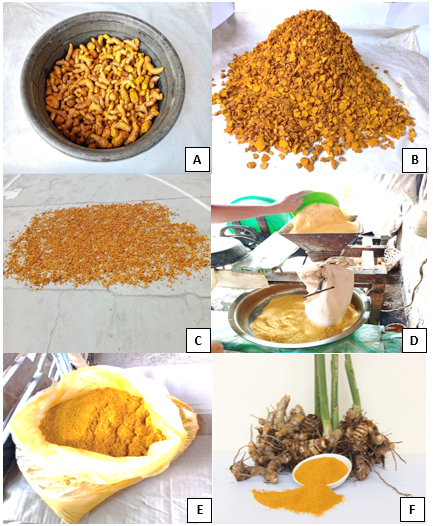
The following experimental parameters were collected to assess the growth and laying performance of Japanese quails:
- 4. Average Daily Gain (g) - measures the daily gain in weight and computed using this formula:

- 5. Bi-weekly Voluntary Feed Intake (g) – measures the total weekly feed consumption of the birds and computed using this formula:
] VFI (g) = Total Feed Given – Feed Refused
- 6. Weekly Egg Production (%) – the number of eggs produced per week.
- 7. Feed Conversion Ratio - measures the efficiency of quails in converting feed into the egg and computed using the formula:

Egg quality traits
- • Egg Weight (g) – individually weighed using the digital weighing scale
- • Shell weight (g) - eggshell with shell membrane was weighed using the digital weighing scale
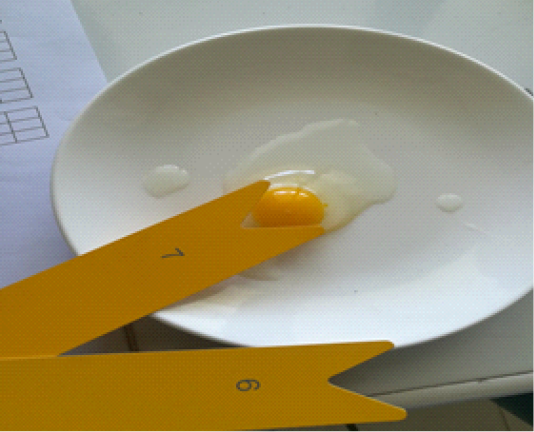
- • Yolk color – under the white background, yolk color was evaluated using the ROCHE Yolk color Fan
- • Egg Shape Index (%) - length and width of the egg measured using a Vernier caliper, and then egg shape index was determined using the formula:

Return on investment (%)
Return on investment was calculated using the following formula:

Statistical analysis
The data gathered was subjected to a One-way Analysis of Variance (ANOVA), and a comparison of treatment means was done using Tukey’s Honest Significant Difference (HSD) Test using Statistical Package of Social Science software version 21. A p-value of <0.05 was considered significant.
RESULTS AND DISCUSSION
Bi-weekly weight gain
Turmeric powder had a chemical composition percentage of 83.81% dry matter (DM), 9.78% crude protein (CP), 7.53% crude fiber (CF), 16.19% moisture, and 9.17% ash. The body weight and bi-weekly weight gain of broiler chickens were not significantly affected (p>0.05) by the supplementation of turmeric rhizome powder (Tables 3 and 4). Numerically, quails fed with commercial quail laying mash got the highest cumulative body weight, while quails fed with 5% turmeric rhizome powder got the lowest. Data shows that quails fed with commercial quail laying mash (T1) got 145.97g, followed by T3, T4, T2, and T5 with 145.01g, 141.09g, 140.49g, and 139.36g, respectively.
Table 3: The average body weight of the Japanese quail supplemented with graded levels of turmeric rhizome powder.
1CQLM: Commercial Quail Laying Mash; TRP: Turmeric Rhizome Powder; CV: Coefficient of Variance; ns = not significant (p>0.05).
Table 4: Bi-weekly weight gain of the Japanese quail fed with graded levels of turmeric rhizome powder.
1CQLM: Commercial Quail Laying Mash; TRP: Turmeric Rhizome Powder; CV: Coefficient of Variance; ns = not significant (p>0.05).
Moreover, results revealed no significant difference (p>0.05) in the bi-weekly weight gain of Japanese quails at weeks 2, 4, and 6 (Table 4). Although not significant, it was observed that quails supplemented with 1% turmeric rhizome powder got the highest weight gain while quails fed with the commercial quail laying mash got the lowest gain in weight. The data shows that Treatment 3 gained 6.67g, followed by T4 (6.58g), T5 (6.40g), T2 (6.27g), and T1 (6.23g) in descending order. Although dietary supplementation of turmeric rhizome powder significantly reduced the feed intake, it did not affect quails’ body weight gain. These findings are similar to the investigation of Al-Kassie et al. (2011), who reported that supplementation of turmeric at 5.0g/kg of feed could increase the body weight of broiler chickens. This could be attributed to the active ingredients present in turmeric, which increased the excretion of digestive enzymes, pancreatic lipase, and intestine villi size, thus improving feed utilization and nutrient absorption in birds (Platel and Srinivasan, 2000; Rajput et al., 2013).
Voluntary feed intake
The weekly voluntary feed intake of the Japanese quail was significantly reduced (p<0.05) by the supplementation of turmeric rhizome powder (Table 5). The data shows that quails fed with commercial quail laying mash (T1) got the highest voluntary feed intake with 153.98g, followed by T2, T3, T4, and T5 with 150.82g, 149.05g, 145.58g, and 141.85g, respectively.
It was observed that the higher levels of turmeric rhizome powder supplemented in the diet resulted in reduced feed intake. The present result contrasts with what is reported by Abou-Elkhair (2014), who found that turmeric rhizome powder had no significant effect on the feed intake of broiler chickens. Further, Wang et al. (2016) reported that daily feed intake of broilers increased by adding 100 and 200 mg/kg turmeric rhizome extract, but daily feed intake decreased by 300 mg/kg. These differences are consistent with the results of Moeini et al. (2011) and Malekizadeh et al. (2012), who added 3% turmeric rhizome powder to the laying hen diet.
However, the result of the present experiment confirms with the earlier investigation of Kilany and Mahmoud (2014) and Kennedy et al. (2020) that feed intake of laying Japanese quails was significantly reduced when turmeric powder was supplemented into the diet. The significant decreased in feed intake could be attributed to the active ingredients present in the turmeric, resulting in the change of aroma, palatability, and taste of feeds (Suwarta and Suryani, 2019).
Egg production
The cumulative egg production from week 1 to 6 of the Japanese quails was significantly influenced (p<0.05) by the dietary supplementation of turmeric rhizome powder (Table 5). Data shows that quails fed with commercial quail laying mash (T1) had the same egg production percentage as quails supplemented with 3% TRP (T3) with 82.70%. Statistically, the cumulative egg production percentage of quails from week 1 to week 6 revealed a comparable result to the birds fed with commercial quail laying mash (T1) and quails supplemented with 1%, 3%, and 5% TRP in the diet. However, quails fed with homemade quail laying mash without TRP supplementation (T2) got the lowest egg production percentage compared to other treatments. Thus, the result of the study indicated that supplementation of TRP in the diet seems potential to improve the egg production performance of laying Japanese quails.
The egg production percentage of the current study is higher than the report of Mirzah and Djulardi (2019) that quails supplemented with turmeric extract have 79.99% hen-day egg production. Numerically, the decrease in egg production in laying quails supplemented with turmeric rhizome powder is most likely due to reduced feed consumption. It should be noted that high feed intake of laying quail increases nutrient consumption, particularly protein intake (Mirzah and Djulardi, 2019). Thus, reduced feed consumption will also reduce the available nutrients for egg production (Liu et al., 2019). However, the result of the study is similar to the investigation of Liu et al. (2019) that supplementation of turmeric at higher levels decreased the egg production of the layer chicken.
Feed conversion ratio
Results revealed that supplementation of turmeric rhizome powder in the Japanese quails’ diet from week 1 to 6 significantly affects (p<0.05) the feed conversion ratio (Table 5). The worst feed conversion ratio was observed in birds fed with homemade quail laying mash without TRP supplementation (T2) with 2.66g, followed by T1, T3, T4, with 2.64g, 2.63g, 2.49g, and the lowest (better) FCR was obtained in quails fed with HQLM supplemented with 5% TRP (T5) with 2.39g. Consequently, it could be seen that quails supplemented with 5% TRP (T5)
Table 5: The effects of turmeric rhizome powder on the laying performance of Japanese quails.
CQLM: Commercial Quail Laying Mash; TRP: Turmeric Rhizome Powder; CV: Coefficient of Variance; ns = not significant (p>0.05). *= Means with different superscripts in the same column differ significantly (P<0.05); ** (P<0.01).
consumed less but produced a comparable number of eggs with other treatments except for quails without TRP (T2) supplementation. In addition, numerical data shows that quails supplemented with 5% TRP (T5) in the diet produced bigger or heavier eggs. These results may be due to differences in feed consumption and egg mass caused by differences in nutrient content in the diet, particularly the essential fatty acid, linoleic acid, choline, methionine, or TRP supplementation could improve feed utilization efficiency and digestibility (Suwarta and Suryani, 2019). Further, the relationship between feed consumption and egg mass is determined by feed conversion, and low feed conversion values indicate better feed use efficiency.
The recent findings confirm the studies conducted by Ali et al. (2007), who reported that 2% turmeric powder in the diet led to a better FCR. Further, Radwan et al. (2008) and Durrani et al. (2006) also reported that 2g per kg and 5g/kg of turmeric powder in the diet had a beneficial effect on egg mass production and body weight and it improved the feed conversion ratio.
Egg weight
The average egg weight of the Japanese quails supplemented with graded levels of turmeric rhizome powder from weeks 1 to 6 did not significantly influence (p>0.05) the egg weight. However, the numerical data shows that egg weight increases when higher TRP levels were supplemented in the diet (Table 6).
Numerically, the data shows that T5 with 5% TRP in the diet got the highest egg weight compared to other treatments. On the other hand, laying quails supplemented with 1% TRP got the lowest egg weight (9.77g). The average egg weight observed in T3 (1% TRP) was similar to those observed by Tuleum et al. (2013) that the average egg weight of laying quails fed with a diet consisting of 20% crude protein was 9.75g/egg. This result is also similar to the result obtained by Al-Daradji et al. (2010), who showed that laying quails supplemented with up to 6% linseed in the diet produced an average egg weight ranging from 9.40 - 11.13 g/egg. In addition, the increasing egg weight of hens supplemented with 5% TRP might be attributed to increased dietary fatty acids compared with those fed diets without TRP and those quails supplemented with lower levels of turmeric rhizome powder.
Egg shape index
The average egg shape index of the Japanese quails supplemented with graded levels of turmeric rhizome powder is presented in Table 6. The results revealed that dietary supplementation of turmeric rhizome powder did not significantly influence the egg shape index in laying Japanese quails. Numerical data shows that the highest egg shape index was observed in T2 (0% TRP) followed by T1, T5, T4, and T3 with 80.34, 80.34, 79.98, 79.25, and 78.76, respectively.
The results obtained in the current study concur with Liu et al. (2019), who reported that turmeric supplementation in the diet did not affect the egg shape index in layer chicken. Moreover, the current experiment results were consistent with the studies conducted by Zita et al. (2013), which demonstrated that the egg shape index at 13 weeks of age is about 77.64 ± 0.19g. This finding indicated that the egg’s shape index might be affected by the age of layers of the Japanese quails.
Shell weight
The results revealed that Japanese quails supplemented with graded levels of turmeric rhizome powder from week 1 to 6 did not significantly influence (p>0.05) the eggshell weight (Table 6). Numerical data shows that T5 (5% TRP) got the highest eggshell weight with 0.92g, followed by T1, T4, T3, and T2 with 0.90g, 0.89g, 0.87g, and 0.86g, respectively.
The results obtained in the present study were consistent with the investigation of Saraswati et al. (2013), who reported that supplementation of turmeric powder in the diet did not significantly influence the eggshell weight and thickness of the Japanese quail eggs. On the contrary, Suwarta and Suryani (2019) claimed that supplementation of 40g/kg of turmeric + 40g/kg of cinnamon in the Japanese quail diets significantly improved the eggshell weight. Contradicting results in the Japanese quails’ eggshell weight might be due to the different doses of turmeric rhizome powder supplemented in the diet, duration of the experiment period, and animal age.
Egg yolk color
The average egg yolk color of the Japanese quails supplemented with graded turmeric rhizome powder levels is presented in Table 6. Results revealed that supplementation of the TRP in the diet significantly improved Japanese quails’ yolk color. It was observed that from week 1 to week 6, egg yolk of the Japanese quail supplemented with turmeric rhizome powder showed better results. The mean value of the egg yolk color showed that T5 (5% TRP) got the highest value with 7.41, followed by T4, T3, T2, and T1 fed with commercial quail laying mash got the lowest yolk color of 7.26, 7.07, 6.94, and 4.78, respectively.
This implies that with the higher level of turmeric rhizome powder supplemented in the diet, the turmeric (curcumin) bioactive components were deposited in the yolk. Jacqueline et al. (1998) reported that the yolk color’s intensity depends largely on a diet. It should be noted that egg yolk color is a vital egg quality trait for consumers (Hassan, 2016). Further, egg yolk is the primary source of protein, minerals, and lipids for the embryo’s development (Duce et al., 2011).
Return on investment
The cost and return analysis of Japanese quail fed with homemade ration supplemented with graded levels of turmeric rhizome powder is presented in Table 7. The highest net profit of the Japanese quails per bird was observed in T5 supplemented with 5% TRP having ₱37.01, followed by T4, T3, and T2 with a net income of ₱36.75, ₱36.74, ₱34.11. The lowest net income was obtained in birds fed with commercial quail laying mash with a net profit of ₱30.86.
Likewise, birds fed with 5% TRP gained the highest ROI of 73.30%, and the lowest ROI of 54.48% was obtained in T1 fed with commercial quail laying mash. The ROI was affected by the net income and the total production cost. Higher egg production and lower production costs will give a higher ROI.
Table 6: The effects of turmeric rhizome powder on the egg quality traits of Japanese quails.
CQLM: Commercial Quail Laying Mash; TRP: Turmeric Rhizome Powder; CV: Coefficient of Variance; ns = not significant (p>0.05); *= Means with different superscripts in the same column differ significantly (P<0.05); ** (P<0.01).
Table 7: Cost and Return Analysis of the Japanese quail supplemented with graded levels of turmeric rhizome powder.#
# All costs were presented in Philippine peso (PhP); 1 USD = 48.55 PhP. 1CQLM: Commercial Quail Laying Mash; TRP: Turmeric Rhizome Powder; 2BCR: Benefit-cost ratio was calculated using this formula: Gross Income / Total Production Cost; 3ROI: Return on investment.
CONCLUSIONS AND RECOMMENDATIONS
The supplementation of 5% turmeric rhizome powder (TRP) in the diet of Japanese quails significantly reduced the voluntary feed intake. Although the voluntary feed intake of laying quails decreases, the body weight gain and egg production percentage were not affected. Moreover, supplementation of 5% TRP improved the body weight gain, egg production percentage, feed conversion ratio, egg yolk color and gave a higher return on investment. Therefore, the supplementation of turmeric rhizome powder in the diet of quails is recommended to improve the egg yolk color, increase egg production, and obtain higher net income.
ACKNOWLEDGMENTS
The authors extend their sincere appreciation to Engr. Nathaniel D. Naanep and the University Veterinarian Dr. Ne B. Velasco for their suggestions and comments. Also, heartfelt gratitude is extended to the Office of the Regional Animal Feed Analysis Laboratory of the Department of Agriculture Region XII, Cotabato City, for the technical assistance and proximate laboratory services.
Novelty Statement
The novelty of this study was the utilization of turmeric rhizome powder as phytogenic dietary supplements for Japanese quails, which significantly reduced the feed intake but did not affect the body weight gain and egg production of laying Japanese quails.
Author’s Contribution
The authors contributed equally to this work.
Conflict of interest
The authors have declared no conflict of interest.
REFERENCES
- • Abou-Elkhair R, Ahmed HA, Selim S (2014). Effects of black pepper (Piper nigrum), turmeric powder (Curcuma longa) and coriander seeds (Coriandrum sativum) and their combinations as feed additives on growth performance, carcass traits, some blood parameters and humoral immune response of broiler chickens. Asian-Australas. J. Anim. Sci. 27: 847–854. https://doi.org/10.5713/ajas.2013.13644
- • Al-Daraji HJ, Razuki WM, Al-Hayani WK, Al-Hassani AS (2010). Effect of dietary linseed on egg quality of laying quail. Int. J. Poult. Sci., 9: 584-590. https://doi.org/10.3923/ijps.2010.584.590
- • Ali MN, Hassan MS and El-Ghany FA (2007). Effect of strain, type of natural antioxidant and sulphate ion on productive, physiological and hatching performance of native laying hens. Int. J. Poult. Sci., 6(8): 539-554. https://doi.org/10.3923/ijps.2007.539.554
- • AL-Kassie GA, Mohseen AM, Abd-AL-Jaleel RA (2011). Modification of productive performance and physiological aspects of broilers on the addition of a mixture of cumin and turmeric to the diet. Res. Opin. Anim. Vet. Sci., 1(1): 31-34.
- • Ampode KMB (2019). Effects of fermented Kangkong (Ipomoea aquatica Forssk.) juice supplementation on the growth performance of Japanese quails. Int. J. Sci. Res. Publ., 9(11): 525-528. https://doi.org/10.29322/IJSRP.9.11.2019.p9571
- • Ampode KMB, Espina DM (2019). Effects of varying levels of fermented Ipomoea aquatica juice supplementation on early laying performance and egg quality traits of Japanese quails. Int. J. Robot. Res., 6(11): 564-569. https://doi.org/10.29322/IJSRP.9.11.2019.p9571
- • AOAC (2016). Official Methods of Analysis of the Association of the Official Analytical Chemists. 20th ed. Washington, D.C., USA.
- • Benediktsdottir BE, Baldursson O, Gudjonsson T, Tønnesen HH, Masson, M (2015). Curcumin, bisdemethoxycurcumin and dimethoxycurcumin complexed with cyclodextrins have structure specific effect on the paracellular integrity of lung epithelia in vitro. Biochem. Biophys. Rep., 4: 405-410. https://doi.org/10.1016/j.bbrep.2015.11.004
- • Bureau of Agricultural Research (BAR) (2001). Livestock Development Council, Department of Agriculture, Elliptical Road, Diliman, Quezon City. Retrieved: https://tinyurl.com/t8j2me92
- • Bureau of Agricultural Research (BAR) (2010). Livestock Development Council, Department of Agriculture, Elliptical Road, Diliman, Quezon City. Accessed: https://tinyurl.com/sturfabk
- • Capitan S (2003). The science and practice of quail production. college of agriculture. University of the Philippines Los Banos College, Laguna 4031, Philippines; pp. 5.
- • Chattopadhyay I, Biswas K, Bandyopdhyay U, Banerjee RK (2004). Turmeric and curcumin: Biological actions and medicinal applications. Curr. Sci., 87: 44-53
- • Dilawar MA, Mun HS, Rathnayake D, Yang EJ, Seo YS, Park HS, Yang CJ (2021). Egg quality parameters, production performance and immunity of laying hens supplemented with plant extracts. Animals, 11: 975. https://doi.org/10.3390/ani11040975
- • Duce S, Morrison F, Welten M, Baggott G and Tickle C (2011). Micro-magnetic resonance imaging study of live quail embryos during embryonic development. Manage. Reson. Imag., 29: 132–139. https://doi.org/10.1016/j.mri.2010.08.004
- • Dumaup HJ, Ampode KM (2020). Inclusion of water hyacinth meal in broiler chicken diets: Potential on the production performance and cell-mediated immunity. Int. J. Biosci., 17(6): 469-479.
- • Durrani FR, Ismail M, Sultan A, Suhail SM, Chand N, Durrani Z (2006). Effect of different levels of feed added turmeric (Curcuma longa) on the performance of broiler chicks. ARPN J. Agric. Biol. Sci., 1(2): 9-11.
- • Gouda MM, Bhandary YP (2018). Natural antibiotic effect of turmeric in poultry management. Int. J. Poul. Fish Sci., 2(1): 1-3. https://doi.org/10.15226/2578-1898/2/2/00109
- • Hassan SM (2016). Effects of adding different dietary levels of turmeric (Curcuma longa Linn.) powder of productive performance and egg quality of laying hens. Int. J. Poult. Sci. 15(4): 156-160. https://doi.org/10.3923/ijps.2016.156.160
- • Ibrahim KA, Faten AM, Halam SAE (2005). Comparison of the efficacies of commercial probiotics on growth performance, carcass characteristics and some plasma constituents of broiler chicks. Suez Canal Vet. Med. J., 8: 1-18.
- • Islam MM, Ahmed ST, Kim YJ, Mun HS, Kim YJ, Yang CJ (2014). Effect of Sea Tangle (Laminaria japonica) and Charcoal Supplementation as Alternatives to Antibiotics on Growth Performance and Meat Quality of Ducks. Asian Australas. J. Anim. Sci. 27(2): 217-224. https://doi.org/10.5713/ajas.2013.13314
- • Jacqueline PJ, Richard DM, Mather FB (1998). Egg Quality. Food and Agricultural Sciences, Univ. Florida. PS 24: 1-11.
- • Kafi A, Uddin MN, Uddin MJ, Khan MMH, Haque ME (2017). Effect of dietary supplementation of turmeric (Curcuma longa), Ginger (Zingiber officinale) and their combination as feed additives on feed intake, growth performance and economics of broiler. Int. J. Poult. Sci., 16(7): 265. https://doi.org/10.3923/ijps.2017.257.265
- • Karaalp M (2009). Effects of decreases in the three most limiting amino acids of low protein diets at two different feeding periods in Japanese quails. Br. Poult. Sci., 50(5): 606-612. https://doi.org/10.1080/00071660903260748
- • Kennedy O, Mbaba EN, ISO IE, Halilu A, Robert AN, Micheal B (2020). Effects of turmeric rhizome powder on growth, carcass and meat quality of Japanese quails fed sorghum soybean-based diets. J. Livest. Sci., 11: 1-7. https://doi.org/10.33259/JLivestSci.2020.1-7
- • Kilany OE, Mahmoud MMA (2014). Turmeric and exogenous enzyme supplementation improve growth performance and immune status of Japanese quail. World’s Vet. J., 4(3): 20–29. https://doi.org/10.5455/wvj.20140841
- • Lagua EB, Ampode KMB (2021). Turmeric Powder: Potential alternative to antibiotics in broiler diets. J. Anim. Health Prod. 9(3): 243-253. http://dx.doi.org/10.17582/journal.jahp/2021/9.3.243.253
- • Liu M, Lu Y, Gao P, Xie X, Li D, Yu D, Yu M (2019). Effect of curcumin on laying performance, egg quality, endocrine hormones, and immune activity in heat-stressed hens. Poult. Sci., 99(4): 1-7. https://doi.org/10.1016/j.psj.2019.12.001
- • Mahesh MG, Prabhakar BY (2018). Natural antibiotic effect of turmeric in poultry management. Int. J. Poult. Fish Sci., 2(1): 1-3. https://doi.org/10.15226/2578-1898/2/2/00109
- • Malekizadeh M, Moeini MM, Ghazi SH (2012). The effects of different levels of ginger (Zingiber officinale Rosc) and Turmeric (Curcuma longa Linn) rhizomes powder on some blood metabolites and production performance characteristics of laying hens. J. Agric. Sci. Technol., 14: 127-134.
- • Mirzah N, Djulardi A (2019). Effect of turmeric (Curcuma domestica, Val) extract as a feed additive on performance and egg quality of quail. Int. J. Poult. Sci., 18: 88-92. https://doi.org/10.3923/ijps.2019.88.92
- • Moeini MM, Malekizadeh M, Ghazi S (2011). The effects of different levels of ginger and turmeric rhizomes powder on productive performance characteristics of laying hens. Researches of the First International Conference (Babylon and Razi Universities). 3(9): 1-5.
- • Philippine Council for Agriculture, Aquatic and Natural Resources Research and Development (PCAARRD). (2000). Philip. Recomm. Livest. Feed Formulat., (64): 36-81.
- • Platel K, Srinivasan K (2000). Influence of dietary spices and their active principles on pancreatic digestive enzymes in albino rats. Food/Nahrung, 44(1): 42-46. https://doi.org/10.1002/(SICI)1521-3803(20000101)44:1<42::AID-FOOD42>3.0.CO;2-D
- • PNS/BAFPS (2008). Code of good animal husbandry practices. Philipp. Natl. Stand. Bureau Agric. Fish. Prod. Stand., 60: 1-14.
- • Radwan IAE, Mohamed FM, Ahmed AKE (2018). Bacteriological studies on bacterial pathogens isolated from broiler chickens with swollen head syndrome. J. Vet. Med. Res., 25(2): 191-198. https://doi.org/10.21608/jvmr.2017.43318
- • Radwan N, Hassan RA, Qota EM, Fayek HM (2008). Effect of natural antioxidant on oxidative stability of eggs and productive and reproductive performance of laying hens. Int. J. Poult. Sci., 7(2): 134-150. https://doi.org/10.3923/ijps.2008.134.150
- • Rajput N, Muhammad N, Yan R, Zhong X, Wang T (2013). Effect of dietary supplementation of curcumin on growth performance, intestinal morphology and nutrients utilization of broiler chicks. J. Poult. Sci., 50(1): 44 52. https://doi.org/10.2141/jpsa.0120065
- • Randall M, Bolla G (2008). Raising Japanese quail. Primefacts, 602: 1-5.
- • Saraswati TR, Manalu W, Ekastuti DR, Kusumorini N (2013). The role of turmeric powder in lipid metabolism and its effect on quality of the first quail’s egg. J. Indones. Trop. Anim. Agric., 38(2): 123-129. https://doi.org/10.14710/jitaa.38.2.123-130
- • Siahaan VNS, Wahyuni TH, Daulay AH, Lubis SR (2021). Utilization of golden snail flour (GSF) on ration of quail. J. Peternakan Integratif, 8(3): 195-202.
- • Suwarta FX, Suryani ChL (2019). The effect of supplementation of cinnamon and turmeric powder mixture in ration of quail of performance and quality of eggs. World Vet. J., 9(4): 249-254. https://doi.org/10.36380/scil.2019.wvj31
- • Tarhyel R, Hena SA, Tanimomo BK (2012). Effects of age on organ weight and carcass characteristics of Japanese Quail (Coturnix japonica). Sci. J. Agric., 1(1): 21-26.
- • Tuleum C, Adenkola AY, Yenle FG (2013). Performance and erythrocyte osmotic membrane stability of laying Japanese quails (Coturnix coturnix japonica) fed varying dietary protein level in a hot humid tropics. Agric. Biol. J. N. Am., 4(1): 6-13. https://doi.org/10.5251/abjna.2013.4.1.6.13
- • Wang D, Huang H, Zhou L, Li W, Zhou H, Hou G, Liu J, Hu L (2016). Effects of dietary supplementation with turmeric rhizome extract on growth performance, carcass characteristics, antioxidant capability, and meat quality of wenchang broiler chickens. Ital. J. Anim. Sci., 14(3): 344-349. https://doi.org/10.4081/ijas.2015.3870
- • Zita L, Ledvinka Z, Klesalova L (2013). The effect of the age of Japanese quails on certain egg quality traits and their relationships. Vet. Arhi., 83(2): 223-232.