
Commercial broilers have high growth rates and are raised in total confinement systems. Birds spend more time lying down predisposing them to skin lesions from moist litter. This study aimed to determine whether the free-range production system (FRPS) for broiler birds would reduce foot pad lesions and the risk of bacterial infection. The study followed a completely randomized design, comprising of four treatments and three replications, with each replication consisting of 20 birds. Treatments A, B and C, where the birds were under FRPS at 2, 3 and 4 weeks of age, respectively, and the conventional complete confinement, treatment D (control). The birds were weighed and their foot pad lesions evaluated at 2, 4, 6 and 8 weeks of age. Liver samples were collected at 8 weeks of age and processed for culture and sensitivity. Relative risk analysis (RR) was used to determine the association between confinement as a risk factor and bacterial infection. Birds in the FRPS had lower body weights that probably results less pressure on their skeleton. Treatment D birds had severe foot pad lesions (P < 0.05) compared to the other treatments at weeks 6, 7 and 8 and the severity decreased with increasing duration of FRPS. Complete confinement treatment was significantly associated with bacterial infection (RR = 3) at week 8. These results show that broilers in FRPS had significantly lower body weight and fewer foot pad lesions, reducing bacterial infection and antibiotic use. Reduced antibiotic residues and pathogens in meat suggest improved meat quality. The free-range broiler production system would be a better production system to improve the welfare and quality of the meat produced.
Research Article · Volume 11, Issue 3, 28 August 2023 · Open Access
The Free-Range Production System Decreases Foot Pad Lesions and the Risk of Bacterial Infection in Broilers
· · ·
Affiliations & Notes ⌄
- 1School of Agricultural Sciences and Agribusiness, Department of Animal Sciences, Pwani University, P.O. Box 195-80108, Kilifi, Kenya. *Correspondence | Peter Amuguni Mbato, School of Agricultural Sciences and Agribusiness, Department of Animal Sciences, Pwani University, P.O. Box 195-80108, Kilifi, Kenya
- 2Email: petermbato@yahoo.com
Article Info ⌄
- Journal:
- Journal of Animal Health and Production
- Published:
- 28 August 2023

From the article
- The broiler foot pad lesions improved greatly on exposure to FRPS.
- The percentage of infection was found to have a relationship with foot pad lesions; the greater the severity of foot pad lesions, the higher the relative risk of the percentage of infection.
- The study found that using FRPS enhances the condition of the foot pads, which in turn decreases discomfort and improves the well-being of birds.
- Furthermore, this improvement in foot pad health reduces the possibility of infections, leading to a decrease in antibiotic use during production.
Selected from the article's own text.
Abstract
Introduction
Over the past 60 years, genetic selection has improved conventional broiler growth rates and meat yield. Between 1957 and 2005, broiler growth rates increased by more than 400% , with more than 80% of this increase being directly attributed to genetic selection and the remaining 20% being attributed to dietary improvements . The rapid growth has also resulted in musculo-skeletal diseases, such as leg problems and bone abnormalities . These disorders result in weak legs, lameness, reduced locomotion, and birds spending a lot of time lying down, increasing their risk of developing skin lesions from contact with moist litter .
The free-range production system (FRPS) promotes exercise and movement in birds, which can enhance their locomotory and scavenging behaviour, as compared to other production systems (Castellini et al., 2017). Studies indicate that physical activity has a positive effect on bone quality, as it encourages bone formation in chickens . Beatie et al. (1995) found that chickens and pigs raised in FRPS exhibited better locomotory behaviour such as preening, dust bathing, walking, and exploring, compared to those in other production systems. Poor quality litter has been linked to a higher incidence of foot pad dermatitis (de Jong et al., 2014). Therefore, implementing a FRPS may help reduce the occurrence of foot pad dermatitis in birds, as it reduces their contact with litter.
Foot pad dermatitis is known as foot pad contact dermatitis in chickens because it develops at points of contact with the ground . Lesions typically start with skin discolouration and progress to inflammation, erosion, and hyperkeratosis, which can lead to ulceration and necrosis of the epidermis and lameness.
Lameness has been associated with high growth rates in broiler production systems and is a major concern for chicken welfare . A gait scoring system for individual birds, such as the Bristol gait scoring system, with scores ranging from 0 (normal) to 5 (unable to walk), can be used to assess the level of lameness in broiler production systems . According to established scoring systems, 14 to 50% of broilers have lameness, as indicated by gait scores greater than 3 on a scale of 0-5 ; . Lameness is a critical welfare issue linked to pain . In studies, lame broilers preferred foods containing analgesics and increased activity when given analgesics . Lame birds may also have difficulty getting food and water . Lameness also makes it difficult for birds to avoid unfriendly encounters and engage in normal behaviour such as dust bathing , foraging, walking, and preening , putting their welfare at risk. Studies have also linked lameness in broiler production systems to low final slaughter weight and high mortality .
Pathogens enter skin lesions, including foot pad lesions, causing complications and developing other lesions such as cellulitis, gangrenous dermatitis, and osteomyelitis . Due to the broken epithelial lining of the foot pad, pathogens can enter vital organs and predispose broilers to fatal infection. Furthermore, the prevalence of infections caused by gram-positive organisms increases during the production cycle which directly affects meat quality. Antibiotic resistance caused by antibiotic use in broiler production systems is a worldwide concern . Antibiotics are widely used in food animals, serving as a reservoir of antibiotic-resistant bacteria that can be transferred to humans . This means that the effectiveness of these antibiotics in humans is declining, resulting in treatment failures . The objective of this study was to determine the effects of FRPS on foot pad lesions and the risk of bacterial infections in broiler.
Materials and methods
Statement of Animal Rights
The study was approved by the Pwani University Ethics and Review Committee. It was carried out according to the ethical standards of the Declaration of Helsinki of 1964 and its subsequent amendments (World Medical Association, 2001).
Study area
This study was conducted on a poultry farm at Pwani University at latitude 2° south, longitude 40° east and altitude 16 m above sea level. The annual rainfall at the study site ranges from 900 to 1100 mm and the mean annual temperature ranges from 25 to 30 ° C . It has a marked dry season from January to March and a wet season from April to June. The amount and distribution of rain varies throughout the rest of the year.
Experimental Design
The study followed a completely randomized design, comprising of four treatments and three replications, with each replication consisting of 20 birds. The stocking density was 20 square feet per bird in the FRPS area. Two hundred and forty Cobb 500-day-old broiler chicks were purchased from a local hatchery (Kenchic Ltd). On arrival, the chicks were brooded in complete confinement in an intensive deep litter floor system and fed a conventional broiler diet for 2 weeks. At 2 weeks of age, broiler chicks were randomly assigned to four treatments designated A, B, C, and D, that is, (i) treatment A: Complete confinement broiler production system on a conventional broiler diet for 2 weeks, followed by a free-range production system for 6 weeks without commercial feed supplementation; (ii) treatment B: Complete confinement broiler production system on a conventional broiler diet for 3 weeks, followed by a free-range production system for 5 weeks without commercial feed supplementation; (iii) treatment C: Complete confinement broiler production system on a conventional broiler diet for 4 weeks, followed by a free-range production system for 4 weeks without commercial feed supplementation, and (iv) treatment D (control): Complete confinement broiler production system on a conventional broiler diet for the entire experimental period of 8 weeks.
All birds were vaccinated against New Castle disease at day14 and received a booster dose at day 28. The birds in FRPS were allowed to roam freely with access to grass from 7:00 am to 6:30 pm and spent the night in the pens. All birds in all treatments had free access to clean drinking water ad libitum.
Weight of the birds
At the age of 2, 4, 6 and 8 weeks, three birds were randomly selected from each replication of all the treatments and weighed for growth performance measurement and later euthanized by cervical dislocation for collection of liver samples.
Scoring of foot pad lesions
Three birds were randomly selected from each treatment at 2, 4, 6 and 8 weeks of age and scored for foot pad lesions. The scoring was done on a scale of 1-5 as described by , with minor modifications as described in (Table 1).
Table 1: The score and the description of corresponding lesions.
| Score | Description of the injury |
| 1 | Footpad without lesion and without pain under mild pressure |
| 2 | Footpad with lesions covering less than 50 % of the pad and pain when applying mild pressure |
| 3 | The lesion covers 50-75% of the footpad, with pain when applying mild pressure. |
| 4 | Lesion covering more than 75% but less than 100% of the pad with pain evidenced by limping |
| 5 | Lesion that covers 100% of the footpad extending to the toes, including those unable to walk. The few that walk favour one limb. |
Bacteriological tests
Liver samples were collected aseptically at the slaughter of three randomly selected birds from each pen at week 8. The samples were placed in a transport medium, labelled, and immediately transported under a cold chain to the bacteriology laboratory at The Veterinary Investigation Laboratory, Mariakani, Kenya. The culture and identification of bacteria was performed using standard microbiological and biochemical tests . The samples were streaked on blood agar and MacConkey agar medium and colony morphology was observed after incubation at 37 ° C for 24 h. The Gram stain and cellular characteristics of pure isolated colonies were then determined. Antibiotic sensitivity discs were used to test the sensitivity of isolates to commonly used antibiotics.
Statistical analysis
The study was a completely randomized design with one factor (FRPS) and two response variables (body weight and foot pad scores). The animal body weight data was subjected to one way analysis of variance (ANOVA) using R data management statistical analysis because it was parametric. Differences among treatment means were separated using the Tukey method (P < 0.05).
Foot scoring data are ordinal; therefore, the non-parametric Kruskal Wallis test was used (P < 0.05), and the means were separated using Dunn’s multiple range test.
Relative risk
The risk was exposure of broilers to confinement that resulted in foot pad lesions leading to infection. The relative risk (RR) was, therefore, calculated as the ratio or probability of obtaining pathogenic bacteria isolates from broilers exposed to confinement to the probability of obtaining pathogenic bacteria isolates where broiler birds had exposure to free-range production system.
The formula used in the calculation of RR is given below.
RR = (PE) / (PU)
Where RR = relative risk, PE = probability of the event in the exposed treatment, and PU = probability of the event in the non-exposed treatment.
RR less than 1 indicated less risk of infection, while RR greater than 1 indicated a higher risk of infection. The confidence interval of the RR was calculated using the statistical software MedCalc (Version 20.305). The relative risk was interpreted as different (P < 0.05) if the interval did not include unity.
Result
Broiler body weights
The FRPS had significant effect (P < 0.05) on the body weight (Table 2). There were no treatment differences (P > 0.05) in body weight at week 2. At week 4, there were differences (P < 0.05) in body weight between treatments B and A, C and A, and D and A, and there were no differences (P > 0.05) between treatment D and C. At week 6, there were differences (P < 0.05) in body weight between treatments B and A, C and A, D and A and D and B but no difference (P > 0.05) in body weight between treatments C and B. At week 8, there were differences (P < 0.05) in body weight in treatments C and A, D and A, C and B, and D and C, but no difference (P > 0.05) in body weight between treatment B and A (Table 3).
Foot pad lesions
At two weeks of age, there were no lesions and the foot pad score was the same (score 1) for all treatments (Figure 1). At week 4, lesions were observed in birds under treatments B, C, and D. There were no lesions in the birds under treatment A. At week 4, there was a general increase
Table 2: Main effects of treatment (free-range production system, FRPS) on the body weight of broilers.
| Weight | Treatment | |||
| A | B | C | D | |
| Mean weight at 8 weeks of age (grams) | 1368±51 | 1781±107.5 | 2504±241 | 3601±202.3 |
| Mean weight at 2 weeks of age (grams) | 550.7±46.5 | 550.1±15.0 | 552.7±31 | 551.3±10.5 |
| Mean increase in weight (grams) | 817.2a | 1231b | 1952c | 3049c |
Where p-value = 6.733e-14, F = 67.122 and df = 3
abc means in the same row with different superscripts are significantly different at P (<0.05).
The exposure to the treatment (FRPS) was for a period of 6, 5, 4 and 0 weeks for treatments A, B, C, and D respectively.
Table 3: The effects of free-range production system on mean body weight of broilers at 2, 4, 6 and 8 weeks of age.
| Week | Comparison of mean body weight | Mean rank difference | P-value |
| 2 | B-A | 0.556 | 1.00 |
| C-A | 2.000 | 1.00 | |
| D-A | 0.667 | 1.00 | |
| C-B | 2.556 | 1.00 | |
| D-B | 1.222 | 1.00 | |
| D-C | -1.333 | 1.00 | |
| 4 | B-A | 315.889 | 0.00* |
| C-A | 700.667 | 0.00* | |
| D-A | 695.556 | 0.00* | |
| C-B | 384.778 | 0.00* | |
| D-B | 379.667 | 0.00* | |
| D-C | -5.111 | 1.00 | |
| 6 | B-A | 464.333 | 0.00* |
| C-A | 774.333 | 0.00* | |
| D-A | 1939.333 | 0.00* | |
| C-B | 310.000 | 0.07 | |
| D-B | 1475.000 | 0.00* | |
| D-C | 1165.000 | 0.00* | |
| 8 | B-A | 413.556 | 0.06 |
| C-A | 1136.333 | 0.00* | |
| D-A | 2232.667 | 0.00* | |
| C-B | 722.778 | 0.00* | |
| D-B | 1819.111 | 0.00* | |
| D-C | 1096.333 | 0.00* | |
Note: B-A implies the comparison of the mean body weight of the broilers in treatment A with those in treatment B. The same applies to all rows per week; Comparisons with statistical difference (P < 0.05) are indicated by *.
in the average scores for all treatments except treatment A, which remained at a score of 1. Treatment C and D recorded a high score of 1.8, while treatment B recorded a lower score of 1.2.
However, there was no difference between the scores (P > 0.05) at week 4 (Table 4). By week 6, the average score for treatment D had increased to 2, while that for treatment C decreased to 1.3 (Figure 1). Treatment B also reduced its average score to the same level as treatment A (score of 1). The difference (P < 0.05) between the scores of control D and the other treatments (A, B, and C) was observed at weeks 6 (Table 4). At week 8, the control (D) average score continued to increase to 3.3 while treatment C decreased further to 1.2. Treatments A and B remained constant with a previous score of 1. The difference (P < 0.05) between the scores of control D and the other treatments (A, B, and C) was observed at week 8 (Table 4). Some treatments recorded severe foot pad lesions extending to the digits registering a score of 5 (Figure 2)
Table 4: Effect of the free-range production system on foot pad lesion scores at weeks 2, 4, 6 and 8 of age.
| Week | Treatment comparison | Estimate | Confidence interval | P-Value | |
| 2 | A | B | -0.222 | -0.504-0.060 | 0.16 |
| A | C | -0.222 | -0.504-0.059 | 0.16 | |
| A | D | -0.222 | -0.504-0.059 | 0.16 | |
| B | C | 0.000 | -0.282-0.282 | 1.00 | |
| B | D | 0.000 | -0.282-0.282 | 1.00 | |
| C | D | 0.000 | -0.282-0.282 | 1.00 | |
| 4 | A | B | 0.111 | -0.491-0.713 | 0.96 |
| A | C | 0.333 | -0.269-0.935 | 0.45 | |
| A | D | 0.556 | -0.047-1.158 | 0.08 | |
| B | C | 0.222 | -0.380-0.824 | 0.75 | |
| B | D | 0.444 | -0.158-1.047 | 0.21 | |
| C | D | 0.222 | -0.380-0.824 | 0.75 | |
| 6 | A | B | 0.000 | -0.563-0.563 | 1.00e+00 |
| A | C | 0.667 | 0.103-1.230 | 1.53e-02* | |
| A | D | 1.444 | 0.881-2.008 | 4.00e-07* | |
| B | C | 0.667 | 0.103-1.230 | 1.53e-02* | |
| B | D | 1.444 | 0.881-2.008 | 4.00e-07* | |
| C | D | 0.778 | 0.215-1.341 | 3.82e-03* | |
| 8 | A | B | 0.000 | -0.439-0.439 | 1.00 |
| A | C | 0.444 | 0.006-0.883 | 0.04* | |
| A | D | 3.778 | 3.339-4.217 | 0.00* | |
| B | C | 0.444 | 0.006-0.883 | 0.04* | |
| B | D | 3.778 | 3.339-4.217 | 0.00* | |
| C | D | 3.333 | 2.894-3.772 | 0.00* | |
Note: Comparisons with statistical difference (P < 0.05) are indicated by *.
Table 5: Relative risk analysis for bacterial infections.
| Treatment | % with bacterial isolate | % without bacterial isolate | Total | Relative risk | Confidential interval | P-value |
| A | 22 | 78 | 100 | 1.0 | 0.59-1.69 | 1.000 |
| B | 33 | 67 | 100 | 1.5 | 0.94-2.38 | 0.09 |
| C | 55 | 45 | 100 | 2.5 | 1.66-3.76 | < 0.0001 |
| D | 66 | 34 | 100 | 3.0 | 2.02-4.45 | < 0.0001 |
Table 6: Antibiotic susceptibility patterns of broiler liver isolates.
| Antibiotic | Staphylococcus aureus | Escherichia coli | Citrobacter freundii | ||||||
| Susceptible (%) | Intermediate (%) | Resistant (%) | Susceptible (%) | Intermediate (%) | Resistant (%) | Susceptible (%) | Intermediate (%) | Resistant (%) | |
| Ampicillin | 84 | - | 16 | 100 | - | 100 | - | ||
| Tetracycline | 26 | 21 | 53 | - | - | 100 | - | 100 | - |
Chlora mphenicol | 84 | 11 | 5 | 100 | - | - | 100 | - | - |
| Kanamycin | 26 | 6 | 68 | 100 | - | - | 100 | - | - |
Strept omycin | 68 | 16 | 16 | - | - | 100 | - | - | 100 |
Sulfam ethoxazole | 52 | 16 | 32 | - | - | 100 | - | - | 100 |
Cotrim oxazole | 21 | 5 | 74 | - | - | 100 | - | - | 100 |
Gentam ycin | 100 | - | - | 100 | - | - | 100 | - | - |
Most of the livers sampled in treatment D were enlarged and friable.
Relative risk
The birds in confinement (treatment D) had a relatively higher risk of being infected with bacteria than the birds in FRPS (treatments A, B and C). The risk decreased with increasing exposure to FRPS. Birds in treatments B, C and D had RR of 1.5, 2.5 and 3, respectively, compared to birds in treatment A which had an RR of 1 (Table 5). Broiler birds were three times more likely to be infected with pathogenic bacteria in complete confinement than when allowed six weeks of FRPS. Birds were 2.5 times more likely to be infected with bacteria at four weeks of FRPS than at six weeks. The association between the duration of confinement and the isolation of bacteria was different (P < 0.05) for birds in treatments D (complete confinement) and C (4 weeks of confinement) (Table 5).
Bacterial isolation and resistance to microbes
Bacteria were isolated from 5.6%, 8.3%, 13.9% and 16.7% of birds sampled from treatments A, B, C and D, respectively (Figure 3). Staphylococcus aureus isolates were found in 19 of the 36 liver samples, while Escherichia coli and Citrobacter freundii isolates were found in only one sample each.
Antibiotics commonly used in poultry production recorded the highest percentage of resistance to Staphylococcus aureus. And this includes tetracyclines (53%), cotrimoxazole (74%) and sulfamethoxazole (32%). The antibiotics less commonly used in poultry production recorded the least resistance to Staphylococcus aureus. Ampicillin (16%), chloramphenicol (5%) and gentamycin (0%) followed this trend. The same was observed for Escherichia coli and Citrobacter freundii isolate resistance for poultry antibiotics commonly used: tetracycline (100%), sulfamethoxazole (100%) and cotrimoxazole (100 %). For the antibiotic not commonly used in poultry production, resistance was minimal or zero (gentamycin (0%), chloramphenicol (0%) and ampicillin (0%) (Table 6).
Discussion
Free-range production system appears to slow broiler growth. This is consistent with previous research, which discovered a similar negative relationship between body weight and FRPS use . Although some authors have found the opposite relationship (Singh et al.,, 2016). Rapid growth has also caused musculoskeletal disorders such as leg problems and bone deformations . These disorders cause leg weakness, lameness, reduced locomotor activity, and birds spend a lot of time lying down in contact with moist litter, predisposing them to skin lesions . As a result, the weight of the broilers is an important factor in their welfare. This can be mitigated by having FRPS, which slows the growth rate and thus reduces stress and other negative effects in these birds.
The lameness of birds in intensive broiler production systems is a vital welfare concern, as it is associated with pain . It has been reported that there is usually a high prevalence of foot pad lesions, which develop as early as 1 week of age and increase both in severity and incidence with age in broilers . This is like the findings of the current study in that the broiler foot pad’s lesions progressively deteriorated over time when subjected to confinement. Some lesions were so severe that they covered 100% of the foot pad and extended to the digits. This observation agrees with , who observed that the integrity of the broiler foot pad was compromised when subjected to continuous confinement. The broiler foot pad lesions improved greatly on exposure to FRPS. This agrees with who found that in non-infected foot pad lesions, the inflammatory response decreased and was replaced by angiogenesis and tissue re-modelling when the confinement pressure was lifted on the birds. The FRPS birds showed fewer foot pad lesions than those without FRPS ; .
Furthermore, studies have shown that foot pad lesions are affected by the production system . The effect of the production system was evident in this study because FRPS birds had a lower incidence of the lesions. However, these findings were contrary to those of , who found no relationship between FRPS and foot pad lesions, plumage, keel bone condition, beak, and comb colour. The current study compared two systems; confinement of broiler birds versus broilers having FRPS. On the other hand, Larsen was studying laying hens in one system (FRPS) and their ability to utilize the available opportunities in the same system. Larsen’s research implies that most of the predisposing factors to develop foot pad lesions, such as litter, were not at play in his research. The preceding observation could explain why Larsen’s findings differed from the current investigation.
Litter conditions have also been associated with foot pad lesions, especially when lesions occur over a short period . In this study, all birds had a good quality uniform litter in the conventional broiler production system. It is postulated that those in FRPS had less contact with the litter. From the previous statement, it can be inferred that the effect of litter was minimised on their release from confinement, leading to better foot pad health.
found that foot pad lesions can serve as a portal for the entry of pathogenic bacteria into the body of birds, causing economic losses in an enterprise. Most of the livers sampled, particularly from the treatment in total confinement, were enlarged and friable, possibly due to a higher level of infection with Staphylococcus species. It is hypothesized that the bacteria in the liver entered through the broiler foot pad lesions because these bacteria are common residents (70% of the bacteria) on the skin of vertebrates, including chickens . Furthermore, Staphylococcus aureus is associated with abscesses in the central foot pads due to damaged epithelium , raising the possibility that other routes of entry, such as oral and respiratory routes, were unlikely routes of pathogen entry into the broiler liver.
The percentage of infection was found to have a relationship with foot pad lesions; the greater the severity of foot pad lesions, the higher the relative risk of the percentage of infection. Therefore, in general, continued confinement of birds was significantly associated with a bacterial infection. Infected foot pad lesions can become more severe with ulceration and inflammation of surrounding tissues, resulting in pain and compromised bird welfare .
This study showed that Staphylococcus aureus had higher antibiotic resistance to the most used antibiotics in broilers, such as tetracycline (53%) and sulfamethoxazole (32%). This higher resistance to commonly used antibiotics (tetracycline and sulfamethoxazole) contrasts with resistance to less commonly used antibiotics such as gentamycin (0%) and Chloramphenicol (5%). This is consistent with the findings of , who discovered that many poultry production systems use antibiotics, putting pressure on the selection of antibiotic resistant bacteria. Similarly, in Africa (Ghana and Nigeria), cattle-associated Staphylococci are susceptible to amoxicillin/clavulanic acid, amikacin, ciprofloxacin, gentamycin, and cephalexin . In contrast, in the United States, most staphylococcal isolates were susceptible to rifampin, cotrimoxazole, gentamycin, vancomycin, and chloramphenicol (Abdalrahma et al., 2015), which are not commonly used in poultry production systems. However, most of these organisms exhibited high levels of resistance to oxacillin and tetracycline, which would be disastrous if these strains resistant to oxacillin were transferred to humans . Antibiotic resistance is a major threat to human and animal health .
Conclusions
The study found that using FRPS enhances the condition of the foot pads, which in turn decreases discomfort and improves the well-being of birds. Furthermore, this improvement in foot pad health reduces the possibility of infections, leading to a decrease in antibiotic use during production. This results in better quality meat without antibiotic residues and harmful pathogens, and consequently, it is anticipated that an FRPS could help to reduce antibiotic resistance. It is necessary to carry out comparable research with indigenous breeds and other fast-growing breeds like Cornish Rock and Rosambro to further enhance the welfare of chickens and the wholesomeness of meat.
Acknowledgements
The authors thank Pwani University for financial support through the Pwani University Research Fund.
Funding
This work was supported by Pwani University Research fund (Grant numbers [REF: PU/RDS/IM/VOL.1 of 11th March 2020]. Author Wanzila Usyu Mutinda received the research support.
“The authors declare that no funds, grants, or other support were received during the preparation of this manuscript.”
Conflict of Interests
The authors have no relevant financial or non-financial interests to disclose.
novelty statement
Consumer awareness and demand for ethically produced and healthier animal products in broiler production systems is growing. This study fills the gap in scientific evidence supporting claims of increased broiler welfare in free-range settings, thereby impacting consumer choices and industry behavior. Overall, it aimed to give an understanding of the benefits of the FRPS in decreasing foot pad lesions and bacterial infection risks in broilers, resolving information gaps, and contributing to more sustainable and welfare-conscious chicken farming practices.
authors’ Contribution
All authors contributed equally to the development of the manuscript.
Data availability
The data sets generated during and/or analysed during the current study are not publicly available due to the fact that they are at Pwani University Library undergoing the process of availing them online but are available from the corresponding author on reasonable request.
Consent to participate
The manuscript does not contain clinical studies or patient data.
Consent to publish
All authors have read and agreed publication of the manuscript and that the manuscript has not been published or submitted to other journals. They also agree to the conditions outlined in the copyright assignment form.
Figures

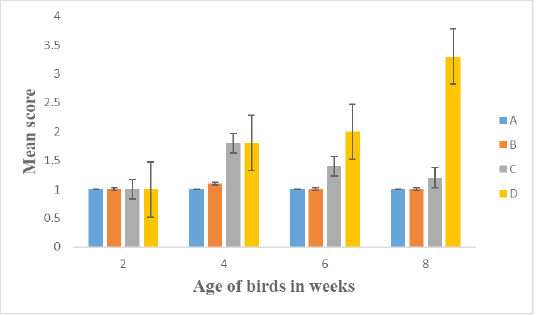
The effects of free-range production system on footpad lesion scores at 2, 4, 6 and 8 weeks of age
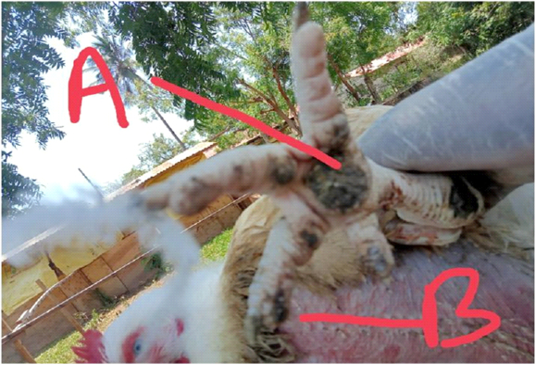
Foot pad lesions in a 6-week-old broiler (A-Pad lesions; B-Lesions extending to the digits) representing a score of 5.
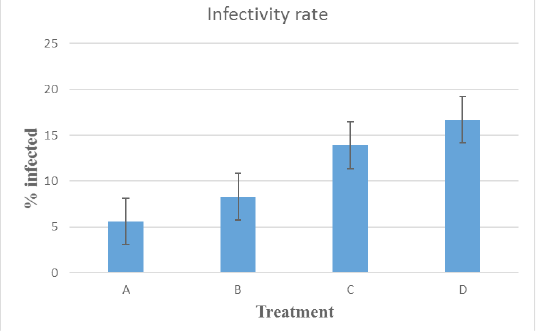
The effects of the free-range production system on the mean percentage of infected liver by Staphylococcus aureus, Escherichia and Citrobacter freundii species at 8 weeks of age.
Most of the livers sampled in treatment D were enlarged and friable.
References
- Abdalrahman LS, Stanley A, Wells H, Fakhr MK (2015). Isolation, virulence, and antimicrobial resistance of methicillin-resistant Staphylococcus aureus (MRSA) and methicillin sensitive Staphylococcus aureus (MSSA) strains from Oklahoma retail poultry meats. Int. J. Environ. Res. Pub. Health. 12:6148-616. https://doi.org/10.3390/ijerph120606148[CrossRef]
- Aguado E, Mabilleau G, Goyenvalle E, Chappard D (2017). Hypodynamia alters bone quality and trabecular microarchitecture. Calcif. Tissue Int. 100:332–340. https://doi.org/10.1007/s00223-017-0235-x[CrossRef]
- Bassler AW, Arnould C, Butterworth A, Colin L, De Jong IC, Ferrante V, Ferrari P, Haslam S, Wemensfelder F, Blokhuis HJ (2013). Potential risk factors associated with contact dermatitis, lameness, negative emotional state, and fear of humans in broiler chicken flocks. Poult. Sci. 92: 2811–2826. https://doi.org/10.3382/ps.2013-03208[CrossRef]
- Beattie V.E., Walker N., Sneddon I.V. (1995). Effects of environmental enrichment on behaviour and productivity of growing pigs. Anim. Welfare., 4 (207–220). https://doi.org/10.1017/S0962728600017802[CrossRef]
- Boamah VE, Agyare C, Odoi H Adu F, Gbedema S, Dalsgaard A (2017). Prevalence and antibiotic resistance of coagulase-negative Staphylococci isolated from poultry farms in three regions of Ghana. Infect. Drug Resist. 10:175-183. https://doi.org/10.2147/IDR.S136349[CrossRef]
- Butterworth A, Bras J (2013). On-farm broiler welfare assessment and associated training. Poult. Sci.; 15:71–77. https://doi.org/10.1590/S1516-635X2013000200001[CrossRef]
- Campbell DLM, Hinch GN, Dyall TR, Warin L, Little BA, Lee C (2017). Outdoor stocking density in free-range laying hens: radio-frequency identification of impacts on range use. Animal., 11:121-130. https://doi.org/10.1017/S1751731116001154[CrossRef]
- Caplen G Colborne GR, Hothersall B, Nicol CJ, Waterman-Pearson CA, Weeks AE, Murrell JC (2013). Lame broiler chickens respond to non-steroidal anti-inflammatory drugs with objective changes in gait function: a controlled clinical trial. Vet. J. 196: 477–482. https://doi.org/10.1016/j.tvjl.2012.12.007[CrossRef]
- Carter G R, John R, Cole J (1990). Diagnostic Procedure in Veterinary Bacteriology and Mycology. 5th Edition, Acad. Press. pages 15 – 17.
- Castellini C, Mugnai C, Moscati L, Mattioli S, Guarino Amato M, Cartoni-Mancinelli A, Dal Bosco A (2016). Adaptation to organic rearing system of eight different chicken genotypes: behaviour, welfare and performance. Italian J. Anim. Sci., 15 pp. 37-46. https://doi.org/10.1080/1828051X.2015.1131893[CrossRef]
- Cengiz O, Hess JB, Bilgili SF (2013). Effect of protein source on the development of food-pad dermatitis in broiler chickens reared on different flooring types. Arch. Geflugelk. 77, 166-170. J. Appl. Poult. Res.; 16:344-350.
- Climate data (2017). Science reference guides (science reference services, library of congress) Science guide no 9.
- de Jong IC, Moya TP, Gunnink H, van den Heuvel H, Hindle VA Mul M, Van reenen K (2011). Simplifying the Welfare Quality assessment protocol for broilers (No. 533). Wageningen UR Livest. Res., Wageningen, the Netherland.
- Diarra MS, Malouin F (2014). Antibiotics in Canadian poultry productions and anticipated alternatives. Front. Microbiol. 5:15. https://doi.org/10.3389/fmicb.2014.00282[CrossRef]
- Eichner G, Vieira SL, Torres CA, Coneglian JLB, Freitas DM, Oyarzabal OA (2007). Litter moisture and foot pad dermatitis as affected by diets formulated on an all-vegetable basis or having the inclusion of poultry by-product. J. Appl. Poult. Res.; 16:344-350. https://doi.org/10.1093/japr/16.3.344[CrossRef]
- Ennis WJ, Sui A and Bartholomew A (2013). Stem cells and healing: impact on inflammation. Advanced Wound Care 2, 369–378. https://doi.org/10.1089/wound.2013.0449[CrossRef]
- Garcia-Migura L, Hendriksen RS, Fraile L and Aarestrup FM (2014). Antimicrobial resistance of zoonotic and commensal bacteria in Europe: The missing link between consumption and resistance in veterinary medicine. Vet. Microbiol. 170(1-20). https://doi.org/10.1016/j.vetmic.2014.01.013[CrossRef]
- Gocsik E, Kortes HE, Lansink AG and Saatkamp HW (2014). Effects of different broiler production systems on health care costs in the Netherlands. Poult. Sci. 93: 1301–1317. https://doi.org/10.3382/ps.2013-03614[CrossRef]
- Gornatti-Churria CD, Crispo M, Shivaprasad HL and Uzal FA (2017). Gangrenous dermatitis in chickens and turkeys. J. Vet. Diagn. Investig. 2:188–196. https://doi.org/10.1177/1040638717742435[CrossRef]
- Harbarth S, Balkhy HH Goossens H, Jarlier V, Kluytmans J, Laxminarayan R, Saam M, Van Belkum A and Pittet D (2015). Antimicrobial resistance: one world, one fight! Antimicrob. Resist. Infect. Cont. 4:49. https://doi.org/10.1186/s13756-015-0091-2[CrossRef]
- Havenstein GB, Ferket PR and Qureshi MA (2003). Growth, livability, and feed conversion of 1957 versus 2001 broilers when fed representative 1957 and 2001 broiler diets. Poult. Sci., 82 (1500–1508). https://doi.org/10.1093/ps/82.10.1500[CrossRef]
- Hashimoto S. Yamazaki K, Obi T and Takase K (2011). Foot pad dermatitis in broiler chickens in Japan. J. Vet. Med. Sci.the Japanese Societ. Vet. Sci., 73: 293–297. https://doi.org/10.1292/jvms.10-0329[CrossRef]
- Heerkens JLT, Delezie E, Ampe B, Rodenburg TB and Tuyttens FAM (2016). Ramps and hybrid effects on keel bone and foot pad disorders in modified aviaries for laying hens. Poult. Sci.; 95(11):2479–2488. https://doi.org/10.3382/ps/pew157[CrossRef]
- Heidemann OR, Christensen H, Kabell S and Bisgaard M (2018). Characterization of prevalent bacterial pathogens associated with pododermatitis in table egg layers. Avian Pathol. 47:281–285. https://doi.org/10.1080/03079457.2018.1440066[CrossRef]
- Kapell DN, Hill WG, Neeteson AM, McAdam J, Koerhuis AN and Avendano S (2012). Twenty-five years of selection for improved leg health in purebred broiler lines and underlying genetic parameters. Poult. Sci. 91: 3032–3043. https://doi.org/10.3382/ps.2012-02578[CrossRef]
- Kaukonen E, Norring M and Valros A (2017). Evaluating the effects of bedding materials and elevated platforms on contact dermatitis and plumage cleanliness of commercial broilers and on litter condition in broiler houses. Brit. Poult. Sci. 58:480–489. https://doi.org/10.1080/00071668.2017.1340588[CrossRef]
- Kaukonen E, Norring M and Valros A (2016). Effect of litter quality on foot pad dermatitis, hock burns and breast blisters in broiler breeders during the production period. Avian Patholol, 45:667–673. https://doi.org/10.1080/03079457.2016.1197377[CrossRef]
- Kestin SC, Knowles TG, Tinch AE and Gregory NG (1992). Prevalence of leg weakness in broiler chickens and its relationship with genotype. Vet. Rec. 131: 190–194. https://doi.org/10.1136/vr.131.9.190[CrossRef]
- Knowles TG, Kestin SC, Haslam SM, Brown SN, Green LE, Butterworth A, Pope SJ, Pfeiffer D and Nicol CJ (2008). “Leg Disorders in Broiler Chickens: Prevalance, Risk Factors and Prevention.” PLoSone. 3 (2): e1545. https://doi.org/10.1371/journal.pone.0001545[CrossRef]
- Kyvsgaard NC, Jensen HB, Ambrosen T and Toft N (2013). Temporal changes and risk factors for foot-pad dermatitis in Danish broilers. Poult. Sci. 92:26–32. https://doi.org/10.3382/ps.2012-02433[CrossRef]
- Larsen H, Hemsworth PH, Cronin GM, Gebhardt-Henrich SG, Smith CL and Rault JL (2018). Relationship between welfare and individual ranging behaviour in commercial free-range laying hens. Animal.; 12 (11):2356–2364. https://doi.org/10.1017/S1751731118000022[CrossRef]
- Li Y, Rong L, Wei Y, Sun L, Xiang J, Zhang H and Li B (2017). Dietary patterns and Depression Risk: A Metanalysis, Psychiat. Res. 253(373-382). https://doi.org/10.1016/j.psychres.2017.04.020[CrossRef]
- Marshall BM and Levy SB (2011). Food animals and antimicrobials: impacts on humanhealth. Clin. Microbiol. Rev. 24:718–733. https://doi.org/10.1128/CMR.00002-11[CrossRef]
- McGeown D, Danbury TC, Waterman-Pearson AE and Kestin SC (1999). Effect of carprofen on lameness in broiler chickens. Vet. Rec. 144:668–671. https://doi.org/10.1136/vr.144.24.668[CrossRef]
- Mellata M (2013). Human and avian extra-intestinal pathogenic Escherichia coli: infections, zoonotic risks, and antibiotic resistance trends. Foodborne Pathog. Dis. 10:916–932. .1533 https://doi.org/10.1089/fpd.2013.1533[CrossRef]
- Nagase N, Sasaki A, Yamashita K, Shimizu A, Wakita Y, Kitai S and Kawano J (2002). Isolation and species distribution of Staphylococci from animal and human skin. Vet. Med. Sci. 64:245–250. https://doi.org/10.1292/jvms.64.245[CrossRef]
- Rodriguez-Aurrekoetxea A and Estevez I (2016). Use of space and its impact on the welfare of laying hens in a commercial free-range system. Poult. Sci.; 95:2503–2513. https://doi.org/10.3382/ps/pew238[CrossRef]
- RStudio (2020). RStudio: Integrated Development for R. RStudio, PBC, Boston, MA URL http://www.rstudio.com/.
- Singh M, Hernandez CE, Lee C, Hinch G and Cowieson AJ (2016). Proceedings of the 27th Australian Poultry Science Symposium, 14-17 February, Sydney, Australia. 2016. Wanderers versus stay at home: who has the better guts; pp. 14–17.
- Sokolowicz Z, Krawezyk J and Swiatkiewiez S (2016). Quality of poultry meat from native chicken breeds- Areview. Annu. Anim. Sci., 2 (16), 347-368. https://doi.org/10.1515/aoas-2016-0004[CrossRef]
- Thøfner ICN, Poulsen LL, Bisgaard M, Christensen H, Olsen RH and Christensen JP (2019). Longitudinal study on causes of mortality in Danish broiler breeders. Avian Dis., 63(3): 400-410. https://doi.org/10.1637/12006-113018-Reg.1[CrossRef]
- Vestergaard KS and Sanotra GS (1999). Relationships between leg disorders and changes in the behaviour. Vet. Rec. 144: 205–209. https://doi.org/10.1136/vr.144.8.205[CrossRef]
- Weeks CA, Danbury TD, Davies HC, Hunt P and Kestin SC (2000). The behavior of broiler chickens and its modification by lameness Appl. Anim. Behav. Sci., 67: 111-125. https://doi.org/10.1016/S0168-1591(99)00102-1[CrossRef]
- Wideman R, Hama KR, Stark IJM and Blankenship J (2012). A Wire-flooring model for inducing lameness in Broilers: Evaluation of Probiotics as a Prophylactic treatment. Poult. Sci. 91(4):870-83. https://doi.org/10.3382/ps.2011-01907[CrossRef]
- Wyneken CW, Sinclair AR, Veldkamp T and Vinco LJ (2015). Foot pad dermatitis and pain assessment in turkey poults using analgesia and objective gait analysis. Poult. Sci. 56: (5).
- Zuidhof MJ, Schneider BL, Carney VL, Korver DR. and Robinson FE (2014). Growth, efficiency, and yield of commercial broilers from 1957, 1978, and 2005. Poult. Sci. 93:2970–2982. https://doi.org/10.3382/ps.2014-04291[CrossRef]
Services
Article usage statistics
Loading…