
In the field trials set up at the Agricultural Research Station, Peshawar, during the Kharif season, an evaluation study was conducted on the use of elemental sulfur on growth, yield, and the incidence of downy mildew in ridge gourd plants. The Japan variety of ridge gourd was fertilized with urea, diammonium phosphate, sulphate of potash, and elemental sulfur in five variable treatments. The application of elemental sulfur significantly enhances the nutrient use efficiency. The experimental trials showed promising responses in cultivated plants with elemental sulfur fertilization, resulting in a marked increase in ridge gourd yield of 29% per hectare and enhanced potassium uptake of approximately 76% per hectare over the control. Examination of the trials demonstrates that the ratio of sulfur with N:P:K levels in plants serves as an excellent indicator of the nutritional status of sulfur in plants. The well-adjusted utilization of sulfur exhibited that the optimum doses for the ridge gourd crop cultivation were 40 kg ha-1 of elemental sulfur in combination with K, P, and N in ratios 60, 60, and 90 kg ha-1, respectively. The elemental sulfur also leads to a significant increase in the number of fruits per plant, fruit length, fruit diameter, and single fruit weight in comparison to the plants without the fertilization of sulfur. The results revealed that S fertilization also resulted in a considerable decline in Downey mildew incidence over the control. A significant reduction in Downey mildew from 20 to 3% of infectious leaves was noted with the use of sulfur. These observations recommend that proper sulfur management in ridge gourd crop is indispensable for increasing use efficiencies, improving the crop productivity, and lessening of the downy mildew, a particular problem for growers of the vegetables in marketable agriculture.
Research Article · Volume 43, Issue 1, 22 October 2026 · Open Access
The Effect of Elemental Sulfur on Nitrogen and Potassium Efficiency and Incidence of Downy Mildew in Ridge Gourd
Affiliations & Notes ⌄
- 1Soil Science Department, Directorate of Soil and Plant Nutrition, Agricultural Research Institute Tarnab, Peshawar, Khyber Pukhtunkhwa, Pakistan. *Correspondence | Tayyeba Samreen, Soil Science Department, Directorate of Soil and Plant Nutrition, Agricultural Research Institute Tarnab, Peshawar, Khyber Pukhtunkhwa, Pakistan
- 2Email: tayyeba.samreen@yahoo.com
Article Info ⌄
- Journal:
- Sarhad Journal of Agriculture
- Published:
- 22 October 2026
From the article
- The undesirable impact of excessive use of synthetic fungicides has been becoming a hazard for the entire ecosystem, human beings, microbes, soil, environment, etc. Sulfur has been found to improve growth, development, optimum crop yield and increased resistance to pathogens.
- Sulfur also affects N and P efficiencies in the soil and must be aligned with crop requirements.
- Downey mildew was found to flourish more in plots where no elemental sulfur was applied and the least infection was recorded where elemental sulfur was applied in combination with K. The recommended dose of sulfur is best for growers farming in Peshawar district to receive maximum yield and quality of Ridge gourd.
Selected from the article's own text.
Abstract
Introduction
Sulfur (S) the fifth most abundant element on earth is the fourth most important macronutrient for plant nutrition . It regulates leaves’ chlorophyll formation and is a major component of protein, enzymes required for plant metabolic activities . Sulfur is reported to have a shortage in approximately 100 x 106 ha of soil in various parts of the world. This shortage in soil could only be overcome through appropriate sulfur fertilization which would produce more and higher quality yields .
Beaton et al reported that the optimum utilization of fertilizers play a vital role in disease controlling and increasing yield per unit area . A field study was conducted by Khalid et al., (2009) to evaluate the effect of S fertilizers on rapeseed crops. It was observed in his studies that the doses of different levels of S fertilization increased yield and yield parameters of rapeseed crops. A large number of articles are available on the reduction of plant yield due to sulfur deficiency. Keya et al. (1991) reported that the metabolism of N will be upset by S deficiency. The soil pH drops as sulfur is oxidized, resulting in the conversion of maximum nutrients to the easily accessible form for plant uptake. . Kalbasi et al recommendation based on their experimental findings suggested that the application of S adjusts soil pH or rhizosphere, from alkaline to acidic which enhances the availability and uptake of iron (Fe), leading to an increase in Fe levels in plants . In addition, Saoud et al found that soil pH drop and soil concentration of S increased significantly in all soil species when S was added alone or in addition to P and other micro-nutrients . Similar findings were also observed in numerous publications (Kabata-PeNdiaS and PeNdiaS, 1992).
Sulfur (S) deficiency in soil can have a significant negative impact on the efficiency of applied NPK (nitrogen, phosphorus, potassium) fertilizers, and consequently, on crop yield sustainability. The core function of sulphur is to balance other nutrients and create the environment less favorable for pathogens. Ryant and Hlusek observed an increase in growth in seed and straw yields of Mustard when elemental S was used as an additive in complex NPK fertilizer .
Sulfur compounds in root exudates and metabolites are formed from residue decomposition which affect pathogen virulence, improve plant ability against diseases and biological pest control . Sulfur also improves the efficiency of plant K uptake. Potassium deficiency leads to the accumulation of sugars and soluble nitrogen compounds, both of which serve as favorable food sources for the parasite . Potassium deficiencies also promote the development of cracks, fissures, and lesions on the surface of leaves and fruits which are a greater source of attraction for facultative parasites. Wilting, often associated with potassium deficiency, increases membrane vulnerability, allowing an invading organism to penetrate the cell . Sufficient potassium source ensures complete closure of plant stomata and plant physical resistance to pests which could only be mobilized when S is supplied in an exactly optimized ratio.
Ridge gourd is a cucurbitaceous summer vegetable grown in Pakistan over an area of 7030 hectares with a total production of 91149 tons per year . This economically important plant of ridge gourd vegetable is extensively grown in Southeast Asia, India, China, Japan, Egypt, and other African countries . Ridge gourd suffers from a variety of fungal, bacterial, and viral diseases. But amongst the diseases, downy mildew causes substantial losses which vary remarkably depending on the stage of infection, genotype, and environmental conditions. Downy mildew reduces the number of flowers and the development of fruit in ridge gourd by destroying the foliage, which significantly disrupts production. .
In Pakistan ridge gourd is also cultivated as a preferred food source in various regions of the country but due to frequent downy mildew attacks the marketable quality production is sacrificed. Downy mildew has been reported as a parasite of plants in many parts of the world . Downy mildew is monetarily the most damaging problem which is brought about by Pseudoperonospora cubensis. This parasite has absolute reliance on its host plant for finishing its life cycle . Its existence has been monitored in more than 70 countries of the world. Around 30-40% yield losses are reported due to the Downey mildew disease which may boost up to 100% if the environmental conditions are more favorable for survival ; .
Downy mildew attacks hinder plant development and also weaken the quality and amount of yield. . Disease caused by the pathogen Pseudoperenospora cubensis (downy mildew), is posing major limitations in commercial cultivation of ridge gourd.
Although synthetic fungicides are more promising and quick method in controlling mildew disease however there is a growing public concern about so many side effects on the ecosystem, human health, microbes, soil, environment, etc. . These problems led farmers to adopt alternative methods for disease control such as plant cultivation practices soil tillage operations, plant breeding, and plant nutrition . The plant nutritional status has long been identified as one of the key factors against diseases. The appropriate balanced individual nutrient supply ratios are crucial for improving plant health, enhancing production efficiency, and increasing crop quality .
Sulfur is not considered a plant nutrient in fertilization practices in Pakistan and very little is known about the S status of soil in the country. To our knowledge, no data is available in the literature on sulfur fertilization studies and control of the pathogen Downey mildew on ridge gourd.
The focus of this study is related to the impact of sulfur on nitrogen and potassium uptake profile, yield quality improvement of ridge gourd, and the reduction of host downy mildew on ridge gourd plant.
Materials and Methods
Experimental site
A field experiment was carried out to examine the outcome of elemental sulfur on N and K efficiency and incidence of downy mildew in ridge gourd at agriculture research institute (ARI) Tarnab KP Pakistan during Kharif, season.
Sowing of plants
Ridge gourd seeds were grown directly in the ground. The seeds were sown 2 inches deep and 2 feet apart. 15 seeds of ridge gourd Japan variety were sown per plot. The field was irrigated immediately after sowing.
Fertilizer application
The ridge gourd crop was fertilized with nitrogen in the form of urea, phosphorous in the form of diammonium phosphate, potassium in the form of sulphate of potash and sulfur in the form of elemental sulfur.
Disease assessment
The disease intensity of Downy mildew was recorded by randomly selecting 6 plants per treatment. The plants were properly tagged and three leaves (one each from the bottom, middle, and top) per plant were selected. The disease intensity was recorded by applying 0 - 5 disease rating scale as described below in the Table 1.
|
Numerical rating (scale) |
Description |
|
0 |
No visual infection area/symptoms on leaf |
|
1 |
1-5% leaf area affected |
|
2 |
6-20 % leaf area affected |
|
3 |
21-40 % leaf area affected |
|
4 |
41-70 % leaf area affected |
|
5 |
71-100 % leaf area affected |
The percent disease index was calculated from the equation mentioned below,

The plants were carefully examined and downy mildew disease was recorded. The plants were randomly selected in each plot and the disease intensity was rated by 0-5 scale . The disease intensity in each plot was calculated by the method described in the literature .
Before sowing of ridge gourd the soil samples were collected from the root zone (0-15 cm) of each treatment. A composite sample was also analyzed. The soil was analyzed by employing standard procedure for pH, EC. 10.3, % CaCO3, % organic matter, % N, % P, % K and % TSS in the department of Soil Science (Table 2).
Treatments details
Five treatments, including a control, were each replicated three times using a Randomized Complete Block Design as shown in Table 3. The plot size for each treatment was 16 square meters.
Potassium determination
The potassium concentration in leaves was measured
Table 2: Soil characteristics of the experimental site.
|
Treatments |
% CaCO3 |
% Organic matter |
% N |
% P |
% Soil K |
pH |
EC.10-3 |
TSS % |
|
T1(control) |
9.9 |
0.88 |
0.044 |
7.2 |
167 |
8 |
0.16 |
0.052 |
|
T2 |
9.8 |
0.93 |
0.046 |
5.4 |
157 |
7.96 |
0.18 |
0.057 |
|
T3 |
9.08 |
0.88 |
0.044 |
7.7 |
173 |
8 |
0.17 |
0.055 |
|
T4 |
9.41 |
0.92 |
0.045 |
6.8 |
177 |
8 |
0.17 |
0.054 |
|
T5 |
9.3 |
0.88 |
0.044 |
7.5 |
183 |
8 |
0.16 |
0.053 |
|
Composite sample |
9 |
0.93 |
0.046 |
8.5 |
150 |
8 |
0.16 |
0.051 |
as per standard method with a flame photometer model Sherwood Flame Photometer 410.
|
Treatments |
N kg ha-1 |
P2O5 kg ha-1 |
K2O kg ha-1 |
Elemental sulfur kg ha-1 |
|
T1 |
0 |
60 |
0 |
40 |
|
T2 |
90 |
60 |
0 |
40 |
|
T3 |
0 |
60 |
60 |
40 |
|
T4 |
90 |
60 |
60 |
0 |
|
T5 |
90 |
60 |
60 |
40 |
N in the form of urea, P in DAP and K as SOP
Statistical analysis
The data analysis was conducted in Excel using the ANOVA single- factor option at an alpha level of 0.05 to assess the differences in treatment means. The differences in means across treatments were evaluated using post hoc multiple comparison tests, including Fisher’s least significant difference test (LSD), Tukey’s Honestly Significant Difference test (HSD), and Scheffe’s test.
Results and Discussion
Effect of elemental sulfur on ridge gourd yield
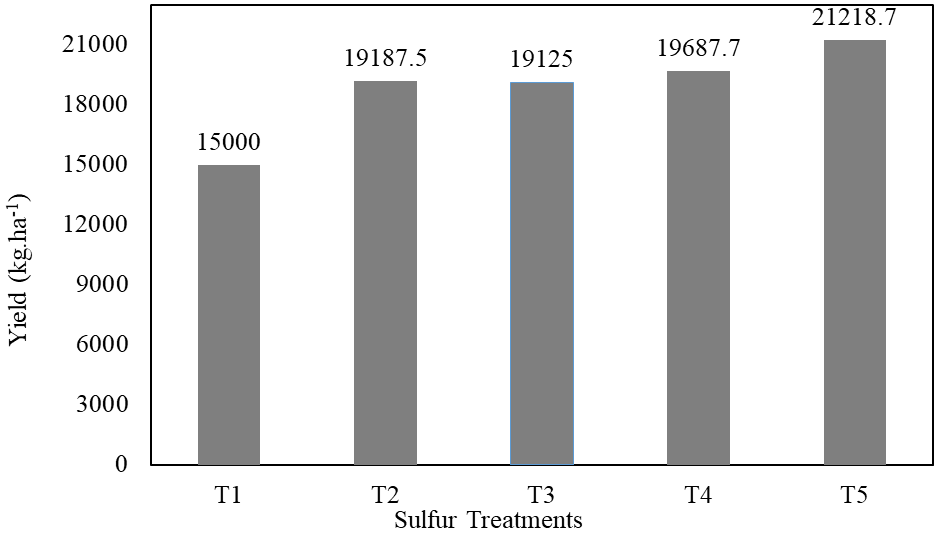
The effect of S has shown a significant increase in ridge gourd yield (Figure 1). As seen from the figure there is a major yield increase in treatment T2 over T1 where S was applied only with P whereas the difference in yield among the treatments T2, T3, and T4 is not very significant where there is one component of fertilizer missing in each treatment. However, when S is applied in a balanced ratio with NPK a major increase in the yield of ridge gourd (T5) is observed.
The data presented in Table 4 revealed that maximum yield was recorded in T5 (plots treated with K2O and P2O5 each 60 kg ha-1, N 90 kg ha-1 and elemental sulfur 40 kg ha-1) followed by T4 where only NPK fertilizer was applied at their recommended rate. Minimum yield was obtained in T1 (40 kg ha-1 elemental sulfur and 60 kg ha-1 P2O5). The %age yield observed in treatment T5 was increased by 7.5% and 34% over T4 and T1 respectively. Singh et al., (2014) noticed maximum lentil seed yield with 30 kg
Table 4: Effect of elemental sulfur on the number of picking and yield of ridge gourd.
|
Treatments |
Ist picking |
2nd picking |
3rd picking |
4rth picking |
5th picking |
6th picking |
7th picking |
Total kg.(16m2)-1 |
Yield kg.ha-1 |
|
T1 |
2.4 |
4.5 |
3.7 |
6.6 |
4.7 |
3.5 |
2.6 |
24 |
15000 |
|
T2 |
3.4 |
3.5 |
4.7 |
2.8 |
9.2 |
3.6 |
3.5 |
30.70 |
19187.5 |
|
T3 |
3.5 |
3.5 |
5.1 |
3.8 |
7.0 |
4.2 |
3.5 |
30.60 |
19125.0 |
|
T4 |
4.2 |
1.3 |
5.3 |
5.6 |
8.3 |
3.7 |
3.0 |
31.50 |
19687.7 |
|
T5 |
4.6 |
3.0 |
6.0 |
4.6 |
8.5 |
3.7 |
2.5 |
33.95 |
21218.7* |
Note: multiple comparison post hoc tests were performed such as LSD, HSD and Scheffe;s. Asterisk indicate a statistically significant difference ( scheffe’s post hoc, p< 0.05)
residual sulfur. Salvagiotti et al., (2017) and Rebi. et al (2020) also noticed a similar increase in grain yield of maize with S fertilization. Kulczycki (2021) found positive effect of S fertilization in oilseed rape and winter wheat by the significant increase in yield.
It is established from the above experimental observations that fertilization of elemental sulfur lowers the soil pH and increases the efficiency of NPK fertilizer by increasing the easy availability of nutrients to plants and thus increasing the yield per unit area.
Table 5: Effect of elemental sulfur on the yield components of ridge gourd.
|
Treatments |
Number of fruits/plant |
Fruit length (cm) |
Fruit diameter (cm) |
Single fruit weight (g) |
|
T1 |
13 |
10 |
2.2 |
65 |
|
T2 |
22 |
11 |
3.0 |
84 |
|
T3 |
18 |
12 |
3.5 |
94 |
|
T4 |
25 |
15 |
4.2 |
104 |
|
T5 |
30* |
16* |
5.5* |
120* |
Note: multiple comparison post hoc tests were performed such as LSD, HSD and Scheffe;s. Asterisk indicate a statistically significant difference ( scheffe’s post hoc, p< 0.05)
Effect of sulfur on the number of fruits per plant
Table 5 shows data regarding the number of fruits per ridge gourd plant for various treatments affected by fertilization of the elemental sulfur. Maximum number of fruits per plant were attained in T5 (P2O5 60 kg ha-1, K2O 60 kg ha-1, N 90 kg ha-1 and elemental sulfur 40 kg ha-1) followed by T4 (60 kg ha-1 P2O5, 60 kg ha-1 K2O, 90 kg ha-1 N). Minimum yield was achieved in T1 where elemental sulfur was applied @ 40 kg ha-1 and P2O5 @ 60 kg ha-1. The %age increase in number of fruit per plant was 18% and 79% over T4 and T1. The data in T1 and T2 indicated the interaction effect of elemental sulfur with nitrogen fertilizer. Greater number of fruits per plant in T2 (60 kg ha-1 P2O5, 90 kg ha-1 N and 40 kg ha-1 elemental sulfur) was observed than in T1 (40 kg ha-1 elemental sulfur, 60 kg ha-1 P2O5) which is 31.6% higher in T2 over T1. This was due to the increased uptake of nitrogen by sulfur application because N is regarded as a crucial element in the growth and productivity of plants. Murovhi (2013) observed a significant increase in the number of orange fruits per tree with the application of S fertilizer application. S is macronutrient its deficiency affects the efficiency of other applied nutrients. The sulfur fertilization in nutrient-deficient soils enhances the plant photosynthetic ability and improving crop growth rate.
Effect of sulfur on fruit length and diameter
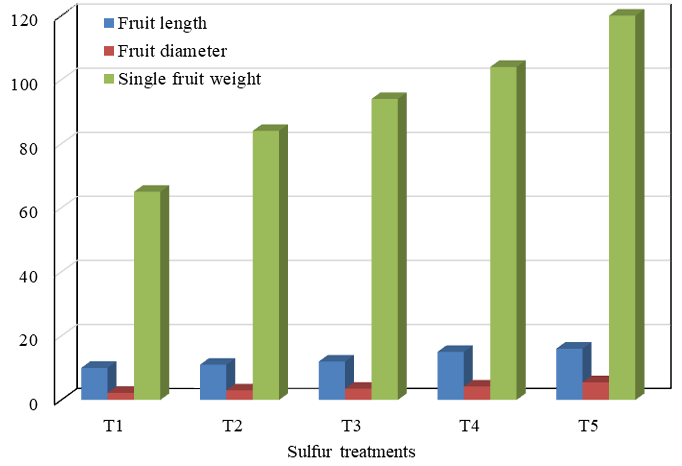
The fruit length and diameter was noted maximum in T5 where NPK fertilizer was applied in combination with elemental sulfur followed by NPK fertilizer alone. The data tabulated in Table 5 showed that minimum values were recorded in T1 where only phosphorous fertilizer and elemental Sulfur were applied. Fruit length in T5 was 6.4% and 46% higher over treatments T4 and T1 respectively. Fruit diameter in T5 was 27 % and 86% larger over T4 and T1 respectively. T1and T3 showed the interaction effect of potash with elemental sulfur. The quality parameters, fruit length and fruit diameter were found maximum in T3 than in T1. Fruit length in T3 was 18% greater than T1 whereas fruit diameter in T3 was 46 % more than T1. This was due to the increase in uptake of potash with sulfur application. The overall behavior/trend regarding the fruit length and fruit diameter (cm) is shown in (Figure 2) which revealed that the interaction between elemental S and NPK fertilizer is positively affecting the yield related parameters i.e., fruit length and fruit diameter of ridge gourd. Similar behavior was reported in the literature on tomato and
sweet pepper (Capsicum annuum L.) ; . The length and diameter of the fruit are a reflection of the significant role that sulfur plays in photosynthesis and protein synthesis.
Single fruit weight
Table 6: Effect of elemental sulfur on % mildew and potassium uptake of ridge gourd.
|
Treatments |
% disease incidence of Downey mildew |
K Uptake (mg) |
|
T1 |
14 |
20 |
|
T2 |
11 |
20 |
|
T3 |
14 |
83* |
|
T4 |
20* |
63 |
|
T5 |
3 |
83* |
Note: multiple comparison post hoc tests were performed such as LSD, HSD and Scheffe;s. Asterisk indicate a statistically significant difference ( scheffe’s post hoc, p< 0.05)
The single fruit weight of mature ridge gourd also showed the same trend as was observed in the previous discussions above. The highest fruit weight (120 g) was gained by fruit in treatment T5 and T1 reported the lowest single fruit weight (65 g) which indicates towards a significant change in fruit weight with sulfur treatment.
Maximum single fruit weight is obtained in treatment T5 (Table 5) which is almost 85% greater compared to control (T1). The single fruit weight has shown a gradual increase in weight in all the treatments from T1 to T5 (Figure 2). These results may be attributed to the beneficial effects of sulfur in reducing soil pH and promoting soil particle flocculation. Such changes enhance soil structure and increase the availability of specific plant nutrients .
Sulfur effect on downey mildew disease incidence
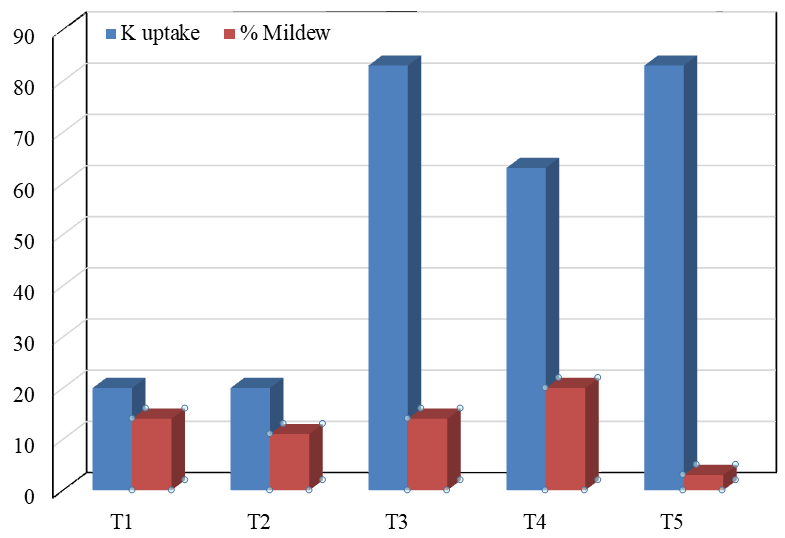
The data of disease intensity of Downey mildew on ridge gourd as a function of S treatments is given in Table 6 which ranges the %age disease intensity of Downy mildew from 3 to 20 per cent. The data also shows that the %age of Downey mildew in all the treatments is less than observed in T4 (control). The maximum value of disease is 20% in (T4) while a minimum value of 3% is observed in treatment T5 (N 90, P 60, K 60, S 40 @ kg ha-1).The decreasing tendency of incidence of Downy mildew can more clearly be understood from the Figure 3. In case of T5 mildew incidence is minimum with a maximum uptake of potassium. The Percent disease incidence of downy mildew was found maximum in T4 (NPK alone) and minimum damage by downy mildew was recorded in T5 where NPK fertilizer was applied in combination with elemental sulfur. Percent disease incidence by Downey mildew in T5 is decreased by 79% over T4. Podleśna et al. (2005) reported that sulfur fertilization significantly reduced the downy mildew appearance on spring oilseed rape. The activity of sulfur in plants is multi-directional due to its high impact on nitrogen metabolism which not only improve fruit yield and its quality, but also increase plant resistance to pathogens .
The Percent disease incidence by Downey mildew in T1 (phosphorous fertilizer + elemental sulfur
only) and T3 (potash + Phosphorous fertilizer and elemental Sulfur at recommended rate) were found similar. Keeping the data trend in mind, it is advisable to manage downy mildew disease of ridge gourd by adopting elemental Sulfur management measures of combine treatments. As extensively reviewed by Williams and Cooper (2004), the accepted theory relies on the uptake of sulfur into the fungal cytoplasm, where it affects several cellular processes in the mitochondrial respiratory chain and may react with hydrogen to form toxic hydrogen sulfide.
Potassium uptake
The uptake of potassium is significantly influenced by S fertilization (Table 6). The maximum K uptake was recorded in treatments where S was applied with K followed by NPK fertilizer alone and minimum was recorded in plots where no K was applied. The K uptake was similar in T5 and T3 followed by T4 and minimum was recorded in T1. The S fertilization increased K uptake by 76% over control in treatment T5 (Table 6). This might be due to the fact that the effect of S is more favorable on K absorption in ridge gourd plant. The comparative uptake in treatments T1 and T2 is non-significant but T2 has a yield advantage of 28% over treatment T1. In Treatment T3 there is a significant increase in K uptake which abruptly decline in treatment T4 but the yield increase is not compromised and a gradual increase in yield output is noted. The maximum uptake of K over control in T5 (79%) is well in line with the yield output of ridge gourd 21218.7 kg ha-1 (Figure 1 and Figure 3). Addition of elemental S application to the soil increased the uptake of K. This may be due to the fact that the elemental S is decreasing soil pH by its oxidation and formation of sulfuric acid which lead to the absorption of K ions on colloidal surface and release of K to the soil solution. El-Fahdawi et al. (2020) also found that applying S significantly increased the availability of NPK in soil, as well as improved corn growth and yield . The findings of Motior et al., (2011) on cucumber crop revealed that the application of sulfur improves nutrient uptake, increases yield, and enhances the quality of the cucumber .
The above experimental data concludes that elemental sulfur is instrumental in increasing the efficiency of NPK fertilizer and thus increasing the ridge gourd yield per unit area. The fertilization of elemental S played a vital role in improving resistance against downy mildew invasion in the ridge gourd.
Conclusions and Recommendations
Although synthetic fungicides are more capable of controlling Downey Mildew disease however there are numerous hostile effects of them. The undesirable impact of excessive use of synthetic fungicides has been becoming a hazard for the entire ecosystem, human beings, microbes, soil, environment, etc. Sulfur has been found to improve growth, development, optimum crop yield and increased resistance to pathogens. Sulfur also affects N and P efficiencies in the soil and must be aligned with crop requirements. Downey mildew was found to flourish more in plots where no elemental sulfur was applied and the least infection was recorded where elemental sulfur was applied in combination with K. The recommended dose of sulfur is best for growers farming in Peshawar district to receive maximum yield and quality of Ridge gourd.
Acknowledgements
I am obliged to Agricultural Research Institute Tarnab Peshawar for providing the required research facilities for the completion of the project timely.
Novelty Statement
Downey mildew, a major threat for ridge gourd crop, has been resolved by using elemental sulfur with supplementary fertilizers. A ratio of elemental S was concluded, which could help growers of Peshawar district to resolve the threat of Downey mildew and improve the yield of ridge gourd per unit area.
Generative AI and AI-assisted technology statement
The authors declare that no generative AI and AI assisted technology was used in the creation of this manuscript.
Conflict of interest
The authors have declared no conflict of interest.
Figures
Variations in ridge gourd yield as a function of sulfur treatments
Ridge gourd yield parameters with sulfur treatments.
Effect of sulfur treatments on the K uptake and % mildew infestation for ridge gourd.
References
- Awan, H.S., H. Malik, S. Amin and A.S. Sheikh. 2023. Fruit, vegetables and condiments statistics of Pakistan 2021-22, Government of Pakistan Ministry of national food security & research Islamabad Economic wing, Islamabad.
- Beaton, J.D., M.D. Stauffer, K.H. Gill and H. Rehman. 1995. Potassium research and development in Pakistan, PARC.
- Colucci, S.J., T.C. Wehner and G.J. Holmes. 2006. The downy mildew epidemic of 2004 and 2005 in the estern /united State. In: Proc. Cucurbitaceae., 2006: 403-411.
- De- Kok, L.J., A. Castro, A. Koralewska, M. Durenkamp, F.S. Posthumus, C.E.E. Stuiver, L. Yang, and I. Stulen. 2005. “Pathways of Plant Sulfur Uptake and Metabolism: an Overview.” Landbauforschung Volkenrode. 283: 5–13.
- Dubey, S.C., M. Suresh and B. Singh. 2007. Evaluation of Trichoderma species against Fusarium oxysporum f. sp. ciceris for integrated management of chickpea wilt. Biol. cont., 40(1): 118-127. https://doi.org/10.1016/j.biocontrol.2006.06.006[CrossRef]
- Dick, M.W. 2001. The peronosporo mycetes. In: D. J. McLaughlin, E. G. McLaughlin, & P. A. Lemke (Eds.), The mycota VII Part A: Systematics and evolution. 39–72 p.
- El-Fahdawi W.A.T., Firas Ahmed and Saddam H.Cheyed. 2020. Effect of Agriculture Sulfur on availabity of NPK in soil, growth and yield of corn (Zea mays L.). Ind. J. Ecol., 47(12)|: 200-205.
- El-Galla, A.M., M.A. Mostafa and S.E. El-Maghraby.1989. Influence of sulphur and saline irrigation water on growth and elemental status of barley plant in calcareous soils. Egypt. J. Soil. Sci., 31: 443-445.
- Ganesh, H.S., S.T. Yenjerappa, D.S. Aswathanarayana, M. Kengnal and K. Patil. 2024. Integrated disease management modules against downy mildew disease in ridge gourd. Pharma Innov. J., 13(10): 48-52
- Goldmann, L.R and S. Koduru. 2000. Chemicals in the environmental and developmental toxicity to children: A public health and policy perspective. Environ. Health Perspect., 108: 443-448. https://doi.org/10.1289/ehp.00108s3443[CrossRef]
- Goker, M., H. Voglmayr, A. Riethmuller and F. oberwinkler. 2007. How do obligate parasite evolve? A multi-gene phylogenetic analysis of downy mildews. Fungal Genet. Biol., 44: 105-122. https://doi.org/10.1016/j.fgb.2006.07.005[CrossRef]
- Gopal, R., P. Sinha, B.K. Dube and C. Chatterjee. 2003. Phosphorus – Sulphur interaction in tomato (Lycopersicon esculentum L.) metabolism. Ind. J. Hort., 60(3): 244-250.
- Khalid,R., K.S. Khan, M. Yousaf,G. Shabbir and A. Subhani. 2009. Effect of sulfur fertilization on rapeseed and plant available sulfur in soils of Pothwar, Pakistan. Sarhad J. Agric. 25(1): 65-71.
- Kulczycki, G. 2021. The effect of elemental sulfur fertilization on plant yields and soil properties. Ch.
- Advances in Agronomy. Elsevier. Volume 167. ISSN 0065-2113.
- Helrich, K. 1990. Official methods of analysis of the Association of Official Analytical Chemists. 15th Edn. Arlington Virginia, USA. 47-48.
- Haider, K. and A. Schäffer. 2009. Soil Biochemistry. Science Publishers, Enfield. https://doi.org/10.1201/9780367807047[CrossRef]
- Holmes, G., T. Wehner, and A. Thornton. 2006. An old enemy re-emerges. Americ. Veget. Grower., 54.14-15.
- Kaya, M., Z. Küçükyumuk and I. Erdal. 2009. Effects of elemental sulfur and sulfur-containing waste on nutrient concentrations and growth of bean and corn plants grown on a calcareous soil. African J. Biotech., 8(18): 4481-4489.
- Kalbasi, M., F. Filsoof, N. Rezai. 1988. Effect of sulphur treatments on yield and uptake of Fe, Zn and Mn by corn sorghum and soybeans. J. Plant Nutr., 11: 1353-1360. https://doi.org/10.1080/01904168809363892[CrossRef]
- Kabata-PeNdiaS, A. and H. PeNdiaS. 1992. Trace elements in soils and plants. 2nd Ed. CRC Press Inc, Boca Raton, Florida.
- Kaya, M., Z. Küçükyumuk and I. Erdal. 2009. Effects of elemental sulfur and sulfur-containing waste on nutrient concentrations and growth of bean and corn plants grown on a calcareous soil. Afric. J. Biotechno., 8(18): 4481-4489.
- Kemble, J.M., L. Ivey, K.M. Jennings and J.F. Walgenbach. 2016. Southeastern U.S Vegetable Crop Handbook. 17th edition.
- Kumsab J., Y. Yingchutrakul, N. Simanon, C. Jankam, C. Sonthirod, S. Tangphatsornruang, and C. Butkinaree. 2024. Comparative Proteomic Analysis of Ridge Gourd Seed (Luffa acutangula (L.) Roxb.) during Artificial Aging. ACS Omega., 9(23): 24739-24750. https://doi.org/10.1021/acsomega.4c01270[CrossRef]
- Lebeda, A. and J. Urban. 2007. Temporal changes in pathogenicity and fungicide resistance in Pseudoperonospora cubensis populations. Acta Hortic., 731: 327-336. https://doi.org/10.17660/ActaHortic.2007.731.44[CrossRef]
- Mayee, C.D, V.V. Datar. 1986. Phytopathopmety. Technical Bulletin-1 (Special bulletin-3), Marathwada Agricultural University, Parbhani, Maharasthra, India. 29 p.
- Motior, M.R., A.S. Abdou, F.H. Al- Darwish, K.A. El-Tarabily, M.A. Awad, F. Golam, and M. Sofian-Azirun. 2011. Influence of elemental sulfur on nutrient uptake, yield and quality of cucumber grown in sandy calcareous soil, Austral. J. Crop Sci., 5(12):1610-1615.
- Murovhi, N.R. 2013. Effect of different rates of sulphur fertilization on fruit yield and leaf mineral composition of ‘valencia’ oranges in the subtropical environment of South Africa. Acta Hortic., 1007: 303-310. https://doi.org/10.17660/ActaHortic.2013.1007.33[CrossRef]
- Ortel, C.C., T.L. Roberts, and J.C. Rupe. 2024. A review of the interaction between potassium nutrition and plant disease control. Agrosystems; Geosci. Environ., 7: 1-11. https://doi.org/10.1002/agg2.20489[CrossRef]
- Palti, J., and Y. Cohen. 1980. Downy mildew of cucurbits (Pseudoperonospora cubensis): the fungus and its hosts, distribution, epidemiology and control. Phytoparasit., 8: 109-147. https://doi.org/10.1007/BF02994506[CrossRef]
- Podleśna, A., M. Jędryczka, and E. Lewartowska. 2005. Occurrence of fungal diseases on winter rapeseed under conditions of differentiated fertilization with sulfur and nitrogen. Oilseed Crop., 1: 173-184.
- Rebi, A., K. Javed, S.K. Salman, S. Ghazafar and H. Ruby. 2020. Effect of Applied Sulphur on Elemental Sulphur Contents in Maize. Int. J. Food Sci. Agric., 4(1): 1-5. https://doi.org/10.26855/ijfsa.2020.03.001[CrossRef]
- Ryant, P. and J. Hlusek. 2007. Agrochemical use of waste elemental sulphur in growing white Mustard. Pol. J. Chem. Technol., 9: 83 –89. https://doi.org/10.2478/v10026-007-0034-7[CrossRef]
- Sawsan, M.H.S., M.A. Hassan, S.K. El-Seifi, and M.K. Rakha. 2007. Effect of sulphur and phosphate fertilization on growth yield and fruit quality of pepper (Capsicum annuum, L.) b-Effect on yield, fruit quality and nutrient components. J. Agric. Sci. Mansoura Univ., 32(3): 2225 – 2242. https://doi.org/10.21608/jpp.2007.206737[CrossRef]
- Said, M. Kamel., M.I. Mohamed, A. Fathia, S. El-shoraky and M.M. El-Sawy. 2014. Fulvic acid: A tool for controlling powdery and downy mildews in cucumber plants. Int. J. Phytopathol., 03: 101-108. https://doi.org/10.33687/phytopath.003.02.0866[CrossRef]
- Skwierawska M., Z. Benedycka, K. Jankowski, and A. Skwierawski. 2016. Sulphur as a fertilizer component determining crop yield and quality. J. Elem., 21(2): 609-623. https://doi.org/10.5601/jelem.2015.20.3.992[CrossRef]
- Salvagiotti, F., P. Prystupa, G. Ferraris, L. Couretot, L. Magnano, D. Dignani, and F.H Gutiérrez Boem. 2017. N:P:S stoichiometry in grains and physiological attributes associated with grain yield in maize as affected by phosphorus and sulfur nutrition. F. Crop. Res., 203: 128 – 138. https://doi.org/10.1016/j.fcr.2016.12.019[CrossRef]
- Sharma, L.K., L. Zotarelli. and C.T. Christensen. 2023. The Importance of Sulfur for Florida Agricultural Production, SL502. https://doi.org/10.32473/edis-ss715-2023[CrossRef]
- Singh, A.K., K.M. Singh, R.C. Bharati, N. Chandra, B.P. Bhatt and A. Pedapati. 2014. Potential of Residual Sulfur and Zinc Nutrition in Improving Powdery Mildew (Erysiphe trifolii) Disease Tolerance of Lentil (Lens culunaris L.). Commun. Soil Sci. Plant Analys., 45(21): 2807-2818. https://doi.org/10.1080/00103624.2014.954287[CrossRef]
- Soaud, A.A., F.H. AlDarwish, M.E. Saleh, K.A. El-Tarabily, M. Sofian-Azirun and M.M. Rahman. 2011. Effects of elemental sulfur, phosphorus, micronutrients and Paracoccus versutus on nutrient availability of calcareous soils. Aus. J. Crop Sci. 5(5): 554-561.
- Wheeler, B.E.J. 1969. An Introduction to plant diseases. John Wiley Publication, London. 301 p.
- Williams, J.S., R.G. Cooper. 2004. The oldest fungicide and newest phytoalexin - a reappraisal of the fungitoxicity of elemental sulphur. Plant Pathol., 53(3): 263–279. https://doi.org/10.1111/j.0032-0862.2004.01010.x[CrossRef]
Services
Article usage statistics
Loading…