The phytochemical effect of the acacia leaf combination treatment (R1) was more significant in protecting protein, as evidenced by lower ammonia levels compared to R2 and R3, due to the higher tannin and saponin present in R1 than in the other treatments (Table 1).
This indicates that combining tree legumes leads to a lower proportion of acetic acid as well as a higher proportion of propionic acid, thereby decreasing the acetate-propionate ratio.
The low acetate-propionic ratio in the addition of tree legumes compared to without tree legumes indicates that the addition of tree legumes is beneficial because the feed efficiency and energy use are relatively higher.
In conclusion, the present study demonstrated that supplementation with Acacia and Indigofera leaves influenced in vitro rumen fermentation and methane production.
Selected from the article's own text.
Abstract
The main problem with traditional livestock farming in tropical regions is that the forage provided comes from natural pastures. The available forage varies with the season and is of low quality, leading to energy loss and increased methane emissions. The use of alternative feed derived from swamp forage haylage supplemented with tree legumes is a solution to meet the forage needs of ruminants, specifically during times of shortage. This study aimed to assess how combining swamp forage haylage-based diets with Acacia and Indigofera leaves affects digestibility, rumen fermentation, and methane levels. A completely randomized design was implemented, involving four treatments and replications. The treatments consisted of 70% swamp forage haylage and 30% concentrate (R0), 40% swamp forage haylage, 30% Acacia, and 30% concentrate (R1); 40% swamp forage haylage, 30% Indigofera, and 30% concentrate (R2); 40% swamp forage haylage, 15% Acacia, 15% Indigofera, and 30% concentrate (R3). Dry matter digestibility (DMD), organic matter digestibility (OMD), pH, total volatile fatty acids (T-VFA), N-ammonia (N-NH3), partial VFA, methane gas, total bacteria, and protozoa were the observed parameters. The results showed that Acacia and Indigofera leaf combination increased (p<0.05) DMD, OMD, T-VFA, N-NH3, propionic, butyrate, and total bacteria, while the levels of protozoa, acetate-propionic ratio, and methane gas concentration decreased (p<0.05). In conclusion, combining Acacia and Indigofera in the rations can enhance digestibility, improve rumen fermentation properties, and lower methane gas concentration.
Keywords | Haylage, Swamp forage, Methane gas, In vitro, Tree legumes
INTRODUCTION
Beef cattle productivity heavily depends on consistent access to quality and sufficient feed in terms of both amount and continuity. The feed provided should be nutritionally balanced, meeting the needs of rumen microbes and the cattle. Generally, cattle husbandry systems in Indonesia are still traditional, with feed provided from natural pastures and agricultural by-products. The feed provided often does not meet livestock needs due to fluctuating feed availability, seasonal variations, and low forage quality (high fiber and low crude protein fractions), potentially increasing methane levels. Aragadvay-Yungán et al. (2021) reported that methane emissions reduced livestock nutrient absorption efficiency, as 12% of gross energy intake was lost as methane, impacting performance.
A solution needed to address the stated problem is to use the potential of local feed ingredients derived from swamp forage through haylage technology. McDonald et al. (2022) described haylage as a forage processed through anaerobic fermentation with a moisture content of 40-50%, targeted at storing excess forage to increase production and allow provision to livestock during shortages. Swamp forage haylage alone may not provide sufficient nutrients to meet the nutritional requirements of livestock. Feed optimization and efficiency are improved through combination with tree legumes in rations based on swamp forage haylage.
Tree legumes are a widely available local feed, rich in protein, minerals, and phytochemical compounds such as flavonoids, tannins, and saponins. Research results show that phytobiotics can improve growth performance, livestock product quality and reduce enteric methane emissions and improves fatty acid profiles ; Pudato et al., 2025; . Phytochemicals protect protein from rumen microbial degradation and are potential sources of bypass protein, also known as Rumen Undegradable Protein (RUP). Feeding more RUP can boost livestock growth by increasing amino acid (lysine and methionine) availability in the small intestine, enhancing the efficiency of protein metabolism .
Legume trees with potential as supplementary feed include Acacia and Indigofera. Acacia (Acacia mangium) is a plant containing high nutrients and various phytochemical compounds, including alkaloids, flavonoids, phenols, and saponins, as well as tannins. The Acacia species that have been evaluated show relatively high feed value with crude protein 5.84-28.98%, crude fiber 10.2-32.4%, Ether extract 1.2-4.8%, ash 4.5-12.3%, and nitrogen-free extract (NFE) 35.2-58.6% . The use of acacia as a feed resource should consider several limiting factors, including high phytochemical compounds such as total tannins (3.32-6.03% DM) and condensed tannins (1.77-2.38% DM) in some species . Riswandi et al. (2017) indicated that the influence of combining 7.5% acacia leaves and 7.5% water mimosa, in rations based on fermented kumpai grass (Hymenachne acutigluma) reduced dry matter digestibility (DMD) but increased N-ammonia (N-NH3) and total VFA (T-VFA) levels.
Indigofera (Indigofera zollingeriana) has a fairly high biomass production with high nutrient content. This plant contains 22.66% dry matter (DM), 33.87% crude protein (CP), 16.37% crude fiber (CF), 7.02% ether extract (EE), 34.68% nitrogen-free extract (NFE). 0.27% tannins, and 4.25% saponins ; . Indigofera has the potential to increase propionic acid, reduce acetate, and the acetate-propionate ratio. . Zain et al. (2020) stated that the effect of tannins and saponins on the legume Gliricidia sepium reduced methane gas emissions and increased rumen fermentation efficiency and feed digestibility. Based on previous research studies, so far there has been no research on the combination of Acacia and Indigofera tree legumes in haylage-based rations of swamp forage on rumen characteristics and methane gas production. Therefore, this study aimed to evaluate the effects of Acacia and Indigofera leaf combination in swamp forage haylage-based diets on rumen fermentation characteristics and methane gas concentration.
MATERIALS AND METHODS
The swamp forage used for haylage production was Kumpai (Hymenachne amplexicaulis) and Salvinia molesta grasses obtained from swampland in Tanjung Senai Village, Ogan Ilit Regency, South Sumatra Province. The tree legumes used as feed supplements consisted of Acacia and Indigofera leaves, obtained from the collection garden of the Animal Husbandry Study Program at Sriwijaya University. Chemical and in vitro analyses were performed at the Animal Nutrition and Feed Laboratory, part of the Animal Husbandry Study Program at Sriwijaya University.
This study employed a Completely Randomized Design with four treatments and four replications. The treatments included R0 = haylage of swamp forage and concentrate (70%:30%); R1 = haylage of swamp forage and acacia, and concentrate (40%:30%:30%); R2 = haylage of swamp forage, Indigofera, as well as concentrate (40%:30%:30%); and R3 = haylage of swamp forage, acacia, Indigofera, and concentrate (40%:15%:15%:30%).
Swamp forage haylage production
The haylage used in this study consisted of Kumpai grass (80%) and Salvinia molesta grass (20%), which were cut into pieces of approximately 3 cm and hung for 24 h to decrease the moisture content to 40-50%. Fine bran was added to the haylage at 5% of the forage. The haylage was placed in plastic bags (silos), compacted, and tied to maintain anaerobic conditions. The filled plastic bags were kept in a space with a temperature of 26-28°C and stored for 21 days according to the procedure by Riswandi et al. (2021). The material, incubated for 21 days, was air-dried in an oven at 60°C for 24 h. The dried sample was ground and ready to be incorporated into the rations.
Chemical quality analysis of feed
Tree legumes consisting of acacia and Indigofera leaves were washed with running water, and the leaves served as study samples. Both materials were oven-dried for 24 hours, ground, and sieved through a 0.5 mm sieve. Methanol solvent of 10 mL was added to test tubes containing 0.5 g of plant material (Acacia and Indigofera leaves). The tubes were kept at room temperature for 20 minutes, and each sample was centrifuged (Thermo Scientific IEC Centra CL2 Centrifuge, Fisher Scientific Pte Ltd., Singapore) at 3000 g and 4°C for 10 minutes. This process was carried out twice, then the supernatants were merged, and the levels of tannin and saponin were determined ; Nor et al., 2018). All extractions were performed in triplicate, then the solvent type that produced the highest tannin and saponin concentrations was used for the in vitro rumen fermentation experiment. To accomplish this, the organic solvent was eliminated using a rotary evaporator (Buchi Rotavapor R-200, Germany), then freeze-dried for 24 hours to produce the dry extract. Distilled water was used to dissolve the dry extract, and the result was tested through in vitro rumen incubation, using the substrate and rumen buffer solution.
Table 1: Nutritional composition of swamp forage haylage (SFH), acacia leaves (AL), Indigofera leaves (IL), and concentrate (% DM).
Nutrient
SFH
AL
IL
CON
DM (%)
57.03
43.63
38.45
80.46
OM (%)
46.25
40.31
35.47
74.23
CP (%)
12.11
22.68
23.65
16.42
CF (%)
26.05
24.57
19.85
11.19
EE (%)
3.19
1.96
2.97
7.79
NFE (%)
47.87
47.46
50.56
58.35
TDN (%)
61.90
64.49
69.64
79.99
NDF (%)
67.69
49.62
48.85
37.19
ADF (%)
43.98
25.51
23.50
20.87
Hemicellulose (%)
23.71
24.11
25.35
16.32
Cellulose (%)
35.39
15.69
12.64
16.64
Lignin (%)
5.22
7.57
6.94
4.32
Tannin (%)
1.29
11.25
0.47
Nd
Saponin (%)
2.05
4.87
3.98
Nd
DM = Dry matter; OM = Organic matter; CP = Crude protein; CF = Crude fibre; EE = Ether extract; NFE = Nitrogen-free extract; TDN = Total digestible nutrients; NDF = Neutral detergent fibre; ADF = Acid detergent fibre; Nd = Not detected; SFH = Swamp forage haylage; AL = Acacia leaves; IL = Indigofera leaves; CON = Concentrate.
The rations were composed of swamp forage haylage flour, tree legumes (Acacia and Indigofera leaves), and concentrate. Tables 1 and 2 display the composition of feed components and the nutritional content of the rations. Sample preparation was carried out by grinding the feed ingredients consisting of swamp forage haylage, Acacia leaves, Indigofera, and concentrate with a ratio corresponding to the treatment. Swamp forage haylage flour and concentrate were mixed homogeneously at a formulation ratio of 70:30, then combined with tree legumes (Acacia and Indigofera leaves) according to the treatment. Nutritional content measurement was based on proximate analysis following AOAC procedures and fiber fractions , and rumen microbial characteristics, rumen fermentability, ad well as in vitro digestibility of the rations.
Table 2: Ingredients and chemical compositions of the experimental diets (% DM).
This study was performed in vitro following the method outlined in a previous investigation . Approximately 0.5 grams of substrate was added to each incubation bottle according to the treatment. The incubation medium for each bottle was 90 ml of buffer solution (pH 7.9) consisting of 86 ml of basal solution and 4 ml of reducing agent, as well as 10 ml of buffalo rumen fluid. Rumen fluid was collected from freshly slaughtered buffaloes at a licensed commercial abattoir immediately after evisceration. Only clinically healthy animals without visible abnormalities of the gastrointestinal tract were selected as rumen fluid donor. Because the donor animals originated from commercial farms prior to slaughter, detailed feeding histories were not available. To minimize variation, rumen fluid was collected only from apparently healthy animals slaughtered on the same day, and the inoculum from all donors was pooled before incubation. The rumen contents were transferred into pre-warmed insulated containers filled with CO₂ and transported to the laboratory within 30 min. Upon arrival, the rumen fluid was filtered through four layers of cheesecloth under anaerobic conditions and maintained at 39°C until inoculum preparation. Blank incubation bottles containing buffered rumen fluid without substrate were included in each incubation run to correct gas production originating from the inoculum. Each incubation bottle was considered one experimental unit, and treatments were incubated in triplicate. Rumen fluid for in vitro fermentation was obtained from buffalo fed (70% swamp forage and 30% concentrate). The managed rumen fluid was added to the buffer solution (100 ml/900 ml of buffer solution). The incubation medium was saturated with CO2 until anaerobic conditions were achieved, then 100 ml was added to each incubation bottle. Directly, the incubation bottle was closed and positioned in a water bath incubator (39 oC) and incubated for 48 hours. After the incubation time was complete, two drops of HgCl2 were added to inhibit microbial activity. The sample and incubation media were centrifuged in a tube at 4000 rpm for 10 minutes to separate the supernatant and residue. The supernatant was collected to be analyzed for the concentration of N-NH3, total volatile fatty acid (T-VFA), and partial VFA, and the total number of bacteria and protozoa. Analysis of N-NH3 concentration was carried out utilizing the modified Conway procedure (General Laboratory Procedures, 1966). T-VFA and partial VFA were measured using gas chromatography (GC 8A, Shimadzu Corp., Japan). The total number of bacteria and protozoa was estimated following the procedure described by Ogimoto and Imai (1988). Moss et al. (2000) state that methane gas production can be calculated using partial VFA with the formula: CH4 = 0.45 C2 – 0.275 C3 + 0.40 C4.
DMD and OMD were assessed after 48 hours of incubation. The sinterglass was initially dried in an oven at 105°C for 24h, then weighed to select its weight. The incubation residue was dried in an oven at 105°C for 24h to calculate DMD and in a furnace at 550°C for 6h to calculate OMD.
Data analysis
The data obtained consisted of DMD, OMD, rumen pH, N-NH3, T-VFA, partial VFA, methane gas concentration, total number of bacteria and protozoa. Data were analyzed using one-way analysis of variance (ANOVA) with treatment as the fixed effect using SPSS version 13 (IBM Corp., Armonk, NY, USA). Prior to ANOVA, the assumptions of normality and homogeneity of variance were evaluated using the Shapiro–Wilk and Levene’s tests, respectively. After confirming that the data met the assumptions of normality and homogeneity of variance (p > 0.05), treatment means were compared using Duncan’s multiple range test. Statistical significance was declared at p < 0.05.
RESULTS
Rumen fermentability characteristics
ANOVA results showed that the treatment increased DMD, OMD, N-NH3, and T-VFA values (p<0.05). However, there was no significant difference in pH values (p>0.05), as shown in Table 3. The results showed that the DMD and OMD values of treatments R1, R2, and R3 were higher (p <0.05) than in treatment R0 (control), R1 was lower than R2 and R3, while there was no significant difference between R2 and R3 (p >0.05). The results showed that all treatments contributed to an increase (p<0.05) in T-VFA levels in the rumen. The lowest content was in R0 (90.12 mM) and the highest was in R1. Treatment R1 facilitated the highest VFA production, reaching 108.28 mM. The results indicated that every treatment led to higher ammonia levels in comparison to the control. The lowest N-NH3 content was observed in R0 (control) at 5.68 mM, while the highest was in R3 at 8.25 mM.
Partial VFA, acetate-propionic ratio, and methane gas concentration
ANOVA results showed that the treatment had a significant effect (p<0.05) on propionic acid (C3), butyric acid (C4), acetate-propionic ratio, and methane gas concentration values. Meanwhile, acetate (C2) showed no significant effect (p>0.05), as shown in Table 4. The results indicated that the proportion of acetic acid produced in treatments R0 to R3 was 64.17%, 51.97%, 53.71%, and 53.05%, while propionic acid was 26.54%, 38.48%, 38.75%, and 38.34%, respectively. The results showed that the combination of tree legume feed initiated a decrease (p<0.05) in the acetate-propionic ratio in the rumen compared to the control. The acetate-propionic ratio for treatment R0 (2.36) was higher than for treatments R1 (1.34), R2 (1.50),
Table 3: Effect of Acacia and Indigofera leaves combination in haylage-based rations on DMD, OMD, pH, N-NH3 and TVFA.
Treatment
DMD (%)
OMD (%)
pH
N-NH3 (mM)
T-VFA (mM)
Control
52.37±0.70a
51.12±1.08a
6.75±0.19
5.68±0.07a
90.12±2.16a
Acacia
55.18±0.32b
53.28±1.20b
6.76±0.24
7.01±0.56b
108.98±4.76c
Indigofera
56.02±0.98c
55.52±0.98c
6.78±0.16
8.19±0.44c
104.65±2.28b
Acacia + Indigofera
55.89±0.98c
53.87±2.02b
6.73±0.18
8.25±0.63c
105.88±1.12b
DMD = dry matter digestibility; OMD = organic matter digestibility; N–NH₃ = ammonia nitrogen; T-VFA = total volatile fatty acids. Different superscripts within the same column indicate significant differences (P<0.05).
Table 4: Effect of Acacia and Indigofera leaves combination in haylage-based rations on acetate, propionate, butyrate, acetate-propionate ratio, and methane gas concentration.
Treatment
Acetate
(mM)
Propionate (mM)
Butyrate
(mM)
Acetate-propionate ratio
Methane gas concentration (mM)
Control
56.33±1.67
23.93±1.08a
8.37±0.33a
2.36±0.06c
22.12±0.67c
Acacia
56.12±3.30
41.95±2.77c
10.41±0.54c
1.34±0.12a
17.88±1.78a
Indigofera
59.20±2.16
39.51±1.24b
8.95±0.64b
1.50±0.06b
19.35±1.02b
Acacia + Indigofera
59.41±2.38
40.60±1.68b
9.13±1.12b
1.47±0.09b
19.22±1.65b
Different superscripts within the same column indicate significant differences (P<0.05).
and R3 (1.47), while there was no significant difference between treatments R2 and R3. The findings indicated that using a combination of tree legumes significantly (p<0.05) reduced methane gas concentration. The highest methane gas levels were found in R0 (22.12 mM), the lowest in R1 (17.88 mM), while there was no significant difference between treatments R2 (19.35 mM) and R3 (19.22 mM).
Total bacterial and protozoan populations
The findings indicated that including tree legumes in the rations led to a significant increase (p<0.05) in the overall rumen bacteria population compared to the control, while protozoan populations decreased, as shown in Table 5. Treatment R1 (10.53 109 cfu) had a higher total bacterial count than treatments R0 (8.45 109 cfu), and R2 (9.63 109 cfu), and R3 (10.21 109 cfu), while there was no significant difference between treatments R1 and R3. The highest number of protozoa was found in R0 (9.61 105 cfu), and the lowest in R1 (5.76 105 cfu), while there was no significant difference between treatments R1 and R2 (6.49 105 cfu) and R3 (6.26 105 cfu).
Table 5: Effect of acacia and indigofera leave combination in rations on total bacterial and protozoan populations.
Treatment
Total bacteria
(109 cfu)
Protozoa
(105 cfu)
Control
8.45±0.18a
9.61±0.83b
Acacia
10.53±0.48c
5.76±0.62a
Indigofera
9.63±0.53b
6.49±0.85a
Acacia + Indigofera
10.21±0.76c
6.26±0.96a
Different superscripts in the same column indicate significant differences (P<0.05).
DISCUSSION
This suggests that the provision of tree legumes as functional feed can increase the digestibility of DM and OM rations. The high DMD and OMD values in the combination of tree legumes are due to the availability of optimal nutritional and phytochemical content from the rations (Table 2) for rumen microbial growth. Chemical composition in the form of low fiber fraction and high crude protein content in the rations combined with tree legumes have an impact on increasing the microbial population as well as DMD and OMD. Treatment R1 had lower DMD and OMD values than R2 and R3 due to the phytochemical effect of Acacia leaves (Table 1) in R1 such as tannins and saponins present in higher quantities. Phytochemicals protect proteins from rumen microbial degradation, serve as potential sources of bypass protein, and maintain protein availability in the post-rumen (small intestine). McDonald et al. (2022) reported that factors affecting digestibility were the chemical composition of the feed, the ratio between feed ingredients, the treatments, enzyme supplementation, and the level of administration. The findings align with Riswandi et al. (2017), stated that the combined effect of 7.5% acacia leaves and 7.5% water mimosa in rations based on fermented kumpai grass (Hymenachne acutigluma) reduced DMD but increased the levels of N-NH3 and T-VFA. Zain et al. (2020) stated that the effect of tannins and saponins in the legume Gliricidia sepium increased feed digestibility and rumen fermentation efficiency. Suharlina et al. (2016) reported that the addition of 20% Indigofera legumes to concentrate feed showed the highest in vitro dry and organic matter digestibility, as well as crude protein.
The ideal pH value for rumen microbial growth ranged from 6.73 to 6.78. Therefore, microbial growth was not disrupted because fermentation products, such as T-VFA and N-NH3, in this study were at optimal levels capable of maintaining normal rumen pH. McDonald et al. (2022) said that the balance of fermentation products maintained normal rumen pH (5.5-6.5). These results corresponded with the report of Sari et al. (2022), stating that the use of T. diversifolia and L. leucocephala legumes in the rations had no significant effect on pH, leading to a rumen pH ranging from 6.90 to 6.97.
T-VFA is an energy source derived from carbohydrates in food, which is produced by microbes in the rumen. The composition of T-VFA formed is influenced by the fermented substrate, microbial population, and rumen ecology . This is due to the high levels of phytochemicals in R1 (Table 2), which can modify the rumen system, thereby providing nutrients for microbial growth and increasing microbial activity in fermenting ration nutrients into T-VFA. The optimal T-VFA content needed to support rumen microbial growth is 70–150 mM . The results showed T-VFA content within the normal range to ensure rumen microbial activity and growth. This content corresponded to the study by Riswandi et al. (2017), reporting that supplementation of various legumes consisting of water mimosa (Neptunia oleracea), lamtoro leaves (Leucaena leucocephala), as well as acacia in fermented kumpai grass-based rations, increased T-VFA levels compared to the control, with values ranging from 70.02 to 158.84 mM.
N-NH3 results from protein breakdown by rumen microbes, converting proteins into amino acids, which then undergo deamination to form NH3, an essential component of microbial protein synthesis ; . R3 had a higher ammonia content than the other treatments, signifying low phytochemical levels (tannins and saponins) in the Indigofera legume (Table 1). The phytochemical effect of the acacia leaf combination treatment (R1) was more significant in protecting protein, as evidenced by lower ammonia levels compared to R2 and R3, due to the higher tannin and saponin present in R1 than in the other treatments (Table 1). Sujarnoko et al. (2020) stated that Acacia leaves had protective properties against proteins affecting rumen protein degradability due to the thick tannin content. Furthermore, Jayanegara et al. (2020) reported that tannin and saponin mechanisms differed in protecting proteins in the rumen. Tannins can bind proteins by slowing the deamination speed of amino acid degradation into ammonia. This study shows that ammonia levels meet the optimal N-NH3 requirements for microbial protein synthesis. McDonald et al. (2022) report that the optimal N-NH3 concentration in rumen fluid for supporting microbial growth and activity varies significantly, ranging from 4.72 to 16.67 mM.
Acetic acid (C2), propionic acid (C3), and butyric acid (C4) are the final products formed when microorganisms ferment both structural and non-structural carbohydrates in the rumen. Microbial fermentation of feed protein also produces these partial VFAs. This indicates that combining tree legumes leads to a lower proportion of acetic acid as well as a higher proportion of propionic acid, thereby decreasing the acetate-propionate ratio. Acetic acid is produced at the end of fiber fermentation, whereas propionic acid is the final product of sugar and starch fermentation. The results showed that supplementation with a combination of tree legumes produced a proportion of acetic and propionic acid close to the report by Riswandi et al. (2025), stating that the Leucaena and Indigofera combination leaves in the rations produced a proportion of acetate ranging from 55.57 to 66.86% and propionate of 19.54 to 28.89%. Jayanegara et al. (2020) found that adding different levels of tannin and saponin-rich plant extracts to the diet (comprising 70% Napier grass and 30% concentrate) resulted in a proportion of acetate levels ranging from 51.40% to 56.80% and propionate levels from 26.00% to 32.50%.
The low acetate-propionic ratio in the tree legume supplementation treatment was due to the higher nutrient and phytochemical content, which encouraged starch-degrading bacteria to produce higher propionic acid than acetic acid. In treatment R1 (without tree legumes) containing a high acetate-propionic ratio, the microbes included in fermentation were cellulolytic and hemicellulolytic bacteria, which facilitated the formation of acetic acid. The low acetate-propionic ratio in the addition of tree legumes compared to without tree legumes indicates that the addition of tree legumes is beneficial because the feed efficiency and energy use are relatively higher. McDonald et al. (2022) reported the acetate-propionic ratio to be influential in ruminology, as a low ratio would stimulate body fat formation (fattening). Propionic acid is glucogenic, a major precursor for blood glucose. Unnawong et al. (2021) reported that supplementation with the legume S. grandiflora resulted in a decrease in acetic acid levels and the acetate-propionic ratio and a significant increase in total volatile fatty acids (VFAs) and propionate concentrations. Riswandi et al. (2023) stated that the combination of different swamp forage types in Guinea grass-based rations reduced the acetate-propionic ratio.
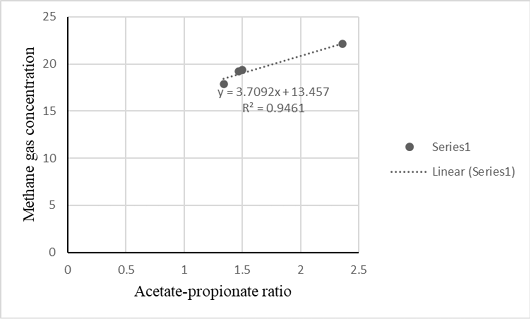
The findings indicated that using a combination of tree legumes significantly (P<0.05) reduced methane gas concentration. The production of methane can be estimated using a VFA profile consisting of acetic, propionic, and butyric acids. This method produces accurate results and a high measurement coefficient . The acetate-propionic ratio is strongly linked to methane production (Figure 1). The acetate-propionic ratio and methane are positively correlated, indicating that the lower the acetate-propionic ratio, the lower the methane concentration ; Walles et al., 2017). Palangi et al. (2022) explain that the formation of acetate and butyrate generates H2, creating a chance for methanogenic bacteria to transform it into methane. Propionate formation requires H2, leading to the reduction of methane production. McDonald et al. (2022) reported that decreased methane gas production in the rumen could boost feed energy, providing a positive effect on livestock productivity. The present study demonstrated that Acacia supplementation resulted in the lowest methane production among all treatments. This finding agrees with previous studies reporting that condensed tannins suppress methane formation by directly inhibiting methanogenic archaea and indirectly decreasing protozoal populations that maintain symbiotic relationships with methanogens ; . Condensed tannins may also reduce fiber degradation and hydrogen availability, thereby limiting methane synthesis . Surprisingly, combining Acacia with Indigofera did not further decrease methane production. One possible explanation is that the inclusion of Indigofera, a protein-rich legume containing lower concentrations of condensed tannins but appreciable levels of saponins, diluted the overall tannin concentration in the diet while increasing substrate fermentability. Enhanced fermentation may have generated additional hydrogen, partially offsetting the anti-methanogenic effect of condensed tannins. Similar non-additive responses among plant secondary metabolites have been reported previously, suggesting that the interaction between tannins, saponins, and nutrient composition is more complex than a simple synergistic relationship ; . Higher methane gas production represents a lower feed efficiency. Methane gas productivity can be influenced by secondary metabolic compounds (phytochemicals) such as tannins and saponins. Ribeiro et al. (2016) reported that secondary metabolites such as tannins and saponins reduced CH4 emissions by inhibiting rumen ciliate protozoa. Ramírez-Restrepoa et al. (2016) suggested that the different impacts of tannins on methane gas could result from their chemical structure and concentration. Valenzuela Grijalva et al. (2017) reported that saponins affect methane gas by showing that tea saponins can inhibit protozoan activity through impacting cell membrane integrity. Jayanegara et al. (2020) found a positive correlation between methanogenesis and protozoa, utilizing the biological properties of saponins to reduce methane emissions. This suppression is achieved by decreasing the total population of rumen protozoa as well as modulating rumen fermentation patterns to inhibit methanogenic bacteria from producing methane.
The increased bacteria population was due to the lower fiber fraction content of tree legumes compared to swamp forage haylage, as presented in Table 1, leading to a higher proportion of soluble carbohydrates. Furthermore, the high nitrogen (CP) and soluble carbohydrate content in tree legumes stimulated greater microbial biomass production, leading to higher fermentation activity. This was clear from the elevated DMD value, N-NH3, and T-VFA levels within optimal limits, sufficiently supporting increased microbial protein synthesis. The observed increase in digestibility was consistent with increased microbial protein synthesis ; . The high total bacterial count in the tree legume treatment (R1 and R3) was due to the phytogenic feed activity stimulating the rumen system to function optimally, increasing the rumen microbial population. Additionally, a high overall population of rumen bacteria was observed alongside a low protozoan population. The described condition suggested that fewer rumen microorganisms were preyed on by protozoa, thereby increasing the total rumen microbial population. Found that protozoa contributed 10-40% of total rumen nitrogen. Reducing the protozoan population would reduce predation and bacterial lysis, leading to lower protein breakdown product release ; .
This study showed that protozoan populations decreased with the combination of tree legumes due to the presence of phytochemical compounds (saponins) with a defaunation effect, allowing protozoan cell lysis. A study by Ramírez-Restrepo et al. (2016) supported these results, showing that tea leave saponins had the potential to be used as antiprotozoals. Saponins react with cholesterol in protozoan membranes to increase the permeability of cell walls, inhibiting protozoan activity. Additionally, Riswandi et al. (2025) confirmed the results, stating that the combination of tree legumes (Leucaena leucocephala and Indogofera) as phytogenic feed sources in swamp forage-based rations could reduce protozoan populations. Jayanegara et al. (2014) stated that the presence of secondary compounds in Indigofera plants with tannin and saponin content of 2.9 g/kg and 2.6 mg/kg DM, respectively, had an antiprotozoal effect and was used as a defaunation agent, providing a reduction impact on protozoan populations.
CONCLUSION
In conclusion, the present study demonstrated that supplementation with Acacia and Indigofera leaves influenced in vitro rumen fermentation and methane production. While Acacia supplementation alone achieved the greatest reduction in methane production, the combination of Acacia and Indigofera improved nutrient digestibility and fermentation characteristics, indicating a better overall nutritional response. Therefore, the combined treatment may represent the most suitable feeding strategy when both rumen fermentation efficiency and methane mitigation are considered. Further in vivo studies using swamp forage-based diets are required to confirm these findings under practical production conditions.
ACKNOWLEDGMENT
The authors are grateful to the Directorate General of Research and Community Service, Higher Education Ministry, Science, and Technology, for the support provided through the Fundamental Research Scheme in conformity with the Implementation Contract for the State University Operational Assistance Program for the 2025 Fiscal Year Research Program No: 109/C3/DT.05.00 /PL/2025.
Novelty Statement
To the best of our knowledge, this is the first study in Indonesia investigating the effect of a combination of acacia and indigofera leaves in a haylage-based ration on rumen fermentability and methane gas concentration.
Author’s Contribution
Riswandi contributed to formulating the research problem, the initial conceptualization and research design. Asep Indra M. Ali and Muhakka helped with the experiments, reviewed the experimental design, and analyzed the data. Riswandi and Arfan Abrar participated in data analysis review and interpretation, and manuscript revision. All authors have read and approved the final version of the manuscript. The authors declare that they have no competing interests concerning the publication of this manuscript.
Generative AI and AI assisted technology statement
The authors declare that no generative AI and AI assisted technology was used in the creation of this manuscript.
Conflict of interest
The authors have declared no conflict of interest.
Figures
Figure 1:.
Correlation graph of acetate-propionate ratio with methane gas concentration.
References
AOAC (2005). Official Methods of Analysis of AOAC International. 18th ed. AOAC International: Gaithersburg, MD.
Aragadvay-Yungán RG, Barros-Rodríguez M, Ortiz, Carro MD, Navarro Marcos C, Elghandour MMMY, Salem AZM (2021). Mitigation of ruminal methane production with enhancing the fermentation by supplementation of different tropical forage legumes. Environ. Sci. Pollut. Res., 29: 3438–3445. https://doi.org/10.1007/s11356-021-15749-7[CrossRef]
Beauchemin KA, Kreuzer M, O’Mara F and McAllister TA (2008). Nutritional management for enteric methane abatement: A review. Austral. J. Exp. Agric., 48(2): 21–27. https://doi.org/10.1071/EA07199[CrossRef]
General Laboratory Prosedures (1966). Department of dairy science. University of Wisconsin, Madison.
Jayanegara A, Leiber F, Kreuzer M (2012). Meta-analysis of the relationship between dietary tannin level and methane formation in ruminants from in vivo and in vitro experiments. J. Anim. Physiol. Anim. Nutr., 96(3): 365–375. https://doi.org/10.1111/j.1439-0396.2011.01172.x[CrossRef]
Jayanegara A, Makkar HPS, Becker K (2015). Addition of purified tannin sources and polyethylene glycol treatment on methane emission and rumen fermentation in vitro. Media. Petern., 38: 57-63. https://doi.org/10.5398/medpet.2015.38.1.57[CrossRef]
Jayanegara A, Sujarnoko TUP, Ridla M, Kondo M, Kreuzer M (2019). Silage quality as influenced by concentration and type of tannins present in the material ensiled: A meta analysis. J. Anim. Physiol. Anim. Nutr., 103: 456-465. https://doi.org/10.1111/jpn.13050[CrossRef]
Jayanegara A, Wina E, Takahashi J (2014). Meta-analysis on methane mitigating properties of saponin-rich sources in the Rumen: Influence of addition levels and plant sources. Asian-Australas. J. Anim. Sci., 27(10): 1426–1435. https://doi.org/10.5713/ajas.2014.14086[CrossRef]
Jayanegara A, Yogianto Y, Wina E, Sudarman A, Kondo M, Obitsu T, Kreuzer M (2020). Combination effects of plant extracts rich in tannins and saponins as feed additives for mitigating in vitro ruminal methane and ammonia formation. Animals, 10(1531): 1-14. https://doi.org/10.3390/ani10091531[CrossRef]
Min BR, Barry TN, Attwood GT, McNabb WC (2003). The effect of condensed tannins on the nutrition and health of ruminants fed fresh temperate forages: A review. Anim. Feed Sci. Technol., 106(1–4): 3–19. https://doi.org/10.1016/S0377-8401(03)00041-5[CrossRef]
Moss AR, Jouany JP, Newbold J (2000). Methane production by ruminants: Its contribution to global warming. Ann. Zoot., 49: 231-253. https://hal.science/hal-00889894v1/document https://doi.org/10.1051/animres:2000119[CrossRef]
Nadir M, Syahrir S, Munasirah AL, Warni I, Sari N, Satriani, Sulistiawati A, Anugrah AP (2024). Exploration of nutritional value of Indigofera shoot leaves based on different ages. Int. J. Chem. Biochem. Sci., 25(19): 773-778 https://doi.org/10.62877/91-IJCBS-24-25-19-91.[CrossRef]
Noer S, Pratiwi RD, Gresinta E (2018). Penetapan kadar senyawa fitokimia (tanin, saponin dan flavonoid sebagai kuersetin) pada ekstrak daun inggu (Ruta angustifolia L.). Eksakta J. Ilmu-Ilmu MIPA, 8(1): 19-29. https://doi.org/10.20885/eksakta.vol18.iss1.art3[CrossRef]
Ogimoto K, Imai S (1988). Atlas of ruminant microbiology. Tokyo: Japan Sci Press, Japan.
Palangi V, Taghizadeh A, Abachi S and Lackner M (2022). Strategies to mitigate enteric methane emissions in ruminants: A review. Sustainability, 14(20): 1–15. https://doi.org/10.3390/su142013229[CrossRef]
Paswan VK, Kumar K, Shehata AM (2022). Rumen microbiology and microbial degradation of feedstuffs BT- animal manure: Agricultural and biotechnological applications. In: Mahajan, S., Varma, A., Eds., Springer International Publishing: Cham, pp. 45–60. https://doi.org/10.1007/978-3-030-97291-2_4[CrossRef]
Patra AK, Saxena J (2010). A new perspective on the use of plant secondary metabolites to inhibit methanogenesis in the rumen. Phytochemistry, 71(11–12): 1198–1222. https://doi.org/10.1016/j.phytochem.2010.05.010[CrossRef]
Patra AK, Saxena J (2011). Exploitation of dietary tannins to improve rumen metabolism and ruminant nutrition. J. Sci. Food Agric., 91(1): 24–37. https://doi.org/10.1002/jsfa.4152[CrossRef]
Pudota BA, Tambireddy N, Chennu R, Chethurajupalli L, Shaik H, Nadella RK, Chatterjee NS, Paturi AP (2025). Exploring the perspectives of phytobiotics and their role in aquaculture: Present status and future trends. Microbe, 8: 100496. https://doi.org/10.1016/j.microb.2025.100496[CrossRef]
Ramírez-Restrepo CA, Tan C, O’Neill CJ, López-Villalobos N, Padmanabha J, Wang J, and McSweeney CS (2016). Methane production, fermentation characteristics, and microbial profiles in the rumen of tropical cattle fed tea seed saponin supplementation. Anim. Feed Sci. Technol., 216: 58–67. https://doi.org/10.1016/j.anifeedsci.2016.03.005[CrossRef]
Rastgoo M, Kazemi-Bonchenari M, HosseinYazdi M, and Mirzaei M (2020). Effects of corn grain processing method (ground versus steam-flaked) with rumen undegradable to degradable protein ratio on growth performance, ruminal fermentation, and microbial protein yield in Holstein dairy calves. Anim. Feed Sci. Technol., 269: 114646. https://doi.org/10.1016/j.anifeedsci.2020.114646[CrossRef]
Ribeiro RS, Terry SA, Sacramento JP, Silveira SRE, Bento CBP, Da Silva EF, Mantovani H C, Da Gama MAS, Pereira LGR, Tomich TR, Maurício RM and Chaves AV (2016). Tithonia diversifolia as a supplementary feed for dairy cows. PLoS One, 11(12): 1–18. https://doi.org/10.1371/journal.pone.0165751[CrossRef]
Riswandi R, AIM, A, Muhakka M, Imsya A, and Wijaya A (2023). The effect of swamp forages combination in rations on rumen fermentability characteristics and in vitro methane production. Adv. Anim. Vet. Sci., 11(4): 672–678. https://doi.org/10.17582/journal.aavs/2023/11.4.672.678[Full text][CrossRef]
Riswandi R, Ali AIM, Imsya A (2021). Effects of saccharomyces cerevisiae and Aspergillus oryzae supplementation in swamp roughage haylage based rations on in vitro rumen fermentation characteristics and methane gas emission. Adv. Anim. Vet. Sci., 9(8): 1143-1149. https://doi.org/10.17582/journal.aavs/2021/9.8.1143.1149[Full text][CrossRef]
Riswandi R, Priyanto L, Imsya.A, Nopiyanti M (2017). In vitro digestibility of fermented Hymenacne acutigluma-based rations supplemented with different legumes. J. Vet., 18(2): 303-311. https://doi.org/10.19087/jveteriner.2017.18.2.303[CrossRef]
Riswandi, Ali AIM, Sandi S, Muhakka, Pratama ANT (2025). Effect of combining leucaena and Indigofera leaves in swamp grass-based diets on digestibility, rumen fermentability and methanogenesis. Iraqi J. Agric. Sci., 56(1): 391-401. https://doi.org/10.36103/kk0g8487[CrossRef]
Salim M A, Hariyono MAS (2025). The beneficial impact of legume supplementation on nutrient intake, digestibility, growth and reproductive performances of goats: A brief review. J. Adv. Vet. Res., 15(1): 148-152. https://advetresearch.com/index.php/AVR/article/view/2074
Sari RM, Zain M, Jamarun N, Ningrat RWS, Elihasridas and Putri EM (2022). Improving rumen fermentation characteristics and nutrient digestibility by increasing rumen degradable protein in ruminant feed using Tithonia diversifolia and Leucaena leucocephala. Int. J. Vet. Sci., 11(3): 353–360. https://doi.org/10.47278/journal.ijvs/2021.121[CrossRef]
Solomon R, Wein T, Levy B, Eshed S, Dror R, Reiss V, Zehavi T, Furman O, Mizrahi I, and Jami E (2022). Protozoa populations are ecosystem engineers that shape prokaryotic community structure and function of the rumen microbial ecosystem. Int. Soc. Microbial Ecol., 16(4): 1187–1197. https://doi.org/10.1038/s41396-021-01170-y[CrossRef]
Suharlina, Astuti DA, Nahrowi, Jayanegara A, Abdullah L (2016). In vitro evaluation of concentrate feed containing Indigofera zollingeriana in goat. J. Indones. Trop. Anim. Agric., 41(4): 196-203. https://creativecommons.org/licenses/by-sa/4.0/ https://doi.org/10.14710/jitaa.41.4.196-203[CrossRef]
Sujarnoko TUP, Ridwan R, Nahrowi, Jayanegara A (2020). Extraction of tannin from acacia (Acacia mangium) bark and its use as a feed additive for protecting in vitro ruminal degradation of tofu dregs. Adv. Anim. Vet. Sci., 8(7): 761-765. https://doi.org/10.17582/journal.aavs/2020/8.7.761.765[Full text][CrossRef]
Tegegne F, Kitaw G, Tileye M (2015). Review on the nutritive value of some selected acacia species for livestock production in dryland areas. J. Nutr. Food Sci., 3(2): 1-5.
Theodorou MK, Williams BA, Dhanoa MS, McAllan AB, France J (1994). A simple gas production method using a pressure transducer to determine the fermentation kinetics of ruminant feeds. Anim. Feed Sci. Technol., 48(3–4): 185–197. https://doi.org/10.1016/0377-8401(94)90171-6[CrossRef]
Unnawong N, Cherdthong A, So S (2021). Influence of supplementing Sesbania grandiflora pod meal at two dietary crude protein levels on feed intake, fermentation characteristics, and methane mitigation in Thai purebred beef cattle. Vet. Sci., 8(2): 35. https://doi.org/10.3390/vetsci8020035[CrossRef]
Valenzuela-Grijalva NV, Pinelli-Saavedra A, Muhlia-Almazan A, Domínguez-Díaz D, Gonz alez-Ríos H (2017). Dietary inclusion effects of phytochemicals as growth promoters in animal production. J. Anim. Sci. Technol., 59: 8. https://doi.org/10.1186/s40781-017-0133-9[CrossRef]
Van Soest PJ (1994). Nutritional ecology of the ruminant. 2nd ed. Comstock Publishing Associates. A. Division of Cornell University Press. Ithaca and London. https://doi.org/10.7591/9781501732355[CrossRef]
Wallace RJ, Snelling TJ, McCartney CA, Tapio I, Strozzi F (2017). Application of metaomics techniques to understand greenhouse gas emissions originating from ruminal metabolism. Genet. Select. Evol., 49(1): 27. https://doi.org/10.1186/s12711-017-0285-6[CrossRef]
Zain M, Putri EM, Rusmana WSN, Erpomen, Makmur M (2020). Effects of supplementing Gliricidia sepium on ration based ammoniated rice straw in ruminant feed to decrease methane gas production and to improve nutrient digestibility (in-vitro). Int. J. Adv. Sci. Eng. Inf. Technol., 10(2): 724-729. https://doi.org/10.18517/ijaseit.10.2.11242[CrossRef]
The Effect of Acacia and Indigofera Leaves Combination in Haylage-Based Rations on Rumen Fermentability and Methane Gas Concentration · ResearchersLinks