
Sweet corn (Zea mays L. var. saccharata) is an important palatable grain grown for human consumption, for both fresh and processed foods. In this study, efficacy of Azolla pinnata aqueous extract on the growth and yield of sweet corn through foliar application was evaluated. Independent variables were application rates of urea (120, 110, 100, 90, 80, and 0 kg ha-1) and aqueous Azolla extract (AE i.e. 0, 10, 20, 30, 40, and 100%, v/v). Common variables were 60 kg/ha triple superphosphate (TSP), 90 kg/ha muriate of potash (MOP), and watering. The dependent variables were growth and yield parameters of sweet corn. One-way ANOVA was used for analysis, where significant differences between treatments were determined using the Least Significant Difference (LSD) Test (SAS 9.4 software). Results revealed significant differences (p <0.05) in sweet corn that received AE foliar spray in plant height (p = 0.0098), stem diameter (p = 0.0419), leaf area (p = 0.0364), cob length (p = 0.0077), and number of grains per cob (p = 0.0207) compared to the control plant received an optimal rate of 120 kg ha-1 urea without AE. No significant differences were recorded for chlorophyll content, cob fresh weight, and weight of 100 grains. It is found that sweet corn received high N with the lowest AE (110 kg ha-1 urea + 10% AE) enhanced vegetative growth in plant height, stem diameter, leaf area, cob length, and grain yield. In sum, AE of Azolla is a potential and environmentally friendly organic fertilizer that is easy to grow, prepare, and apply by growers, in compensation for the reduction of 10 kg ha-1 urea used in sweet corn cultivation.
Special Issue (UniSZA), Malaysia: ICAFT 2023: 3rd International Conference on Agriculture, Animal Sciences & Food Technology · Volume 40, Issue 1, 9 October 2024 · Open Access
The Effect of Azolla (Azolla pinnata) Extract on the Growth and Yield of Sweet Corn under Reduced Nitrogen Fertilization Practice
· ·
Affiliations & Notes ⌄
- 1Crop Production Programme, Faculty of Sustainable Agriculture, Universiti Malaysia Sabah, Locked Bag No.3, 90509 Sandakan, Sabah, Malaysia. , *Correspondence | Clament Fui Seung Chin, Crop Production, Faculty of Sustainable Agriculture, Universiti Malaysia Sabah, Sandakan, Sabah, Malaysia
- 2Email: clament@ums.edu.my
Article Info ⌄
- Journal:
- Sarhad Journal of Agriculture
- Published:
- 9 October 2024

From the article
- The efficacy of aqueous A. pinnata extract (AE), a N-fixing cyanobacteria-associated floating fern, in substituting chemical fertilizer (urea) on sweet corn growth and yield was conducted.
- Propagation of A. pinnata at the plot and the growth of sweet corn until harvested are shown in Figure 1.
- Folia application of A. pinnata AE has been shown to increase plant height, stem diameter, leaf area, cob length, and number of grains in sweet corn.
- The combination of soil dressing fertilization (110 kg ha-1 urea, 60 kg ha-1 TSP, 90 kg ha-1 MOP) with foliar application of 10% AE seems promising to produce better growth and yield in sweet corn.
Selected from the article's own text.
Abstract
Introduction
Corn (Zea mays L.) is the third most important grain crop besides rice and wheat cultivated worldwide by farmers under various spectrums of soil and climate . Corn is known as a queen of cereals due to its high genetic yield potential and productivity, as well as a food source and livestock feed as compared to other cereal crops . Meanwhile, sweet corn (Zea mays L. var. saccharata) is an important palatable grain grown for human consumption, for both fresh and canned food industries . The consumer and industrial demand for sweet corn is projected to increase twofold by 2025 in the developing world . Such demands may be achieved with the intervention of technologies such as breeding and release of single hybrid seed , via the increment of planting areas, and precision in agronomic practices such as fertilization, irrigation, and pest control programs.
In Malaysia, sweet corn and field corn have been gaining attention lately due to issues rising throughout recent years. For example, the rising prices of corn imports for livestock feed as complained by the Federation of Livestock Farmers Association of Malaysia (FLFAM) in June 2016. Malaysian poultry farmers have been under stress as corn is the main raw material in poultry food formulation of between 60% and 65%. This was followed by the cost increment of fertilizers and pesticides to an extent of 57% during the COVID-19 pandemic, which burdened the farmers and harmed agricultural-related activities .
Substituting chemical fertilizer with organic fertilizer is a sustainable approach that can improve crop yields, soil organic content, and soil microbial diversity . The floating fern Azolla pinnata (Azollaceae), sometimes regarded as waterweed on ponds, is a small green plant with potential used in crop cultivation as an organic amendment . Its ability to fix atmospheric N is achieved through its symbiotic association with a N-fixing cyanobacterium Anabaena azollae . This led to rapid growth of Azolla with a short life cycle (7–20 d), and capable of producing fresh green biomass of around 390 t ha-1 annually . In Asia, Azolla is therefore one of the most used green manures for rice crop due to its N-fixing capacity and ability to scavenge nutrients from soil and water . Cultivation of rice crops with biofertilization of A. pinnata has been shown to increase yield, typically the plant height, number of effective tillers, dry matter, and N-content of rice plant .
Sweet corn cultivation is distinct from rice crops as the planting system does not require an aquatic environment that could enhance the coexistence and cocultivation of sweet corn and Azolla. The potential use of aqueous Azolla extract on growth performance and yield of sweet corn is promising but its optimum concentration for foliar and field application remains to be determined. Therefore, the present study was undertaken to examine the feasibility of using Azolla as a nutritional alternative to sweet corn. The main objective of this work was to study the efficacy of using A. pinnata extract on sweet corn growth and yield under reduced nitrogen fertilization practices.
Materials and Methods
Sweet corn cultivation and agronomic practices
The study was conducted at the Faculty of Sustainable Agriculture (FSA), Universiti Malaysia Sabah (UMS), Sandakan Campus, Sabah (5°55’4” N 118°0’8” E), in an insect-proof net house No. 2 from Aug. to Nov. 2022. The planting medium was used, a mixture of topsoil and goat manure compost (3:1, v/v) obtained from ruminant house within the campus. The media was sun-dried for a week before being ground into a fine powder using the Red Roo CMS80 Chipper Mulcher. The pots used were 34 cm in diameter and 30 cm in height, each filled with 11 kg of soil mixture. In this study, the super sweet (var. saccharata) was used as a test crop. Three seeds were directly sown and germinated in each pot to avoid transplanting shock. After 7 days, seedlings were culled leaving a single seedling for the current study. The number of pots used was 30 and arranged separately 50 cm in rows and 75 cm between rows . Watering is done twice a day in morning and afternoon. Continuous monitoring was conducted throughout the study for weeds and disease management according to cultural control practices.
Azolla cultivation and extract preparation
A. pinnata was used in this study, which was propagated in a 200-gallon polyethylene (PE) tank measuring 82 cm in height and 156 cm in diameter, with a water depth of 50 cm. The water in tank was pre-fertilized with goat manure compost (5g) before fresh Azolla (50g) was sprinkled onto the water surface . The tank was filled with Azolla and ready to be harvested within 3 weeks where it was brought back to the laboratory, washed under running tap water to remove dirt, and consecutively air dried under the shade for 72 hours until a uniform dark brown dried Azolla biomass was obtained.
Dried Azolla was crushed using a pestle and mortar before being extracted with distilled water (1:1, w/v) for an hour under continuous stirring with a magnet stirrer at room temperature (30 °C). After filtering with a muslin cloth, the resulting filtrate was considered 100% Azolla Extract (AE), and further diluted with adding distilled water to obtain 40%, 30%, 20%, and 10% of AE, respectively. The proximate N-content in AE’s was determined using a CHN628 analyzer (Model 622-000-000, LECO, Germany). For sample analysis, 0.1005 g of each extract was weighted using an analytical balance and loaded into an individual capsule tin. The sample was transferred into CHN628 analyzer, and result was recorded 5 min after analysis (Eksperiandoya et al., 2011). All extracts were preserved by cooling in the refrigerator (5.0±1.0 °C) until further usage.
Chemical and bioorganic fertilization
Nitrogen was sole independent variable in this study and its effect on dependent variables such as vegetative growth and yield were investigated by substituting the chemical fertilizer urea with AE. Hence, the amount of urea used was different for each treatment, ranging from 0 to 120 kg ha-1, and the Azolla extract used ranged from 0 to 100% (Table 1). The application rate of phosphorus and potassium fertilizers was 60 and 90 kg ha-1 and considered from Triple Superphosphate (TSP) and Muriate of Potash (MOP) in all treatments. The combination of chemical fertilizers and Azolla extract used in this study were summarized in the Table 1.
Application of chemical fertilizers was split into three equal rounds on 15, 30, and 45 days after sowing via the top-dressing method, representing vegetative growth, reproductive, and flowering stages respectively . Application of AE on treatment plants was done by foliar spray method at 3 days after the application of chemical fertilizer, which were on 18, 33, and 48 days . A total of 30 mL of AE was sprayed during the vegetative growth, and its volume was increased to 50 mL of AE at reproductive stage to cover the new-growth shoots and leaves regardless of AE concentration used. Sweet corn grown solely under optimum N application was served as control 1 (C1), where AE was replaced using the distilled water. Pot received only AE 100% without urea was served as control 2 (C2).
Harvesting and data collection
Growth parameters including chlorophyll content (SPAD), plant height (cm), stem diameter (cm), and leaf area (cm2) were monitored weekly until week 8, when sweet corn reached the physiological maturing stage at 56 DAS. The average chlorophyll content of each replicated plant was measured with SPAD-502 meter (Konica Minolta, Japan) by selecting three leaves randomly from middle until the upper part of a sweet corn plant. Plant height was recorded from ground level or from the collar (point on stem where roots begin to grow), to the left base of the top growing leaf using a measuring tape. Stem diameter was measured at 3 different points (upper, middle, lower) on individual plants using a digital caliper and data were presented as average diameter for each plant. Three fully expanded green leaves were randomly selected on each plant and length (L) with maximum width (W) were determined by measuring tape to obtain the estimated average leaf area using formula: leaf area (cm2) = L × W .
For yield components, cobs were generally harvestable once the silk appeared brownish and dried with the husk remaining green. After removing the cob, fresh weight (g) of the corn is weighed using a scale Electronic Balance. The measurement for cob length (cm) was taken from end to end of cob using a ruler. The number of grains per cob was counted from the top to end of the cob manually by using a marker pen. The weight of 100 corn grains (g) was calculated by taking corn grains randomly using forceps and grain weight was weighed using an Analytical Balance (Mettler Toledo, Switzerland).
Table 1: Treatment combinations of urea and Azolla extract for sweet corn per pot.
| Treatment | Description | Urea (kg ha-1) | Aqueous azolla extract (%) |
| T1 | Optimum N (control 1, C1) | 120 | 0 |
| T2 | High N with lowest AE | 110 | 10 |
| T3 | Medium N with low AE | 100 | 20 |
| T4 | Low N with medium AE | 90 | 30 |
| T5 | Lowest N with high AE | 80 | 40 |
| T6 | Highest AE (control 2, C2) | 0 | 100 |
Experimental design and statistical analysis
A total of six treatments were there including two controls in this study. All treatments were arranged using a completely randomized design (CRD) with five replications for each treatment within the insect-proof net house. Data of growth and yield obtained at week 8 were analyzed using SAS version 9.4. Data collected were subjected to variance analysis by one-way ANOVA. When F was significant at a level, tests between treatments were determined by using the LSD test (p ≤ 0.05).
Results and Discussion
The efficacy of aqueous A. pinnata extract (AE), a N-fixing cyanobacteria-associated floating fern, in substituting chemical fertilizer (urea) on sweet corn growth and yield was conducted. Propagation of A. pinnata at the plot and the growth of sweet corn until harvested are shown in Figure 1. The proximate nitrogen contents (w/v) in the AE as revealed by the CHN628 analyzer (LECO, Germany) were as follows: 10% AE (3.9 mg/g), 20% AE (4.1 mg/g), 30% AE (4.9 mg/g), 40% AE (5.6 mg/g), and 100% AE (6.0 mg/g).
Effects of aqueous Azolla extract on sweet corn growth
Sweet corn plants received AE showed statistically significant differences between treatments in plant height (p < 0.05, p = 0.0098), stem diameter (p < 0.05, p = 0.0419), and leaf area (p < 0.05, p = 0.0364) after 8 weeks of cultivation at the physiological maturing stage. Plant height in treatments substituted with lowest to highest AE (T2 to T6) was significantly higher than plant received solely optimum N fertilization (T1). Mean plant height recorded for AE treated sweet corn ranged between 274.8 to 294.4 cm with plant received high N + lowest AE (T2) being the highest compared to T1 which was much lower at 236.0 cm. There was no significant difference in mean plant height between sweet corn irrespective of AE concentration used in this study (Figure 2a).
Sweet corn stem diameter received high N + lowest AE (T2) again recorded the highest mean value of 1.6 cm in diameter, significantly thicker than plants grown under T1, T3, T4, and T6 (mean 1.28 to 1.36 cm). Meanwhile, plant received a combination of lowest N + high AE (T5) has no significant difference from all others with a mean value of 1.42 cm (Figure 2b). For leaf area, plants received high N + lowest AE (T2), medium N + low AE (T3), and lowest N + high AE (T5) had significantly wider estimated leaf area (mean 838.14 to 866.94 cm2) compared to plant fertilized with optimum N without AE (T1, mean 728.10 cm2), as well as plant received highest AE without urea (T6, mean 732.58 cm2) (Figure 2c). Total chlorophyll content showed no statistically significant difference (p > 0.05, p = 0.8646) among the treatments until week 8. The mean chlorophyll content of all treatments falls between 55.82 to 57.62 as recorded by the SPAD meter.
Nearly every aspect of sweet corn development is influenced by N levels. Cultivation crops typically absorb N and other essential minerals through the root system from planting medium or absorption in the leaf via foliar, or both. In this study, sweet corn receiving both urea and AE foliar spray treatments were significantly higher in height, with plants received 110N: 60P: 90K kg ha-1 + 10% AE (T2, mean 294.4 cm) being the highest among all than T1 (mean 236.0 cm) plants that received optimum fertilization rate at 120N: 60P: 90K kg ha-1. According to Iqbal et al. (2015), increasing the usage of significant amounts of nutrients, particularly nitrogen, will improve the coordination of vegetative development and plant reproduction. A combination of chemical fertilizers and plant-based extract in crops was reported to produce better growth than just using chemical fertilizer alone . Similar results were also reported by Singh et al. (2018) in rice cultivation where combined application of Azolla biomass and urea significantly increased plant height.
Based on results obtained from the current study, together with several reports that investigate the efficacy of AE upon application on corn, rice, sorghum, and wheat ; ; ; ; ; ; ; ; ; , the grass family (Poaceae) seems to respond positively towards aqueous extract of A. pinnata in terms of plant height. The potential foliar application of AE in enhancing the vegetative growth of Napier grass (family Poaceae), the main grazing grass cultivated for livestock animals and dairy-related industries, is promising and worth investigating in near future.
Stem diameter is an important structure for plant nutrient uptake and photosynthate translocation. Besides containing organic-rich protein as contributed by the symbiont N-fixing cyanobacteria, AE is also known to contain abundant sources of macro- and micronutrients . Although foliar application of nitrogen has been reported to increase plant height, stem diameter, as well as fresh and dry weight of corns ; ; , very limited studies were focus on the optimization of AE foliar application towards sweet corn growth. According to the current findings in corn stem diameter, an ideal AE concentration has notably caused a difference in stem diameter between untreated and treated corn plants. Results suggest that a combination of folia application (10% AE) together with soil dressing fertilization (110N: 60P: 90K kg ha-1 urea) is an optimum concentration capable of enhancing stem development in sweet corn. Such findings would open another research question of how the sugarcane (family Poaceae) stems in response to AE application.
Leaf area is an important component in plant growth analysis, and it has a great influence on the photosynthate, growth rate, and plant transpiration. Spraying AE (10 to 40%) directly on sweet corn could theoretically increase total N in leaves with minimal loss from leaching. This was supported by Sarakhsi et al. (2010) and Hanafy et al. (2018) where leaf growth and leaf surface area were significantly increased after exposure to foliar spray. Buono et al. (2022) theorized that increase in leaf surface area observed in corn plants after plant extract treatment may be brought on by excessive absorption of nutrients. It is worth mentioning that, in this study, although there was no significant difference in the chlorophyll contents across treatments, plants with no chemical nitrogen input for uptake via root, showed no sign of chlorosis when foliar fertilization was carried out using 100% AE (T6). A similar observation was also reported by Maswada et al. (2020) when growing sweet corn under water and N deficiencies in the presence of Azolla ficuloides. Hence, a treatment rate consisting of high N (110 kg ha-1) + lowest AE (10%) can be recommended to farmers in sweet corn cultivation.
Interestingly, several studies have reported the presence of plant growth regulators such as cytokinin, jasmonic acid, and salicylic acid in Azolla extract . Leaf surface area can be affected by cytokinin, a plant hormone that promotes cell proliferation, cell expansion, and prolongs the function of photosynthetic cells (or delays leaf senescence) . Results obtained in this study were generally in agreement with the cytokinin effect on plant growth, with treatments received 10–40% AE showing significantly higher plant height, stem diameter, and leaf area. On the other hand, application of 100% AE may contain excessive plant-based secondary metabolites that eventually reverse its growth promotion effects. Overall, spraying sweet corn, or crops with AE may potentially increase plant height, stem diameter, leaf surface area, as well as activation of plant systemic acquired resistance via the induction of jasmonate and salicylate defense response pathways .
Effect of aqueous Azolla extract on sweet corn yield
For yield parameters, a statistically significant difference between treatments was recorded in corn cob length (p < 0.05, p = 0.0077) and total grains (p < 0.05, p = 0.0207). Cob length in treatments substituted with lowest to highest AE (T2 to T6, 17.6 to 18.8 cm) was significantly longer than plant received solely optimum N fertilization (T1, 16.0 cm). There was no significant difference in mean cob length between T2 to T6 (Figure 3). Average total grains number per cob was found significantly higher in plants that received high N + lowest AE (T2, 577.0) and medium N + low AE (T3, 543.8), and lowest in plants that received optimum N (T1, 437.4) and 100% AE (T6, 451.6). No statistical difference was found for data recorded on the cob fresh weight (141.57 to 211.50 g; p > 0.05, p = 0.0677) and weight of 100 grains (17.39 to 25.09 g; p > 0.05, p = 0.2485).
Sweet corn requires high amounts of N fertilizer to achieve maximum yield. It is well known that N-levels had a significant effect on cob length and grain yield . According to a similar study on seaweed extract by Jader et al. (2019), an increase in cob length in corn following foliar application is also attributed to the plant hormones cytokinin and mineral nutrients (boron, magnesium, manganese, and potassium) that are crucial for cell development and grain formation. In this study, aqueous AE seems to improve the cob length and yield, but its mechanism has not been investigated. It is believed application of AE could promote better plant growth through direct foliar fertilization effect and indirect supplementation of plant growth regulators, with the latter not present in excessive levels.
Conclusions and Recommendations
Azolla pinnata is a N-rich aqueous fern that coexists with free living N-fixing cyanobacteria. Folia application of A. pinnata AE has been shown to increase plant height, stem diameter, leaf area, cob length, and number of grains in sweet corn. These results are suggested to be attributed to the presence of plant hormones and macro- and microelements in the aqueous extract. The combination of soil dressing fertilization (110 kg ha-1 urea, 60 kg ha-1 TSP, 90 kg ha-1 MOP) with foliar application of 10% AE seems promising to produce better growth and yield in sweet corn. In sum, AE of Azolla is a potential and environmentally friendly organic fertilizer that is easy to grow, prepare, and apply by growers. Future studies of AE on crops such as sugarcane and Napier grass remain to be considered.
Acknowledgments
The work was supported by a grant from The Ministry of Higher Education under the Fundamental Research Grant Scheme (FRGS/1/2018/WAB01/UMS/02/8), and the Universiti Malaysia Sabah internal Research Priority Area Scheme (SBK0419-2018). No conflict of interest was declared.
Novelty Statement
This research reports an optimum concentration of Azolla aqueous extract potentially applied as a foliar biofertilizer to increase the growth and yield of sweet corn.
Author’s Contribution
Mok Sam Lum and Clament Fui Seung Chin: Conceptualization, funding resources, supervision
Nurul Fadhilah binti Aldam: Methodology, writing original draft preparation.
Mok Sam Lum, Nurul Fadhilah binti Aldam and Clament Fui Seung Chin: Validation and statistical analysis.
Clament Fui Seung Chin: Writing review and editing.
All authors have read and agreed to the published version of the manuscript.
Conflict of interest
The authors have declared no conflict of interest.
Figures
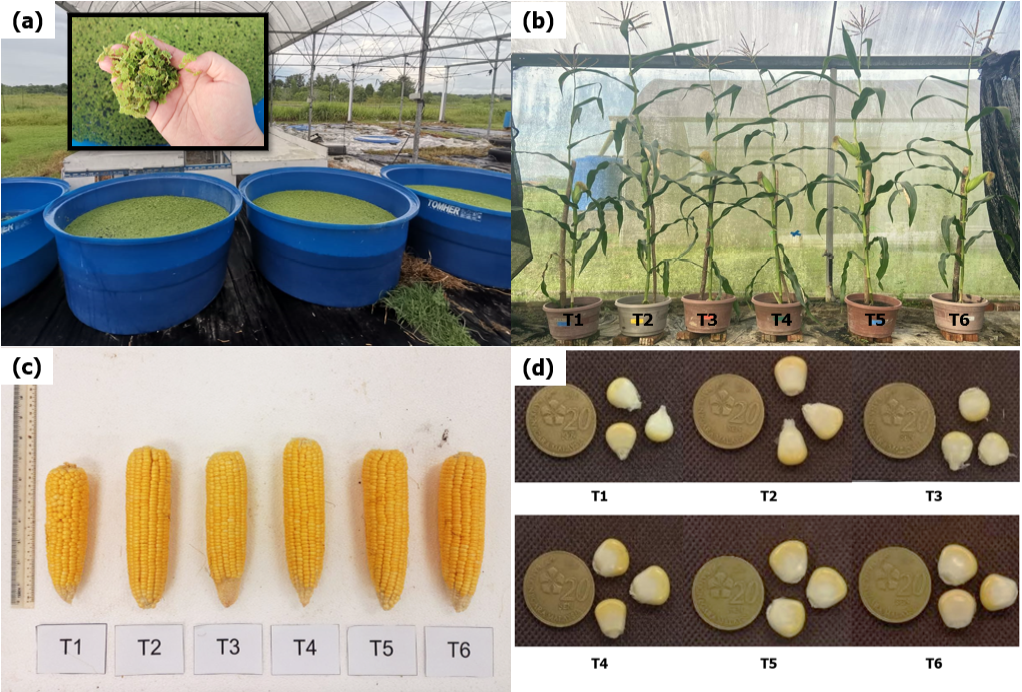
(a) A handful of the water fern Azolla pinnata and mass propagation for aqueous Azolla extract preparation, (b) sweet corn plants on 9-week after planting showing the tassel of male inflorescence (top part) and ear of female inflorescence (middle part), (c) representative mature ear harvested on 10-week after planting from each respective treatment plant and (d) three randomly selected kernels from each treatment plant.
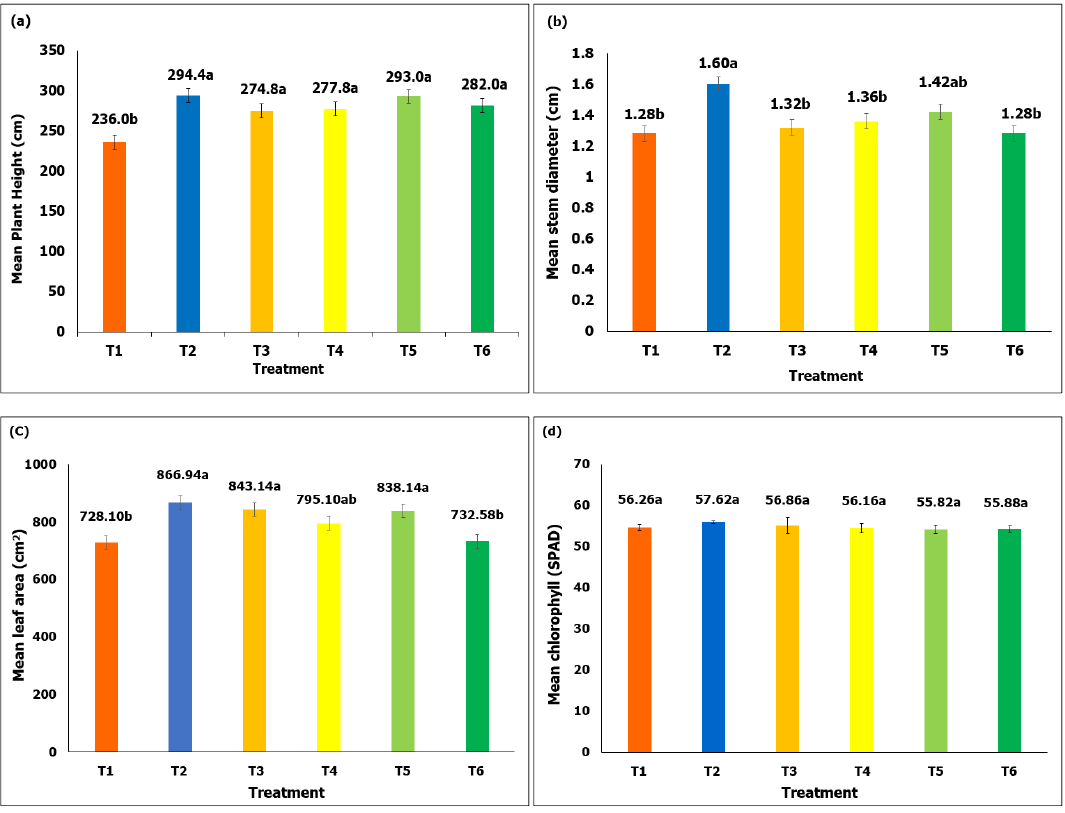
Mean value of growth parameters between treatments on sweet corn (a) Plant height, (b) stem diameter, (c) leaf area, and (d) chlorophyll content. The mean value with the same letter indicates no significant difference at p < 0.05.
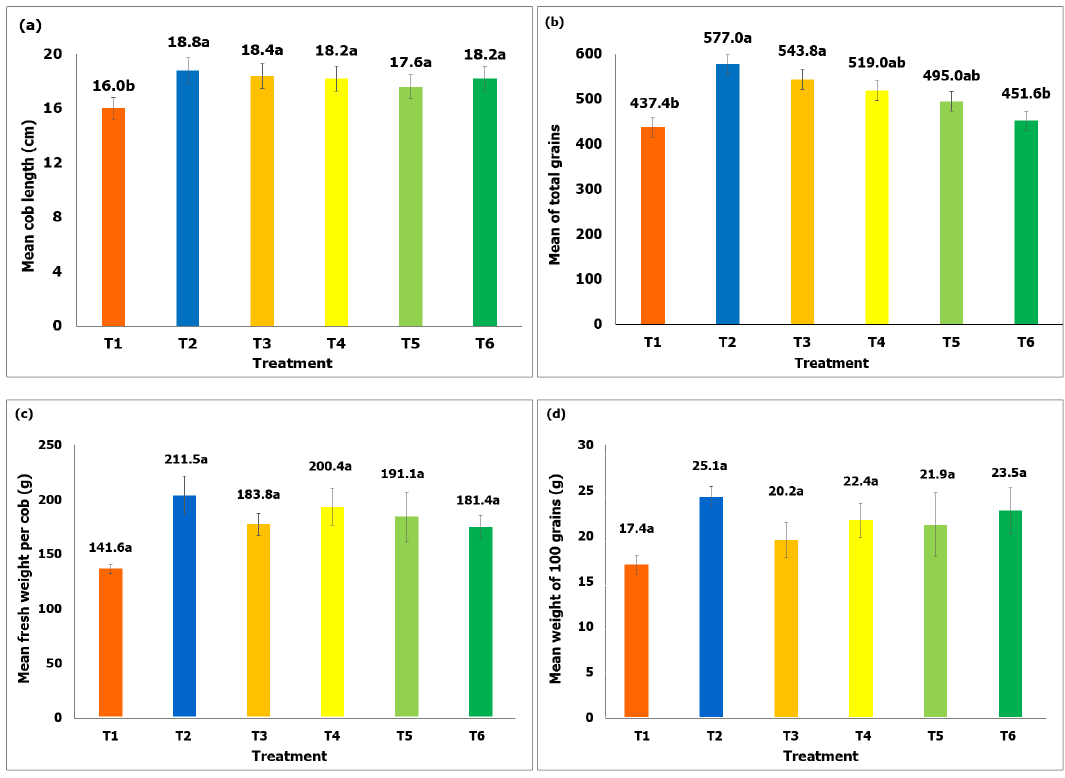
The mean value of yield parameters between treatments on sweet corn (a) cob length, (b) total grains, (c) fresh weight of cob, and (d) weight of 100 grains. The mean value with the same letter indicates no significant difference at p < 0.05.
References
- Adhikari, K., S. Bhandari and S. Acharya. 2021. An overview of azolla in rice production: A review. Rev. Food Agric., 2(1): 4–8. https://doi.org/10.26480/rfna.01.2021.04.08[CrossRef]
- Altai, D.S.K., A.R. Alhasany, A.H. Noaema, W.J. Idan and I.M. Al-Farhan. 2019. Effectiveness of Azolla extract in reducing use of mineral fertilizers (NPK) and increasing productivity of wheat under new reclaimed soils. J. Plant Prod., 10(10): 859–866. https://doi.org/10.21608/jpp.2019.62503[CrossRef]
- Arthur, G.D., W.A. Stirk, O. Novak, P. Hekera and J.V. Staden. 2007. Occurrence of nutrients and plant hormones (cytokinins and IAA) in the water fern Salvinia molesta during growth and composting. Environ. Exp. Bot., 61: 137–144. https://doi.org/10.1016/j.envexpbot.2007.05.002[CrossRef]
- Bakht, J., M.F. Siddique, M. Shafi, H. Akbar, M. Tariq, N. Khan, M. Zubair and M. Yousef. 2007. Effect of planting methods and nitrogen levels on the yield and yield components of maize. Sarhad J. Agric., 23(3): 553-559.
- Berdjour, A., I.Y. Dugje, N.A. Rahman, D.A. Odoom, A.Y. Kamara and S. Ajala. 2020. Direct estimation of maize leaf area index as influenced by organic and inorganic fertilizer rates in Guinea Sawanna. J. Agric. Sci., 12(6): 66–75. https://doi.org/10.5539/jas.v12n6p66[CrossRef]
- Bhuvaneshwari, K. and P.K. Singh. 2015. Response of nitrogen-fixing water fern azolla biofertilization to rice crop. 3 Biotechnology, 5: 523–529. https://doi.org/10.1007/s13205-014-0251-8[CrossRef]
- Boye, M.A.D., N. Groga, V. Kotchi and P.A. Djikennou. 2018. Influence of biofertilizers (Azolla filiculoides and compost) on the growth and productivity of two varieties pepper (Capsicum annum) in the locality of Daloa (C~te D’ivoire). Int. J. Innov. Sci. Eng. Technol., 5(11): 86–93.
- Budak, F. and S.K. Aydemir. 2018. Grain yield and nutritional values of sweet corn (Zea mays var. saccharata) in produced with good agricultural implementation. Nutr. Food Sci. Int. J., 7(2): 555710.
- Buono, D.D., M.L. Bartucca, E. Ballerini, B. Senizza, L. Lucini and M. Trevisan. 2022. Physiological and biochemical effects of an aqueous extract of Lemna minor L. as a potential biostimulant for Maize. J. Plant Growth Regul., 41: 3009–3018. https://doi.org/10.1007/s00344-021-10491-3[CrossRef]
- Dass, S., A. Kumar, S.L. Jat, C.M. Parihar, A.K. Singh, G.K. Chikkappa and M.L. Jat. 2012. Maize holds potential for diversification and livelihood security. Indian J. Agron., 91(57): 86–91.
- Eksperiandova, L.P., A.I. Fedorov, N.A. Stepanenko and T.A. Blank. 2011. Method for water determination using an elemental analyzer. Inorg. Mater., 47(15): 1635–1639. https://doi.org/10.1134/S0020168511150052[CrossRef]
- El-Serafy, R.S., A.N.A. El-Sheshtawy, U.A. Abd El-Razek, A.F. Abd El-Hakim, M.M. Hasham, R. Sami and A.A. Al-Mushhin. 2021. Growth, yield, quality, and phytochemical behavior of three cultivars of quinoa in response to moringa and Azolla extracts under organic farming conditions. Agronomy, 11(11): 2186. https://doi.org/10.3390/agronomy11112186[CrossRef]
- Farooq, M., M. Hussain, A. Wakeel and K.H.M. Siddique. 2015. Salt stress in maize: Effects, resistance mechanisms, and management: A review. Agron. Sustain. Dev., 35: 461–481. https://doi.org/10.1007/s13593-015-0287-0[CrossRef]
- Gao, Q.M., S. Zhu, P. Kachroo and A. Kachroo. 2015. Signal regulators of systemic acquired resistance. Front. Plant Sci., 6: 228. https://doi.org/10.3389/fpls.2015.00228[CrossRef]
- Giron, D., E. Frago, G. Glevarec, C.M.J. Pieterse and M. Dicke. 2013. Cytokinins as key regulators in plant-microbe-insect interactions: Connecting plant growth and defence. Funct. Ecol., 27: 599-609. https://doi.org/10.1111/1365-2435.12042[CrossRef]
- Hanafy, A., Gehan and A. El-Emary. 2018. Role of Azolla pinnata biofertilizer extract in producing healthy tomatoes. Asian J. Res. Biochem., 3(3): 1–8. https://doi.org/10.9734/ajrb/2018/v3i329832[CrossRef]
- Iqbal, M.A., Z. Ahmad, Q. Maqsood, S. Afzal and M.M. Ahmad. 2015. Optimizing nitrogen level to improve growth and grain yield of spring planted irrigated maize (Zea mays L.). J. Adv. Bot. Zool., 2(3): 1–4.
- Jader, J.J., H.T. Hussein and M.A. Hamza. 2019. Response of four genotypes of corn (Zea mays L.) to foliar nutrition by seaweed extract. Res. Crops, 20(1): 19–28. https://doi.org/10.31830/2348-7542.2019.003[CrossRef]
- Khair, M.B.M., E.A. Azman, R. Ismail and M.F.A. Rani. 2021. Effect of the biofertilizer (Azolla pinnata) in combination with inorganic fertilizers on growth and yield of rice. Grassroots J. Natl. Resour., 4(4): 59–75. https://doi.org/10.21203/rs.3.rs-871462/v1[CrossRef]
- Khan, M.U., S.M.A. Shah, H. Rahman, A. Iqbal and E. Aslam. 2018. Evaluation of maize hybrids for yield and maturity traits. Sarhad J. Agric., 35(1): 7-12. https://doi.org/10.17582/journal.sja/2019/35.1.7.12[Full text][CrossRef]
- Kheirabadi, H., S. Shahsavani, M. Basafa and S. Gharanjik. 2012. The Amount and timing of foliar urea application effect on maize and forage sorghum proteins. J. Chem. Health Risks, 2(3): 9–11.
- Kumar, V., A.K. Singh, S.L. Jat, C.M. Parihar, V. Pooniya, B. Singh and S. Sharma. 2015. Precision nutrient and conservation agriculture practices for enhancing productivity, profitability, nutrient-use efficiencies and soil nutrient status of maize (Zea mays) hybrids. Indian J. Agric. Sci., 85(7): 926–930. https://doi.org/10.56093/ijas.v85i7.50124[CrossRef]
- Li, X., B. Li, L. Chen, J. Liang, R. Huang, X. Tang, X. Zhang and C. Wang. 2022. Partial substitution of chemical fertilizer with organic fertilizer over seven years increases yields and restores soil bacterial community diversity in wheat-rice rotation. Eur. J. Agron., 133: 126445. https://doi.org/10.1016/j.eja.2021.126445[CrossRef]
- Macale, M.A.R.D. and P.L.G. Vlek. 2004. The role of Azolla cover in improving the nitrogen use efficiency of lowland rice. Plant Soil, 263(1): 311–321. https://doi.org/10.1023/B:PLSO.0000047742.67467.50[CrossRef]
- Marzouk, S.H., H.J. Tindwa, N.A. Amuri and J.M. Semoka. 2023. An overview of underutilized benefits derived from Azolla as a promising biofertilizer in lowland rice production. Heliyon, 9(1): e13040. https://doi.org/10.1016/j.heliyon.2023.e13040[CrossRef]
- Maswada, H. F., U.A. Abd El-Razak, A.N.A. El-Sheshtawy and Y.S. Mazrou. 2020. Effect of Azolla fliculoides on growth, physiological and yield attributes of Maize grown under water and nitrogen deficiencies. J. Plant Growth Regul., 40: 558–573. https://doi.org/10.1007/s00344-020-10120-5[CrossRef]
- Paul, S.K., M.S. Islam, M.A.R. Sarkar, K.R. Das and S.M.M. Islam. 2016. Impact of variety and levels of nitrogen on the growth performance of HYV transplant Aman rice. Progress. Agric., 27(1): 32–38. https://doi.org/10.3329/pa.v27i1.27532[CrossRef]
- Rosegrant, M.W., T. Zhu, S. Msangi and T. Sulser. 2008. Global scenarios for biofuels: Impacts and implications. Agric. Econ. Rev., 30(3): 495–505. https://doi.org/10.1111/j.1467-9353.2008.00424.x[CrossRef]
- Sarakhsi, H.S., M. Yarnia and R. Amirniya. 2010. Effect of nitrogen foliar application in different concentration and growth stage of corn (Hybrid 704). Adv. Environ. Biol., 4(2): 291-298.
- Setiawati, M.R., M. Damayani, D. Herdiyantoro, P. Suryatmana, D. Anggraini and F.H. Khumairah. 2018. The application dosage of Azolla pinnata in fresh and powder form as organic fertilizer on soil chemical properties, growth and yield. The 1st International Conference and Exhibition on Powder Technology Indonesia. 030017-1--030017-5. https://doi.org/10.1063/1.5021210[CrossRef]
- Singh, S., S. Swami and G.N. Gurjar. 2018. Effect of nitrogen application through urea and Azolla on growth and biological yield of rice (Oryza sativa L.) in acidic soil of Meghalaya. Int. J. Curr. Microbiol. Appl. Sci., 7(7): 3135–3140. https://doi.org/10.20546/ijcmas.2018.707.366[CrossRef]
- Sunarpi, A. Jupri, R. Kurnianingsih, N.I. Julisaniah and A. Nikmatullah. 2010. Effect of seaweed extracts on growth and yield of rice plants. Nus. Biosci., 2(2): 73–77. https://doi.org/10.13057/nusbiosci/n020204[CrossRef]
- Thapa, P. and K. Poudel. 2021. Azolla: Potential biofertilizer for increasing rice productivity, and government policy for implementation. J. Waste Manage., 3(2): 62–68. https://doi.org/10.26480/jwbm.02.2021.62.68[CrossRef]
- Utomo, R., C. Noviandi, N. Umami and A. Permadi. 2019. Effect of composted animal manure as fertilizer on productivity of Azolla pinnata grown in earthen ponds. Online J. Biol. Sci., 19(4): 232–236. https://doi.org/10.3844/ojbsci.2019.232.236[CrossRef]
- Utusan Malaysia. 2021. Elak harga tinggi: Petani perlu guna baja organic bukan baja kimia. Utusan Malaysia. 2 December. Retrieve on 15 July 2023: https://www.utusan.com.my/terkini/2021/12/parlimen-elak-harga-tinggi-petani-perlu-guna-baja-organik-bukan-baja-kimia/
- Watanabe, I., C. Lin, C. Ramirez, M.T. Lapis, T. Santiago-Ventura and C.C. Liu. 1989. Physiology and Agronomy of Azolla-Anabaena Symbiosis. In: Nitrogen Fixation with Non-Legumes, Skinner F.A. et al. (Eds.), Kluwer Academic Publishers. pp. 57–62. https://doi.org/10.1007/978-94-009-0889-5_6[CrossRef]
Services
Article usage statistics
Loading…