
Poultry industry plays a pivotal role in poverty alleviation and the economic development of Bangladesh. However, poultry diseases are one of the most important limitations to the growth of the sustainable poultry industry in the country. Among these diseases, respiratory diseases are the foremost hazard to sustainable poultry production in Bangladesh. Avian influenza (AI), Newcastle disease (ND), infectious bronchitis (IB), infectious laryngotracheitis (ILT), Avian Metapneumovirus (AMPV), infectious coryza, fowl cholera and aspergillosis are the most prevalent respiratory diseases in Bangladesh. These diseases are most prevalent in layer, broiler, sonali and backyard chicken. AI outbreak is observed every year since its first report in 2007 in Bangladesh. This virus has mutated several times and thereby changed its genetic clades. The prevalence of ND is highest in October and in 0-3 months aged chickens. AMPV generally infects the upper respiratory tract of poultry, which has been isolated for the first time in Bangladesh in 2016. Alternatively, adult chickens are more susceptible to IB and ILT. The prevalence of mycoplasmosis and aspergillosis are higher during the winter season and are reported to occur due to poor management systems. Overall, respiratory diseases are most common in the country and outbreaks of such diseases appear frequently. Therefore, an integrated approach including strict biosecurity, good farming practices and proper vaccination should be taken into consideration for the prevention of these respiratory diseases to ensure sustainable poultry production in Bangladesh.
Review · Volume 8, Issue 1, 21 May 2022 · Open Access
The Common Respiratory Diseases of Poultry in Bangladesh: Present Status and Future Directions
· · ·
Affiliations & Notes ⌄
- 1Department of Pathobiology, Faculty of Veterinary Medicine and Animal Science, Bangabandhu Sheikh Mujibur Rahman Agricultural University, Gazipur-1706, Bangladesh
- 2Department of Microbiology and Public Health, Faculty of Veterinary Medicine and Animal Science, Bangabandhu Sheikh Mujibur Rahman Agricultural University, Gazipur-1706, Bangladesh
- 3Faculty of Veterinary Medicine and Animal Science, Bangabandhu Sheikh Mujibur Rahman Agricultural University, Gazipur-1706, Bangladesh. , *Correspondence | Md. Taimur Islam, Department of Pathobiology, Faculty of Veterinary Medicine and Animal Science, Bangabandhu Sheikh Mujibur Rahman Agricultural University, Gazipur-1706, Bangladesh
- 4Email: taimurpbl@bsmrau.edu.bd
Article Info ⌄
- Journal:
- Veterinary Sciences: Research and Reviews
- Published:
- 21 May 2022

From the article
- Various respiratory diseases are highly prevalent in different poultry farms (layer, broiler, Sonali, and duck), including backyard chickens in different parts of Bangladesh.
- It manifests that commercial poultry farming in Bangladesh is more complex regarding health management.
- Maintaining appropriate management practices, particularly a high degree of biosecurity, is crucial to reducing disease incidence and establishing sustainable commercial poultry.
- Additionally, a proper vaccination schedule might be a way to prevent poultry respiratory diseases in Bangladesh.
Selected from the article's own text.
Abstract
Introduction
Among all the body systems of poultry, the respiratory tract is an important part where pathogens are frequently responsible for respiratory diseases . The respiratory system of avian species starts with the nostril and completes with the lungs and air sacs . Bird lungs are firm and fixed in the thoracic cavity. The rigid network allows only minimal expansion of the blood capillaries to increase blood flow. The respiratory system as its main function utilizes a relatively small, rigid, flow-through lung to exchange oxygen and carbon dioxide between the gas and the blood. The system of air sacs that act to move the gas through the lung also participates in this function . It serves as a vital pathway for pathogens to enter the body systems and hosts a diverse range of commensal and pathogenic organisms such as bacteria, viruses, and fungi that interact with one another, thereby regulating the magnitude of the disease complex . This is the key challenge for veterinarians to diagnose the disease properly . The intensive methods of commercial poultry rearing are mainly responsible for the significant increase in avian respiratory diseases worldwide . In Bangladesh, commercial poultry systems are mainly divided into layers, broilers and sonali chicken farms . Avian influenza (AI), Newcastle disease (ND), infectious bronchitis (IB), infectious laryngotracheitis (ILT), and avian metapneumovirus are the most common viral diseases to affect the avian respiratory system in commercial poultry farms in Bangladesh, while mycoplasmosis, fowl cholera, and infectious coryza are the most common bacterial diseases, and aspergillosis is the most common fungal diseases to do so. Every pathogen has a different infection pattern, transmission system, clinical symptoms, control strategy and vaccination program . However, due to similarities in clinical signs of many diseases, it becomes difficult to differentiate based on their lesions.
On the other contrary, the occurrences of diseases vary depending on the geo-climatic condition, season, breed and age of the bird. Diagnosis of the disease is very important for the proper treatment of a disease. For diagnosis of a disease, clinical signs, gross tissue changes and histopathological examination are very important. Some microscopic examinations and bacteriological tests are performed for confirmatory diagnosis. Among the various diagnosis procedures, a necropsy is critical to diagnosing the disease (Nooruzzaman et al., 2019a).
Bangladesh with its population of 160 million people within an area of 1,47,570 square km is one of the most highly populated countries in the world . It has been reported that there are about 320.63 million poultry population in Bangladesh and around 120 million egg per day and 1363 tons of meat per day has been produced . The economic growth and development of Bangladesh greatly depend on the performance of the agricultural sector where livestock plays an important role. The livestock sector contributes approximately 2.95% and 17.5% of the country’s gross domestic product (GDP) and the agricultural GDP, respectively. The commercial poultry industry has the potential to increase income, reduce malnutrition, provide employment opportunities, and alleviate poverty in the livestock sector . Poultry diseases, however, are the major impediment to the development of this industry in Bangladesh and there is the dearth of information regarding prevalence, pathology and necropsy findings of avian respiratory diseases. Hence, critical analysis of different respiratory diseases of poultry is essential to protect the poultry farm from economic losses. Considering the above-mentioned points this study was aimed to describe the aetiology, clinical signs, necropsy findings and prevalence of the respiratory diseases by critically reviewing the previous research in different areas of Bangladesh.
Common respiratory diseases of poultry in Bangladesh
The incidence of different respiratory diseases of poultry in different area of Bangladesh are presented int the Figure 1.
Avian influenza (AI)
AI is a significant, highly contagious, rapidly spreading, lethal viral disease of poultry caused by influenza A viruses of the family Orthomyxoviridae. Avian influenza virus (AIV) was responsible for causing this pandemic threat in 1918 as around 50 million people died worldwide, known as Spanish flu . The highly pathogenic avian influenza viruses (HPAIVs) were identified for the first time in Bangladesh in February 2007 by the Bangladesh Livestock Research Institute (BLRI). Since then, a significant number of outbreak waves have attacked the poultry industry in Bangladesh every year. Around 556 outbreaks have been reported in Bangladesh since 2007 (OIE, 2020). Highly pathogenic AI has drastic effects on economic and social impact, including zoonosis, a casualty in humans, losses of production, and impaired livelihood of vulnerable people .
Table 1: Prevalence of Avian Influenza (AI) H5 and H9 viruses in Live Bird Markets (LBM), Chittagong and Dhaka, Bangladesh.
| Sample type | No. LBMs | H5 virus median prevalence (%) | H9 virus median prevalence (%) | Reference |
| Retail LBM | 20 | 69.9 | 96.4 | |
| Mixed LBM | 20 | 92.0 | 96.0 |
The virus has mutated several times and has changed its genetic clades from clade 2.2.2 to clade 2.3.2.1a. Clade 2.3.2.1a is now more virulent than other clades discovered in 2013 ; Nooruzzaman et al., 2019a). Based on the HA gene of H5N6, another clade, 2.3.4.4, was discovered in 2016 . Compared to other seasons, AI is more prevalent in winter and spring. Recent surveillance revealed that AIV was found in nearly all the live bird markets (LBM) in Dhaka and Chattogram. H5 is more prevalent in waterfowl than in chickens, whereas H9 is more common in commercial chickens than waterfowl. Commercial broilers are more susceptible to H9 than indigenous breeds and cross-breed reports.
In Bangladesh, AIV has been isolated from chickens, ducks, geese, quails, turkeys, pigeons, crows, and some migratory birds and mammals like humans, bats, and monkeys (Nooruzzaman et al., 2019b). Reportedly, H5 and H9, or their co-circulation, are present in the air of LBMs, posing serious public health concerns . LBMs of Bangladesh, therefore, act as a possible source of AIV transmission . The symptoms of AI may vary significantly and range from being undetectable to a drop in egg production and even to high death rates. Cyanotic combs and wattles, edema of the head and face, ecchymosis, discoloration of the leg shanks, drowsiness, and huddling were all observed .
AIV was found in 6.4% of veterinary hospital cases in Chattogram , 5.4% in Kishoreganj , and 0.3% in Dhaka . On the other hand, domestic ducks play a vital role in transferring AIV when they are exposed to migratory birds of Central Asian flyway in the wetland areas of Bangladesh .
Necropsy examination of the dead birds showed cyanotic legs, comb, and wattle (Figure 2A). The musculature appeared to be hemorrhagic and congested. Petechial and ecchymotic hemorrhages were observed in the mucosa of the upper respiratory tract. Hemorrhages and congestion were also evident in the trachea, lungs (Figure 2B), heart, liver, kidney, spleen, and shanks. Swollen head and orbital sinuses were also reported. Egg follicles were also found congested and ruptured in the layer chickens. In the larynx and trachea, hemorrhages, hemorrhagic exudates, and cloudy air sacs were observed .
Microscopically, severely congested lungs and focal necrosis of liver parenchyma were observed, and the nuclei of affected cells appeared as karyorrhectic (Figure 3A). Severe congestion was evident in the central vein. In addition, the cardiac vessels appeared congested with focal my degeneration .
Strict biosecurity measures can aid in the control of AIV spread. For example, poultry farm workers may be trained to detect avian influenza infection signs in birds as part of biosecurity. In addition, there are two vaccines (HVT-H5 and RE-6) against AIV that the government approved in 2013, and they are now widely used in parent stock farms, but they are in short supply in marginal farms due to the high cost and scarcity of vaccines .
Newcastle disease (ND)
ND is another highly contagious, often fatal viral endemic disease in the poultry industry causal agent of which is Newcastle disease virus (NDV), classified as avian paramyxovirus serotype 1 under the genus Avian orthoavulavirus 1 of family Paramyxoviridae, order Mononegavirales. It affects various domestic and wild birds . Based on the clinical disease produced in infected chickens, NDV strains have been classified into four virulence groups: velogenic (high virulence), mesogenic (moderate virulence), lentogenic (low virulence), and avirulent (asymptomatic). Velogenic strains have up to 100% mortality, whereas mesogenic ones have a lower level of mortality and cause respiratory signs. On the other hand, Lentogenic strains only cause mild or inapparent respiratory signs .
It may cause 100% mortality ; and decreased body mass and egg production of survived chickens. Therefore, ND is directly linked with the development of the rural economy and food safety and the nutritional safety of people as it causes high mortality and morbidity in commercial and backyard chickens. Differences in prevalence rates of ND in different regions in Bangladesh are insignificant. The prevalence of ND was highest in October, and the chickens aged between 0 and 3 months. (38.60%) . The prevalence rate of ND was 6.73% in Sylhet , 7.1% in Gazipur , 7.2% in Dhaka , 8.92% in Narsingdi , 9.83% in Barishal , 11% in Chattogram, 11.24% in Bogura , 11.78% in Kishoreganj ; 13.84% in Sylhet , 14.1% in Dhaka division , 17.8% in Ramu, Chattogram , 21.6% in Kishoregonj , 25% in Mymensingh . Regarding the type of birds, the prevalence of ND was reported in layers 37.5%, broiler 32.5%, native birds 55.0%, duck 27.5% , and 11.35% in quail .
Necropsy examination of dead chickens caused by ND showed hemorrhages on the tip of the glands of the proventriculus. Along with intestinal necrosis, button-like hemorrhagic lesions of purple-red to dark red were observed. The hemorrhagic lesion was also noticed at the cecal tonsil and under the cornified layer of the gizzard . In addition, hemorrhagic lungs were observed in the case of ND (Figure 2C). Microscopically, hemorrhage and infiltration of mononuclear cells were observed in the gizzard and proventriculus. Congestion and massive infiltration of mononuclear cells were also observed in the lungs (Figure 3B) .
Infectious bronchitis (IB)
Caused by infectious bronchitis virus (IBV), IB is a highly contagious and acute respiratory disease of paramount economic importance in commercial chicken flocks throughout the world. IBV is classified into the genus Gammacorona virus in the family Coronaviridae of the order Nidovirales. Characteristic signs of IB are usually found in the respiratory system, and decreased egg production, fragile, soft, deformed, irregular, or rough shells, shell-less eggs, and poor-quality eggs are also found in breeders and layers. Some strains of IBV are nephropathogenic, causing interstitial nephritis, particularly in chicks. It can also replicate and cause pathogenicity on non-respiratory epithelial surfaces, i.e., the kidneys and gonads . IBV is shed through the respiratory tract and the faces, and it can live in the intestinal tract of the host for several weeks to months. IBV can survive in the litter for 56 days .
Though it can affect all age groups, some studies showed that chickens from higher age groups are more susceptible to IB infection. Such as, 54.55% of prevalence was in 41-60 weeks , and 76.92% was in 63-73 weeks aged layer birds . Several studies have been performed to investigate the prevalent rate of IB in Bangladesh. These studies show that IB has become endemic in Bangladesh and has been detected in the layers, broilers, backyard chickens, and quails , 2020). One study reported an overall 17.52% prevalence of IBV in Bangladesh, including 42.22% in commercial layers, 11.94% in broilers, 17.24% in Sonali, and 14.93% in broiler breeders. Chickens of these farms were vaccinated following a standard vaccine schedule against H120, MA5, and the IB 4/91 strain of IBV from a commercial source .
In the winter, IB infection was more prevalent . District wise, the prevalence rate was 41.67% in Tangail, 24.42% in Mymensingh, 19.32% in Gazipur, 16.67% in Jamalpur, 15.38% in Dhaka, 13.68% in Bogura, 9.26% in Rangpur and 5.88% in Cumilla. Few more studies revealed the prevalent rate to be 3.2% in Gazipur, 0.29% in Sylhet, 0.24% in Narsingdi, 58% in Fatikchori, Chattogram , 77.83% in North-central region and 79.38% in Northern region . IB cases in veterinary hospitals were reported to be 0.6% in Kishoreganj and 1.3% in Ramu Bazar . Biosecurity, management practices, vaccination status, and environmental factors may all play a role in the differences in IBV seropositivity.
Necropsy findings of IB-infected birds showed tracheitis with hemorrhage, congestion, and fibrosis in the lungs (Figure 2D). Egg production declined. Misshaped, depigmented, deformed eggs, and soft-shelled eggs were observed. Swelled, enlarged and pale kidneys with nephritis were evident, frequently with urate deposits in the tubules. Moreover, dilation of the oviduct was observed. Microscopically, the Infiltration of a considerable number of reactive cells, damage of tubular lining epithelium, distension of distal convoluted tubules, and edema of Bowman’s capsule were found in the kidney. In addition, hemorrhages and massive Infiltration of mononuclear cells were recorded in the trachea and lungs .
Infectious laryngotracheitis (ILT)
The poultry industry faces ILT as another significant threat . ILT is a significant avian respiratory disease caused by the infectious laryngotracheitis virus (ILTV). The virus is classified into the genus Iltovirus in the family Herpesviridae in the subfamily Alphaherpesvirinae . Taxonomically the virus is known as Gallid herpesvirus 1 . chickens actively shedding ILTV can also naturally infect pheasants and peafowls through contact. ILTV is transmitted via the upper respiratory and ocular routes. Clinical signs include nasal discharge, conjunctivitis, and decreased egg production. Coughing, expectoration of bloody mucus, gasping and marked dyspnea leading to suffocation are common in severe cases. Death may occur due to obstruction of the trachea by hemorrhage or exudates. The mortality rate can reach up to 70% . Recovered birds can serve as carriers indefinitely . The layer chickens are primarily associated with ILT infection in Bangladesh . The higher seropositivity in layer chickens may be due to the disease being more prevalent in older chickens than younger ones.
Seroprevalence of ILTV was 100% in Rajshahi, Chattogram, Khulna, and Barishal divisions had the seroprevalence of 100%, whereas it was 87.80% in Dhaka and 84.37% in Rangpur . Another study reported that, particularly in commercial layer farms in Chattogram, the seroprevalence of ILTV was 17.33% (Uddin et al., 2014). The seroprevalence of ILTV was observed higher in winter (24%) in comparison to summer (12%) and the rainy season (16%). Chickens from the 10-35 weeks of age group are more susceptible to ILTV. Therefore, strict biosecurity, proper management practices, and vaccination are essential to prevent ILT.
Necropsy examination of ILT-infected dead birds showed severe hemorrhage in the lungs and trachea with occlusion of the tracheal lumen by mucus, caseous exudates, and blood (Figure 2E). In addition, congestion and fibrosis were observed in the lungs . Microscopically, hemorrhagic lungs were observed in the lungs. Moreover, hemorrhage and destruction of epithelial lining were found in the trachea (Figure 3C) .
AMPV or swollen head syndrome
AMPV, also known as avian rhinotracheitis virus, causes highly contagious respiratory disease and is classified into the genus Metapneumovirus in the family Pneumoviridae of the order Mononegavirales . It causes acute upper respiratory tract infection in turkeys and chickens , with swelling of the periorbital tissues and infraorbital sinus being the characteristic clinical signs in chickens. Therefore, this condition is known as a swollen head syndrome. Torticollis, sneezing, coughing, nasal discharge, and watery eyes are common clinical signs of this disease in broiler flocks and breeders . Reduced egg quality and declined egg production in layers and broiler breeders were also observed . AMPV was reported for the first time in Bangladesh in 2016 . Seroprevalence of AMPV was 70.07% in Gazipur, 59.83% in Mymensingh, 53.44% in Rangpur, 41.26% in Bogura, and 39.40% in Panchagar. It has also been reported that broiler breeders had higher (72.30%) seropositivity than layer (50.85%) and Sonali (35.57%) type chickens. Antibodies of AMPV were higher in broiler breeder flocks aged over 41 weeks, and sensitivity was higher in winter (68.21%) season . Another study reported that the seroprevalence of AMPV was 2.60% in Sonali chicken, and no broiler chicken was found positive . Prevention requires good management practices with a high level of biosecurity and vaccination.
Mycoplasmosis
Mycoplasma gallisepticum (MG) is an economically important organism in the commercial poultry industry in Bangladesh. It is a member of the family Mycoplasmataceae and affects chickens and turkeys, causing avian mycoplasmosis or chronic respiratory disease (CRD), which results in a decrease in food conversion ratio (FCR), decreased egg production with hatchability, and increased production costs . Furthermore, the pathogenicity of mycoplasmosis becomes more drastic due to secondary bacterial infection, mainly Escherichia coli .
The overall seroprevalence of MG in Bangladesh was 64.47%, with 68.77% being in Sonali, 63.74% in ISA brown, and 59.37% in white leghorn layer type chickens . The prevalence rate of MG was 62.44% in Feni , 55.13% in Rajshahi , 46.88% in Patuakhali , and about 13% in Gazipur and Bogura ; . Veterinary hospital case records indicated the prevalence to be 12.79% in Bogura , 4.38% and 11.66% in Sylhet , 9.16% in Kishoregonj , 7.6% in Dhaka and 4.8% in Kishoregonj . Prevalence of mycoplasmosis is higher during the winter season and just before the winter season ; . Chickens from all age groups are susceptible to mycoplasmosis .
Necropsy examination of the chickens and ducks diagnosed with mycoplasmosis showed cloudy air sacs, fibrinous perihepatitis, fibrinous pericarditis, and fibrinous pleuritis. In addition, cheesy materials were evident in the air sacs. In some cases, congested tracheas were observed ; . Microscopically, fibrinous perihepatitis, fibrinous pericarditis, fibrinous pleuritis, and inflammatory cell infiltration were found in the liver, heart, and lung, respectively (Figure 3D) .
Fowl cholera
Fowl cholera, a septicemic disease, is one of the most important infectious bacterial and devastating avian diseases of poultry and wild birds caused by Pasteurella multocida subspecies multocida (P. multocida) in the family Pasteurellaceae and has been considered as an economic disease worldwide. It may attack the respiratory system and cause respiratory distress, cellulitis of the face and wattles, and mucous discharge from the mouth and nose . P. multocida has five capsular serotypes (A, B, D, E, and F), and each serotype is generally associated with a specific host. Among these serotypes, serotype A causes fowl cholera in avian species . Laying flocks are mostly more susceptible to fowl cholera than younger chickens . Prevalence of fowl cholera was 5.26% in Kishoregonj , 4.1% in Gazipur , 3.90% in Dhaka , 3.6% in Kishoregonj , 0.44% and 2.7% in Sylhet , and 6.76% in northern and northcentral districts of Bangladesh .
Necropsy findings of chickens with fowl cholera showed petechial hemorrhages on the heart base. Dark-colored liver with pinpoint white round numerous necrotic spots were evident. In some cases, enteritis was also observed .
Infectious coryza
Infectious Coryza (IC) is a contagious respiratory disease caused by Avibacterium paragallinarum of the Pasteurellaceae family of bacteria that affects several avian species . The disease may be acute or subacute in the early stages, but it progresses to a chronic state as it spreads through the flock. This disease can affect chickens of all ages. Conjunctivitis with swelling of the sinuses, face, wattles, Nasal discharges, diarrhea, decreased feed and water consumption, decreased egg production, retarded growth in younger chickens, and an increased number of culls are clinical signs of this disease .
Infectious coryza has a higher prevalence rate in laying hens (52.8 %) and growing hens (42.8 %) in comparison to the pre-laying stage (16.6%). The prevalence was 0.97% in Kishoregonj , 0.37% in Sylhet , 0.32% in Narsingdi , and 0.2% in Gazipur according to the veterinary hospital records.
Necropsy findings of chickens with infectious coryza showed mucous in the nasal passage, conjunctivitis, swelling of the face and sinuses, and congested lungs.
Aspergillosis
In Bangladesh, chickens’ most common fungal respiratory disease is Aspergillosis, caused by the opportunistic and ubiquitous saprophytic genus Aspergillus, particularly Aspergillus fumigatus . Overcrowded, warm, humid environment of the farm sheds, wet litter or soil, moldy or dusty feeds, and poor ventilation serve as the predisposing factors for the growth of this fungus. The chicken’s constant inhalation of fungal spores results in clinically apparent infection . The disease can occur as an acute form with high morbidity and mortality in young chickens, especially in brooding age called brooder pneumonia , also occur as a chronic form in older chickens. Clinical signs of the disease include dyspnea, gasping, cyanosis of unfathered skin, and hyperemia . Rainy season and winter season, 0-21 days of the age of birds, and use of sawdust as litter (7.69%) are the significant risk factors in Bangladesh ; ; . Prevalence of Aspergillosis was 7.98% in Narsingdi , 7.33% in Sylhet , 6.6% in Kishoregonj , 4.3% in Gazipur , and 0.33% in northern and north-central districts .
Necropsy examination of dead chickens caused by Aspergillosis showed multiple hard creams to yellow-colored, circumscribe plaques a few mm to several cm in diameter seen throughout the lungs surface (Figure 2F), scattered in the ventral surface of sternum and air passages. The plaques were also observed in the air sacs, liver, syrinx, and intestines. Lung parenchyma was consolidated and congested, with single or multiple necrotic areas visible on cut surfaces of the lungs . Microscopically, white color nodules were found in the lungs and air sacs .
Future directions to fight against respiratory diseases
The fundamental steps to inhibit the establishment of respiratory diseases and prevent further spread in a poultry farm are performing strict biosecurity, establishing and maintaining immunity, and vaccination. In addition, disease control is the crucial element for establishing a sustainable poultry industry. Therefore, the following initiatives should be taken to control the disease:
- Commercial farms should be established in a planned way.
- We should have a national poultry policy.
- Farmers must have to start a farm with basic knowledge of biosecurity.
- Ventilation in a commercial farm is the critical key to reducing the respiratory problems of the chickens and reaching the highest productivity and the highest conversion rate. Proper ventilation is vital for introducing clean outside air into a poultry house to replace indoor polluted air by eliminating harmful gases in the bird’s respiratory system, such as ammonia and gases arising from heater operation, and replacing the carbon dioxide with oxygen to let birds breathe well. Litter moisture and indoor relative humidity control are very crucial in poultry farms. Wet litter can contribute to the replication of microorganisms and increased ammonia production.
- Bangladeshi strains of chicken should be developed. We must reduce our dependency on importing chicks, medicine, vaccines, etc., from other countries. Increased costs and poor availability of feeding ingredients, medicine, and vaccinations, will have a detrimental impact on the industry’s growth.
- The quality of feed ingredients must be rigorously maintained.
- Coverage by veterinary services must be expanded to promote production and minimize the risk of disease and animal loss.
- We should establish vaccine manufacturing facilities and develop vaccines for harmful local strains.
- Doctors, farmers, scientific personnel, government organization, and non-government organization have to work together. We have to arrange training programs for farmers, trainers, consultants, and doctors.
Conclusions and Recommendations
Various respiratory diseases are highly prevalent in different poultry farms (layer, broiler, Sonali, and duck), including backyard chickens in different parts of Bangladesh. This is a critical challenge for veterinarians to diagnose the disease properly. It manifests that commercial poultry farming in Bangladesh is more complex regarding health management. Maintaining appropriate management practices, particularly a high degree of biosecurity, is crucial to reducing disease incidence and establishing sustainable commercial poultry. Additionally, a proper vaccination schedule might be a way to prevent poultry respiratory diseases in Bangladesh.
Novelty Statement
In every year the prevalence of respiratory diseases of poultry is very high in Bangladesh. Poultry farming with contemporary policy and maintaining the high level of biosecurity is crucial to reducing the incidence of respiratory diseases.
Author’s Contribution
MTI designed and executed the study. MMM and ABH collected the articles. MMM prepared the study map. MTI wrote the manuscript. MGH revised the manuscript. All authors contributed to include intellectual content.
Conflict of interest
The authors have declared no conflict of interest.
Figures
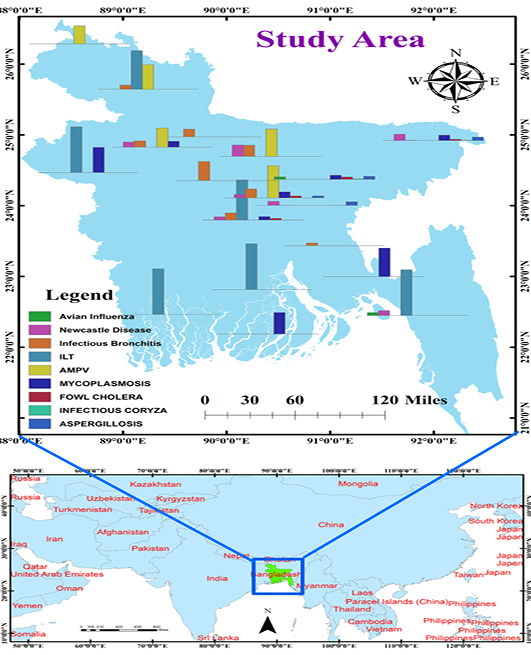
Prevalence of different respiratory diseases of poultry in different area of Bangladesh.
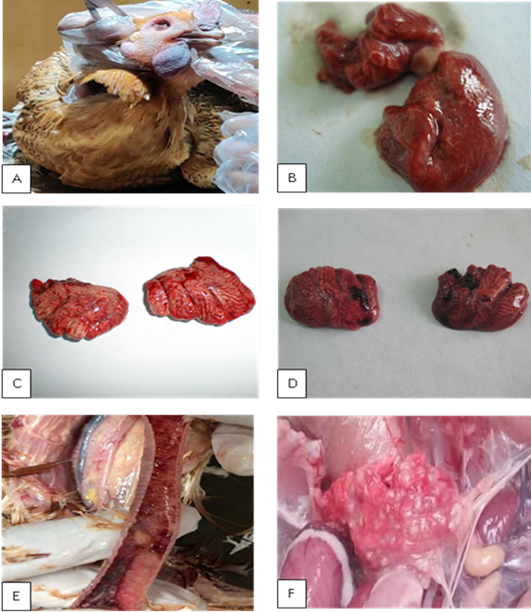
Photographic representation of gross lesions of different poultry diseases. (A) Cyanotic comb and wattle, and edematous swelling of faces. (B) Severe hemorrhage and congestion were observed in lungs, caused by AI. (C) Hemorrhagic lungs were observed in case of ND. (D) Congestion and hemorrages were observed in lungs of IB infected chicken. (E) Severe hemorrhage and congestion, and accumulation of huge amount of mucus within the trachea in case of ILT infection in chicken. (F) Whitish nodules were found in the lung in case of aspergillosis in chicken.
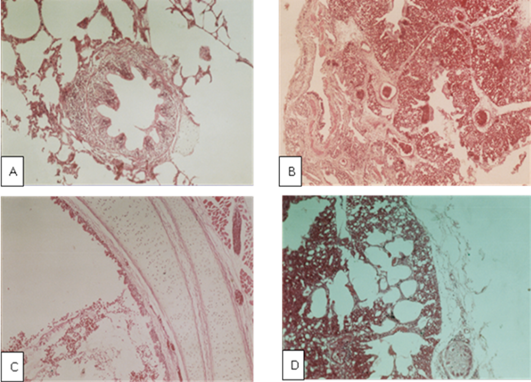
Photographic representation of histopathological lesions of different poultry diseases. (A) Severely congested lungs and alveolities were observed in lungs, caused by AI. (B) Severe hemorrhage and congestion in lungs were observed in case of ND. (C) Hemorrhagic and destruction of epithelial lining were observed in trachea of ILTV infected chicken. (D) Severe hemorrhage and congestion were observed in the lungs, and fibrinous layer were evident in the periphery of lungs in case of mycoplasmosis in chicken.
References
- Ahmed, M.S., Sarker, A., and Rahman, M.M., 2009. Prevalence of infectious diseases of broiler chickens in Gazipur district. Bangladesh J. Vet. Med., 7(2): 326–331. https://doi.org/10.3329/bjvm.v7i2.5999[CrossRef]
- Akter, M.R., Khan, M.S.R., Rahman, M.M., Kabir, S.L., and Khan, M.A.S., 2016. Epidemic behavior of the etiological agent of infectious coryza in layer chicken of Bangladesh with isolation, identification and pathogenicity study. Asian J. Med. Biol. Res., 2(1): 82–94. https://doi.org/10.3329/ajmbr.v2i1.27573[CrossRef]
- Ali, M.Z., 2018. The seroprevalence study of reticuloendotheliosis virus infection in chicken in Bangladesh. Egypt. J. Vet. Sci., 49(2): 179–186. https://doi.org/10.21608/ejvs.2018.5856.1051[CrossRef]
- Ali, M.Z., Park, J.-E., and Shin, H.-J., 2019. Serological survey of avian metapneumovirus infection in chickens in Bangladesh. J. Appl. Poult. Res., 28(4): 1330–1334. https://doi.org/10.3382/japr/pfz050[CrossRef]
- Ali, M.Z., and Sultana, S., 2015. Determination of humoral immune response in chickens against formalin-inactivated alum-precipitated fowl cholera vaccine. Int. J. Anim. Biol., 1(4): 114–117.
- Ali, M.Z., Sultana, S., Karim, M.R., Hassan, M.Z., Yousuf, M.A., Hossen, A., Samad, M.A., Giasuddin, M., and Rahman, M.M., 2017. Compared the effect of indirect ELISA and serum plate agglutination (SPA) test for the detection of Mycoplasma gallisepticum in chicken. Int. J. Health Anim. Sci. Food Saf., 4(1): 59–66.
- Badhy, S.C., Amin, K.M.R., Kabir, S.M.L., Paul, B.K., and Das, S.K., 2003. Brooders pneumonia: histopathological changes in the lungs of broiler chickens. Int. J. BioRes., 1(1): 55–58.
- Bari, T., Islam, M.T., Pervin, M., Happy, S.A., Chowdhury, E.H., and Khan, M., 2009. Pathological and molecular investigation of avian influenza (AI) in layer chickens from field outbreaks. Bangladesh Vet. J., 43(4): 40–51.
- Barman, L.R., Nooruzzaman, M., Sarker, R.D., Rahman, M.T., Saife, M.R. Bin, Giasuddin, M., Das, B.C., Das, P.M., Chowdhury, E.H., Islam, M.R., 2017. Phylogenetic analysis of Newcastle disease viruses from Bangladesh suggests continuing evolution of genotype XIII. Arch. Virol., 162(10): 3177–3182. https://doi.org/10.1007/s00705-017-3479-x[CrossRef]
- Barman, S., Marinova-Petkova, A., Hasan, M.K., Akhtar, S., El-Shesheny, R., Turner, J.C., Franks, J., Walker, D., Seiler, J., Friedman, K., Kercher, L., Jeevan, T., Darnell, D., Kayali, G., Jones-Engel, L., McKenzie, P., Krauss, S., Webby, R.J., Webster, R.G., and Feeroz, M.M., 2017. Role of domestic ducks in the emergence of a new genotype of highly pathogenic H5N1 avian influenza A viruses in Bangladesh. Emerg. Microbes Infect., 6(1): 1–13. https://doi.org/10.1038/emi.2017.60[CrossRef]
- Barua, H., Biswas, P.K., Olsen, K.E.P., and Christensen, J.P., 2012. Prevalence and characterization of motile salmonella in commercial layer poultry farms in Bangladesh. PLoS One, 7(4): e35914. https://doi.org/10.1371/journal.pone.0035914[CrossRef]
- Baskerville, A., 2011. Mechanisms of infection in the respiratory tract. New Zealand Vet. J., 29(12): 235–238. https://doi.org/10.1080/00480169.1981.34852[CrossRef]
- Begum, I.A., Buysse, J., Alam, M.J., and Van Huylenbroeck, G., 2010. Technical, allocative and economic efficiency of commercial poultry farms in Bangladesh. Worlds. Poult. Sci. J., 66(3): 465–476. https://doi.org/10.1017/S0043933910000541[CrossRef]
- Bhuiyan, Z., Ali, M., Moula, M., Bary, M., Arefin, N., Giasuddin, M., and Khan, Z., 2019. Seroprevalence of major avian respiratory diseases in broiler and sonali chicken in selected areas of Bangladesh. J. Adv. Vet. Anim. Res., 6(4): 561. https://doi.org/10.5455/javar.2019.f383[CrossRef]
- Bhuiyan, Z.A., Ali, M.Z., Moula, M.M., Giasuddin, M., and Khan, Z.U.M., 2019a. Prevalence and molecular characterization of infectious bronchitis virus isolated from chicken in Bangladesh. Vet. World, 12(6): 909–915. https://doi.org/10.14202/vetworld.2019.909-915[CrossRef]
- Biswas, P.K., Biswas, D., Ahmed, S., Rahman, A., and Debnath, N.C., 2005. A longitudinal study of the incidence of major endemic and epidemic diseases affecting semi-scavenging chickens reared under the participatory livestock development project areas in Bangladesh. Avian Pathol., 34(4): 303–312. https://doi.org/10.1080/03079450500178972[CrossRef]
- Biswas, P.K., Christensen, J.P., Ahmed, S.S.U., Barua, H., Das, A., Rahman, M.H., Giasuddin, M., Habib, M.A., Hannan, A.S.M.A., and Debnath, N.C., 2011. Mortality rate and clinical features of highly pathogenic avian influenza in naturally infected chickens in Bengladesh. Rev. Sci. Tech. l’OIE, 30(3): 871–878. https://doi.org/10.20506/rst.30.3.2080[CrossRef]
- Blackall, P.J., and Reid, G.G., 1982. Further characterization of Haemophilus paragallinarum and Haemophilus avium. Vet. Microbiol., 7(4): 359–367. https://doi.org/10.1016/0378-1135(82)90016-5[CrossRef]
- Cavanagh, D., 2007. Coronavirus avian infectious bronchitis virus. Vet. Res. BioMed. Cent., 38(2): 281–297. https://doi.org/10.1051/vetres:2006055[CrossRef]
- Chukwudi, O.E., Chukwuemeka, E.D., and Mary, U., 2012. Newcastle disease virus shedding among healthy commercial chickens and its epidemiological importance. Pak. Vet. J., 32(3): 354–356.
- Cook, J.K.A., and Cavanagh, D., 2002. Detection and differentiation of avian pneumoviruses (metapneumoviruses). Avian Pathol., 31(2): 117–132. https://doi.org/10.1080/03079450120118603[CrossRef]
- Das, S.K., Khan, M.S.R., and Das, M., 1970. Sero-prevalence of infectious bronchitis in chicken in Bangladesh. Bangladesh J. Vet. Med., 7(1): 249–252. https://doi.org/10.3329/bjvm.v7i1.5068[CrossRef]
- de Wit, J.J., Cook, J.K.A., and van der Heijden, H.M.J.F., 2011. Infectious bronchitis virus variants: A review of the history, current situation and control measures. Avian Pathol., 40(3): 223–235. https://doi.org/10.1080/03079457.2011.566260[CrossRef]
- Doğan, G.K., and Takaci, I., 2018. Anatomy of respiratory system in poultry. Vet. J. Mehmet Akif Ersoy Univ., 3(2): 141–147. https://doi.org/10.24880/maeuvfd.433946[CrossRef]
- Dyar, P.M., Fletcher, O.J., and Page, R.K., 1984. Aspergillosis in turkeys associated with use of contaminated litter. Avian Dis., 28(1): 250–255. https://doi.org/10.2307/1590149[CrossRef]
- Fuchs, W., Veits, J., Helferich, D., Granzow, H., Teifke, J.P., and Mettenleiter, T.C., 2007. Molecular biology of avian infectious laryngotracheitis virus. Vet. Res., 38(2): 261–279. https://doi.org/10.1051/vetres:200657[CrossRef]
- Gharaibeh, S.M., and Algharaibeh, G.R., 2007. Serological and molecular detection of avian pneumovirusin chickens with respiratory disease in Jordan. Poult. Sci., 86(8): 1677–1681. https://doi.org/10.1093/ps/86.8.1677[CrossRef]
- Giasuddin, M., Ali, M.Z., Karim, M.R., Hassan, M.Z., Hasan, M., and Islam, E., 2018. The past and present scenario of avian influenza and its control strategy in Bangladesh: A review. Bangladesh J. Livest. Res., 21(25): 24–28. https://doi.org/10.3329/bjlr.v0i0.45443[CrossRef]
- Giasuddin, M., Sil, B.K., Alam, J., Koike, I., Islam, M.R., and Rahman, M.M., 2002. Prevalence of poultry diseases in Bangladesh. J. Biol. Sci., 2(4): 212–213. https://doi.org/10.3923/jbs.2002.212.213[CrossRef]
- Haque, E., Uddin, G., and Akter, S., 2015. Prevalence of Mycoplasmosis of chickens of Kotwali Thana in Chittagong, Bangladesh. J. Fish. Livest. Prod., 3(4). https://doi.org/10.4172/2332-2608.1000151[CrossRef]
- Harper, M., Boyce, J.D., and Adler, B., 2006. Pasteurella multocida pathogenesis: 125 years after Pasteur. FEMS Microbiol. Lett., 265(1): 1–10. https://doi.org/10.1111/j.1574-6968.2006.00442.x[CrossRef]
- Hassan, M.K., Kabir, M.H., Hasan, M.A. Al, Sultana, S., Khokon, M.S.I., and Kabir, S.M.L., 2016. Prevalence of poultry diseases in Gazipur district of Bangladesh. Asian J. Med. Biol. Res. 2(1): 107–112. https://doi.org/10.3329/ajmbr.v2i1.27575[CrossRef]
- Hassan, M.M., Hoque, M.A., Ujvari, B., and Klaassen, M., 2018. Live bird markets in Bangladesh as a potentially important source for Avian Influenza Virus transmission. Prev. Vet. Med., 156: 22–27. https://doi.org/10.1016/j.prevetmed.2018.05.003[CrossRef]
- Hossain, K.M.M., Ali, M.Y., and Haque, M.I., 2007. Seroprevalence of mycoplasma gallisepticum infection in chicken in the Greater Rajshahi District of Bangladesh. Bangladesh J. Vet. Med., 5(1 & 2): 09–14.
- Imam, T., Gibson, J.S., Foysal, M., Das, S.B., Gupta, S. Das, Fournié, G., Hoque, M.A., and Henning, J., 2020. A cross-sectional study of antimicrobial usage on commercial broiler and layer chicken farms in Bangladesh. Front. Vet. Sci., 7: 1044. https://doi.org/10.3389/fvets.2020.576113[CrossRef]
- Islam, M.K., Uddin, M.F., and Alam, M.M., 2014. Challenges and prospects of poultry industry in Bangladesh. Eur. J. Bus. Manag., 6(7): 116–127.
- Islam, M.R., Das, B.C., Hossain, K., Lucky, N.S., and Mostafa, M.G., 2003. A study on the occurrence of poultry diseases in Sylhet region of Bangladesh. Int. J. Poult. Sci., 2(5): 354–356. https://doi.org/10.3923/ijps.2003.354.356[CrossRef]
- Islam, M.S., Khan, M.S.R., Islam, M.A., Hassan, J., Affroze, S., and Islam, M.A., 2010. Isolation and characterization of infectious laryngotracheitis virus in layer chickens. Bangladesh J. Vet. Med., 8(2): 123–130. https://doi.org/10.3329/bjvm.v8i2.11194[CrossRef]
- Islam, M.T., Saurov, M.S.J., Rahman, M.A., Talukder, A.K., Islam, A., Haider, M.G., and Rahman, A.N.M.A., 2020. A retrospective study of common poultry diseases at Gazipur district of Bangladesh. Bangladesh J. Ecol., 2(2): 113–120.
- Islam, M.T., Talukder, A.K., Rahman, M.A., Haider, M.G., and Rahman, A.N.M.A., 2016. Incidence of diseases in Japanese quail (Coturnix coturnix japonica) with special reference to bacterial and viral diseases in some selected areas of Bangladesh. Asian Aust. J. Biosci. Biotechnol., 1(3): 410–418.
- Islam, S.S., Islam, S., Siddiqe, Z.F., Shawon, R.H., Hanif, S.M., and Rahman, M.A., 2014. Diseases of birds and their responses to treatment in different regions of Bangladesh. Int. J. Nat. Soc. Sci., 11(1): 31–36. https://doi.org/10.3329/bjvm.v11i1.17730[CrossRef]
- Jahan, M.S., Khan, M.F.R., Nazir, K.H.M.N.H., Amin, M.M., and Rahman, M.B., 2012. Sero-surveillance of infectious laryngotracheitis in layer birds in Bangladesh. Microbes Health, 1(2): 38–40. https://doi.org/10.3329/mh.v1i2.14086[CrossRef]
- Kabir, A., Al Masum, M.O., Yasmin, M.S., Sarwar, M.G., Hossain, M.S., Alam, M.E., Ahmed, S., and Rahman, M.M., 2021. Investigation on seroprevalence of Mycoplasma gallisepticum infection in commercial layer farms in Rajshahi district using rapid serum plate agglutination test. Eur. J. Agric. Food Sci., 3(4): 31–36. https://doi.org/10.24018/ejfood.2021.3.4.331[CrossRef]
- Kabiraj, C.K., Mumu, T.T., Chowdhury, E.H., Islam, M.R., and Nooruzzaman, M., 2020. Sequential pathology of a genotype XIII newcastle disease virus from Bangladesh in chickens on experimental infection. Pathogens, 9(7): 1–14. https://doi.org/10.3390/pathogens9070539[CrossRef]
- Kempf, I., and Gesbert, F., 1998. Comparison of serological tests for detection of Mycoplasma gallisepticum antibodies in eggs and chicks hatched from experimentally infected hens. Vet. Microbiol., 60(2–4): 207–213. https://doi.org/10.1016/S0378-1135(98)00153-9[CrossRef]
- Kim, Y., Biswas, P.K., Giasuddin, M., Hasan, M., Mahmud, R., Chang, Y.-M., Essen, S., Samad, M.A., Lewis, N.S., Brown, I.H., Moyen, N., Hoque, M.A., Debnath, N.C., Pfeiffer, D.U., and Fournié, G., 2018. Prevalence of Avian Influenza A(H5) and A(H9) Viruses in Live Bird Markets, Bangladesh. Emerg. Infect. Dis., 24(12): 2309–2316. https://doi.org/10.3201/eid2412.180879[CrossRef]
- Kirkpatrick, N.C., Mahmoudian, A., Colson, C.A., Devlin, J.M., and Noormohammadi, A.H., 2006. Relationship between mortality, clinical signs and tracheal pathology in infectious laryngotracheitis. Avian Pathol., 35(6): 449–453. https://doi.org/10.1080/03079450601028803[CrossRef]
- Lüthy, I.A., Ritacco, V., and Kantor, I.N., 2018. One hundred years after the “spanish” flu. Medicina (B. aires). 78(2): 113–118.
- Mamun, M. Al, Islam, K.M., Rahman, M.M., 2019. Occurrence of poultry diseases at Kishoregonj district of Bangladesh. MOJ Proteomics Bioinf., 8(1): 7–12.
- Meher, M.M., Islam, J., and Afrin, M., 2020. Investigation of risk factors and biosecurity measures associated with prevalence of newcastle disease virus in broiler farms. Turk. J. Agric. Food Sci. Technol., 8(11): 2426–2432. https://doi.org/10.24925/turjaf.v8i11.2426-2432.3710[CrossRef]
- Meher, M.M., Rahman, M.M., Akter, M.R., Rahaman, M.S., and Khalesur, M.R., 2017. Detection of avian infectious bronchitis virus and its specific antibody in different ages layer birds in Dinajpur District of Bangladesh. Int. J. Res. Appl. Sci. Eng. Technol., V(XI): 2502–2507. https://doi.org/10.22214/ijraset.2017.11350[CrossRef]
- Nooruzzaman, M., Haque, M.E., Chowdhury, E.H., and Islam, M.R., 2019a. Pathology of clade 2.3.2.1 avian influenza virus (H5N1) infection in quails and ducks in Bangladesh. Avian Pathol., 48(1): 73–79. https://doi.org/10.1080/03079457.2018.1535165[CrossRef]
- Nooruzzaman, M., Mumu, T.T., Hasnat, A., Akter, M.N., Rasel, M.S.U., Rahman, M.M., Parvin, R., Begum, J.A., Chowdhury, E.H., and Islam, M.R., 2019b. A new reassortant clade 2.3.2.1a H5N1 highly pathogenic avian influenza virus causing recent outbreaks in ducks, geese, chickens and turkeys in Bangladesh. Transbound. Emerg. Dis., 66(5): 2120–2133. https://doi.org/10.1111/tbed.13264[CrossRef]
- OIE, 2020. Highly pathogenic avian influenza. World Health Organization for Animal Health.
- Pringle, C.R., 1998. Virus taxonomy San Diego 1998. Arch. Virol., 143(7): 1449–1459. https://doi.org/10.1007/s007050050389[CrossRef]
- Rahman, M., and Adhikary, G., 2016. Poultry diseases in some selected areas in Sylhet district of Bangladesh. J. Sylhet Agric. Univ., 3(1): 433–453.
- Rahman, M., Mangtani, P., Uyeki, T.M., Cardwell, J.M., Torremorell, M., Islam, A., Samad, M.A., Muraduzzaman, A.K.M., Giasuddin, M., Sarkar, S., Alamgir, A.S.M., Salimuzzaman, M., and Flora, M.S., 2020. Evaluation of potential risk of transmission of avian influenza A viruses at live bird markets in response to unusual crow die-offs in Bangladesh. Influenza Other Respi. Viruses, 14(3): 349–352. https://doi.org/10.1111/irv.12716[CrossRef]
- Rahman, M.A., Rahman, M.M., Abdullah, M.S., Sayeed, M.A., Rashid, M.H., Mahmud, R., Belgrad, J.P., and Hoque, M.A., 2019. Epidemiological assessment of clinical poultry cases through the government veterinary hospital-based passive surveillance system in Bangladesh: A case study. Trop. Anim. Health Prod., 51(4): 967–975. https://doi.org/10.1007/s11250-018-1782-5[CrossRef]
- Rahman, M.M., Hossain, M.M., Aktaruzzaman, M., Hossain, F.M.A., and Paul, S., 2011. Retrospective study of newcastle disease: A cases of Gazipur in Bangladesh. Int. J. Sustain. Agric. Tech., 7(3): 66–69.
- Rahman, M.S., Rabbani, M.G., Uddin, M.J., Chakrabartty, A., and Her, M., 2012. Prevalence of Avian Influenza and Newcastle Disease Viruses in poultry in selected areas of Bangladesh using rapid antigen detection kit. Arch. Clin. Microbiol., 3(1): 1–8.
- Rahman, M.M., Uddin, M.K., Hassan, M.Z., Rahman, M.M., Ali, M.Z., Rahman, M.L., Akter, M.R., and Rahman, M.M., 2018. Seroprevalence study of infectious laryngotracheitis virus antibody of commercial layer in Gazipur Districts of Bangladesh. Asian J. Med. Biol. Res., 4(1): 1–6. https://doi.org/10.3329/ajmbr.v4i1.36814[CrossRef]
- Roizman, B., 1982. The family Herpesviridae: General description, taxonomy, and classification, in: The Herpesviruses. Springer US, Boston, MA, pp. 1–23. https://doi.org/10.1007/978-1-4684-4163-5_1[CrossRef]
- Sabuj, A.A.M., Mahmud, T., Barua, N., Rahman, M.A., Islam, M.S., and Bary, M.A., 2019. Passive surveillance of clinical poultry diseases in an Upazila Government Veterinary Hospital of Bangladesh. Afr. J. Microbiol. Res., 13(29): 632–639. https://doi.org/10.5897/AJMR2019.9213[CrossRef]
- Samy, A., and Naguib, M., 2018. Avian respiratory coinfection and impact on avian influenza pathogenicity in domestic poultry: Field and experimental findings. Vet. Sci., 5(1): 23. https://doi.org/10.3390/vetsci5010023[CrossRef]
- Sarkar, S.K., Rahman, M.B., Rahman, M., Amin, K.M.R., Khan, M.F.R., and Rahman, M.M., 2005. Sero-prevalence of Mycoplasma gallisepticum infection of chickens in model breeder poultry farms of Bangladesh. Int. J. Poult. Sci., 4(1): 32–35. https://doi.org/10.3923/ijps.2005.32.35[CrossRef]
- Shin, H.J., McComb, B., Back, A., Shaw, D.P., Halvorson, D.A., and Nagaraja, K.V., 2000. Susceptibility of broiler chicks to infection by avian pneumovirus of turkey origin. Avian Dis., 44(4): 797–802. https://doi.org/10.2307/1593051[CrossRef]
- Sikder, A.J., Islam, M.A., Rahman, M.M., Rahman, M.B., 2005. Seroprevalence of Salmonella and Mycoplasma gallisepticum infection in the six model breeder poultry farms at Patuakhali district in Bangladesh. Int. J. Poult. Sci., 4(11): 905–910. https://doi.org/10.3923/ijps.2005.905.910[CrossRef]
- Sultana, S., Rashid, S.M.H., Islam, M.N., Ali, M.H., Islam, M.M., Azam, M.G., 2015. Pathological investigation of avian aspergillosis in commercial broiler chicken at Chittagong district. Int. J. Innov. Appl. Stud., 10(1): 366–376.
- Talukdar, M.L., Zuhra, F.T., Islam, K.M.E., Ahmed, M.S., 2017. Prevalence of infectious diseases in Sonali chickens at Bogra Sadar Upazila, Bogra, Bangladesh. J. Adv. Vet. Anim. Res., 4(1): 39–44. https://doi.org/10.5455/javar.2017.d188[CrossRef]
- Tully, T.N., 1995. Avian respiratory diseases: clinical overview. Aust. Vet. J., 9(3): 162–174.
- Uddin, M.B., Ahmed, S.S.U., Hassan, M.M., Khan, S.A., and Mamun, M.A., 2010. Prevalence of poultry diseases at Narsingdi, Bangladesh. Int. J. Biol. Res., 1(6): 9–13.
- Uddin, M.I., Sen, A.B., Islam, M.S., Das, S., Sultana, N., Ripa, R.N., Kashem, A., and Kamaruddin, K.M., 2014. Seroepidemiology of infectious laryngotracheitis (ILT) in the commercial layer farms of Chittagong district, Bangladesh. Adv. Anim. Vet. Sci., 2(6): 316–320. https://doi.org/10.14737/journal.aavs/2014/2.6.316.320[Full text][CrossRef]
- Wang, C., Wu, Y., Xing, X., Hu, G., Dal, J., and He, H., 2009. An outbreak of avian cholera in wild waterfowl in ordos wetland, Inner Mongolia, China. J. Wildl. Dis., 45(4): 1194–1197. https://doi.org/10.7589/0090-3558-45.4.1194[CrossRef]
- Xiao, K., Liu, Q., Liu, X., Hu, Y., Zhao, X., and Kong, Q., 2016. Identification of the avian pasteurella multocida phop gene and evaluation of the effects of phop deletion on virulence and immunogenicity. Int. J. Mol. Sci., 17(1): 12. https://doi.org/10.3390/ijms17010012[CrossRef]
Services
Article usage statistics
Loading…