Thalidomide Treatment in a Canine Mammary Gland Carcinosarcoma Presenting Pulmonary Metastasis.
The patient did not present any adverse events related to the thalidomide administration and thoracic radiographs demonstrated stable metastatic disease.
The present case report suggests that the drug provided clinical benefit in the treatment of distant metastasis.
However, clinical trials are necessary to confirm the benefit of thalidomide in canine mammary gland neoplasms, as well as in other malignant neoplasms in veterinary medicine.
1Department of Veterinary Clinic and Surgery, School of Agricultural and Veterinary Sciences of the Sao Paulo State University (FCAV/UNESP) – Jaboticabal Campus, Brazil; 2Laboratory of Comparative Pathology, Department of General Pathology, Federal University of Minas Gerais (UFMG), Brazil; 3Department of Veterinary Clinic and Surgery, Veterinary School, Federal University of Minas Gerais (UFMG), Brazil; 4Department of Pharmaceutical and Biotechnological Development, Fundação Ezequiel Dias, Brazil;5Department of Veterinary Clinics, College of Veterinary Medicine and Animal Science, Sao Paulo State University (FMVZ/UNESP) – Botucatu Campus, Brazil.
Abstract | Carcinosarcomas are uncommon in the dog and present an unfavorable prognosis. Thalidomide has been used in the investigational treatment of several diseases due to its known immunomodulatory and anti-angiogenic properties. A female dog underwent radical unilateral mastectomy, which enabled the diagnosis of a stage III and grade III carcinosarcoma, followed by chemotherapy treatment with doxorubicin and carboplatin. Twelve months after the mastectomy, thoracic radiographs revealed the presence of multiple nodules in the lung, and thalidomide administration was initiated at 20 mg/kg/day during three months and then 10 mg/kg/day without discontinuation. The patient did not present any adverse events related to the thalidomide administration and thoracic radiographs demonstrated stable metastatic disease. The patient was euthanized presenting metastasis in several other organs and overall survival was considered 963 days. The progression of distant metastasis in the studied patient was considered hindered by thalidomide.
aPressurized Heat bWater Bath cHours dRoom Temperature
Three view TR are necessary for all dogs with malignant mammary gland neoplasms, which remains as the standard diagnostic method for the evaluation of thoracic metastatic disease in veterinary medicine. Conventional radiography can detect lesions ranging from 6-9 mm in diameter ; . Radiographic detection of lung masses depends on several intrinsic (location, size, mass opacity, normal thoracic and extrathoraric structures) and radiographic technique factors, as well as the interpretation of radiographs. The RLR projection is the most sensitive for detection of lung metastasis, followed by the LLR and the VD projection. The sensitivity for the three-view combination is nearly 100%, regardless of the number of readers .
There are no established guidelines for the treatment of malignant mammary gland neoplasms beyond surgery. However, treatment recommendations generally intensify with advancing clinical stage and increasing seriousness of the prognostic factors . Carcinosarcomas present extremely variable histological characteristics and are uncommon in the dog (Misdorpet al., 1999) presenting very aggressive biological behavior and an unfavorable prognosis . The lungs are the most frequent site of metastasis, followed by regional lymph nodes. Carcinosarcoma metastasis are characterized by carcinomatous, sarcomatous, or mixed components. Other sites less frequently affected are heart, kidneys, liver, adrenal glands, brain, ovaries, hypophysis, bones, spleen, and pleura. The average time between detection and death in seven dogs was 18 months .
Thalidomide was described as a potent angiogenesis inhibitor in vivo . The discovery of thalidomide’s antiangiogenic properties coincided with the emerging importance of angiogenesis in tumor growth and progression . The anti-angiogenic activity of thalidomide suggest that the drug may present potential clinical benefit in the treatment of malignancies in which neoangiogenesis is present, including solid tumors ; ; . Antiangiogenic therapy is an appealing strategy for targeting resistant disease, and accumulating evidence suggests that the combination of cytotoxic chemotherapy and antiangiogenic therapy has greater antitumor effects than either strategy alone . Therefore, a novel treatment protocol option for advanced canine mammary gland tumors may consist of surgery, chemotherapy and thalidomide in association, although clinical trials are necessary to verify the clinical benefit of the proposed therapeutic protocol.
Thalidomide and its analogs exhibit a multitude of biologic effects on cytokine and cell-mediated responses . The effects of thalidomide on immune function are incompletely understood; however, anti-inflammatory and immunomodulatory activities have been described .
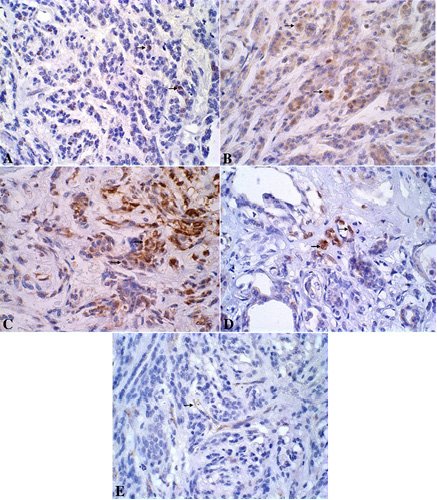
The antiangiogenic and immunomodulatory properties of thalidomide are implicated in the major activity of the drug in patients with multiple myeloma and holds promise in the treatment of other hematologic malignancies. Results in solid tumors are less encouraging, but patients with certain tumors, such as glioma, renal cell cancer, and prostate cancer, may benefit . Our results demonstrated an increase in the microvessel density at the metastatic site when compared to the primary neoplasm. The inflammatory infiltrate was similar in the primary and metastatic neoplasms. Therefore, the antiangiogenic and immunomodulatory properties of the drug were not demonstrated. However, the proliferative index of the primary neoplasm was higher than the metastatic proliferative index, which may suggest the antitumor effect of the drug. Direct cytotoxic effect of thalidomide on tumor cells was demonstrated on multiple myeloma cell lines, with inhibition of DNA synthesis in vitro .
In canines, the safety profile of thalidomide was evaluated and daily oral administration was considered well tolerated. The NOAEL (no-observed-adverse-effect levels) was 200 mg/kg . Two studies began to evaluate the clinical benefit of thalidomide in canine malignancies; however, the clinical trials were not completed ; . The present case report suggests that the drug provided clinical benefit in the treatment of distant metastasis. In addition, the patient maintained adequate quality of life during the thalidomide treatment, with an absence of adverse effects.
Gross metastatic disease at the time of diagnosis was associated to a poorer prognosis, with a median post-operative survival of 5 months, when compared to 28 months for animals diagnosed with mammary gland neoplasms that lacked evidence of metastasis at diagnosis . Another study found a 13.6% survival rates one year after mastectomy for animals diagnosed with distant metastasis . In veterinary oncology, there are insufficient options for the treatment of distant metastasis. However, the 20-month overall survival after the diagnosis of pulmonary nodules in the present case report was considered satisfying.
The progression of distant metastasis in the studied patient was considered hindered by thalidomide. However, clinical trials are necessary to confirm the benefit of thalidomide in canine mammary gland neoplasms, as well as in other malignant neoplasms in veterinary medicine.
Acknowledgements
This research was supported by the Fundação de Amparo à Pesquisa do Estado de São Paulo (FAPESP Grant 2014/01329-9) and the Conselho Nacional de Desenvolvimento Científico e Tecnológico (CNPq Grant 302449/2013-2).
Conflict of Interest
The authors declare they have no conflict of interest.
Authors Contribution
CBC, GEL, and GDC conceived the study. CBC performed data collection and wrote the manuscript. CBC and LDM performed data analysis. SLF aided in the obtainment of necessary resources. GDC, GEL, RLA, SLF supervised the work. All authors were involved in revising the manuscript.
References
Adlard JW, (2000). Thalidomide in the treatment of cancer. Anti-Cancer Drug. 11: 787 - 791.
Brodey RS, Goldschmidt MH, Roszel JR (1983). Canine mammary gland neoplasms. J. Am. Anim. Hosp. Assoc. 19: 61-90.
Calabrese L, Fleischer AB (2000). Thalidomide: Current and Potential Clinical Applications. Am. J. Med. 108: 487-495. https://doi.org/10.1016/S0002-9343(99)00408-8.[CrossRef]
Cassali GD, Lavalle GE, Ferreira E, Estrela-Lima A, Nardi AB De, Ghever C, Sobral RA, Amorim RL, Oliveira LO, Sueiro FAR, Beserra HEO, Bertagnolli AC, Gamba CO, Damasceno KA, Campos CB, Araujo MR, Campos LC, Monteiro LN, Nunes FC, Horta RS, Reis DC, Luvizotto MCR, Magalhaes GM, Raposo JB, Ferreira AMR, Tanaka NM, Grandi F, Ubukata R, Batschinski K, Terra EM, Salvador RCL, Jark PC, Delecrodi JER, Nascimento NA, Silva DN, Silva LP, Ferreira KCRS, Frehse MS, Santis GW, Silva EO, Guim TN, Kerr B, Cintra PP, Silva FBF, Leite JS, Mello MFV, Ferreira MLG, Fukumasu H, Salgado B, Torres R (2014).Consensus for the diagnosis, prognosis and treatment of canine mammary tumors - 2013. Braz. J. Vet. Pathol.7: 38 - 69.
D’Amato RJ, Loughnan MS, Flynn E, Folkman J (1994). Thalidomide is an inhibitor of angiogenesis. Proc. Natl. Acad. Sci. U S A. 91: 4082 - 4085. https://doi.org/10.1073/pnas.91.9.4082[CrossRef]
Dimopoulos MA, Eleutherakis-Papaiakovou V (2004). Adverse effects of thalidomide administration in patients with neoplastic diseases. Am. J. Med.117: 508 - 515. https://doi.org/10.1016/j.amjmed.2004.03.040[CrossRef]
Estrela-Lima A, Araujo MS, Costa-Neto JM, Teixeira-Carvalho A, Barrouin-Melo SM, Cardoso SV, Martins-Filho OA, Serakides R, Cassali GD (2010). Immunophenotypic features of tumor infiltrating lymphocytes from mammary carcinomas in female dogs associated with prognostic factors and survival rates. BMC Cancer10: 256 - 269. https://doi.org/10.1186/1471-2407-10-256[CrossRef]
Hammond MEH, Hayes DF, Dowsett M, Allred DC, Hagerty KL, Badve S, Fitzgibbons PL, Francis G, Goldstein NS, Hayes M, Hicks DG, Lester S, Love R, Mangu PB, Mcshane L, Miller K, Osborne CK, Paik S, Perlmutter J, Rhodes A, Sasano H, Schwartz JN, Sweep FCG, Taube S, Torlakovic EE, Valenstein P, Viale G, Visscher D, Wheeler T, Williams RB, Wittliff JL, Wolff AC (2010). American society of clinical oncology/college of American pathologists guideline recommendations for immunohistochemical testing of estrogen and progesterone receptors in breast cancer (unabridged version). Arch. Pathol. Lab. Med.134: 48 - 72.
Hideshima T, Chauhan D, Shima Y, Raje N, Davies FE, Tai Y, Treon SP, Lin B, Schlossman RL, Richardson P, Muller G, Stirling DI, Anderson KC (2000). Thalidomide and its analogs overcome drug resistance of human multiple myeloma cells to conventional therapy. Blood 96: 2943 - 2950.
Jankowski M, Fulton L, Sheafor S, Prescott D, Khanna C (1999). Ongoing evaluation of single agent thalidomide in dogs with measurable cancer. In: Veterinary Cancer Society 19th Annual Meeting.
Lang J, Wortman JA, Glickman LT, Biery DN, Rhodes WH (1986). Sensitivity of radiographic detection of lung metastases in the dog. Vet. Radiol. 27: 74 - 78. https://doi.org/10.1111/j.1740-8261.1986.tb00006.x[CrossRef]
Lavalle GE, De Campos CB, Bertagnolli AC, Cassali GD (2012). Canine malignant mammary gland neoplasms with advanced clinical staging treated with carboplatin and cyclooxygenase inhibitors. In Vivo. 26: 375 - 379.
Melchert M, List A (2007). The thalidomide saga. Int. J. Biochem. Cell Biol.39: 1489 - 1499. https://doi.org/10.1016/j.biocel.2007.01.022[CrossRef]
Miles KG, Lattimer JC, Jergens AE, Krause GF (1990). A retrospective evaluation of the radiographic evidence of pulmonary metastatic disease on initial presentation in the dog. Vet. Radiol. 31: 79 - 82. https://doi.org/10.1111/j.1740-8261.1990.tb00787.x[CrossRef]
Misdorp W, Cotchin E, Hampe JF, Jabara AG, Von Sandersleben J (1973). Canine Malignant Mammary Tumors. III. Special Types of Carcinomas, Malignant Mixed Tumors. Vet. Pathol. 10: 241 - 256.
Misdorp W, Else RW, Hellmén E, Lipscomb TP (1999). Histological classification of mammary tumors of the dog and the cat. 2nd Series. Armed Forces Institute of Pathology. American Registry of Pathology and the World Health Organization Collaborating Center for Worldwide Reference on Comparative Oncology. https://doi.org/10.1177/030098587301000307[CrossRef]
Nemanic S, London CCA, Wisner ER (2006). Comparison of thoracic radiographs and single breath-hold helical CT for detection of pulmonary nodules in dogs with metastatic neoplasia. J. Vet. Intern. Med. 20: 508 - 515. https://doi.org/10.1111/j.1939-1676.2006.tb02889.x[CrossRef]
Novosad CA (2003). Principles of treatment for mammary gland tumors. Clin. Tech. Small Anim. Pract.18: 107 - 109. https://doi.org/10.1053/svms.2003.36625[CrossRef]
Nunes FC (2015). Diagnóstico, prognóstico e tratamento dos carcinomas de glândulas mamárias de cadelas atendidas no hospital veterinário da UFMG – Estudo retrospectivo.1 - 75.
Paravar T, Lee DJ (2008). Thalidomide: mechanisms of action. Int. Rev. Immunol. 27: 111 - 135. https://doi.org/10.1080/08830180801911339[CrossRef]
Philibert JC, Snyder PW, Glickman N, Glickman LT, Knapp DW, Waters DJ (2003). Influence of Host Factors on Survival in Dogs with Malignant Mammary Gland Tumors. J. Vet. Intern. Med. 17: 102 - 106. https://doi.org/10.1111/j.1939-1676.2003.tb01330.x[CrossRef]
Richardson P, Hideshima T, Anderson K (2002). Thalidomide: Emerging Role in Cancer Medicine. Ann. Rev. Med. 53: 629 - 657. https://doi.org/10.1146/annurev.med.53.082901.104043[CrossRef]
Sorenmo KU, Worley DR, Goldschmidt MH (2013).Tumors of the Mammary Gland. In: Withrow SJ, Vail DM, Page RL (eds). Withrow & MacEwen’s Small Animal Clinical Oncology. 5th ed. Elsevier Saunders. 538 - 556. https://doi.org/10.1016/B978-1-4377-2362-5.00027-X[CrossRef]
Teo SK, Evans MG, Brockman MJ, Ehrhart J, Morgan JM, Stirling DI, Thomas SD (2001). Safety Profile of Thalidomide after 53 Weeks of Oral Administration in Beagle Dogs. Toxicol. Sci. 59: 160 - 168. https://doi.org/10.1093/toxsci/59.1.160[CrossRef]
Von Euler H (2011).Tumors of the mammary gland. In: Dobson JM, Lascelles B (eds). BSAVA Manual of canine and feline oncology. 3rd ed. British Small Animal Veterinary Association. 237 - 247.
Weidner N (1995). Intratumor microvessel density as a prognostic factor in cancer. Am. J. Pathol. 147: 9 - 19.
Woods JP, Mathews KA, Binnington AG (2004). Thalidomide for the treatment of hemangiosarcoma in dogs. Vet. Comp. Oncol. 2: 108 - 109. https://doi.org/10.1111/j.1476-5810.2004.0045p.x[CrossRef]
Yamagami T, Kobayashi T, Takahashi K, Sugiyama M (1996). Prognosis for canine malignant mammary tumors based on TNM and histologic classification. J. Vet. Med. Sci. 58: 1079 - 1083. https://doi.org/10.1292/jvms.58.11_1079[CrossRef]