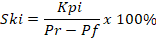
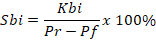
The marketing margin value in this pattern is IDR 8,768,333. The average share of the price received by producers or breeders is IDR 11,731,667 or 57.22% of the price received by consumers. Based on the percentage share of these profits, it is explained that buffalo breeders receive high prices from the prices received by consumers. The biggest profit obtained by marketing institutions is the profit by large traders, which is IDR 3,839,600 or 18.73%.
The share of profit received by the collecting trader was IDR 1,363,333 or 6.86%. The total marketing costs incurred by the collecting merchant are IDR 810,000 /buffalo consisting of ship rental costs of IDR 460,000 /buffalo or 2.31% with a margin distribution value of 5.65%, transportation costs (cars) of IDR 220,000 /buffalo or 1.11% with a margin distribution value of 2.70%, costs for labor
Table 1: Characteristics of Respondents
Table 2: Cost, Margin, Farmer share’s, Margin Distribution and Profit
of IDR 100,000 /buffalo or 0.50% with a margin distribution value of 1.23%, and the cost incurred for the file is IDR 30,000 /buffalo or 0.15% with a margin distribution value of 0.37%.
The share of profits received by large traders is IDR 3,839,000 or 19.32%. The total marketing costs incurred by wholesalers of Rp 520,400 consist of transportation costs of IDR 260,000/buffalo or 1.31% with a margin distribution value of 3.19%, cutting costs of IDR 200,000/buffalo or 1.01% with a margin distribution value of 2.46%, costs for feed of IDR 38,000/buffalo or 0.19% with a margin distribution value of 0.47%, the cost for purchasing lime is 9,600/buffalo or 0.05% with a margin distribution value of 0.12%, the cost for firewood is IDR 1,800/buffalo or 0.01%. with a margin distribution value of 0.02%, and a cost for purchasing salt of IDR 11,000/buffalo or 0.06% with a margin distribution value of 0.14%.
The share of profit received by retailers is IDR 1,157,000 or 5.82%. The total marketing costs incurred by retailers are IDR 453,000 /buffalo consisting of transportation costs of IDR 180,000 /buffalo or 0.91% with a margin distribution value of 2.21%, car transportation costs of IDR 230,000 /buffalo or 1.16% with a margin distribution value of 2.82%, costs for feed of IDR 38,000 /buffalo or 0.19% and market levy costs of IDR 5,000 /day or 0.03% with a margin distribution value of 0.06%.
Thus, the overall show that this three-level marketing channel pattern is also profitable, but the profit share value and margin distribution value are smaller than the previous marketing channel pattern. The profit share of this two-tier channel pattern is 91.03% greater when compared to the cost share value of 8.97% and the value of the profit margin of 78.10% greater when compared to the cost margin incurred is 21.90%.
The marketing pattern through one-level institutions has the highest marketing efficiency value (Eps= 3.19) compared to the two-level marketing pattern (Eps=7.37) and the three-level marketing pattern (Eps= 8.97). However, the fact is that in the field breeders use more of a two-level marketing pattern, namely through collecting merchants and wholesalers because they are seen as faster and more practical, besides that, higher prices are obtained than selling to local consumers. This is because farmers have limitations in getting updates on the price and marketing information of swamp buffalo.
Farmers get a diminishing share of profits as marketing institutions increase (first pattern: 100%, second pattern; 83.61%, third pattern: 66.87 and fourth pattern: 59.03%.) The marketing intermediary institutions that get the most profit share are wholesalers compared to collecting merchants and retailers. This is because large traders already know and utilize digital marketing even though it is not optimal by using social media so that large traders know more information about the price and marketing of swamp buffalo, access to information is very easy because it is outside the village. This condition proves the importance of utilizing digital marketing, although in its implementation there are still limitations such as uneven access to infrastructure and information between urban and rural populations making it difficult for farmers to fully engage in digital transformation and the lack of effective incentives and regulations for market mechanisms to play a full role. This is in accordance with Qin et al. (2022) that the constraints in the application of digital technology are policies and laws and regulations lagging behind the development of digital technologies and services, development goals and the interests of conflicting stakeholders, lack of inclusive information and meta-governance, unequal access to infrastructure and information between urban and rural populations, lack of incentives and regulations that are effective for market mechanisms to favor a full role and breeders’ perspectives on digital technologies and services are being studied further Yu et al. (2020); Yi et al. (2021); Yi et al. (2018) and Zeng et al. (2020).