
Food insecurity is becoming more alarming for Pakistan due to a range of issues including market instability, climate change, natural disasters and natural calamities. Therefore, rural advisory services to improve food security among the farming community are imperative. The present study was designed to explore various rural advisory service mechanisms for improving food security in the Sargodha district. The sample size of the study was 120 farmers. An interview schedule was used as a research instrument for data collection using the face-to-face interview method. Descriptive statistics; mean, frequencies and percentages were applied to draw results and to interpret. The prominent mode of rural advisory services by the public sector was ‘training program’ whereas for the private sector it was ‘advice on phone’. The public and private sectors should consider diversifying their strategies for the provision of rural advisory services that target improvements in farm production and food security.
Research Article · Volume 38, Issue 5, 25 December 2022 · Open Access
Rural Advisory Services to Improve Food Security in District Sargodha, Pakistan
· · · · · ·
Affiliations & Notes ⌄
- 1Department of Agricultural Extension & Rural Studies, University of Sargodha, Sargodha, Pakistan
- 2Department of Economics, Lahore Leads University, Lahore, Pakistan
- 3Faculty of Agricultural Engineering, PMAS Arid Agriculture University Rawalpindi, Pakistan
- 4School of Water Conservancy, Yunnan Agricultural University, Kunming, China
Article Info ⌄
- Journal:
- Sarhad Journal of Agriculture
- Published:
- 25 December 2022
From the article
- The public and private sector rural services providers visit farmers on an alternative day or weekly or fortnightly or at least monthly according to their schedule considering their human and financial resources.
- The public sector used training programs as one of the pivotal modes for rural advisory services, in contrast to this private sector utilized advice on phone as the most prominent mode for advisory services.
- Public and private sectors should provide rural advisory services according to the needs of farmers based on their farming issues and make them fully satisfied.
- The public and private sector should formulate policies to target constraints of the farming community in the provision of advisory services to harness their potential for crop productivity and food security.
Selected from the article's own text.
Abstract
Introduction
The current pace of global development will not be enough to eliminate hunger by 2050 due to poverty, inequality, unemployment, environmental degradation, and diseases. By 2100, Asia and Africa are expected to have a combined population of 9 billion out of an 11 billion global population (FAO, 2017). Nearly half of the forests that once covered the Earth are now extinct. Groundwater sources are rapidly disappearing. Biodiversity is deeply disturbed. Annual fossil fuel combustion releases billions of tons of greenhouse gases responsible for global warming and climate change. From 1960 to 2015 agricultural production increased three times because of the Green Revolution that enhanced productivity and improved the use of land, water, and other natural resources for agricultural purposes. That period witnessed remarkable progress of industrialisation and globalisation especially in food and agriculture (FAO, 2017).
Food security is an emerging challenge for developing as well as for developed countries. Food security occurs when all people have physical and economic access to sufficient, safe, and nutritious food to meet their dietary needs and lead an active and healthy life (FAO, 2006). It is based on four pillars food availability, food accessibility, utilisation, and stability of food. Food availability refers to sufficient food for all segments of society, which can be achieved by improving agricultural productivity. Food accessibility focuses on physical and economical access to food; food utilisation denotes patterns of food consumption by individuals of society; similarly, food stability involves consistency of food security pillars based on variability in weather, prices, political, and economic conditions (FAO, 2008). Smallholder farmers, especially in developing countries, are key stakeholders to sustain food security. This is because in developing countries, 500 million micro-farms, with their families, account for about one-third of the world’s population. However, the success of these small food producers is largely dependent on the productivity of land and other natural resources, market integration, technological innovation, human resource capital, and social capital development .
Food insecurity is an urgent issue all over the world demanding emphasis to be tackled . Pakistan’s food security situation needs more attention because it is facing social, economic and environmental challenges. Research findings show that 67.7% of the population of Federally Administered Tribal Areas, 61.2% of the Balochistan, and 56.2% of Khyber Pakhtunkhwa have inadequate food (GoP, 2019). Experts in rural advisory services (RAS) believe that minimising the knowledge and information gaps regarding food security is a key factor to improve food security . Knowledge gaps can be bridged by an effective extension and advisory services system.
Rural Advisory Services are demand-driven services delivered by the public and private sectors . RAS act as the basis of rural and agricultural development policies that need to be adapted to local conditions. These services are helpful for technology transfer, information communication, technology applications, and strengthen the technical, managerial, and organisational skills of service recipients. Moreover, RAS have important and dynamic roles in integrating rural areas, research, markets and education. RAS provide new knowledge to farmers and help them to develop skills in farming and management to improve their household food security and raise their income ; ; . RAS helped farmers better manage their farms by reducing technology gaps via accepting advanced technologies and practices to accelerate agricultural development ; . The impact of RAS has been considered to be positive, reaching a large number of farmers. RAS provide farmers with the opportunity to innovate, improve productivity and protect the environment. RAS have a positive impact on knowledge acquisition and the acceptance of technologies for agriculture productivity .
Food security situation particularly in rural areas needs more attention because of inadequate socio-economic and environmental situation. Rural inhabitants have poor access to secured food. Rural development experts believe that to solve this issue, rural advisory services gap should me minimized to gain food security situations . Therefore, RAS are imperative in promoting agricultural productivity, increasing food security, improving rural livelihoods, and promoting agriculture as an engine of pro-poor economic growth. RAS can assist in providing opportunities for income generation while assisting with improvements in food consumption patterns and enhancing the quality of rural life by way of community development . Consequently, this study was designed to assess the role of rural advisory services in improving food security in the Sargodha district of Pakistan. The research objectives were:
- To determine the demographic attributes of respondents in the research area.
- To explore different modes of RAS provided by the public and private sectors.
- To identify focused areas of RAS provided by the public and private sectors.
- To investigate the constraints regarding the provision of RAS.
Materials and Methods
Sargodha, in the Punjab province, is the 12th largest city in Pakistan. Sargodha is 172 kilometres northwest of provincial headquarter Lahore. The city has a climate of extreme heat in the summers and moderate cold in the winters. The maximum temperature reaches 50°C in the summer while the minimum temperature recorded is as low as a freezing point in the winter. It is an agricultural district, wheat, rice, and sugarcane being its main crops. The Sargodha district and region is also famous for citrus fruit, particularly Kinnow, a widely grown variety of mandarin.
An in-depth descriptive survey was used in this research. The rural population of the Sargodha district was the study population. One tehsil out of 7 tehsils from the district was selected randomly, which was tehsil Sahiwal. From the selected tehsil, three union councils out of 13 union councils were selected and from each union council, two villages were selected randomly. From each village 20 farmers were selected randomly, giving an aggregate sample of 120 farmers. The interview schedule comprised of demographic characteristics of respondents, modes of RAS provided to respondents by the public and private sectors, focus areas of RAS in the public and private sectors, and constraints for RAS in the public and private sectors. Modes of RAS were chosen keeping in view the communication types used by extension field staff of public and private sector extension. Data analysis was carried out using Statistical Package for Social Sciences (SPSS v. 22) software. Descriptive statistics; mean percentages and frequencies were calculated for the data.
Results and Discussion
Demographic attributes
Age helps with understanding the socio-economic issues in the local area. An aged person is well aware of the happenings around him/her while a young individual has more awareness regarding happenings around the world. Youth has been observed to be more inclined towards innovativeness . With the passage of time individuals gain maturity and understanding of their existing situations . Table 1 shows that 8.3% of respondents were aged up to 30 years, almost similar results were found by Butt et al. (2022), who indicated 8.3% respondents up to 30 years old, approximately 80% of the respondents were between the age of 31-50 years and possess much experience about the social issues and problems.
Table 1: Demographic attributes of the respondents.
| Demographic attribute | Freq. | % | Demographic attribute | Freq. | % |
| Age | Education | ||||
| Up to 30 years | 11 | 9.2 | Illiterate | 12 | 10.0 |
| 31-40 years | 46 | 38.3 | Primary | 24 | 20.0 |
| 41-50 years | 48 | 40.0 | Middle | 18 | 15.0 |
| Above50 years | 15 | 12.5 | Matriculation | 32 | 26.7 |
| Farming experience | Above matriculation | 34 | 28.3 | ||
| Up to 5 years | 8 | 6.7 | Family size | ||
| 6-10 years | 14 | 11.7 | 1-5 members | 30 | 25.0 |
| 11-15 years | 37 | 30.8 | 6-10 members | 83 | 69.2 |
| Above 15 years | 61 | 50.8 | 11-15 members | 7 | 5.8 |
| Income source | Farm size | ||||
| Farming | 67 | 55.8 | Up to 2 hectares | 14 | 11.7 |
| Govt. job | 27 | 22.5 | 2.1-4 hectares | 89 | 74.2 |
| Private job | 19 | 15.8 | 4.1-6 hectares | 14 | 11.7 |
| Business | 7 | 5.8 | Above 6 hectares | 3 | 2.5 |
| Crops grown | Family status | ||||
| Cereal crops | 37 | 30.8 | Joint family | 73 | 60.8 |
| Fruit orchards | 48 | 40.0 | Nuclear family | 47 | 39.2 |
| Vegetable crops | 35 | 29.2 | |||
Education is an important socioeconomic factor that was recorded in this survey. Collectively 55% of the respondents possess 10 or more years of schooling (matriculation and above matriculation). Consequently, they should be able to communicate or discuss anything in written or oral form. Furthermore, contrary to finding of Luqman et al. (2022) who pointed out 35% of respondents were illiterate, in present research one-tenth of the respondents (10%) were illiterate, while 20% possess 5 years of schooling (primary level education). Collectively, this 30% will require targeted approaches to improve their understanding regarding agricultural practices and to minimize food insecurities in the area.
Almost 12% of the respondents possessed 6-10 years farming experience these results are contrary to findings of Luqman et al. (2020) who argued that 23.8% of respondents have 6-10 years farming experience. Most respondents (81.6%) had over 10 years of farming experience. Because the research area has mostly experienced farmers, young farmers and new farmers have a meaningful source for advice or guidance regarding farming practices.
Almost 70% of the respondents have 6-10 family members, so they have opportunities to utilise their family members as household labour for farming activities, which will lead toward food security. Therefore, public and private sector advisory services providers should harness this labour potential for agricultural productivity. Whereas, 25% of respondents have 1-5 family members contrary to the results of Saqib et al. (2019) who indicated 45% of respondents have 1-5 family members.
An overwhelming majority (86%) of respondents possess up to 4 hectares of land holding for farming. As some respondents have jobs as a source of income, so having farmland is an additional source of livelihood. Both farming and non-farming sources of income are important for farmers’ livelihoods. Above 30% of the respondents grow cereal crops including wheat, rice, and maize; however, almost 70% of respondents grow fruits and vegetables. In the research area more than half (61%) of respondents have a joint family system, they could utilise household labour for farming activities to reduce labour expenses.
In-person visit schedule of RAS providers
Public sector advisory services providers including agricultural extension department, research institutes, pest warning departments and water management department, and private sector advisory service providers including seed companies, pesticide companies, fertiliser companies, etc., visit farmers in person for the provision of advisory services to transfer updated and advanced technology to them. These advisory services representatives made visits to farmers on alternate days, weekly, fortnightly, and monthly (Figure 1). The agents of advisory service providers visited the majority (72%) of respondents fortnightly or monthly.
Various modes of rural advisory services provided by public and private sector
Table 2 compares and ranks public sector and private sector advisory services providers use of various modes for rural advisory services. The most frequently used modes of RAS by public sector were training programs, workshops and seminars and field days which were ranked as first, second and third (with mean values of 3.31, 3.09 and 3.02) respectively. Contrary to this the most frequently used RAS modes by private sector are advice on phone, field days, and linkage with other departments ranked as first, second and third (with mean value of 2.81, 2.80 and 2.78), respectively, the respondents response is slightly satisfied but more inclined towards moderately satisfied. The respondents were slightly satisfied to RAS modes of public sector i.e. printed material, inputs provision and advice on phone with mean values of 2.86, 2.82 and 2.68, respectively, these modes possess lower ranks which may be not in mandate of public sector RAS providers. On the basis of respondents’ response, all the RAS modes used by the private sector fall in the category of slightly satisfied but these are more inclined towards moderately satisfied. Although, the respondents were moderately satisfied about top three ranked RAS modes of public sector, other modes were more inclined towards moderately satisfied. None of the RAS modes used by public sector and private sector gain the level of very satisfied or extremely satisfied.
Table 2: Modes of RAS provided by public and private sector.
| Modes of RAS | Public sector | Private sector | |||
| Mean | Rank | Mean | Rank | ||
| Training programs | 3.31 | 1 | 2.67 | 7 | |
| Workshops and seminars | 3.09 | 2 | 2.61 | 9 | |
| Field days | 3.02 | 3 | 2.80 | 2 | |
| Health care during farming | 2.99 | 4 | 2.70 | 5 | |
| Demonstrations | 2.99 | 5 | 2.67 | 8 | |
| Farmers' meeting | 2.97 | 6 | 2.69 | 6 | |
| Linkages with other departments | 2.93 | 7 | 2.78 | 3 | |
| Exhibitions/ Kisan mela | 2.88 | 8 | 2.58 | 10 | |
| Printed materials | 2.86 | 9 | 2.45 | 11 | |
| Inputs provision | 2.82 | 10 | 2.72 | 4 | |
| Advice on phone | 2.68 | 11 | 2.81 | 1 | |
Scale: 1: never; 2: rarely; 3: sometimes; 4: often; 5: always.
Major focused areas of rural advisory services by the public and private sector
The respondents were also asked to provide their responses considering the importance of the major focus areas of rural advisory services provided by the public and private sectors. The results in Table 3 indicate that the respondents consider moderately important with regard to all focused areas (except one; advanced irrigation practices) for RAS provided by the public sector. Whereas, in the case of the private sector respondents considered not at all important to the RAS focused areas, however, these focused areas were more inclined towards moderately important. In the case of the public sector, the top three ranked areas were insect pest management, marketing and value addition, and quality inputs for crops, whereas in the case of the private sector top three ranked areas were quality inputs for crops, harvesting methodologies, and marketing and value addition. Babar et al. (2020) also stated that usually technology based services provided by the private sector are costly. The private sector has much interest in obtaining the maximum profit out of its products in the field than the interests that much suit the farming community.
Table 3: Focused areas of RAS provided by the public sector and private sector.
| Focused areas for RAS | Public sector | Private sector | ||
| Mean | Rank | Mean | Rank | |
| Insect pest management | 2.28 | 1 | 1.93 | 4 |
| Marketing and value addition | 2.22 | 2 | 1.97 | 3 |
| Quality inputs for crops | 2.20 | 3 | 1.98 | 1 |
| New varieties / technologies | 2.10 | 4 | 1.80 | 7 |
| Harvesting methodologies | 2.08 | 5 | 1.98 | 2 |
| Production practices | 2.05 | 6 | 1.89 | 6 |
| Application of fertilizer/ pesticide | 2.03 | 7 | 1.91 | 5 |
| Advanced irrigation practices | 1.94 | 8 | 1.72 | 8 |
Scale: 1: not at all important; 2: moderately important; 3: very important.
Constraints regarding the provision of RAS
The respondents were asked about different constraints in the provision of RAS (Figure 2), according to which the majority (43.3%) of the respondents regarded low output price/rate as a minor constraint, similarly, 47.5% of respondents regarded adulterated inputs as moderate constraint, 40.83 regarded lack of advanced farm machinery as a minor constraint. However, 44.2% of respondents regarded lack of access to market, 38.3% regarded lack of infrastructure, 47.5% regarded transportation issues, 42.5% regarded lack of health services 37.5% regarded lack of awareness 42.5% of the respondents regarded high price of inputs, 30.83% regarded lack of staff as a moderate constraint. Among all constraints, the majority were regarded as moderate constraints.
Conclusions and Recommendations
The public and private sector rural services providers visit farmers on an alternative day or weekly or fortnightly or at least monthly according to their schedule considering their human and financial resources. The public sector used training programs as one of the pivotal modes for rural advisory services, in contrast to this private sector utilized advice on phone as the most prominent mode for advisory services. The respondents in the research area were moderately satisfied with the working areas of the public sector, whereas, they were not satisfied with the private sector working areas but this trend was inclined towards moderately satisfied. Numerous constraints are being faced by the farmers in the study area including adulterated inputs, transportation issues, and lack of access to the market as most emerging constraints.
On the basis of the current study, given below are some recommendations:
- Farmers having more family members should be motivated to utilize household labour in different farming activities to improve production leading to food security in the area and region.
- Public and private sector rural advisory services providers should utilize multiple modes and strategies according to the needs of farmers to impart agricultural knowledge among them for improving crop productivity.
- Public and private sectors should provide rural advisory services according to the needs of farmers based on their farming issues and make them fully satisfied.
- The public and private sector should formulate policies to target constraints of the farming community in the provision of advisory services to harness their potential for crop productivity and food security.
Novelty Statement
The study highlights diversified strategies for rural advisory services by the public and private sectors are crucial to harnessing farmers’ potential for improving crop productivity, rural livelihoods, and food security.
Author’s Contribution
Muhammad Yaseen: Conceived the research idea and supervised research and prepared initial draft.
Muhammad Luqman: Prepared the research instrument and helped in data analysis and reviewed the draft.
Bushra Pervaiz: Helped in preparation of research instrument and data analysis.
Rana Shahzad Noor: Helped in data collection and reviewed relevant literature.
Muhammad Ameen: Reviewed relevant literature and proofread initial draft.
Sadia Hassan: Helped in data interpretation and revised manuscript as suggested by the reviewers.
Wassi Abbas: Collected data from the field and compiled data for analysis.
Figures
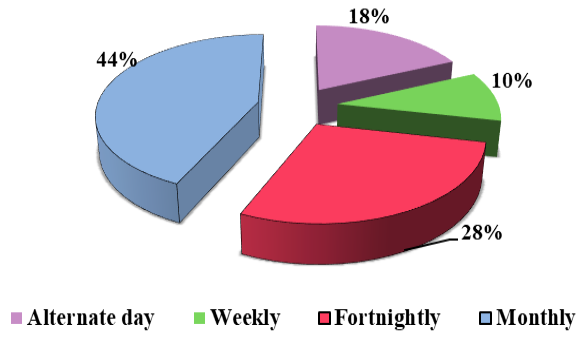
In-person visit schedule of rural advisory services providers.
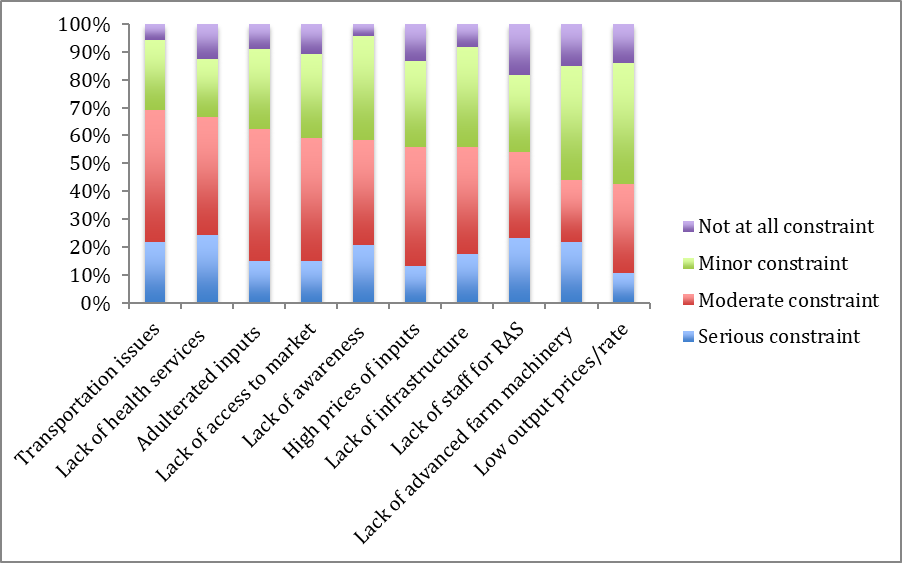
Constraints in the provision of RAS.
References
- Adolph, B., 2011. Rural advisory services worldwide: A synthesis of actors and issues, GFRAS-Global forum for agricultural advisory services, Triple Line Consulting, London.
- Akpey-Mensah, T.L., 2019. Social capital development as innovation in human resource development: A case of Technical Universities in Ghana. Afr. J. Sci. Technol. Innov. Dev., 12(1): 27-32. https://doi.org/10.1080/20421338.2019.1613784[CrossRef]
- Anderson, J.R., G. Feder and S. Ganguly. 2006. The rise and fall of training and visit extension: An Asian mini-drama with an African epilogue, World Bank Policy Research Working Paper 3928, Agriculture and Rural Development Department, World Bank. Available from: https://openknowledge.worldbank.org/ (accessed on 29 May 2020).
- Aziz, B., Z. Iqbal and Z. Butt. 2016. The extent, cause and severity of household food insecurity in Pakistan: Evidence from micro data. FWU J. Soc. Sci., 10(2): 44-57.
- Babar, U., M.A. Nawaz, U. Arshad, M.T. Azhar, R.M. Atif, K.S. Golokhvast and I.A. Rana. 2020. Transgenic crops for the agricultural improvement in Pakistan: A perspective of environmental stresses and the current status of genetically modified crops. GM Crops Food, 11(1): 1-29. https://doi.org/10.1080/21645698.2019.1680078[CrossRef]
- Butt, T.M., M.A., Luqman, N. Farah and M. Yaseen. 2022. Exploring the rewards and consequences of wastewater irrigation in vegetables: Case study of central Punjab, Pakistan. Sarhad J. Agric., 38(2): 585-594. https://doi.org/10.17582/journal.sja/2022/38.2.585.594[Full text][CrossRef]
- Chipeta, S., 2006. Demand driven agricultural advisory services, Swiss Center for Agricultural Extension and Rural Development (AGRIDEA), Neuchâtel Group, Lindau, Switzerland. Available from: https://www.g-fras.org (accessed on 12 April 2020).
- Connelly, R., V. Gayle and P.S. Lambert. 2016. A review of educational attainment measures for social survey research. Methodol. Innov., 9: 1-11. https://doi.org/10.1177/2059799116638001[CrossRef]
- Crush, J., A. Hovorka and D. Tevera. 2011. Food security in Southern African cities: The place of urban agriculture. Prog. Dev. Stud., 11(4): 285-305. https://doi.org/10.1177/146499341001100402[CrossRef]
- Davis, K., A. Bohn, S. Franzel, M. Blum, U. Rieckmann, S. Raj, K. Hussein and N. Ernst. 2018. What works in rural advisory services? Global good practice notes’ GFRAS, Lausanne, Switzerland. Available at: https://www.g-fras.org (accessed on 7 June 2020).
- FAO, 2006. Production year book, 1.55 (FAO) Rome, Italy, Available from: https://agris.fao.org. (accessed on 3 January 2020).
- FAO, 2008. The state of food insecurity in the world 2008: High food prices and food security threats and opportunities, Food and Agriculture Organization of the United Nations Rome, Italy, Available from: http://www.fao.org/ (accessed on 23 February 2020).
- FAO, 2017. The future of food and agriculture: trends and challenges, Food and Agriculture Organization of the United Nations Rome, Italy, Available from: http://www.fao.org/ (accessed on 20 March 2020).
- Gebre, G.G., 2012. Determinants of food insecurity among households in Addis Ababa city, Ethiopia. Interdisciplinary Description of Complex Systems, 10(2): 159-173. https://doi.org/10.7906/indecs.10.2.9[CrossRef]
- Govt. of Pakistan, 2019. Pakistan overview of food security and nutrition: Improving access to food. Available from: https://reliefweb.int/sites/ (17 January 2021).
- Keenan, D.P., C. Olson, J.C. Hersey and S.M. Parmer. 2001. Measures of food insecurity/security. J. Nutr. Educ., 33(1): 49-58. https://doi.org/10.1016/S1499-4046(06)60069-9[CrossRef]
- Khan, M.Z., L. Khurshid, U. Parvez, A. Khan and A. Nawaz. 2017. Role of agricultural extension agents in transfer of onion production technology in district Swat. Int. J. Agric. Environ. Res., 3(1): 158-164.
- Luqman, M., M. Karim, M. Yaseen, M.Z. Majeed and M.U. Mehmood. 2020. Farmer’s perceptions regarding climate change and its impact on cotton performance in southern region of the Punjab, Pakistan. J. Agric. Res., 58(2): 117-123.
- Luqman, M., A. Mustafa, S. Abbas, M. Yaseen, M.U. Mehomood and R. Saqib. 2022. Assessing potential contribution of livestock farming on poverty alleviation in the rain-fed areas of Punjab. Sarhad J. Agric., 38(3): 862-870. https://doi.org/10.17582/journal.sja/2022/38.3.862.870[Full text][CrossRef]
- Oladele, O.I., 2013. Agricultural extension and rural advisory services: Proactiveness or reactiveness on climate change for food security in Africa. Life Sci. J., 10(3): 593-597.
- Robertson, T. and E. Watts. 2016. The importance of age, sex and place in understanding socioeconomic inequalities in allostatic load: Evidence from the Scottish Health Survey (2008–2011). BMC Publ. Health, 16(1): 126. https://doi.org/10.1186/s12889-016-2796-4[CrossRef]
- Santeramo, F.G., 2015. On the composite indicators for food security: Decisions matter. Food Rev. Int., 31(1): 63-73. https://doi.org/10.1080/87559129.2014.961076[CrossRef]
- Saqib, R., M. Luqman, I. Javed, A. Rehman, M. Yaseen, S. Ashraf and M.Z. Majeed. 2019. Livelihood strategies of small-scale farmers in Pakistan in the scenario of climate change. Sarhad J. Agric., 35(4): 1298-1308. https://doi.org/10.17582/journal.sja/2019/35.4.1298.1308[Full text][CrossRef]
- Sawicka, B. and T.S. Hameed. 2017. The contribution of agricultural extension services to achieve food security. Available from: https://www.researchgate.net/ (accessed on 7 December 2020).
Cited by 1 article
In journals published by ResearchersLinks.
Services
Article usage statistics
Loading…