
Litchi (Litchi chinensis) is mostly propagated through air layering which is cumbersome because of low survival rate of layered plants, more requirement of mother stock and labor intensive method. To address these issues an alternative technique has been employed for quick multiplication of litchi. In the present study we have investigated the influence of various levels of Indole Butyric Acid (IBA) on four Litchi cultivars (Gola, Surahi, China and Bedana) for root induction, its development and success rate of survival in hardwood cuttings. Six treatments of IBA (1000, 2000, 3000, 4000, 5000, 6000ppm) and one with control (without IBA) were applied at base of hardwood cuttings (6mmØ) of different litchi cultivars. Statistically analyzed data showed that root induction, root growth and survival of rooted cuttings was significantly influenced by IBA concentrations, litchi cultivars and their interaction at p<0.01. The interaction of 5000ppm IBA with “Gola” was found appropriate for development of heavier (10.2±0.57gm), longer (27cm) and more number of roots (6.4±0.81) compared to all other cultivars. Moreover, considerable difference was observed for root ability among all litchi cultivars tested as “Gola” produced maximum, longer and heavier roots with less mortality rate compared to all other cultivars.
Research Article · Volume 35, Issue 4, 22 January 2023 · Open Access
Rooting in Hardwood Cuttings of Different Litchi (Litchi chinensis) Cultivars as Influenced by Varied Concentrations of IBA
· · · · · ·
Affiliations & Notes ⌄
- 1Horticultural Research Institute, National Agricultural Research Centre, Islamabad, Pakistan
- 2Department of Horticulture, PMAS-Arid Agriculture University, Rawalpindi, Pakistan. *Correspondence | Saima Mumtaz, Horticultural Research Institute, National Agricultural Research Centre, Islamabad, Pakistan
- 3Email: saimamumtaz124@gmail.com
- 4Plant Science Division, PARC, Islamabad, Pakistan
Article Info ⌄
- Journal:
- Pakistan Journal of Agricultural Research
- Published:
- 22 January 2023
From the article
- The propagation of litchi through stem cuttings is advantageous over air layering because it provides easy, cost effective, less laborious and quick way of multiplication of elite genotypes, maintaining the characters and qualities of parental material.
- Our results clearly reveal that application of IBA to the base of cuttings is imperative to trigger roots in hardwood cuttings of “difficult to root fruit crops” with maximum survival rate.
- The interaction of litchi cultivars and IBA level was interesting to observe that ‘Gola’ produced maximum, heavier and multiple roots in combination with 5000 ppm IBA.
- Additionally, ‘Gola’ cultivar responded better for development of healthy, prolonged and well profuse roots than that of ‘China’ where mortality rate of cutting was more when compared.
Selected from the article's own text.
Abstract
Introduction
Litchi from the family of sapindaceae, moderately vigorous, evergreen sub-tropical tree. It is highly nutritive, delicious, juicy fruit which is mostly taken as a fresh fruit, can be utilized in pickles, squashes and also as litchi nuts ; . The fresh fruit of litchi is commercially important and known as a crop having high export potential globally. Owing to its popularity as an exotic fruit, the demand for its planting material is increasing tremendously which require expansion of its area under cultivation .
Clonal propagation of litchi is mostly carried out through air layering or marcotting . However, the main obstruction is associated with this propagation method which is varying degree of success of air layering, which results in the extreme mortality rate of the air layers when they are separated from the mother plant and develop their own root system in nursery. Moreover, air layering is laborious, expensive and wounded area of mother plant may provide a way to pathogens for causing infections . Thus, it limits the availability of propagules of elite genotypes of litchi . Propagation by taking small cuttings of stem is economical and productive technique which provides most satisfactory means of quickly multiplying new and true to type cultivars . The root formulation is one of the critical factors in clonal propagation via stem cuttings and the rooting ability of cuttings of stems are different depends on the plant species and cutting types (Hartmann et al., 2002a).
Exogenous application of synthetic and natural auxins aid in adventitious root development from stem cuttings in many tree species . Indole Butyric Acid (IBA) is a root stimulating hormone which is harmless to plant cells due to its extensive range than IAA and NAA (Hartmann et al., 2002b). The role of IBA in root initiation of hardwood cuttings is well reported in Olive , Pear ; and Cherry . However, propagation of litchi by air layering have been reported ; ; but not through hardwood cuttings at the moment.
Earlier investigators have correlated the survival percentage of some species with the accumulation of starch in the hardwood cuttings. More starch quantity in cuttings will produce high energy for developing roots and therefore better survival percentage . Hartmann et al. (2002) mentioned the vital elements required for the initiation of roots in stem cuttings are the diameter of cutting and its response to auxin. Keeping in view the importance of hardwood cuttings as a propagating mean, role of auxin and cutting diameter in root formulation of woody crops; present study was intended to examine the impact of exogenous implication of IBA on different litchi cultivars and their interaction on rooting ability and success percentage of rooted cuttings in litchi a difficult to root crop.
Materials and Methods
The experiment was conducted at Horticultural Research Institute (HRI), National Agricultural research Centre (NARC), Islamabad (Longitude 73.08˚ and latitude 33.42˚) Pakistan. Healthy hardwood stem cuttings of four different litchi cultivars i.e., Gola, Surahi, China and Bedana, 17 cm long and 6mm in diameter, with 4-5 nodes and 2-3 green mature leaves were selected in the month of October. To induce rooting, stem cuttings were wounded by partial removal of bark slit at the base of cuttings to expose the cambium to IBA . Six different concentrations of IBA (1000, 2000, 3000, 4000, 5000, 6000 ppm) including control were prepared by mixing the IBA with talc powder and base of the hardwood cuttings were inserted in raised benches under lath house conditions containing sand after dipping in this mixture. Stem cuttings with 6cm space and 11cm within rows were planted in rooting medium of 18cm in depth under mist condition and the temperature was maintained at about 25±1°C. After root induction, rooted cuttings were shifted in media containing equal ratio of soil, sand and Farm Yard Manure.
Rooting competence for each treatment including IBA application and cutting diameter were considered for measurements after 90 days of growth and standard procedure was followed for data recording on root characteristics (Hartmann et al., 2002). Stem cuttings were visually observed for data collection and rooting percentage (Number of cuttings produced roots/total number of cuttings planted × 100), root length (cm), number of roots/cutting, root weight (gm), root diameter (mm) and establishment of rooted cuttings (Number of rooted cuttings survived/total number of rooted cuttings planted×100) were considered under studied parameters. The experiment was conducted in Complete Randomized Design (CRD) and each treatment consisted of four replications and ten hardwood cuttings were accounted for each replicate. Data was analyzed through two-way Analysis of Variance (ANOVA) and treatment means were differentiated using Least Significance Difference (LSD) Test (p=1%) level .
Results and Discussion
Hardwood stem cuttings of litchi were significantly influenced by different concentrations of IBA, litchi cultivars and their interaction with regard to percentage of rooting (%), root length (cm), number of roots per cutting, root weight (gm), root diameter (mm)and establishment (%) at p<0.01 (Figure 1). Litchi is difficult to root crop, callus formation was observed after 8-10 weeks of plantation followed by root initiation within 6-8 weeks and buds started to grow 3-4 weeks after root initiation. Significant interaction between 5000 ppm IBA and ‘Gola’ cultivar was observed for rooting percentage (60±0.81%), number of roots/cutting (6.4±0.81) and root weight (10.2±0.57gm) (Figure 2). IBA at 4000 and 5000 ppm was at par with each other for ‘Gola’ cultivar with mean root length giving 27.07cm and 27cm. On the other hand, 6000 ppm produced roots of 2.5±0.12 mm diameter on same cultivar. In addition, maximum rooted cuttings were established (89.2±1.2) at 5000ppm of IBA of 6mm stem cuttings. However, short (2.25±0.64cm), lighter (0.8±0.97gm), and less number of roots (1.1±0.81) was observed in ‘China’ cultivar at control, among all tested cultivars. The rooting percentage was at par with each other for all cultivars i.e., China, Bedana, Surahi and Gola at control.
Applications of IBA on ‘Gola’ stem cuttings gave significantly higher percentage of rooting from 15±0.81to 60±0.81% with the increase of IBA conc. (from 1000-5000 ppm), compared to ‘China’ at the same concentrations (10±0.4 to 35±0.81%). In general, rooting percentage, survival rate, root number, length and weight were considerably improved by increasing the concentration of IBA up to 5000 ppm and then decreased by additional IBA concentration. All roots observed were of cream color.
Clonal propagation of fruit crops through stem cutting is an easy, cost effective and reliable method of multiplication of progenies which truly resembles to their parent plant maintaining all characters and qualities . The root formation/growth procedure in stem cuttings of hardy crops is complicated which is regulated by various central aspects such as, rooting cofactors, endogenous auxin amount, carbohydrate and nitrates stored in cuttings; these elements interact with each other to promote rooting capacity in woody crops . Hence, it is imperative to study the impact of varied auxin levels for initiation and formation of roots in woody crops.
IBA as a root stimulating hormone is being used for induction of adventitious roots in hardwood cuttings of many fruit crops globally . In our study, exogenous supplication of IBA on cuttings of stem considerably improved the rooting traits (rooting percentage, root number/cutting, root length, weight and establishment percentage of rooted cuttings) as compared to control. Application of IBA may have an indirect impact by accelerating the translocation rate and carbohydrate mechanism to the rooting portion of cuttings and consequently resulting in root formation . This could also be attributed to peroxidase activity and total phenolic contents which are more in IBA-treated cuttings, principally during the expression and initiation phases of rooting . It has been confirmed by previous researchers that auxin is not only necessary for adventitious root development on hardwood cuttings but also been found to proliferate roots in stem cuttings of different species . Similar results were demonstrated by earlier investigators who recorded maximum rooting percentage in woody plants such as, pomegranate , Warburgia ugandensis pepper bark tree , Shorea parvifolia and Shorea macroptera endemic tree spp. with application of IBA on stem cuttings.
A linear relationship between rooting response (rooting percentage, root number/cutting, root length, weight and establishment percentage of rooted cuttings) and litchi cultivars was observed for rooted cuttings up to 5000 ppm and after that it started to decline. Application of optimum hormonal concentration is vital for successful rooting of stem cuttings as demonstrated by Leakey (1983). Our findings are concordant with the results of Bhatt and Tomar (2010) who testified that root development is affected by dose of IBA and will formulate profusely at optimal dose in Kaghzi lime cuttings. The drop in rooting percentage with increased IBA concentrations is a positive signal that certain hormonal levels are preventing root initiation, as documented in many species of trees . Earlier investigators also reported the sensitivity of growth hormones towards root formulation as increased level of auxin above optimum inhibits root development in Centaurea tchihatcheffii Knapweeds and in Pongamia pinnata Pongam .
Genotype variation in rooting success was observed among all tested cultivars of litchi. In our experiment, IBA stimulated root development in all cultivars; however, ‘Gola’ stem cuttings produced well profuse, lengthy and heavy roots with maximum survival than the ‘China’ cultivar. Our results are in consistent with the Collins et al. (2000) consequences who found discrepancy in rooting percentage (from 25 to 88.9%) among 15 genotypes of S. austro caledonicum stem cuttings. Similarly, genotype differences in semi hard wood cuttings performance were reported across a wide range of hard to root species including Camellia sinensis , Corylus avellana , Colutea istria , Leucaena species , hybrid Populus , Tectona grandis , Pinus species , and different species of Eucalyptus .
Conclusions and Recommendations
The propagation of litchi through stem cuttings is advantageous over air layering because it provides easy, cost effective, less laborious and quick way of multiplication of elite genotypes, maintaining the characters and qualities of parental material. Our results clearly reveal that application of IBA to the base of cuttings is imperative to trigger roots in hardwood cuttings of “difficult to root fruit crops” with maximum survival rate. The interaction of litchi cultivars and IBA level was interesting to observe that ‘Gola’ produced maximum, heavier and multiple roots in combination with 5000 ppm IBA. Additionally, ‘Gola’ cultivar responded better for development of healthy, prolonged and well profuse roots than that of ‘China’ where mortality rate of cutting was more when compared. The outcomes of this investigation are expected to pave the way for mass scale propagation of litchi through stem cuttings with least mortality rate of rooted cuttings.
Acknowledgments
The authors are thankful to the Horticultural Research Institute (HRI), NARC, Islamabad for financial as well moral support for accomplishment of this research endeavor. The field supervision staff especially Mr. Malik Waqar Mehmood is also acknowledged for the provision of helping hand in other nursery management activities.
Novelty Statement
This is an original research conducted at Fruit Crops Research Program, Horticultural Research Institute (HRI), NARC, Islamabad. This manuscript was not send to any other journal for publication.
Author’s Contribution
Saima Mumtaz: Conceived and designed the experiment, performed the research work, wrote the draft of manuscript.
M. Imran Kasana: Helped in plant and data collection.
Riaz Alam: Technical guidance regarding layout of the experiment.
Noorullah Khan: Helped in draft improvement and English language of the manuscript.
Muhammad Noman: Identification of germplasm and its procurement.
Sanjeela Sabahat: Performed the statistical analysis.
Hussain Shah: Procurement of different cultivars.
Conflict of interest
The authors have declared no conflict of interest.
Figures
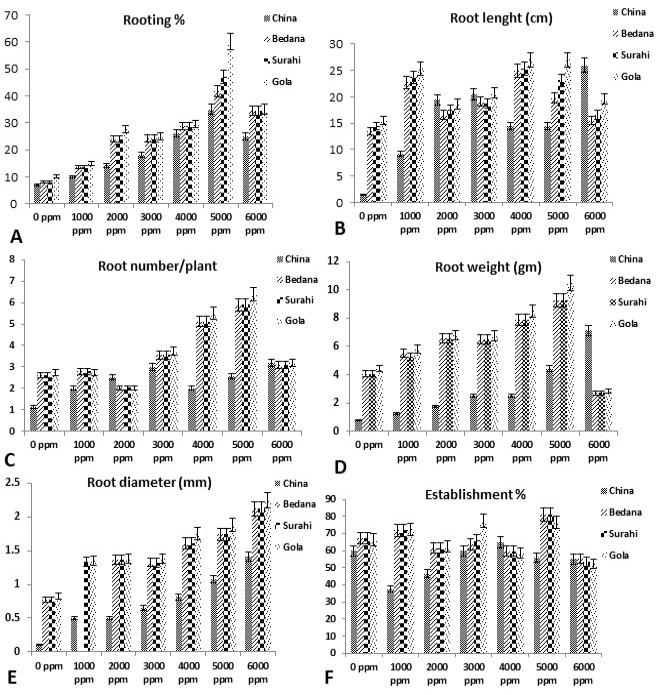
Interaction of different concentrations of IBA and litchi cultivars on (a) rooting percentage, (b) root length (cm), (c) number of roots/cutting, (d) root weight (gm), (e) root diameter (mm) and (f) survival (%) of litchi cuttings. Bars denotes the SE.
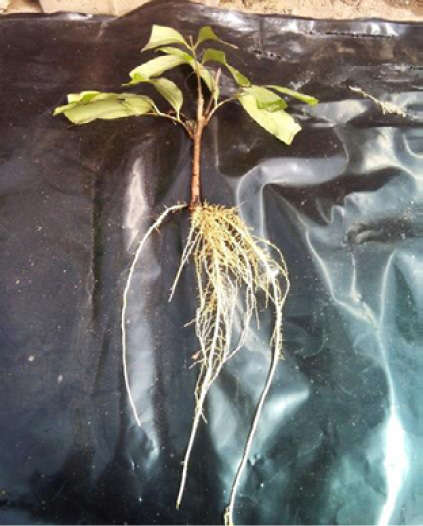
Remarkable interaction of 5000 ppm IBA with ‘Gola’ hardwood stem cutting for maximum, lengthy and heavier roots.
References
- Akwatulira, F., S. Gwali, J.B.L. Okullo, P. Segawa, S. B. Tumwebaze, J. R. Mbwambo and A. Muchugi. 2011. Influence of rooting media and indole-3-butyric acid (IBA) concentration on rooting and shoot formation of Warburgiaugandensis stem cuttings. Afr. J. Pl. Sci., 5(8): 421-429.
- Ali, M., A. Rab, H. Ahmad, S. Hayat, K. Wali and J. Ali. 2016. the influence of different media on rooting of litchi plant through air layering. New Med. Mass Com., 47: 12-15.
- Aminah, H., J.M. Dick, R. Leakey, J. Grace and R. Smith. 1995. Effect of indole butyric acid (IBA) on stem cuttings of Shorealeprosula. For. Ecol. Manage., 72(2): 199-206. https://doi.org/10.1016/0378-1127(94)03461-5[CrossRef]
- Aminah, H., R.M.N. Nor Hasnita and M. Hamzah. 2006. Effects of Indolebutyric acid concentrations and media on rooting of leafy cuttings of Shoreaparvifolia and Shoreamacroptera. J. Trop. For. Sci., 18(1): 1-7.
- Arora, R., N.P. Singh, S. Kaur, A.K. Dhawan, S.K. Chauhan, S.S. Walia and S.S. Mahdi. 2017. Micronutrients for yield and quality enhancement in litchi (Litchi chinensis L). A review. Ind. J. Ecol., 44(5): 586-590.
- Bhatt, B.B. and Y.K. Tomar. 2010. Effects of IBA on rooting performance of Citrus auriantifolia Swingle (Kagzi-lime) in different growing conditions. Nat. Sci., 8(7): 8-11.
- Brondani, G.E., F.J.B. Baccarin, T. Bergonci, A.N. Goncalves and M. de Almeida. 2014. Mini cutting of Eucalyptus benthamii: Effect of the genotype, iba, zinc, boron and shoots collection. Cerne, 20: 147–156. https://doi.org/10.1590/S0104-77602014000100018[CrossRef]
- Burgess, D., Hendrickson, O. and L. Roy. 1990. The importance of initial cutting size for improving the growth performance of Salix alba L. Scand. J. For. Res., 5: 215-224. https://doi.org/10.1080/02827589009382607[CrossRef]
- Chawla, W. and K. Mehta. 2015. Effect of different growing media on survival and growth of transplanted litchi layers. Asian J. Hortic. 10(2): 257-261. https://doi.org/10.15740/HAS/TAJH/10.2/257-261[CrossRef]
- Collins, S., S. Walker, and R. Haines. 2000. SPRIG vegetative propagation completion report. Qld For Research Inst, Gympie.
- Contessa, C., N. Valentini, M. Caviglione and R. Botta. 2012. Propagation of Corylusavellana L. by means of semi-hardwood cutting: Rooting and bud retention in four Italian cultivars. Eur. J. Hortic. Sci., 76: 170–175.
- Das, A.K. and B. Prasad. 2014. Effect of plant growth regulators on rooting survival of air layering in litchi. Adv. Rear. J. Crop Imp., 5(2): 126-130. https://doi.org/10.15740/HAS/ARJCI/5.2/126-130[CrossRef]
- de Andres E.F., F.J. Sanchez, G. Catalan, J.L. Tenorio and L. Ayerbe. 2005. Vegetative propagation of Colutea Istria Mill. from leafy stem cuttings. Agrofor. Syst., 63: 7–14. https://doi.org/10.1023/B:AGFO.0000049428.12140.af[CrossRef]
- Doroudi, H., M. Akbarinia, S. Jalali and E. Khosroujerdi. 2008. Effects of cutting diameter and media on rooting and survival of Sumac cuttings (RhusCoriaria L.). Iran J. Agric. Res., 21(2): 271-277.
- Foster., S., H. Stelzer and J. McRae. 2000. Loblolly pine cutting morphological traits: Effects on rooting and field performance. New For., 89: 291-306. https://doi.org/10.1023/A:1006691808772[CrossRef]
- Hannerz, M., C. Almqvist and I. Ekberg. 1999. Rooting success of cuttings from young Piceaabies in transition to flowering competent phase. Scand. J. For. Res., 14(6): 498-504. https://doi.org/10.1080/02827589908540814[CrossRef]
- Hartmann, T., E. Kester, F.T. Davies and R.L. Geneve. 2002a. Plant Propagation Principles and Practices. 7th Edition. Prentice Hall. New Jersey. pp. 367-374.
- Hartmann, H.T., D.E. Kester, F.T. Davies and R.L. Geneve. 2002b. Hartmann and Kester’s plant propagation: Principles and practices, 7th edn. Prentice-Hall, Upper Saddle River, pp. 298-342.
- Hassanpour, H. and M.A. Shiri. 2014. Propagation of Iranian cornelian cherry (Cornus mas L.) By rooted stem cuttings. Notulae Sci. Biol., 6(2): 192-195. https://doi.org/10.15835/nsb629295[CrossRef]
- Henrique, A., E.N. Campinhos, E.O. Ono, S.Z. de Pinho. 2006. Effect of plant growth regulators in rooting of Pinus cuttings. Braz. Arch. Biol. Tech., 49: 189-196. https://doi.org/10.1590/S1516-89132006000300002[CrossRef]
- Husen, A., 2013. Clonal multiplication of teak (Tectona grandis) by using moderately hard stem cuttings: Effect of genotypes (FG1 and FG11 Clones) and IBA treatment. Adv. For. Lett., 2: 14–19.
- Jana, R.B., D. Bikash and S. Kumar. 2015. Efficacy of IBA and determination of cuttings size in Asian pear (Pyruspyrifolia L.). Int. J. Pl. Res., 5(3): 64-67.
- Kesari, V., A. Krishnamachari and L. Rangan. 2009. Effect of auxins on adventitious rooting from stem cuttings of candidate plus tree Pongamiapinnata (L.), a potential biodiesel plant. Trees, 23: 597-604. https://doi.org/10.1007/s00468-008-0304-x[CrossRef]
- Khajehpour, G., V.J. Eizadeh and N. Khajehpour. 2014. Effect of different concentrations of IBA (Indulebutyric Acid) hormone and cutting season on the rooting of the cuttings of olive (Olea Europaea Var Manzanilla). Int. J. Adv. Biol. Biom. Res., 2(12): 2920-2924.
- Leakey, R. and H. Mohammed. 1985. Effects of stem length on root initiation in sequential single-node cuttings of Triplochitonscleroxylon K. Schum. Hortic. Sci., 60: 431-437. https://doi.org/10.1080/14620316.1985.11515648[CrossRef]
- Leakey, R.R.B., J.F. Mesen, Z. Tchoundjeu, K.A. Longman, J.M.P. Dick, A. Newton, A. Martin, J. Grace, R.C. Munro and P.N. Muthoka. 1990. Low technology techniques for the vegetative propagation of tropical trees. Common Wealth For. Rev., 69(3): 247-257.
- Leakey., R., 1983. Stock plant factors affecting root initiation in cuttings of Triplochitonscleroxylon K. Schum., an indigenous hardwood of West Africa. Hortic. Sci., 58: 277-290. https://doi.org/10.1080/00221589.1983.11515121[CrossRef]
- Lima, J.D., A.C.B. Bolfarini, S. da Silva and W.D. Moraes. 2013. Propagation of Camellia sinensis: Effect of genotype, cuttings, substrate, recipient and indole butyric acid. Hortic. Brasil., 31: 74–79. https://doi.org/10.1590/S0102-05362013000100012[CrossRef]
- Melgarejo, P., J. Martinez, J.J. Martinez and M. Sanchez. 2008. Preliminary survival experiments in transplanting pomegranate. In: Production, processing and marketing of pomegranate I the Mediterranean region: Advances in research and technology Zaragoza, Melgarejo-Moreno, P., J. J. Martinez-nicolas, J. Martinez-Tome (Eds.). CIHEAM publication, Europe. pp. 1163-167.
- Muhamed, H.N. and N.A. Dawod. 2017. The effect of IBA and cutting diameter on inducing roots of cotinuscoggygriascop. And rhuscoriarial. (Anacardiaceae). Sci. J. Univ. Zakho. https://doi.org/10.25271/2017.5.2.367[CrossRef]
- Negi. N.D. and S.K. Upadhyay. 2016. Stenting a new technique for sweet cherry and pear propagation under polyhouse conditions. Ind. J. Hortic., 73(2): 296-299. https://doi.org/10.5958/0974-0112.2016.00065.7[CrossRef]
- OuYang, F., J. Wang and Y. Li. 2015. Effects of cutting size and exogenous hormone treatment on rooting of shoot cuttings in Norway spruce (Piceaabies (L.) Karst.). New For., 46: 91-105. https://doi.org/10.1007/s11056-014-9449-1[CrossRef]
- Owais, S.J., 2010. Rooting response of five pomegranate varieties to indole butyric acid concentration and cutting age. Pak. J. Bol. Sci., 13(2): 51-58. https://doi.org/10.3923/pjbs.2010.51.58[CrossRef]
- Ozel, C.A., K.H. Khawar, S. Mirici, O. Arslan and O. Sebahattin. 2006. Induction of ex vitro adventitious roots on softwood cuttings of Centaureatchihatcheffii Fisch. et. Mey using indil-3-butyric acid and α-naphthalene acetic acid. Int. J. Agric. Biol., 1: 66-69.
- Palanisamy, K. and P. Kumar. 1997. Effect of position, size of cuttings and environmental factors on adventitious rooting in neem (Azadirachtaindica A. Juss). For. Ecol. Manage., 98(3): 277-280. https://doi.org/10.1016/S0378-1127(97)00116-3[CrossRef]
- Philipson, J., 1988. Root growth in Sitka spruce and Douglas-fir transplants: Dependence on the shoot and stored carbohydrates. Tree Physiol., 4(2): 101-108. https://doi.org/10.1093/treephys/4.2.101[CrossRef]
- Reuveni, O. and M. Raviv. 1980. Importance of leaf retention to rooting of avocado cuttings. J. Am. Soc. Hortic. Sci., 106(2): 127-130. https://doi.org/10.21273/JASHS.106.2.127[CrossRef]
- Sharma, S.B., P.K. Ray and B.K. Singh. 1990. A note on the effect of defoliation on survival of litchi layers in nursery. Haryana J. Hortic. Sci., 19(1-2): 129-130.
- Shepherd, M., R. Mellick, P. Toon, G. Dale and M. Dieters. 2005. Genetic control of adventitious rooting on stem cuttings in two Pinuselliottiix P-caribaea hybrid families. Ann. For. Sci., 62: 403–412. https://doi.org/10.1051/forest:2005036[CrossRef]
- Shi, X., and J.L. Brewbaker. 2006. Vegetative propagation of Leucaena hybrids by cuttings. Agrofor. Syst., 66: 77–83. https://doi.org/10.1007/s10457-005-6905-0[CrossRef]
- Steel, R.G.D., J.H. Torrie and M.A. Boston. 1997. Principles and procedures of statistics. 2nd Ed. McGrew-Hill Book Co. Inc. USA., pp. 633.
- Stenvall, N., T. Haapala and P. Pulkkinen. 2004. Effect of genotype, age and treatment of stock plants on propagation of hybrid aspen (Populustremulax Populustremuloides) by root cuttings. Scand. J. For. Res., 19: 303–311. https://doi.org/10.1080/02827580410024115[CrossRef]
- Tchoundjeu, Z., Mpeck, M. L. N., Asaah, E., and A. Amougou. 2004. The role of vegetative propagation in the domestication of Pausinystalia johimbe (K. Schum), a highly threatened medicinal species of West and Central Africa. Forest. Ecol. Manag., 188: 175-183.
- Verma, P.K., N. Das, V. Kumar, A. Yadav, B. Singh, M.P. Singh and D. Dun. 2015. An easy air-layering technique of vegetative multiplication in Lithcichinensis. J. Non-Tim. For. Prod., 22(4): 225-228. https://doi.org/10.54207/bsmps2000-2015-38IA45[CrossRef]
- Vigl, F., and B. Rewald. 2014. Size matters? The diverging influence of cutting length on growth and allometry of two Salicaceae clones. Biomass Bioenergy, 60: 130-136. https://doi.org/10.1016/j.biombioe.2013.11.020[CrossRef]
- Villa, F., A.L. Piva, E.M. Junior and A. Santin. 2016. Cuttings in propagation of gooseberry. Univ. Fed. Recon. Bah., 28(2): 185-193.
- Zaccaro, R.P., A.B.G. Martins and D. Perecin. 2011. Lychee propagation (Litchi chinensis Sonn.): A comparative study of rootstocks. Acta Hortic. 923: 233-240. https://doi.org/10.17660/ActaHortic.2011.923.35[CrossRef]
Services
Article usage statistics
Loading…