
Agro-food supply systems are essential for maintaining global food security. However, they encounter growing environmental risks that pose significant challenges. Recognizing environmental hazards present throughout the agricultural food supply chain can improve its sustainability. This review compiles relevant data from recent literature and evaluates it to identify strategies for managing sustainable agro-food supply chains while mitigating environmental risks. It emphasizes the importance of gathering such information in order to devise approaches that can effectively address the challenges inherent in the agro-food industry. This review also provides a concise overview of intervention strategies to address disruptions in sustainable agro-food supply chains. These strategies include enhancing natural farming techniques, optimizing fertilizer management, improving food waste management among consumers, and implementing more efficient management practices for clean water, agricultural land, and energy during processing.
Review · Volume 40, Issue 4, 16 November 2024 · Open Access
Review of Agro-Food Sustainability Supply Chain: Causal-Loop and Mitigation for Environmental Risk
· · · ·
Affiliations & Notes ⌄
- 1Agricultural Socio-Economics Department, Faculty of Agriculture, Universitas Brawijaya, 65145 Malang, Indonesia. *Correspondence | Anisa Aprilia, Agricultural Socio-Economics Department, Faculty of Agriculture, Universitas Brawijaya, 65145 Malang, Indonesia
- 2Email: anisa.asa@ub.ac.id
Article Info ⌄
- Journal:
- Sarhad Journal of Agriculture
- Published:
- 16 November 2024
From the article
- The enhancement of agro-food supply chain sustainability is contingent upon the imperative task of mitigating environmental risk elements.
- Implementing effective management practices throughout the supply chain has the potential to significantly mitigate environmental risk factors.
- The adoption of best practices and legislation that prioritize environmental sustainability in the agro-food supply chain holds significant importance.
- Thus, promoting circular economy principles, green practices, and sustainability standards for sustainable agro-food supply chains can be a policy intervention.
Selected from the article's own text.
Abstract
Introduction
The sustainability of the agro-food supply chain is presently a prominent concern that is garnering growing interest from various stakeholders, including consumers, companies, government organizations, and academics ; ; Ivo de Carvalho et al., 2022). The deteriorating environmental circumstances are the reason for this heightened attention. The rising demand is necessitating deliberations aimed at harmonizing economic expansion with the imperative of environmental sustainability . In order to develop a sustainable food production and consumption system, it is imperative to take into account the entirety of the supply chain and the various stakeholders involved at each stage of the process . The agro-food business encompasses a multitude of factors that introduce uncertainty and risk, which, if not well managed, can detrimentally affect the performance of the supply chain .
The development and application of sustainability metrics and sustainability indicators, which serve to ensure that the industry operates in a responsible manner, can facilitate the enhancement of sustainable industrial development ; . In light of escalating pressures to enhance and sustain agricultural production, the agro-food industry has emerged as a prominent contributor to environmental degradation. Understanding the worst-case scenarios related to environmental concerns in agro-food supply chains is crucial. Enhancing the robustness of agro-food supply chains and improving risk management are crucial factors in achieving these objectives. Agro-food supply chains face a substantial sustainability challenge due to the presence of environmental risk factors. Addressing these challenges necessitates prioritizing risk factor reduction in order to enhance sustainability. Supply chain performance management models offer useful information to both managers and academic researchers on effectively managing conflicting goals within agro-food supply networks .
Indeed, a growing apprehension exists regarding the tangible threats that climate change presents to the human population . The historical record indicates that farmers have consistently encountered climate-related hazards throughout the course of agricultural development. However, it is now becoming increasingly apparent that climate change is exacerbating the severity, occurrence, and diversity of these risks. The potential consequences of climate change pose significant financial risks, particularly for small-scale farmers, who are disproportionately vulnerable. Climate change represents a substantial threat to sustainable development, as highlighted by reputable sources such as the International Fund for Agricultural Development and the Asian Development Bank (Asian Development Bank, 2021).
Beyond the survival and expansion of individual enterprises, supply chain resilience has broader implications for countries, an area that has received relatively little attention in academic literature. Governments that possess an understanding of the requirements for firm resilience can implement frameworks and procedures that enhance the investment appeal of their respective countries . The impact of supply chain finance on supply chain resilience is dependent on the degree of environmental unpredictability . However, the impact of environmental practices on cost and operational performance is more complex at the purchasing category level . Companies can achieve environmental performance without incurring additional expenses or compromising other performance aspects. Managers should understand that the alignment between subjective perception and objective assessment of environmental conditions, rather than solely based on uncertainty, influences supply chain relationship management . Furthermore, the integration of sustainability into supply chain management poses numerous problems. While the significance of collaboration among supply chain partners is growing, it remains predominantly focused on the upstream segment of the supply chain . Companies that demonstrate a propensity for innovation often display a higher degree of sustainability performance, particularly in circumstances marked by elevated levels of uncertainty (ss).
This paper constructs a conceptual framework based on a thorough examination of the existing literature. This review helps to identify and tackle many factors that contribute to environmental risks in agro-food supply chains. Consequently, it aids in enhancing sustainability efforts. Using causal-loop analysis, this review compiles relevant information from existing literature and evaluates it to outline options for managing sustainable agro-food supply chains while reducing environmental concerns. This literature review delineates the distinct phases of the agro-food supply chain system, commencing with production, followed by processing, transit logistics, retail sales, and ultimately culminating at the consumer level. During each step, any environmental elements that may lead to issues are carefully considered, along with the causes and consequences of the entire agro-food supply chain system. The discussion session in this review focuses on the agro-food supply chain, taking into account environmental risk factors at the agro-food production level, processing level, transportation logistics level, consumer level, and mitigation strategies in the agro-food supply chain, with a specific focus on climate actions in the supply chain, logistics management actions, and consumer waste actions. This contributes to the maintenance of optimal performance over an extended period of time. Therefore, this paper aims to provide a comprehensive analysis, using a literature review, of supply chain sustainability in the agro-food industry, specifically focusing on mitigating environmental risks.
Agro-food supply chain by considering environmental risk factors
Agro-food supply chains play a crucial role within the broader framework of the global food system ; . Nevertheless, the agricultural food supply chain has witnessed a surge in environmental issues such as the destruction of natural habitats, excessive utilization of fertilizers, disposal of chemical waste, emissions of greenhouse gases, field emissions, CO2 emissions, consumer waste, and environmental degradation ; ; ; ; . These concerns have led to the emergence of significant risks. The imperative of maintaining the sustainability of agro-food supply networks necessitates the mitigation of risk factors ; ; ; .
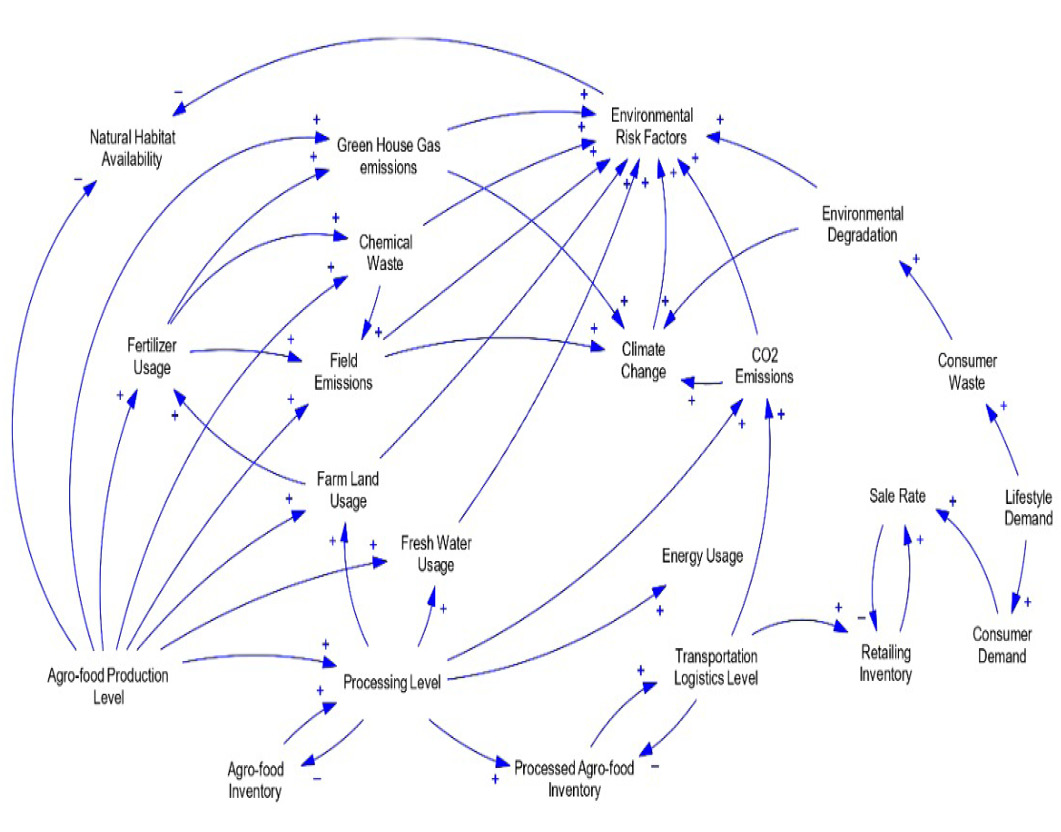
This review categorizes the investigated agro-food supply chain risks based on the stages they impact. The use of classification enables the identification of pivotal risks that hold significance throughout all phases of the agro-food supply chain . Targeting various stages of the supply chain is necessary to achieve substantial enhancements in its viability and sustainability. Figure 1 elucidates the origins of environmental risks that are present at various stages within the supply chain. The stages encompassed in this framework are agro-food production, processing, transit logistics, retailing, and the ultimate consumers.
Figure 1 illustrates the interdependencies and causal interactions among various components within the agro-food supply chain. This diagram serves as a valuable tool for comprehending the functioning of the supply chain and subsequently constructing flow diagrams for modeling purposes. An arrow represents the relationship between two variables, indicating a positive sign when the variables are directly proportional (i.e., an increase in one variable leads to an increase in the other), and a negative sign when the variables are inversely proportional (i.e., an increase in one variable results in a decrease in the other). In the upcoming session, there will be a more extensive discussion on the environmental risks associated with each level of the agro-food supply chain. The session will conclude with a focus on ideas to mitigate these risks within the agro-food supply chain.
Environmental risks at agro-food production level
Primary producers, or farmers, are the principal players responsible for agricultural food production at the agro-food production level. At the production level in the agricultural sector, the presence of dynamic environmental elements gives rise to major environmental concerns . Agricultural activities have the potential to cause environmental pollution and safety emergencies, underscoring the importance of adopting environmentally sustainable production strategies to alleviate environmental consequences . The susceptibility of newly harvested agricultural products to environmental impacts contributes to both social and natural risk factors throughout their supply chains . Agricultural production can generate environmental strain due to improper practices, the impact of CO2 concentrations, and climate .
Meanwhile, the identification of primary emission sources within the agro-food supply chain facilitates the formulation of policies aimed at establishing agro-food systems that are both sustainable and low in carbon emissions . Field emissions arise from primary agricultural and food production activities, manifesting themselves through both direct and indirect means. Activities occurring at the agro-food production level result in the direct emission of pollutants into the atmosphere, exacerbating climate change and increasing environmental vulnerability ; . Apart from primary production operations, the use of fertilizers, particularly chemical waste, also contributes to field emissions, exacerbating environmental hazards ; . Fertilizer application both directly and indirectly generates greenhouse gas (GHG) emissions in the context of agro-food production. This phenomenon contributes to the escalation of climate change and poses significant environmental hazards ; .
The augmentation of activities within the agro-food production sector will result in a corresponding rise in emissions released into the environment at the field level ; . Additional sources of field emissions could arise from the use of fertilizers and the disposal of chemical waste, making a significant contribution to climate change ; . In the context of climate change, it is noteworthy that greenhouse gas (GHG) emissions originate from the agricultural food supply chain and make a substantial contribution . Meanwhile, in close proximity to agro-food production, the processing level poses a significant environmental concern. Gas emissions will rise in direct proportion to the processing level of agricultural products.
Environmental risks at processing level
During the processing phase, the producer distributes the results of their production to the food processing sector or directly to retailers and final customers. Furthermore, the execution of processing activities exerts a direct influence on the quality and visual aesthetics of products, thereby enabling merchants to effectively satisfy client demands and foster long-term customer loyalty ; .
The agro-food processing industry poses environmental hazards due to waste production, energy consumption, and chemical use. The substantial quantity of trash generated not only leads to environmental contamination but also incurs financial losses for the respective industries (Castro‐Muñoz et al., 2022; ; . Agro-industrial operations have a significant impact on the environment and the profitability of the food sector. This is due to their contribution to environmental burdens during food production, processing, and distribution ; .
Meanwhile, in the context of CO2 emissions, it is important to consider the potential for growth stemming from activities occurring at the processing and transportation logistics stages . Specifically, this pertains to practices that include the utilization of equipment and transportation methods that are not environmentally sustainable. Such practices have the potential to exacerbate environmental concerns and should be carefully evaluated ; . The next section will provide an increased understanding of the association between environmental risks and transportation logistics.
Environmental risks at transportation logistics level
Environmental hazards in the transportation logistics aspect of the agro-food supply chain stem from issues such as heightened carbon emissions, energy usage, and ineffective distribution networks ; ; . The use of traditional transportation techniques in agro-food supply chains leads to increased environmental effects, namely in terms of food miles and carbon footprint .
At the transportation logistics level, logistics operators have the option to engage in vertical integration with other entities, such as wholesalers and retailers, or to subcontract their services for the storage and distribution of items based on the specific requirements of retailers. Retail inventory management is closely linked to the process by which merchants distribute finished goods to end consumers, who are the primary recipients of the supply chain (Navarro-del Aguila and de Burgos-Jiménez, 2022; .
In the realm of transportation, various factors, including the type of vehicle, the efficiency of the chosen route, and prevailing traffic circumstances, exert an influence on fuel consumption . Consequently, these factors contribute to the generation of CO2 emissions, which mostly emanate from the transportation logistics level within the supply chain stage. CO2 emissions exhibit a direct correlation with fuel usage and specific vehicular characteristics, hence yielding significant ramifications in terms of both financial expenses and environmental consequences ; . The emissions of CO2 exhibit a strong correlation with the different fuel types employed in transportation logistics . Meanwhile, transportation logistics that are inefficient and not sustainable can heighten environmental concerns when producers prioritize product convenience, speed, and accessibility to meet consumer demands. The following section will enhance comprehension of environmental hazards at the consumer level.
Environmental risks at consumer level
The ultimate consumer is the one who purchases the product. Consumer lifestyles exert a substantial influence on environmental degradation by means of consumption patterns, waste generation, and resource utilization . Individual preferences for agricultural food products can influence consumer demand. Consumer preferences, including the growing need for snacks and disposable products, have a negative impact on the environment by contributing to food waste and greenhouse gas emissions . According to their lifestyle preferences, consumers’ selection of agro-food items has the potential to exacerbate the issue of food waste.
Consumer-generated food waste has the capacity to exacerbate waste management issues and adversely affect the environment . However, the pressures of a contemporary way of life can motivate consumers to choose agricultural food goods that generate consumer waste, resulting in the production of unconsumed products. Customizing agricultural food production to suit unique lifestyle preferences may necessitate a greater utilization of materials and resources. Customizing agricultural food production to meet certain lifestyles may necessitate higher resource allocations, such as water, energy, and chemicals, which could potentially contribute to environmental deterioration . Lastly, the session will highlight strategies for mitigating environmental risks in the supply chain.
Mitigation strategies in agro-food supply chain
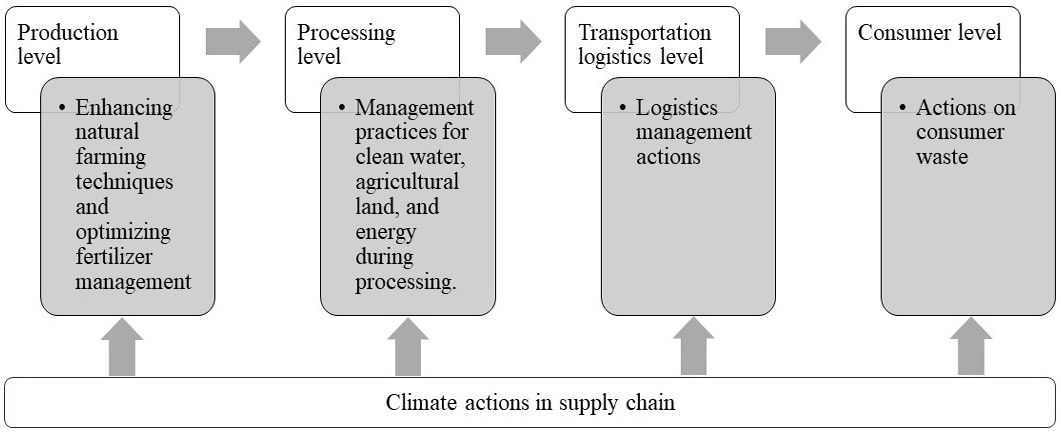
Sustainable supply chain risk manasgement includes recognizing, analyzing, and controlling risks, choosing suppliers, evaluating distribution risks, and planning production capacity . To improve business and supply chain performance, risk management must address firm and supply chain level disruption risk, analyze its impact, and resolve supply and process disruptions . Logistics unpredictability is the primary factor that influences the likelihood of supply interruption risk. The level of variability in the logistics service has a direct impact on the delivery service’s reliability and raises the likelihood of supply interruption risk. Furthermore, the likelihood of environmental disruption can have an impact on the risk associated with supply distribution . The proposed network design problem entails a novel methodology for designing distribution systems that facilitate the movement of agricultural produce from farmers to central hubs and subsequently to designated warehouses . Managers and entrepreneurs are increasingly recognizing the benefits of sustainability-driven innovations. However, it is critical for them to take into account the complex nature and potential risks associated with these initiatives. The formation of long-lasting collaborations with supply chain partners is crucial for the effective implementation of sustainability initiatives . Figure 2 presents an overview of mitigation strategies for environmental risks in the agro-food supply chain.
As the implementation of environmental measures becomes more prevalent across the supply chain, the dynamics of the buyer-supplier relationship undergo a transformation, transitioning from a transactional one to a collaborative one and from a commodity-centric focus to a strategic orientation Suppliers should recognize that implementing environmental initiatives with clients is a distinguishing factor. The collaborative establishment of environmental indicators can assist organizations in effectively managing environmental projects . Unless consumers present them with more explicit incentives like price premiums and increased market shares, firms should exercise caution when engaging with environmental supply chain sustainability programs. Additionally, governments could play a role by offering tax cuts to firms that demonstrate environmentally sustainable supply chains while imposing fines on those that do not. Furthermore, green investors could contribute to this effort by providing additional capital to firms with environmentally sustainable supply chains while withholding capital from non-green firms. This also implies that stakeholder groups should provide more precise incentives for firms with ecologically sustainable supply chains while imposing penalties on those that do not meet such standards .
Agro-food supply chains use knowledge management approaches in response to supply chain concerns. More resilient food supply networks could preserve food supplies and create jobs in the food business. Exposure to supply chain risks and assessment of their potential negative impact or loss are critical for reducing disruption or maintaining resilience . Managers should also work with all supply chain partners and analyze results from a supply chain perspective for integrated environmental risk management . Multiple supply chains can help manufacturers adapt to environmental changes and mitigate supply chain risks for organizational growth . The biggest sustainability risks in manufacturing enterprises’ supply chain management were poor planning and scheduling, environmental accidents, production capacity risk, product design risk, and exploitative recruiting policies . On the other hand, there is a significant amount of loss and waste in the fresh agricultural product supply chain, affecting a wide range of agricultural products at different stages and operating levels. Post-harvest loss and waste creates a disparity between demand and supply of agricultural and food products, leading to challenges in ensuring the provision of wholesome and nourishing sustenance for the community . In contrast, suppliers are allocating more resources towards enhancing product quality and implementing quality improvement initiatives to optimize supply chain efficiency and achieve optimal outcomes . The upcoming session will focus on environmental risk mitigation in climate action within supply chains, logistics management actions, and actions on consumer waste.
Climate actions in supply chain
Sustainable development integrates environmental practices into market systems, promoting adoption and performance . While there are various dimensions to environmental sustainability, it is crucial to emphasize the growing significance of addressing human-induced climate change in order to reduce emissions . The agro-food business is confronted with substantial risks due to climate change and variability, which in turn jeopardize ecosystems and natural capital. The identification and mitigation of climate-related risks within supply chains can significantly contribute to risk reduction and the enhancement of overall resilience for enterprises. The introduction of innovative products and services that are designed to withstand climate-related challenges can potentially create opportunities in previously untapped industries, such as the insurance sector and the field of water-efficient irrigation systems .
There has been a strong emphasis on prioritizing climate and environmental policy reform and disruption . Ensuring climate resilience should be regarded as a crucial concern in the context of value chain development, as it serves to mitigate poverty levels and enhance food security. It is imperative for all participants within the chain to possess knowledge regarding climate hazards and possess the necessary capabilities to effectively handle them . The potential for climate change-related consequences varies significantly depending on the specific circumstances; however, it is anticipated to be more pronounced in regions that are already characterized by high temperatures and possess weak socio-economic and institutional capacities to mitigate and adapt to these changes. The future of the climate and the interaction between humans and natural systems in response to climate change over time continue to be subjects of significant uncertainty. Hence, it is imperative for adaptation strategies to encompass a range of potential future scenarios, even those that may appear insignificant but possess significant ramifications . These encompass alterations in mean precipitation, climatic anomalies such as prolonged periods of high temperatures, variations in temperature patterns, shifts in the prevalence of pests and diseases, modifications in atmospheric carbon dioxide and ground-level ozone levels, fluctuations in sea levels, and modifications in the nutritional composition of food .
Moreover, the mitigation of greenhouse gas emissions is of utmost importance in enhancing sustainability ; . Enhancing fertilizer management techniques is one potential approach to mitigating greenhouse gas emissions. Conversely, the degradation of habitats poses a substantial environmental menace to biodiversity. Enhancing the sustainability of agro-food supply chains necessitates the implementation of many measures, including the establishment of protected areas, the mitigation of deforestation, and the reduction of chemical fertilizers and pesticides. These initiatives play a crucial role in mitigating habitat degradation. Furthermore, the implementation of environmentally sustainable innovations, such as the development or enhancement of novel goods, technologies, processes, and management strategies that yield both ecological advantages and economic value, can facilitate the achievement of such objectives . And agroforestry, as a viable alternative to monoculture, has emerged as a prominent avenue for promoting sustainability within the agricultural business .
Logistics management actions
The lack of organization within the transportation industry, particularly in developing nations, poses a significant challenge . While delivering local products to end consumers over shorter distances offers environmental and human health benefits, using smaller and less efficient vehicles for delivery instead of larger, more efficient ones typically used for large-scale product distribution can compromise or even negate these advantages. To fully harness these potential benefits and meet the increasing demand for locally supplied goods, optimizing the use of larger vehicles becomes paramount. Furthermore, it’s essential to recognize that the advantages of local procurement carry even greater weight in geographically distant regions far removed from the processing centers of ready to eat vegetables .
It becomes imperative to mitigate the ecological consequences of sustainable transportation alternatives within the supply chain. And it is necessary to consider various forms of transportation to facilitate the movement of goods between different supply stages, thereby enabling efficient delivery between warehouses. Shipping agrifood is responsible for the highest levels of carbon emissions. Therefore, it is recommended that the distribution and transportation sectors implement an environmentally friendly distribution strategy . Nevertheless, it is advisable to employ this approach just for intermodal transportation modes, such as truck-to-rail, which effectively mitigate the environmental consequences associated with distribution activities .
Actions on consumer waste
In the context of environmental conservation, it is worth noting that heightened consumer consciousness regarding sustainable food options and effective waste management practices can contribute significantly to mitigating adverse environmental consequences ; Gaitán‐Cremaschi et al., 2017; . In order to mitigate the effects of consumer waste and environmental degradation within the agro-food supply chain, it is imperative to advocate for the adoption of a more sustainable consumer lifestyle, endorse ecologically conscious production and distribution methods, and enhance consumer and food waste management strategies. Therefore, adopting sustainable consumption practices, such as endorsing eco-friendly items and minimizing food waste, can effectively alleviate the ecological consequences of consumer lifestyles . Consumer consciousness, instruction, and inclination to invest in ecologically conscious products are crucial in advancing sustainable practices in the agro-food supply chain .
The act of reducing food waste at the consumer level has the capacity to yield numerous advantages for both society and the environment. Addressing the issue of food waste necessitates a comprehensive approach, including measures that promote and mitigate food waste-related behaviours. Due to the frequently incomplete recognition and realization of the potential advantages associated with food waste reduction measures, there exists a necessity for educational initiatives employed by policymakers to enhance household consciousness pertaining to matters related to food waste . Consumer awareness and education can exert a significant influence on individuals’ behavior and preferences, prompting them to adopt a more sustainability-oriented approach. The attainment of genuine environmental sustainability necessitates the comprehensive consideration of all potential environmental consequences, with the goal of making informed decisions regarding investments in technology that can enhance environmental performance .
However, it is imperative for all corporations to adopt sustainable supply chain management techniques in order to mitigate potential dangers. In order to proficiently execute sustainable supply chain management methods, a company must possess a comprehensive understanding of its product’s life cycle as well as its location within the supply chain. There exists a positive correlation between heightened perceptions of sustainability risk and increased levels of monitoring of supplier sustainability practices by focal enterprises . Meanwhile, an elevated perception of sustainability risk prompts a heightened level of scrutiny towards supplier behavior, thereby resulting in greater investment in efforts aimed at enhancing the supply chain and higher attention towards social monitoring. And also, the use of behavior-oriented techniques, such as the monitoring of environmental and social practices, has been shown to be successful in enhancing the sustainability performance of firms .
It is critical to use environmental risk management models and promote environmental responsibility in agricultural operations to achieve sustainable production while minimizing resource consumption and pollution ; . Using agro-industrial waste to create products with added value can effectively decrease pollution and production expenses while also providing sustainable solutions to environmental issues ; . Utilizing cutting-edge technologies and extraction methods can aid in the effective utilization of by products, hence decreasing the environmental consequences of agricultural processing (Castro‐Muñoz et al., 2022; . Moreover, the utilization of digital technology and sustainable practices has the potential to enhance supply chain efficiency and mitigate the environmental impact . The COVID-19 pandemic has brought attention to weaknesses in the transportation and distribution of goods, underscoring the importance of implementing methods to withstand disruptions and maintain uninterrupted operations . Implementing blockchain technology and quality management strategies can enhance traceability and operational capacities, leading to significant changes in logistics and agro-food transportation ; .
Conclusions and Recommendations
The enhancement of agro-food supply chain sustainability is contingent upon the imperative task of mitigating environmental risk elements. Implementing effective management practices throughout the supply chain has the potential to significantly mitigate environmental risk factors. These practices encompass a range of strategies, including the enhancement of natural farming techniques, the optimization of fertilizer management, the improvement of food waste management among consumers, and the more efficient management of fresh water, farm land, and energy at the processing stage. The adoption of best practices and legislation that prioritize environmental sustainability in the agro-food supply chain holds significant importance. By using this measure, it can be ensured that the agro-food supply chain maintains its ability to deliver high-quality food products while simultaneously safeguarding the natural environment. Thus, promoting circular economy principles, green practices, and sustainability standards for sustainable agro-food supply chains can be a policy intervention.
Acknowledgements
We extend our gratitude to Brawijaya University for
facilitating access to reputable journals.
Novelty Statement
The review article provides a concise and current overview of the environmental risks associated with each stage of the agro-food supply chain, as well as suggested approaches to mitigate these risks.
Author’s Contribution
Anisa Aprilia: Conducted a comprehensive search and analysis of the existing literature, organized the discovered information, and wrote the manuscript.
Syafrial: Offered expert advice and direction along each step of the research work.
Djoko Koestiono, Fitria Dina Riana, Silvana Maulidah: Proofread the manuscript.
Conflict of interest
The authors have declared no conflict of interest.
Figures
Environmental risk factors in agro-food supply chain.
Mitigation strategies in agro-food supply chain for environmental risks.
References
- Abadi, Y.T.H. and S.A. Darestani. 2023. Evaluation of sustainable supply chain risk: Evidence from the Iranian food industry. J. Sci. Technol. Policy Manage., 14(1): 127–156. https://doi.org/10.1108/JSTPM-08-2020-0121[CrossRef]
- Accorsi, R., S. Cholette, R. Manzini, C. Pini and S. Penazzi. 2016. The land-network problem: Ecosystem carbon balance in planning sustainable agro-food supply chains. J. Cleaner Prod., 112: 158–171. https://doi.org/10.1016/j.jclepro.2015.06.082[CrossRef]
- Ahmad, D. and M. Afzal. 2020. An empirical analysis of economic efficiency and farm size of cotton farmers. Sarhad J. Agric., 36(4): 1067-1078. https://doi.org/10.17582/journal.sja/2020/36.4.1067.1078[Full text][CrossRef]
- Akratos, C.S., A.G. Tekerlekopoulou and D.V. Vayenas. 2021. Agro-industrial wastewater treatment with decentralized biological treatment methods. Water, 13(7): 953. https://doi.org/10.3390/w13070953[CrossRef]
- Ali, I., A. Sadiddin and A. Cattaneo. 2023. Risk and resilience in agri-food supply chain SMEs in the pandemic era: A cross-country study. Int. J. Logist. Res. Appl., 26(11): 1602–1620. https://doi.org/10.1080/13675567.2022.2102159[CrossRef]
- Allaoui, H., Y. Guo, A. Choudhary and J. Bloemhof. 2018. Sustainable agro-food supply chain design using two-stage hybrid multi-objective decision-making approach. Comp. Operat. Res., 89: 369–384. https://doi.org/10.1016/j.cor.2016.10.012[CrossRef]
- Anand, S. and M.K. Barua. 2022. Modeling the key factors leading to post-harvest loss and waste of fruits and vegetables in the agri-fresh produce supply chain. Comp. Electron. Agric., 198: 106936. https://doi.org/10.1016/j.compag.2022.106936[CrossRef]
- Aray, Y., A. Veselova, D. Knatko and A. Levchenko. 2021. Drivers for adoption of sustainability initiatives in supply chains of large Russian firms under environmental uncertainty. Corporate Govern. Int. J. Bus. Soc., 21(2): 322–338. https://doi.org/10.1108/CG-02-2020-0048[CrossRef]
- Arya, P., M.K. Srivastava and M.P. Jaiswal. 2020. Modelling environmental and economic sustainability of logistics. Asia-Pac. J. Bus. Admin., 12(1): 73–94. https://doi.org/10.1108/APJBA-11-2018-0204[CrossRef]
- Asian Development Bank, 2021. Climate risk country profile: Indonesia.
- Assis, M.T.Q.M., M.R.D.P.V. Lucas and M.M. Rainho. 2023. The influence of trust for sustainable agri-food production: Empirical evidence of a mariculturist supply chain in Southern Brazil. Br. Food J., 125(12): 4268–4290. https://doi.org/10.1108/BFJ-08-2022-0734[CrossRef]
- Avikal, S., R. Pant, A. Barthwal, M. Ram and R.K. Upadhyay. 2023. Factors implementing sustainable circular economy in agro-produce supply chain: DEMATEL-DANP-based approach. Manage. Environ. Qual. Int. J., 34(4): 1158–1173. https://doi.org/10.1108/MEQ-03-2022-0088[CrossRef]
- Azab, R., R.S. Mahmoud, R. Elbehery and M. Gheith. 2023. A bi-objective mixed-integer linear programming model for a sustainable agro-food supply chain with product perishability and environmental considerations. Logistics, 7(3): 46. https://doi.org/10.3390/logistics7030046[CrossRef]
- Babu, S. and H. Devarajan. 2023. Agro-food supply chain traceability using blockchain and IPFS. Int. J. Adv. Comp. Sci. Appl., 14(1). https://doi.org/10.14569/IJACSA.2023.0140142[CrossRef]
- Belaud, J.P., N. Prioux, C. Vialle and C. Sablayrolles. 2019. Big data for agri-food 4.0: Application to sustainability management for by-products supply chain. Comp. Ind., 111: 41–50. https://doi.org/10.1016/j.compind.2019.06.006[CrossRef]
- Belhadi, A., S. Kamble, N. Subramanian, R.K. Singh and M. Venkatesh. 2024. Digital capabilities to manage agri-food supply chain uncertainties and build supply chain resilience during compounding geopolitical disruptions. Int. J. Operat. Prod. Manage., https://doi.org/10.1108/IJOPM-11-2022-0737[CrossRef]
- Bhatia, M.S., R.K. Srivastava, S.K. Jakhar and S. Kumar. 2022. What’s critical for closed-loop supply chain operations? Findings from the Indian small and medium manufacturing enterprises. J. Cleaner Prod., 372: 133791. https://doi.org/10.1016/j.jclepro.2022.133791[CrossRef]
- Bian, X., G. Yao and G. Shi. 2020. Social and natural risk factor correlation in China’s fresh agricultural product supply. PLoS One, 15(6): e0232836. https://doi.org/10.1371/journal.pone.0232836[CrossRef]
- Boenzi, F., S. Digiesi, F. Facchini and B. Silvestri. 2022. Life cycle assessment in the agri-food supply chain: Fresh versus semi-finished based production process. Sustainability, 14(20): 13010. https://doi.org/10.3390/su142013010[CrossRef]
- Bosona, T. and G. Gebresenbet. 2023. The role of blockchain technology in promoting traceability systems in agri-food production and supply chains. Sensors, 23(11): 5342. https://doi.org/10.3390/s23115342[CrossRef]
- Caccialanza, A., D. Cerrato and D. Galli. 2023. Sustainability practices and challenges in the meat supply chain: a systematic literature review. Br. Food J., 125(12): 4470–4497. https://doi.org/10.1108/BFJ-10-2022-0866[CrossRef]
- Castro‐Muñoz, R., E. Díaz‐Montes, E. Gontarek‐Castro, G. Boczkaj and C.M. Galanakis. 2022. A comprehensive review on current and emerging technologies toward the valorization of bio‐based wastes and by products from foods. Comprehen. Rev. Food Sci. Food Saf., 21(1): 46–105. https://doi.org/10.1111/1541-4337.12894[CrossRef]
- Coelho, M.C., R.N. Pereira, A.S. Rodrigues, J.A. Teixeira and M.E. Pintado. 2020. The use of emergent technologies to extract added value compounds from grape by-products. Trends Food Sci. Technol., 106: 182–197. https://doi.org/10.1016/j.tifs.2020.09.028[CrossRef]
- Cui, L., S. Guo and H. Zhang. 2020. Coordinating a green agri-food supply chain with revenue-sharing contracts considering retailers’ green marketing efforts. Sustainability, 12(4): 1289. https://doi.org/10.3390/su12041289[CrossRef]
- Dam, L. and B.N. Petkova. 2014. The impact of environmental supply chain sustainability programs on shareholder wealth. Int. J. Operat. Prod. Manage., 34(5): 586–609. https://doi.org/10.1108/IJOPM-10-2012-0482[CrossRef]
- Dazé, A. and D. Julie. 2016. Enabling climate risk management along agricultural value chains: Insights from the rice value chain in Uganda.
- Desiderio, E., L. García-Herrero, D. Hall, A. Segrè and M. Vittuari. 2022. Social sustainability tools and indicators for the food supply chain: A systematic literature review. Sustain. Prod. Consump., 30: 527–540. https://doi.org/10.1016/j.spc.2021.12.015[CrossRef]
- Doğan, H.G., 2018. Nexus of agriculture, GDP, population and climate change: Case of some Eurasian countries and Turkey. Appl. Ecol. Environ. Res., 16(5): 6963–6976. https://doi.org/10.15666/aeer/1605_69636976[CrossRef]
- Dwivedi, A., A. Jha, D. Prajapati, N. Sreenu and S. Pratap. 2020. Meta-heuristic algorithms for solving the sustainable agro-food grain supply chain network design problem. Modern Supply Chain Res. Appl., 2(3): 161–177. https://doi.org/10.1108/MSCRA-04-2020-0007[CrossRef]
- Elhidaoui, S. and S. Kota. 2023. Towards a green Agri-food supply chain through ANP and ELECTRE I. Manage. Environ. Qual. Int. J., 34(5): 1352–1374. https://doi.org/10.1108/MEQ-12-2022-0344[CrossRef]
- Essien, A., G.O. Chukwukelu, N. Kazantsev and N. Subramanian. 2024. Unveiling the factors influencing transparency and traceability in agri-food supply chains: An interconnected framework. Supply Chain Manage. Int. J., 29(3): 602–619. https://doi.org/10.1108/SCM-02-2023-0083[CrossRef]
- Esteso, A., M.M.E. Alemany, F. Ottati and A. Ortiz. 2023. System dynamics model for improving the robustness of a fresh agri-food supply chain to disruptions. Operat. Res., 23(2): 28. https://doi.org/10.1007/s12351-023-00769-7[CrossRef]
- Faustino, M., M. Veiga, P. Sousa, E. Costa, S. Silva and M. Pintado. 2019. Agro-food byproducts as a new source of natural food additives. Molecules, 24(6): 1056. https://doi.org/10.3390/molecules24061056[CrossRef]
- Fierascu, R.C., I. Fierascu, S.M. Avramescu and E. Sieniawska. 2019. Recovery of natural antioxidants from agro-industrial side streams through advanced extraction techniques. Molecules, 24(23): 4212. https://doi.org/10.3390/molecules24234212[CrossRef]
- Fu, H., C. Zhao, C. Cheng and H. Ma. 2020. Blockchain-based agri-food supply chain management: Case study in China. Int. Food Agribus. Manage. Rev., 23(5): 667–680. https://doi.org/10.22434/IFAMR2019.0152[CrossRef]
- Gaitán‐Cremaschi, D., M.P.M. Meuwissen and A.G.J.M. Oude-Lansink. 2017. Total factor productivity: A framework for measuring agri‐food supply chain performance towards sustainability. Appl. Econ. Persp. Policy, 39(2): 259–285. https://doi.org/10.1093/aepp/ppw008[CrossRef]
- Galati, A., G. Migliore, A. Thrassou, G. Schifani, G. Rizzo, N. Adamashvili and M. Crescimanno. 2023. Consumers willingness to pay for agri-food products delivered with electric vehicles in the short supply chains. FIIB Bus. Rev., 12(2): 193–207. https://doi.org/10.1177/23197145221112743[CrossRef]
- Godde, C.M., D. Mason-D’Croz, D.E. Mayberry, P.K. Thornton and M. Herrero. 2021. Impacts of climate change on the livestock food supply chain: A review of the evidence. Glob. Food Secur., 28: 100488. https://doi.org/10.1016/j.gfs.2020.100488[CrossRef]
- Gómez, M. and Y. Triana. 2023. An environmental risks management model in agriculture: Public policies and law. pp. 1–25. https://doi.org/10.21203/rs.3.rs-2752063/v1[CrossRef]
- Groot, A., K. de Bruin, J. Bolt, P. Verwey, E. Daniels and R. Hutjes. 2019. Climate risk assessment services for agri-food sector.
- Hale, J., K. Legun, H. Campbell and M. Carolan. 2019. Social sustainability indicators as performance. Geoforum, 103: 47–55. https://doi.org/10.1016/j.geoforum.2019.03.008[CrossRef]
- Huang, S.Y.B., C.C. Yu and Y.S. Lee. 2022. How to promote the agricultural company through environmental social responsibility to achieve sustainable production? Front. Environ. Sci., 9. https://doi.org/10.3389/fenvs.2021.770783[CrossRef]
- Husgafvel, R., N. Pajunen, K. Virtanen, I.L. Paavola, M. Päällysaho, V. Inkinen, K. Heiskanen, O. Dahl and A. Ekroos. 2015. Social sustainability performance indicators experiences from process industry. Int. J. Sustain. Eng., 8(1): 14–25. https://doi.org/10.1080/19397038.2014.898711[CrossRef]
- IFAD, 2015. How to do climate change risk assessments in value chain projects: environment and climate change. In: International Fund for Agricultural Development.
- Ivo de Carvalho, M., S. Relvas and A.P. Barbosa-Póvoa. 2022. A roadmap for sustainability performance assessment in the context of agri-food supply chain. Sustain. Prod. Consump., 34: 565–585. https://doi.org/10.1016/j.spc.2022.10.001[CrossRef]
- Joshi, S. and M. Sharma. 2022. Digital technologies (DT) adoption in agri-food supply chains amidst COVID-19: An approach towards food security concerns in developing countries. J. Glob. Operat. Strat. Sourc., 15(2): 262–282. https://doi.org/10.1108/JGOSS-02-2021-0014[CrossRef]
- Krstić, M., G.P. Agnusdei, S. Tadić and P.P. Miglietta. 2023. Prioritization of e-traceability drivers in the agri-food supply chains. Agric. Food Econ., 11(1): 42. https://doi.org/10.1186/s40100-023-00284-5[CrossRef]
- Kuizinaitė, J., M. Morkūnas and A. Volkov. 2023. Assessment of the most appropriate measures for mitigation of risks in the agri-food supply chain. Sustainability, 15(12): 9378. https://doi.org/10.3390/su15129378[CrossRef]
- Liu, C.Y. and C.Y. Lee. 2019. Multiple supply chain adoption under uncertainty. Int. J. Phys. Distribut. Logist. Manage., 49(3): 305–326. https://doi.org/10.1108/IJPDLM-10-2017-0312[CrossRef]
- Long, R. and R. Deng. 2024. Analyzing the nexus between environmental regulations, green supply chain management, and corporate social responsibility in the agri-food business. Polish J. Environ. Stud., 33(4): 4213–4227. https://doi.org/10.15244/pjoes/181185[CrossRef]
- Marsden, T., 2022. Sustainable agri-food transformations and the rise of disruptive governance. Emerald Publishing Limited, Leeds. https://doi.org/10.1108/S1057-192220220000026005[CrossRef]
- Martínez, C., J.P. Paraskevas, C. Grimm, T. Corsi and S. Boyson. 2020. The impact of environmental risks in supply chain resilience. In: Supply chain management and logistics in emerging markets. Emerald Publishing Limited. pp. 11–39. https://doi.org/10.1108/978-1-83909-331-920201002[CrossRef]
- Martins, F.P., A.C.S. Batalhão, M. Ahokas, L.B. Liboni Amui and L.O. Cezarino. 2023. Rethinking sustainability in cocoa supply chain in light of SDG disclosure. Sustain. Account. Manage. Policy J., 14(7): 258–286. https://doi.org/10.1108/SAMPJ-03-2022-0132[CrossRef]
- Matharu, M., N. Gupta and V. Swarnakar. 2022. Efforts are made but food wastage is still going on: a study of motivation factors for food waste reduction among household consumers. Asia Pac. J. Bus. Admin., 14(2): 244–264. https://doi.org/10.1108/APJBA-07-2021-0303[CrossRef]
- Mehmood, A., S. Ahmed, E. Viza, A. Bogush and R.M. Ayyub. 2021. Drivers and barriers towards circular economy in supply chain: A review. Bus. Strategy Dev., 4(4): 465–481. https://doi.org/10.1002/bsd2.171[CrossRef]
- Melesse, T.Y., C. Franciosi, V. Di Pasquale and S. Riemma. 2023. Analyzing the implementation of digital twins in the agri-food supply chain. Logistics, 7(2): 33. https://doi.org/10.3390/logistics7020033[CrossRef]
- Miemczyk, J. and D. Luzzini. 2019. Achieving triple bottom line sustainability in supply chains. Int. J. Operat. Prod. Manage., 39(2): 238–259. https://doi.org/10.1108/IJOPM-06-2017-0334[CrossRef]
- Morali, O. and C. Searcy. 2013. A review of sustainable supply chain management practices in Canada. J. Bus. Ethics, 117(3): 635–658. https://doi.org/10.1007/s10551-012-1539-4[CrossRef]
- Morella, P., M.P. Lambán, J. Royo and J.C. Sánchez. 2021. Study and analysis of the implementation of 4.0 technologies in the agri-food supply chain: A state of the art. Agronomy, 11(12): 2526. https://doi.org/10.3390/agronomy11122526[CrossRef]
- Murfield, M.L. and W.L. Tate. 2017. Buyer and supplier perspectives on environmental initiatives. Int. J. Logist. Manage., 28(4): 1319–1350. https://doi.org/10.1108/IJLM-06-2016-0138[CrossRef]
- Navarro-del Aguila, I. and J. de Burgos-Jiménez. 2022. Sustainable innovation through developing hybrid agri-food supply chains: A case in South-Eastern Spain. Toxics, 10(12): 752. https://doi.org/10.3390/toxics10120752[CrossRef]
- Ngwasiri, P.N., W.A. Ambindei, V.A. Adanmengwi, P. Ngwi, A.T. Mah, N.T. Ngangmou, D.J. Fonmboh, N.M. Ngwabie, M.B. Ngassoum and E.R. Aba. 2022. A review paper on agro-food waste and food by-product valorization into value added products for application in the food industry: Opportunities and challenges for cameroon bioeconomy. Asian J. Biotechnol. Bioresour. Technol., pp. 32–61. https://doi.org/10.9734/ajb2t/2022/v8i330128[CrossRef]
- Parast, M.M. and N. Subramanian. 2021. An examination of the effect of supply chain disruption risk drivers on organizational performance: Evidence from Chinese supply chains. Supply Chain Manage. Int. J., 26(4): 548–562. https://doi.org/10.1108/SCM-07-2020-0313[CrossRef]
- Peterson, H.H., G. DiGiacomo, C.D. Court, M. Miller, G. Oliveira, A.W. Stevens, L. Zhang, L.M. Baker, J. Nowak, E. Orlando and B.B. Saha. 2023. Impacts of COVID-19 on US agri-food supply chain businesses: Regional survey results. PLoS One, 18(2): e0281930. https://doi.org/10.1371/journal.pone.0281930[CrossRef]
- Philip, A. and R.R. Marathe. 2022. A new green labeling scheme for agri-food supply chains: Equilibrium and information sharing under uncertainties. Sustainability, 14(23): 15511. https://doi.org/10.3390/su142315511[CrossRef]
- Pietrzyck, K., S. Jarzębowski and B. Petersen. 2021. Exploring sustainable aspects regarding the food supply chain, agri-food quality standards, and global trade: An empirical study among experts from the European Union and the United States. Energies, 14(18): 5987. https://doi.org/10.3390/en14185987[CrossRef]
- Rahbari, M., A.A. Khamseh and M. Mohammadi. 2023. A novel multi-objective robust fuzzy stochastic programming model for sustainable agri-food supply chain: Case study from an emerging economy. Environ. Sci. Pollut. Res., 30(25): 67398–67442. https://doi.org/10.1007/s11356-023-26305-w[CrossRef]
- Ramirez, M.J., I.E. Roman, E. Ramos and A.S. Patrucco. 2021. The value of supply chain integration in the Latin American agri-food industry: Trust, commitment and performance outcomes. Int. J. Logistics Manage., 32(1): 281–301. https://doi.org/10.1108/IJLM-02-2020-0097[CrossRef]
- Ramos, E., P.S. Coles, M. Chavez and B. Hazen. 2022. Measuring agri-food supply chain performance: Insights from the Peruvian kiwicha industry. Benchmarking, 29(5): 1484–1512. https://doi.org/10.1108/BIJ-10-2020-0544[CrossRef]
- Rana, R.L., C. Tricase and L. De Cesare. 2021. Blockchain technology for a sustainable agri-food supply chain. Br. Food J., 123(11): 3471–3485. https://doi.org/10.1108/BFJ-09-2020-0832[CrossRef]
- Richards, C.E., R.C. Lupton and J.M. Allwood. 2021. Re-framing the threat of global warming: an empirical causal loop diagram of climate change, food insecurity and societal collapse. Clim. Change, 164(3–4). https://doi.org/10.1007/s10584-021-02957-w[CrossRef]
- Sadh, P.K., S. Duhan and J.S. Duhan. 2018. Agro-industrial wastes and their utilization using solid state fermentation: A review. Bioresour. Bioprocess., 5(1): 1. https://doi.org/10.1186/s40643-017-0187-z[CrossRef]
- Shafiq, A., P.F. Johnson, R.D. Klassen and A. Awaysheh. 2017. Exploring the implications of supply risk on sustainability performance. Int. J. Operat. Prod. Manage., 37(10): 1386–1407. https://doi.org/10.1108/IJOPM-01-2016-0029[CrossRef]
- Taghikhah, F., A. Voinov, N. Shukla, T. Filatova and M. Anufriev. 2021. Integrated modeling of extended agro-food supply chains: A systems approach. Eur. J. Operat. Res., 288(3): 852–868. https://doi.org/10.1016/j.ejor.2020.06.036[CrossRef]
- Takavakoglou, V., E. Pana and D. Skalkos. 2022. Constructed wetlands as nature-based solutions in the post-COVID agri-food supply chain: Challenges and opportunities. Sustainability, 14(6): 3145. https://doi.org/10.3390/su14063145[CrossRef]
- Tasca, A.L., S. Nessi and L. Rigamonti. 2017. Environmental sustainability of agri-food supply chains: An LCA comparison between two alternative forms of production and distribution of endive in northern Italy. J. Cleaner Prod., 140: 725–741. https://doi.org/10.1016/j.jclepro.2016.06.170[CrossRef]
- Taşkıner, T. and B. Bilgen. 2021. Optimization models for harvest and production planning in agri-food supply chain: A systematic review. Logistics, 5(3): 52. https://doi.org/10.3390/logistics5030052[CrossRef]
- Trivellas, P., G. Malindretos and P. Reklitis. 2020. Implications of green logistics management on sustainable business and supply chain performance: Evidence from a survey in the Greek agri-food sector. Sustainability, 12(24): 10515. https://doi.org/10.3390/su122410515[CrossRef]
- Tse, Y.K., R.L. Matthews, K. Hua Tan, Y. Sato and C. Pongpanich. 2016. Unlocking supply chain disruption risk within the Thai beverage industry. Ind. Manage. Data Syst., 116(1): 21–42. https://doi.org/10.1108/IMDS-03-2015-0108[CrossRef]
- Tuni, A. and A. Rentizelas. 2022. Improving environmental sustainability in agri-food supply chains: Evidence from an eco-intensity-based method application. Cleaner Logist. Supply Chain, 5: 100081. https://doi.org/10.1016/j.clscn.2022.100081[CrossRef]
- Wang, L. and P. Rani. 2022. Sustainable supply chains under risk in the manufacturing firms: An extended double normalization-based multiple aggregation approach under an intuitionistic fuzzy environment. J. Enterp. Inf. Manage., 35(4/5): 1067–1099. https://doi.org/10.1108/JEIM-05-2021-0222[CrossRef]
- Warshawsky, D.N., 2016. Food waste, sustainability, and the corporate sector: case study of a US food company. Geogr. J., 182(4): 384–394. https://doi.org/10.1111/geoj.12156[CrossRef]
- Yadav, S. Luthra and D. Garg. 2021. Modelling Internet of things (IoT)-driven global sustainability in multi-tier agri-food supply chain under natural epidemic outbreaks. Environ. Sci. Pollut. Res., 28(13): 16633–16654. https://doi.org/10.1007/s11356-020-11676-1[CrossRef]
- Yadav, V.S., A.R. Singh, A. Gunasekaran, R.D. Raut and B.E. Narkhede. 2022. A systematic literature review of the agro-food supply chain: Challenges, network design, and performance measurement perspectives. Sustain. Prod. Consump., 29: 685–704. https://doi.org/10.1016/j.spc.2021.11.019[CrossRef]
- Yu, K., J. Cadeaux, N. Luo, C. Qian and Z. Chen. 2018. The role of the consistency between objective and perceived environmental uncertainty in supply chain risk management. Ind. Manage. Data Syst., 118(7): 1365–1387. https://doi.org/10.1108/IMDS-09-2017-0410[CrossRef]
- Yu, L., W. Liu, S. Yang, R. Kong and X. He. 2022. Impact of environmental literacy on farmers’ agricultural green production behavior: Evidence from rural China. Front. Environ. Sci., 10. https://doi.org/10.3389/fenvs.2022.990981[CrossRef]
- Yuan, Y. and W. Li. 2022. The effects of supply chain risk information processing capability and supply chain finance on supply chain resilience: A moderated and mediated model. J. Enterp. Inf. Manage., 35(6): 1592–1612. https://doi.org/10.1108/JEIM-09-2021-0383[CrossRef]
- Yuniarti, R., I. Masudin, A. Rusdiansyah and D.I. Handayani. 2023. Model of multiperiod production-distribution for closed-loop supply chain considering carbon emission and traceability for agri-food products. Int. J. Ind. Eng. Operat. Manage., 5(3): 240–263. https://doi.org/10.1108/IJIEOM-10-2022-0045[CrossRef]
- Zhai, H., 2023. A dynamic model for risk assessment of cross-border fresh agricultural supply chain. Int. J. Adv. Comp. Sci. Appl., 14(7). https://doi.org/10.14569/IJACSA.2023.0140756[CrossRef]
- Zhong, J., H. Cheng, X. Chen and F. Jia. 2023. A systematic analysis of quality management in agri-food supply chains: A hierarchy of capabilities perspective. Supply Chain Manage. Int. J., 28(3): 619–637. https://doi.org/10.1108/SCM-12-2021-0547[CrossRef]
- Zhu, Q., H. Krikke and M.C.J. Caniëls. 2017. Integrated supply chain risk management: A systematic review. Int. J. Logist. Manage., 28(4): 1123–1141. https://doi.org/10.1108/IJLM-09-2016-0206[CrossRef]
- Zhu, Q., J. Sarkis and K. Lai. 2019. Choosing the right approach to green your supply chains. Modern Supply Chain Res. Appl., 1(1): 54–67. https://doi.org/10.1108/MSCRA-02-2019-0006[CrossRef]
Services
Article usage statistics
Loading…