
To elucidate the association between polymorphism of SYNE2 and litter size in sheep and provide a new locus for marker-assisted selection of high fecundity traits in sheep. A total of 384 small tail han sheep (STH) were sampled to detect single nucleotide polymorphism (SNP), and Sequenom Mass ARRAY®SNP assay was applied to genotype SNP loci of the SYNE2 gene. In this study, four SNPs were identified and that SNPs were identified that involved in amino acid changes. Population genetic analysis indicated that SYNE2 gene g.73310578G>A, g.73312791A>G showed moderate polymorphism (0.25<PIC<0.5) in Small Tail Han sheep. Furthermore, g.73310578G>A and g.73312791A>G loci were closely linked in STH (r2 > 0.33). Association analysis results showed that g.73310578G>A and g.73312791A>G SNPs significantly affected litter size (P < 0.05). In addition, the litter size of individuals with the combined genotype AA/AG was greater than that of individuals with AA/GG, GA/AG, and GG/AA genotypes in the third parity (P < 0.05). In summary, the SYNE2 gene had a positive influence on the litter size of STH sheep. The linkage of g.73310578G>A and g.73312791A>G could be used in the marker-assisted selection of the litter size of STH.
Research Article · Volume 53, Issue 2, 14 February 2021 · Open Access
Polymorphism of SYNE2 Gene and its Association with Litter Size in Small Tail Han Sheep
· · ·
Affiliations & Notes ⌄
- 1Key Laboratory of Animal Genetics and Breeding and Reproduction of Ministry of Agriculture and Rural Affairs, Institute of Animal Science, Chinese Academy of Agricultural Sciences, Beijing 100193, China 2College of Animal Science and Technology, Henan University of Science and Technology, Luoyang, Henan 471003, China 3Institute of Animal Husbandry and Veterinary Medicine, Anhui Academy of Agricultural Sciences, Hefei 230031, China , * Corresponding author: mxchu@263.net
Article Info ⌄
- Journal:
- Pakistan Journal of Zoology
- Published:
- 14 February 2021

From the article
- The association analysis has shown that the four SNPs have no significant differences in each parity litter size between different genotypes.
- Association analysis revealed that mutations at g.73310578G>A and g.73312791A>G had a significant impact on litter size in STH sheep, which is consistent with the linkage disequilibrium result.
- In Summary, the current study explored the genetic polymorphisms in the coding region of the SYNE2 gene, indicating that the AAAG haplotypes of SYNE2 gene g.73310578G>A and g.73312791A>G linkage loci could influence the third parity litter size in STH sheep.
- Therefore, it could be useful in the marker-assisted selection of the second and third parity litter size in STH sheep.
Selected from the article's own text.
Abstract
INTRODUCTION
Litter size plays a vital role in the livestock economy . The litter size in sheep is a complex trait that is influenced by many factors, such as genetic background , nutritional level , and feeding management. The genetic experience principally includes the number of ovulation , fertilization efficiency , and estrus . Among them, the ovulation is particularly important, which can affect the number of lambs per year in the sheep. Identification of the candidate genes that are responsible for variation in continuous traits or quantitative traits has been a challenge in modern genetics. So far, there have been some studies of a candidate gene, such as FecB, BMP15, and GDF9 on reproductive traits in sheep, which revealed that candidate gene plays an important role in sheep reproduction. The FecB gene is crucial in the regulation of prolificacy phenotype in sheep .
Nuclear envelope spectrin repeat proteins (Nesprins) are the latest identified members of the spectrin repeat (SR)-containing protein family (Zhou et al., 2018a). Nesprin-1/2 giant isoforms localize at the outer nuclear membrane and form the L Inker of Nucleoskeleton-and-Cytoskeleton (LINC) complex via associations between their KASH domains and the SUN domains of SUN1/2 in the perinuclear space ; . The LINC complex tethers the nuclear envelope to cytoskeletal elements, including actin filaments and the microtubule network ; . This molecular linking network is pivotal in regulating nuclear integrity, maintaining nuclear-cytoskeleton coupling, and participating in mechanotransduction, nuclear migration and positioning uniquely in muscle cell differentiation ; ; Zhou et al., 2018a). Previous studies have suggested that Nesprin-2 regulates the Wnt/β-catenin signaling pathway ; . Several reports have shown that the Wnt/β-catenin pathway plays an essential role in follicular development, granulosa cell growth, and oocyte maturation . Most studies on the SYNE2 gene have focused on diseases in the human ; and the mouse (Zhou et al., 2018a). However, few studies have investigated the effect of the SYNE2 gene on litter size in sheep. Therefore, the objectives of the present research were to detect SNPs associated with the litter size in small tail han (STH) sheep and identify a genetic marker conceivably valuable for marker-assisted selection.
MATERIALS AND METHODS
All the experimental procedures mentioned in the present study were approved by the Science Research Department (in charge of animal welfare issue) of the Institute of Animal Sciences, Chinese Academy of Agricultural Sciences (IAS-CAAS) (Beijing, China). Ethical approval on animal survival was given by the animal ethics committee of IAS-CAAS (No. IASCAAS-AE-03, 12 December 2016).
Animals selection, blood sampling, and DNA extraction
As detailed in Table I, 726 ewes from six sheep breeds were selected for genotyping. Jugular vein blood samples (10 mL blood per ewe) were collected using citrate glucose as an anticoagulant. Genomic DNA was extracted by the phenol-chloroform method , dissolved in ddH2O and stored at -20℃.
Primer design and genotyping
Four pairs of primers were designed according to the ovine SYNE2 sequence from Ensemble (ENSOART00000023042.1). Primer sequence, product size and annealing temperature are presented in Table II. All primers were synthesized by Beijing Tianyihuiyuan Biotechnology Co. Ltd. (Beijing, P.R. China). PCR was carried out in 50 μL volume containing 25 μL of 2×GC Buffer Ⅰ, 8 μL of 2.5 mmol/L each dNTP, 0.5 μL of 5 U/μL TaKaRa LA Taq, 2 μL of 40 ng/μL genomic DNA, and 1 μL of 10 μmol/L each primer, the rest was ddH2O. Amplification conditions were as follows: initial denaturation at 95℃ for 5 min; followed by 34 cycles of denaturation at 95℃ for 30 s, annealing for 30 s, extension at 72℃ for 1 min with a final extension at 72℃ for 5 min.
All of the PCR products were sent to Sangon Biotech Co, Ltd. (Shanghai, China). The sequencer software Chromas Pro 2 was used to identify SNPs. Genotyping of SYNE2 SNPs by Sequenom MassARRAY® SNP as described by Zhou (Zhou et al., 2018b). Genotyping primer sequence and product size are presented in Table II.
Statistical analysis
Allelic frequencies, heterozygosity (He), polymorphism information content (PIC) and the Hardy-Weinberg equilibrium tests were calculated using Pop gene (version 1.31). Linkage disequilibrium was analyzed using Haploview. Statistical analysis was performed by univariate analysis in a General Linear Model procedure of SAS (V. 8.1) (SAS Institute Inc., Cary, NC, USA). Multiple comparisons of means were performed using the least significant difference method. The applied model was expressed as follows: yijn =μ+ Pi + Gj + IPG + eijn, where yijn is the phenotypic value of litter size; μ is the population mean; Pi is the fixed effect of the ith parity (i = 1, 2, 3); Gj is the fixed effect of the jth genotype (j=1, 2, 3); IPG is the interaction effect of parity and genotype; and eijn is the random residual.
RESULTS
Polymorphisms of the coding region of the SYNE2 gene
In this study, sequencing of the amplicons of different primer pairs identified four polymorphic nucleotide sites in sheep SYNE2 gene. The g.73310578G>A mutation was in the 112 exons and the g.73312892G>A, g.73312791A>G and g.73314606G>A mutations were in the 114 exons (Fig. 1). Four SNPs (g.73310578G>A, g.73312892G>A, g.73312791A>G and g.73314606G>A) were genotyped in STH sheep (Fig. 2). At g.73312892G>A locus, the PIC was 0.07 in STH (Fig. 2). At g.73310578G>A, g.73314606G>A and g.73312791A>G locus, the PIC was 0.18~0.30 in STH. Genotypic distribution and allelic frequencies of four SNPs are shown in Figure 2. It was shown that STH sheep were in Hardy-Weinberg equilibrium at four-locus (p > 0.05) (Fig. 2). To reveal the linkage relationships between the four SNPs, the linkage disequilibrium was estimated at in STH sheep (Fig. 3). If r2 > 0.33 and D’ > 0.5 the linkage disequilibrium was considered strong . Following the result, both g.73310578G>A and g.73312791A>G loci were closely linked in STH sheep.
Population genetic analysis of polymorphism in the SYNE2 gene
Besides STH sheep (Fig. 2), population genetic characteristics of four SNPs in the other five sheep breeds were also analyzed, the results were listed in Table III. It revealed that the g.73314606G>A and g.73312791A>G loci were moderately polymorphic (0.25 <PIC<0.5) in the Sunite sheep and Hu sheep, respectively.
Table I. Information of six sheep breeds selected for genotyping.
| Breed | Number | District |
| Small tail han sheep | 384 | Yuncheng, Shandong Province, China |
| Hu sheep | 101 | Xuzhou, Jiangsu Province, China |
| Cele black sheep | 68 | Cele, Hetian, Xinjiang Uigur Autonomous Region, China |
| Prairie Tibetan sheep | 80 | Dangxiong, Tibet Autonomous Region, China |
| Sunite sheep | 70 | Wulatezhongqi, Bayannaoer, Inner Mongolia Autonomous Region, China |
| Tan sheep | 23 | Yanchi, Ningxia Hui Autonomous Region, China |
Table II. Information of primer in sheep SYNE2 gene.
| Primer name | Primer sequence | Tm | product size | Amplified region |
| SYNE2-1 | F: CATCACTGTTTTCAGAGTGCCT R: ATACCTCTTCTCCCACCCACG | 59.5 | 342 bp | Exon112 |
| SYNE2-2 | F: TTCCTGTCTAGATGATGCCAG R: GCTGCAAGGACACTAAGTCT | 58.9 | 352 bp | Exon114 |
| SYNE2-3 | F: AAGCTGATTCCGGCCACAC R: CAGGGCCATAACGTAGCTTT | 60.6 | 341 bp | Exon114 |
| SYNE2-4 | F: CATGCTGGCTCTAGTCCCCT R: TAGAAGGACCTGGCAAAGTTGT | 61.1 | 332 bp | Exon114 |
| SYNE2-1-S | F:ACGTTGGATGAGCTGGCTGACTCTATCTTG R:ACGTTGGATGTCTCTGTCAACGTGAACAGC | 60.0 | 102 bp | PCR for g.73310578G>A |
| SYNE2-1-E | 5’- TGACTCTATCTTGGAGTTCT -3’ | Extension reaction | ||
| SYNE2-2-S | F: ACGTTGGATGCCTAGCAACTGGAAAAGGAG R: ACGTTGGATGTAAGCAGGGTGCTGGAAATC | 98 bp | PCR for g.73312791A>G | |
| SYNE2-2-E | 5’- AAAGGAGCTAGTGGAAC -3’ | Extension reaction | ||
| SYNE2-3-S | F: ACGTTGGATGGGAGAAGACTACATTGAGGC R: ACGTTGGATGGGGACACTTGCTCAAGTAAC | 99 bp | PCR for g.73312892G>A | |
| SYNE2-3-E | 5’- aggaTGAAGAGAAGGTCCATGTTATC -3’ | Extension reaction | ||
| SYNE2-4-S | F: ACGTTGGATGAGCTCTCACCTCCTCTGTTG R: ACGTTGGATGTGATCACCCGAGAAAGGAAG | 109 bp | PCR for g.73314606G>A | |
| SYNE2-4-E | 5’- tgaCCGATCCCGCTGCCCCC -3’ | Extension reaction |
The chi-square test indicated that all SNPs under Hardy Weinberg equilibrium (P>0.05) in six sheep breeds. Besides, we classified six breeds into two categories, Multiparous and uniparous, based on the litter size characteristics, the results of the comparison of the population genetic analysis were shown in Table IV.
Association analysis of SNPs with litter size
At the g.73312892G>A locus in the STH sheep, individuals with the GG genotype higher litter size than did those with AA genotypes in each parity (Table V). However, it did not reach a significant level (P > 0.05). At other loci, no significant differences in each parity litter size between different genotypes were found. The results of association analysis of the combined genotypes showed
Table III. Population genetic analysis of four loci of SYNE2 in five sheep breeds.
| Locus | Breed | Genotype frequency | Allele frequency | PIC | HE | NE | Chi-Square test (P-value) | |||
| g.73312892G>A | GG | AG | AA | G | A | |||||
| Hu sheep | 0.90 | 0.09 | 0.01 | 0.95 | 0.05 | 0.10 | 0.10 | 1.11 | 0.18 | |
| Prairie Tibetan sheep | 0.84 | 0.16 | 0.00 | 0.92 | 0.08 | 0.13 | 0.14 | 1.17 | 0.29 | |
| Cele black sheep | 0.98 | 0.02 | 0.00 | 0.99 | 0.01 | 0.02 | 0.02 | 1.02 | 0.94 | |
| Sunite sheep | 0.81 | 0.19 | 0.00 | 0.90 | 0.10 | 0.16 | 0.17 | 1.21 | 0.63 | |
| Tan sheep | 0.86 | 0.14 | 0.00 | 0.93 | 0.07 | 0.12 | 0.13 | 1.15 | 0.73 | |
| g.73310578G>A | AA | GA | GG | A | G | |||||
| Hu sheep | 0.69 | 0.29 | 0.02 | 0.84 | 0.16 | 0.24 | 0.27 | 1.38 | 0.61 | |
| Prairie Tibetan sheep | 0.77 | 0.20 | 0.03 | 0.87 | 0.13 | 0.20 | 0.23 | 1.29 | 0.12 | |
| Cele black sheep | 0.73 | 0.23 | 0.04 | 0.85 | 0.15 | 0.23 | 0.26 | 1.35 | 0.41 | |
| Sunite sheep | 0.67 | 0.33 | 0.00 | 0.83 | 0.17 | 0.24 | 0.28 | 1.38 | 0.36 | |
| Tan sheep | 0.82 | 0.18 | 0.00 | 0.91 | 0.09 | 0.15 | 0.17 | 1.20 | 0.64 | |
| g.73314606G>A | AA | GA | GG | A | G | |||||
| Hu sheep | 0.04 | 0.28 | 0.68 | 0.18 | 0.82 | 0.25 | 0.29 | 1.41 | 0.59 | |
| Prairie Tibetan sheep | 0.04 | 0.22 | 0.74 | 0.15 | 0.85 | 0.22 | 0.25 | 1.34 | 0.13 | |
| Cele black sheep | 0.02 | 0.12 | 0.86 | 0.08 | 0.92 | 0.14 | 0.15 | 1.17 | 0.06 | |
| Sunite sheep | 0.00 | 0.38 | 0.62 | 0.19 | 0.81 | 0.26 | 0.31 | 1.45 | 0.28 | |
| Tan sheep | 0.00 | 0.27 | 0.73 | 0.14 | 0.86 | 0.21 | 0.24 | 1.31 | 0.46 | |
| g.73312791A>G | AA | GA | GG | A | G | |||||
| Hu sheep | 0.02 | 0.38 | 0.60 | 0.21 | 0.79 | 0.28 | 0.33 | 1.49 | 0.15 | |
| Prairie Tibetan sheep | 0.03 | 0.20 | 0.77 | 0.13 | 0.87 | 0.20 | 0.23 | 1.29 | 0.12 | |
| Cele black sheep | 0.04 | 0.23 | 0.73 | 0.15 | 0.85 | 0.23 | 0.26 | 1.35 | 0.41 | |
| Sunite sheep | 0.00 | 0.29 | 0.71 | 0.14 | 0.86 | 0.21 | 0.24 | 1.32 | 0.44 | |
| Tan sheep | 0.00 | 0.18 | 0.82 | 0.09 | 0.91 | 0.15 | 0.17 | 1.20 | 0.64 | |
Note: PIC, HE and NE represent polymorphism information content, heterozygosity and effective number of alleles, respectively; p>0.05 indicates the locus was under Hardy-Weinberg equilibrium.
Table IV. Genotype and allele frequencies of four loci in SYNE2 gene of sheep with different litter size characteristics.
| Loci | Characteristics of litter size | Genotype frequency | Allele frequency | Chi-square test (P-value) | |||
| GG | AG | AA | G | A | |||
| g.73312892G>A | Polytocous sheep | 0.92 | 0.08 | - | 0.96 | 0.04 | 0.00 |
| Monotocous sheep | 0.84 | 0.16 | - | 0.92 | 0.08 | ||
| AA | GA | GG | A | G | |||
| g.73310578G>A | Polytocous sheep | 0.62 | 0.32 | 0.06 | 0.78 | 0.22 | 0.00 |
| Monotocous sheep | 0.76 | 0.21 | 0.03 | 0.87 | 0.13 | ||
| AA | GA | GG | A | G | |||
| g.73314606G>A | Polytocous sheep | 0.02 | 0.21 | 0.77 | 0.12 | 0.88 | 0.34 |
| Monotocous sheep | 0.02 | 0.25 | 0.73 | 0.15 | 0.85 | ||
| AA | GA | GG | A | G | |||
| g.73312791A>G | Polytocous sheep | 0.06 | 0.35 | 0.21 | 0.23 | 0.77 | 0.00 |
| Monotocous sheep | 0.02 | 0.21 | 0.77 | 0.13 | 0.87 | ||
Table V. Analysis of different loci and litter size at SYNE2 gene in small tail han sheep.
| Loci | Genotype | 1st parity litter size | 2nd parity litter size | 3rd parity litter size |
| g.73312892G>A | AG | 1.77±0.16(30) | 1.96±0.18(28) | 2.00±0.35(13) |
| GG | 2.05±0.05(312) | 2.24±0.06(299) | 2.39±0.10(147) | |
| g.73310578G>A | AA | 2.01±0.06(197) | 2.20±0.07(188) | 2.33±0.13(93) |
| GG | 2.17±0.16(30) | 2.21±0.18(28) | 2.34±0.36(12) | |
| GA | 2.08±0.08(120) | 2.23±0.09(115) | 2.32±0.17(55) | |
| g.73312791A>G | AA | 2.08±0.17(26) | 2.13±0.20(24) | 2.19±0.38(11) |
| AG | 2.07±0.08(125) | 2.27±0.09(120) | 2.31±0.16(59) | |
| GG | 2.02±0.07(180) | 2.22±0.07(171) | 2.46±0.14(84) | |
| g.73314606G>A | AA | 2.23±0.21(3) | 2.37±0.16(3) | 2.40±0.21(2) |
| AG | 2.10±0.11(66) | 2.27±0.12(66) | 2.29±0.23(31) | |
| GG | 2.02±0.05(258) | 2.18±0.06(258) | 2.39±0.11(127) |
Note: Numbers in the parentheses next to litter size represent the amount of sheep of each genotype.
Table VI. Association analysis of SYNE2 haplotype and litter size in small tail han Sheep.
| Genotype | Number | 1st parity litter size | 2nd parity litter size | 3rd parity litter size |
| AAAG | 8 | 2.00±0.30 | 2.63±0.32b | 2.75±0.32b |
| AAGG | 176 | 2.08±0.06 | 2.21±0.07a | 2.25±0.07a |
| GAAG | 113 | 2.11±0.08 | 2.15±0.09a | 2.19±0.09a |
| GGAA | 25 | 2.06±0.17 | 2.12±0.18a | 2.15±0.18a |
Note: Different small letters in the same group mean a significant difference (p < 0.05).
that individuals in the STH sheep with the AA/AG genotype had larger litter sizes than did those with AA/GG, GA/AG and GG/AA genotypes in the second and third parity (P < 0.05; Table VI).
DISCUSSION
Several reports have shown that nesprins (nuclear envelope spectrin repeat proteins) are the latest identified members of the spectrin repeat (SR)-containing protein family . To date, six genes encoding for different KASH domain-containing proteins named as nesprins-1, -2, -3, -4, lymphoid-restricted membrane protein (LRMP) and KASH5 have been identified in mammals (Zhou et al., 2018a). Nesprins play pivotal roles in the maintenance of NE integrity , nuclear positioning and anchorage to the cytoskeleton and the centrosome . Previous studies have suggested that Nesprin-2 regulates the Wnt/β-catenin signaling pathway ; . Several reports have shown that the Wnt/β-catenin pathway plays an important role in follicular development, granulosa cell growth and oocyte maturation . WNT families consist of local‐acting glycoproteins. They can regulate a wide range of biological processes, which include cell fate determination, proliferation, differentiation, apoptosis and embryogenesis . Therefore, we want to know that the SYNE2 gene is related to sheep reproduction or not and then detect SNPs of the SYNE2 gene in STH sheep and identify a genetic marker conceivably valuable for marker-assisted selection (MAS).
In this study, a total of four SNPs were identified and that SNPs were identified as that involved in amino acid change all SNPs were in Hardy-Weinberg disequilibrium in six sheep (P>0.05). Previous studies have demonstrated that Ne and PIC are important genetic parameters that indicate the level of intra-population genetic variation . The results of the present study show that the g.73314606G>A and g.73312791A>G loci were moderately polymorphic (0.25<PIC<0.5) in the Sunite sheep and Hu sheep, respectively. These results indicated that the g.73314606G>A and g.73312791A>G loci have a higher level of intra-population genetic variation. The results of this study show that we found g.73312892G>A, g.73310578G>A, g.73312791A>G, g.73314606G>A are all missense mutations. There are many studies that missense mutations change sheep reproductive traits, such as FecB, BMP15, and GDF9 ; Zhou et al., 2018b). Several studies indicated that ewes carrying FecB-mutation have significantly higher ovulation rates if compared with their wild-type contemporaries ; . Six mutations (FecXI, FecXH, FecXG, FecXB, FecXL, FecXR) of bone morphogenetic protein 15 (BMP15) can increase ovulation rate in heterozygotes and cause complete sterility in homozygotes. However, homozygous ewes with mutations (FecXGr, FecXO) of BMP15 had increased ovulation rate without causing sterility . Five mutations (FecGH, FecGT, FecGE, FecGF, FecGV) in growth differentiation factor 9 (GDF9) associated with sheep prolificacy where FecGE and FecGF have additive an effect on ovulation rate and litter size . When amino acid changes, the spatial structure of the protein changes, but its function may not change. The association analysis has shown that the four SNPs have no significant differences in each parity litter size between different genotypes. Further research is required to verify the mechanism of the impact of the SNPs on the parity litter size in STH sheep. Reproductive traits are complex quantitative traits involving multiple genes, loci and their interactions. Therefore, the combined effects of multiple genes or loci on reproductive traits should be analyzed. Association analysis revealed that mutations at g.73310578G>A and g.73312791A>G had a significant impact on litter size in STH sheep, which is consistent with the linkage disequilibrium result. The interesting finding was that of association analysis of the combined genotypes showed that individuals in the STH sheep with the AA/AG genotype had larger litter sizes than did those with AA/GG, GA/AG and GG/AA genotypes in the second and third parity. This result may be explained by the fact that this mutation in linkage disequilibrium with other responsible mutations or this mutation may change some events of SYNE2 in term of the post-transcriptional regulation ; .
CONCLUSIONS
In Summary, the current study explored the genetic polymorphisms in the coding region of the SYNE2 gene, indicating that the AAAG haplotypes of SYNE2 gene g.73310578G>A and g.73312791A>G linkage loci could influence the third parity litter size in STH sheep. Therefore, it could be useful in the marker-assisted selection of the second and third parity litter size in STH sheep.
ACKNOWLEDGMENTS
This research was funded by the National Natural Science Foundation of China (31772580), Earmarked Fund for China Agriculture Research System (CARS-38), Central Public-interest Scientific Institution Basal Research Fund (Y2017JC24), Agricultural Science and Technology Innovation Program of China (ASTIP-IAS13), China Agricultural Scientific Research Outstanding Talents and Their Innovative Teams Program, China High-level Talents Special Support Plan Scientific and Technological Innovation Leading Talents Program (W02020274), and Tianjin Agricultural Science and Technology Achievements Transformation and Popularization Program (201704020).
Statement of conflict of interest
All authors declare no conflicts of interest
Figures
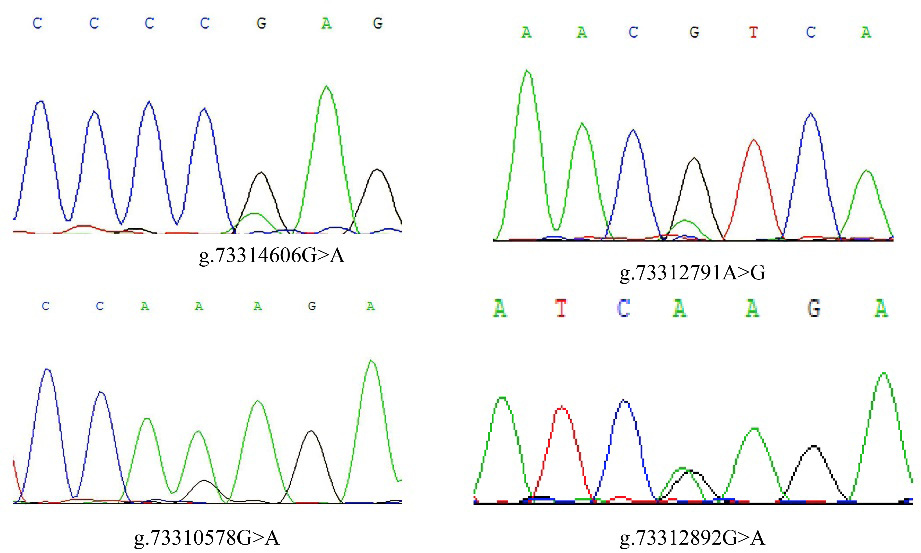
Identification SNP of SYNE2 gene in small tail han sheep.
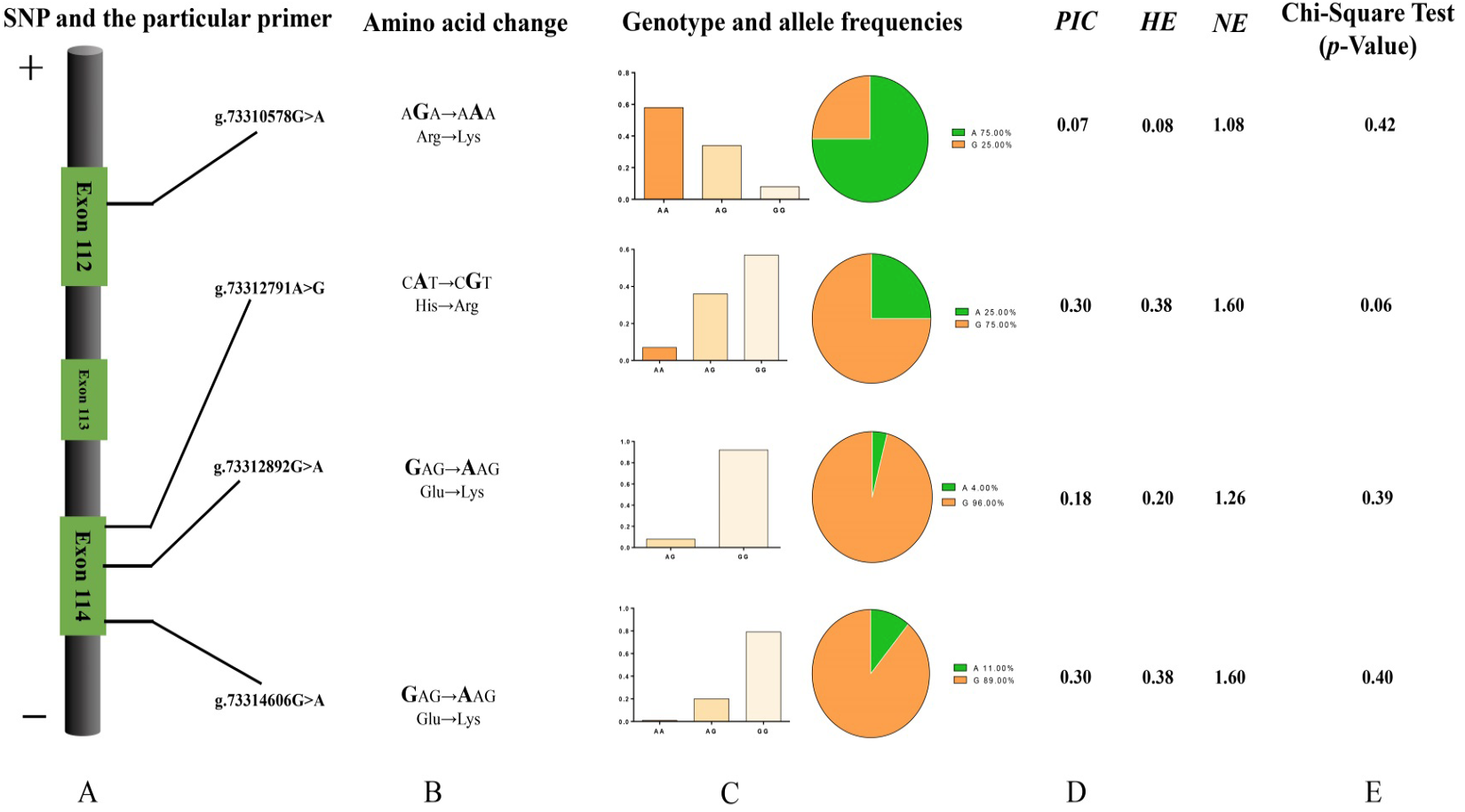
Polymorphisms of the SYNE2 gene in small tail han Sheep. A, the detected SNP and particular primer. A total of 4 exons are included in the SYNE2 gene of sheep; B, the change of amino acids; C, the genotype and allele frequencies of the SYNE2 gene; D, the information of PIC, HE and NE; E, the test of HWE, P > 0.05 indicates the locus was in Hardy-Weinberg equilibrium.
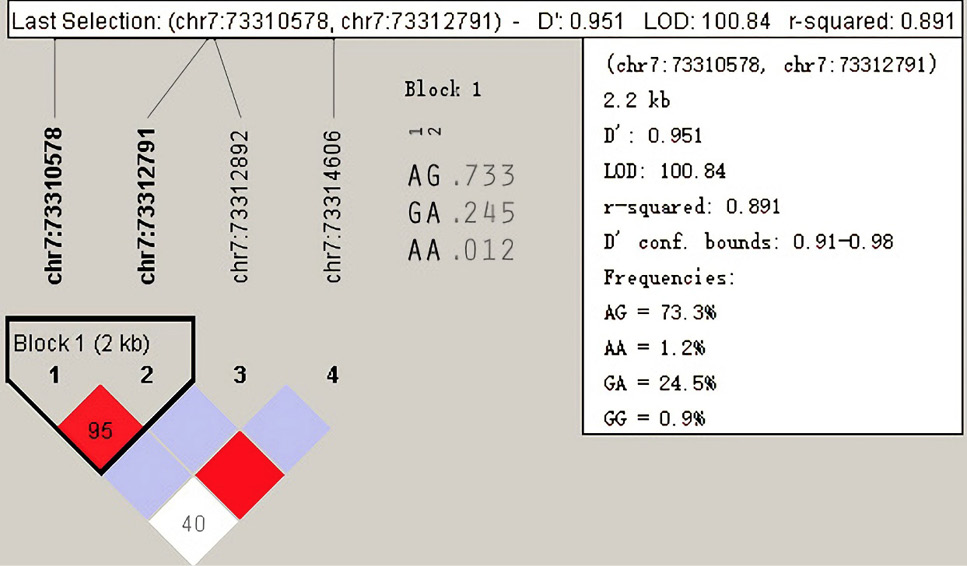
The g.73310578G>A and g.73312791A>G loci linkage disequilibrium.
References
- Ardlie, K.G., Kruglyak, L. and Seielstad, M., 2002. Patterns of linkage disequilibrium in the human genome. Nature Rev. Genet., 3: 299-309. https://doi.org/10.1038/nrg777[CrossRef]
- Baumann, M., Steichen-Gersdorf, E., Krabichler, B., Petersen, B.S., Weber, U., Schmidt, W.M., Zschocke, J., Muller, T., Bittner, R.E. and Janecke, A.R., 2017. Homozygous SYNE1 mutation causes congenital onset of muscular weakness with distal arthrogryposis: a genotype-phenotype correlation. Eur. J. Hum. Genet., 25: 262-266. https://doi.org/10.1038/ejhg.2016.144[CrossRef]
- Botstein, D., White, R.L., Skolnick, M. and Davis, R.W.J.A.J.o.H.G., 1980. Construction of a genetic linkage map in man using restriction fragment length polymorphisms. Am. J. Hum. Genet., 32: 314-331.
- Chong, Y., Huang, H., Liu, G., Jiang, X. and Rong, W., 2018. A single nucleotide polymorphism in the zona pellucida 3 gene is associated with the first parity litter size in Hu sheep. Anim. Reprod. Sci., 193: 26-32. https://doi.org/10.1016/j.anireprosci.2018.03.028[CrossRef]
- Chu, M.X., Liu, Z.H., Jiao, C.L., He, Y.Q., Fang, L., Ye, S.C., Chen, G.H. and Wang, J.Y., 2007. Mutations in BMPR-IB and BMP-15 genes are associated with litter size in Small Tailed Han sheep (Ovis aries). J. Anim. Sci., 85: 598-603. https://doi.org/10.2527/jas.2006-324[CrossRef]
- Deininger, P., 1983. Molecular cloning: A laboratory manual. 2nd ed. Cold Spring Harbor Laboratory Press, NY, pp. 182-183.
- Edwards, S.J., Smaill, B., O’Connell, A.R., Johnstone, P.D., Stevens, D.R., Quirke, L.D., Farquhar, P.A. and Juengel, J.L., 2016. Reduced ovulation rate, failure to be mated and fertilization failure/embryo loss are the underlying causes of poor reproductive performance in juvenile ewes. Anim. Reprod. Sci., 167: 125-132. https://doi.org/10.1016/j.anireprosci.2016.02.017[CrossRef]
- Fan, H.Y., O’Connor, A., Shitanaka, M., Shimada, M., Liu, Z. and Richards, J.S. 2010. Beta-catenin (CTNNB1) promotes preovulatory follicular development but represses LH-mediated ovulation and luteinization. Mol. Endocrinol., 24: 1529-1542.https://doi.org/10.1210/me.2010-0141[CrossRef]
- Gimpel, P., Lee, Y.L., Sobota, R.M., Calvi, A., Koullourou, V., Patel, R., Mamchaoui, K., Nedelec, F., Shackleton, S. and Schmoranzer, J., 2017. Nesprin-1alpha-dependent microtubule nucleation from the nuclear envelope via akap450 is necessary for nuclear positioning in muscle cells. Curr. Biol., 27: 2999-3009. https://doi.org/10.1016/j.cub.2017.08.031[CrossRef]
- Gustin, S.E., Hogg, K., Stringer, J.M., Rastetter, R.H., Pelosi, E., Miles, D.C., Sinclair, A.H., Wilhelm, D. and Western, P.S., 2016. WNT/β-catenin and p27/FOXL2 differentially regulate supporting cell proliferation in the developing ovary. Develop. Biol., 412: 250-260. https://doi.org/10.1016/j.ydbio.2016.02.024[CrossRef]
- Luke, Y., Zaim, H., Karakesisoglou, I., Jaeger, V.M., Sellin, L., Lu, W., Schneider, M., Neumann, S., Beijer, A., Munck, M., Padmakumar, V.C., Gloy, J., Walz, G. and Noegel, A.A., 2008. Nesprin-2 giant (NUANCE) maintains nuclear envelope architecture and composition in skin. J. Cell Sci., 121: 1887-1898. https://doi.org/10.1242/jcs.019075[CrossRef]
- Marina, F., Marco, S., Nascimbeni, A.C., Giuseppina, D.F., Ebe, P., Elisabetta, T., Trevisan, C.P., Vincenzo, N. and Corrado, A., 2015. Dominant muscular dystrophy with a novel SYNE1 gene mutation. Muscle Nerve, 51: 145-147. https://doi.org/10.1002/mus.24357[CrossRef]
- Mellad, J.A., Warren, D.T. and Shanahan, C.M., 2011. Nesprins LINC the nucleus and cytoskeleton. Curr. Opin. Cell Biol., 23: 47-54. https://doi.org/10.1016/j.ceb.2010.11.006[CrossRef]
- Mellor, D.J., 1983. Nutritional and placental determinants of foetal growth rate in sheep and consequences for the newborn lamb. Br. Vet. J., 139: 307-324. https://doi.org/10.1016/S0007-1935(17)30436-0[CrossRef]
- Mulsant, P., Lecerf, F., Fabre, S., Schibler, L., Monget, P., Lanneluc, I., Pisselet, C., Riquet, J., Monniaux, D. and Callebaut, I., 2001. Mutation in bone morphogenetic protein receptor-IB is associated with increased ovulation rate in Booroola Merino ewes. Proc. natl. Acad. Sci., 98: 5104-5109. https://doi.org/10.1073/pnas.091577598[CrossRef]
- Oerum, S., Roovers, M., Leichsenring, M., Acquaviva-Bourdain, C., Beermann, F., Gemperle-Britschgi, C., Fouilhoux, A., Korwitz-Reichelt, A., Bailey, H.J. and Droogmans, L., 2017. Novel patient missense mutations in the HSD17B10 gene affect dehydrogenase and mitochondrial tRNA modification functions of the encoded protein. Biochim. biophys. Acta (BBA)-Mol. Basis Dis., 1863: 3294-3302. https://doi.org/10.1016/j.bbadis.2017.09.002[CrossRef]
- Qiuyue, L., Zhangyuan, P., Xiangyu, W., Wenping, H., Ran, D., Yaxing, Y. and Mingxing, C., 2015. Progress on major genes for high fecundity in ewes. Front. Agric. Sci. Engineer., 1: 282-290. https://doi.org/10.15302/J-FASE-2014042[CrossRef]
- Rothschild, M., Jacobson, C., Vaske, D., Tuggle, C., Wang, L., Short, T., Eckardt, G., Sasaki, S., Vincent, A. and Mclaren, D., 1996. The estrogen receptor locus is associated with a major gene influencing litter size in pigs. Proc. natl. Acad. Sci. USA,93: 201-205. https://doi.org/10.1073/pnas.93.1.201[CrossRef]
- Roux, K.J., Crisp, M.L., Liu, Q., Kim, D., Kozlov, S., Stewart, C.L. and Burke, B., 2009. Nesprin 4 is an outer nuclear membrane protein that can induce kinesin-mediated cell polarization. Proc. natl. Acad. Sci. USA, 106: 2194-2199. https://doi.org/10.1073/pnas.0808602106[CrossRef]
- Sánchez-Dávila, F., Bernal-Barragán, H., Padilla-Rivas, G., Bosque-González, A.S.D., Vázquez-Armijo, J.F. and Ledezma-Torres, R.A., 2015. Environmental factors and ram influence litter size, birth, and weaning weight in Saint Croix hair sheep under semi-arid conditions in Mexico. Trop. Anim. Hlth. Produc. Anim., 47: 825-831. https://doi.org/10.1007/s11250-015-0795-6[CrossRef]
- Sascha, N., Maria, S., Daugherty, R.L., Gottardi, C.J., Eming, S.A., Asa, B., Noegel, A.A. and Iakowos, K., 2010. Nesprin-2 interacts with {alpha}-catenin and regulates Wnt signaling at the nuclear envelope. J. biol. Chem., 285: 34932-34938. https://doi.org/10.1074/jbc.M110.119651[CrossRef]
- Sosa, B., Rothballer, A., Kutay, U. and Schwartz, T., 2012. LINC complexes form by binding of three KASH peptides to domain interfaces of trimeric SUN proteins. Cell, 149: 1035-1047. https://doi.org/10.1016/j.cell.2012.03.046[CrossRef]
- Sosa, B.A., Ulrike, K. and Schwartz, T.U., 2013. Structural insights into LINC complexes. Curr. Opin. Struct. Biol., 23: 285-291. https://doi.org/10.1016/j.sbi.2013.03.005[CrossRef]
- Stroud, M.J., Banerjee, I., Veevers, J. and Chen, J., 2014. Linker of nucleoskeleton and cytoskeleton complex proteins in cardiac structure, function, and disease. Circul. Res., 114: 538-548. https://doi.org/10.1161/CIRCRESAHA.114.301236[CrossRef]
- Wilson, M.H. and Holzbaur, E.L., 2015. Nesprins anchor kinesin-1 motors to the nucleus to drive nuclear distribution in muscle cells. Development, 142: 218-228. https://doi.org/10.1242/dev.114769[CrossRef]
- Zhang, Q., Minaisah, R.M., Ferraro, E., Li, C., Porter, L.J., Zhou, C., Gao, F., Zhang, J., Rajgor, D. and Autore, F., 2016. N-terminal nesprin-2 variants regulate β-catenin signalling. Exp. Cell Res., 345: 168-179. https://doi.org/10.1016/j.yexcr.2016.06.008[CrossRef]
- Zhang, Q., Skepper, J.N., Yang, F., Davies, J.D., Hegyi, L., Roberts, R.G., Weissberg, P.L., Ellis, J.A. and Shanahan, C.M., 2001. Nesprins: a novel family of spectrin-repeat-containing proteins that localize to the nuclear membrane in multiple tissues. J. Cell Sci., 114: 4485-4498.
- Zhang, X., Xu, R., Zhu, B., Yang, X., Ding, X., Duan, S., Xu, T., Zhuang, Y. and Han, M., 2007. Syne-1 and Syne-2 play crucial roles in myonuclear anchorage and motor neuron innervation. Development, 134: 901-908. https://doi.org/10.1242/dev.02783[CrossRef]
- Zhang, Y., Cui, W., Yang, H., Wang, M., Yan, H., Zhu, H., Liu, J., Qu, L., Lan, X. and Pan, C., 2019. A novel missense mutation (L280V) within POU1F1 gene strongly affects litter size and growth traits in goat. Theriogenology, 135: 198-203. https://doi.org/10.1016/j.theriogenology.2019.06.021[CrossRef]
- Zhou, C., Rao, L., Warren, D.T., Shanahan, C.M. and Zhang, Q., 2018a. Mouse models of nesprin-related diseases. Biochem. Soc. Trans., 46: 669-681. https://doi.org/10.1042/BST20180085[CrossRef]
- Zhou, M., Pan, Z., Cao, X., Guo, X., He, X., Sun, Q., Di, R., Hu, W., Wang, X., Zhang, X., Zhang, J., Zhang, C., Liu, Q. and Chu, M., 2018b. Single nucleotide polymorphisms in the hira gene affect litter size in small tail han sheep. Animals, 8: 71. https://doi.org/10.3390/ani8050071[CrossRef]
Services
Article usage statistics
Loading…