
The biodegradation of benz [α] anthracene (BaA), a high molecular weight polycyclic aromatic hydrocarbons (PAH) was increased via a combination of alkyl polyglucosides and alkaline treatment during the waste activated sludge (WAS) anaerobic fermentation. During the experimental study, the biodegradation efficiency of BaA was enhanced from 12.2% in the control to 25.6% at pH 10 and 46.7% at pH 10 and alkyl polyglucosides (APG) reactors. APG and alkaline treatment increased the BaA deposition desorption from the sludge and transfer into micro-organisms and finally increased the BaA bioavailability. In the meantime, the enormous secretion of substrates from the WAS not only served as carbon source but was also engaged in the electron transfer among the micro-organisms which take part in the BaA biodegradation process. Therefore, the microbial activity also engaged in the biodegradation of BaA like genes quantity, the activity of enzymes and functional of bacteria, were also increased due to the APG and alkaline treatments. Overall, the instantaneous enhancement of microbial activity and BaA bioavailability increased biodegradation efficiency.
Research Article · Volume 53, Issue 6, 15 October 2021 · Open Access
Polycyclic Aromatic Hydrocarbon Improves the Anaerobic Biodegradation of Benz [α] Anthracene in Sludge Via Boosting the Microbial Activity and Bioavailability
·
Affiliations & Notes ⌄
- 1College of Architecture and Civil Engineering of Beijing University of Technology, Beijing, 100124, China , * Corresponding author: 13699228256@sina.cn
Article Info ⌄
- Journal:
- Pakistan Journal of Zoology
- Published:
- 15 October 2021

From the article
- Result suggests that the pH plays a key role in the BaA biodegradation during the fermentation (WAS anaerobic) and it showed an essential role in the BaA degradation especially at pH 10.
- Biodegradation efficiency of BaA was increased (almost double) in the reactors with BSA and dextran.
- The BaA biodegradation in WAS anaerobic fermentation was greatly increased via APG and alkaline treatment.
- Overall, the immediate increase in BaA bioavailability and microbial activity increased the performance of biodegradation.
Selected from the article's own text.
Abstract
Introduction
P olycyclic aromatic hydrocarbons (PAHs) are common in high molecular weight (HMW) pollutants natural environment which cause unfavorable effects on living organisms and environments ; . PAH contains four or more than four benzene rings like benzoapyrene, benz[α]anthracene, etc. fused with the two adjacent carbons in an angular, cluster and linear arrangements ; . Several studies suggest that water waste treatment plants (WWTPs) are the main source of PAHs. PAHs enter this system via atmospheric rainfall, domestic sewage, industrial wastes, etc. . PAHs include more than 100 compounds that originate from the anthropogenic and natural sources and are made due to incomplete combustion of organic materials . Due to the high hydrophobicity, PAHs are fixed onto the solid particle surface during the wastewater treatment and finally are concentrated in the waste activated sludge (WAS) . It is already known that the concentration of PAHs in the WAS range 1-2000 mg/kg drug weight. Due to the generation of massive amount of WAS every year, the PAHs infected WAS poses a greater risk to natural environment . Hence, considering the above negative facts (resonance energy) and high boiling point and melting point and also low vaporization pressure (these called the thermodynamically stable) an efficient and proper disposal system is moderately required ; ; . According to the United States Environment Protection Agency (USEPA) and National Cancer Institute reports, PAHs show carcinogenicity, mutagenicity and toxicity effects ; ; ; ; . Due to the presence of sufficient rings and having the chemical properties of these compounds having a significant effect on their environmental fate ; . The tenacity of such compounds found higher in the environment with increasing their molecular weight. These compound such as tricyclic phenanthrene having half-life in soil (16-126 days) and a pentacyclic compound (benzo[α]pyrene) half-life 4 years ; . Therefore, PAHs undergo microbial degradation, volatilization, adsorption, chemical degradation and photolysis as a part of the degradation process . The degradation rate depends on the various parameters such as oxygen, pH, temperature, microbial population, the chemical structure of a compound, nutrients availability, chemical partitioning and cellular transport properties in the growth medium . A variety of species known to degrade PAHs are isolated from the contaminated sediments or soil such as Pseudomonas fluorescence, Pseudomonas aeruginosa, Paenibacillus spp., Rhodococcus spp., Mycobacterium spp. . Furthermore, it is already known that PAHs show highest removal during the anaerobic digestion. During anaerobic systems, maintenance of sufficient bacteria population especially methanogenic for a fixed performance is very difficult. The population of different methanogenic bacteria depends upon the characterization of sewage ; .
Previous studies suggest that the PAHs could be eliminated via photodegradation, volatilization, microbial degradation, chemical oxidation, etc. Among all methods, microbial degradation is one of the most effective methods to remove the PAHs from the contamination sites like sludge in WWT ; . During the anaerobes and anaerobic biodegradation, PAHs play an important role in natural environment. Little attention has been paid to anaerobic degradation of HMW PAHs . Therefore, extensive study is imperative on the anaerobic biodegradation of HMW PAHs. Moreover, reutilization of resources in WAS could be accomplished simultaneously.
MATERIALS AND METHODS
WAS was recovered from the secondary sedimentation tank of municipal WWTP in Beijing, China. The collected WAS was filtered using stainless-steel mesh and concentrated at 4oC for 24 h to eliminate large particulates. The main feature of WAS was as follow: total suspended solids (15423 ± 284 mg/L), pH = 6.8 ± 0.1, total chemical oxygen demand (TCOD) (15321 ± 374 mg/L), volatile suspended solids (9736 ± 273 mg/L), soluble chemical oxygen demand (376±34 mg/L), total protein (8236±182 mg COD/L), total carbohydrate (1123±123 mg COD/L), oil and lipid (128±22 mg COD/L). The USEPA suggests that the various priority PAHs commonly noticed in the WAS with high concentrations such as BaA, anthracene, acenaphthene. Since BaA was the major component of HMW PAHs in sludge, it was designated as PAH model to scrutinize the effect of APG and pH treatment on the anaerobic biodegradation of HMW PAHs.
Influence of APG dose and pH on WAS anaerobic degradation
For estimation of effect of BaA biodegradation, serum bottle having capacity 1L was used for the current experimental study . Briefly, each bottle was filled with reactor (600 mL) and the rest of the volume filled with the concentrated WAS. After that, the BaA (100 mg/kg TSS) was spiked into the reactors. The WAS anaerobic fermentation was conducted by maintaining the pH at a range of 7 -11 and one pH adjustment was set as control pH. The pH was maintained by adding 4 M NaOH or 4 M HCl. After that oxygen was removed using the nitrogen and immediately reactor was sealed using the rubber stoppers and kept in the air bath shaker at 35 ± 1oC with 135 rpm. For studying the effect of APG on anaerobic degradation various doses of APG were introduced at pH 10. After that, the abiotic test was performed with the sludge (sterilized) via using the above mention procedure. The above reactors (fermentation mixture) were taken in the initial stage to estimate the concentration of organic matters seperated from the WAS and the BaA concentration in the aqueous medium desorbed from WAS.
Estimation of BaA biodegradation via deuterium isotope analysis
For the estimation of organic pollutant degradation, compound-specific isotope analysis (CSIA) was used. For the determination of stable isotope ratios in the environmental samples, isotope ration mass spectroscopy (IRMS) was used and sifting the stable isotope ratios could reflect the degradation of organic pollutants. In the current experimental study, deuterium-labeled BaA isotopes were used for the biodegradation process. Briefly, 3 batch tests were performed: WAS, WAS un-labeled BaA and deuterium-labeled BaA under the specific condition of pH 10 and APG and maintain the temperature 35± 1oC. After that, the mixture of each reactor was sampled at every 2 d and after that, the samples were freeze-dried and the change of the ratio of deuterium was estimated. The result was presented in the δ-notation difference in a per mill as compared to the international references. The D/H ratio was presented by the Vienna Standard Mean Ocean Water .
Effect on the organic substrates from WAS after BaA degradation
For the determination of putative secretion from the organic substrates, the tests were divided into 3 groups such as bovine serum albumin (0.2 g/L), dextran (2 g/L), respectively. Every reactor was inoculated with a pure culture of Proteiniphilum acetatigenes (2 mL) and BaA (100 μg/L) with a mix of a small number of surfactants. After that, the reactors were operated anaerobically with continuously stirring at a speed of 130 rpm at 35±1oC under the pH10 and APG. The reactor sample analyzes every 2 days and estimation the nicotinamide adenine dinucleotide (NADH) concentration release from the microbes .
Fermentative bacteria on the BaA bio-degradation
During the anaerobic fermentation, the propionic and acetic commonly found in the WAS fermentation. In the current experimental study, Propionibacterium acidipropionici and Proteiniphilum acetatigenes commonly typical acidogenic microorganisms for mechanisms exploration during the anaerobic fermentation system and commonly used as the acidogenic bacteria to scrutinize the fermentative microorganism effect of BaA biodegradation. After that, the reactors were operated anaerobically with continuously stirring at a speed of 130 rpm at 35±1oC for 8 days. Anabiotic test also performed sterilized solution was also conducted and served as the control .
Biochemical analysis
For estimation of lipids, carbohydrates, proteins, VSS, TSS, COD, zeta potential and surface tension of WAS, a previously reported method with minor modification was used. For extraction of PAH from the WAS, the mixture was treated with the solvent hexane and dichloromethane (1:1) and sonicated for 1 h for the purification of PAH and extracted from the solutions via using the previously reported method with minor modification. The computer-controlled electrochemical work station was used for the estimation of the electrochemical of dextran and BSA.
In the current experimental study, all the experiment was performed in the triplicates and analysis of variance (ANOVA) was used for estimation the significant. P<0.05 was considered statistically significant.
RESULTS AND DISCUSSION
It is already proven that the POPs biodegradation is extremely associated with the incidence of both optimal conditions such as pH, bioavailability and temperature of targeted pollutants and active micro-organisms ; . In the current experimental study, we estimated the effect of pH on the biodegradation. We found that biodegradation efficiency of BaA was merely 15.6±0.6 % in the reactor (control) at pH 6.5 and it reached to 33.74±0.4 % at pH 10. Additionally, further enhancment of pH showed negative effects on the biodegradation process of BaA. At pH 11, the efficacy was gradually reduced and reached 25.67±0.7 %, which could be recognized as the detrimental effects on the microbial activity and viability under the extreme alkaline (pH 11) condition. Result suggests that the pH plays a key role in the BaA biodegradation during the fermentation (WAS anaerobic) and it showed an essential role in the BaA degradation especially at pH 10. Figure 1A shows the effect of pH on BaA biodegradation efficiency. The figure suggests that the biodegradation efficiency iss 30±1.4 % in control and is 47.5±2.4 % addition at pH 10. Figure 1B hows that 0.3 APG/g TSS has the maximum degradation efficiency within 8 h.
As we know that the huge quantity of soluble organic matters especially the carbohydrates and proteins were released into the reactors during the anaerobic fermentation of WAS and the BaA bioavailability ; . Therefore, soluble organic matters in the BaA biodegradation systems had more positive effect as compared to the normal system . In the current experimental study, we investigated the effect of soluble organic matters in the BaA biodegradation system on the simulated wastewater after excluding the bioavailability limitation. Figure 2A shows that the BaA biodegradation
was increased with the addition of soluble organic matter. Biodegradation efficiency of BaA was increased (almost double) in the reactors with BSA and dextran. Previous studies had suggested that the POPs biodegradation may depend upon the metabolism of other organic substrates in the systems . On the other hand, soluble organic matters could serve as energy and carbon sources to boost the activities and growth of microorganisms. The existence of bio-available substrates may increase and hasten the biodegradation reaction via co-metabolism. Therefore, during the anaerobic biota, the electrons were moved between the various species of microbes, which further develop the relationship between the community and behavior functions . It is well documented that interspaces electron transfer was considered as a significant process during the anaerobic conditions. Consequently, increasing the transfer of interspaces electron might be considered as the best approach for hastening the microbial metabolism during the bio-energy strategies that most need for interspecies for electron exchanges ; . Previous investigation suggest that during the biological process increases the microbial interspecies electron transfer . In the current experimental study, we found the interesting result that carbohydrates and proteins play an important role in assisting the electron transfer process among the various anaerobic species during the fermentation reactors, which play an important role during the metabolic process. The alteration of the physicochemical characteristics in the reactors was seen in Figure 2B and 2C with the addition of organics that were beneficial for moving the electron ; . Figure 3 showed that NADH concentration plays an important role in electron transfer during the biological metabolic process. The NADH concentration was considerably increased after adding suitable organic matter in the reactors. The result indicated that the SOM could be serving as the electron transfer mediators to increase and facilitate the electron transfer process . Figure 4 shows that the residue of BaA was substantially reduced in 8 d from the initial along with the metabolism, whereas the loss of abiotic material was almost negligible. The result indicates that the WAS anaerobic system’s fermentative bacteria may be the primary reasons for increasing the abundance of BaA biodegradation.
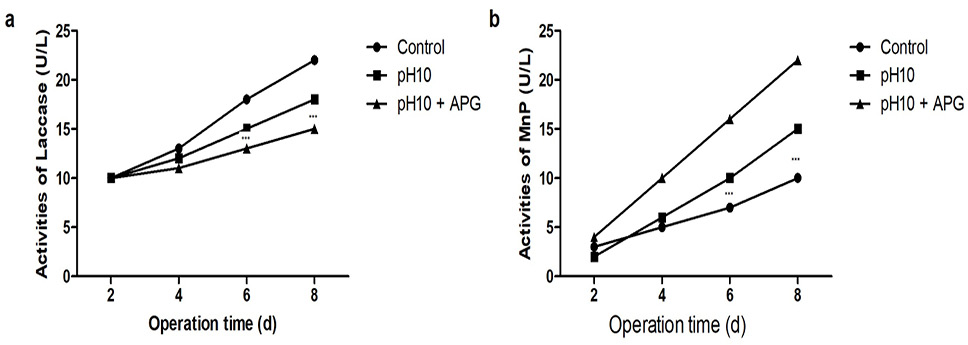
Figure 5 indicates that there was a small difference in the initial operation of lactase and MnP between all the reactors. In addition, during the biodegradation process, they were strengthened and the pH 10 and pH 10 and APG reactors were more apparent. The BaA could behave more readily as biodegraded and catalyzed during such incidences and higher biodegradation efficiency was thus achieved. Surfactants may act as a stabilizer in the country and improve the interaction between the substrates of the enzyme that is supposed to be more important to the biodegradation of BaA in the APG reactors.
CONCLUSION
The BaA biodegradation in WAS anaerobic fermentation was greatly increased via APG and alkaline treatment. The bioavailability of the BaA was improved by increasing its accumulation from transmission and sludge into a micro-organism. Overall, the immediate increase in BaA bioavailability and microbial activity increased the performance of biodegradation. The bioavailability of the BaA was improved by increasing its accumulation from transmission and sludge into a micro-organism.
Statement of conflict of interest
The authors have declared no conflict of interest.
Figures
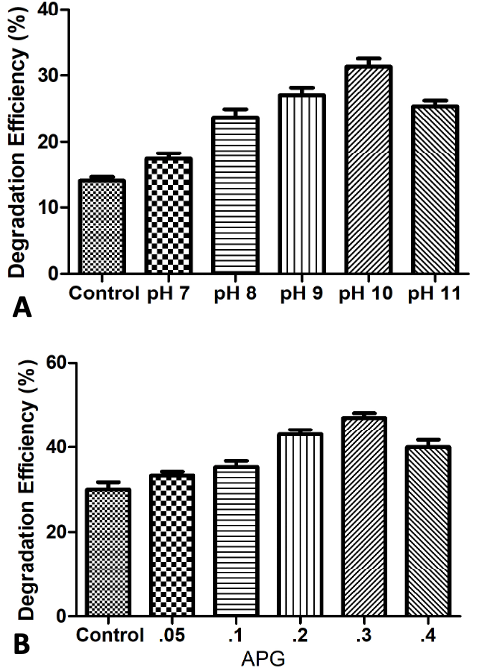
Effect of pH (A) and APG dosage (B) on the benz [α] anthracene biodegradation efficiency. The error bars represent standard deviations of the mean for triplicates.
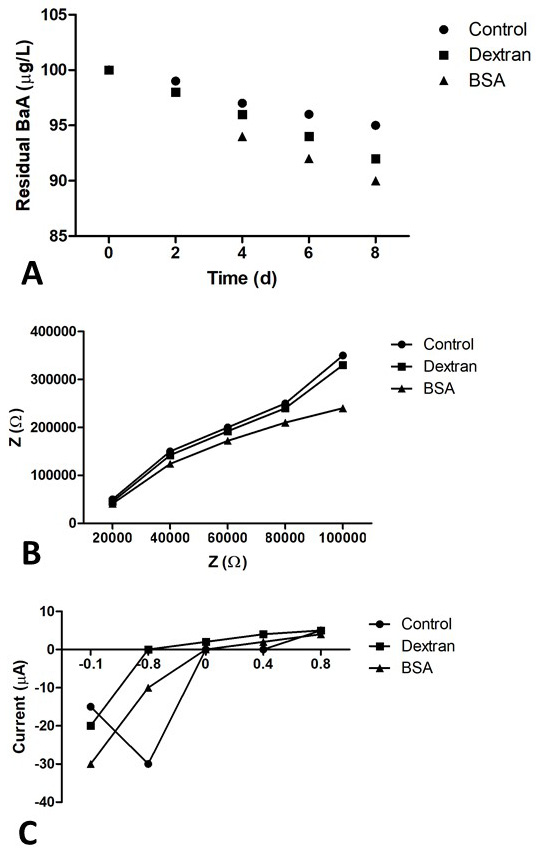
Effect of SOM (A), electric impedance (B) and cyclic voltammetric characteristics (C) on biodegradation of BaA.
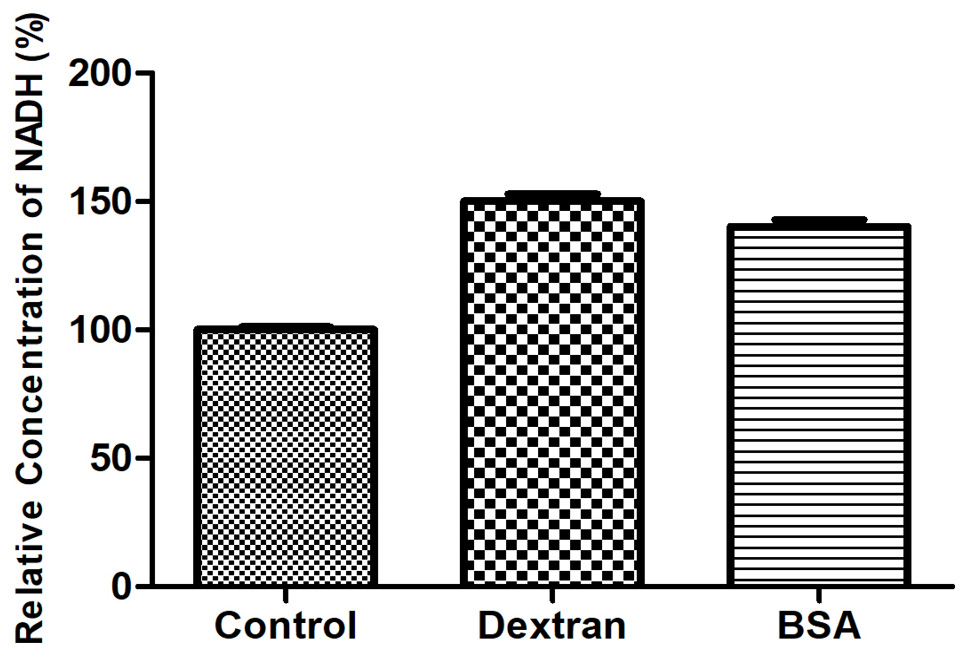
Effect of SOM on the relative concentration of NADH (Normalized by OD600) of biodegradation of BaA. The error bars represent standard deviations of the mean for triplicates.
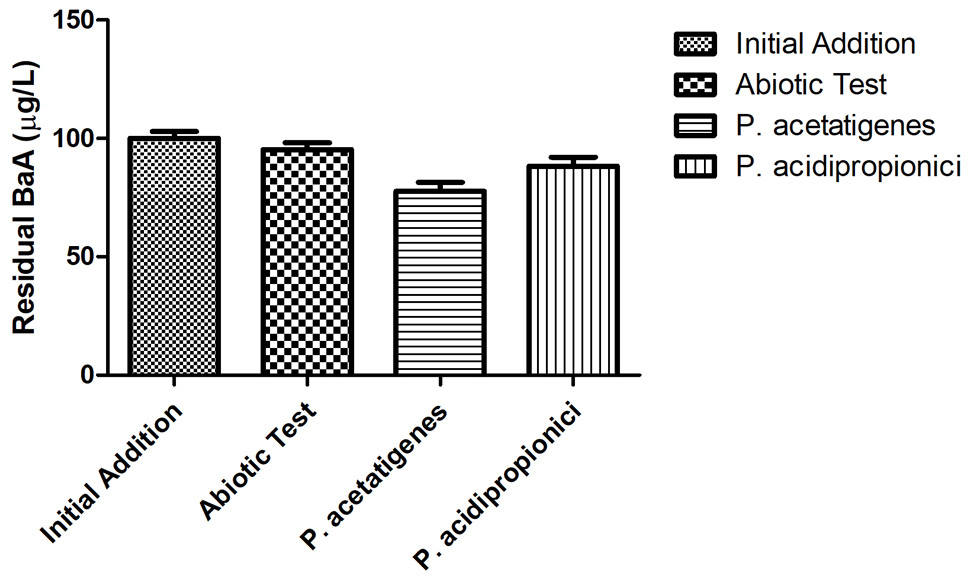
Effect of abundance of the key bacteria related to BaA biodegradation at genus level. The error bars represent standard deviations of the mean for triplicates.
Effect of SOM on the relative concentration of NADH (normalized by OD600) of biodegradation of BaA.
References
- Allen, H.L., 1971. Primary productivity, chemo-organotrophy, and nutritional interactions of epiphytic algae and bacteria on macrophytes in the littoral of a lake. Ecol. Monogr., 41: 97-127. https://doi.org/10.2307/1942387[CrossRef]
- Bisht, S., Pandey, P., Bhargava, B., Sharma, S., Kumar, V. and Sharma K.D., 2015. Bioremediation of polyaromatic hydrocarbons (PAHs) using rhizosphere technology. Brazilian J. Microbiol., 46: 7-21. https://doi.org/10.1590/S1517-838246120131354[CrossRef]
- Cerniglia, C.E., 1992. Biodegradation of polycyclic aromatic hydrocarbons. Biodegradation, 3: 351–368. https://doi.org/10.1007/BF00129093[CrossRef]
- Chen, H., Ratner, M.A. and Schatz, G.C., 2011. Time-dependent theory of the rate of photo-induced electron transfer. J. Phys. Chem. C., 115: 18810-18821. https://doi.org/10.1021/jp205262u[CrossRef]
- Dharmadi, Y., Murarka, A. and Engineering, B., 2006. Anaerobic fermentation of glycerol by Escherichia coli: A new platform for metabolic engineering. Methods, 94: 821-829. https://doi.org/10.1002/bit.21025[CrossRef]
- Dunnick, J.K., Elwell, M.R., Radovsky, A.E., Benson, J.M., Hahn, F.F., Nikula, K.J., Barr, E.B. and Hobbs C.H., 1995. Comparative carcinogenic effects of nickel subsulfide, nickel oxide, or nickel sulfate hexahydrate chronic exposures in the lung. Cancer Res., 55: 5251-5256.
- Egeberg, P., 1999. Natural organic matter. Environ. Int., 25: 161-180.
- Friedrich, A. and Olejniczak, K., 2011. Evaluation of carcinogenicity studies of medicinal products for human use authorised via the European centralised procedure (1995-2009). Regul. Toxicol. Pharmacol., 60: 225-248. https://doi.org/10.1016/j.yrtph.2011.04.001[CrossRef]
- Fulekar, M.H., 2017. Microbial degradation of petrochemical waste-polycyclic aromatic hydrocarbons. Bioresour. Bioproc., 4: 28. https://doi.org/10.1186/s40643-017-0158-4[CrossRef]
- Gad, S.C. and Gad, S.E., 2014. Polycyclic aromatic hydrocarbons (PAHs). In: Encyclopedia of toxicology: Third Edition. https://doi.org/10.1016/B978-0-12-386454-3.00911-8[CrossRef]
- Geronikaki, A.A., Dearden, J.C., Filimonov, D., Galaeva, I., Garibova, T.L., Gloriozova, T., Krajneva, V., Lagunin, A., Macaev, F.Z., Molodavkin, G., Poroikov, V.V., Pogrebnoi, S.I., Shepeli, F., Voronina, T.A., Tsitlakidou, M. and Vlad, L., 2004. Design of new cognition enhancers: From computer prediction to synthesis and biological evaluation. J. med. Chem., 47: 2870-2876. https://doi.org/10.1021/jm031086k[CrossRef]
- González-Pérez, J.A., González-Vila, F.J., Almendros, G. and Knicker, H., 2004. The effect of fire on soil organic matter - A review. Environ. Int., 30: 855–870. https://doi.org/10.1016/j.envint.2004.02.003[CrossRef]
- Gupta, S., Pathak, B. and Fulekar, M.H., 2015. Molecular approaches for biodegradation of polycyclic aromatic hydrocarbon compounds: A review. Rev. environ. Sci. Biotechnol., 14: 241–269. https://doi.org/10.1007/s11157-014-9353-3[CrossRef]
- Haritash, A.K. and Kaushik, C.P., 2009. Biodegradation aspects of polycyclic aromatic hydrocarbons (PAHs): A review. J. Hazard. Mater., 169: 1-15. https://doi.org/10.1016/j.jhazmat.2009.03.137[CrossRef]
- Hasanati, M., Savari, A., Nikpour, Y. and Ghanemi, K., 2011. Assessment of the sources of polycyclic aromatic hydrocarbons in Mousa Inlet by molecular ratios. J. environ. Stud., 37: 1-6.
- Hobson, K.A., Atwell, L. and Wassenaar, L.I., 1999. Influence of drinking water and diet on the stable-hydrogen isotope ratios of animal tissues. Proc. natl. Acad. Sci. U. S. A., 96: 8003-8006. https://doi.org/10.1073/pnas.96.14.8003[CrossRef]
- Hu, Q.H., Li, X.F., Du, G.C. and Chen, J., 2008. Effect of nitrilotriacetic acid on bioavailability of nickel during methane fermentation. Chem. Eng. J., 143: 111-116. https://doi.org/10.1016/j.cej.2007.12.021[CrossRef]
- Kalmykova, Y., Björklund, K., Strömvall, A.M. and Blom, L., 2013. Partitioning of polycyclic aromatic hydrocarbons, alkylphenols, bisphenol A and phthalates in landfill leachates and stormwater. Water Res., 47: 1317-1328. https://doi.org/10.1016/j.watres.2012.11.054[CrossRef]
- Krogh, K.A., Halling-Sørensen, B., Mogensen, B.B. and Vejrup, K.V., 2003. Environmental properties and effects of nonionic surfactant adjuvants in pesticides: A review. Chemosphere, 50: 871-901. https://doi.org/10.1016/S0045-6535(02)00648-3[CrossRef]
- Luo, J., Chen, Y. and Feng, L., 2016. Polycyclic aromatic hydrocarbon affects acetic acid production during anaerobic fermentation of waste activated sludge by altering activity and viability of acetogen. Environ. Sci. Technol., 50: 6921-6929. https://doi.org/10.1021/acs.est.6b00003[CrossRef]
- Mackay, D. and Shiu, W.Y., 1977. Aqueous solubility of polynuclear aromatic hydrocarbons. J. chem. Eng. Data, 22: 399-402. https://doi.org/10.1021/je60075a012[CrossRef]
- Martín, J., Santos, J.L., Aparicio, I. and Alonso, E., 2015. Pharmaceutically active compounds in sludge stabilization treatments: Anaerobic and aerobic digestion, wastewater stabilization ponds and composting. Sci. Total Environ., 15: 97-104. https://doi.org/10.1016/j.scitotenv.2014.05.089[CrossRef]
- Megharaj, M., Ramakrishnan, B. and Venkateswarlu, K., Sethunathan, N. and Naidu, R., 2011. Bioremediation approaches for organic pollutants: A critical perspective. Environ. Int., 37: 1362-1375. https://doi.org/10.1016/j.envint.2011.06.003[CrossRef]
- Pearlman, R.S., Yalkowsky, S.H. and Banerjee, S., 1984. Water solubilities of polynuclear aromatic and heteroaromatic compounds. J. Phys. Chem. Ref. Data, 13: 555. https://doi.org/10.1063/1.555712[CrossRef]
- Raheem, A., Sikarwar, V.S., He, J., Dastyar, W., Dionysiou, D.D., Wang, W. and Zhao M., 2018. Opportunities and challenges in sustainable treatment and resource reuse of sewage sludge: A review. Chem. Eng. J., 337: 616–641. https://doi.org/10.1016/j.cej.2017.12.149[CrossRef]
- Rozenberg, M., Kotliar, G. and Kajueter, H., 1996. Transfer of spectral weight in spectroscopies of correlated electron systems. Phys. Rev. B. Condens Matter Mater Phys., 54: 8452. https://doi.org/10.1103/PhysRevB.54.8452[CrossRef]
- Taghizadeh, M.M., 2011. Biological evaporation by composting for alcohol industries wastewater. J. environ. Stud., 36: 74-69.
- Zimmermann, S.G., 2011. Enhanced wastewater treatment by ozone and ferrate: Kinetics, transformation products and full-scale ozonation. Diss. ETH Zurich.
Services
Article usage statistics
Loading…