ResearchersLinks

Article · Volume 2, Issue 5, Pages 305–311, 25 June 2014 · Open Access

Plant Based Edible Vaccines against Poultry Diseases: a Review

· · · · · · · ·

Article Info ⌄
Journal:
Advances in Animal and Veterinary Sciences
Published:
25 June 2014

From the article

  • During the last decade, several research works have been conducted to express candidate antigen in edible part of plants against various diseases including that of poultry.
  • Commercial preparations of edible vaccines may serve as a better alternative to conventional vaccines in near future.

Selected from the article's own text.

Abstract

Plantharayil Bharathan Aswathi1*, Subrat Kumar Bhanja1, Ajit Singh Yadav1, Valsala Rekha2, Jeny Kalluvila John2, Devi Gopinath2, Gurupriya Vijayasaraswathy Sadanandan2, Anil Shinde1, Aron Jacob2
1Central Avian Research Institute, Izatnagar, Bareilly, UP, India; 2Indian Veterinary Research Institute, Izatnagar, Bareilly, U.P. India
*Corresponding author: aswathy.pb@gmail.com

ABSTRACT
Plant based edible vaccines are one of the novel branches of vaccinology. Candidate antigen can be expressed on selected plant species through various biotechnological approaches. Stable integration of selected antigen into plant genome can be achieved through vector mediated or biolistic method of transgenesis. Another method is transient expression of candidate antigen using agroinfiltration or infection with modified RNA viruses. These types of vaccines have been developed against poultry diseases also. Immunogenic proteins of avibirnavirus (VP2), avian reo virus (σC), Newcastle disease virus (HN, F), avian coronavirus (S1), avian influenza virus (rHA0), chicken infectious anaemia virus (VP1) and Eimeria tenella (EtMIC2) were expressed in selected plants. Oral immunization with these transgenic plants followed by challenge with infectious organisms exhibited protective efficacy. Edible vaccines against poultry diseases are cost effective, thermostable and devoid of human or animal pathogens and microbial toxins. Other points in credit for edible vaccines include suitability for mass vaccination, ease of administration, storage stability, least stress, needle free delivery, no muscle damage etc. Commercial preparations of plant based edible vaccines are likely become a reality in near future. Before that, problems like standardization of expressed antigen concentration, vaccine composition, vaccine efficacy, safety and stability under field conditions have to be looked into. Plant based vaccines against various poultry diseases may become an alternative to conventional vaccination programmes in coming decades.

Key Words: Plant based edible vaccine, poultry diseases, transgenesis, oral immunization
Review Article

Advances in Animal and Veterinary Sciences 2 (5): 305 – 311

Plant Based Edible Vaccines against Poultry Diseases: a Review

Plantharayil Bharathan Aswathi1*, Subrat Kumar Bhanja1, Ajit Singh Yadav1, Valsala Rekha2, Jeny Kalluvila John2, Devi Gopinath2, Anil Shinde1, Aron Jacob2, Gurupriya Vijayasaraswathy Sadanandan2,

  1. Central Avian Research Institute, Izatnagar, Bareilly, UP, India
  2. Indian Veterinary Research Institute, Izatnagar, Bareilly, U.P. India

*Corresponding author: aswathy.pb@gmail.com

ARTICLE CITATION: Aswathi PB, Bhanja SK, Yadav AS, Rekha V, John JK, Gopinath D, Sadanandan GV, Shinde A, Jacob A (2014). Plant based edible vaccines against poultry diseases: a review. Adv. Anim. Vet. Sci. 2 (5): 305 – 311.
Received: 2014–05–26, Revised: 2014–06–20, Accepted: 2014–06–21
The electronic version of this article is the complete one and can be found online at ( http://dx.doi.org/10.14737/journal.aavs/2014/2.5.305.311 ) which permits unrestricted use, distribution, and reproduction in any medium, provided the original work is properly cited

INTRODUCTION

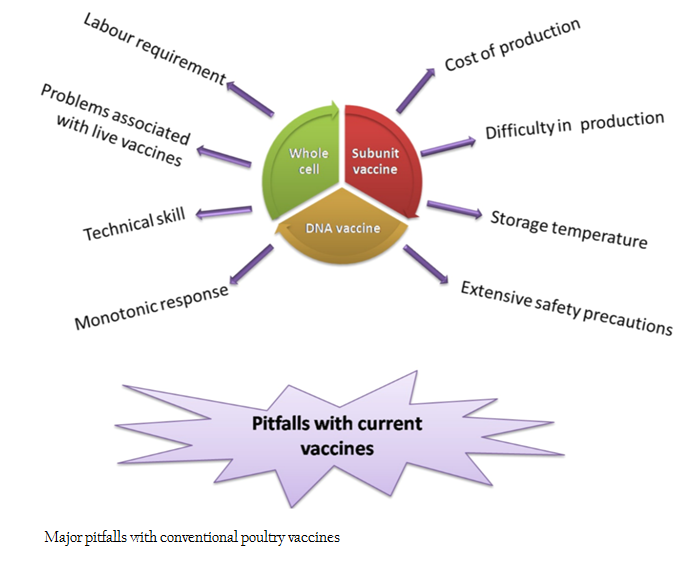
Infectious diseases are a major threat to the poultry industry. Currently, economic losses due to poultry diseases are 10 to 20% of the gross value of production in developed countries and are likely to be higher in developing countries (FAO, 2014). With advancement in the field of vaccinology, various types of vaccines like whole cell vaccines (live attenuated and killed), subunit vaccines, DNA vaccines etc. are available against common poultry diseases. The major pitfalls of existing vaccines are high production cost, difficulty in maintaining cold chain, vaccine safety, problems associated with mass vaccination, manpower and technical skill needed for vaccine administration, complexity in production and purification etc (Nochi et al., 2007; Ferraro et al., 2011; Klein et al., 2013) (Figure 1). With the advent of transgenic technology, development of plant based edible vaccines offers a new prospect to overcome these hurdles. Edible vaccines are reported to provide immune protection equal to or more than that of commercial vaccines (Mason et al., 2002; Walmsley and Arntzen, 2003). Other advantages of plant based vaccines are ease of production, scale up and administration, biological encapsulation of candidate antigen, ability to evoke serum and mucosal response, protection against mucosal pathogens, low production cost, room temperature stability, trouble free storage, devoid of human or animal pathogens, free from pyrogens and microbial toxins, needle free administration etc. (Moffat, 1995; Sala et al., 2003; Streatfield, 2005; Chen and Lai, 2013; Pniewski, 2013; Aboul–Ata et al., 2014).

Figure 1: Major pitfalls with conventional poultry vaccines

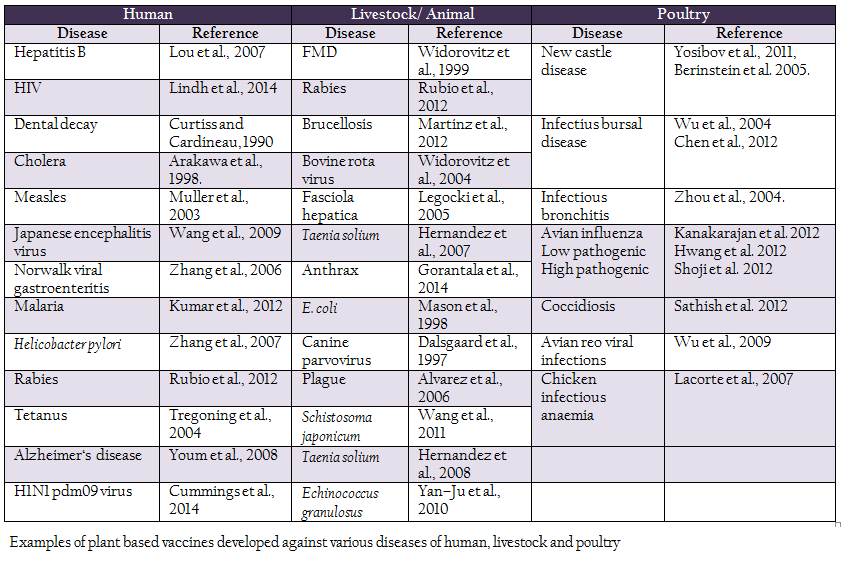
Table 1: Examples of plant based vaccines developed against various diseases of human, livestock and poultry

BACKGROUND

Plant genetic engineering, one of the most important branches of biotechnology, began in early 1970s. As a result of it, dramatic developments in agriculture occurred and research got expanded to explore plant genetic resources for purposes other than nutrition. In 1990, Dr. Charles Arntzen, a plant biotechnologist first put forward the concept of edible vaccines. Major emphasis was given to the production of protective antigens against various human pathogens. First plant expression of a vaccine antigen was done by Dr. Curtiss and Dr. Cardineau in 1990 against Streptococcus mutans which is the causative organism for dental decay in humans. Streptococcus mutans surface protein antigen A (Spa A) was successfully expressed in tobacco plant. Haq et al., (1995) first reported immunization with an edible vaccine (Escherichia coli heat–labile enterotoxin) produced in transgenic plant. Various candidate antigens were expressed in plant tissue against pathogens of human, animals and poultry. Some examples are given in Table 1.

PLANT BASED EDIBLE VACCINE PRODUCTION

Plant based edible vaccines are recombinant protein vaccines, in which selected plant species is used to produce the selected antigen(s) which are capable of inducing protective immunity against particular animal pathogens on their oral delivery in the form of an edible vaccine (Lossl and Waheed, 2011). Plant based vaccines are believed to overcome most difficulties faced by conventional vaccines. They reduce the cost of production and purification, so that economically more affordable vaccines can be manufactured. One of the major problems faced by developing and underdeveloped countries is difficulty in maintaining cold chain from production till vaccine administration. Edible vaccines because of their ability to thrive in room temperature may solve this problem. Oral delivery is more comfortable for poultry and animals as handling stress and pain due to parenteral route administration can be completely eliminated. The transgenic plant part can be used in fresh or dry form. Edible vaccines can elicit both mucosal and serum immune response. Plant based expression system is cost optimized; genetic manipulation is as easy as production and scale up. Moreover, plant based edible vaccines are as safe as traditional vaccines and chance of contamination with other animal pathogens and toxins can also be eliminated (Sala et al., 2003).

COMMONLY USED PLANTS FOR EDIBLE VACCINE PRODUCTION

The most common plant used for expression of protein and vaccine production is tobacco (Nicotiana benthamiana) because of its transforming ability (Dhama et al., 2013). Edible vaccines can also be produced in cereal grains (Oryza sativa, Zea mays), fruits (banana, tomato), leaves (Lettuce, alfalfa, peanut leaves), tubers (Potato, carrot), legume seeds (Cow pea, soyabean) etc. For raw consumption, plant should be palatable. Cooking may destroy the antigenic potential of transgenic plant. To overcome this difficulty, transgenic plants which can be subjected to high temperature cooking without affecting antigenicity are also proposed (Eg. cooked genetically modified corn snack that can harbour E. coli heat labile enterotoxin). For veterinary

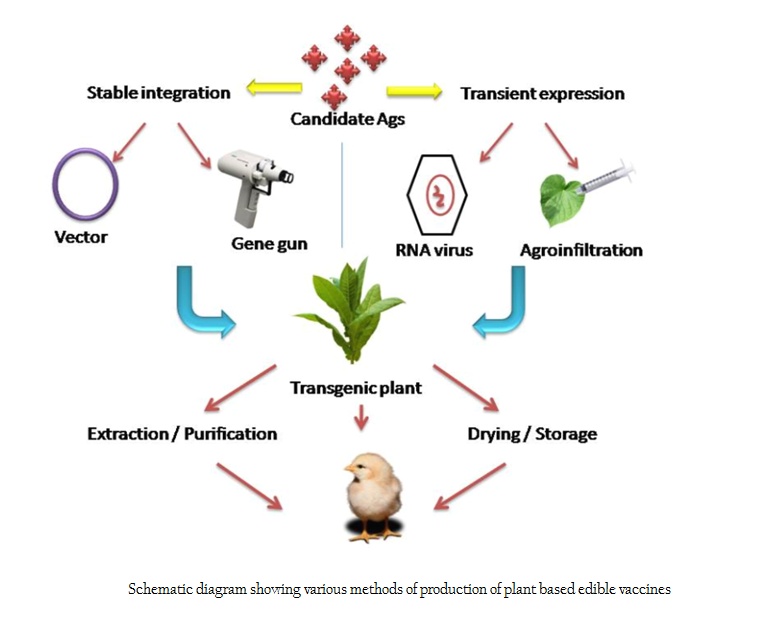
Figure 2: Schematic diagram showing various methods of production of plant based edible vaccines

BIOTECHNOLOGICAL APPROACH

Antigen expression in plants can be achieved through stable integration of candidate antigen into plant cell or using transient expression systems (Figure 2). For stable integration, vector mediated carrier system is followed. Natural plant pathogens like Agrobacterium tumefaciens is used for stable integration of antigenic DNA into plant nucleus. This method is benefited by the inherent capability of plant pathogens to infect and transfer its virulent genes to the nucleus of host cell (Jacob et al., 2013). The main advantages of this method are ease of production, cost effectiveness, ability to introduce large DNA segments with higher efficiencies into the plant genome etc (Gelvin, 2003; Kohli et al., 1998). Agrobacterium mediated gene integration occurs at random chromosomal sites. Gelvin (2003) reported that the newly introduced DNA inside the nucleus will randomly get integrated into host cell genome by non–homologous recombination at the same locus or different loci resulting in formation of stable transgenic plants. An alternative method is integration of candidate gene into plant circular chloroplast DNA (cpDNA) through microprojectile bombardment method (biolistic method) or ‘particle guns’ which results in site specific integration (Daniell et al., 2001; Daniell et al., 2002). In this method, selected DNA sequences are precipitated into metal micro particles and bombarded against the target tissue at an accelerated speed so that microparticles penetrate the cell wall and release exogenous DNA inside the cell and get integrated into the host cell genome (Taylor and Fauquet, 2002.). Candidate antigen integration into cpDNA has several benefits – the cpDNA molecule of important plants has been completely sequenced, presence of more than 10,000 copies of cpDNA per cell enables expression of foreign genes to extremely high levels, transgene integration occurs exclusively by homologous recombination, plastid genetic system lacks gene silencing and other epigenetic mechanisms that impede with stable transgene expression, maternal mode of plastid inheritance in the majority of angiosperm species decreases the chance of transgene transmission through pollen and many plastid genes are arranged in operon offering the possibility to stack transgenes by arranging them in artificial operons (Bock, 2014; ). An alternate polyethylene glycol (PEG) mediated protoplast transformation method is occasionally used (Maliga and Bock, 2011). Though PEG–mediated plastid transformation is technically demanding, laborious and also more time–consuming than biolistics, it has the advantage that the method is not protected by patents. Transient expression of candidate gene can be mediated by positive sense, single stranded plant RNA viruses (Tobacco etch virus, Cauliflower mosaic virus, Tobacco mosaic virus etc). In this method, the antigenic determinant is engineered into a plant virus capsid gene. This virus can infect susceptible host plant initiating intracellular production and accumulation of the epitope. The foreign DNA and the viral genome will not become integrated into host plant genome and thus are expressed by infected generation only (Walmsley and Arntzen, 2000; Yusibov et al., 1997). In addition, transient expression of heterologous proteins in intact leaves was demonstrated by infiltration (agroinfiltration technique) of suspensions of A. tumefaciens harbouring a binary vector into leaf interstitial spaces (Kapila et al., 1997). This study put forward a rapid recombinant protein expression technique that is inherently flexible and scalable.

PROTECTIVE MECHANISM OF EDIBLE VACCINES

Mucosal surface is the largest immunologically active tissue in body that lines digestive, respiratory and reproductive tracts (Tacket and Mason, 1999). At the same time, gut is one of the most important locations for development, residence and portal of entry of pathogenic microorganisms into body systems. Gut associated lymphoid tissues (GALT) are important structures evoking immune response in avian species. GALT resides in the intestinal epithelium, lamina propria and specialized lymphoid structures in intestine. Though birds lack highly structured lymphnodes, lymphoid aggregations carry specialized epithelium with microfold cells (M cells), which can take up gut lumen contents and present them to macrophages and dendritic cells on intestinal wall. B and T lymphocytes are also located in intestinal wall (Davison et al., 2008). Upon oral vaccination with transgenic plants, the candidate antigen protected by bio–encapsulation is released into intestine. The cell wall which protects the antigen from enzymes and secretions of foregut slowly breaks and release cell contents to intestinal lumen. The released antigens are then taken up by M cells that are present on intestinal epithelium. These identified antigens are subsequently passed onto other immune cells. This activates production of specific serum IgG (Ig Y), IgE and local IgA antibodies and memory cells. Ig A is responsible for transient immune response and Ig Y for secondary immune response in birds. These antibodies can act against the pathogen specific antigen on succeeding exposures.

PLANT BASED EDIBLE VACCINES AGAINST POULTRY DISEASES INFECTIOUS BURSAL DISEASE (IBD)

IBD is an economically important viral disease of poultry caused by virus coming under family Birnaviridae which is characterized by a bisegmented double–stranded RNA genome. The most immunogenic protein of IBD virus has been confirmed as VP2. Extensive characterization of this protein has been done and is widely used for the production of subunit vaccines against IBD. Using A. tumefaciens mediated transformation technique, VP2 protein was successfully introduced into Arabidopsis thaliana (Wu et al., 20041). Immunization of chicken with plant origin edible vaccines has shown that IBD oral vaccine can induce a variety of Ig G response and the immune protection was comparable to commercial vaccines (Wu et al., 20042). When birds were orally immunized using VP2 antigen at 1st and 3rd week of age followed by challenge at 4th week, 80% protection level was observed. At the same time, following immunization with a commercial IBD vaccine at 1st week of age and transgenic plant vaccine at 3 weeks of age evoked 90% protection. This was the first report showing protection in chicken with an antigen expressed in plants. Wu et al., (2007) produced host protective antigen VP2 on rice seeds (Oryza sativa). SPF chickens after oral immunization with antigen expressed on rice seeds resulted in production of neutralizing antibodies to counteract pathogen and were protected from highly virulent strains when challenged. In 2013, Taghavian reported that tobacco plant produced via transgenesis mediated by Cauliflower mosaic virus for production of VP2 antigen was as effective as commercial vaccines, in producing immunity in mice. Chen et al., 2012 first reported the process describing the production of an IBDV VP2 epitope vaccine in Chenopodium quinoa using plant virus epitope (Bamboo mosaic virus) presentation system. In 2013, Gomez et al., through agroinfiltration of Nicotiana benthamiana for expression of VP2 protein could obtain 1% of total soluble protein as expressed protein. Oral vaccination with a two–fold concentrate of the extract (12 μg of protein) in three doses was clearly enough to induce neutralizing antibody response in chickens.

AVIAN REO VIRUS INFECTIONS (ARV)

Avian reo virus is a double stranded RNA virus which causes a number of avian diseases like malabsorption syndrome, viral arthritis, chronic respiratory disease etc. Young birds are more susceptible to reo viral infections. The principal approach to control of ARV infections is by vaccination in young birds. The most immunogenic capsid protein of ARV is reported to be σC (Wickramasinghe et al., 1993) and has been used for developing subunit vaccines against ARV. Huang et al., (2006) successfully expressed σC antigen in alfalfa plant through Agrobacterium mediated transgenesis and they found that antigenic protein is present as a monomer in alfalfa plant. Wu et al., (2009) reported that the recombinant σC protein expressed in Arabidopsis thaliana has potential use for extensive vaccination against ARV in large flocks. Transgenic tobacco plants were reported to produce σC protein and the yield was ranging from 0.01– 0.02% of the total soluble proteins (Lu et al., 2011).

NEWCASTLE DISEASE (ND)

Newcastle disease is caused by a single stranded RNA virus belonging to family Paramyxoviridae. Infection of host cells by NDV is by the interaction of surface glycoproteins haemagglutinin–neuraminidase (HN) and fusion protein (F) (Stone–Hulslander and Morrison, 1997). Hahn et al., in 2007 attempted HN antigen production in tobacco plants transformed with A. tumefaciens. Oral vaccination of 6 week old chicken with tobacco expressing HN provided immune protection from NDV infection. In a study conducted by Berinstein et al., (2005), both F and HN antigen were expressed in transgenic potato plant and oral vaccination with expressed proteins resulted in inducing mucosal and systemic immune responses. Dow AgroSciences in 2006 produced the first commercial plant–made vaccine for Newcastle disease in chicken (Internet). Using agroinfiltation techniques, Gomez et al., (2009) increased the yield of expressed HN glycoprotein in transformed (A.tumifaciens mediated) Nicotiana benthamiana plants.

INFECTIOUS BRONCHITIS

Infectious bronchitis is an acute, highly contagious respiratory, renal, and urogenital disease caused by a virus coming under the family Coronaviridae. The disease is characterized by heavy mortality in affected flock. Among the 3 major structural proteins of IBV, cleaved spike S1 glycoprotein is identified to be capable of inducing virus neutralizing and haemagglutination inhibiting antibodies (Moore et al., 1997). The first report of expression of IBV S1 glycoprotein was given by Zhou et al., in 2003. In their study, oral immunization with transgenic potato expressing IBV S1 glycoprotein produced immunity and protection in mice and chicken when challenged with virulent strains. Spike protein expressed in transgenic potato on oral administration produced detectable levels of serum neutralizing antibodies (Zhou et al., 2004).

AVIAN INFLUENZA (AI)

Avian influenza viruses are coming under family Orthomyxoviridae, which have raised global concern due to their effect on poultry populations, their ability to cause serious conditions in human beings and their pandemic potential (WHO, 2014). Kalthoff et al., (2010) analyzed the immunogenic potential of plant expressed full length hemagglutinin (rHA0) of HPAIV (H5N1) in several vaccine formulations within chicken. Transgenic tobacco plant (N. benthamiana) with rHA0 protein evoked marked immune responses with production of neutralizing antibodies in chickens and it produced protective immunity against virus challenge. A transgenic plant (Arabidopsis thaliana) containing HPAIV H5N1 antigen in its endoplasmic reticulum, which can be used as edible vaccine or as diagnostic reagents for avian influenza virus infection, was developed by Hwang et al., (2012). Shoji et al., 2012 reported that HA proteins were expressed on tobacco plant and oral immunization of mice with these HA antigens induced serum antihemagglutinin IgG. Hemagglutination inhibiting antibody confers protection against subsequent infections. Kanakarajan et al., (2012) developed a plant based vaccine against low pathogenic avian influenza in transgenic tobacco plant.

COCCIDIOSIS (Eimeria tenella)

Coccidiosis is caused by intracellular protozoan organisms belonging to the genus Eimeria. Sathish et al., in 2012 expressed the microneme proteins (EtMIC2) of E. tenella in tobacco leaves using Agrobacterium. Oral administration of this plant based vaccine produced protective antibody against Eimeria tenella infections and reduced the oocyst output. Body weight gain of orally immunized chickens was considerably high compared to control.

CHICKEN INFECTIOUS ANAEMIA

Chicken anaemia virus (CAV), a member of Circoviridae family is a single stranded virus with a circular genome. The only structural protein found in CAV is VP1. Hence, it is used as antigen for recombinant vaccine production (Cunningham et al., 2001). Lacorte et al., (2007) expressed 3 proteins including the structural protein VP1 in transgenic tobacco plant and suggested that there is need for optimization of VP1 expression level in transgenic plant before releasing it as commercial edible vaccine.

SHORTCOMINGS AND FUTURE PROSPECTS

Production and marketing of plant based edible vaccines against poultry diseases are still in its infancy. But experimental results are suggesting that commercial preparations of plant based edible vaccines may become an alternative to conventional vaccines in near future. Rigorous research work going on in this area may help to overcome the difficulties like standardization of expressed antigen concentration, vaccine formulation, safety, efficacy and stability under field conditions etc. Despite the fact that plant based vaccines are free of pathogens of human or animal origin, presence of pesticide residues and secondary metabolites or toxins may pose a major problem. Crops that are commonly used in poultry feed may help to overcome these issues to an extent. Repeated administration of mucosal antigens can result in suppression of humoral immune response (Jacob et al., 2013). Standardization of expressed antigen levels is difficult in biological systems like plants. Hence, additional research works are to be conducted to identify the exact mechanism of mucosal and systemic immune response produced by edible vaccines.

CONCLUSION

During the last decade, several research works have been conducted to express candidate antigen in edible part of plants against various diseases including that of poultry. Results obtained from oral immunization trials are quite promising. Commercial preparations of edible vaccines may serve as a better alternative to conventional vaccines in near future. To make it a reality, detailed studies in direction to overcome the technical difficulties are needed.

References

  1. use, different fodder crops and cereal grains that are a part of normal feed formulation can be used for vaccine production which enables easy administration with least chance for rejection. The most effective way for preservation, standardization and administration of edible vaccine is through making dry powder from these antigen containing transgenic plants. In Arntzen’s laboratory, expressed protein stability of transgenic tomato powder was found to be satisfactory for a period up to one year (Sala et al., 2003). The main points to be kept in mind before selecting a plant for expression of candidate antigen are: plant should be hardy, it should be palatable and well accepted as a part of diet, it should be indigenous in nature and easily available and transformable (Dhama et al., 2013).

Services

Article usage statistics

Loading…

Plant Based Edible Vaccines against Poultry Diseases: a Review · ResearchersLinks