
Poor crop stand affects crop growth and development. Understanding the role of mulching techniques and nitrogen management in crop stand and phenological occurrence is not well understood. Therefore field studies were conducted at Agronomy Research Farm, the University of Agriculture Peshawar-Pakistan to quantify the effects of mulching techniques and nitrogen management on maize (Zea mays L) phenology and crop stand in 2013 and 2014. Treatments included mulching techniques (i.e. no-mulch, residue, transparent and blue colour plastic) and 250 kg N ha-1 sources (control, 100, 70, 50, 0% from FYM with the remaining from urea). Phenological stages (tasseling, silking, and physiological maturity) occurred earlier in no-mulch practice, but emergence in plastic mulching. Plants took less days to emergence (6 days) in 70% FYM, however, tasseling (45 days), silking (49 days) and physiological maturity (94 days) arrived earlier in no-fertilized plots. Tasseling, silking and maturity delayed with increasing urea N proportion in residue or plastic mulching. The days’ differences for silking across the years were apparent in residue mulching than plastic mulching. Plastic mulching had improved emergence m-2, the application of 50% FYM had increased plant at harvest (2%) over control (no-fertilized) plots. In conclusion, the plastic mulching had increased emergence. Thus a more optimum source of 50% N from farmyard and 50% from urea would be more suitable for appropriate phenological stages and improved crop stand.
Research Article · Volume 33, Issue 3, 5 September 2017 · Open Access
Phenology and Maize Crop Stand in Response to Mulching and Nitrogen Management
·
Affiliations & Notes ⌄
- 1Department of Agronomy, The University of Agriculture, Peshawar, Khyber Pakhtunkhwa, Pakistan. ahmad0936@yahoo.com
Article Info ⌄
- Journal:
- Sarhad Journal of Agriculture
- Published:
- 5 September 2017
From the article
- It was concluded from the experiments that phenology was delayed in 2014 compared to 2013, however the crop stand was not different in both years.
- Plastic mulching had enhanced emergence, whereas no-mulching have early tasseling, silking and physiological maturity.
- Mulching had no effects on plant density, but increased emergence over no-mulching.
- Delayed phenological stages and reduced crop stand in all mulching practices were noted with increase in N proportion from urea up to 100%.
Selected from the article's own text.
Abstract
Introduction
Maize (Zea mays L.) is the third most important crop of Pakistan after wheat and rice and is the second in importance in Khyber Pakhtunkhwa after wheat . It is a multipurpose crop that provides food for human, feed for animals especially poultry and livestock and raw material for the industries. Average maize yield is low (1943 kgha-1) in Khyber Pakhtunkhwa as compared with the national average yield (4155 kgha-1) which itself is lower than major maize producing countries like US, China, Brazil, European union and India. The reasons of low maize productivity in Khyber Pakhtunkhwa and in the country is the low availability of water, weeds infestation and unavailability of sufficient fertilizer and their management in maize growing areas.
Crop stand is directly related to the seed quality , however the optimum soil nutrients availability and seed bed condition also affect the crop stand. Non uniform crop stand will affect the phenological occurrences, which will affect the crop
fertilization and hence will increase the barren plants . Mulching is one of the management practices for increasing water conservation and efficiently controlling weeds infestation in field crops . Organic mulches perform additional functions like increasing soil organic matter content, enhance biological activity , improve soil structure and increase plant nutrients after decomposition . Mulch have positives effects both on soil and plants i.e. provides a better soil environment, moderates soil temperature (Anikwe et al ., 2007),increases soil porosity , optimize water infiltration rate during intensive rain , control runoff and erosion, suppress weed growth, and conserve the soil moisture content .
Nitrogen is considered a key element affecting crop phenology and is the basic building material of protein and nucleic acid and its reduction causes negative effects on crop growth . It is extremely linked with dark green colour of stem and leaves , vigorous growth , branching and leaf expansion . Commercial form of N is readily available to the plants and had increased the yield of maize crop . However, it is expensive for small farmers , and cause environmental pollution via leaching into ground water. Therefore, farmyard manure (FYM) can be considered as alternative source of N, which markedly increased plant’s productivity by providing essential plant nutrients , especially the N, improving soil physical properties and water holding capacity of the soil. The addition of FYM to the soil is used since centuries particularly in the developing countries. However, its nutrients concentration is far lower than commercially available nitrogenous fertilizers . Due to low N content, it is applied in the bulk quantity , which limits its application for farming purpose due to high transportation cost. Thus, the integration of FYM with commercial fertilization is the possible solution for the use of FYM in farming practices.
The mulching techniques had greater role for moisture conservation whereas N management had proven to improve soil fertility and crop production. However, research gap still exist to quantify their effects on maize crop stand and phenological occurrence. Therefore, the present field experiments were conducted to find out the effect of N management treatments under both plastic and residue mulching on crop stand and phenological occurrence of maize in agro-climatic conditions of Peshawar valley.
Materials and Methods
Experimental site
To quantify the effects of mulching and nitrogen management on maize crop stand, and phenological occurrences, field experiments were conducted at Agronomy Research Farm, The University of Agriculture Peshawar-Pakistan during 2013 and repeated in 2014. The experimental site has semiarid climatic condition, with average temperature of 18-33 °C (2013) and 15-34°C (2014), with mean monthly rainfall of ~ 60 mm during the experimental periods (Figure 1). The soil was deficient in organic matter, total N, and phosphorus, whereas the potash content in the soil was in optimum range (Table 1). The soil of the experimental site was silt loam, piedmont alluvium Ustochrepth based on USDA classification .
Table 1: Physico-chemical properties of soil samples of the experimental site and added farmyard manure as a source of nitrogen.
| Physico-chemical properties | Units | Soil | FYM | Canola residue |
| Organic matter | % | 0.67 | 16.8 | 42.6 |
| Total nitrogen | % | 0.042 | 0.87 | 1.17 |
| Mineral nitrogen | mg kg-1 | 0.835 | 0.13 | 0.31 |
| pH | - | 8.23 | 6.8 | 6.5 |
| EC | dS m-1 | 0.45 | 5.41 | 3.3 |
| EDTA extractable P | g kg-1 | 0.11 | 3.62 | 3.81 |
| EDTA extractable K | g kg-1 | 0.13 | 4.91 | 2.14 |
| Sand | % | 20.17 | - | - |
| Silt | % | 69.62 | - | - |
| Clay | % | 10.21 | - | - |
| Textural Class | Silt loam | - | - |
Materials and treatments
Farmyard manure (FYM) and canola residue (remaining part of the canola excluding seed i.e. stalk, leaves, pods) were obtained from the Dairy Farm, and Agronomy Research Farm, The University of Agriculture Peshawar, respectively and were analysed for physico-chemical properties (Table 1). The experimental treatments included mulching practices (no-mulch, canola residue mulch, transparent plastic mulch, and blue colour plastic mulch) and 250 kg N ha-1 sources (i.e. control, 100, 70, 50, 0% from FYM with the remaining from urea). The experiment was laid out in RCB design with split plot arrangements having four replications. Different mulching practices were allotted to main plots while different nitrogen management treatments to sub plots. The FYM application were made 30 days before sowing in the respective plots, whereas urea was applied in split application half at sowing and half after first irrigation. Sub plot size was 3.6 x 6 m having 8 rows 75 cm apart and 3.6 m long. Maize hybrid Pioneer 3025 was planted in ridges. The planting was made manually with plant to plant distance of 20 cm, using two seeds hill-1, and was thinned to single seedling after 15 days of emergence. Basal dose of P and K was applied to the crop at the rate of 120 kg ha-1 each. No herbicides were used during the experiment, however to control borer attack, Furadan (Carbofuran 3%) at the rate of 20 kg ha-1 was applied in the early stages of maize growth. A total of six irrigations (as flood irrigation) were made during critical growth stages (emergence, 3 leaves stages, knee height, tasseling/silking, grain development, and grain filling) both in 2013 and 2014.
Observations and measurements
Phenological stages were measured in term of days to emergence, tasseling, silking and physiological maturity. The days’ difference between sowing and the stages occurrence was calculated, and was considered as days to a particular stage. Emergence was considered when 80% plants were emerged. Data on tasseling and silking was taken, when 50% plants developed tassel and silk. However the yellowing of cobs in around 90% plants was taken as physiological maturity stage. Crop stand was considered in term of emergence m-2 (recorded in third week of July each year) and plants at harvest (after physiological maturity). After complete emergence and/or at physiological maturity stages, seedling/plants in two central rows were counted and were converted into m-2 or ha-1 accordingly.
Statistical analysis
General linear mixed model was used for statistical analysis of the data. The mulching and nitrogen management were considered as main and fixed factors, year as repetitive and also fixed factor whereas the replication was considered as random factor. The analysis was carried out using statistical software statistix 8.1 version , and the means were separated using LSD post hoc multiple comparison test at p < 0.05 .
Results and Discussion
Year effects on maize phenological stages
Phenological stages data (Table 2) showed that days to emergence was not affected by year, whereas days to tasseling, silking, and physiological maturity was significantly delayed in 2nd year as compared to 1st year. Over the years, the greater mineralization of added FYM might have increased the mineral N contents of the soil and thus might have increased the vegetative growth of the crop and thereby delayed phenological stages .
Mulch effects on maize phenological stages
Control plots took more days to emergence as compared to mulched plots. Specifically, days to emergence was enhanced by two days in colour plastic mulched plots over no mulch practices (Table 2). Maize emergence depends on internal food sources of the seed , moisture availability , and soil optimum temperature . Plastic mulch had increased the water retention capacity of the soil by reducing evaporation losses (Li et al., 2013b). Similarly, mulching plots have more optimum and uniform temperature (Li et al., 2013a) over no mulch plots. The greater water storage capability and improved available water, and uniform and optimum temperature might have resulted in enhanced emergence in colour plastic mulch plot over no mulch plots.
The tasseling in maize was delayed by about two days
Table 2: Phenological stages (days to emergence, tasseling, silking and physiological maturity) of maize crop as affected by mulching practices and N sources over years.
| Treatments | Days to | |||
| Emergence | Tasseling | Silking | Maturity | |
| Years | ||||
| 2013 | 7 | 47 | 51 | 98 |
| 2014 | 6 | 48 | 53 | 101 |
| Significance | NS | * | * | ** |
| Mulching practices (M) | ||||
| No-mulch | 8 a | 46 c | 50 c | 96 b |
| Canola residue | 7 b | 48 a | 54 a | 100 a |
| Transparent plastic | 6 c | 47 b | 51 b | 100 a |
| Colour plastic | 6 c | 48 a | 53 a | 101 a |
| LSD0.05 | 0.3 | 1.0 | 1.1 | 2.0 |
| Nitrogen management (NM)† | ||||
| Control (no-fertilization) | 6 a | 45 c | 49 c | 94 e |
| 100% FYM | 7 a | 46 b | 52 b | 98 c |
| 70% FYM | 6 a | 48 a | 53 a | 96 d |
| 50% FYM | 6 a | 48 a | 53 a | 101 b |
| 0% FYM | 6 a | 48 a | 53 a | 106 a |
| LSD0.05 | NS | 1.0 | 1.1 | 1.8 |
| Interactions P-values | ||||
| Y x M | 0.0870 | 0.1350 | 0.0326 | 0.8410 |
| Y x NM | 0.9596 | 0.1379 | 0.0242 | 0.0008 |
| M x NM | 0.7185 | 0.0070 | 0.0395 | 0.0208 |
| Y x M x NM | 0.5064 | 0.0866 | 0.1233 | 0.0875 |
†: The remaining percentages were supplied from urea to provide 250 kg N ha-1. Means within each category followed by different letter (s) are significantly different using LSD test at p≤0.05.
in residue/colour plastic mulched plots (48.3 days) compared to no mulch treatments (45.9 days) over two years average data (Table 2). Among, the mulching treatment, transparent plastic mulched plots took significantly less days to tasseling than residue and colour plastic mulched treatments. From Table 2, it is evident that silking was delayed by about three days in residue mulched plots (53.5 days) over no mulch treatments (50.2 days). Likewise, the transparent plastic mulched plots took significantly lesser days to silking (51.3) than both colour plastic (52.7 days) and residue mulch plots (53.5 days). Physiological maturity (Table 2) was delayed by about five days in colour mulched plots over no mulch treatments. However, there were no significant differences among the mulch treatments for physiological maturity. Phenology of maize depends on the plant performance, vegetative growth , nutrients availability (Zhang et al., 2013), moisture availability, soil conditions and crop stand . The improved availability of nutrients , moisture contents and regulated soil temperature (Gosh et al., 2006) might have increased the vegetative growth of plant in residue mulched plots and thus might have delayed phenology.
Nitrogen management effects on maize phenological stages
Control plots took less days to tasseling compared to others treatments (Table 2). Increasing the organic proportion of nitrogen from FYM, days to tassel formation were enhanced from 48.9 days (50% N from FYM) to 46.4 days (100 % N from FYM). No significant differences were observed in days to tassel formation in plots having 50% N each from urea/FYM (48.9) and 100% N from urea (48.3). Days to silking (Table 2) were earlier in control plots as compared to the rest of N treatments. Maximum days to silking (53.3 days) were recorded in plots having 50% N each from urea/FYM. No significant differences were observed in plots having 100%N derived from FYM (51.9 days), 70% N from FYM (52.5 days) and 100% N from urea (52.5 days) averaged over years. It was observed that control plots (Table 2) took less days to physiological maturity as compared to others treatments. Plots received 100% nitrogen from urea delayed maturity by twelve days over control plots. The delayed phenological stages (tasseling, silking, and maturity) in fertilized plot are associated with greater nutrients availability as a result of mineral N (urea) or N use efficiency or enhanced mineralization . The application of FYM in conjunction with urea might have increased the SOM , which could be another possible reasons for greater nutrients availability and hence delayed phenology.
Interactive response of mulching and nitrogen management for phenological stages
Regarding M × NM interaction (Figure 2), decreasing the proportion of N derived from FYM from 100% (FYM) to 0% (sole urea), the days to tasseling decreased in no-mulch plots, whereas in plastic mulched plot, days to tasseling increased. However, in case of residue mulched plots, days to tasseling delayed when the proportion of N derived from FYM decreased from 100 to 50%. The M × NM interaction (Figure 3) for days to silking indicated that days to silking remained unchanged in no-mulch plots with decreasing N proportion derived from FYM. Similarly, the decreasing proportion of N derived from FYM from 100% (FYM) to 0% (sole urea), the days to silking delayed in plastic and residue mulched plots. However, a sharp decrease was observed in residue plots as compared to plastic mulched plots. The M × NM interaction for physiological maturity (Figure 4) showed that in plastic and residue mulched plots, days to physiological maturity was more strongly affected by decreasing N proportion from FYM as compared to no-mulch plots.
Crop stand of maize
Neither emergence m-2 nor plant density was significantly affected by season. However mulching had significant effects on both emergence m-2 (Figure 5) and plant density (Figure 6) whereas nitrogen management treatments have significant effects on plant density (Figure 6).
Plots having no mulch practices had less emergence m-2 over mulch practices plots (Figure 5). Emergence m-2 was increased by 5% (residue mulch), 10% (transparent plastic mulch) and 9% (colour plastic mulch) over no mulch practice plots (Figure 5). Germination , soil temperature, moisture content , and soil physical characters affect the maize emergence. Plastic mulched plots had more germination percentage , and moisture accumulation which allow the easy emergence of plumule and thus might have increased the emergence m-2. Similarly, mulching possibly protect the soil aggregates from direct rainfall impact , reducing the soil hardpan and thus might have improved emergence. Greater emergence in mulch plots (87%) over no-mulch (64%) were reported by Materechera et al. (2007).
The emergence was minimum in control plot (22), and maximum (23) in plots having 50% N from both sources of N i.e. urea and FYM (Figure 6). Plots having 50% N derived from urea and 50% from FYM had higher emergence m-2 than control plots. The greater emergence m-2 is related to better moisture regime in the root zone in plots having FYM (Chiromaet al., 2006). The reduced evaporation demand and soften soil by manure application (Jama and Ottman, 1993) might have fulfilled the crop water demands, and thus had improved emergence m-2. Similarly, the plant population (Figure 6) was significantly higher in plots having 50% N derived from each FYM/urea (65754), followed by plots receiving sole urea (65352) as compared to the minimum plant population observed in control plots (64434). Plant population depends on soil properties , row spacing , environmental condition and fertilizer applications . The improved plant nutrients availability in the fertilized plots might have resulted in maintaining the optimum plant population. However, in case of control plots, the lack of nutrients might have resulted in more plants mortality , which had decreased the plant population. The integrated application of nutrients have promoted the soil physical and biological properties . It has improved water holding capacity , and balanced nutrient provision . All these improved roots development for nutrients uptake and thus might have decreased the plant mortality rate, and consequently, improved the plant population.
Conclusions and Recommendations
It was concluded from the experiments that phenology was delayed in 2014 compared to 2013, however the crop stand was not different in both years. Plastic mulching had enhanced emergence, whereas no-mulching have early tasseling, silking and physiological maturity. Mulching had no effects on plant density, but increased emergence over no-mulching. The control plots have earlier tasselling, silking, and maturity but decreased both emergence m-2 and plant density. Delayed phenological stages and reduced crop stand in all mulching practices were noted with increase in N proportion from urea up to 100%. The application of 50% N from FYM had 2% more plant at harvest than control plot. Thus, an optimum combination of using 50% N from farmyard manure and 50% from urea was more suitable for appropriate phenological stages and improved crop stand.
Authors Contribution
MI coonducted field experiemtns, worked on date collection, tabulation and compilation with draft preparation of the manuscript. AK supervised him during collection, analysis, preparation of draft and made corrections before and during publication process.
Figures
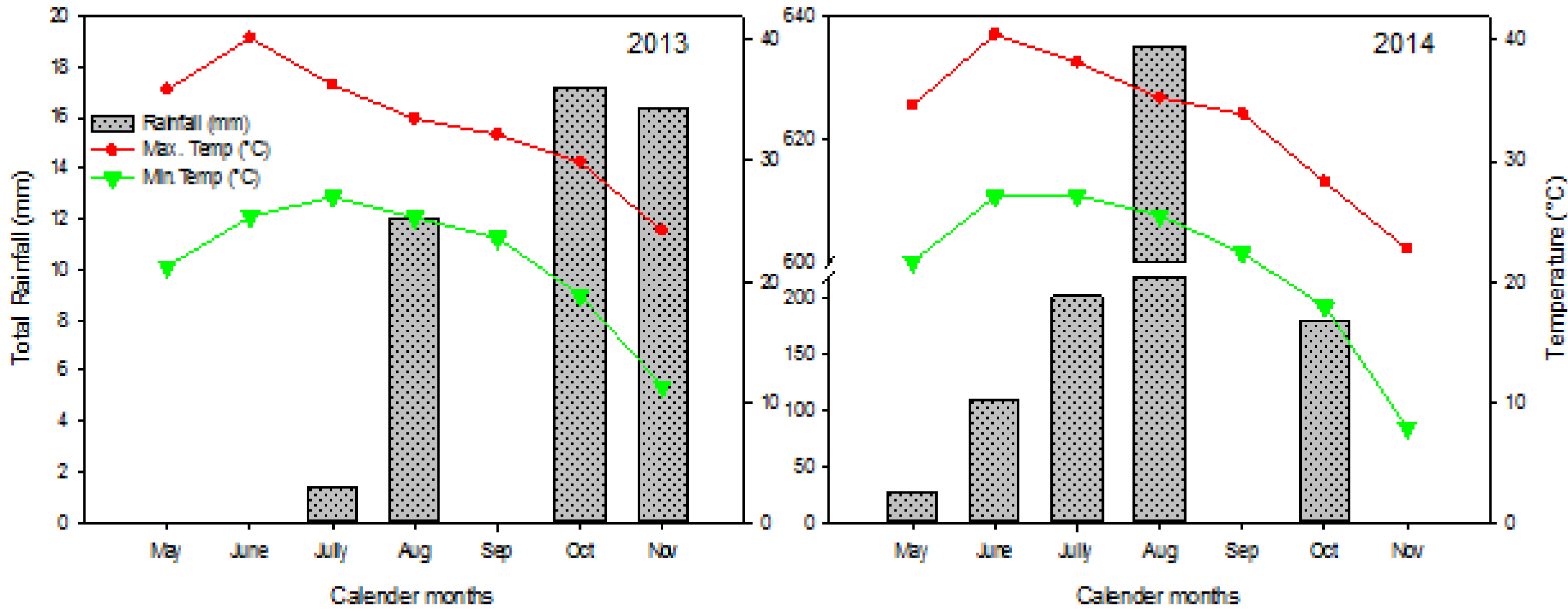
Monthly total rainfall and average temperatures (maximum and minimum) during the crop growth period.
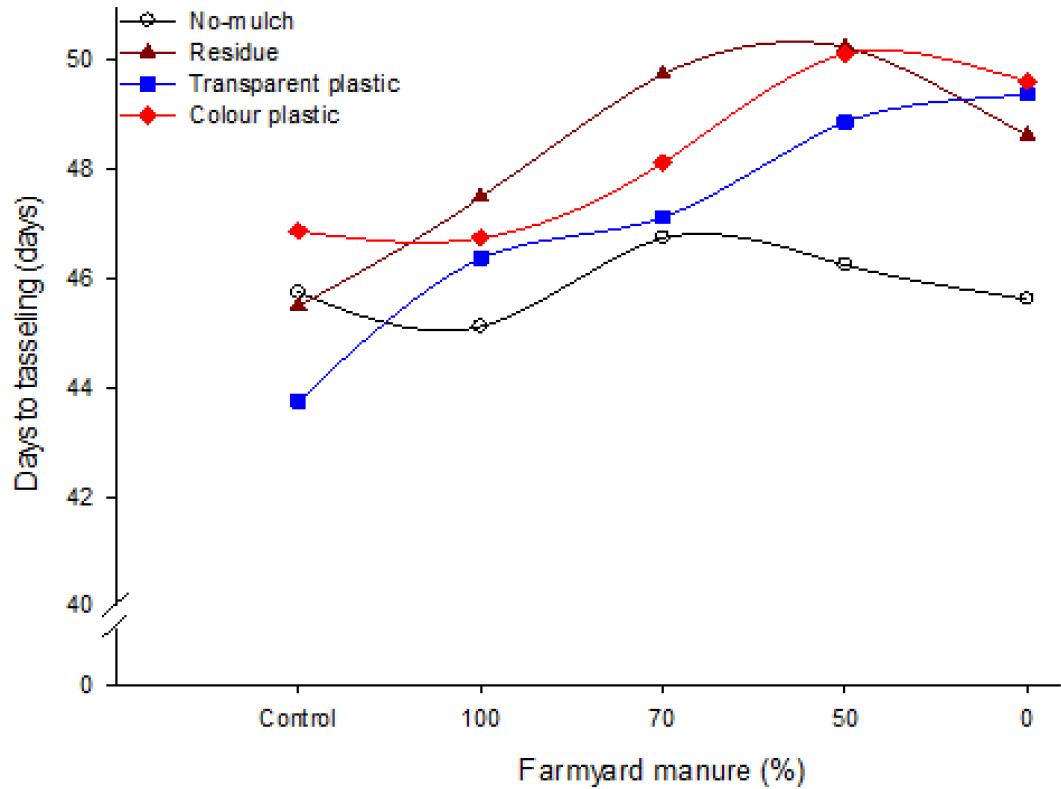
Interaction of mulching practices and nitrogen management (NM) for days to tasseling averaged over 2013 and 2014.
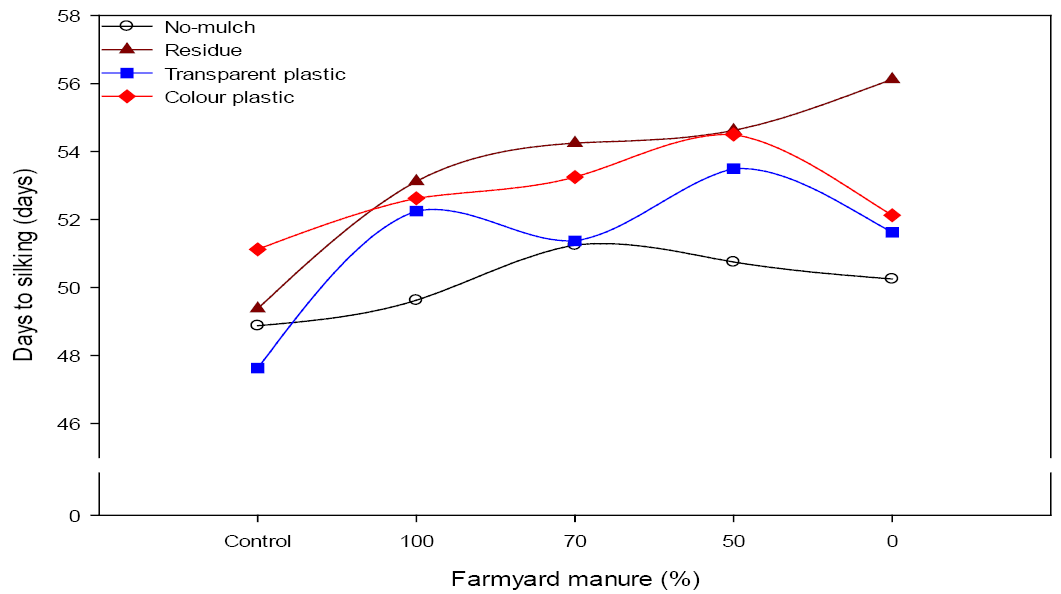
Interaction of mulching practices and nitrogen management (NM) for days to silking averaged over 2013 and 2014.
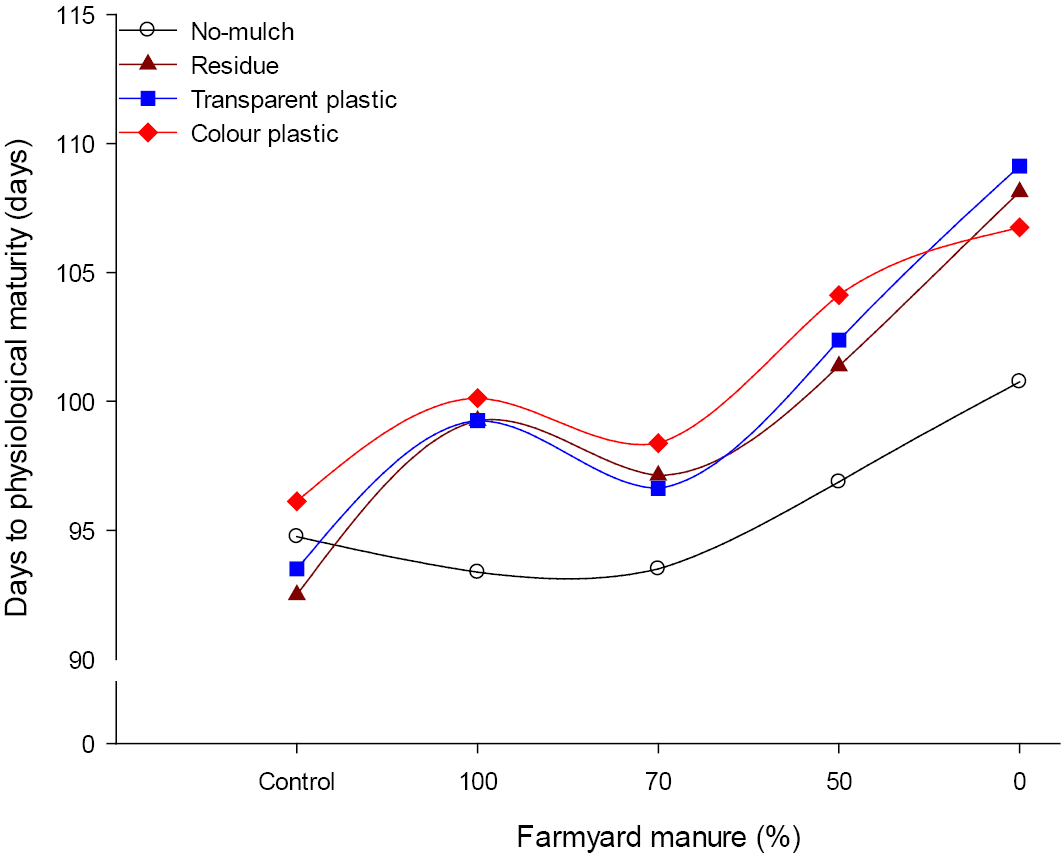
Interaction of mulching practices and nitrogen management (NM) for days to physiological maturity averaged over 2013 and 2014.
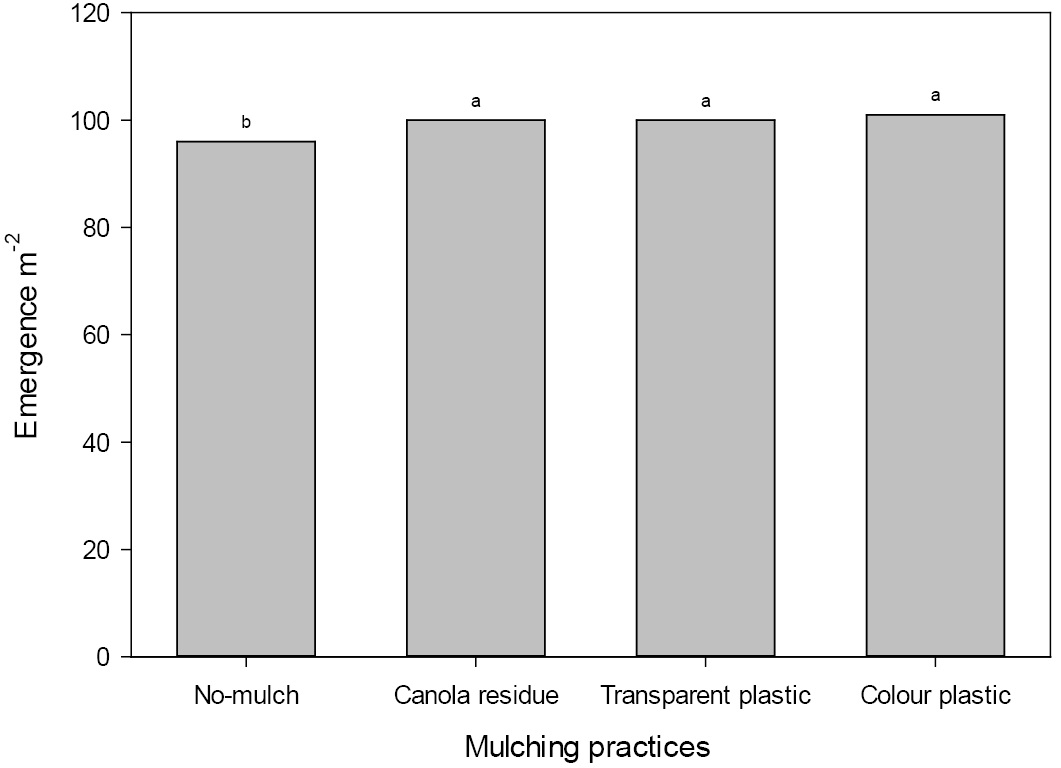
Mulching effects on maize plant emergence, bars with different letter (s) are significantly different from each other at p < 0.05 averaged over 2013 and 2014.
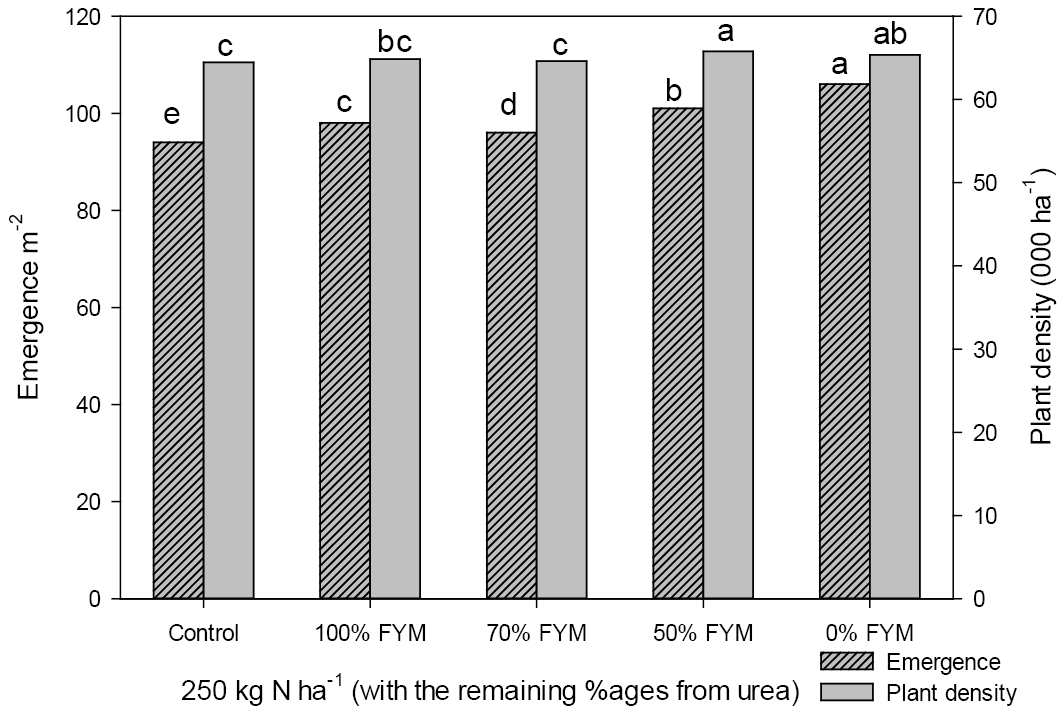
Maize emergence (pattern bars) and plant density (non-pattern bars) as affected by ratio of farmyard manure (FYM) and urea sources to provide a pool of 250 kg N ha-1 averaged over 2013 and 2014. Different types of bars with different letter (s) are significantly different from each other at p < 0.05.
References
- Ali, K., M. Arif, M.T. Jan, M.J. Khan and D.L. Jones. 2015. Integrated use of biochar: a tool for improving soil and wheat quality of degraded soil under wheat-maize cropping pattern. Pak. J. Bot. 47: 233-240.
- Analytical-Software. 2005. Statistix 8.1 for Windows. Analytical Software. In Statistix 8.1 for Windows. Analytical Software: Tallahassee, Florida.
- Anand, S., J. Vishwanatha, G. Ravishankar, A. Karegoudar and R. Rajkumar. 2014. Performance of chemical and organic amendments on cotton in alkali Vertisols of northern Karnataka. Environ. Ecol. 32: 1657-1660.
- Anikwe, M., C. Mbah, P. Ezeaku and V. Onyia. 2007. Tillage and plastic mulch effects on soil properties and growth and yield of cocoyam (Colocasia esculenta) on an ultisol in southeastern Nigeria. Soil Till. Res. 93: 264-272. https://doi.org/10.1016/j.still.2006.04.007[CrossRef]
- Anonymous. 2007. Soil Survay of Pakistan. Land resource inventory and agricultural land use plan of Peshawar district. . In Soil Survay of Pakistan. Land resource inventory and agricultural land use plan of Peshawar district. , ed. National agriculural land use plan. Lahore Pakistan.
- Asif, M., A. Ali, M. Safdar, M. Maqsood, S. Hussain and M. Arif. 2009. Growth and yield of wheat as influenced by different levels of irrigation and nitrogen. Int. J. Agric. Appl. Sci. 1: 25-28.
- Bowles, T.M., V. Acosta-Martínez, F. Calderón and L.E. Jackson. 2014. Soil enzyme activities, microbial communities, and carbon and nitrogen availability in organic agroecosystems across an intensively-managed agricultural landscape. Soil Biol. Biochem. 68: 252-262. https://doi.org/10.1016/j.soilbio.2013.10.004[CrossRef]
- Bu, L.d., J.l. Liu, L. Zhu, S.S. Luo, X.p. Chen, S.q. Li, R.L. Hill and Y. Zhao. 2013. The effects of mulching on maize growth, yield and water use in a semi-arid region. Agric. Water Manag. 123: 71-78. https://doi.org/10.1016/j.agwat.2013.03.015[CrossRef]
- Chen, X.P., Z.L. Cui, P.M. Vitousek, K.G. Cassman, P.A. Matson, J.S. Bai, Q.F. Meng, P. Hou, S.C. Yue and V. Römheld. 2011. Integrated soil–crop system management for food security. Proceedings of the National Academy of Sciences. 108: 6399-6404. https://doi.org/10.1073/pnas.1101419108[CrossRef]
- Chiroma, A.M., O.A. Folorunso and A.B. Alhassan. 2006. Soil water conservation, growth, yield and water use efficiency of sorghum as affected by land configuration and wood-shavings mulch in semi-arid northeast Nigeria. Exp. Agric. 42(2):199-216.
- Depar, N., J. Shah and M. Memon. 2016. Effect of organic mulching on soil moisture conservation and yield of wheat (Triticum aestivum L.). Pak. J. Agric. Agric. Eng. Vet. Sci. 30: 54-66.
- Fan, Y., R. Ding, S. Kang, X. Hao, T. Du, L. Tong and S. Li. 2017. Plastic mulch decreases available energy and evapotranspiration and improves yield and water use efficiency in an irrigated maize cropland. Agric. Water Manage. 179: 122-131. https://doi.org/10.1016/j.agwat.2016.08.019[CrossRef]
- Ge, L., Y. Ma, J. Bian, Z. Wang, J. Yang and L. Liu. 2013. Effects of returning maize straw to field and site-specific nitrogen management on grain yield and quality in rice. Chinese J. Rice Sci. 27: 153-160.
- Ghosh, P.K., D. Dayal, K.K. Bandyopadhyay and M. Mohanty. 2006. Evaluation of straw and polythene mulch for enhancing productivity of irrigated summer groundnut. Field Crops Res. 99(2): 76-86.
- Imran, S., I. Afzal, S. Basra and M. Saqib. 2013. Integrated seed priming with growth promoting substances enhances germination and seedling vigour of spring maize at low temperature. Int. J. Agric. Biol. 15.
- Jan, M.T., P. Shah, P.A. Hollington, M.J. Khan and Q. Sohail. 2009. Agriculture research: design and analysis, a Monograph: Department of Agronomy, The Univesity of Agriculture, Peshawar.
- Kannan, R.L., M. Dhivya, D. Abinaya, R.L. Krishna and S. Krishnakumar. 2013. Effect of integrated nutrient management on soil fertility and productivity in maize. Bull. Environ. Pharm. Life Sci. 2: 61-67.
- Khan, A., M.T. Jan, M. Afzal, I. Muhammad, A. Jan and Z. Shah. 2015. An integrated approach using organic amendments under a range of tillage practices to improve wheat productivity in a cereal based cropping system. Int. J. Agric. Biol. 17: 467-474. https://doi.org/10.17957/IJAB/17.3.13.248[CrossRef]
- Khan, A., M.T. Jan, K.B. Marwat, M. Arif and A. Jan. 2008. Phenology and crop stand of wheat as affected by nitrogen sources and tillage systems. Pak. J. Bot. 40: 1103-1112.
- Khan, A. and S.K. Khalil. 2005. Priming affect crop stand of mung bean. Sarhad Journal of Agriculture (Pakistan). 21: 534-538.
- Kumar, S., K. Bauddh, S. Barman and R.P. Singh. 2014. Amendments of microbial biofertilizers and organic substances reduces requirement of urea and DAP with enhanced nutrient availability and productivity of wheat (Triticum aestivum L.). Ecological Engineering. 71: 432-437. https://doi.org/10.1016/j.ecoleng.2014.07.007[CrossRef]
- Kumar, T., K. Tedia, R. Goswami, A. Singh, V. Challa and C. Kurrey. 2015. Effect of fly ash combination with and without organic fertilizer on physico-chemical properties of vertisol. J. Prog. Agric. 6: 1-4.
- Lawal, H. and H. Girei. 2013. Infiltration and organic carbon pools under the long term use of farm yard manure and mineral fertilizer. Int. J. Adv. Agric. Res. 1: 92-101.
- Li, R., X. Hou, Z. Jia, Q. Han, X. Ren and B. Yang. 2013a. Effects on soil temperature, moisture, and maize yield of cultivation with ridge and furrow mulching in the rainfed area of the Loess Plateau, China. Agric. Water Manage. 116: 101-109. https://doi.org/10.1016/j.agwat.2012.10.001[CrossRef]
- Li, S., Z. Wang, S. Li, Y. Gao and X. Tian. 2013b. Effect of plastic sheet mulch, wheat straw mulch, and maize growth on water loss by evaporation in dryland areas of China. Agric. Water Manage. 116: 39-49. https://doi.org/10.1016/j.agwat.2012.10.004[CrossRef]
- Li, C., J. Moore-Kucera, C. Miles, K. Leonas, J. Lee, A. Corbin and D. Inglis. 2014. Degradation of potentially biodegradable plastic mulch films at three diverse US locations. Agroecol. Sustain. Food Syst. 38(8): 861-889.
- Liu, Q., Y. Chen, Y. Liu, X. Wen and Y. Liao. 2016. Coupling effects of plastic film mulching and urea types on water use efficiency and grain yield of maize in the Loess Plateau, China. Soil Tillage Res. 157: 1-10. https://doi.org/10.1016/j.still.2015.11.003[CrossRef]
- Materechera, S.A., B. Motsuenyane and J.R. Modise. 2007. The effects of soil amendments and mulch on emergence, pod development and yield of bambara groundnut (Vigna subterranea L.) in a hard-setting soil. S. African J. Plant Soil. 24(2): 100-105.
- McDowell, N.G. 2011. Mechanisms linking drought, hydraulics, carbon metabolism, and vegetation mortality. Plant physiol. 155: 1051-1059. https://doi.org/10.1104/pp.110.170704[CrossRef]
- Moraru, P.I., T. Rusu, I. Bogdan, A.I. Pop and M.L. Sopterean. 2013. Effect of different tillage systems on soil properties and production on wheat, maize and soybean crop. World Academy of Science, Engineering and Technology, Paris, France. 83: 162-165.
- Pang, J., J.A. Palta, G.J. Rebetzke and S.P. Milroy. 2014. Wheat genotypes with high early vigour accumulate more nitrogen and have higher photosynthetic nitrogen use efficiency during early growth. Funct. Plant Biol. 41: 215-222. https://doi.org/10.1071/FP13143[CrossRef]
- Perini, M.A., I.N. Sin, A.M.R. Jara, M.E.G. Lobato, P.M. Civello and G.A. Martínez. 2016. Hot water treatments performed in the base of the broccoli stem reduce postharvest senescence of broccoli (Brassica oleracea L. Var italic) heads stored at 20° C. LWT-Food Sci. Technol.
- Rahman, M.H., M.R. Islam, M. Jahiruddin, A.B. Puteh and M.M.A. Mondal. 2013. Influence of organic matter on nitrogen mineralization pattern in soils under different moisture regimes. Int. J. Agric. Biol. 15: 55-61.
- Ram, H., V. Dadhwal, K.K. Vashist and H. Kaur. 2013. Grain yield and water use efficiency of wheat (Triticum aestivum L.) in relation to irrigation levels and rice straw mulching in North West India. Agric. Water Manage. 128: 92-101. https://doi.org/10.1016/j.agwat.2013.06.011[CrossRef]
- Rodriguez, O.S. 1997. Hedgerows and mulch as soil conservation measures evaluated under field simulated rainfall. Soil Technol. 11(1): 79-93.
- Saharan, V., R. Kumaraswamy, R.C. Choudhary, S. Kumari, A. Pal, R. Raliya and P. Biswas. 2016. Cu-Chitosan nanoparticle mediated sustainable approach to enhance seedling growth in maize by mobilizing reserved food. J. Agric. Food Chem. 64: 6148-6155. https://doi.org/10.1021/acs.jafc.6b02239[CrossRef]
- Saleem, M., M. Randhawa, S. Hussain, M. Wahid and S. Anjum. 2009. Nitrogen management studies in autumn planted maize (Zea mays L.) hybrids. J. Anim. Plant Sci. 19: 2009.
- Shaxson, F. and R. Barber. 2016. Optimizing soil moisture for plant production: The significance of soil porosity: Rome, Italy: UN-FAO.
- Singh, G., D. Kumar and P. Sharma. 2015. Effect of organics, biofertilizers and crop residue application on soil microbial activity in rice–wheat and rice-wheat mungbean cropping systems in the Indo-Gangetic plains. Cogent Geoscience. 1: 1085296. https://doi.org/10.1080/23312041.2015.1085296[CrossRef]
- Soratto, R.P., G.D. Souza-Schlick, A.M. Fernandes, M.D. Zanotto and C.A. Crusciol. 2012. Narrow row spacing and high plant population to short height castor genotypes in two cropping seasons. Ind. Crops Prod. 35: 244-249. https://doi.org/10.1016/j.indcrop.2011.07.006[CrossRef]
- Storkey, J., A. Macdonald, J. Bell, I. Clark, A. Gregory, N. Hawkins, P. Hirsch, L. Todman and A. Whitmore. 2016. Chapter one-the unique contribution of rothamsted to ecological research at large temporal scales. Adv. Ecol. Res. 55: 3-42. https://doi.org/10.1016/bs.aecr.2016.08.002[CrossRef]
- Tadesse, T., N. Dechassa, W. Bayu and S. Gebeyehu. 2013. Effects of farmyard manure and inorganic fertilizer application on soil physico-chemical properties and nutrient balance in rain-fed lowland rice ecosystem. Am. J. Plant Sci. 4: 309.https://doi.org/10.4236/ajps.2013.42041[CrossRef]
- Vashisth, A. and S. Nagarajan. 2010. Effect on germination and early growth characteristics in sunflower (Helianthus annuus) seeds exposed to static magnetic field. J. plant physiol. 167: 149-156. https://doi.org/10.1016/j.jplph.2009.08.011[CrossRef]
- Wang, S., B. Fu, G. Gao, X. Yao and J. Zhou. 2012. Soil moisture and evapotranspiration of different land cover types in the Loess Plateau, China. Hydrol. Earth Syst. Sci. 16: 2883-2892. https://doi.org/10.5194/hess-16-2883-2012[CrossRef]
- Waterworth, W.M., C.M. Bray and C.E. West. 2015. The importance of safeguarding genome integrity in germination and seed longevity. J. exp. Bot. erv080. https://doi.org/10.1093/jxb/erv080[CrossRef]
- Zaman, R. and A. Khan. 2016. Growth and yield performance of maize seeded in line and broadcasted to varying doses of nitrogen. Cercetari Agronomice in Moldova. 49: 21-27. https://doi.org/10.1515/cerce-2016-0012[CrossRef]
- Zhang, X., G. Huang and Q. Zhao. 2014. Differences in maize physiological characteristics, nitrogen accumulation, and yield under different cropping patterns and nitrogen levels. Chilean J. Agric. Res. 74: 326-332. https://doi.org/10.4067/S0718-58392014000300011[CrossRef]
- Zhao, H., Y.C. Xiong, F.M. Li, R.Y. Wang, S.C. Qiang, T.F. Yao and F. Mo. 2012. Plastic film mulch for half growing-season maximized WUE and yield of potato via moisture-temperature improvement in a semi-arid agroecosystem. Agric. Water Manage. 104: 68-78. https://doi.org/10.1016/j.agwat.2011.11.016[CrossRef]
Services
Article usage statistics
Loading…