

ResearchersLinks

Article · Volume 3, Issue 8, Pages 422–429, 24 June 2015 · Open Access

Peste-Des-Petits-Ruminants: An Indian Perspective

· · · · · · ·

Article Info ⌄
Journal:
Advances in Animal and Veterinary Sciences
Published:
24 June 2015

From the article

  • Peste-des-petits-ruminants (PPR) is a viral disease of sheep and goats caused by PPR virus (PPRV) with huge economical concern.
  • Seroprevalence of Peste des petits ruminants in cattle and buffaloes from Southern Peninsular India.
  • Development of a N gene-based PCR-ELISA for detection of Peste-des-petits-ruminants virus in clinical samples.
  • Prevalence and distribution of peste des petits ruminants virus infection in small ruminants in India.

Selected from the article's own text.

Abstract

Dhanavelu Muthuchelvan1*, Kaushal Kishor Rajak1, Muthannan Andavar Ramakrishnan1, Dheeraj Choudhary1, Sakshi Bhadouriya1, Paramasivam Saravanan2, Awadh Bihari Pandey1, Raj Kumar Singh3

1Division of Virology, Indian Veterinary Research Institute, Mukteswar Campus, Nainital, Uttarakhand 263 138, India; 2Indian Veterinary Research Institute, Hebbal Bengaluru, 560024, Karnataka, India; 3Indian Veterinary Research Institute, Izatnagar, 243122, India.

*Correspondence | Dhanavelu Muthuchelvan, Indian Veterinary Research Institute, Nainital, Uttarakhand, India; Email: drchelva@gmail.com

Abstract
Peste-des-petits-ruminants (PPR) is an acute or subacute, highly contagious viral disease of small ruminants, characterized by fever, oculonasal discharges, stomatitis, diarrhoea and pneumonia with high morbidity and mortality. Peste-des-petits-ruminants virus (PPRV), the etiological agent of PPR, is antigenically related to another rinderpest virus (RP) which was globally eradicated. PPR is gaining worldwide attention through the concerted effort of scientists working together under the aegis of global PPR research alliance (GPRA). The first homologous live attenuated vaccine was developed using Nigeria 75/1, which has been used worldwide. In India, live attenuated vaccines have been developed using Sungri 96, Arasur 87 and Coimbatore 97 viruses. In this review, the status of PPR and control strategy with special reference to the Indian context is comprehensively discussed.

Keywords | PPR, PPRV, Vaccine, DIVA, Eradication, Symptoms, Epidemiology, Diagnosis, Vaccines, Immunity, Control programme, Replication
Introduction

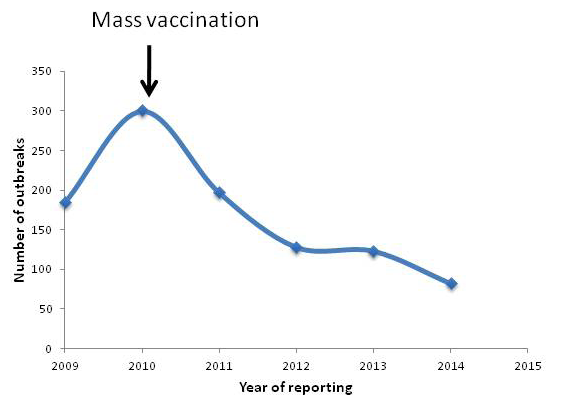
Peste-des-petits-ruminants (PPR) is a viral disease of sheep and goats caused by PPR virus (PPRV) with huge economical concern. India harbours 65.06 and 135.17 million of sheep and goats, respectively (19th Livestock census, 2012; http://dahd.nic.in/dahd/WriteReadData/Livestock.pdf) which is 16.1 and 6.4 % of the world’s total goat and sheep population, respectively. The disease threatens 70% of the landless labourers, small and medium farmers who rears sheep and goats for their livelihood. As the disease affects the poor sections of the society, international agencies such as FAO & OIE set a target for global eradication by 2030 (http://www.fao.org/ppr/en/). The disease causes up to 100% mortality in and productive loss. It is estimated that PPR alone leads to annual losses of 1,800 million Indian Rupees (US$ 39 million) . As one of the forerunners in the rinderpest (RP) research and significant contribution in the global eradication of the disease, consequently, our lab developed live attenuated vaccine (Sungri96) and monoclonal antibody based diagnostics , c). The vaccine and diagnostics are supplied throughout India as well as neighbouring countries. Availability of these technologies helped India to initiate mass vaccination campaign which brought down the incidence of the disease significantly (Figure 1). Further, Government of India has recently launched a Peste des Petits Ruminants Control Programme (PPR-CP). The PPR Control Programme involving intensive vaccination of susceptible animals has been started in 2010. The programme involves vaccinating all susceptible goats and sheep and three subsequent generations. Under first phase, States of Kerala, Tamil Nadu, Karnataka, Andhra Pradesh, Maharashtra, Goa and UTs of Lakshadweep, Daman and Diu, Dadra and Nagar Haveli, Andaman and Nicobar Islands and Pondicherry were covered. In the second phase, the programme has been expanded to all States/UTs in February, 2014 http://dahd.nic.in/dahd/WriteReadData/Animal%20Husbandry%20English%202014-15%20(1).pdf. This short review focuses on the current scenario of PPR in India.

The Virus

Peste-des-petits-ruminants virus (PPRV) is a member of the genus Morbillivirus. subfamily Paramyxovirinae, family Paramyxoviridae in the order Mononegavirales (International Committee on Taxonomy of Viruses, 2012). Since the virus is enveloped one, it is easily inactivated under sunlight and with many chemicals. The genome of PPRV is a negative sense, single-stranded RNA with the size of 15948 bp. The genome is organized into six transcriptional units and each encodes at least one non overlapping protein: the nucleocapsid (N), the matrix (M), the polymerase or large (L), the phosphoprotein (P), and two envelope proteins haemagglutin (H) and fusion (F). The P protein uses alternate expression strategies to code for two non-structural proteins viz., V and C . The PPRV genes arranged from 3ˈ to 5’ on the genome is in an order of N-P-M-F-H-L separated by intergenic region which is CTT in most cases. At the 3’ and 5ˈ end of the genome there is a leader (52 nucleotides) and trailer (37 nucleotides) region contain promoter functions . Two heptad repeats (HR1 and HR2) of the fusion protein was shown to form a six-helix and trimeric coiled-coil bundle for initiation of fusion activity . Host-pathogen interaction study with vaccine virus (Sungri96) and goat peripheral blood mononuclear cells (PBMCs) revealed the dysregulation of immune regulatory pathways . Establishment of an in vitro system using Sungri96 virus shown that RNP complex is actively synthesis mRNA . PPRV multiplication was reduced significantly in Signaling Lymphocyte Activation Molecule (SLAM;CD150) receptors suppressed with siRNA in B95a .Transiently expressed PPRV F glycoprotein induces cell fusion in the absence of H protein . The H protein was found to have potential T cell determinant(s) at amino acids position 123-137 and 242-609 .

The disease

PPR is a disease of small ruminants which resembles rinderpest of cattle. The incubation period is 3-6 days, followed by high fever, oculonasal discharges, pneumonia, stomatitis, and inflammation of gastrointestinal tract leading to severe diarrhoea followed by death or recovery ; ; . The disease causes more severe lesions in goats than sheep. Although, the reason for this host specificity is not fully understood, difference in genetic makeup and/or receptor distributions of the host might have a role. Different levels of SLAM mRNA could influence the virus replication in different species . Another study examined the replication of PPRV in PBMCs of Indian goats and water buffalo and demonstrated that the level of TLR3 and TLR7 and downstream signalling molecules correlate with susceptibility . Incidence in other species such as cattle, pig, camel, buffalo, lion and captive wild small ruminants were reported but are not contributing to the disease epidemiology. Experimental infection of cattle with PPRV revealed that the nucleic acid could be detected up to 397 days post infection .

No carrier state or persistent infections have been reported, however, disease may circulate in subclinical forms in sheep and goats of endemic region. The recovered animals are immune for lifelong. The cytokine expression profile (IL-4 and IFN-γ) of vaccinated and infected goats were found to have a unique biphasic response of IL-4 expression with up-regulation of IFN-γ on 7th days post vaccination . PPRV was reported to induce apoptosis in vitro in goat PBMCs .

Figure 1: The disease outbreak status for the period between 2009 and 2014

Although, presence of PPR-like disease has been suspected earlier in retrospective study , its presence was confirmed in India in1987 from Arasur village of Villupuram district of Tamil Nadu . Currently, PPR outbreaks are being reported regularly from different parts of the country ; ; ; ; ; . The disease outbreak status for the period between 2009 and 2014 is depicted in Figure 1. The reported seroprevalence rate of PPRV at country level in goats and sheep was 43.56 % and 4.58% in cattle and buffalos . Molecular epidemiological studies confirm the circulation of lineage IV in India ; ; ; . Presence of mixed infection with bluetongue , goatpox and Orf viruses have also been reported.

Disease transmission and Epidemiology

The virus spreads through close contact between infected and susceptible population. The primary portal of entry is via respiratory route. Viraemia develop 2-3 days post infection i.e 1-2 days before the appearance of first clinical sign. Fine infective droplets from the secretions and excretions of the infected animals are released into the air . Transmission could also occur through contaminated water, feed troughs and bedding .

In India, animals are allowed to share common grazing land and water sources. Besides, migration of animals between various states is common especially, in the sub-Himalayan region and western dry land areas such as Rajasthan and Gujarat ; . Mixing of these migrated populations with local population may contribute to the disease transmission. Further, during the festival seasons, animals are shipped to various states for meat purposes. These unrestricted movements of animals contribute significantly to the epidemiology of the disease. In India, the disease occurs round the year and the maximum outbreaks reported during the winter and rainy seasons. Therefore, vaccination just prior to the onset of rainy/winter season will be more appropriate.

Initially, PPRV was classified in to 4 lineages I–IV based on the F gene sequencing ; ; lineage I-III viruses were reported in several countries of Africa and lineage IV (Asian lineage) mainly in Middle East and Asia ; ; . Currently, N gene is preferred over F gene due to its better molecular separation . In the recent past, many researchers reports the presence of lineage IV in African countries ; . Till now, only lineage IV viruses have been reported in India. The PPRV goat strain isolated during the recent outbreak at Tripura showed 99.2 to 99.6% nucleotide identities with the Bangladesh strains . The latter study confirms the transboundary transmission of PPRV with the neighbouring countries.

Vaccine

Before the development of PPRV vaccine, owing to cross-protection between RPV and PPRV, an attenuated tissue culture RP vaccine (TCRP; Plowright’s strain) was used in many countries. However, since the last phase of RP eradication, this practice was banned. The first homologous vaccine against PPR was developed in 1987 using a Nigerian isolate (Nigeria/75/1) (Diallo et al., 1989, 2007). Subsequently, three PPRV vaccines have been developed in India using indigenous isolates of lineage IV (PPRV/Sungri/96, PPRV/Arasur/87, and PPRV/Coimbatore/97) ; . Although, all the three vaccines were reported to be equally efficacious ; , it was observed that the replication cycle and monoclonal reactivity of Arasur/87 virus is different from Sungri/96 virus . Currently, Sungri/96 strain is being used throughout the country. This vaccine is potent, confers life-long immunity and is safer to pregnant animals . Cold chain maintenance is the major concern of live attenuated vaccines in tropical countries. Attempts were made to develop thermal adapted vaccine by growing the virus at high temperature (>40°C) ; . Being a live attenuated vaccine, animals mount strong immune response against all the viral proteins and therefore differentiating the infected from the vaccinated animals (DIVA) would be difficult. Developing genetically marked vaccines would be advantageous during the eradication phase. Subunit vaccines prepared by expressing the PPRV F and/or H gene in pox and adeno viral vectors found to be experimentally protective ; ; ; Diallo et al., 2007; ; . Attempt was made to develop a subunit vaccine by expressing the H protein of PPRV in peanut plants (Arachis hypogea) and found to elicit neutralizing antibody responses in sheep . The major disadvantage of this strategy is need of multiple doses for protective immunity. Another approach is to manipulate a specific region or epitope of a viral protein of the existing vaccine to obtain positively and or negatively marked vaccines. Recently, two groups succeeded in developing DIVA vaccines using Nigeria 75/1 strain ; . Our lab is currently working on development of a DIVA vaccine for PPRV Sungri/96. Experimental combined vaccines against PPR/goatpox , and PPR/sheeppox have been shown as promising candidates. Appropriate period of vaccination in kids was found to be four months .

Diagnostics of PPR

Laboratory confirmation of the disease is usually done through virus isolation and virus neutralization assay, which are time consuming and laborious. Several assays have been described to detect virus-specific antibodies or viral antigens.

Detection of Antibodies Against PPRV

A monoclonal antibody based competitive ELISA (cELISA) for detection of antibodies against PPRV has been developed in our laboratory . The assay was compared with VNT and found to be 92.2% and 98.84%, of specificity and sensitivity, respectively. Although, this test is suitable for mass screening, it uses live virus as positive antigen, which could be a disadvantage for use in PPR free countries/regions. To overcome this, we are currently working on a recombinant antigen based competitive ELISA. Similarly, a polyclonal antibody based indirect ELISA was developed for detection of antibodies against PPRV in the serum samples . The performance of the assay was comparable with that of c-ELISAs.

Detection of PPRV Antigen

Virus Isolation

Virus isolation remains the “gold standard” for the diagnosis of PPR. Blood collected at the height of the temperature is the best material for this purpose. The nasal or ocular swabs or 10% tissue suspension can also be used. The PPRV can be propagated in vitro in several primary bovine and sheep cells, as well as established cell lines like Vero (African green monkey kidney cells) and B95a (Marmoset B-lymphoblastoid cells) . In most of these cells, the PPRV manifests morbillivirus-specific CPE by 3-5 days post infection. In some cases, up to five blind passages are needed for isolating the virus.

Sandwich ELISA

The sandwich-ELISA for the detection of PPRV antigen in the clinical samples was developed at our laboratory. This assay uses a monoclonal antibody directed against N protein. The test is compared with IC-ELISA (BDSL) and found to have 89% and 93%, sensitivity and specificity, respectively . This assay is easy to perform and is routinely adopted by many diagnostic laboratories. Like c-ELISA, in this assay also live attenuated PPRV used as positive antigen. Attempts were made to develop a recombinant N protein based ELISA .

Detection of PPRV Nucleic Acid

Reverse Transcription-Polymerase Chain Reaction (RT-PCR) is the method of choice for detecting nucleic acids of PPRV in clinical samples. RT-PCRs have been reported for detection and differential diagnosis of RP and PPR viruses targeting the N and F gene ; ; . N-Gene based PCR-ELISA has developed at IVRI, Mukteswar to detect PPRV from clinical samples. The test can detect viral RNA in infected tissue culture fluid with a titre as low as 0.01 TCID50 and is used to evaluate only critical samples . PCR based on other genes also are available ; .

Real-time RT-PCR and Lateral Flow Assays

Real time RT- PCR has been used for quantification and diagnosis of PPR virus. M gene-based hydrolysis probe (TaqMan), SYBR Green I based real-time RT-PCR assays targeting the M gene of PPRV are in use ; . Recently, a novel non-amplification technique was developed to detect nucleic acids of PPRV in which two probes complementary to the target sequences - one conjugated to magnetic microparticles and the second to gold nanoparticles labelled with horseradish peroxidase . The assay has great potential due to quick performance (45 min) and not requiring expensive instrumentations etc.

Recently, an immunochromatographic test has been developed for the diagnosis PPR under field conditions. The assay has been validated with clinical samples collected in Ivory Coast, Pakistan, Ethiopia and Uganda .

Loop Mediated Isothermal Amplification (LAMP) Assay

LAMP assay for rapid detection of PPRV from clinical samples has been developed using M gene . Similar assay has been developed in our laboratory using N gene and the assay is 100 and 1000 times more sensitive than RT-PCR and s-ELISA, respectively .

Control program in India

Focused vaccinations in high-risk populations and mass vaccination are necessary to achieve 70 to 80% of herd immunity. The control strategies should follow the “bottom-up” approach (farmers to field veterinarians to policy makers) . Besides, strengthening of PPR vaccine production and quality control units, disease diagnostic laboratories, infrastructure for field Veterinarians are also key factors. The NCP-PPR control programme started in 2010 and currently expanded to all the provinces of the country.

Conflict of interest

There exists no conflict of interest.

Acknowledgements

The authors thank ICAR-Indian Veterinary Research Institute for necessary support.

Author’s cONTRIBUTION

Dhanavelu Muthuchelvan, Dheeraj Choudhary, Kaushal Kishor Rajak, Sakshi Bhadouriya and Paramasivam Saravanan collected the literature. Dhanavelu Muthuchelvan wrote the manuscript. Dhanavelu Muthuchelvan, Kaushal Kishor Rajak and Muthannan Andavar Ramakrishnan edited the manuscript. Awadh Bihari Pandey and Raj Kumar Singh performed the final check.

References

  1. Abera T, Thangavelu A (2014). Development of a two-step SYBR Green I based real time RT-PCR assay for detecting and quantifying peste des petits ruminants virus in clinical samples. J. Virol. Methods. 209: 25–29. http://dx.doi.org/10.1016/j.jviromet.2014.08.017[CrossRef]
  2. Bailey D, Banyard A, Dash P, Ozkul A, Barrett T (2005). Full genome sequence of peste des petits ruminants virus, a member of the Morbillivirus genus. Virus Res. 110(1-2): 119–124. http://dx.doi.org/10.1016/j.virusres.2005.01.013[CrossRef]
  3. Balamurugan V, Hemadri D, Gajendragad MR, Singh RK, Rahman H (2014a). Diagnosis and control of peste des petits ruminants: a comprehensive review. Virus Dis. 25(1): 39–56. http://dx.doi.org/10.1007/s13337-013-0188-2[CrossRef]
  4. Balamurugan V, Krishnamoorthy P, Veeregowda BM, Sen A, Rajak KK, Bhanuprakash V, Gajendragad MR, Prabhudas K (2012a). Seroprevalence of Peste des petits ruminants in cattle and buffaloes from Southern Peninsular India. Trop. Anim. Health Prod. 44(2): 301–306. http://dx.doi.org/10.1007/s11250-011-0020-1[CrossRef]
  5. Balamurugan V, Saravanan P, Sen A, Rajak KK, Bhanuprakash V, Krishnamoorthy P, Singh RK (2011). Sero-epidemiological study of peste des petits ruminants in sheep and goats in India between 2003 and 2009. Rev. Sci. Tech. Int. Off. Epizoot. 30(3): 889–896.
  6. Balamurugan V, Sen A, Saravanan P, Singh RP, Singh RK, Rasool TJ, Bandyopadhyay SK (2006). One-step multiplex RT-PCR assay for the detection of peste des petits ruminants virus in clinical samples. Vet. Res. Commun. 30(6): 655–666. http://dx.doi.org/10.1007/s11259-006-3331-3[CrossRef]
  7. Balamurugan V, Sen A, Venkatesan G, Bhanuprakash V, Singh RK (2014b). Protective immune response of live attenuated thermo-adapted peste des petits ruminants vaccine in goats. Virus Dis. 25(3): 350–357. http://dx.doi.org/10.1007/s13337-014-0208-x[CrossRef]
  8. Balamurugan V, Sen A, Venkatesan G, Rajak KK, Bhanuprakash V, Singh RK (2012b). Study on passive immunity: Time of vaccination in kids born to goats vaccinated against Peste des petits ruminants. Virol. Sin. 27(4): 228–233. http://dx.doi.org/10.1007/s12250-012-3249-6[CrossRef]
  9. Balamurugan V, Sen A, Venkatesan G, Yadav V, Bhanot V, Bhanuprakash V, Singh RK (2012c). A rapid and sensitive one step-SYBR green based semi quantitative real time RT-PCR for the detection of peste des petits ruminants virus in the clinical samples. Virol. Sin. 27(1): 1–9. http://dx.doi.org/10.1007/s12250-012-3219-z[CrossRef]
  10. Balamurugan V, Sen A, Venkatesan G, Yadav V, Bhanuprakash V, Singh RK (2010). Isolation and identification of virulent peste des petits ruminants viruses from PPR outbreaks in India. Trop. Anim. Health Prod. 42(6): 1043–1046. http://dx.doi.org/10.1007/s11250-010-9527-0[CrossRef]
  11. Balamurugan V, Singh RP, Saravanan P, Sen A, Sarkar J, Sahay B, Rasool TJ, Singh RK (2007). Development of an indirect ELISA for the detection of antibodies against Peste-des-petits-ruminants virus in small ruminants. Vet. Res. Commun. 31(3): 355–364. http://dx.doi.org/10.1007/s11259-006-3442-x[CrossRef]
  12. Banyard AC, Parida S, Batten C, Oura C, Kwiatek O, Libeau G (2010). Global distribution of peste des petits ruminants virus and prospects for improved diagnosis and control. J. Gen. Virol. 91(Pt 12): 2885–2897. http://dx.doi.org/10.1099/vir.0.025841-0[CrossRef]
  13. Baron J, Fishbourne E, Couacy-Hyman E, Abubakar M, Jones BA, Frost L, Herbert R, Chibssa TR, Van’t Klooster G, Afzal M, Ayebazibwe C, Toye P, Bashiruddin J, Baron MD (2014). Development and testing of a field diagnostic assay for peste des petits ruminants virus. Trans. Emerg. Dis. 61(5): 390–396. http://dx.doi.org/10.1111/tbed.12266[CrossRef]
  14. Brindha K, Raj GD, Ganesan PI, Thiagarajan V, Nainar AM, Nachimuthu K (2001). Comparison of virus isolation and polymerase chain reaction for diagnosis of peste des petits ruminants. Acta Virol. 45(3): 169–172.
  15. Caufour P, Rufael T, Lamien CE, Lancelot R, Kidane M, Awel D, Sertse T, Kwiatek O, Libeau G, Sahle M, Diallo A, Albina E (2014). Protective efficacy of a single immunization with capripoxvirus-vectored recombinant peste des petits ruminants vaccines in presence of pre-existing immunity. Vaccine. 32(30): 3772–3779. http://dx.doi.org/10.1016/j.vaccine.2014.05.025[CrossRef]
  16. Chandran D, Reddy KB, Vijayan SP, Sugumar P, Rani GS, Kumar PS, Rajendra L, Srinivasan VA (2010). MVA recombinants expressing the fusion and hemagglutinin genes of PPRV protects goats against virulent challenge. Indian J. Microbiol. 50(3): 266–274. http://dx.doi.org/10.1007/s12088-010-0026-9[CrossRef]
  17. Chaudhary SS, Pandey KD, Singh RP, Verma PC, Gupta PK (2009). A vero cell derived combined vaccine against sheep pox and Peste des Petits ruminants for sheep. Vaccine. 27(19): 2548–2553. http://dx.doi.org/10.1016/j.vaccine.2009.01.104[CrossRef]
  18. Chauhan HC, Lambade PS, Sen A, Dadawala AI, Ranaware PB, Chandel B, Joshi DV, Patel SS, Pankaj K, Shah NM, Kher HN (2011). The use of pathological and histopathological techniques in the diagnosis of peste des petits ruminants in India. Vet. Ital. 47(1): 41–47.
  19. Chen W, Hu S, Qu L, Hu Q, Zhang Q, Zhi H, Huang K, Bu Z (2010). A goat poxvirus-vectored peste-des-petits-ruminants vaccine induces long-lasting neutralization antibody to high levels in goats and sheep. Vaccine. 28(30): 4742–4750. http://dx.doi.org/10.1016/j.vaccine.2010.04.102[CrossRef]
  20. Couacy-Hymann E, Roger F, Hurard C, Guillou JP, Libeau G, Diallo A (2002). Rapid and sensitive detection of peste des petits ruminants virus by a polymerase chain reaction assay. J. Virol. Methods. 100(1-2): 17–25. http://dx.doi.org/10.1016/S0166-0934(01)00386-X[CrossRef]
  21. Dadas RC, Muthuchelvan D, Pandey AB, Rajak KK, Sudhakar SB, Shivchandra SB, Venkatesan G (2012). Development of loop-mediated isothermal amplification (LAMP) assay for rapid detection of peste des petits ruminants virus (PPRV) genome from clinical samples. Indian J. Comp. Microbiol. Immunol. Infect. Dis. 33(1-2): 7–13.
  22. Dhanasekaran S, Biswas M, Vignesh AR, Ramya R, Raj GD, Tirumurugaan KG, Raja A, Kataria RS, Parida S, Subbiah E (2014). Toll-like receptor responses to Peste des petits ruminants virus in goats and water buffalo. PloS One. 9(11): e111609. http://dx.doi.org/10.1371/journal.pone.0111609[CrossRef]
  23. Dhar P, Sreenivasa BP, Barrett T, Corteyn M, Singh RP, Bandyopadhyay SK (2002). Recent epidemiology of peste des petits ruminants virus (PPRV). Vet. Microbiol. 88(2): 153–159. http://dx.doi.org/10.1016/S0378-1135(02)00102-5[CrossRef]
  24. Diallo A, Minet C, Berhe G, Le Goff C, Black DN, Fleming M, Barrett T, Grillet C, Libeau G (2002). Goat immune response to capripox vaccine expressing the hemagglutinin protein of peste des petits ruminants. Ann. N. Y. Acad. Sci. 969: 88–91. http://dx.doi.org/10.1111/j.1749-6632.2002.tb04356.x[CrossRef]
  25. Diallo A, Minet C, Le Goff C, Berhe G, Albina E, Libeau G, Barrett T (2007). The threat of peste des petits ruminants: progress in vaccine development for disease control. Vaccine. 25(30): 5591–5597. http://dx.doi.org/10.1016/j.vaccine.2007.02.013[CrossRef]
  26. Diallo A, Taylor WP, Lefèvre PC, Provost A (1989). Attenuation of a strain of rinderpest virus: potential homologous live vaccine. Rev. Délevage Médecine Vét. Pays Trop. 42(3): 311–319.
  27. Forsyth MA, Barrett T (1995). Evaluation of polymerase chain reaction for the detection and characterisation of rinderpest and peste des petits ruminants viruses for epidemiological studies. Virus Res. 39(2-3): 151–163. http://dx.doi.org/10.1016/0168-1702(95)00076-3[CrossRef]
  28. George A, Dhar P, Sreenivasa BP, Singh RP, Bandyopadhyay SK (2006). The M and N genes-based simplex and multiplex PCRs are better than the F or H gene-based simplex PCR for Peste-des-petits-ruminants virus. Acta Virol. 50(4): 217–222.
  29. Herbert R, Baron J, Batten C, Baron M, Taylor G (2014). Recombinant adenovirus expressing the haemagglutinin of Peste des petits ruminants virus (PPRV) protects goats against challenge with pathogenic virus; a DIVA vaccine for PPR. Vet. Res. 45: 24. http://dx.doi.org/10.1186/1297-9716-45-24[CrossRef]
  30. Hosamani M, Singh SK, Mondal B, Sen A, Bhanuprakash V, Bandyopadhyay SK, Yadav MP, Singh RK (2006). A bivalent vaccine against goat pox and Peste des Petits ruminants induces protective immune response in goats. Vaccine. 24(35-36): 6058–6064. http://dx.doi.org/10.1016/j.vaccine.2006.05.021[CrossRef]
  31. Hu Q, Chen W, Huang K, Baron MD, Bu Z (2012). Rescue of recombinant peste des petits ruminants virus: creation of a GFP-expressing virus and application in rapid virus neutralization test. Vet. Res. 43: 48. http://dx.doi.org/10.1186/1297-9716-43-48[CrossRef]
  32. International Committee on Taxonomy of Viruses (2012). Virus taxonomy: Classification and nomenclature of viruses: Ninth report of the international committee on taxonomy of viruses. London ; Waltham, MA: Academic Press.
  33. Kerur N, Jhala MK, Joshi CG (2008). Genetic characterization of Indian peste des petits ruminants virus (PPRV) by sequencing and phylogenetic analysis of fusion protein and nucleoprotein gene segments. Res. Vet. Sci. 85(1): 176–183. http://dx.doi.org/10.1016/j.rvsc.2007.07.007[CrossRef]
  34. Khandelwal A, Renukaradhya GJ, Rajasekhar M, Sita GL, Shaila MS (2011). Immune responses to hemagglutinin-neuraminidase protein of peste des petits ruminants virus expressed in transgenic peanut plants in sheep. Vet. Immunol. Immunopathol. 140(3-4): 291–296. http://dx.doi.org/10.1016/j.vetimm.2010.12.007[CrossRef]
  35. Kwiatek O, Minet C, Grillet C, Hurard C, Carlsson E, Karimov B, Albina E, Diallo A, Libeau G (2007). Peste des petits ruminants (PPR) outbreak in Tajikistan. J. Comp. Pathol. 136(2-3): 111–119. http://dx.doi.org/10.1016/j.jcpa.2006.12.002[CrossRef]
  36. Lefèvre PC, Diallo A (1990). Peste des petits ruminants. Rev. Sci. Tech. Int. Off. Epizoot. 9(4): 935–981.
  37. Li L, Bao J, Wu X, Wang Z, Wang J, Gong M, Liu C, Li J (2010). Rapid detection of peste des petits ruminants virus by a reverse transcription loop-mediated isothermal amplification assay. J. Virol. Methods. 170(1-2): 37–41. http://dx.doi.org/10.1016/j.jviromet.2010.08.016[CrossRef]
  38. Maganga GD, Verrier D, Zerbinati RM, Drosten C, Drexler JF, Leroy EM (2013). Molecular typing of PPRV strains detected during an outbreak in sheep and goats in south-eastern Gabon in 2011. Virol. J. 10: 82. http://dx.doi.org/10.1186/1743-422X-10-82[CrossRef]
  39. Malik YS, Singh D, Chandrashekar KM, Shukla S, Sharma K, Vaid N, Chakravarti S (2011). Occurrence of dual infection of peste-des-petits-ruminants and goatpox in indigenous goats of central India. Transbound. Emerg. Dis. 58(3): 268–273. http://dx.doi.org/10.1111/j.1865-1682.2011.01201.x[CrossRef]
  40. Manjunath S, Kumar G, Mishra B, Mishra B, Sahoo A, Joshi CG, Tiwari AK, Rajak K, Janga S (2015). Genomic analysis of host - Peste des petits ruminants vaccine viral transcriptome uncovers transcription factors modulating immune regulatory pathways. Vet. Res. 46(1): 15. http://dx.doi.org/10.1186/s13567-015-0153-8[CrossRef]
  41. Mondal B, Sen A, Chand K, Biswas SK, De A, Rajak KK, Chakravarti S (2009). Evidence of mixed infection of peste des petits ruminants virus and bluetongue virus in a flock of goats as confirmed by detection of antigen, antibody and nucleic acid of both the viruses. Trop. Anim. Health Prod. 41(8): 1661–1667. http://dx.doi.org/10.1007/s11250-009-9362-3[CrossRef]
  42. Mondal B, Sreenivasa BP, Dhar P, Singh RP, Bandyopadhyay SK (2001). Apoptosis induced by peste des petits ruminants virus in goat peripheral blood mononuclear cells. Virus Res. 73(2): 113–119. http://dx.doi.org/10.1016/S0168-1702(00)00214-8[CrossRef]
  43. Muniraju M, Mahapatra M, Buczkowski H, Batten C, Banyard AC, Parida S (2015). Rescue of a vaccine strain of peste des petits ruminants virus: In vivo evaluation and comparison with standard vaccine. Vaccine. 33(3): 465–471. http://dx.doi.org/10.1016/j.vaccine.2014.10.050[CrossRef]
  44. Muthuchelvan D, De A, Debnath B, Choudhary D, Venkatesan G, Rajak KK, Sudhakar SB, Himadri D, Pandey AB, Parida S (2014). Molecular characterization of peste-des-petits ruminants virus (PPRV) isolated from an outbreak in the Indo-Bangladesh border of Tripura state of North-East India. Vet. Microbiol. 174(3-4): 591–595. http://dx.doi.org/10.1016/j.vetmic.2014.10.027[CrossRef]
  45. Muthuchelvan D, Sanyal A, Sarkar J, Sreenivasa BP, Bandyopadhyay SK (2006). Comparative nucleotide sequence analysis of the phosphoprotein gene of peste des petits ruminants vaccine virus of Indian origin. Res. Vet. Sci. 81(1): 158–164. http://dx.doi.org/10.1016/j.rvsc.2005.09.001[CrossRef]
  46. Nanda YP, Chatterjee A, Purohit AK, Diallo A, Innui K, Sharma RN, Libeau G, Thevasagayam JA, Brüning A, Kitching RP, Anderson J, Barrett T, Taylor WP (1996). The isolation of peste des petits ruminants virus from northern India. Vet. Microbiol. 51(3-4): 207–216. http://dx.doi.org/10.1016/0378-1135(96)00025-9[CrossRef]
  47. Ozkul A, Akca Y, Alkan F, Barrett T, Karaoglu T, Dagalp SB, Anderson J, Yesilbag K, Cokcaliskan C, Gencay A, Burgu I (2002). Prevalence, distribution, and host range of Peste des petits ruminants virus, Turkey. Emerg. Infect. Dis. 8(7): 708–712. http://dx.doi.org/10.3201/eid0807.010471[CrossRef]
  48. Palaniswami KS, Thangavelu A, Velmurugan R (2005). Development of thermostable peste des petits ruminants (PPR) virus vaccine and assessment of molecular changes in the F gene. In applications of gene-based technologies for improving animal production and health in developing countries, eds. HPS Makkar, GJ Viljoen, pp. 673–78. Berlin/Heidelberg: Springer-Verlag.
  49. Patel A, Rajak KK, Balamurugan V, Sen A, Sudhakar SB, Bhanuprakash V, Singh RK, Pandey AB (2012). Cytokines expression profile and kinetics of Peste des petits ruminants virus antigen and antibody in infected and vaccinated goats. Virol. Sin. 27(4): 265–271. http://dx.doi.org/10.1007/s12250-012-3240-2[CrossRef]
  50. Pawar RM, Raj GD, Balachandran C (2008a). Relationship between the level of signalling lymphocyte activation molecule mRNA and replication of Peste-des-petits-ruminants virus in peripheral blood mononuclear cells of host animals. Acta Virol. 52(4): 231–236.
  51. Pawar RM, Raj GD, Kumar TMAS, Raja A, Balachandran C (2008b). Effect of siRNA mediated suppression of signaling lymphocyte activation molecule on replication of peste des petits ruminants virus in vitro. Virus Res. 136(1-2): 118–123. http://dx.doi.org/10.1016/j.virusres.2008.04.026[CrossRef]
  52. Raghavendra AG, Gajendragad MR, Sengupta PP, Patil SS, Tiwari CB, Balumahendiran M, Sankri V, Prabhudas K (2008). Seroepidemiology of peste des petits ruminants in sheep and goats of southern peninsular India. Rev. Sci. Tech. Int. Off. Epizoot. 27(3): 861–867.
  53. Rahaman A, Srinivasan N, Shamala N, Shaila MS (2003). The fusion core complex of the peste des petits ruminants virus is a six-helix bundle assembly. Biochemistry (Mosc.). 42(4): 922–931. http://dx.doi.org/10.1021/bi026858d[CrossRef]
  54. Rajak KK, Sreenivasa BP, Hosamani M, Singh RP, Singh SK, Singh RK, Bandyopadhyay SK (2005). Experimental studies on immunosuppressive effects of peste des petits ruminants (PPR) virus in goats. Comp. Immunol. Microbiol. Infect. Dis. 28(4): 287–296. http://dx.doi.org/10.1016/j.cimid.2005.08.002[CrossRef]
  55. Riyesh T, Balamurugan V, Sen A, Bhanuprakash V, Venkatesan G, Yadav V, Singh RK (2011). Evaluation of efficacy of stabilizers on the thermostability of live attenuated thermo-adapted Peste des petits ruminants vaccines. Virol. Sin. 26(5): 324–337. http://dx.doi.org/10.1007/s12250-011-3205-x[CrossRef]
  56. Rojas JM, Moreno H, García A, Ramírez JC, Sevilla N, Martín V (2014). Two replication-defective adenoviral vaccine vectors for the induction of immune responses to PPRV. Vaccine. 32(3): 393–400. http://dx.doi.org/10.1016/j.vaccine.2013.11.033[CrossRef]
  57. Salami H, Croville G, Kwiatek O, Mariette J, Klopp C, Valière S, Guérin J-L, Lo M, Thiongane Y, Albina E, Libeau G (2014). Complete genome sequence of a field strain of peste des petits ruminants virus isolated during 2010-2014 epidemics in Senegal. Genome Announc. 2(5): :e00772-14.
  58. Santhosh AK, Gomes AR, Hegde R, Rathnamma D, Veeregowda BM, Byregowda SM, Renukaprasad C, Bhanuprakash V, Prabhudas K, Hegde NR, Isloor S (2013). Comparative immunogenicity of two peste des petitis ruminants (PPR) vaccines in South Indian sheep and goats under field conditions. Indian J. Virol. Off. Organ Indian Virol. Soc. 24(3): 373–379.
  59. Saravanan P, Balamurugan V, Sen A, Sarkar J, Sahay B, Rajak KK, Hosamani M, Yadav MP, Singh RK (2007). Mixed infection of peste des petits ruminants and orf on a goat farm in Shahjahanpur, India. Vet. Res. 160(12): 410–412.
  60. Saravanan P, Sen A, Balamurugan V, Rajak KK, Bhanuprakash V, Rajak KK, Hosamani M, Yadav MP, Singh RK (2010). Comparative efficacy of peste des petits ruminants (PPR) vaccines. Biol. J. Int. Assoc. Biol. Stand. 38(4): 479–485. http://dx.doi.org/10.1016/j.biologicals.2010.02.003[CrossRef]
  61. Saravanan P, Singh RP, Balamurugan V, Dhar P, Sreenivasa BP, Muthuchelvan D, Sen A, Aleyas AG, Singh RK, Bandyopadhyay SK (2004). Development of a N gene-based PCR-ELISA for detection of Peste-des-petits-ruminants virus in clinical samples. Acta Virol. 48(4): 249–255.
  62. Sen A, Saravanan P, Balamurugan V, Bhanuprakash V, Venkatesan G, Sarkar J, Rajak KK, Ahuja A, Yadav V, Sudhakar SB, Parida S, Singh RK (2014). Detection of subclinical peste des petits ruminants virus infection in experimental cattle. Virusdisease. 25(3): 408–411. http://dx.doi.org/10.1586/erv.10.74[CrossRef]
  63. Sen A, Saravanan P, Balamurugan V, Rajak KK, Sudhakar SB, Bhanuprakash V, Parida S, Singh RK (2010). Vaccines against peste des petits ruminants virus. Expert Rev. Vaccines. 9(7): 785–796.
  64. Seth S, Shaila MS (2001). The hemagglutinin-neuraminidase protein of peste des petits ruminants virus is biologically active when transiently expressed in mammalian cells. Virus Res. 75(2): 169–177.
  65. Shaila MS, Purushothaman V, Bhavasar D, Venugopal K, Venkatesan RA (1989). Peste des petits ruminants of sheep in India. Vet. Rec. 125(24): 602.
  66. Shaila MS, Shamaki D, Forsyth MA, Diallo A, Goatley L, Kitching RP, Barrett T (1996). Geographic distribution and epidemiology of peste des petits ruminants virus. Virus Res. 43(2): 149–153. http://dx.doi.org/10.1016/0168-1702(96)01312-3[CrossRef]
  67. Singh RP (2011). Control strategies for peste des petits ruminants in small ruminants of India. Rev. Sci. Tech.-OIE. 30(3): 879.
  68. Singh RP (2012). Strategic control of peste des petits ruminants. Vet. Livest. Sect. Bluepr. Capacity Build. 327–345.
  69. Singh RP, De UK, Pandey KD (2010). Virological and antigenic characterization of two Peste des Petits Ruminants (PPR) vaccine viruses of Indian origin. Comp. Immunol. Microbiol. Infect. Dis. 33(4): 343–353. http://dx.doi.org/10.1016/j.cimid.2008.12.003[CrossRef]
  70. Singh RP, Saravanan P, Sreenivasa BP, Singh RK, Bandyopadhyay SK (2004a). Prevalence and distribution of peste des petits ruminants virus infection in small ruminants in India. Rev. Sci. Tech. Int. Off. Epizoot. 23(3): 807–819.
  71. Singh RP, Sreenivasa BP, Dhar P, Bandyopadhyay SK (2004b). A sandwich-ELISA for the diagnosis of Peste des petits ruminants (PPR) infection in small ruminants using anti-nucleocapsid protein monoclonal antibody. Arch. Virol. 149(11): 2155–2170.
  72. Singh RP, Sreenivasa BP, Dhar P, Shah LC, Bandyopadhyay SK (2004c). Development of a monoclonal antibody based competitive-ELISA for detection and titration of antibodies to peste des petits ruminants (PPR) virus. Vet. Microbiol. 98(1): 3–15. http://dx.doi.org/10.1016/j.vetmic.2003.07.007[CrossRef]
  73. Sinnathamby G, Renukaradhya GJ, Rajasekhar M, Nayak R, Shaila MS (2001). Immune responses in goats to recombinant hemagglutinin-neuraminidase glycoprotein of Peste des petits ruminants virus: identification of a T cell determinant. Vaccine. 19(32): 4816–4823.
  74. Sreenivasa BP, Singh RP, Mondal B, Dhar P, Bandyopadhyay SK (2006). Marmoset B95a cells: a sensitive system for cultivation of Peste des petits ruminants (PPR) virus. Vet. Res. Commun. 30(1): 103–108.
  75. Tao C, Li G, Wang Y, Huang H (2013). Enzymatic reporting of peste des petits ruminants virus genes ligating two specific probes on nanoparticles. Biotechnol. Lett. 35(4):613–618. http://dx.doi.org/10.1007/s10529-012-1120-3[CrossRef]
  76. Taylor WP, Diallo A, Gopalakrishna S, Sreeramalu P, Wilsmore AJ, Nanda YP, Libeau G, Rajasekhar M, Mukhopadhyay AK (2002). Peste des petits ruminants has been widely present in southern India since, if not before, the late 1980s. Prev. Vet. Med. 52(3-4): 305–312. http://dx.doi.org/10.1016/S0167-5877(01)00254-9[CrossRef]
  77. Yadav V, Balamurugan V, Bhanuprakash V, Sen A, Bhanot V, Venkatesan G, Riyesh T, Singh RK (2009). Expression of Peste des petits ruminants virus nucleocapsid protein in prokaryotic system and its potential use as a diagnostic antigen or immunogen. J. Virol. Methods. 162(1-2): 56–63. http://dx.doi.org/10.1016/j.jviromet.2009.07.014[CrossRef]
  78. Yunus M, Shaila MS (2012). Establishment of an in vitro transcription system for Peste des petits ruminant virus. Virol. J. 9: 302. http://dx.doi.org/10.1186/1743-422X-9-302[CrossRef]
  79. Zahur AB, Irshad H, Hussain M, Ullah A, Jahangir M, Khan MQ, Farooq MS (2008). The epidemiology of peste des petits ruminants in Pakistan. Rev. Sci. Tech. Int. Off. Epizoot. 27(3): 877–884.

Cited by 6 articles

In journals published by ResearchersLinks.

  1. Genomic Analysis of Nucleocapsid and Fusion Genes of Small Ruminant Morbillivirus in PakistanHosts and Viruses · 2020
  2. Molecular Diagnostic Assays for the Detection of Peste des Petits Ruminants Virus: A Concise ReviewVeterinary Sciences: Research and Reviews · 2018
  3. Estimation of Economic Loss of PPR in Sheep and Goats in India: An Annual Incidence Based AnalysisHosts and Viruses · 2016
  4. Planning, Implementation of Peste des Petits Ruminants Control Programme and Strategies Adopted for Disease Control in IndiaHosts and Viruses · 2016
  5. Development of Recombinant Nucleocapsid Protein based indirect ELISA for Serodiagnosis of <i>Peste des Petits </i>Ruminants in Sheep and GoatsAdvances in Animal and Veterinary Sciences · 2016
  6. Sero-epidemiology of <i>peste-des-petits-ruminants</i> in Goats of Tripura State of North-East IndiaAdvances in Animal and Veterinary Sciences · 2016

Services

Article usage statistics

Loading…