
Pollination is an important ecosystem service as 87% of angiosperm plants are dependent on insect pollinators, particularly bees, for their fruit and seed production. However, the pollinators are experiencing a global decline, mainly due to a shortage of food and nectar resources. Therefore, it is imperative to adapt various pollinator conservation practices, such as growing seasonally attractive flowering plants that can serve as foraging resources for these insect pollinators. Therefore, the current study was planned to screen the variation in the attraction of annual winter flowers for bees and other floral visitors. Different annual flowering plants were grown locally in the winter season. The plants were grown in polythene bags and shifted to the field just before flowering. The group of each specific plant was arranged in a circular planting pattern. The attraction of bees and other available insect floral visitors to these flowering plants was assessed through their arrangement in a randomized complete block design (RCBD). Syrphid flies were the most abundant pollinators of seasonal winter ornamental flowers, followed by bees (Apis mellifera L. and Nomia sp.). The flower of the genus Petunia attracted diverse pollinators, followed by pansy (Violaceae) and antirrhinum (Plantaginaceae). Insect pollinators were highly attracted towards Dahlia spp. (Asteraceae) observed by Petunia spp. (Solanaceae) and African daisy Dimorphotheca ecklonis (Asteraceae), while the least attractive flower was Gazania spp. (Asteraceae). Butterflies and moths were most abundant in Phlox (Polemoniaceae), followed by pansy (Violaceae). This study helped identify the most attractive winter annual flowers for bees and other floral visitors. Also, the floral patterns will be recommended for the future flowering scheme of this region as a step towards urban pollinator conservation.
Research Article · Volume 57, Issue 2, 1 April 2025 · Open Access
Observing Pollinator Attraction to Winter Annual Flowering Plants in an Urban Ecosystem
· · · ·
Affiliations & Notes ⌄
- 1Institute of Plant Protection, MNS University of Agriculture, Multan 2Department of Horticulture, MNS University of Agriculture, Multan 3Department of Outreach and Continuing Education, MNS University of Agriculture, Multan * Corresponding author: mudssar.ali@mnsuam.edu.pk
Article Info ⌄
- Journal:
- Pakistan Journal of Zoology
- Published:
- 1 April 2025

From the article
- A wide diversity of pollinators, including different species of bees, syrphid flies, moths, and butterflies, were observed on different ornamental flowering plants.
- Based on previous findings, pollinators such as bumblebees, honeybees, flies, hoverflies, moths, and butterflies were attracted to the flowering plants.
- Among syrphid flies, Eristalinus aeneus (S.), Spharophoria bengalensis female (C.), S. bengensis male (C.) and Episyrphus balteatus (G.) female visited the flowering plants, and among these species, E. aeneus was the most abundant pollinator followed by S. bengensis male and E. balteatus female.
- Therefore, we suggest that pollinators attracting flowering plants should be planted on a massive scale in the urban ecosystems.
Selected from the article's own text.
Abstract
Introduction
Biodiversity of the pollinators is decreasing globally due to various anthropogenic activities, i.e., increased habitat loss, increased pesticide use, and low availability of flora ; ; . Habitat loss is one of the most critical factors causing the decline of pollinators ; ; and the key drivers are expanding urban settlements and intensive agricultural practices, including monoculture and high use of agricultural inputs like pesticides and fertilizers .
Pollination is vital for the production of many crops i.e., oilseed, fodder, fruits and vegetables. Bees are the essential pollinators of different crops including berries, melons, squashes, mango, apple, citrus ; and other flowering plants ; Marquard et al., 2020; . Similarly, syrphid flies are also important pollinators and biological control agents . Additionally, dipteran pollinators are the major pollinators of the angiosperm . Much research has been done on pollination services provided by the bees . However, very few studies have been conducted to understand pollination services offered by syrphid flies compared to bees . Syrphid flies are most attracted to ornamental flowering plants .
Ornamental flowering plants play a vital role in human life due to their economic and aesthetic values . Ornamental flowering plants are the main component of gardening, landscaping, and cut flowers marketing. About 90% of the flowering plants provide foraging resources for various insect pollinators . These are the primary sources of pollen and nectar ; ; . These flowering plants attract different pollinators : : : : . Pollen and nectar concentration attract different pollinators due to their taste, quantity, and quality ; . Moreover, ornamental plants vary in their attraction to insect pollinators (including bees, syrphid flies, moths, and butterflies) due to flowering abundance, color, shelter, and food ; ; ; ; .
The temporal stability of floral resources is important for the reproductive success of the pollinators ; . Pollinators need fats, protein, carbohydrates, and minerals in pollen and nectar for optimum growth ; . Flowering plants are the primary source of pollen and nectar ; . Pollinators face variable floral resources landscapes due to seasonal pollen and nectar availability changes, which might have ecological impacts on their fitness ; . For instance, if the availability of pollen and nectar is limited during critical periods of a pollinator’s life cycle, such as during breeding or hibernation, it can negatively impact their fitness by reducing their survival rates and reproductive success . Additionally, a lack of floral resources can result in reduced population sizes of pollinators, which can further impact the ecological interactions and dynamics within the ecosystem . In seasons with low bloom density, pollinators prefer to fly greater distances to obtain pollen or nectar loads ; ; . Flowering plants benefit syrphid flies by providing food for adults, ultimately enhancing biological control in crops .
Studies have been reported insect pollinators associated with flowering plants in Pakistan ; . The year-long association of Apis florea F. and A. dorsata L. (Hymenoptera: Apidae) has been recorded in 49 plant species planted in forests and farmland. Calotropis procera (Aiton), Helianthus annuus L., Moringa oleifera Lamark, Citrus reticulata Blanco, and Trifolium alexandrinum Juslen were among the plant species which were highly visited by A. dorsata. On the contrary, H. annuus, C. procera, Coriandrum sativum, and Mangifera indica were highly visited plants by the A. florea. The abundance of the pollinators was positively correlated with the floral resources while it was negatively related to the humidity, and the maximum abundance of pollinators was observed from March to May . Different host plants for the syrphid flies were assessed under natural climate in another study, where syrphid flies were frequent visitors of wild carrot (Daucus carota; Apiaceae), juliflora (Prosopis juliflora; Legumes) coriander (Coriandrum sativum; Apiaceae), onion (Allium cepa; Amaryllidaceae) and dandelion creeping launaea (Launaea procumbens; Asteraceae) . The temporal dynamics of the plants present in an area, pollen resources that these host plants provided, and their interaction with the pollinators gave us the base for the study of depletion of cross-pollination ecosystem services and the development of conservation strategies (Michener, 2002).
Previously, few studies have reported the diversity of insect pollinators on wild flowering plants globally ; . However, no research was conducted in the studied area regarding the attraction of annual winter flowers for bees and other pollinators. Therefore, the objective of the current study was: (1) to evaluate pollinator abundance on the ornamental flowers, and (2) to document the most attractive winter annual flowers for the pollinations in the southern Punjab Pakistan. This study will provide new information on pollinator abundance and attractive winter annual flowers for pollination in southern Punjab, Pakistan, thus contributing to the scientific literature on the ecology of pollinators in ornamental flower gardens and their preferences for specific plant species. Furthermore, the study may have broader implications for conservation efforts aimed at understanding the factors that affect pollinator abundance and diversity in urban and suburban environments.
Materials and Methods
Experimental area
The research was conducted during the winter growing season 2021 at the experimental farm of MNS University of Agriculture Multan Pakistan. An area of 505.857m2 was selected where different winter annual flowering plants were grown by using the RCBD layout. The experimental field was surrounded by buckwheat (Fagopyrum esculentum; Polygonaceae), wild radish (Raphanus raphanistrum; Brassicaceae, gum arabic tree (Acacia nilotica; Fabaceae), Indian jujube (Ziziphus mauritiana; Rhamnaceae) and mulberry (Morus alba; Moraceae). Pesticides and fertilizers were not used in the experimental plots. Surface irrigation was done at two days intervals, and it depended on the condition of the plants and environment. The average annual mean value of wind speed for the area is 0.514m/s. The mean temperature was 25-30°C, with a maximum of 35-40°C (during June-July) and the lowest temperatures of 10-20°C (during December-January). The warmest ever measured highest temperature was between 45 and 51°C in May and June (the warmer months), while the lowest ever measured lowest temperature is between 0 and -5°C in January (coldest). The area’s average yearly rainfall is 175 mm .
Flowering plants
Twelve annual winter plant genotypes were selected, which are primarily grown in this area. These included: Tagetes erecta L. (Asteracea), Viola tricolor L. (Violaceae), Osteospermum fruticosum L. (Asteraceae), Dianthus chinensis L. (Caryophyllaceae), Gazania rigens L. (Asteraceae), Petunia spp. (Solanaceae), Matthiola incana (L.) W.T.Aiton (Brassicaceae), Antirrhinum majus L. (Asteraceae), Salvia splendens Sellow ex JA Schultes (Lamiaceae), Phlox drummondii Hook (Polemoniaceae), Dahlia pinnata Cav. (Asteraceae) and Pericallis spp. (Asteraceae).
Nursery preparation
The nursery was grown in polythene bags, with slit and sewage sludge 70% and 30%, respectively in last week of January 2021. Holes were made in the polythene bag for aeration. Single seedling flowering plants were then shifted into a single polythene bag. These bags were placed under the open field conditions for 40 days till the ten percent flowers started. Daily irrigation and weekly weed removal were performed.
Transplanting plants
Flowering plots were prepared at the start of March. There were twelve treatments with three replications for each treatment. Plots were made of 1.219×1.219m with a 3.048m distance from one replication to another replication and 1.524m from one plot to another plot in a treatment. Plants were placed randomly in the experimental field. Twenty plants from each variety were placed in the plot in a circular shape . This layout was designed to avoid any edge effects that may have influenced insect visits.
Recording abundance and diversity of floral visitors
Data were recorded in the morning hours during the active period of insect pollinators (09:00 am to 11:00 am). The number of flowers per plant was counted during each data observation. The abundance of insect visitors was assessed by observing and counting their visits on each floral patch for three minutes. Observations were taken across the entire flowering season from first week of March to 3rd week of April 2021. Data were recorded daily on clear sunny days. Sweep nets were used to trap insects, which were then identified for the study purpose. Pollinators were collected and sent to the experts for identification (see acknowledgements). Syrphid flies and bees were identified up to lower taxonomic levels using taxonomic keys .
Statistical analysis
The variation in abundance in different varieties of annual winter flowers was assessed by using analyses of variance (ANOVA). Mean will be compared by LSD test at P < 0.05. All analyses were done by using statistical software XLStat 8.1 (XLSTAT Product, Addinsoft).
Results
Insects pollinator groups visiting ornamental flowering plants
There was significant difference among the four pollinator groups among the 12 varieties of flowering plants. Four groups of the main insect pollinators which include honey bees, solitary bees, syrphid flies, moth and butterflies were the most abundant. Our results showed that the pollinator abundance on marigold (Tagets erecta; Asteracea), dahlia (Dahlia pinnata; Asteraceae), petunia (Petunia hybrid; Solanaceae) and antirrhinum (Antirrhinum majus; Asteraceae) was higher as compared to other flowering plants with the least abundance on salvia (Salvia splendens; Lamiaceae) (Table I).
Attractiveness of insect pollinators on different ornamental flowers
There was significant difference among the pollinators among the 12 varieties of flowering plants (F= 26.6, df = 11, P < 0.001). We selected 12 local verities of the winter annual plants that are mostly grown in this area. Our results showed that abundance of the insect pollinators was significantly higher in Petunia hybrid followed by Phlox drummondii and Vida tricolor while it was lowest in Dahlia pinnata. Data regarding to the total abundance of honeybees on different ornamental flowering plants revealed higher abundance in Dahlia pinnatawas followed by Petunia hybrid and Osteospermum fruticosum flowers. Abundance of syrphid flies was also varied significantly across the 12 varieties of flowering plants (F= 26.6, df= 11, P < 0.001). Syrphid flies mostly preffered Petunia hybrid followed by the Phlox drummondii and Vida tricolor while the Dahlia pinnata is the least attractive. Moths and butterflies abundance was higher on the phlox followed by the pansy and dianthus (Fig. 1).
Abundance and diversity of insect pollinators
In terms of the abundance of pollinators, it was observed that a variety of pollinators visited the selected ornamental flowering plants throughout the winter flowering season (Fig. 3). Different bees (honey bees and solitary bees), syrphid flies (Eupeodes corollae male, Episyrphus balteatus female, Spharophoria bengensis male, Spharophoria bengalensis female and Eristalinus aeneus), moths and butterflies visited the selected plants. These pollinators belong to insect order Hymenoptera, Diptera and Lepidoptera. Syrphid flies were the most abundant pollinator of the flowering plants followed by the solitary bees and butterflies (F= 22.3, df = 2, P < 0.001). The honey bees were the least abundant pollinators of the selected ornamental flowers (Fig. 2).
Table I. Insect pollinator groups (honey bees, solitary bees, syrphid flies, moth and butterflies) visiting ornamental flowering plants.
| Flowering plant | Flowering period | No. of insect pollinator visitor groups |
| Family: Asteraceae | ||
| Marigold | March-April | 4 |
| Dahlia | April-May | 4 |
| African daisy | March-April | 2 |
| Gazania | March-April | 2 |
| Cineraria | March-April | 2 |
| Family: Solanaceae | ||
| Petunia | March-April | 4 |
| Family: Brassicaceae | ||
| Stock | March-April | 3 |
| Family: Plantaginaceae | ||
| Antirrhinum | March-April | 4 |
| Family: Lamiaceae | ||
| Salvia | March-April | 1 |
| Family: Violaceae | ||
| Pansy | March-April | 3 |
| Family: Polemoniaceae | ||
| Phlox | March-April | 2 |
| Family: Caryophyllaceae | ||
| Dianthus | March-April | 3 |
Discussion
A wide diversity of pollinators, including different species of bees, syrphid flies, moths, and butterflies, were observed on different ornamental flowering plants. During the trial, almost 6220 pollinators visited the ornamental flowering plants. Most flowering plants were visited due to pollen and nectar, which serve as food sources for the pollinators (Marquardt et al., 2020). Based on previous findings, pollinators such as bumblebees, honeybees, flies, hoverflies, moths, and butterflies were attracted to the flowering plants. This was consistent with our findings ; .
Based on total abundance of insect pollinators, petunia was the most preferred flower followed by phlox and antirrhinum. The highest attraction on petunia might be due to the morphological and physiological characters, especially the floral odor, which may drive the attraction of insect pollinators . Previously studies have also reported varying attraction of insect pollinators towards the flowering plants, i.e., purple loosestrife (Lythrum salicaria; Lythraceae) was the highly attractive flowering plant for the hoverflies and butterflies . White laceflower (Orlaya grandiflora; Apiaceae) was most visited by syrphid flies . Indian chrysanthemum (Chrysanthemum indicum; Asteraceae) was received with more Apis mellifera , Mexican sunflower Tithonia rotundifolia; Asteraceae) and dahlia (Dahlia pinnata were most attractive for the bumble bees . In contrast, a study shows that petunias (Petunia) are prominent urban landscaping plants that have been proven to give little nourishment to bees .
The attractiveness of the flowering plants varied among different pollinators. Our findings revealed that Syrphid flies were the most abundant pollinators among all the others. Among syrphid flies, Eristalinus aeneus (S.), Spharophoria bengalensis female (C.), S. bengensis male (C.) and Episyrphus balteatus (G.) female visited the flowering plants, and among these species, E. aeneus was the most abundant pollinator followed by S. bengensis male and E. balteatus female. Similar results showed that in another study, Hibiscus syriacus, O. grandiflora and L. salicaria were highly visited by the syrphid flies ; .
Honey bees only attracted to the Dahlia flower similarly, another study showed that dahlia is most attract the honey bees . The higher attraction of honey bees on the dahlia flowers might be due to the better nectar availability . In our study, about five plant species from the total species of selected flowering plants were not visited by any honey bees. Different studies also reported that garden plants do not attract honey bees . While in contrast, some studies showed the honey bee is highly attracted to the flowering plants i.e., Chrysanthemum indicum and Nepeta x faassenii ; ; . Similarly, lepidopterans (moths and butterflies) were highly attractive pollinators .
Ornamental flowering plants provide pollen and nectar to the pollinators ; ; which is necessary for the development and the growth of pollinators. About 90 percent of the flowering plants provide food to pollinators (Ollertonet al., 2011). Since pollinators are declining globally due to habitat loss and other factors, therefore, by giving these floral resources, we can conserve the pollinators and increase the production of many important crops. The temporal stability of floral resources is important for the reproduction of the pollinators ; . Therefore, we suggest that pollinators attracting flowering plants should be planted on a massive scale in the urban ecosystems. There is some sucking and chewing insect pests associated with ornamental flowers that degrade their aesthetic value, however, some insect predators have also been reported to attack these insect pests on the same plants .
Acknowledgment
Authors are grateful to Institute of Plant Protection, MNS-University of Agriculture, Multan for facilitating during the study period.
Funding
Not applicable
Statement of conflict of interest
The authors have declared no conflict of interest.
Figures
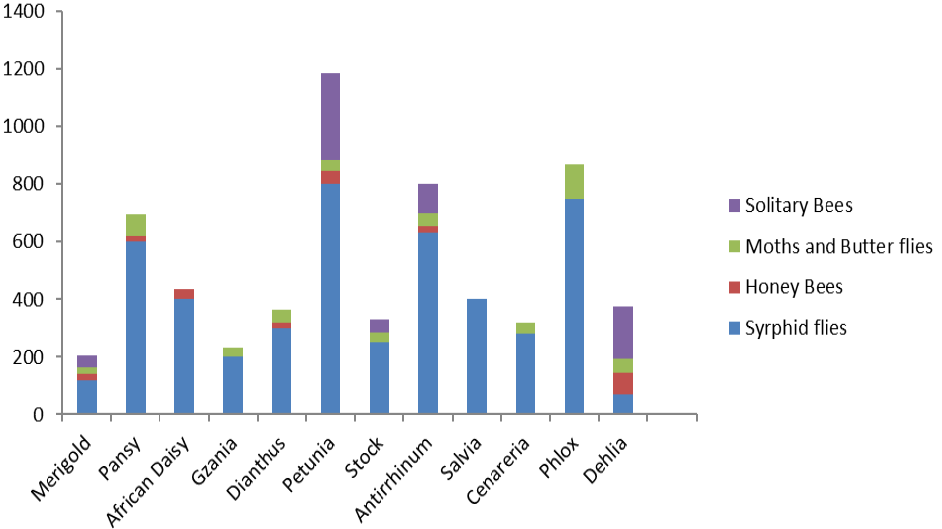
Attractiveness of insect pollinators on different ornamental flowers.
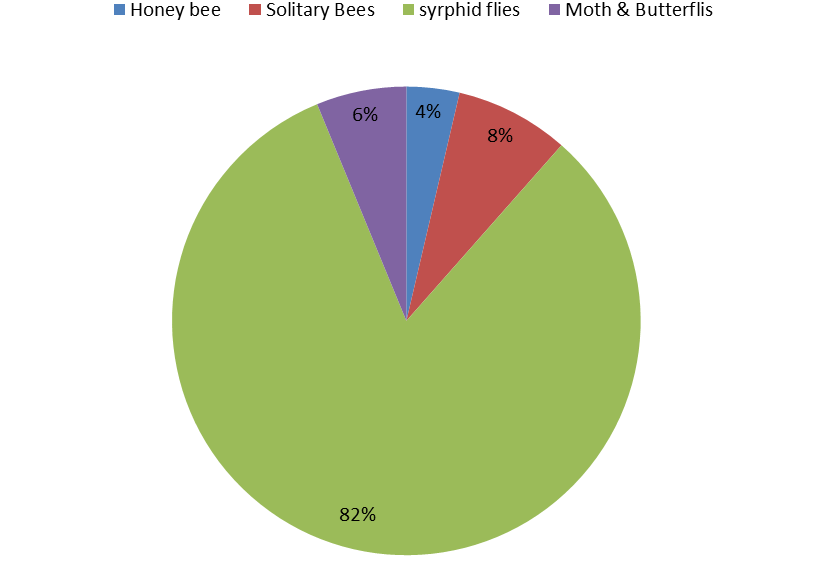
Abundance and diversity of Insect pollinators visiting ornamental flowers.
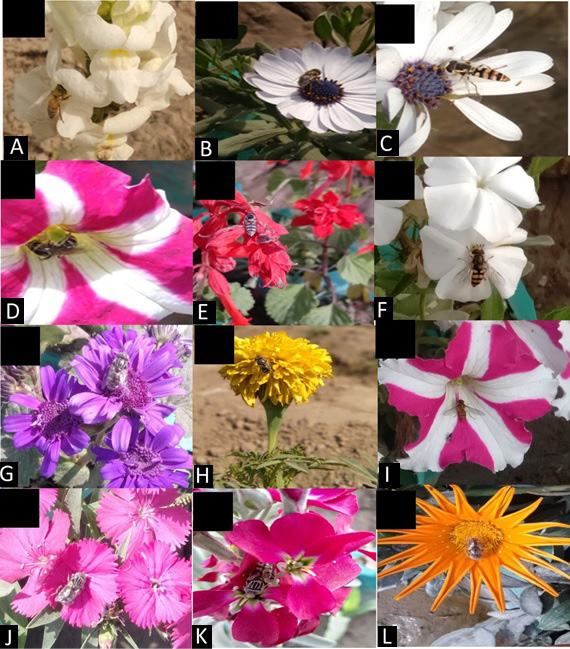
Floral visitors. (A) Apis mellifera visiting Antirrhinum majus, (B) Eristalinus aeneus visiting Osteospermum fruticosum, (C) Spharophoria bengalensis male visiting Osteospermum fruticosum, (D) Nomia sp. visiting Petunia hybrid, (E) Spharophoria bengalensis female visititing Salvia splendens, (F) Eupeodes corollae male visiting Phlox drummondii, (G) Eristalinus aeneus visiting Pericallis senetti, (H) Eristalinus aeneus visiting Tagets erecta, (I) Episyrphus balteatus female visiting Petunia hybrid, (J) Eristalinus aeneus visiting Dianthus chinensis, (K) Eristalinus aeneus visiting Matthiola incana, (L) Eristalinus aeneus visiting Gazania rigens.
References
- Ali, M., Sajjad, A. and Saeed, S., 2017. Yearlong association of Apis dorsata and Apis florea with flowering plants: planted forest vs. agricultural landscape. Sociobiology, 64: 18-25. https://doi.org/10.13102/sociobiology.v64i1.995[CrossRef]
- Basteri, G. and Benvenuti, S., 2009. Wildflower’s pollinators-attractivity in the urban ecosystem. II Int. Conf. Lands. Urban Hortic., 881: 585-590. https://doi.org/10.17660/ActaHortic.2010.881.98[CrossRef]
- Beltrame, L.C., Thompson, C.E. and Freitas, L.B., 2022. Molecular evolution and structural analyses of proteins involved in metabolic pathways of volatile organic compounds in Petunia hybrida (Solanaceae). Genet. mol. Biol., 46. https://doi.org/10.1590/1678-4685-gmb-2022-0114[CrossRef]
- Bosch, J., 2008. Production of undersized offspring in a solitary bee. Anim. Behav., 75: 809–816. https://doi.org/10.1016/j.anbehav.2007.06.018[CrossRef]
- Ceballos, G., Ehrlich, P.R. and Dirzo, R., 2017. Biological annihilation via the ongoing sixth mass extinction signaled by vertebrate population losses and declines. Proc. natl. Acad. Sci., 114: E6089-E6096. https://doi.org/10.1073/pnas.1704949114[CrossRef]
- Colley, M.R. and Luna, J.M., 2000. Relative attractiveness of potential beneficial insectary plants to aphidophagous hoverflies (Diptera: Syrphidae). Environ. Ent., 29:1054-1059. https://doi.org/10.1603/0046-225X-29.5.1054[CrossRef]
- Corbet, S.A., Bee, J., Dasmahapatra, K., Gale, S., Gorringe, E., La Ferla, B. and Vorontsova, M., 2001. Native or exotic? Double or single? Evaluating plants for pollinator-friendly gardens. Annls Bot., 87: 219-232. https://doi.org/10.1006/anbo.2000.1322[CrossRef]
- Daniels, B., Jedamski, J., Ottermanns, R. and Ross-Nickoll, M., 2020. A plan bee for cities: Pollinator diversity and plant-pollinator interactions in urban green spaces. PLoS One, 15: e0235492. https://doi.org/10.1371/journal.pone.0235492[CrossRef]
- De Manincor, N., Fisogni, A. and Rafferty, N.E., 2023. Warming of experimental plant–pollinator communities advances phenologies, alters traits, reduces interactions and depresses reproduction. Ecol. Lett., 26: 323-334. https://doi.org/10.1111/ele.14158[CrossRef]
- Donkersley, P., Rhodes, G., Pickup, R.W., Jones, K.C. and Wilson, K., 2014. Honeybee nutrition is linked to landscape composition. Ecol. Evol., 4: 4195-4206. https://doi.org/10.1002/ece3.1293[CrossRef]
- Endress, P.K., 2001. The flowers in extant basal angiosperms and inferences on ancestral flowers. Int. J. Pl. Sci. 162: 1111-1140. https://doi.org/10.1086/321919[CrossRef]
- Erickson, E., Adam, S., Russo, L., Wojcik, V., Patch, H.M. and Grozinger, C.M., 2020. More than meets the eye? The role of annual ornamental flowers in supporting pollinators. Environ. Ent., 49: 178-188. https://doi.org/10.1093/ee/nvz133[CrossRef]
- Fontaine, C., Dajoz, I., Meriguet, J. and Loreau, M., 2006. Functional diversity of plant–pollinator interaction webs enhances the persistence of plant communities. PLoS Biol., 4: e1. https://doi.org/10.1371/journal.pbio.0040001[CrossRef]
- Fukase, J. and Simons, A.M., 2016. Increased pollinator activity in urban gardens with more native flora. Appl. Ecol. environ. Res., 14: 297-310. https://doi.org/10.15666/aeer/1401_297310[CrossRef]
- Galetto, L. and Bernardello, G., 2004. Floral nectaries, nectar production dynamics and chemical composition in six Ipomoea species (Convolvulaceae) in relation to pollinators. Annls Bot., 94: 269-280. https://doi.org/10.1093/aob/mch137[CrossRef]
- Garbuzov, M. and Ratnieks, F.L., 2014. Quantifying variation among garden plants in attractiveness to bees and other flower-visiting insects. Funct. Ecol., 28: 364-374. https://doi.org/10.1111/1365-2435.12178[CrossRef]
- Garbuzov, M., Couvillon, M.J., Schürch, R. and Ratnieks, F.L., 2015. Honey bee dance decoding and pollen-load analysis show limited foraging on spring-flowering oilseed rape, a potential source of neonicotinoid contamination. Agric. Ecosyst. Environ., 203: 62-68.
- Garbuzov, M., Alton, K. and Ratnieks, F.L., 2017. Most ornamental plants on sale in garden centres are unattractive to flower-visiting insects. PeerJ, 5: e3066. https://doi.org/10.7717/peerj.3066[CrossRef]
- Gardener, M.C. and Gillman, M.P., 2002. The taste of nectar–a neglected area of pollination ecology. Oikos, 98: 552-557. https://doi.org/10.1034/j.1600-0706.2002.980322.x[CrossRef]
- Garibaldi, L.A., Steffan-Dewenter, I., Winfree, R., Aizen, M.A., Bommarco, R., Cunningham, S.A., Kremen, C., Carvalheiro, L.G., Harder, L.D., Afik, O. and Bartomeus, I., 2013. Wild pollinators enhance fruit set of crops regardless of honey bee abundance. Science, 339: 1608-1611. https://doi.org/10.1126/science.1230200[CrossRef]
- Goulson, D., Nicholls, E., Botías, C. and Rotheray, E.L., 2015. Combined stress from parasites, pesticides and lack of flowers drives bee declines. Science, 347. https://doi.org/10.1126/science.1255957[CrossRef]
- Groff, S.C., Loftin, C.S., Drummond, F., Bushmann, S. and McGill, B., 2016. Parameterization of the InVEST crop pollination model to spatially predict abundance of wild blueberry (Vaccinium angustifolium Aiton) native bee pollinators in Maine, USA. Environ. Model. Softw., 79: 1-9. https://doi.org/10.1016/j.envsoft.2016.01.003[CrossRef]
- Gupta, D.K., Shukla, A.K., Keerthika, A., Mohamed, M.N. and Jangid, B.L., 2020. Influence of annual ornamental flowers (Asteraceae) on the relative abundance of honey bee species in the hot semi-arid environment. AnnLS Arid Zone, 59: 1-7.
- Jauker, F. and Wolters, V., 2008. Hover flies are efficient pollinators of oilseed rape. Oecologia, 156: 819-823.
- Heimpel, G.E. and Jervis, M.A., 2005. Does floral nectar improve biological control by parasitoids? In: Plant-provided food for carnivorous insects: A protective mutualism and its applications. Cambridge University Press. pp. 267-304. https://doi.org/10.1017/CBO9780511542220.010[CrossRef]
- Hicks, D.M., Ouvrard, P., Baldock, K.C., Baude, M., Goddard, M.A., Kunin, W.E. and Stone, G.N., 2016. Food for pollinators: Quantifying the nectar and pollen resources of urban flower meadows. PLoS One, 11: 0158117. https://doi.org/10.1371/journal.pone.0158117[CrossRef]
- Hinkel, J., Lincke, D., Vafeidis, A.T., Perrette, M., Nicholls, R.J., Tol, R.S. and Levermann, A., 2014. Coastal flood damage and adaptation costs under 21st century sea-level rise. Proc. natl. Acad. Sci., 111: 3292-3297. https://doi.org/10.1073/pnas.1222469111[CrossRef]
- Hussain, S., Shah, M.A.A., Khan, A.M., Ahmad, F. and Hussain, M., 2020. Potassium enhanced grain zinc accumulation in wheat grown on a calcareous saline-sodic soil. Pak. J. Bot., 52: 1-6. https://doi.org/10.30848/PJB2020-1(40)[CrossRef]
- Jachuła, J., Denisow, B. and Strzałkowska-Abramek, M., 2019. Floral reward and insect visitors in six ornamental Lonicera species–plants suitable for urban bee-friendly gardens. Urban For. Urban Green., 44: 126390. https://doi.org/10.1016/j.ufug.2019.126390[CrossRef]
- Jachuła, J., Wrzesień, M., Strzałkowska-Abramek, M. and Denisow, B., 2018. The impact of spatio-temporal changes in flora attributes and pollen availability on insect visitors in Lamiaceae species. Acta Bot., 77: 161-171. https://doi.org/10.2478/botcro-2018-0018[CrossRef]
- Konzmann, S. and Lunau, K., 2014. Divergent rules for pollen and nectar foraging bumblebees–a laboratory study with artificial flowers offering diluted nectar substitute and pollen surrogate. PLoS One, 9: e91900. https://doi.org/10.1371/journal.pone.0091900[CrossRef]
- Lanjar, A.G., Solangi, A.W., Khuhro, S.A., Jiskani, R.H. and Aslam, B., 2014. Effect of mix cropping of mustard and sunflower on insect diversity. Sci. Int. (Lahore), 26: 1601-1606.
- Lawson, R.H., 1996. Economic importance and trends in ornamental horticulture. IX Int. Symp. Virus Dis. Ornament. Pl., 432: 226-237. https://doi.org/10.17660/ActaHortic.1996.432.28[CrossRef]
- Liow, L.H., Sodhi, N.S. and Elmqvist, T., 2001. Bee diversity along a disturbance gradient in tropical lowland forests of south-east Asia. J. appl. Ecol., 38: 180-192. https://doi.org/10.1046/j.1365-2664.2001.00582.x[CrossRef]
- Loper, G.M. and Berdel, R.L., 1980. The effects of nine pollen diets on brood rearing of honeybees. Apidologie, 11: 351-359. https://doi.org/10.1051/apido:19800403[CrossRef]
- Mach, B.M. and Potter, D.A., 2018. Quantifying bee assemblages and attractiveness of flowering woody landscape plants for urban pollinator conservation. PLoS One, 13: e0208428. https://doi.org/10.1371/journal.pone.0208428[CrossRef]
- Majewska, A.A., Sims, S., Wenger, S.J., Davis, A.K. and Altizer, S., 2018. Do characteristics of pollinator-friendly gardens predict the diversity, abundance, and reproduction of butterflies? Insect. Conserv. Divers., 11: 370-382. https://doi.org/10.1111/icad.12286[CrossRef]
- Marquardt, M., Kienbaum, L., Kretschmer, L.A., Penell, A., Schweikert, K., Ruttensperger, U. and Rosenkranz, P., 2021. Evaluation of the importance of ornamental plants for pollinators in urban and suburban areas in Stuttgart, Germany. Urban Ecosyst., pp. 1-15. https://doi.org/10.1007/s11252-020-01085-0[CrossRef]
- Maxwell, S.L., Fuller, R.A., Brooks, T.M. and Watson, J.E., 2016. Biodiversity: The ravages of guns, nets and bulldozers. Nat. News, 536: 143. https://doi.org/10.1038/536143a[CrossRef]
- Michener, C.D., 2000. The bees of the world. John Hopkins University Press, Baltimore, pp. 953.
- Miller, R., Owens, S.J. and Rørslett, B., 2011. Plants and colour: Flowers and pollination. Opt. Laser Technol., 43: 282-294. https://doi.org/10.1016/j.optlastec.2008.12.018[CrossRef]
- Neupane, K.R. and Thapa, R.B., 2005. Pollen collection and brood production by honeybees (Apis mellifera L.) under Chitwan condition of Nepal. J. Inst. Agric. Anim. Sci., 26: 143-148. https://doi.org/10.3126/jiaas.v26i0.667[CrossRef]
- Nicolson, S.W., 2011. Bee food: The chemistry and nutritional value of nectar, pollen and mixtures of the two. Afr. Zool., 46: 197-204. https://doi.org/10.1080/15627020.2011.11407495[CrossRef]
- Ollerton, J., Winfree, R. and Tarrant, S., 2011. How many flowering plants are pollinated by animals? Oikos, 120: 321-326. https://doi.org/10.1111/j.1600-0706.2010.18644.x[CrossRef]
- Oyewole, O.A., Oyelade., O.J. and Ogbogu., S.S., 2019. Diversity assessment of bees (Hymenoptera) associated with crops and ornamental plant in Obafemi Awolowo University, Nigeria.
- Pardo, A. and Borges, P.A., 2020. Worldwide importance of insect pollination in apple orchards: A review. Agric. Ecosyst. Environ., 293: 106839. https://doi.org/10.1016/j.agee.2020.106839[CrossRef]
- Peterson, A.J.H. and Roitberg, B.D., 2006. Impact of resource levels on sex ratio and resource allocation in the solitary bee, Megachile rotundata. Environ. Ent., 35: 1404–1410. https://doi.org/10.1093/ee/35.5.1404[CrossRef]
- Requier, F., Jowanowitsch, K.K., Kallnik, K. and Steffan-Dewenter, I., 2020. Limitation of complementary resources affects colony growth, foraging behavior, and reproduction in bumble bees. Ecology, 101: e02946. https://doi.org/10.1002/ecy.2946[CrossRef]
- Rhodes, C.J., 2018. Pollinator decline–an ecological calamity in the making? Sci. Prog., 101: 121-160. https://doi.org/10.3184/003685018X15202512854527[CrossRef]
- Rollings, R. and Goulson, D. 2019. Quantifying the attractiveness of garden flowers for pollinators. J. Insect Conserv., 23: 803-817. https://doi.org/10.1007/s10841-019-00177-3[CrossRef]
- Roulston, T.A.H. and Goodell, K., 2011. The role of resources and risks in regulating wild bee populations. Annu. Rev. Ent., 56: 293-312. https://doi.org/10.1146/annurev-ento-120709-144802[CrossRef]
- Sajjad, A. and Saeed, S., 2010. Floral host plant range of syrphid flies (Syrphidae: Diptera) under natural conditions in southern Punjab, Pakistan. Pak. J. Bot., 42: 1187-1200.
- Sajjad, A., Saeed, S., Ali, M., Khan, F.Z.A., Kwon, Y.J. and Devoto, M., 2017. Effect of temporal data aggregation on the perceived structure of a quantitative plant–floral visitor network. Entomol. Res., 47: 380-387.
- Salisbury, A., Armitage, J., Bostock, H., Perry, J., Tatchell, M. and Thompson, K., 2015. Editor’s choice: Enhancing gardens as habitats for flower-visiting aerial insects (pollinators): Should we plant native or exotic species? J. appl. Ecol., 52: 1156-1164. https://doi.org/10.1111/1365-2664.12499[CrossRef]
- Salmah, S., 2014. Nesting Sites of Apis cerana (Hymenoptera: Apidae) in two different altitutes of polyculture plantations in west Sumatera. Hayati J. Biosci., 21: 135-143. https://doi.org/10.4308/hjb.21.3.135[CrossRef]
- Sampson, B.J. and Cane, J.H., 1999. Impact of enhanced ultraviolet-B radiation on flower, pollen, and nectar production. Am. J. Bot., 86: 108-114. https://doi.org/10.2307/2656959[CrossRef]
- Symmank, M.E., Comer, C.E. and Kroll, J.C., 2008. Estimating bobcat abundance in east Texas using infrared-triggered cameras. Faculty Publications. 294. https://scholarworks.sfasu.edu/forestry/294
- Tew, N.E., Memmott, J., Vaughan, I.P., Bird, S., Stone, G.N., Potts, S.G. and Baldock, K.C., 2021. Quantifying nectar production by flowering plants in urban and rural landscapes. J. Ecol., 109: 1747-1757. https://doi.org/10.1111/1365-2745.13598[CrossRef]
- Theodorou, P., Baltz, L.M., Paxton, R.J. and Soro, A., 2021. Urbanization is associated with shifts in bumblebee body size, with cascading effects on pollination. Evol. Appl., 14: 53-68. https://doi.org/10.1111/eva.13087[CrossRef]
- Tommasi, D., Miro, A., Higo, H.A. and Winston, M.L., 2012. Bee diversity and abundance in an urban setting. Can. Entomol., 136: 851-869. https://doi.org/10.4039/n04-010[CrossRef]
- Winfree, R., Aguilar, R. and Vazquez, D.P., 2009. A meta-analysis of bees’ responses to anthropogenic disturbance. Ecology, 90: 2068-2076. https://doi.org/10.1890/08-1245.1[CrossRef]
- Wood, T.J., Holland, J.M. and Goulson, D., 2017. Providing foraging resources for solitary bees on farmland: current schemes for pollinators benefit a limited suite of species. J. appl. Ecol., 54: 323-333. https://doi.org/10.1111/1365-2664.12718[CrossRef]
- Wróblewska, A., Stawiarz, E. and Masierowska, M., 2016. Evaluation of selected ornamental Asteraceae as a pollen source for urban bees. J. Apic. Sci., 60: 179-192. https://doi.org/10.1515/jas-2016-0031[CrossRef]
- Zurbuchen A., Cheesman S., Klaiber, J., Müller, A., Hein, S. and Dorn, S., 2010a. Long foraging distances impose high costs on offspring production in solitary bees. Anim. Ecol., 79: 674–681. https://doi.org/10.1111/j.1365-2656.2010.01675.x[CrossRef]
- Zurbuchen, A., Landert, L., Klaiber, J., Müller, A., Hein, S. and Dorn, S., 2010b. Maximum foraging ranges in solitary bees: only few individuals have the capability to cover long foraging distances. Biol. Conserv., 143: 669–676. https://doi.org/10.1016/j.biocon.2009.12.003[CrossRef]
Services
Article usage statistics
Loading…