Benjamin Amoani1,2,3*, Bright Adu2, Margaret T. Frempong3, Precious Barnes4, Michael Cappello4, Ben gyan2, Michael D. Wilson5
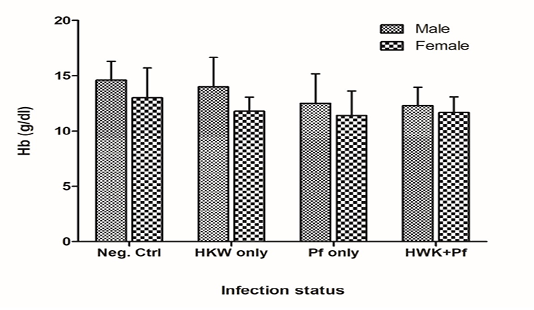
1Department of Biomedical Science, College of Health Sciences, University of Cape Coast, Cape Coast, Ghana; 2Department of Immunology, Noguchi Memorial Institute for Medical Research, College of Health Sciences, University of Ghana, Legon, Ghana; 3Molecular Medicine Department, School of Medical Sciences, Kwame Nkrumah University of Science and Technology; 4Department of Physician Assistant, School of Allied Health Sciences, University of Cape Coast, Cape Coast, Ghana; 5Partnerships for Global Health, Department of Pediatrics, Yale School of Medicine, Yale University, New Haven, CT, USA; 6Parasitology Department, Noguchi Memorial Institute for Medical Research, College of Health Sciences, University of Ghana, Legon, Ghana.Abstract | The overlapping geographical distribution of malaria and helminth infections has led to several studies investigating the effect of co-infections by these parasites on the host. We investigated the impact of Necator americanus and Plasmodium falciparum co-infection on haemoglobin level and albendazole treatment outcome among infected individuals in Ghana. Hookworm-P. falciparum co-infection was associated with significantly reduced blood haemoglobin level (p=0.0057) and an increased odd (OR=6.44, 95%CI=1.31-53.97, p=0.042) of individuals remaining hookworm infected two weeks post-albendazole treatment. P. falciparum co-infection with hookworm may increase albendazole treatment failure. The possible implications on control programs and mechanisms underlying this phenomenon warrant further studies.
Keywords | Necator americanus, Plasmodium falciparum, Albendazole, Parasitaemia, Treatment failure, Anaemia.