Research Article · Volume 41, Issue 2, 2 June 2026 · Open Access
Morphometric Differentiation Among Clarias gariepinus, Heterobranchus longifilis, and their Hybrid (Heteroclarias) Using Principal Component Analysis
· · · · ·
Affiliations & Notes ⌄
1Animal Science and Fisheries Management Unit, College of Agriculture Engineering and Science Bowen University, Iwo, Osun State, Nigeria. 2Department of Animal Health and Production Technology, Oyo State College of Agriculture and Technology Igboora, P.M.B 10, Igboora, Oyo State, Nigeria. Corresponding author: Faith Oluyinka Ayoade ojetayo.faith@bowen.edu.ng
The head length (HL) was comparable between the parent species in C. gariepinus (12.91 ± 0.07 cm) and H. longifilis (12.73 ± 0.08 cm) but significantly (p0.5 shown.
PC 1 (31.33% variance) showed strong associations with pectoral and anterior body morphology, particularly with pectoral length (0.848) and pre-pectoral length (0.703).
Fin characteristics emerged strongly in PC 3 (20.72% variance), where pelvic fin base length (0.907) and pectoral fin rays (0.843) showed particularly high loadings while displaying an inverse relationship with dorsal length (-0.661).
This study employed Principal Component Analysis (PCA) to analyse morphometric differentiation among Clarias gariepinus, Heterobranchus longifilis, and their hybrid (Heteroclarias), revealing distinct phenotypic patterns consistent with species-specific adaptations and hybrid complexity.
Selected from the article's own text.
Abstract
Morphometric multivariate analysis provides a robust framework for species differentiation and characterisation in aquaculture, particularly in African catfishes. This study employed Principal Component Analysis (PCA) to assess morphological variation among Clarias gariepinus, Heterobranchus longifilis, and their hybrid (Heteroclarias), using 29 standardised morphometric measurements. PCA effectively grouped morphological traits, explaining 93.18%, 86.52%, and 90.06% of the total variance in H. longifilis, C. gariepinus, and the hybrid, respectively. In H. longifilis, PC1 (56.55%) was strongly associated with caudal and pelvic fin traits, reflecting axial dimensions. The hybrid exhibited greater complexity, with PC1 (36.43%) dominated by cranial and oral traits, while C. gariepinus morphology was distinguished by anterior body traits. Six significant components were observed in the hybrid, in contrast to three in H. longifilis and four in C. gariepinus. These findings highlight distinct morphological characteristics that can enhance species differentiation and inform selective breeding strategies in aquaculture.
Novelty Statement | This study provides a comprehensive multivariate morphometric comparison of Clarias gariepinus, Heterobranchus longifilis, and Heteroclarias using Principal Component Analysis, identifying distinct patterns of trait integration and principal component structure across the three groups. By applying PCA separately within each group, the analysis reveals species-specific morphometric components that capture functional differentiation in cranial, axial and fin-related traits. These results establish a robust morphometric framework for reliable species differentiation and support informed broodstock selection in African clariid aquaculture.
Introduction
The quantitative analysis of body shapes and proportions, has emerged as an indispensable tool in modern aquaculture, playing a critical role in species identification, breeding programs, and ecological studies . Although genetic markers remain the gold standard for taxonomic classification, morphometric analysis offers a practical and cost-effective alternative that is particularly valuable in resource-limited settings ; .
The importance of morphometric studies extends to multiple domains of fish biology. In species identification, morphometric characteristics combined with meristic counts serve as essential tools for taxonomists, helping establish accurate classification systems ; . These measurements are particularly valuable in environments in which multiple species coexist, allowing for more precise differentiation methods . Beyond taxonomy, morphometric analyses provide insights into ecological adaptations and evolutionary processes, with specific morphometric ratios helping researchers understand behaviour, population dynamics, and environmental adaptations ; .
Furthermore, morphometric evaluations are crucial in breeding programs and optimisation of production in aquaculture practices. Cavali et al. (2021) demonstrated how morphometric assessments can indirectly estimate carcass yields without slaughter, while Ribeiro et al. (2019) highlighted their importance in selecting fish with superior growth characteristics. These applications underscore the practical value of understanding the expression and inheritance of morphological traits in domesticated fish. González et al. (2020) emphasised that morphometric analysis can reveal phenotypic plasticity in response to environmental changes, thereby providing valuable information for managing fish stocks and implementing conservation measures.
The African catfish industry has experienced remarkable growth in recent decades, with C. gariepinus dominating the production across the continent . In Nigeria alone, this species accounts for approximately 67% of total catfish production and is valued for its rapid growth, environmental hardiness, and adaptability to diverse farming conditions ; . Similarly, Heterobranchus. longifilis has gained prominence owing to its superior growth potential and robustness, characterised by unique features such as elongated fins and larger body size ; . The intentional hybridisation from Heterobranchus niloticus and Clarias gariepinus has produced offspring (commonly called “Heteroclarias”) that demonstrate heterosis, enhanced growth rates, improved feed efficiency , and greater disease resistance than both parent species . These advantages have significantly boosted farmers’ profitability, reinforcing Nigeria’s position as Africa’s largest aquaculture producer .
A major challenge in studying these species lies in the complexity of their morphometric traits, where numerous measurements (e.g. body proportions, fin morphology, and head structure) often overlap or vary subtly. Traditional univariate approach is inadequate to capture the interdependencies between these traits, especially when hybrids exhibit intermediate or novel phenotypic combinations. Without a multivariate method, critical patterns in trait correlations may remain obscured, limiting insights into how morphology aligns with species or hybrid identities .
Principal Component Analysis (PCA) addresses this by transforming correlated morphometric variables into fewer uncorrelated components that maximise variance. This reduction simplifies the identification of dominant morphological trends, revealing which traits cluster together and how individuals’ group along these axes . In aquatic biology, PCA has proven effective in delineating the morphological relationships between wild and cultured Clarias gariepinus , Schizothorax fish , and Devario species by quantifying how traits covary and which components best separate groups. PCA provides an objective framework for interpreting the morphological divergence between the parental species and their hybrids ; .
However, existing researches on African catfish has primarily focused on individual species or limited trait comparisons ; , leaving a significant gap in understanding of the morphological relationships among C. gariepinus, H. longifilis, and their hybrids. Hoshan et al. (2022) emphasised how PCA integrated with multivariate models can clarify stock structure and conservation implications, yet no study has applied this approach comprehensively to these economically significant catfishes. The lack of integrated analysis hinders the development of effective management strategies and limits the understanding of the effects of hybridisation on morphological variation.
This study addresses a significant knowledge gap in African aquaculture by employing advanced multivariate statistics to differentiate between two economically vital catfish species, Clarias gariepinus (African sharptooth catfish) and Heterobranchus longifilis (African longfin catfish), and their hybrids (Heteroclarias), which exhibit superior aquaculture traits, but present substantial challenges for morphological classification and identification. It aims to identify morphological patterns, reduce the dimensionality of morphometric data by removing the noise and redundancy in the data, and identify correlated variables among the traits.
By grouping traits into principal components, this study bridges the critical gaps between academic research and practical aquaculture requirements. The integrated approach combines statistical analysis with practical applicability, offering solutions to real-world challenges in African aquaculture development, while supporting sustainable practices that protect wild genetic resources. These findings will empower farmers to make informed breeding decisions and provide policymakers with information to guide conservation efforts, ultimately strengthening Africa’s catfish industry and contributing to food security across the continent.
Materials and Methods
Fish sampling and collection protocol
A comprehensive sampling strategy was implemented to ensure representative specimens of Clarias gariepinus, Heterobranchus longifilis, and their hybrids (Heteroclarias) were obtained for this study. A total of 313 live specimens were collected, comprising 124 C. gariepinus, 110 hybrid individuals (C. gariepinus × H. longifilis), and 79 H. longifilis. Sample sizes were determined by the availability of each genetic group at the participating hatcheries during the sampling period. Hybrid (Heteroclarias) individuals were classified based on hatchery breeding records and origin. The specimens were sourced from established commercial hatcheries across Lagos, Osun, and Oyo States, Nigeria. Live fish were transported to the Animal Science and Fisheries Management Unit research facility of Bowen University, Iwo, Osun State, Nigeria, in oxygenated containers maintained at 26-28°C, following established protocols for fish transport .
Morphometric measurements
Upon arrival at the research facility, fish were acclimated and conditioned for 14 days in holding tanks under standard husbandry conditions prior to morphometric measurements . Morphometric measurements were taken by a single investigator to minimise operator-related variation, and all linear traits were size-adjusted using allometric standardisation to reduce size-related and growth-linked bias. A total of 29 morphometric measurements were collected from each specimen using a measuring tape on a standardised measuring board . The measurements followed established protocols:
Total length (TL) was measured from the tip of the snout to the end of the tail.
Standard length (SL) was measured from the tip of the snout to the tail base.
The body depth (BD) was recorded as the maximum vertical depth of the dorsal fin origin.
Head length (HL): From the snout tip to the posterior margin of the operculum.
The eye diameter (ED) was taken as the horizontal diameter of the exposed eye.
Dorsal fin base length (DFBL): from the first to the last dorsal fin ray insertion.
Anal fin length (AL): From anal fin origin to tip of longest anal ray.
Pectoral fin length (PL): from the pectoral fin base to the tip of the longest ray.
Pre-orbital length (PrOL): From the snout tip to the anterior margin of the orbit.
Post-orbital length (POL): From the posterior margin of the orbit to the end of the orbital.
Interorbital length (IOL): between the upper margins of the right and left orbits.
Pre-dorsal length (PrDL): From the base of the first dorsal spine to the base of the last dorsal ray.
Pre-pectoral length (PrPL): from the upper lip to the pectoral fin origin.
Pre-pelvic length (PrPvL): from the upper lip to the pelvic fin origin.
Pre-anal length (PrAL): from the upper lip to anal fin origin.
Pelvic fin length (PvL): from the base to the tip of the pelvic fin.
Anal fin length (AL): from the tail base to the tip of the anal fin.
Caudal fin length (CL): from the tail base to the tip of the caudal fin.
Caudal depth (CD): least depth of tail base.
Gape length (GL): distance between the angles of the mouth.
Pectoral fin base length (PFBL): length of pectoral fin base
Pelvic fin base length (PvFBL): the length of the pelvic fin base
Anal fin base length (AFBL): length of anal fin base.
Adipose fin length: length of the adipose fin
For the meristic data, five key traits were enumerated:
Dorsal fin rays (DFR): Counted from the first spine to the last soft ray of the dorsal fin
Anal fin rays (AFR): All soft rays of the anal fin
Pectoral fin rays (PFR): Including both spine and soft rays of the pectoral fin
Pelvic fin rays (PVFR): All soft rays of the anal fin
Caudal fin rays (CFR): All rays of the caudal fin.
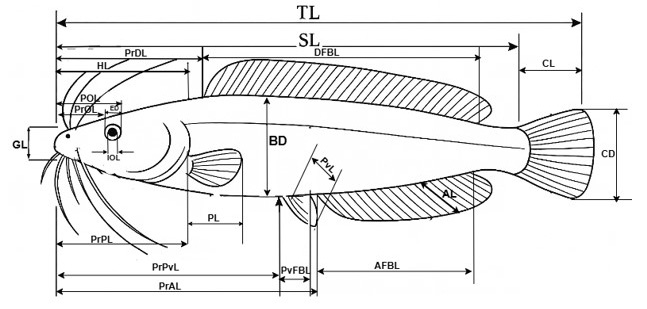
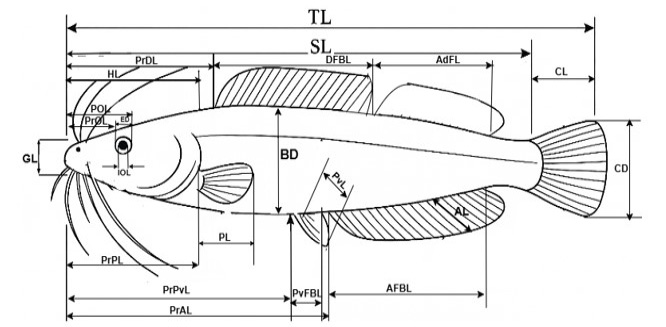
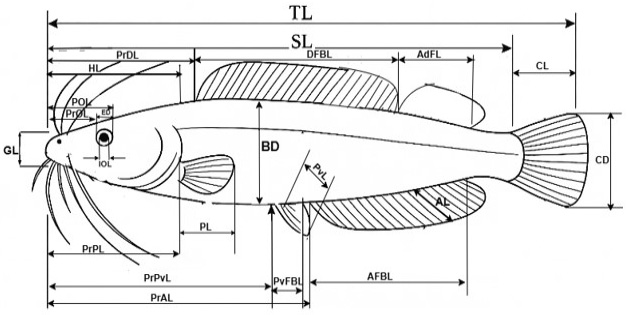
All linear measurements were taken in centimetres (cm) according to ; ; , and illustrated in Figures 1-3.
Data standardization, allometric correction and analysis
To account for size-dependent variation in morphometric traits, all linear measurements were standardised using the following allometric formula .
Madj = M × (Ls/Lo)b
Where; Madj = size-adjusted measurement, M = original measurement, Lo = standard length of individual fish, Ls = mean standard length of all specimens, b = slope from reduced major axis regression of log M on log SL.
The allometric coefficient, b, was calculated separately for each measurement to account for the differential growth rates of the body parts. Meristic traits are discrete counts and therefore are not suited to the same allometric size-standardisation applied to continuous morphometric measurements ; because they are considered size-independent .
Univariate analysis
Analysis of Variance (ANOVA) was performed using SPSS v20 (2020) to test for significant differences (p < 0.05) in the morphometric and meristic traits among the three genetic groups. Post-hoc comparisons were conducted using Duncan’s test to control for Type I error.
Principal component analysis
Principal Component Analysis (PCA) was conducted to reduce the 29 morphometric variables into fewer uncorrelated components, highlighting key traits that contribute to morphological variation among species and hybrids while visualising specimen groupings. The suitability of the data for PCA was confirmed using a Kaiser-Meyer-Olkin (KMO) measure of sampling adequacy and Bartlett’s test of sphericity. Principal components were extracted based on the eigenvalue >1 criterion and scree plot inflection point analysis. Varimax rotation was applied to enhance interpretability, and component loadings greater than 0.40 were considered significant. All analyses were performed using the IBM Corp (2020) statistical package, and visualisation was performed using R package 4.4.3, using the function fviz_eig and pheatmap from the factoextra package.
Results
Tables 1 and 2 show the results of morphometric and meristic univariate analyses. The head length (HL) was comparable between the parent species in C. gariepinus (12.91 ± 0.07 cm) and H. longifilis (12.73 ± 0.08 cm) but significantly (p<0.05) reduced in the hybrid (12.18 ± 0.05 cm). Similarly, cranial measurements such as pre-orbital length (PrOL) and post-orbital length (POL) were significantly (p<0.05) shorter in the hybrid than in both parent species, indicating hybrid-specific cranial restructuring. Body depth (BD) was also species-specific, being highest in C. gariepinus (7.46 ± 0.04 cm), followed by the hybrid (7.27 ± 0.08 cm) and H. longifilis (7.25 ± 0.03 cm), suggesting a more robust body form in C. gariepinus.
A key diagnostic morphological trait was the adipose fin (AdF), which was completely absent in C. gariepinus (0.00 ± 0.00 cm), prominently developed in H. longifilis (8.30 ± 0.15 cm), and intermediate in the hybrid (7.38 ± 0.11 cm), supporting an incomplete dominance pattern of this trait.
The data also highlighted a clear interspecific divergence (Table 2). C. gariepinus had significantly more dorsal fin rays (DFR: 68.64 ± 0.47) than H. longifilis (43.49 ± 0.70), while pectoral fin ray (PFR) counts were highest in H. longifilis (10.11 ± 0.10). The hybrid exhibited intermediate counts for both traits, which was consistent with the blending of parental characteristics.
Table 1: Morphometric measurements of Clarias gariepinus, Heterobranchus longifilis and Heteroclarias. Numbers in each cell are the mean in centimetres (cm) ± standard error.
Variables
Clarias gariepinus
Heteroclarias (Hybrid)
Heterobranchus longifilis
SL
45.91±0.16a
44.43±0.11b
35.13±0.39c
HL
12.91±0.07a
12.18±0.05b
12.73±0.08a
PrOL
4.07±0.03a
2.86±0.04c
3.84±0.04b
POL
5.05±0.03a
3.70±0.04c
4.77±0.05b
ED
0.96±0.01b
0.92±0.01c
1.00±0.01a
IOL
0.68±0.01b
0.66±0.01b
0.72±0.01a
PrDL
15.20±0.12a
14.38±0.04c
14.69±0.03b
PrPL
10.73±0.04a
9.00±0.04c
10.20±0.03b
PrPVL
18.99±0.09b
19.84±0.07a
19.74±0.09a
PrAL
22.03±0.11b
23.26±0.08a
23.31±0.17a
PL
4.74±0.02b
5.32±0.03a
5.29±0.07a
DFBL
20.09±0.19a
19.74±0.14a
19.37±0.12b
PVL
3.92±0.03b
4.24±0.01a
4.20±0.03a
AFBL
15.78±0.07a
14.13±0.07b
15.43±0.26a
CL
5.41±0.02c
6.02±0.05a
5.72±0.02a
CD
5.50±0.02a
5.42±0.03b
5.50±0.03a
BD
7.46±0.04a
7.27±0.08b
7.25±0.03b
AdF
0.00±0.00c
7.38±0.11b
8.30±0.15a
GL
4.86±0.03c
6.15±0.07b
5.74±0.09a
DL
3.45±0.02a
3.16±0.02b
3.13±0.06b
PFBL
2.63±0.01a
2.23±0.02c
2.51±0.02b
PVFBL
1.71±0.01a
1.49±0.01c
1.65±0.01b
AL
2.52±0.04a
2.03±0.02c
2.13±0.04b
abc values along the same row with different superscripts are significantly different (p<0.05).
Table 2: Meristic counts of Clarias gariepinus, Heterobranchus longifilis and Heteroclarias (Hybrid). Numbers in each cell are the mean in centimetres (cm) ± standard error.
Variables
Clarias gariepinus
Heteroclarias (Hybrid)
Heterobranchus longifilis
DFR
68.64±0.47a
54.09±0.20b
43.49±0.70c
PFR
9.15±0.06b
8.54±0.12c
10.11±0.10s
AFR
51.24±0.31b
48.09±0.27c
55.24±0.71a
CFR
22.58±0.15a
20.45±0.12b
18.00±0.30c
PVFR
6.00±0.00a
6.05±0.12a
6.23±0.07a
abc values along the same row with different superscripts are significantly different (p<0.05)
Data suitability for PCA was confirmed by Bartlett’s test of sphericity (χ² = 7150.715, 7488.934, and 7525.38 for H. longifilis, C. gariepinus, and the hybrid, respectively, all p < 0.001) and Kaiser-Meyer-Olkin (KMO) measures (0.896, 0.809, and 0.809, respectively), indicating adequate sampling adequacy and significant correlation structures. Component retention was determined via scree plot analysis and Kaiser’s criterion (eigenvalues >1), which revealed a robust multivariate structure across all genotypes.
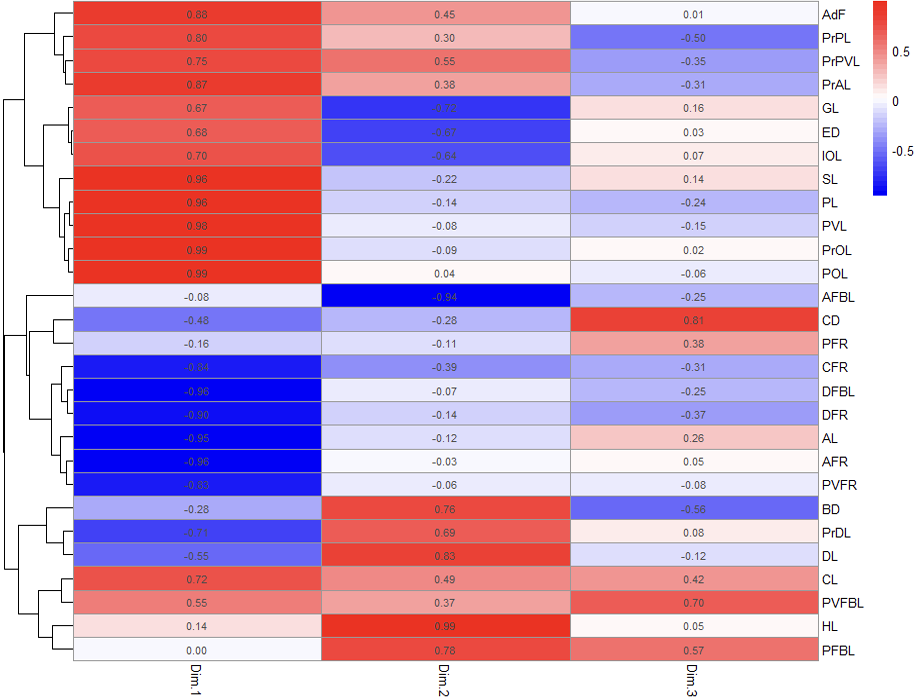
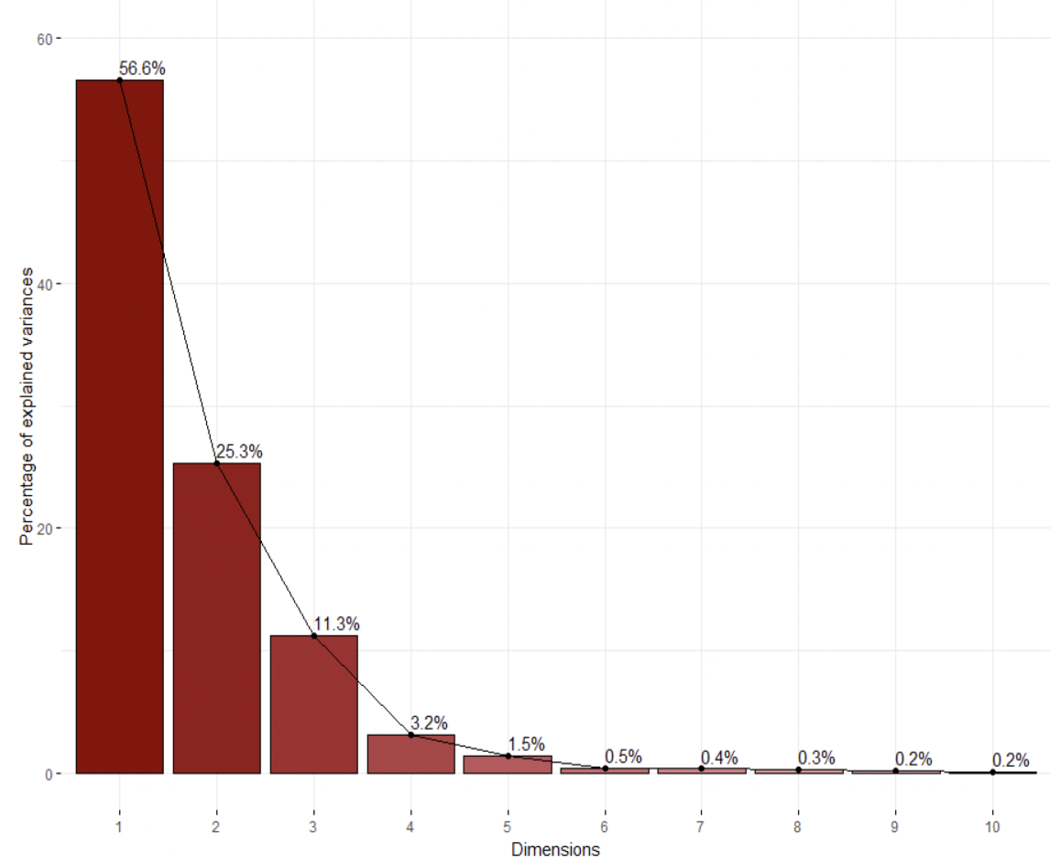
Principal Component Analysis revealed distinct morphological patterns among the Heterobranchus longifilis species (Table 3). The first principal component (PC 1), accounting for 56.55% of total variance, primarily represented axial body dimensions, with strong positive loadings for caudal length (0.954) and pelvic fin base length (0.947). PC 2 explained 25.33% of variance and was strongly associated with cranial morphology, demonstrating particularly high loadings for gape length (0.967) and eye diameter (0.924). The third component (PC 3, 11.30% variance) was characterised by ventral body proportions, with pre-pelvic length (0.911) showing the strongest contribution. Notably, body depth (-0.831) exhibited an inverse relationship with other cranial features in PC 2. The complete loading patterns are shown in Figure 4.
Table 3: Principal component analysis loadings (Varimax Rotation) of morphometric traits in Heterobranchus longifilis.
Principal component
Variance explained (%)
Trait
Loading value
PC 1
56.55
Caudal Fin Length
0.954
Pelvic Fin Base Length
0.947
Post-Orbital Length
0.657
PC 2
25.33
Gape Length
0.967
Eye Diameter
0.924
Inter-Orbital Length
0.909
PC 3
11.30
Pre-Pelvic Length
0.911
Pre-Pelvic to Vent Length
0.831
Pre-Anal Length
0.816
Total
93.18
Note: Only loadings >0.5 shown. Loading of all traits are available in Figure 1.
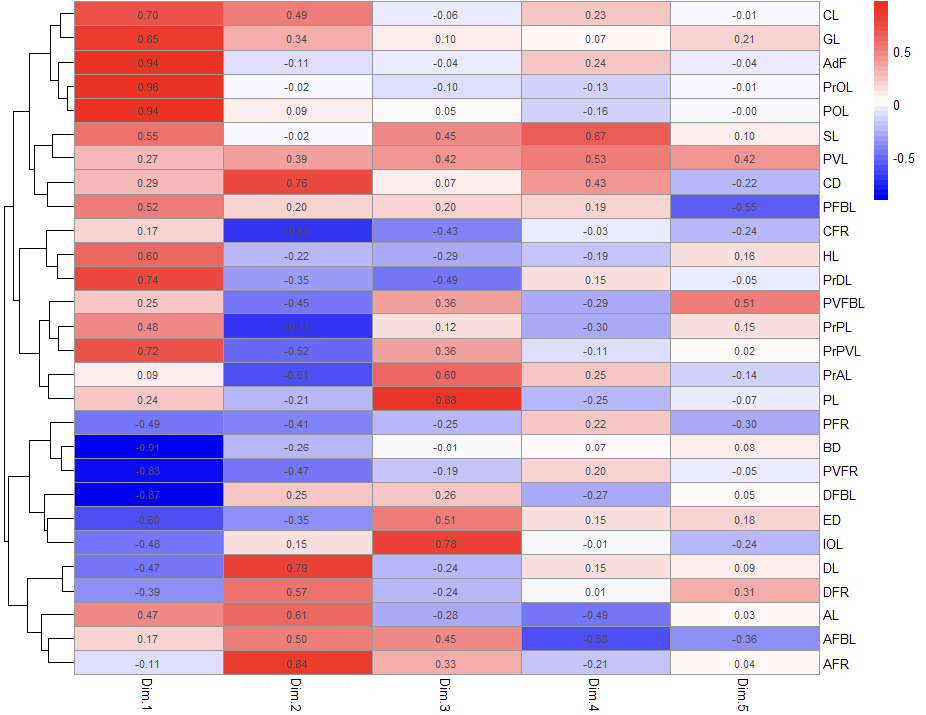
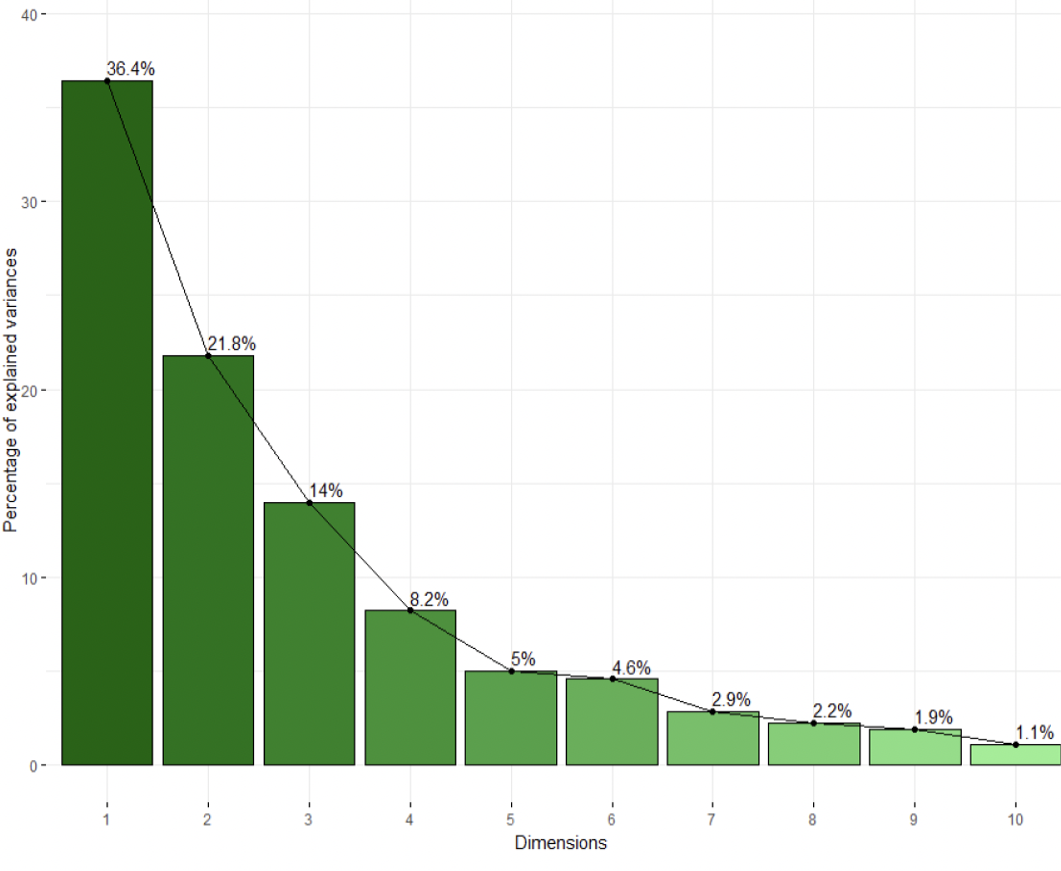
For Heteroclarias (hybrids), six principal components collectively explained 90.06% of the total morphological variation (Table 4). The first component (PC 1, 36.43% variance) primarily represented cranial and oral dimensions, with particularly strong contributions from post-orbital length (0.874) and pre-orbital length (0.845), while showing an inverse relationship with body depth (-0.907). PC 2 (21.82% variance) captured anterior body proportions, characterised by high loadings from pre-pectoral length (PrPL = 0.830) and anal fin base length (0.774), in contrast to dorsal length (-0.900). Fin-related measurements dominated PC 3 (13.99% variance), particularly pectoral length (0.597) and dorsal fin base length (0.560), whereas PC 4 (8.21% variance) reflected axial body dimensions through standard length SL (0.868) and pelvic length (0.866). BD=-0.907 Complete loading patterns are shown in Figure 5.
Table 4: Principal component analysis loadings (Varimax Rotation) of morphometric traits in hybrids (Heteroclarias).
Principal component
Variance explained (%)
Trait
Loading value
PC 1
36.43
Post-orbital length
0.874
Pre-orbital length
0.845
Anal length
0.820
Gape length
0.808
Caudal length
0.755
PC 2
21.82
Pre-pectoral length
0.830
Anal fin base length
0.774
Pre-pelvic to pelvic length
0.692
Anal fin rays
0.605
Dorsal length
-0.900
PC 3
13.99
Pectoral length
0.597
Dorsal fin base length
0.560
PC 4
8.21
Standard length
0.868
Pelvic length
0.866
PC 5
5.04
Pelvic fin base length
0.757
Pre-pelvic to pelvic length
0.501
PC 6
4.58
Pectoral fin base length
0.809
Pre-anal length
0.579
Total
90.06
Note: Only loadings >0.5 shown. Loading of all traits are available in Figure 2.
Table 5: Principal component analysis loadings (Varimax Rotation) of morphometric traits in Clarias gariepinus.
Principal component
Variance explained (%)
Trait
Loading value
PC 1
31.327
Pectoral length
0.848
Pre-pectoral length
0.703
Anal length
0.756
Pre-anal length
0.670
Anal fin base length
0.718
PC 2
27.096
Standard length
0.846
Head length
0.910
Pre-orbital length
0.797
Pre-dorsal length
0.727
Pre-pelvic length
0.709
PC 3
20.723
Pelvic fin base length
0.907
Pectoral fin rays
0.843
Anal fin rays
0.699
PC 4
7.369
Caudal depth
0.904
Pelvic length
0.863
Dorsal fin base length
0.721
Total
86.51
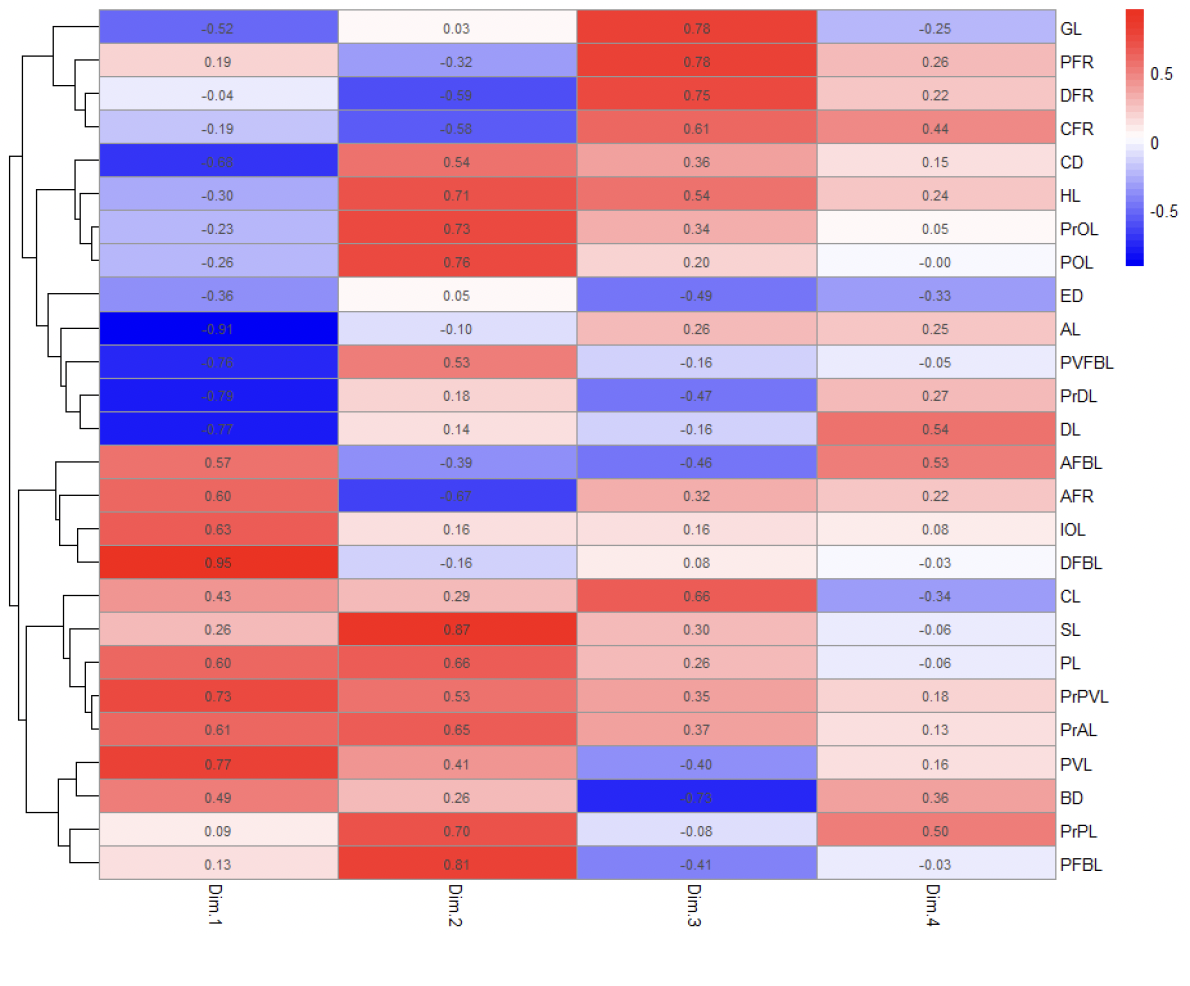
Note: Only loadings >0.5 shown. Loading of all traits are available in Figure 3.
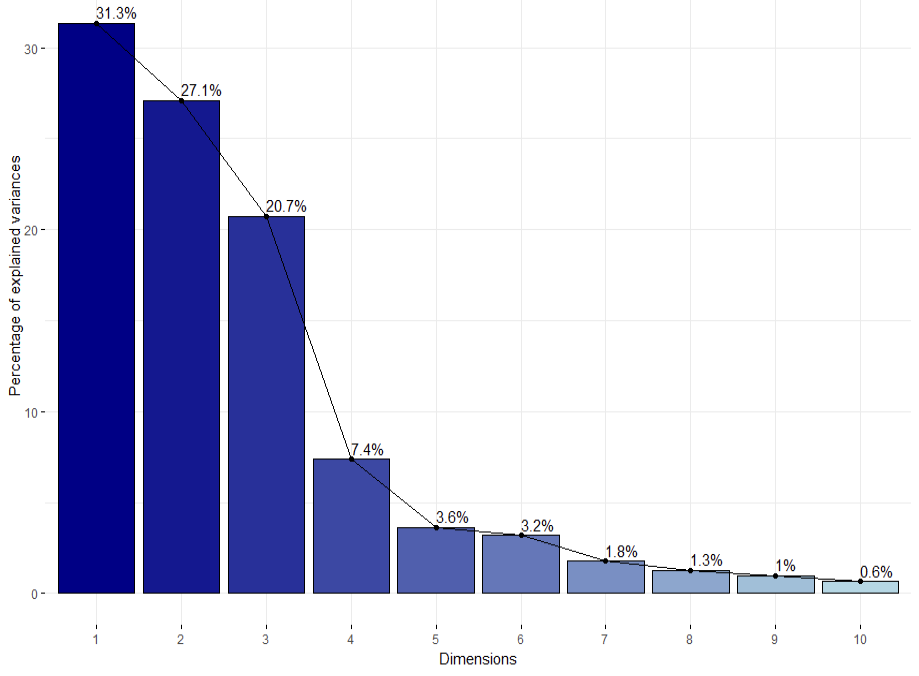
Analysis of Clarias gariepinus yielded four principal components, accounting for 86.52% of the total variance (Table 5). PC 1 (31.33% variance) showed strong associations with pectoral and anterior body morphology, particularly with pectoral length (0.848) and pre-pectoral length (0.703). PC 2 (27.10% variance) was dominated by the head and axial body dimensions, with head length (0.910) and standard length (0.846) as primary contributors. Fin characteristics emerged strongly in PC 3 (20.72% variance), where pelvic fin base length (0.907) and pectoral fin rays (0.843) showed particularly high loadings while displaying an inverse relationship with dorsal length (-0.661). The fourth component (PC 4, 7.37% variance) highlighted caudal and pelvic morphology, with caudal depth (0.904) and pelvic length (0.863) as key features, in contrast to negative loading from body depth (-0.858). The complete loading patterns for these species groups are shown in Figure 6.
Discussion
This study represents the first comprehensive application of PCA to simultaneously analyse morphometric variation across C. gariepinus, H. longifilis, and their hybrids (Heteroclarias), with component retention guided by kaiser’s rule . Scree Plots (Figures 7-9) provided a visual aid in determining the number of components to retain by displaying the decreasing order of eigenvalues. PCA was performed separately within each genetic group to characterise within-group covariation among size-adjusted morphometric traits . In this study, PCA is used as an exploratory dimension-reduction approach to summarise trait structure rather than as a classification method and it revealed distinct morphological patterns among Clarias gariepinus, Heterobranchus longifilis, and their hybrids. Notably, traits such as adipose fin structure and cranial dimensions served as primary discriminants and aligned with established taxonomic indicators. These observations reinforce the role of PCA in deciphering complex morphometric interrelationships that cannot be resolved using univariate or bivariate analyses .
Principal component analysis revealed distinct patterns of morphological integration in H. longifilis, with the three principal components collectively explaining 93.18% of the total variance. The strong differentiation observed contrasts with the findings of Raphael et al. (2024), who reported overlapping morphological variation among H. longifilis populations. PC 1 (56.55% variance) (Table 3) emerged as a robust posterior body development axis dominated by caudal length (0.954) and pelvic fin base length (0.947). This integrated suite of traits suggests strong functional coupling between swimming performance and
reproductive morphology in H. longifilis ; . The exceptionally high loadings indicate that selective pressures have maintained tight developmental coordination between these posterior structures, with several important implications, such as locomotor efficiency and reproductive specialisation.
The hydrodynamic role of the caudal fin in thrust generation is evolutionarily conserved, which is consistent with the bentho-pelagic ecology of H. longifilis . Longer caudal regions likely enhance the burst swimming capacity, a critical adaptation for both predator avoidance and prey capture in riverine environments. Also the Pelvic fin positioning showed strong integration with caudal morphology, potentially reflecting adaptations for spawning site selection and mating behaviours ; . This correlation suggests that broodstock selection programs that target growth performance through caudal length metrics may inadvertently influence reproductive characteristics.
The substantial contribution of adipose fin length (0.801) to PC1 warrants cautious interpretation because the basis for its co-loading with posterior traits is not fully resolved in this dataset. However, adipose fins, particularly in salmonids where they are well-studied and often more variable, have been discussed in relation to caudal-region hydrodynamics and mechanosensory function ; . PC 2 (25.33%) represented a cranial functional module with gape length (0.967), eye diameter (0.924), and inter-orbital length (0.909) loading strongly. This configuration reveals how feeding mechanics and sensory perception co-vary in H. longifilis . The coordinated development of the oral and visual structures suggests an evolutionary compromise between prey detection (eye placement) and capture (gape size).
The interorbital distance may influence the binocular vision fields while maintaining the hydrodynamic head profile. These relationships provide measurable indicators for assessing feeding efficiency in aquaculture settings. PC 3 (11.30%) captured visceral cavity dimensions through pre-pelvic and pre-anal lengths. While explaining less variance, this component may reflect gut capacity variations affecting nutritional physiology and body cavity space allocation for gonadal development.
Moreover, principal component analysis revealed striking phenotypic complexity in the hybrid Heteroclarias, with six principal components collectively explaining 90.06% of the total morphological variance. This greater dimensionality compared to parental species suggests that hybridisation generates novel morphological variation beyond simple intermediary, supporting contemporary views of hybrid phenotypes as complex mosaics rather than arithmetic means of parental traits ; . PC 1 (36.43% variance) emerged as a cranial-axial integration axis, with strong loadings on post-orbital length (0.874), pre-orbital length (0.845), and anal length (0.820), indicating an intermediate cranial architecture blending the parental skull morphologies.
The negative loading on eye diameter (-0.783) suggests modified visual systems potentially resulting from epistatic interactions disrupting ocular development or sensory compensation strategies in the hybrid phenotypes. PC 2 (21.82% variance) showed contrasting loadings between anterior elongation (pre-pectoral length: 0.830, pre-pelvic length: 0.692) and dorsal reduction (dorsal length: -0.900), revealing a developmental trade-off favouring anterior body extension at the expense of the dorsal structures. Subsequent components (PC 3-PC 6) delineated finer-scale morphological variation, with the dispersion of traits across multiple PCs indicating decoupled development of normally integrated traits , the emergence of transgressive phenotypes, and greater morphological plasticity than observed in parental species. Because PCA is exploratory, hybrid similarity to either parent is discussed as phenotypic patterning, and inference about inheritance mechanisms is treated as tentative pending genetic confirmation.
Also, the Principal Component Analysis revealed distinct morphological patterns in Clarias gariepinus, with four principal components collectively explaining 86.52% of total variance. The component structure highlights the key functional modules that characterise the morphology of this benthic species and reflect their ecological adaptations. PC 1 (31.33% variance) emerged as a pectoral-axial developmental axis, dominated by pectoral length (0.848) and anal fin base length (0.718). This configuration strongly supports the benthic ecology of the species, where pectoral fins serve critical functions in substrate navigation and station-holding ; .
The substantial contribution of the anal fin further emphasises posterior stability during benthic locomotion, corroborating Ola-oladimeji et al. (2016) identification of anal fin length as a key differentiating characteristic in wild and cultured populations. PC 2 (27.10% variance) represented an integrated size-shape component, with head length (0.910) and standard length (0.846) as primary drivers. The inclusion of pre-orbital length (0.797) in this component suggests cranial development scales predictably with overall body size in C. gariepinus, contrasting with findings in other species where head morphology varies independently .
This integrated growth pattern may reflect the species’ generalized feeding strategy. PC 3 (20.72% variance) revealed a meristic-fin integration module, combining pelvic fin base length (0.907) with pectoral and anal fin ray counts. The strong loadings on countable traits support their value as stable taxonomic markers , less susceptible to environmental modification than morphometric characters. This finding aligns with the reports of Haddon and Willis (1995) emphasis on meristic characters in fish population identification.
The PCA results demonstrate fundamental morphological differences between C. gariepinus, H. longifilis and hybrid. While H. longifilis showed posterior-cranial specialization for pelagic feeding, C. gariepinus exhibits pectoral-dominated adaptation to benthic habitats. The hybrid’s intermediate but distinct morphology further supports non-additive inheritance patterns in key functional traits. It is noteworthy to mention that the body depth was highly negatively corelated to the variables in the components for all the species, it occupies PC 2 for Heterobranchus longifilis, PC 4 for Clarias gariepinus and PC 1 for Heteroclarias. High negative loading of body depth across the three species implies that fish with deeper bodies tend to score lower on the PC in relation to their length which reveals a trade-off between elongation and depth. Slender morphotypes (high PC scores) vs. robust morphotypes (low scores) could imply deeper bodies may favour manoeuvrability, while elongation favours sustained swimming.
Conclusion
This study employed Principal Component Analysis (PCA) to analyse morphometric differentiation among Clarias gariepinus, Heterobranchus longifilis, and their hybrid (Heteroclarias), revealing distinct phenotypic patterns consistent with species-specific adaptations and hybrid complexity. The dominant principal components captured functionally meaningful trait groupings: caudal and pelvic fin structures in H. longifilis, pectoral and axial features in C. gariepinus, and intermediate cranial-body integration in the hybrid, highlighting how morphological variation aligns with ecological and locomotory demands. Collectively, these findings provide a robust morphometric baseline for describing phenotypic differentiation and informing broodstock selection in clariid catfish culture.
Because early PCs can still reflect residual size structure, components dominated by Standard length/Total length were interpreted conservatively as size-related axes, and future studies should confirm size removal using PC score–standard length correlation diagnostics and/or PCA excluding size metrics. Species identification and hybrid verification are presented here as potential applications of the morphometric framework, but robust operational use requires complementary classification analyses (e.g., clustering or discriminant approaches with validation) and molecular confirmation. Future studies should therefore integrate molecular markers (e.g., diagnostic SNPs) to validate hybrid identity and to disentangle genetic versus environmental contributions to trait expression, alongside performance trials under controlled conditions to link morphology with growth, survival, and adaptability.
A major limitation is the absence of molecular confirmation of hybrid identity: hybrids were identified from hatchery records, so some level of misclassification (including backcrosses or unintended crosses) cannot be excluded, which may influence interpretations of hybrid complexity and phenotypic positioning relative to parental species. A further limitation is the unequal group sizes, which may reduce precision for the smallest group; however, morphometric variables were size-adjusted and PCA is interpreted as an exploratory pattern summary, while between-group inference relied primarily on one-way ANOVA with Duncan’s post hoc mean separation.
Declarations
Acknowledgements
The ability to use the Animal Science and Fisheries Management laboratory at Bowen University for the collection of data and laboratory analysis is acknowledged by the authors.
Funding
The authors have no relevant financial or non-financial interests to disclose.
IRB approval
Institutional approval for this study was obtained from Bowen University. All experimental procedures were conducted at the Animal Science and Fisheries Management Laboratory, Bowen University, Nigeria, in accordance with institutional guidelines for animal research.
Ethical approval
All procedures involving experimental fish were carried out in compliance with established guidelines for the care and use of animals in research. Ethical approval for this study was granted by the Bowen University Teaching Hospital Research Ethics Committee, Ogbomoso, Nigeria (Registration number: NHREC/12/04/2012; Approval number: BUTH/REC-26970).
Generative AI and AI-assisted technology statement
The authors declare that no generative AI and AI assisted technology was used in the creation of this manuscript.
Statement of conflict of interest
The authors have declared no conflict of interest.
Figures
Figure 1:.
Schematic illustration showing morphometric characters measured in Clarias gariepinus.
Figure 2:.
Schematic illustration showing morphometric characters measured in Heterobranchus longifilis.
Figure 3:.
Schematic illustration showing morphometric characters measured in Hybrid (Heteroclarias).
Figure 4:.
Heatmap of PCA loadings for morphometric traits in Heterobranchus longifilis. Red indicates strong positive contributions, blue indicates strong negative contributions, and white denotes negligible influence on principal components (PCs).
Figure 5:.
Heatmap of PCA loadings for morphometric traits in Heteroclarias (Hybrid). Red indicates strong positive contributions, blue indicates strong negative contributions, and white denotes negligible influence on principal components (PCs).
Figure 6:.
Heatmap of PCA loadings for morphometric traits in Clarias gariepinus. Red indicates strong positive contributions, blue indicates strong negative contributions, and white denotes negligible influence on principal components (PCs).
Figure 7:.
Scree plot showing the proportion of variance explained by each principal component (PC) in the morphometric analysis of Heteroclarias (Hybrid).
Figure 8:.
Scree plot showing the proportion of variance explained by each principal component (PC) in the morphometric analysis of Heterobranchus longifilis.
Figure 9:.
Scree plot showing the proportion of variance explained by each principal component (PC) in the morphometric analysis of Clarias gariepinus.
References
Ahmadu, J., Odum, E.E.B. and Osariemen, F., 2021. Profitability and profit efficiency of catfish fingerlings production in Edo South, Nigeria. Probl. Agric. Econ., 369: 5–20. https://doi.org/10.30858/zer/142780[CrossRef]
Aiello, B.R., Stewart, T.A. and Hale, M.E., 2016. Mechanosensation in an adipose fin. Proc. R. Soc. B, 283: 20152794. https://doi.org/10.1098/rspb.2015.2794[CrossRef]
Al-Bassel, D., Abo-Elhasan, S., Abdel-Halim, H. and Atwa, M.T., 2022. Parasitic helminths of the freshwater catfish (Clarias gariepinus) from fayoum Governorate, Egypt. Egypt. J. Zool., 78: 1-15. https://doi.org/10.21608/ejz.2022.150510.1086[CrossRef]
Aryantojati, A.F., Murwantoko, M.S.I. and Setyobudi, E., 2022. Morphometric and meristic characterization of hairtails Trichiurus lepturus Linnaeus, 1758 (Scombriformes: Trichiuridae) from the Northern Coast of Java, Indonesia. J. Ilm. Perikan. Dan Kelaut., 14: 25–37. https://doi.org/10.20473/jipk.v14i1.31443[CrossRef]
Ataguba, G.A. and Angela, A., 2023. Hybridization and growth performance of progeny from crosses between Clarias gariepinus and Heterobranchus sp. Aquacult. Stud., 24: 25–37. https://doi.org/10.4194/AQUAST1154[CrossRef]
Ayoola, M.O., Abioye, I.A., Adeleye, E.B., Ayoade, F.O. and Ajiboye, A.O., 2024. Effects of stocking density and palm oil additive on water quality and blood parameters of the African catfish, Clarias gariepinus, during transportation. Egypt. J. Aquat. Biol. Fish., 28: 1573–1594. https://doi.org/10.21608/ejabf.2024.384776[CrossRef]
Bassey, H., 2020. Phenotypic and genetic evaluation of farmed and wild Clarias gariepinus Broodstocks in Nigeria. PhD thesis, UNESCO GRÓ Fisheries Training Program, Final Project, Iceland.
Cavali, J., Nóbrega, B.A., Filho, J.V.D., Ferreira, E., Porto, M.O., Pontuschka, R.B. and Freitas, R.T.F. de, 2021. Morphometric evaluations and yields from commercial cuts of black pacu Colossoma macropomum (Cuvier, 1818) in different body weights. Sci. World J., 2021: 1–8. https://doi.org/10.1155/2021/3305286[CrossRef]
Conith, A.J., Hope, S.A., Chhouk, B.H. and Albertson, R.C., 2021. Weak genetic signal for phenotypic integration implicates developmental processes as major regulators of trait covariation. Mol. Ecol., 30: 464–480. https://doi.org/10.1111/mec.15748[CrossRef]
DeLaurier, A., 2019. Evolution and development of the fish jaw skeleton. WIREs Dev. Biol., 8: e337. https://doi.org/10.1002/wdev.337[CrossRef]
Diana, A.Z.A., Simon, K.D., Yosni, B. and Mazlan, A.G., 2018. Intraspecific morphometric and meristic variation among Zenarchopterus buffonis (Valenciennes, 1847) from coastal waters of Malaysia. Malayan Nat. J., 70.
Dogah, W., 2020. Studies on aspects of the biology of Clarias gariepinus and Heterobranchus longifilis from River Offin: Towards their culture development in Ghana. PhD thesis, University of Cape Coast, Ghana.
Doll, J.C., Fisher, I., Selby, A., Jacquemin, S.J., Sinopoli, D. and David, S.R., 2024. Ecomorphology of Longnose Gar (Lepisosteus osseus): on the influence of size, sex, and river location. Environ. Biol. Fishes, 10: 1–20. https://doi.org/10.1007/s10641-024-01619-x[CrossRef]
Elliott, N.G., Haskard, K. and Koslow, J.A., 1995. Morphometric analysis of orange roughy (Hoplostethus atlanticus) off the continental slope of southern Australia. J. Fish Biol., 46: 202–220. https://doi.org/10.1111/j.1095-8649.1995.tb05962.x[CrossRef]
Fagbuaro, O., Iwalaye, O.A. and Ariyo, A.F., 2016. Haematological and serum biochemical profile of Nile Tilapia, Oreochromis niloticus, from Ero Dam in Ikun Ekiti, Ekiti State, Nigeria. Am. J. Res. Commun., 4: 200–205.
González, A., Lopez, M., Molero, H.M., Rodríguez, J., González, M., Barba, C. and García, A., 2020. Morphometric and meristic characterization of native chame fish (Dormitator latifrons) in Ecuador using multivariate analysis. Animals, 10: 1805. https://doi.org/10.3390/ani10101805[CrossRef]
Haddon, M. and Willis, T.J., 1995. Morphometric and meristic comparison of orange roughy (Hoplostethus atlanticus: Trachichthyidae) from the Puysegur Bank and Lord Howe Rise, New Zealand, and its implications for stock structure. Mar. Biol., 123: 19–27. https://doi.org/10.1007/BF00350319[CrossRef]
Hale, M.E., Galdston, S., Arnold, B.W. and Song, C., 2022. The water to land transition submerged: Multifunctional design of pectoral fins for use in swimming and in association with underwater substrate. Integr. Comp. Biol., 62: 908–921. https://doi.org/10.1093/icb/icac061[CrossRef]
Heidari, A., Mousavi-Sabet, H., Sattari, M. and Alavi-Yeganeh, M.S., 2019. Landmark-based morphological differences among the exotic Rhinogobius lindbergi and its two sympatric gobies (Actinopterygii: Perciformes: Gobiidae) in Sefid River, in the Southern Caspian Sea Basin. J. Limnol. Freshw. Fish. Res., 5: 159–169. https://doi.org/10.17216/limnofish.515636[CrossRef]
Hoshan, I., Yesmin, A., Ray, M., Ahmed, F.E.E.F. and Mahfuj, S., 2022. Multivariate morphometric differentiation of Macrobrachium species (Crustacea: Palaemonidae) along the Northern Rivers of Bangladesh. Bangladesh J. Fish., 34: 27–39. https://doi.org/10.52168/bjf.2022.34.4[CrossRef]
IBM Corp., 2020. IBM SPSS Statistics for Windows, Version 20.0. IBM Corp., Armonk, New York, USA.
Ibrahim, J., Ovie, S.O., Maradun, H.F., Asuwaju, F.P., Mohammed, Y.S., Sahabi, A.M. and Umar, F., 2019. Breeding response of Clarias gariepinus induced with pituitary gland and synthetic hormone (Ovulin) and the effect on growth performance of its hybrid in New Bussa, Nigeria. Asian J. Res. Anim. Vet. Sci., 2: 250–256. https://doi.org/10.9734/ajravs/2019/v2i461[CrossRef]
Jenkins, J.A., Bart Jr, H.L., Bowker, J.D., Bowser, P.R., MacMillan, J.R., Nickum, J.G., Rose, J.D., Sorensen, P.W., Whitledge, G.W. and Rachlin, J.W., 2014. Guidelines for the use of fishes in research. American Fisheries Society, Bethesda, Maryland, USA. https://doi.org/10.47886/9781934874394[CrossRef]
Jolliffe, I.T. and Cadima, J., 2016. Principal component analysis: A review and recent developments. Philos. Trans. R. Soc. A, 374: 20150202. https://doi.org/10.1098/rsta.2015.0202[CrossRef]
Kaiser, H.F., 1961. A note on Guttman’s lower bound for the number of common factors. Br. J. Stat. Psychol., 14: 1-2.
Kolawole, S.O., Yisa, T.A., Bankole, F., Mustapha, T. and Daniel, C.E., 2022. Evaluation of heterosis of crosses between Clarias gariepinus, Heterobranchus bidorsalis and their hybrids collected from minna metropolis. J. Exp. Agric. Int., 44: 125–131. https://doi.org/10.9734/jeai/2022/v44i1030886[CrossRef]
Legendre, M., Teugels, G.G., Cauty, C. and Jalabert, B., 1992. A comparative study on morphology, growth rate and reproduction of Clarias gariepinus (Burchell, 1822), Heterobranchus longifilis Valenciennes, 1840, and their reciprocal hybrids (Pisces, Clariidae). J. Fish Biol., 40: 59–79. https://doi.org/10.1111/j.1095-8649.1992.tb02554.x[CrossRef]
Ma, B., Zhao, T., Xu, B., Zhong, L., Wu, X., Wei, K., Zhang, Z. and Li, Y., 2024. Morphological Variation in Schizothorax oconnori, Schizothorax waltoni (Teleostei: Cyprinidae: Schizothoracinae), and their natural hybrids from the middle Yarlung Zangbo River, Tibet. Ecol. Evol., 14. https://doi.org/10.1002/ece3.11342[CrossRef]
Marta, A., Tichopád, T., Bartoš, O., Klíma, J., Shah, M.A., Bohlen, V.Š., Bohlen, J., Halačka, K., Choleva, L. and Stöck, M., 2023. Genetic and karyotype divergence between parents affect clonality and sterility in hybrids. eLife, 12: RP88366. https://doi.org/10.7554/eLife.88366.3[CrossRef]
Mason, R.P., Baumann, Z., Hansen, G., Yao, K.M., Coulibaly, M. and Coulibaly, S., 2019. An assessment of the impact of artisanal and commercial gold mining on mercury and methylmercury levels in the environment and fish in Cote d’Ivoire. Sci. Total Environ., 665: 1158–1167. https://doi.org/10.1016/j.scitotenv.2019.01.393[CrossRef]
Mojekwu, T.O. and Anumudu, C.I., 2015. Advanced techniques for morphometric analysis in fish. J. Aquac. Res. Dev., 6: 1–6. https://doi.org/10.4172/2155-9546.1000354[CrossRef]
Oguntunji, A., Oladejo, O.A., Ayoola, M.O., Oriye, L.O., Ogundijo, O.O. and Ilufoye, A.O., 2020. Multivariate analysis of thermal adaptive profile of three genetic groups of duck. Bull. Peternak., 44: 35–42. https://doi.org/10.21059/buletinpeternak.v44i1.46595[CrossRef]
Ohuoba, E.U., Okonkwo, T.M., Rashidi, I.L., Oluwafunmike, A.O., Chukwuebuka, I.C., Nwakaego, E.F., Maxwell, Y.M.O. and Zubair, A., 2023. Microbiological evaluation of fresh catfish (Clarias gariepinus) obtained from selected markets and ponds in Minna metropolis. Eur. J. Nutr. Food Saf., 15: 1–9. https://doi.org/10.9734/ejnfs/2023/v15i41301[CrossRef]
Okomoda, V.T., Musa, S.O., Tiamiyu, L.O., Solomon, S.G., Alamanjo, C.C. and Abol-Munafi, A.B., 2021. Dietary Implications of Detoxified Jatropha curcas Kernel for Clarias gariepinus Fingerlings. Vet. Sci., 8: 152. https://doi.org/10.3390/vetsci8080152[CrossRef]
Ola-Oladimeji, F.A., Awodiran, M.O., Fagbuaro, O. and Akomolafe, A.O., 2016. Morphological characterization of wild and cultured Clarias gariepinus (Burchell 1822) using principal component and cluster analyses. Not. Sci. Biol., 8: 428–436. https://doi.org/10.15835/nsb849852[CrossRef]
Omotayo, F., Abayomi, O.J., Ola-Oladimeji, F.A., Tosin, O. and Oluwadare, A., 2016. Comparative biometric variations of two Cichlidae: Oreochromis niloticus and Tilapia zillii from a dam in Southwestern Nigeria. Am. J. Res. Commun., 4: 119–129.
Onyekuru, N.A., Ihemezie, E.J. and Chima, C.C., 2019. Socioeconomic and profitability analysis of catfish production: A case study of Nsukka local government area of Enugu State, Nigeria. Agro-Sci., 18: 51. https://doi.org/10.4314/as.v18i2.9[CrossRef]
Ouma, D.F. and Barasa, J.E., 2022. Perspective chapter: Species diversity and distribution of catfishes and their current contribution to global food security. IntechOpen.
Panda, S., Gaur, G.K., Sahoo, N.R., Bharti, P.K. and Kar, J., 2021. Principal component analysis of morphometric and growth traits in crossbred piglets. Indian J. Anim. Sci., 90: 1168–1171. https://doi.org/10.56093/ijans.v90i8.109303[CrossRef]
Paunikar, S. and Kaneez, F., 2023. Morphometric characters and meristic counts of two freshwater fishes of order Cypriniformes from song river Dehradun, Uttarakhand. Int. J. Zool. Appl. Biosci., 8: 1–6. https://doi.org/10.55126/ijzab.2023.v08.i06.001[CrossRef]
Raphael, A.A., Gabriel, S.S., Olabode, O.S., Joseph, O.C., Bolong, A.-M.A., Ikhwanuddin, M., Tosin, O.V., 2024. Morphological characterisation of three populations of Heterobranchus longifilis from Nigeria. Trop. Life Sci. Res., 35: 161. https://doi.org/10.21315/tlsr2024.35.1.9[CrossRef]
Ribeiro, F.M., Lima, M., Costa, P.A.T. da, Pereira, D.M., Carvalho, T.A., Souza, T.V., Botelho, H.A., Silva, F.F.D. and Costa, A.C., 2019. Associations between morphometric variables and weight and yields carcass in Pirapitinga Piaractus brachypomus. Aquac. Res., 50: 2004–2011. https://doi.org/10.1111/are.14099[CrossRef]
Sahami, F.M. and Salam, A., 2024. Species composition and morphometric characteristics of Nike fish in Marisa Waters, Gulf of Tomini, Indonesia. Int. J. Multidiscip. Res. Anal., 7: 14.
Sita, T.A. and Béatrice, A., 2023. Morphological and genetic differentiation of fish of the subgenus Chrysichthys from Ivorian Rivers. Open J. Appl. Sci., 13: 1336–1347. https://doi.org/10.4236/ojapps.2023.138106[CrossRef]
Slama, D., Baraket, R., Remadi, L., Chaker, E. and Babba, H., 2021. Morphological and molecular differentiation between Culicoides oxystoma and Culicoides kingi (Diptera: Ceratopogonidae) in Tunisia. Parasit. Vectors, 14. https://doi.org/10.1186/s13071-021-05084-8[CrossRef]
Solomon, S.G., Okomoda, V.T. and Ogbenyikwu, A.I., 2015. Intraspecific morphological variation between cultured and wild Clarias gariepinus (Burchell) (Clariidae, Siluriformes). Arch. Pol. Fish., 23: 53–61. https://doi.org/10.1515/aopf-2015-0006[CrossRef]
Stewart, T.A., Bonilla, M.M., Ho, R.K. and Hale, M.E., 2019. Adipose fin development and its relation to the evolutionary origins of median fins. Sci. Rep., 9: 512. https://doi.org/10.1038/s41598-018-37040-5[CrossRef]
Taylor, M.H., 1999. A suite of adaptations for intertidal spawning. Am. Zool., 39: 313–320. https://doi.org/10.1093/icb/39.2.313[CrossRef]
Teugels, G.G. and Gourène, G., 1998. Biodiversity and aquaculture of African catfishes (Teleostei, Siluroidei): an overview. Aquatic Living Resources, 11: 1–9.
Wright, S.R., 2014. Tracking the behaviour and energy use of teleost fish: Insights from accelerometer loggers. PhD thesis, Swansea University, United Kingdom.
Xu, C.H., Song, L., Wang, Q. and Chen, X.J., 2024. Complete mitochondrial genome of Devario shanensis (Cypriniformes: Danionidae: Danioninae): Genome characterization and phylogenetic consideration. Mitochondrial DNA B, 9: 797–801. https://doi.org/10.1080/23802359.2024.2363367[CrossRef]
Yakubu, A. and Okunsebor, S.A., 2011. Morphometric differentiation of two Nigerian fish species (Oreochromis niloticus and Lates niloticus) using principal components and discriminant analysis. Int. J. Morphol., 29: 1429–1434. https://doi.org/10.4067/S0717-95022011000400060[CrossRef]
Ziadi-Künzli, F., Maeda, K., Puchenkov, P. and Bandi, M.M., 2024. Anatomical insights into fish terrestrial locomotion: A study of barred mudskipper (Periophthalmus argentilineatus) fins based on µCT 3D reconstructions. J. Anat., 245: 593–624. https://doi.org/10.1111/joa.14071[CrossRef]