
Euphorbiaceae is the sixth largest family amongst the Anthophyta class of plants. it consists of 340 genera and 9000 species and is cosmopolitan distributed throughout the world. The habits of plants are annuals, perennial herbs, shrubs, and trees. The identifying characteristic feature of plants in this family is the formation of milky latex, because of their succulent nature; they can tolerate or resist water deficit conditions. Different ecotypes of this genus were collected from different areas of Faisalabad region. Different species of this genus Euphorbia hitra was collected by random collection method for morpho-anatomical studies of roots stems, and leaves. After collection, samples were handled carefully and preserved in plastic bottles for sectioning 70% ethanol, and 30% water was used to prepare the solution. The freehand sectioning technique was used for section cutting of roots, stems, and leaves. Permanent slides were prepared after staining. Moreover, the data were subjected to one-way ANOVA (Analysis of Variance) to study morpho-anatomical features of Euphorbia hitra species from Faisalabad regions. This study provided evidence about morphological and anatomical modifications of Euphorbia hitra in response to various environmental fluctuations. Anatomical adaptations such as increased root epidermal and endodermal thicknesses, greater stem area, and large cortical region thickness and cell area play a significant role in different habitats. In conclusion, Euphorbia hitra showed very specific modifications in morphological and anatomical attributes that reveal their ecological success in a variety of habitats.
Research Article · Volume 40, Issue 4, 4 October 2024 · Open Access
Morpho-Anatomical Alterations in Asthama Plant (Euphorbia hirta L.) in Various Regions of Faisalabad, Pakistan
· · · · · · · · · · ·
Affiliations & Notes ⌄
- 1Department of Botany, University of Agriculture, Faisalabad, 38000, Punjab, Pakistan
- 2School of Agricultural, Forest, Food and Environmental Sciences, University of Basilicata, Potenza 85100, Italy
- 3Department of Life Sciences, Northwest Agriculture and Forestry University, China
- 4Shandong Provincial Key Laboratory of Plant Stress, Shandong Normal University, Jinan, China
- 5Department of Chemistry, Superior University Lahore, 54000, Punjab Pakistan
- 6Department of Botany, Bahauddin Zakariya University, Multan, 60000, Punjab, Pakistan
- 7Department of Grass Breeding, Lithunian Reseach Center for Agriculture and Forestry, 58344, Kedainiur, Lithunia
- 8Department of Food and Drug, University of Parma, 43124 Parma, Italy. *Correspondence | Shahid Ali Khan and Samreen Nazeer, Department of Botany, University of Agriculture, Faisalabad, 38000, Punjab, Pakistan
- 9Department of Food and Drug, University of Parma, 43124 Parma, Italy
- 10Email: shahidalischoler@gmail.com, samreen.nazeer@unipr.it
Article Info ⌄
- Journal:
- Sarhad Journal of Agriculture
- Published:
- 4 October 2024
From the article
- The morphological characteristics of Euphorbia species collected from various ecological regions in Faisalabad, including Gatwala, New Botanical Garden, Old Botanical Garden, Sahianwala, Jaranwala, Khurianwala, Samundri, and Manawal ecotypes, were analyzed using Analysis of Variance (ANOVA).
- The current study on Euphorbia hitra collected from the Faisalabad region confirms that this species exhibits adaptations in its morphology and anatomy to survive in diverse environmental conditions.
- More specifically, these adaptations include thicker epidermal and endodermal layers in roots, increased stem area, and a larger cortical region.
- These modifications contribute to the plant’s tolerance of water deficit and its overall success in various habitats.
Selected from the article's own text.
Abstract
Introduction
Euphorbia hitra is belong to Euphorbiaceae, family and most commonly referred to as the spurge family and ranking as the sixth biggest family of flowering plants. It consists of 334 genera that are organized into 52 tribes and 5 subfamilies . In terms of Angiosperms, Rubber plant (Hevea), castor oil (Ricinus communis), cassava and tapioca (Manihot), and tung oil (Aleurites fordi) are commercially valuable members of this family, which ranks among the top 25 economically significant plant families . Furthermore, it is also at the forefront of the ethno-medicinal sector. Ancient Chinese medicine utilized approximately 33 species, belonging to 17 genera, of the Euphorbiaceae family for herbal medicinal purposes . Pakistan is well-known around the world for its Ayurvedic treatments . Euphorbia hirta has traditionally been used to treat feminine diseases, respiratory ailments (cough, coryza, bronchitis, and asthma), worm infestations in children, dysentery, jaundice, acne, gonorrhea, digestive issues, and tumors . The castor oil plant (Ricinus communis), the Barbados nut (Jatropha curcas), the cassava (Manihot esculenta), and the Pará rubber tree (Hevea brasiliensis) are all examples of species belonging to the Euphorbiaceae family that have significant economic importance .
The Euphorbia hirta plants are widespread in the hotter regions of Pakistan and Australia, and it is frequently discovered in waste spots along the sides of roadways . Euphorbia exhibits a considerable number of species in regions outside the tropics, including the Mediterranean Basin, the Middle East, South Africa, and the southern United States ; and low-growing weeds with a prostrate habit ; . Primarily found in tropical regions, the majority of these species are concentrated in the Indo-Malayan area and tropical America .
In terms of economic significance, members of the Euphorbiaceae family are of tremendous significance to our nation . Throughout the many regions of Faisalabad, which is a popular city in Pakistan, they have been discovered to be valuable in a variety of ways, including the production of lumber, the provision of food and fodder, the development of hedges, the landscape and beautification, and the formation of hedges . It is possible to find them in the regions of Jaranwal, Manawala, Gatwala, Samundri, and Sahianwala, as well as throughout the entirety of the southern region of Pakistan . The range of this species can be found in many different regions of Pakistan and West Africa. Because of the economic significance of these Euphorbiaceae family in Pakistan . It is necessary to conduct an investigation using anatomical lines of evidence. The primary objective of this investigation is to characterize, identify, and validate the classification that is already in place for these taxa.
In order to attain favorable taxonomic decision making, plant anatomical investigations, which are considered a systematic line of evidence in Plant Taxonomy, are utilized in conjunction with other systematic lines . The rationale for this is that anatomical characteristics are both stable and maintained, and as a result, they are utilized as taxonomic characteristics in the context of plant systematic and taxonomic research . Anatomical characteristics, such as root anatomy, trichome anatomy, stem anatomy, stomata and epidermal anatomy, wood anatomy, nodal anatomy, sclereids and fibers, cambium anatomy, and leaf anatomy, must be utilized in biosystematics and taxonomic research in order to identify plants, determine genetic relationships, and resolve taxonomic disputes. Our experiment will help the researchers to identify the various physiological, biochemical and anatomical attributes of Asthama plant for better understanding the mechanism involved in altering these features of plants.
Materials and Methods
Collection and identification of plant samples
Euphorbia, a native species, has been collected from various biologically distinct regions. A selection of plant species was made from eight distinct geographical areas. Collection was conducted based on the habitat and ecology of the selected species. Euphorbia hirta was obtain from several ecological regions in Faisalabad, such as Jaranwal, Manawala, Gatwala, Samundri, Sahianwala, Old Botanical Garden, New Botanical Garden, and Khurianwal.
Section cutting
The roots, stems, and leaves were finely sectioned into little pieces using an aluminum blade. To prevent desiccation, the sections were kept in petri dishes containing water. The slides were scrutinized using a light microscope to ascertain their suitability for staining. To achieve desirable outcomes, the most suitable components that may be stained were transformed into ceramic plates.
Staining
The highest quality sections were preserved in a solution containing 30% alcohol for a duration of 12 to 15 minutes. Subsequently, the piece was immersed in a solution consisting of 50% and 70% alcohol for 15 minutes. The dried alcohol sections were subjected to a brief exposure of approximately 15 minutes to a small amount of safranin by following . The samples were pigmented or dyed. The additional strain was subsequently eliminated from the sections by introducing them to 95% alcohol. These portions had a duration of approximately five minutes. A single drop of quick green was applied to the sections, and because of its reactivity, it was promptly eliminated. Fast green was fully eradicated using 100% ethyl alcohol after being administered three or four times. Administer a small amount of xylene solution at the conclusion.
Preparation of slides
Class images were taken to prepare slides. The slides were coated with Canada balsam using a needle to make them permanent. The parts were placed on slides coated with Canada balsam, then they were shifted and covered with a cover slip. The slides were anatomically analyzed using a light microscope. The photos were designed to possess intricate details.
Morphological and anatomical characteristics
By meter ruler, shoot and root lengths were estimated. Leaf count was calculated via counting. Leaf area was determined using fast and accurate method. An image captured with a digital camera was saved in JPEG format. The RGB image was then converted into the CIELAB color space. The color-transformed image was segmented using a threshold technique. The algorithm’s accuracy exceeds 99%, as demonstrated by comparing its results to those obtained using the grid count method.
Electrical balance measured shoot, fresh weight, and root fresh weight. Electrical balance measured shoot, root, and dry weight. Root dries and Such as root anatomy root diameter epidermis thickness Sclererenchyma thickness epidermal cell area cortex thickness cortex cell area endoderm thickness. The vascular bundle including stem anatomy stem radius epidermis thickness epidermal cell area vascular bundle numbers vascular bundles phloem area metaxylem leaves anatomy midrib thickness lamina thickness mesophyll thickness vascular bundles many vascular bundles phloem area metaxylem.
Statistical analysis
Data underwent one-way ANOVA (Analysis of Variance) to examine the morpho-anatomical characteristics of the Euphorbia helioscopia species by using Statistix 8.1..
Results and Discussion
The morphological characteristics of Euphorbia species collected from various ecological regions in Faisalabad, including Gatwala, New Botanical Garden, Old Botanical Garden, Sahianwala, Jaranwala, Khurianwala, Samundri, and Manawal ecotypes, were analyzed using Analysis of Variance (ANOVA).
Morphological attributes
The results of ANOVA showed significant difference in Euphorbia hirta root length. E. hirta from New Botanical Garden had the longest roots and Khurianwala the shortest. Euphorbia hirta shoot length varied greatly, with Samundari showing the longest shoot length. Euphorbia hirta shoots were the shortest in Sahianwala (Figure 1C). The graph for E. hirta root fresh weight changed significantly with Sahianwala indicated the highest. Manawala has the lowest Euphorbia hirta root fresh weight. Euphorbia hirta shoot fresh weight varied greatly, with Samundari showing the maximum. Euphorbia hirta shoot fresh weight was lowest in Sahianwala and Gatwala (Figure 2A). Analysis of variance (ANOVA) showed that Samundari has the most Euphorbia hirta leaves. New Garden has the fewest Euphorbia hirta leaves. The results for E. hirta root dry weight varied significantly indicating that Samundari has the highest root dry weight. Sahianwala has the lowest Euphorbia hirta root dry weight (Figure 2C). Likewise Euphorbia hirta shoot dry weight varied greatly, with Samundari showing the maximum. Sahianwala had the lowest Euphorbia hirta shoot dry weight (Figure 2D). The highest leaf area of Euphorbia hirta was found in the New Garden using ANOVA. A minimal Euphorbia hirta leaf area was found in Manawala.
Anatomical parameters
According to graphical data the largest root radius of Euphorbia hirta root samples showed non-significant variations. Sahianwala papulations had the smallest root radius (Figure 3A). ANOVA results found that Euphorbia hirta root samples from Manawala had the highest epidermal thickness. Epidermal thickness was lowest in Khurianwala E. hirta. The greatest epidermal cell area of Euphorbia hirta root samples were found in Khurianwala following Analysis of Variance (ANOVA) and Sahianwala papulations have the fewest epidermal cells (Figure 5B). The Euphorbia hirta root samples from Manawala had the highest sclerenchymatous thickness; ANOVA showed significant difference. Shianwala and Gatwala papulations have the thinnest sclerenchyma (Figure 3C). Euphorbia hirta root samples from Old Botanical Garden had the highest endodermis thickness; ANOVA indicated no significant variation. Endodermal thickness was lowest in New Garden ecotypes. ANOVA showed that Euphorbia hirta root samples from Khurianwala had the highest cortical cell area. New and Old Botanical Garden papulations have the smallest cortical cell area. ANOVA showed that Euphorbia hirta root samples from New Garden and Samundri had the highest vascular bundle area. Jaranwala papulations had the smallest vascular bundle. ANOVA from New Garden indicated the greatest variation in Euphorbia hirta root cortical area thickness. Manawala papulations had the thinnest cortical area.
Results for Euphorbia hirta stem radius samples had significant variantions in different regions. ANOVA showed no significant differences. Sahianwla had the smallest stem radius. Euphorbia hirta root samples from Manawala had the highest epidermal thickness (Figure 3B). Minimal epidermal thickness was found in Sahianwla and Gatwala. Vascular bundle counts of Euphorbia hirta root samples from Khurianwala were highest. Gatwala had the fewest vascular bundles (Figure 4). ANOVA revealed that Euphorbia hirta root samples from Manawala had the most vascular bundle area. Jaranwala papulations contained the smallest vascular bundle (Figure 5). ANOVA revealed that Euphorbia hirta root samples from Sahianwala had
the highest phloem area. Jaranwala papulations contained the least phloem. ANOVA revealed that Euphorbia hirta root samples from Sahianwala had the largest metaxylem area, while new garden papulations had the smallest metaxylem (Figure 6). Graphical data showed that Euphorbia hirta leaf samples from new garden had the highest lamina thickness. Samundri and Manawala populations have thin lamina. Euphorbia hirta leaf samples from Gatwala had the highest midrib thickness by analysis of variance (ANOVA) (Figure 7). Midrib thickness was lowest in old botanical garden papulations. ANOVA indicated the maximal mesophyll thickness of Euphorbia hirta leaf samples from Gatwala without significant variation. Mesophyll thickness was lowest in old botanical garden ecotypes. Khurianwala Euphorbia hirta leaf samples had the highest vascular bundle counts. The Gatwala populations had the fewest vascular bundles. Jaranwala Euphorbia hirta leaf samples had the highest vascular bundle area according to Analysis of Variance (ANOVA). The old botanical garden ecotypes had the smallest vascular bundles. Euphorbia hirta leaf samples from Gatwala had the highest phloem area by Analysis of Variance (ANOVA). The phloem area was lowest in Manawala papulations. ANOVA showed that Euphorbia hirta leaf samples from Samundri and New Garden had the highest metaxylem area. Metaxylem area was lowest in old botanical garden and Sahianwala papulations.
Pakistan’s landscape is characterized by environmental variety, which governs species diversity through habitat, biotic interactions, productivity, and water resources . Plants’ genetic diversity makes them adaptable to many environments. Plants adapt to different environments through unique anatomical modifications like epidermal thickness, cell area, endodermis thickness in roots, sclerenchymatous thickness, midrib thickness, lamina thickness, vascular bundle numbers, area, metaxylem and phloem areas of leaves, deep or vast vascular bundles, and cell area . Several environmental conditions caused the entire Euphorbia hirta population to change their anatomy and morphology . Thus, adjustment can help survive the changing environment. Many morphological characteristics of angiosperms’ vegetative portions are studied to answer taxonomy issues, such as, these features include epidermal thickness, cortical cell area, phloem area, xylem area, number of vascular bundles, pith area, and root and stem radius . These traits help plants live in varied environments. Leaf midrib and lamina thickness are typical . Trichrome, stomatal densities, phloem and xylem areas, and the number of adaxial and abaxial stomata assist Euphorbia hirta live in halophytic conditions .
Euphorbia hirta species has a crucial environmental gradient reaction that may help them avoid, tolerate, or survive harsh environmental conditions . In the dry habitat, E. hirta showed a thick epidermis, sclerification of tissue, osmolyte accumulation, expanded phloem and metaxylem vessels, oil gland formation, photosynthetic activity, and improved antioxidant formation . However, saline environmental conditions significantly improved biomass productivity and growth parameters . The increased epidermal thickness, inner and outer phloem, sclerenchyma fibers, lamina thickness, orientation, density, and size of stomata on the surface of leaves were all characteristics of the habitats . The population of salt marshes had larger root cross-sectional area, metaxylem vessels, and number of vascular bundles, cortical tissues, and endodermal thickening in terms of anatomical changes all these anatomical modifications of Euphorbia hirta species help to survive in different environmental conditions such as saline, drought, and in waterlogging conditions .
According to the structure of the leaf epidermis can uncover numerous distinctive characteristics that are useful for classifying organisms. The previous research shown the need of using scanning electron microscopy (SEM) to analyze leaf epidermal anatomical characteristics in classifying certain Euphorbiaceae species. Acalypha wilkesiana Müll. Arg., Bischofia javanica Blume, Codiaeum variegatum (L.) A. Juss., Euphorbia cotinifolia L., Euphorbia helioscopia L., Euphorbia hirta L., Euphorbia milii Des Moul., Euphorbia neriifolia L., Euphorbia prostate Aiton, and Euphorbia pulcherrima the following plant species are included: Willd. ex Klotzsch, Euphorbiaroyleana Boiss., Euphorbia trigona Mill., Excoecaria cochinchinensis Lour., Jatropha integerrima. The following plant species are depicted in Plate 1: Jacq., Phyllanthus emblica L., Putranjiva roxburghii Wall., R. communis L., Sapium sebiferum (L.) Roxb., Trewia nudiflora L., Vernicia fordii (Hemsl.) Airy Shaw). The epidermal cell size varied among the examined Euphorbiaceae taxa, in addition to other leaf morphological characteristics. Abaxially, epidermis cells ranged in length from 68.25 ± 1.25 to 142.4 ± 0.45 μm. T. nudiflora had the smallest size, whilst A. wilkesiana had the greatest . Trichomes have been seen to assist in withstanding heat stress and cold temperatures illustrated by . He also contributes to seed dissemination, enhance water absorption, and provide protection against the detrimental effects of UV-B radiation. Trichomes were found in a limited number of species in the current investigation. Trichomes were observed on the abaxial surface of E. hirta, E. prostate, E. pulcherrima, and P. roxburghii. Trichomes were observed on the upper surface of E. pulcherrima and P. roxburghii. There were no detected changes in the types of trichomes present in the leaves of Euphorbiaceae.
Conclusions and Recommendations
The current study on Euphorbia hitra collected from the Faisalabad region confirms that this species exhibits adaptations in its morphology and anatomy to survive in diverse environmental conditions. More specifically, these adaptations include thicker epidermal and endodermal layers in roots, increased stem area, and a larger cortical region. These modifications contribute to the plant’s tolerance of water deficit and its overall success in various habitats.
Acknowledgements
All the authors are thankful to the University of Agriculture, Faisalabad, Pakistan for providing lab space to conduct the analytical activities.
Novelty Statement
These adaptations allow Euphorbia hitra to thrive in diverse environments.
Author’s Contribution
Shahid Ali Khan: Conduct experiment and data collection.
Farooq Ahmad: Supervise the whole experiment as project head.
Muhammad Zubair Akram: Initial drafting and finalizing the MS.
Yan Tongyu: Statistical analysis.
Fatima Urooj: Statistical analysis.
Kamran Ahmad: Statistical analysis.
Saeed Ullah: Data collection.
Sharmeen Zulfiqar: Data collection.
Tahira Batool: Helped with relevant literature.
Aqsa Sarwar: Data collection.
Yaqoob Sultan: Data collection.
Samreen Nazeer: Reviewed final draft of MS.
Conflict of interest
The authors have declared no conflict of interest.
Figures
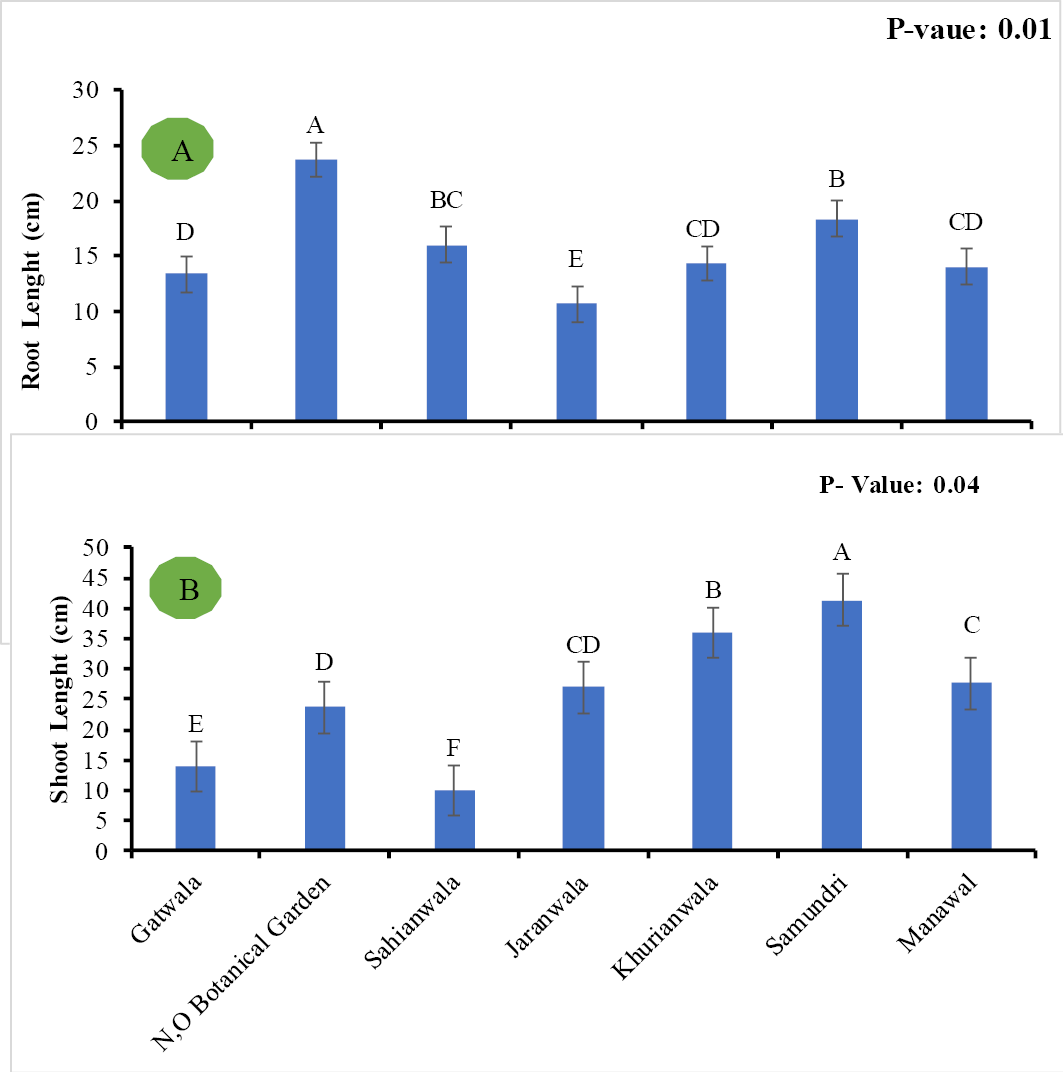
The variation in root and shoot lengths of Euphorbia hirta collected from different regions of Faisalabad. Standard errors and bars with different letters are significantly different from each other.
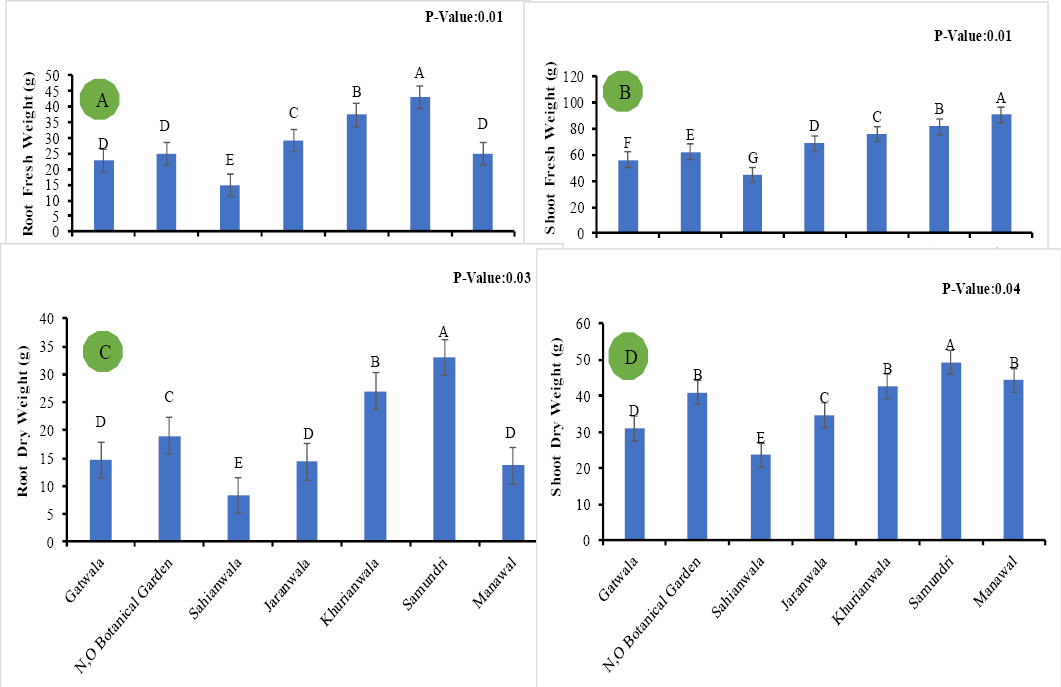
The variation in root and shoot fresh and dry weights of Euphorbia hirta collected from different regions of Faisalabad. Standard errors and bars with different letters are significantly different from each other.
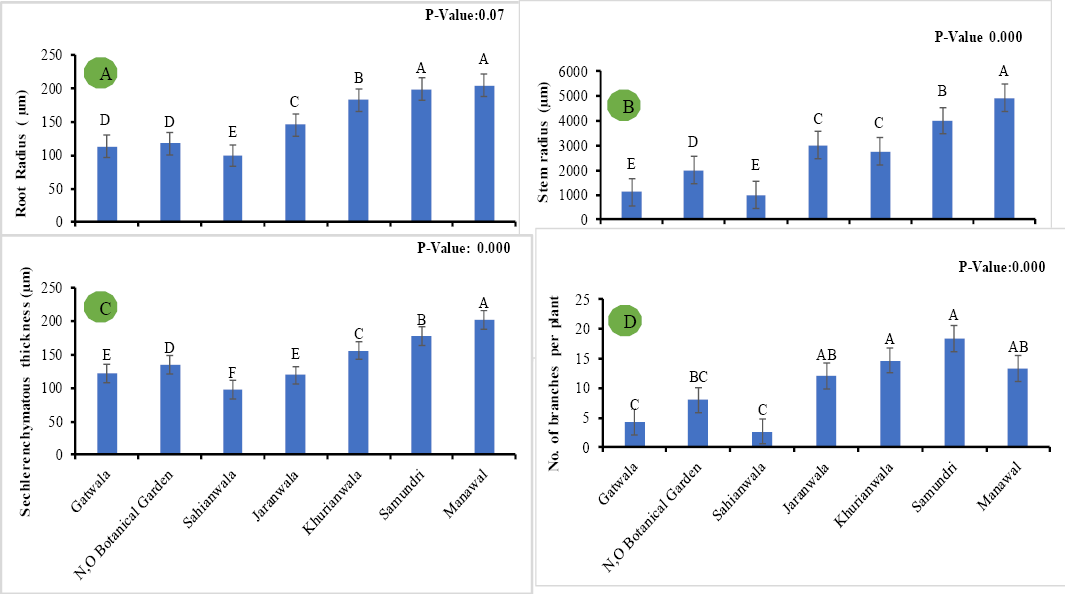
Showing the variation in root and shoot radius and branches per plant of Euphorbia hirta collected from different regions of Faisalabad. Standard errors and bars with different letters are significantly different from each other.
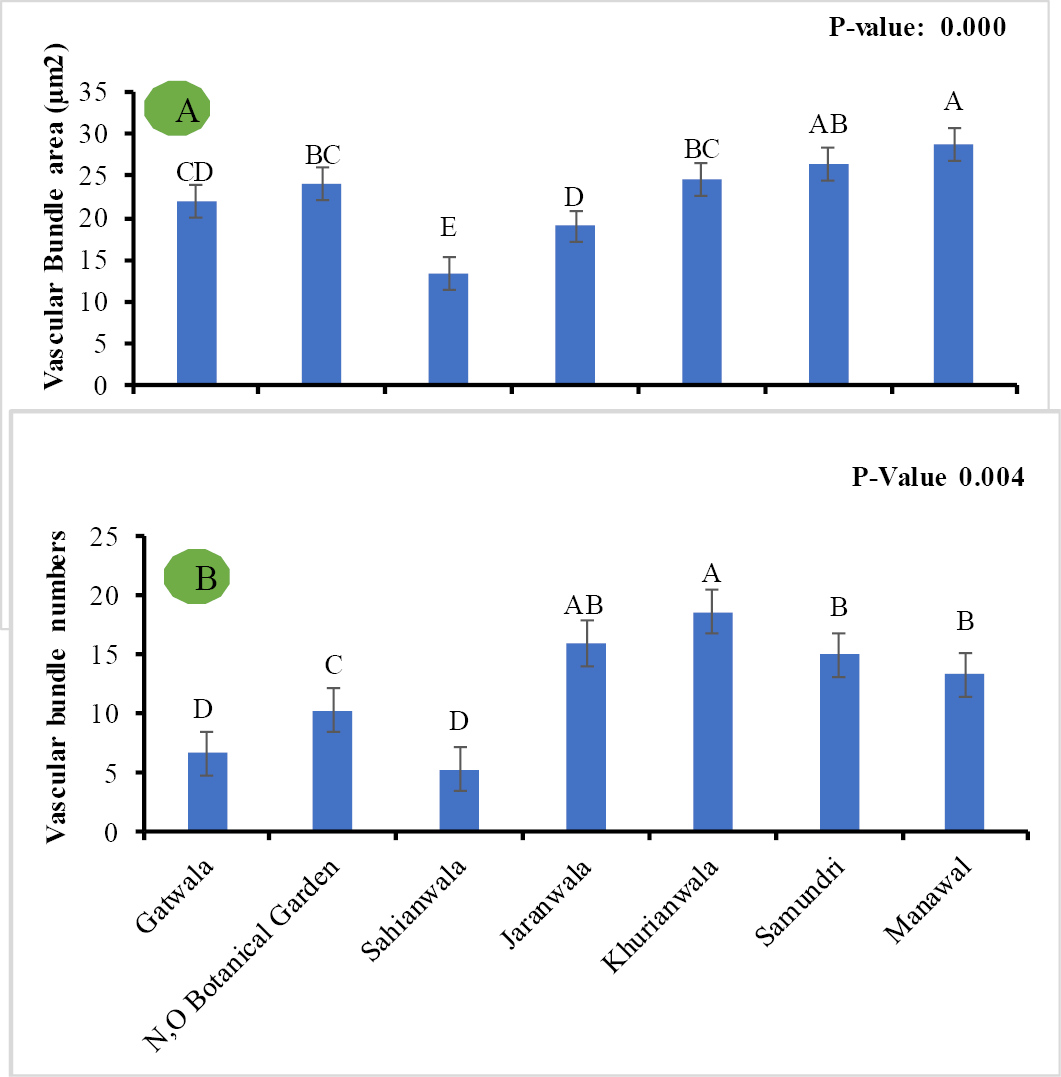
Showing the variation in vascular bundles of Euphorbia hirta collected from different regions of Faisalabad. Standard errors and bars with different letters are significantly different from each other.
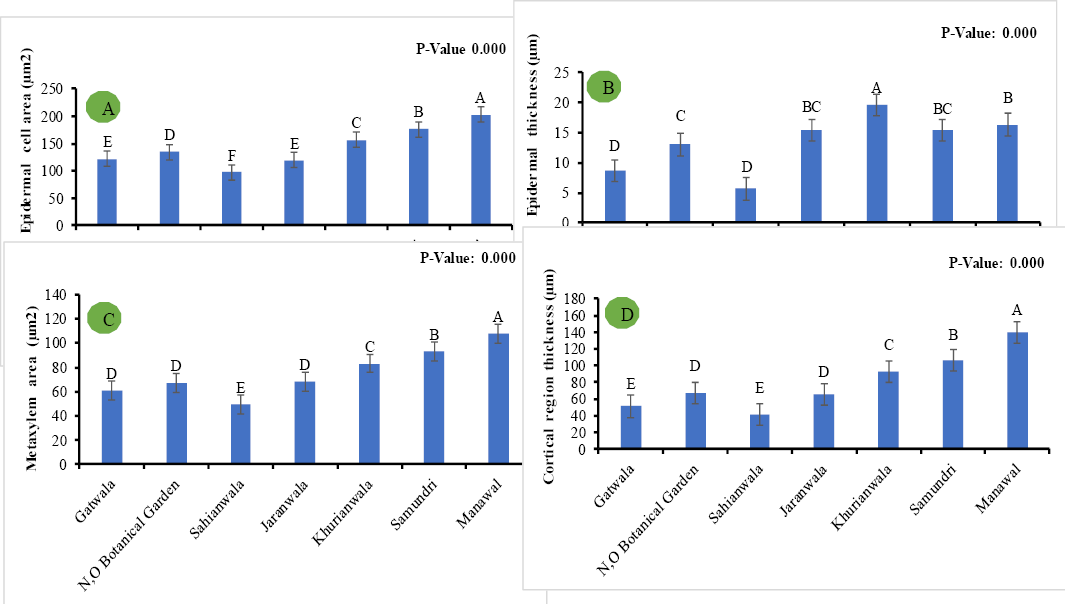
Showing the variation in thickness in epidermal and cortical of Euphorbia hirta collected from different regions of Faisalabad. Standard errors and bars with different letters are significantly different from each other.
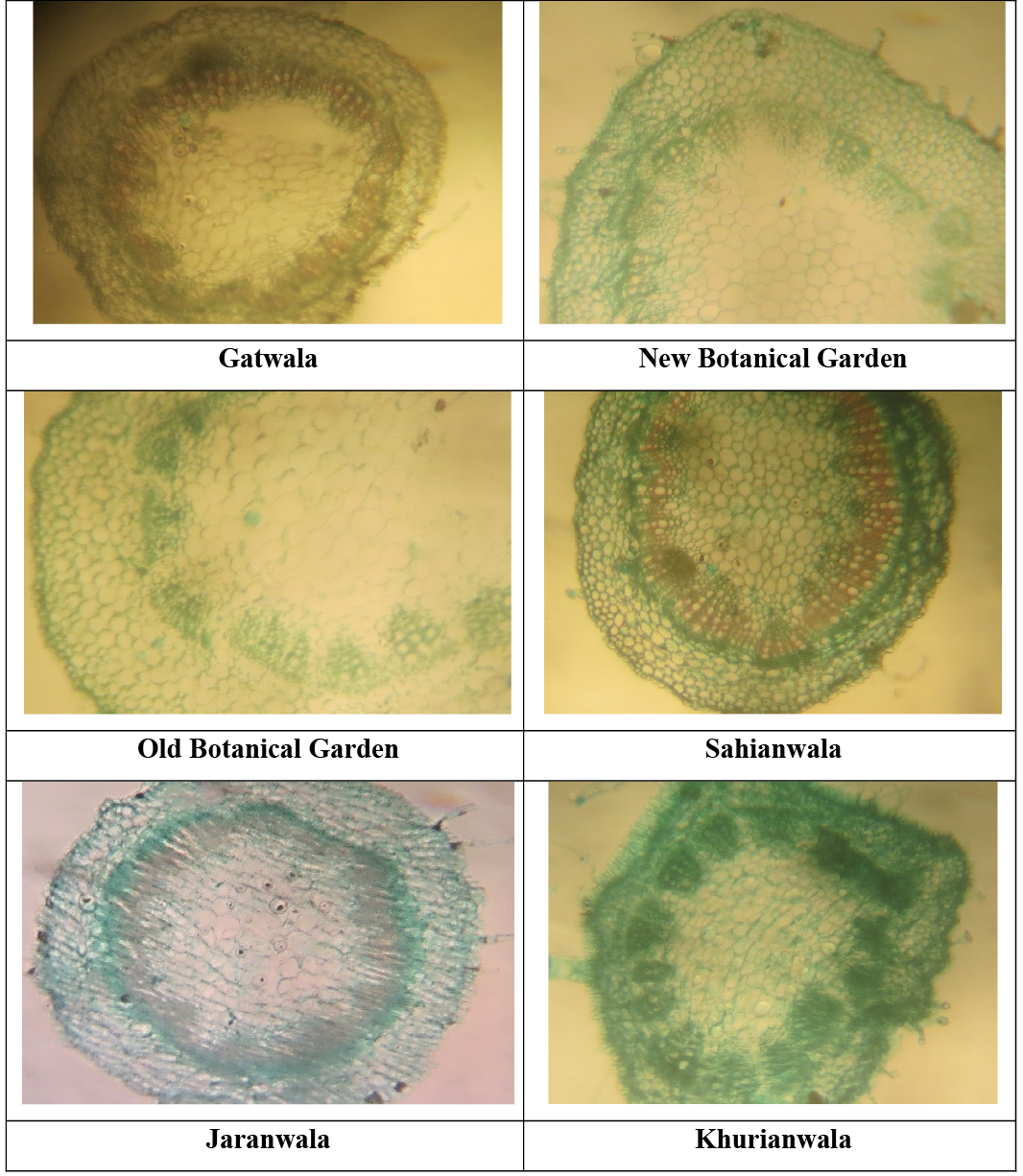
Microscopic image of Stem anatomical characteristics (Stem radius, Epidermal thickness, Vascular bundle numbers, Epidermal cell area, Vascular bundle are, Phloem, area, Metaxylem area) Euphorbia hirta collected from different habitats Faisalabad.
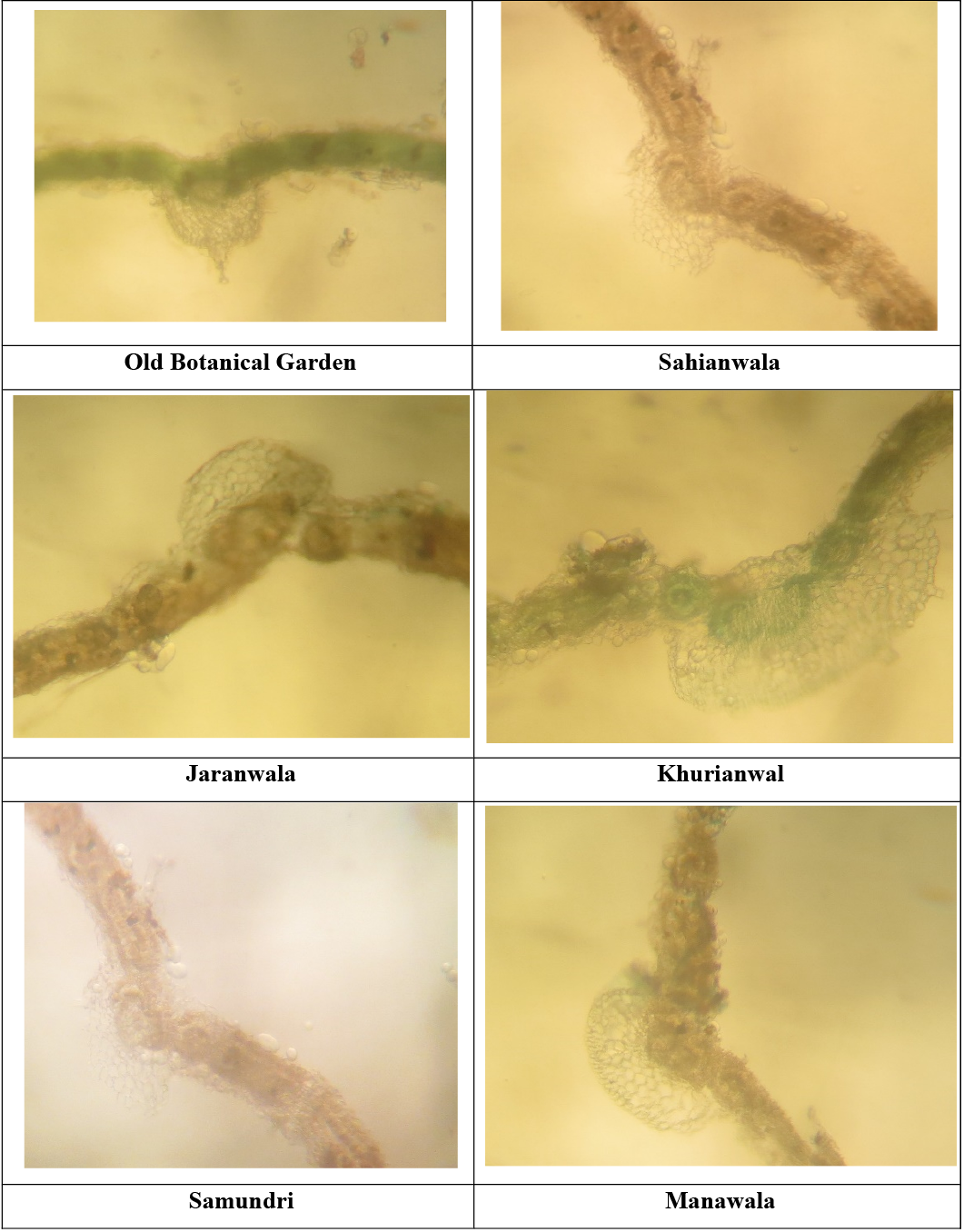
Microscopic image of Leaf anatomical Characteristics (Lamina thickness, Midrib thickness, Mesophyll thickness, vascular bundle numbers, Vascular bundle area, Phloem area, Metaxylem area) of Euphorbia hirta collected from different habitats of Faisalabad.
References
- Alam, H., Khattak, J.Z.K., Ppoyil, S.B.T., Kurup, S.S. and Ksiksi, T.S., 2017. Landscaping with native plants in the UAE: A review. Emirates J. Food Agric., 29(10): 729-741. https://doi.org/10.9755/ejfa.2017.v29.i10.319[CrossRef]
- Ali, N.A.N.G., M.L. Abdullah, S.A.M. Nor, T.M. Pau, N.A.M. Kulaimi and D.M. Naim. 2021. A review of the genus Rusa in the indo-malayan archipelago and conservation efforts. Saudi J. Biol. Sci., 28(1): 10-26. https://doi.org/10.1016/j.sjbs.2020.08.024[CrossRef]
- Alyas, T., S. Shaheen, U. Amber, N. Harun, S. Khalid, K. Hussain, U. Hanif and F. Khan. 2020. Applications of scanning electron microscopy in taxonomy with special reference to family Euphorbiaceae. Microsc. Res. Tech., 83(9): 1066-1078. https://doi.org/10.1002/jemt.23497[CrossRef]
- Amtaghri, S., M. Akdad, M. Slaoui and M. Eddouks. 2022. Traditional uses, pharmacological, and phytochemical studies of Euphorbia: A review. Curr. Topics Med. Chem., 22(19): 1553-1570. https://doi.org/10.2174/1568026622666220713143436[CrossRef]
- Bueno, F.G.B., L. Kendall, D.A. Alves, M.L. Tamara, T. Heard, T. Latty and R. Gloag. 2023. Stingless bee floral visitation in the global tropics and subtropics. Glob. Ecol. Conserv., pp. e02454. https://doi.org/10.1016/j.gecco.2023.e02454[CrossRef]
- Carlquist, S., 2012. Monocot xylem revisited: New information, new paradigms. Bot. Rev., 78: 87-153. https://doi.org/10.1007/s12229-012-9096-1[CrossRef]
- Chan, A.P., J. Crabtree, Q. Zhao, H. Lorenzi, J. Orvis, D. Puiu, A. Melake-Berhan, K.M. Jones, J. Redman and G. Chen. 2010. Draft genome sequence of the oilseed species Ricinus communis. Nat. Biotechnol., 28(9): 951-956. https://doi.org/10.1038/nbt.1674[CrossRef]
- Ding, W., M. Abdel-Basset, I. Alrashdi and H. Hawash. 2024. Next generation of computer vision for plant disease monitoring in precision agriculture: A contemporary survey, taxonomy, experiments, and future direction. Inf. Sci., pp. 120338. https://doi.org/10.1016/j.ins.2024.120338[CrossRef]
- Egamberdieva, D., S. Wirth, S.D. Bellingrath-Kimura, J. Mishra and N.K. Arora. 2019. Salt-tolerant plant growth promoting rhizobacteria for enhancing crop productivity of saline soils. Front. Microbiol., 10: 469278. https://doi.org/10.3389/fmicb.2019.02791[CrossRef]
- El-Hamid, A. and M. El-Bous. 2019. The invasive species Commelina benghalensis L.: A step towards the biological flora of Egypt. Catrina Int. J. Environ. Sci., 18(1): 7-23. https://doi.org/10.21608/cat.2019.28585[CrossRef]
- Ernst, M., O.M. Grace, C.H. Saslis-Lagoudakis, N. Nilsson, H.T. Simonsen and N. Rønsted. 2015. Global medicinal uses of Euphorbia L. (Euphorbiaceae). J. Ethnopharmacol., 176: 90-101. https://doi.org/10.1016/j.jep.2015.10.025[CrossRef]
- Filartiga, A.L., A. Klimeš, J. Altman, M.P. Nobis, A. Crivellaro, F. Schweingruber and J. Doležal. 2022. Comparative anatomy of leaf petioles in temperate trees and shrubs: The role of plant size, environment and phylogeny. Ann. Bot., 129(5): 567-582. https://doi.org/10.1093/aob/mcac014[CrossRef]
- Iqbal, U., F.U. Rehman, M.U. Aslam, M.F. Gul, U. Farooq, A. Ameer, N. Asghar, A. Mehmood and K.S. Ahmad. 2023. Survival tactics of an endangered species Withania coagulans (Stocks) dunal to arid environments. Environ. Monit. Assess., 195(11): 1363. https://doi.org/10.1007/s10661-023-11982-4[CrossRef]
- Iqbal, U., M. Hameed, F. Ahmad, M.S.A. Ahmad and M. Ashraf. 2022. Unraveling the survival potential of a desert halophyte Salvadora oleoides Decne. across heterogenic environments. Trees, 36(3): 1085-1104. https://doi.org/10.1007/s00468-022-02274-4[CrossRef]
- Khan, N., R. Ullah, M.K. Okla, M.A. Abdel-Maksoud, I.A. Saleh, H.A. Abu-Harirah, T.N. Al-Ramadneh and H. Abd-Elgawad. 2023. Environmental and anthropogenic drivers of watercress (Nasturtium officinale) communities in char-lands and water channels across the Swat River Basin: Implication for conservation planning. Front. Plant Sci., 14: 1225030. https://doi.org/10.3389/fpls.2023.1225030[CrossRef]
- Laldingliani, T., N.M. Thangjam, R. Zomuanawma, L. Bawitlung, A. Pal and A. Kumar. 2022. Ethnomedicinal study of medicinal plants used by Mizo tribes in Champhai district of Mizoram, India. J. Ethnobiol. Ethnomed., 18(1): 22. https://doi.org/10.1186/s13002-022-00520-0[CrossRef]
- Liu, W., L. Zheng and D. Qi. 2020. Variation in leaf traits at different altitudes reflects the adaptive strategy of plants to environmental changes. Ecol. Evol., 10(15): 8166-8175. https://doi.org/10.1002/ece3.6519[CrossRef]
- McDonnell, A., M. Parks and M. Fishbein. 2018. Multilocus phylogenetics of new world milkweed vines (Apocynaceae, Asclepiadoideae, Gonolobinae). Syst. Bot., 43(1): 77-96. https://doi.org/10.1600/036364418X697021[CrossRef]
- Mussarat, S., R. Ali, S. Ali, R.A. Mothana, R. Ullah and M. Adnan. 2021. Medicinal animals and plants as alternative and complementary medicine in southern regions of Khyber Pakhtunkhwa, Pakistan. Front. Pharmacol., 12: 649046. https://doi.org/10.3389/fphar.2021.649046[CrossRef]
- Naidoo, D., Y. Naidoo, G. Naidoo, F. Kianersi and Y.H. Dewir. 2023. Histochemical analysis and ultrastructure of trichomes and laticifers of Croton gratissimus Burch. var. gratissimus (Euphorbiaceae). Plants, 12(4): 772. https://doi.org/10.3390/plants12040772[CrossRef]
- Nawaz, H., M.A. Ali, R.M. Atif, A. Nawaz and A. Abbas. 2021. Incidence of fusarium wilt in major tomato growing areas of Punjab. Pak. J. Agric. Sci., 58(4). https://doi.org/10.21162/PAKJAS/21.937[CrossRef]
- Nowak, J., R.C. Eng, T. Matz, M. Waack, S. Persson, A. Sampathkumar and Z. Nikoloski. 2021. A network-based framework for shape analysis enables accurate characterization of leaf epidermal cells. Nat. Commun., 12(1): 458. https://doi.org/10.1038/s41467-020-20730-y[CrossRef]
- Pahlevani, A.H., S. Liede-Schumann and H. Akhani. 2020. Diversity, distribution, endemism and conservation status of Euphorbia (Euphorbiaceae) in SW Asia and adjacent countries. Plant Syst. Evol., 306: 1-26. https://doi.org/10.1007/s00606-020-01705-4[CrossRef]
- Qasem, J., and C. Foy. 2001. Weed allelopathy, its ecological impacts and future prospects: A review. J. Crop Prod., 4(2): 43-119. https://doi.org/10.1300/J144v04n02_02[CrossRef]
- Riina, R., J.A. Peirson, D.V. Geltman, J. Molero, B. Frajman, A. Pahlevani, L. Barres, J.J. Morawetz, Y. Salmaki and S. Zarre. 2013. A worldwide molecular phylogeny and classification of the leafy spurges, Euphorbia subgenus Esula (Euphorbiaceae). Taxon, 62(2): 316-342. https://doi.org/10.12705/622.3[CrossRef]
- Rouhan, G. and M. Gaudeul. 2021. Plant taxonomy: A historical perspective, current challenges, and perspectives. Molecular plant taxonomy: Methods and protocols, pp. 1-38. https://doi.org/10.1007/978-1-0716-0997-2_1[CrossRef]
- Ruzin, S.E., 1999. Plant microtechnique and microscopy. Oxford University Press New York. Vol. 198.
- Salama, F.M., M.M.A. El-Ghani, N.A. El-Tayeh, A.M. Amro, A.A.S. Gaafar, A. El-Galil and A. Abd El-Monem. 2019. Assessing the role of environmental gradients on the phytodiversity in Kharga Oasis of Western Desert, Egypt. Jordan J. Biol. Sci., 12(4).
- Shaheen, S., M. Jaffer, F. Khan, K. Hussain, U. Hanif, S. Younis, S. Ilyas and S. Ishtiaq. 2018. Morpho‐palynological assessment of medicinal flora of district Lahore, Pakistan based on LM and SEM. Microsc. Res. Tech., 81(12): 1397-1405. https://doi.org/10.1002/jemt.23096[CrossRef]
- Ullah, S., M.R. Khan, N.A. Shah, S.A. Shah, M. Majid and M.A. Farooq. 2014. Ethnomedicinal plant use value in the Lakki Marwat District of Pakistan. J. Ethnopharmacol., 158: 412-422. https://doi.org/10.1016/j.jep.2014.09.048[CrossRef]
- Yang, J., Y. Cao, Z. Yang, W. Zhang, L. Sun and C. Lu. 2013. Morphological, physiological and biochemical responses of biofuel plant Euphorbia lathyris to salt stress. Acta Agric. Scandinav. B Soil Plant Sci., 63(4): 330-340. https://doi.org/10.1080/09064710.2013.778327[CrossRef]
- Yang, S.Z., H. Fan, K.W. Li and T.Y. Ko. 2018. How the diversity, abundance, size and climbing mechanisms of woody lianas are related to biotic and abiotic factors in a subtropical secondary forest, Taiwan. Folia Geobot., 53: 77-88. https://doi.org/10.1007/s12224-017-9306-z[CrossRef]
Services
Article usage statistics
Loading…