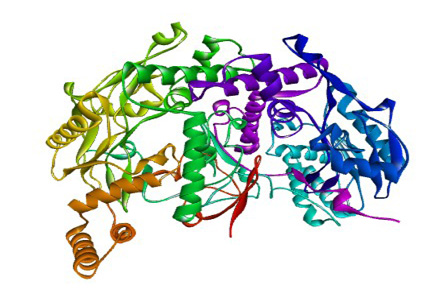
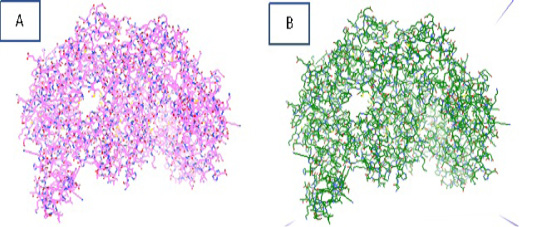
Simulation results of test ligand tethering and comparative ligand obtained bond energy values (ΔG) from the most stable iNOS ligand-receptor interactions (Table 2). Visualization of iNOS ligand-receptor interactions (Figure 4) shows residues from iNOS receptors that play an essen-
Table 2: Results of ligand-iNOS receptor analysis
tial role in the binding site area (Figure 5 and Figure 6). All ligand-receptor interactions in both the test ligand and the comparative ligand in this study used hydrogen bond distance <5Å.
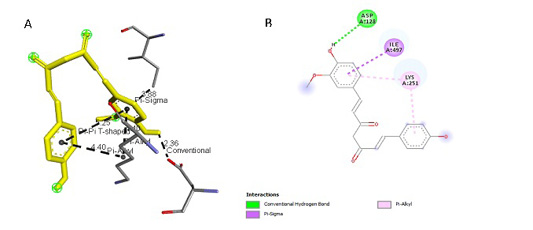
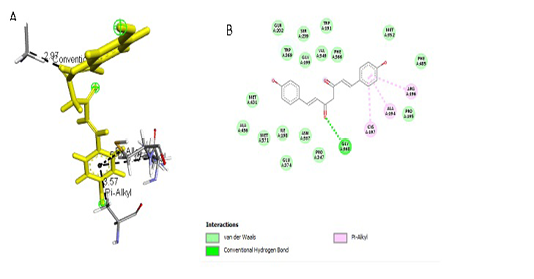
Figure 5: Results of Demethoxycurcumin ligand docking to iNOS (A) 3D visualization (B) 2D visualization
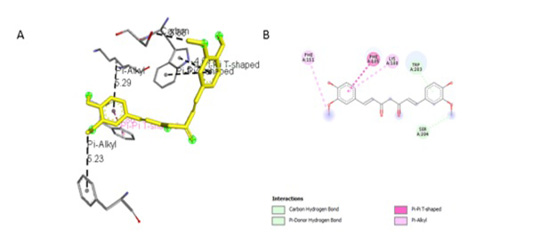
Figure 6: Results of curcumin ligand docking to iNOS (A) 3D visualization (B) 2D visualization
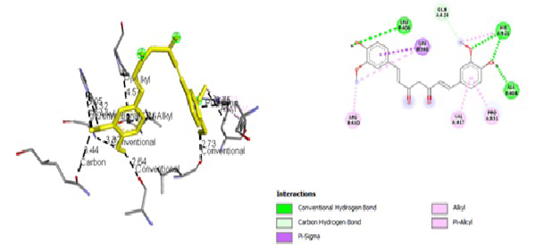
Figure 7: Results of Diclofenac Sodium ligand docking to iNOS (A) 3D visualization (B) 2D visualization
As many as ten poses of ligand-iNOS receptor molecular docking results have been carried out, each with their respective bond energy. The docking models that were chosen had the most negative bond energy values indicating strong interactions. The bond energy and the characteristics of each ligand-iNOS receptor docking results are presented in Table 2.
The observation of amino acid residue contact was aimed to determine any interactions other than the hydrogen bonds between the ligands and target proteins. Amino acid residues that make contact with the ligands have a non-binding interaction between the ligand and target protein, which will increase the affinity and inhibitory activity of iNOS. Based on the visualization of docking results, amino acid residues from iNOS that have the most interactions with ligands are His (421), LYS (261), Trp (203), so that these residues are predicted to play an essential role in the interaction of the compound on the site.
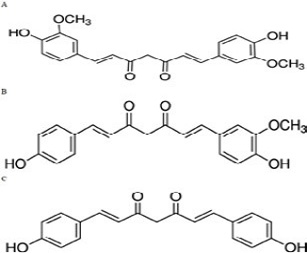
The result of molecular docking is bond energy (ΔG) or affinity, which is a parameter of the conformational stability between the ligand and the iNOS. The difference in the value of the bond energy (ΔG) is due to the difference in ligand binding to the amino acid at the receptor so that the conformation can determine the most stable geometric state of the molecule so that the smaller the bond energy value, the more stable the ligand-receptor interaction will be. Bisdemethoxycurcumin (-8 kcal/mol) and curcumin (-6.8 kcal/mol) have smaller bond energy (ΔG) compared to sodium diclofenac (-6.7 kcal/mol). Table 2 showed that bisdemethoxycurcumin-iNOS has the lowest smaller bond energy (ΔG) value of -8 kcal/mol. These data indicate that the iNOS receptor will be more stable in binding to bisdemethoxycurcumin and curcumin compared to sodium diclofenac.
Based on the number of amino acid residues, sodium diclofenac has the highest amount of residue when compared with the three classes of curcuminoids. The stable conformational location of all curcuminoid ligands is different from sodium diclofenac. This indicates that the type of inhibition by curcuminoid is a non-competitive inhibition.
Research by Syahputra et al. (2014) is in line with the results of this study, which showed that curcumin and bisdemethoxycurcumin have lower affinity energies compared to ibuprofen (an anti-inflammatory drugs) so that it has the potential as an anti-inflammatory agent through the inhibition of the enzyme 12-lipoxygenase. Docking visualization showed that amino acid residues from the 12-lipoxygenase enzyme also have more interactions with ligands, including Leu (311), Lys (310), Trp (647), Glu (226), Leu (233). While in this study, it is known that the amino acid residues of iNOS, which have the most interactions with ligands, are His (421), LYS (261), Trp (203).
Inflammation itself is an indicator that the body’s immune system is fighting against a particular disease. It is a form of body response to destroy, reduce, and localize injury causing-agents as well as injured tissues. The characteristics of acute inflammation include edema, redness, heat, and pain. The acute inflammation process is caused by the release of various kinds of chemical mediators, such as the product of leukocyte cell activity, protease enzymes in plasma, vasoactive amines, and arachidonic acid metabolites.
According to (Boroumand et al., 2018), turmeric’s curcuminoid content can be used as a potent blocker for NF-kB activation. NF-kB regulates inflammatory mediators such as chemokines, cytokines, adhesion molecules, kinases, and enzymes. When the curcuminoid content suppresses NF-kB activation by inhibiting IkBα kinase and AKT, NF-kB products such as iNOS will not be over produced. Research conducted by Olkowski et al. (2006) found that the early-stage of necrotic enteritis (NE) is an inflammatory response followed by an unconventional condition, which leads to a certain degree of inflammatory manifestation.
The prolonged inflammatory process has negative consequences such as exacerbating tissue damage and diverting energy and nutrients digested in the feed for the need to fight the invasion of pathogenic microorganisms, resulting in decreased performance in broilers and layers. Also, the release of pro-inflammatory cytokines causes «malaise» syndrome in poultry that causes pyrexia, anorexia, and weight loss. Because of these negative effects, the inflammatory response needs to be optimized so that livestock productivity can be increased (Tarradas, 2020). This indicates that intestinal inflammation can initiate the development of NE lesions, and treatment/therapy needs to be sought to suppress the inflammatory response, hence decreasing the severity of the lesion caused by NE.