
Assessing the ecological status of benthic habitats is important in marine ecosystem management. Sea-crossing bridges have been constructed worldwide to facilitate human travels and transactions. However, limited information is available on the ecological impacts of bridge constructions on local microeukaryotic compositions and functional shifts. In the present study, next-generation sequencing and bioinformatics analyses were performed to compare changes of microeukaryotic communities in local sediments influenced by sea-crossing bridge construction. Relatively low levels of alpha diversity and high levels of beta diversity were observed in samples influenced by bridge construction (group EG). The decreased abundance of Chloroplastida and increased abundance of Animalia in group EG suggested that engineering activities induced environmental disturbance, which impaired the ecosystem balance. LEfSe and SIMPER approaches revealed a significant abundance of ectomycorrhizal fungi in group EG, while these taxa were rare in sediments of a control group. Increased abundance and metabolic functions of these rare ectomycorrhizal fungi suggested that rare microeukaryotes should play fundamentally ecological roles in local ecosystems, especially when environmental perturbations occurred. This report is the first to address the ecological impacts of sea-crossing bridge construction on local microeukaryotic communities, which can improve our understanding of local microbial responses to marine infrastructure construction.
Research Article · Volume 56, Issue 1, 17 December 2023 · Open Access
Microeukaryotic Variation in Local Sediments with the Influence of Sea-Crossing Bridge Construction: A Case Study in East China
· · · ·
Affiliations & Notes ⌄
- 1Zhejiang Hongtu Transportation Construction Co., Ltd., Zhejiang Communications Construction Co., Ltd., Hangzhou 310052, P.R. China 2Shanghai Urban Construction Vocational College, Shanghai 200438, P.R. China 3School of Naval Architecture and Maritime, Zhejiang Ocean University, Zhoushan 316022, P.R. China * Corresponding author: litao@succ.edu.cn
Article Info ⌄
- Journal:
- Pakistan Journal of Zoology
- Published:
- 17 December 2023

From the article
- Moreover, significant differentiation of microeukaryotic composition, abundance, and function were observed between groups, revealing the impacts of bridge construction on local microeukaryotic communities.
- In our study, microeukaryotic traits including diversity, structure, abundance, and function were significantly changed during sea-crossing bridge construction, especially the abundance and function of ectomycorrhizal fungi such as Gomphidius roseus.
- The decreased abundance of chloroplastida and increased abundance of Animalia in group EG suggested that engineering-induced environmental disturbance impaired the ecosystem balance, leading to lower primary productivity.
- In this study, we also observed the increased abundance and metabolic functions of the rare ectomycorrhizal fungi, suggesting that these ectomycorrhizal fungi may play fundamental roles in local ecosystems.
Selected from the article's own text.
Abstract
Introduction
Assessing the ecological status of benthic habitats is important in marine ecosystem management and functional maintenance , especially when environmental perturbations or changes occur . Invisible microorganisms are considered as the most important players in an ecosystem . Among them, microbial eukaryotes play fundamental and essential roles in marine ecosystem functioning and biogeochemical processes at local and global scales ; . Previous studies have shown that microeukaryotes involve in food webs as primary producers, consumers, and decomposers ; ; . In addition, they have significant effects on biogeochemical cycles . Thus, microbial eukaryotes are crucial to ecological stability and integrity , which have attracted plenty of attention in studies related to ecosystem disturbance ; ; ; .
With rapid urban radiation and economic development, the increasing intensity of global human activities have dramatically shaped and impaired ecosystem diversity, function, and services ; . Coastal and marine environments are among the most productive ecosystems on Earth. With nearly two thirds of the human populations living in coastal regions, coastal and marine engineering facilities supply plenty of societal needs such as transportation, protection and energy production . Human activities have also impaired coastal and marine environments and human health . As crucial ecological indicators, local microbial communities play important roles in monitoring environmental perturbations in coastal and marine ecosystems . Previous studies have reported the resistance and resilience of microorganisms in response to environmental disturbances (i.e., , showing microbial contributions to ecosystem stability . Considering the importance of microbes in maintaining ecosystem and ecological balance, expounding and predicting the variation of microbes in ecological changes is a high-priority issue in microbial ecology . However, few studies have investigated microbial changes in coastal ecosystems characterized by higher population density and human activity intensity exist.
Coastal and marine engineering constructions can result in drastic environmental disturbances, which can further lead to significant changes in composition and abundance of local microbial communities . In contrast to research on bacteria, limited information is available on investigations of microbial eukaryote communities. In the present study, local sediment samples originated from Zhoushan, Zhejiang Province, China were collected, and comparative analyses were conducted for the microeukaryotic communities inhabiting these sediments, through 18S rRNA gene amplicon sequencing, to indicate potential ecological impacts related to sea-crossing bridge construction. The results revealed significant changes in the diversity, abundance, and function of microbial eukaryotes in response to sea-crossing bridge construction, which could provide new insights into ecological management of coastal and marine engineering projects.
Materials and Methods
Sediment collection
Zhou-Dai Bridge is one of the newly built sea-crossing bridges in Zhoushan, Zhejiang Province, China (Fig. 1). When the bridge was nearly constructed, a total of 42 sediment samples were collected on October 24, 2020 to tentatively evaluate the ecological impacts of bridge building on local microeukaryotic communities, among which 20 samples were from the surrounding sediments as the control group (Group CG, ID numbers A12-A31) and 22 were from the surfaces of sea-crossing cable-stayed bridge pier bodies as the experimental group (Group EG, ID numbers A32-A53). Samples in group CG were collected approximately 10 m away from bridge piers to minimize the effects of the bridge building. The coordinates of sampling sites were from 30.178°N, 121.983°E to 30.193°N, 121.995°E. When sampling, core sediments of each sample were collected to exclude potential seawater contamination, and the weights of the sediment samples were assured to be sufficient for DNA extraction. The sediment samples were placed in sealed plastic bags and stored provisionally in a portable ice box, and then transferred to the laboratory within 24 h and stored at -80 ℃. Given our objectives were mainly to reveal the potential ecological impacts of bridge building process on local microeukaryotic communities, thus general physicochemical factors including total nitrogen, total phosphorus, and heavy metals were excluded in our study. Instead, four physical parameters, including seawater flow velocity (VF), depth from sea surface to sampling site (DEP), drilled pile shaft friction (FR1), and sinking pile shaft friction (FR2) were calculated for further association analyses (Supplementary Table SI).
DNA extraction, PCR amplification and sequencing
Total genomic DNA was extracted from a sediment sample using a CTAB method . DNA purity and concentration was assessed by using 1% agarose gels. DNA concentration was further diluted to 1 ng/µL using sterile water and stored at -80 ℃. The V4 region fragments of 18S rRNA genes were amplified using a universal primer pair V4F (CCA GCA SCY GCG GTA ATW CC)-V4R (ACT TTC GTT CTT GAT YRA) ; . The PCR reaction system contained 15 µL of Phusion High-Fidelity PCR Master Mix (New England Biolabs), 2 µM of forward and reverse primers, and approximately 10 ng template DNA. Thermal cycling was under the following conditions: Initial denaturation at 98 ℃ for 1 min, followed by 30 cycles of denaturation at 98 ℃ for 10 s, annealing at 50 ℃ for 30 s, and extension at 72 ℃ for 30 s, with a final extension at 72 ℃ for 5 min. PCR products were detected using 2% agarose gel electrophoresis with loading buffer and SYB green dye. Mixed in equidensity ratios, PCR products were then purified by using a Qiagen Gel Extraction Kit (Qiagen, Germany).
Sequencing libraries were constructed with a TruSeq DNA PCR-free sample preparation kit (Illumina, USA) and a specific index was added. The library quality was assessed and sequenced on an Illumina NovaSeq6000 platform. The library preparation and Illumina sequencing processes were performed at Novogene Co. in Beijing.
Data analysis
For quality check and filtering of raw data, QIIME v1.9.1 software was used to obtain clean tags . Chimera sequences were detected and removed by using UCHIME software . Sequence analysis was performed by using UPARSE v7.0.1001 software . Sequences were assigned as one operational taxonomic unit (OTU) with the similarity threshold of ≥97%. For representative sequences of each OTU, the Silva 138 database was used based on Mothur algorithm for taxonomic information annotation, with confidence score ≥0.8 . Alpha diversity indices including Chao1, ACE, and Shannon index were calculated using QIIME v1.9.1 and statistically plotted with R software. To analyze the phylogenetic relationship of identified OTUs and estimate the difference of the dominant species in samples or groups, multiple sequence alignment was conducted using MUSCLE v3.8.31 software . The phylogenetic tree of the top 100 genera was constructed using MEGA software based on neighbor-joining algorithm .
Weighted and unweighted unifrac Beta diversity were calculated using QIIME v1.9.1 software. R packages including WGCNA, stat, and ggplot2 were used to perform principal coordinate analysis (PCoA). R package vegan was used to conduct non-metric multidimensional scaling (NMDS) analyses. The statistical analyses of difference (i.e. independent t-test and Wilcox tests) between groups were calculated using R software with P value threshold of <0.05. The ANOSIM and MRPP functions in vegan package were employed to conduct ANOSIM and MRPP analyses, respectively. Linear discriminant analysis (LDA) effect size (LEfSe) and SIMPER analyses were used to identify differential species between groups. To estimate the potential relatedness between physical parameters and microeukaryotic distribution, the CCA and RDA functions in vegan package were used to perform canonical correspondence analysis (CCA) and distance-based redundancy analysis (dbRDA), respectively. The presumptive functional attributes of related fungi in this study were annotated using FUNGuild (https://github.com/UMNFuN/FUNGuild) database . The FUNGuild annotations include guild, trophic mode, and growth morphology; only confidence scores of probable and highly probable were used.
Results
Overall microeukaryotic communities determined by 18S rRNA gene sequencing
A total of 2,642,382 effective tags were retained after quality and chimera filtering, ranging from 42,242 to 69,399 and with an average of 62,914 (Supplementary Table SII). Good’s coverage estimates of 99.0%–99.8% were obtained for the sequencing data (Supplementary Fig. S1) and the observed OTUs ranged from 257 to 1805, with an average of 1209 (Supplementary Table SII). Phylogenetic relationship of top 100 genera species was classified as Ascomycota, Basidiomycota, Chlorophyta, Streptophyta, Diatomea, Ciliophora, Arthropoda, Cnidaria, and Chordata at the phylum level (Fig. 2). Eukaryota, Fungi, and Chloroplastida were the top three kingdoms in group CG (77.43% in total), while Eukaryota, Fungi, and Animalia were dominant (71.96% in total) in group EG (Supplementary Fig. S2). The relative abundance of Chloroplastida decreased from 23.68% in CG to 12.85% in EG, with Phyla Streptophyta and Chlorophyta as the main contributors. The alpha diversity estimates, including Chao1, ACE, and Shannon index, were relatively higher in the CG group than in the EG group (Supplementary Table SIII, Supplementary Fig. S3).
Microeukaryotic community composition between groups
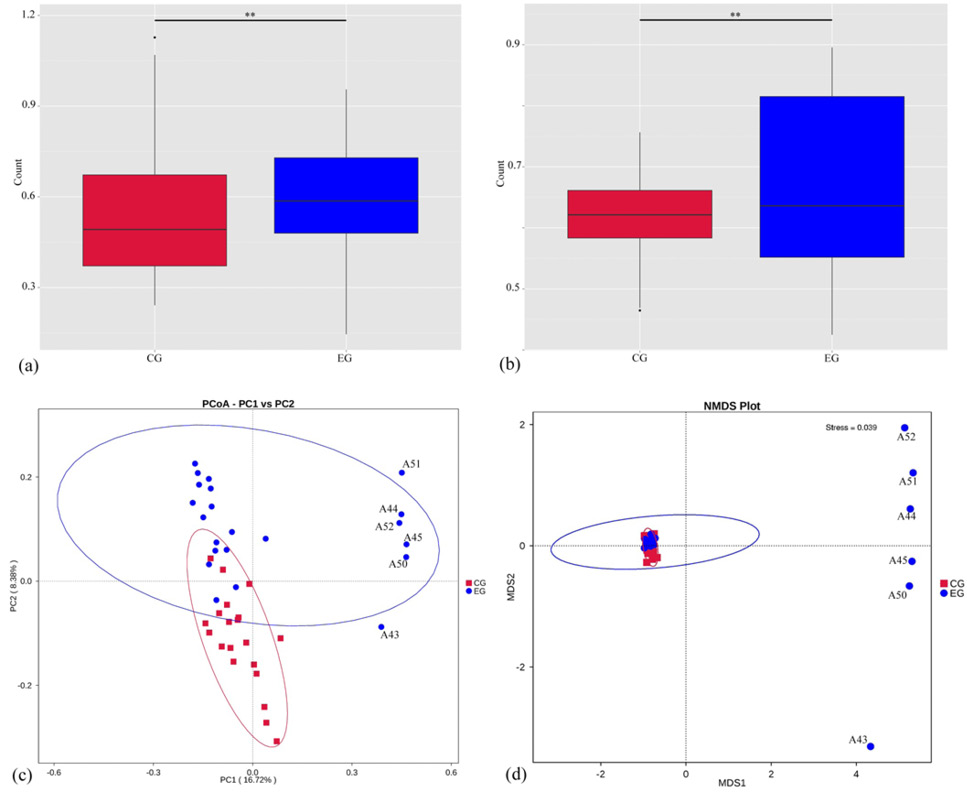
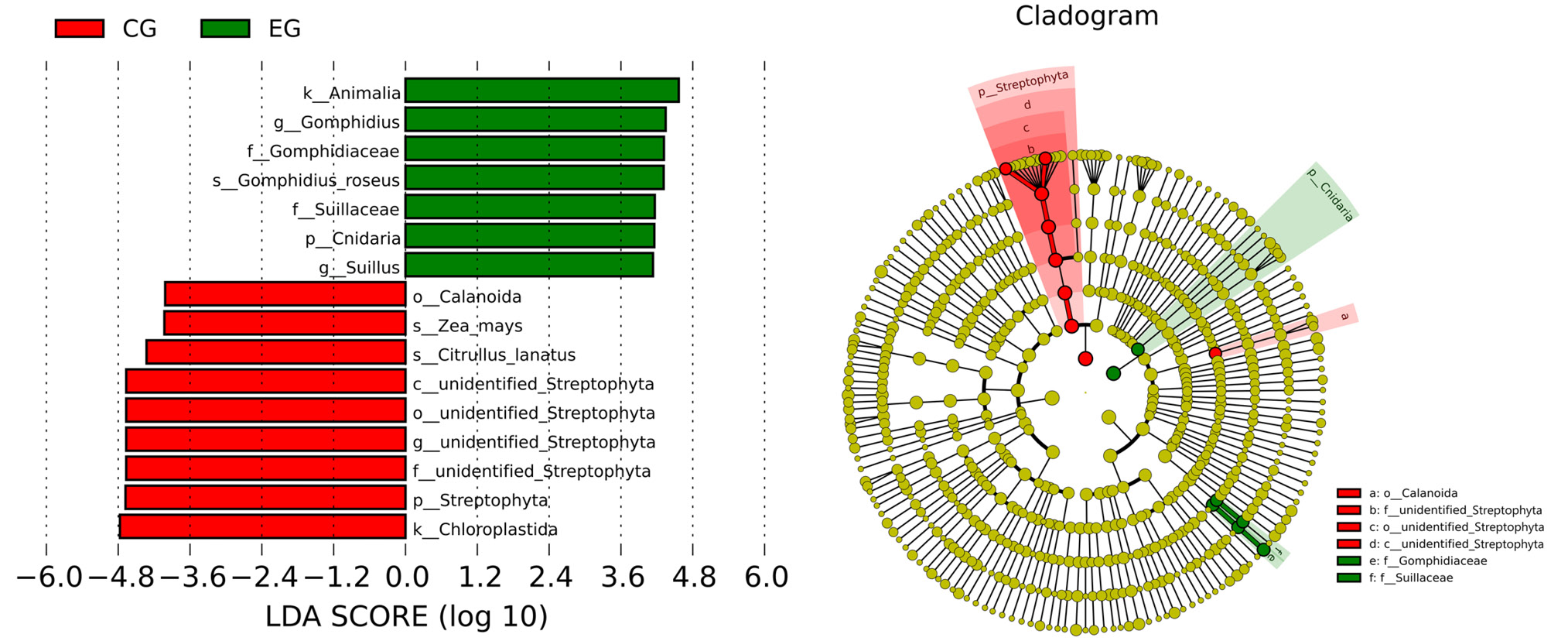
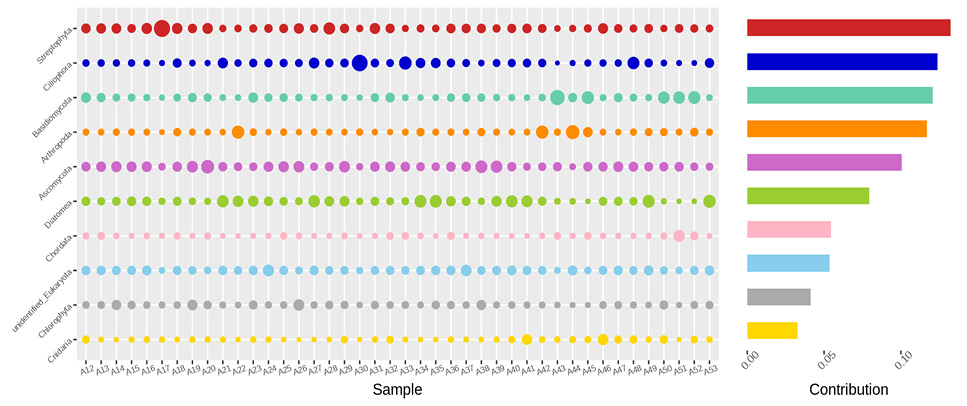
Contrary to alpha diversity, the beta diversity index showed that samples in group EG had significantly higher levels of species dissimilarity (Fig. 3a, b). Consistently, the PCoA and NMDS plotting exhibited similar distribution patterns, also showing higher species variations in group EG (Fig. 3c, d). In addition, samples A43, A44, A45, A50, A51, and A52 in group EG diverged from other samples based on PCoA and NMDS analyses. The results of statistical analyses also confirmed significant differentiation between groups (P= 0.005 and 0.002 in ANOSIM and MRPP, respectively). To further identify significantly different taxa between groups, t-test was performed at different classification levels. At the phylum level (Fig. 4), four phyla including Streptophyta, Cnidaria, Rotifera, and Picozoa were identified as significantly different taxa. At the species level, a total of 40 species showed significantly different abundance between groups, half of which (22/40) belonged to Eukaryota (Supplementary Table SIII). LEfSe analysis was also implemented to identify unique microorganisms (biomarkers) that differed significantly in abundance between groups . Our findings showed that kingdom Animalia and affiliated phylum Cnidaria, family Suillaceae and affiliated genus Suillus, family Gomphidiaceae, affiliated genus Gomphidius and species Gomphidius_roseus were particularly abundant in group EG, while kingdom Chloroplastida and affiliated phylum Streptophyta, species Zea_mays and Citrullus_lanatus, and order Calanoida were enriched in group CG (Fig. 5). In addition, our LEfSe results (Supplementary Fig. S4) further revealed that fungi in family Suillaceae and Gomphidiaceae were rare in group CG but enriched in group EG, suggesting that these rare microbial eukaryotes should play ecological roles in increasing abundance or maintaining ecosystem functioning after environmental disturbance . Additionally, the contributions of eukaryotes at the phylum and species level to variation between groups were calculated using SIMPER analysis (Fig. 6). The phylum-level result showed that Streptophyta, Ciliophora, Basidiomycota, and Arthropoda were differential taxa with a high contribution ratio. Consistent with results of PCoA and NMDS analyses, phylum Basidiomycota was enriched in samples A43, A44, A45, A50, A51, and A52 in group EG, but was rare in the remaining samples. The species-level result also revealed that Gomphidius roseus, which belonged to phylum Basidiomycota, was differential species with a high contribution ratio. The fungus Gomphidius roseus, which was also identified as one of the biomarkers in LEfSe analysis, was also enriched in samples A43, A44, A45, A50, A51, and A52.
Correlation analyses, including CCA and dbRDA approaches, were performed to detect possible impacts of four physical factors (i.e., VF, DEP, FR1, and FR2) on eukaryotic communities. Our findings showed significant correlations between the physical factors and microeukaryotic composition (Supplementary Fig. S5), suggesting that local microeukaryotic communities were highly varied during the bridge construction process.
Functional prediction of related fungi
Fungi were identified as contributors and biomarkers in our study, suggesting the ecological importance of these taxa. FUNGuild approach was performed to predict the nutritional and functional groups of the related fungal communities between groups. Our findings showed that nine trophic mode groups were classified, with saprotroph, symbiotroph, pathotroph-symbiotroph, and pathotroph-saprotroph being the major components (Supplementary Fig. S6). In group EG, saprotroph, symbiotroph, and pathotroph-symbiotroph were the top three primary trophic modes, while the top three in group CG were saprotroph, symbiotroph, and pathotroph-saprotroph.
Significance test (t-test) results showed that pathotroph-symbiotroph was the significantly different trophic mode between groups (P = 0.035, Supplementary Fig. S7a). Furthermore, our results showed that the compositions of ectomycorrhizal and ectomycorrhizal-fungal_parasite fungi were significantly varied between the CG and EG groups, both of which were more abundant in group EG (Supplementary Fig. S7b).
Discussion
The ecosystem biodiversity, function, and service aspects, which are largely supported by the microbial communities, have been dramatically changed, shaped, and impaired by increasing human activities . Some studies have reported that the ecosystem function and service depend upon both microbial composition and specific functional groups, suggesting that microbial diversity and function should be connected to ecosystem function and service aspects ; . In the present study, we investigated the changes of microeukaryotic composition, abundance, and function in local sediments following bridge construction to reveal the effects of human activities such as bridge construction on local microeukaryotic communities.
We found that despite the higher alpha diversity of group CG, group EG had high levels of community dissimilarity and structure heterogeneity. Moreover, significant differentiation of microeukaryotic composition, abundance, and function were observed between groups, revealing the impacts of bridge construction on local microeukaryotic communities. Human activities, such as engineering construction, have tremendously shaped marine and coastal environments, and these changes would affect ecosystem function and services , which in turn could lead to adverse impacts on human societies. Invisible microorganisms play crucial roles in ecosystems and are the most important players in ecosystem function and services . As a result, the diversity and functional attributes of local microbial communities were generally affected by human activities. For instance, a previous study showed that microbial communities had been dramatically changed during urbanization in coastal regions . In our study, microeukaryotic traits including diversity, structure, abundance, and function were significantly changed during sea-crossing bridge construction, especially the abundance and function of ectomycorrhizal fungi such as Gomphidius roseus. The decreased abundance of chloroplastida and increased abundance of Animalia in group EG suggested that engineering-induced environmental disturbance impaired the ecosystem balance, leading to lower primary productivity. The enriched ectomycorrhizal fungi in group EG could counteract such feedback. Previous studies suggested that ectomycorrhizal fungi could not only transport dissolved nutrients but also mobilize essential plant nutrients directly from minerals through excretion of organic acids . Besides, ectomycorrhizal fungi also had an active part in organic matter decomposition, which could facilitate co-metabolic degradation of recalcitrant organic complexes . Thus, the increased abundance of ectomycorrhizal fungi could facilitate primary productivity and maintain ecosystem balance.
In this study, ectomycorrhizal fungi in family Suillaceae and Gomphidiaceae were rare subcommunities in group CG samples, but enriched in group EG with significant abundance and functional attributes. Such changes in abundance should be an example to elucidate the ecological importance of rare microbes in the ecosystem. Apart from limited information on marine microeukaryote diversity and composition ; , the ecological roles and functions of rare marine microbes remain unknown. Rare marine microbes are hypothesized to be ecologically redundant taxa that could increase in abundance when environmental disturbance occurs and maintain ecosystem biodiversity, service, and function . Some studies also revealed that rare bacteria could grow exponentially under the right conditions, be metabolically more active than other taxa, and perform crucial ecosystem functions ; . In this study, we also observed the increased abundance and metabolic functions of the rare ectomycorrhizal fungi, suggesting that these ectomycorrhizal fungi may play fundamental roles in local ecosystems. The functional prediction of fungi showed that saprotroph, symbiotroph, and pathotroph-symbiotroph were the main trophic modes in group EG. Hall et al. (2003) reported that ectomycorrhizal fungi could be classified as symbionts, saprobes, and pathogens, and the trophic mode might shift depending on the phase in the life cycle of a given fungus. In addition, some bacteria can be associated with ectomycorrhizas and appear to aid the infection process . As a result, given the extent of ectomycorrhizal fungi increase in group EG, we noted that pathogenic fungi and associated bacteria might infect local flora and fauna, especially seafood and people in local communities, leading to negative health effects on human society. Thus, ecological investigations are needed to monitor the impacts of engineering construction on local microbiota and the flora and fauna biosphere.
Local microbial communities play crucial roles in monitoring environmental perturbations in coastal and marine ecosystems, especially when human activities such as infrastructure engineering were increasingly implemented in recent years. In the current study, by using 18S rRNA gene amplicon sequencing, comparative analyses of microeukaryotic communities were conducted to indicate potential ecological impacts of sea-crossing bridge construction on local microbial community. Significant changes of microeukaryotic communities were detected, providing novel ecological insights into infrastructure construction on local environment. In addition, we detected some rare ectomycorrhizal fungi were enriched with environmental disturbance, suggesting rare microbes should play crucial roles in ecosystem stability. These findings could provide reference information for further ecological engineering construction.
Funding
This work was supported by the Research on Self-Repairing Technology of Nano-modified Microorganisms on Concrete Structural Cracks (grant number 040139422101VNV) and Applied Technology of Microbial Healing Cracks of Seepage Water in SKS201 Wuling Tunnel (grant number 21186006520).
Data availability statement
The sequencing data in this study have been deposited in Sequence Read Archive (SRA) database under accession number PRJNA806524.
Supplementary material
There is supplementary material associated with this article. Access the material online at: https://dx.doi.org/10.17582/journal.pjz/20221102021120
Statement of conflict of interest
The authors have declared no conflict of interest.
Figures
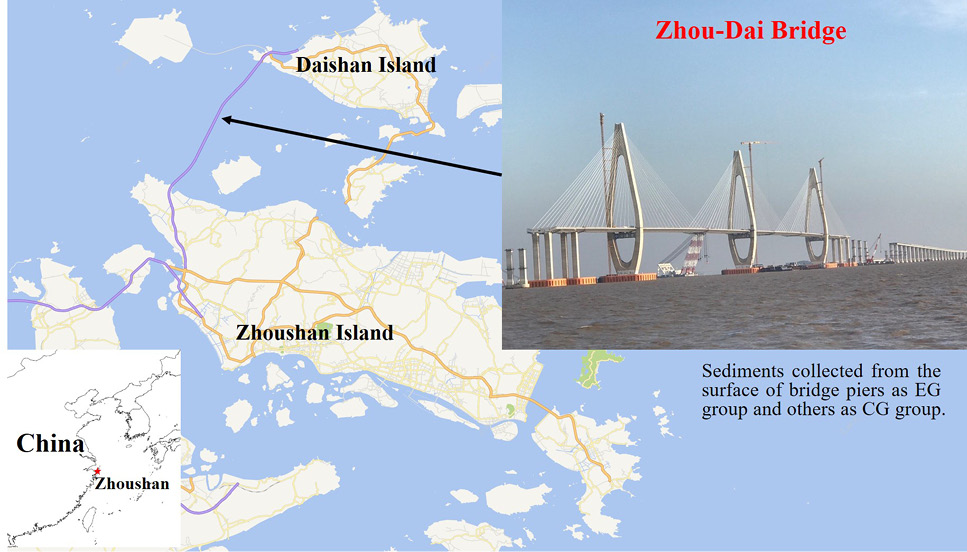
Location of Zhou-Dai Bridge and overall sampling strategy (photo by T.L.).
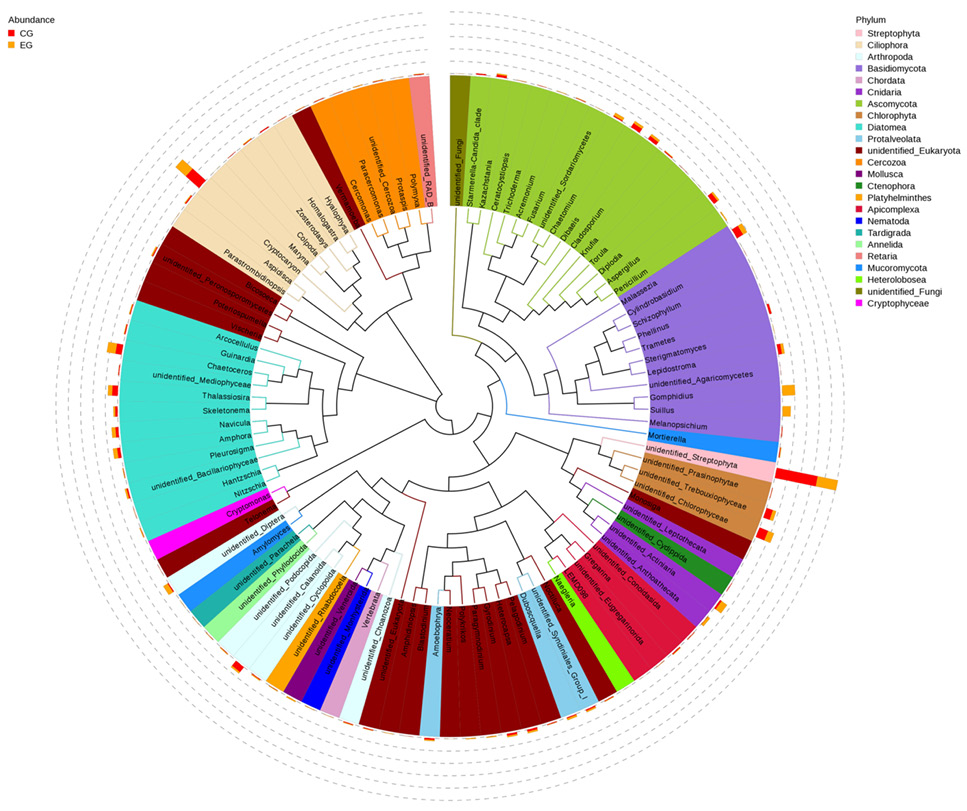
Phylogenetic relationship of top 100 genera species identified in this study.
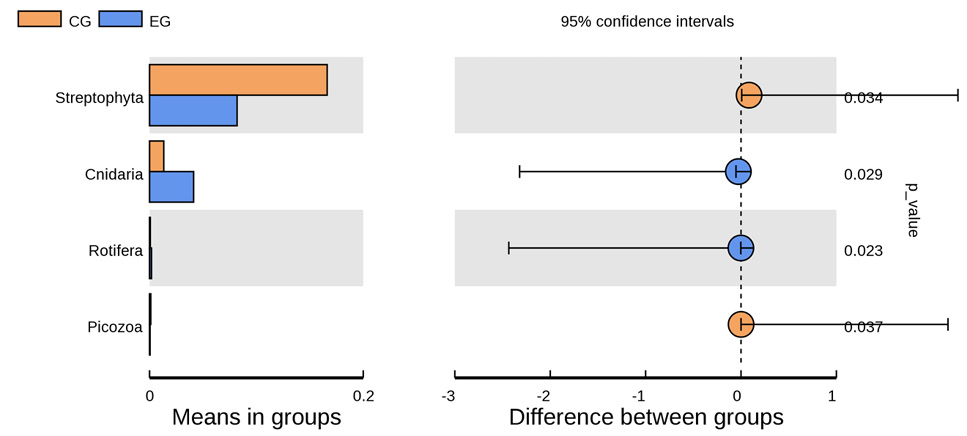
Significantly different phyla between groups based on t-test approach.
References
- Arrigo, K.R., 2005. Marine microorganisms and global nutrient cycles. Nature, 437: 349-355. https://doi.org/10.1038/nature04159[CrossRef]
- Bokulich, N.A., Subramanian, S., Faith, J.J., Gevers, D., Gordon, J.I., Knight, R., Mills, D. and Caporaso, J.G., 2013. Quality-filtering vastly improves diversity estimates from Illumina amplicon sequencing. Nat. Methods, 10: 57-59. https://doi.org/10.1038/nmeth.2276[CrossRef]
- Caporaso, J.G., Kuczynski, J., Stombaugh, J., Bittinger, K., Bushman, F.D., Costello, E.K., Fierer, N., Peña, A.G., Goodrich, J.K., Gordon, J.I., Huttley, G.A., Kelley, S.T., Knights, D., Koenig, J.E., Ley, R.E., Lozupone, C.A., McDonald, D., Muegge, B.D., Pirrung, M., Reeder, J., Sevinsky, J.R., Turnbaugh, P.J., Walters, W.A., Widmann, J., Yatsunenko, T., Zaneveld, J. and Knight, R., 2010. QIIME allows analysis of high-throughput community sequencing data. Nat. Methods, 7: 335-336. https://doi.org/10.1038/nmeth.f.303[CrossRef]
- Caron, D. and Countway, P., 2009. Hypotheses on the role of the protistan rare biosphere in a changing world. Aquat. Microb. Ecol., 57: 227-238. https://doi.org/10.3354/ame01352[CrossRef]
- Caron, D.A., Countway, P.D., Jones, A.C., Kim, D.Y. and Schnetzer, A., 2012. Marine protistan diversity. Annu. Rev. Mar. Sci., 4: 467-493. https://doi.org/10.1146/annurev-marine-120709-142802[CrossRef]
- Caron, D.A., Worden, A.Z., Countway, P.D., Demir, E., Heidelberg, K.B., 2009. Protists are microbes too: A perspective. ISME J., 3: 4-12. https://doi.org/10.1038/ismej.2008.101[CrossRef]
- Chapin, F.S., Zavaleta, E.S., Eviner, V.T., Naylor, R.L., Vitousek, P.M., Reynolds, H.L., Hooper, D., Lavorel, S., Sala, O., Hobbie, S., Mack, M. and Díaz, S., 2000. Consequences of changing biodiversity. Nature, 405: 234-242. https://doi.org/10.1038/35012241[CrossRef]
- Chen, J.R., McIlroy, S.E., Archana, A., Baker, D.M. and Panagiotou, G., 2019. A pollution gradient contributes to the taxonomic, functional, and resistome diversity of microbial communities in marine sediments. Microbiome, 7: 104. https://doi.org/10.1186/s40168-019-0714-6[CrossRef]
- Edgar, R.C., 2004. Muscle: Multiple sequence alignment with high accuracy and high throughput. Nucl. Acids Res., 32: 1792-1797. https://doi.org/10.1093/nar/gkh340[CrossRef]
- Edgar, R.C., 2013. Uparse: Highly accurate OTU sequences from microbial amplicon reads. Nat. Methods, 10: 996-998. https://doi.org/10.1038/nmeth.2604[CrossRef]
- Edgar, R.C., Haas, B.J., Clemente, J.C., Quince, C. and Knight, R., 2011. UCHIME improves sensitivity and speed of chimera detection. Bioinformatics, 27: 2194-2200. https://doi.org/10.1093/bioinformatics/btr381[CrossRef]
- Ellis, E.C., Gauthier, N., Klein Goldewijk, K., Bliege Bird, R., Boivin, N., Díaz, S., Fuller, D.Q., Gill, J.L., Kaplan, J.O., Kingston, N., Locke, H., McMichael, C.N.H., Ranco, D., Rick, T.C., Shaw, M.R., Stephens, L., Svenning, J.C. and Watson, J.E.M., 2021. People have shaped most of terrestrial nature for at least 12,000 years. Proc. natl. Acad. Sci. USA, 118: e2023483118. https://doi.org/10.1073/pnas.2023483118[CrossRef]
- Falkowski, P.G., Fenchel, T. and Delong, E.F., 2008. The microbial engines that drive Earth’s biogeochemical cycles. Science, 320: 1034-1039. https://doi.org/10.1126/science.1153213[CrossRef]
- Field, C.B., Behrenfeld, M.J., Randerson, J.T. and Falkowski, P., 1998. Primary production of the biosphere: Integrating terrestrial and oceanic components. Science, 281: 237-240. https://doi.org/10.1126/science.281.5374.237[CrossRef]
- Galand, P.E., Lucas, S., Fagervold, S.K., Peru, E., Pruski, A.M., Vétion, G., Dupuy, C. and Guizien, K., 2016. Disturbance increases microbial community diversity and production in marine sediments. Front. Microbiol., 7: 1950. https://doi.org/10.3389/fmicb.2016.01950[CrossRef]
- Graham, E.B., Knelman, J.E., Schindlbacher, A., Siciliano, S., Breulmann, M., Yannarell, A., Beman, J.M., Abell, G., Philippot, L., Prosser, J., Foulquier, A., Yuste, J.C., Glanville, H.C., Jones, D.L., Angel, R., Salminen, J., Newton, R.J., Bürgmann, H., Ingram, L.J., Hamer, U., Siljanen, H.M., Peltoniemi, K., Potthast, K., Bañeras, L., Hartmann, M., Banerjee, S., Yu, R.Q., Nogaro, G., Richter, A., Koranda, M., Castle, S.C., Goberna, M., Song, B., Chatterjee, A., Nunes, O.C., Lopes, A.R., Cao, Y., Kaisermann, A., Hallin, S., Strickland, M.S., Garcia-Pausas, J., Barba, J., Kang, H., Isobe, K., Papaspyrou, S., Pastorelli, R., Lagomarsino, A., Lindström, E.S., Basiliko, N. and Nemergut, D.R., 2016. Microbes as engines of ecosystem function: When does community structure enhance predictions of ecosystem processes? Front. Microbiol., 7: 214. https://doi.org/10.3389/fmicb.2016.00214[CrossRef]
- Grimm, N.B., Faeth, S.H., Golubiewski, N.E., Redman, C.L., Wu, J., Bai, X. and Briggs, J.M., 2008. Global change and the ecology of cities. Science, 319: 756-760. https://doi.org/10.1126/science.1150195[CrossRef]
- Hall, I.R., Yun, W. and Amicucci, A., 2003. Cultivation of edible ectomycorrhizal mushrooms. Trends Biotechnol., 21: 433-438. https://doi.org/10.1016/S0167-7799(03)00204-X[CrossRef]
- Harrison, J.P., Chronopoulou, P-M., Salonen, I.S., Jilbert, T. and Koho, K.A., 2021. 16S and 18S rRNA gene metabarcoding provide congruent information on the responses of sediment communities to eutrophication. Front. Mar. Sci., 8: 708716. https://doi.org/10.3389/fmars.2021.708716[CrossRef]
- Hirakata, Y., Hatamoto, M., Oshiki, M., Watari, T., Kuroda, K., Araki, N. and Yamaguchi, T., 2019. Temporal variation of eukaryotic community structures in UASB reactor treating domestic sewage as revealed by 18S rRNA gene sequencing. Sci. Rep., 9: 12783. https://doi.org/10.1038/s41598-019-49290-y[CrossRef]
- Huang, L., Bai, J., Wen, X., Zhang, G., Zhang, C., Cui, B. and Liu, X., 2020. Microbial resistance and resilience in response to environmental changes under the higher intensity of human activities than global average level. Glob. Change Biol., 26: 2377-2389. https://doi.org/10.1111/gcb.14995[CrossRef]
- Ido, S. and Shimrit, P.F., 2015. Blue is the new green-ecological enhancement of concrete based coastal and marine infrastructure. Ecol. Eng., 84: 260-272. https://doi.org/10.1016/j.ecoleng.2015.09.016[CrossRef]
- Jones, A.C., Hambright, K.D. and Caron, D.A., 2018. Ecological patterns among bacteria and microbial eukaryotes derived from network analyses in a low-salinity lake. Microb. Ecol., 75: 917-929. https://doi.org/10.1007/s00248-017-1087-7[CrossRef]
- Jones, S.E. and Lennon, J.T., 2010. Dormancy contributes to the maintenance of microbial diversity. Proc. natl. Acad. Sci. USA, 107: 5881-5886. https://doi.org/10.1073/pnas.0912765107[CrossRef]
- Landeweert, R., Hoffland, E., Finlay, R.D., Kuyper, T.W. and van Breemen, N., 2001. Linking plants to rocks: ectomycorrhizal fungi mobilize nutrients from minerals. Trends Ecol. Evol., 16: 248-254. https://doi.org/10.1016/S0169-5347(01)02122-X[CrossRef]
- Lindahl, B.D. and Tunlid, A., 2015. Ectomycorrhizal fungi potential organic matter decomposers, yet not saprotrophs. New Phytol., 205: 1443-1447. https://doi.org/10.1111/nph.13201[CrossRef]
- Liu, L., Wang, S. and Chen, J., 2021. Transformations from specialists to generalists cause bacterial communities are more stable than micro-eukaryotic communities under anthropogenic activity disturbance. Sci. Total Environ., 790: 148141. https://doi.org/10.1016/j.scitotenv.2021.148141[CrossRef]
- Logares, R., Audic, S., Bass, D., Bittner, L., Boutte, C., Christen, R., Claverie, J.M., Decelle, J., Dolan, J.R., Dunthorn, M., Edvardsen, B., Gobet, A., Kooistra, W.H., Mahé, F., Not, F., Ogata, H., Pawlowski, J., Pernice, M.C., Romac, S., Shalchian-Tabrizi, K., Simon, N., Stoeck, T., Santini, S., Siano, R., Wincker, P., Zingone, A., Richards, T.A., de Vargas, C. and Massana, R., 2014. Patterns of rare and abundant marine microbial eukaryotes. Curr. Biol., 24: 813-821. https://doi.org/10.1016/j.cub.2014.02.050[CrossRef]
- Logue, J.B., Findlay, S.E. and Comte, J., 2015. Microbial responses to environmental changes. Front. Microbiol., 6: 1364. https://doi.org/10.3389/fmicb.2015.01364[CrossRef]
- Massana, R., Gobet, A., Audic, S., Bass, D., Bittner, L., Boutte, C., Chambouvet, A., Christen, R., Claverie, J.M., Decelle, J., Dolan, J.R., Dunthorn, M., Edvardsen, B., Forn, I., Forster, D., Guillou, L., Jaillon, O., Kooistra, W.H., Logares, R., Mahé, F., Not, F., Ogata, H., Pawlowski, J., Pernice, M.C., Probert, I., Romac, S., Richards, T., Santini, S., Shalchian-Tabrizi, K., Siano, R., Simon, N., Stoeck, T., Vaulot, D., Zingone, A. and de Vargas, C., 2015. Marine protist diversity in European coastal waters and sediments as revealed by high-throughput sequencing. Environ. Microbiol., 17: 4035-4049. https://doi.org/10.1111/1462-2920.12955[CrossRef]
- Nguyen, N.H., Song, Z., Bates, S.T., Branco, S., Tedersoo, L., Menke, J., Schilling, J.S. and Kennedy, P.G., 2016. FUN guild: An open annotation tool for parsing fungal community datasets by ecological guild. Fungal Ecol., 20: 241-248. https://doi.org/10.1016/j.funeco.2015.06.006[CrossRef]
- Pérez-Valera, E., Goberna, M. and Verdú, M., 2015. Phylogenetic structure of soil bacterial communities predicts ecosystem functioning. FEMS Microbiol. Ecol., 91: fiv031. https://doi.org/10.1093/femsec/fiv031[CrossRef]
- Pester, M., Bittner, N., Deevong, P., Wagner, M. and Loy, A., 2010. A rare biosphere microorganism contributes to sulfate reduction in a peatland. ISME J., 4: 1591-1602. https://doi.org/10.1038/ismej.2010.75[CrossRef]
- Philippot, L., Griffiths, B.S. and Langenheder, S., 2021. Microbial community resilience across ecosystems and multiple disturbances. Microbiol. Mol. Biol. Rev., 85: e00026-20. https://doi.org/10.1128/MMBR.00026-20[CrossRef]
- Quast, C., Pruesse, E., Yilmaz, P., Gerken, J., Schweer, T., Yarza, P., Peplies, J. and Glöckner, F.O., 2013. The SILVA ribosomal RNA gene database project: Improved data processing and web-based tools. Nucl. Acids Res., 41: D590-D596. https://doi.org/10.1093/nar/gks1219[CrossRef]
- Segata, N., Izard, J., Waldron, L., Gevers, D., Miropolsky, L., Garrett, W.S. and Huttenhower, C., 2011. Metagenomic biomarker discovery and explanation. Genome Biol., 12: R60. https://doi.org/10.1186/gb-2011-12-6-r60[CrossRef]
- Shi, T., Li, M., Wei, G., Liu, J. and Gao, Z., 2020. Distribution patterns of microeukaryotic community between sediment and water of the Yellow River estuary. Curr. Microbiol., 77: 1496-1505. https://doi.org/10.1007/s00284-020-01958-9[CrossRef]
- Shulse, C.N., Maillot, B., Smith, C.R. and Church, M.J., 2017. Polymetallic nodules, sediments, and deep waters in the equatorial North Pacific exhibit highly diverse and distinct bacterial, archaeal, and microeukaryotic communities. Microbiol. Open, 6: e00428. https://doi.org/10.1002/mbo3.428[CrossRef]
- Stoeck, T., Bass, D., Nebel, M., Christen, R., Jones, M.D., Breiner, H.W. and Richards, T.A., 2010. Multiple marker parallel tag environmental DNA sequencing reveals a highly complex eukaryotic community in marine anoxic water. Mol. Ecol., 19: 21-31. https://doi.org/10.1111/j.1365-294X.2009.04480.x[CrossRef]
- Tamura, K., Stecher, G., Peterson, D., Filipski, A. and Kumar, S., 2013. MEGA6: Molecular evolutionary genetics analysis version 6.0. Mol. Biol. Evol., 30: 2725-2729. https://doi.org/10.1093/molbev/mst197[CrossRef]
- Warton, D.I., Wright, S.T. and Wang, Y., 2012. Distance-based multivariate analyses confound location and dispersion effects. Methods Ecol. Evol., 3: 89-101. https://doi.org/10.1111/j.2041-210X.2011.00127.x[CrossRef]
- Zhang, F., Zhang, H., Yuan, Y., Liu, D., Zhu, C.Z., Zheng, D., Li, G., Wei, Y. and Sun, D., 2020. Different response of bacterial community to the changes of nutrients and pollutants in sediments from an urban river network. Front. Env. Sci. Eng., 14: 28. https://doi.org/10.1007/s11783-019-1207-3[CrossRef]
- Zhou, J., Deng, Y., Luo, F., He, Z., Tu, Q. and Zhi, X., 2010. Functional molecular ecological networks. mBio, 1: e00169-10. https://doi.org/10.1128/mBio.00169-10[CrossRef]
- Zhou, J., Mruns, M.A. and Tiedje, J.M., 1996. DNA recovery from soils of diverse composition. Appl. environ. Microbiol., 62: 316-322. https://doi.org/10.1128/aem.62.2.316-322.1996[CrossRef]
Supplementary material
Services
Article usage statistics
Loading…