
Sustainable agriculture is essential for ensuring food security while minimizing environmental impacts. This review explores the role of microbial biostimulants in managing plant viral diseases, emphasizing their potential to enhance plant resilience and reduce reliance on chemical pesticides. The interaction between plants and pathogens is complex, with viral infections posing significant challenges to global crop production. While traditional management strategies often focus on chemical interventions, this review highlights the integrated advantages of incorporating microbial biostimulants into agricultural practices. Microbial biostimulants, including plant growth-promoting bacteria such as rhizobacteria (PGPR) and mycorrhizal fungi, have effectively activated plant systemic resistance mechanisms. These biostimulants not only improve nutrient uptake but also enhance the plant’s innate immune responses against viral pathogens. Recent studies reveal that specific strains of PGPR can induce systemic resistance in various crops, mitigating the effects of infections caused by viruses like Cucumber Mosaic Virus (CMV) and Tobacco Mosaic Virus (TMV). This review discusses how microbial biostimulants enhance plant defence, including activating pathogenesis-related proteins and modulating plant hormones such as salicylic acid and jasmonic acid. Additionally, it highlights the potential of biostimulants in promoting sustainable agricultural practices by reducing chemical input and fostering a healthier soil microbiome. Ultimately, this work aims to provide insights into the use of microbial biostimulants as a viable strategy for sustainable plant viral disease management. By leveraging these natural solutions, farmers can boost crop resilience, enhance yield quality, and contribute to more sustainable agricultural systems. Future studies should focus on elucidating the molecular interactions between microbial biostimulants and plant hosts, paving the way for innovative approaches to combat viral diseases in agriculture. Microbial biostimulants provide a viable and efficient way to increase plant resistance to viral infections, encouraging healthier crops and lowering the need for chemical pesticides, all supporting environmental sustainability and global food security.
Research Article · Volume 12, 20 February 2025 · Open Access
Microbial Bio stimulants as Sustainable Strategies for Enhancing Plant Resistance to Viral Diseases: Mechanisms and Applications
· · · · · · ·
Affiliations & Notes ⌄
- 1College of Plant Science and Technology, Huazhong Agricultural University, Wuhan, 430070, China
- 2Department of Agricultural Engineering, Khwaja Fareed University of Engineering and Information Technology, Rahim Yar Khan, Pakistan
- 3College of Horticulture and Forestry Sciences, Huazhong Agricultural University, Wuhan, 430070, China
- 4Department of Botany, Government College University Faisalabad, 38000, Pakistan
- 5Department of Chemistry, Government College University Faisalabad, 38000, Pakistan
- 6College of Food Science and Technology, Huazhong Agricultural University, Wuhan, 430070, China
- 7Department of Chemistry, Government College Women University, Faisalabad, 38000, Pakistan. *Correspondence | Talha Riaz, College of Food Science and Technology, Huazhong Agricultural University, Wuhan, 430070, China
- 8Email: talhariaz2844@gmail.com
Article Info ⌄
- Journal:
- Hosts and Viruses
- Published:
- 20 February 2025
From the article
- The use of microbial bio-stimulants in agriculture offers a sustainable approach to managing plant viral diseases.
- By enhancing plant resilience and reducing chemical inputs, these bio-stimulants promote healthier crops and environments.
- Future studies should focus on elucidating the molecular interactions between microbial bio-stimulants and plant hosts, particularly in different crop species and environmental conditions.
- As we continue to explore these natural solutions, microbial bio-stimulants hold significant potential to improve agricultural sustainability and food security.
Selected from the article's own text.
Abstract
Introduction
Farmers have been using agricultural techniques since the dawn of humanity. Because they relied on farming and proficiency with agrarian methods, humans were able to escape hunting and poaching and achieve food security. Since then, many farming techniques have evolved. The use of pesticides and herbicides has expanded globally to increase productivity and fight harmful microorganisms and pests . To solve the world’s hunger and food demand, crop modification and fortification techniques have gained popularity. When King Franklin (2004) wrote famers of forty centuries at the beginning of the twentieth century, he discussed the advantages of sustainable agriculture . The broad use and improvement of microbial biostimulants in sustainable farming methods are constrained by this knowledge gap. By investigating the mechanisms of action of microbial biostimulants and their possible uses in boosting plant resistance to viral infections, this review seeks to close this gap.
It was cautioned that these methods will be essential to agriculture in the future. According to reports, Australian agronomist Gordon McClymont first used the term, but it gained popularity towards the end of the 1980s . The last several decades have seen a rise in the popularity of environmentally friendly technologies, leading to the proposal and widespread use of a huge range of different technologies, including agronomy practices, and the management of physical or biological. According to the emerging theory of sustainable agriculture, plant systems possess a great deal of self-defense capability, which enables disease protection while also having a good environmental impact .
In their life cycle, plants experience a variety of pressures, including biotic stressors like insects, bacteria, fungi, and nematodes, as well as abiotic stressors including salt, drought, pollution, nutritional imbalances, and environmental contaminants . The plant’s innate and adaptive immunity serves as the foundation for its tolerance or immunological response to these stimuli. In contrast to other plant illnesses brought on by bacteria, fungi, nematodes, and other microbes are difficult to manage using chemical means . Viral illnesses are a significant factor that should be treated seriously because of the magnitude of the economic loss, the costs of managing the sickness, and the advent of new or evolved virus infections. Accordingly, viral infections pose a serious risk to global agricultural production and result in losses of billions of dollars annually .
Depending on the gene makeup, plant viruses are categorized as either viruses RNA or DNA, although plant viral illnesses vary in severity and the loss they cause. Their genetic material may be further classified as single-stranded DNA like (ssDNA), double-stranded DNA like (dsDNA), single-stranded RNA like (ssRNA), and double-stranded DNA like (dsDNA) . DNA viruses also play a significant role in disease situations, particularly from Asian and Indian viewpoints, even though the bulk of plant viruses are RNA in type. Plant pathogens like other pathogens are obligatory in natural parasites since they are without their reproduction mechanism. Because pathogens rely upon their hosts for replication and development, they alter the plant system physiologically in several ways . Typical signs of a viral infection include leaf bending, leaf rolling, yellow blotches or patterns, plant stunting, and dwarfing. Furthermore, there are other ways that viruses might spread, including through nematodes, seeds, insect vectors, and plant material interaction. Controlling a specific viral illness or trying to develop resistance to it is therefore a difficult undertaking. Early identification is a crucial first step in controlling the consequences of viral diseases .
To identify a particular virus or viral isolate, specific methods are required, such as immunoassays using specific antibodies against that isolate. These tests come in a variety of forms, such as tissue blot immunoassay, enzyme-linked immunosorbent, and immune-strip. In labs with better technology, reliable methods like PCR, RT-PCR, and high throughput sequencing are available . Even though these techniques are more expensive, they yield more consistent and dependable results, which helps create virus-resistance strategies. Plant disease incidence may now be managed through sustainable agriculture without using artificial pesticides that harm the environment or human health .
Plant viral infections and sustainable agriculture are intimately intertwined, as numerous studies have shown. Reports of employing microorganisms to reduce collateral damage to various crops have surfaced in recent years. The fact that one illness or germ acts antagonistically against another, inflicting significant injury, can be used to explain this evolution. The interaction of these microorganisms ultimately leads to a reduction in crop loss or disease resistance. Conventional techniques frequently make extensive use of chemical interventions, which can have harmful effects on the environment and human health. One important area of research that this review attempts to address is the need for ecologically friendly, sustainable solutions that improve plant resilience and lower chemical inputs.
Mechanisms of plant defense: Building resilience in crops
Plants can be stressed by a variety of biotic and abiotic conditions, including pollution, drought, salt, high heat, nutritional imbalances, and environmental pollutants. In order to survive or resist these stressors, plants have defensive systems that can be activated by external influences. Systemic acquired resistance, or SAR, is a plant defense mechanism that Ross first characterized in 1961. It has been demonstrated to be effective against a wide variety of plant diseases, although it behaves differently when exposed to inducer drugs .
Regarding the conservation of natural plants, the SAR mechanism offers a legitimate potential. Therefore, this is desirable to induce SAR in agronomic most important species against their very severe diseases. This circumstance altered how research characteristics were understood and created the first applicable path for two fields biotechnology and agriculture . Using a range of cellular processes, including modifications to the plant defense mechanism, ups and downs regulations of specific genes, activation of particular transcripts factors, a high in reactive-oxygen-species (ROS), proteins of heat shock, and different more, plants use a different of methods to maintain or resistance the diseases. Hormones of Plants such as ABA, ET, SA, and JA play a vital function in the plant’s system of defense .
Mechanism of host-pathogen interaction
To use plant bio stimulants to treat a specific illness, one must comprehend the intricate molecular processes involved in their development. Bio-stimulants can induce systemic resistance (ISR) and SAR in plants to increase their resilience to stressors . This study demonstrates that the synthesis of pathogenesis-related (PR) proteins in crops activates the systematically acquired resistance (SAR) mechanism via the salicylic acid route upon encountering pathogens or nonharmful microbes, etc. . Therefore, using both methods, plants can activate a larger matrix of signal transduction pathways through certain phytohormones that function as important communication (signaling) molecules .
Plant defense mechanisms again biotic stress
A plant’s biotic stress is generally generated by illnesses exhibited by a huge range of pathogens, bacteria, fungi, insects’ pests, etc. These various diseases can deliver virulence factors, which are effector-like molecules in plants . When expressed to microorganisms that cause biotic stress, plants either locally or systemically develop sophisticated defense systems against these attacks. Consequently, the effects of this biotic stress led to a significant crop loss in the agricultural sector. Potential microbial diseases can be repelled by plants via their system of immunity innates .
This leads to the development of PAMP-triggered immunity (PTI) via the concept of microbes and pathogens-associated molecule patterns like MAMPs and PAMPs encoded by the host pattern-recognition-receptors PRRs and immunity activated by effectors (ETI) . As a counter-defense mechanism, it is triggered when plants can directly or indirectly recognize effector chemicals, leading to disease resistance. It may be stated that the plant’s innate system of immunity is widely divided into (PTI or ETI) since the management of PTI or ETI prevents pathogen invasion and increases the plant’s capacity to withstand illness .
SAR (Systemic Acquired Resistance) or ISR (Induced Systemic Resistance) are the 2 best-understood methods under which plants can create a low defensive feed-back method that leads to system resistance. When combined, SAR or ISR show effective characteristics against a wide variety of viruses. Plant hormones, also known as phytohormones, are essential for several abiotic or biotic stresses responsible for plants’ growth and development. Along with the development of SAR, SA is crucial for active defensive response against hemi-biotrophic or biotrophic diseases in plants. Increased SA levels in disease-affected plants cause pathogenesis-related (PR) genes to be induced, resulting in resistance to various diseases. By triggering an effective defensive response against a wide range of pathogen attacks, plants may modify the matching abundance of SA (Salicylic Acid), JA (Jasmonic Acid), and ET (Ethylene) at different levels, change gene expressions, or integrate confusing relationships throughout the defense signal pathways .
Mechanisms and applications of bio-stimulants in enhancing plant health and productivity
When used on seeds, plants, or the rhizosphere, biological stimulants are substances or micro-organisms that start natural processes to promote or increase crop quality and yield, intake of nutrient efficiency, and tolerance to abiotic stress. Sea-weed extracts, HA, FA, enzymes, amino acids, protein hydrolyzates, N-containing compounds, beneficial micro-organisms, and small organic molecules are just a few of the plant’s bio-stimulants that have been used to increase crop growth and yield. In contrast to fertilizers, bio-stimulants do not directly provide plants with nutrients. Instead, by encouraging metabolic processes in the soil and plants, bio-stimulants can help with nutrient uptake .
Enzymes, proteins, amino acids, micro-nutrients, and other chemical compositions are all considered as bio-stimulants. Natural stimulants such as phenols, salicylic acid, HA (Humic Acid) and FA (Fulvic Acid), or protein hydrolases are always placed in the discipline of bio-stimulants. Because they may alter the species composition of creatures present in the soil or on plants, other living things like fungi and bacteria constitute a significant sub-group of plant bio-stimulants . They might regulate the quantity of specific bacterial and fungal species or hasten the breakdown process . Arthrobacter species, Enterobacter species, Acinetobacter species, Pseudomonas species, Ochrobactrum species, Bacillus species, and Rhodococcus species are the types of beneficial bacteria used as bio-stimulants ; . Therefore, bio-stimulants are not only thought of as substances originating from plants and soil but also naturally occurring micro-organisms that can accelerate crop metabolism in a way that enhances yield and efficiently manages biotic and abiotic challenges.
Microbial bio-stimulants: Mechanisms, applications, and impacts on plant health
Mechanisms of microbial bio-stimulation: Microbial bio-stimulant formulations consisting of beneficial micro-organisms or their metabolites aim to increase the plant growth cycle, stress tolerance, and productivity of crops through different methods that interact with both crop physiology and the process of the soil .
One of the several methods of microbial bio-stimulation is induced systemic resistance (ISR), which is triggered by particular bio-stimulants known as plant growth-promoting rhizobacterial (PGPR) . ISR is caused by bio-stimulation agents such as Bacillus subtilis or Pseudomonas fluorescens that live in the rhizosphere and produce a defense response through the plant’s defense mechanism. By promoting ISR, plants’ natural defense mechanisms are strengthened to protect them from different plant enemies such as environmental stresses, parasites, pathogens, etc. .
The production of hormones by the usage of bio-stimulant species such as Azospirillum and Trichoderma, like auxins, cytokinins, and gibberellins, which are important for many aspects of growth and development of the plant, like root elongation, lateral root formation, and flowering, is another mechanism . By preserving hormonal balance, bio-stimulants are a basic need for promoting this type of stimulation and increasing crop yield and quality . Among other ways, microbial bio-stimulants can improve the absorption through bio-stimulant bacteria like Psb (Phosphate-Solubilizing Bacteria) or mycorrhizal fungus and increase nutrient availability through mobilization and solubilization processes . Enzymes and organic amendments produced by PSB bacteria belonging to the Bacillus, Pseudomonas, and Rhizobium genera break down complex forms of phosphorus into simpler ones that are easier for plants to absorb ; . This method improves plant development and yield by increasing the availability and uptake of phosphorus. AMF establishes symbiotic relationships with plant roots to facilitate nutrient assimilation and sends their hyphae into the soil. By reducing fertilizer discharge/leaching rates, AMF improves availability and aids in the sustainable management of nutrients ; ; .
Additionally, microbial bio-stimulants increase the efficiency of plant nutrient usage, which supports more environmentally friendly farming ways . Through nitrogen-fixation bacteria, leguminous plants and nitrogen-fixing microbes like Rhizobium species form symbiotic relationships that reduce environmental hazards and provide direct sources of nitrogen, reducing the use of synthetic nitrogen fertilizers by up to 30% to 50% . Additionally, through optimal utilization, decreased losses, and sustainable nutrient management practices, AMF improves plants’ capacity to efficiently acquire more phosphorus, which in turn promotes sustainable nutrient management methods over time while optimizing utilization and mitigating losses .
Applications for microbial bio-stimulants adding sustainable agricultural systems, horticulture, and crop production ways. Numerous research on high yield, qualitative characteristics, disease resistance, and stress tolerance in crops such as wheat have shown positive progress ; ; . Tri-Cho-derma-based bio-stimulants have helped to increase plant growth and disease prevention among different crops like tomato, cucumber, pepper, etc. On the other hand, Bacillus-based bio-stimulants, in particular, have proven beneficial for different mechanisms of plants such as increasing grain yield due to improved nutrient absorption and root development, etc.
Bio-stimulants in plant growth enhancement: Mechanisms and practical applications
Although they don’t directly affect the agents that cause illness, bio-stimulants are typically used in agricultural management techniques to increase output and reduce the need for chemical inputs. Bio-stimulants which is defined as animal waste obtained from biological sources that are primarily utilized in agricultural agriculture to promote plant development . They can be applied to boost crops by enhancing and supplementing conventional agricultural methods and an alternative method of administering physiological activities in the plant mechanism to promote development or lessen stress-induced situations is made possible by bio-stimulants .
Plant bio-stimulants contain ingredients and micro-organisms whose action when performed in the plant cycle, active natural process to increase the different systems in plants such as nutrient uptake, nutrient efficiency, resilient to abiotic stress, and crop parameters, according to the European Bio-stimulants Industry Council (EBIC) . Regardless of whether the product contains supplements, bio-stimulants vary from conventional agricultural inputs in that they work through distinct processes than fertilizers, according to EBIC. Arbuscular mycorrhizal fungi (AMFs), which are microbial plant bio-stimulants, can influence systemic resistance when discussing crop protection against diseases or viruses’ assault .
Plant growth-promoting rhizobacteria “PGPR” can achieve a maximal plant development cycle through both direct and indirect processes. The direct process is linked to increasing the likelihood that plants will get nutrients in the form of biofertilizers that stimulate plant hormones for growth. The management of plant diseases, on the other hand, involves a complex indirect mechanism that might cause plants to develop systemic resistance. Numerous plant species have developed systemic resistance to a variety of plant diseases as a result of helpful bacteria .
Identification and characterization of microbial bio-stimulants
For plants to thrive and become more resilient to stress, microbial bio-stimulants are important. To address the issues of microbial cell and spore shelf life, the focus has lately shifted to using cell-free microbial exudates as bio-stimulants. New techniques and technologies have been developed to identify secondary metabolites in microbe’s exudates . The difficult goal is to pin-point the exact elements and substances that, when used as bio-stimulants, improve such as plant growth cycle, yield, quality, and stress tolerance system. The bio chemical nature of bio-stimulants in microbial exudates can be ascertained by various methods (Table 1) ; .
Microbes are first of all cultivated in the liquid broth media, and then centrifuged machine in a refrigerator, the supernatant is collected, shaken vigorously, and separated using a separating type of funnel before these studies start . This process uses different types of liquids such as methanol, ethanol, or ethyl acetate to extract microbial exudates. The resultant fraction is further separated and collected for a biological test and biochemical analysis to identify novel secondary metabolites as bio-stimulants .
Table 1: Detection methods and bioactive compounds of various microbes with antifungal and plant growth-promoting properties .
| S. | Microbe | Method of detection | Detected compounds | Compounds property | Reference |
| 1 | Trichoderma harzianum | The techniques and methods include OSMAC, extraction with ethyl acetate GC-MS, LC-MS, X-ray analysis, plant growth assessment, antifungal assay, cytotoxicity assay | The compounds include Siderophores, (ferricrocin and coprogen B), harzianic acid, along with its analogs, butenolides, and a unique compound, 5-hydroxy-2, 3-dimethyl-7-methoxy chromone | Antimycotic, antineoplastic, with no impact on cells | |
| 2 | Alcaligenes faecalis | Joint cultivation with segments of Sclerotium rolfsii, extraction using ethyl acetate, HPLC analysis, poisoned food technique, and in-plant evaluation of defense and growth enhancement. | Elevated levels of shikimic and gallic acids in CFS during co-cultivation. Increased concentration of defense enzymes in plants treated and sprayed with “CFS” from co-cultivated A. faecalis. | Antimycotic, growth promoter, and defense stimulator for plants | |
| 3 | Trichoderma spp. | The α, α-diphenyl-β-picrylhydrazyl (DPPH) free radical assay for evaluating total phenolic, ascorbic acid content, total antioxidant capacity, anthocyanin profiling, fruit protein analysis using bioinformatics and Nano LC-ESI-Q-Orbitrap MS/MS. | 6-pentyl-α-pyrone (6PP), harzianic acid (HA), and hydrophobin 1 (HYTLO1) | Enhanced growth of strawberries, increased protein synthesis, and activated defense mechanisms in plants following treatment with specified compounds | |
| 4 | Trichoderma brevicompactum | Preparative thin-layer chromatography electrography ionization mass spectrometry (HR-ESI-MS), X-ray crystallography | Trichodermarins G–N, trichodermol, trichodermin, trichoderminol, trichodermarins A and B, 2,4,12-trihydroxy apotrichothecene | Antifungal and antimicrobial operations | |
| 5 | T. brevicompactum TPU199 | Fermentation with sodium halides, liquid chromatography-mass spectrometry (LC-MS), and nuclear magnetic resonance (NMR) | Trichobreols A–C | fungicidal activity | |
| 6 | T. longibrachiatum | Extraction with the ethyl acetate, vacuum of the silica gel column chromatography, HPLC, HR-ESI-MS, NMR, HSQC, ECD spectra, and broth micro-dilution. | Trichothecinol A, 8-deoxy-trichothecin, trichothecinol B, Trichodermene A | Antifungal activity | |
| 7 | T. atroviride B7 | Extraction using ethyl acetate, TLC, HPLC, CC, preparative TLC, semi-preparative HPLC, and NMR. HRMS, COSY, significant HMBC and ROESY correlations of compounds, and MTS assay for cell toxicity | Harzianols F–J, 3S-hydroxyharzianone, harziandione, harzianol A | Strong antibacterial activity and moderate celltoxicity | |
| 8 | T. virens FKI-7573 | Identification, MS, NMR, ECD, and chemical degradation followed by comparison with DNPD. | Trichothioneic acid | Strong antioxidant activity | |
| 9 | T. harzianum QTYC77 | Ethyl acetate extraction, NMR, HRMS, COSY diagrams, HMBC signals, HMQC traces, DEPT profiles, UV reading, CD curves, IR readings, UHPLC-QTOF-MS | Azaphilones D and E | Moderate antimicrobial activity | |
| 10 | T. asperellum IRAN 3062C and T. longibrachiatum IRAN 3067C w | Joint cultivation, methanol or ethanol extraction, reverse-phase HPLC, ESI-MS, RNA-extraction-based tex1 peptaibol synthetase gene expression. | Enhanced expression of the tex1 peptaibol synthetase gene and elevated production of Peptiabol when joint cultivated with plant pathogens | Antifungal activity |
Table 2: Key plant bio-stimulants and their effects on growth and stress mitigation .
| S. | Plant bio-stimulants | Key points | References |
| 1 | Organic humic substances | a) Integrate humic and fulvic acids, each have unique properties molecular weight, carbon content, and degrees of polymerization b) They may enhance the soil's cationic exchange capacity “CEC” by interacting with root membrane transporters | ; |
| 2 | N-containing compounds (amino acids) and protein hydrolysates (PHs) | a) A blend of peptides and different amino acids is created from animal or plant proteins undergoing chemical, or thermal hydrolysis b) They boost both primary and secondary plant metabolism processes c) They may alleviate the adverse effect of abiotic stress. | (Ahmad et al., 2015; ; Vioque et al., 2000; Colla et al., 2014) |
| 3 | Biopolymers (chitosans and other polymers) | a) Nematodes, fungi, insects, and crustaceans naturally contain chitosans that improve plant root development b) They regulate plant defense mechanisms enhancing resistance to biotic and abiotic stressors by managing the biosynthesis of phytoalexins, the breakdown and formation of reactive oxygen species (ROS), and pathogenic native proteins | |
| 4 | Extracted seaweeds | a) Extracts from brown seaweed, such as those from the Ascophyllum, Fucus, and Laminaria genera b) They contain numerous hormone-active compounds, polysaccharides, and polyphenols that aid in plant growth and development | ; ; |
| 5 | Phosphite (Phi) | a) Phosphate analogs (H, PO,) are weak acid compounds that influence various plant growth and development processes by regulating water absorption b) several vegetable crops chelate heavy metal ions and form nutrient pathways within the plant c) Bio-stimulatory effects observed in citrus, avocado, banana, peach, raspberry and strawberry fruits | (Varadarajan et al., 2002; ; ; ; ; ; ; |
| 6 | Trichoderma, rhizobium, and plant growth-promoting rhizobacteria (PGPR), which are both mycorrhizal and non-mycorrhizal fungi, are biostimulants for microorganisms | a) Symbolic fungi, especially Glomus-genus arbuscular mycorrhizal fungi (AMF) facilitate nutrient channeling b) Trichoderma Genus fungi have hyphae that promote plant iron absorption c) Beneficial bacteria, known as PGPBs, that aid in plant growth such as Bacillus, Rhizobium, and Pseudomonas | ; ; ; |
| 7 | Vermicomposts | Vermi-compost leachates exhibit hormonal activity due to their high concentration of hormone-like trace elements such as cytokinin, indole-acetic acid, eighteen gibberellic acids, and brassinosteroids, Vermi-compost contains phyto-hormones belonging from three distinct classes, including auxins gibberellins, and cytokinin’s | ; |
| 8 | Silicon | Resistant to both biotic and abiotic environmental stressors it contributes to plant cell wall formation and provides structural rigidity. In this way, it supports the overall physiology of the plant structure, from roots to shoots. |
Role of microbes in bio stimulation
There are two types of plant bio-stimulants: microbes and non-microbes. The nonmicrobial bio-stimulants include such as chitosan or other inorganic chemicals, hydroxylate proteins or other N types of containing compounds, humic acid or fulvic acids, and seaweed extraction. Conversely, bacterial endosymbionts (like Rhizobium), PGPR, and helpful fungi like AMF are examples of microbial bio stimulants. They can be endo-symbiotic, rhizospheric, and free-living. A wide variety of microorganisms in the plant-soil microbiome are present in microbial bio stimulants . Microbe symbiosis is a well-known or fundamental plant order system. These types of microbe symbionts live with the plants, and their primary roles include enhancing plants’ nutrition, enhancing the performance of the plant and productivity, and keeping both biotic and abiotic stressors at bay . In agriculture, microbial bio-stimulants such as AMF and PGPR might be regarded as sustainable tools for accomplishing management of the crop plan. It is well recognized that AMF and PGPR improve plant development in a number of ways as compared to synthetic fertilizers, herbicides, etc. .
Utilizing microbial bio-stimulants in sustainable practices for viral resistance
Biologic stress is a key environmental component that changes plants and viruses significantly reduce yield, and the effects of various virus types vary . A thorough knowledge of plant viruses interaction requires the discovery of responses of the plant to a wide variety of pathogens that impact the plant system. Numerous plant diseases have raised serious concerns about global food security. Effective management is therefore necessary for identifying different viral infections, spreading processes, and sources of infection, since protective measurements have been attempted to prevent 25 to 30 % crop loss .
Accordingly, microbial bio-stimulants can be applied to various crops to enhance their resilience to biotic and abiotic stressors, thereby improving crop endurance, yields, and quality. For instance, plant growth-promoting rhizobacteria (PGPR) have been shown to activate systemic resistance against viral infections in crops such as tomato and cucumber . Similarly, in eucalyptus (Eucalyptus globulus), PGPR have been found to induce systemic resistance, further demonstrating the broad applicability of these bio-stimulants across different plant species . With seed treatment, strains of both P. fluorescens and S. marcescens consistently decrease the plants which are infected with the cucumber mosaic virus and stop the symptoms in tomatoes and cucumbers . When P. fluorescens strain was applied to the soil, systemic protection again the tobacco necrosis virus inoculation was achieved . Studies on the start of the systemic type of disease resistant in the fava beans (Vicia faba L.) against bean yellow mosaic potyvirus were conducted using seed bacterization with P. fluorescens or Rhizobium leguminosarum . P. fluorescens can provide systemic disease resistance in plants by activating many signaling pathways, such as SA-independent and JA ethylene-dependent signaling .
Application of microbes in pesticide degradation
Applications of both bacteria and fungi in the environment have been found for the biodegradation of agro-chemicals. There are huge variations in the effectiveness of microbial species in bio-degrading substances. Hazardous chemicals are converted into the type of nontoxic, environmentally benign, and advantageous metabolites by the use of micro-organisms in pesticide remediation . While the focus of degradation studies is quickly shifting towards microbiological consortiums, the bio-sorption rate for a single strain is sufficient during pesticide decomposition ; . Pesticide components, available mechanisms, and the promiscuity of enzymes are used to determine pesticide biodegradability .
Trinitrotoluene (TNT), pentachlorophenol (PCP), and polychlorinated biphenyls (PCBs) are the slower ones. Atrazine, 1,3-dichloro propene, pyre thyroids, and methomyl, on the other hand, can break down more quickly. Compared to microbial consortia, axenic-grown cells are more focused on the degradation of pesticides . Previous studies have looked at different microbial communities that break down compounds fast, especially axenic strains. Both single and combination microbial strains work well during studies . Despite their apparent importance in metabolic research, axenic cells’ physiology and molecular makeup are linked to the breakdown of pesticides . Based on the effectiveness of axenic colonies in degrading pesticides, the consortium was synthesized, and the microbial consortia were shown to have enormous potential ; .
Sustainable agriculture, and the role of biotechnology in plant viruses management
The use of different types of pesticides such as herbicides, fungicides, and insecticides etc. has caused serious problems for the agricultural industry in recent years, as well as harmful side effects from these dangerous substances . Applying biological management rather than chemical fertilizers is a dependable way to lower the incidence rate of plant diseases without endangering the environment or human health . By using living microorganisms, bio stimulants actively contribute to improved crop quality and a decrease in the usage of pesticides in different viral diseases of plants.
By causing systemic resistance in different ranges of plants as evolving bio-stimulants with different assistance, Trichoderma spp., one of the most effective microbial bio-stimulants, acts as a biological control agent against a wide range of plant viruses, including different types of fungi, bacteria, and pathogens. Understanding the unique traits of microorganisms’ resilience, ubiquity, and genetic variety allows them to play an important role in the reduction of stress. In addition to lowering fertilizer use in agricultural operations and improving the environment, the diverse range of microbe bio-stimulants can strengthen defensive methods in plants and crops with higher growth yield and quality of harvest . The employment of one and both bacterial or fungal viruses as an antagonistic factor upon the infection of different well-known plant pathogens is well-established and documented. The most common source of plant viral illnesses that seriously harm crops is tobacco mosaic virus (TMV). Trichoderma species, a well-known and common biological control agent, activated many plant defense pathways in tobacco, triggering defensive mechanisms and systemic resistance to TMV infection .
More than 1200 plant species are infected by the cause of cucumber mosaic virus “CMV”, which has huge host range of any “RNA” virus or is regarded as one of the most dangerous plant pathogens. As a result, its spread on the plants could result in significant financial losses for the agricultural industry . Therefore, research using T. asperellum SKT-1 again the strain of yellow Cucumber mosaic virus CMV-Y in Arabidopsis thaliana showed that the virus-induced systemic resistance. In all of the treatments of the Arabidopsis plant with the culture filtrate “CF” of SKT-1, their results show that decrease in disease severity 2 weeks post-inoculation “WPI” or “CMV” titer value using indirectly enzyme-linked immunosorbent assay “ELISA” compared to the plant More than 1200 plant species are infected by the type of cucumber-mosaic-virus “CMV”, which has the huge host-range of any “RNA” virus and is regarded as 1 of the most dangerous plant pathogens. As a result, this spread on the plants could result in significant financial losses for the agricultural industry . Therefore, research using T. asperellum “SKT”-1 again the yellow strain of Cucumber mosaic virus “CMV-Y” in Arabidopsis thaliana showed that the virus induced systemic resistance.
According to the T 22 strain of T. harzianum in particular shows promise as an active ingredient in treatments that are widely used to address plant diseases by putting itself into developing on the root system in the rhizosphere as a defense against pathogens . T22 demonstrated the capacity to regulate “CMV” infection in tomato cherry plants by adjusting the viral symptoms during the plant life cycle. According to case study reports, the T-22 strain of T. harzianum improved root development and crop productivity, among other things, while inducing a defense response against “CMV” in plants of tomato cherry through ROS engagement .
Trichoderma species and their secondary metabolites might therefore cause resistance mechanisms in plants that are comparable to hypersensitive responses HR, ISR, and SAR . Some agriculturally significant crops lose 40–70% of their yearly yield due to the mosaic disease of plants caused by begomo viruses, which is spread by whiteflies to healthy plants . A mathematics design that uses natural microbe bio-stimulants “MBs” through a medium of “RNA” interference system by silencing the principal house-keeping genes, in addition to concentrating on developing plant development, to prevent the spread of mosaic disease. By determining whether the mosaic illness has been eradicated or is maintained at a steady state, the suggested model illustrated the role of microbial biostimulants in the disease dynamics .
Conclusions and Recommendations
The use of microbial bio-stimulants in agriculture offers a sustainable approach to managing plant viral diseases. By enhancing plant resilience and reducing chemical inputs, these bio-stimulants promote healthier crops and environments. While promising, further research is needed to fully understand their mechanisms and optimize their application. Future studies should focus on elucidating the molecular interactions between microbial bio-stimulants and plant hosts, particularly in different crop species and environmental conditions. Additionally, research should explore the long-term effects of bio-stimulant application on soil health and microbial communities. Investigating the potential synergistic effects of combining bio-stimulants with other sustainable agricultural practices could also provide valuable insights. As we continue to explore these natural solutions, microbial bio-stimulants hold significant potential to improve agricultural sustainability and food security.
Acknowledgments
We want to express our gratitude to the Khwaja Fareed University of Engineering and Information Technology (KFUEIT), Rahim Yar Khan, Pakistan, and the Government College University, Faisalabad, Pakistan for providing the necessary resources and support throughout the preparation of this review paper.
Novelty Statement
This review synthesizes recent findings on virus-host interactions, highlighting novel mechanisms of viral evasion and potential therapeutic targets. It provides a comprehensive overview that bridges gaps in current research and emphasizes future directions in the field.
Author’s Contribution
BK, RR, SN and HZS conceived and designed the review. MUJ, MAA and MS wrote the manuscript. TR critically revised it.
Funding
This study did not receive any specific grant from funding agencies in the public, commercial, or not-for-profit sectors.
Availability of data and materials
Not applicable.
Ethics approval and consent to participate
Not applicable.
Consent for publication
Not applicable.
Conflict of interest
The authors have declared no conflict of interest.
Figures
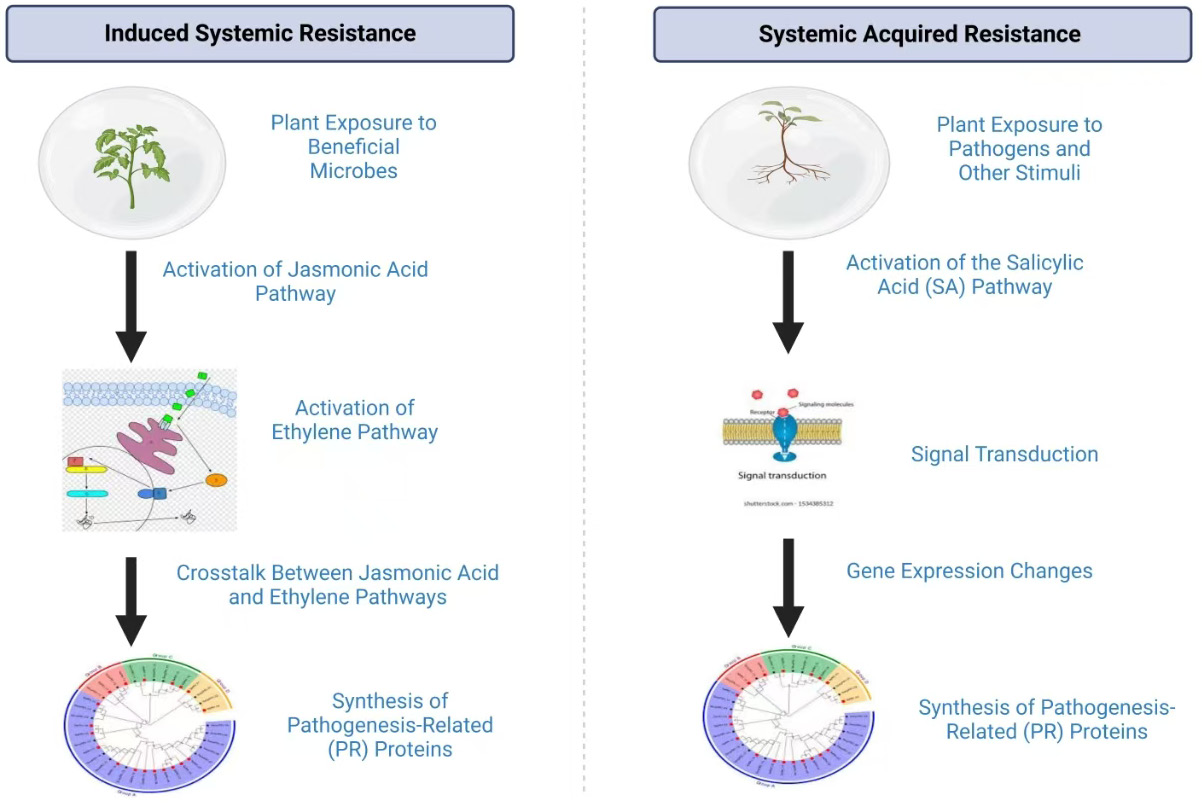
Comparative mechanism of induced systematic resistance and systematic acquired resistance in plants.
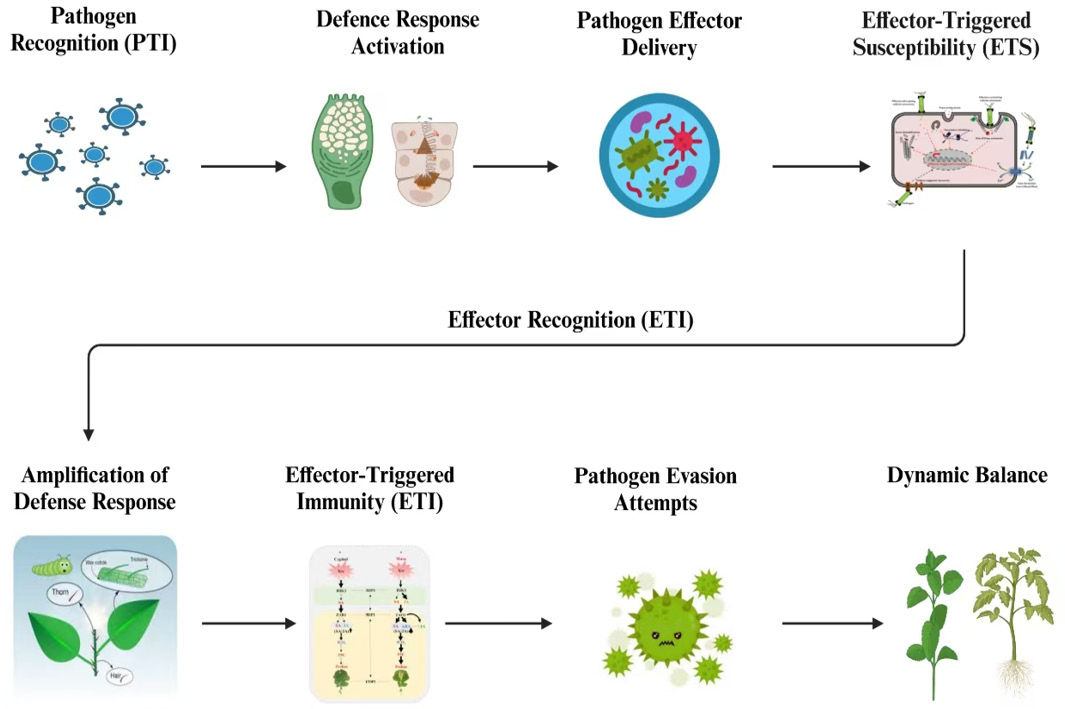
Interaction between pathogen recognitions and defense mechanisms in plants.
References
- Alonso-Martínez, D., Jiménez-Parra, B. and Cabeza-García, L., 2024. Theoretical framework to foster and assess sustainable agriculture practices: Drivers and key performance indicators. Environ. Sustain. Indicat., 23: 100434. https://doi.org/10.1016/j.indic.2024.100434[CrossRef]
- Amin, S.E., Qazi, Z.A., Karim, A., Masood, S., Soomro, M.B., Soomro, F., Bakhtawar, N., Anam, M., Gul, M., Ilyas, M.A., Yousaf, U., Riaz, T. and Haq, N., 2021. An insight on the importance of traceability and tracking in halal food industry in Pakistan. Pak. J. Soc. Sci., 18(5): 85-91.
- Amin, S.E., Qazi, Z.A., Karim, A., Masood, S., Soomro, M.B., Soomro, F., Bakhtawar, N., Anam, M., Gul, M., Ilyas, M.A., Yousaf, U., Riaz, T., Shayan, M. and Haq, N.U., 2021. Identification of lab grown meat and its nutritional impacts on human health. Vet. Res., 14(3): 34-39. Medwell Publ., https://www.researchgate.net/publication/368996336
- Ansari, M., Devi, B.M., Sarkar, A., Chattopadhyay, A., Satnami, L., Balu, P., Choudhary, M., Shahid, M.A. and Jailani, A.A.K., 2023. Microbial Exudates as Biostimulants: Role in Plant Growth Promotion and Stress Mitigation. J. Xenobiot., 13: 572–603. https://doi.org/10.3390/jox13040037[CrossRef]
- Aremu, A.O., Stirk, W.A., Kulkarni, M.G., Tarkowská, D., Turečková, V., and Gruz, J. 2014. Evidence of phyto-hormones and phenolic acids variability in gardenwaste-derived vermicompost leachate, a well-known plant growth stimulant. J. Plant Growth Regul., 75: 483–492. https://doi.org/10.1007/s10725-014-0011-0[CrossRef]
- Azubuike, C.C., Chikere, C.B. and Okpokwasili, G.C., 2016. Bioremediation techniques–classification based on site of application: Principles, advantages, limitations and prospects. World J. Microbiol. Biotechnol., 32: 180. https://doi.org/10.1007/s11274-016-2137-x[CrossRef]
- Bari, R. and Jones, J.D.G., 2009. Role of plant hormones in plant defense responses. Plant Mol. Biol., 69: 473–488. https://doi.org/10.1007/s11103-008-9435-0[CrossRef]
- Basu, S., Rabara, R.C. and Negi, S., 2018. AMF: The future prospect for sustainable agriculture. Physiol. Mol. Plant Pathol., 102: 36–45. https://doi.org/10.1016/j.pmpp.2017.11.007[CrossRef]
- Berruti, A., Lumini, E., Balestrini, R. and Bianciotto, V., 2016. Arbuscular mycorrhizal fungi as natural biofertilizers: Let’s benefit from past successes. Front. Microbiol., 6: 1559. https://doi.org/10.3389/fmicb.2015.01559[CrossRef]
- Besset-Manzoni, Y., Rieusset, L., Joly, P., Comte, G. and Prigent-Combaret, C., 2018. Exploiting rhizosphere microbial cooperation for developing sustainable agriculture strategies. Environ. Sci. Pollut. Res., 25(30): 29953–29970. https://doi.org/10.1007/s11356-017-1152-2[CrossRef]
- Bhatt, P., 2020. Smart bioremediation technologies: Microbial enzymes. Academic Press: Cambridge, MA, USA, 2020.
- Bhatt, P., Huang, Y., Rene, E.R., Kumar, A.J. and Chen, S., 2020. Mechanism of allethrin biodegradation by a newly isolated Sphingomonas trueperi strain CW3 from wastewater sludge. Bioresour. Technol., 305: 123074. https://doi.org/10.1016/j.biortech.2020.123074[CrossRef]
- Blyuss, K.B., Al-Basir, F., Tsygankova, V.A., Biliavska, L.O., Iutynska, G.O., and Kyrychko, S.N., 2020. Control of mosaic disease using microbial biostimulants: Insights from mathematical modeling. Ricerche di Matematica, pp. 1–19. https://doi.org/10.1007/s11587-020-00508-6[CrossRef]
- Çakmakçı, R., Mosber, G., Milton, A.H., Alatürk, F. and Ali, B., 2020. The effect of auxin and auxin-producing bacteria on the growth, essential oil yield, and composition in medicinal and aromatic plants. Curr. Microbiol., 77: 564–577. https://doi.org/10.1007/s00284-020-01917-4[CrossRef]
- Canellas, L.P., Olivares, F.L., Aguiar, N.O., Jones, D.L., Nebbioso, A. and Mazzei, P., 2015. Humic and fulvic acids as biostimulants in horticulture. Sci. Hortic., 19(6): 15–27. https://doi.org/10.1016/j.scienta.2015.09.013[CrossRef]
- Castiglione, A.M., Mannino, G., Contartese, V., Bertea, C.M. and Ertani, A., 2021. Microbial biostimulants as response to modern agriculture needs: Composition, role and application of these innovative products. Plants (Basel). 10(8): 1533. https://doi.org/10.3390/plants10081533[CrossRef]
- Cobo, F., Talavera, P. and Concha, Á., 2006. Diagnostic approaches for viruses and prions in stem cell banks, Virology, 347(1): 1–10. https://doi.org/10.1016/j.virol.2005.11.026[CrossRef]
- Colla, G., Rouphael, Y., Di-Mattia, E., El–Nakhel, C. and Cardarelli, M., 2015. Co–inoculation of Glomus intraradices and Trichoderma atroviride acts as a biostimulant to promote the growth, yield and nutrient uptake of vegetable crops. J. Sci. Food Agric., 95(8): 1706–1715. https://doi.org/10.1002/jsfa.6875[CrossRef]
- Craigie, J.S., 2011. Seaweed extract stimuli in plant science and agriculture. J. Appl. Phycol., 23: 371–393. https://doi.org/10.1007/s10811-010-9560-4[CrossRef]
- Dara, S.K., 2019. Improving strawberry yields with biostimulants: A 2018-2019 study. E-Journal of Entomology and Biologicals.
- Dimkic, I., Janakiev, T., Petrovic, M., Degrassi, G. and Fira, D., 2022. Plant-associated Bacillus and Pseudomonas antimicrobial activities in plant disease suppression via biological control mechanisms. A review. Physiol. Mol. Plant Pathol., 117: 101754. https://doi.org/10.1016/j.pmpp.2021.101754[CrossRef]
- Du, F.Y., Ju, G.L., Xiao, L., Zhou, Y.M. and Wu, X., 2020. Sesquiterpenes and cyclodepsipeptides from marine-derived fungus Trichoderma longibrachiatum and their antagonistic activities against soil-borne pathogens. Mar. Drugs, 18: 165. https://doi.org/10.3390/md18030165[CrossRef]
- El-Badry, M., Taha, R.M., El-Dougdoug, K.A. and Gamal-Eldin, H., 2006. Induction of systemic resistance in faba bean (Vicia faba L.) to bean yellow mosaic potyvirus (BYMV) via seed bacterization with plant growth promoting Rhizobacteria. J. Plant Dis. Prot., 113(6): 247–251. https://doi.org/10.1007/BF03356189[CrossRef]
- Estrada-Ortiz, E., Trejo-Téllez, L.I., Gómez-Merino, F.C., Núñez-Escobar, R. and Sandoval-Villa, M., 2013. The effects of phosphite on strawberry yield and fruit quality. J. Soil Sci. Plant Nutr., 13: 612–620. https://doi.org/10.4067/S0718-95162013005000049[CrossRef]
- Fatima, F., Ahmad, M.M., Verma, S.R. and Pathak, N., 2022. Relevance of phosphate solubilizing microbes in sustainable crop production: A review. Int. J. Environ. Sci. Technol., 19(9): 9283–9296. https://doi.org/10.1007/s13762-021-03425-9[CrossRef]
- Frederick, K., 2004. A brief history of sustainable agriculture, editor’s note by carolyn raffensperger and nancy myers. Networker, 9(2).
- Gaiero, J.R., McCall, C.A., Thompson, K.A., Day, N.J., Best, A.S. and Dunfield, K.E., 2013. Inside the root microbiome: Bacterial root endophytes and plant growth promotion. Am. J. Bot., 100(9): 1738–1750. https://doi.org/10.3732/ajb.1200572[CrossRef]
- Garg, S., Nain, P., Kumar, A., Joshi, S., Punetha, H., Sharma, P.K., Siddiqui, S., Alshaharni, M.O., Algopishi, U.B. and Mittal, A., 2024. Next generation plant biostimulants and genome sequencing strategies for sustainable agriculture development. Front. Microbiol., 15: 1439561. https://doi.org/10.3389/fmicb.2024.1439561[CrossRef]
- Ghasemi, P.A., Malekpoor, F., Salimi, A. and Golparvar, A., 2017. Exogenous application of chitosan on biochemical and physiological characteristics, phenolic content and antioxidant activity of two species of basil (Ocimum ciliatum and Ocimum basilicum) under reduced irrigation. Sci. Hortic., 217: 114–122. https://doi.org/10.1016/j.scienta.2017.01.031[CrossRef]
- González, A., Castro, J., Vera, J. and Moenne, A., 2012. Seaweed oligosaccharides stimulate plant growth by enhancing carbon and nitrogen assimilation, basal metabolism, and cell division. J. Plant Growth Regul., 32: 443–448. https://doi.org/10.1007/s00344-012-9309-1[CrossRef]
- Gorshkov, V. and Tsers, I., 2022. Plant susceptible responses: The underestimated side of plant-pathogen interactions. Biol. Rev. Camb. Philos. Soc., 97(1): 45-66. https://doi.org/10.1111/brv.12789[CrossRef]
- Gosling, P., Hodge, A., Goodlass, G. and Bending, G.D., 2006. Arbuscular mycorrhizal fungi and organic farming. Agric. Ecosyst. Environ., 113(1–4): 17–35. https://doi.org/10.1016/j.agee.2005.09.009[CrossRef]
- Haania, I., Nisar, K., Riaz, R., Murtaza, M.S., Shahbaz, M., Munir, T., Iqbal, D., Ahmad, M. and Riaz, T., 2024. A mini-review of medicinal uses and phytochemicals isolated from Himalayan plant Delphinium brunonianum royle. Int. J. Adv. Eng. Manage., 6(10): 57-516. https://doi.org/10.35629/5252-0610507516[CrossRef]
- Hamid, B., Zaman, M., Farooq, S., Fatima, S., Sayyed, R.Z., Baba, Z.A. and Suriani, N.L., 2021. Bacterial plant biostimulants: A sustainable way towards improving growth, productivity, and health of crops. Sustainability, 13(5): 2856. https://doi.org/10.3390/su13052856[CrossRef]
- Herrera, J.P., Rabezara, J.Y., Ravelomanantsoa, N.A.F., Metz, M., France, C., Owens, A., Pender, M., Nunn, C.L. and Kramer, R.A., 2021. Food insecurity related to agricultural practices and household characteristics in rural communities of northeast Madagascar. Fd. Secur., 13(6): 1393-1405. https://doi.org/10.1007/s12571-021-01179-3[CrossRef]
- Hönig, M., Roeber, V.M., Schmülling, T. and Cortleven, A., 2023. Chemical priming of plant defense responses to pathogen attacks. Front. Plant Sci., 14: 1146577. https://doi.org/10.3389/fpls.2023.1146577[CrossRef]
- Horn, I.R., van Rijn, M., Zwetsloot, T.J., Basmagi, S., Dirks-Mulder, A., van Leeuwen, W.B., Ravensberg, W.J. and Gravendeel, B., 2016. Development of a multiplex Q-PCR to detect Trichoderma harzianum Rifai strain T22 in plant roots. J. Microbiol. Methods, 121: 44-49. https://doi.org/10.1016/j.mimet.2015.12.014[CrossRef]
- Huang, Y., Zhan, H., Bhatt, P. and Chen, S., 2019. Paraquat degradation from contaminated environments: Current achievements and perspectives. Front. Microbiol., 10: 1754. https://doi.org/10.3389/fmicb.2019.01754[CrossRef]
- Huseynova, I., Sultanova, N., Mammadov, A., Suleymanov, S. and Aliyev, J.A., 2014. Biotic stress and crop improvement of crops in the era of climatic changes. New York, NY: Springer, pp. 91–120. https://doi.org/10.1007/978-1-4614-8824-8_4[CrossRef]
- Imran, A., Hakim, S., Tariq, M., Nawaz, M.S., Laraib, I., Gulzar, U., Hanif, M.K., Siddique, M.J., Hayat, M., Fraz, A. and Ahmad, M., 2021. Diazotrophs for lowering nitrogen pollution crises: Looking deep into the roots. Front. Microbiol., 12: 637815. https://doi.org/10.3389/fmicb.2021.637815[CrossRef]
- Ishaq, H., Nisar, K., Riaz, R., Murtaza, M.S., Shahbaz, M., Munir, T., Raza, A., Iqbal, D., Ahmad, M. and Riaz, T., 2024. Amini-review of medicinal uses and phytochemicals isolated from Himalayan plant Delphinium brunonianum royle. Int. J. Adv. Eng. Manage., 6(10): 507-516. https://doi.org/10.35629/5252-0610507516[CrossRef]
- Jiang, T. and Zhou, T., 2023. Unraveling the mechanisms of virus-induced symptom development in plants. Plants (Basel), 12(15): 2830. https://doi.org/10.3390/plants12152830[CrossRef]
- Kanwal, R., Hafeez-Ul-Haq, M., Waseem, A., Riaz, T., Rehman, Z.U., Fazal, A., Javed, J., Ali, M.A., Ashfaq, S., and Saleem, H., 2024. Fungitoxic properties of essential oils to treat tinea. In: (eds. M.A. Zafar, R.Z. Abbas, M. Imran, S. Tahir and W. Qamar), Complementary and alternative medicine: Essential oils. Unique Scientific Publishers. pp. 81-89. https://doi.org/10.47278/book.CAM/2024.192[CrossRef]
- Khaleeq, K., Akhundzada, K., Ehsan, Q., Behzad, M.A., Rathore, S.S., Samim, M. and Tamim, S.A., 2024. Optimization of crop establishment methods and phosphorus fertilizer levels on growth and economic efficiency of groundnut under semi-arid region of Afghanistan. J. Res. Appl. Sci. Biotechnol., 3(2): 54-58. https://doi.org/10.55544/jrasb.3.2.12[CrossRef]
- Khaleeq, K., Farkhari, Z., Amini, A.M., Ahmadi, A., Samim, M., Ashraf, M.A. and Frotan, S., 2024. Effects of nitrogen application on growth and yield of groundnut (Arachis hypogaea L.) in northeast agro-ecology of Afghanistan. J. Res. Appl. Sci. Biotechnol., 3(2): 9-12. https://doi.org/10.55544/jrasb.3.2.3[CrossRef]
- Khaleeq, K., Hemmat, N., Samim, M. and Ashraf, M.A., 2023. Effects of phosphorus fertilizer levels on growth, yield and economic efficiency of groundnut under semi-arid regions of Afghanistan. Int. J. Sci. Multidis. Res., 2(3): 207-214. https://doi.org/10.55927/ijsmr.v2i3.8386[CrossRef]
- Khalid, B., Javed, M.U., Riaz, T., Ashraf, M.A., Saeed, H.Z., Shaheen, M. and Asim, M., 2025. Refining plant-virus interactions: Deciphering host range evolution and viral emergence dynamics. Hosts Viruses, 12: 47-61. https://doi.org/10.17582/journal.hv/2025/12.47.61[Full text][CrossRef]
- Khan, W., Rayirath, U.P., Subramanian, S., Jithesh, M.N., Rayorath, P. and Hodges, D.M., 2009. Seaweed extracts as biostimulants of plant growth and development. J. Plant Growth Regul., 28: 386–399. https://doi.org/10.1007/s00344-009-9103-x[CrossRef]
- King Franklin, H., 2004. Farmers of forty centuries. Retrieved 20 September 2020.
- Kumar, V., Varma, A., Tuteja, N. and Kumar, M., 2016. Combinations of plant growth-promoting rhizobacteria (PGPR) for initiation of systemic resistance against tree diseases: A glimpse. In: (eds. D.K. Choudhary, A. Varma), Microbial-mediated induced systemic resistance in plants. Singapore: Springer Singapore. pp. 207–212. https://doi.org/10.1007/978-981-10-0388-2_14[CrossRef]
- Kumari, M., Swarupa, P., Kesari, K.K. and Kumar, A., 2022. Microbial inoculants as plant biostimulants: A review on risk status. Life (Basel), 13(1): 12. https://doi.org/10.3390/life13010012[CrossRef]
- Latif, M.F., Aleem, M.T., Bakhsh, M., Sohail, A., Riaz, T. and Bilal, A., 2019. Extraction and utilization of pomegranate seed oil in cookies to alleviate hyperlipidemia in rats. Int. J. Biol. Res., 2(1): 246-256.
- Latif, M.F., Naqvi, S.M.T., Shahzadi, N., Riaz, T. and Sohail, A., 2019. Effect of defatted wheat germ supplemented cookies on the protein quality parameters of rats. Nat. Sci., 17(8): 110-116. http://www.sciencepub.net/nature
- Li, B., Meng, X., Shan, L. and He, P., 2016. Transcriptional regulation of pattern-triggered immunity in plants. Cell Host Microbe., 19(5): 641-650. https://doi.org/10.1016/j.chom.2016.04.011[CrossRef]
- Li, W.Y., Liu, Y., Lin, Y.T., Liu, Y.C., Guo, K., Li, X.N., Luo, S.H. and Li, S.H., 2020. Antibacterial harziane diterpenoids from a fungal symbiont Trichoderma atroviride isolated from Colquhounia coccinea var. mollis. Phytochemistry, 170: 112198. https://doi.org/10.1016/j.phytochem.2019.112198[CrossRef]
- Lobato, M.C., Machinandiarena, M.F., Tambascio, C., Dosio, G.A.A., Caldiz, D.O., and Daleo, G.R. 2011. Effect of foliar applications of phosphite on post-harvest potato tubers. Eur. J. Plant Pathol., 130: 155–163. https://doi.org/10.1007/s10658-011-9741-2[CrossRef]
- Lombardi, N., Salzano, A.M., Troise, A.D., Scaloni, A., Vitaglione, P., Vinale, F., Marra, R., Caira, S., Lorito, M., and d’Errico, G. 2020. Effect of Trichoderma bioactive metabolite treatments on the production, quality, and protein profile of strawberry fruits. J. Agric. Food Chem., 68: 7246–7258. https://doi.org/10.1021/acs.jafc.0c01438[CrossRef]
- López-Bucio, J., Pelagio-Flores, R. and Herrera-Estrella, A., 2015. Trichoderma as biostimulant: Exploiting the multilevel properties of a plant beneficial fungus. Sci. Hortic., 196: 109–123.
- Luna, A.P., Morilla, G., Voinnet, O. and Bejarano, E.R., 2012. Functional analysis of gene silencing suppressors from Tomato yellow leaf curl disease viruses. Mol. Plant Microbe Interact., 25: 1294–1306. https://doi.org/10.1094/MPMI-04-12-0094-R[CrossRef]
- Luo, Y., Zhang, D.D., Dong, X.W., Zhao, P.B., Chen, L.L., and Song, X.Y. 2010. Antimicrobial peptaibols induce defense responses and systemic resistance in tobacco against tobacco mosaic virus. Fems Microbiol. Lett., 313: 120–126. https://doi.org/10.1111/j.1574-6968.2010.02135.x[CrossRef]
- Manzoor, E., Ghani, A., Khan, M.R., Sultana, M., Ishaque, A., Nasir, E., Latif, M.F., Riaz, T. and Sohail, A., 2019. Antioxidant potential of guava leaves extracts and their effects on hyperlipidemia. Ann. Plant Sci., 8(5): 3553-3562.
- Maurhofer, M., Reimmann, C., Schmidli-Sacherer, P., Heeb, S., Haas, D. and Défago, G., 1998. Salicylic acid biosynthetic genes expressed in Pseudomonas fluorescens strain p3 improve the induction of systemic resistance in tobacco against tobacco necrosis virus. Phytopathology, 88: 678–684. https://doi.org/10.1094/PHYTO.1998.88.7.678[CrossRef]
- McLaughlin, M.S., Roy, M., Abbasi, P.A., Carisse, O., Yurgel, S.N. and Ali, S., 2023. Why do we need alternative methods for fungal disease management in plants? Plants (Basel), 12(22): 3822. https://doi.org/10.3390/plants12223822[CrossRef]
- Mishra, S., Zhang, W., Lin, Z., Pang, S., Huang, Y., Bhatt, P. and Chen, S., 2020. Carbofuran toxicity and its microbial degradation in contaminated environments. Chemosphere, 259: 127419. https://doi.org/10.1016/j.chemosphere.2020.127419[CrossRef]
- Miyano, R., Matsuo, H., Mokudai, T., Noguchi, Y., Higo, M., Nonaka, K., Niwano, Y., Sunazuka, T., Shiomi, K., and Takahashi, Y. 2020. Trichothioneic acid, a new antioxidant compound produced by the fungal strain Trichoderma virens FKI-7573. J. Biosci. Bioeng., 129: 508–513. https://doi.org/10.1016/j.jbiosc.2019.11.007[CrossRef]
- Moor, U., Põldma, P., Tõnutare, T., Karp, K., Starast, M. and Vool, E., 2009. Effect of phosphite fertilization on growth, yield and fruit composition of strawberries. Sci. Hortic., 119: 264–269. https://doi.org/10.1016/j.scienta.2008.08.005[CrossRef]
- Mumford, R., Macarthur, R. and Boonham, N., 2016. The role and challenges of new diagnostic technology in plant biosecurity. Food Secur., 8: 103–109. https://doi.org/10.1007/s12571-015-0533-y[CrossRef]
- Munir, N., Hanif, M., Abideen, Z., Sohail, M., El-Keblawy, A., Radicetti, E., Mancinelli, R. and Haider, G., 2022. Mechanisms and strategies of plant microbiome interactions to mitigate abiotic stresses. Agronomy, 12(9): 2069. https://doi.org/10.3390/agronomy12092069[CrossRef]
- Nardi, S., Pizzeghello, D., Schiavon, M. and Ertani, A., 2016. Plant biostimulants: Physiological responses induced by protein hydrolyzed-based products and humic substances in plant metabolism. Sci. Agric., 73: 18–23. https://doi.org/10.1590/0103-9016-2015-0006[CrossRef]
- Negi, G., Gangola, S., Khati, P., Kumar, G., Srivastava, A. and Sharma, A., 2016. Differential expression and characterization of cypermethrindegrading potential proteins in Bacillus thuringiensis strain, SG4. 3 Biotech, 6: 225. https://doi.org/10.1007/s13205-016-0541-4[CrossRef]
- Nicaise, V., 2014. Crop immunity against viruses: outcomes and future challenges. Front. Plant Sci., 5: 660. https://doi.org/10.3389/fpls.2014.00660[CrossRef]
- Olivieri, F., Feldman, M., Machinandiarena, M., Lobato, M., Caldiz, D., and Daleo, G. 2012. Phosphite applications induce molecular modifications in potato tuber periderm and cortex that enhance resistance to pathogens. Crop Prot., 32: 1–6. https://doi.org/10.1016/j.cropro.2011.08.025[CrossRef]
- Patil, A.S., Patil, S.R. and Paikrao, H.M., 2016. Trichoderma secondary metabolites: Their biochemistry and possible role in disease managementMicrobial-mediated induced systemic resistance in plants. Singapore: Springer. pp. 69–102. https://doi.org/10.1007/978-981-10-0388-2_6[CrossRef]
- Pereira, C., Dias, M.I., Petropoulos, S.A., Plexida, S., Chrysargyris, A., and Tzortzakis, N. 2019. The effects of biostimulants, biofertilizers and water-stress on nutritional value and chemical composition of two spinach genotypes (Spinacia oleracea L.). Molecules, 24: 4494. https://doi.org/10.3390/molecules24244494[CrossRef]
- Petropoulos, S.A., Taofiq, O., Fernandes, Â., Tzortzakis, N., Ciric, A., and Sokovic, M. 2019. Bioactive properties of greenhouse-cultivated green beans (Phaseolus vulgaris L.) under biostimulants and water-stress effect. J. Sci. Food Agric., 99: 6049–6059. https://doi.org/10.1002/jsfa.9881[CrossRef]
- Pichyangkura, R. and Chadchawan, S., 2015. Biostimulant activity of chitosan in horticulture. Sci. Hortic., 196: 49–65. https://doi.org/10.1016/j.scienta.2015.09.031[CrossRef]
- Pradhan, A., Pahari, A., Mohapatra, S. and Mishra, B.B., 2017. Phosphate-solubilizing microorganisms in sustainable agriculture: Genetic mechanism and application. In: (eds. T. Adhya, B. Mishra, K. Annapurna, D. Verma and U. Kumar), advances in soil microbiology: Recent trends and future prospects. Soilmicrobe-Plant Interact., 2: 81–97. https://doi.org/10.1007/978-981-10-7380-9_5[CrossRef]
- Rajput, R.S., Ram, R.M., Vaishnav, A. and Singh, H.B., 2019. Microbe-based novel biostimulants for sustainable crop production. In: (eds. T. Satyanarayana, S. Das and B. Johri), microbial diversity in ecosystem sustainability and biotechnological applications. Soil Agroecosyst., 2: 109–144. https://doi.org/10.1007/978-981-13-8487-5_5[CrossRef]
- Raupach, G.S., Liu, L., Murphy, J.F., Tuzun, S. and Kloepper, J.W., 1996. Induced systemic resistance in cucumber and tomato against cucumber mosaic cucumo virus using plant growth-promoting rhizobacteria (PGPR). Plant Dis., 80: 891–894. https://doi.org/10.1094/PD-80-0891[CrossRef]
- Ray, S., Singh, P., Singh, J., Singh, S., Sarma, B.K. and Singh, H.B., 2023. Killed fungal pathogen triggers antifungal metabolites in Alcaligenes faecalis for plant defense. Physiol. Mol. Plant Pathol., 125: 101996. https://doi.org/10.1016/j.pmpp.2023.101996[CrossRef]
- Raza, M., Ashraf, M.A., Ateeq, M., Rashid, S., Riaz, T., Khalid, B., Saleem, M.A., Usman, H.M., Shafquat, I. and Sajid, M., 2024. Assessing the impact of environmental variables on fruit growth dynamics and developmental physiology. J. Surv. Fish. Sci., 11(4): 314-321.
- Raza, M., Hussain, Z., Abbas, F., Ashraf, M.A., Imene, H.H. and Riaz, T., 2025. Advanced strategies for detection and diagnosis of potato viruses: Harnessing molecular innovations and digital tools for precision agriculture. Hosts Viruses, 12: 39-46. https://doi.org/10.17582/journal.hv/2025/12.39.46[Full text][CrossRef]
- Rehan, M., Al-Turki, A., Abdelmageed, A.H.A., Abdelhameid, N.M., Omar, A.F., 2023. Performance of plant-growth-promoting rhizobacteria (PGPR) isolated from sandy soil on growth of tomato (Solanum lycopersicum L.). Plants (Basel), 12(8): 1588. https://doi.org/10.3390/plants12081588[CrossRef]
- Rickard, D.A., 2000. Review of phosphorus acid and its salts as fertilizer materials. J. Plant Nutr., 23: 161–180. https://doi.org/10.1080/01904160009382006[CrossRef]
- Ross, A.F., 1961. Systemic acquired resistance induced by localized virus infections in plants. Virology, 14: 340–358. https://doi.org/10.1016/0042-6822(61)90319-1[CrossRef]
- Rouphael, Y. and Colla, G., 2020. Biostimulants in agriculture. Front. Plant Sci., 11. https://doi.org/10.3389/fpls.2020.00040[CrossRef]
- Ruzzi, M. and Aroca, R., 2015. Plant growth-promoting rhizobacteria act as biostimulants in horticulture. Sci. Hortic., 196: 124–134. https://doi.org/10.1016/j.scienta.2015.08.042[CrossRef]
- Saleem, H., Naz, A., Sandhu, A.S., Fatima, M., Tahir, O., Zafar, M.J., Rusho, M.A., Iqbal, D., Riaz, T. and Kanwal, R., 2024. Pharmacological and therapeutic values of turmeric. In: (eds. A. Khan, M. Mohsin, A.M. Khan, and S. Aziz), Complementary and alternative medicine: Chinese/traditional medicine. Unique Scientific Publishers. pp. 77-84. https://doi.org/10.47278/book.CAM/2024.383[CrossRef]
- Samim, M., Ahmad, A., Afghan, A., Haqmal, M., Shekhawat, K., Rahimi, E. and Shams, S., 2023. Nitrogen and weed management effects on soybean (Glycine max L.) yield in Kandahar, Afghanistan. J. Agric. Ecol., 17: 103-108. https://doi.org/10.58628/JAE-2317-319[CrossRef]
- Sangiorgio, D., Cellini, A., Donati, I., Pastore, C., Onofrietti, C. and Spinelli, F., 2020. Facing climate change: Application of microbial biostimulants to mitigate stress in horticultural crops. Agronomy, 10(6): 794. https://doi.org/10.3390/agronomy10060794[CrossRef]
- Santini, G., Biondi, N., Rodolfi, L. and Tredici, M.R., 2021. Plant biostimulants from cyanobacteria: An emerging strategy to improve yields and sustainability in agriculture. Plants, 10(4): 643. https://doi.org/10.3390/plants10040643[CrossRef]
- Shah, A.A., Mahmood, M.A., Farooq, K., Qayyum, Z., Amjad, N., Nasib, M.U., Rizwan, B., Asif, H.S., Saeed, S., Riaz, T., Khan, M.M., Khan, A.S., Hamza, M., Aslam, M.A., Ijaz, R., Rafique, N., Niazi, M.K. and Zohra, B., 2021. Clinical practices of herbal antioxidant: A review. J. Food Technol., 19(3): 32-37.
- Shaheen, C., Ahmad, I.A., Aslam, R., Naz, S., Mushtaq, S., Ahmed, S., Nawaz, A., Saeed, S., Qadir, M.F., Ashraf, M.A., Ahamed, M.S., Iqbal, D., Ansar, S., Riaz, R., Abubakar, M. and Riaz, T., 2024. A review of therapeutic and medicinal uses of fenugreek (Trigonella foenum-graceum L.). J. Res. Appl. Sci. Biotechnol., 3(5): 39-50. https://doi.org/10.55544/jrasb.3.5.8[CrossRef]
- Shamikh, Y.I., El-Shamy, A.A., Gaber, Y., Abdelmohsen, U.R., Madkour, H.A., Horn, H., Hassan, H.M., Elmaidomy, A.H., Alkhalifah, D.H.M. and Hozzein, W.N., 2020. Actinomycetes from the Red Sea sponge Coscinodermamathewsi: Isolation, diversity, and potential for bioactive compounds discovery. Microorganisms, 8: 783. https://doi.org/10.3390/microorganisms8050783[CrossRef]
- Shi, Z.Z., Liu, X.H., Li, X.N. and Ji, N.Y., 2020. Antifungal and antimicroalgal trichothecene sesquiterpenes from the marine algicolous fungus Trichoderma brevicompactum A-DL-9-2. J. Agric. Food Chem., 68: 15440–15448. https://doi.org/10.1021/acs.jafc.0c05586[CrossRef]
- Singh, S.K., Pathak, R. and Choudhary, V., 2016. Plant growth-promoting rhizobacteria-mediated acquired systemic resistance in plants against pests and diseases microbial-mediated induced systemic resistance in plants. Singapore: Springer, pp. 125–134. https://doi.org/10.1007/978-981-10-0388-2_8[CrossRef]
- Solomon, K.R., Baker, D.B., Richards, R.P., Dixon, K.R., Klaine, S.J., La Point, T.W., Kendall, R.J., Weisskopf, C.P., Giddings, J.M. and Giesy, J.P., 1996. Ecological risk assessment of atrazine in North American surface waters. Environ. Toxicol. Chem. Int. J. Res., 15: 31–76. https://doi.org/10.1002/etc.5620150105[CrossRef]
- Staropoli, A., Iacomino, G., De Cicco, P., Woo, S.L., Di Costanzo, L. and Vinale, F., 2023. Induced secondary metabolites of the beneficial fungus Trichoderma harzianum M10 through OSMAC approach. Chem. Biol. Technol. Agric., 10: 1–11. https://doi.org/10.1186/s40538-023-00383-x[CrossRef]
- Tamandegani, P.R., Marik, T., Zafari, D., Balázs, D., Vágvölgyi, C., Szekeres, A. and Kredics, L., 2020. Changes in peptaibol production of Trichoderma species during in vitro antagonistic interactions with fungal plant pathogens. Biomolecules, 10: 730. https://doi.org/10.3390/biom10050730[CrossRef]
- Tambascio, C., Covacevich, F., Lobato, M.C., De-Lasa, C., Caldiz, D., and Dosio, G. 2014. The application of K phosphites to seed tubers enhanced emergence, early growth and mycorrhizal colonization in potato (Solanum tuberosum). Am. J. Plant Sci., 5: 132–137. https://doi.org/10.4236/ajps.2014.51017[CrossRef]
- Tollenaere, C., Lacombe, S., Wonni, I., Barro, M., Ndougonna, C., and Gnacko, F. 2017. Virus-bacteria rice co-infection in Africa: Field estimation, reciprocal effects, molecular mechanisms, and evolutionary implications. Front. Plant Sci., 8: 645. https://doi.org/10.3389/fpls.2017.00645[CrossRef]
- Tamburino, R., Docimo, T., Sannino, L., Gualtieri, L., Palomba, F., Valletta, A., Ruocco, M. and Scotti, N., 2023. Enzyme-based biostimulants influence physiological and biochemical responses of Lactuca sativa L. Biomolecules. 13(12): 1765. https://doi.org/10.3390/biom13121765[CrossRef]
- Tucci, M., Ruocco, M., De Masi, DePelma M. and Lorito, M., 2011. The beneficial effect of Trichoderma spp. on tomato is modulated by the plant genotype. Mol. Plant Pathol., 12: 341–354. https://doi.org/10.1111/j.1364-3703.2010.00674.x[CrossRef]
- Vandenkoornhuyse, P., Quaiser, A., Duhamel, M., LeVan, A. and Dufresne, A., 2015. The importance of the microbiome of the plant holobiont. New Phytol., 206: 1196–1206. https://doi.org/10.1111/nph.13312[CrossRef]
- Villegas, L.B., Martínez, M.A., Rodríguez, A. and Amoroso, M.J., 2014. Microbial consortia, a viable alternative for cleanup of contaminated soils. In: Bioremediation in Latin America; Springer: Cham, Switzerland, 2014: 135–148. https://doi.org/10.1007/978-3-319-05738-5_8[CrossRef]
- Vitti, A., Nuzzaci, M., Scopa, A., Tataranni, G., Remans, T., and Vangronsveld, J. 2013. Auxin and cytokinin metabolism and root morphological modifications in Arabidopsis thaliana seedlings infected with Cucumber mosaic virus (CMV) or exposed to cadmium. Int. J. Mol. Sci., 14: 6889–6902. https://doi.org/10.3390/ijms14046889[CrossRef]
- Vitti, A., Sofo, A., Scopa, A. and Nuzzaci, M., 2015. Sustainable agricultural practices in disease defense of traditional crops in Southern Italy: The case study of tomato cherry protected by Trichoderma harzianum T-22 against Cucumber mosaic virus (CMV) In the sustainability of agro-food and natural resource systems in the mediterranean basin. Cham: Springer, pp. 133–143. https://doi.org/10.1007/978-3-319-16357-4_9[CrossRef]
- Wilson, S.K., Pretorius, T. and Naidoo, S., 2023. Mechanisms of systemic resistance to pathogen infection in plants and their potential application in forestry. BMC Plant Biol., 23: 404. https://doi.org/10.1186/s12870-023-04391-9[CrossRef]
- Yakhin, O.I., Lubyanov, A.A., Yakhin, I.A. and Brown, P.H., 2017. Biostimulants in plant science: A global perspective. Front. Plant Sci., 7: 2049. https://doi.org/10.3389/fpls.2016.02049[CrossRef]
- Yamazaki, H., Takahashi, O., Kirikoshi, R., Yagi, A., Ogasawara, T., Bunya, Y., Rotinsulu, H., Uchida, R. and Namikoshi, M., 2020. Epipolythiodiketopiperazine and trichothecene derivatives from the NaI-containing fermentation of marine-derived Trichoderma cf. brevicompactum. J. Antibiot., 73: 559–567. https://doi.org/10.1038/s41429-020-0314-5[CrossRef]
- Ye, X., Yang, R., Riaz, T. and Chen, J., 2025. Stability and antioxidant function of Porphyra haitanensis proteins during simulated gastrointestinal digestion: Effects on stress resistance and lifespan extension in Caenorhabditis elegans. Int. J. Biol. Macromol., 293: 139291. https://doi.org/10.1016/j.ijbiomac.2024.139291[CrossRef]
- Zhang, H., Tan, S.N., Teo, C.H., Yew, Y.R., Ge, L., and Chen, X. 2015. Analysis of phyto-hormones in vermicompost using a novel combinative sample preparation strategy of ultrasound-assisted extraction and solid-phase extraction coupled with liquid chromatography-tandem mass spectrometry. Talanta, 139: 189–197. https://doi.org/10.1016/j.talanta.2015.02.052[CrossRef]
- Zhang, J.L., Tang, W.L., Huang, Q.R., Li, Y.Z., Wei, M.L., Jiang, L.L., Liu, C., Yu, X., Zhu, H.W., and Chen, G.Z. 2021. Trichoderma: A treasure house of structurally diverse secondary metabolites with medicinal importance. Front. Microb., 12: 723828. https://doi.org/10.3389/fmicb.2021.723828[CrossRef]
- Zhang, S., Sun, F., Liu, L., Bao, L., Fang, W., Yin, C. and Zhang, Y., 2020. Dragonfly associated Trichoderma harzianum QTYC77 is not only a potential biological control agent of Fusarium oxysporum f. sp. cucumerinum but also a source of new antibacterial agents. J. Agric. Food Chem., 68: 14161–14167. https://doi.org/10.1021/acs.jafc.0c05760[CrossRef]
- Zhang, W., Tang, X., Feng, X., Wang, E., Li, H., Shen, J. and Zhang, F., 2019. Management strategies to optimize soil phosphorus utilization and alleviate environmental risk in China. J. Environ. Qual., 48(5): 1167–1175. https://doi.org/10.2134/jeq2019.02.0054[CrossRef]
- Zhao, D., Zhao, H., Zhao, D., Zhu, X., Wang, Y., Duan, Y. and Chen, L., 2018. Isolation and identification of bacteria from rhizosphere soil and their effect on plant growth promotion and root-knot nematode disease. Biol. Contr., 119: 12–19. https://doi.org/10.1016/j.biocontrol.2018.01.004[CrossRef]
- Zulfiqar, F., Casadesús, A., Brockman, H. and Munné-Bosch, S., 2020. An overview of plant-based natural biostimulants for sustainable horticulture with a particular focus on Moringa leaf extracts. Plant Sci., 295: 110194. https://doi.org/10.1016/j.plantsci.2019.110194[CrossRef]
Cited by 1 article
In journals published by ResearchersLinks.
Services
Article usage statistics
Loading…