
Petroleum bioremediation is internationally recognized as a cost-effective and ecologically sustainable solution. The aim of this study is isolating and identifying the PPFM bacterium from oil contaminated soil. So, this bacterium was isolated from soil samples collected from Rumaila oil field in Basra, southern Iraq, using a mineral salt medium (MSM) complemented with 1% methanol as the only carbon and energy source. Genetic identification of the promising bacterium was performed using the 16S rDNA gene and identified as Methylorubrum pseudosasae AAZ2 (OR226418.1). MxaF gene that encodes for the methanol dehydrogenase enzyme was also detected, confirming the identification of PPFM. Growth was achieved in MSM medium supplemented with 1% crude oil as a carbon source, recording highest optical density (OD600) of 0.7 after 5 days of incubation in a shaking incubator at 120 rpm and 30 °C. Gas chromatography (GC) analysis showed high rates of aliphatic hydrocarbons (n-alkane) degradation after incubation in the MSM medium with 1% (w/v) crude oil at 65.45% and 74.6% after 5 and 10 days of incubations, respectively. It also showed high rates of poly aromatic hydrocarbons (PAH) degradation of 94.77% and 98.11% after 5 and 10 days of incubation. The Methylorubrum pseudosasae AAZ2 strain has proven to be highly efficient in remediating crude oil, and hence can be exploited to remediate contaminated environments.
Research Article · Volume 9, Issue 1, 25 February 2025 · Open Access
Isolation and Identification of Pink-Pigmented Facultative Methylotrophic Bacteria (PPFM) from the North Rumaila Field, Iraq
·
Affiliations & Notes ⌄
- 1Department of Biological Development, Marine Science Center, University of Basrah, Basra, Iraq. *Correspondence | Anwar A. Maki, Department of Biological Development, Marine Science Center, University of Basrah, Basra, Iraq
- 2Email: anwar.maki@uobasrah.edu.iq
Article Info ⌄
- Journal:
- Novel Research in Microbiology Journal
- Published:
- 25 February 2025
From the article
- The findings of this study suggest that Methylorubrum pseudosasae can use methanol as its sole carbon source.
- Additionally, this bacterium had shown the ability to grow when both energy and carbon sources are available only from crude oil.
- Methylorubrum pseudosasae is capable of withstanding harsh and contaminated environments with high concentrations of oil compounds.
- Under in vitro conditions, this strain demonstrated the effectiveness of crude oil removal, indicating that this bacterium could potentially be used to decontaminated polluted environments directly on-site.
Selected from the article's own text.
Abstract
Introduction
One type of the genus Methylobacterium is the pink-pigmented facultative methylotroph (PPFM). This bacterium can exploit one carbon compounds such as methanol, formate, formaldehyde, and other multi-carbon substrates as the main energy source. Methylobacterium belongs to phylum Pseudomonadota; class Alphaproteobacteria; order Hyphomicrobiales; Family Methylobacteriaceae ; . PPFM usually exist in several environments, including soil, water, and plants. Nonpathogenic bacteria for human and animals. In general, these methylotrophic bacteria are rod- shaped, Gram negative, and obligate aerobes .
Some methylobacterial species support plant health via stimulating growth and preventing the pathogens infection . Moreover, PPFM may assist in mitigating the global warming through consuming greenhouse gases as CO2 and methane, and metabolizing methanol from plant leaves, contributing to the carbon cycle . These bacteria possess the ability to oxidize methanol via the enzyme methanol dehydrogenase (MDH) that is encoded by the MxaF gene and acts as a marker for identifying this group of bacteria .
In accordance with the presence of Methylobacterium sp. in contaminated hydrocarbons soil reported in several previous studies ; , many recent studies have exploited this character and used the bacteria in several applications such as crude oil biodegradation and environmental bioremediation , 2024). Since the introduction of oil and its byproducts, pollutants from these substances have created serious environmental concern ; .Accidental crude oil spills formed during exploration, transportation, and use has extremely adverse effects on the ecosystem, contaminating water and soil . Oil in soil leads to severe pollution characterized by low mineral nutrients levels and high concentration of hydrocarbon compounds . The primary aim of oil spill cleanup is to reduce or eliminate the toxic and/or the hazardous components, allowing the flora and the fauna such as single-cell organisms to enter the food chain. Bioremediation has emerged as one of the utmost hopeful treatment solutions for secondary oil removal .
Bacteria can use organic pollutants as the sole carbon source and break them down in the soil. Biological degradation of crude oil in the soil is supported by several enzymes such as monooxygenase, dioxygenase, cytochrome P450, peroxidase, hydroxylase, and dehydrogenase . The only decisive factor for deterioration is the survival of bacteria in environments heavily contaminated with oil. Due to the ability of bacteria to decompose various hydrocarbon components, they are considered the best active decomposers of crude oil . Many petroleum hydrocarbons released into the environment are broken down or metabolized by naturally occurring microorganisms in the environment . Native bacterial isolates for bioremediation of contaminants are preferred because they are more resistant to local environmental and geographic conditions and pose fewer routine obstacles to approved implementation . In this study, our objective was to isolate and identify the PPFM and evaluate their ability to biodegrade petroleum compounds.
Materials and Methods
Study area and sampling
Ten Soil samples were collected from the North Rumaila oil field at the coordinates of 30°34ʹ11.6ʺ N latitude and 47°18ʹ22.7ʺ E longitude. Rumaila field is the largest oil field in Iraq, located 50 km west of Basra and covering an area of 1,800 km2. It was discovered in 1953 and became operational in 1972. With oil reserves of about 17 billion barrels, it ranks sixth in the world. Soil samples were taken and collected using a sterilized trowel from the well cellar at 5–10 cm depth, put in polythene bags, and transferred to the lab, where they were stored at 4 °C until further analysis. The crude oil used in the study was obtained from Al-Shaeba refinery, Basra, Iraq.
Isolation and characterization of PPFM
PPFM bacteria were isolated as described by Maki et al. (2023), i.e., 1.0 g of soil sample was added to a mineral salt medium (MSM) with 1% methanol and incubated for 7 days at 30 °C and 180 rpm. A 50-µL portion was spread onto MSM agar plates and incubated for 5 days at 30 °C. All the colonies that were grown were examined and purified for cell morphology, Gram staining, and genetic identification.
Identification of methylotrophic using 16S rDNA
The genomic DNA of the methylotrophic bacteria was isolated using the G-spin™ Genomic DNA Extraction Kit (iNtRON, Korea, Cat. No. 17121) following the manufacturer’s protocol. Genetic amplification of the 16S rDNA gene was carried out on a thermocycler (Eppendorf, Germany) using the universal primer sets 27F AGAGTTTGATCCTGGCTCAG and 1492R GGTTACCTTGTTACGACTT. The 25 µL PCR reaction mix, which included a master mix of 12.5 µL of GoTaq Green master mix (Promega, USA), 2 µL of bacterial DNA, 2 µL of each primer, and 6.5 µL of nuclease-free water, was subjected to initial denaturation at 95 °C for 5 min, followed by 35 cycles of 95 °C for 30 s, 55 °C for 30 s, 72 °C for 1 min, and a final extension at 72 °C for 5 min for 16S rDNA amplification genes .
Following DNA amplification, Sanger sequencing was performed. The sequences were aligned and compared to 16S rDNA sequences of bacterial isolates available in the National Centre for Biotechnology Information (NCBI) nucleotide database (http://www.ncbi.nih.gov/blast). The isolated bacteria were identified based on the maximum percentage similarity of the sequences.
Detection of MxaF gene
Specific primers for the MxaF gene were used to detect the methylotrophic bacteria. The primer sequences were F1003degen 5ʹ- GGNCANACYTGGGGNTGGT-3ʹ and R1561degen 5ʹ-GGGARCCNTTYATGCTNCCN-3ʹ .
Pink pigment facultative methylotrophic (PPFM) bacterial growth assessment
One ml of each bacterial culture suspension was added to a conical flask containing 100 ml of MSM with 1 g of crude oil (3 replicates). All flasks were incubated for 10 d at 30 °C and 120 rpm in addition to bacteria free flask as controls . After incubation, the optical density (600 nm) of the growth was measured daily using spectrophotometer, Beckman coulte DU530, UK.
Oil biodegradation and gas chromatography (GC) analysis
Two conical flasks each containing 100 ml of MSM with 1% (v/v) crude oil were inoculated with 1 ml of bacterial suspnsion in the logarithmic phase simultaneously with a bacteria-free flask as a control. All flasks were incubated at 30 °C and 120 rpm. After 5 and 10 days of incubation, the remaining crude oil was extracted and separated into aliphatic and aromatic fractions. A liquid-liquid extraction technique was used to extract the excess crude oil. Gas chromatography (GC) analysis was used to detect the aromatic and aliphatic fractions. GC reports were used to calculate the percentage (%) of oil biodegradation.
Results
Pink pigment facultative methylotrophic (PPFM) bacterial isolation and characterization
The pink pigment facultative methylotrophic (PPFM) bacteria were isolated (11 isolate) according to their ability to grow on a MSM medium containing methanol as the sole source of carbon and nitrogen, in addition to their ability to form pink colonies (Figure 1). Under the light microscope, examination revealed that the cells were rod-shaped and Gram-negative.
Identification of the selected methylotrophic bacterium via 16S rDNA amplification using polymerase chain reaction (PCR)
Sequence analysis of the 16S rDNA gene was conducted based on sequence homology with those in the NCBI. The molecular identity of the selected bacterial isolate was Methylorubrum pseudosasae (NCBI Gene Bank accession no. OR226418.1) with 98% similarity.
MxaF gene detection
The MxaF gene was amplified with specific primers for this selected bacterium to further confirm that the bacterium belonged to the methylotrophic group. The gene was amplified and detected as a single band of 550 bp (Figure 2).
Pink pigment facultative methylotrophic bacterium growth assessment
A significant increase in bacterial cell density was detected (using spectrophotometer at OD 600) accompanied by a decrease in several components of the spent crude oil after 10 d of incubation on a medium containing crude oil as shown Figure 3. The optical density reached 0.7 after 5 d and dropped to 0.2 after 10 d of incubation.
Biodegradation and gas chromatography (GC) analysis of n-alkane
Gas Chromatography (GC) analysis of saturated crude oil revealed numerous peaks above the hump, representing the n-alkane hydrocarbon. The crude oil sample studied as control had the saturated fraction at C10 to C40 (Figure 4a). The degradation of aliphatic compounds by M. pseudosasae strain AAZ2 was 65.45% after ٥ d of incubation (Figure 4b). Meanwhile, after ١٠ d of incubation, the residual content of used crude oil decreased to 74.6% (Figure 4c), with complete disappearance of the short chains C10 and C11 compared to the control.
Biodegradation and GC analysis of poly aromatic compounds (PAH)
The biodegradation percentage of PAH compounds by M. pseudosasae strain AAZ2 detected by GC was 94.77% after 5 d of incubation compared to the control (Figure 5a). The degradation rates of fluorene, pyrene, benzo (A) anthrac, and benzo (B) fluora were 92.16%, 95.05%, 95.82%, and 91.68%, respectively. Meanwhile, benzo (K) fluora and benzo (A) pyrene yielded 88.6% and 89.79%, respectively. Interestingly, the 2-methylnaphtha, acenaphthene, acenaphthyene phenathrene, anthracene, chrysene, and indeno (1, 2, 3-CD) fractions were completely (100%) degraded (Figure 5b).
After 10 d of incubation, the residual spent crude oil content decreased to 98.11% (Figure 5c), almost completely disappearing compared to the control. The degradation rates of phenanthrene, fluorene, pyrene, benzo (B) fluorine, and benzo (K) fluorene were 95.26%, 90.92%, 94.74%, 97.74%, and 96.84%, respectively. In contrast, the fractions of 2-methylnaphtha, acenaphthene, acenaphthylene, anthracene, chrysene, benzo (A) pyrene, benzo (A) anthra, and indene (1, 2, 3-CD) were completely (100%) degraded.
Discussion
The isolated bacterial strain was putatively identified as a methylotrophic bacterium due to its growth on the medium containing methanol as the sole carbon source, which was confirmed by PCR analysis. Methanol is known to be a key substrate for many methylotrophic microbial species . Pairs of universal primers for the16S rDNA gene were used to identify the PPFM bacterium. Molecular identification was performed using PCR, which is currently used as a sensitive and specific method for characterization .
Using the 16S rRNA gene sequence, the isolate was identified as Methylorubrum pseudosasae. Known to be facultatively methylotrophic, this bacterium is capable of utilizing methanol, dichloromethane, and methylamine as substrates . Specific primers were used to amplify the methanol dehydrogenase gene MxaF obtained from M. pseudosasae DNA, highlighting the importance of C1 metabolism (Figure 2). In a previous study reported by Kumar et al. (2019), PPFM were tested for the presence of the MxaF gene, confirming this gene as a key functional marker for identifying these bacterial types. The methanol dehydrogenase enzyme is essential for oxidizing methanol to formaldehyde and among several types of methanol dehydrogenases found in the methylotrophic bacteria, MxaF has been shown to perform optimally . However, there are no previous reports of isolating these bacteria from soil contaminated with petroleum hydrocarbons.
In the current study, it was found that M. pseudosasae had the ability to grow in a medium containing crude oil as the sole source of energy and carbon. Meanwhile several previous studies revealed that various species of the Methylorubrum genus were isolated from different parts of plants, including soybean, palm oil, banana ; ; , Cucurbita pepo, potato, rice, and ; ; .
On other hand few studies have isolated PPFM belonging to the Methylorubrum genus from oil-contaminated soils. Godini et al. (2018) study succeeded in isolating Methylobacterium persicinum from oil-polluted sites, where they managed to grow this strain in MSM medium containing 2% crude oil as the sole carbon source. Similarly, Rojas-Gätjens et al. (2022) isolated Methylorubrum rhodesianum as a methylotrophic bacterium from the oil well and exploited it to consume methanol as the sole carbon source. Meanwhile, Harumain et al. (2023) study isolated Methylobacterium sp from the sludge of an oil refinery and Maki et al. (2023) isolated Methylorubrum extorquens from oil-contaminated soil in the Al-Zubair oilfield, Iraq, which was able to grow on MSM medium supplemented with 1% crude oil.
Additionally, the current study showed that M. pseudosasae had the ability to degrade aliphatic hydrocarbons with short chains that were completely removed from the broth medium. Biodegradation targets alkanes with a lower carbon chain (C10), as they are more susceptible to microbial attack and are therefore easier to degrade . This aligns with the previous study reported by Salam et al. (2015), who revealed that used motor oil was degraded by Methylobacterium mesophilicum by 61.2% after 12 d and 89.5% after 21 d of incubation. Similarly, Harumain et al. (2023) demonstrated that after 15 d of incubation, every aliphatic n-alkane was efficiently degraded by the ZASH strain of Methylobacterium sp. According to a previous study conducted in Iraq by Maki et al. (2024), M. extorquens isolated from petroleum soil degraded 61.14% of the n-alkane after one week of incubation.
The current decomposition of PAH compounds produced largely successful gas chromatographic analysis results, in agreement with the previous findings reported by other researchers, Salam et al. (2015) identified how M. mesophilicum could be utilized to fractionally decompose PAH, particularly anthracene and pyrene. Meanwhile, Ventorino et al. (2014), Maki et al. (2023) illustrated the mode of PAH compounds decomposition using Methylobacterium populi and M. extorquens, respectively.
Conclusions and Recommendations
The findings of this study suggest that Methylorubrum pseudosasae can use methanol as its sole carbon source. Additionally, this bacterium had shown the ability to grow when both energy and carbon sources are available only from crude oil. Methylorubrum pseudosasae is capable of withstanding harsh and contaminated environments with high concentrations of oil compounds. Under in vitro conditions, this strain demonstrated the effectiveness of crude oil removal, indicating that this bacterium could potentially be used to decontaminated polluted environments directly on-site. we recommended that isolated new species of methylotrophic bacteria which have the ability to degrade hydrocarbons. Also, can use a new method of gene editing such as CRISPR Cas 9 to enhance the degradation of this bacterium.
Acknowledgments
The authors acknowledge the Marine Science Centre, University of Basrah, Iraq for assistance during the period of the study and Mr. Hassan A.N. Alshawi, Research and Quality Control, South Oil Basra, Iraq for his assistance in conducting the GC analysis.
Novelty Statement
On the basis of our acknowledge this is the first time isolating Methylorubrum pseudosasae from oil contaminated soil and employment in vitro to biodegradation of crude oil.
Author’s Contribution
Anwar A. Maki and Asaad M.R. Al-Taee: Conceptualization, data curation, investigation, supervision, validation, roles/writing original draft, writing review and editing.
Funding source
The present study did not receive any financial support.
Ethical approval
Non-applicable.
Conflict of interests
The authors have declared no conflict of interests.
Figures
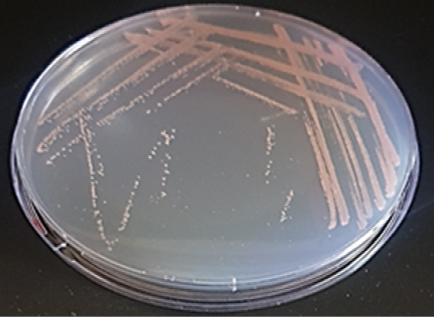
Pink pigment facultative methylotrophic bacteria on MSM medium supplemented with 1% methanol as a sole source of carbon.
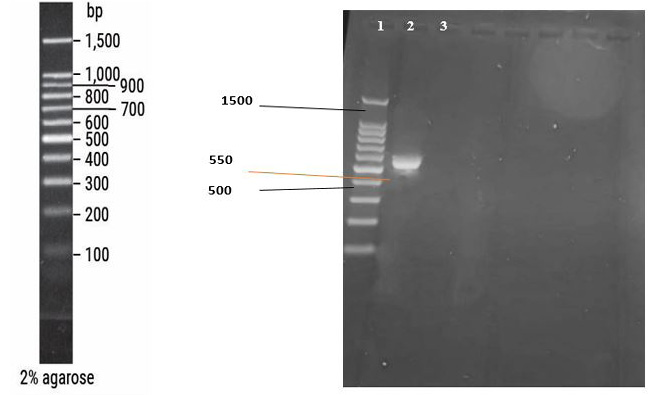
Agarose gel electrophoresis of the amplified MxaF gene at 60 volts for 60 min. Lane 1: 100 bp ladder; Lane 2: band of the MxaF gene in the selected Methylorubrum pseudosasae (detected as a single band of 550 bp); Lane 3: negative control.
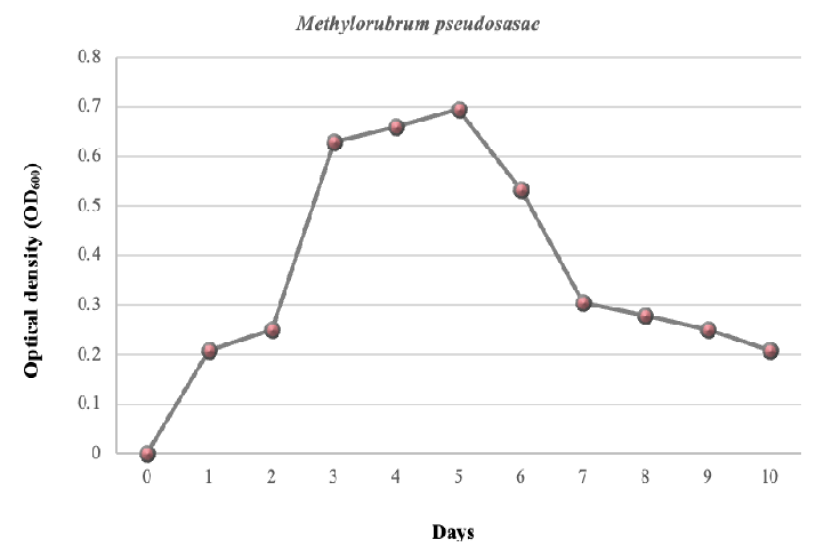
Growth of Methylorubrum pseudosasae strain AAZ2 in MSM medium supplemented with 1 g of crude oil after 10 d of incubation.
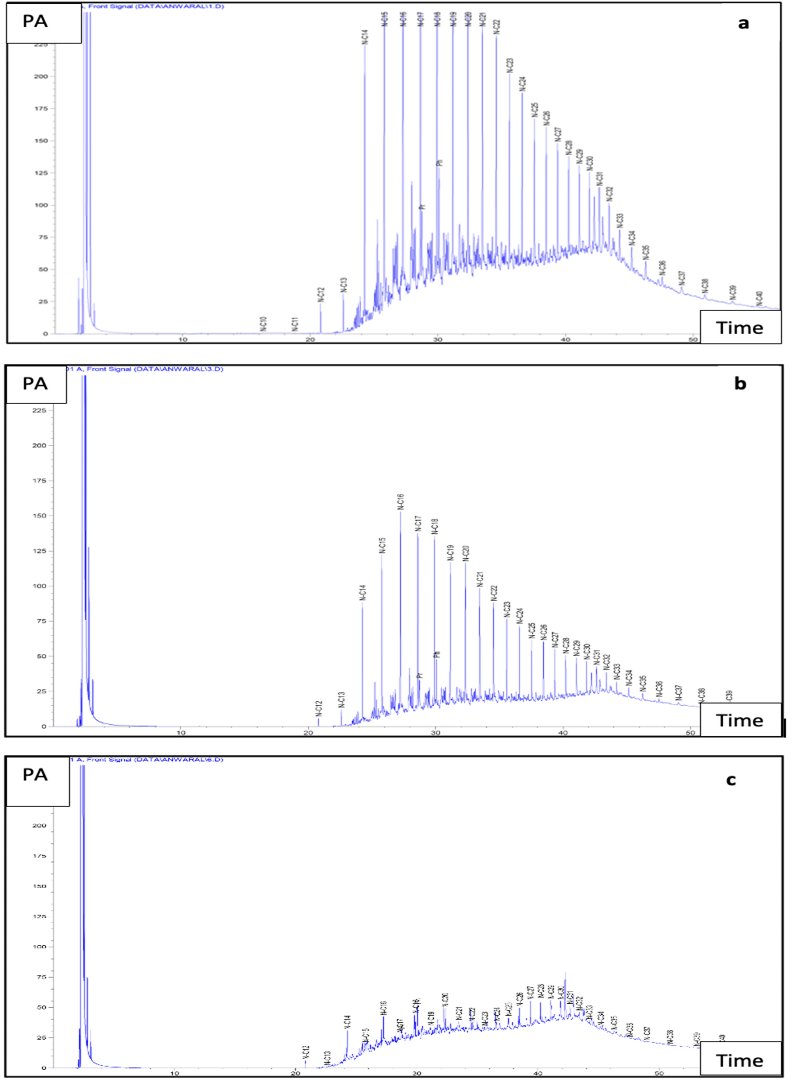
Gas chromatography (GC) of n-alkane for crude oil as a control (a) and of n-alkane obtained from culture fluids of Methylorubrum pseudosasae strain AAZ2 after 5 d (b), and 10 d (c) of incubation at 30 °C.
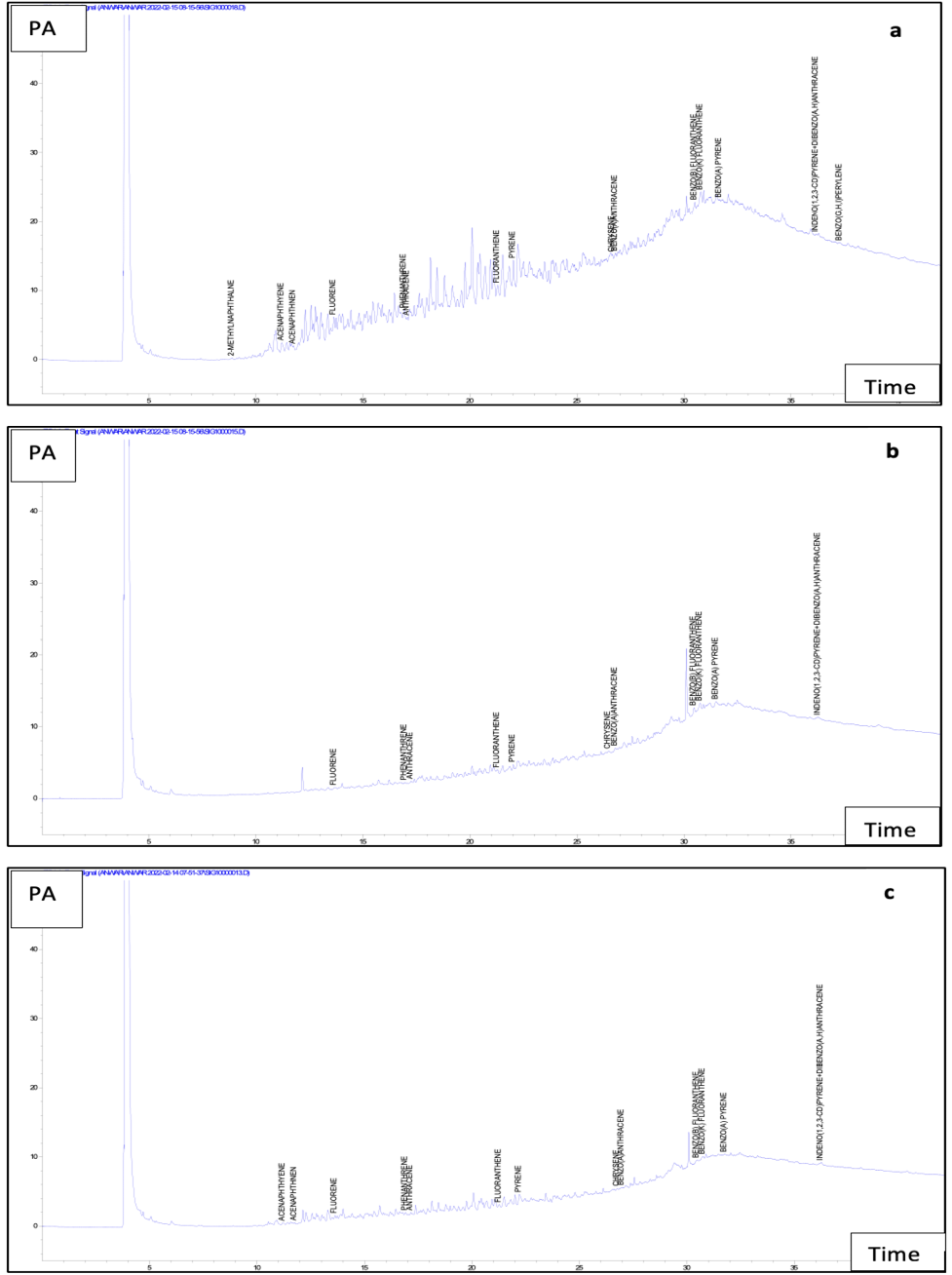
Gas chromatography of PAH compounds for crude oil as a control (a) and PAH compound from the culture fluids of the Methylorubrum pseudosasae strain AAZ2 after 5 d (b) and 10 d (c) of incubation at 30 °C.
References
- Aladwan, M.M., Dababneh, B.F., Farah, H.S. and Abusalah, M.A., 2024. Identification of oil degrading bacteria from oil-contaminated soil in the northeastern part of Jordan. J. Ecol. Eng., 25(5): 306-320. https://doi.org/10.12911/22998993/186502[CrossRef]
- Alessa, O., Ogura, Y., Fujitani, Y., Takami, H., Hayashi, T., Sahin, N. and Tani, A., 2021. Comprehensive comparative genomics and phenotyping of Methylobacterium species. Front. Microbiol., 12: 740610. https://doi.org/10.3389/fmicb.2021.740610[CrossRef]
- Ashok, G., Nambirajan, G., Baskaran, K., Viswanathan, C. and Alexander, X., 2020. Phylogenetic diversity of epiphytic pink-pigmented methylotrophic bacteria and role in alleviation of abiotic stress in plants. Plant Microb. Sustain. Agric., pp. 245-262. https://doi.org/10.1007/978-3-030-38453-1_8[CrossRef]
- Christian, N., Espino Basurto, B., Toussaint, A., Xu, X., Ainsworth, E.A., Busby, P.E. and Heath, K.D., 2021. Elevated carbon dioxide reduces a common soybean leaf endophyte. Glob. Change Biol., 27(17): 4154-4168. https://doi.org/10.1111/gcb.15716[CrossRef]
- Das, N., Das, A., Das, S., Bhatawadekar, V., Pandey, P., Choure, K., Damare, S. and Pandey, P., 2023. Petroleum hydrocarbon catabolic pathways as targets for metabolic engineering strategies for enhanced bioremediation of crude-oil-contaminated environments. Fermentation, 9(2): 196. https://doi.org/10.3390/fermentation9020196[CrossRef]
- Eevers, N., Van Hamme, J.D., Bottos, E.M., Weyens, N. and Vangronsveld, J., 2015. Draft genome sequence of Methylobacterium radiotolerans, a DDE-degrading and plant growth-promoting strain isolated from Cucurbita pepo. Genome Announc., 3(3): e00488-15. https://doi.org/10.1128/genomeA.00488-15[CrossRef]
- Godini, K., Samarghandi, M.R., Zafari, D., Rahmani, A.R., Afkhami, A. and Arabestani, M.R., 2018. Isolation and identification of new strains of crude oil degrading bacteria from Kharg Island, Iran. Pet. Sci. Technol., 36(12): 869-874. https://doi.org/10.1080/10916466.2018.1447961[CrossRef]
- Green, P.N. and Ardley, J.K., 2018. Review of the genus Methylobacterium and closely related organisms: A proposal that some Methylobacterium species be reclassified into a new genus, Methylorubrum gen. nov. Int. J. Syst. Evol. Microbiol., 68(9): 2727-2748. https://doi.org/10.1099/ijsem.0.002856[CrossRef]
- Grossi, C.E.M., Fantino, E., Serral, F., Zawoznik, M.S., Fernandez Do Porto, D.A. and Ulloa, R.M., 2020. Methylobacterium sp. 2A is a plant growth-promoting rhizobacteria that has the potential to improve potato crop yield under adverse conditions. Front. Plant Sci., 11: 71. https://doi.org/10.3389/fpls.2020.00071[CrossRef]
- Harumain, Z.A.S., Mohamad, M.A.N., Nordin, N.F.H. and Abd-Shukor, M.Y., 2023. Biodegradation of Petroleum Sludge by Methylobacterium sp. Strain ZASH. Trop. Life Sci. Res., 34(2): 197-222. https://doi.org/10.21315/tlsr2023.34.2.10[CrossRef]
- Hentati, D., Cheffi, M., Hadrich, F., Makhloufi, N., Rabanal, F., Manresa, A., Sayadi, S. and Chamkha, M., 2021. Investigation of halotolerant marine Staphylococcus sp. CO100, as a promising hydrocarbon-degrading and biosurfactant-producing bacterium, under saline conditions. J. Env. Man., 277: 111480. https://doi.org/10.1016/j.jenvman.2020.111480[CrossRef]
- Ishak, F.N., Rahim, A.A., Mean, L.J., Ayub, N.A.M. and Fazilah, N.N., 2021. Preliminary analysis of endophytic plant growth promoting (pgp) Methylobacterium sp. isolated from palm oil (Elaeis guineensis) leaves. IOP Con. Ser. Ear. Env. Sci., 765 (1): 012071. https://doi.org/10.1088/1755-1315/765/1/012071[CrossRef]
- Kolb, S., 2009. Aerobic methanol-oxidizing bacteria in soil. FEMS Microbiol. Lett., 300(1): 1-10. https://doi.org/10.1111/j.1574-6968.2009.01681.x[CrossRef]
- Kumar, M., Kour, D., Yadav, A.N., Saxena, R., Rai, P.K., Jyoti, A. and Tomar, R.S., 2019. Biodiversity of methylotrophic microbial communities and their potential role in mitigation of abiotic stresses in plants. Biologia, 74: 287-308. https://doi.org/10.2478/s11756-019-00190-6[CrossRef]
- Lai, K., Nguyen, N.T., Miwa, H., Yasuda, M., Nguyen, H.H. and Okazaki, S., 2020. Diversity of Methylobacterium spp. in the rice of the Vietnamese Mekong Delta. Microb. Envir., 35(1): ME19111. https://doi.org/10.1264/jsme2.ME19111[CrossRef]
- Liu, Y., Wan, Y.Y., Wang, C., Ma, Z., Liu, X. and Li, S., 2020. Biodegradation of n-alkanes in crude oil by three identified bacterial strains. Fuel. 275: 117897. https://doi.org/10.1016/j.fuel.2020.117897[CrossRef]
- Macey, M.C., Pratscher, J., Crombie, A.T. and Murrell, J.C., 2020. Impact of plants on the diversity and activity of methylotrophs in soil. Microbiome, 8(31). https://doi.org/10.1186/s40168-020-00801-4[CrossRef]
- Maki, A.A., Al-Taee, A.M. and Atwan, Z.W., 2023. Measuring the degradation of aromatic compounds using Methylorubrum extorquens isolated from oil-contaminated soils in southern Iraq. Mesopot. J. Mar. Sci., 38(1): 9-20. https://doi.org/10.58629/mjms.v38i1.323[CrossRef]
- Maki, A.A., Al-Taee, A.M. and Atwan, Z.W., 2024. Molecular identification of Methylorubrum extorquens using PCR-amplified Mxaf gene fragments as a molecular marker. Baghdad Sci. J., 21(1): 0019-0019. https://doi.org/10.21123/bsj.2023.7700[CrossRef]
- Mondal, P., Ghosh, D., Seth, M. and Mukhopadhyay, S.K., 2024. Bioprospects of pink pigmented facultative methylotrophs (PPFMs). Arab Gulf J. Sci. Res., 42(4): 1849-1863. https://doi.org/10.1108/AGJSR-03-2023-0127[CrossRef]
- Muliadi, F.N.A., Halmi, M.I.E., Wahid, S.B.A., Gani, S.S.A., Zaidan, U.H., Mahmud, K. and Abd Shukor, M.Y., 2020. Biostimulation of microbial communities from Malaysian agricultural soil for detoxification of metanil yellow dye; a response surface methodological approach. Sustainability, 13(1): 138. https://doi.org/10.3390/su13010138[CrossRef]
- Palberg, D., Kisiała, A., Jorge, G.L. and Emery, R.N., 2022. A survey of Methylobacterium species and strains reveals widespread production and varying profiles of cytokinin phytohormones. BMC Microbiol., 22(1): 49. https://doi.org/10.1186/s12866-022-02454-9[CrossRef]
- Rahayu, Y.S., Yuliani, Y. and Trimulyono, G., 2019. Isolation and identification of hydrocarbon degradation bacteria and phosphate solubilizing bacteria in oil contaminated soil in Bojonegoro, East Java, Indonesia. Indones. J. Sci. Technol., 4(1): 134-147. https://doi.org/10.17509/ijost.v4i1.14923[CrossRef]
- Rojas-Gätjens, D., Fuentes-Schweizer, P., Rojas-Jiménez, K., Pérez-Pantoja, D., Avendaño, R., Alpízar, R., Coronado-Ruíz, C. and Chavarría, M., 2022. Methylotrophs and hydrocarbon-degrading bacteria are key players in the microbial community of an abandoned century-old oil exploration well. Microb. Ecol., 83(1): 83-99. https://doi.org/10.1007/s00248-021-01748-1[CrossRef]
- Salam, L.B., Obayori, O.S. and Raji, S., 2015. Biodegradation of used engine oil by a methylotrophic bacterium, Methylobacterium mesophilicum isolated from tropical hydrocarbon-contaminated soil. Petrol. Sci. Technol., 33(2): 186-195. https://doi.org/10.1080/10916466.2014.961610[CrossRef]
- Sayed, K., Baloo, L. and Sharma, N.K., 2021. Bioremediation of total petroleum hydrocarbons (TPH) by bioaugmentation and biostimulation in water with floating oil spill containment booms as bioreactor basin. Int. J. Environ. Res. Publ. Health, 18(5): 2226. https://doi.org/10.3390/ijerph18052226[CrossRef]
- Senthilkumar, M., Pushpakanth, P., Arul Jose, P., Krishnamoorthy, R. and Anandham, R., 2021. Diversity and functional characterization of endophytic Methylobacterium isolated from banana cultivars of South India and its impact on early growth of tissue culture banana plantlets. J. Appl. Microbiol., 131(5): 2448-2465. https://doi.org/10.1111/jam.15112[CrossRef]
- Someya, N., Kubota, M., Unno, Y. and Morohoshi, T., 2021. Distribution of pink-pigmented facultative methylotrophs isolated from the leaves of potato grown in different regions of Japan. Jpn. Agric. Res. Quart., 55(4): 341-345. https://doi.org/10.6090/jarq.55.341[CrossRef]
- Srivastva, N., Vishwakarma, P., Bhardwaj, Y., Singh, A., Manjunath, K. and Dubey, S.K., 2017. Kinetic and molecular analyses reveal isoprene degradation potential of Methylobacterium sp. Bioresour. Technol., 242: 87-91. https://doi.org/10.1016/j.biortech.2017.02.002[CrossRef]
- Sui, X., Wang, X., Li, Y. and Ji, H., 2021. Remediation of petroleum-contaminated soils with microbial and microbial combined methods: Advances, mechanisms, and challenges. Sustainability, 13(16): 9267. https://doi.org/10.3390/su13169267[CrossRef]
- Valdivia-Anistro, J., Cruz-Córdova, A., Souza, V. and Rosas-Pérez, I., 2022. Diversity of cultivated methylotrophs from the extremely oligotrophic system in the Cuatro Cienegas Basin, Mexico: An unexplored ecological guild. J. Microbiol. Exp., 10(6): 208-214. https://doi.org/10.15406/jmen.2022.10.00375[CrossRef]
- Ventorino, V., Sannino, F., Piccolo, A., Cafaro, V., Carotenuto, R. and Pepe, O., 2014. Methylobacterium populi VP2: Plant growth‐promoting bacterium isolated from a highly polluted environment for polycyclic aromatic hydrocarbon (PAH) biodegradation. Sci. World J., 37: 931793. https://doi.org/10.1155/2014/931793[CrossRef]
- Wu, B., Xiu, J., Yu, L., Huang, L., Yi, L. and Ma, Y., 2023. Degradation of crude oil in a co-culture system of Bacillus subtilis and Pseudomonas aeruginosa. Front. microbiol., 14: 1132831. https://doi.org/10.3389/fmicb.2023.1132831[CrossRef]
- Yang, J., Zhang, C.T., Yuan, X.J., Zhang, M., Mo, X.H., Tan, L.L., Zhu, L.P., Chen, W.J., Yao, M.D. and Hu, B., 2018. Metabolic engineering of Methylobacterium extorquens AM1 for the production of butadiene precursor. Microb. Cell Fact., 17(1): 194. https://doi.org/10.1186/s12934-018-1042-4[CrossRef]
- Zargar, A.N., Lymperatou, A., Skiadas, I., Kumar, M. and Srivastava, P., 2022. Structural and functional characterization of a novel biosurfactant from Bacillus sp. IITD106. J. Hazard. Mater., 423: 127201. https://doi.org/10.1016/j.jhazmat.2021.127201[CrossRef]
- Žvirgždas, J., Paškevičius, A., Petrovas, S., Galginienė, I. and Iljasevičius, K., 2023. Isolation, selection, and use of oil-degrading microorganisms for biological treatment of contaminated soil. Pol. J. Environ. Stud., 32(3): 2455-2464. https://doi.org/10.15244/pjoes/160198[CrossRef]
Services
Article usage statistics
Loading…