Research Article · Volume 14, Issue 4, 31 August 2026 · Open Access
Impacts of Majaheem and Sofor Camel Breeds, Month, Parity, and Calves’ Sex on Colostrum/Milk Immunoglobulins Secretion Dynamics Postpartum
·
Affiliations & Notes ⌄
1Department of Animal and Fish Production, College of Agriculture and Food Sciences, King Faisal University, P.O. Box 402, Al-Ahsa 31982, Kingdom of Saudi Arabia. *Correspondence | Abd El-Nasser Ahmed Mohammed, Department of Animal and Fish Production, College of Agriculture and Food Sciences, King Faisal University, P.O. Box 402, Al-Ahsa 31982, Kingdom of Saudi Arabia
The impacts of Majaheem and Sofor camel breeds, month, parity, and calves’ sex on colostrum and transitional milk immunoglobulins secretion dynamics across four days postpartum are presented in Figures 3 and 4 and Table 1.
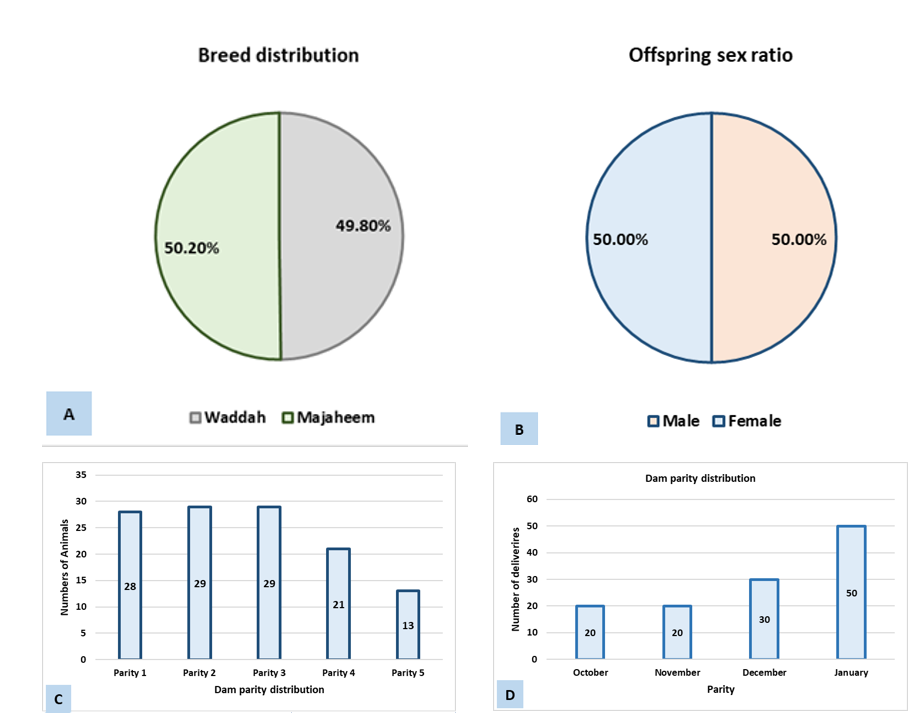
Furthermore, because total delivery numbers are lower in October (20) compared to January (50), there may be less competition for high-quality forage and resources, leading to better nutritional status in the she-camels and, consequently, higher immunoglobulin concentrations in their colostrum/milk.
This study demonstrates that colostral/milk immunoglobulins (Igs) concentrations in Majaheem and Sofor camels are significantly influenced by a complex interplay of physiological and environmental factors.
Furthermore, the significant impact of parity indicates that multiparous camels produce more immunologically robust colostrum compared to primiparous ones, likely due to a more developed immune memory.
Selected from the article's own text.
Abstract
Camel calves are born with essentially zero antibodies in their bloodstream to fight off infections because the epitheliochorial structure of the camel’s placenta prevents transfer of immunoglobulins from the mother to the fetus during pregnancy. This study is designed to evaluate the concentrations of immunoglobulins (Igs) in colostrum/milk of she-camels across the four days postpartum according to Majaheem and Sofor breeds, months of deliveries, parity and sex of calves. Colostral/milk samples were collected from 120 she-camels (61 Majaheem and 59 Sofor) across days 1, 2, 3 and 4 postpartum. The colostral/milk samples of she-camels underwent refractometer immunoglobulins assessment directly after milking. The colostral/milk immunoglobulins values were classified according to Majaheem and Sofor breeds, months of deliveries, parity and sex of calves. The results indicated that Majaheem breed exhibited higher immunoglobulins values of colostral/milk samples compared to Sofor ones across days 1, 2, 3 and 4 postpartum. Deliveries occurred in October gave higher immunoglobulins values of colostral/milk samples compared to other months. The higher parity the higher immunoglobulins values. In addition, the male calves gave higher (P > 0.05) immunoglobulins values if compared to female calves. In conclusion, Majaheem camel breed, month of parturition and parity prioritize colostral/milk immunological quality compared to Sofor breed and other variables.
The dromedary camel (Camelus dromedarius) is a cornerstone of livestock production in arid regions, specifically in the Arabian Peninsula, where it has evolved unique physiological mechanisms to thrive under extreme environmental stress , b, c). Among the various camel breeds, the Majaheem and the Sofor represent two of the most significant genetic lineages in Saudi Arabia ; .
The Majaheem camel is a prestigious and culturally significant breed deeply rooted in Saudi Arabian heritage, originally popularized by tribes like the Al-Dawasir and Al Murrah in the Najd and Dawaser Valley regions . These camels are physically distinguished by their large stature, expansive feet, and a signature black coat that can range from deep brown to a solid dark hue . While their historical role centered on desert transport, they have evolved into a vital pillar of the modern livestock economy due to their high value for meat and milk production, supported by a well-developed udder . Biologically, the Majaheem is a marvel of adaptation, possessing specialized physiological traits that allow it to withstand the extreme temperatures and limited resources of harsh arid environments . This breed remains a living testament to the kingdom’s enduring traditions in camel husbandry and continues to play a central role in both the culture and economy of Saudi Arabia.
The Sofor camel is a prominent Saudi Arabian breed, historically associated with the central and northeastern regions of the Kingdom, where it is highly esteemed for its specific aesthetic and productive qualities . Physically, Sofor camels are recognized by their distinct light-colored or yellowish-brown coats, which distinguish them from the darker Majaheem breed ; 2025). While they share the remarkable physiological resilience of other Saudi camel breeds, allowing them to withstand the high temperatures and dry conditions of regions like Al-Ahsa, the Sofor is particularly valued in local livestock economies for its balanced utility in both milk production and meat quality .
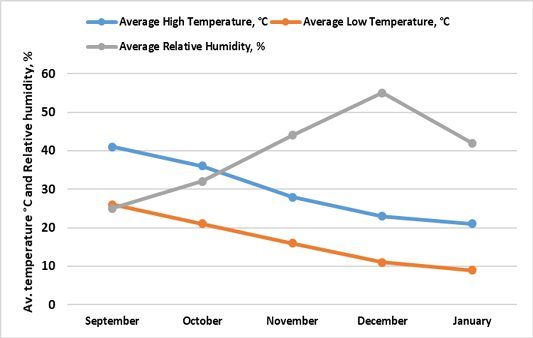
The environmental context of the Al-Ahsa region provides a unique landscape for studying these dynamics . While camels are adapted to heat, extreme fluctuations in the Temperature-Humidity Index (THI) can stress the blood metabolic system . Previous observations suggest a climate effect for biological performances of livestock animals . In Al-Ahsa, October typically offers a window characterized by moderate temperatures (average high of 36°C) and stable humidity (32%), which may support higher immunoglobulin concentrations compared to the more challenging summer or winter months . Despite Majaheem and Sofor cultural and economic importance, breed-specific differences in their metabolic and immunological profiles during the periparturient period remain insufficiently explored.
This study is designed to evaluate the concentrations of immunoglobulins (Igs) in colostrum/milk of Majaheem and Sofor she-camels across the four days postpartum. The data were classified according to the effects of Majaheem and Sofor camel breeds, month of parturition, parity, and calf sex on postpartum colostrum/milk immunoglobulin secretion dynamics. Therefore, the study presents the relationship between environmental factors and the colostrum/milk immunoglobulins of Majaheem and Sofor camels during the peak delivery season in Al-Ahsa.
MATERIALS AND METHODS
Experimental design and ethical approval
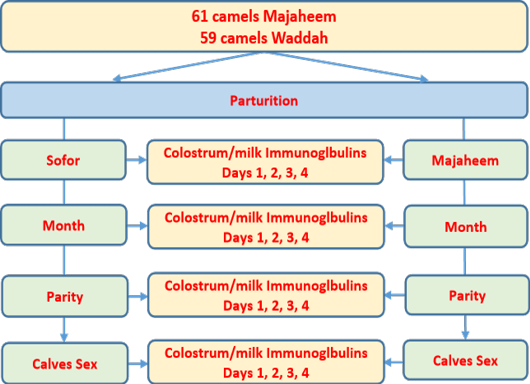
The current study aimed to investigate the changes in immunoglobulins values across Majaheem and Waddah camel breeds, months of deliveries, parities and calves’ sex (Figure 1).
One hundred and twenty Majaheem and Waddah she-camels of 1-5 lactations were raised during the experimental period under extensive grazing management system in addition to berseem hay. The environmental conditions during experimental period were an average high temperature of 27.0 ± 6.68°C, average low temperature of 14.25 ± 7.02°C, and a relative humidity of 43.25 ± 09.42%. The study protocol was approved by the King Faisal University ethical committee [KFU-REC-2026-FEB-EA256]. The colostrum/milk samples of 61 Majaheem and 59 Waddah she-camels were collected from October 2025 to January 2026 and were analyzed in the department of animal and fish production, college of Agriculture and Food Sciences, University of King Faisal.
Average environmental temperature and humidity conditions
Al-Ahsa region followed its typical hot desert climate pattern, characterized by extreme summer heat and low humidity, with mild, slightly more humid winters in 2025 till January 2026. Figure 2 showing the average monthly data for Al-Ahsa (Al-Hofuf region) based on the observations.
Colostrum/milk collection
Camel colostral/milk samples of Majaheem and Waddah she-camels were collected after parturition, before suckling of calves for days 1, 2, 3 and 4 days. Colostral/milk was collected using a sterile hand-milking technique into pre-labeled, plastic containers. The recorded labeled data on plastic containers were breed (Majaheem vs. Waddah), month (October, November, December and January), parity (parity1 to parity5), and calves’ sex (male and female). The she-camels were calmly restrained to ensure the safety of the handlers. Pre-milking hygiene procedure involved washing the udder and teats with warm water and drying them with a fresh towel. The first few colostral/milk drops were discarded and colostral/milk samples (50 ml) were collected from the first milking postpartum and subsequently for days 2, 3 and 4 days. The collected colostral/milk samples were monitored immediately for determination of refractometer immunoglobulins (Igs) values. Thereafter, the colostrum are labeled, sealed, and freezed to preserve their quality for further analyses.
Immunoglobulins analysis of colostram/milk
The digital Brix refractometer was used to measure immunoglobulins values in colostrum and milk samples after immediate collection (SOONDA Official Store, China). The refractometer was cleaned and calibrated to 0.0% Brix using distilled or deionized water. Colostrum samples were thoroughly mixed before 150 microliter aliquot was applied to the prism via a disposable pipette. To ensure accuracy, the cover was closed to eliminate air bubbles, and a 15–30 second temperature equilibration period was observed before recording the digital Brix value. Between each measurement, the prism and cover were cleaned with distilled water and dried using clean cloth/tissue between each sample to avoid cross-contamination.
Data statistical analysis
The immunoglobulins (Brix refractometer) values for colostral/milk samples at day 1, day 2, day 3, and day 4 postpartum of Majaheem and Waddah she-camels were compared (SPSS version 27.0). The data were subjected to statistical analysis of ANOVA repeated measures for breed (Majaheem vs. Waddah), month (October, November, December and January), parity (parity1 to parity5), and calves’ sex (male and female) using the General Linear Model (SPSS version 27.0). Comparison between the groups were considered statistically significant at p < 0.05.
RESULTS
Variables distribution throughout the study
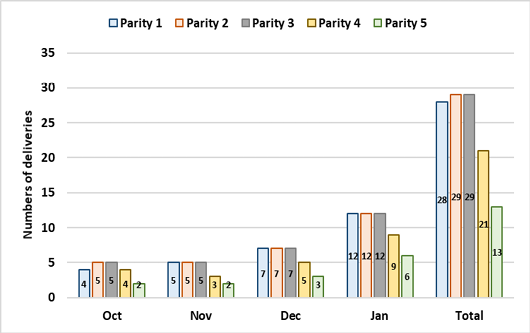
The impacts of Majaheem and Sofor camel breeds, month of parturition, parity, and calves’ sex on immunoglobulins secretion dynamics postpartum in colostrum/milk are presented in Figures 3 and 4 and Table 1. There is a significant upward trend in deliveries as winter progresses, peaking with 50 births in January (Figure 3). This confirms that the majority of newborns are arriving during the coolest part of the year in Al-Ahsa. The herd maintains an almost perfect balance between the Majaheem (61) and Sofor (59) breeds, as well as an exact 50/50 split between male and female offspring (60 each). The parity chart shows a healthy herd structure, with the majority of dams in their prime (parity 2 and 3). However, the 28 first-time mothers (parity 1) represent a critical group that requires the most attention for colostrum management, especially during the January peak (Figure 4).
The most prominent finding is the highly significant effect of days postpartum (P < 0.000) on the measured immunoglobulins levels. Regardless of breed, gender, or month, there is a consistent and sharp linear decline from day 1 to day 4. At day1, the immunoglobulins values are at their maximum ranging from 24.04 to 28.65 versus values at day 4, which reach their minimum ranging from 8.56 to 11.55 (Table 1).
The month of parturition exerted a highly significant impact (P < 0.000) on the immunoglobulins concentrations. Colostrum/milk samples measured in October started with significantly higher immunoglobulins levels (28.650 on day 1) compared to all other months. From November to January months, these months showed lower Igs levels (24.50–25.90 on day 1) and were statistically similar to one another (P > 0.05) but significantly lower than October Igs levels. These trends for months’ effect on Igs levels occurred throughout the four-day period (day 1, 2, 3 and 4) of colostrum/milk samples (Table 1).
Table 1: Effects of breed, month, calves’ sex, and parity on immunoglobulins secretions dynamics across four days postpartum.
Factor
Level
Time
SEM
P value
Day1
Day2
Day3
Day4
Br.
T.
Br. × T.
Breed
Majaheem
25.770ᵃ
20.820ᵇ
15.803ᶜ
9.590ᵈ
0.445
0.406
0.000
0.550
Sofor
25.564ᵃ
20.283ᵇ
15.068ᶜ
9.098ᵈ
0.453
Month
OCTᴬ
28.650ᵃ
23.400ᵇ
18.250ᶜ
11.550ᵈ
0.732
M.
T.
M. × T.
NOVᴮ
25.900ᵃ
20.950ᵇ
15.300ᶜ
9.400ᵈ
0.732
0.000
0.000
0.270
DECᴮ
24.528ᵃ
19.300ᵇ
14.345ᶜ
8.993ᵈ
0.608
JANᴮ
25.059ᵃ
20.000ᵇ
15.020ᶜ
8.667ᵈ
0.458
Calves’ sex
Female
25.393ᵃ
20.164ᵇ
15.311ᶜ
9.377ᵈ
0.446
C.
T.
C. × T.
Male
25.954ᵃ
20.961ᵇ
15.576ᶜ
9.319ᵈ
0.453
0.509
0.000
0.175
Parity
Parity1ᴮ
24.048ᵃ
19.476ᵇ
14.524ᶜ
8.571ᵈ
0.743
P.
T.
P. × T.
Parity2ᴬᴮ
24.546ᵃ
19.954ᵇ
15.071ᶜ
8.564ᵈ
0.643
0.046
0.000
0.225
Parity3ᴬ
25.385ᵃ
20.308ᵇ
14.923ᶜ
8.615ᵈ
0.944
Parity4ᴮ
26.172ᵃ
20.586ᵇ
15.724ᶜ
9.862ᵈ
0.632
Parity5ᴬᴮ
27.552ᵃ
22.000ᵇ
16.414ᶜ
10.483ᵈ
0.632
a–d; values with small superscripts within the same row differ significantly at P < 0.05; A,B ; levels with capital superscripts within the same column differ significantly at P < 0.05; OCT October; NOV November; DEC December; JAN January; Br: Breed; T: time; M: month; C: Calves’s sex; P: parity.
Parity significantly (P = 0.046) influenced the Igs levels. There is a significant gradual increase of Igs values from parity 1 to parity 5. The fifth parity yielded the highest Igs values throughout the four-day period. This suggests a physiological peak in Igs production or quality during the third lactation season (Table 1).
The data presented in Table 1 suggests that the Igs profile being measured is relatively stable across Majaheem and Sofor camel breeds. There was no significant difference between the Majaheem (25.77) and Sofor (25.56) camel breeds on day 1, and they followed identical patterns through day 4. Although males showed slightly higher numerical values on day 1 (25.95 vs 25.39), the difference was not statistically significant. There is no significant interaction of breed (P = 0.55), gender (P = 0.175), month (P = 0.27), with time (P = 0.225).
DISCUSSION
The impacts of Majaheem and Sofor camel breeds, month, parity, and calves’ sex on colostrum and transitional milk immunoglobulins secretion dynamics across four days postpartum are presented in Figures 3 and 4 and Table 1. The findings of this study provide compelling evidence that colostrum/milk immunoglobulins secretion dynamics across four days postpartum were influenced by camel breed and environmental factors. While our previous study focused only on immunoglobulin secretion dynamics in colostrum and milk of Majaheem and Waddah camel breeds (20 records) , the current study extends the analysis (120 records) to investigate the effects of camel breed (Majaheem and Sofor) and environmental factors on postpartum immunoglobulin secretion dynamics. Therefore, this section discusses the differences that occur in immunoglobulins secretion dynamics across four days postpartum due to camel breeds, month, parity, and calves’ sex and how these insights refine our current understanding of immunoglobulins secretion dynamics postpartum and addresses the practical applications for these results.
The impact of breed on immunoglobulins secretion in camel colostrum is a critical factor in determining the success of passive immunity transfer (Table 1). While both the Majaheem and Sofor are well-adapted to the Al-Ahsa environment, genetic variations can influence the volume and concentration of antibodies delivered to the newborn. Research suggests that breed-specific physiological traits can lead to significant differences in colostrum quality . The camel breed, known for its high milk-producing capacity and well-developed udder, demonstrated a high capacity for high milk yield and milk flow parameters . The Majaheem large body mass and metabolic efficiency might allow for a greater transfer of serum immunoglobulins into the mammary gland during the final stages of pregnancy. In contrast, the Sofor camel breed had lower serum total protein compared to Majaheem ones , which might result in lower immunoglobulins in colostrum. While they are resilient in arid climates, some studies indicate that breeds optimized for balanced meat and milk production may have slightly more diluted antibody concentrations compared to specialized dairy-type breeds .
The month of parturition presented a defining role in the immunological quality of camel colostrum, primarily by dictating the environmental conditions under which the she-camel’s body prepares for lactation (Figure 2). The seasonal effects of parturition on colostral composition and immunity have been confirmed in several studies of other species ; , b, c). Based on the environmental data for Al-Ahsa and the delivery trends of the herd, the higher immunoglobulin levels observed in October compared to other months can be attributed to several biological and environmental factors. October in Al-Ahsa presents a unique climate that supports peak immune function in the Majaheem and Waddah she-camels. With an average of high 36.0°C and lows 21.0°C, camels are often within their thermoneutral zone during October. This allows the dam to prioritize the metabolic cost for colostrogenesis and colostrum quality rather than diverting energy to thermoregulation. In addition, the relatively dry and stable air of October (32% humidity) reduces the early challenge to the maternal immune system, ensuring that the antibodies concentrated in the colostrum are available for the calf rather than being depleted by maternal subclinical infections. Furthermore, because total delivery numbers are lower in October (20) compared to January (50), there may be less competition for high-quality forage and resources, leading to better nutritional status in the she-camels and, consequently, higher immunoglobulin concentrations in their colostrum/milk. Conversely, the peak delivery period in January (50 deliveries in the study) presents a more challenging environment for immunoglobulin secretion. While January temperatures are mild (average high 21°C), the rise in humidity (reaching 42–55%) increases the effective thermal load on the animal. Stress-induced cortisol spikes in the dam can interfere with the efficient transport of immunoglobulins into the colostrum.
The effect of camel maternal parity is a primary determinant of colostrum quality and the subsequent success of passive immunity transfer in camel calves (Figure 3-4 and Table 1) as indicated in other species ; . In our study of 120 deliveries, they were distributed across parities 1 to 5 and showed significant implications for the resulting colostral immunoglobulin values (Figure 3). Data from the herd indicates that nearly 75.0% of the animals are in parity 2 or higher, with a substantial core in parity 3 (29 animals out of 120).
Older dams have been exposed to a wider variety of environmental pathogens over their lifespan. This cumulative exposure allows their immune systems to produce a broader and more concentrated spectrum of specific immunoglobulins in their colostrum ; . Parity 3 and 4 dams typically have better-developed mammary systems. This increased vascularization and tissue volume allow for more efficient transport of IgG from the blood into the colostrum during the final weeks of pregnancy . While older dams generally produce higher volumes of colostrum, the total mass of immunoglobulins secreted is significantly higher than that of primiparous (first-time) mothers .
The influence of male calf’s sex on the slight higher concentration of immunoglobulins (Igs) in colostrum is indicated in Table 1. In the study, the perfectly balanced sex ratio of 60 males and 60 females provides an ideal data set to examine whether the dam’s body responds differently to the sex of the offspring it is preparing to nourish. The biological theories suggest that dams may adjust the nutritional and immunological quality of their milk based on the sex of the calf to maximize evolutionary success. In many ruminant species, male calves are often larger at birth and have higher growth rates, which can lead to a greater demand for energy and immune protection . Some research indicates that dams carrying male fetuses may produce colostrum with slightly higher total volumes, though this can sometimes result in a “dilution effect” where the concentration of immunoglobulins (IgG) appears lower compared to dams with female calves .
The sex of the fetus influences the hormonal environment of the dam during late gestation, which is the critical period for colostrogenesis . The fetal-placental unit produces different steroid hormone profiles depending on whether the fetus is male or female . These hormones regulate the receptors in the mammary gland that “pull” immunoglobulins from the dam’s bloodstream ; ; . Interestingly, some studies in dairy animals have shown that dams producing female offspring decreased colostrum protein after the first hour postpartum, and the Igs concentration had a tendency to decrease after 4 h .
CONCLUSIONS
This study demonstrates that colostral/milk immunoglobulins (Igs) concentrations in Majaheem and Sofor camels are significantly influenced by a complex interplay of physiological and environmental factors. Our findings reveal that Majaheem exhibits superior immunoglobulins secretion profiles, suggesting a genetic predisposition for enhanced passive immunity transfer. Furthermore, the significant impact of parity indicates that multiparous camels produce more immunologically robust colostrum compared to primiparous ones, likely due to a more developed immune memory. The observed monthly/seasonal variations highlight the importance of environmental management, while the influence of calf sex suggests subtle maternal resource allocation differences that warrant further investigation. Ultimately, these dynamics underscore the necessity of monitoring colostrum quality during the first 24–48 hours postpartum to ensure neonatal survival. These insights provide a foundation for camel breeders to optimize weaning strategies and health management protocols, particularly in harsh pastoral environments where neonatal immunity is the primary defense against disease.
ACKNOWLEDGEMENT
This work was supported by the Deanship of Scientific Research, Vice Presidency for Graduate Studies and Scientific Research, King Faisal University, Saudi Arabia [KFU263074].
NOVELTY STATEMENT
The article presents, for the first time, impacts of Majaheem and Sofor camel breeds, month of deliveries, parity, and calves’ sex on colostrum/milk immunoglobulins secretion dynamics postpartum.
AUTHORS CONTRIBUTION
AA and AE-NAM conducted the study, carried out the experimental design and statistical analysis of data, and prepared the manuscript for publication.
Funding
This work was supported by the Deanship of Scientific Research, Vice Presidency for Graduate Studies and Scientific Research, King Faisal University, Saudi Arabia [KFU263074].
Generative AI and AI assisted technology statement
The authors declare that no generative AI and AI assisted technology was used in the creation of this manuscript.
Conflict of interest
The authors have declared no conflict of interest.
Figures
Figure 1:.
Experimental design of the study
Figure 2:.
Average high and low temperature (°C) and relative humidity (%) during the study
Figure 3:.
Parities distribution over months of deliveries.
Figure 4:.
Camel herd population, parturition, and calf sex distribution (October 2025–January 2026).
References
Abdelrahman M, Liu G, Al-Saeed FA, Liu Y, Hou F, Yang H, Farooq U, Ahmed S, Jiang X (2025a). Deciphering the colostral-immunity transfer: from mammary gland to neonates small intestine. Vet. Res. Commun., 49: 2. https://doi.org/10.1007/s11259-025-10646-7[CrossRef]
Abdelrahman MM, Alhidary IA, Aboragah AA, Qaid MM, Al-Badwi MA, Matar AM, Alobre MM, Amran RA, Aljumaah RS (2025b). Maternal and environmental drivers of trace mineral dynamics in camel dams and neonates across regions and seasons in Saudi Arabia. Life, 15: 1730. https://doi.org/10.3390/life15111730[CrossRef]
Abdelrahman MM, Alhidary IA, Alobre MM, Matar AM, Al-Badwi MA, Qaid MM, Aljumaah RS (2025c). Trace elements levels in growing camels’ Camelus dromedarius biological tissues from semi-arid areas. J. Appl. Anim. Res., 53: 2452506. https://doi.org/10.1080/09712119.2025.2452506[CrossRef]
Akhter H, Aziz F, Ullah FR, Ahsan M, Islam SN (2021). Immunoglobulins content in colostrum, transitional and mature milk of Bangladeshi mothers: Influence of parity and sociodemographic characteristics. J. Mother Child., 24(3): 8-15.
Alhadrami GA, Faye B (2016). Animals that produce dairy foods: Camel. In book: Reference Module in Food Science. https://doi.org/10.1016/B978-0-08-100596-5.00620-X[CrossRef]
Alkhaldi GF, Mosbah EB, Emam AA (2025). Assessment of land cover changes and an exploration of the sustainability key factors at Al-Ahsa Oasis in Saudi Arabia. Sustainability, 17(23): 10821. https://doi.org/10.3390/su172310821[CrossRef]
Alshaibani N, Algherair I, Al-Suwaiegh S, Hujo H, Albubader K, Almusllam Z, Mohammed M, Mohammed AA (2026). Colostrum composition and immunoglobulins secretion dynamics in Majaheem and Waddah camels reared under extensive management system. Adv. Anim. Vet. Sci., 14(1): 167-172. https://doi.org/10.17582/journal.aavs/2026/14.1.167.172[Full text][CrossRef]
Angulo J, Gómez LM, Mahecha L, Mejía E, Henao J, Mesa C (2015). Calf’s sex, parity and the hour of harvest after calving affect colostrum quality of dairy cows grazing under high tropical conditions. Trop. Anim. Health Prod., 47(4): 699–705. https://doi.org/10.1007/s11250-015-0781-z[CrossRef]
Anuta A, Wang X, Kinay P (2025). The impacts of climate change on livestock: An interdisciplinary, scoping review of health, production, and adaptation strategies. Climate Smart Agric., 2(4): 100082. https://doi.org/10.1016/j.csag.2025.100082[CrossRef]
Atigui M, Brahmi M, Hammadi I, Marnet P-G, Hammadi M (2021). Machine milkability of dromedary camels: correlation between udder morphology and milk flow traits. Animals, 11: 2014. https://doi.org/10.3390/ani11072014[CrossRef]
Barrington GM, McFadden TB, Huyler MT, Besser TE (2001). Regulation of colostrogenesis in cattle. Livest. Prod. Sci., 70(1-2): 95–104. https://doi.org/10.1016/S0301-6226(01)00201-9[CrossRef]
Bigler NA, Gross JJ, Baumrucker CR, Bruckmaier RM (2023). Endocrine changes during the peripartal period related to colostrogenesis in mammalian species. J. Anim. Sci., 101: skad146. https://doi.org/10.1093/jas/skad146[CrossRef]
Butler JE, Rainard P, Lippolis J, Salmon H, Kacskovics I (2015). The mammary gland in mucosal and regional immunity. Mucosal Immunol., 2015: 2269–306. https://doi.org/10.1016/B978-0-12-415847-4.00116-6[CrossRef]
Čukić A, Rakonjac S, Djoković R, Cincović M, Bogosavljević-Bošković S, Petrović M, Savić Ž, Andjušić L, Andjelić B (2023). Influence of heat stress on body temperatures measured by infrared thermography, blood metabolic parameters and its correlation in sheep. Metabolites, 13(8): 957. https://doi.org/10.3390/metabo13080957[CrossRef]
Dioli M (2016). Towards a rational camel breed judging: A proposed standard of a camel (Camelus dromedarius) milk breed. J. Camel Pract. Res., 23(1): 1-12. https://doi.org/10.5958/2277-8934.2016.00001.1[CrossRef]
Hess MK, Hess AS, Garrick DJ (2016). The effect of calf gender on milk production in seasonal calving cows and its impact on genetic evaluations. PLoS One, 11(3): e0151236. https://doi.org/10.1371/journal.pone.0151236[CrossRef]
Ibrahim MA, Tolone M, Barbato M, Alsubaie FM, Alrefaei AF and Almutairi M (2025). Geographical distribution, genetic diversity and environmental adaptations of dromedary camel breeds in Saudi Arabia. Front. Vet. Sci., 11: 1490186. https://doi.org/10.3389/fvets.2024.1490186[CrossRef]
Imberti L, Tiecco G, Logiudice J, Castelli F, Quiros-Roldan E (2025). Effects of climate change on the immune system: A narrative review. Health Sci Rep., 8(4): e70627. https://doi.org/10.1002/hsr2.70627[CrossRef]
Larson BL, Leary HL, Devery JE (1980). Immunoglobulin production and transport by the mammary gland. J. Dairy Sci., 63(4): 665–671. https://doi.org/10.3168/jds.S0022-0302(80)82988-2[CrossRef]
Mayer B, Zolnai A, Frenyó LV, Jancsik V, Szentirmay Z, Hammarström L, Kacskovics I (2002). Redistribution of the sheep neonatal Fc receptor in the mammary gland around the time of parturition in ewes and its localization in the small intestine of neonatal lambs. Immunology, 107(3): 288-296. https://doi.org/10.1046/j.1365-2567.2002.01514.x[CrossRef]
Mendoza AG, Hernández MG, Vega Manríquez DX, Félix Santiago EJ, Rosales Nieto CA, Perez Barba MDR (2024). The effect of parity on the quality of colostrum, internal parasite load, and postnatal development of Holstein calves. J. Anim. Sci., 102(Suppl 3): 166–167. https://doi.org/10.1093/jas/skae234.193[CrossRef]
Mohammed AA, Almuyidi A, AlSuwaiegh S, AlGherair I, Alshaibani N (2025). Potential milk production and blood characteristics of Majaheem and Sofor camels reared under extensive management system. Ind. J. Anim. Res., 1-7. https://doi.org/10.18805/IJAR.BF-2069[CrossRef]
Mohammed AA, Alshaibani N (2025). Physiological and biochemical characteristics of majaheem and waddah camel breeds under extensive management system. Ind. J. Anim. Res., 59(12): 2000-2005. https://doi.org/10.18805/IJAR.BF-1975[CrossRef]
Reddout C, Chase CCL, Beck P, Salak-Johnson JL (2023). Dam age differentially affects immune response of her calf to bovine respiratory disease vaccination. Agriculture, 14: 68. https://doi.org/10.3390/agriculture14010068[CrossRef]
Schuler G, Fürbass R, Klisch K (2018). Placental contribution to the endocrinology of gestation and parturition. Proceedings of the 10th International Ruminant Reproduction Symposium (IRRS 2018); Foz do Iguaçu, PR, Brazil, September 16th to 20th, 2018. https://doi.org/10.21451/1984-3143-AR2018-0015[CrossRef]
Silva FG, Silva SR, Pereira AMF, Cerqueira JL, Conceição C (2024). A comprehensive review of bovine colostrum components and selected aspects regarding their impact on neonatal calf physiology. Anim. (Basel). 14(7): 1130. https://doi.org/10.3390/ani14071130[CrossRef]
Tharwat M, Al-Hawas A (2023). Infrared thermography in healthy Arabian camels (Camelus dromedarius). Int. J. Vet. Sci., 12(6): 762–767.
Tharwat M, Al-Hawas A (2025). Identification of tampering methods among 12,385 Arabian camels using different diagnostic imaging techniques. Open Vet. J., 15(3): 1226-1238.
Todaro M, Maniaci G, Gannuscio R, Pampinella D, Scatassa ML (2023). Chemometric approaches to analyse the composition of a ewe’s colostrum. Animals, 13(6): 983. https://doi.org/10.3390/ani13060983[CrossRef]
Yang C, Du M, Ahmad AA, Cheng Y, Gebeyew K (2025). Passive immunity establishment through colostral igg absorption in neonatal ruminants: foundation for efficient ruminant production. Animals (Basel), 15(21): 3093. https://doi.org/10.3390/ani15213093[CrossRef]
Impacts of Majaheem and Sofor Camel Breeds, Month, Parity, and Calves’ Sex on Colostrum/Milk Immunoglobulins Secretion Dynamics Postpartum · ResearchersLinks